Liquid has been connecting homes to fibre and providing high-speed internet in Rwanda since 2016. In the last three years alone, it has successfully extended its reach to several cities and estates in Kigali and upcountry, including Kicukiro, Kimironko, Gahanga, Kanombe, Rubavu, and now Musanze and Kimironko.
“We’re excited to expand our Liquid Home services to Musanze and Kimironko, providing businesses and residents with access to our fast and reliable internet. With this expansion, we look forward to welcoming more subscribers to the Liquid Home family and providing them with the connectivity they need to succeed in the digital age,” said Alexis Kabeja, CEO of Liquid Intelligent Technologies Rwanda. “The complete proliferation of high-speed connectivity within Rwanda is critical for bridging Rwanda’s digital divide and is also aligned with our company’s vision of a digitally connected future that leaves no African behind”.
The expansion of services to these two areas means that subscribers will have access to Liquid Home’s affordable 24/7 internet connectivity across its fibre network, with unlimited data for browsing, streaming, and downloading. Users can choose download speeds of up to 150 Mbps, ensuring a seamless online experience. Top-quality voice calling is enabled by Liquid’s fibre infrastructure, and flexible online payment options are available. Supported by a dedicated online portal and local customer support, ensuring customers stay connected and receive prompt assistance when needed.
Moreover, this promotion is one of the ways in which Liquid is supporting and aligning with the Rwandan government’s digital agenda. Rwanda continues to be one of the fastest-growing African countries in ICT and relies on the good connectivity and access to digital technologies that are essential for a digitally transformed country.
Through initiatives such as this, Liquid Rwanda is proud to play a key role in contributing the infrastructure, technology, and services necessary for growing the country’s digital economy.
In a recent interview with the French newspaper Le Monde, Tshisekedi reiterated his campaign threats to wage war against Rwanda “at the slightest skirmish”, warning that dialogue was his “last chance”.
“I did not embark on the path of peace out of weakness, but it is the path of last chance, beyond which we will respond to skirmishes because we have the means,” he warned when he was asked if there is a plan to attack Rwanda.
Tshisekedi was referring to a mediation process spearheaded by Angolan President João Lourenço on the resolution of ongoing instability in the Eastern DRC fueled by the ongoing fight between the Congolese army and the M23 rebel group, which he accuses Rwanda of backing.
At the beginning of this week, President Kagame told Jeune Afrique that he does not take Tshisekedi’s threats to invade Rwanda lightly.
“I don’t think he has the capacity to understand what he is saying as the leader of the country. That’s a serious problem I need to prepare for and take care of… This means that one night he could wake up and do something that you never thought normal people would do,” Kagame remarked.
President Kagame went on to call out what he termed as primitive politics driving the new working relations between Congolese and Burundian politicians and their collaboration with the FDLR, a militia group that orchestrated the 1994 Genocide against Tutsi in Rwanda.
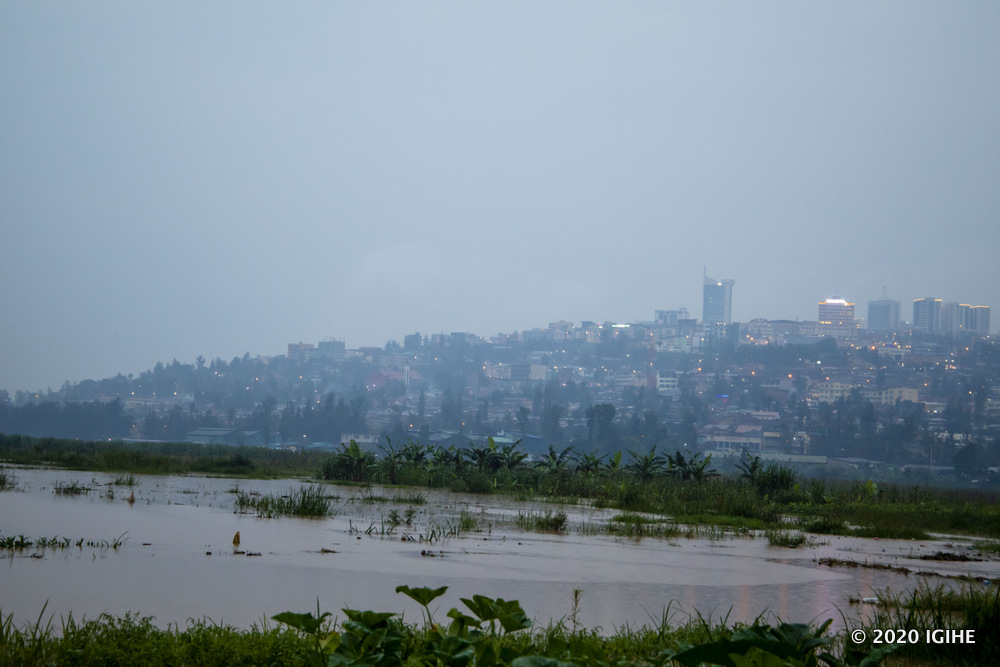
Rainfall ranging between 100 and 300 mm is expected across the country, with the first 10 days forecasted to record slightly above the Long-Term Mean (LTM) in many parts of the country.
“The expected rainfall in April 2024 will be slightly above the range of Long-Term Mean (LTM) in western parts of the country and in range of LTM in the remaining parts of the country. The first dekad of April is expected to record slightly above the LTM in many parts of the country, the second and third dekads are expected to record rainfall in the range of LTM,” the met department said.
The weatherman has attributed the pattern to the positive phase of Indian Ocean Dipole (IOD) and persistence of El-Nino conditions in the Pacific Ocean.
According to the agency, higher amount of rainfall ranging between 260 and 300 mm is expected over eastern parts of Rusizi and Nyamasheke, western part of Nyamagabe and northern parts Rutsiro, Musanze and Burera Districts.
Rainfall ranging between 220 and 260 mm is expected in the remaining parts of Western Province, remaining parts of Musanze and Burera Districts, western part of Nyaruguru, central part of Nyamagabe and northern parts of Gakenke District.
Additionally, rainfall ranging between 100 and 140 mm is the lowest expected in eastern parts of Kigali City, Nyagatare, Gatsibo, Kayonza, Rwamagana, Kirehe, Ngoma and Bugesera Districts.
“The remaining parts of the country is expected to receive rainfall ranging between 140 and 200 mm,” the agency added.
The forecast comes at a time when most parts of Rwanda continue to receive heavy rainfall which began on Sunday morning.
{{Wind Speed}}
On the other hand, moderate to strong wind speed ranging between 6m/s and 8m/s is expected over Western Province, western parts of Nyamagabe, Ngororero, Nyabihu and Musanze, many parts of Gicumbi, Burera, Rulindo, Nyagatare, Gatsibo, Kayonza and Kirehe Districts.
The rest of the country is expected to experience moderate wind speed ranging between 4 and 6 m/s.
{{Temperatures}}
The temperature forecast for April shows that the mean maximum temperature will range between 18°C and 28°C. This is a lower temperature compared to the recorded temperatures in March 2024.
Moreover, temperatures ranging between 26°C and 28°C are expected to be the highest in April 2024 across many parts of Nyarugenge, Kicukiro, Bugesera, the western parts of Ngoma, the eastern parts of Nyagatare, Kayonza, and Gatsibo Districts, as well as the Bugarama plain and the northeastern part of Gisagara District.
“The lowest maximum temperature is expected to range between 18°C and 20°C in eastern part of Rubavu, many parts of Nyabihu, northern parts of Musanze, in Rubavu district, most parts of Nyabihu district, in the hills of Musanze and Burera districts, in the southwest of Nyamagabe district and in the lower part of Ngororero district,” the agency stated.
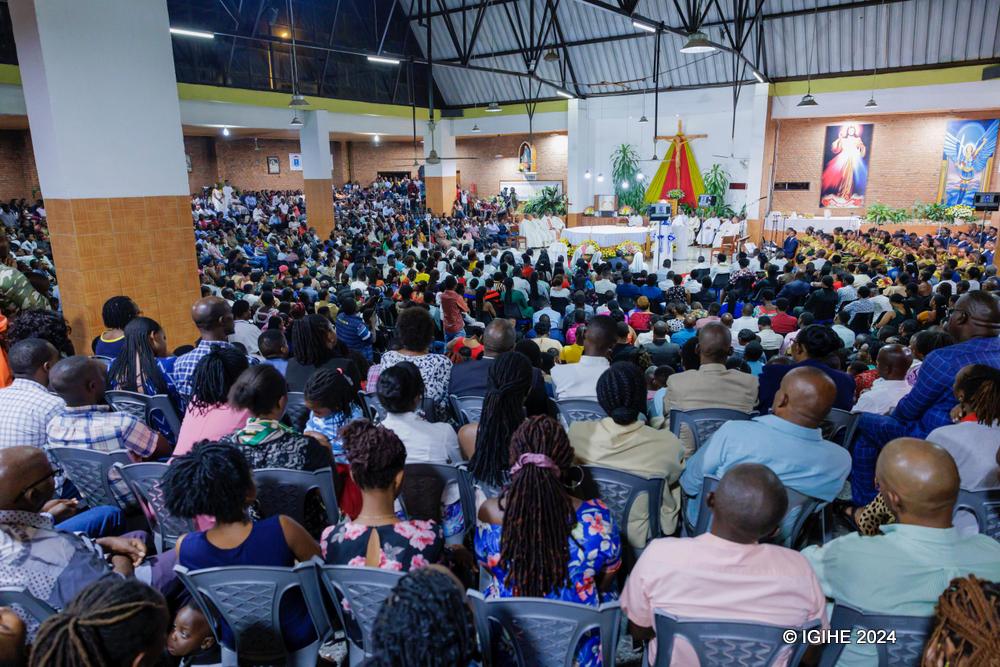
The holy day, widely known as Easter Sunday, is celebrated among Christian communities in many parts of the world with church services, family gatherings, feasting, and various cultural traditions.
This Christian holy day is observed three days after Good Friday, which is believed to be the day Jesus Christ was crucified by Roman authorities and died on Calvary.
Since Friday, Christians have been sharing messages of goodwill on social media to commemorate the painful sacrifices and intense suffering endured by the Son of God during his three-year mission on Earth.
On Sunday, it was no different as netizens took to various social media platforms to celebrate the resurrection of Jesus Christ, with the Catholic Church having set the mood last evening.
In his message to the country on the eve of Easter Sunday, Archbishop of Kigali, Cardinal Antoine Kambanda, challenged members of the public to embrace unity and put an end to self-centered behavior, which he said is a significant driver of conflicts.
“Nowadays people tend to look at themselves and being selfish. When many people do so, they can’t come together. If such disunity starts from relatives, families that’s the source of conflicts.
“God is the only one who knows what will be beneficial to us, let Jesus Christ who has risen today reveal that to us, he defeated death. Let’s thank God as we celebrate our holy Easter,” Cardinal Kambanda said.
Netizens, on the other hand, extended heartfelt wishes to their loved ones and the world at large during the Holy Easter weekend.
“Happy Easter Sunday dear X family. May all your burdens be washed away by the blood of Jesus,” X user Birungi Bianca wrote on the platform formerly known as Twitter.
“Hallelujah ! Hallelujah ! He is Risen , Happy Easter to you all Fam,” Ayebare Martin said.
BOD Republic said: “As we celebrate Easter, may the love of Christ fill your home with happiness and blessings. Happy Easter to you and your family!”
The corporate sector in Rwanda was also not left behind as various companies seized the opportunity to wish their customers a joyous Easter.
“Happy Easter! May this long Easter weekend bring you joyful memories and happiness to you and your loved ones,” MTN Rwanda wrote on X.
“Wishing all a joyous Easter filled with blessings of renewal and happiness. Happy Easter!” Real estate company House in Rwanda shared.
Bbox Rwanda wrote: “Happy Easter from all of us at Bboxx! 🐰✨ May your day be filled with joy, laughter, and plenty of surprises!”
“Happy Easter to you and your loved ones from all of us at QSS Rwanda! May we rise anew and become the best versions of ourselves,” Q-Sourcing Servetec Rwanda wrote on X.
Rwanda Labour Rights Organization (RLRO) wrote “Happy Easter to all! May this season bring renewal and unity to our workplaces. Let’s continue our efforts for decent work, and Social justice . Wishing you a peaceful and prosperous Easter!”
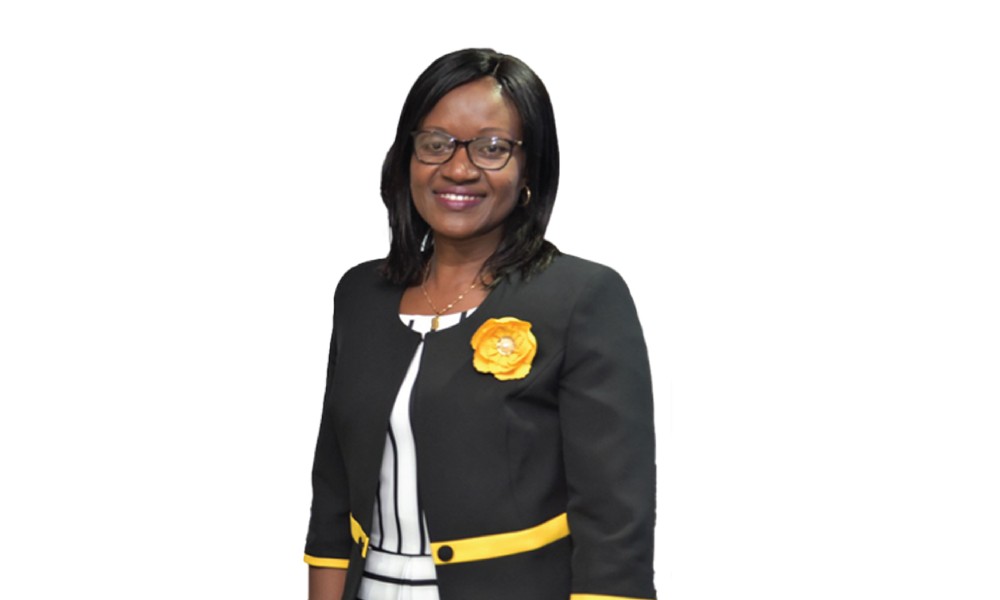
John Ntirushwamaboko, her husband, confirmed to IGIHE that Mukaruliza’s illness was sudden and brief.
“The tragic event occurred today, roughly two hours ago. She was under medical care in Brussels for approximately two weeks,” he stated.
In early March, President Paul Kagame appointed her as Ambassador at Large with a focus on regional integration efforts within the Ministry of Foreign Affairs and International Cooperation.
Prior to this role, she served as an Advisor within the same ministry.
Amb. Mukaruliza’s most notable tenure was as Rwanda’s first Minister to the East African Community (EAC), a position she held from 2008 until February 25, 2013.
Her leadership significantly contributed to Rwanda’s diplomatic and regional integration initiatives.
Between 2016 and 2017, she led the City of Kigali as Mayor, leaving a lasting impact on the city’s development and governance.
Her diplomatic career also included serving as the Rwandan Ambassador to Zambia and Malawi, roles she assumed after her mayoral tenure in Kigali.
Furthermore, from 2006 to 2007, she was the acting representative of the African Union in Sudan and previously the deputy head of the African Union mission in Sudan from 2004 to 2006.
Amb. Mukaruliza was not only a seasoned diplomat but also a skilled financial expert. She played a crucial role in establishing the Rwanda Revenue Authority, where she served as Commissioner of Internal Audit and later Commissioner of Domestic Taxes.
Her financial expertise also extended to the Bank of Kigali, where she worked as an auditor, and to the SOS Children’s Villages International-Rwanda, where she was the Chief Financial Officer.
Amb. Mukaruliza’s contributions to Rwanda’s diplomatic, financial, and governance sectors have left an indelible mark on the nation, and she will be remembered for her dedication, expertise, and leadership.
He announced that he obtained this information from various documents and also from his personal observations while he was leading a United Nations team tasked with investigating the Genocide against the Tutsis.
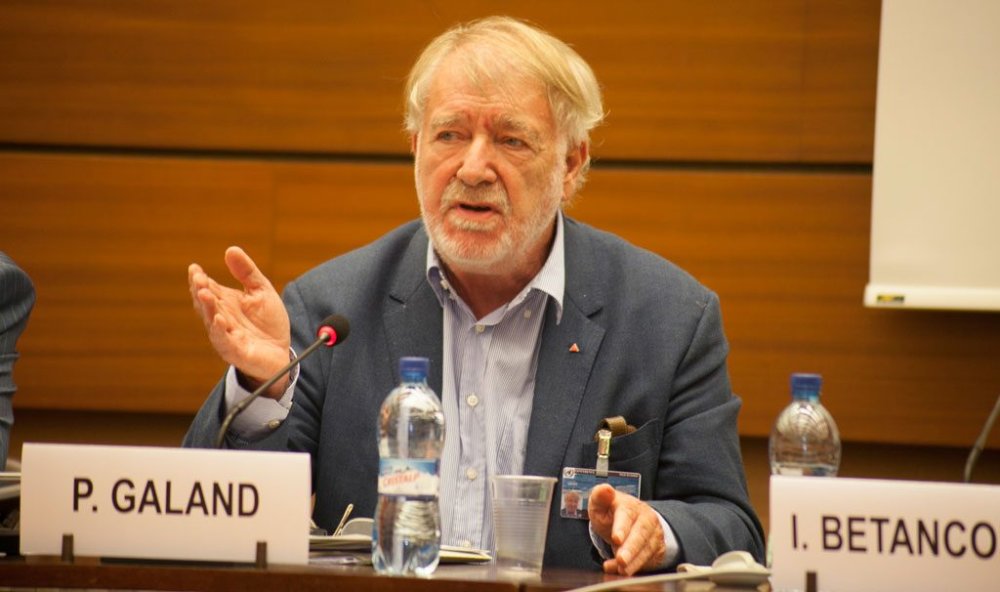
During a conference held in Brussels, Belgium, on March 29, 2024, focusing on the planning of the Genocide, Galand explained that the World Bank and European banks provided financial support to the government of Juvénal Habyarimana for purchasing weapons in 1990.
This annual conference was organized by the Socialist Party and the IBUKA organization, which advocates for the interests of the survivors of the Genocide against the Tutsi. Attendees included Rwandans living in Europe, university professors, and representatives of non-governmental organizations.
As explained by the BBC, the researcher stated, “Approximately one billion US dollars from the World Bank’s mission in Rwanda was given to the Rwandan government in the early 1990s to purchase weapons used during the Genocide.”
Galand highlighted that this support was significant because, since 1990, the military was allocated 50% of the country’s total budget, which significantly strengthened it before 1994.
Since the Rwandan government at that time was under an arms embargo, Galand explained that the World Bank and the IMF chose to channel this support through BNP Paribas Bank in France and Lambert Bank in Belgium.
He said, “BNP Paribas Bank in France and Lambert Bank in Belgium were the channels used for the money to buy weapons used in the Genocide because Rwanda was under an embargo on purchasing weapons, and it’s no secret because we have the documents to prove it.”
Regarding BNP Paribas, Galand explained that the documents showing its involvement are being used to sue it in court to compensate the victims of the Genocide against the Tutsi.
The Genocide against the Tutsi was perpetrated by soldiers, the Interahamwe militia, and politicians. From April 7 to July 4, 1994, it claimed the lives of over one million people.
It was announced that 61-year-old Sir Jeffrey and another 57-year-old woman, whose identity was not disclosed, were arrested on Thursday and interrogated about the crimes the man is accused of and the woman is alleged to have assisted him with.
The country’s police announced that Sir Jeffrey and the woman will be brought to court next month to face the charges against them. However, the man stated that he does not accept the accusations against him and will continue to vehemently deny them.
The DUP’s leadership announced that “The Leader has received a letter from Sir Jeffrey Donaldson confirming that he is being pursued for alleged crimes he committed in the past, stating that he resigns from his position as the leader of the DUP party immediately.”
“As per the party’s regulations, the leadership has stripped Donaldson of his membership pending the outcome of the trial, appointing Gavin Robinson as the interim leader.”
Robinson, who succeeded Donaldson as the party’s leader, expressed his shock at the allegations against Donaldson.
“It was very surprising, not just for me but also for my colleagues in the DUP, and indeed across all of Northern Ireland. We are a party that believes in our justice system, and we hope that in the coming days and months, no one will try to behave in a manner that could hinder the ongoing investigation.”
Speaking at a press conference held on 29th March in Beijing, under the theme “Promoting High-Quality Development,” Mr. Wang Weizhong, the Governor of Guangdong, shed light on the province’s strategic advancements and future prospects.
As he explained, Guangdong’s journey towards high-quality development is deeply rooted in the directives of CPC’s General Secretary and President of China, Xi Jinping, emphasizing the province’s pioneering role in reform and development.
The guiding principle, as outlined by the General Secretary, is for Guangdong to lead in constructing a new development pattern, focusing on high-quality development as its core task.
This vision was encapsulated in the Guangdong-Hong Kong-Macao Greater Bay Area’s development, aiming to serve as a strategic support point and a demonstration area for high-quality development and Chinese-style modernization.
Governor Wang Weizhong detailed the “1310” strategic deployment, aiming to anchor Guangdong’s leadership role in development through reform, opening up, and innovation, while making breakthroughs in ten key areas. This strategic approach has been pivotal in seizing opportunities brought forth by technological revolutions and industrial transformations, setting a blueprint for “recreating a new Guangdong.”
Guangdong’s economic milestones are impressive, with a GDP reaching 13.57 trillion yuan (over 2.5 trillion US$), maintaining its position as China’s leading economic province for 35 consecutive years. This economic prowess is coupled with significant efforts in expanding investment, promoting consumption, and stabilizing foreign trade to achieve a targeted economic growth of 5% in 2024.
The construction of the Guangdong-Hong Kong-Macao Greater Bay Area marks a significant stride towards deepening reforms and opening up, creating a synergistic effect across the region. This initiative is bolstered by major infrastructural developments and the collaborative efforts with Hong Kong and Macao to position the Bay Area as a world-class economic hub.
Innovation and the cultivation of new productive forces are at the heart of Guangdong’s strategy for high-quality development. With leading positions in industrial enterprises, high-tech firms, and intellectual property rights, Guangdong is steadfast in its commitment to the real economy and manufacturing, aiming to develop new trillion-level industrial clusters.
Moreover, the province’s dedication to ecological sustainability and the well-being of its residents underscores the holistic approach to development. Efforts in ecological construction and improving people’s livelihoods through the “Ten Major Projects for People’s Livelihood” exemplify the province’s commitment to a green and equitable development path.
The province’s journey is a blueprint for others, showcasing the possibilities of sustainable development in the 21st century. With its eyes set on the future, Guangdong welcomes the world to witness its transformation, inviting global audiences to explore the charm and vibrancy of a region at the forefront of China’s march towards modernization.
Chronic exposure to air pollution, especially in educational settings, has been associated with a range of negative health outcomes such as increased respiratory issues, diminished lung function, more frequent school absences, and decreased cognitive abilities.
In response to these challenges, Egide Kalisa, an Assistant Professor at the University of Western Ontario, Canada, initiated an innovative air pollution education campaign in Rwandan schools, dubbed #HumekaNeza (Breathe Easy).
In 2023, Prof. Kalisa’s research, which was published in a peer-reviewed journal, revealed that air pollutant levels during school drop-off hours were more than double those during off-peak times. This underscored the significant impact of vehicle emissions on school premises in Rwanda.
Building on this finding, Prof. Kalisa launched an educational initiative aimed at raising awareness about air pollution among school children. The campaign includes discussions about the science of air pollution, anti-idling efforts, and the introduction of an Air Quality Flag Program. This program employs low-cost sensors and colorful flags to inform school communities about the current air quality, both outdoors and indoors.
Prof. Kalisa’s approach involves interactive workshops that empower children to use air quality sensors and monitors, enabling them to collect and analyze data firsthand. This hands-on experience not only enriches their STEM education but also personalizes their understanding of air pollution. The initiative seeks to heighten students’ awareness and motivate them to minimize their exposure to air pollution, particularly around cooking activities.
Moreover, Prof. Kalisa has taken several measures to assess and improve the air quality in schools. These measures include the installation of air pollution monitors, the use of air purifiers in classrooms, the planting of trees (allocating one tree per student), and advice on optimal times for outdoor play and choosing cleaner routes to school.
The campaign kicked off at Kigali Parents School and Dove International Montessori School in Kigali. Students were educated on air pollution monitoring, launching anti-idling campaigns, and managing air quality flags based on real-time pollution data. They also expressed their understanding and concerns about air pollution through art, creating posters that encourage mitigation efforts and positioning themselves as change agents.
As the campaign concluded, the participating students penned letters to their parents, urging them to join the fight against air pollution. They suggested practical steps such as avoiding car idling, considering electric vehicles, and monitoring air quality at home.
Prof. Kalisa’s efforts were recognized when he received the Most Outstanding Research Contribution Award from the National Council for Science and Technology (NCST), acknowledging his work in addressing national societal challenges. His campaign is a part of the “HELTH” research group, which focuses on the nexus of human health, environmental quality, transportation, urbanization, and the use of citizen science to bolster air quality policies in sub-Saharan Africa and Canada.
A pivotal moment in this ongoing revolution was recently witnessed by a group of African journalists in Beijing, who were given an exclusive opportunity to delve into the advancements spearheaded by Baidu, Inc. a market leader in autonomous driving in China in terms of number of test miles and number of test licenses.
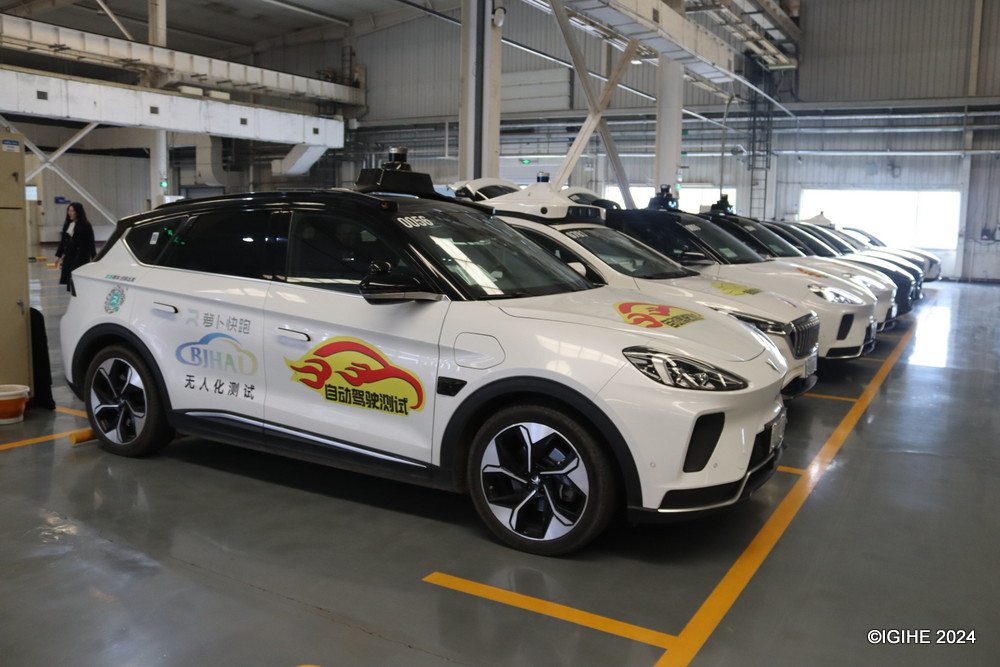
This exploration at Baidu’s headquarters located in the northwest section of Beijing, revealed the strides made by Apollo Go, the company’s autonomous ride-hailing service, in reshaping the future of urban mobility.
Baidu, established in 2000, has always been at the forefront of leveraging technology to simplify the complexities of the modern world. With a deep commitment to innovation, Baidu made a strategic pivot towards artificial intelligence in 2010, aiming to enhance internet content discovery.
This decision paved the way for the creation of Baidu Brain, the company’s core AI technology engine, which has since become the backbone of its new AI ventures.
Today, Baidu stands as a leading AI entity, offering a comprehensive AI stack that includes AI chips, deep learning frameworks, and core AI capabilities such as natural language processing, knowledge graph, speech recognition, computer vision, and augmented reality.
Apollo Go, an autonomous ride-hailing service platform, is a testament to Baidu’s relentless pursuit of innovation.
The journey of Apollo Go is characterized by a series of remarkable achievements. In a significant operational upgrade, Apollo Go recently announced the launch of a 24/7 autonomous driving service in selected areas of Wuhan, setting a new benchmark as China’s first provider to offer such a service.
On February 27, 2024, the service took a bold step by launching fully driverless rides across the challenging terrains of the Yangtze River, including both the north and south banks, demonstrating its capability to navigate complex landscapes with precision.
This followed the introduction of driverless airport transportation services in Wuhan in August 2023, making Baidu the pioneer in autonomous airport rides in China. Furthermore, on February 23, 2024, Apollo Go expanded its services to Beijing, launching a robotaxi pilot operation on highways to Beijing Daxing Airport, thereby connecting urban roads and highways with seamless autonomous transportation.
Wuhan, recognized as a leading city in intelligent transportation, has seen its autonomous vehicles cover a total test mileage of over 3,378.73 kilometers by the end of 2023, reflecting the city’s commitment to advancing smart mobility solutions.
Apollo Go’s operation of 300 fully driverless vehicles in Wuhan underscores its dedication to transforming urban transportation. The platform’s user-first approach has resonated well with its customers, as evidenced by an impressive 97.12% of five-star reviews on the app.
With over 5 million cumulative rides provided as of January 2024, Apollo Go’s ambition is to extend its fully autonomous ride-hailing services to a wider audience, further solidifying its position as a pioneer in the field.
Beyond ride-hailing, Baidu’s Apollo platform embodies the company’s vision for the future of intelligent driving. Apollo serves as an open platform, fostering a collaborative ecosystem with more than 200 partners, including tier-one suppliers and strategic collaborators.
This ecosystem approach enhances the reach and value of Apollo’s technology, offering comprehensive solutions that support all major functionalities of autonomous vehicles. Through initiatives such as HD Maps, automated valet parking (AVP), and autonomous navigation pilot (ANP) services, Apollo is at the forefront of building intelligent vehicles and smart roads.
Apollo Go offers robotaxi services in over 10 Chinese cities, marking itself as a leader in delivering fully autonomous robotaxi services in major cities like Beijing, Wuhan, Shenzhen, and Chongqing.
Currently, more than 20 cities in China have established policies favoring autonomous driving tests, enabling upwards of 60 companies to obtain licenses for these experiments.