While the perception of foreigners visiting the country has always been centered around leisure, tourism, and enchanting trips to gorilla sites, it’s interesting to note that more than half of the foreigners who visited Rwanda in 2023 (51.1%) did so for business purposes.
The growth can also be linked to a significant number of foreign investments registered in Rwanda, which also grew by 50 per cent to hit $2.4 billion (RWF 3 trillion) in 2023. These investments are projected to create more than 40,000 jobs in the next five years, according to the Rwanda Development Board.
The latest statistics from RDB show that 22.2 per cent of persons who entered Rwanda in 2023 were in transit to various destinations worldwide.
Another 11.2 per cent of the foreigners visited Rwanda for holiday and recreational purposes, with the majority of this number comprising 25,927 gorilla visitors.
Notably, the number of gorilla visitors in 2023 marked a 29.4 per cent increase from 2022, the highest number of gorilla visitors recorded in Rwanda’s history.
Gorilla tourism is a major revenue earner for Rwanda, with tourists paying at least US $1500 per person to see gorillas in the country. This fee covers the gorilla trekking permit, which grants access to the park and the gorillas.
Rwanda netted $620 million (RWF 793 billion) in tourism revenue in 2023, representing a 36 per cent growth compared to 2022.
Meanwhile, 6 per cent of the foreigners who visited Rwanda in 2023 were in the country for official missions, while 3.9 per cent of the visitors were there to attend conferences and other international forums.
Another 3.7 per cent of the visitors were in Rwanda for unspecified reasons, 1.3 per cent for education purposes, and 0.6 per cent were in the country for medical reasons.
This occurred after fierce fighting in which the Congolese government forces clashed with M23 fighters in areas including Rutigita, about five kilometers from the commercial center of Rubaya, starting at twelve in the morning on April 30, 2024.
M23 fighters have since blocked roads linking this area to others including Kibabi, aiming to cut off routes for their adversaries trying to resume attacks. Some members of the Congolese government coalition had fled, but others were encircled, including those killed in this fighting.
On the morning of May 1, 2024, in the hills surrounding the commercial center of Rubaya, there was fighting between the Congolese government forces and M23 fighters. The goal was to push back the group, but it was unsuccessful.
Previously, the Rubaya mines were controlled by the Bisunzu Mining Company (SMB) of businessman Edouard Mwangachuchu, but he was stripped of control when he was charged with crimes including treason.
The DRC government handed control of the mines to the Wazalendo and FDLR groups, based on an agreement to fight M23, further bolstered by the inclusion of Burundian forces since their entry into the conflict in 2023.
Reliable sources indicate that since the Burundian forces took over these mines, the coltan mined there was transported to Bujumbura; this was based on an agreement between the two countries.
Some Congolese criticize the takeover of Rubaya, pointing out that it resulted from a mistake by the DRC government, which gave M23 the opportunity to prepare to capture more areas, adding to the many it already controls in North Kivu.
The Permanent Secretary at MINEMA, Philippe Habinshuti, stated that some were killed by landslides while others died due to lightning strikes.
The most recent victims were from the Rutsiro district, killed by landslides after heavy rainfall on the night leading to Tuesday, April 30, 2024.
Additionally, in the Gasabo district, a woman and her child were killed when their house collapsed due to the weekend’s heavy rains.
These rains have also damaged infrastructure, including buildings, roads, crops, and other property across different regions of the country.
Habinshuti mentioned that assessments are ongoing to determine the full extent of the damage caused by these disasters.
The National Meteorological Agency, Meteo Rwanda, has recently forecasted that heavy rainfall will continue across all parts of Rwanda in the first ten days of May 2024.
The Rwandan government has been urging residents living in high-risk areas to relocate.
Christine Niyotwambaza, the Director in charge of disaster-prone areas at MINEMA, reported that 4768 families have been relocated, noting that up to 8300 families are in locations deemed risky for their safety.
Currently, the heavy rains are particularly affecting the Northern, Western, and Southern provinces, indicating that 326 areas are at risk of disasters due to the ongoing heavy rainfall.
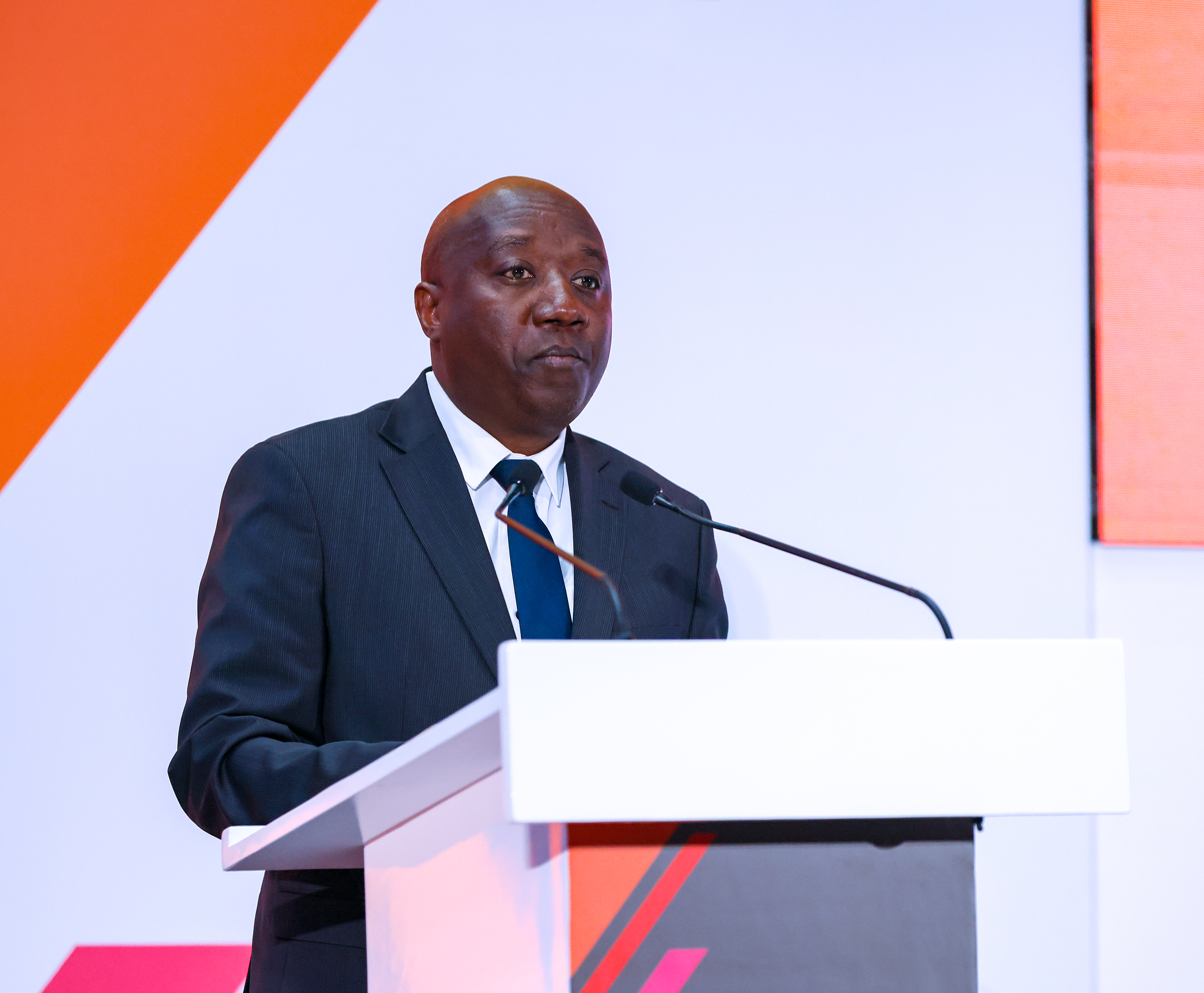
Rwanda Prime Minister Édouard Ngirente made the commitment on Wednesday, May 1, 2024, during the official opening of the 5th edition of the International Network for Governmental Science Advice Conference at the Kigali Convention Centre.
“Our Government has accepted to support the establishment of a regional unit of the International Network for Governmental Science Advice currently hosted by the University of Rwanda,” Ngirente stated.
“It is expected that this unit will expand its operations to support the creation of functional networks at a regional level and serve as a hub for capacity development for Africa,” he added.
The conference brings together policymakers, practitioners, national academies, scientific societies, and researchers to share experiences, build capacities, and develop theoretical and practical approaches to the use of scientific evidence in informing policy at all levels of government.
INGSA research and training hub was established in the University of Rwanda in 2022. The government’s support is expected to spur its development and expansion to greater heights.
In his speech, the prime minister emphasized that the government recognizes the significance of science, technology, and innovation in all sectors as crucial drivers for promoting social welfare and sustainable development in the country, in line with the vision to become a high-income nation by 2050.
“Aligned with our Vision 2050, science is expected to play a key role in Rwanda’s journey towards becoming an upper-middle-income country by 2035 and a high-income country by 2050, ensuring high standards of living for all Rwandans,” he stated.
As part of efforts to build a knowledge-based economy, the Prime Minister asserted that the government has made huge investments at all levels of education, from primary and secondary education to tertiary institutions of learning.
“Our goal is to develop our human capital by providing comprehensive trainings in different fields of science. Through this approach, we prepare our workforce with the necessary skills to meet the demands of both private and public labor markets,” the prime minister noted.
“The Government of Rwanda has established the institutional arrangement that is needed to create an environment conducive for science development and innovation. This in turn translates into new technologies needed to support the economic growth of the country.”
He reiterated that science advice is critical in policy and decision-making efforts to address the world’s pressing challenges and called for collaborative efforts to increase the capability and resilience of global science advisory organizations and national systems such as INGSA.
“To achieve this, collaborative efforts are essential. We must foster synergy across all levels of governance, ensuring better coordination between our systems. By doing so, we pave the way for effective decision-making,” he concluded.
The 5th edition of the International Network for Governmental Science Advice Conference, themed ‘The Transformation Imperative – Expanded Evidence for Inclusive Policies in Diverse Contexts,’ has attracted delegates from more than 50 countries.
It’s the first time that Africa is hosting the high-level conference, previously held in Brussels, Belgium; Tokyo, Japan; Montreal, Canada; and Auckland, New Zealand.
Rémi Quirion, the President of INGSA and Chief Scientist of Québec, termed the conference as unique moment for not just the African continent but the Global South.
“The first meetings in New Zealand, Montreal, Tokyo, and Brussels were more about talking with people from the North. What is unique here, for the first time in the Global South, for the first time in Africa, learning from African colleagues, learning from the experts in Rwanda in terms of science advice, that is one of the main objectives of this meeting. But also, we want to connect with our colleagues from the Global South. The African colleagues learning from the ones in Asia, and ones from Latin America, and so on,” Quirion stated.
He also lauded Rwanda’s young generation as a great resource in national and economic development, insisting on the need to empower them.
“One of the strengths in Rwanda is its young generation, more so than what we see in North America and Europe. It’s a natural resource. It’s amazing. But we need to make sure that they have access to education. If they are interested in science advice, science diplomacy, or research, they can pursue these fields and have good jobs in academia or other industries,” he said.
On his part, the Minister for Education, Gaspard Twagirayezu, said Rwanda is excited to host the conference and reiterated the need to maintain the network and strengthen the hub in Rwanda.
“The conference holds significance for us. As a government, we want to build an advanced economy by 2050, and this will happen based on the quality of our human capital, with science and technology at the base of everything that we do. This means we value science advice in government policy, and we are even more excited about how we are going to strengthen our hub here in Rwanda,” the minister averred.
President Kagame, in a message to Kenyan Head of State William Ruto on Wednesday evening, said Rwanda stands with the people of Kenya during these trying times.
“My sincere condolences to you my brother, President William Ruto and the people of Kenya, for the families displaced and the lives lost in the ongoing mass flooding in Nairobi and other parts of the country. Rwanda stands in solidarity with you and the country in this difficult time,” President Kagame stated.
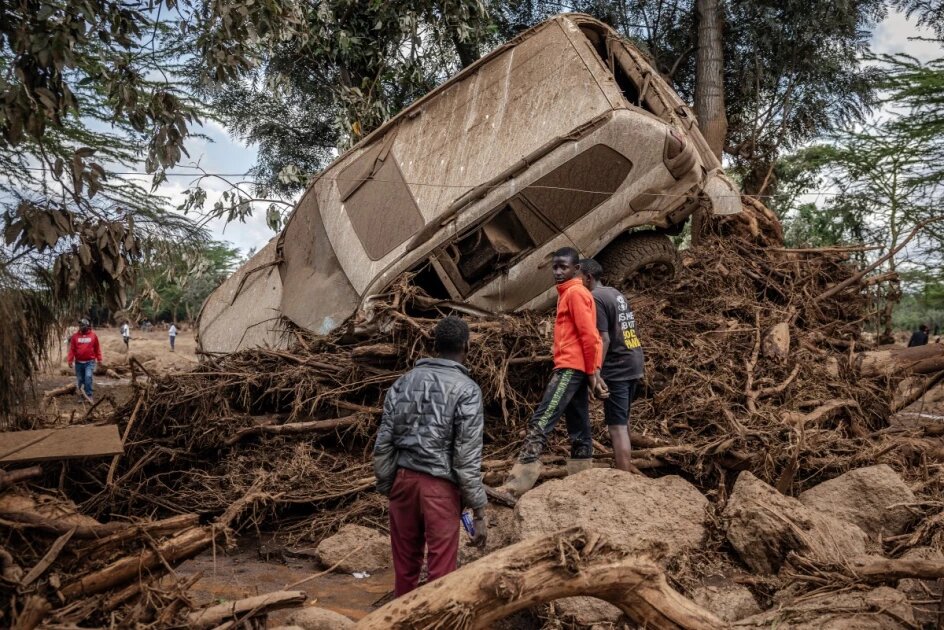
Kenya confirmed on Wednesday that 179 people have lost their lives since March when the long rains started. The victims include 164 adults and 15 children.
The victims of the floods include residents of Mai Mahiu whose homes were washed away in the wee hours of Monday morning, claiming more than 70 lives and injuring scores of
others.
Water Cabinet Secretary Zechariah Njeru told the local media that the incident was a result of a blocked railway line tunnel preventing proper flow of water through River Tongi.
So far a total of 90 people have been reported missing in Kenya, while 125 people have been injured and are receiving treatment in health facilities across the country. Additionally, at least 31,341 households have been displaced, affecting 195,011 people.
Government Spokesperson Isaac Mwaura warned that April is the peak of the long rains, and the rainfall will continue to cause flooding and disrupt social and economic activities.
“We call upon all Kenyans to remain vigilant, adhere to safety guidelines and observe flood alerts. Furthermore, all Kenyans are requested to cooperate fully with emergency responders and local authorities during evacuations or rescue operations, especially in areas mapped out as high-risk areas,” Mwaura stated.
The floods have also been wreaking havoc in Tanzania in recent weeks, killing more than 150 people and injuring over 200 others.
Tanzania Prime Minister Kassim Majaliwa told Parliament last Thursday that more than 10,000 houses have been damaged and more than 200,000 people affected.
Latest statistics from the Rwanda Development Board (RDB) show that manufacturing is expected to create 9,900 new job opportunities over the next five years, accounting for a quarter of the jobs projected to be created in the next five years.
According to RDB, investment commitments registered by the Board in 2023 are expected to generate 40,198 job opportunities by 2029. The investment commitments grew by 50 per cent to reach $2.4 billion (RWF 3 trillion) compared to the previous year.
RDB forecasts that the agriculture sub-sector will continue to thrive, contributing to the creation of 7,600 jobs over the same period.
Real estate is expected to create 6,200 new jobs by 2029 while the agro-processing sub-sector will contribute some 4,400 jobs to the economy.
Additionally, the construction sector will generate 2,700 jobs while the accommodation and food services sub-sector will create 2,600 job opportunities over the next five years.
Electricity, gas, steam, and air conditioning supply are poised to create an additional 1,500 new job opportunities, followed by the arts and entertainment sub-sector, where approximately 600 opportunities will be generated.
The financial and insurance sectors, along with administrative and support service activities, are expected to generate 500 and 200 jobs respectively over the next half-decade.
It is also worth noting that most of the new jobs in the real estate, arts and entertainment, recreation, manufacturing, and construction sectors will be created in the capital Kigali, which attracted investments worth $2.1 billion (RWF 2.7 trillion). This accounts for 83.4 per cent of the total investments registered in 2023.
The Eastern Province which attracted investment worth $262.9 million (RWF 336 billion) in 2023 will create new job opportunities in administrative and support service, manufacturing, electricity, gas, steam and air conditioning supply, agriculture, forestry and fishing sub-sectors.
The Northern Province with investments totalling $60.8 million (RWF 77.8 billion) is expected to create new jobs in agro-processing, manufacturing, accommodation and food service activities and mining and quarrying.
Jobs in agriculture, forestry, fishing, real estate, agro-processing, manufacturing, transportation and storage, energy, accommodation, and food services will contribute to the creation of new jobs in the Southern and Western provinces, which attracted investments totalling $46.9 million (RWF 60 billion) and $40.6 million (RWF 52 billion) respectively.
While expressing his belief that Xi’s visit will bring new hope to Serbia’s development, the president said: “I am very much looking forward to President Xi’s visit.”
Vucic made the remarks when meeting with visiting President of Xinhua News Agency Fu Hua in Belgrade.
Noting that China is Serbia’s “iron-clad friend” and the exchanges between the two countries are fully candid and open, Vucic said Serbia will never forget the assistance from the Chinese people, adding that he believes Xi will feel the warmth and friendliness of the Serbian people during his visit.
The Serbian president spoke highly of the contributions made by the HBIS Serbia steelworks in Smederevo to Serbia’s economic development, China’s assistance to Serbia in the fields of medicine and healthcare during the COVID-19 pandemic and China’s support for Serbia on international multilateral occasions.
Serbia firmly supports China’s position on safeguarding its core interests and major concerns, Vucic stressed.
On the Taiwan question, Vucic said Serbia firmly upholds the one-China principle and supports China in safeguarding its sovereignty and territorial integrity.
Regarding media exchanges, Vucic highly valued the cooperation between Xinhua News Agency and Serbia’s Tanjug News Agency and other media outlets, saying that such exchanges enable the Serbian media to learn from the experience of their Chinese counterparts and allow the Serbian people to better understand China, so as to promote mutual learning and experience sharing between the two countries.
Fu said that under the strategic guidance of President Xi and President Vucic, China-Serbia relations have witnessed vigorous development despite changes in the international landscape, setting a good example of friendly relations between China and European countries.
He also said he expects the meeting between the two heads of state to draw a new blueprint for China-Serbia exchanges and cooperation and to add new luster to the “iron-clad friendship” between the two countries in the new era.
Moreover, Fu said Xinhua stands ready to work with its Serbian counterparts to further deepen exchanges and cooperation, tell well the stories of China-Serbia friendship and comprehensively showcase the bright prospects of bilateral relations in the new era through high-quality and multidimensional news reports and think tank research.
Xinhua will also firmly act as an envoy of China-Serbia friendship and create a positive public opinion atmosphere for deepening bilateral cooperation in various fields to better benefit the peoples of the two countries, Fu added.
Jointly organized by China’s Xinhua News Agency and Serbia’s Tanjug News Agency, the forum brought together around 200 participants, including government officials as well as representatives from mainstream media and think tanks of both countries.
At the forum, Xinhua News Agency also launched the Serbian version of the report “Fostering a Global Community of Shared Future: Contemporary Significance and Tangible Achievements.”
The report interprets the concept of a community with a shared future for mankind from multiple perspectives such as history, theory, culture and practice, representing the latest achievement of Xinhua’s studies of Xi Jinping Thought on Diplomacy.
The theme of the forum read as “Deepening China-Serbia comprehensive strategic partnership following the vision of a global community of shared future.”
Addressing the forum, President of Xinhua News Agency Fu Hua said building a community with a shared future for mankind, a core concept of Xi Jinping Thought on Diplomacy, has contributed oriental wisdom to addressing global challenges. It is a concentrated expression of the common value pursuit of all mankind and has delivered tangible benefits for people of all countries.
China and Serbia are “iron-clad friends” who have stood together through thick and thin, Fu said, noting that as both countries move forward towards modernization, their collaboration vividly exemplifies promoting the building of a community with a shared future for mankind.
Fu, also chairman of the academic committee of New China Research, said Xinhua attaches great importance to exchanges and cooperation with Serbian media and think tanks, and is willing to work with the Serbian side to continue telling well the story of China-Serbia friendship.
He said that through high-quality, multidimensional news coverage and think tank research, Xinhua aims to comprehensively showcase the bright prospects of China-Serbia relations in the new era, build a communication bridge and provide intellectual support for bilateral cooperation in various fields, and continue to act as an envoy for the China-Serbia friendship to bring more benefits to the two peoples.
Ji Zhengju, vice-director of the Institute of Party History and Literature of the Central Committee of the Communist Party of China, said the sustained and stable development of sound relations between China and Serbia plays an important role in better building a community with a shared future for mankind.
From this perspective, it is of great significance to strengthen cultural exchanges so as to jointly promote high-quality construction of the Belt and Road Initiative through people-to-people connectivity and lay a solid foundation for enhancing the friendship between China and Serbia, added Ji, who is also director of the Central Compilation and Translation Bureau.
Chinese Ambassador to Serbia Li Ming highlighted the special significance of the forum held on the eve of Chinese President Xi Jinping’s state visit to Serbia. He said he believes the forum and the report will provide strong intellectual support for the development of China-Serbia relations and make positive contributions to the spread and implementation of the concept of a community with a shared future for mankind.
Manja Grcic, director general of Tanjug News Agency, said Tanjug, since its establishment, has always focused on China. Noting that cooperation between Serbia and China in jointly building the Belt and Road has achieved fruitful results and thus provided abundant resources for news reporting, Grcic said her agency will continue to focus on such cooperation with objective and truthful reports so as to enhance mutual understanding between the two peoples and contribute to the development of bilateral relations.
Goran Vesic, Serbia’s minister of construction, transport and infrastructure, told the forum that the Serbian economy has developed rapidly in recent years, which is indispensable from China’s support, and Chinese investments are highly welcomed in Serbia.
Serbia hopes to initiate higher-quality infrastructure cooperation with China, and promote the construction of smart roads, said the minister, adding that he believes pragmatic cooperation between the two countries will reach a higher level under the guidance of the two heads of state.
Following the event, Xinhua News Agency and Tanjug News Agency signed an agreement on news exchange and agreed to strengthen exchanges and cooperation in news reporting and communication.
DRC has often claimed non-collaboration with FDLR, even though it eventually admitted its readiness to support anyone aiming to overthrow the Rwandan leadership. Rwanda insists that DRC’s dealings with FDLR should be seen as a national political issue rather than individual opportunism.
Various reports have shown close collaborations between the DRC military and FDLR, including weapon sharing and joint combat efforts. Some former FDLR members who chose to return to Rwanda, their country of origin, revealed significant motives behind the group’s close ties with the Congolese military.
Sergeant Tuyizere Mose, a former member of FDLR’s commando unit known as CRAP, disclosed that FDLR forces work closely with DRC’s government forces, suggesting that without them, the M23 rebel group would easily seize control. “Without FDLR’s involvement, M23 would be in Kinshasa overnight. Our CRAP soldiers could be stationed here for months without displacement due to the training we provide. Our only lack is a humane approach to coexist with the locals without discrimination,” he explained.
During his time in the DRC, Sgt. Tuyizere served in a heavy weaponry unit of the FARDC, fighting alongside M23. “We were trained by Israeli commandos, equipped with substantial training and powerful weaponry,” he added. Before battles, FDLR leadership would convince their troops they were fighting Rwandan soldiers instead of Congolese.
Sgt. Tuyizere highlighted the instrumental role of FDLR in controlling both the city and the Goma International Airport. “Since 2019, FDLR started managing the Goma International Airport, and from April 2023, this control became official. The DRC leadership explicitly allowed us to manage Goma to prevent its capture,” he stated.
Apart from managing the airport, FDLR also taxes goods from Bukavu and controls certain roads, profiting from the trade in valuable minerals. In 2023, when the DRC purchased military equipment, the first units to receive them were those belonging to CRAP, given the task of training state troops.
In November 2023, M23 decisively defeated FDLR and Congolese forces. The losses were blamed on Rwandan soldiers allegedly freshly trained in Israel. Following the defeat, Sgt. Tuyizere and his colleagues were deployed to the frontline, only to be encircled and significantly defeated by M23.
After witnessing the death and capture of his comrades by M23, Sgt. Tuyizere defected and surrendered to the UN mission, MONUSCO, exhausted by the conflict.
He urged other FDLR members, “Stop killing Congolese civilians accused of being Tutsis or spies for M23. Lay down your arms and join others in rebuilding the country.” He disclosed that FDLR’s orders before combat often involved targeting Tutsi Congolese as part of their operational strategy.
Born in 1998, Sgt. Tuyizere grew up within the ranks of FDLR but realized he had been exploited by those with hidden agendas, including property acquisition and evasion of justice, under the false promise of conquering Rwanda and claiming luxurious homes in Kigali.
Persistent rainfall over several days had saturated the ground, leading to devastating landslides on April 29. These landslides caused the collapse of two homes, resulting in the deaths of two children from separate families.
Rutsiro District Mayor, Kayitesi Dative, explained to IGIHE that the landslides directly impacted these vulnerable structures. “The homes were structurally weak and could not withstand the landslides, tragically killing two children aged 12 and 16,” she said.
Mayor Kayitesi reported that emergency teams were dispatched to the site early in the morning to provide support and comfort to the grieving families and to help coordinate funeral services. She emphasized the importance of safety, urging the community to prioritize lives over property. “We urge everyone to remain alert and relocate from high-risk areas,” she remarked.
In a separate incident in the Boneza sector, a third individual was fatally struck by lightning, adding to the toll of the severe weather impacts in the area.