He says that his choice to establish a home at Bugesera was due to an unwavering desire to disprove negative superstitions that have for long surrounded people living in this area.
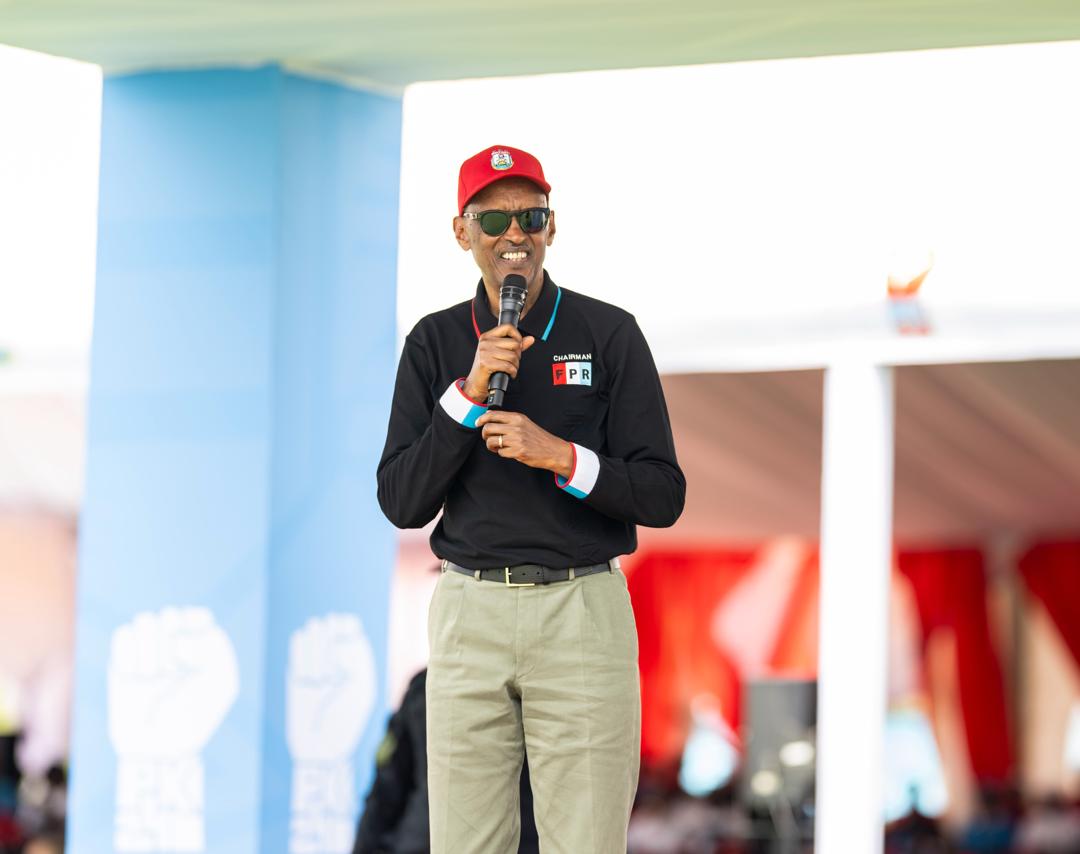
“It has always been perceived that the people here are naturally cursed and condemned to die due to distorted historical narratives about this area. By coming here I wanted to prove them wrong,” Kagame said on Saturday, July 6, 2024, during his party’s campaign rally in Ruhuha Sector, Bugesera District.
Historically, Bugesera was an uninhabited region of Rwanda, covered with dense forests and rife with Tse Tse flies.
After the 1959 revolution (during the regime of President Glegoire Kayibanda, and his successor Juvenal Habyarimana), many Tutsis were forcibly relocated to the Bugesera region.
The intention was to massacre them, to the extent that, whoever would survive, could be stung by the deadly Tse Tse flies.
In 1992, massacres that amounted to a rehearsal of the 1994 Genocide against the Tutsi occurred in Bugesera District. Interahamwe militia of the MRND and Impuzamugambi from CDR political party travelled from Kigali and launched attacks in Bugesera, killing many Tutsis.
From this perspective, Kagame says that he decided to build a home there, to defy that narrative, as a symbol that every Rwandan has a right to life and there is no place where people are cursed.
The Head of State had earlier responded in the affirmative to a request from renowned songbird Ingabire Jeanne Butera better known as “Knowless”, who had pleaded with him to invite his neighbours for a get-together at his country home.
Prior to that, Butera shared her story of a humble beginning recalling how the 1994 Genocide against Tutsi left her with three family members who would die later on, leaving her with only one person in her life.
“My only surviving relative would go early in the morning, leaving me alone in the small house where we lived. Because I was afraid, I adopted a tactic of singing and shouting to scare them away,” she said.
Nine days to voting day, excitement and anticipation are mounting amongst the public, especially first-time voters.
“I can’t wait for the voting day so that I can exercise my responsibility and engage in their country’s democratic process,” said 19-year-old Fulgence Muhawenimana, a resident of Muhima Sector in Nyarugenge District.
Xi landed earlier in the day in Kazakhstan, where he will also attend the 24th Meeting of the Council of Heads of State of the Shanghai Cooperation Organization.
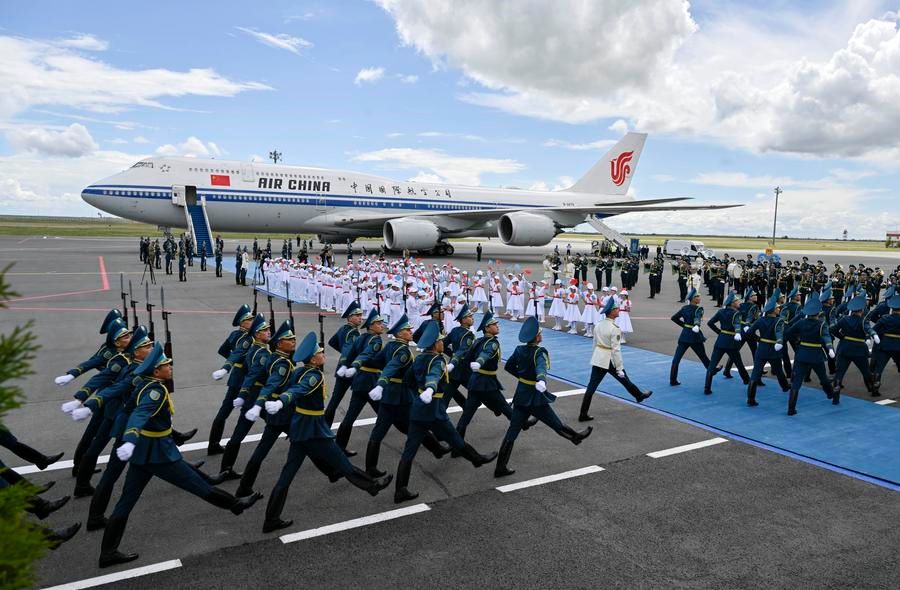
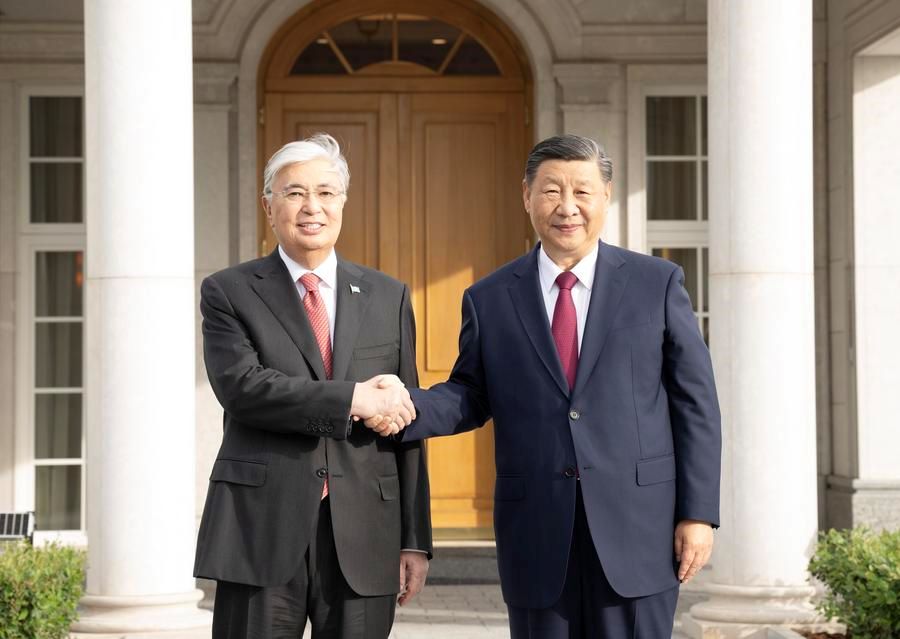
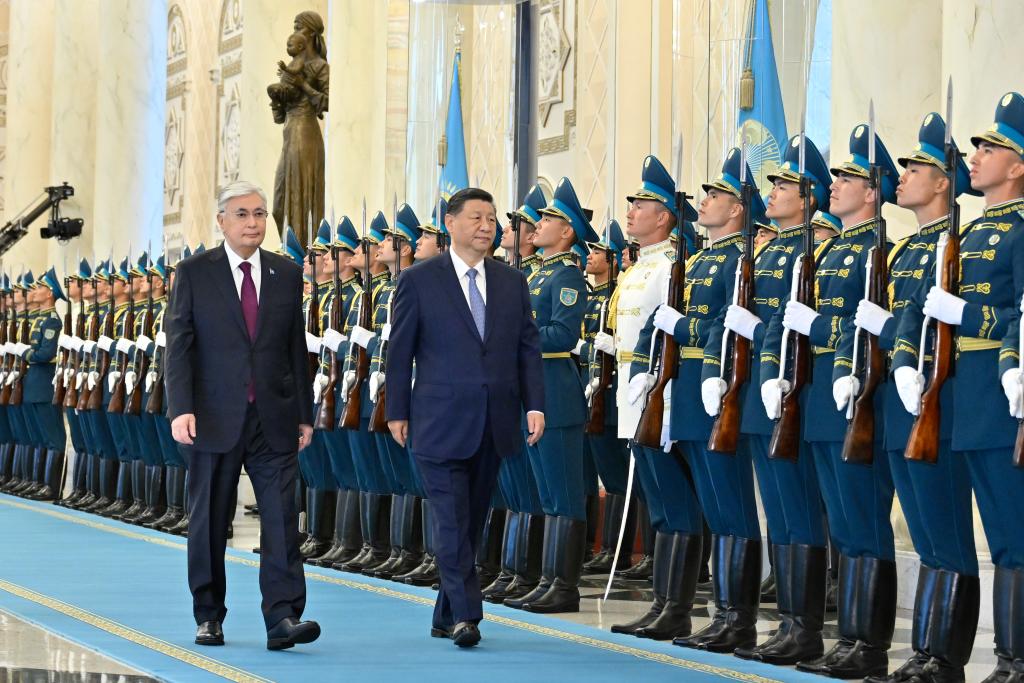
Kazakh President Kassym-Jomart Tokayev held a grand welcoming ceremony at the airport. On Tuesday evening, the two leaders had a cordial and friendly exchange over dinner in a pleasant and warm atmosphere, discussing issues related to bilateral ties and issues of common concern.
UNIQUE PARTNERSHIP
This is Xi’s fifth visit to Kazakhstan and the second one in less than two years, following his previous state visit in September 2022.
“Thirty-two years ago, China was among the first countries to recognize Kazakhstan’s independence. China-Kazakhstan relations have since embarked on a new journey,” Xi noted in a signed article published in the Kazakh media on Tuesday ahead of his visit.
Meanwhile, in a written statement upon his arrival in Astana, Xi said over the past 32 years since the two countries established diplomatic ties, their relationship has withstood the test of time and the vicissitudes of the international landscape, evolving into a unique permanent comprehensive strategic partnership.
Xi recalled that 11 years ago, he first put forward the initiative of jointly building the Silk Road Economic Belt in Kazakhstan, adding that today, Belt and Road cooperation between China and Kazakhstan has yielded fruitful results.
Two-way economic and trade cooperation has reached new highs, people-to-people and cultural exchanges have featured numerous highlights, and the two sides’ international cooperation has been close and efficient, which has not only improved the well-being of the two peoples, but also injected more stability and positive energy into the international and regional situation, Xi added.
China was Kazakhstan’s largest trading partner in 2023, with two-way trade up by 32 percent year-on-year to reach 41 billion U.S. dollars. Key exports from Kazakhstan to China include crude oil, metals, and agricultural products, and China has supplied Kazakhstan with machinery, electronics, and consumer goods.
Over the past year alone, a number of important agreements have been sealed, including the implementation of a mutual visa-free policy, the construction of a third railway checkpoint, the establishment of cultural centers, and the announcement of 2024 as the “Kazakhstan Tourism Year” in China.
The Kazakhstan-China relationship is built upon strong bonds of solid friendship and good neighborliness, Tokayev told Xinhua in an interview prior to Xi’s visit, noting that bilateral cooperation embarked on a new “golden 30 years” during Xi’s previous visit in 2022, the year marking the 30th anniversary of bilateral ties.
Xi’s visit this time is expected to bring a renewed focus on the multifaceted aspects of bilateral ties and cooperation.
In a series of meetings scheduled with Tokayev, Xi is expected to engage in detailed discussions aimed at further strengthening cooperation between the two nations. In Xi’s words, he and Tokayev will “meet and plan the way forward for further growth of China-Kazakhstan relations and discuss how best to take the China-Kazakhstan permanent comprehensive strategic partnership to new heights.”
“Kazakhstan and China are close neighbors, true friends, and partners. Today, both countries are at a key stage of their development and revival,” said Gulnar Shaimergenova, director of Kazakhstan’s China Studies Center.
The leaders of both countries have opened a new “golden 30 years” of bilateral cooperation, she said, adding that with bilateral relations growing at a high level, it is believed that Xi’s visit this time will open up new prospects for bilateral cooperation.
EVERLASTING FRIENDSHIP
Xi said upon his arrival in Astana that the everlasting friendship of the two nations has grown stronger over time, and set an example of solidarity, mutual benefit, and mutual success between neighboring countries.
“The history of China-Kazakhstan friendly exchanges is a strong testament to the fact that the development of our bilateral relationship conforms to the trend of history and that of our times,” Xi said in his signed article under the title “Staying True to Our Shared Commitment and Opening a New Chapter in China-Kazakhstan Relations.”
Time has provided many heartwarming tales epitomizing the profound friendship between the two countries.
Over 2,000 years ago, Zhang Qian, a royal emissary from China led a diplomatic mission to the Western Regions, opening the door to friendship and exchanges between China and Central Asia. The ancient Silk Road, of which Zhang was a pioneer, contributed to the friendly exchanges and mutual learning between China and Kazakhstan.
And the new era has welcomed more China-Kazakhstan friendship envoys, such as the ophthalmologist Saulebek Kabibekov, the “panda-man” Ruslan Tulenov, who voluntarily donated his rare type of blood in China, and the popular singer Dimash Kudaibergen.
The everlasting friendship was also fully manifested through the inviting ambience at the airport in Astana upon Xi’s arrival.
“On the vast and beautiful land stands our beloved homeland. We love peace, we love our hometown. The unity and mutual love make us steel-like strong,” a group of Kazakh teenagers, in white costumes, greeted Xi at the airport with the song “Ode to the Motherland” in Chinese lyrics in a show of respect and warm welcome of the Kazakh people for Xi.
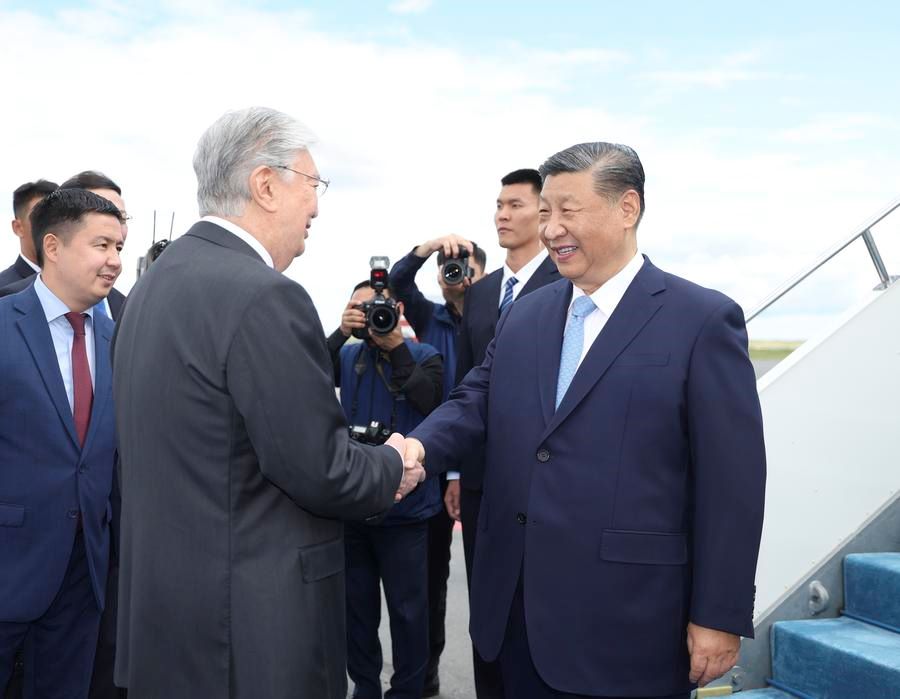
At the airport, Tokayev greeted Xi together with a team of senior government officials. Xi chatted occasionally with Tokayev, who can speak fluent Chinese as he began learning Chinese when he was in college. In his recent interview with Xinhua, Tokayev said he now reads books in Chinese regularly and stays informed about Chinese political and socio-economic development.
For long, China and Kazakhstan have recognized the importance of fostering greater understanding and friendship between their peoples, viewing cultural exchanges as one major cornerstone of their bilateral relationship.
A bilateral agreement on mutual establishment of cultural centers has been signed. Chinese and Kazakh filmmakers have co-produced a film entitled “The Composer,” their first co-production. Bilateral programs for cultural cooperation, including a Chinese university campus in Kazakhstan, a Luban Workshop, and a center of traditional Chinese medicine, have been implemented.
Thanks to the mutual visa-exemption arrangements, a total of 600,000 cross-border trips were recorded in 2023. In the first quarter of this year, the number of visits in both directions amounted to 200,000 and are expected to reach a new high, official data from both sides have shown.
“Cultural and people-to-people cooperation plays an important role in strengthening bilateral ties and fostering friendship between the peoples of our countries,” Tokayev said.
“Our two countries need to strengthen public support for an everlasting China-Kazakhstan friendship. A deeper and stronger China-Kazakhstan friendship is what our two peoples aspire to. It is therefore important that we carry forward such friendship and enhance mutual understanding and affinity between our peoples through a diverse range of cultural and people-to-people exchange programs,” Xi said in his signed article.
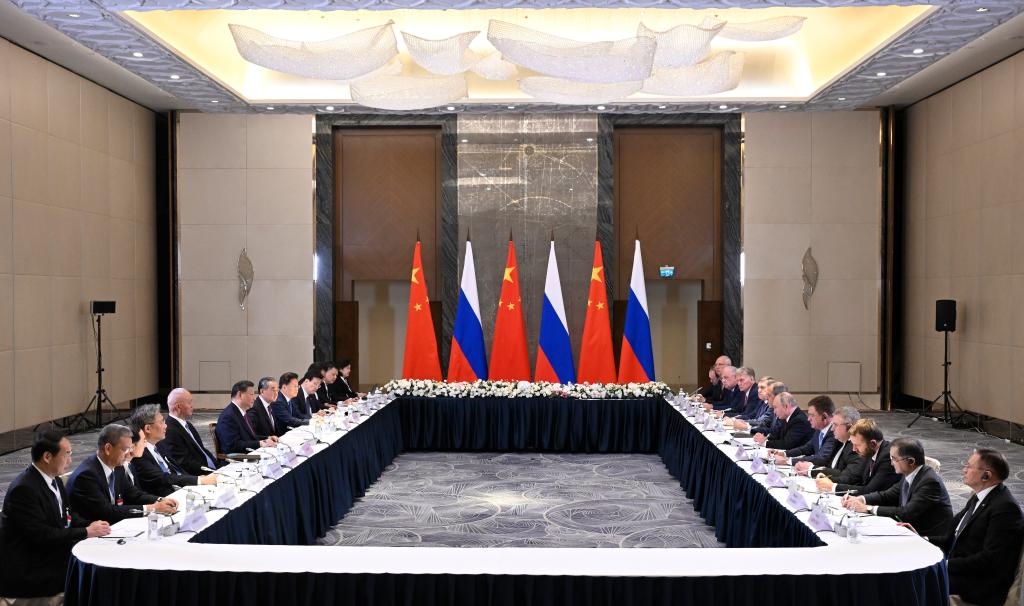
Xi made the remarks when meeting with Russian President Vladimir Putin ahead of the 24th Meeting of the Council of Heads of State of the Shanghai Cooperation Organization (SCO) in Astana.
He noted that President Putin paid a successful state visit to China this May, saying that the two sides are working together to make plans and arrangements for the future development of bilateral relations at the important historical juncture of the 75th anniversary of diplomatic ties between China and Russia.
Facing an international situation fraught with turbulence and changes, the two countries should keep upholding the original aspiration of lasting friendship, and sticking to the determination of benefiting the people, Xi said.
He urged China and Russia to continuously conserve the unique value in China-Russia relations, and explore the internal driving force of bilateral cooperation, saying that the two countries should also make new efforts to safeguard their legitimate rights and interests and safeguard the basic norms governing international relations.
China supports Russia in fulfilling its responsibilities as BRICS chair, uniting the “Global South,” preventing a “new Cold War” and opposing illegal unilateral sanctions and hegemonism, he said.
Noting that the SCO Astana summit will be held on Thursday, Xi said the Chinese side looks forward to working with Russia and other member states to promote the steady and long-term development of the SCO and build an even closer SCO community with a shared future.
China and Russia, Xi said, should continue to strengthen comprehensive strategic coordination, oppose external interference and jointly safeguard regional tranquility and stability.
For his part, Putin thanked Xi for warmly receiving him on his state visit to China in May, recalling that they celebrated the 75th anniversary of diplomatic ties between Russia and China and made plans for the future development of Russia-China relations.
At present, Russia-China relations are at the highest level in history, Putin said, adding that the two sides respect each other, and treat each other with equality and mutual benefit.
He also said that Russia-China relations feature non-alignment and do not target at any third party, which conforms to the well-being of the two peoples.
Russia, he said, supports China in safeguarding its core interests and legitimate rights and interests, and opposes external interference in China’s internal affairs and the South China Sea issue.
Noting that China will soon take over the rotating presidency of the SCO, he said Russia will fully support China’s work and work with other member states to continuously enhance the international influence of the organization, safeguard regional peace and security, and promote the development of the international system in a more just and equitable direction.
As the rotating chair of BRICS this year, Russia looks forward to strengthening communication and coordination with China on BRICS cooperation, he added.
The two heads of state also exchanged views on international and regional issues of common concern.
Xi stressed that China always stands on the right side of history, adheres to promoting peace talks, and is willing to continue to make positive efforts for the political settlement of the Ukraine crisis and other regional hotspot issues.
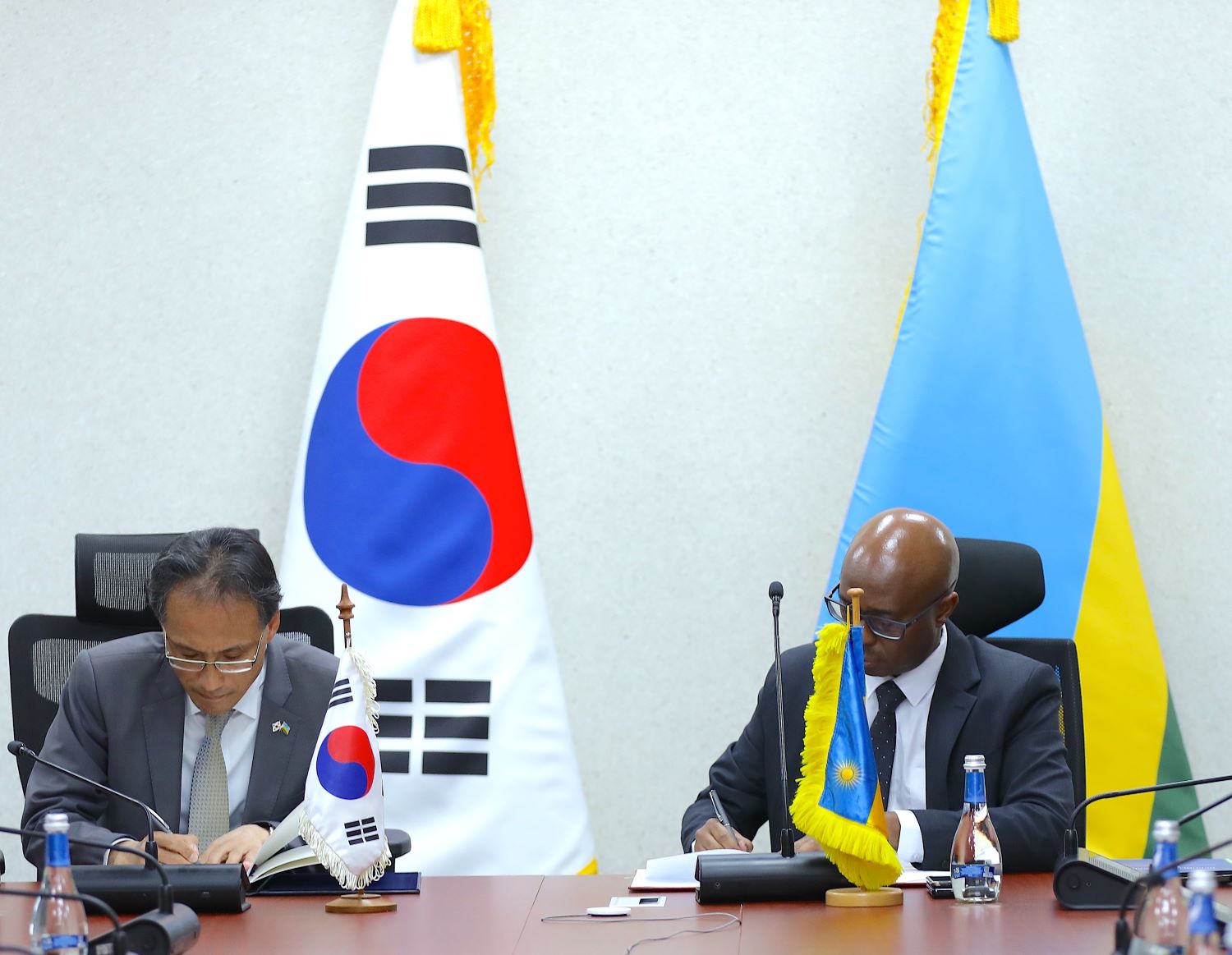
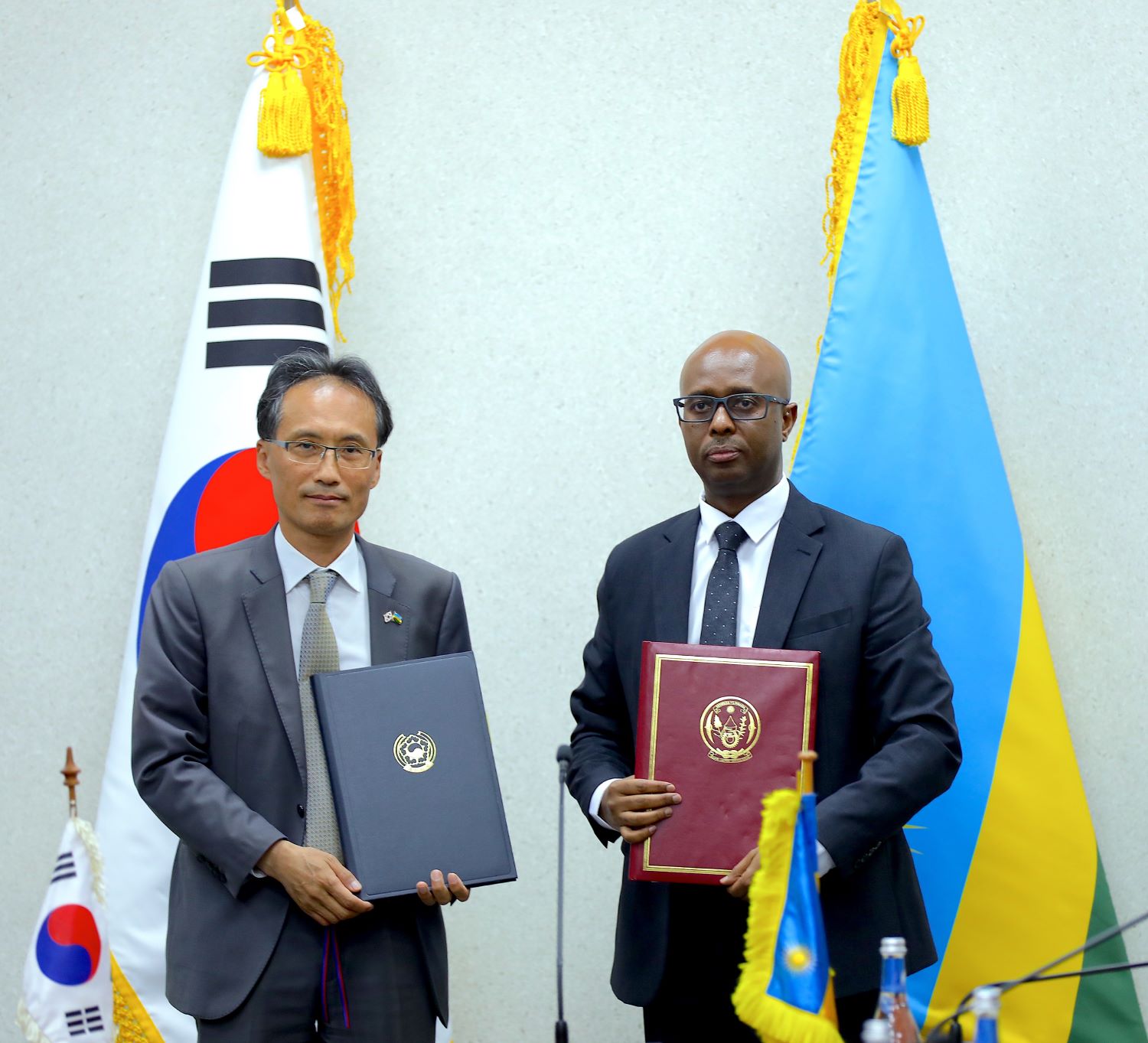
The funding framework was signed between the Minister of Finance and Economic Planning Yusuf Murangwa and Ambassador of the Republic of Korea Jeong Woo Ji.
The Finance Ministry has disclosed that the concessional loan will be channelled through the Economic Cooperation Development Fund (ECDF).
The new framework arrangement replaces the previous one signed in 2022, which allocated $500 million for the four-year period from 2022 to 2026.
The agreement, which also spans four years from 2024 to 2028, will be aligned with Rwanda’s second National Strategy for Transformation (NST2).
Minister Murangwa termed the new partnership a significant milestone in the cooperation between Rwanda and South Korea.
“Rwanda-Korea current bilateral cooperation is aligned to our National Strategy for Transformation and plays a pivotal role in enhancing Rwanda’s human capital for the 21st century, transforming our agricultural sector, establishing a foundation for ICT-led governance, and nurturing a thriving business environment. The framework signed is a significant milestone in our bilateral cooperation and provides assurances to achieve even more results in areas of our engagement,” Murangwa stated.
Ambassador Woo Jin, on his part, said the framework inked on Friday will elevate the relations between the two countries to a “new level”, especially coming a month after the inaugural 2024 Korea-Africa summit, which President Paul Kagame attended.
“I trust that the EDCF Framework Arrangement signed today will serve as a robust foundation to elevate the relations between our two countries to the next level after the inaugural 2024 Korea-Africa summit where H.E. President Kagame attended. I believe there is more room to cooperate in bilateral relations, especially based on the continuous cooperation in Agriculture, ICT, Education, Health and Infrastructure”.
Rwanda and South Korea enjoy a longstanding history of warm bilateral and multilateral development cooperation dating back to 1963.
Key areas of collaboration between the two nations include education and capacity building, rural development, healthcare, energy, agriculture, and information and communications technology.
During President Kagame’s visit to South Korea last month, the Rwandan Head of State lauded the Asian country as a strategic partner for Africa.
President Paul Kagame called for more partnerships between Africa and South Korea, emphasizing that the two regions stand to benefit from each other’s immense resources and potential.
“Korea is a global pivotal state and Africa is a pivotal continent. It’s only natural for us to draw closer together in the years ahead for many reasons. First, Korea knows the value of sovereignty and independence as well as the struggle required to achieve accountable and inclusive politics. Those experiences allow us to look at each other eye to eye with mutual respect and admiration,” President Kagame said in his address.
During the summit attended by 48 African leaders, South Korean President Yoon Suk Yeol pledged to expand development aid to Africa and pursue deeper cooperation with the region on critical minerals and technology.
Yoon said South Korea plans to expand its cumulative development aid contributions to Africa to around $10 billion by 2030 and separately provide $14 billion in export financing to encourage South Korean investment in the region.
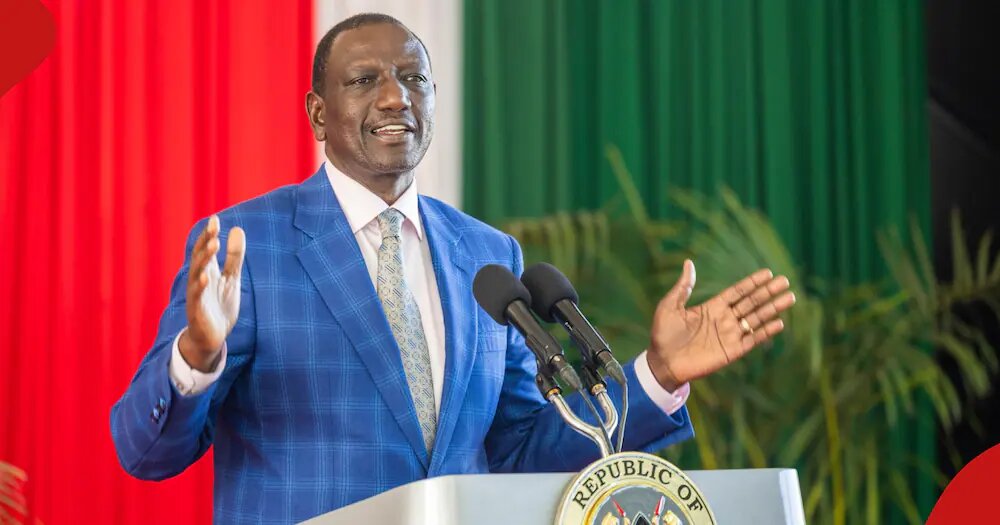
During a televised address from State House in Nairobi on Friday, July 5, 2024, President Ruto directed the Attorney General to draft a law to effect the ban on the fundraising tradition which is believed to have metamorphosed into a forum for the raw display of ill-gotten wealth.
“No state official or public servant shall participate in public contributions or Harambees going forward,” Ruto said.
“The Attorney General is hereby directed to prepare and submit legislation to this effect and develop a mechanism for structured and transparent contributions for public, charitable, and philanthropic purposes. This measure will be followed by changes in government that I will be announcing shortly,” he added.
The Head of State also announced Ksh177 billion budget cuts to seal the budget hole left after the [withdrawal of the controversial Finance Bill 2024->https://en.igihe.com/spip.php?page=mv2_article&id_article=50901].
The Finance Bill 2024 sought to raise Ksh 346 billion in additional taxes for the government. However, the proposed law sparked protests from members of the public, particularly young Kenyans under the pseudonym “Gen Z”, who took to the streets to demand the rejection of what they termed as “punitive taxes”.
Ruto said the Ksh169 billion budget deficit would be raised through additional borrowing.
In the wake of the new economic realities and the need to cut government expenditure, President Ruto announced that 47 state corporations would be dissolved and merged with parent ministries.
He also announced that the number of executive advisors would be slashed by 50% and that funding would be cut for the operations of the Office of the First Lady, the Spouse of the Deputy President, and the Prime Cabinet Secretary.
Similarly, President Ruto halted the purchase of new government motor vehicles for 12 months, providing an exception only to security agencies.
He also announced that all public servants who have reached the retirement age of 60 must proceed to retirement immediately and emphasized the suspension of all non-essential travel by state and public officers.
The context in which leadership operates contributes to governance results which get enjoyed or endured by the people, depending on whether they are good or bad.
Leaders may genuinely believe that they are making the right decisions or acting in the best interest of their people, but their actions may also be perceived as ineffective, harmful, or self-serving by others.
For example, a leader who was effective in one aspect (e.g. startup phase) may struggle when the organization grows larger or faces new challenges.
Different situations may require different leadership styles and skills however, organizational culture stands out as a significant player in shaping leadership behaviors and outcomes.
By examining various factors, we can begin to demystify why bad leadership occurs, how it manifests, and what can be done to address or prevent it.
This understanding is crucial for fostering better leadership practices and creating healthier work environments.
In Rwandan history, a toxic or dysfunctional culture enabled bad leadership to thrive. Incompetence, lack of empathy, poor decision-making skills, and ethical lapses are what characterized the country for the past half a century.
Demystifying the paradox of bad leadership involves a willingness to learn from mistakes and feedback. Effective leaders continually seek to improve themselves and their leadership practices.
To appreciate and recognize that leadership is an ongoing process of growth and development, one needs not to look beyond the common Rwandan adage that “if you don’t talk to your father, you may never know what your grandfather said.”
To appreciate and recognize that leadership is an ongoing process of growth and development, one need not look beyond the common Rwandan adage: “If you don’t talk to your father, you may never know what your grandfather said”.
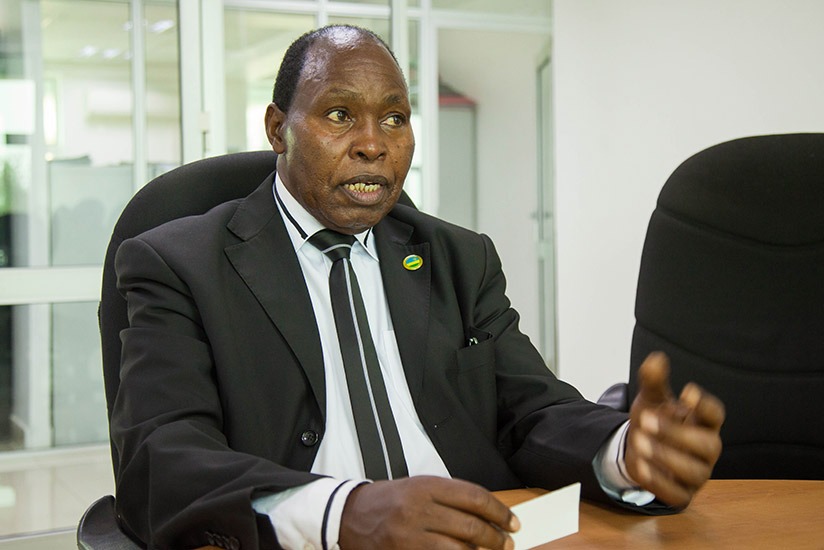
This can never be more true especially if you engage and pick insights from legendary politician and civil servant Mr. Boniface Rucagu.
Born in Nemba Sector, Burera district, the 76-year-old started engaging in politics at a very young age and lived through different regimes until now when he is still an active member of the country’s geopolitical set-up.
“I started attending meetings and political gatherings under the Rwandese National Union (UNAR) when I was barely 11 years old,” he recalls.
UNAR was a conservative Rwandan political party founded on 3 September 1959 by François Rukeba, and strongly supported by King Kigeri V.
At the time, Rwanda was still under Belgian administration, and UNAR was the leading monarchist party. It called for immediate independence under a hereditary constitutional monarchy.
Thereafter, Rucagu joined the Kayibanda administration shortly after independence. He served as Provincial Executive Secretary of Northern Province (formerly Ruhengeri Prefecture) when Kayibanda’s government was toppled by Juvenal Habyarimana.
Rucagu went on to become a Member of Parliament under Habyarimana’s administration which is widely believed to have orchestrated and masterminded the 1994 Genocide against the Tutsi.
Most leaders at the time were actively engaged in designing, planning and execution of the Genocide with harsh punishments imposed on those who hesitated or attempted to oppose the government’s narrative of getting rid of the “unwanted and dangerous” Tutsi.
Rucagu remembers that he was vehemently opposed to this narrative and ended up receiving backlash from his own government through media campaigns aimed at portraying him as an enemy and antagonist.
Notably in 1993, Kangura, a state-owned newspaper published in its edition number 46/93, a letter purported to have been authored by Rucagu in support of the ongoing preparations on how to execute the Genocide. He refuted the claims in a response letter dated July 21, 1993.
In his response, he said, “Dear Kangura readers, you may have seen a letter is full of insults, hate, discrimination, immoral thoughts and unethical opinions. I am here to inform everyone that I don’t agree with that document and it was not authored by me.”
“That document was written by an ill-intent person with malicious intentions are meant more to hurt than to help. It is intended to damage my personal reputation.”
He wondered how a person who was brought up with moral values, mingled with neighbours and friends, acquired education and became a publically elected leader could display such ill will, malignity and malevolence.
“The morals I have acquired for over 40 years cannot just vanish in a single day. I have never been party to racial segregation or any other kind of discrimination. I have ultimately decided to sue the newspaper in courts of law for the truth to come to light,” reads the letter in part.
Despite being part of the then government, Rucagu never minced words when it came to clarifying and engaging in what he believed was right.
At one time he openly showed and canvased support for the Rwandan Patriotic Army even when plans were underway to overthrow the Genocidal regime which he served.
On July 15, 1993, Rucagu told the electorate of Cummune Butaro (currently Burera district) where he hails, that Inkotanyi had good intentions for the country and would not hesitate to support them if need arose.
Fast forward, today at the Rwanda Elders Advisory Forum, Rucagu is responsible for advising the government on national topical issues, national political orientation and challenges pertaining to good governance, justice, economy and social welfare.
In the aftermath of the Genocide against the Tutsi, efforts were put in place to pacify the country while trying to bring the perpetrators to justice.
Soon after 1994, the International Human Rights Commission instituted an investigation in Ruhengeri and Gisenyi to establish the magnitude of the Genocide and Rucagu was included as a possible perpetrator but he responded to them through writing proving his innocence.
The courage and unity that Rucagu has exhibited amid widespread diversity is a testament to the good things one can achieve without necessarily being bad to others.
Recently, Dr Bizimana Jean Damascene, the Minister of National Unity and Civic Engagement took a swipe at those who accused Rucagu of Genocide without fully understanding his story in the context of Rwandan history.
“Not everyone who was in MRND as a Member of Parliament was part of the Genocide. I want to state it clearly that the truth he emphasizes in all his opinions is what has characterized him all his life,” Dr Bizimana said in a YouTube video that has since gone viral.
And whether we believe in earthly justice or heavenly rewards or penalties, in whatever you do, always remember that time is the most important factor in life and the truth will always set you free.
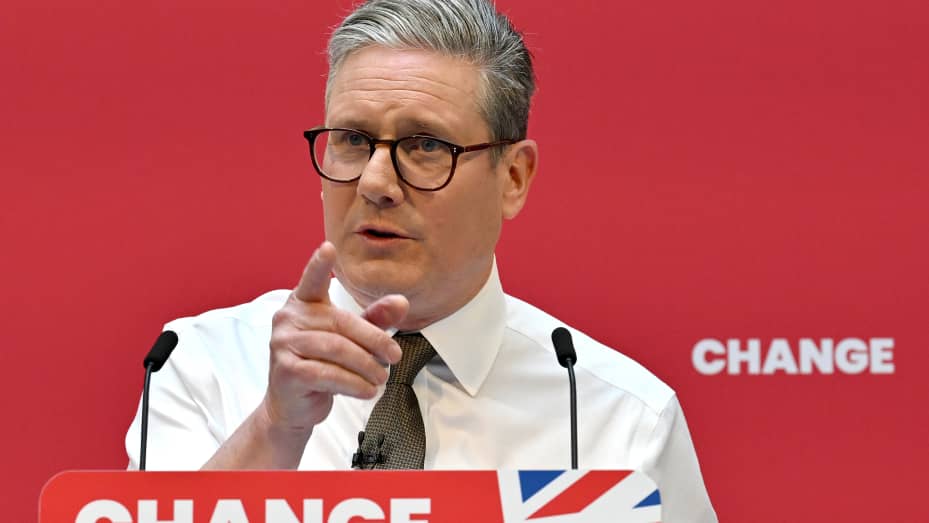
Keir Starmer is expected to be formally appointed as Prime Minister. Rishi Sunak has conceded defeat.
“I am sorry. I take responsibility for the loss,” Sunak said in a televised address to his supporters in Richmond and Northern Allerton.
This marks the end of a long Conservative dominance that began in 2010 under David Cameron and continued through the leadership of Theresa May, Boris Johnson, and Rishi Sunak.
Sunak’s defeat, however, didn’t come as a surprise, according to sources. It was the culmination of widespread public dissatisfaction over the handling of key issues and the renewed appeal of Labour’s platform under Starmer’s leadership.
Out of the 650 seats declared by press time, Starmer’s opposition party leads with 412 seats against the Conservatives’ 120. The Liberal Democrats come in a distant third position with 71 seats.
As the Tories come to terms with their devastating defeat, let’s dig deeper into several factors that could have contributed to the historic loss.
{{Brexit, inflation & Covid-19
}}
Firstly, the Conservative Party has been in a compromising situation since Johnson was forced to step down in September 2022.
Johnson, who assumed office in July 2019, faced criticism that his economic policies were inadequate or poorly managed, especially in response to challenges such as Brexit, the COVID-19 pandemic, and rising inflation.
Britain’s exit from the European Union contributed to economic uncertainty, with several quarters raising concerns about its potential negative effects on businesses, investment, and jobs.
Some critics argue that prior to this, the government did not adequately prepare for the potential economic and social impacts such as fears about disruptions to trade, supply chains, and the economy at large.
Johnson’s ‘Partygate’ scandal, involving gatherings of government and Conservative Party staff during the COVID-19 pandemic amid restrictions on gatherings, also eroded public trust in the Conservatives.
Johnson’s departure, however, did little to redeem the ruling party, as his successor, Truss, resigned just six weeks into her tenure. Truss’ short-lived premiership has been linked to her failure to address Britons’ concerns about inflation, despite campaigning on a platform promising “growth”.
The UK inflation rate was 2% percent in May 2024, the lowest since April 2021. Between September 2022 and March 2023, the UK experienced seven months of double-digit inflation, which peaked at 11.1 percent in October 2022.
Sunak’s efforts to stabilize the party after the leadership turmoil experienced during Boris Johnson’s and Liz Truss’s tenures, and to revive the economy, did not sufficiently restore voter confidence.
{{Mismanagement of public services
}}
The Conservatives are widely perceived to have mismanaged public services, including the National Health Service, education, and other essential services.
According to the Institute for Fiscal Studies (IFS), from June 2020, the elective waiting list, which comprises patients waiting to receive non-urgent treatment or surgery, started rising rapidly, increasing by an average of 80,000 per month up to December 2023.
{{Rise of Reform UK
}}
The resurgence of Nigel Farage’s Reform UK party split the right-wing vote, drawing support away from the Conservatives. This further weakened their electoral base and allowed Labour to gain ground in constituencies that traditionally belonged to Conservatives.
Farage, the driving force behind Britain’s Brexit movement, secured a parliamentary seat in Britain on his eighth attempt, winning 46.2% of the vote in the heavily pro-Brexit Clacton.
{{Labour’s Renewed Appeal
}}
Under Starmer’s leadership, the Labour Party repositioned itself as a more moderate and less controversial option compared to the Conservatives. This strategic shift helped Labour appeal to voters who were critical of the party’s more radical stance during Jeremy Corbyn’s tenure. Corbyn led the Labour Party from 2015 to 2020.
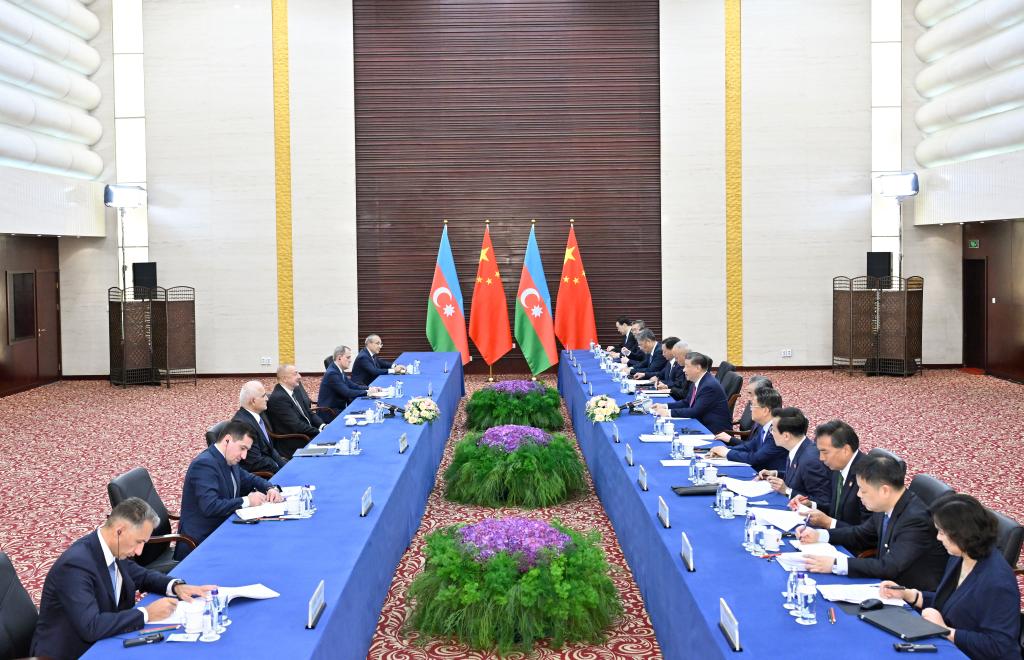
Xi noted that the two sides should continue supporting each other in a bid to bring more benefits to the two peoples.
China and Azerbaijan are good friends with sincerity and mutual trust, as well as good partners with equality and mutual benefit, and bilateral relations have been developing healthily and steadily, with fruitful cooperation and richer strategic connotations, he said.
China firmly supports Azerbaijan in safeguarding national sovereignty, independence and territorial integrity, and in pursuing a development path suited to its national conditions, Xi stressed.
The two sides should promote high-quality Belt and Road cooperation, deepen cooperation in such fields as trade, investment, oil and gas, and photovoltaics, strengthen connectivity, advance the construction of the Trans-Caspian International Transport Route, and ensure the healthy and stable operation of China-Europe freight trains, he said.
The two sides should also carry out more exchanges in such areas as education, culture and tourism, as well as between the youths of the two nations and at the sub-national level, and consolidate the public foundation of China-Azerbaijan friendship, he said.
China supports Azerbaijan in hosting the 29th session of the Conference of the Parties to the United Nations Framework Convention on Climate Change, Xi said.
China stands ready to work with Azerbaijan to advocate an equal and orderly world multipolarity, and universally beneficial and inclusive economic globalization, and promote world peace, stability and development, he said.
For his part, Aliyev said that Azerbaijan and China are good partners.
The two countries have maintained close exchanges at various departments and levels, witnessed increasing bilateral trade volume, and firmly supported each other in safeguarding independence, sovereignty and territorial integrity in international organizations, he said.
The two sides jointly announced the establishment of the Azerbaijan-China strategic partnership in a joint statement, which is of great significance to the development of bilateral relations, he said.
Azerbaijan firmly abides by the one-China principle and firmly supports China’s great cause of national reunification, which is the trend of history and no force can stop it, he said.
Azerbaijan is willing to strengthen solidarity and cooperation with China, tap the potential, enhance cooperation in such areas as economy, trade, investment, new energy and culture within the framework of Belt and Road cooperation, closely collaborate within the SCO and other frameworks, oppose external interference and safeguard regional security and stability, said Aliyev.
The two sides issued the joint statement on establishing the strategic partnership.
Relevant departments of the two sides signed cooperation documents in such areas as Belt and Road cooperation and onnectivity.
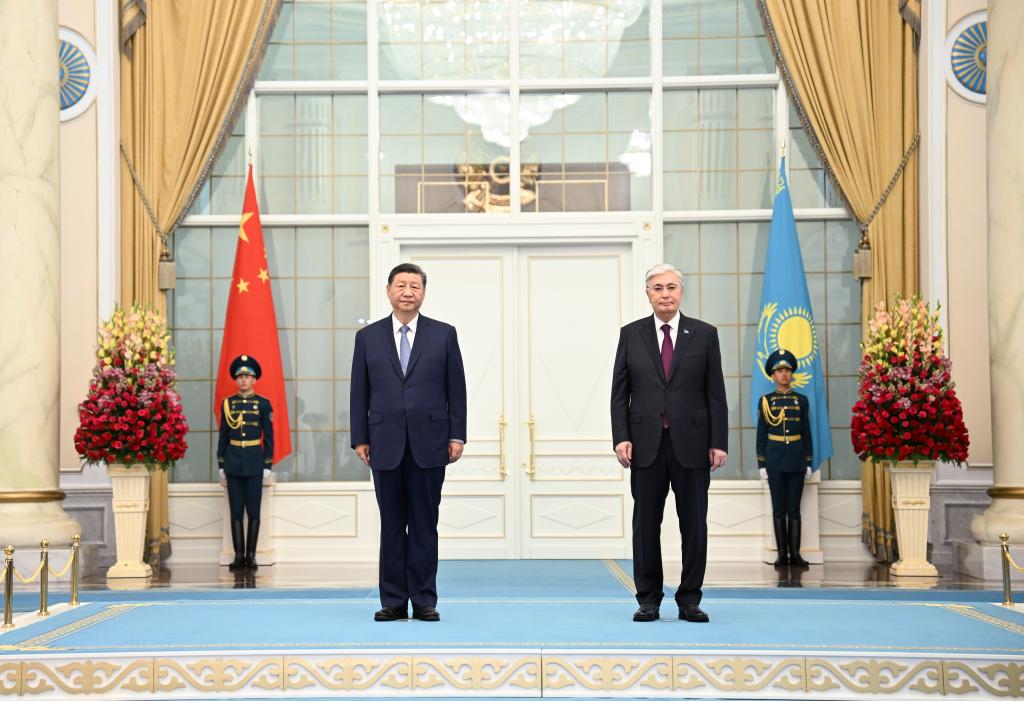
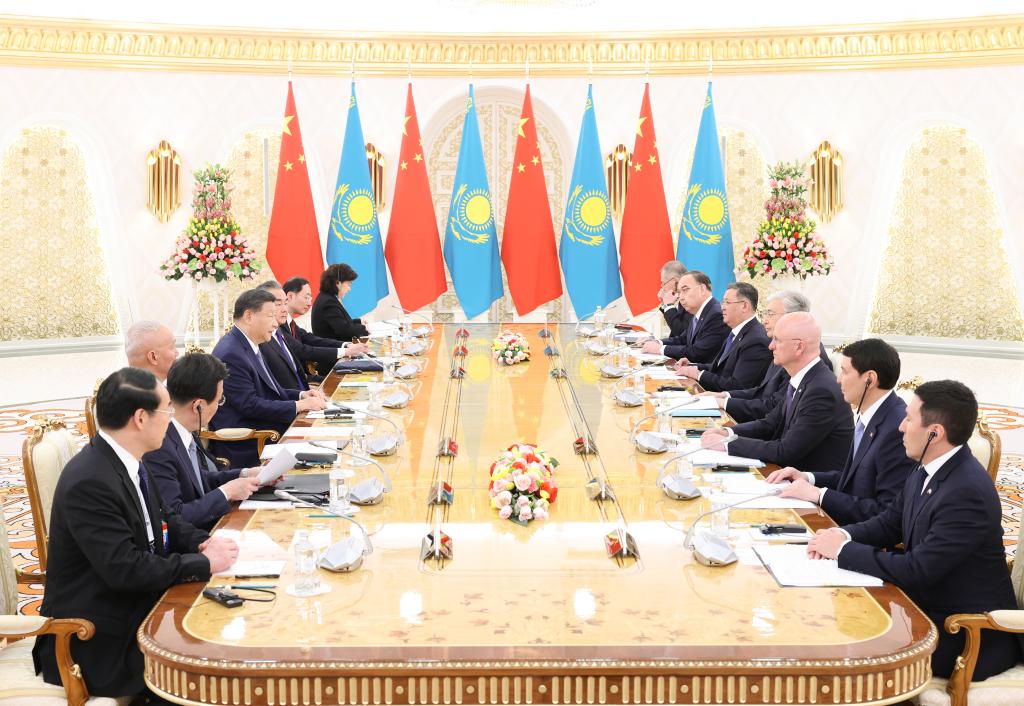
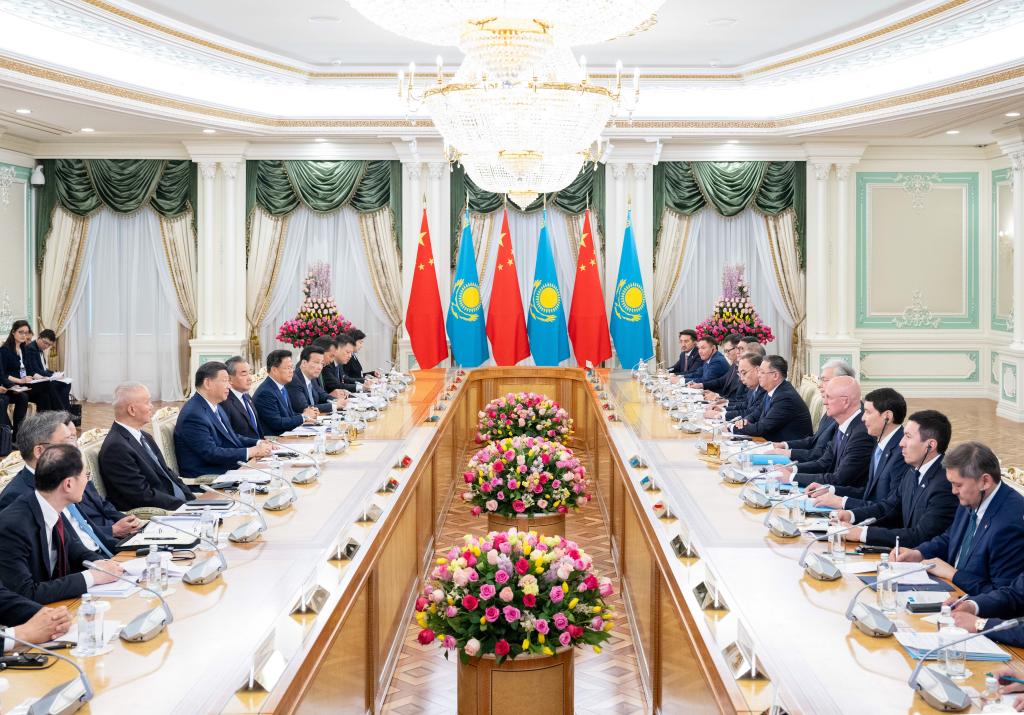
Xi made the remarks in his meeting with Tokayev at the presidential palace in Astana.
In their small-group talks, he noted that last year Tokayev and him met twice in Xi’an and Beijing respectively, and made new arrangements and plans for the development of China-Kazakhstan relations, leading the “golden 30 years” of rapid development of China-Kazakhstan relations.
The Chinese side has always viewed its relations with Kazakhstan from a strategic and long-term perspective, and regards Kazakhstan as a priority in China’s neighborhood diplomacy and an important partner for cooperation in Central Asia.
Xi said China’s will and determination to maintain and grow bilateral relations stand firm, and will not be changed due to any single incident or transformations in the international situation.
China will always be a good neighbor and partner Kazakhstan can rely on and trust, he added.
The Chinese side, Xi also said, will continue to strengthen cooperation with Kazakhstan in traditional energy such as natural gas, expand new energy cooperation including photovoltaic and wind power, encourage more Chinese enterprises to invest in Kazakhstan, and help Kazakhstan convert its resource advantages into development capabilities to achieve green, low-carbon and sustainable development.
Tokayev said Xi’s state visit to Kazakhstan is of historic significance to the development of Kazakhstan-China relations, hailing China as a friendly neighbor, close friend and important strategic partner of his country.
Based on solid good-neighborly friendship and firm mutual support, Kazakhstan-China relations have shown an unprecedented sound momentum of development, he said, noting that major achievements have been made in cooperation in trade, energy, agriculture, minerals and other fields, which have benefited the two peoples and set a good example for state-to-state relations.
Kazakhstan is ready to work with China to further tap the potential of bilateral cooperation in energy, minerals, new energy and connectivity and push bilateral relations to a new height, he said.
The Kazakh side appreciates China’s firm support for Kazakhstan’s sovereignty, independence and territorial integrity, and will firmly abide by the one-China principle, resolutely fight against the “three forces” and safeguard the common security of the two countries, Tokayev added.
In their big-group talks, Xi said the friendly relations between China and Kazakhstan are rooted in the millennia-old ancient Silk Road, reinforced by 32 years of cooperation after the establishment of diplomatic relations, and have reached the high level of a permanent comprehensive strategic partnership.
Xi reiterated that no matter how the international situation changes, China will remain steadfast in its commitment to the China-Kazakhstan friendship, in its resolve to advance cooperation across the board, in its determination to continue mutual support on issues concerning each other’s core interests, and in its confidence in both countries realizing their development goals.
China and Kazakhstan are both at a critical stage of development and revitalization, Xi said, calling on the two sides to enhance the alignment of their development strategies and exchanges of governance experience, and implement more mutually beneficial cooperation projects to boost the development of their respective countries.
The Chinese side is ready to work with Kazakhstan on boosting economic and trade cooperation, and set a new goal of doubling two-way trade at an early date, he said.
He pledged that China will further expand imports of high-quality Kazakh goods and create new growth drivers for cooperation in e-commerce and digital economy, calling on the two sides to increase the scale of cooperation in production capacity investment, tap the potential of cooperation in scientific and technological innovation, and expand cooperation in electric vehicles, new energy, cross-border e-commerce and satellite communications.
China is willing to work with Kazakhstan to actively promote the construction of the Trans-Caspian International Transport Route and build a multi-dimensional connectivity paradigm, Xi said.
He also said that China supports the holding of China tourism year in Kazakhstan in 2025, and has decided to open a second Luban Workshop in the Central Asian country.
Noting that at the airport after arrival, he was moved to hear a group of Kazakh teenagers sing “Ode to the Motherland” in standard and fluent Chinese, Xi said young people are the inheritors of China-Kazakhstan friendship from generation to generation.
He urged the two countries to give full play to the role of the culture centers and the Kazakhstan Branch of Beijing Language and Culture University to strengthen cultural exchanges, enhance mutual understanding between the two peoples, especially the young generation, and strengthen public support for all-round cooperation between the two countries.
China, Xi noted, will assume the rotating presidency of the Shanghai Cooperation Organization (SCO) following Kazakhstan, saying that the Chinese side stands ready to jointly build an even closer SCO community with a shared future with the SCO member states including Kazakhstan.
Xi noted that China supports Kazakhstan in hosting the second China-Central Asia Summit next year and is ready to work with relevant parties including Kazakhstan to make the China-Central Asia mechanism better and stronger, and to promote the China-Central Asia cooperation to achieve more new results.
China is willing to work closely with Kazakhstan within the framework of the United Nations and other multilateral frameworks, practice genuine multilateralism and safeguard the common interests of the two countries and other developing countries, Xi added.
For Tokayev, he said Xi’s visit to Kazakhstan once again proves that both sides attach great importance to and strongly hope for further enhancement of the permanent comprehensive strategic partnership between the two countries.
Kazakhstan and China, he said, enjoy a solid friendship spanning thousands of years and fruitful cooperation in various fields, adding that in recent years in particular, bilateral ties have entered a new “golden era,” with smooth progress in major cooperation projects and positive results in agriculture, green energy, people-to-people and cultural exchanges, contributing to the well-being of the two peoples.
Tokayev said his country is a reliable friend and partner of China, adding that it is an unswerving strategic priority for Kazakhstan to deepen friendly and strategic cooperation with China.
Speaking highly of China’s diplomatic concept of peace, a series of global initiatives put forward by Xi and China’s important contribution to promoting world peace and development, Tokayev said the Kazakh side is willing to work with China to promote the building of a Kazakhstan-China community with a shared future as well as a community with a shared future for mankind.
Tokayev stressed that Kazakhstan looks forward to working with China to earnestly implement the important outcomes of Xi’s visit, continuing to jointly promote high-quality Belt and Road cooperation, making every effort to achieve the goal of doubling bilateral trade, strengthening cooperation in agriculture, economy and trade, new energy, cross-border e-commerce and electric vehicles, and advancing the construction of the Trans-Caspian International Transport Route.
Kazakhstan welcomes the establishment of culture centers in their respective country and Luban Workshop, said Tokayev said. He called for ensuring the China tourism year in 2025 a success, so as to keep closer bilateral sub-national cooperation as well as people-to-people exchanges in education, culture and other fields.
Kazakhstan will continue to actively participate in building the China-Central Asia mechanism, and closely coordinate with China within multilateral frameworks such as the SCO and the United Nations, Tokayev added.
Following the talks, the two heads of state signed the joint statement between the People’s Republic of China and the Republic of Kazakhstan, and witnessed the exchange of dozens of bilateral cooperation documents in the fields of economy and trade, connectivity, aviation and aerospace, education and media.
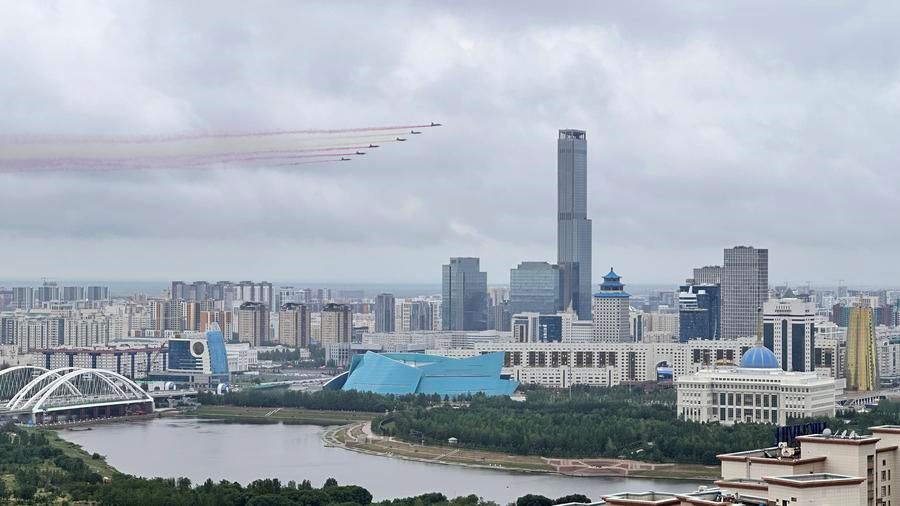
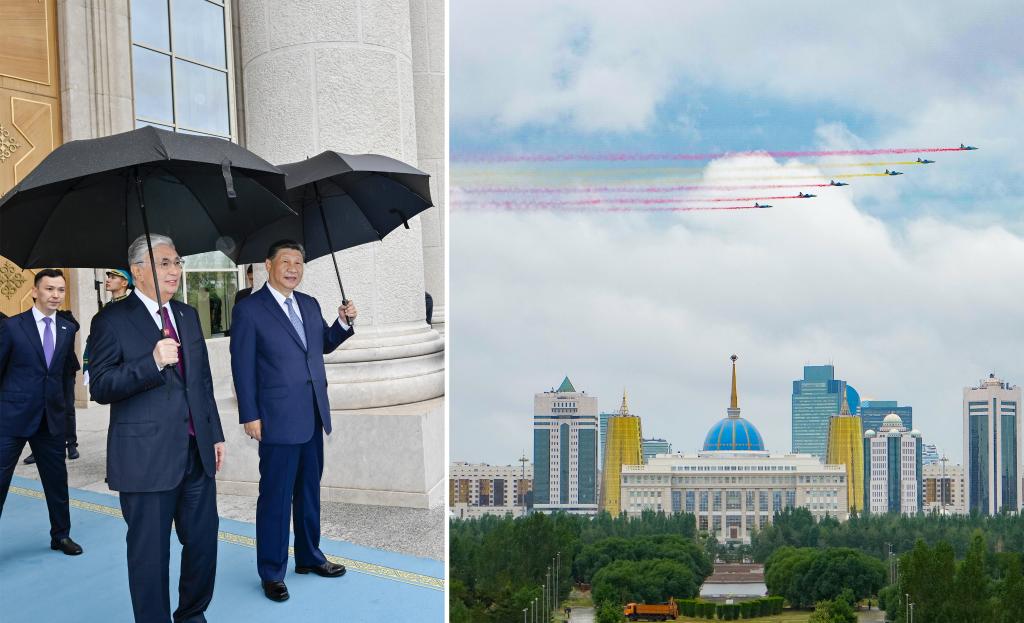
Prior to their meeting, Kazakh fighter jets painted the sky with colored smoke trails to welcome the Chinese president. A group of six jets, while flying over the presidential palace, left behind them colored smoke trails of red and yellow, colors of the Chinese national flag.
This prestigious recognition highlights the quality, dedication, and innovation that characterize Silverback Tea, making it stand out in the global tea market.
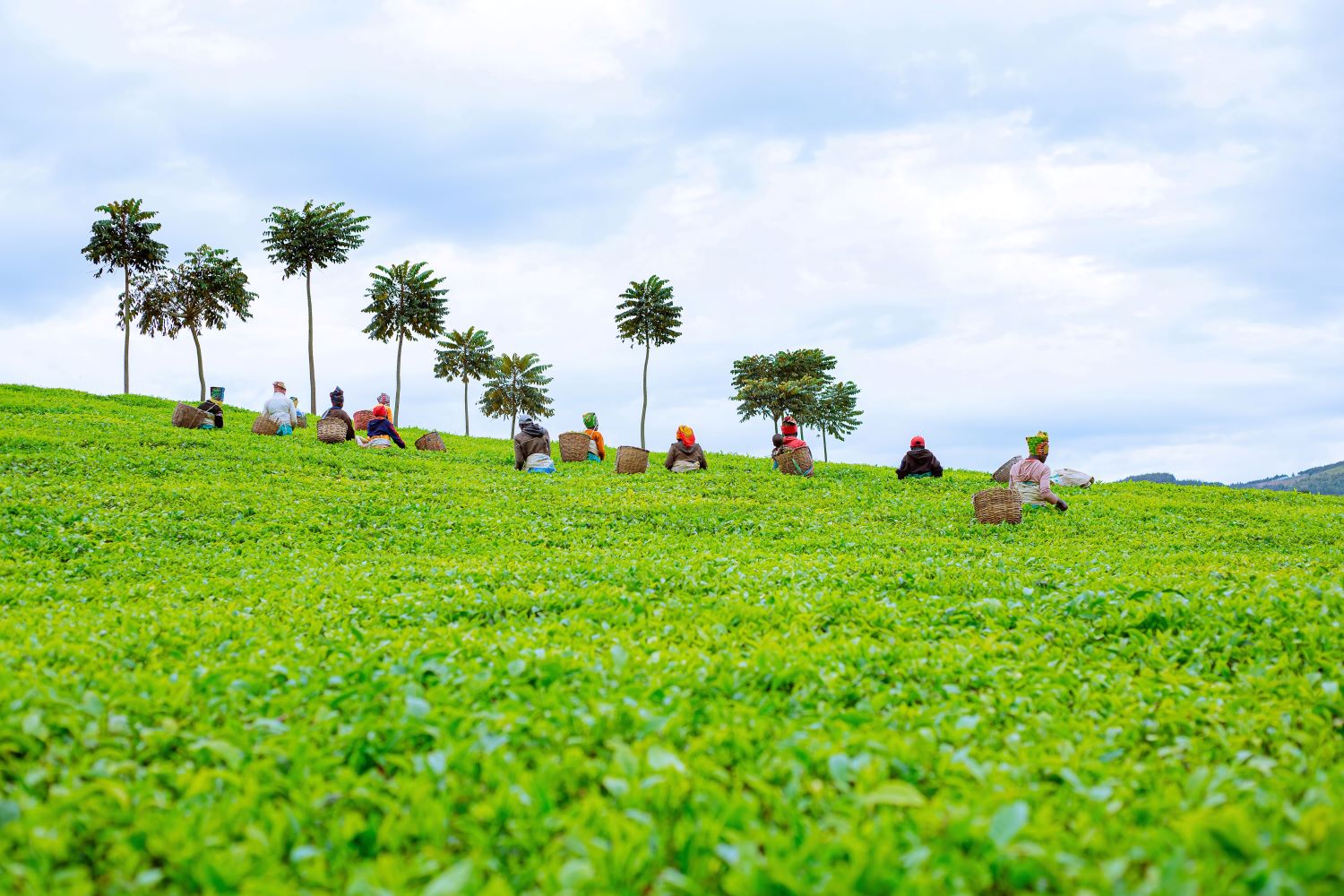
Tea has been a significant part of Rwanda’s economy since its introduction in the 1950s. The country’s ideal climate, fertile volcanic soil, and high altitude create perfect conditions for cultivating premium tea. Over the decades, Rwandan tea has gained international acclaim for its unique flavour profiles, vibrant colour, and health benefits.
Named after the majestic mountain gorillas that inhabit Rwanda’s volcanic ranges, Silverback Tea embodies strength, resilience, and the natural beauty of Rwanda. Established to produce high-quality tea that honours its origins, Silverback Tea’s, mission is to share the joy of the finest from Rwanda with the world.
Silverback Tea Company sources its tea from some of the top Rwandan tea gardens, namely Rugabano, Gisovu, and Pfunda. Each garden possesses a unique attribute suited for the production of high-quality tea that is rich, flavorful, complex, and full of character.
{{Awards and Recognition
}}
Some of the notable awards and recognition that Silverback Tea company has received include:
1. Rugabano Tea Company PvT Ltd: Currently holds the highest average made tea selling price in Rwanda as of May 2024, at 3.96 USD per Kg, according to NAEB’s data.
2. Gisovu Tea Company Ltd: Awarded the 1st Factory of the Year 2024 trophy during the International Tea Day Celebrations in Rwanda.
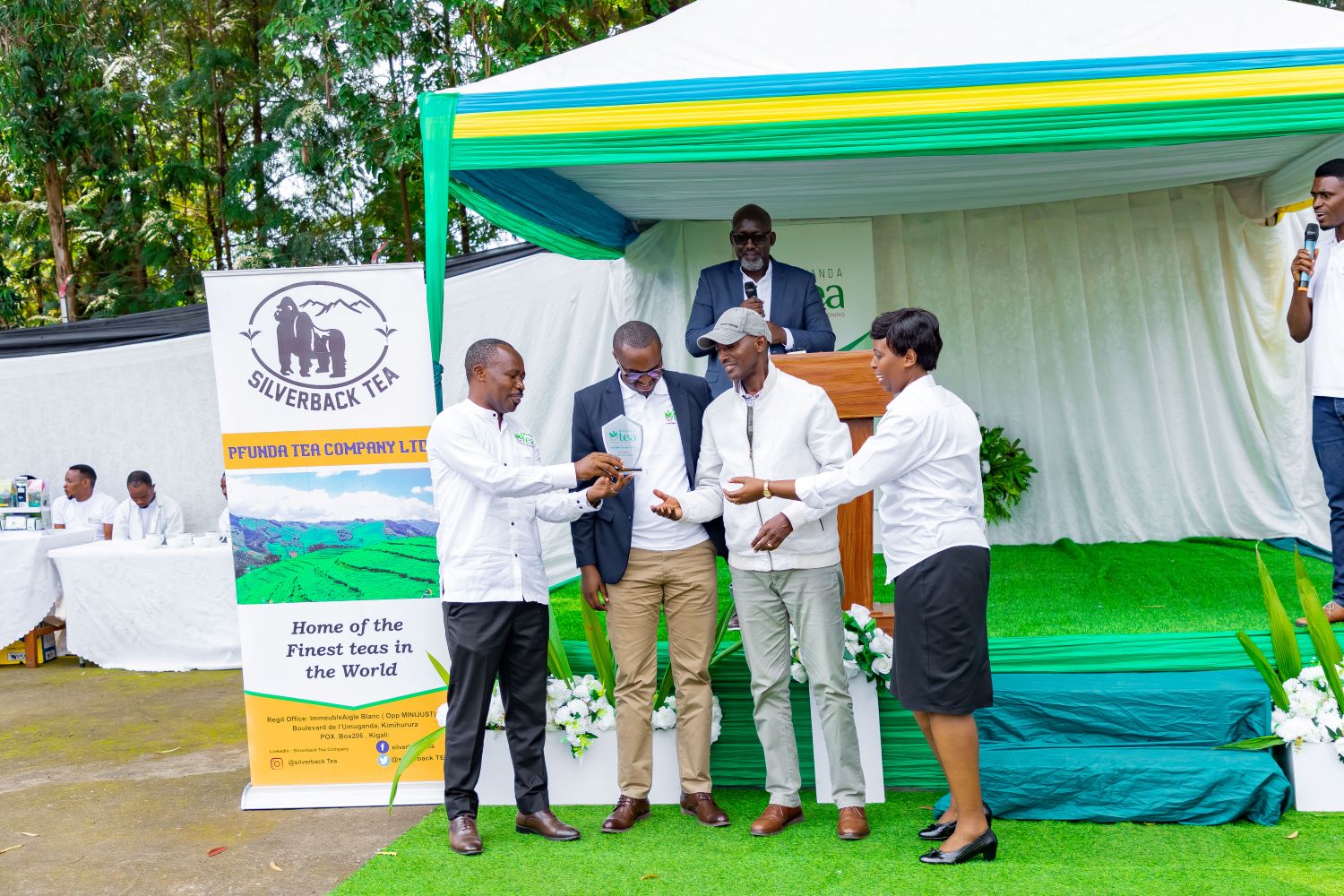
3. Pfunda Tea Company Ltd. D1: Recognized as the Best D1 in its category during the National Tea Tasting event, facilitated by NAEB, and awarded a trophy.
4. Gisovu Tea Company Ltd. PF1: Recognized as the Best PF1 in its category during the National Tea Tasting event, facilitated by NAEB, and awarded a trophy
5. Pfunda Tea Company Ltd: Honored to host the International Tea Day Celebrations in Rwanda.
6. Gisovu Tea Company Ltd: Recognized by the East Africa Tea Trade Association (EATTA) as the top producer in terms of average price per year in 2023, according to the EATTA annual report.
7. Pfunda Tea Company Ltd: Ranked 8th top producer in terms of average price per year in 2023 by EATTA.
8. Gisovu Tea Company Ltd: Recognized by EATTA for having the highest-priced tea in 2023, at 6.84 USD per Kg, an achievement shared with another top Rwandan garden.
9. All Silverback Tea Gardens: Recognized by the Gender Monitoring Office of the Republic of Rwanda, the Private Sector Federation, UNDP, and UN Women for promoting gender accountability through the Gender Equality Seal Certification Programme.
{{Quality and Sustainability
}}
Silverback Tea’s commitment to quality begins at the very source—the tea gardens. The company employs sustainable farming practices to ensure that the tea is not only of superior quality but also environmentally friendly. The handpicked leaves are processed using traditional methods combined with modern technology, preserving the rich flavours and aromas that distinguish Silverback Tea.
One of the key reasons Silverback Tea has garnered such high praise is its distinctive flavour profile. The tea is known for its bright, brisk character with a harmonious balance of sweetness and astringency. The high-altitude growing conditions impart unique notes of floral and citrus, making each sip a delightful experience. Whether enjoyed as a morning energizer or a calming evening brew, Silverback Tea which is rich in theanine offers a versatile and exquisite taste.
{{Recognition by NAEB
}}
The National Agricultural Export Development Board (NAEB) plays a crucial role in promoting Rwanda’s agricultural products on the global stage. Each year, the NAEB evaluates the country’s agricultural exports, recognizing the finest products that meet stringent quality and sustainability standards.
{{Impact on the Local Community
}}
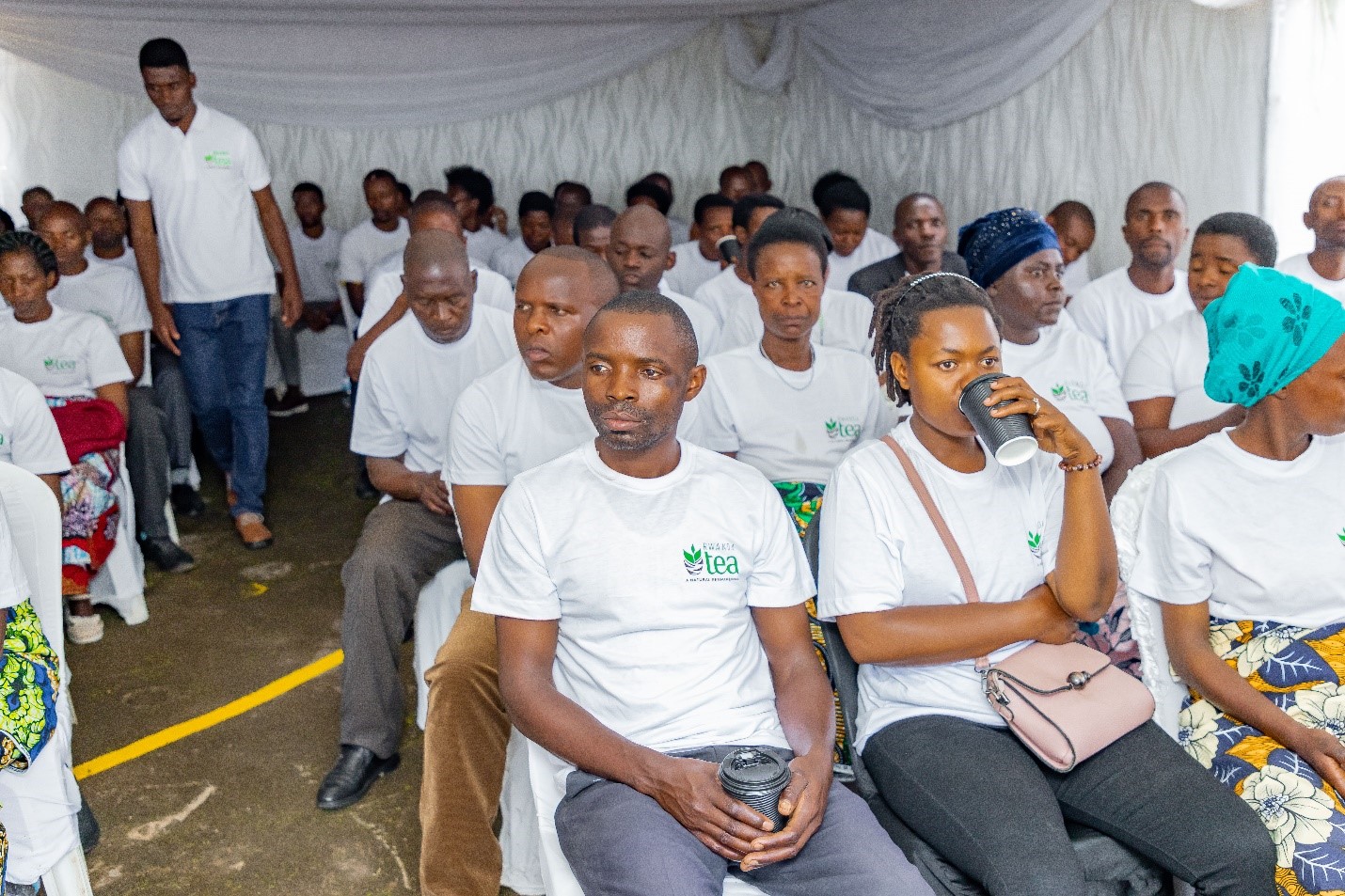
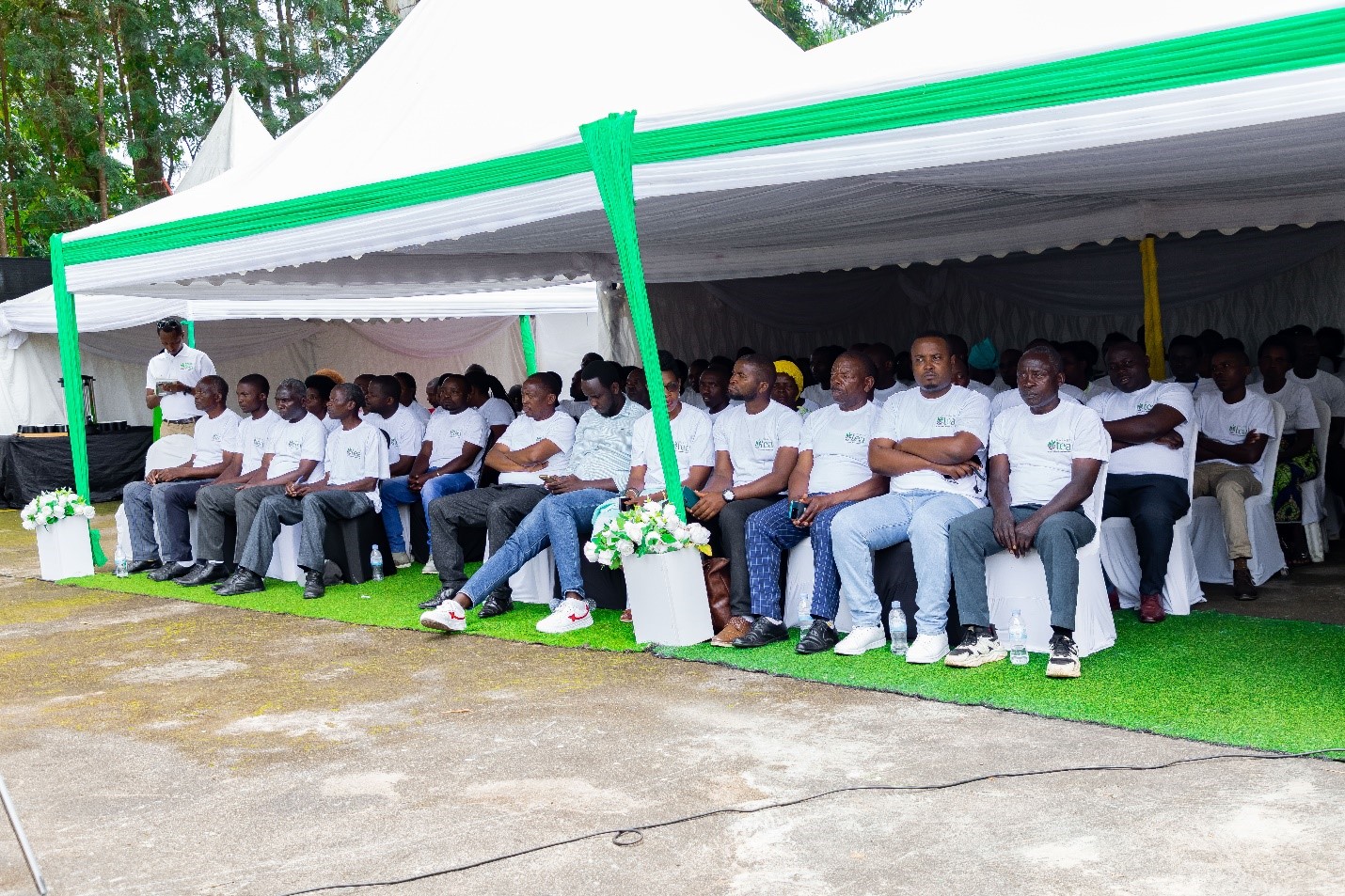
The company’s success translates into economic benefits for the farmers, providing better livelihoods and supporting community development projects. Silverback Tea invests in local education through ECDs and infrastructure, tea tasting events which are open tea enthusiasts fostering a sustainable and prosperous future for its workers and their families.
{{Availability in Local Markets
}}
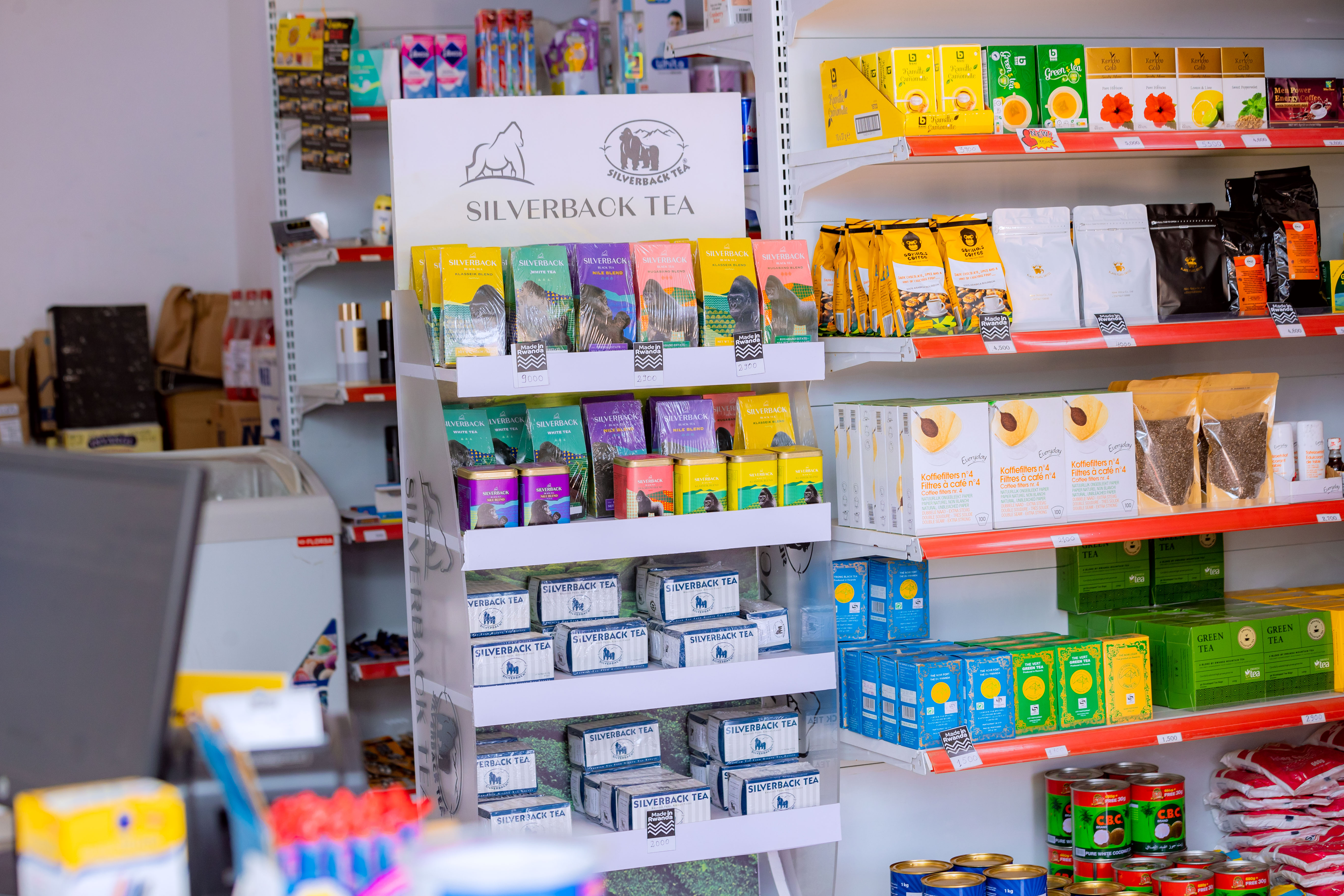
Silverback Tea has expanded its availability in local markets. Tea enthusiasts can now purchase Silverback Tea at several prominent retail locations, including Simba Supermarket, Tuma250, The Hut Supermarket, Silverback Kigali office and other supermarkets across Rwanda. This increased accessibility allows more people to enjoy the unique flavours and superior quality of Silverback Tea.
For those seeking a tea that is not only delightful in taste but also rooted in a story of dedication and excellence, Silverback Tea stands as the finest choice.
“Silverback tea greatly appreciates the business-friendly climate of Rwanda which allows us to thrive and focus on delivering the highest quality tea,” affirms Mr. Rudra Chatterjee, the Chairman of Silverback Tea Company Ltd.