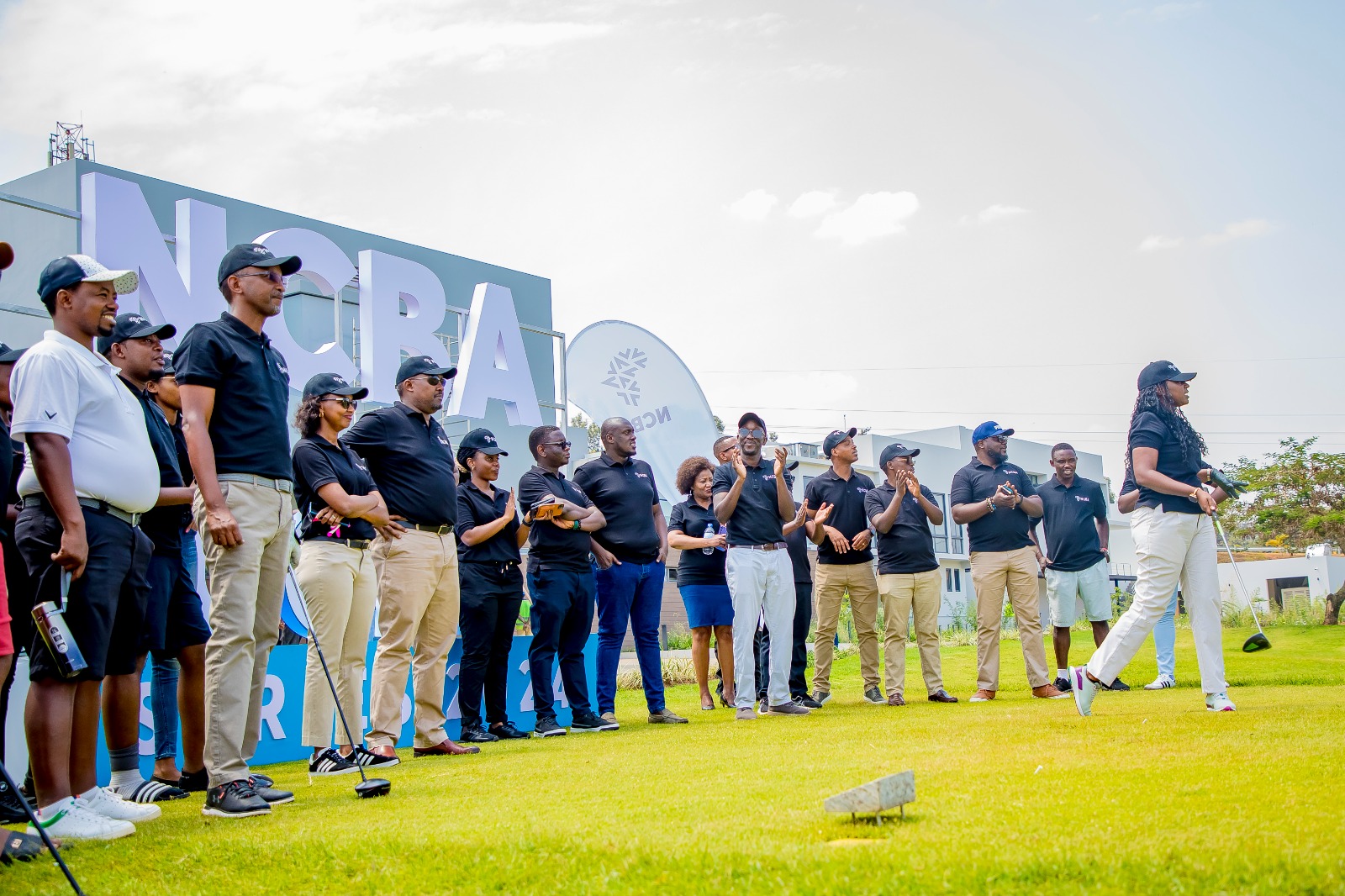
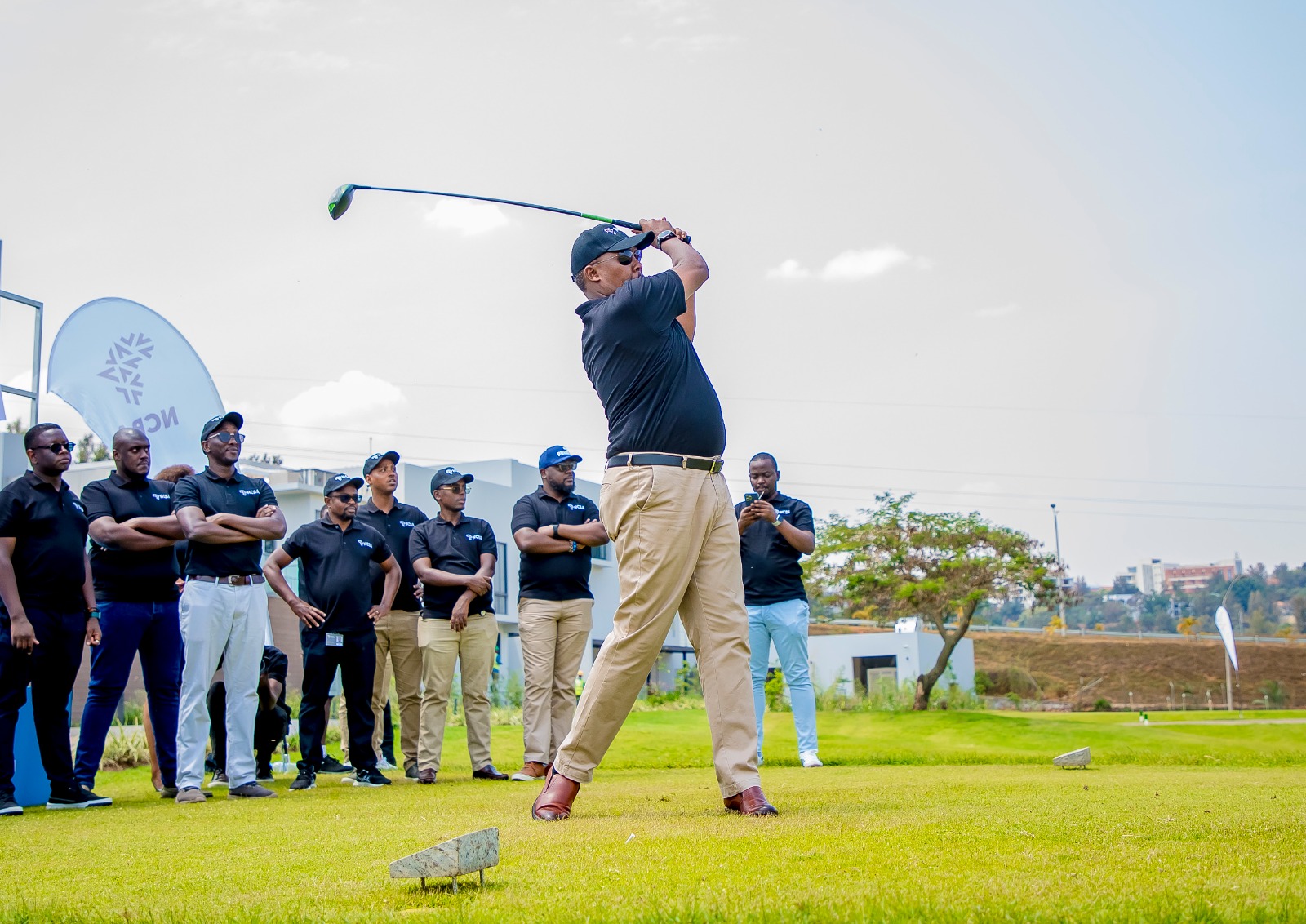
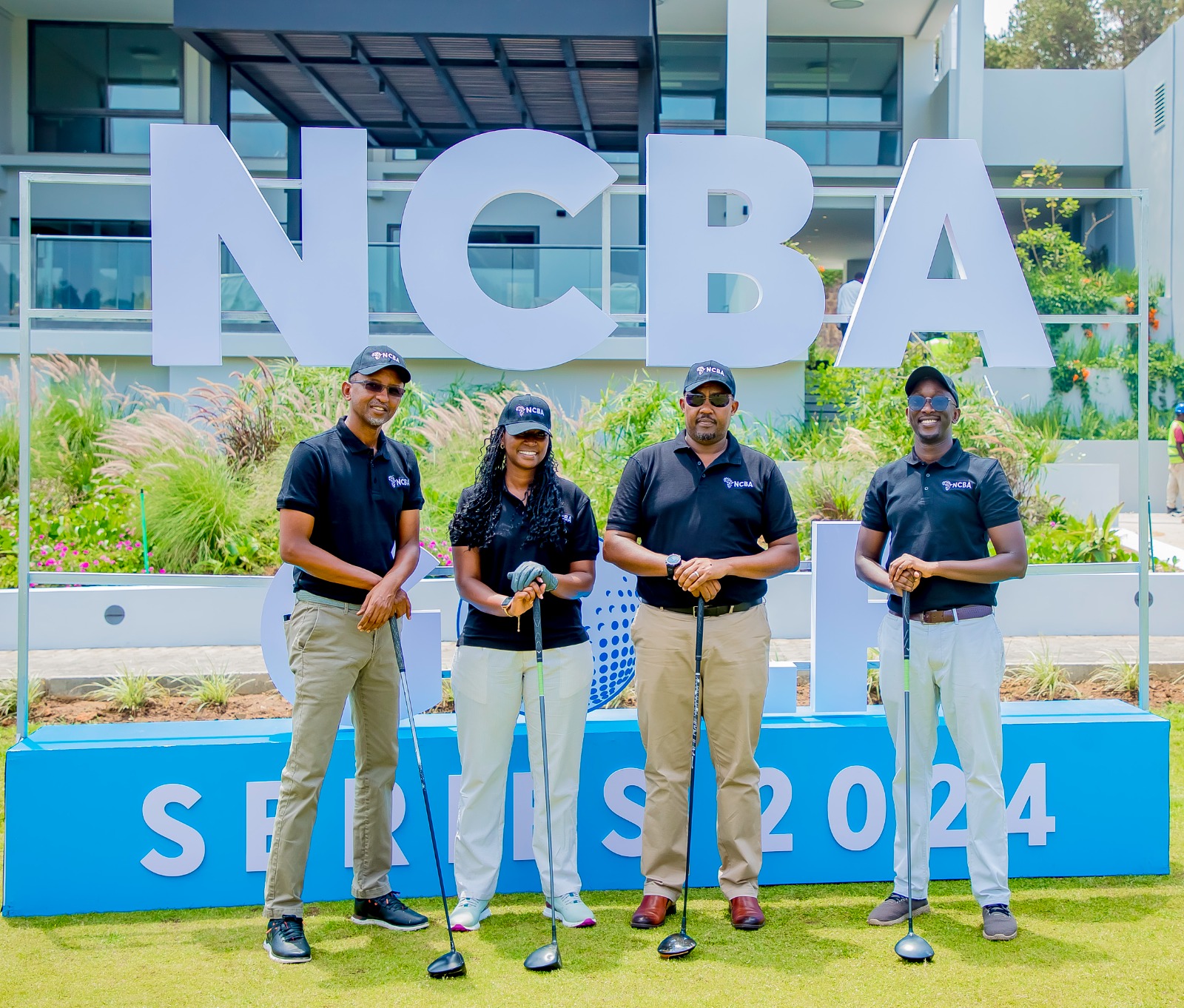
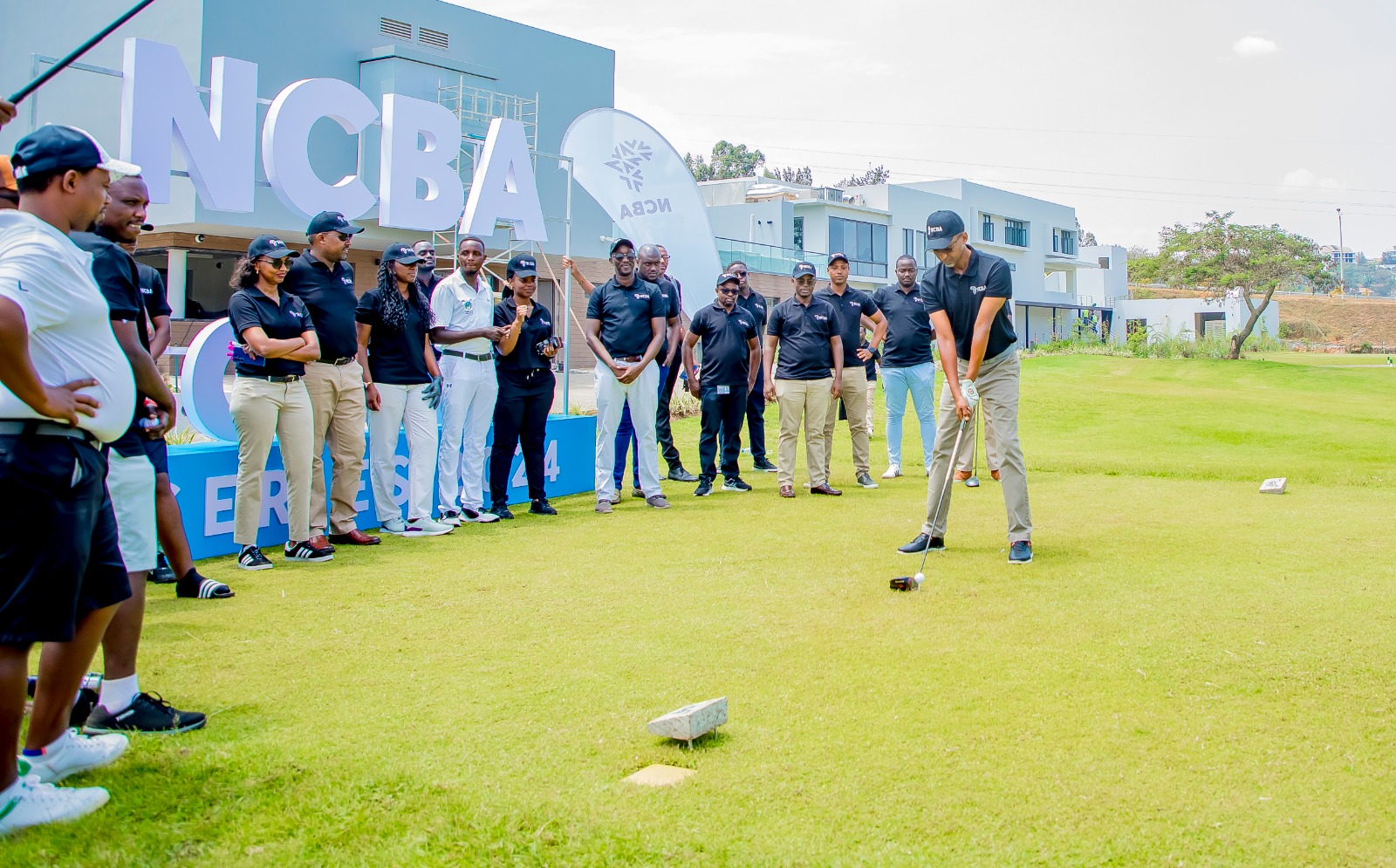
The top three performers from the Rwanda Series grand finale will secure their spots to compete in the regional NCBA Golf Series grand finale at Muthaiga Golf Club in Kenya.
Marking a significant milestone for both NCBA Group and Rwanda’s golfing community, the series underscores the bank’s commitment to supporting sports development and contributing to the nation’s economic growth.
“We are thrilled to introduce the NCBA Golf Series, a testament to our dedication to Rwanda’s sports progress,” said Diana Mukunde, the Head of Corporate Banking at NCBA Rwanda.
Golf as a sport, is a unifying activity that bridges diverse communities through shared play, promoting physical health and mental well-being. It offers cardiovascular benefits, stress relief, and fosters social interactions across various demographics.
“Golf is more than a sport; it’s a platform for networking, community building, and economic advancement. We are thrilled to have NCBA supporting the game and spreading it to those who don’t know about it,” said Marcel Byusa, the President of Kigali Golf Club.
The series provides a unique opportunity for NCBA to enhance brand visibility and customer engagement while positioning itself as a key player in the local business and sporting communities.
“Beyond sports and business, golf embodies health, wellness, etiquette, and discipline. We are proud to have this partnership that will take golf to the next level in Rwanda and the region,” affirmed Andrew Kulayije, Captain of Kigali Golf Club.
Building on the success of its golf series in Kenya, Uganda, and Tanzania, NCBA aims to replicate the game’s development in Rwanda.
As the fastest-growing subsidiary in the region, NCBA Rwanda’s participation in the series highlights its commitment to expanding its footprint and fostering community engagement.
Sports sponsorship is central to NCBA Group’s sustainability vision, aligning with its goal of driving economic and social progress. By positioning the golf series as an annual event on Rwanda’s sporting calendar, NCBA aims to make a lasting impact on the country’s golfing landscape.
As he neared his 40th birthday, just three months away, the French climber took his final “dance” at the Le Bourget Sport Climbing Venue on Thursday, receiving thunderous applause from thousands of local fans.
Despite finishing seventh in the men’s speed climbing final with a time of 5.26 seconds, falling short of his medal aspirations, the outcome seemed secondary.
In the adrenaline-pumping “100-meter dash” of sport climbing, Mawem, the oldest competitor ascending the 15-meter wall, showed no signs of age diminishing his hunger and desire to succeed.
{{INSPIRING THE WORLD}}
The speed climbing final featured a host of young prodigies, including 18-year-old American climber Sam Watson, who broke his own world record in the qualifiers with a new time of 4.74 seconds.
Amidst these youthful stars, Mawem stood out not as a relic of the past, but as a symbol of enduring passion.
During a highly competitive qualification round on Tuesday, Mawem surpassed his personal best three times, narrowly securing his place in the final by edging out 22-year-old Ukrainian Yaroslav Tkach by a mere hundredth of a second.
“It’s a moment of unbelievable joy,” said the French climber emotionally. “It was a beautiful duel, one I wasn’t really favored to win, and I managed to grab it at the end by 1/100th of a second.”
“I grew up with this sport bit by bit. It’s truly a privilege to be here now with all these inspiring young athletes whom I’ve also inspired,” he said. “To finish my career in the final with them is crazy. It’s as crazy for them as it is for me.”
Although Mawem ultimately fell to Indonesia’s Veddriq Leonardo, who went on to become the new Olympic champion in the event, his presence at the Le Bourget Sport Climbing Venue was a monumental success.
“Because there aren’t many places-just 14 spots in the whole world-you had to punch your ticket. I punched my ticket, and now I know I’m part of the top eight,” Mawem said.
He set the event’s first Olympic record of 5.45 seconds during the speed qualifications at Tokyo 2020, but an injury, a ruptured lower biceps tendon, sidelined him from competing in the final.
Following the Tokyo Games, Mawem faced a long and challenging recovery process, undergoing surgery and staying away from climbing for several months. When he finally returned, he had to rebuild his strength and skills from scratch.
“It took me a year to get back to my level, and then I had to claw my way back to the international level,” he recalled.
His comeback was affirmed at a speed climbing qualification tournament in Rome in September 2023, where he outperformed Europe’s best to secure his Olympic ticket.
For Mawem, even when the Olympic fervor fades and life returns to normal, his love for climbing remains undeterred.
“Climbing brings me balance-a moment in which I detach from work and family. A moment in which I don’t think about the future or all the things I still have to do. In simple words, it is my moment,” he said.
{{BROTHERHOOD SHINES}}
Bassa Mawem was 15 when he discovered climbing, a passion he shared with his brother, Mickael Mawem. The sport then became an anchor for both of them.
The older brother, Bassa, felt a twinge of regret not having his brother, also a professional climber, join him in the Paris Olympics, as he saw the 34-year-old Mickael as a source of motivation.
Their story from Tokyo did not repeat itself. At the last Olympics, the Mawem brothers both represented France. Mickael qualified at the world championships in 2019, while Bassa secured his spot three months later at an Olympic qualification tournament.
However, Mickael, the 2023 world boulder champion, failed to qualify for Paris at the continental combined qualifications in Laval and the Olympic qualifying series in Shanghai.
Yet, Mickael became part of Bassa’s Olympic journey, cheering alongside their family and even performing the dramatic countdown ritual with three strikes on the ground to kick off the speed climbing final.
It took a long time for the brothers to join the French national team (Bassa in 2011, Mickael in 2014), but their dedication paid off. Bassa specialized in speed climbing, becoming national champion, setting a French record with a time of 5.52 seconds, winning silver at the 2018 world championships, and topping the world rankings in 2018 and 2019.
Mickael, less powerful yet more technical, excelled in bouldering. “I love the diversity of training in bouldering, and it’s always changing. There are many things to work on-it’s always new. I love it,” said Mickael.
Bassa emphasized their perseverance, noting that they started from humble beginnings without a climbing background in their family.
“We started from nothing, and we fought. We stuck to our methodology: strength. Since the beginning, even in our cellar, we worked on strength, strength, strength… We stuck to it, and that’s how we managed to reach the elite level,” said Bassa.
The brothers, known as “Les Freres Mawem,” have launched their own line of T-shirts and climbing gear, and opened a climbing gym in Colmar, Alsace, close to their climbing roots.
“We left Alsace due to a lack of resources for a high-level career, but we returned to share the skills and knowledge we’ve gained,” Bassa explained.
“Our next goal is to allow young people to experience everything we have experienced. We hope that our athletes, one day, will compete in Los Angeles 2028 or Brisbane 2032,” he said.
Adams made these remarks on Thursday at an IOC daily briefing at Paris 2024, addressing questions from journalists in the wake of a recent scandal involving the U.S. Anti-Doping Agency (USADA).
The scandal was exposed by a statement issued by the World Anti-Doping Agency (WADA) on Wednesday, which revealed that USADA had allowed U.S. athletes who had violated anti-doping rules to compete without disclosing their violations or imposing any sanctions.
“Obviously, we’re working with all of our stakeholders and continue to work with all our stakeholders to ensure we have a good and robust world anti-doping system,” said Adams.
But he isn’t just an Olympic champion – he’s also a rapper, a side of him that remained largely unknown until his recent victory. In his song “Changba Street Kid,” which went viral online, he raps, “They say I am too crazy and tell me to behave, but I don’t care what they say to me…” Released in July, just before the Paris Olympics, Long not only composed the track but also performed it himself.
“It’s really incredible; he is a diver and a rapper. How does he balance these two things?” one of the 2,000 comments on his song marveled.
On Friday, Long made a memorable appearance at Champions Park, a venue where fans could meet and interact with Olympic medalists. As the only Chinese athlete present that day, he immediately captivated the crowd. Wearing the Chinese delegation’s uniform and a pair of sunglasses, Long confidently took the stage, moving to the rhythm of the live music. With his hands raised high, he matched the beat perfectly, energizing the atmosphere.
Under the Eiffel Tower, Long stood tall, arms wide open as if embracing the world. “In my impression, Chinese athletes are usually shy. Long is such a different guy,” a local fan remarked.
What that fan might not know is where Long comes from. He hails from Changba Street in Rongjiang County, in China’s southwestern Guizhou Province – a place also known for the famous Village Super League (VSL).
The VSL, also known as “Cun Chao,” quickly became a hit both in China and globally in 2023 for its grassroots spirit and festive atmosphere.
Beyond football, Rongjiang has also become a hub for gymnastics in Guizhou, with athletes from the area winning several world championships in gymnastics and rock climbing in recent years.
Long grew up surrounded by this sporting environment. Born in 2003, he began training in gymnastics at the Rongjiang County Children’s Amateur Gymnastics School at the age of four. At seven, he was selected to the Shijiazhuang City Sports School in Hebei Province, where he switched to diving. By eight, he was already part of the Hebei Province Diving Team.
In his song, Long raps, “I am a kid from Changba Street… If I fall into a trap, I have to work harder. I’m not afraid.”
With a gold medal around his neck and a hit song to his name, Long Daoyi’s story has only just begun. As he continues to dive into new challenges and rap his way into the hearts of fans, the world will be watching closely – eager to see where his unique talents take him next.
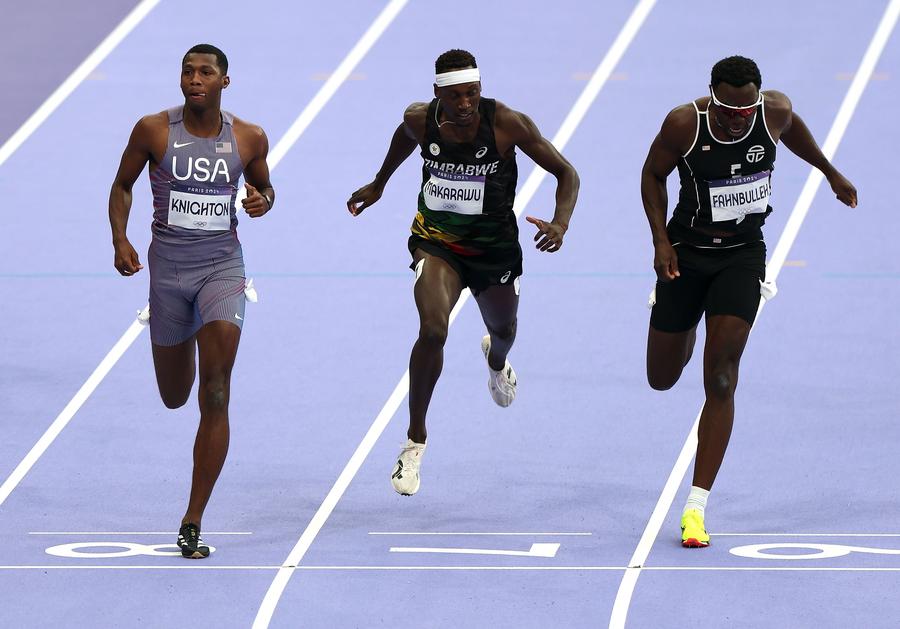
Knighton tested positive for the banned steroid trenbolone during an out-of-competition test on March 26. The United States Anti-Doping Agency (USADA) opted not to impose a suspension, attributing the positive result to contaminated meat. This decision allowed Knighton to compete in the Paris Olympics qualifiers, a move that has sparked widespread concern.
China’s Anti-Doping Agency (CHINADA) publicly questioned USADA’s handling of the case, calling for an independent investigation into what it described as a serious breach of the World Anti-Doping Code and a potential cover-up of anti-doping violations.
Olympic regulations require all athletes to pass through the mixed zone for media interviews before leaving the venue. However, after the 200-meter final, Knighton was absent, leaving reporters waiting in vain. His absence stood in stark contrast to his teammate, Kenneth Bednarek, who won the silver medal and spoke openly with the media. Even Noah Lyles, who had tested positive for COVID-19, made a masked appearance to share his experiences.
When asked about Knighton’s whereabouts, a U.S. team staff member informed reporters that Knighton had already left and did not stop for interviews. Fellow journalists reported that Knighton hurried past the American TV reporters’ interview area without saying a word.
“Knighton’s silence is particularly striking given the ongoing scrutiny of doping practices,” commented one pundit. “Questions remain as to why the typically outspoken Knighton has chosen not to address the media, leaving the doping controversy surrounding him unresolved in the public eye.”
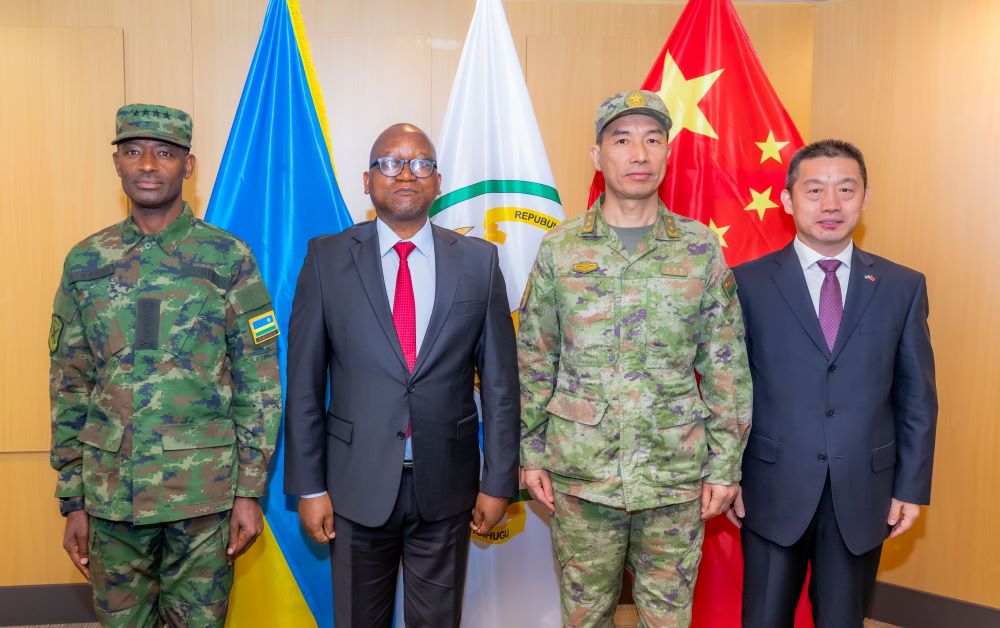
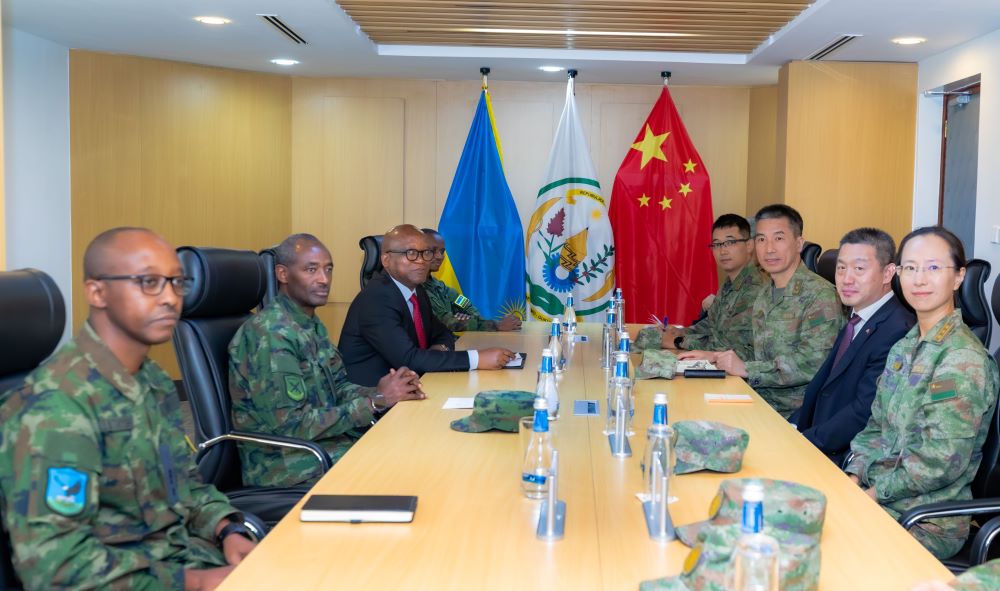
The discussions took place when Rwanda’s Minister of Defence, Juvenal Marizamunda, and the Chief of Defence Staff of the RDF, Gen MK Mubarakh, hosted Lt. Gen. Huang Xucong, Deputy Commander and Chief of Staff of the Central Theater Command of the PLA, along with his delegation. The Chinese delegation is on a four-day official visit to Rwanda.
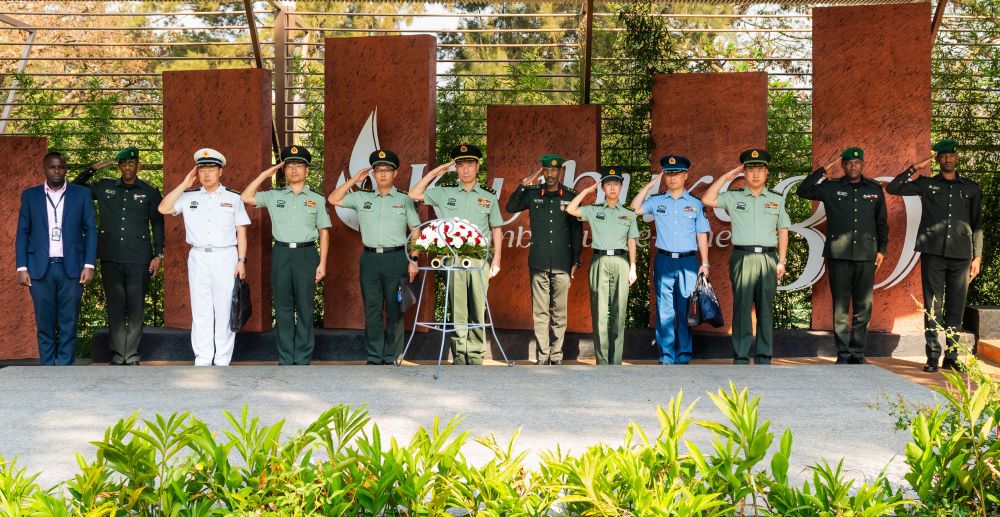
As part of their visit, the delegation paid respects to the victims of the 1994 Genocide against the Tutsi at Kigali Genocide Memorial on Wednesday and visited the Campaign Against Genocide Museum.
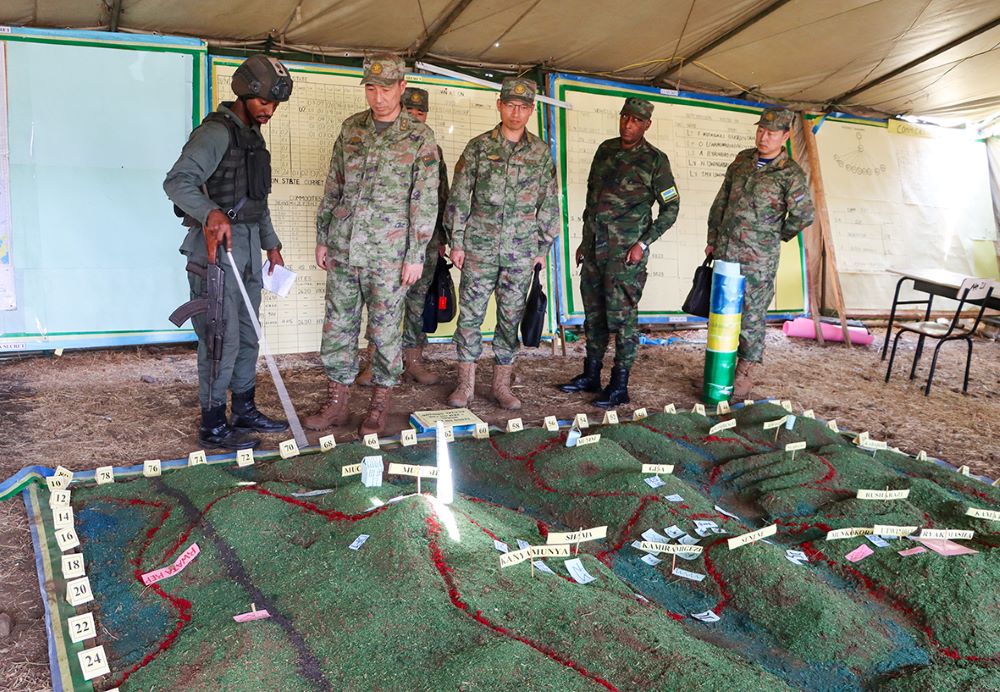
On Thursday morning, the PLA delegation toured the Combat Training Centre in Gabiro, Eastern Province, and they are scheduled to visit the Rwanda Military Academy in Gako on Friday.
This visit comes after the recent [celebration of the 97th anniversary of the founding of China’s People’s Liberation Army in Kigali->https://en.igihe.com/news/article/china-s-people-s-liberation-army-celebrates-97th-anniversary-in-kigali]. The event, held at the Kigali Marriott Hotel on Wednesday, July 31, 2024, was attended by members of the diplomatic corps, including ambassadors, envoys, Defence Attachés from various countries, and representatives from RDF.
Military cooperation between Rwanda and China remains a cornerstone of their bilateral relations. Both nations are committed to maintaining peace and play significant roles in international peacekeeping operations.
During the celebration, [China’s Defence Attaché to Rwanda, Senior Captain (Navy) Li Dayi->https://en.igihe.com/news/article/historic-appointment-of-first-chinese-defence-attache-to-rwanda-celebrated-in], emphasized the shared interests between the PLA and RDF, noting that both forces learn from each other’s experiences in military development. He reaffirmed his commitment to further strengthening this cooperation.
Major General Ngiruwonsanga, Commandant of the RDF General Headquarters, who represented General Mubarakh Muganga, the Chief of Defence Staff, at the celebrations, highlighted the shared values and historical struggles for liberation between Rwanda and China.
He praised the PLA’s legacy of fighting for justice and protecting individual rights, describing it as an inspiration.
“The legacy of the PLA is not merely a reflection of past achievements but a guiding light for the future. Our collective efforts, grounded in mutual respect and understanding, will continue to advance the shared goals of peace, security, and prosperity,” he stated.
The longstanding relations between Rwanda and China span 75 years, marked by substantial cooperation and mutual respect.
Tebogo won Botswana’s first-ever Olympic gold medal by finishing first in the men’s 200-meter race on Thursday night. The 21-year-old also made history as the first African to win the 200-meter sprint at the Olympics.
“President of the Republic of Botswana, hereby declares to the nation, that he has found it a fitting tribute to Mr. Letsile Tebogo, “Botswana’s Sensation”, to grant Batswana and residents an afternoon day-off, on this very day, Friday the 9th August, 2024,” a statement from the Office of the President reads in part.
The Botswana Head of State noted that Tebogo’s impressive performance deserves a special pause to recognize his triumph in a unique way.
“The President underscores, recognises and acknowledges Letsile’s performance and achievement as markedly outstanding, and deserving of the nation to pause and celebrate him in a most unique, appropriate and responsible manner, that will be etched in the annals of the history of the Republic,” the statement adds.
Tebogo delivered a stunning performance at the Paris Olympics despite being deeply affected by the death of his mother, his number one fan, in May.
President Masisi applauded Tebogo for the great victory and extended a special tribute to the athlete’s late mother.
“His Excellency President Masisi, wishes to state that, on behalf of all of the citizenry, he applauds Letsile and gives thanks unceasingly to his late mother.”
Tebogo’s victory sent the world into a frenzy as he finished ahead of a talented field, including Americans Kenny Bednarek, Noah Lyles, and Erriyon Knighton.
Tebogo led from start to finish, winning in 19.46 seconds — the fourth-fastest time in history, but 0.15 seconds slower than Lyles’ top time.
Tebogo dedicated his victory to his late mother. After the race, he held up his spikes to the cameras, revealing a message that displayed her date of birth, and dedicated his win to her.
“It’s basically me carrying her through every stride that I take inside the field,” Tebogo told journalists.
“To take her with me, it gives me a lot of motivation. She’s watching up there, and she’s really, really happy.”
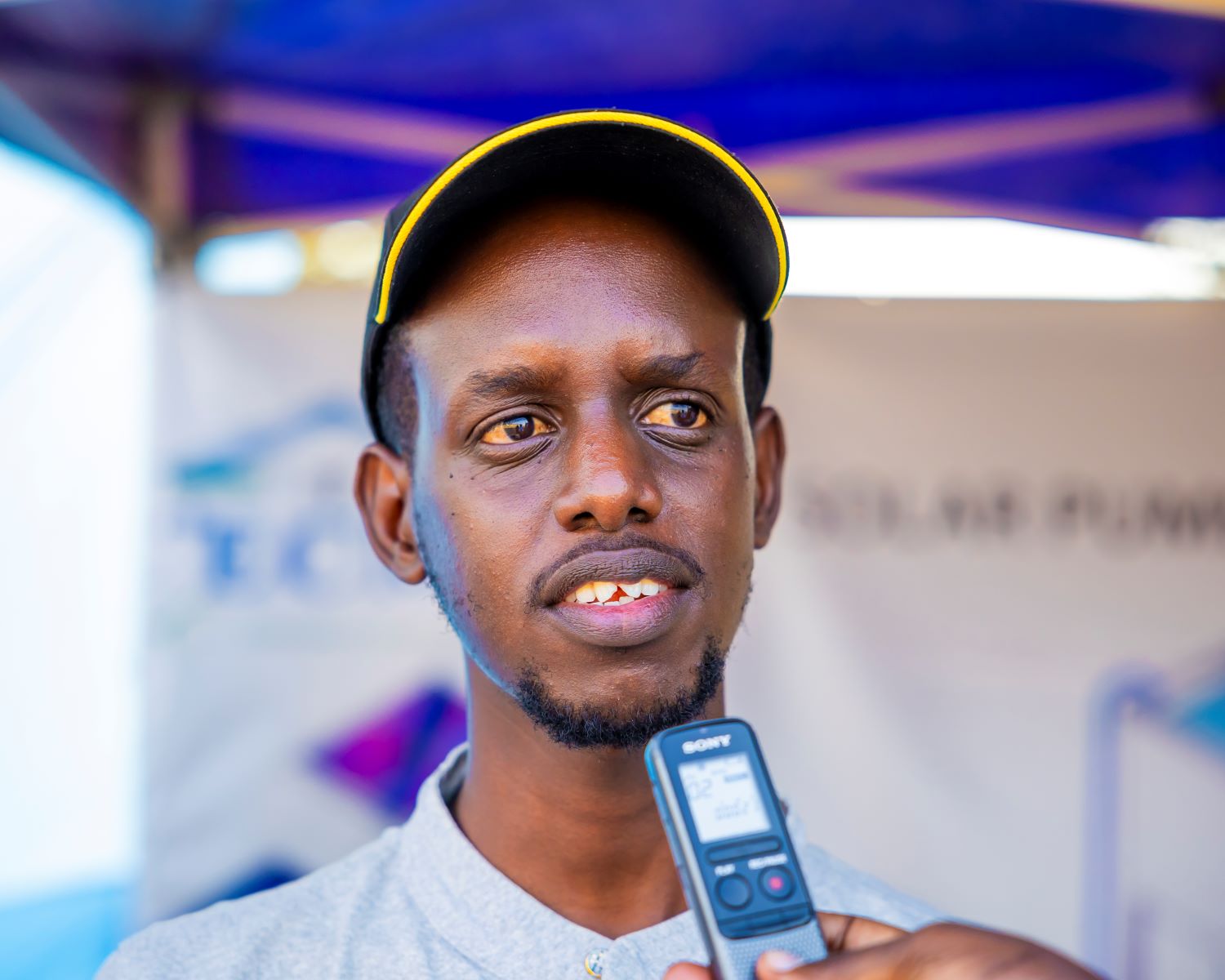
Paul Intwari, an engineer working with ETS Construction Company in Kigali, told IGIHE during a recent interview that farmers in various parts of the country are increasingly adopting solar-powered pumps.
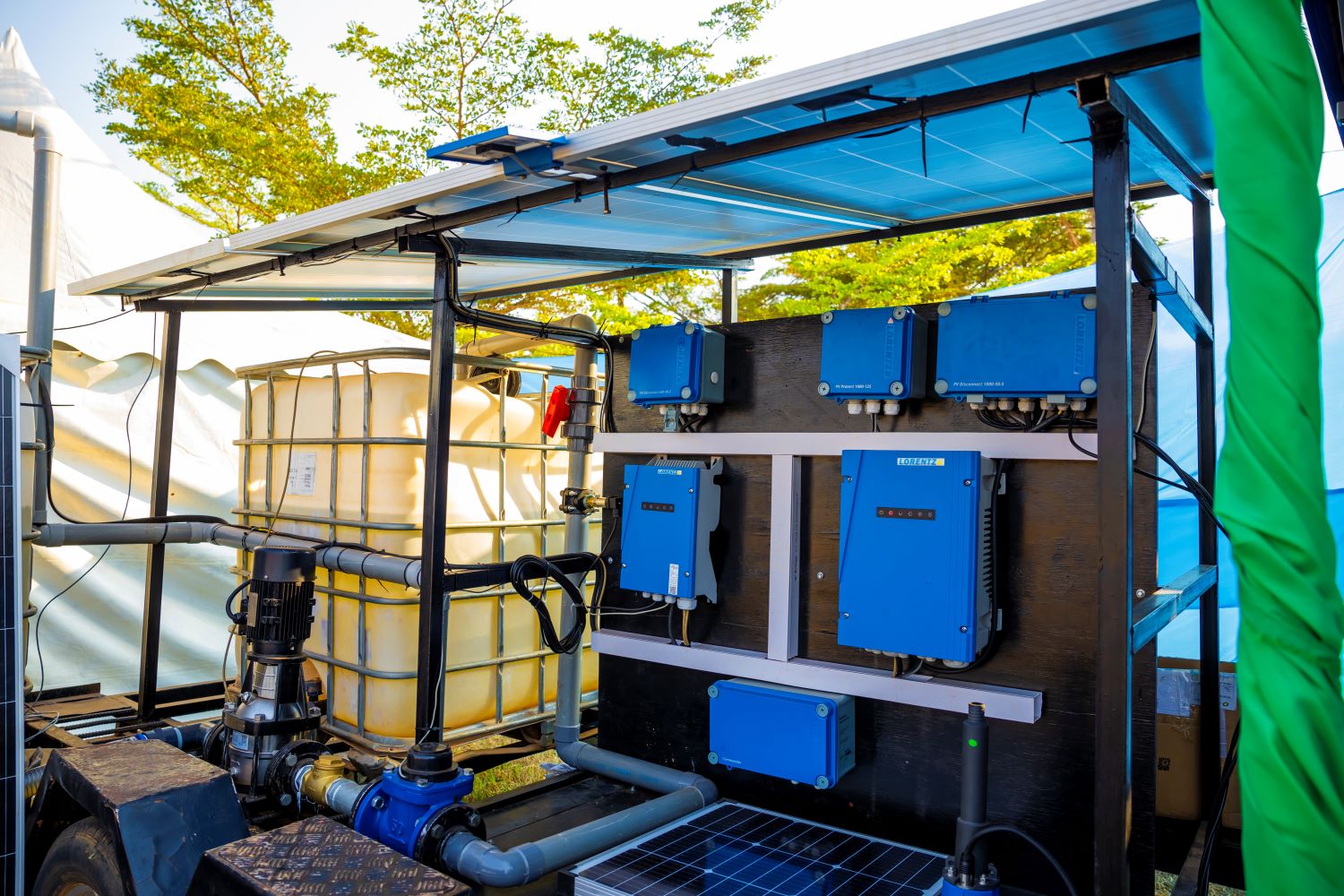
Intwari is one of the experts helping farmers adopt new farming techniques by designing and installing solar-powered pump systems. He primarily works with farmers engaged in irrigation farming.
“We start by designing the system and support the farmers through installation and training on how to use it,” Intwari said.
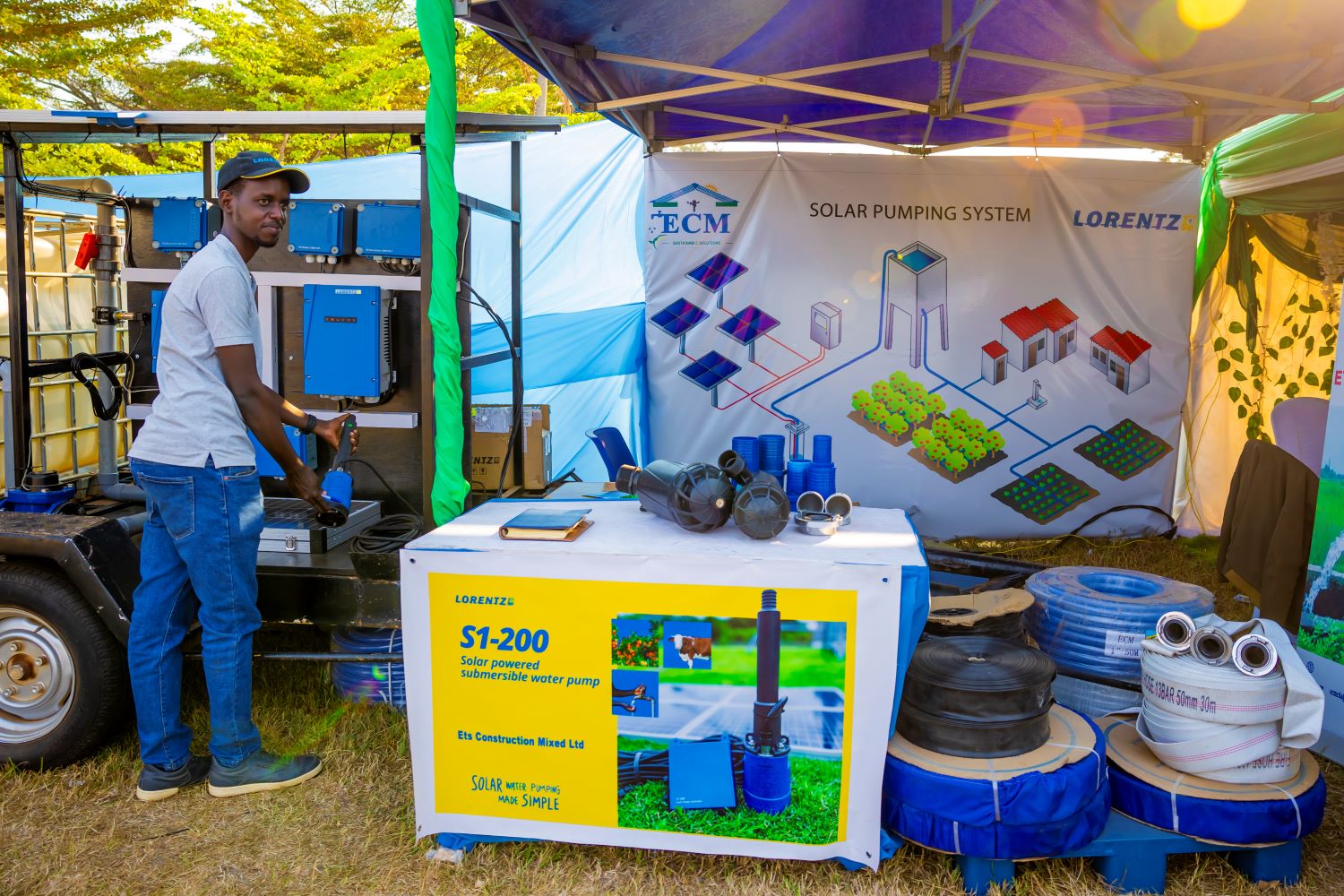
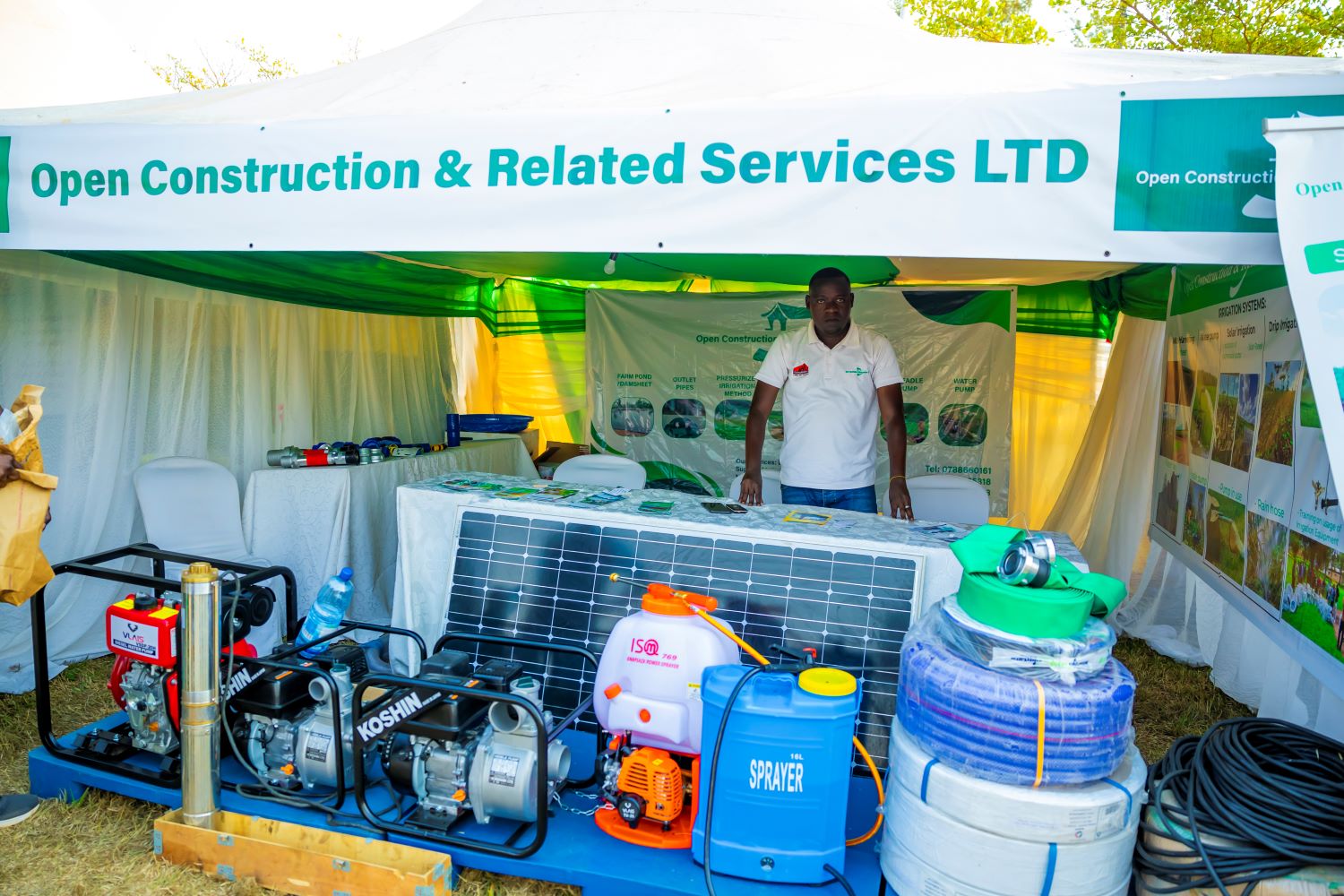
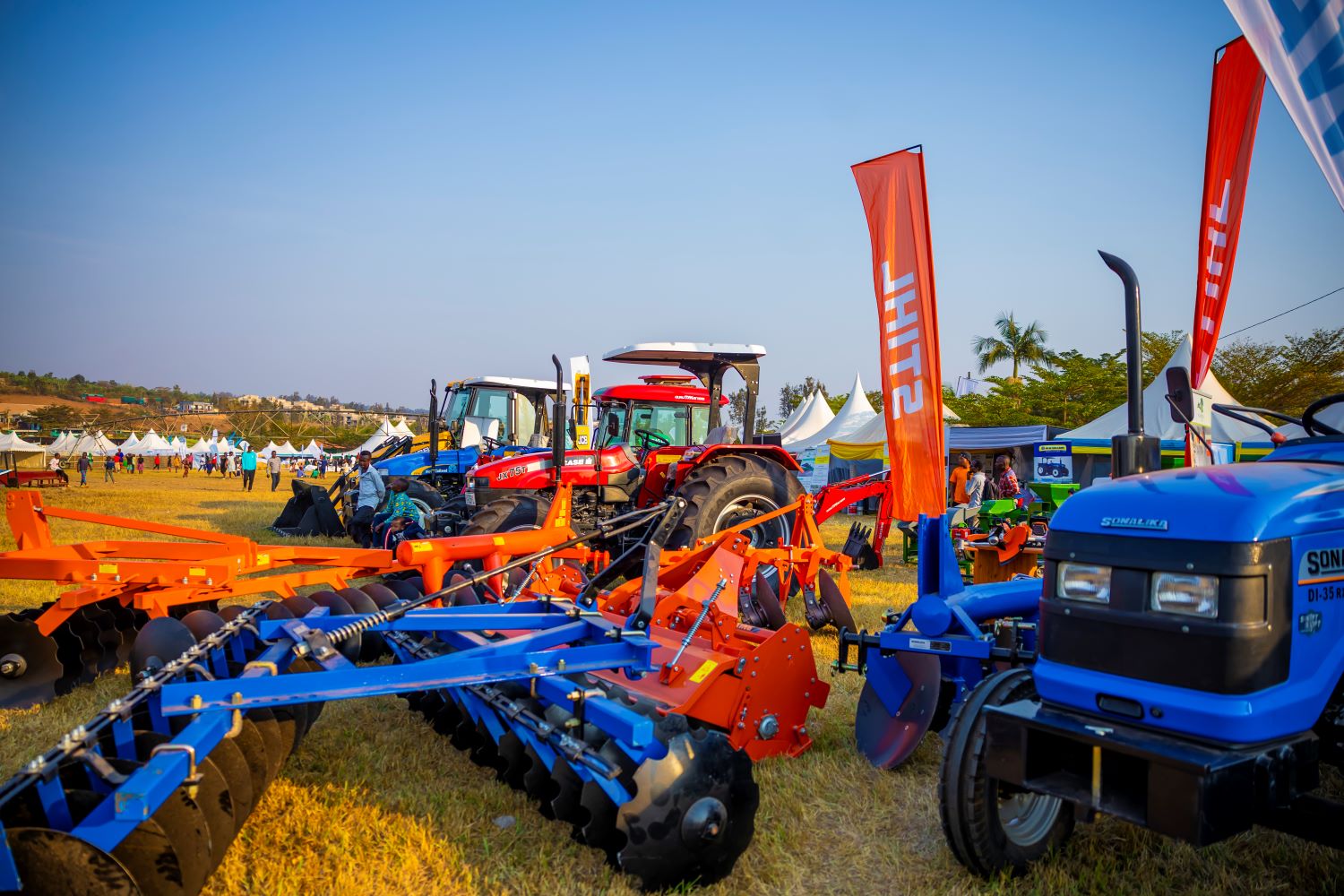
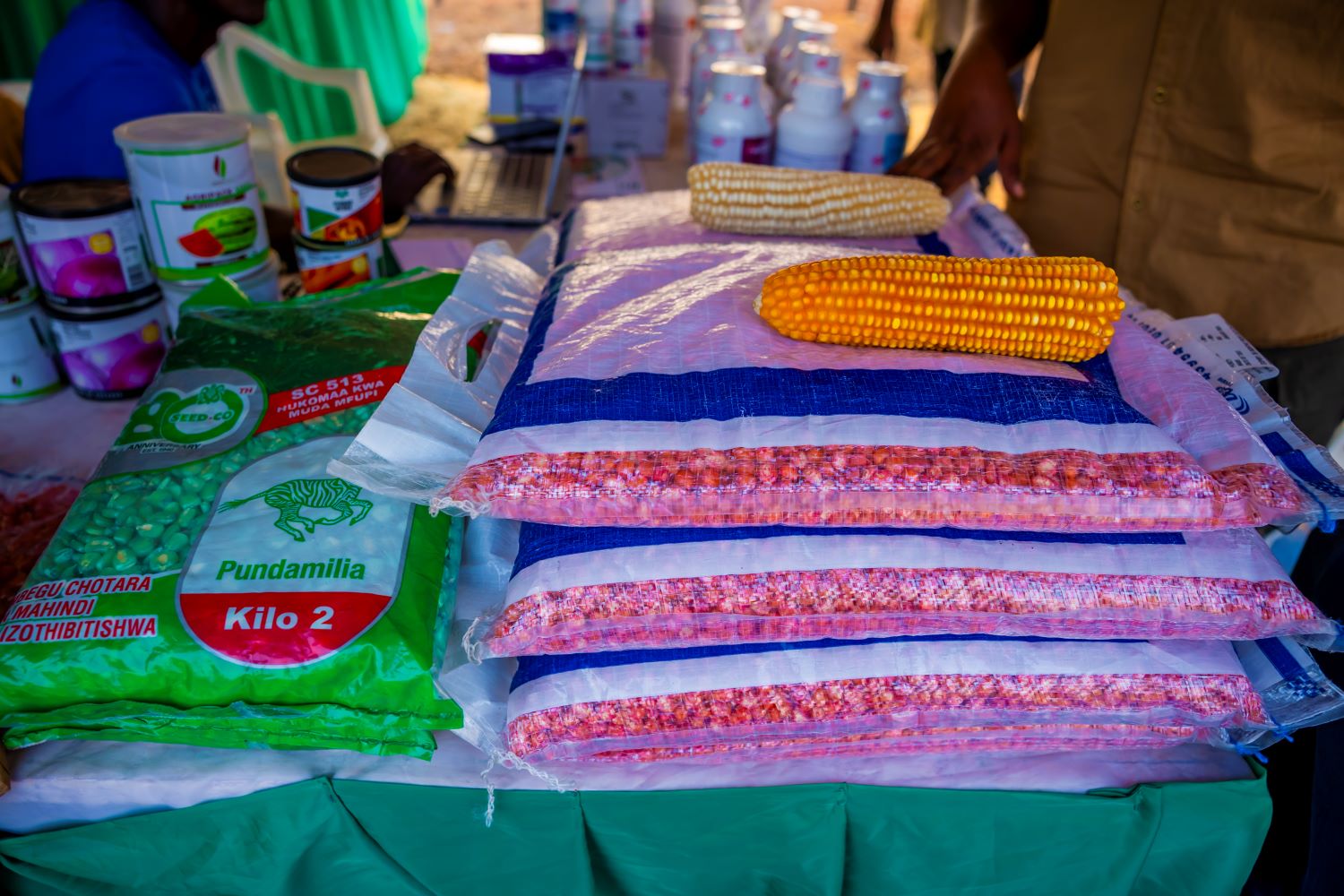
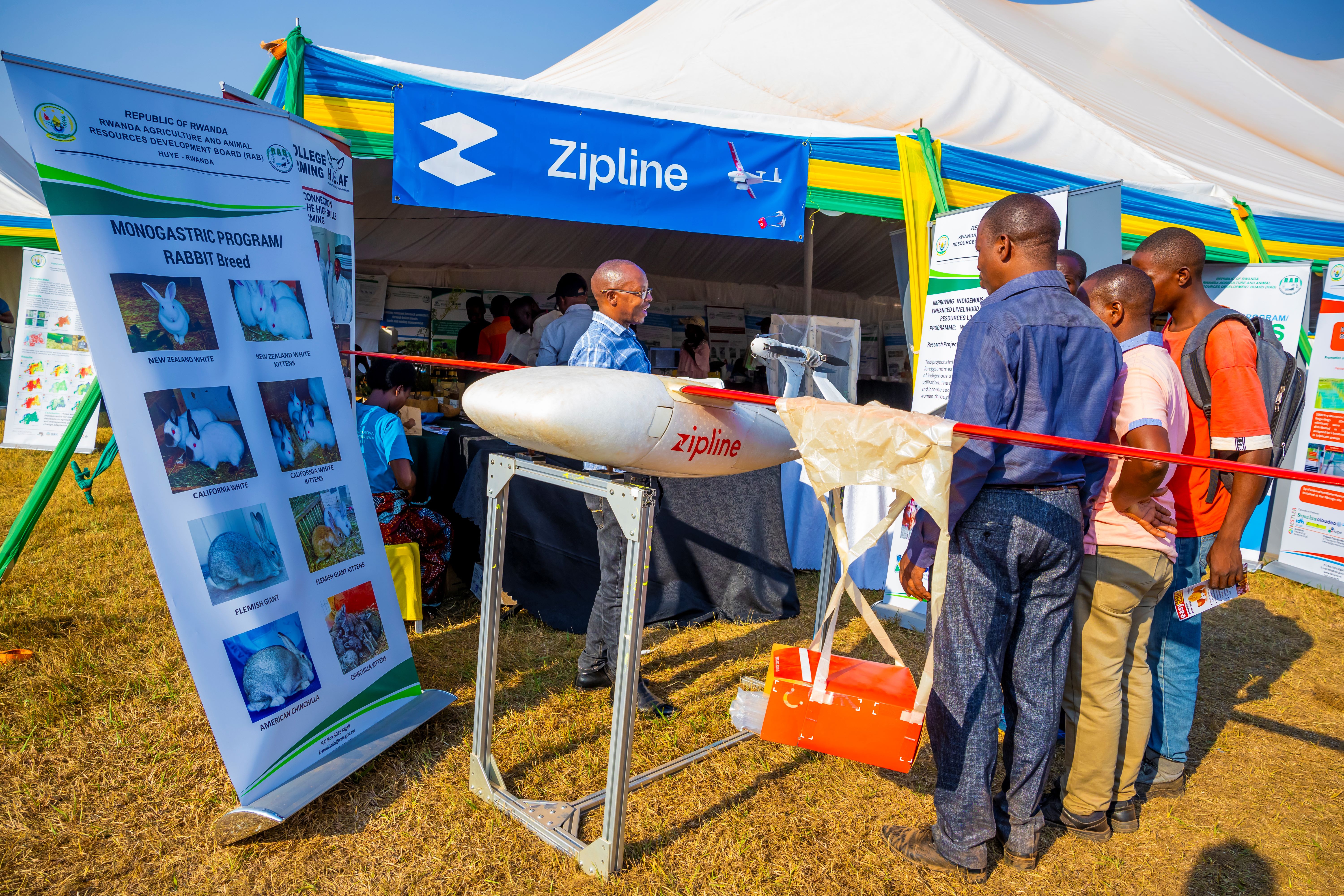
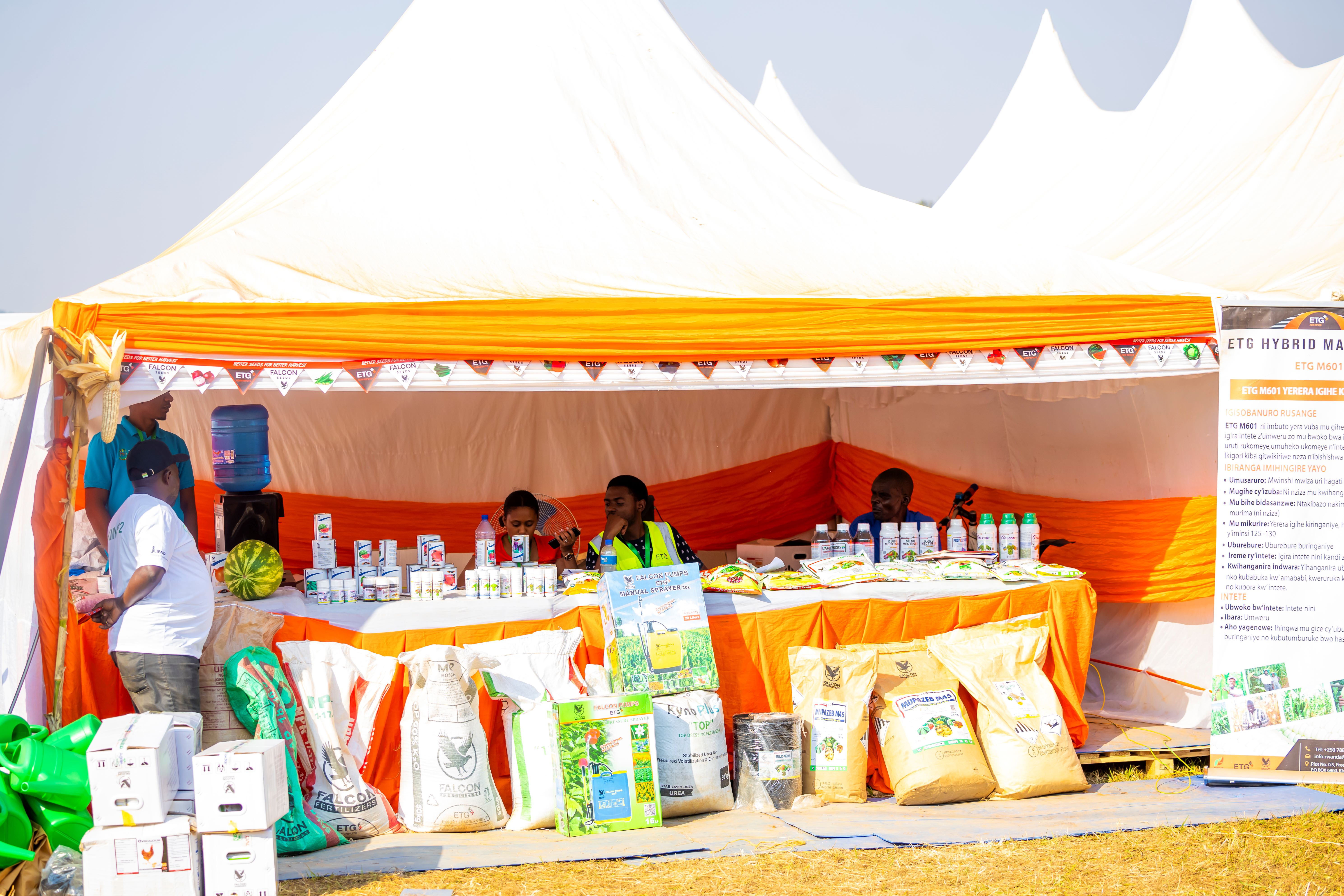
IGIHE caught up with Intwari at the 17th Rwanda Agriculture Show, where ETS Company is showcasing various tools and machines that farmers can use to take their farming to a new level.
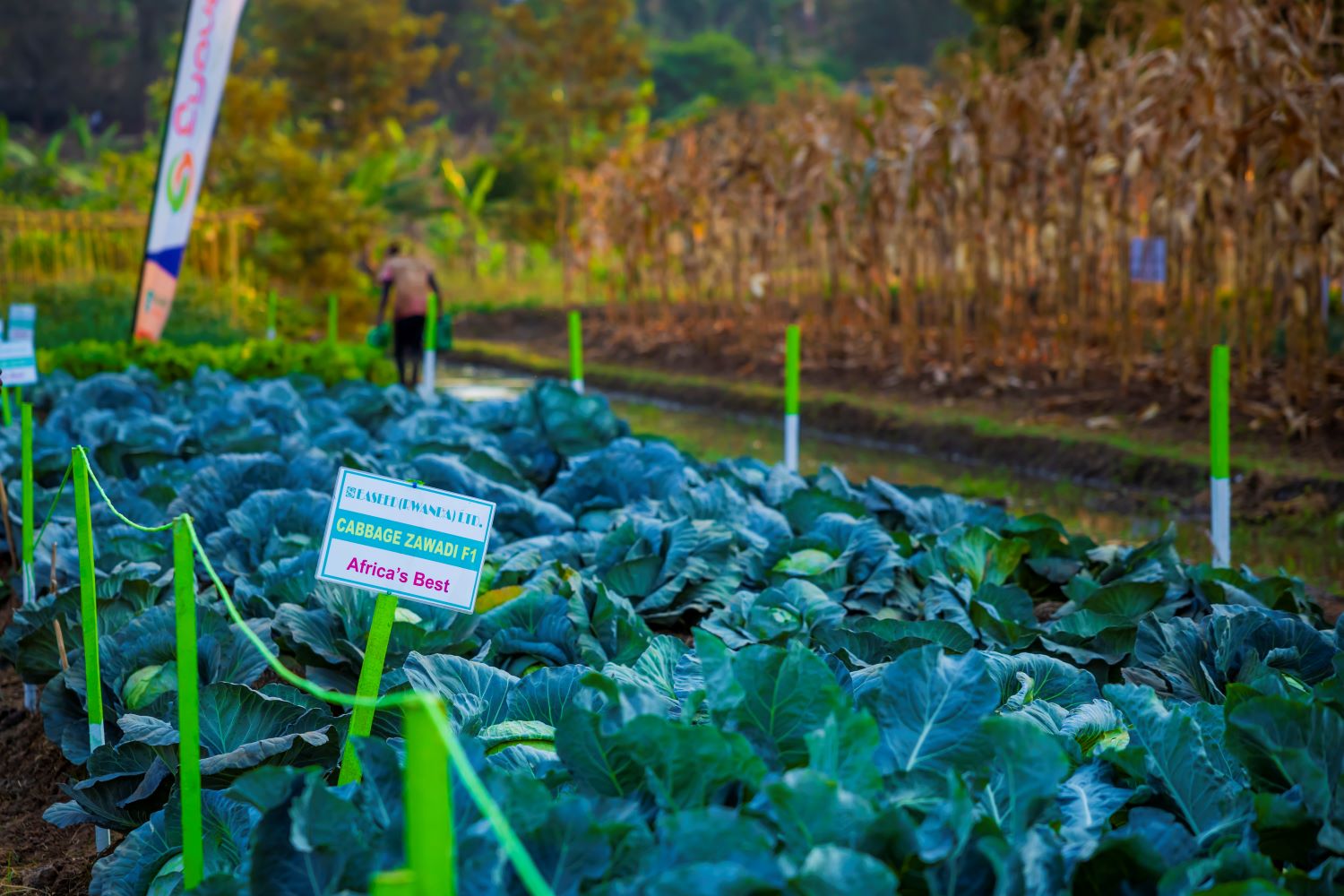
A civil engineer by training, the 31-year-old revealed that most of the farmers buying their equipment are engaged in fruit, vegetable, and bean farming.
According to him, most of the farmers embracing solar-powered pumps have done so due to the low maintenance costs. While the initial cost of purchasing a solar system is high, it is relatively inexpensive to maintain in the long run compared to fuel-powered pumps.
“We recommend that clients use solar because it has minimal maintenance costs. Additionally, the pumps reduce reliance on fossil fuels and lower carbon emissions,” he said.
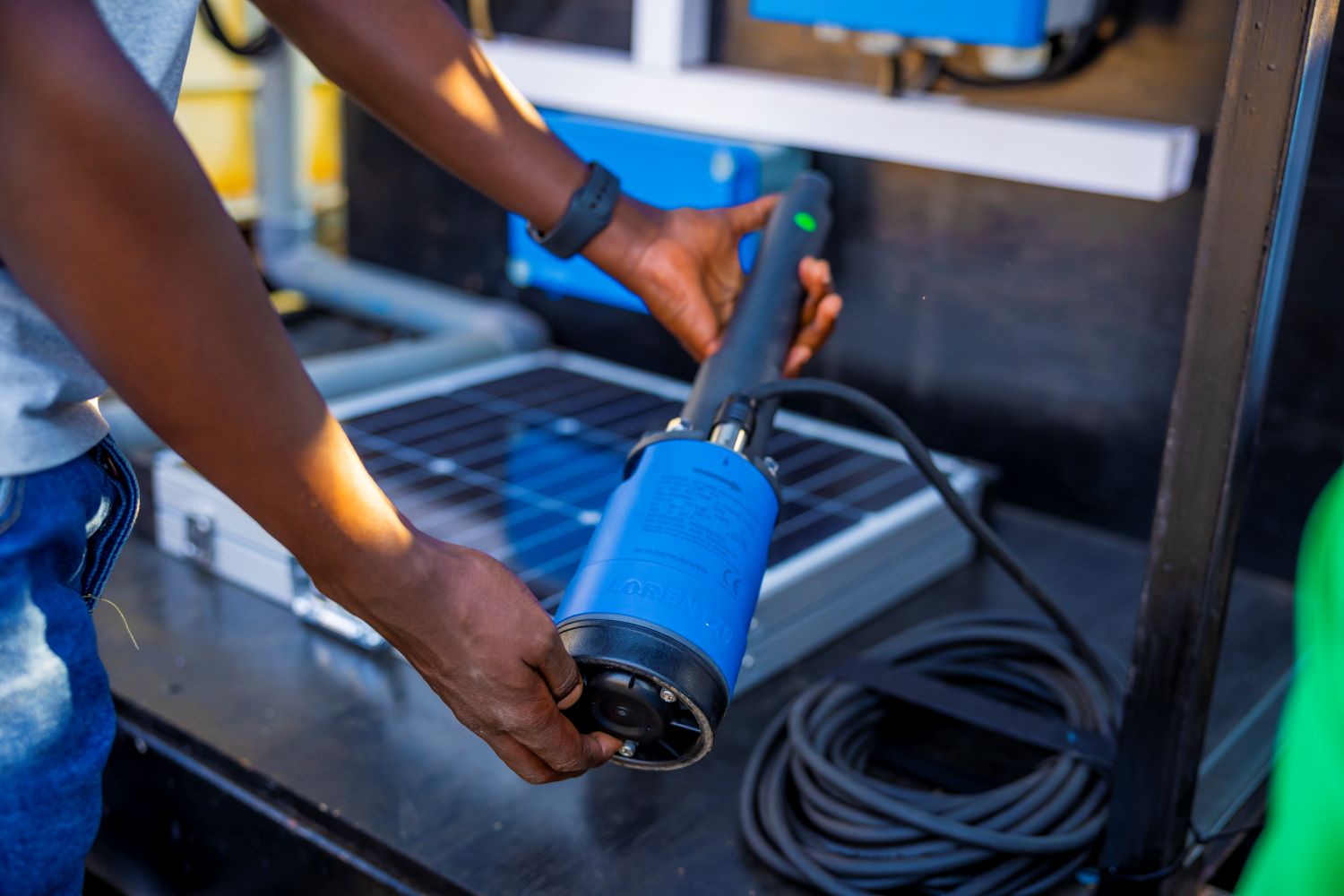
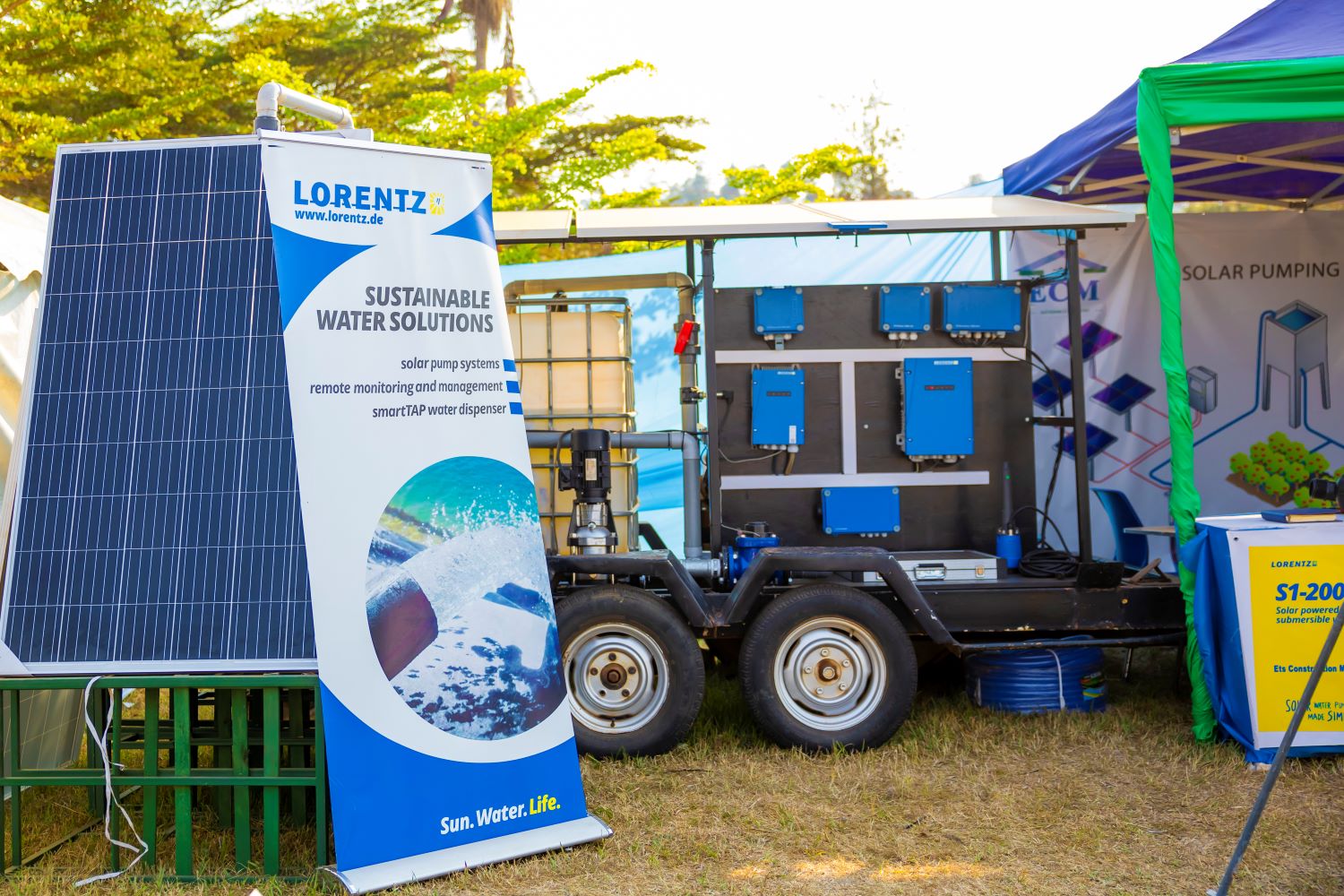
To meet the growing demand for solar-powered pumps, ETS Construction Company has partnered with Lorentz, a Germany-based company renowned for manufacturing a wide range of solar pumps.
“We offer various types of pumps. We have small pumps suited for small-scale farmers involved in livestock and irrigation, as well as larger pumps that can serve over 10 hectares, including submersible pumps,” the engineer explained.
The prices for a complete kit comprising a solar panel, pump, and its accessories, including pipes, start from Rwf2 million. Advanced pump systems suitable for large-scale commercial farming range between Rwf100 million and Rwf120 million.
{{Government Subsidies }}
Claude Rugirangoga, an irrigation engineer with Open Construction and Related Services Ltd, said that subsidies offered by the government have significantly contributed to the uptake of solar-powered pumps.
The government has been actively promoting solar energy and sustainable agricultural practices, including providing subsidies and financial support for solar-powered technologies.
Rugirangoga noted that the Rwanda Agriculture Board (RAB), in collaboration with development partners, supports farmers with up to 75% financing to purchase solar kits.
“Farmers interested in the subsidy are required to visit their sector offices and fill out forms to apply for it. If approved, they pay only 25% of the cost for the kits, while the government covers the remaining amount,” Rugirangoga explained.
The grants are also available to farmers seeking to buy tractors to improve their farming. Farmers can access up to 70% financing, according to Didier Nahayo, the Commercial Director at Rwanda Motor.
Rugirangoga, like Intwari, agrees that farming with solar-powered pumps is more profitable compared to petrol or diesel-powered pumps.
“Solar pumps are cost-effective as you make a one-time payment when buying,” he said.
However, he observed that the main disadvantage of the pumps is the limited number of technicians available.
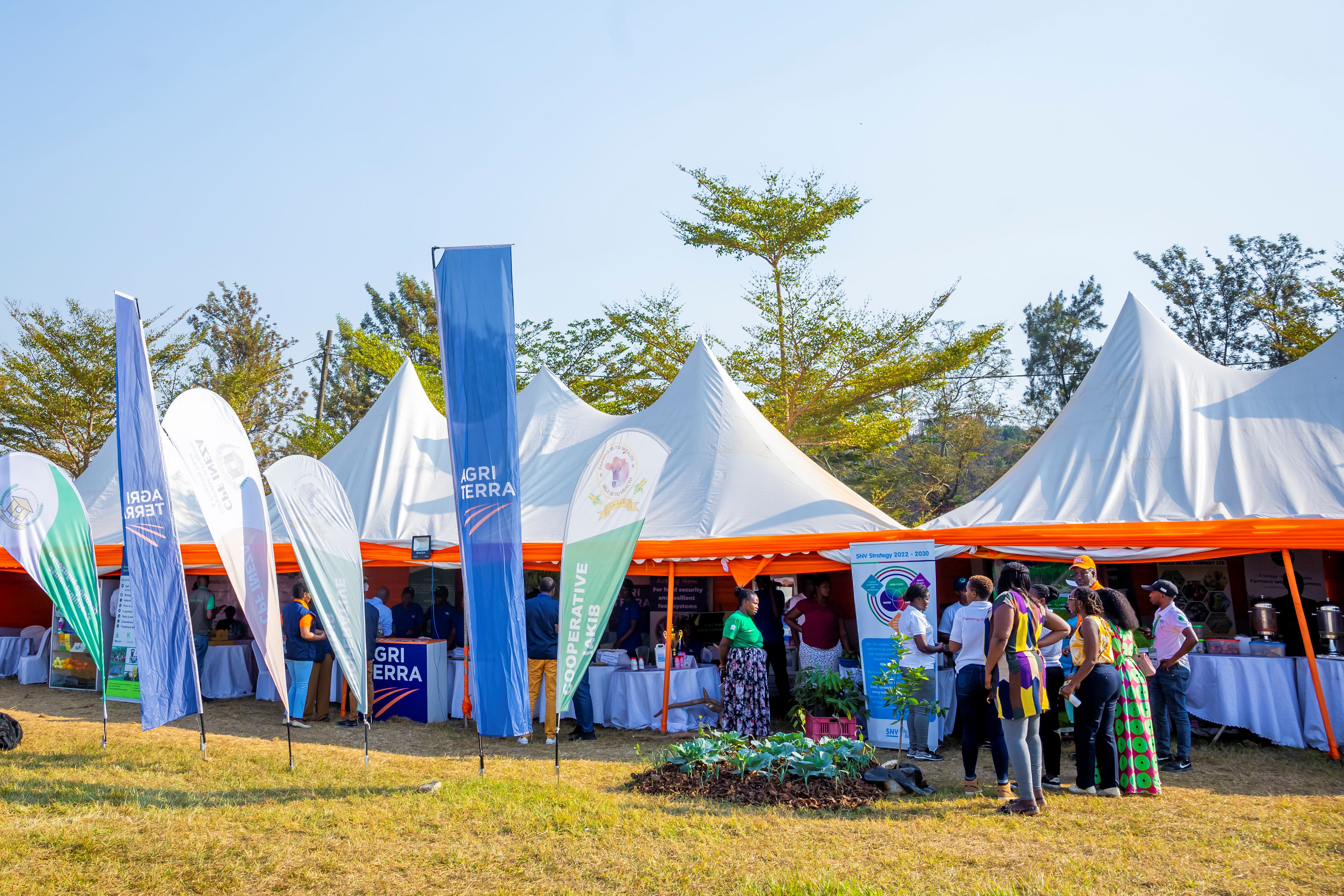
The 17th Rwanda Agriculture Show kicked off at Mulindi/Gasabo Showground on July 31, 2024. The exhibition will close on August 9, 2024.
The show provides farmers and companies with an opportunity to showcase their products and services, while also facilitating extensive networking opportunities.
Many people attend the expos to connect with industry experts, explore the latest technologies and innovations, and engage in meaningful discussions that could lead to new collaborations and business ventures.
“I am here to learn the best farming practices from big farmers,” Francois Bizimana, a pig farmer from Musanze, revealed.
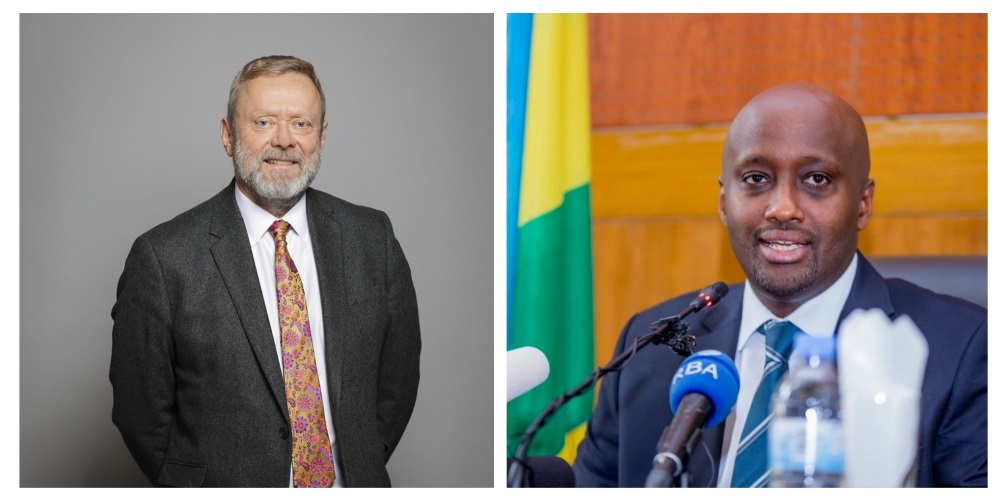
The Ministry of Foreign Affairs announced the development via X handle.
Following the conversation, Lord Collins took to X and described it as constructive. He shared more areas of discussion including the strength of the UK-Rwanda partnership on development, the Commonwealth, and security in the eastern Democratic Republic of Congo (DRC).
The discussion also touched on the recently proposed ceasefire between warring factions in the DRC, a measure supported by countries including Rwanda, as part of the Luanda agreement.
Late last month, President Paul Kagame met with the UK Prime Minister in Paris, where they reaffirmed their commitment to fruitful bilateral cooperation.
Their talks focused on strengthening partnerships in trade, sports, technology, and environmental protection, as well as the need to address illegal migration.
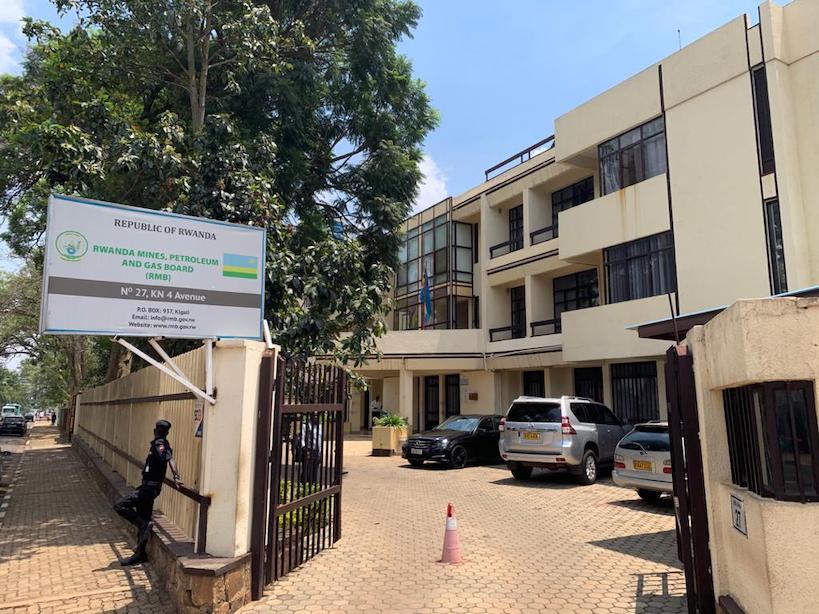
In a public notice issued on Thursday, July 8, 2024, the Board said the suspension follows reports of illegal mining and trading of the commodity.
The Board also cited cases of social unrest and conflict as the reason for the suspension which takes effect immediately.
“Rwanda Mines, Petroleum and Gas Board (RMB) hereby informs the general public and all mineral exporters of the immediate suspension of beryllium exportation until further notice,” the Board announced.
During the suspension period, the Board said it would conduct a comprehensive review of the reported cases of illegal activities and implement improved export procedures to streamline the beryllium business.
“In accordance with Law nº 072/2024 of 26/06/2024 on mining and quarry operations, specifically Articles 64 and 65, all mineral exporters are strictly required to purchase minerals only from licensed mining companies,” RMB added.
Beryllium is a silver-grey metallic element that occurs naturally in several minerals. It has primarily been identified in the Ngororero District of the Western Province.
The commodity has a wide range of applications across various industries. Its lightweight and high strength make it an ideal material for manufacturing aircraft components, missiles, and satellites in aerospace and defense applications.
The electronics industry also benefits from beryllium’s properties, as it is used in electronic devices due to its high thermal and electrical conductivity.
Other minerals found in Rwanda include tin, coltan, tungsten, and gold, making the mining sector a key component of its export economy. Mineral export earnings have more than tripled over the last seven years, rising from $373 million in 2017 to over $1.1 billion in 2023.