Harindintwari is currently receiving medical care at Gakoma Hospital for serious injuries to his legs and hand.
The incident which occurred on March 23, 2024, was confirmed by Rutaburingoga Jérôme, the Mayor of Gisagara District, in an interview with IGIHE.
According to the Mayor, Harindintwari’s actions resulted in grave injuries, necessitating immediate and ongoing medical attention at Gakoma Hospital. “The grenade detonated near his thighs and hands, causing significant injuries. Our medical team at Gakoma Hospital is providing him with the necessary care,” said Rutaburingoga.
The underlying reasons for this drastic step appear to be personal. Rutaburingoga disclosed that the incident might be linked to familial discord, specifically mentioning disagreements with Harindintwari’s wife, who, at 46, has filed for divorce.
Further investigations revealed Harindintwari’s background in the military, specifically with the now-defunct Ex-FAR, where he had access to grenades and other military equipment.
Despite his previous military affiliation, possessing such weapons is against the law, and Harindintwari is subject to face legal repercussions.
“While he receives treatment, law enforcement agencies are preparing to take necessary legal actions against him for illegal possession of weapons,” Rutaburingoga added.
Coinciding with the observance of World Water Day, the initiative was themed “Leveraging Water for Peace and Prosperity,” reflecting the global 2024 theme and underscoring the essential linkage between water management and sustainable development goals.
The newly unveiled strategy and finance plan, developed under the esteemed Global Water Leadership Programme and backed by the UK Foreign Commonwealth and Development Office (FCDO), provide a detailed blueprint aimed at enhancing Rwanda’s water resilience.
This strategic framework stands as a testament to Rwanda’s commitment to navigating the complexities of climate-induced water challenges.
François Tetero, Chairperson of the Global Water Partnership Eastern Africa, stressed the importance of joint efforts towards a water-resilient future.
“Through innovation and collective action, we can safeguard our water resources for generations to come,” Tetero articulated, urging stakeholders to band together in this critical endeavor.
In an exclusive interview with IGIHE, George Sanga, the Regional Coordinator for the Global Water Partnership in Eastern Africa highlighted the urgency of addressing climate change impacts.
“Our aim is universal access to water and sustainability,” Sanga noted, emphasizing the strategic importance of managing water resources efficiently to mitigate the effects of scarcity and abundance.
The strategy encourages empowering local entities in water management, integrating resilience into land use planning, fostering sustainable land practices, and broadening the dissemination of sustainable water management knowledge.
It also brings attention to the disproportionate impact of climate change on vulnerable groups, particularly children, advocating for a reconsideration of child health and well-being from an ecological sustainability perspective.
The event also spotlighted the gendered consequences of climate change, pointing out the rise in waterborne diseases, gender-based violence, and increased school dropout rates among girls. This focus underscores the critical need for gender equality and social inclusion in the efforts towards water resilience.
Involving representatives from various sectors, the launch facilitated discussions on the nexus between climate change, water, sanitation, and hygiene (WASH). The conversations highlighted the vital need for collaborative water management to promote peace, prosperity, and resilience against common challenges.
Evariste Nsabimana, the Deputy Director General of the Rwanda Water Resources Board, presented a forward-looking roadmap during the launch.
“Working together with various organizations, we aim to strengthen water resilience in Rwanda. This comprehensive plan is our roadmap toward achieving water security, in line with our national goals,” Nsabimana stated.
The Response Strategy and Finance Plan for a climate-resilient integrated water resources and WASH services in Rwanda represent significant milestones in the country’s path toward improved resilience, health, and well-being for its citizens.
As the global and local communities commemorated the World Water Day, the collective message resonated clearly: cooperation on water management extends beyond conserving a precious resource—it lays the foundation for a peaceful and prosperous future for all.
This subtropical expanse, averaging a shallow depth of 2 meters, is a treasure trove of natural beauty and cultural heritage, making it an essential destination for anyone yearning to experience China’s unparalleled landscapes.
Lake Taihu is a mosaic of over 90 islands, ranging from tiny landforms just a few feet in length to expansive territories stretching across several miles.
From its waters, the life-giving Suzhou Creek begins its journey, symbolizing the lake’s nurturing role in the region.
The Grand Canal’s connection in the northwest marks the lake’s historical significance in China’s grand water network, while its shores—a blend of sandy beaches and rugged rocks—are a testament to its natural allure.
The limestone formations that cradle the lake have been the backbone of Chinese traditional architecture, particularly in the construction of the nation’s classic gardens.
Straddling the vibrant cities of Wuxi, Suzhou, and the picturesque Zhejiang Province, Lake Taihu is not just a body of water but a central figure in the tapestry of Eastern China’s geography and development.
Amidst this scenic backdrop, agriculture thrives, with the surrounding lands contributing significantly to China’s grain production.
The lake’s ecosystem is intricate, home to 48 inlets and adorned with 72 peaks and peninsulas, offering countless vantage points for visitors to soak in its majesty. A notable gem is Turtle Head Islet, a prime spot in Wuxi that juts into the lake, providing panoramic views of Taihu’s splendor.
Lake Taihu is not just a feast for the eyes; it’s a haven for the soul. Its parks and gardens dot the landscape, serving as tranquil retreats and making the lake a beloved destination for both tourists and locals. Its beauty and the myths it has inspired enrich the cultural fabric of China, bridging the past with the present.
However, Lake Taihu’s journey has not been without challenges. Once plagued by pollution and algae blooms that threatened its vitality, the lake became a focal point for environmental restoration efforts.
The infamous blue algae outbreak of May 2007 marked a turning point, leading to significant government intervention. The response was swift and substantial, targeting sewage control, pollution abatement, and the rehabilitation of the lake’s natural balance.
The initiatives undertaken, including a monumental dredging project implemented by the China Communications Construction Company (CCCC), have been transformative.
The project’s goal was clear: to restore the health of the Meiliang Lake region by removing pollutants and revitalizing the lake’s waters.
Covering an area of 28.9 square kilometers and dealing with over 8 million cubic meters of sediment, the endeavor is a testament to China’s commitment to its natural heritage.
These efforts have borne fruit, as recent reports celebrate the lake’s improved water quality, reaching its best levels since the crisis. The significant reduction in phosphorus and nitrogen levels, coupled with a marked decrease in algae outbreaks, illustrates a remarkable turnaround.
The lake reported 53 algae outbreaks in 2023, a drastic decline from 104 recorded the year before.
Meanwhile, the lake’s aquatic vegetation area reached 200 square kilometers, up 25.8 percent year on year.
These yielding efforts are leading to a rejuvenated ecosystem, vital for the well-being of the 17 million people in one of China’s densely populated and economically developed areas, who rely on Lake Taihu.
Lake Taihu’s story is one of resilience and beauty. From its historical role as a muse for celebrities including emperors, painters, poets and generals and scholars to its modern-day status as a symbol of environmental recovery, the lake remains an emblem of China’s rich cultural and natural heritage.
Xihui Park located in Wuxi’s western expanse, emerges as a premier vantage point for Lake Taihu’s panoramic vistas. Ascending the Dragon Light Pagoda within the park, visitors are treated to a sweeping bird’s eye perspective of both the bustling cityscape and the tranquil lake waters.
Equally captivating, Yuantouzhu, or Turtle Head Island, enchants tourists with its unique turtle-head-like contour. Rising to prominence in the early 20th century, this picturesque locale boasts over ten distinct scenic spots, each offering a glimpse into the area’s rich heritage and natural beauty.
Whether you’re drawn to its environmental saga, captivated by its scenic beauty, or intrigued by its cultural significance, Lake Taihu invites exploration.
It stands not only as a natural wonder but as a vibrant example of harmony between human needs and environmental stewardship.
The acclaimed insurance firm, headquartered at Nyarugenge in the heart of Kigali City, organized a special motivational event for its women staff on Friday, March 22, 2024, providing them with an opportunity to benefit from expert training on work-life balance in the modern society, in line with this year’s theme: Accelerating gender equality.
Judith Katabarwa, a capacity building expert based in Rwanda, encouraged the women to have ambition in life for them not only to realize career progression but also prioritize their social well-being, especially their health, pleasure, leisure, family and spiritual development.
The facilitator highlighted that the dangers of poor work-life balance include high rate of absenteeism at work, lower job satisfaction and lower levels of commitment and loyalty.
To avoid scenarios of poor work balance, the women were advised to plan their work well and avoid overbookings, prioritize ruthlessly, learn to say no, utilize available technology to work smart and to accept the fact that it won’t always be perfect.
“We should not spend all our lives and time on work; we should balance it because when we don’t, we can’t even perform well. If we have health issues and we don’t take care of them because we are working, it will compromise our performance,” Katabarwa emphasized.
On the other hand, companies were urged to adopt flexible working hours to maximize productivity and promote a positive work culture. This includes allowing employees to work from home whenever possible.
Prime Insurance Chief Executive Officer (CEO), Eugene Murashi Haguma, attended the highly interactive session.
The CEO encouraged the dozens of staff at the event to take advantage of ongoing women empowerment initiatives to improve both their professional and social lives. He emphasized on the need for the women to be confident about their skills and conquer the world regardless of existing societal stereotypes.
“I have been fortunate to work alongside women and study with them in the same classes; they are capable. Sometimes, you find that they are even smarter than us. It starts with believing in yourself and feeling confident in your abilities. Some men and young boys may think that women are incapable, but you are capable of doing any kind of job you are tasked with,” the CEO affirmed.
“I urge you not to be afraid. I know that you are capable, and as people become more educated, they will realize the full potential of women,” he added, amidst applause and cheers from the staff members.
International Women’s Day is celebrated annually in many parts of the world in the month of March as a focal point in the women’s rights movement. The day gives focus to issues such as gender equality, reproductive rights, and violence and abuse against women.
This technology, known as the ‘Electronic Clinical Decision Support Algorithm (CDSA)’, was employed in the DYNAMIC Project.
The project was implemented by Swiss TPH in collaboration with Rwanda Biomedical Center and Unisante and is funded by the Swiss Agency for Development and Cooperation. It aims at improving pediatric healthcare for children under the age of 15, in primary healthcare centers in Rwanda. It plays a role in reducing the unnecessary use of antibiotics.
The project focused on decreasing the prescription of these medications and preventing their provision to patients who should not receive them, considering the negative side effects on the body, such as diarrhea, and the risk of high dosage consumption leading to antibiotic resistance in the body due to microbes developing immunity against the medication.
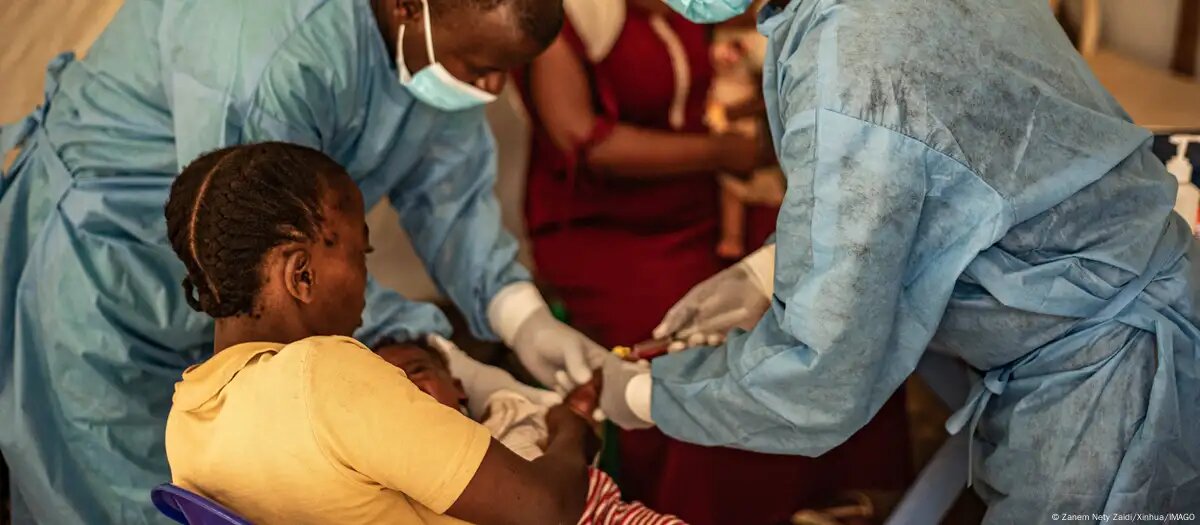
The technology utilizes a tablet operated by the clinician, featuring clinical decision support, which provides all necessary information for healthcare, from patient examination, required tests, to the prescription of medications.
Upon entering the patient’s information, including weight, height, and other measurements, the doctor can input symptoms into the system, which then correlates all the information, presenting the clinician with questions based on the patient’s provided data for further inquiry.
It then guides the clinician by displaying all possible diagnoses based on the patient’s information, suggesting necessary tests if needed, and advising on the appropriate medications. However, this does not replace the clinician’s need to analyze the information provided by the technology in conjunction with their medical expertise.
Currently, this technology is used in 39 health centers across the Rusizi and Nyamasheke districts. During the research period of over two years, children treated with this technology were monitored alongside those treated without it.
Results indicated that the use of this technology reduced the prescription of antibiotics by 46%, from 70.5% to 24.5%, without negatively affecting the healing rates of treated children, who continued to recover at the same rate.
Furthermore, the technology ensures the delivery of quality healthcare, as it prevents the clinician from overlooking any details based on the patient’s information, addressing issues commonly encountered in traditional methods where details might be forgotten when recorded manually.
Alexandra Kulinkina, the Project Leader at Swiss TPH, expressed confidence that if the Rwandan government would consider implementing this project at scale, it would enhance pediatric healthcare in Rwanda.
She said, “We hope this research will be considered in the development of new strategic plans and other programs by the Rwandan government. We plan to continue to hold joint meetings to discuss how the findings of this research can benefit more people.”
Byiringiro Jean Paul, the Health Director for Nyamasheke District, noted that the technology had yielded positive results in his district, suggesting the government should consider its adoption in other districts.
He mentioned, “Another wish is that it wouldn’t just be in Nyamasheke and Rusizi, but that the Ministry of Health would expand it to other districts as well.”
Dr. Muhammed Semakula, Director of Planning, Evaluation, and Finance at the Ministry of Health, representing Minister Dr. Sabin Nsanzimana, stated that since 85% of all diseases are treated at primary healthcare facilities in Rwanda, which are still being empowered, this technology could impact many lives.
If adopted in health centers nationwide, it could also reduce the budget allocated for purchasing unnecessary antibiotics, allowing those funds to be invested in other beneficial areas for the Rwandan people.
The activity spanning six days provided an opportunity for foreign journalists to participate in site visits, exchange interactions, and immersive experiences in Wuxi City located in Southeast China’s Jiangsu Province, Taizhou, Changshu and other areas to explore the modern technology within China’s economic development, and experience the three cities’ beautiful scenery, rich culture and modernization achievements.
Some of the explored projects include the Taihu Lake’s Ecological Dredging Project, Wuxi film production studio, and the Changtai Yangtze River Bridge with construction overseen by China Communications Construction Company (CCCC), a multinational engineering and construction company primarily engaged in the design, construction and operation of infrastructure assets.
As part of the programme, journalists also attended the opening ceremony of the 2024 Wuxi “International Month” and International Cherry Blossom Week at Wuxi International Conference Center.
Located in East China’s Jiangsu Province, Wuxi City hosts the annual Cherry Blossoming Festival every March. It is held at a time when thousands of wonderful cherry trees are in full bloom offering a scenic spot.
Usually, the festival kicks off together with the Wuxi International Month providing an opportunity to both celebrate cherry blossoms, boost friendship and communications between Wuxi and other countries.
During this month, the city is expected to carry out international activities in the fields of culture, sports, science and technology, and economic exchanges.
Originating from a Sino-Japanese friendship event in the 1980s, the festival has earned a global reputation.
Speaking at the opening of the Travelogue of China 2024, Wu Hailong, President of the China Public Diplomacy Association, emphasized the importance of viewing China through a lens of dynamism and progress, observing its trends, potential, and the forces driving its development.
Huang Weigong, Deputy Secretary-General of the Wuxi Municipal Party Committee, also mphasized the significant progress that Wuxi has made in economic development, industrial innovation, and international cooperation.
The “Travelogue of China” activity is guided by the Network Communication Bureau of the Office of the Central Cyberspace Affairs Commission, jointly hosted by the China Public Diplomacy Association and Global Times Online, and co-organized by the Office of the Wuxi Municipal Cyberspace Affairs Commission, Foreign Affairs Office of Wuxi Municipal People’s Government, and Wuxi Cultural Tourism Development Group Co., Ltd.
This was announced by the office of the President of France on March 21, 2024, after he had a conversation with the President of Angola, João Lourenço, who acts as a mediator between the DRC and Rwanda.
The statement said, “The President of the Republic [Macron] warmly welcomed the efforts of the President of Angola in resolving the issues of Congo, particularly through diplomatic means, and fully supports this mediating approach in finding a solution to the conflicts through dialogue, as he recently reminded the President of Rwanda, Paul Kagame, and the DRC, Félix Tshisekedi.”
In February 2024, the President of the Democratic Republic of Congo, Félix Tshisekedi, announced his readiness to re-engage in dialogue with his Rwandan counterpart, Paul Kagame, aiming to find a solution to the ongoing tensions between the two countries.
President Macron’s statement comes after France’s attempts to quell the tensions between Rwanda and the DRC.
In September 2022, President Paul Kagame, his counterpart Félix Tshisekedi, and Emmanuel Macron of France held talks aimed at examining how peace could be restored in the eastern part of the Democratic Republic of Congo.
These Heads of State met in New York, United States, during the United Nations General Assembly.
A report by Jeune Afrique in that year mentioned that it had reliable information that France was involved in mediating efforts between Rwanda and the DRC.
It is reported that in June 2022, amid severe tensions between the two countries, President Emmanuel Macron had discussions with the leadership of Rwanda and later committed to calling President Félix Tshisekedi.
Furthermore, it is said that President Macron played a role in ensuring the mediation by the President of Angola, João Lourenço, and continued to support all the steps taken.
This international day has been observed since 1993, following the United Nations Conference on Environment and Development (UNCED) in Rio de Janeiro in 1992. But how did World Water Day come about, and why is it so important?
{{Origins of World Water Day}}
The concept of World Water Day was born out of the 1992 United Nations Conference on Environment and Development (UNCED), commonly known as the Earth Summit, held in Rio de Janeiro.
The Earth Summit was a landmark event, attended by leaders from over 100 countries, which focused on various critical environmental issues facing the world, including water scarcity, water pollution, and the need for water conservation.
During this conference, the United Nations General Assembly adopted a resolution (A/RES/47/193) on December 22, 1992, designating March 22, 1993, as the first World Water Day.
This resolution responded to the conference’s call for global awareness and action on water issues. Since then, World Water Day has been celebrated annually, with each year focusing on a specific water-related theme to address different aspects of freshwater challenges.
{{Significance of World Water Day}}
World Water Day serves multiple essential purposes. Firstly, it acts as a means of raising awareness about the critical importance of water in sustaining life, economies, and ecosystems. It highlights not just the necessity of water but also the crises many people face regarding water scarcity, quality, and access.
Secondly, World Water Day encourages actions to tackle global water challenges. It’s a day for governments, organizations, communities, and individuals to engage in initiatives aimed at improving water management and reducing water wastage. Whether through policy reform, educational programs, or local water conservation projects, the day mobilizes efforts to make a difference.
Thirdly, World Water Day fosters international collaboration. Water issues are complex and often transboundary in nature. As such, they require cooperation across nations, sectors, and communities. World Water Day provides an opportunity for stakeholders worldwide to share knowledge, best practices, and innovations in water management.
{{Themes over the years}}
Each year, World Water Day centers around a specific theme to highlight various aspects of freshwater relevance and challenges. Past themes have included “Water and Climate Change,” “Leaving No One Behind,” “Nature for Water,” and “Valuing Water.”
These themes encourage a holistic approach to understanding and addressing water issues, reflecting their multifaceted nature.this years theme is Raveling water for peace and prosperity
World Water Day is more than just an annual observance; it’s a call to action for the preservation and sustainable management of one of our most precious resources: water. It reminds us of the vital role water plays in our lives and the lives of future generations.
By celebrating this day, we reaffirm our commitment to ensuring access to clean water and sanitation for all, a fundamental aspect of achieving a sustainable and equitable world. Happy World Water Day!
Nshimiyimana, 52, resided in Uniontown, Ohio, and was arrested on Thursday, March 21, 2024. He is charged with altering and concealing evidence, obstructing justice, and lying to the court, actions he allegedly took during the trial of Teganya Jean Leonard, where he was a witness in 2019.
The Acting United States Attorney, Joshua S. Levy, stated that his country would not be a refuge for those accused of human rights and war crimes.
Levy said, “Nshimiyimana is accused of hiding information related to his role in the Genocide for nearly 30 years to obtain asylum and citizenship in the United States.”
“Our refugee and asylum laws are meant to protect those who have been persecuted, not those who have participated in persecution. Our office, along with our partners in law enforcement, is committed to finding and prosecuting those who commit crimes abroad and then use deception to obtain refuge here,” he added.
Levy emphasized their determination to continue seeking and bringing to justice everyone involved in war crimes and crimes against humanity.
The indictment documents reveal that during the Genocide against the Tutsi, Nshimiyimana was a medical student at the former National University of Rwanda in Butare, a leading figure in the MRND party, and part of the Interahamwe militia.
The documents allege Nshimiyimana murdered men, women, and children using a club and then finished them off with a machete.
They include instances such as the murder of a 14-year-old boy and a man who sewed doctor’s gowns at the university hospital, purportedly killed by Nshimiyimana, who is also accused of raping women or collaborating with others in their rape at the time.
Nshimiyimana fled Rwanda in the summer of 1994, after the Rwandan Patriotic Front (RPF) launched its offensive, and went to Kenya, where he allegedly lied to U.S. immigration authorities to be accepted as a refugee.
Since 1995, Nshimiyimana has lived in Ohio, reportedly continuing to provide false information about his involvement in the Genocide against the Tutsi.
In 2019, during the trial of Teganya Jean Leonard, his former university classmate, Nshimiyimana lied in court, claiming neither he nor Teganya had participated in the Genocide or collaborated with the MRND.
However, the court found otherwise, convicting Teganya of fraud and perjury related to asylum claims and lying to the court.
IMF staff and the Rwandan authorities on Friday, March 22, 2024, announced that they had reached staff-level agreement on policies needed to complete the third reviews of Rwanda’s Policy Coordination Instrument (PCI) and program under the Resilience and Sustainability Facility (RSF), and the first review of the Stand-by Credit Facility (SCF) arrangement.
The declaration followed the conclusion of a two-week mission led by Ruben Atoyan, who visited Kigali from 11–22 March, 2024, to discuss the authorities’ policy priorities and progress on reforms regarding the reviews.
The conclusion of the mission paves the way for the consideration of the report by the IMF Executive Board in May this year.
Upon completion of the review by the Board, Rwanda would have access to SDR 57.5 million (equivalent to about US$ 76.6 million or Rwf99 billion) under the RSF and SDR 66.75 million (equivalent to about US$ 88.9 million or Rwf115 billion) under the SCF.
At the conclusion of the mission, Mr Atoyan praised Rwanda’s economic gains and resilience, notwithstanding the challenging external environment.
“The 2023 GDP growth continued to be robust at 8.2 percent year-on-year, on the back of strong performance in services and construction, as well as recovery in food crop production in the second half of the year. Inflation decelerated sharply in recent months. Headline inflation was 4.9 percent in February 2024, down from the peak of 21.7 percent in November 2022, owing to appropriately tight monetary policy stance and favorable developments in food prices as agricultural production rebounded at the end of last year,” Mr Atoyan stated.
“The current account deficit widened due to strong food and capital goods imports, along with lower-than-expected coffee exports. The Rwandan franc depreciated by 18 percent against the US dollar in 2023, a necessary step towards facilitating the much-needed external adjustment.
International reserves stood at 4.4 months of prospective imports at end-2023, providing a helpful buffer against external shocks.”
He, however, warned of potential risks and shocks which could adversely affect the country’s economic outlook.
“Deepening of geopolitical fragmentation, another spike in global energy and food prices, or slowdown in trading partners’ growth would weigh on the outlook. Longer-than-expected tight global financial conditions could adversely affect the availability of external financing. Also, already committed grants under the UK Migration and Economic Development Partnership continue to face legal uncertainties and could result in some budget pressures and lower FX inflows if they do not materialize,” he warned.
The IMF official called for deliberate measures to cushion the effects of the 2023 May floods, while also supporting the credible and balanced fiscal consolidation over the medium term.
He also recommended adoption of a comprehensive tax reforms that leverage synergies between tax policy and tax compliance to help create fiscal space for the country’s much-needed developmental spending.
“Expenditure rationalization will need to focus on enhancing the efficiency of public investment, better targeting of subsidies, and digital delivery of public services. The medium-term fiscal framework should be improved by further strengthening fiscal risk management and enhancing the transparency of fiscal accounts,” he added.
Notably, RSF provides affordable long-term financing to countries undertaking reforms to reduce risks to prospective balance of payments stability, including those related to climate change and pandemic preparedness, while PCI is a non-financing instrument open to all IMF member countries.
On the other hand, SCF provides financial assistance to low-income countries (LICs) with short-term balance of payments needs.