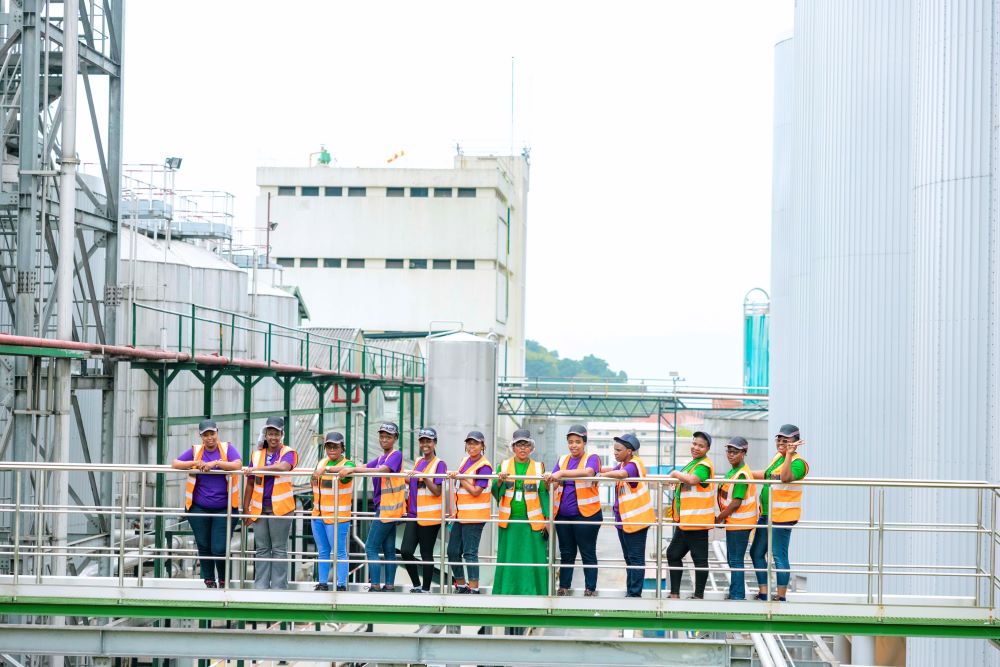
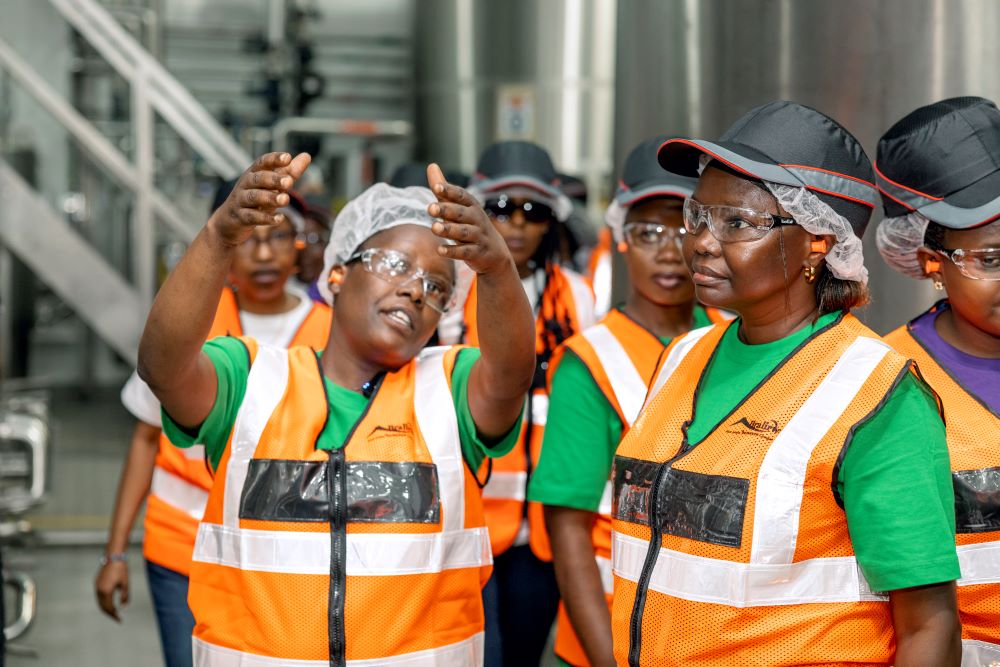
From 11th November to 20th December 2024, customers will have the chance to win great gifts by enjoying their favorite products. This exciting nationwide campaign celebrates our commitment to rewarding our loyal customers while creating an engaging and fun experience.
Once a customer buys a Bralirwa soft drink in a returnable bottle, they are invited to look under the crown of the bottle for a unique code. Once found, customers can enter the code by dialing *786# and find out if they have won exciting cash prizes. In addition to the cash prizes, those customers will also be automatically entered into weekly and monthly draws, giving them even more chances to win fantastic prizes.
The prizes offered by the Under the Crown Lottery (UTC) are as exciting as the experience itself. Those who submit codes are eligible for direct deposits to their mobile cash accounts. This makes the awarding of prizes a simple and straightforward process.
Through the weekly and monthly draws, customers stand a chance to win larger cash prizes. The grand prize is a reward of 5 million Rwandan francs which will be awarded to three lucky winners. This considerable sum, transferred directly to the winner’s MTN MoMo or Airtel account, is intended to recognize and celebrate Bralirwa’s most loyal customers and bring them joy in a meaningful way.
This Lottery is designed to bring the joy of true togetherness to all soft drinks consumers and encourage them to interact with Bralirwa’s products in a fun and engaging way.
“We are committed to creating great moments and rewarding experiences for our consumers. We want our customers to enjoy the products they love and feel valued and appreciated every step of the way,” said Fleury Sekiyuku, Bralirwa Sales Director.
Reports surfaced on Sunday that Biden had given the green light for Ukraine to use long-range missiles supplied by the U.S. to strike Russia, drawing concerns about the stakes in a war Trump will inherit once he is inaugurated in January 2025.
Biden’s move, which comes two months before he exits the Oval Office, marks a significant shift in Washington’s stance, as it had previously declined for months to grant Kyiv permission to deploy ATACMS missiles beyond its own borders.
Russian President Vladimir Putin has consistently cautioned that strikes on Russia’s internationally recognized territory using U.S.-supplied weapons would be interpreted as direct involvement by NATO in the conflict. He has hinted that such actions could provoke serious consequences, potentially including retaliatory measures against Western interests.
“It is not a question of allowing the Ukrainian regime to strike Russia with these weapons or not. It is about deciding whether NATO countries become directly involved in the military conflict or not,” he said.
SpaceX CEO Elon Musk, a close confidant of U.S. President-elect Donald Trump, has opposed any attempt to escalate the ongoing war.
Musk, who also owns social media giant X, weighed in on the matter while agreeing with a post stating “libs love war.”
The post was published by Utah Senator Mike Lee, a Republican, who reacted to the news, saying “Libs [liberals] love war,” adding: “war facilitates bigger government.”
In response, Musk, designated to lead the Department of Government Efficiency in the next administration, replied with “True.”
Richard Grenell, a close adviser to the president-elect who served as acting director of national intelligence in 2020, accused Biden of “escalating the wars before he leaves office.”
Trump’s son, Donald Jr., also weighed in on the sensitive matter, accusing Biden of an attempt to trigger World War III.
“The Military Industrial Complex seems to want to make sure they get World War 3 going before my father has a chance to create peace and save lives,” Trump’s son wrote on X.
“Gotta lock in those $Trillions. Life be damned!!! Imbeciles!” he added.
Trump has committed to ending the conflict which began on February 24, 2022, when Russia launched a large-scale invasion of Ukraine.
Prior to the full-scale war, tensions between the two countries had been escalating for years, particularly after Russia’s annexation of Crimea in 2014 and its involvement in the conflict in Eastern Ukraine, where Russian-backed separatists were fighting Ukrainian forces.
To bring the conflict to a speedy conclusion, Trump is expected to push Moscow and Kyiv to agree to peace talks.
For the Ugandan filmmaker, her first visit to Mashariki was more than a chance to conceptualize her dream. It was a homecoming to the creative community that inspired her to push boundaries and embrace regional collaboration in her storytelling.
“Mashariki opened my eyes to the potential of regional cinema. The films I saw and the people I met encouraged me to think beyond borders and tell stories that resonate across East Africa,” Nankabirwa recalls.
Her newest film, “The Head” is a poignant exploration of the shifting dynamics in East African families.
Tackling the consequences of absent fathers and the evolving roles of women in traditional households.
The film delves into the struggles faced by single mothers and the societal ripple effects of fathers abandoning their roles.
“The title “The Head” symbolizes the role of the father as the head of the family. I wanted to highlight how the absence of fathers disrupts families and impacts society as a whole,” she explained.
Nankabirwa’s filmmaking journey began in Uganda, where she initially trained as a teacher. Over time, her passion for storytelling took precedence, leading her to produce films addressing social issues, children’s rights, and cultural dynamics. “My goal has always been to create films that educate as much as they entertain,” she said.
This vision materialized when she filmed in both Uganda and Rwanda. Featuring actors from both countries and dialogues in English, Kinyarwanda, and Luganda, the film embodies the spirit of East African unity.
“We have so much in common culturally and socially, and I wanted this film to reflect that,” she said. “It’s not just a Ugandan story; it’s an East African story.”
Collaboration was at the heart of the project. She worked closely with Rwandan actors, navigating cultural nuances and building a shared understanding. “It was a learning experience for all of us,” she said. “By blending Ugandan and Rwandan talent, we created something truly unique.”
Despite logistical and financial challenges, including funding constraints and equipment failures, Jennifer remained undeterred. The support of the local Rwandan community proved invaluable during a critical moment of production.
She vividly remembers a scenario when her team’s cameras failed, local people photographers lent them their own equipment, trusting hem to pay later. “It’s something I’ll never forget—a true testament to the generosity and spirit of the Rwandan people,” she recounted.
Leonel Kayitare, the festival coordinator, reflected on the broader impact of Mashariki on filmmakers like Nankabirwa. “The Mashariki Africa Film Festival has always aimed to inspire and connect creatives across the region. We’re thrilled to see filmmakers embracing the festival’s spirit of collaboration and using their platforms to address important societal issues.”
The festival’s growth is evident as the increased audience and enthusiasm grows over the years. It is becoming a hub for African filmmakers to connect, learn, and collaborate. It gives the opportunity to not just showcase individual work, but to inspire one another.
Looking ahead, Nankabirwa envisions a future where cross-border collaborations become the norm in East African cinema. “There are so many untold stories in our region. If we continue to work together, we can create films that not only entertain but also educate and inspire change.”
With a sleek design and an irresistibly refined taste, the new SKOL Malt bottle wowed fans who turned up in droves to celebrate the brand’s exciting transformation.
Held at Kigali Universe, the event delivered a night of unforgettable vibes, boasting stellar performances from Rwanda’s top hip-hop artists. Hosted by the dynamic duo Anita Pendo and Kate Gustave, the concert united music lovers in a showcase of talent, energy, and community spirit.
Fans were treated to electrifying performances from heavyweights Riderman and Bulldog, whose iconic beats and lyrics ignited the crowd. The stage also sizzled with the raw energy of Fireman, Bushali, Zeotrap, Nessa, and other rising stars like Be Attilla, Boy Chopper, Slum Drip, and Papa Cyangwe.
Mariepaule Niwemfura, the Marketing Manager at SKOL Brewery Ltd., expressed his enthusiasm about the rebranding. “This new SKOL Malt bottle represents our dedication to innovation and quality. We are thrilled to offer our consumers a product that not only tastes exceptional but also embodies the vibrant spirit of Rwanda’s culture,” she said.
The friendly basket ball games between select teams and the surprise guest acts brought an extra dose of thrill, solidifying the event as a standout night in Kigali’s entertainment calendar.
As SKOL Malt’s new bottle took center stage, attendees couldn’t stop raving about its fresh, modern look and upgraded taste. Complementing the concert’s vibrant atmosphere, the new SKOL Malt became the perfect partner for fans to toast to the beats, the culture, and the brand’s unwavering commitment to Rwanda’s hip-hop scene.
Rafael Mugenzi, a reveler who turned up with his family and friends to enjoy the evening, shared his excitement. “I’ve attended many concerts, but this one was truly special. The performances were incredible, the vibe was unmatched, and SKOL’s new malt bottle is a game-changer. We all enjoyed to the maximum.”
With a massive crowd, iconic performances, and the unveiling of a game-changing SKOL Malt bottle, the “Keep It 100% Concert” delivered a night that will be etched in Kigali’s memory.
If current trends continue, AMR could lead to as many as 10 million deaths annually by 2050. Statistics show that economically, AMR could cost the global economy $3.4 trillion each year while pushing millions into poverty.
For low- and middle-income countries with healthcare systems already under strain, the need for coordinated, strategic responses is urgent.
From a layman’s understanding, AMR occurs when bacteria, viruses, fungi, and other microorganisms evolve to resist the drugs designed to kill them. Over time, these “superbugs” render standard treatments ineffective, harder and sometimes impossible.
Dr. Eric Mugabo, a Rwandan Public Health activist and The Executive Director of Oazis Health, explains that AMR doesn’t discriminate; it’s a global issue that affects everyone. Human daily actions ranging from handwashing to responsible antibiotic use, play a critical role in fighting AMR.
Rwanda is addressing AMR through antimicrobial stewardship, a strategy designed to promote the responsible use of antimicrobials in order to preserve their effectiveness. This means ensuring antibiotics and other antimicrobials are used correctly and only when necessary.
Consuming these antimicrobials without professional guidance increases chances of developing AMR since misuse and overuse are primary drivers. It means that healthcare providers are key players in ensuring that medications like antibiotics are administered with care to avoid fueling resistance.
Through its Antibiotic Stewardship Program, Oazis Health and partners have developed initiatives to equip Rwandan healthcare professionals to become effective antimicrobial stewards.
This training emphasizes on understanding AMR from a scientific perspective, best practices for antibiotic prescribing, and patient engagement on responsible medication use.
Oazis Health offers an online, CPD-accredited course available to clinicians and para-clinicians across Rwanda. Through this course, healthcare providers gain insights into AMR drivers and effects, learning how to incorporate antimicrobial stewardship principles into their daily clinical practice.
“Stewardship isn’t just about prescribing less; it’s about understanding when and why to use antimicrobials to balance their benefits while minimizing risks “Through education, we’re empowering healthcare providers to be guardians of these vital medicines,” says Dr Mugabo.
Rwanda’s healthcare workers increasingly recognize that every prescription matters in the fight against AMR and are learning to engage patients on responsible antibiotic use.
Public awareness is another critical strategy in containing AMR as recommended by the WHO. In collaboration with the University of Manchester, Oazis Health recently organized the “30 Days of Antibiotic Stewardship” campaign, designed to engage the public and raise awareness about AMR.
The campaign used an online course called Antibiotics and You, encouraging participants to learn about AMR and motivate others to take the course. Instead of relying on social media “likes,” the campaign measured engagement by the number of course certificates participants earned and shared online.
One standout participant was Felix Nahimana, a medical student at the University of Rwanda, who mobilized over 100 individuals to complete the course. He reflected on and shared his experience.
“Through this course, I understood the seriousness of AMR. As a future doctor, I’m committed to raising awareness and using social media to combat the spread of superbugs.”
The campaign’s hashtag-driven format allowed participants to spread key messages on hygiene, the dangers of self-prescribing antibiotics, and the global threat of resistance.
Despite these promising efforts, Rwanda faces challenges in its fight against AMR. Public awareness of AMR remains low, diagnostic resources are limited, and antibiotics are often purchased without prescription, which increases misuse.
Dr. Mugabo highlights the importance of addressing these gaps: “We’re making strides, but there’s a real gap in public understanding and policy enforcement. Rwandans need to understand that self-prescribing antibiotics or using them when unnecessarily contributes to AMR, impacting everyone in the long term.”
Experts agree that a multifaceted approach is essential to combat AMR effectively. For Rwanda, this includes increasing investments in Water, Sanitation, and Hygiene (WASH) in healthcare settings, raising public awareness, enforcing strict regulations around antibiotic prescriptions, and providing healthcare workers with proper diagnostic tools and training.
Dr Mugabo underscores the importance of collaboration: “Only by embracing the One Health approach and partnering with academic institutions, government bodies, and community organizations can we sustain change and successfully mitigate AMR’s impact.”
Oazis Health has ambitious plans to expand its impact. The organization aims to establish a regional Antimicrobial Stewardship Hub, dedicated to education, clinical training, and public awareness.
This hub would serve as a center for AMR knowledge and advocacy, connecting healthcare professionals with resources on AMR best practices.
Additionally, an online platform for AMR-related content is operational, with plans to collaborate with other media outlets to keep AMR a visible issue within the community.
These efforts are designed to build a foundation of knowledge, awareness, and responsible action against AMR in Rwanda and the wider region.
The battle against AMR requires sustained collaboration across all levels of society. While Rwanda advances its healthcare system, the commitment of healthcare professionals, activists, and community members provides a promising foundation.
Rwanda’s growing focus on antimicrobial stewardship and public engagement may pave the way for a healthcare system equipped to confront the silent but deadly threat of antimicrobial resistance.
Data from Eurostat reveals that approximately 3.2 million elderly Germans aged 65 and over are at risk of poverty, according to the German news agency dpa.
The number has remained relatively stable in recent years, with 3.245 million seniors affected in 2023 compared to 3.157 million in 2022. This, however, stands in contrast to 2013, when only 2.4 million elderly individuals in Germany were at risk of poverty.
Poverty risk is defined as having an income below 60 percent of the median after social benefits.
Germany’s elderly population has grown significantly over the years, rising from 12 million in 1991 to 18.7 million in 2022. This demographic shift means seniors now make up a larger share of the population, according to the Federal Statistical Office.
The issue of elderly poverty has intensified debates over pension reform in the country, with German political parties sharply divided on potential solutions. According to dpa, major changes are unlikely to occur before the formation of a new government.
British publication The Sun reported on Sunday, November 17, 2024, that allies of the 47th President of the United States had confirmed plans to adopt the scheme originally drawn up by the former British Tory government but cancelled by Sir Keir Starmer when he took over as Prime Minister in July.
According to sources, the incoming administration’s plans include sending illegal migrants to Rwanda and a number of other countries.
“Trump campaigned on a promise to crack down on illegal immigration—and he is determined to stick to it,” a source close to Trump’s camp was quoted as saying.
“His team is looking at the Rwanda scheme. He is considering deporting illegal migrants to Rwanda and other countries so they cannot stay on American soil.”
The UK-Rwanda migration scheme, officially known as the “UK-Rwanda Asylum Partnership Agreement,” was announced by former Prime Minister Boris Johnson in April 2022. Under the scheme, the UK government proposed sending individuals who had arrived in the UK illegally, particularly those who crossed the English Channel in small boats, to Rwanda for processing their asylum claims.
The UK government had agreed to pay Rwanda £370 million over five years to relocate illegal immigrants there. Part of the money was used to build the Hope Hostel, where the migrants were supposed to stay. The building remains unoccupied and could potentially be used by another country.
During his campaign, Trump promised to address illegal immigration in the U.S. by deporting immigrants who are in the country illegally and restricting legal immigration. The Republican accused the Democratic administration led by Joe Biden of being too lenient on border control, leading to an influx of illegal immigration through the U.S.-Mexico border.
Notably, between January 2021 and September 2024, U.S. authorities recorded an astonishing 10 million “encounters” with migrants believed to be attempting to cross into the country illegally.
Besides the U.S., another country under pressure to adopt a similar scheme to the UK and Rwanda is Germany.
Seasoned German Parliamentarian Alexander Throm had in July urged the government to utilize the preparatory efforts undertaken by the UK to enhance their own plans.
The spokesperson for Germany’s center-right CDU/CSU faction said since Rwanda was ready to work with European countries on migration cooperation, the termination of the UK deal means more “capacity” for Germany.
“We should stick to the plan and make use of the preparations our British partners made for it,” the Member of the German Parliament for Heilbronn told a local publication. He was referring to the statement by the Government of Rwanda that it was ready to find solutions to the global migration crisis, despite the abandonment of the UK-Rwanda scheme by Starmer’s administration.
Speaking at the 17th annual Unity Club Forum, the Head of State reflected on the country’s history, including the Genocide against the Tutsi, and stressed the need for Rwandans to preserve their identity at all costs.
“Our history defines our identity as Rwandans. Whether you embrace it or not, your essence remains. Being Rwandan is an indelible part of you. You might choose to renounce it, adopt another nationality, become a neighbor, or even a distant foreigner—perhaps a European or an American—and obtain their passport.
“You have the right to feel that way. However, upon reflection, one should remind others that if you are Rwandan, you are Rwandan. Additional identities are possible, but do not erase your native roots,” President Kagame stated.
The Unity Club was founded on February 28, 1996, by First Lady Madam Jeannette Kagame. Initially, the club brought together the spouses of Cabinet members to promote cohesion among them, foster unity and peace, and contribute to the socio-economic development of Rwanda in the aftermath of the 1994 Genocide against the Tutsi. On March 8, 2007, marking its 10th anniversary, the club expanded its membership to include associate members, consisting of the spouses of active members.
President Kagame noted that the club had proven effective in addressing the problems faced by Rwandan society after the genocide.
“Unity Club was established during a period of significant challenges, as people sought solutions to the issues presented by our history. It emerged as one of the many strategies implemented to address these problems. The idea was to bring together individuals, particularly ministers and their spouses, to foster unity,” he remarked.
He emphasized the need to continue the transformation momentum that groups like Unity Club have brought about.
“When people face challenges like ours or have experienced a history similar to what we have gone through, there must be transformation. We must change in our hearts and in the way we do things. That is what is essential and fundamental, so that the history that once defined us disappears, fades away, and vanishes,” he added.
“We must take actions that clearly show everyone that Rwanda is no longer what it was 30 years ago; look at what they [Rwandans] say, look at what they do, and see how they are transforming the lives of their fellow Rwandans. This is critical and cannot be overlooked. Even today, if you search the internet, you will still find people speaking ill of Rwanda and its leaders, distorting everything to make it appear negative.”
He encouraged Rwandans to always strive for unity, leave a positive identity, and transform any negative beliefs that others may hold about Rwanda.
“When people unite, like what Unity Club represents, unity reflects a broader goal for the entire country. The country should be like Unity Club. When falsehoods are spread or bad things are said or done to Rwanda, if people are united, driven by the same purpose and the determination to ask, ‘Why? Why do people portray us like this? Why do we allow such things to define us?’ Then all those insults and lies become meaningless.”
“There are places in the world where people know Rwanda well. They understand it, having followed the history of the past 30 years, seen where we came from, and observed how we continue to make progress. But there are still places where Rwanda is known as the Rwanda of more than 30 years ago, a country of killers. We still bear that stain.
“As Rwandans, we committed the unforgivable, and that bad name, that stain, will stay with us for a long time because what is written in history and books cannot be erased. But we can redeem the tragedy of our past by transforming the country and the lives of its people. That is the struggle we are fighting today.”
Representatives of the growing group of 14 countries presented the course ahead in the effort to secure a negotiating mandate for a treaty.
According to Hon. Prof. Biman Prasad, the Deputy Prime Minister of Fiji. the idea of the Fossil Fuel Treaty is gaining momentum amongst governments, businesses, civil society and his country is carrying it forward to significant advances in 2025.
“The Treaty, as we see it, is a tool to address climate injustice and drive the shift needed to achieve a much needed transition to clean energy, while equitably managing the phase out of harmful fossil fuels globally,” he said.
He asserted that this proposal for a legally binding mechanism presents an opportunity to hold wealthier nations accountable for their role in the crisis while providing vulnerable nations like with the financial and technical support needed for the transition.
The time has come to respond with greater urgency, greater focus, greater solidarity. The Fossil Fuel Treaty is a key part of that response.”
Susana Muhamad, the Minister of Environment and Sustainable Development of Colombia acknowledged that the effort to develop a Fossil Fuel Treaty that will help achieve the goals of the Paris Agreement and complement the UNFCCC process is moving to the next stage in 2025.
“As we agreed during the meeting of the ministers who are part of this initiative, we will pursue resolutions at the United Nations General Assembly and the United Nations Environmental Assembly to push forward the Fossil Fuel Treaty proposal,” she said.
“We have discussed how the treaty will address the potential implications of phasing out fossil fuels and the economic requirements of moving forward. We hope that in the next stage we will be getting the commitments of other countries keen on participating in this process,” she added.
In the same spirit, Dr. Maria Neira, Director of the Department of Public Health and Environment at the World Health Organization (WHO) said that the climate crisis is a health crisis as well affecting global health in a very serious and dramatic way.
“The combustion of fossil fuels overlaps 75% with the causes of air pollution. We will host the 2nd Conference on Air Pollution & Health, in Cartagena, Colombia in March 2025. It will be a forum where we will strengthen conversations around the Treaty, and where we will be looking at the transition and how we can help subsidize energy innovation,” she noted.
At COP29, a cross-section of Ministers and senior government officials from the endorsing nations from the Pacific, Southeast Asia, Latin America and the Caribbean, as well as observers from other countries in Africa, Asia, the Caribbean and Europe who are interested in advancing the proposal, gathered to discuss key priorities for the Fossil Fuel Treaty proposal in 2025.
The ministers agreed to explore pathways to secure a negotiating mandate for a treaty through a forum such as the UN General Assembly (UNGA) or a standalone negotiating process, and to explore a resolution on fossil fuels in the UN Environment Assembly (UNEA).
In addition to the efforts toward a complementary treaty, the Ministers also agreed they will work together in Baku to get a strong outcome at COP29 on the New Collective Quantified Goal on climate finance and the Just Transition Working Program.
The Fossil Fuel Non-Proliferation Treaty Initiative is spurring international cooperation to end new development of fossil fuels, phase out existing production within the agreed climate limit of 1.5°C and develop plans to support workers, communities and countries dependent on fossil fuels to create secure and healthy livelihoods.
The handover ceremony was held on November 15, 2024, at the bank’s headquarters in Kigali. Sayinzoga has been a member of the Board of Directors at Bank of Africa since 2021, contributing significantly to the bank’s strategic development. Ntaganda will remain a member of the board despite stepping down from the chairperson role.
Sayinzoga brings a wealth of experience in banking, having held various leadership roles throughout her career. Within the Bank of Africa, she has played a pivotal role in driving strategic initiatives and spearheading innovative projects. Her extensive expertise positions her well to guide the bank in its next phase of growth.
In her new role, Sayinzoga is tasked with overseeing the implementation of strategies aligned with the bank’s vision and governance priorities. She aims to build on the solid foundation established by her predecessor, who helped position Bank of Africa as a prominent player in Rwanda’s financial market, especially through its technology-driven services.
After assuming her new responsibilities, Sayinzoga expressed her dedication to advancing the bank’s mission.
“The foundation has been established, and Bank of Africa is well-positioned for growth and poised to pursue an assertive market presence. I look forward to working with the management, board, and staff to make a meaningful impact on Rwanda’s financial sector,” she said.
Established in Rwanda in 2015, Bank of Africa – Rwanda is part of the larger Bank of Africa Group, which operates in 18 African countries and extends its reach to France and China. The group is headquartered in Casablanca, Morocco, and Dakar, Senegal.
With 14 branches across Rwanda—eight in Kigali and six in other provinces—Bank of Africa – Rwanda has solidified its reputation as a trusted financial partner, offering innovative and customer-focused banking solutions tailored to the Rwandan market.