According to Kigezi Regional Police Spokesperson ASP Elly Maate, the incident occurred on March 17, 2025, at around 2:00 PM when Usanase reportedly attacked a fellow Rwandan and stole his belongings.
Witnesses, believed to be Rwandese nationals, pursued him as he fled across the border into Uganda through a porous entry point. The mob caught up with him, stoned him to death, and then fled back into Rwanda.
“The deceased had a long history of being a known thief. His body was found with bruises and injuries all over,” Maate stated.
Katuna Police Station was alerted about the incident by OC Station Katuna, Engemu Moses, who reported the matter and led a team of officers to the crime scene. The Kabale District Police Commander and the District Criminal Investigations Officer also deployed officers to examine and document the scene.
Maate confirmed that a murder case file has been opened, and investigations are ongoing. “We are carrying out inquiries into the matter. Suspects are still at large,” he added.
A postmortem was conducted as part of the police inquiry, but no arrests have been made yet. Authorities continue to investigate the circumstances surrounding the incident and the identities of the attackers.
President Ndayishimiye recently addressed the public during a prayer session, suggesting that the ethnic conflicts in Burundi were caused by Rwandans who fled there. He also linked the issues of ethnic identity and conflict in eastern Democratic Republic of Congo to Rwandans.
These comments caught many by surprise, especially since President Paul Kagame had recently hinted that the relationship between the two countries was on the mend.
In an interview with B&B Kigali FM, Mukuralinda emphasized that, although Ndayishimiye’s statements are concerning, they need to be carefully analyzed and understood.
He explained that such remarks should not interfere with the ongoing dialogue aimed at strengthening relations, pointing out that President Kagame had refrained from commenting on the bilateral relationship because of the talks.
Mukuralinda added that Ndayishimiye’s words should be carefully considered and analyzed, particularly in light of the broader goal of reconciling Rwandans and Burundians.
“We were told that there are ongoing talks, and Rwandans are happy about them. I believe Burundians are also pleased, because good relations between our two nations mean that the people live in harmony, and that’s all anyone wants. So, when such words are spoken, one must pause, analyze them carefully, and consider the context in which they were said, who they were directed at, and the possible reasons behind them,” he said.
“One could analyze and ask, was there really an issue in Rwanda in 1959 that caused people to flee to Burundi? Did it have any lasting effects? Did Rwandans flee to Congo in 1994, , and did that have consequences? Upon analysis, it becomes clear that the root cause of the genocide was the ideology of hatred, where you would carry that ideology with you, wherever you went and encounter the same ethnic divisions—Hutus, Tutsis, and Twa—just as they existed in Rwanda. And did carrying that ideology have an impact or not?” Mukuralinda explained.
Mukuralinda made it clear that Rwanda would not hastily respond to Ndayishimiye’s statements, as this could lead to unnecessary verbal clashes.
“If one jumps into such conversations prematurely, it would only lead to unnecessary arguments, and that’s not needed. Instead, we should reflect on it and think about it carefully. If a response is necessary, it can be addressed during the talks. You can ask, ‘Why was it said? Was it necessary to say it at this stage when we are engaged in dialogue?’”
He stressed that if Rwanda feels it is necessary, they will ask Ndayishimiye about his comments through the diplomatic channels already established.
“You could ask, ‘Is it necessary to bring this up now, while we are in discussions? If you wanted to say something, why didn’t you do so during the talks? ” he wondered.
Mukuralinda affirmed that the primary goal of these discussions is the mutual benefit of the people in both countries.
“The aim is the well-being of the people—Rwandans and Burundians alike. Those engaged in the talks must prioritize the common good, not their personal interests. The leaders are there for the benefit of their people,” he said.
Mukuralinda concluded, “You cannot simply halt talks because of a single individual or a statement. We know how much effort has been invested to bring this dialogue back to life.”
While acknowledging that some comments may seem provocative, he asserted that it would be more productive to address such issues within the framework of the ongoing discussions, to seek understanding and find joint solutions.
The stadium hosted its first official game on Sunday, with the Junior Starlets defeating Uganda’s Teen Cranes 3-0 in a U-17 World Cup qualifier. Despite this milestone, a few finishing touches are still required before the venue undergoes its final inspection ahead of CHAN in August.
The Ministry of Sports has provided an update on the remaining improvements needed before the stadium receives full approval to host the 2024 CHAN matches. While renovations are also ongoing at Kasarani Stadium, officials have confirmed that Nyayo is currently the most prepared venue.
In addition to hosting CHAN, Nyayo Stadium is expected to become the home ground for the Kenyan national football team, Harambee Stars, under newly appointed head coach Benni McCarthy.
The team is set to play crucial 2026 FIFA World Cup qualifiers, beginning with an away match against Gambia on March 20 in Ivory Coast.
Meanwhile, the Football Kenya Federation (KFF) and the Ministry of Sports are in discussions to host the Gabon fixture at Nyayo Stadium on March 23, potentially marking the return of senior international matches to Kenya.
Sports Principal Secretary Peter Tum expressed optimism that the stadium could be ready in time for the Gabon match, following the successful hosting of the Junior Starlets vs. Teen Cranes game.
“That is what we are hoping for. But for now, we are still in talks with FKF to see how we can arrange for them to play here,” Tum said when asked about the possibility of playing the fixture in Nairobi.
The Confederation of African Football (CAF) has already given Nyayo Stadium a preliminary green light, as evidenced by its approval for the Kenya vs. Uganda U-17 match. However, a final inspection is still pending before the venue can be fully cleared for CHAN and other international fixtures.
“CAF are saying the stadium is good to go, and that is why we were allowed to host this game on this ground. They will come later for another inspection,” Tum explained.
One of the final aspects of the renovation is installing a scoreboard, which falls under the second phase of the stadium’s upgrade plan.
However, Tum reassured that all critical facilities, including floodlights, would be fully functional before the Gabon match.
“The only thing remaining is the scoreboard, which is in the phase two plan because, for CHAN, the scoreboard will be there. If you look at the floodlights, they are functioning, so by the 23rd, everything will be ready,” he confirmed.
The suspect, identified as Francis Ocaya, alias Lawinyo, allegedly killed his wife, Nancy Adoch, and their children, Robinson Akena, 10, Canon Omara, 5, and Nancy Aloyo, 3, in their home in Tepwoyo West Village, Mucwini West Sub-County, Kitgum District.
“We are at the crime scene in Mucwini West, where a man killed his three children and their mother. We are actively tracking him down,” said Joe Oloya, spokesperson for the Aswa East Regional Police.
An eight-year-old girl, Sandra Lakica, survived the attack with life-threatening injuries and is receiving treatment at Kitgum General Hospital.
According to police, Ocaya allegedly attacked his wife and children with a knife after a heated argument with Adoch. He then reportedly dumped the bodies inside their main house and set it ablaze before fleeing.
“The fire attracted neighbors, who managed to rescue one of the children. However, Ocaya had already escaped,” Oloya said. Authorities are investigating claims that Ocaya later took his own life after committing the murders, though his body has not yet been found.
Security forces were by Wednesday morning still combing nearby bushes in search of him. Local leaders say the killings may have been triggered by Ocaya’s recent HIV diagnosis.
“He had tested positive for HIV and accused Adoch of infecting him. This led to a bitter quarrel that ended in bloodshed,” said Smith Opon, the district councillor for Mucwini West Sub-County.
Opon described the incident as unprecedented. “We are still in shock. This is the first time a man has wiped out almost his entire family in a domestic dispute,” he added.
The murders have added to growing concerns about rising domestic violence in the Acholi sub-region. The 2023 annual police crime report recorded 119 murders in the Acholi sub-region, translating to an average of nine killings per month.
Kitgum District recorded the highest number of murder cases (34), followed by Gulu (28), Omoro (27), Pader (18), and Nwoya (12). “The leading causes of these killings include domestic violence, shootings, stabbings, and assaults,” the report noted.
As police intensify their search for Ocaya, authorities are calling for increased awareness and intervention programs to address domestic violence and mental health issues in the region.
This statement was released by Angola’s Ministry of Foreign Affairs following the postponement of planned talks between M23 representatives and the DRC government on March 18, 2025, due to “unexpected circumstances.”
“The Government of Angola, in its capacity as a mediator, is doing everything possible to ensure that this meeting takes place soon, reaffirming that dialogue is the only path to lasting peace in eastern DRC,” the ministry stated.
The postponement occurred after the DRC delegation, led by Transport Minister and former rebel leader of the MLC group, Jean-Pierre Bemba, had already arrived in Angola.
On March 17, M23 had announced that it would no longer participate in the talks due to sanctions imposed by the European Union on five of its top leaders, including its President, Bertrand Bisimwa.
M23 argued that these sanctions reinforced the DRC government’s actions aimed at escalating the conflict in the country’s eastern region, as they suggested that the international community was discouraging peace talks.
M23 political spokesperson Lawrence Kanyuka stated, “Under these circumstances, negotiations are not possible. For this reason, our organization will no longer participate in the discussions.”
Meanwhile, on March 18, the Emir of Qatar, Sheikh Tamim bin Hamad Al Thani, hosted a meeting in Doha with Rwandan President Paul Kagame and DRC President Félix Tshisekedi to discuss regional security.
The heads of state expressed support for peace initiatives led by the East African Community (EAC) and the Southern African Development Community (SADC) to bring lasting stability to the region, particularly eastern DRC.
They also emphasized that direct talks between M23 and the DRC government should take place soon to address the root causes of the ongoing conflict in eastern DRC.
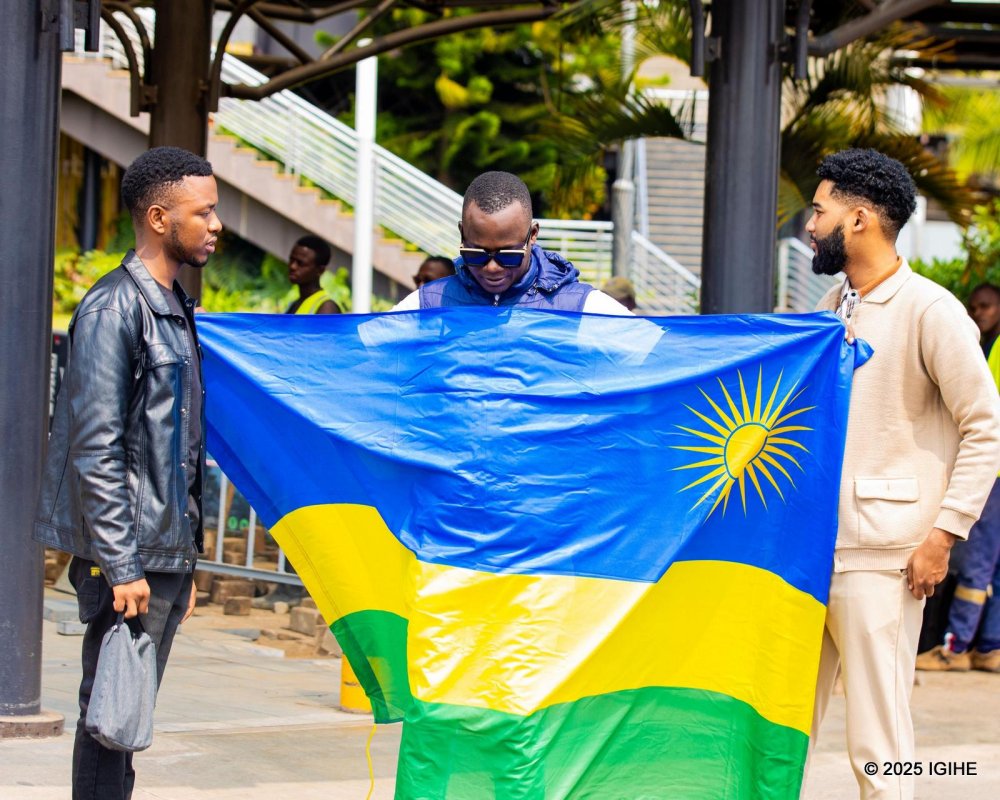
Following Rwanda’s announcement to suspend diplomatic relations with Belgium, concerns arose about possible repercussions for citizens, including students, residents, and businesspersons in Belgium.
Many also questioned the impact of this move on Rwanda’s Kwibuka 31 commemoration of the 1994 Genocide against the Tutsi, especially as the Rwandan Embassy in Belgium played a key role in organizing memorial events.
In an interview with IGIHE, Nduhungirehe dismissed fears, emphasizing that ordinary citizens will not be affected by the diplomatic fallout.
“Cutting ties with Belgium will have no impact on ordinary citizens. The Genocide commemoration activities will continue, organized by Rwandan communities and survivors’ associations,” he stated.
He also assured Rwandans abroad that the government will continue to provide necessary information and support whenever possible.
On March 17, 2025, the Rwandan government formally notified Belgium of its decision to cut diplomatic relations and ordered Belgian diplomats to leave the country within 48 hours.
The decision followed Belgium’s continued disregard for Rwanda’s sovereignty, both historically and in the ongoing conflict in the Democratic Republic of Congo (DRC).
Rwanda accused Belgium of taking sides in the conflict, spreading misinformation, and advocating for decisions that undermine Rwanda’s security and interests.
This move comes a month after Rwanda terminated a €95 million ($102 million) development cooperation agreement with Belgium for projects planned between 2024 and 2029, leaving about €80 million ($86 million) in unused funds.
He made these remarks during the Africa Universities Summit, held in Rwanda, which aimed to explore ways universities can contribute to the continent’s development. The summit was organized by Times Higher Education.
Nsengimana stated that universities are the engine of national development and should ensure that graduates are equipped to make meaningful contributions.
“The universities you represent are more than just institutions of higher learning; they are engines of innovation, self-reliance, and economic growth. The future of Africa depends on strong partnerships within the continent and beyond,” he said.
He stressed that African universities should not only be centers of knowledge but should also engage in research that brings about transformative and sustainable development.
“The goal is not to create individuals who rely on others but to empower them to be self-sufficient, ensuring that Africa’s institutions become the driving force of their own development. Sustainable development is not a choice; it is a necessity. Universities must integrate sustainability principles into their curricula, research, and operations.”
The Minister highlighted that universities should conduct research aimed at addressing Africa’s unique challenges.
He also pointed out that technology in education presents an opportunity to expand access to quality learning.
“The technological changes we are witnessing are transforming all sectors, including education. While there are challenges, technology offers opportunities to provide quality education for all, without exclusion.”
He noted that addressing the digital divide is crucial and that solutions must be found to benefit both urban and rural areas.
Minister Nsengimana further highlighted a major gap between the knowledge imparted by universities and the skills required by the labor market, stressing the urgency of building a strong education system. He urged universities to collaborate with industries to develop curricula and courses that align with market needs.
“There is a gap between the knowledge taught in schools and what is required on the job market. This needs urgent attention. Universities should work closely with industries to develop academic programs that align with labor market demands, ensuring better employment opportunities and fostering innovation across various sectors.”
He reiterated that universities should conduct research aligned with Africa’s sustainable development goals and the well-being of its people, asserting that a strong higher education system can significantly contribute to Africa’s development.
Nsengimana also emphasized that the advancement of higher education in Africa depends on unity, strategic transformations, innovation, and collaboration for collective progress.
Nick Davis, the Regional Director for Africa and the Middle East at Times Higher Education, stated that since 60% of Africa’s population is youth, this should be seen as an opportunity for development.
He stressed that collaboration is key to Africa’s progress, with quality education, technology, and innovation forming the foundation for its growth.
Dr. Edward Kadozi, the Director General of the Higher Education Council (HEC), also highlighted the importance of strengthening technical, vocational, and hands-on education.
He noted that this approach would help create jobs, supply skilled workers for the growing industries across African countries, and reduce youth unemployment.
“It’s bound in my Lord and Savior Jesus Christ,” he said not long before departing the International Space Station to return to Earth.
After being asked what his “life lesson or takeaway from these nine months in space” was, astronaut Barry Eugene “Butch” Wilmore replied, “Well, I can tell you honestly, my feeling on all of this goes back to my faith. It’s bound in my Lord and Savior Jesus Christ.”
“He is working out his plan and his purposes for his glory throughout all of humanity, and how that plays into our lives is significant and important, and however that plays out, I am content because I understand that,” Wilmore continued.
“I understand that He’s at work in all things, some things are for the good, go to Hebrews chapter 11, and some things look to us to be not so good. But it’s all working out for His good, for all those that will believe,” the astronaut added. “And that’s the answer.”
Wilmore and fellow astronaut Sunita “Suni” Williams, who launched into space on the first piloted test flight of Boeing’s Starliner on June 5, 2024, ended up stranded on the International Space Station (ISS) orbital laboratory for 286 days, when they were only supposed to be on a ten-day trip.
After the Starliner had faced problems, Elon Musk’s SpaceX reportedly worked on a plan with NASA to fly Wilmore and Williams back to Earth.
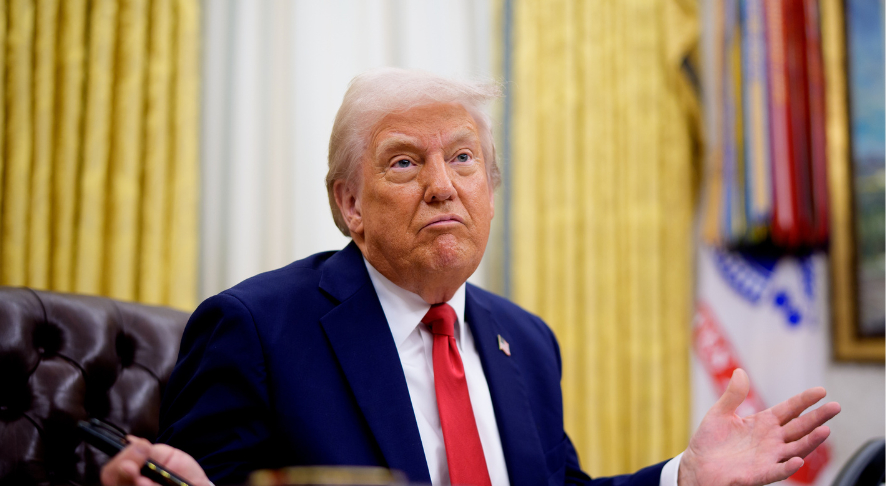
As of Wednesday March 19, 2025, the two astronauts had finally completed their long-awaited journey back to Earth on a SpaceX capsule, thanks to the combined drive and ambition of President Donald Trump and Musk to “go get them.”
The event welcomed representatives from various religious affiliations, including Catholics, Muslims, Anglicans, and other special guests, highlighting the spirit of inclusivity during the holy month of Ramadan.
Speaking at the iftar, H.E. AlQahtani expressed his appreciation to the attendees and emphasized the UAE’s commitment to fostering peace and understanding.
“It is a pleasure for me to welcome you to this interfaith iftar dinner during Ramadan, one of the holiest months of the Islamic calendar,” he said, adding how the gathering reflected the multicultural fabric of the UAE, where more than 200 nationalities of different faiths live together in peace and harmony.
“We in the UAE believe in the importance of bringing people together during the month of Ramadan, reflecting our principles of compassion, generosity and coexistence,” he added.
H.E. AlQahtani also underscored the UAE’s dedication to promoting the values of tolerance, peaceful coexistence, and dialogue, stressing that these values are crucial not just during Ramadan but throughout the year.
“Ramadan is an opportunity for a new beginning, a time to recalibrate, reflect, and renew,” he said, concluding by extending his warm wishes for a blessed Ramadan to all.
Rwanda’s Permanent Secretary at the Ministry of Foreign Affairs and International Cooperation, Clementine Mukeka, also addressed guests, commending the UAE Embassy’s efforts to foster dialogue and unity.
“On behalf of everyone here, I would like to thank Your Excellency Ambassador AlQahtani and the entire team for organizing such a wonderful event,” she said.
Reflecting on Rwanda’s own journey toward reconciliation after the 1994 genocide against the Tutsi, Mukeka also emphasized the power of unity and dialogue in fostering lasting peace.
“In Rwanda, we have seen firsthand the power of unity. Today, Rwanda is a living example of what’s possible when we work toward a shared goal of peace, healing, and progress,” she said, reiterating Rwanda’s readiness to build bridges and partnerships with countries around the world, based on the principles of peace and cooperation.
“As we reflect on the values of Ramadan, let us remember that these aren’t just for this month. They’re values we can carry with us every day, in how we treat one another and in the actions we take to make the world a better place,” she added.
Abdellatif Oulad Aouid, head of the Islamic Cultural Center in Kigali, also spoke at the event, reflecting on the long-standing partnership between the center and the UAE. He acknowledged the pivotal role played by the Khalifa bin Zayed Al Nahyan Foundation in supporting educational and humanitarian programs in Rwanda.
“The Islamic Cultural Center is a model of tolerance and coexistence, hosting more than 700 students under the guidance of 45 teachers, without any religious, gender, social, or other discrimination,” he said.
He also commended the cooperation between the Islamic Cultural Center and the UAE Embassy in promoting values of solidarity and tolerance through initiatives such as iftar programs, supporting vulnerable communities, and encouraging academic excellence.
“On this occasion, I extend my sincere gratitude to Your Excellency for your continuous support and to the Rwandan authorities for their cooperation. We look forward to furthering our humanitarian efforts together,” he said.
The event was a celebration of the shared values that unite people across cultures and faiths, where guests shared conversations over a traditional iftar meal, fostering a spirit of community and mutual respect.
The UAE Embassy’s Interfaith Iftar Dinner served as a powerful reminder that dialogue, understanding, and compassion can foster a more peaceful and inclusive world.
The group’s military spokesperson said in a televised statement that the attack was made to support the Palestinians and in response to the new wave of deadly Israeli airstrikes across Gaza earlier in the day.