{KINSHASA, CONGO — A Congolese press freedom group says a state television reporter was killed in his home by unidentified assailants.}
The group Journalist in Danger said in a statement Wednesday that the reporter, Marcel Lubala, was shot three times early Tuesday morning at his home in the central town of Mbuji-Mayi. The group said his body was dragged in front of his wife, who had been tied up.
The group said Lubala appeared to be the victim of a “settling of scores.” It said journalists in the region would observe a “day without the press” on Thursday.
The provincial government said several people were arrested in connection with the case, but did not suggest a possible motive.
Journalist in Danger has recorded 14 journalist killings in Congo in the past decade.
{NAIROBI, KENYA — A fivefold surge in Burundians fleeing to Tanzania to escape political violence in their troubled central African homeland is creating one of Africa’s biggest refugee crises, a charity said Wednesday, amid warnings from activists of genocide threats.}
Some 10,000 Burundians have arrived in neighboring Tanzania each month since August, increasing the population in three overcrowded northwestern camps to almost 250,000 people, said Doctors Without Borders, known by its French initials, MSF.
“This is rapidly becoming one of Africa’s biggest refugee crises,” David Nash, MSF’s Tanzanian head of mission, said in a statement. “Unrest in Burundi [is] showing no signs of abating.”
Almost 325,000 Burundians — 3 percent of the population — have fled since the crisis began in April 2015 when President Pierre Nkurunziza decided to run for a third term, which he secured in a disputed election in July 2015. Half of those fleeing Burundi have gone to Tanzania and others to Rwanda, Uganda and the Democratic Republic of the Congo.
The refugees say they are fleeing harassment, worsening hunger and an uncertain future, Nash told the Thomson Reuters Foundation in a phone interview.
Crimes against humanity are being committed in Burundi, with the risk of intensifying to genocide, the International Federation for Human Rights and Burundian Human Rights League said Tuesday — charges the government has repeatedly denied.
Burundi intends to withdraw from the International Criminal Court, after the ICC announced plans in April to investigate reports of killings, disappearances and torture in the country.
Steady influx
With 462 Burundians and 42 Congolese arriving in Tanzania each day in November, the U.N. refugee agency (UNHCR) predicts the refugee population will reach 280,000 by the end of 2016.
“It has become necessary and urgent that additional camps be identified to enable dignified reception of new arrivals, many of whom are women and children,” UNHCR’s country representative Chansa Kapaya said in emailed comments to the Thomson Reuters Foundation. “UNHCR is confident that the repeated appeal to the government of Tanzania to identify additional camp sites will be successful.”
A fourth site, Karago, has been approved, but it does not have enough water, Nash said, so new arrivals are being taken to the Nduta camp, which has already exceeded its 50,000 capacity.
The Tanzanian government has to displace and compensate its own people each time it makes space for a new camp, Nash said. Until then, refugees risk being held in mass shelters for up to 200 people, he said, as happened at the start of the crisis.
“It’s a disaster for health,” he said, as malaria is a major problem during the current rainy season. “Malaria spreads far quicker [in mass shelters] than when people are housed in family tents.”
{The relief items that are being sold by the refugees in local markets include among others carpets, blankets, farm tools, mosquito nets, water containers, solar-power lamps.}
Several markets in West Nile are flooded with relief items that have being sold by South Sudan refugees to market vendors who resell them.
The relief items were distributed by relief agencies like the United Nations High Commission for Refugees (UNHCR).
The refugees reportedly vend relief items to get money to buy other “necessities of their choice.”
The relief items that are being sold by the refugees in local markets include among others carpets, blankets, farm tools, mosquito nets, water containers, solar-power lamps.
Mr Robert Baryamwesiga, the Bidibidi Settlement commandant confirmed the booming trade in relief items which are marked with the UNHCR logo.
He said the refugees sell solar-power lamps at Shs30, 000 and the traders re-sale the lamps on the open market at Shs52,000.
Bidibidi Settlement camps hosts about 213,279 refugees.
Mr Elias Wudango the Refugee Welfare Council chairperson said some refugees sell the items to buy food whenever food which is given to them once a month, runs out.
“Some of the refugees sell the relief items and use the money to grind cereals that are given to them while others want to buy food because relief food distribution sometimes delays,” he said.
The Refugee Desk Officer in the Office of the Prime Minister, Mr Solomon Osakan they would impound the items from vendors who re-sale them,” he said.
Yumbe District Police Commander, Mr Abubaker Musiho said some of the items have been impounded by police.
{Dr Rose Nassali Lukwago, the PS Ministry of Education and Sports said despite the indefinite closure, staff were not dismissed and were still entitled to their monthly pay.}
Government has said staff at Makerere University will still receive their November salary despite the closure.
Dr Rose Nassali Lukwago, the Permanent Secretary to the Ministry of Education and Sports said in her November 14 letter to the University Secretary, Charles Barugahare, that despite the indefinite closure, staff were not dismissed and were still entitled to their monthly pay.
“I wish to clarify that staff have not been dismissed, therefore the University is obliged to pay them salaries within the existing rules and regulations of payment for salaries,” read Dr Nassali’s letter in part.
Barugahare had on November 10 written to Dr Nassali Lukwago seeking clarification on the procedure of processing payments for staff at Makerere.
The university was closed 17 days ago by president Museveni following successive strikes by both the academic staff and students. The staff were demanding their incentive arrears of over Shs28 billion that had accumulated since February this year.
Since the president’s directive, all offices were closed and staff were asked to park all university cars and hand in their keys. The university has since operated with a skeletal staff in the top management offices which according to the Eng. Dr Charles Wana-Etyem, University Council chairman, are to coordinate communication between government and the University.
Staff members were also banned from travels both inland and abroad on behalf of the University.
Government has since appointed a nine-member Visitation Committee to investigate the challenges that led to the closure of Makerere University.
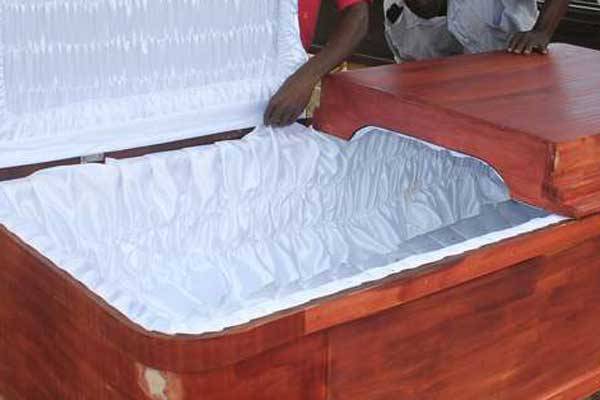
{Two white South African farmers briefly appeared in court on Wednesday on assault charges after an online video emerged showing them pushing a black man into a coffin and threatening to burn him alive.}
Willem Oosthuizen and Theo Martins Jackson, both 28, were remanded in custody after their lawyer decided not to apply for bail.
Magistrate Jongilizwe Dumehleli said the pair should return for another court hearing on January 25.
The men face charges of kidnapping and assaulting 27-year-old Victor Mlotshwa over an incident that occurred in August at a farm near the town of Middelburg in the eastern province of Mpumalanga.
They were arrested on Monday after the video, apparently shot on a mobile phone by one of the two white men involved, went viral last week.
The 20-second clip shows one of the assailants shoving a black man, clearly in distress, into the wooden coffin and trying to force down the lid.
“Come, come. We want to throw the petrol on,” said one of the men, speaking Afrikaans, according to the News24 website.
They are also accused of threatening to put a snake in the coffin.
Mlotshwa told ENCA television he was walking to the town of Middelburg and decided to use a short cut when the two men spotted him.
“I was in a hurry I had to use some path, a footpath, that was the shortest to go to Middelburg,” he said.
“They accused me of trespassing. Then they beat me up and I had to run away,” he said, adding he tried to flee but they caught him.
“They tied me with cable tie and took me to the nearest farm. They beat me up and forced me into the coffin.”
RACISM
The Economic Freedom Fighters (EFF) opposition party and the ruling African National Congress held separate rallies outside the court to protest at the alleged assault and racism in South Africa.
“We will make sure that those who are still racist, especially white people who are still racist, we will drive them to the sea so that they go back to where they come from,” ANC’s youth league deputy president, Desmond Moela, said during the rally attended by Mlotshwa.
“They want to torture our people when they are on our land.”
At another rally, the spokesman of the radical EFF Mbuyiseni Ndlozi told party members that it is “impossible” for white South Africans to see blacks as fellow human beings or as equals.
“This country has a very painful past which still seems to be our present, in which black people continue to be treated like animals.”
“We are still in the same position we were under apartheid,” said Ndlozi.
Despite its long history of institutionalised racism under the apartheid regime, South Africa does not have legislation that criminalises racism though it remains beset by deep-rooted inequality 22 years after the end of white-minority rule.
Cases of racism have erupted regularly on social media in recent years.
A South African realtor was in June fined for labelling blacks as monkeys littering the beaches, after a Facebook post she put up in January.
In August, a previously whites-only girls school was ordered to suspend allegedly racist hairstyle regulations after black pupils said they had been called monkeys by teachers for wearing banned ‘afros’.
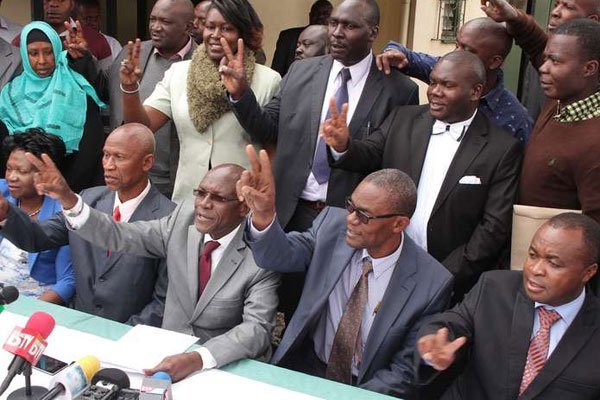
{Turkana senator John Munyes and two Members of Parliament who defected from Ford Kenya are today expected to appear before the party’s disciplinary committee to show why they should not be subjected to a by-election.
}
Ford Kenya has summoned Mr Munyes and MPs Khatib Mwashetani (Lunga Lunga) and Nicholas Ngikor (Turkana East) to appear before the committee headed by retired judge Richard Kuloba today.
Letters reminding the senator and the two MPs to appear before the committee were dispatched yesterday.
“We write to you to show cause why your name should not be struck from the party register under provisions of section 14(3)(4) and (5a-e) of the Political Parties Act 2011and subsequent invocation of Article 113 of the Constitution of Kenya 2010,” read the letters.
“You officially and voluntarily decamped to Jubilee Party during its official launch on 10th September 2016 at Kasarani stadium, Nairobi,” the letters further state.
“Our conduct in all respects confirms that you defected to another political party under the provisions of section 14(3), (4) and (5a-e) of the Political Parties Act 2011 whose consequences and penalties are clearly stipulated thereof,” the letter concludes.
He asks Mr Munyes, Mr Ngikor and Mr Mwashetani to appear before his committee and show cause why they should not be “recalled for a by-election.”
During a recent party management committee meeting, Kakamega Senator Boni Khalwale who has been named deputy party leader made it clear that the party intended to expel the trio for disobeying the Ford Kenya constitution.
He explained that they had narrowed on the three because of their continued defiance of the party on whose ticket they were elected to Parliament.
“We have resolved that we create a disciplinary committee that should look into the conduct of some of our members that has been contrary to the constitution of Ford Kenya,” said the Kakamega senator.
The party has however failed to explain why similar summonses are not being extended to other MPs who were elected on Ford Kenya’s ticket but have since defected to ODM, a sister party in the Cord coalition.
They include Kisumu West MP Olago Aluoch and Awendo’s Jared K’Opiyo.
Ironically, Dr Khalwale too defected from the United Democratic Forum (UDF) to join Ford Kenya, raising questions of double standards in the party’s handling of defectors.
{Police in Dar es Salaam are holding 17 suspected criminals, including four women and four school children linked to illegal military drills.}
Dar es Salaam Special Zone Police Commander, Simon Sirro, told reporters in the city yesterday that the four women and school children were found hiding in a house believed to be a training camp at Kilongani-Vikindu area in Coast Region. He declined to reveal the names of the suspects on investigation grounds.
“The arrest was facilitated by Shabani Maleck, a father to one of the four children who disappeared from their Kitunda residence in Ilala municipality since last June,” said Commander Sirro.
The suspects were found in a house belonging to one Suleiman, with the women admitting to have received the children from their parents and guardians who took them out of Kitunda Primary School.
They further admitted that the kids were attending Madrasat class neighbouring the camp as well as receiving training on the use of guns and fighting techniques.
The trainees were also groomed to hate the police and engage themselves in crimes, including robbery. Mr Maleck said he has gotten one child but four others are still missing, confirming that the children were reported abducted by his estranged wife, Salma Mohamed, whom he had divorced since last February.
“We are still investigating the matter to find out the parents and guardians of these children … we are still interrogating these women to know their employer who assigned them to take care of the children in the camping house,” said Mr Sirro.
Five other suspects were arrested over the weekend at Toangoma area in Kigamboni over alleged involvement in robbery at various areas in the city.The suspected bandits were arrested after breaking into a house and robbing Toangomabased Patrick Samari of a pistol with registration number A731441 and 12 rounds of ammunitions, 10m/- cash, two laptops, mobile phones and four sets of flat screen television.
“The suspects were also found in possession of a Toyota TI car with registration numbers T533 DEQ believed to have been used in robbery incidents,” said Commander Sirro, adding that the suspects were still being interrogated before arraigning them.
In another development, Commander Sirro said the law enforcers have apprehended five suspected car thieves, including a Roman Catholic Church Priest in Sumbawanga, Demestrious Apolinary, who was found in possession of the stolen vehicle.
He named the four suspects as Aman Dickson (23), Exaud Martin (40), Rashid Haruna (28) and Mzee Nassibu (41). They are suspected to have stolen a Scania Lorry with registration numbers T511AWB, property of Nelson Daniel and Mitsubish Canter with number T814DEF that belongs to Hosea Kapula.
“Priest Apolinary has been found possessing a Toyota Land Cruiser with registration numbers T 616 DCH, the property of Joseph Kayawaya … the vehicle was reported stolen in Dar es Salaam and sold in Arusha through forged details,” said Mr Sirro, noting that the priest remains in police hands for further investigations on the car theft.
{The one week International Course on Kigali Principles on Protection of Civilians (POC) attended by 36 military, police and civilians officers from 14 countries, has concluded at Rwanda Peace Academy, in Musanze District, Northern Province, on 16 November 2016. The Course discussed practical approaches to protect civilians’ lives in armed conflicts.}
The Course was officially closed by Rwanda Defence Force Chief of Defence Staff, Gen Patrick Nyamvumba. The ceremony was also attended by the Kingdom of Netherlands Defence Attaché, Col Michael C. Meyburg and the US Deputy Defence Attaché, Maj Shawn P. Russel.
In his remarks, the RDF Chief of Defence Staff, Gen Nyamvumba, expressed that lack of capacity and willingness to actively intervene still expose many civilians to deadly risks during armed conflicts. “Protection of civilians in the context of UN Peacekeeping operations must be addressed holistically, with a view to improving the performance of all actors who share a stake in protecting innocent civilians from physical violence”, the CDS pointed.
Gen Nyamvumba explained that the Kigali Principles try to address the most relevant aspects of peacekeeping, including assessment and planning, force generation, training and equipping personnel, performance and accountability. “As we witness increased disrespect for international humanitarian law in today’s conflicts, the Kigali Principles commit peacekeeping forces to never again abandon civilians to armed parties looking to do them harm”, he said.
He urged graduates to use the skills and experiences acquired whenever they will have the opportunity to be in peacekeeping mission or a situation to protect civilians.
Both the Netherlands and US Defence Attachés appreciated the joint effort put together by the US, the Kingdom of Netherlands and the Government of Rwanda to organize such training. They reiterated their commitments to support the Peacekeeping initiatives and to join hands in implementing Kigali Principles on POC.
Maj Muyunda Nyoka from Zambia Defence Force told Media that the Course was very beneficial to participants. “ We have learnt that the duty we have as military is protecting civilians and make it our priority when conflicts break out”. He added that peacekeepers should not fail to protect civilians under pretext that the mandate doesn’t allow them to take action.
Maj Francisca Aholo from Ghana Air Force said that the Kigali Principles were made to improve the existing UN guidelines in POC. “We need to concentrate on Civilians and the Kigali Principles tell us not to hesitate, to delay in everything we have to do in protecting civilians.”
Mrs Lauren Spink from the Center for Civilians in Conflicts in Washington DC (currently detached in Goma/DRC), said that the Kigali Principles are very possible to realise. All it requires is the firm commitment and collaboration of all UN military, police and civilians personnel in Peacekeeping theatres, with support of the Security Council and the UN Secretariat.
The Kigali Principles on the Protection of Civilians, adopted in May 2015, are a set of 18 principles, best practices to enhance implementation of civilian protection mandates. They are meant to strengthen the international community’s commitment to effectively protect civilians.
UN Members States that have endorsed the Kigali Principles include: Australia, Austria, Bangladesh, Belgium, Burkina Faso, Canada, Djibouti, Estonia, Ethiopia, Finland, Republic of Macedonia, France, Germany, Ghana, Guinea, Ireland, Italy, Latvia, Malawi, Montenegro, The Netherlands, Niger, Norway, Poland, Romania, Rwanda, Senegal, Slovenia, Sri Lanka, Sweden, Tanzania, Togo, Ukraine, Uganda, United Kingdom, United States, Uruguay and Zambia.
{Occasional smokers can avoid some harmful effects}
Drinking red wine is widely regarded as protective against cardiovascular disease. A new report in The American Journal of Medicine found that a glass or two of red wine before lighting up a cigarette can counteract some of the short-term negative effects of smoking on blood vessels.
Cigarette smoke causes acute endothelial damage, vascular and systemic inflammation, and cellular aging. Red wine stimulates the formation of endothelium-dependent relaxation factors such as nitric oxide, which improve endothelial function in coronary arteries possibly because of the high phenol concentration in red wine.
“However, sparse data exist on the short term potential vasoprotective effects of red wine in smoking-healthy individuals,” explained lead investigator Viktoria Schwarz, MD, of the University of Saarland, Homburg, Germany. “The aim of our study was to investigate the acute vascular effects of red wine consumption prior to ‘occasional lifestyle smoking’ in healthy individuals. We found evidence that preconsumption of red wine prevented most of the vascular injury caused by smoking.”
The study examined the effects of smoking on various biochemical processes in the blood and vessels of 20 healthy non-smokers who volunteered to smoke three cigarettes. Half of the subjects drank red wine one hour before smoking, in an amount calculated to result in 0.075% blood alcohol content. Blood and urine were collected before and after drinking and smoking and continued until 18 hours after smoking.
Smoking is known to cause microparticles to be released into the bloodstream. These particles come from endothelial cells, platelets, and monocytes and indicate that cells in the blood vessels are being damaged. Researchers found that in subjects who consumed red wine before smoking, these cellular changes did not occur.
Another biochemical process affected by smoking is telomerase activity. Telomeres can be thought of as “protective caps” on chromosomes. During aging, these caps can shorten and lose their protective ability. By measuring telomerase activity, investigators determined that the group that smoked without drinking red wine showed a 56% decrease in telomerase activity while the drinking group showed only a 20% decrease.
Inflammation puts stress on cells due to an imbalance in reactive oxygen species production and the body’s antioxidant defenses. According to Dr. Schwarz, “We observed acute proinflammatory changes, namely, leukocytosis, neutrophilia, upregulated levels of IL-6 in serum, and enhanced messenger RNA expression of IL-6 and tumor necrosis factor alpha. Our study adds to the present evidence that the proinflammatory effects in nonsmokers with ‘occasional lifestyle smoking’ could be prevented by red wine consumption.”
Since the study was limited to young, healthy nonsmokers, it is not clear whether these findings apply to the elderly, the ill, or chronic smokers. There was no comparison to different alcoholic and non-alcoholic beverages or whether the results would apply to more than just occasional smokers and drinkers.
These findings underscore the magnitude of acute damage exerted by cigarette smoking in “occasional lifestyle smokers” and demonstrate the potential of red wine as a protective strategy to avert markers of vascular injury. Dr. Schwarz and co-investigators emphasized that they do not intend to motivate occasional smokers to drink or occasional drinkers to smoke. “Nevertheless, this study identified mechanisms suitable to explore damage and protection on the vasculature in humans, paving the way for future clinical studies.”
The number of people in the world with high blood pressure has reached 1.13 billion, according to new research.
The study, led by scientists at Imperial College London, reveals the number of people with high blood pressure has nearly doubled in 40 years.
The team studied changes in blood pressure in every country in the world between 1975 and 2015.
The largest ever study of its kind, the research involved the World Health Organization and hundreds of scientists throughout the world, and incorporated blood pressure measurements from nearly 20 million people.
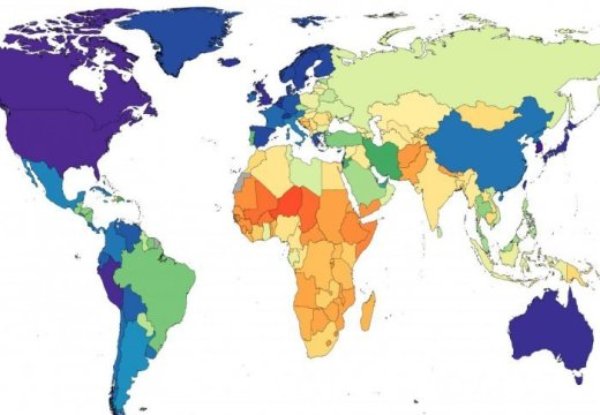
The findings, published in the journal The Lancet, showed that while blood pressure has dropped sharply in high-income countries, it has risen in many low and middle-income countries, especially those in Africa and South Asia.
The UK was found to be the European country with the lowest proportion of people with high blood pressure in 2015, while South Korea, USA and Canada were lowest in the world.
Professor Majid Ezzati, senior author of the study at the School of Public Health at Imperial said: “High blood pressure is no longer related to affluence — as it was in 1975 — but is now a major health issue linked with poverty.”
The authors say the reason for this finding is unclear, but it may be linked to overall better health and increased consumption of fruits and vegetables. The condition is also caught more frequently, and earlier, and managed with medication in high-income countries. These factors may have helped counteract rising obesity, which is a risk factor for high blood pressure.
Professor Ezzati added that poor nutrition in childhood in low income countries may also play a role in the study findings: “Increasing evidence suggests poor nutrition in early life years increases risk of the high blood pressure in later life, which may explain the growing problem in poor countries.”
The research, funded by the Wellcome Trust, also revealed men had higher blood pressure than women in most countries in the world in 2015. Globally, 597 million men had raised blood pressure, compared to 529 million women.
Over half of the world’s adults with high blood pressure in 2015 lived in Asia. Around 226 million people in China have high blood pressure, along with 200 million in India.
The study showed that much of the rise in the number of people with high blood pressure over the last 40 years is also due to a larger, and older, world population.
High blood pressure puts extra strain on the blood vessels and major organs such as heart, brain and kidneys. It is the world’s leading cause of cardiovascular disease, which leads to stroke and heart attacks, and is thought to cause 7.5 million deaths a year across the globe.
Blood pressure is defined by two numbers: systolic pressure, which represents the force your heart pumps blood into the blood vessels, and diastolic pressure, which is a measure of the resistance to the blood flow in the body’s blood vessels. Both numbers are measured in millimetres of mercury (mmHg). High blood pressure is defined as 140/90 mmHg or higher.
The team explained the condition is caused by a number of factors including dietary influences, such as eating too much salt and not enough fruit and vegetables, obesity, insufficient exercise and some environmental factors such as lead exposure and air pollution. The condition is more common in older ages.
Countries with the highest pressure
The country with the highest age-corrected proportion of men with high blood pressure in 2015 was Croatia (38 per cent of the population), while Niger had the highest proportion of women with high blood pressure (36 per cent).
Tackling the epidemic of high blood pressure in low and middle-income countries is one of the most pressing global health challenges, added Professor Ezzati.
“We need economic means and regulation to improve access to high quality food, especially fruits and vegetables, and reduce excessive salt in food. We also need a stronger healthcare system, to identify people with high blood pressure earlier, and improve access to treatment and medication. Without these measures, the world is unlikely to achieve the World Health Organization’s target of reducing the proportion of people with high blood pressure by 25 per cent by 2025.”
The other findings of the paper included:
• In the UK, in 2015 the age-corrected proportion of people with high blood pressure was 18 per cent for men and 12 per cent for women, making the UK 195th in the world for men (6th lowest), and 194th for women (7th lowest). In 1975, 38 per cent of UK men and 28 per cent of UK women had high blood pressure, placing men at 48th in the world (153rd lowest) and women at 96th in the world (105th lowest).
• Average blood pressure for men in the UK in 2015 was 126/72 mmHg (in 1975 it was 130/78 mmHg). Women’s average blood pressure was 117/71 mmHg in 2015 (in 1975 it was 124/77 mmHg).
• The country with the lowest proportion of people with high blood pressure in Europe in 2015 was the UK for both men and women (in 1975 it was Cyprus for both men and women).
• The top five countries with the highest proportion of men with high blood pressure in 2015 were all in Central and Eastern Europe: Croatia, Latvia, Lithuania, Hungary, and Slovenia. Nearly two in five men in these countries had high blood pressure.
• The top five countries with the highest proportion of women with high blood pressure in 2015 were all in Africa: Niger, Chad, Mali, Burkina Faso, and Somalia. Around one in three women in these countries had high blood pressure.
• The five countries with the lowest proportion of people with high blood pressure in 2015 were: South Korea, USA, Canada, Peru, and Singapore. Around one in six men and just over one in ten women have high blood pressure in these countries
• In the USA, the age-corrected proportion of people with high blood pressure was 15 per cent for men and 11 per cent for women in 2015, placing them 2nd lowest in the world. In 2015, men’s average blood pressure in the USA was 124/74 mmHg, while women in 2015 had an average blood pressure of 117/71 mmHg.
• In 2015, 258 million (23%) of the 1.13 billion adults with high blood pressure lived in South Asia (200 million in India) and another 235 million (21%) lived in East Asia (226 million in China).
The team added there were limitations of the study, for instance some countries, particularly those in sub-Saharan Africa and the Caribbean, had less data than others or the data were older. Furthermore, the equipment used to measure blood pressure has changed since 1975 — with most monitors now.