The 18-year-old contestant, Kamolwan Chanago, who is competing for the Miss Thailand title, was responding to the judges when the accident occurred. She was not allowed to stop and restart her answer as per the rules.
Quickly reacting to the mishap, Kamolwan turned away from the camera to discreetly reposition her dental prosthetics before returning to the judges to continue her presentation.
A spokesperson for Miss Grand Thailand, the pageant she was competing in, confirmed that the incident was an accident and expressed pride in how Kamolwan handled the situation.
The spokesperson said, “It was an unfortunate accident when her dental prosthetics fell out while she was speaking. We are proud of how she maintained her composure. This incident will not affect the ongoing competition, which will proceed as planned.”
The winner of the Miss Grand Thailand title is set to be announced on March 28, 2026. The winner will go on to represent Thailand at the Miss Grand International competition in India in October 2026.
Upon realizing what had happened, the contestant turned around to reposition her dental prosthetics and then went on to present herself to the judges.
On March 27, 2026, media reports indicated that the AU had decided not to support Macky Sall’s candidacy due to procedural violations.
Amb. Nduhungirehe, Rwanda’s Minister of Foreign Affairs, has explained that the 20 AU member states who broke their silence were not rejecting any candidacy but rather opposing the flawed procedure initiated by President Ndayishimiye, which ignored AU rules governing international nominations.
“What happened today at the African Union is a stark reminder that leadership matters. It’s unbelievable to note that a whole continental organisation can be tarnished or driven into a crisis by its own Chairperson, who is in office for not even two months,” Nduhungirehe posted on X .
The nomination process for the UN Secretary-General can be initiated by any country or group of countries, but the nominee need not necessarily be from the country that submits the candidacy.
On March 2, 2026, the Permanent Representative of Burundi to the UN notified the General Assembly that the Burundian government serving as current Chair of the African Union nominated Macky Sall, former President of Senegal, for the position.
“This submission of an African candidature to the position of UN Secretary General came as a surprise to all African Heads of State and Government, as none of them was consulted by the AU Chairperson before taking this important decision,” Nduhungirehe emphasized.
After the nomination, President Ndayishimiye attempted to pressure fellow African leaders into endorsing his decision by imposing a 24-hour “silence procedure.”
According to Amb. Nduhungirehe, Ndayishimiye convened the AU Bureau, where only two other members participated, and gave African governments 24 hours to approve or reject the nomination either by silence or by response.
“In other words, President Ndayishimiye, instead of calling an AU meeting for advice on the right procedure, chose to give his fellow AU Heads of State and Government only 24 hours to either endorse, by keeping silent, an AU decision that ‘EXPRESSES ITS FIRM SUPPORT to the President of the Republic of Burundi, H.E. Evariste Ndayishimiye, Chairperson of the AU for 2026, for having presented the candidacy of President Macky Sall […] for the position of Secretary-General of the United Nations,’ or to reject it by breaking the silence,” Amb. Nduhungirehe added.
This authoritarian approach was too much for many AU member states, which responded by breaking their silence and blocking the decision. They reminded Ndayishimiye that the AU must be governed by the rule of law.
Despite the damage to the AU’s international reputation, Nduhungirehe hopes this incident will serve as a lesson for future appointments of AU Chairpersons.
The new UN Secretary-General will begin their term in January 2027. Any candidate must be nominated by a country or group of countries, and it is not a requirement for the candidate to come from the country making the nomination. This means that Burundi could have nominated Macky Sall on their own behalf, but the actions of Ndayishimiye caused a stir within the AU.
While it is not always followed strictly, UN leadership positions are generally rotated among different regions of the world, and there is growing support for the idea that it is time for a woman to lead the UN.
Other candidates who have submitted their nominations for the position include Michelle Bachelet, former President of Chile; Rafael Grossi, Director-General of the International Atomic Energy Agency; Rebeca Grynspan, former Vice President of Costa Rica; and Virginia Gamba from Argentina.
Since Ndayishimiye took over the AU chairmanship, analysts have criticized his leadership, questioning his ability to address the pressing challenges facing Africa, such as the ongoing war in the eastern part of the Democratic Republic of Congo, where Burundi is involved in the conflict.
Since Ndayishimiye took over the AU chairmanship, analysts have criticized his leadership, questioning his ability to address the pressing challenges facing Africa
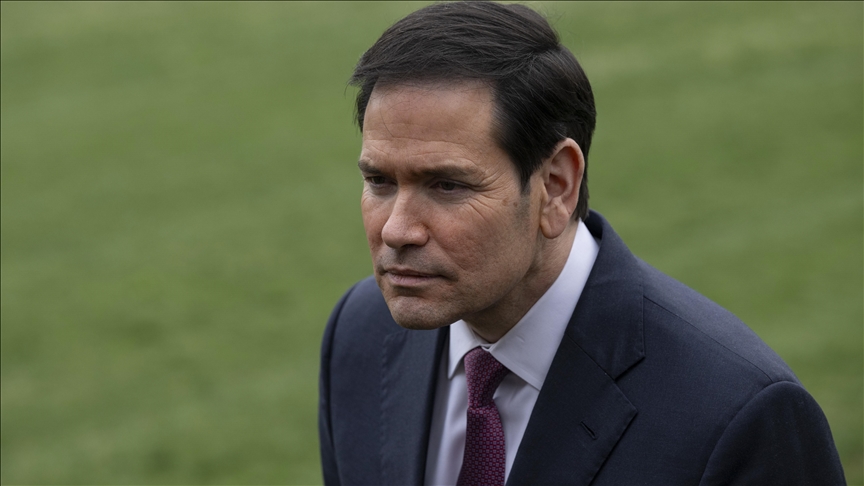
Speaking to reporters after attending a G7 foreign ministers’ meeting in France, Rubio said the operation would end “at the appropriate time, in a matter of weeks, not months.”
He noted that the United States could still “achieve the objectives without any ground troops,” including destroying Iran’s missile and drone capabilities.
A reporter from the U.S. news website Axios wrote on social media platform X that Rubio told his G7 counterparts the conflict with Iran could continue for “another two to four weeks.”
Rubio also said Washington was open to diverting U.S. weapons from Ukraine to the Middle East, although such a move has not been made so far.
Regarding the Russia-Ukraine conflict, Rubio said no meetings are currently scheduled to address the issue. He also rejected Ukrainian President Volodymyr Zelensky’s recent claim that U.S. security guarantees are tied to territorial concessions in Donbass, calling it “a lie” and stating that Zelensky was told that such guarantees would only come after the end of the conflict.
The G7 foreign ministers’ meeting was held in France on Thursday and Friday, with discussions focusing on issues including the situation in Iran and the Russia-Ukraine conflict.
U.S. Secretary of State Marco Rubio said on Friday that the ongoing operation against Iran is expected to “conclude in weeks.”
According to the Ministry of Foreign Affairs (MFA), Thailand has engaged in direct diplomatic communication to clarify that Thai vessels are not involved in the conflict since the Thai cargo ship Mayuree Naree came under attack on March 11 while sailing in the Strait of Hormuz, leaving three crew members unaccounted for.
The MFA also requested safe navigation through the strategic waterway, while Iranian authorities subsequently acknowledged the request and asked for details of the vessels transiting the area.
The government is accelerating efforts to strengthen energy security amid mounting pressure from the ongoing global energy crisis, Thai Prime Minister Anutin Charnvirakul told a press conference on Saturday.
Thailand has engaged in direct diplomatic communication to clarify that Thai vessels are not involved in the Middle East conflict
Just before sunrise in rural Chikutu, in Malawi’s Nkhata Bay district, children wake up to the sound of roosters and the start of another busy day. There’s water to fetch. Chores to finish.
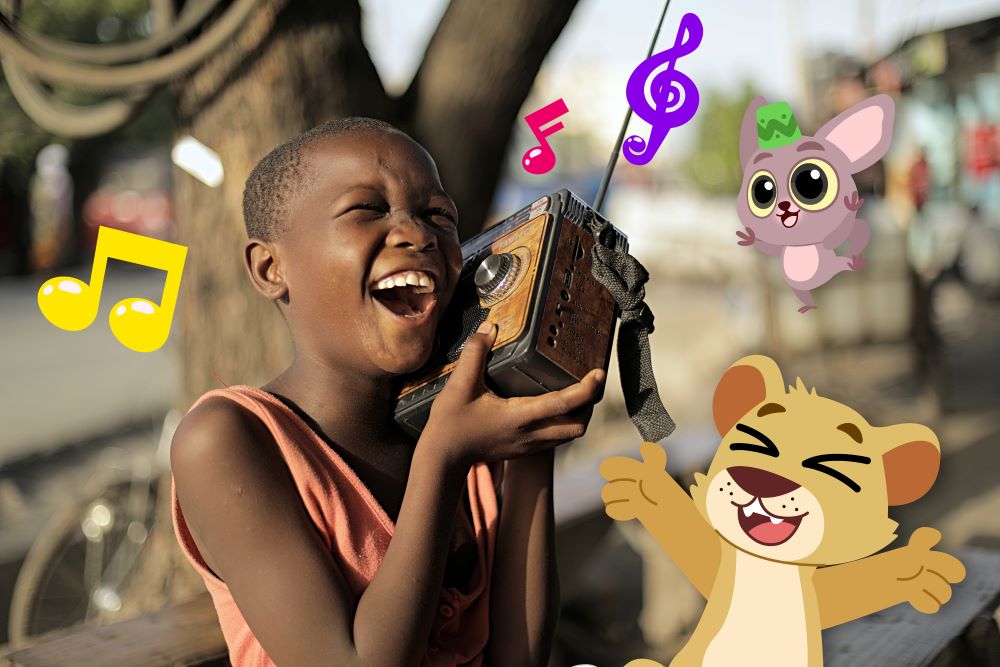
School is far away, internet access is unreliable, and smartphones are rare. But as families get ready, a small battery-powered radio crackles to life. Songs begin to play. Stories follow. Lessons come through in Chichewa, the language spoken at home. For these children, that morning broadcast is their classroom.
Scenes like this unfold every day across Africa. In places where classrooms are out of reach and digital learning is not an option, television and radio quietly step in. They are not just sources of entertainment. They are how learning happens. And behind them are Africa’s broadcasters, often unseen, often uncelebrated, playing a central role in children’s education.
For millions of families, broadcast remains the easiest and most reliable way to access learning. A radio doesn’t need data. A television doesn’t require a smartphone. One broadcast can reach entire communities at once, without placing any financial burden on families.
UNESCO estimates that radio reaches more than 75 percent of households worldwide, including many of the most remote and low-income communities, making it one of the most far-reaching tools for education.
This reality has shaped Ubongo’s work from the very beginning. More than ten years ago, when Ubongo was still an idea taking shape, African broadcasters saw the value of locally made educational content and made space for it on their airwaves. That early trust changed everything. What began as a small experiment grew into a learning resource that now reaches over 48 million households across the continent.
What makes African broadcasters special isn’t just how many people they reach. It’s how closely they are connected to the communities they serve. They know the languages families speak at home. They understand the challenges parents face. They treat education as a public service, not an afterthought. In many ways, they don’t just broadcast learning, they help teach it.
That partnership is clear in Malawi, where Ubongo has worked closely with Malawi Broadcasting Corporation since 2021. MBC has consistently treated educational programming as essential.
In December 2022, during a period of real economic strain, MBC’s Holiday Special Programme brought learning and joy into homes at a time when families needed both.
The station contributed ideas, production support, promotion, and national coverage, ensuring children could watch and learn together with their families during the school holidays. It felt less like a programme and more like a shared moment.
The importance of broadcast became even clearer during the COVID-19 pandemic, when online learning was out of reach for many underserved families. Around the world, more than 90 percent of countries turned to television and radio to support learning during school closures.
Broadcasters extended airtime, repeated episodes, and worked closely with education ministries to create dedicated learning hours. Through these collective efforts, Ubongo reached 24.6 million families during the pandemic—families who might otherwise have been left without any learning support at all.
But broadcasting isn’t only a solution for emergencies. Long after schools reopen, radios and shared televisions continue to play a role in everyday learning. Children gather around them. Parents listen in.
Lessons happen together. Regular schedules create routine, even when daily life is unpredictable. And when content is delivered in local languages, children connect more deeply. Research shows that this approach improves literacy, numeracy, and problem-solving, especially for learners who are often left behind.
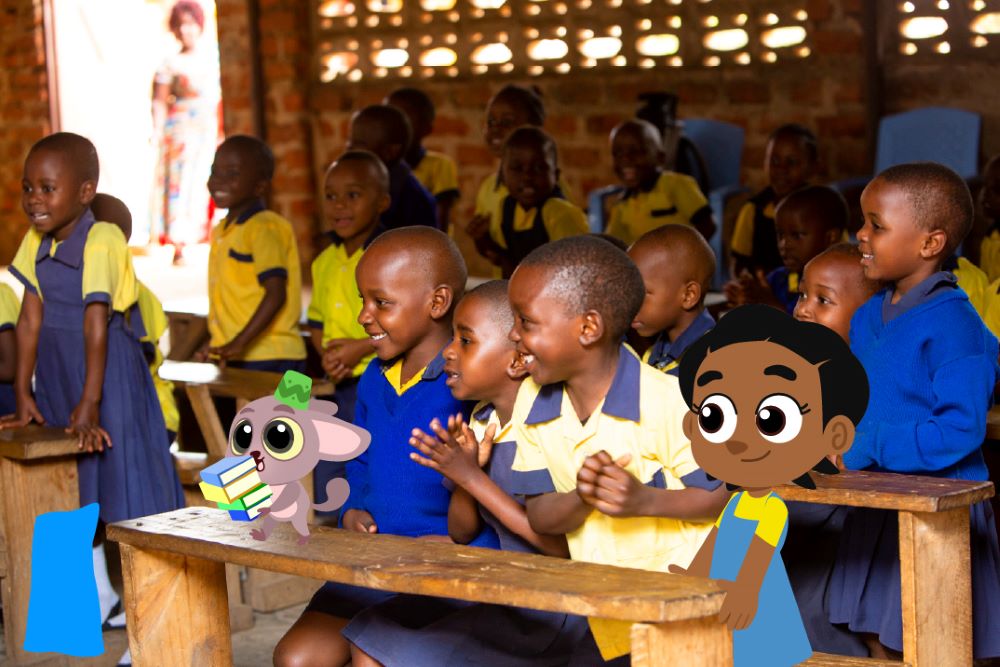
Today, Ubongo works with more than 80 broadcasters across 23 countries, delivering content in 13 languages, including Kiswahili, Chichewa, Hausa, Kinyarwanda, French, and English. Families access our programmes through free-to-air TV, radio, pay TV, and on-demand platforms. This network is the backbone of Ubongo’s ambition to reach 100 million children by 2028.
Our five-year strategy reflects that reality. It focuses on 19 priority markets, blends broadcast with digital and last-mile channels, and centres on both foundational and supplementary learning. None of this is possible without broadcasters who believe that children’s education is worth investing in.
Across the continent, broadcasters continue to show resilience and commitment, even as they navigate financial pressure and changing media landscapes. They keep children’s programming on air because they believe in its value. Because they believe in Africa’s children.
Recognising our broadcast partners is really about acknowledging their role in creating fairer access to learning. To every broadcaster who has supported Ubongo, we are deeply grateful. You have helped turn airwaves into learning spaces, screens into classrooms, and stories into tools that shape young lives.
There is still more to do. Children’s programming needs more space. Local language adaptations need continued investment. There is room to co-create more, to launch national learning campaigns, and to strengthen the role of broadcast in education systems.
Television and radio remain the most powerful tools we have for reaching every child, wherever they live. And together with Africa’s broadcasters, we can keep building the largest classroom on the continent, one that no child is locked out of.
For millions of families, broadcast remains the easiest and most reliable way to access learning. Ubongo uses Television and Radio to deliver education at low cost to hard-to reach population in Sub-Saharan Africa The author of the article, Tamala Maerere serves as Audience Engagement Manager at Ubongo.
Ingabire had argued that Article 106, which allows a court to summon individuals as accomplices or accessories during criminal proceedings, violated the presumption of innocence guaranteed by the Constitution. She contended that the provision contributed to her imprisonment and should be annulled.
In its ruling, the Court addressed three key issues, focusing on whether Article 106 infringes on constitutional rights. The Court emphasized that summoning an individual as an accomplice does not equate to a presumption of guilt.
The provision allows for the prosecution to summon individuals linked to the case for questioning, but it does not make them guilty unless there is sufficient evidence. If no such evidence is found, the court continues the trial without further involvement from the summoned individuals.
The Court also clarified that the prosecution must present irrefutable evidence to justify the summoning. It asserted that the judicial process ensures the defendant’s rights and guarantees that they are treated as innocent until proven guilty.
Regarding concerns of judicial overreach, the Court highlighted that the judiciary and prosecution may cooperate but must not interfere with each other’s roles.
The Supreme Court dismissed Ingabire’s claim, affirming that Article 106 aligns with the Constitution and does not violate any fundamental rights.
The auction, hosted by Freeman’s on Thursday, included pieces from a $23 million purchase made in 2007 by a foundation dedicated to acquiring rare Lincoln relics for the museum.
Among the items was a velvet-lined framed portrait of John Wilkes Booth, Lincoln’s assassin, which contained several strands of hair believed to have been plucked from Booth’s head after he was killed in 1865. The piece sold for $7,000, falling below its estimated value.
Other notable pieces included a bust of Lincoln biographer Carl Sandburg once owned by Marilyn Monroe, which sold for $1,300, and a bust of Ulysses Grant that fetched $2,000. The top-selling item was a rare 34-star eagle parade flag, which went for $220,000, far exceeding the $100,000 mark.
These artifacts, many of which were part of the 2007 Taper acquisition, come after a strained relationship between the Lincoln Presidential Foundation and the Lincoln Presidential Museum.
While the foundation was established to acquire unique Lincoln relics for the museum, disagreements over the authenticity of key items, like a stovepipe hat supposedly belonging to Lincoln led to the sale of several items.
Though the foundation has not confirmed whether the sale of these items is part of an effort to repay debt from the 2007 purchase, it marks a significant chapter in the history of the Lincoln collection, raising questions about the future of the museum’s displays.
This image from the archives of the Abraham Lincoln Presidential Library and Museum is of a purported lock of hair taken from John Wilkes Booth’s head after he was fatally shot during a manhunt. It was one of hundreds of items once acquired from a West Coast Lincoln collector for display at the museum.
This new device launched on March 27, 2026, is poised to redefine productivity for professionals, students, and teams by enabling seamless, real-time conversation capture and AI-powered transcription and summarization.
TicNote Pods integrate cutting-edge 4G connectivity, which allows users to record meetings, calls, lectures, or interviews directly, without needing a smartphone.
Equipped with dual recording modes—one for in-person conversations and another for virtual meetings—the earbuds automatically sync captured content to TicNote Cloud. Here, Shadow AI processes the audio, transcribing it, generating summaries, and even creating actionable tasks, making it easier for users to stay organized.
A standout feature of the TicNote Pods is their multilingual transcription capabilities, supporting over 100 languages in real-time.
This makes the device ideal for global teams and diverse work environments. The AI system can also convert recorded discussions into valuable project assets such as documents, slide decks, and landing pages, allowing users to transition quickly from conversation to execution.
With a focus on convenience and functionality, the TicNote Pods offer features like noise cancellation, premium audio quality, and up to 25 hours of continuous recording time. Available in navy blue and pearl white, the 4G version is priced at $299, with a Wi-Fi version set to launch soon.
TicNote Pods integrate cutting-edge 4G connectivity, which allows users to record meetings, calls, lectures, or interviews directly, without needing a smartphone.
The 2026 Global South Financiers Forum was held in Beijing on March 25 and 26 under the theme “Illuminating Global South,” bringing together heads of financial institutions, experts and industry leaders from home and abroad to exchange views on the achievements and future prospects of green finance cooperation.
Consensus on green growth
Amid mounting climate challenges and a profound shift in the global energy landscape, green and sustainable development is no longer an option but an imperative for the shared future of humanity, participants said at the forum.
“Capital flowing into green sectors in the Global South is becoming evident,” said Wang Zhiheng, president of the Agricultural Bank of China. He added that abundant resources and vast development potential are making the Global South a key destination for green investment.
Shahin Mahmudzada, executive director of the Central Bank of Azerbaijan, said the urgency of climate change calls for proactive measures across sectors to build a more resilient future, adding that many countries have already recognized the importance of this issue.
“Developing countries are a key force in addressing climate change and advancing global sustainability,” said Lu Lei, deputy governor of the People’s Bank of China. He stressed that deeper South-South cooperation in green finance will inject stronger and more enduring momentum into global sustainable development.
Green capital movement
In recent years, Global South countries have stepped up efforts to develop green finance, channeling more financial resources into green industries.
Zhang Yi, president of China Construction Bank, said areas such as energy transition, ecological protection and climate adaptation are opening up vast space for greater financial involvement.
By the end of 2025, the balance of China’s green loans had reached 44.8 trillion yuan (about 6.49 trillion U.S. dollars), while cumulative green bond issuance stood at 5.2 trillion yuan, both among the world’s highest, according to data from China’s central bank.
Sanjar Mukanbetov, chairman of the Green Finance Fund of the Kyrgyz Republic, said China’s experience demonstrates how government policies, financial markets and technological innovation can work in synergy to advance green transformation.
Challenges remain
The global green transition is evolving from a passive response to climate change into a proactive strategy for enhancing energy security and economic efficiency, participants at the forum said. However, Global South countries still face multiple constraints in advancing this transition.
A key challenge is the lack of unified and mutually recognized standards. Zhao Zhongxiu, president of the University of International Business and Economics, said inconsistencies across countries in areas like green project certification and information disclosure have increased cross-border investment costs, thereby hindering the efficient flow of capital.
At the same time, financial institutions are intensifying innovation efforts to address bottlenecks in trade and financing channels and facilitate international cooperation in green finance.
Wang said the Agricultural Bank of China has established a business center in southwest China’s Yunnan Province, working with 22 banks in neighboring countries to develop a cross-border settlement model, providing efficient financial services to 188 green foreign trade enterprises.
Looking ahead, participants called for stronger innovation, mutual recognition of standards, and smoother capital flows to direct more financial resources into sustainable development in the Global South and unify growth efforts.
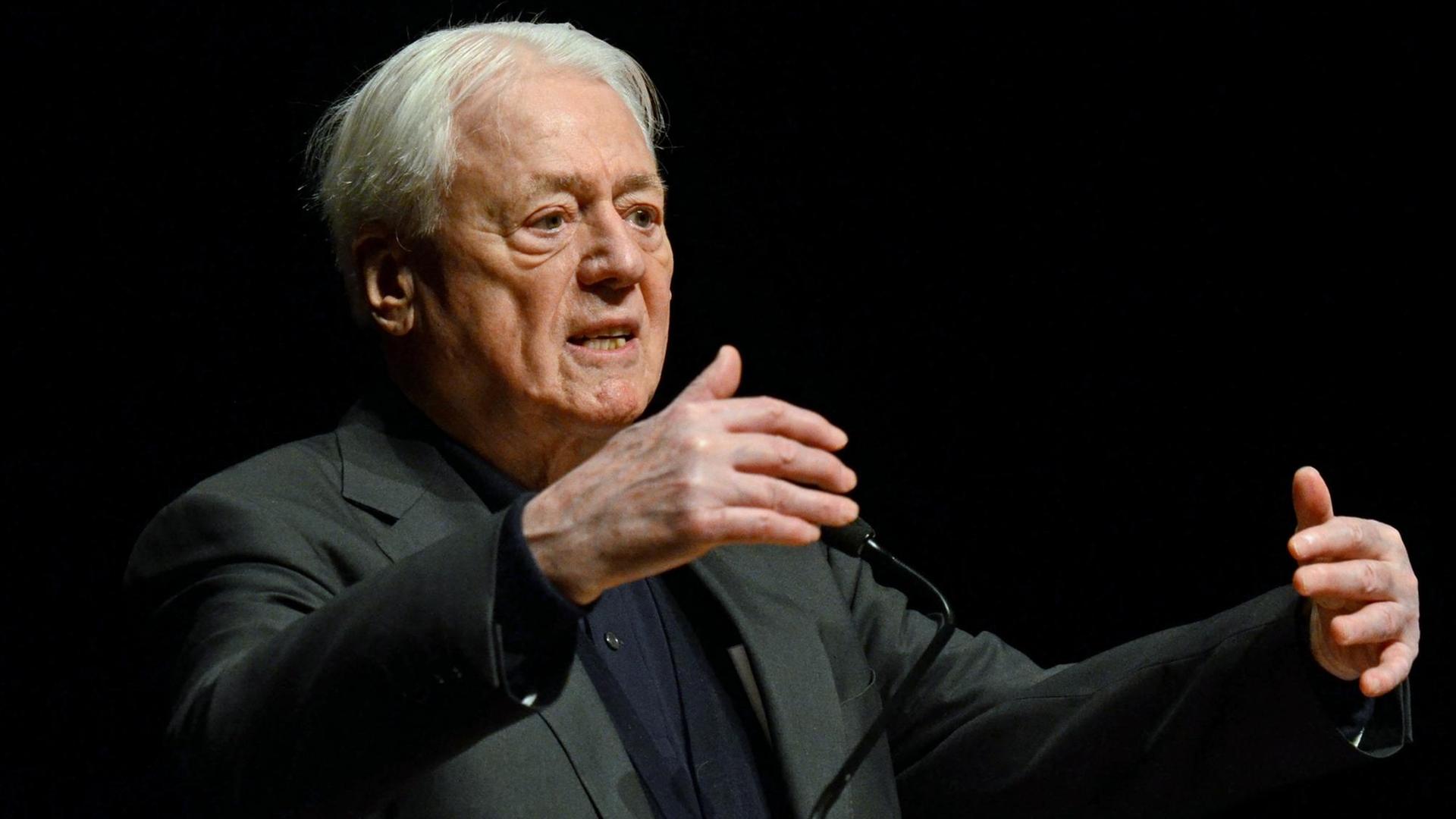
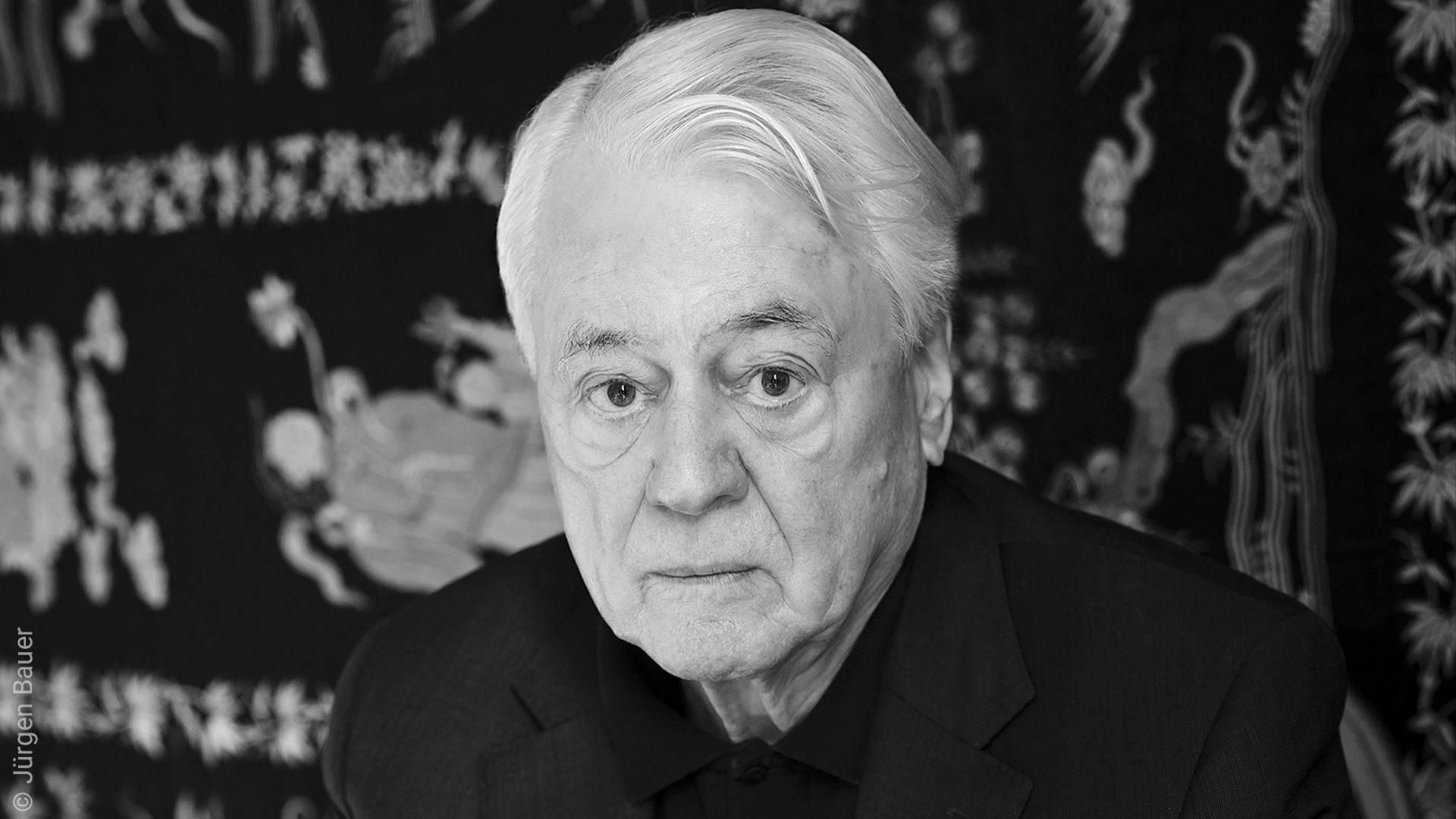
Born in Halberstadt, Germany, in 1932, Kluge initially trained as a lawyer but soon shifted his focus to literature and cinema. His work as legal counsel at the Institute for Social Research in Frankfurt connected him with Theodor Adorno, the renowned social philosopher who became a mentor. Kluge’s journey into film began in 1958 when he worked as an assistant to legendary director Fritz Lang.
In 1962, Kluge became a signatory of the Oberhausen Manifesto, which called for a new wave of German cinema. He became a central figure in the movement, which laid the foundation for the works of filmmakers like Rainer Werner Fassbinder, Werner Herzog, and Wim Wenders.
Kluge’s first major film, Abschied von Gestern (1966), known as Yesterday Girl in the U.S., is often regarded as the starting point of New German Cinema. The experimental film, which explores the journey of a Jewish East German refugee, won the Silver Lion at the Venice Film Festival.
His 1968 film, The Artists in the Big Top: Perplexed, won the Golden Lion at Venice and critiqued the protest movements of the era.
Throughout his career, Kluge earned numerous accolades, including the George Büchner Prize and the Heinrich Böll Prize. His final work, Primitive Diversity, was a visual essay about artificial intelligence and its impact on cinema, reflecting Kluge’s ongoing innovation in filmmaking.
Born in Halberstadt, Germany, in 1932, Kluge initially trained as a lawyer but soon shifted his focus to literature and cinema.