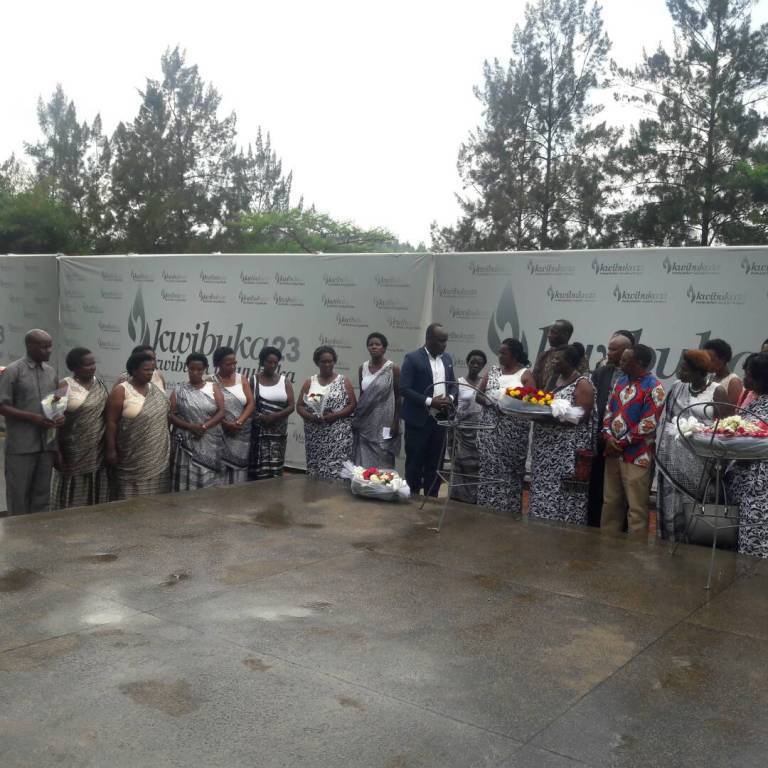
Arrived in the country on Monday for five-day visit, the group is visiting fellow Rwandans in order to combine efforts to spread Christianity in the East African Community.
After visiting different parts of the memorial and getting explainations about the history of the 1994 genocide against the Tutsi, Rev. Ismael Kidengi told the media that they learnt a lot which will help them fight the reoccurrence of the genocide anywhere in the World.
“God requested us to love one another and construct the nation, but the evil has interrupted our relationship and brought us many problems including murder. So, as Christians we wish that these atrocities would not reoccur anywhere in the World” he said.
The head of women in Kenya’s Methodist Church, Rev. Yuness Indangasi said that she was very impressed with the development of the country regardless to its past
“I’m pleased with how the government managed to reconcile people and live in harmony,” she said
“This country has overtaken others in Africa; together with your good leadership, I hope that you will reach far in ten years ahead,” she added
The head of Women in Rwanda’s Methodist Church, Rachel Mukamudenge said that visiting the genocide memorial helped Kenyans understand the truth of what happened in Rwanda and lean from that history
“This is a lesson for them to pray for our countries to keep the journey of development and unity. Churches should also play their role in mobilizing the community to fight against any evil that could cause the genocide occurrence,” she said
Speaking at the event on Tuesday, the commandant of the brigade, Lt. Col. Frank Mutembe said that RDF is committed to contribute to the sustainable welfare of population.
“People should live a good life. They should have good residence, food security and infrastructure and having access to medical services. This is the sustainable security RDF wish to contribute to through supporting government policies,” he said.
The state minister for community development and social affairs in the Ministry of Local Governance, Dr. Alvera Mukabaramba welcomed the gesture by the army and called on population to continue implementing government’s development programmes.
“We have witnessed different activities by the army through the ‘army week’, like free medical services, constructing infrastructure and contribution in agriculture among others. We recognize these activities in uplifting welfare of citizens,” she said.
Marie Mukahirwa one of beneficiaries expressed much gratitude to the Rwandan army saying that her family will not suffer from sickness.
“I’m thankful to this kind gesture. I have a family of eight and all us are given health insurance, it is very much appreciated ” she said.
“I have a family of seven; I live with physical disability and of course it is hard to pay life insurance for myself. I’m lucky enough to have these good Samaritans that solved this issue for my family,” he said.
The move will see MKUR design relevant market driven programmes for RwandAir in order to train their staff at reasonable rates to be competitive in the global aviation industry. The university shall train and award degrees in Bachelors, Masters and other qualifications, as agreed by the parties and in line with local and international standards.
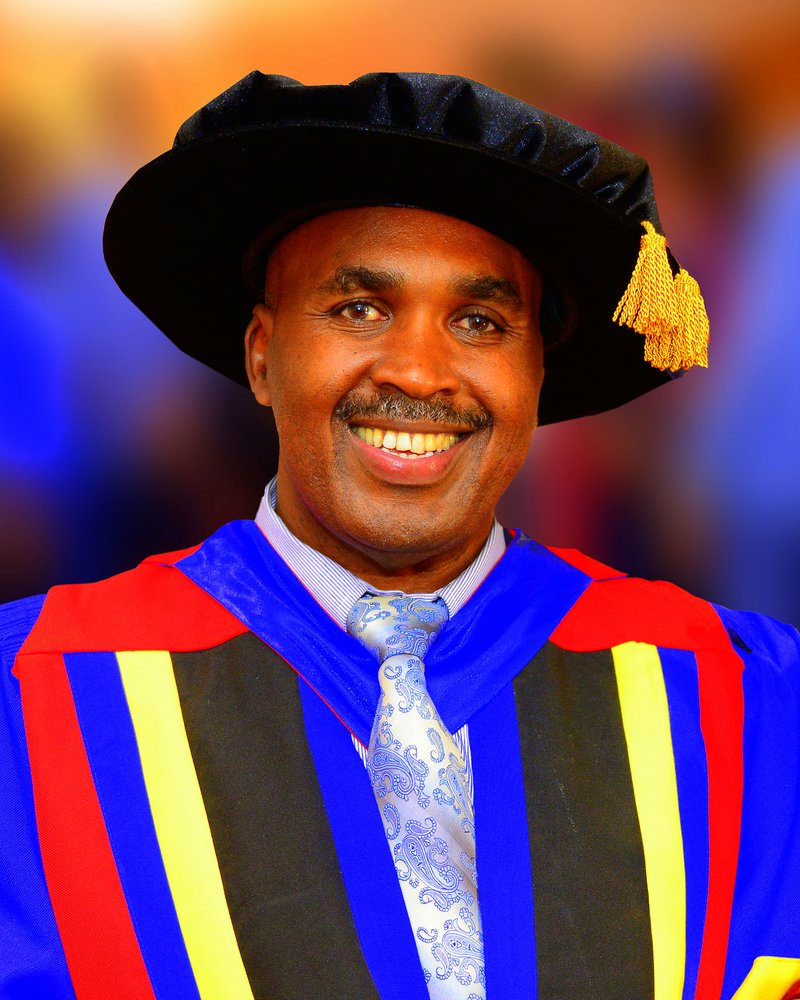
In a communication to the media, the Chairman, Board of Directors of Mount Kenya University Rwanda ltd Prof. Simon Gicharu hailed the partnership and promised to support the initiative for it to succeed and make it role a model in the East African region.
“We note with admiration the airline’s ambitious commitment to growth and offering quality service that has made it stand out as the airline of choice in the region. As a university committed to excellence and empowering generations through education, we want to be part of the airline’s continuous growth by offering quality training to its staff,” he said.
He said that Higher Education Institutions are encouraged to pursue industry linkages in their training programmes which will see the two parties promote mentoring, internship and hands-on learning opportunities for the aviation student.
“These relationships will assist in establishing career programmes and internships that will lead to well paying skilled jobs as well as economic development for the country,” Gicharu said.
Since its establishment in the country eight years ago, the university has entered into a host of M.O.Us with a variety of companies including Lemigo hotel in support of hospitality training.
With a state of the art campus in Kagarama, Kicukiro district, the University is aligning its programmes in support of Rwanda’s vision 2020.
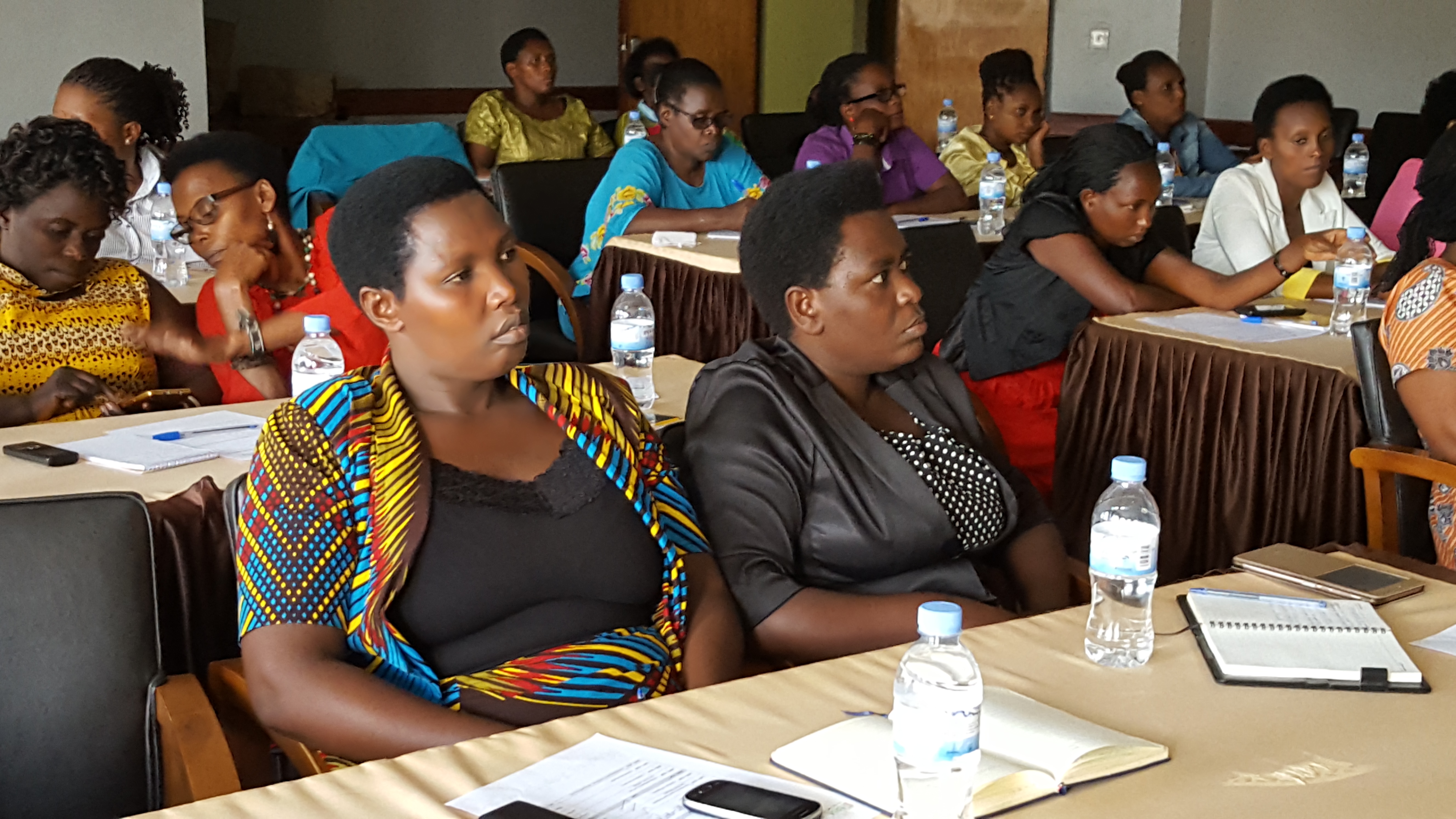
The training that took place in Huye District on Tuesday was organized as a follow up of the findings of a report by iPeace showing that land issues, child protection and family disputes are the top three issues that Rwandans in these five districts face.
Speaking on behalf of Huye District mayor, the advisor to the mayor, Joseph Kagabo commended iPeace’s legal aid to population saying that access to justice is fundamental for the protection of citizens’ rights.
“That is one of the top items on the agenda of the District. I would like to request participants to take advantage of the training provided and to use the knowledge and skills in preventing disputes not only in families but also in neighbors” he said
The Country Director of iPeacePaulinMuhozi, commended HuyeDistrict and other to facilitateiPeace’sprogramme in providing the legal support to the people.
He emphasized that it is this kind of support that allowed iPeace to complete more than 82% of all cases they handled.
He also added that iPeace is discussing with Northern Province districts to expand their programmes from there.
{{Trainees speak}}
“I am very happy to take part to this training. I was not aware about many things in the new family Law. For instance, I did not know that the law compels people to declare the deaths of their relatives. This is something that I will have to tell people in my village,” said Nyiranzeyimana, one of the participants
For Uwizeyimana, it was amazing to see how the government of Rwanda protects children’s rights.
“I wish such trainings were offered regularly at the grassroots level to inform the whole Rwandan community about some key provisions protecting the child such as the prohibition to give to a child a name bearing characteristics that dishonor him/her such as abuse, immorality, ridiculing or slandering” she said
Initiatives for Peace and Human Rights (iPeace) is a Rwanda-based organization that strives the enhance the culture of peace in the Great Lakes region through human rights and good governance education.
The decision follows a request from the Belgian Prosecutor’s Office for a procedural settlement following an investigation by the Belgian investigating judge.
The CNLG congratulates the Belgian justice for its role in the fight against impunity and calls on other countries to try genocide suspects or to extradite them to Rwanda in accordance with resolution 2150 (2014) of the UN Security Council.
The resolution says “it is notoriously known that between 6th April and 17th July 1994 a genocide was committed in Rwanda against the Tutsi ethnic group; Emphasizes the importance of drawing lessons from the 1994 genocide against Tutsi in Rwanda; Condemns unreservedly any denial of this genocide, and calls upon States to investigate the facts, to arrest, prosecute or extradite, in pursuance of their international obligations in this matter, all other fugitives accused of genocide who reside on their territories, including the leaders of the FDLR militia”.
BUSHISHI Mathias, 77, a former state prosecutor in Butare prefecture, is accused of genocide and war crimes, including participation in a restricted security council on 31 May 1994 in the MRND palace in Butare. The council was aimed to prepare the genocide in Butare and to elaborate lists of Tutsi to be killed.
Mathias Bushishi had a coordination role in the genocide in Butare. He was involved in killings at the Huye Stadium, at the logistics of the Catholic Diocese of Butare, and in three other villages, including Kabakobwa. For instance, on 25 April 1994, cars with loudspeakers crossed the roads of Butare, announcing that the Red Cross had moved to the Huye stadium to provide food and hideout for the population. Thousands of Tutsi went there. It was a trap. The refugees were massacred by the militia and the military.
Wanted by Interpol since 2002, BUSHISHI Mathias was arrested on 18 April 2011 following an arrest warrant issued by a Belgian judge. He was detained in Belgium until 17 February 2012 when he was released on bail.
{{Every individual’s case}}
Ildephonse NIZEYIMANA, a former captain of the Rwandan armed forces, the public prosecutor in Brussels requested the Chamber to take note of his conviction by the ICTR and to declare the case closed on the basis of the non bis in idem principle. The ICTR sentenced Nizeyimana on 29 September 2014 to 35 years imprisonment after being found guilty of genocide, crimes against humanity and war crimes for numerous murders in and around Butare. At first instance, on 19 June, 2012, he had been sentenced to life imprisonment.
NDAHIMANA Jean-Marie-Vianney, a former colonel of the Rwandan Armed Forces, also known as Rumende, is one of the military officers serving in the Kigali military camp where ten Belgian soldiers from the UN Assistance Mission (UNAMIR) were killed on 7 April 1994. Ndahimana is accused of having played a leading role in the genocide in Kigali and in Kibuye, his native prefecture. He is also suspected of having ordered the extermination of more than 5,000 Tutsi in the former commune of Bwakira (Kibuye). He was arrested at the end of March 2011 in Belgium where he had fled after the genocide. He was released on bail in early 2012.
At the beginning of the genocide, Ndahimana was a member of the “Comité de Crise” which met at the military camp in Kigali on the night of 6-7 April 1994 under the presidency of Colonel Théoneste Bagosora, in which was decided the enthronement of Colonel Bagosora as the strongman of the moment.
KWITONDA Thaddée, was born in 1963 in the commune of Cyeru in the prefecture of Ruhengeri. Kwitonda is a proven extremist who was first a member of the MDR party before joining the CDR. He married the daughter of Maurice Ntahobali and Pauline Nyiramasuhuko, who was the Minister of the Family during the genocide, the only woman to have been convicted of genocide by the ICTR. Kwitonda moved to Butare during the first massacres of April 1994. He was Deputy Secretary-General of the National Bank of Rwanda (BNR), where he organized and participated in the Tutsi massacres. He is also prosecuted for committing acts of violence in Nyakabanda, Gitarama Prefecture.
After the genocide, he took refuge in Zaire where he headed the Kashusha camp near the town of Bukavu, then in Belgium in 1997. After obtaining Belgian nationality, he worked as a defense investigator at the International Criminal Tribunal for Rwanda (ICTR) from June 1999 to July 2001. He investigated in particular for Arsène Shalom Ntahobali. His contract was broken due to serious indications of his participation in the genocide.
When the Belgian court opened investigation against him in 2006, he left for Uganda where he took the name of John Tumwesigye. He was arrested in Kampala on 5 July 2012 and deported to Belgium following an international arrest warrant issued against him.
It should be reminded that the Belgian justice has already tried eight Rwandans involved in the Genocide committed against the Tutsi in 1994: Alphonse Higaniro who was sentenced to 20 years imprisonment in 2001, Sister Mukangango Consolate and Sister Julienne Mukabutera (Sister Kizito) sentenced to 15 years and 12 years in prison in 2001, Vincent Ntezimana sentenced to 12 years imprisonment in 2001, Etienne Nzabonimana sentenced to 12 years imprisonment in 2005, Samuel Ndashyikirwa who was sentenced to 10 years imprisonment in 2005 , Bernard Ntuyahaga sentenced to 20 years imprisonment in 2007 and Ephrem Nkezabera who had been sentenced to 30 years imprisonment in 2009 and died before his appeal was heard.
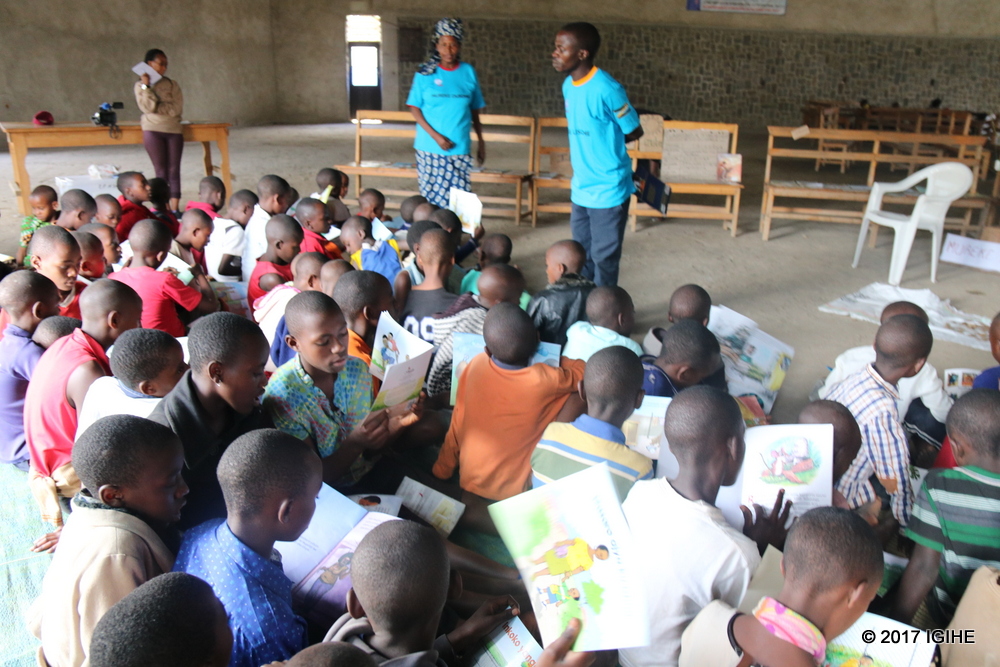
The libraries have started impacting reading abilities of children and helping them perform better in other subjects.
Minister of State in charge of Primary and Secondary Education, Isaac Munyakazi, lauded parents and others who played a role in establishing libraries around the country while he was visiting Children’s public library in Muhoza Sector, Musanze District, last week.
“Reading skills are central to understanding other subjects. This is a great initiative that we want all stakeholders to join. When a child reads, gets their mind open and we should go beyond teaching about reading in class to establish such venues where children meet after class to enhance their learning through libraries. Knowledge of their mother-tongue will help our children know foreign languages and other subjects. We would see this initiative promoted in partnership with our sponsors,” he said.
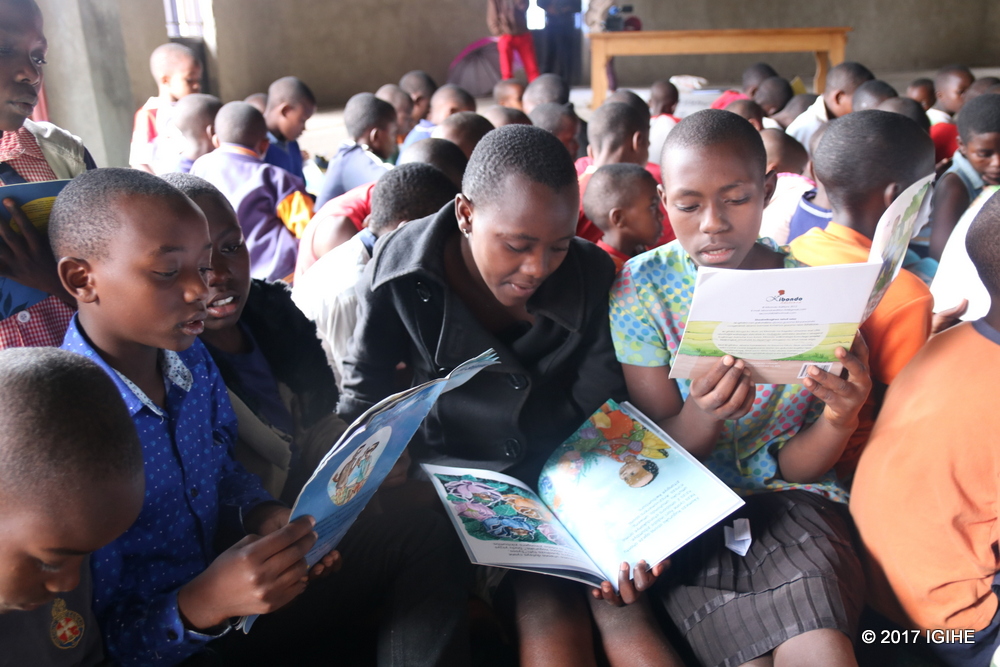
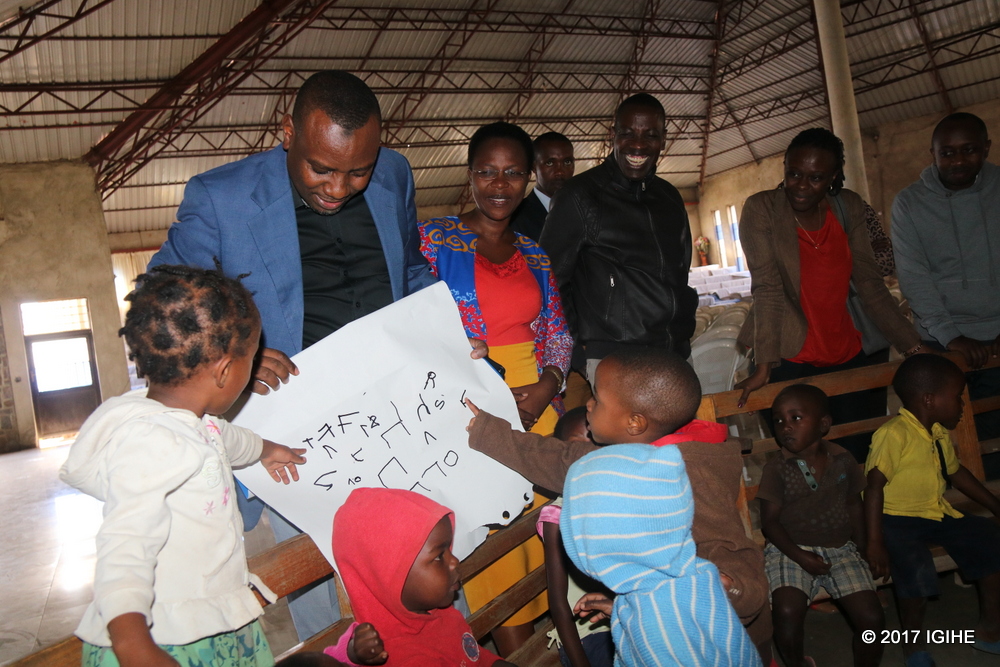
The library located at Restoration Church in Muhoza Sector brings together over 50 children twice a week and read stories supported by many drawings which avoid boredom during reading exercise. Children are first warmed up through singing, then guided in reading and lent books to read from home.
Children attending are mainly aged between seven and nine years studying in the lower level of primary school and few from upper level with limited reading skills of Ikinyarwanda.
The initiative is commended by parents, saying that it has helped their children in many ways. Nyiramajyambere, mother of five-year child, said the library has helped her child acquire reading skills and often reads for the mother who is illiterate.
The library aims at engaging parents and schools in promoting children’s reading skills by giving them enough practice at school, home and elsewhere they can meet.
Minister Munyakazi called for concerted efforts to increase attendance to the library which currently has only 50 children attending twice a week while it has the capacity of hosting 20,000 children.
The appointment of Eugene Torero to head the revenue body, due to be established, was approved by South Sudanese lawmakers on Tuesday.
After several deliberations, members of the country’s Transitional National Legislative Assembly endorsed Torero to oversee the running of the body that will be tasked with assessing and collecting domestic taxes, customs duties and other revenues specified by law.
What, however, dominated Tuesday’s debate in the national legislative assembly concerned whether to appoint a national or foreigner as the first Director General of the revenue collection body.
But David Nailo Mayo, chairperson of the parliament’s specialised committee for economic planning, argued that the Rwandan national has a wealth of experiences likely to benefit South Sudan.
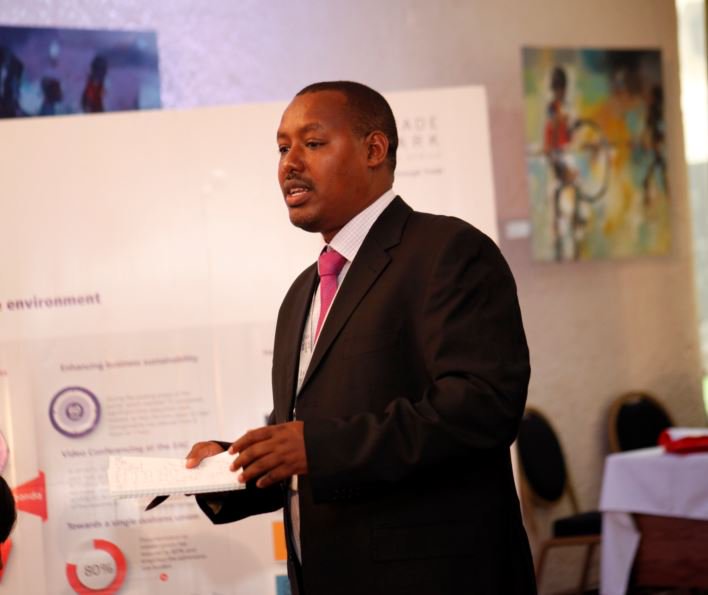
Torero is currently the director of trade policy at Trade Mark East Africa (TMEA), a position he has held since October 2015. Previously, however, he was responsible for TMEA South Sudan country office, during which he oversaw the design as well as the implementation of the customs development and trade facilitation programme.
The Rwandan national had, prior to joining TMEA, also held various positions within Rwanda Revenue Authority, including leading customs services from 2005 – 2010. He was previously a member of the Rwanda doing business task force from 2007-2010 and oversaw Rwanda’s reform efforts on the trading across borders and tax payment indicators of the famous World Bank Doing Business report.
When South Sudan got its independence five years ago, one of its daunting challenges was how it would diversify an economy, largely dependent on oil revenues, which supports 98 percent of its budget.
The Prime Minister said:
“Regarding economic transformation: we will create 1.5 million jobs. We will put in place a mechanism to support at least one model income and employment-generating project in each village (umudugugu). We will also continue to promote the ‘Made in Rwanda’ brand working with the private sector to recapture at least USD 400 Millions of imports by 2024. We will double tourism revenues to USD 800 million by 2024 from USD 404 million in 2016. We will also upscale our mining sector by completing exploration of potential mineral areas to establish the extent of national resources and reserves, in terms of quantity and quality with the aim of exporting USD 800 million by 2020 and USD 1.5 billion annually by 2024.”
The Prime Minister said that in order to reduce the cost of doing business and facilitate trade and ease of transport across the country; 3,000km of feeder roads will be rehabilitated, 800 km of national asphalt roads will be built.
In his speech, the Prime Minister reiterated that easing access to quality healthcare is a top priority for the Government and one of the main component of the social transformation pillar of this programme. It is in this regards that the 17 sectors which didn’t have health centre will each have one, as well as 150 new health posts will be constructed. This will reduce the doctor-patient ration to 7,000 from 10,055, one nurse per 800 people from 1,142 and one midwife per 2,500 from 4,037.
On the issue of access to utilities, the Prime Minister said that: “All Rwandans will get access to electricity and water, from 34.5% and 85% today, respectively. Access to sanitation will be also be scaled up to all from 84% (2016) to 100% and waste management systems will be developed in cities, towns and rural areas.”
On the governance pillar, the Prime Minister reiterated that there will be a special focus on an efficient, smart, accountable and service-delivery oriented public service. It is in this regards that the Prime Minister said that 100% of Government services will be delivered online by 2024 from 40% in 2017. He also said that districts revenue collection capacity will be increased to finance their development needs by focusing on local economic development and reforming laws on locally administered taxes.
This programme includes views from the citizens collected through public consultations around the country. It also captures the RPF Presidential Manifesto, as the winning party in the previous presidential elections; presidential pledges made during the presidential campaign, key priority lines as elaborated in the President’s inaugural speech on 18 August 2017 as well as his speech during the swearing-in of the new cabinet.
The programme also includes elements from EDPRS 2 (2013-2018), Vision 2020, Vision 2050, Sustainable Development Goals (SDGs), African Union’s Agenda 2063 as well as the East African Community’s Vision 2050.
Through various sessions, during the next four days, experts will be formulating useful approaches for effective waste management on the continent. They will be also suggesting ways to address the challenges of municipal waste, waste from agriculture, mining, electronics usage and other forms of industrial manufacturing among others.
While opening the conference, the Prime Minister pointed out that addressing waste management in Africa’s fast-growing cities require innovative engineering and technology-based solutions. He called participants to work hard and find solutions but as well to stay true to their profession. He said:
“Strong measures are needed for adequate and sustainable development of this critical sector of human existence and well-being. Come up with answers to what African engineering fraternity should do so that challenges raised by waste management be addressed”, said; adding:
“We also encourage you to create confidence and trust within systems and African governments. Take concrete measures in dealing with engineers who do not respect ethics and professionalism” concluded the Prime Minister Ngirente.
The Prime minister noted that effective waste management is timely in light of Rwanda’s and the continent increasing urbanization, natural resources exploitation, agricultural production and utilization of electronic gadgets as the need to focus on sustainable development and the reality of climate change. He also reminded participants that the ultimate goal ahead should be to reach a time when waste can be rightly transformed into one of the resources to power the continent’s sustainable development.
Rwanda has adopted a green growth strategy and is working towards effective achievement of the sustainable development goals. For Example, the country is promoting integrated sanitation and waste management planning in Kigali and the six secondary cities. In Kigali city, the construction of centralized sewage system is expected to commence next year. Through Rwanda Environment Authority and associated government agencies, Rwanda is ensuring that all forms of development go hand in hand with its green growth and environmental protection agenda.
Most of the participants are from the continent but as well international specialized institutions and experts are taking part in the conference. Represented countries include Kenya, Malawi, Uganda, Democratic Republic of Congo, Lesotho, South Africa, Zimbabwe, Mauritius, Ghana Nigeria South Sudan, Egypt, Sierra Leone, Zambia, Somalia, Ethiopia and a delegation from China.
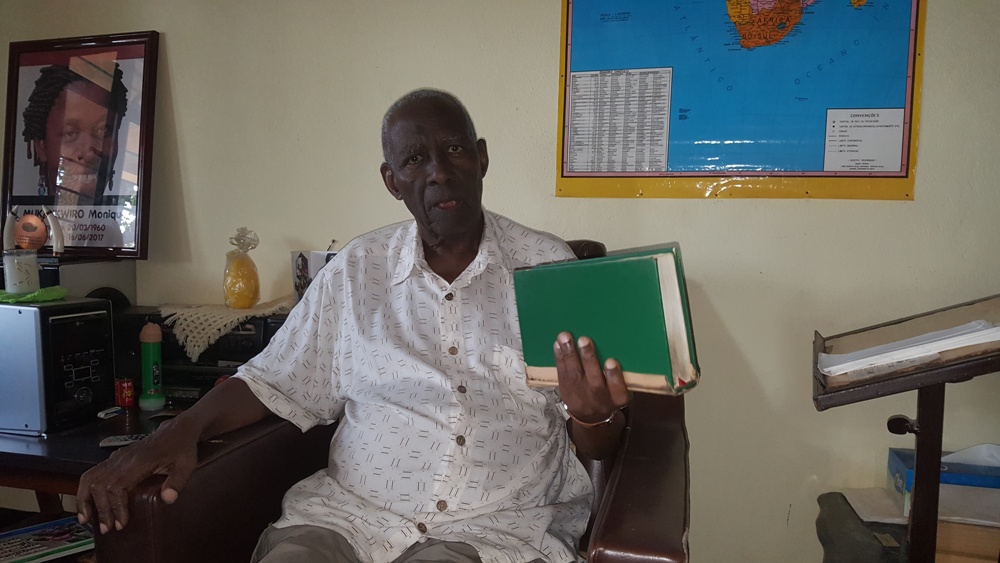
Ensconced in his chair at home on Friday at 4.00pm local time, retired Pastor Naasson Hitimana plays gospel music on the radio on his left side, has a Bible on the cockpit by his right and awaits a visitor he was told about, none else but a journalist from IGIHE. Elder Hitimana has got another chance to break loneliness and engage in a lengthy talk, definitely as long as 25 minutes compared to 10 minutes of the previous talk when he got tired and the talk was postponed until another schedule.
His caregiver is away for a gospel mission, a housemaid is busy outside, Pr Hitimana sits alone in a big modern house located in Kicukiro District, Kicukiro Sector, Gasharu Cell. He shakes hands again with the visitor who had been there a week before but the elderly cannot recall the face until he is reminded. He picks Bible and explains how he usually loses mind on everything starting from Bible verses he had memorised and used for around 40 years. He talks of frailty that comes with elderhood.
He says he was born at the time birth days were not recorded but it was later guessed and recorded for him as born in 1932, meaning he is now 85 years old but he says he is older than that. He started teaching at primary school in 1947 and was later sent to Cameroon where he spent four years receiving pastoral training and came back to Rwanda in 1962 with a qualification as a Pastor for a Christian church. He served the church until 1998, the time he retired due to frailty of ageing.
Hitimana, whose wife and some children passed away while other children live overseas including a son working in England, has no close family member around him but a nephew, young Pastor Désiré Niyomugabo, who committed the last seven months to staying with his paternal uncle, Hitimana. Retired Pastor Hitimana lives on his pension and rent of his two houses but sympathises with older persons who do not have means to afford their needs.
“I had always heard of a local adage ‘Gusaza ni Ugusahurwa’ (loosely translated as ageing is losing all) but I could not understand its real meaning until this age. An older person loses all capabilities to do what they used to do for and find themselves in need of someone else to provide everything just as a little baby needs. I have means to pay my housemaid but I imagine how challenging is the life of older person without such means, it is worrisome!” He says.
Pastor Hitimana urges churches to work closely with governments to provide eldercare by establishing centres for older persons who do not have caregivers, provide them with space for expressing their views and contribute to decisions that affect their well-being.
“Imagine that we need someone to take water and do us a bath yet young people also have got responsibilities and need to work for their prosperity. Centres for older persons would help better because they can hire workers and pay them for the job. It is a huge but crucial project; its elaboration should start now,” he adds before concluding, “Thank you for coming to talk with me.” He stops talking, stands up, leans on walls and walks to bed for rest.
The concerns were shared by a number of other older persons that IGIHE visited including Tesla Bayijuka, 93, Louise Bamurange, 84, both living at Muhima Sector in Nyarugenge District and members of elderly support group ‘Nsindagiza’ based in Remera Sector of Gasabo District.
Fourth Rwanda Population and Housing Census, 2012 released in 2014 indicates that there were 511,738 elderly persons (aged 60 and above) living in Rwanda, representing 4.9% of 10,515,973 population. According to National Social Protection Strategy 2011, only 24,300 aged 65 years and above (7.4%) had access to a pension from the Rwanda Social Security Board (RSSB). United Nations’ definition of older person considers aged 60 years and above.
{{Activists advocate for particular policies }}
Well over 10 years through Age Demand Action (ADA), rights activists have advocated for international convention on the rights of older persons, participation of older persons in governments’ decisions that affect them and having choice about their lives in their respective families.
Elie Mugabowishema, the president of Nsindagiza, a local non-governmental organisation that advocates for rights and social welfare of older persons, told IGIHE last week that there is still a lack of international convention and local policies about the rights and welfare of older persons.
He urged the Government of Rwanda to set up particular platforms through which older persons can channel their concerns as children, youth, women and people with disabilities have theirs.
Béatrice Mushimiyimana, the coordinator of Nsindagiza activities, said most of older persons suffer serious depression and stigma resulting from isolation and creating space for them to participate in the country and family’s life would be the best solution as well as developing effective social protection schemes for older persons.
Madeleine Nirere, the Chairperson of National Commission for Human Rights, said that after the recent outreach in which the commission learnt about lack of proper protection of older persons, the commission recommends government to develop a policy on eldercare and support existing charitable centres for older persons.
She added that considering the frailty of older persons, they deserve special care, saying that Rwanda should ratify and implement obligations in international and regional instruments on older persons’ rights and protection.
Ms Nirere stressed that older persons’ close and extended family members, neighbours, close government entities and Rwandan society at large should take responsibility of eldercare.
{{Government finds no gap}}
Minister of State in charge of Social Affairs and Social Protection at the Ministry of Local Government, Dr Alvera Mukabaramba, told IGIHE last Friday that government does its best to support all vulnerable people and older persons constitute the majority of beneficiaries of social protection schemes such as cash transfer under Vision 2020 Umurenge Programme (VUP) and Community-Based Health Insurance (Mutuelle de Santé).
“Not all elderly persons need support. Some are receiving their pension while others have children or other family members supporting them. We are working on a comprehensive social protection policy considering together all categories of the disadvantaged as the current policy will expire in 2018,” she said.
She said that only people with disabilities have their particular policy being developed because their case is not only about social aspect but fall in different ministries such as Ministry of Infrastructure for their mobility, Ministry of Education for their special needs in education and Ministry of Health for their special healthcare.
Dr Mukabaramba urged young people to save for their old age, saying that every working Rwandan, not only monthly salary earners but also informal sector actors including those on government support schemes, has to save for pension as a sustainable solution for ageing demands.
“Government seeks to strengthen pension scheme and poor people who will join the scheme will receive government’s incentives according to law which is now in Parliament. Meanwhile, children should not forsake their old parents and government will intervene where necessary,” she said.
{{
International Day of Older Persons
}}
Dr Mukabaramba said Rwanda will mark International Day of Older Persons, which is usually marked on 1st October, on 8th October in Nyamasheke District at a national level and in all districts under the theme “Stepping into the Future: Tapping the Talents, Contributions and Participation of Older Persons in Society.” Nyamasheke is the second district, after Gicumbi, with the highest number of older persons.
Global AgeWatch Index report 2015 ranked Rwanda as 89th out 96 countries studied including 11 on African continent, the position that Minister Mukabaramba refuted saying that there are obviously Rwanda’s commitments towards older persons which were not reported and ensured of reporting all to win a better ranking in the next report.
The study measured four key domains for older people: income security, health status, capability, and enabling environment –factors that older people say are necessary for them to be able to function independently.
Protocol to the African Charter on Human and Peoples’ Rights on the Rights of Older Persons in Africa adopted by the 26th ordinary session of the Assembly convened in Addis Ababa, Ethiopia on January 31, 2016, stipulates that “States Parties shall ensure that the 1991 United Nations Principles of Independence, Dignity, Self-fulfillment, Participation and Care of Older Persons are included in their national laws and are legally binding as the basis for ensuring their rights.”