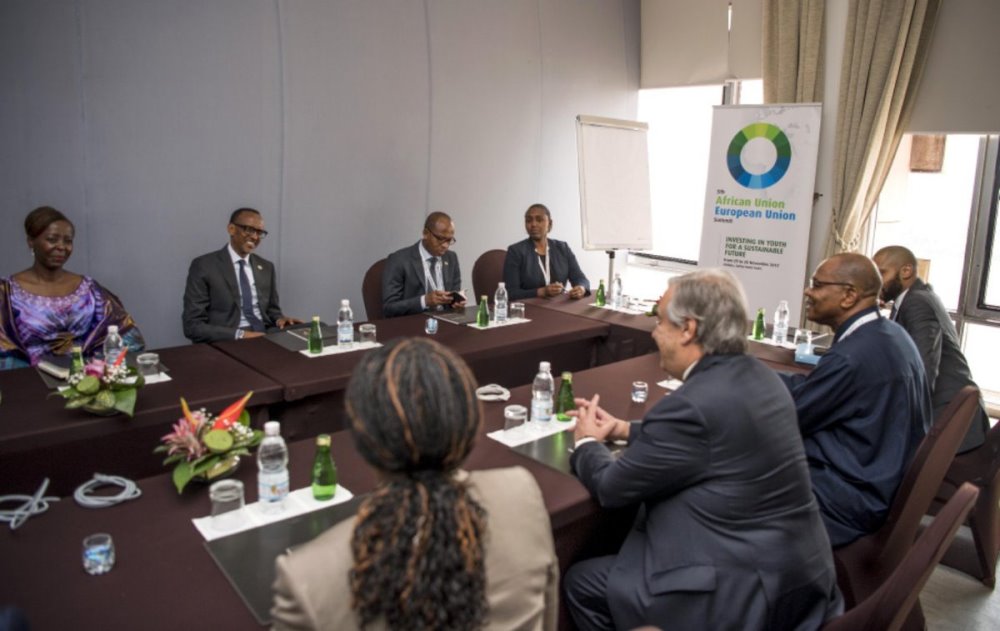
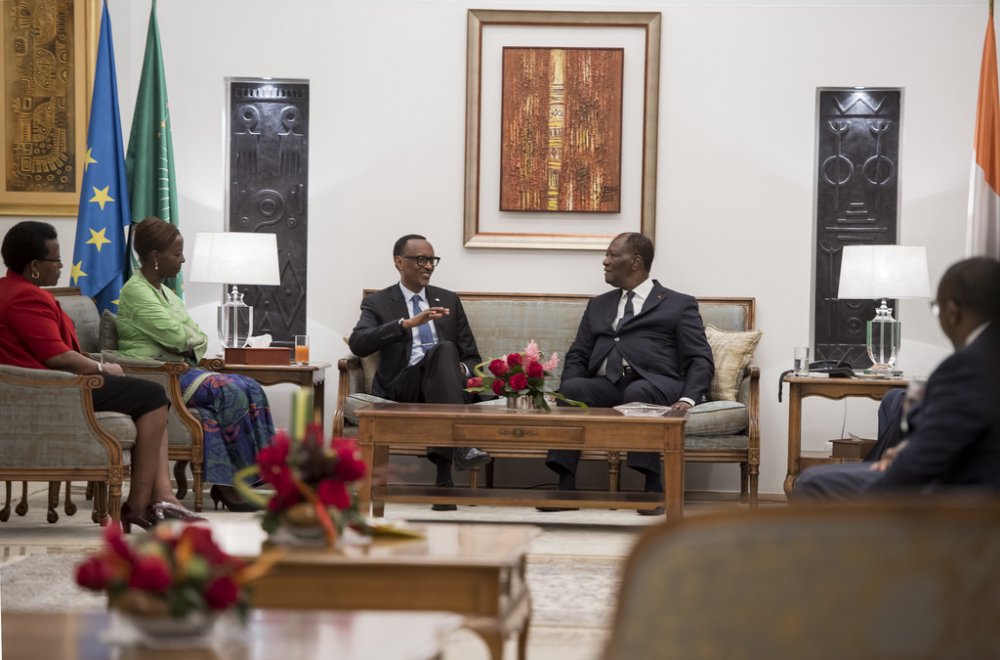
“President Kagame meets with Antonio Gueterres, United Nations Secretary General on the sidelines of the 5th AU-EU Summit 2017 in Abidjan,” reads the tweet of the office of the president.
Kagame is in Abidjan, Ivory Coast where he is attending the 5th African Union-European Union (AU-EU) Summit.
The two day summit which started this Wednesday is being conducted under the theme ‘Investing in youth for a sustainable future’
2017 is a defining year for AU-EU relations as it has been ten years since the adoption of the Joint Africa-EU strategy.
It is widely believed, especially in African traditions, that babysitting work belongs to females and some people pejoratively give a nickname of ‘Mr Mom’ to any man who involves much in children.
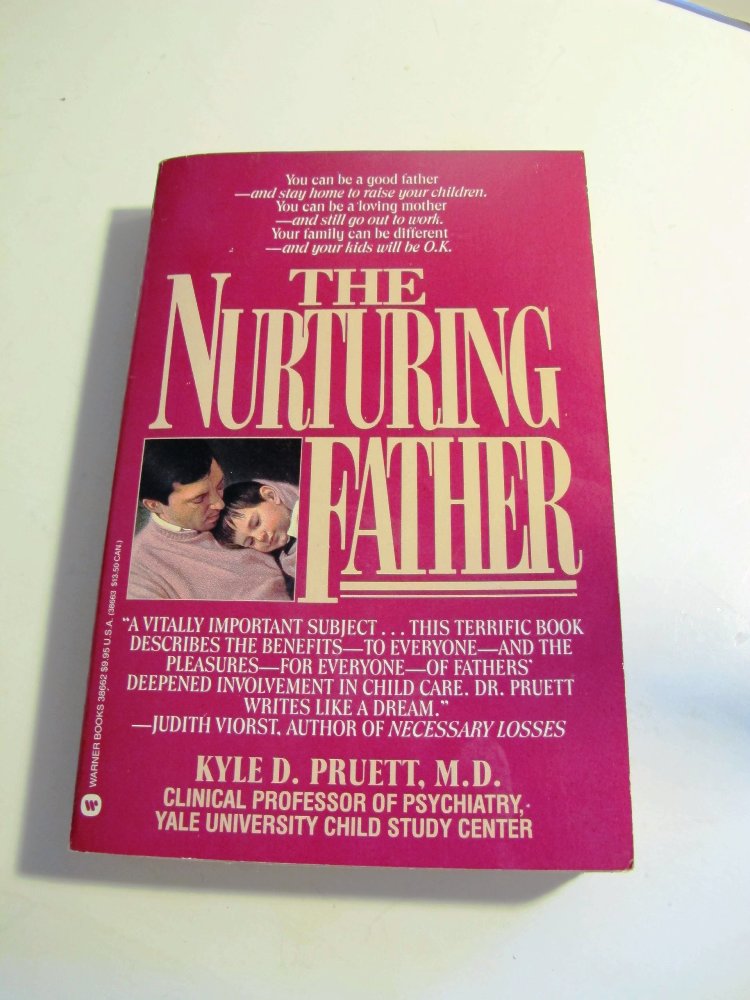
Dr. Kyle D. Pruett M.D., a Clinical Professor of Child Psychiatry at the Yale School of Medicine in the United States of America, says a nurturing father has a positive influence on a child’s development but men also benefit from nurturing children in return.
Dr Pruett says children are not selective about who, between mom and dad, should nurture them but they just prefer the one who spends more time with them without getting enough of them.
He cites some benefits that should make every man care for his children including babysitting them.
{{1. Child becomes more active}}
When a father nurtures a child in the first five years from the birth, a child develops more positive changes than if they were exclusively nurtured by the mother.
Research shows that during the first five years of a child’s life, fathers are often more influential than mothers in how the child learns to manage his or her body, face novel social circumstances and play. One study of 6-week-old babies, using videotapes of parents interacting with their infants, suggests that children are hard-wired at birth to respond differently to males and females.
“When approached by their mothers, babies tended to relax, coo, and modulate their breathing and cardiovascular responses—as if to sort of say, ‘Ah, here’s Mom.’ Then when the father approached, the babies’ eyes tended to open, the shoulders would go up and the heart and respiratory systems were activated rather than calmed, as if to say, ‘Here’s Dad, let’s party!’”
{{2. Child’s body gets stronger quickly}}
Research indicate that 9 out of 10 times that a mother picks up a child are similarly conducted. She plays with the child in the same way and at the same speed. This is different from how men hold babies because men do not have rules set in their mind about how to hold a child. Men can hold a child by child’s arms, legs or any other way and sometimes getting a child out of their comfort zones, making a child stronger and bolder so quickly.
Men also help children develop different talents at a younger age through playing with them different games because they do not use toys as much as women do in their interactions with children.
{{3. Child develops confidence earlier
}}
Men train children on self esteem by subjecting them to tough tasks or sending them to frightening environments in order to test how children handle the situation. Though the father will be around to save the child if any danger emerges, children are trained to handle tough situations themselves, something that women rarely dare do to children. This makes children at two years old prefer to get out with their dads than moms.
Even from birth, children who have an involved father are more likely to be emotionally secure, be confident to explore their surroundings, and, as they grow older, have better social connections with peers. These children also are less likely to get in trouble at home, school or in the neighbourhood.
{{4. Child develops love for both parents
}}
Dr Pruett says that most children say they like mom over their father because they spent longer time with mom during their age of emotional and social development.
When a dad nurtures babies, they usually love him all their life and ask him, at their adolescence age, even questions that often go to moms. Those children are less prone to succumb to adolescence challenges.
{{5. Fathers get better life and last longer in jobs}}
Dr Pruett says the nurturing fathers get better life and do better at work because they learn patience from nurturing children, increasing their chances to retain the job longer.
{{6. Nurturing men improve family wealth}}
A man who does not care of his children is likely to wreck the family into poverty because he rarely thinks of what the family needs. However, a nurturing father strives to provide for his children and often creates peaceful environment in the family.
Despite the fact that fatherlessness remains one of the toughest domestic issues, Dr Pruett says the state of fatherhood is getting better.
The author of other two books, “Father need: Why Father Care Is as Essential as Mother Care for Your Child,” and “Me, Myself and I: How Children Build Their Sense of Self,” says the combination of mom and dad’s child care is vital into child’s physical and intellectual development.
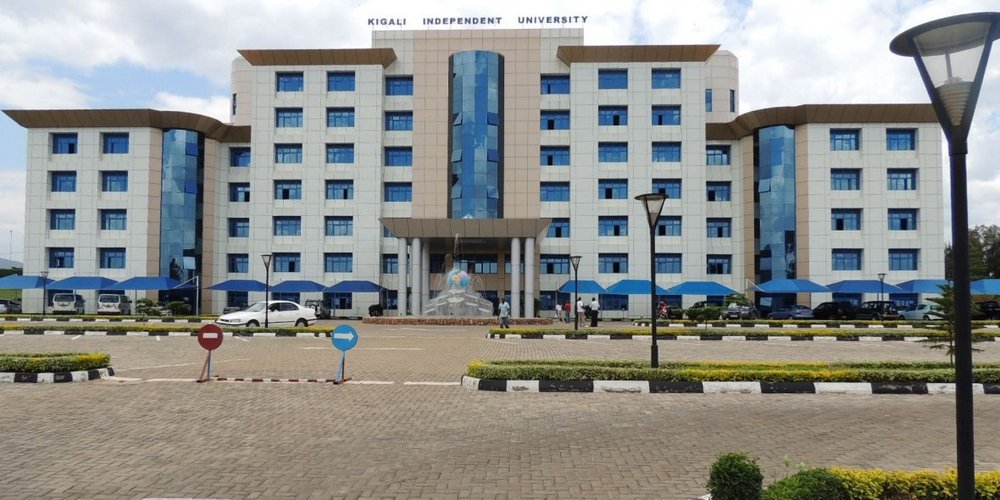
The 11th iCPAR CPA and CAT examinations are being conducted from 27th November to 1st December 2017 at two different centers: Kigali Independent University (ULK) and Huye Campus of the University of Rwanda (UR).
A total of 1336 candidates are registered for December examinations where 911 candidates registered to sit for CPA examinations while 425 candidates registered to sit for CAT examinations in December 2017.
As the Professional Accountancy Organization mandated by law to regulate the Accounting profession in Rwanda with one of its mandate to organize and conduct relevant examinations, iCPAR aims at producing a critical mass of qualified professional accountants for Rwanda Market and the region.
The Institute is committed to produce critically a mass of qualified accountants needed by the Rwandan economy and filling the existing gap as identified by numerous needs assessments like the 2015 ROSC A&A, among others.
Currently a total of 19 candidates completed CPA – Rwanda qualification while 31 candidates completed the CAT -Rwanda qualification.
Quality accountants are at the heart of the development of Capital Markets, you need reliable and credible financial information to build investor confidence, enhance economic development and increase attractiveness of a country’s investment climate thereby encouraging inflows of foreign direct investments (FDI) and general business development.
Therefore, It is important for the public and private sector in Rwanda to realize the importance of hiring professional accountants who are registered and hence regulated and have this as a prerequisite to being considered for employment.
ICPAR is also a member of the Panafrican Federation of Accountants (PAFA) and Associate member of the International Federation of Accounting (IFAC).
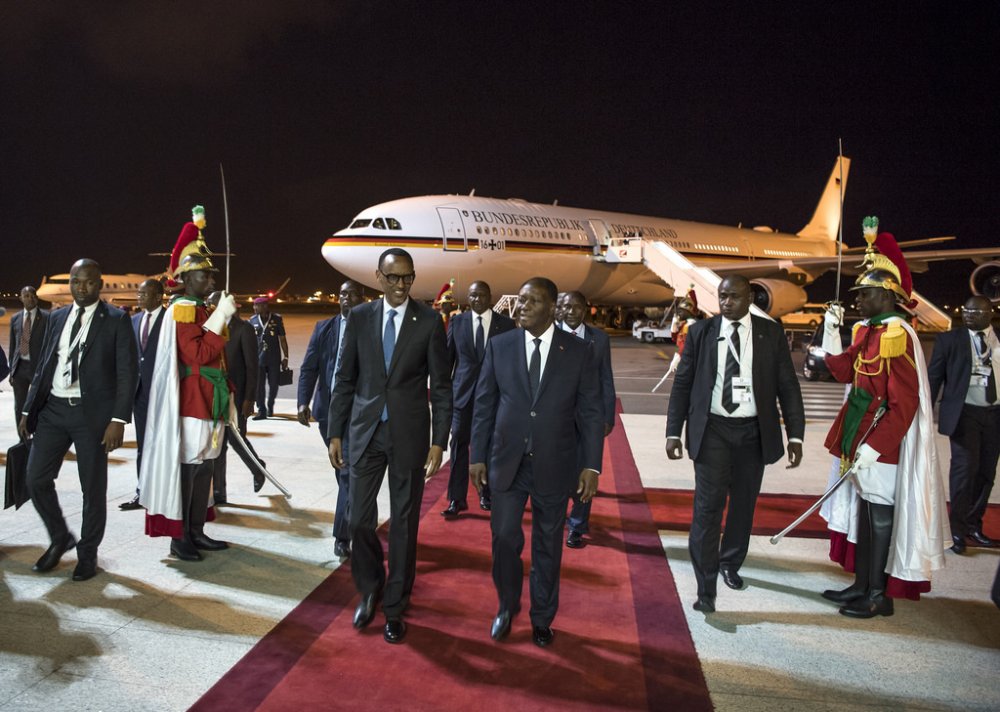
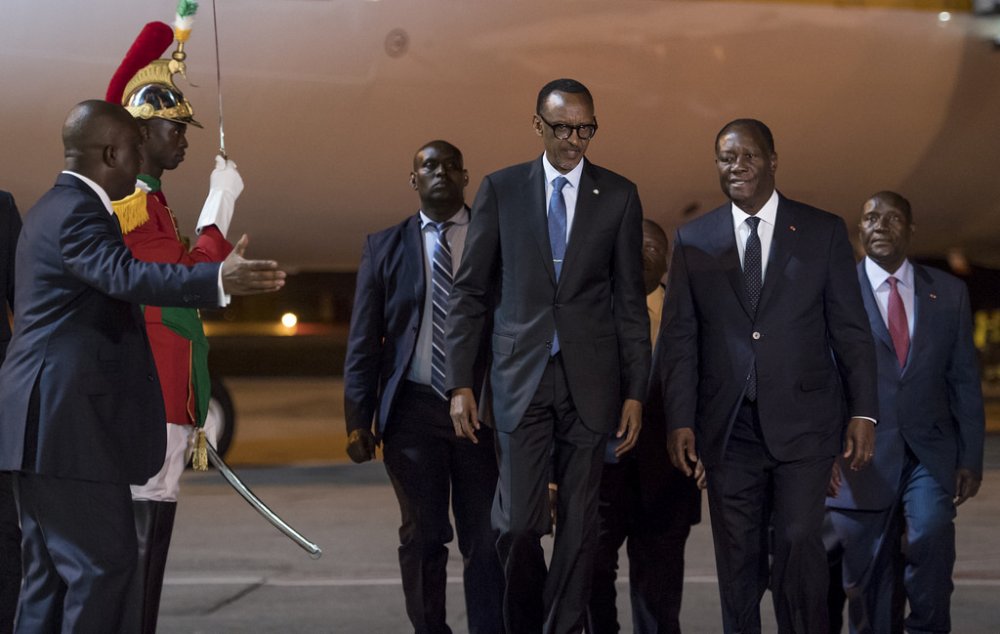
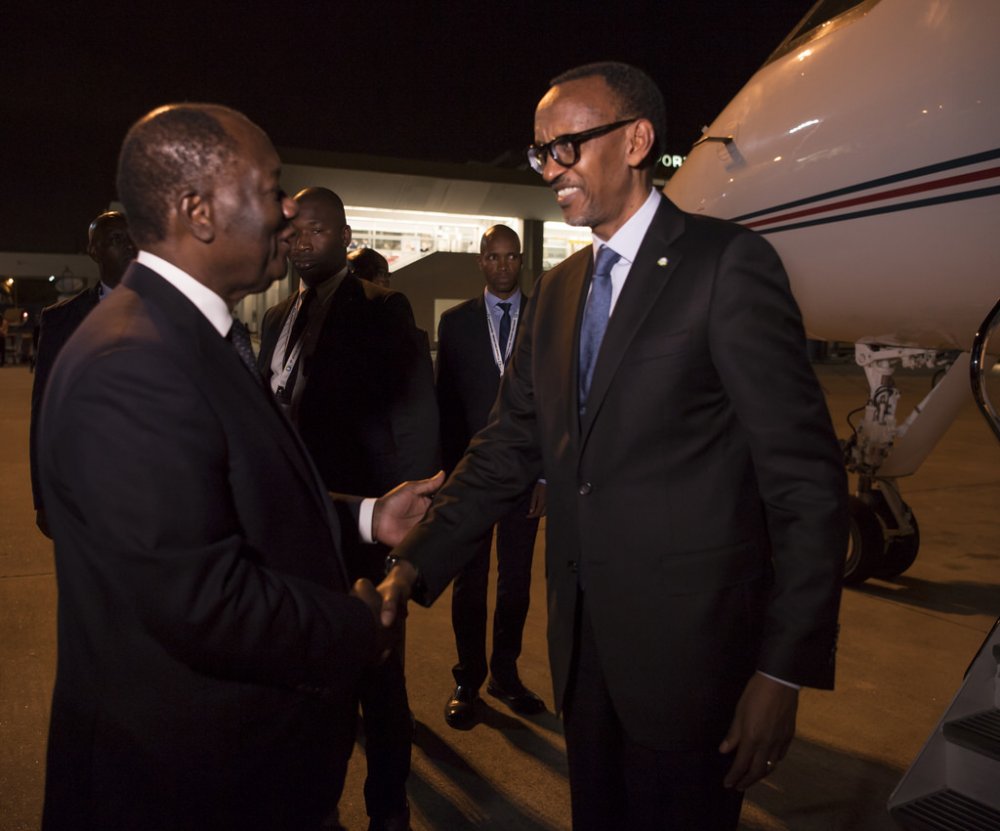
Upon Kagame’s arrival in Abidjan, Ivory Coast at Félix-Houphouët-Boigny airport he was received by President Alassane Ouattara, reads Office of the President’s Tweet.
This year’s summit is being conducted under the theme ‘Investing in youth for a sustainable future’.
African and European Heads of State and Government gather for the summit including the President of the European Council, Donald Tusk; the president of the European Commission, Jean-Claude Juncker; the President of the African Union, IdrissDéby and the Chairperson of the African Union Commission, MoussaFaki.
2017 is a defining year for AU-EU relations as it has been ten years since the adoption of the Joint Africa-EU Strategy.
Taking stock of the progress made since the Brussels Summit in 2014, African and European Leaders will be given the opportunity to provide guidance in order to jointly address current and future challenges and to deepen their strategic partnership, launched in 2007 with the adoption of the Joint Africa-EU Strategy.
Organized by the journalists network PAX PRESS in partnership with the German Development Cooperation (GIZ), the debate coincided with the launch of a nationwide anti-violence campaign under the theme “End violence against women and girls: Speak out.”
Innocent Rutayisire, a resident of Nyarugenge, said: “There is a kind of untold violence against men and it is on the rise because we feel ashamed reporting violence against us.”
“While men are still the breadwinner of the family, women are often behind the misuse of family resources such as in beer consumption and affairs with other men, he stated. “There were incidences where a husband came back home and found another man in his bed.”
Jean Baptiste Mbarubukeye, a resident of Kamabare Village in Ngenda Cell, said he knows cases of men who are beaten by their wives. Some of those men opted to leave their families. Mbarubukeye blamed the violence against men on what he termed “the supremacy that government has given to women.” The concern was also shared by a number of other men attending the debate.
Another participant, John Birindabagabo, said “women face violence at a higher rate but men also face it at a rate no one can determine because men rarely report the violence against them by their wives. Women are often envious of neighbours’ living conditions and put pressure on their husbands to provide beyond their capacities. If a man fails to do as a wife wishes, she starts getting around siding with other men. Isn’t that violence?”
{{Women, statistics disprove claims}}
Veredian Mukankusi, a resident of Nyarugenge Sector, said “not only do women face violence but also men do. Some young boys are forced to have sex with adult women.”
Clotilde Nyirangirababyeyi, 44 years old, said most of the men who abandon their families and live in Nyagatare District or Uganda are frustrated by the emancipation of women, which does not allow men to mistreat their wives and use family resources as they please.
“I was born and still live in this sector. I know how men have always violated women’s rights, especially before 1994 when most men including my uncles had up to three wives.” She told the audience that she was forced into marriage when she was 14-years old and became a wife to a 48-year old man.
“Now that government has changed power relations by new laws, some men are unhappy and claim to face violence only because they are frustrated,” added the mother of four children.
Priscilla Uwiragiye, the Bugesera vice Mayor in charge of Social Affairs, acknowledged violence against men but on a smaller scale than women. “Some people misinterpret the meaning of gender balance. They believe that it reduces the power of men and makes women superior to men. But in fact the policy seeks to promote equality and inclusiveness in decision-making both at family and national levels,” she said, adding that “no one should exercise violence against another. The government did not give space to women so that they step on men.”
Uwiragiye urged the residents to work together and avoid conflicts aiming to embrace the development in their families. “We shall keep sensitizing residents on fighting against violence especially during the 16 days of activism against gender-based violence,” she added.
Statistics from the police office in Bugesera indicate that 43 victims of violence were recorded in October 2017, including 12 women, 28 girls, two men and one boy. The statistics also show that 565 girls between 12 and 18 years were impregnated through violence in the first nine months of 2017. Among them, 29 early pregnancies were recorded in Nyarugenge alone, one of the 15 sectors of the district.
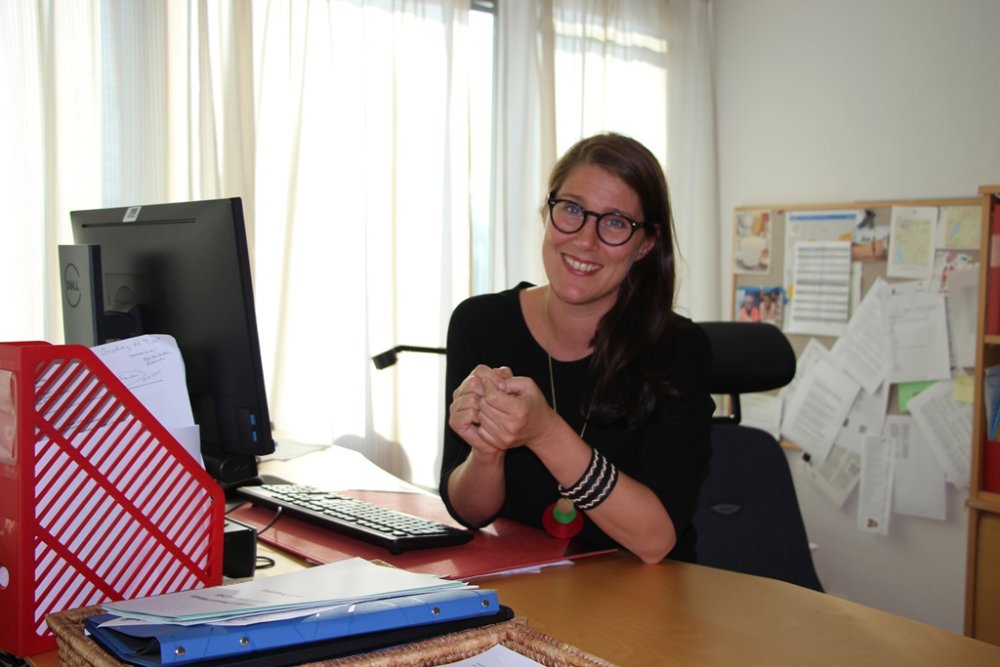
Swedish ambassador Jenny Ohlsson has been in Rwanda in 2007 to 2009 as Swedish political diplomat. She returned in Rwanda in 2016 as an Ambassador with residence in Kigali. Her predecessors had their residences in Nairobi, Kenya.
As both countries celebrate 20 years of cooperation and partnership, IGIHE talked to the Ambassador on diplomatic ties between both countries.
{{Excerpts below;}}
{{ IGIHE: It’s been a year since you presented your credentials as first Resident Swedish ambassador to Kigali; how do you see the country so far and how do you feel with living here? }}
{{J.O:}} First of all, I feel at home because it is the second time to live in Rwanda and I really enjoyed living here due to the atmosphere of hope and possibility. Also, when I came here for the second time, I could see the progress that had taken place and it’s a nice feeling to live somewhere where things are going in the right direction.
Personally, I am happy that my family is here; I got pregnant with my first son in Rwanda. It is very special to bring him back in Rwanda.
{{As you noted, Rwanda has and is still developing; what is your point of view on what caused such a change in the last twenty years?}}
The Leadership has played an important part in Rwanda’s progress but also I’d like to give credit to the Rwandans for the development that has taken place. Both contributed to where Rwanda has reached now.
{{Tell us more about the evolution of your diplomacy in Rwanda since 1997
}}
In 1997, it was absolutely new for us to come to Rwanda. There had been some relations between Pentecostal churches from both countries but there were no diplomatic ties. Everything had to start from scratch. We didn’t know what was Rwanda? What was their culture? We started with a lot humanitarian support in the first years, we also started with budget support from 1999, and then step by step wi started cooperation with police, decentralization structure, university, institution building….
First there was one person, she rented a room in Novotel, she hired a driver and it grew from there, one woman, one backpack one driver and then we had something called embassy office which is not a really embassy and now finally we have an embassy with an ambassador which is a great thing.
And I must tell you that we don’t have embassies in all countries in Africa for us this is a big thing I think I am the fifteenth ambassador we have in Africa.
{{What are your cooperation and partnership plans in this second mandate of President Kagame?}}
I am quite sure we will continue with our development cooperation with Rwanda, but I think and I hope that it will shift a little to other kinds of cooperation like political, trade-related businesses, peacekeeping and so forth. I think Rwanda is moving very fast; there are a lot of global issues where we can cooperate and bring a great contribution to all. In short, I hope that our relations will be broader in the next coming years.
{{Economically speaking, where do you see Rwanda in 2024?}}
I’m not an economist but I am sure that in 2024, Rwanda will have developed more; probably, as it’ll be the last year of President Kagame’s mandate, I think there shall be a feeling of transition. And as I know Rwanda, the country will be well-prepared for that transition, so I’m not worried at all for that time, I’d even say that I’m optimistic and positive that Rwanda will be on a greater level.
{{What are your cooperation projects and plans with Rwanda? }}
We will continue in developing cooperation with Rwanda, but I think and I hope that it will be shifting a little bit to cooperation, political, trade, business and peace keeping. I think Rwanda is moving very fast, there is lot of global issues where we could cooperate like climate change, I hope for the next seven years, we will continue with the development cooperation but our relationship will be broader.
{{Rwanda and Sweden will soon celebrate 20 years of cooperation and partnership; what do you plan for such a great event? }}
We will have the event on the 5th December, and for this year we wanted to focus on the role of a father and gender equality in society; Hence, this is to why we decided to hold an exhibition dubbed Swedish Dads and we also started out an interesting Instagram Photo challenge dubbed “RwanDads” that will be honoring our anniversary and the winner shall be awarded officially on the 5th December.
Among the facilities are classrooms and other commercial structures.
Five classrooms, 12 latrines and one staff room were constructed at Ruhehe Primary School in Gatagara sector, and one house was constructed in for Byangabo market-based tailors.
The vice-head teacher in charge of academics at Ruhehe Primary School, Diogène Kavumu said that new classrooms will help reduce congestion.
“We are thankful for Rwandan Diaspora in Germany for such invaluable contribution to our school. These classrooms will help us reduce congestion. We used to have 60 students in one classroom but they will not exceed 45,” he said adding that staff room will help teachers work in comfortable environments.
The coordinator of Rwandan Diaspora in Germany, Claude Kalimba said that it is their target to back government’s development programmes by creating good learning environment for Rwandan children and contribute in changing communities’ lives.
“By this gesture we wanted to show that there are Rwandans who are committed to build their nation. We should differ from others who have chosen the way to oppose government programmes,” he said.
Last year, Rwandan Diaspora in German also constructed 15 classrooms worth Rwf124 million at Groupe Scholaire Nyarubara in Musanze District.
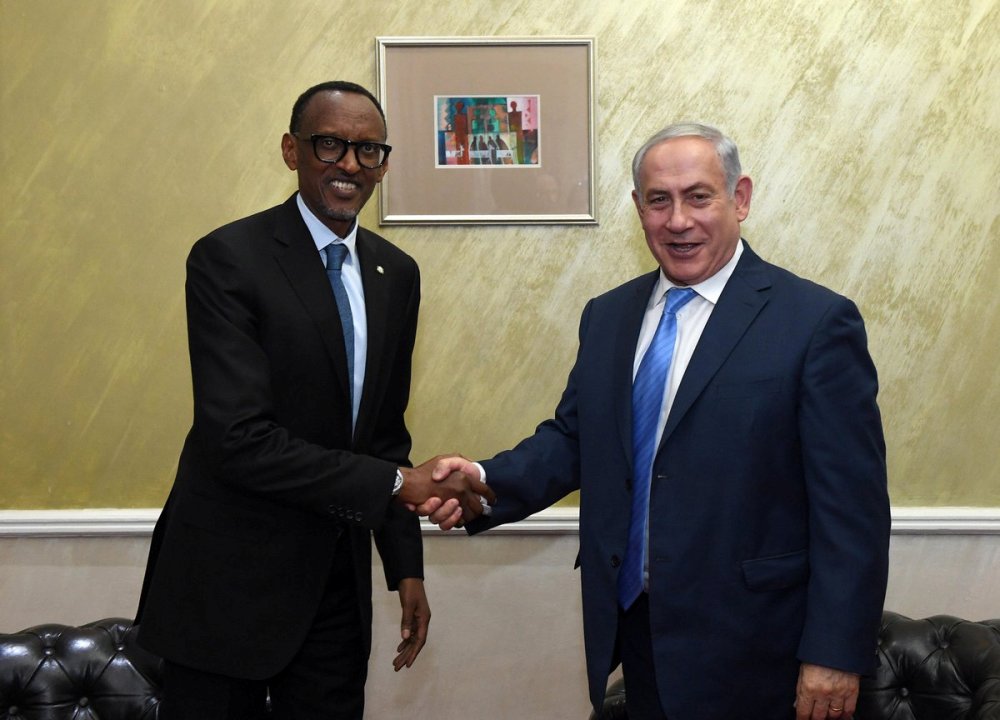
After the discussion between both heads of states, Netanyahu wrote on his twitter handle that they agreed to open Israel’s embassy in Rwanda.
” With Rwandan President Paul Kagame today. I informed him that Israel will open, for the 1st time, an embassy in Kigali, the capital of Rwanda. This historic step comes as Israel is expanding its presence in Africa and deepening its cooperation with countries across the continent,” tweet reads.
The embassy is set to further deepen diplomatic relations and cooperation between the two nations.
The two nations have enjoyed warm bilateral ties over the years with their cooperation touching various developmental and diplomatic aspects. These include agriculture, technology and innovation, business among others.
Rwanda’s embassy in Tel Aviv, Israel was established in 2015. The Israeli embassy in Addis Ababa, Ethiopia is the one covering Rwanda so far.
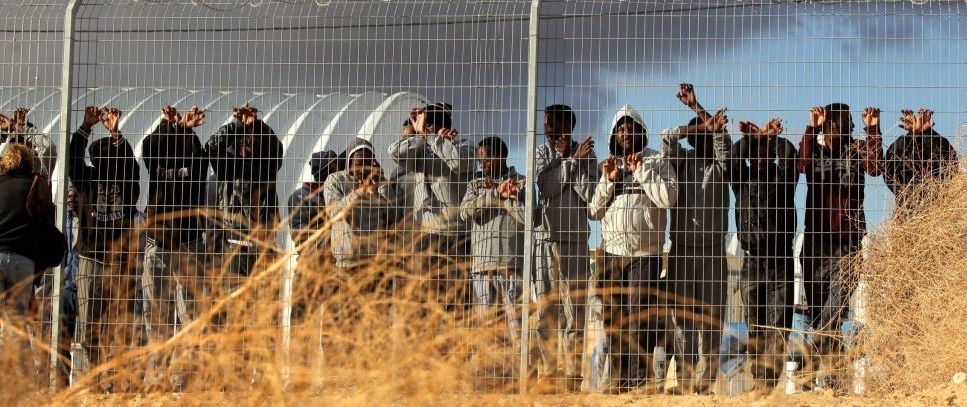
Last week, Israel’s government confirmed in four months they will have closed Holot immigrants’ camp and a total of 40,000 from African countries like Eritrea and Sudan will be sent to Rwanda whereas others who wish can be repatriated to their respective countries.
According to BBC, seven rights non-government organisations working in Israel confirmed that Israel and Rwanda will meet in the near future to finalise the agreements.
At the beginning of last year, Foreign Affairs Minister, Louise Mushikiwabo announced that there were no agreements signed between Rwanda and Israel related with hosting refugees.
She however confirmed that discussions were underway.
“We are among countries that two years back negotiated with Israel to receive immigrants. We did not finalise the talks but it is true that they approached us,” she explained.
She said that migration and emigration officials from both countries were still discussing about requirements to transfer these immigrants, their behaviors and their long term status they would be given.
Last week, Israel based Haaretz media house wrote that Israel will pay the Rwandan government $5,000 for every African immigrant it accepts from Israel. The Israeli government will additionally continue to pay immigrants who voluntarily leave the country a grant of $3,500, as well as the cost of their airlines tickets out of the country.
Rights organisations and United Nations High Commissioner for Refugees (UNHCR) opposed the Israeli government’s decision saying that it is even difficult to find out information about lives of immigrants who were transferred in African countries since 2013 to 2017.
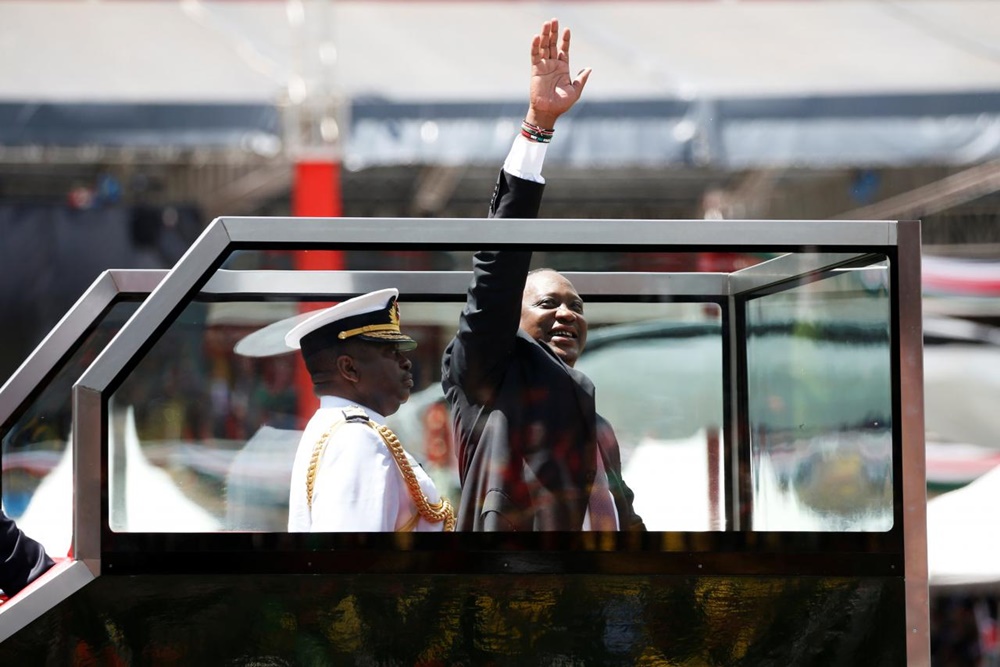
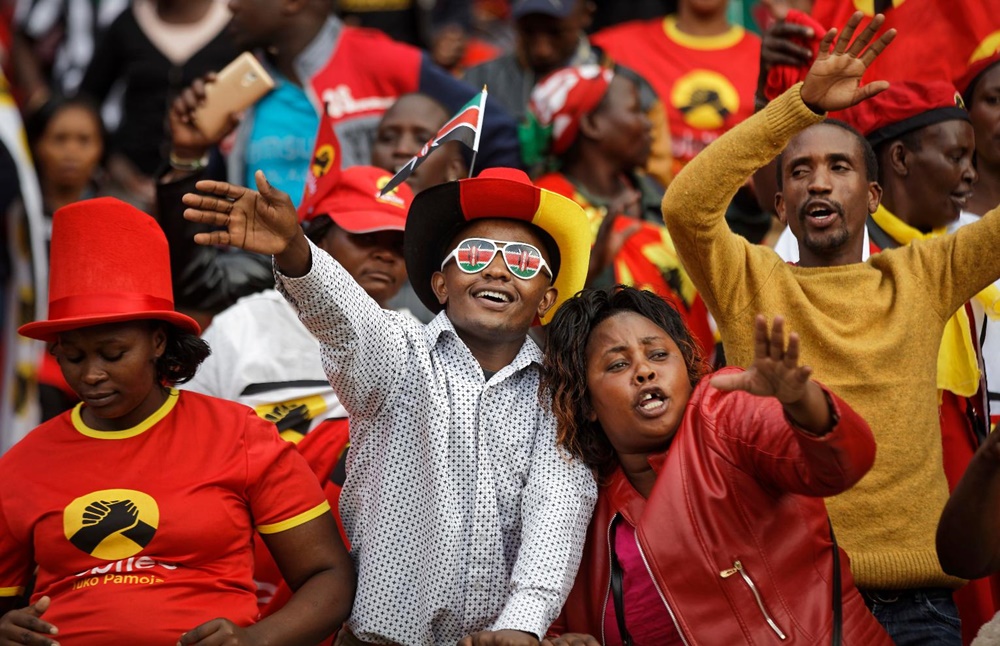
As Kenyatta took oath of office for his second term in office, Kagame said Kenyans deserved Kenyatta’s victory.
“People of Kenya, I have come to congratulate you, congratulations! The people of Rwanda send you their greetings and congratulations for your well-deserved election victory. Congratulations!,” reads the office of the President’s tweet.
Kenyatta is going to serve his second and last term that will end in 2012.
Kagame is among ten heads of states that attended the ceremony including Yoweri Museveni of Uganda, Ian Khama of Botswana, John Pombe Magufuli of Tanzania, Edgar Lungu of Zambia, Ismaïl Omar Guelleh of Djibouti, Hage Geingob of Namibia, Faure Gnassingbé of Togo, Mohamed Farmajo wa Somalia, and Ethiopia Prime Minister, Hailemariam Desalegn.