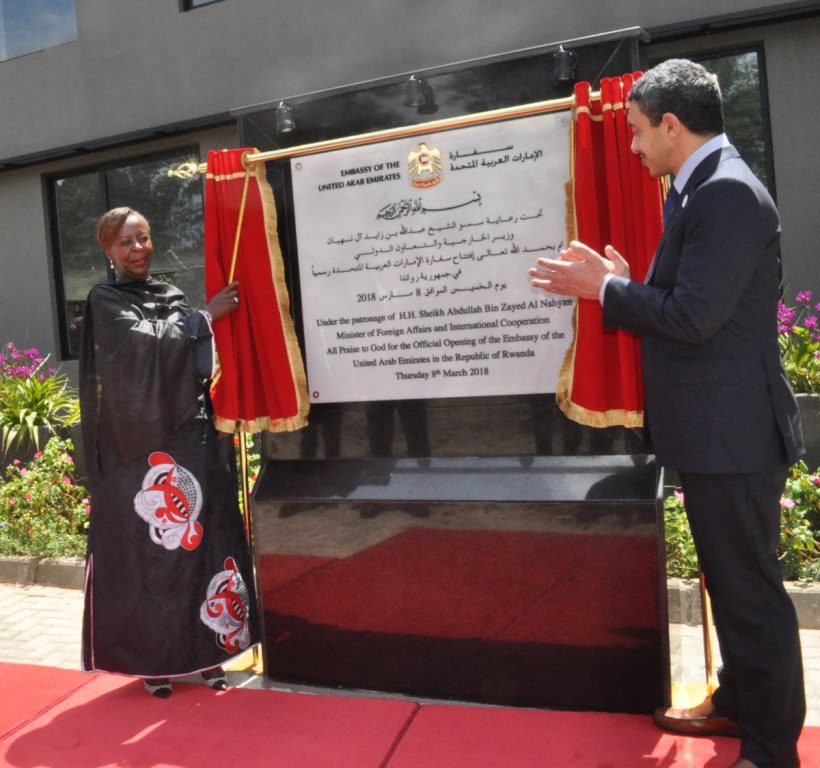
They reviewed bilateral relations and ways of enhancing and developing them for the benefit of the two friendly countries, especially cooperation in the economic, investment and educational fields. They also discussed the latest developments in the region, UAE News Agency (WAM) reported.
Minister Mushikiwabo welcomed Shaikh Abdullah’s visit, emphasising Rwanda’s eagerness to strengthen relations with the UAE in various fields.
Shaikh Abdullah commended UAE and Rwanda special relations, pointing to the UAE’s keenness to boost cooperation with Rwanda.
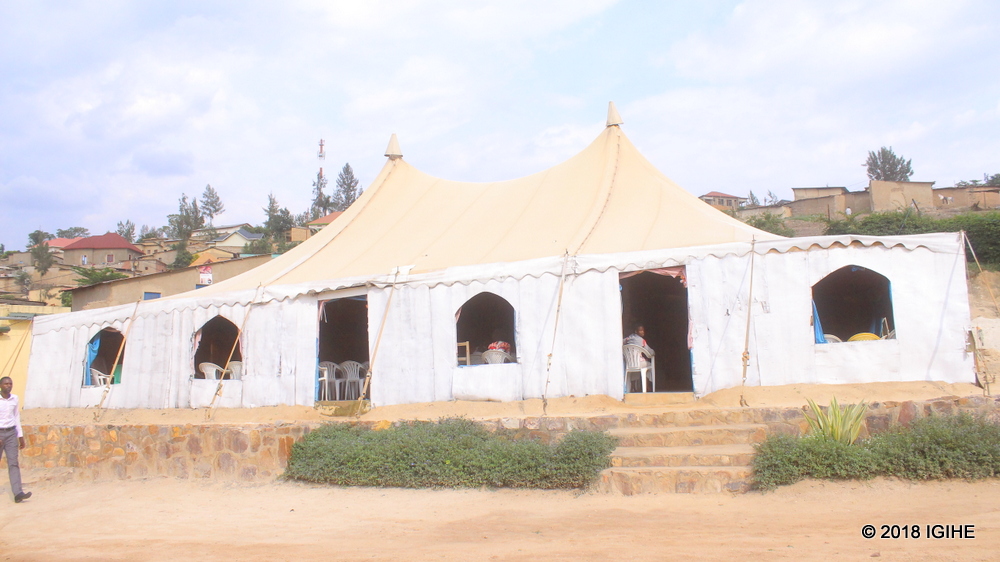
It was on February 20th when the exercise to close down churches was launched in Kimironko sector of Gasabo District. On that day, 14 churches were closed down.
The exercise was not limited to Gasabo District as in few days later, it was extended to all districts in the City of Kigali, which, in a period of one week, saw a total of 714 churches closed down.
As it is not the issue of Kigali alone, the exercise has now reached all provinces and saw 139 churches closed in Rwamagana District of Eastern Province and nine were closed in Muhanga town of Muhanga District.
In Karongi District of Western Province, a total of 625 churches were closed this week.
Affected churches are these found lacking basic infrastructure, fell short of hygiene, safety standards, no space for parking, have no legal licenses and those operating in residential houses among others.
Some church leaders and worshipers did not welcome the way the decision was implemented saying that they were not given ample time for preparation.
A Gasabo District resident who did not want his identification to appear in the media says the church helped him repent and abandon criminal practices.
“Before I joined this church, I was a sinner always committing adultery, a robber at Nyabugogo, but today I am respected in the church and the family, so where am I going to pray from?” He wondered.
Apostle Sarah Muhongerwa the head of Arch of Peace Church told IGIHE last month that if they had been given ample time, they would meet all requirements.
“If they had given us a certain period for preparation, we would put in place all requirements as we were in process to construct our church,” she said.
Another pastor, Rev. Emmanuel Ndikumana, the head of El Elohe Pentecotist Church said that his church was closed down when they were in the process of constructing toilets.
“They came telling us that we run short of standards and they closed down our church, we had no toilets but we were in the process of constructing them. The way they implemented the decision in not well thought out,” he said.
Among the affected churches are those of the Association of Pentecostal Churches in Rwanda (ADEPR) from different parts of the country.
Speaking to IGIHE, the spokesperson for ADEPR, Pastor Ephrem Karuranga said that it was time for the government to remind churches about the standards.
He said that they will continue to discuss with institutions in charge as well as putting in place all requirements so that they can be allowed to re-open.
“Those are existing directives that are being exercised. We are doing our best to meet standards, by paving the floors and putting in place rain water harvesting systems among others,” he said.
He said that he has no exact numbers of ADEPR churches that were closed, but added that they are many. He said that numbers always change as the exercise continues.
About the affected worshipers, Karuranga said that they gather in churches which were not closed.
“But, as many churches have been affected, we are trying our best to solve the problems,” he said.
According to him worshipers faced different challenges including losing where to congregate from. For the church, he said it is hard to put in place all requirements in a short period.
{{Civil Society backs the decision}}
Speaking to IGIHE, the Chairperson of Rwanda Civil Society platform, Jean Leonard Sekanyange said that they don’t have any problem with the exercise as it is in line with laws regulating faith-based organisations in the country.
“This is not an act against worshipers. It is not stopping religious oraganisations from operating, it is the infrastructure they operate from which lack some standards. It would have been a problem if it was banning religions in the country,” he said.
He said that for people to open up a church, they know all requirements and should not continue to appeal for time to put them in place.
“They have been warned at different times; we all know that they were requested to reduce noise pollution by installing sound proofs,” he added saying that lives of people congregating in one place should be given special protection against any possible calamities.
Sekanyange urges church heads to meet the required standards so that they continue to operate with the safety of worshipers well assured.
{{RGB says those affected should abide with laws}}
According to Justus Kangwagye, the Head of Political Parties and Civil Society Department at the Rwanda Governance Board (RGB), for those affected and now putting in place all requirements should work closely with local government officials.
He said that some religious organisations opened up different branches, and did not consider having all standards as those available to the mother church.
“As they have the right to operate from all over the country, some of them go to open up new branches and forget to put in place some basic or crucial requirements like ensuring people’s security and installing water taps as the government requires. Musanze based church should have same standards as that of Kigali,” he explained.
Kangwagye urged those with no operating licenses to request them through online portal.
Article three of the Law No06/2012 of 17/02/2012 determing organization and functioning of religious organisations says that everone shall enjoy freedom of worship without a prior authorization. Freedom of worship shall be exercised in accordance with the appropriate legal provisions.
The Law says that to practice and show one’s belief in a religious-based organization of his/her choice shall be subject to legal provisions and shall not jeopardize security, public order and heath, morals or the fundamental rights and freedoms of others.
In article ten, religious-based organisations in their functioning and practices are requested to conform to laws of protection of public safety, health, morals and human rights.
The exercise to close down sub-standard churches is ongoing and will reach all districts in the country.
{{Fears}}
Some pundits have however pointed out the danger of leaving a big mass of people without being shepherded and therefore likely to slip into a dark zone of immorality that might breed crime.
“You may not be able to attach any physical or monetary value to the churches, but their enormous contribution towards building morals and social cohesion cannot be underestimated. So the abrupt closure of church structures is having a direct bearing on the morals of the populace,” says one of the worshipers that preferred anonymity.
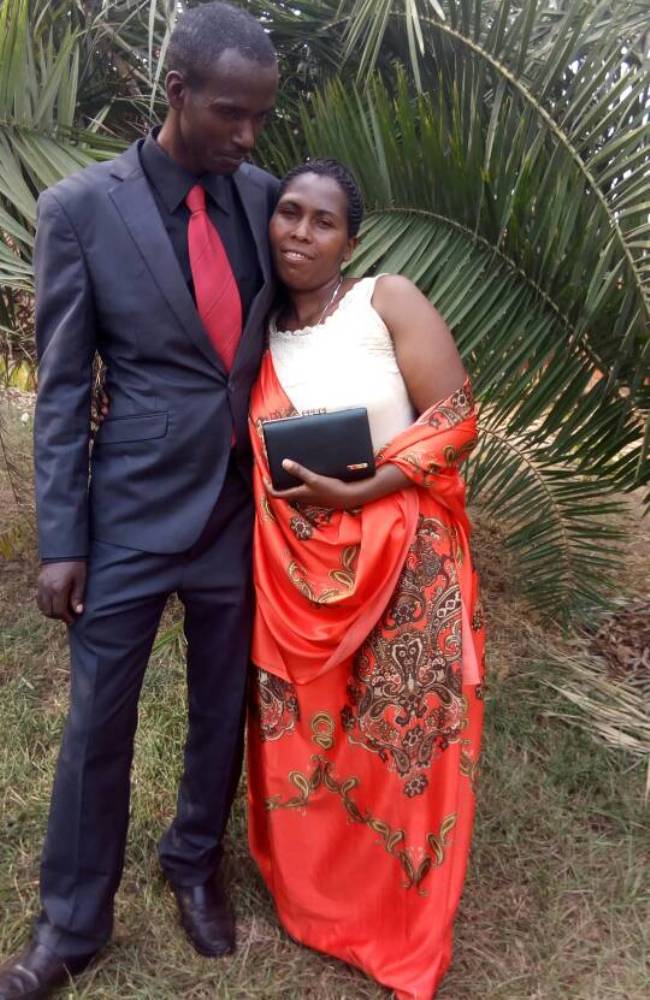
Before the Nyarugenge Intermediate court on Friday, Karegeya pleaded that he killed his wife Marie Rose Mukeshimana using a hammer. The tragic incident happened in October 2017.
The hearing was heard publicly in Nyabisindu Cell where the crime took place.
Karegeya told court that he killed his wife due to ‘disobedience’ she had started to display before him. He said that she used to insult him and had insulted his family until Karegeya’s family shunned him with no relatives visiting their home.
He said that he ensured that his wife was asleep when he hit her with a hammer on her head and killed her instantly. He said that he buried his wife in the sceptic pit.
Prosecution said that Karegeya had plotted to kill his wife and dug the pit to use in burying her. The prosecutor requested life imprisonment for Karegeya.
Asked whether he can comment on the sentence the prosecution requested, Karegeya said that all powers are in the hands of the Judge.
Nyirasafari was speaking yesterday in Shyogwe Sector of Muhanga District during the national event to celebrate International Women’s Day.
In Rwanda, the day was celebrated under the theme, ‘Let’s pursue efforts to build the Rwanda we want’. Internationally, the day was celebrated under the theme ‘Time is now: Rural and Urban Activists Transforming Women’s Lives’
Nyirasafari said that when women’s efforts are properly used; they can develop countries.
However, Nyirasafari said that there are funding for women which are wasted because of discouragements in the society.
She said that some women fear to join men dominated jobs; though they are capable to perform them properly.
Gender Minister added that women who have acquired practical skills are now capable of taking care of the well-being of their families.
“You have all it takes to develop yourselves; the government is there to support you. We have Business Development Fund (BDF) to support your projects, you should not give room for discouragements,” she urged women.
Monique Uwizeramariya, a woman who learnt electrical engineering and now a teacher at Kabgayi Technical Vocational and Education Training said that the profession enables her to compete for tenders of electrical installation.
“Today I am capable of supporting my family’s living as well as for the future,” she said.
Kagame said this in his message on International Women’s Day.
He said that the day was an important event to talk about.
The Head of State said that Rwanda has made great strides in empowering women and girls be in good politics, legal reform, and policy frameworks which helped speed up the progress.
“Increasingly, everyone understands that there is an unacceptably high cost to gender inequality,” he said.
He said that it was no accident that the renewal of the country was also accompanied by significant upgrades in the status, roles, and responsibilities of women. The same is true in nearly every country where gender equality has been taken seriously.
“Women are a cornerstone of prosperity for society as a whole. Even in situations of conflict, they are in a position to make unique contributions to peace and stability,” he noted.
Kagame reminded that there still much more to do to ensure women fell safe.
“Even so, all over the world, we see that the facts on the ground still don’t reflect those good intentions. The recent media attention to the disturbing experiences many women continue to live with is a wake-up call for all of us not to take the gains for granted. Indeed, there is still much more to do to ensure that women feel safe and enjoy equal opportunity,” he said.
In pursuing this Kagame urged that it is important to act together, not women on one side, and men on the other. He said that no one loses when women and girls experience equality and empowerment.
The fact that Rwanda has made great strides in gender equality is proven by the number of women in different institutions. Rwanda is the first country with the big number of women in parliament where they occupy 64% of seats.
Speaking to IGIHE, Nyabihu District Mayor, Théoneste Uwanzwenuwe confirmed the move saying that they are yet to know the reason behind Mugwiza’s resignation.
“He was not sacked, but he resigned citing personal reasons. The resignation letter was received at the district secretariat yesterday morning, but I am not aware of the real reason behind his resignation,” he said.
Nyabihu District council chairperson, Jean Damascène Gasarabwe said that they will soon meet to deliberate on the resignation.
On Wednesday, Ruhango District council sacked mayor and both vice-mayors over what they called poor performance.
Didé Foundation has been working with Rwandan prisons since 20 years ago. They work in children rights protection in prisons and prisoners’ mental problems.
In the research conducted on 757 inmates from six prisons, 50.7% have mental disorders.
The research revealed that 30% have extreme depression, 14.5% have trauma, 7.8% have fear, 9.9% have mental-sexual related disorder among others.
The research was conducted on 44 women, 550 men and 163 children.
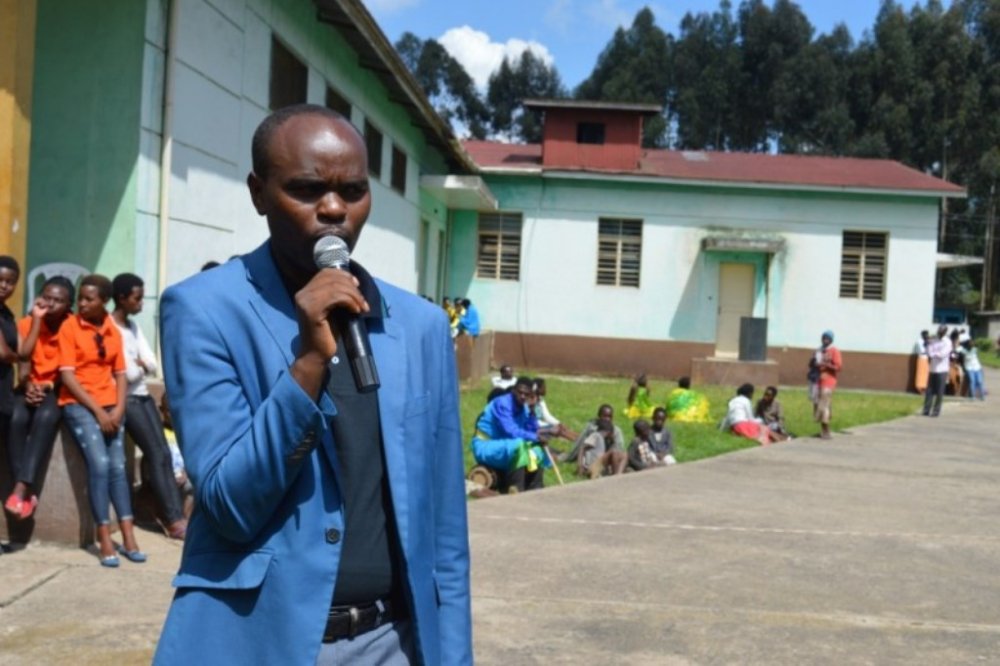
While launching the findings of the research on Wednesday, the coordinator of Didé Foundation, Odette Mukansoro said that it is important to help those with problems to overcome them.
“For Rwandans, it is not worse, many people have mental disorders. For those in prisons, it depends on the crime one committed. If a person is serving long sentence, the more they spend years in prison, the more they develop mental disorders,” she said.
“The way forward is to collaborate with institutions in charge of mental health and see how we can improve the number of people in charge of mental health in prisons,” she added.
The Commissioner General of Rwanda Correctional Services (RCS), George Rwigamba said that more efforts need to be invested so that identified problems could be addressed.
“The research was not conducted among all prisoners, but sampling was done; we have over 60,000 inmates in all prisons, well, it is understandable that when people are imprisoned many of them get traumatized, but when they are counseled, after certain period, they calm down. We should put in place some measures to reduce such trauma,” he said.
The Chairperson for National Human Rights Commission, Madeleine Nirere said that particular attention should be given to specific categories such that those who need medical assistance and those who need counseling are accorded the respective support.
“Women and children have particular problems. A woman who left children at home always thinks about her home, they need counseling. A person should be responsible of crime consequences, but it is essential to help them end the sentence,” she said.
She said that it is essential to train prison staffs on good practices in handling a person with mental disorders.
Last year’s RCS statistics show that there are 64,757 inmates in Rwandan prisons, among who 28,806 are genocide crimes related convicts.
Marked annually on 8th March, International Women’s Day (IWD) is a time to reflect on progress made, to call for change and to celebrate acts of courage and determination by ordinary women who have played an extraordinary role in the history of their countries and communities.
IWD 2018 is being celebrated under the theme “Time is Now: Rural and urban activists transforming women’s lives.”
With the majority of its workforce being female, Brussels Airlines advocates equal opportunities for men and women in their work life.
Today, Brussels Airlines’ flight SN2579 to Berlin will be led by Captain Sofie and First Officer Marie-Aude. Purser Liesbeth will take care of the service in the cabin together with cabin crew members Kaya and Gillie.
All other Lufthansa Group airlines (Lufthansa, SWISS, Austrian and Eurowings) also operate all-women flights to Berlin from their respective home airport. With this symbolic flight, the airline wants to help strive for a more gender inclusive world.
With female co-workers on all levels and in every department, including HR, Marketing, Ground Operations, Aircraft Maintenance, Cabin Crew and support services, the majority of Brussels Airlines’ workforce is female (51.6%). At 10%, the airline’s percentage of female pilots is one of the highest in the aviation industry, where the global average is slightly over 3%.
Besides the flight to Berlin, Brussels Airlines also operates a 100% female crew flight to Abidjan (Ivory Coast) and to Accra (Ghana), where Brussels Airlines’ Country Manager and Station Manager are both women. In the cockpit will be Captain Daniela and First Officer Marie. The service in the cabin will be overlooked by Veronique, Patty, Xandra, Isabelle, Maité, Ingrid, Caroline and Peggy. This way the airline wants to support gender equality in Africa, the continent Brussels Airlines considers its second home and where International Women’s Day is widely celebrated.
“At Brussels Airlines we find it important to contribute to IWD by organising these symbolic actions because we firmly believe in gender equality. We understand that having a family and a career can be a balancing act and we strive to support all our colleagues, men and women, to ensure that each and every person is able to reach their full career potential, while maintaining a good work-life balance,” says Diane Cauwenberghs, HR Talent Manager at Brussels Airlines.
From 1st April, the Belgian giant carrier will also have a female CEO. Christina Foerster will be the first ever woman to be heading a Lufthansa Group airline.
Brussels Airlines, a member of Lufthansa Group and Star Alliance, is the Belgian airline that offers the widest choice of flights to and from the capital of Europe, Brussels Airport. The company has more than 3,600 employees and 48 aircraft operating some 250 flights daily, connecting the capital of Europe to 90 premium European destinations, 24 African destinations, three North American destinations and Tel Aviv and Mumbai.
Nkurunziza has been in Ruhango District council since December 2016 after being elected to represent Ntongwe sector.
The chairperson of Ruhango District council said that Mayor François Xavier Mbabazi, Vice-mayor in charge of Finance and Economic Development, Epimaque Twagirimana and Vice-mayor in charge of Social Affairs, Annonciata Kambayire were sacked after a report revealed mismanagement in some projects of the district.
“Take an example of the project to construct a landfill in the district; the landfill was constructed without a feasibility study, but they referenced to feasibility studies which were non existen; this resulted into mismanagement in the project. It is two months now since we received the report,” he said.
He added the district has been poorly performing in the districts performance contracts (Imihigo). In 2016/2017 district performance, the district came in 28th position among 30 districts.
“The positions of districts show the level of performance. In different retreats as district council, we showed them that we were not contented with our position and we suggested measures that should have been taken for the district to perform well,” he explained.
“Lagging behind is among reasons we decided to sack them,” he added.
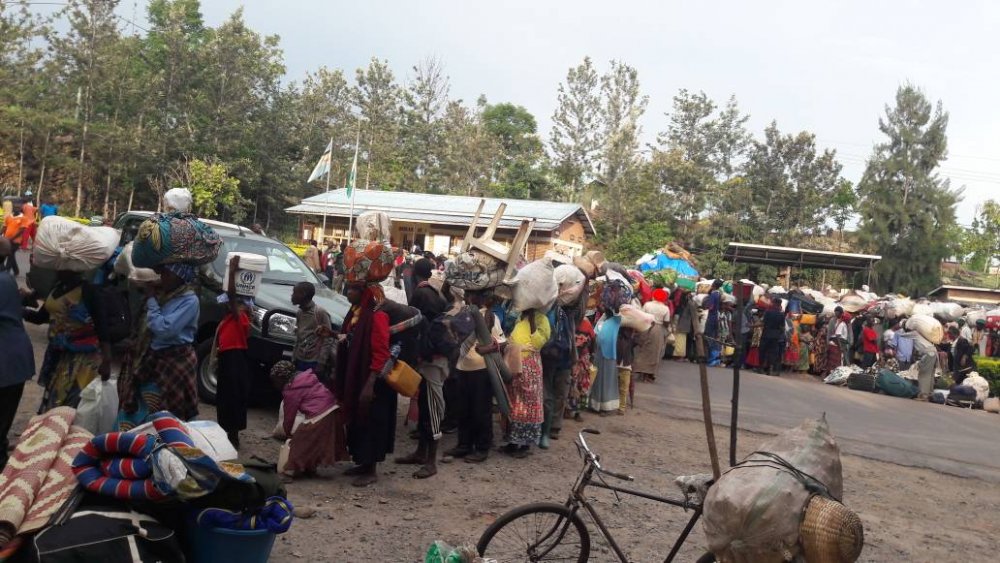
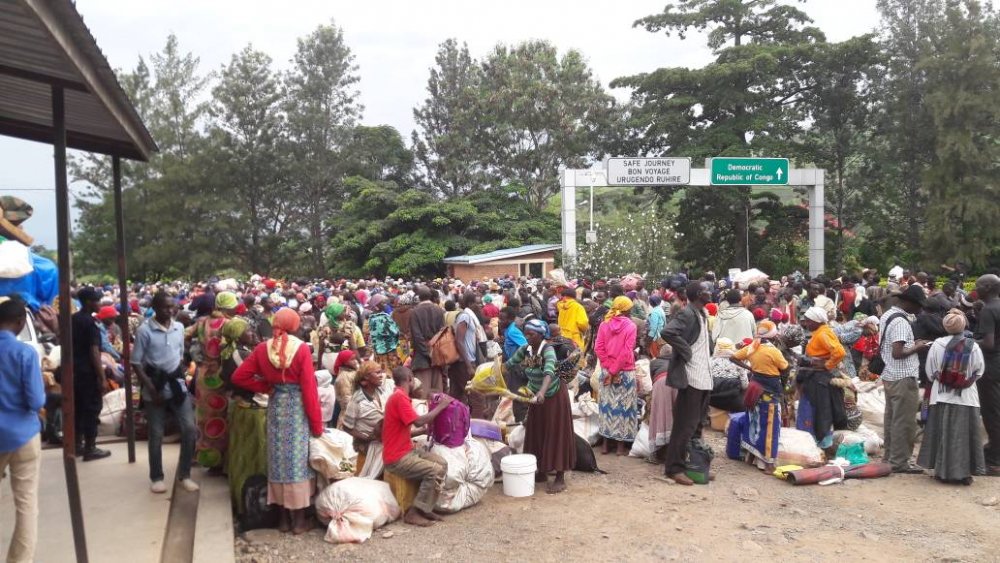
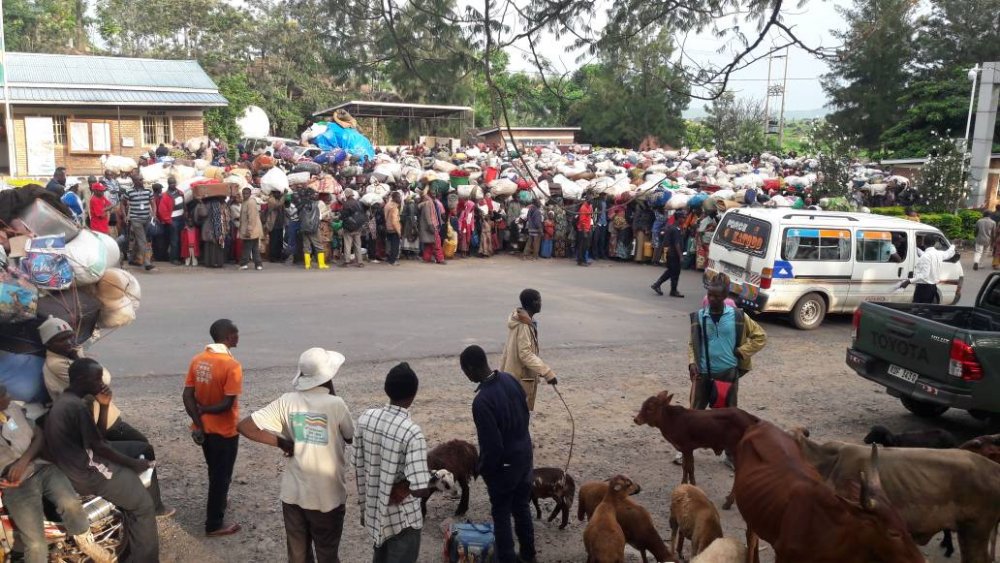
The refugees received in Bugarama sector of Rusizi District started to cross the border in midday yesterday.
Speaking to National Broadcaster, RBA, Rusizi District Mayor, Frederic Harerimana said that the refugees were facilitated by United Nations Commissioner for Refugees (UNHCR) and the United Nations Organisation Stabilization Mission in the Democratic Republic of the Congo (MONUSCO).
“They started to arrive at around 12:00pm to 1:30pm. As we talk now, no more others are coming, these came in with the facilitation of UNHCR and Monusco,” he said.
“We are helping them settle in, but, we are yet to talk to them about the cause. Sources say that they decided to come because their security was not well ensured. We are receiving them at Bugarama and Kamanyola boarders, we are registering them, we are putting them together so that we can provide them with basic needs like food and water,” he explained.
It is expected that they will be taken to Nyarushishi refugee camp in Nkungu Sector. Rwanda accommodates over 75,000 Burundian refugees that have fled to the country since April 2015.