The preliminary investigation leading to the trial was carried out during the weekend by Scotland Yard’s war crimes unit.
The investigation took place following the Rwanda’s request to prosecute in Britain, the men who have been described as ‘Masterminds’ of the genocide.
Last year, the government of Rwanda requested for their extradition but the process ended in failure, after the court ruled that in Rwanda they may not get fare justice.
In an interview with the Times, Justice Minister, Johnston Busingye accused Britain of acting as safe haven for criminals.
Busingye demanded that the five suspects should be tried in the UK.
“Some of the people responsible for these rapes and murders are on your soil. We’ve got people extradited from Sweden, Germany, Holland, Belgium, Norway, Denmark, Canada and the U.S. so, why does only the UK think we can’t give fair trial?” Busingye questioned.
“These are masterminds who somehow got UK citizenship paid by your tax-payers,” he added.
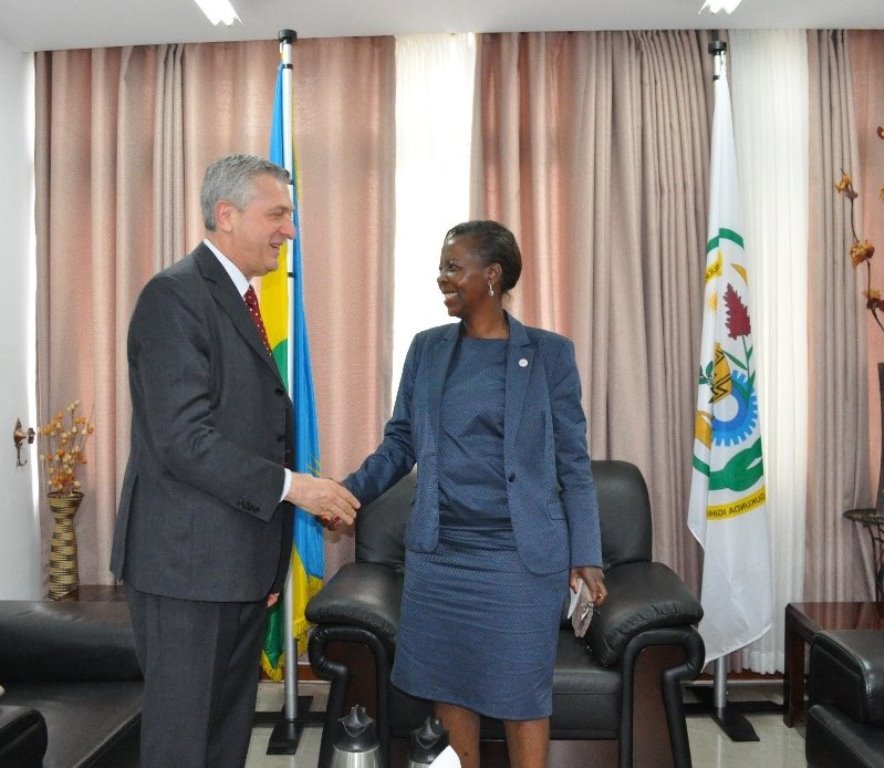
On his second day in Rwanda, Grandi met President Paul Kagame and the Minister of Foreign Affairs, Cooperation and East African Community Affairs, Louise Mushikiwabo.
Through his twitter account Grandi said “I have learned much from my refugee experience”: Africa has in President Paul Kagame a visionary leader who understands the importance of innovative solutions to forced displacement. Grateful for an inspiring discussion with him and Foreign Affairs Minister Louise Mushikiwabo.”
He also visited Kigali Genocide Memorial Center and paid tribute to over 250,000 victims of the 1994 genocide against the Tutsi laid to rest there.
“Profoundly humbled to be in Kigali during the commemoration of the genocide against the Tutsi. We must do everything in our power for this never to happen again anywhere in the world,” reads his twitter message.
{{Visit to Congolese Refugee camp}}
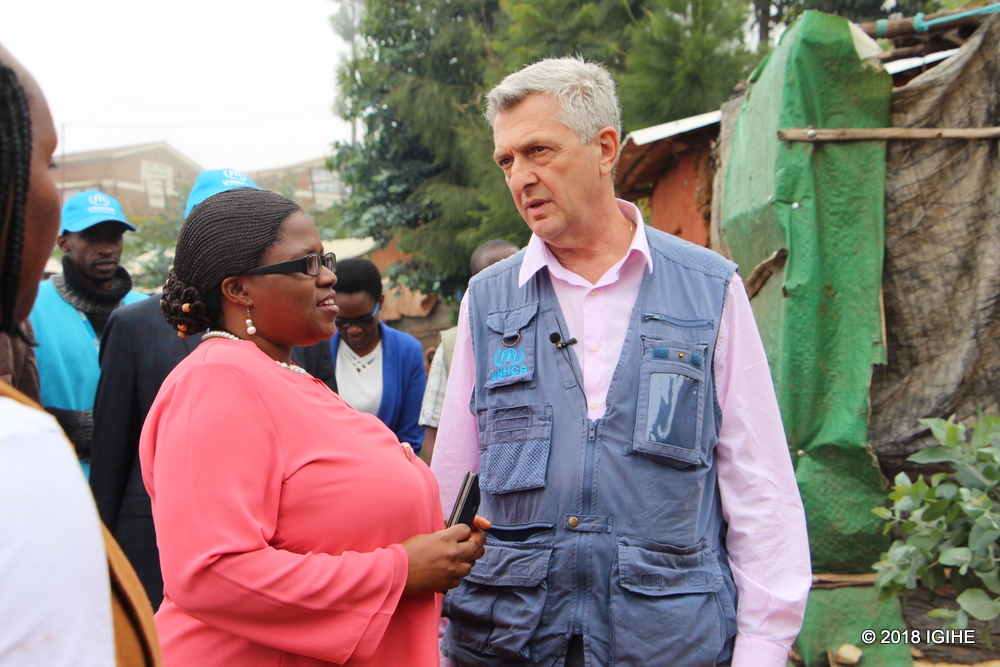
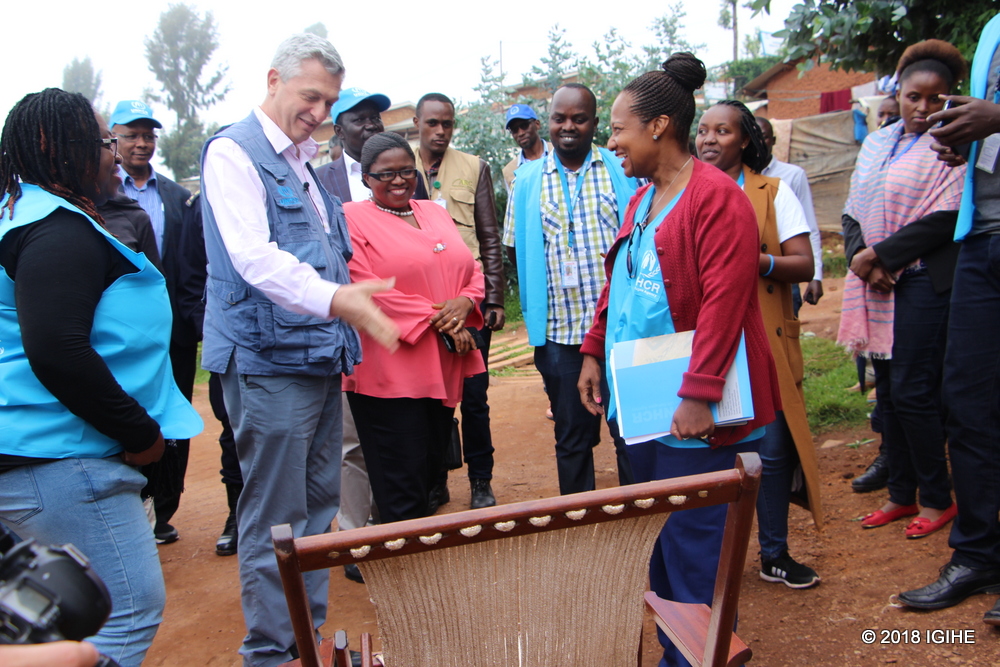
Yesterday, Grandi visited Gihembe Refugee camp in Gicumbi District. The camp hosts a number of Congolese Refugees.
Grandi who arrived in Rwanda from the Democratic Republic of Congo (DRC) is expected to visit Burundi.
Speaking to the media yesterday in Gicumbi, Grandi said that he is visiting the region to look at diverse refugee situations and see how they can better respond to their needs.
“I’m visiting this region to look at various refugee situations and see how we can better meet the needs of the refugees, but also of the host countries and most importantly how we can find solutions for the problems of refugees,” he said.
In Gihembe refugee camp, refugees raised different issues including insufficient food rations, poor access to medication, dilapidated houses and access to education among others.
The UNHCR boss said that they are going to experiment new approaches like talking to World Food Programme about food. He said that they think that there’s need to increase the capacity for refugees to be self-reliant.
“They have been in this country for more than 20 years, and I think the time has come for them to have access to employment and of course to national services,” he said.
“To do that we need to strengthen national services, it is unfair to ask Rwanda to host these people and not to give enough support to the country. So, this is another purpose for me to be here,” he added.
Grandi said that for these refugees to return in their home country (DRC), UNHCR need to discuss it with DRC and Rwanda.
While in Congo he said, he discussed the matter with DRC President, Joseph Kabila. He said that it is important for people to return in their country, not only these in Rwanda but also Congolese Refugees in Zambia, Angola, Burundi and Tanzania.
“I told them that they have to create conditions on the ground that is secured as there are many security problems in Eastern DRC. We need to address these problems so that the people abroad can go back, which is what many of them want to do,” he said.
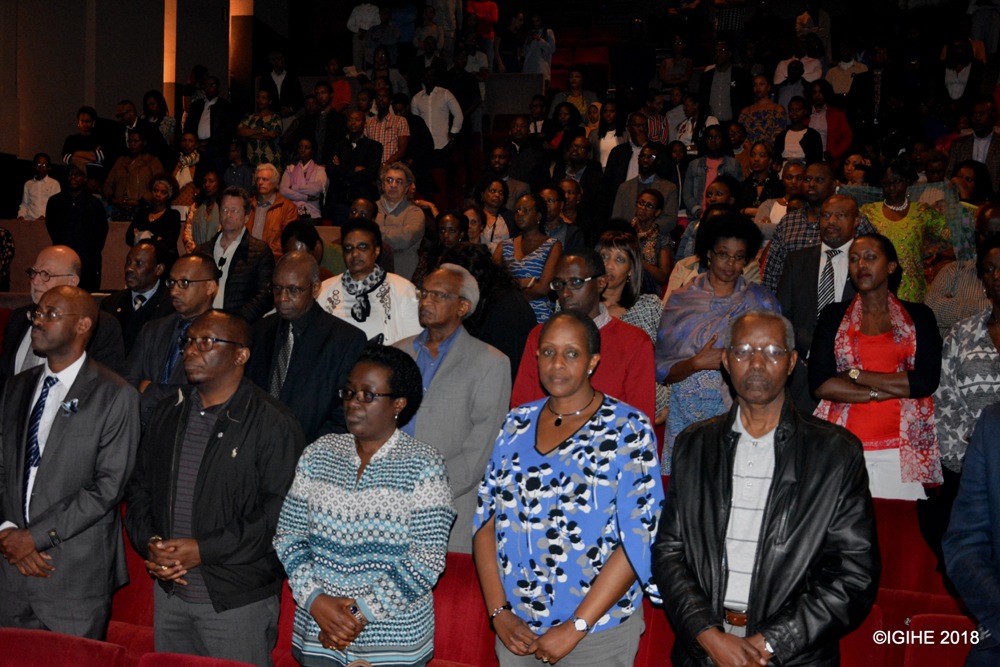
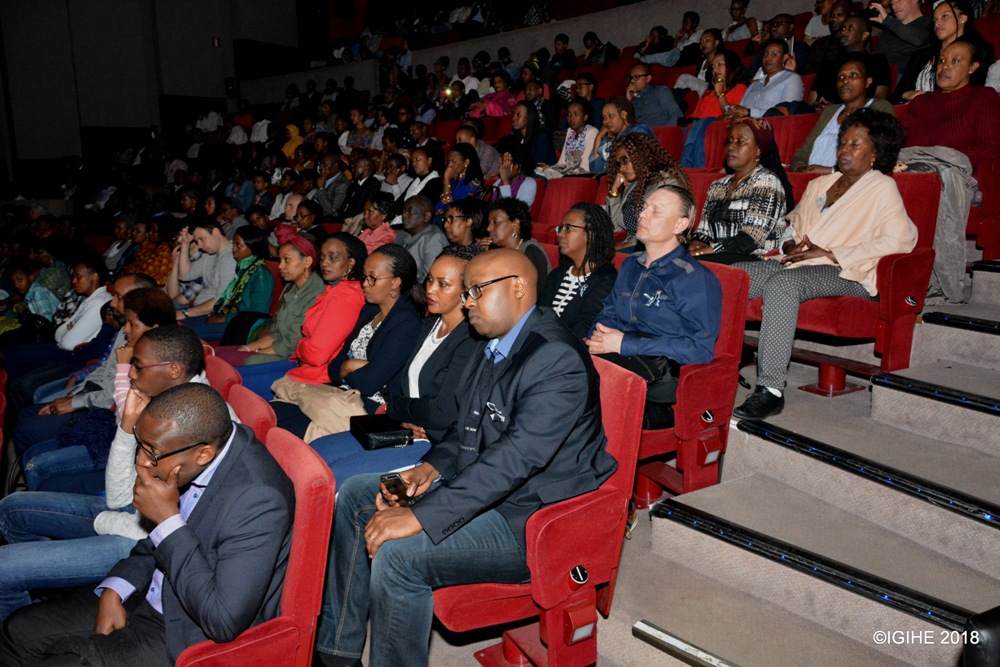
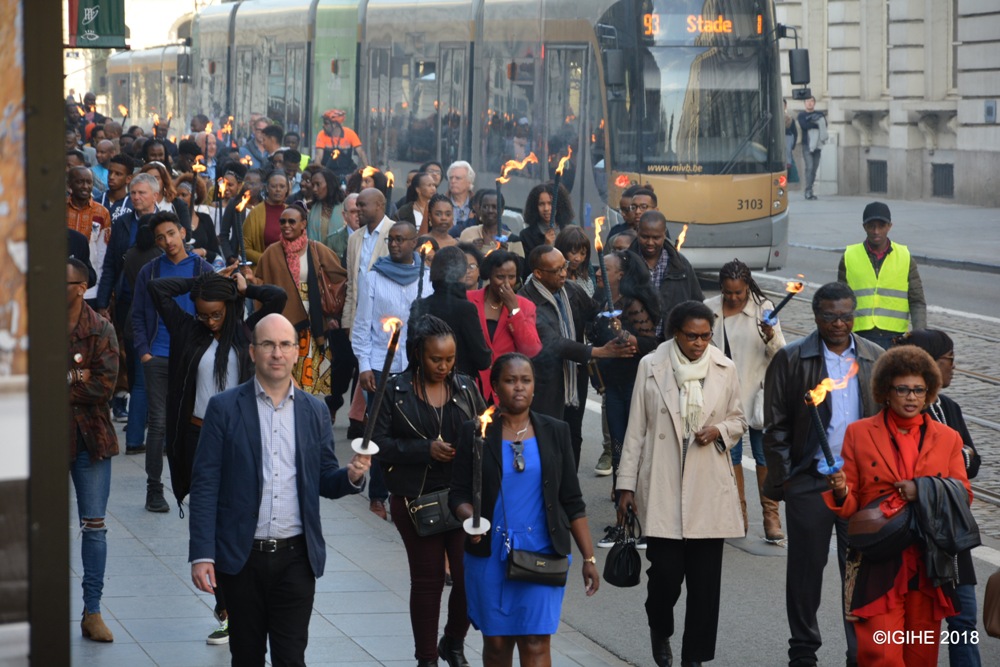
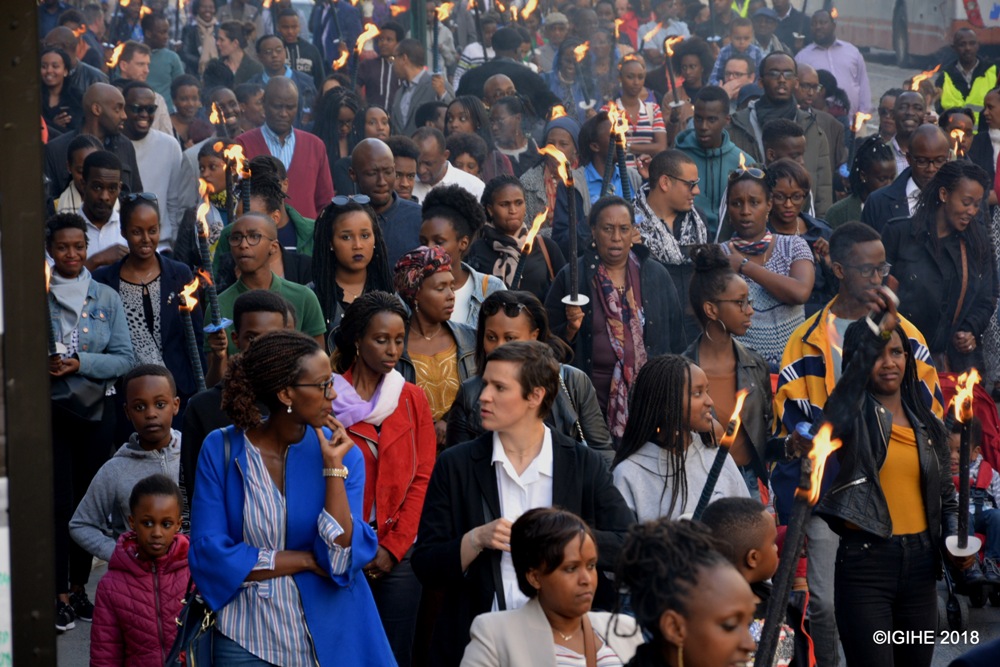
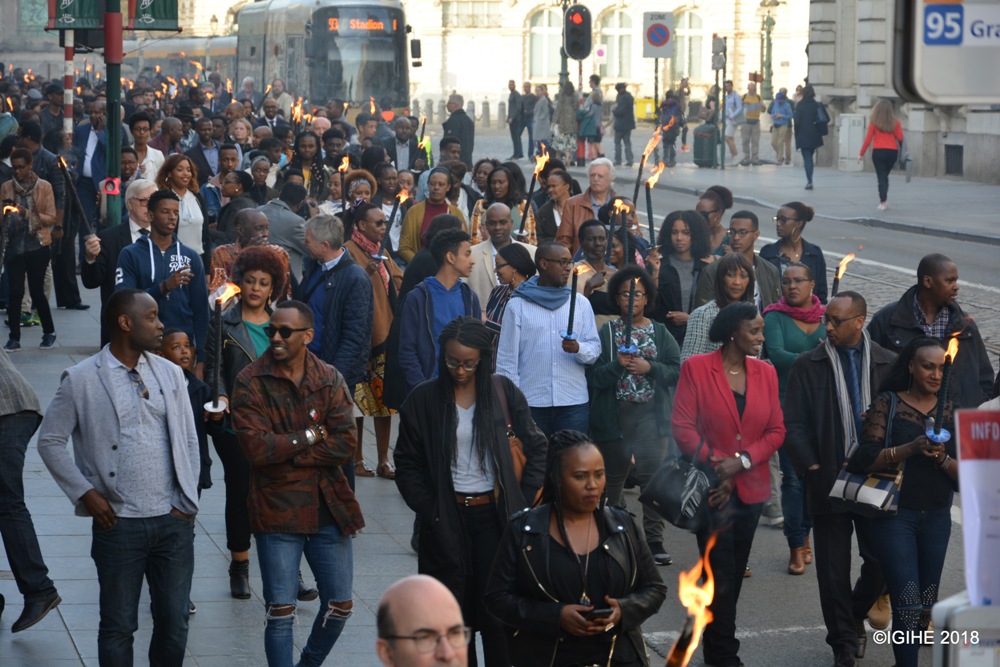
The event was attended by different officials including representatives of international organisations, ambassadors and representatives of Belgium government among others.
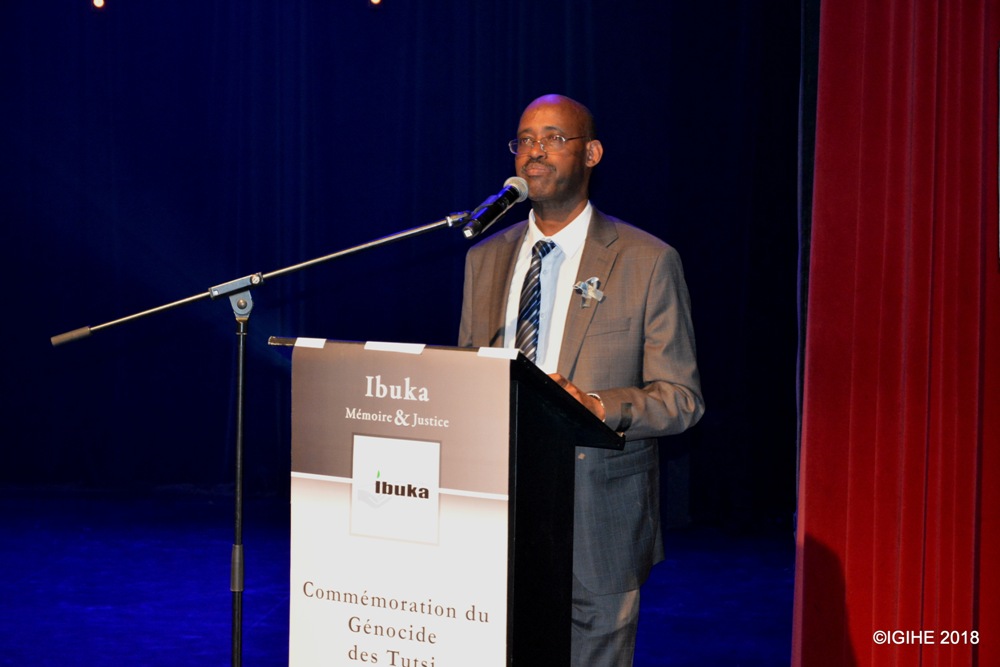
Speaking at the event, the ambassador of Rwanda in Belgium, Amb. Amandin Rugira told survivors that the government of Rwanda is doing all it can to support them in different aspects of life.
He hailed participants who attended the event saying that commemoration is part of national reconstruction.
“Commemoration is a good weapon towards reconstruction; it also helps to tell the truth about what happened,” he said.
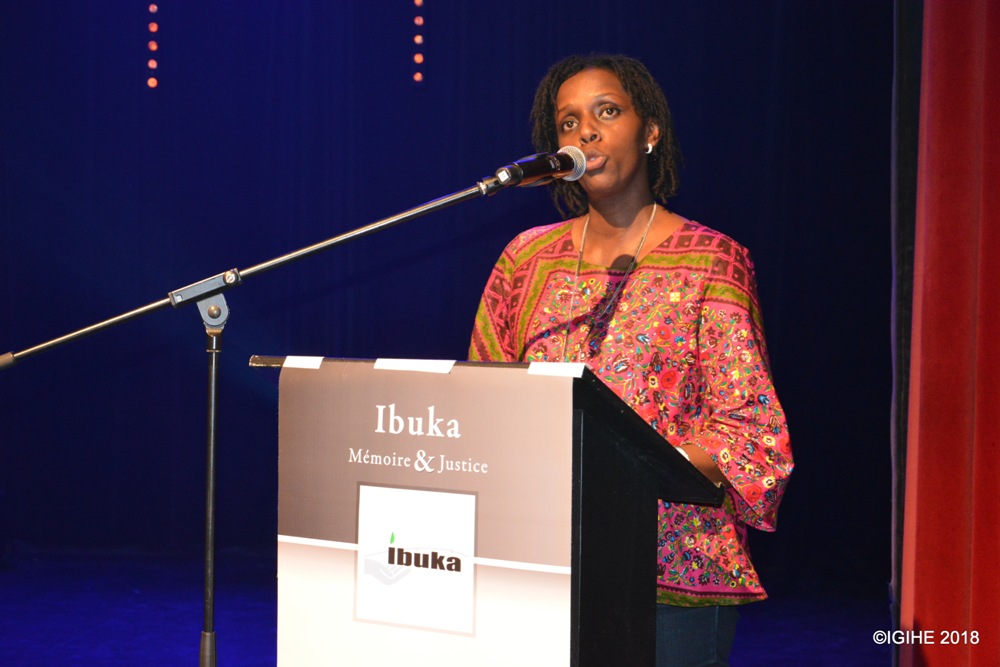
Déo Mazina, the president of Ibuka (an Umbrella for Genocide survivors) in Belgium, reminded that commemoration strengthens unity among people and helps them not to be held with sorrow.
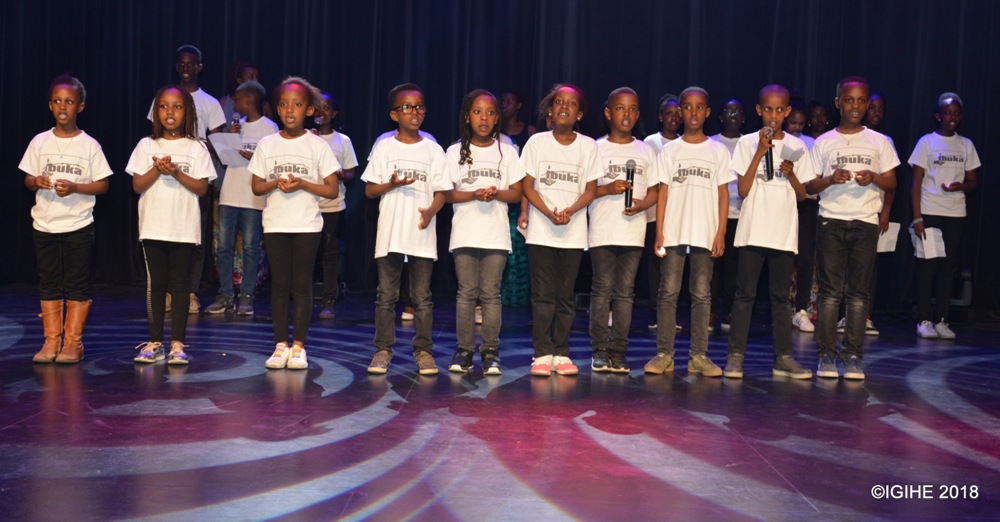
The 24th commemoration takes place after the United Nations Council approved appellation of the ‘genocide against the Tutsi’ and approved April 7th as the international day to commemorate victims of the 1994 genocide against the Tutsi in Rwanda.
{{Photos: Karirima A. Ngarambe & Rutayisire Jessica}}
This action comes from the school’s recent partnership with the Mastercard Foundation. The foundation, through its $50 million, five-year initiative Hanga Ahazaza — which means “creating the future”, plans to equip 30,000 Rwandans with skills to transition into the tourism industry.
According to the foundation’s website, the Rwandan students will “receive training in communications, customer service, ICT, and digital literacy skills, and receive on-the-job training and opportunities for employment.”
Apart from equipping students, Hanga Ahazaza will also help small businesses owners in the tourism and hospitality sector in Rwanda through “increased access to financial services and business development skills so that they can create more employment opportunities” the website further stated.
Cornell’s online teaching department, eCornell, will be part of the initiative and will provide students with online training and virtual access to the faculty for the students in the programme.
Cornell University Hanga Ahazaza assistant director Nickie Fredenburg said the Rwandan government is hoping to create 200,000 new jobs annually and the university, Fredenburg said plans to grow the tourism sector.
“By upskilling current managers, resulting in advancing careers and providing businesses the proper training to increase revenue and in turn, create more jobs,” Fredenburg told Cornell Sun.
Besides Cornell University, the Mastercard Foundation has teamed up with Dalberg, GIZ, GroFin, Harambee, Horwath HTL, I&M Bank Rwanda, Inkomoko, and Vatel Rwanda to roll out the initiative.
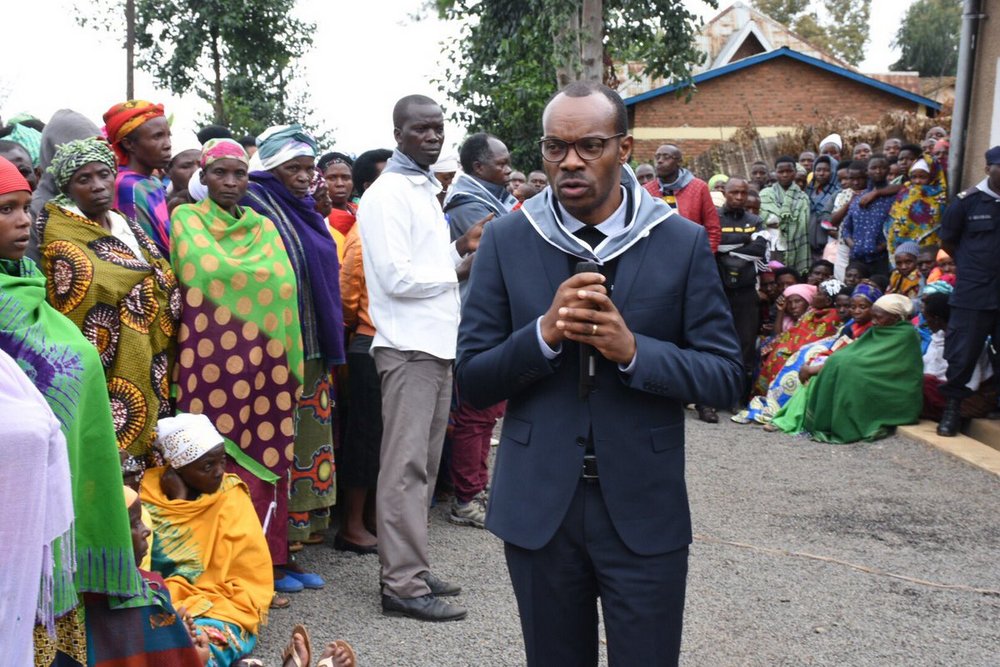
Harerimana was speaking Saturday while launching the remembrance week and 100 days of commemoration in the district.
“Let’s do our best to tell the truth because the 1994 genocide against the Tutsi is something that we could not stop speaking about in our life. But, this time should also be an opportunity to inculcate love, unity and fight against the genocide and its ideology,” he urged.
He requested residents to remember by continuing to contribute to national development, particularly to support and comfort genocide survivors.
Emmanuel Kageruka, a survivor in the district said that Tutsis in former Kayove commune were killed and thrown in Lake Kivu.
“Interahamwe Militia had formed barricades and Tutsi who were caught were killed and thrown in Lake Kivu,” he said.
Using examples, Kageruka said that the genocide was brutally executed in the district where children killed their parents.
“Genocide was cruelly executed in this region, for example a man called Gabriel Nzabandora threw his mother in Lake Kivu. Five more men threw their wives in Kivu,” he explained.
The 1994 genocide against the Tutsi took the lives of over one million.
The young wife, who lives in Gatebe Sector of Burera District in the Northern Province, dropped out from primary six about two years ago as a consequence of her parents’ incessant conflicts which often made the mother and children spend nights away from home, fleeing from their father’s beatings.
“I got married at 17 because of the conflicts at my parents’ home. I luckily got a man to save me from the bad situation and I decided to join him. My elder sister also got married at 16 years of age as she was also tired of the situation at home,” says Nyirambangutse in solemn face with tears lingering in the eyes.
“Conflicts between my mother and father kept persisting. We, as their children, tried to ease the tension but in vain. Families and neighbours intervened but our father became incorrigible. We fear our father will kill our mother as he is always saying.”
Her younger sister Thérèse Ushizimpumu, 15, also dropped out from senior one last year because her conflict-torn family was not paying her school fees and materials.
“I am currently doing farm activities alongside my mother but I wish I go back to school if I get ways. I reported my drop out to local leaders; they tried to reconcile our parents but their conflicts have become irresolvable. I need help to go back to school. I should be doing senior two now,” wishes Ushizimpumu.
Her elder brother left his parents’ miserable home in search for a better living in Uganda.
“He is working on tea plantation. He escaped from our family’s conflicts and harassment including beatings by his father,” the children’s mother Sylvanie Baziki tells IGIHE on the sidelines of a community debate held in Gatebe Sector on Wednesday.
The family’s fate is one of the horrible situations taking heavy toll on children in some of the families living in the area bordering with Uganda.
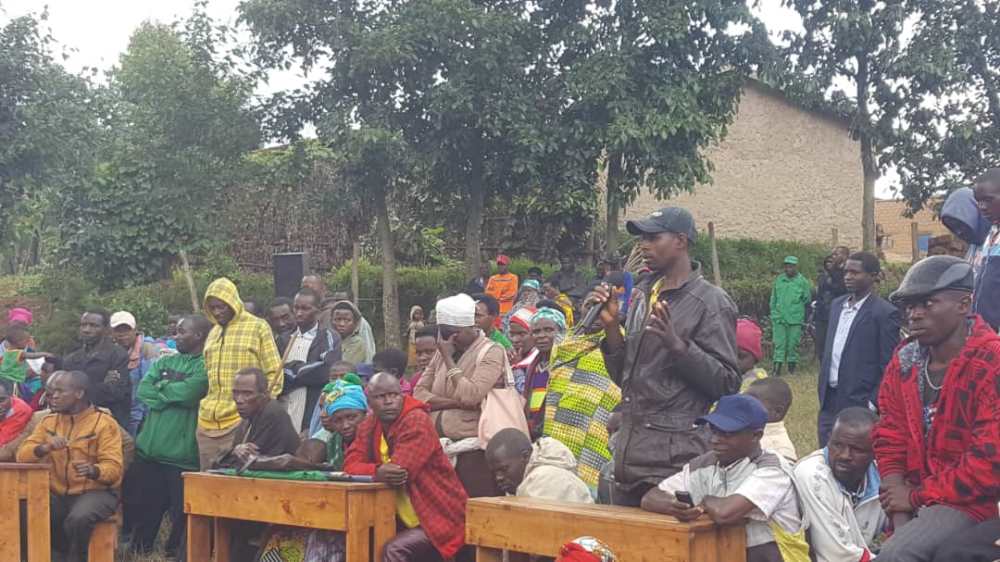
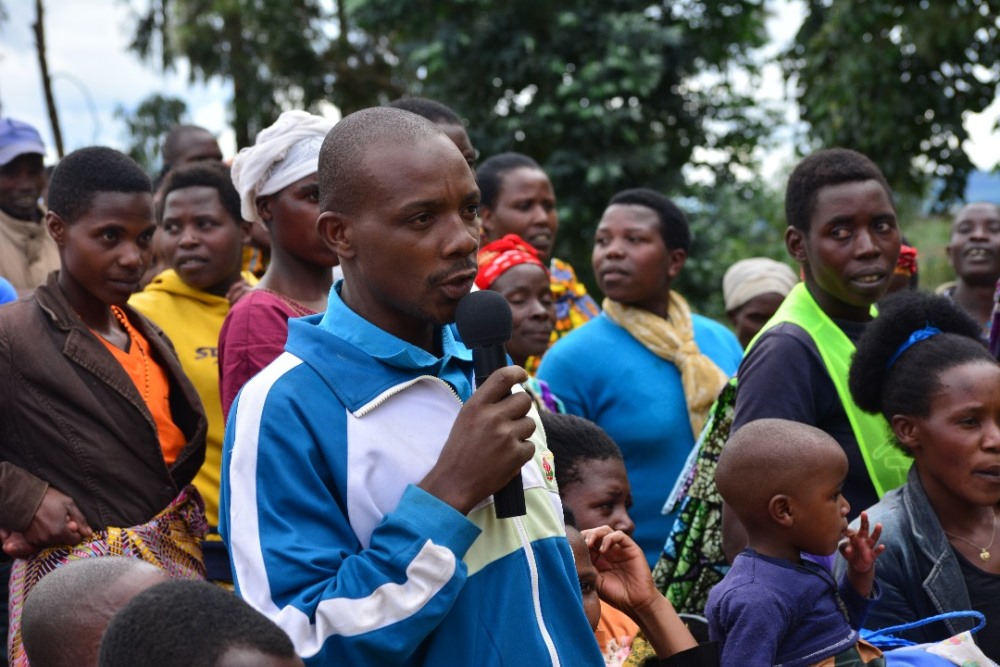
The debate that brought together citizens and local leaders was organised by the journalists’ network PAX PRESS in collaboration with Care International, Rwanda Men’s Resource Centre (RWAMREC) and Rwanda Women’s Network.
{{Parents in blame game}}
Baziki got married to Jean Népomuscène Karemye in 1979 and produced together eight children but their conflict erupted eight years ago when the wife sided with their son who accused the father of selling his assets, according to Baziki.
The couple briefly shared their story publicly during the debate with Karemye coming forward first to say that his wife developed a bad habit of taking away agricultural produces three years ago.
Baziki, who abandoned his husband last month to settle at her deceased parents’ home, said Karemye has become incorrigible and not responding to local leaders’ invitation for mediation as the audience clapped in agreement with Baziki’s expression.
Baziki said her husband has been selling away the farm yields without her consent and their standoff has now reached a deadlock because she cannot stay with a man who threatens of killing her. She was advised by local leaders to take her case to court last month but she was blocked by lack of court charges.
Baziki, currently living with her last born daughter, seeks justice for having her share from the property which is entirely in the hands of her husband while the husband insists all the property belongs to him.
Karemye’s views on property and family management are shared by a number of men in the area such as Félicien Kaboga who told the gathering that he must take 90% and leave his wife with 10% of the family’s management.
Some other women expressed their grief over misunderstandings with their husbands who wanted to misuse the family’s property but wives opposed them and ended up going to settle in Uganda where they married other wives, leaving heavy responsibilities to first wives for raising children alone.
The gathering was tipped on the law governing family relationship adopted in 2016 stating that both spouses – man and woman – are jointly responsible for the management of the household, including moral and material support as well as its maintenance.
Anastase Nteziryayo, the Executive Secretary of Gatebe Sector, said they had recently registered 30 families which have serious conflicts but some have settled disputes after intensive sensitisation on the benefits of getting rid of the couples’ conflicts
“There are still issues about family’s property management where men feel they can use it as they please but a number of people are increasingly changing. These family conflicts seriously affect children and some drop out. We often try to get parents keep their children in schools but when parents have no means, the district and different partners intervene to help us get a child back to school. We have so far helped three children in our sector. We regularly teach families to avoid conflicts,” he said.
Nteziryayo pledged to particularly follow up the case of Karemye and Baziki and make sure their last born gets back to school, saying the sector’s office will take up her education if the family fails to do it.
Completion of the programme takes two years of part-time study and will provide graduates with a world-class MBA from a globally recognized university.
As part of the Coventry University and eLearnAfrica initiative, 50 civil servants will initially be offered the opportunity to study the Coventry University online MBA programme.
The CEO of eLearnAfrica, Brook Negussie, explained the benefits of the bursary and MBA. “We are very excited to offer access to this very prestigious programme. As it is fully online and has a more flexible part-time course load, students can continue with their responsibilities while earning a degree from a globally-recognized university. This is an international programme, so students will interact with their peers from around the world.”
Former Minister of Education of Rwanda, Prof. Silas Lwakabamba, who recently joined the eLearnAfrica Academic Advisory Board, is coordinating the initiative in Rwanda.
“This programme has been launched in Rwanda and promises to support the constant improvement of our civil servants, who work every day to serve the people of Rwanda. We are confident that Rwanda will serve as a model for similar programmes throughout East Africa and the rest of the continent.”
The MBA provides students with the opportunity to gain the knowledge and skills required to progress to more senior leadership roles. Students will gain an internationally recognized business qualification from a highly reputable, leading UK university.
Students will study through the social learning platform FutureLearn, giving them a chance to share knowledge and experience with other students and industry experts from across the globe. The platform is easily accessible on mobiles, tablets and desktops, making it easier to fit the course and learning around other commitments. Students will still have access to world-class teaching, with all learning and assessment taking place online. They will also receive the same Coventry University degree as those who study on-campus.
Bursary applicants must send an up-to-date CV to [students@elearnafrica.com->students@elearnafrica.com] for consideration for the bursary award and the Coventry University online application process.
Applicants must hold a Bachelor’s Degree and should have at least two years of experience in a professional position.
Peacekeepers deployed in Central Africa Republic; Darfur in Sudan and South Sudan were on Saturday joined by friends to commemorate.
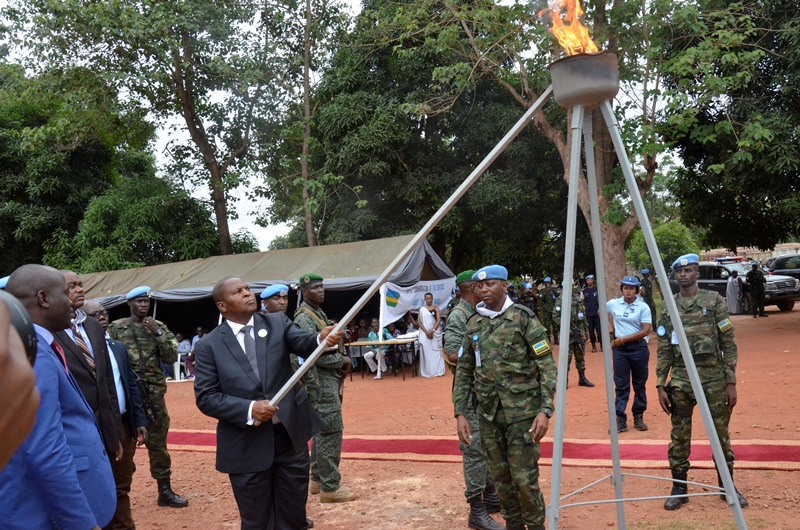
Rwandan peacekeepers serving under the Multidimensional Integrated Stabilization Mission in the Central African Republic (MINUSCA) together with the Rwandan Community living in Bangui, Central Africa Republic (CAR) were joined by CAR Government dignitaries including the President of Central Africa Republic Faustin Archange Touadéra; and UN officials to mark the 24thcommemoration of the 1994 Genocide against the Tutsi.
The commemoration event was held at Rwandan Contingent camp, Socatel M’poko, Bangui.
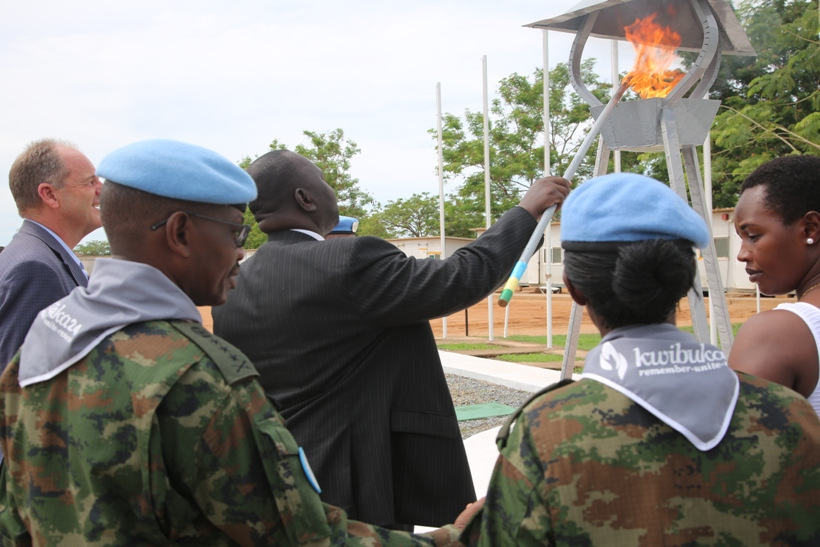
In his commemoration message delivered by the Prime Minister Patrice Sarandji, President Touadéra , who also lit the Flame of Remembrance and laid wreath to a monument in honour of victims of the genocide, said that the genocide against the Tutsi is an example of the failure of the international community.
“Every time we meet here to remember, our memories are refreshed by failures of the international community in Rwanda in 1994. We also look back and imagine what would have happened if peacekeepers in our country decided to abandon us… we would also be in the same situation like Rwanda,” Prime Minister Sarandji said.
He thanked the Rwandan peacekeepers for their role in restoring peace and security in CAR.
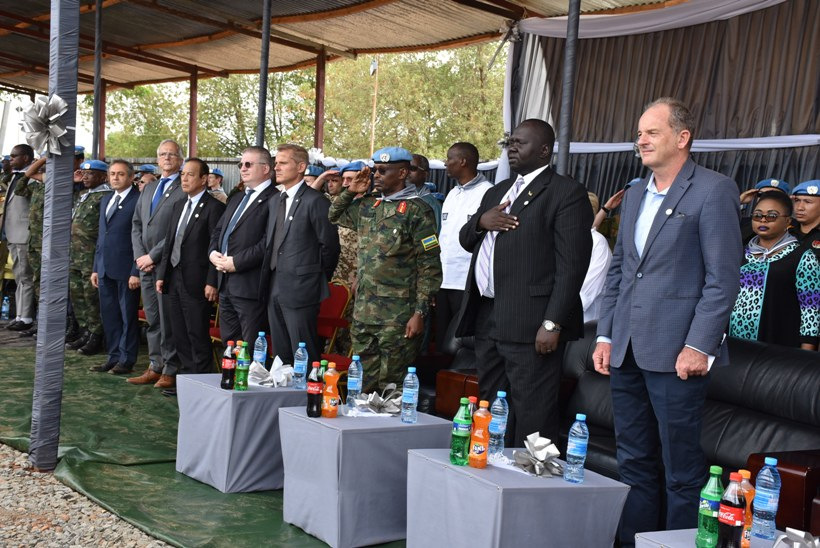
Rwanda peacekeepers in the United Nations Mission in South Sudan ( UNMISS) and Rwandan Community in South Sudan were joined by the United Nations Officials and other for commemoration.
The Commemoration event was held at Juba Tomping Camp base of Rwanbat1 and attended by different dignitaries including the UNMISS Special Representative of the UN Secretary General, David Shearer who delivered a message of condolences to the Genocide victims and accepted the failure of international community as a fact in Rwanda in 1994.
Speaking at the event, the Minister of Information, Culture, Youth and Sports in South Sudan, Salal Rajab Bunduki said that the history of Rwanda has a lot of lessons for South Sudan.
He appreciated the efforts of Rwandans in fighting against those who deny and trivialize the Genocide against Tutsi from across the World.
A similar commemoration event was also held in Malakal where Rwanda peacekeepers maintain positions.
Also in Darfur, Rwandan Peacekeepers serving under the United Nations-African Union Mission in Darfur (UNAMID) and Community were joined by other UNAMID peacekeepers and different friends to mark the commemoration of the 1994 genocide against the Tutsi.
The event was marked by a walk to remember and lit of candles in memory of the Genocide victims. It was attended by different dignitaries including the UNAMID Force Commander, Lt Gen Leonard Muriuki Ngondi.
While addressing the audience, the Chargé d’Affaires at the Embassy of Rwanda in the Republic of Sudan, Ismael Shyaka noted that the commemoration was an annual occasion to reflect on what happened in 1994 Genocide against Tutsi, 45 years after the Holocaust.
“After the Holocaust the International Community and the United Nations had decided to prevent such crimes by creating legal provisions. But where were the International Community and the United Nations in 1994?” he questioned.
“The young generation and generations to come have the right to know the genocide perpetrated against the Tutsi as part of their dark history. So we have a duty to tell the truth about what happened and preserve all genocide proofs” he added.
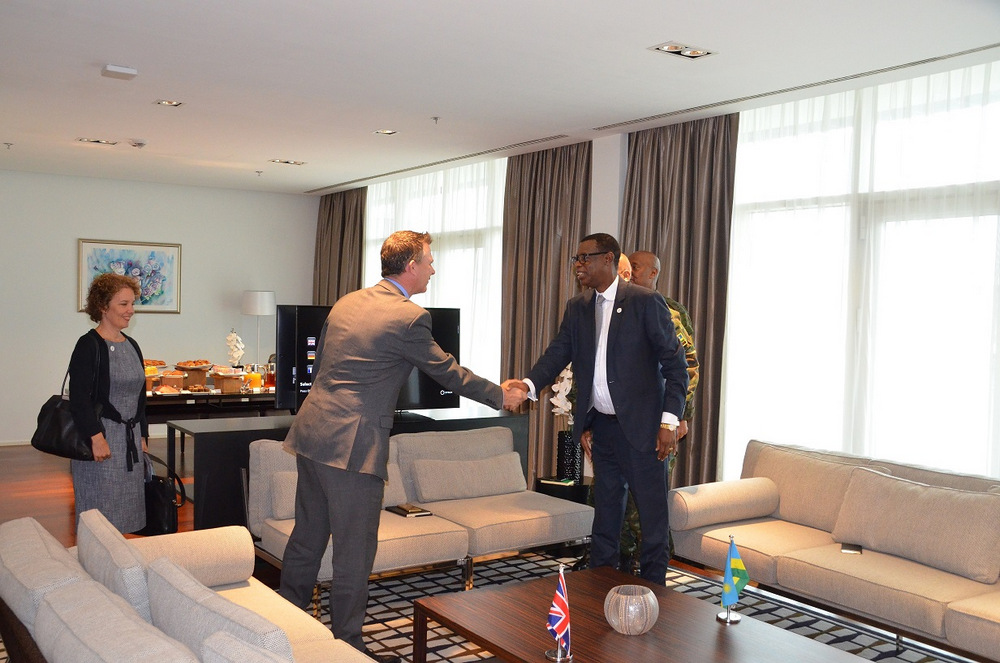
Lancaster said that they had a successful meeting where they discussed ways how both countries can work together in peacekeeping and training.
“I am delighted to be back here in Rwanda. This is my third time to visit Rwanda. The United Kingdom and Rwanda have grown long standing relationship and I am here as British defence minister looking for how we can work together with Rwanda particularly in the areas of peacekeeping and training. It has been a very successful meeting,” Lancaster said.
The British defence Minister promised a continued partnership in training and peacekeeping.
“Our major focus was to see really how we can continue work together in training, how the British Army can continue to support the RDF in various training organisations also how we can work together when it comes to peacekeeping of the UN… for example we have Engineer Regiment in South Sudan and you have infantry battalions, we looked at the lessons learnt from each other”, he added.
The bilateral defence cooperation meeting was also attended by HE Joanne Lomas the new High Commissioner to Rwanda and Non-resident Ambassador to the Republic of Burundi, Rwanda Defence Force Chief of Defence Staff, Gen Patrick Nyamvumba, the Dircetor General of Policy and Strategy, Maj Gen Ferdinand Safari, the RDF Chief of operations and training, Brig Gen Chris Murari, Brigadier David Eastman MBE (Head of International Policy and Plans), Col Alasdair (Military Assistant), Lt Col Mathew Edwards (UK Defence Advisor to Rwanda).
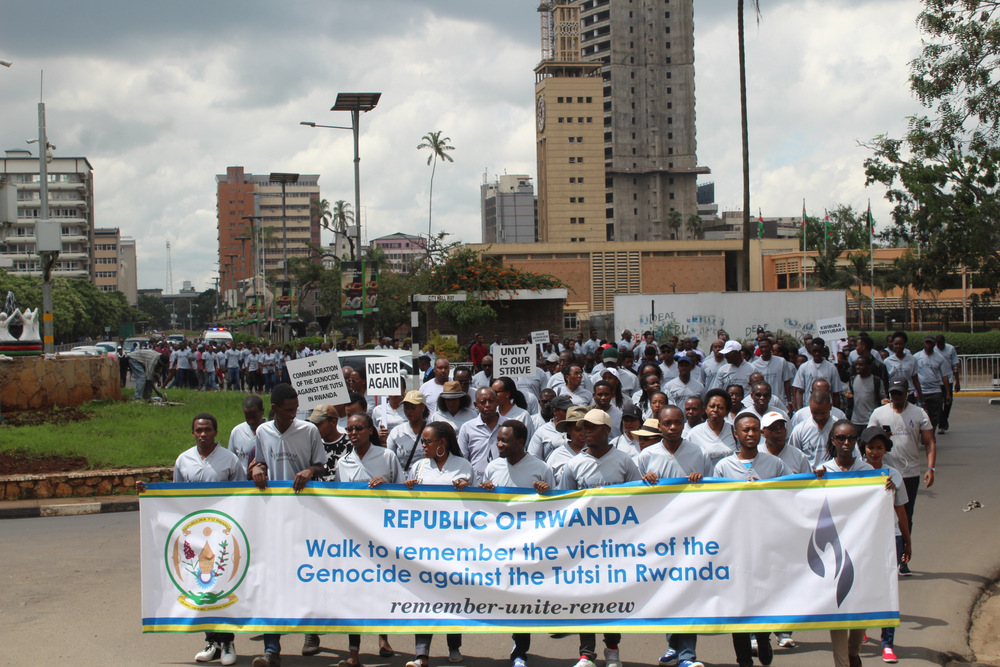
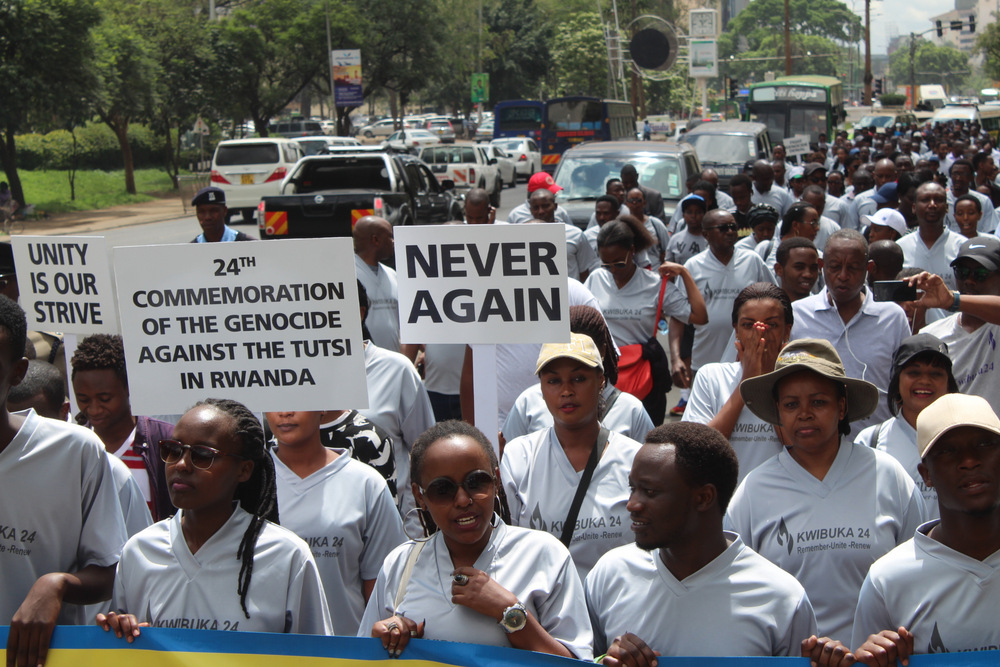
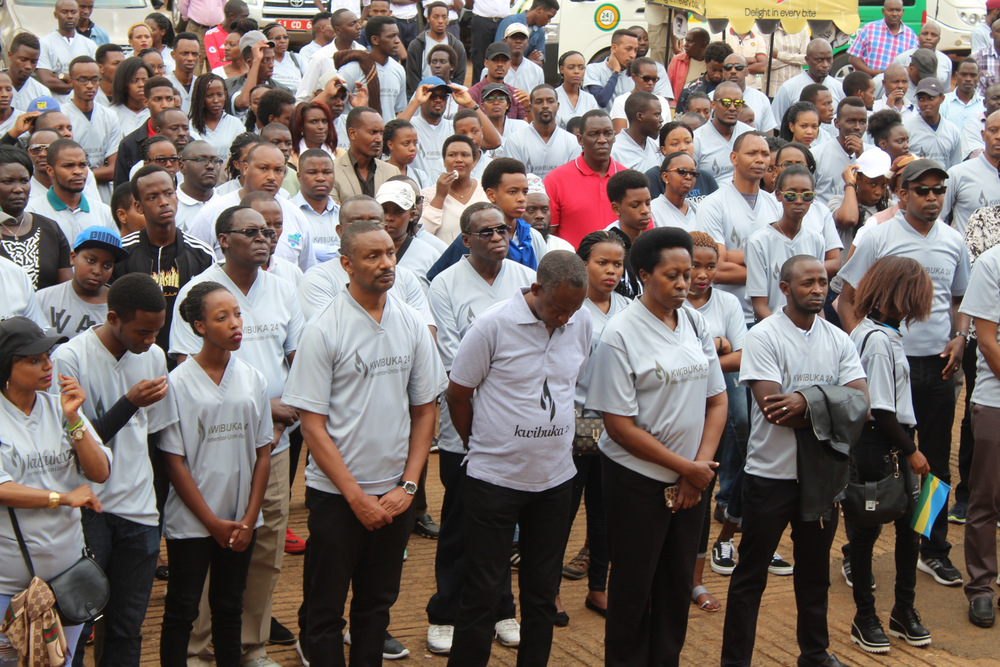
In a procession that started from Uhuru Park down to Central Business District, Rwandans carried banners with messages that paid tribute to the victims of the 1994 Genocide against Tutsi, support to survivors and fighting genocide denial.
The Walk to Remember procession was an opportunity for Rwandans to share their own stories related to the tragic events that befell their country whereby a million lives where taken in less than a hundred days.
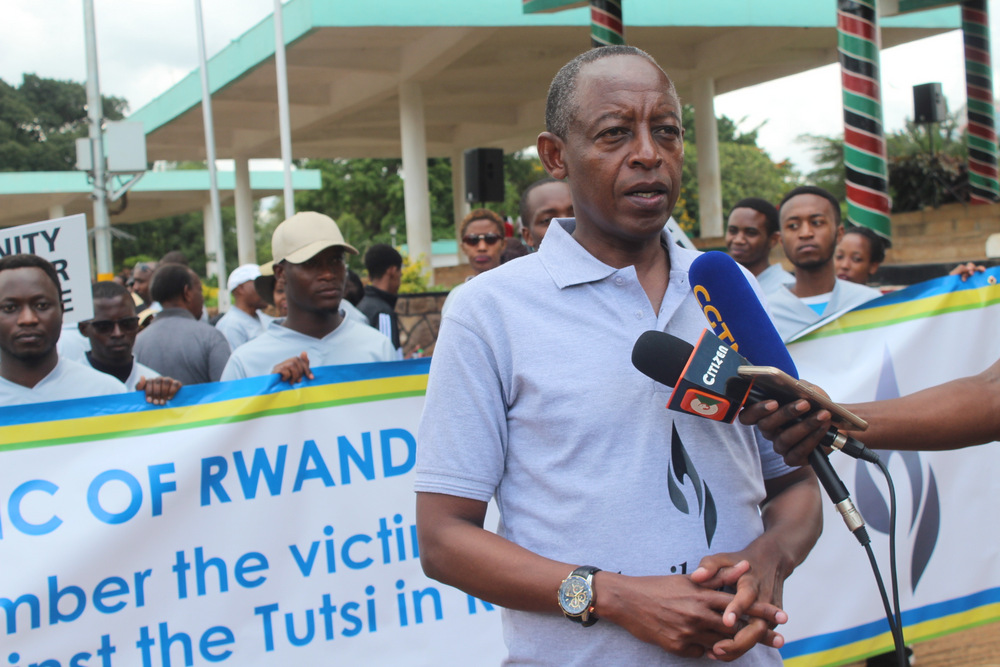
Speaking at the end of the procession, Rwanda High Commissioner to Kenya Ambassador James Kimonyo thanked members of the community for turning out in numbers.
“Thank you all for making time to participate in this important event as we remember lives that were brought to an abrupt end during 1994 Genocide Against the Tutsi. We organize the Walk to Remember procession, so as to pay tribute to victims of the Genocide but also to say Never Again to the acts of the Genocide in Rwanda and anywhere else in the world”.
“I take this opportunity to remind you that our main Commemoration event will be held at UN offices in Gigiri on Tuesday 10th April where we will be joined by officials from Kenya government and a representative of United Nations Secretary General. I am happy to announce that the U.N in January finally recognized this genocide in the manner that it was and now we will join them this Tuesday in the commemoration activities in Gigiri,” he said.
Ambassador Kimonyo told the solemn crown at Uhuru Park that the aim of the commemoration is to sensitize and educate the younger generation so that such a thing does not happen ever gain.
During the commemoration due on this Tuesday, there will be a panel discussions involving both Rwandan and Kenyan students. The discussions will not only reflect on what happened but geared towards working together to avoid such occurrence in the future.