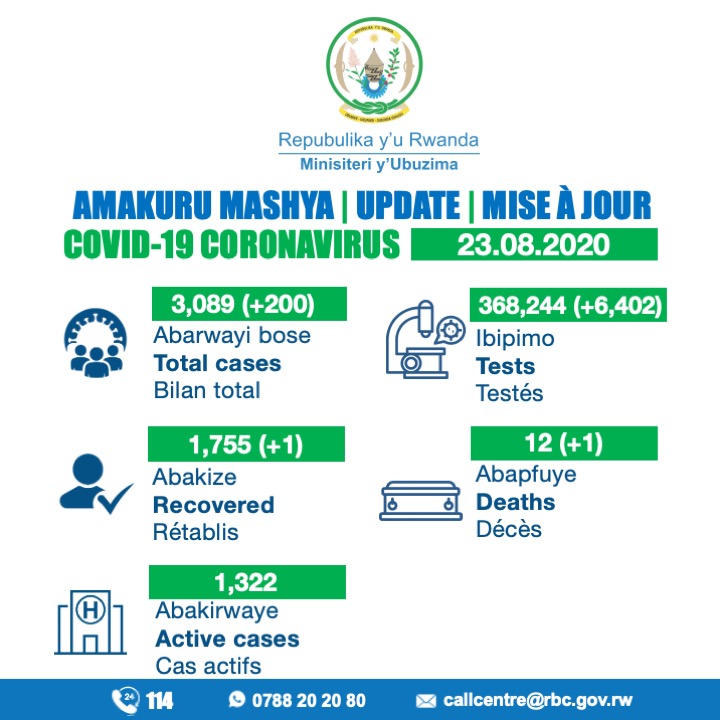
These new cases were from 6402 test samples taken in the past 24 hours since the last updated.
The Ministry statement mentioned that among the new cases, 164 were found in Kigali from mass testing in Kigali market, while Rusizi recorded 29 new cases from testing in high risk groups. Meanwhile, Rubavu had 5 new cases and Huye recorded 2.
The statement also mentions that the day saw only one recovery bringing the number of recoveries to 1755.
Since the first case was recorded in Rwanda, 368244 sample tests have been taken; the country has recorded so far 3089 confirmed cases of COVID-19, of which 1322 are still active cases.
Coronavirus symptoms include coughing, flu, and difficulty in breathing. The virus is said to be transmitted through the mucous membranes of the respiratory tract.
Rwandans are required to continue to comply with government regulations, especially with frequent washing of hands and water and soap, wearing masks when leaving home or in public.
The suspects are Pastor Munyankindi Landouard who was arrested on August 16, 2020, Deacon Mugabarigira Narcisse arrested on August 18, and Nzabonimpa Crysostome arrested on August 19, 2020, all detained at Nyamabuye RIB Station.
RIB spokesperson, Dr. Thierry Murangira confirmed the arrest.
“They face prosecution for hiding evidence and and information about the Genocide. The arrests are related to the bodies of the victims of the Genocide against the Tutsi found during the construction of a water reservoir at the ADEPR / Gahogo church.”
“Before they built the church they found the bodies, removed and hid them. The bodies were however recently found as technicians were repairing the tank.”
The list includes key women from 34 African countries, working in a variety of fields including diplomacy, change activists, the private sector, business leaders, and those in the entertainment industry.
The profiling has Ben developed by Avance Media, one of the most influential on the continent in terms of corporate advocacy.
Of the 100 women in the country, Ghana has nine, South Africa has 11 and Nigeria has 20.
These include the names of 75 new women who were not on the list published in recent years where some of the top names include Halima Dangote who is in charge of Dangote Group, a company of the richest African, Aliko Dangote.
There is also one Ugandan woman, Stella Nyanzi; Namibia’s Deputy Minister of Information and Communication, Emma Theofelus who has resigned at the age of 24.
One of the focus in selection of these women is their abilities and productivity in management, their personal achievements, their efforts in sharing knowledge, among others.
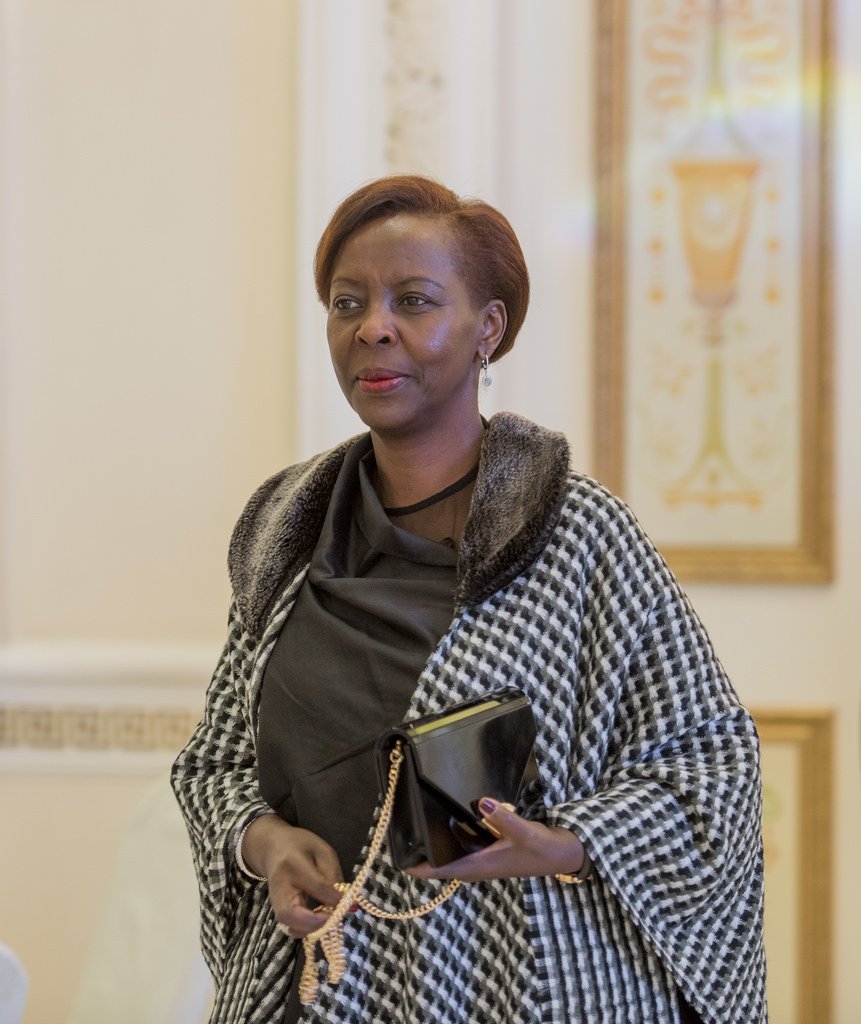
The three Rwandans, Dr. Agnes Binagwaho, Dr. Agnes Kalibata, and Louise Mushikiwabo, all served in the Government of Rwanda in various positions.
Mushikiwabo is currently the Secretary-General of the Organisation Internationale de la Francophonie (OIF). She previously served as the Minister of Foreign Affairs and Cooperation of Rwanda.
She took over the leadership of the OIF in January 2019 after being elected in October 2018 with the support of member states of the African Union.
Her outstanding work has led to the awarding of the Outstanding Humanitarian Award in 2014 by the American University’s School of International Studies.
In 2014, Radio France Internationale (RFI) ranked her among the top women in Africa.
In addition to political work, Mushikiwabo is also a writer. In 2006 she published a 384-page book, Rwanda means The Universe, in collaboration with journalist Jack Kramer. It contains testimonies of the history of Rwanda, the preparation for the Genocide against the Tutsi, and its implementation.
Professor Agnes Binagwaho, MD, M(Ped), PHD is a pediatrician who served the Rwandan Health Sector (2001-2016) in high-level government positions, first as the Executive Secretary of Rwanda’s National AIDS Control Commission, then as Permanent Secretary of the Ministry of Health, and 5 years as Minister of Health.
She co-founded the University of Global Health Equity (UGHE), an initiative of Partners In Health, which focuses on changing how health care is delivered around the world by training global health professionals who strive to deliver more equitable, quality health services for all.
Professor Binagwaho currently resides in Rwanda and is the Vice -Chancellor of the University of Global Health Equity. She is specialized in emergency pediatrics, neonatology, and the treatment of HIV/AIDS. She completed her MD at the Universite Libre de Bruxelles and her MA in Pediatrics at the Universite de Bretagne Occidentale. She was also awarded an Honorary Doctor of Science from Dartmouth College and earned a Doctor of Philosophy from the University of Rwanda College of Medicine.
Professor Binagwaho serves as a Senior Advisor to the Director General of the World Health Organization, and as a member of multiple Advisory Board and Board of Directors including the Rockefeller Foundation Board. She is a member of a number of international working groups and task forces in global health for the United Nations and independent organizations and also sits on the Editorial Board of several scientific journals and serves on multiple scientific commissions.
She is currently a senior lecturer in the Department of Global Health and Social Medicine at Harvard Medical School, a Professor of Pediatrics at UGHE, as well as an Adjunct Clinical Professor of Pediatrics at Dartmouth’s Geisel School of Medicine.
Professor Binagwaho’s academic engagements include research in implementation sciences, research on human rights to health, health services delivery systems strengthening, HIV/AIDS, and pediatric care. She has published over 190 peer-reviewed articles.
Dr. Agnes Kalibata is the President of the Alliance for a Green Revolution in Africa (AGRA). She is one of the former ministers of model agriculture in sub-Saharan Africa. From 2008 to 2014 when she was Minister of Agriculture and Animal Resources (MINAGRI), poverty was reduced by 50% mainly due to good agricultural policies and uplifing of small farmers.
She holds a PhD in Entomology from the University of Massachusetts.
She has worked for about a decade at the Agricultural Research Institute at the Kawanda Agricultural Research Institute, which works with Makerere University and Massachusetts.
In 2018, she was awarded a Distinguished Degree from the University of Liège in Belgium for her outstanding management practices.
In 2012 she was awarded the Yara Prize which has now become the Africa Food Prize given to a person or institution that is making a difference in the development of African agriculture.
Earlier last year, the American Academy of Sciences (NAS) awarded her a medal for her contribution to community development through modern agriculture on the African continent.
UN Secretary-General António Guterres also recently made her special envoy to the 2021 summit to study the journey to food security and agricultural development.
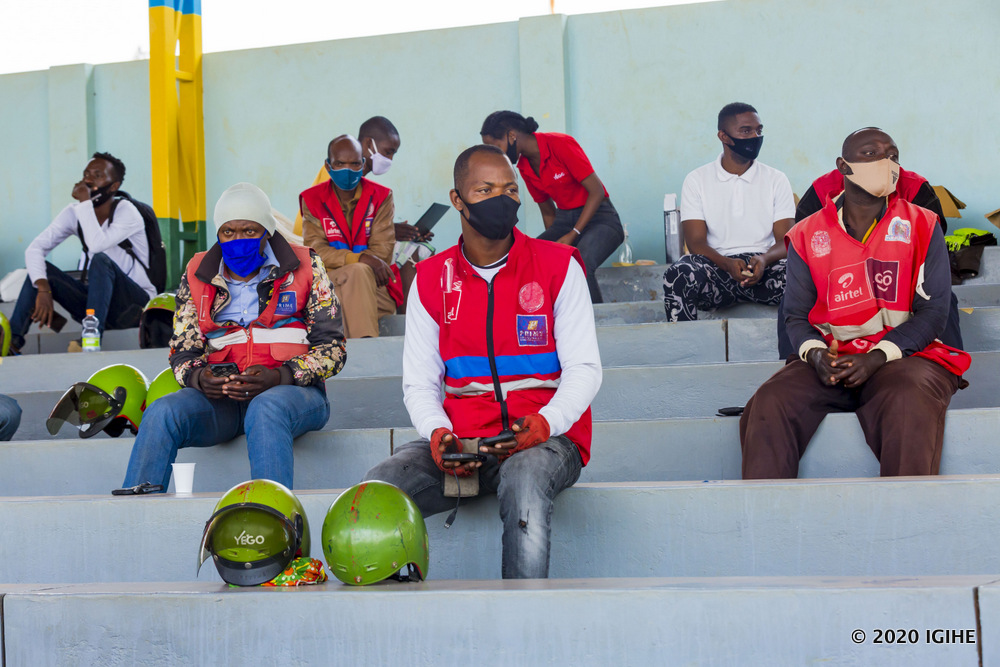
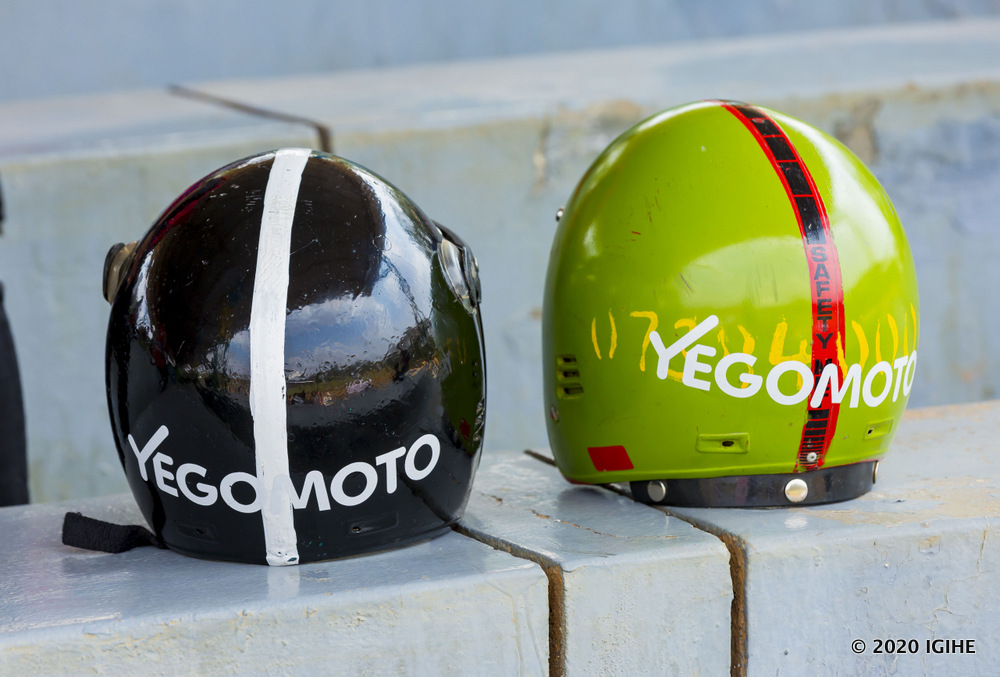
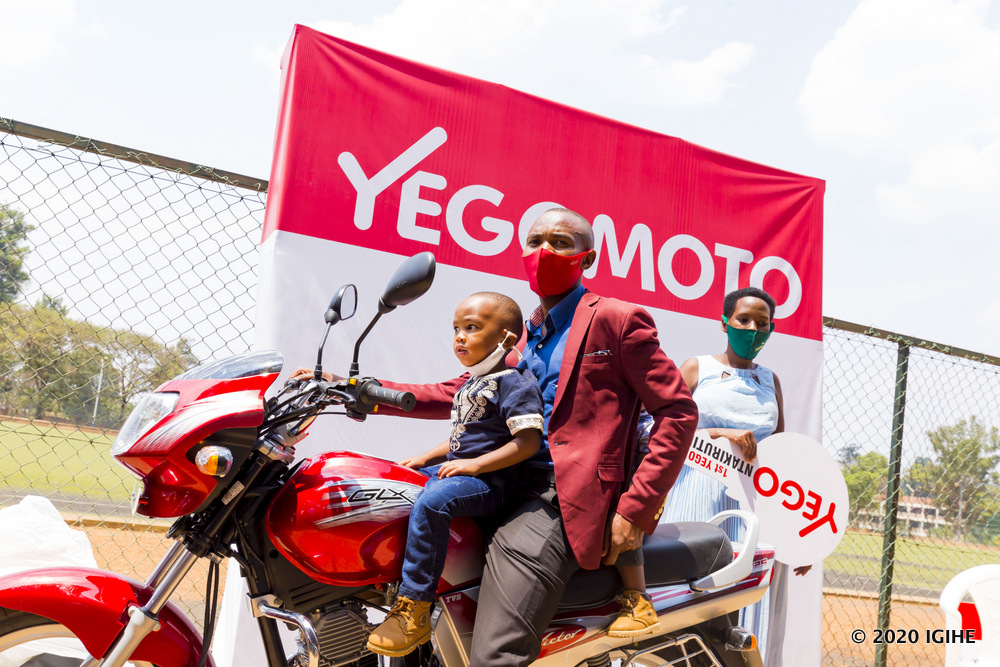
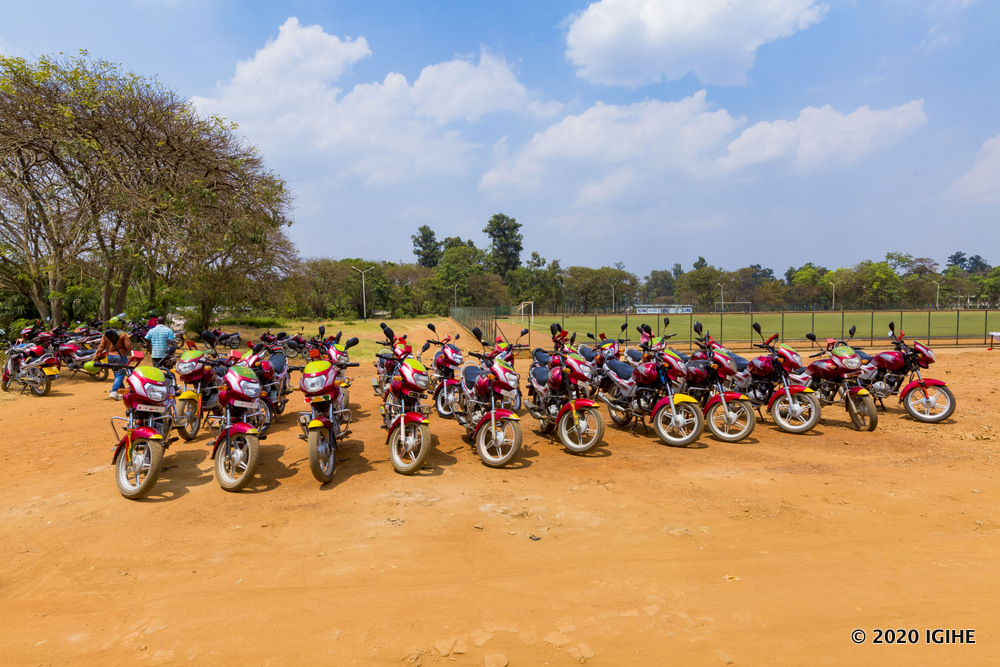
Yego Innovision was established in Rwanda in 2016. Yegomoto, a completely new concept of installing Meters on Taxi-Motos was introduced in 2017. In January 2018, the company introduced ‘Ride-Tap-Pay’ a seamless and cashless way to pay for Taxi-Moto Rides. In September 2018 Yegocabs was launched and in March 2020 Yego Delivery came to the rescue of those stuck at home, who needed essential items delivered.
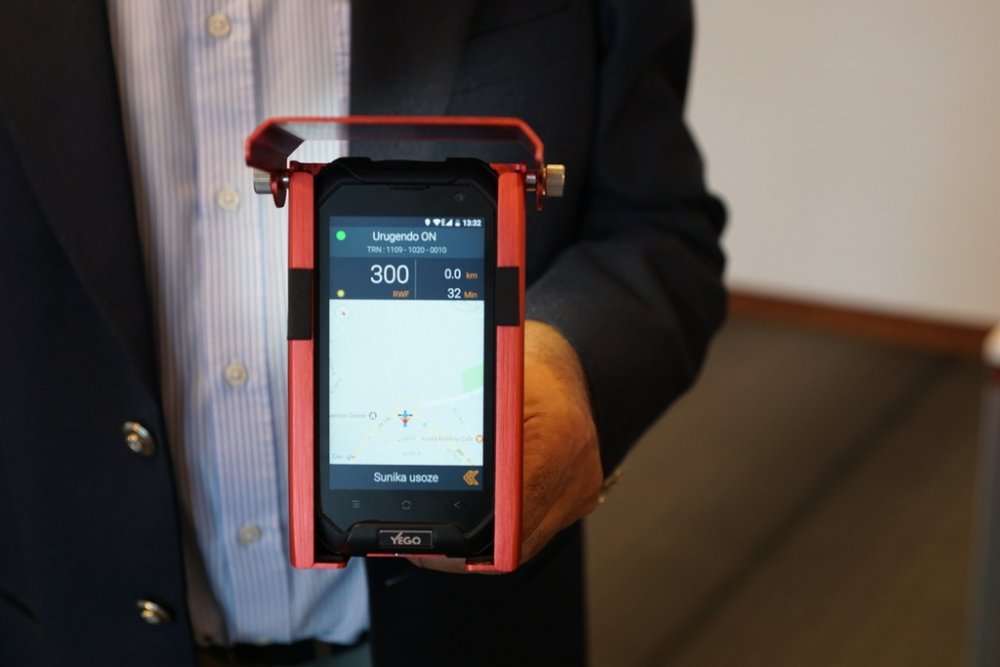
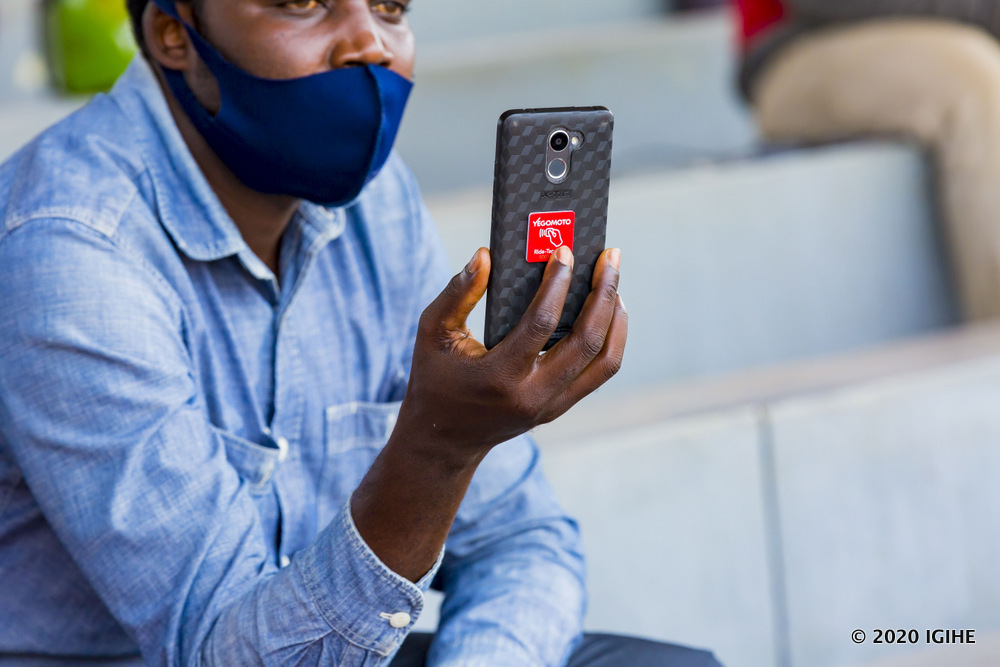
Yego has built an unrivalled platform that uses ‘Intelligent Connected Fare Meters’ also referred to as ‘Smart Meters’. The Meters calculate the fare based on the distance travelled, on completing a Trip a passenger can pay by tapping an NFC card on the Meter, using Mobile Money via USSD, or effortlessly by using the App.
The Cash payment option is still available, put is planned to be phased out to protect against Covid-19 transmissions. The details of each journey on a Moto are Cab are recorded, including the pick-up and drop points, fare paid, the time taken, and the mode of payment made. These details are then electronically sent to the customer via SMS and email.
Apart from the innovative transport solutions, the company also contributes to changing the lives of its Driver Partners.
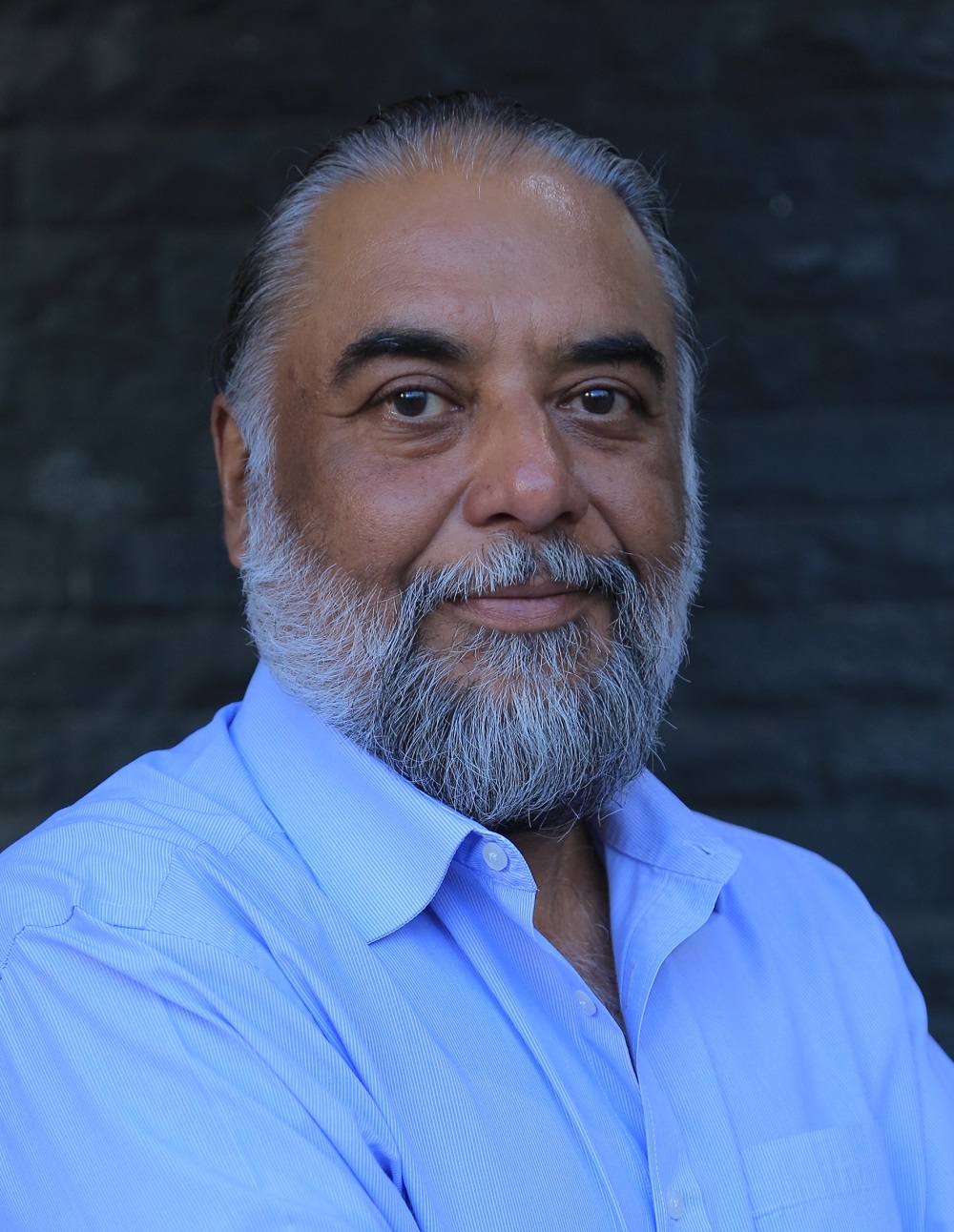
Yego Innovision’s CEO, Karanvir Singh, says the idea of installing Meters in Taxi-Motos came after realizing that there were many challenges that needed to be addressed in this area of transportation.
“When I attended Transform Africa in 2015, I had the opportunity to meet with several Senior Government officials who told me they were looking for a technological solution that would address the challenges of Safety, Security, Accountability, Tax Compliance, etc. in the work of transporting people on motorcycles. We conducted market research for over 9 months and this is when we came up with the idea of installing a Smart Meter and GPS tracker on each Taxi-Moto.”
By installing the Meter and GPS, Yego was able to address the issues of arguing over the fare, cash payments and waiting for change, motorcycle theft and unlicensed Moto Drivers that were also involved in crime.
In addition to the Meters and Metering Platform, Yego also created a national digital database with the National ID, recent photographs, verified phone numbers of both Owners and Drivers, RURA authorization, Control Technique, Yellow Book and Insurance etc. all the information was made available free of charge to the Stakeholders for monitoring and compliance.
Besides reforming the way Taxi-Motos operate, Yego Innovision has been instrumental in improving the lives of its Driver Partners. Yego has entered into a Partnership with the Bank of Kigali, where it will provide data from its big data platform to help the Bank of Kigali provide loans to Taxicab and Taxi-Moto Drivers. Together, they hope to bring in 600 new cars and refresh the Taxi Fleet in Kigali.
Karanvir says that in Yego Innovision Ltd the well-being of its partners is improving.
“What we want is for our Driver Partners to have a better future, so we provide Credit Scores that helps them finance to be able to start their own business, or to buy a new car,” he said.
“Outside we may be looking like other tech companies, only we as a company have built different goals. Everything we do is meant to make a difference in the lives of others, not just drivers, but also society in general.”
Through this partnership between the Bank of Kigali, last month gave loans to three taxi drivers to buy brand new cars zero kilometer cars.
The pledge continues
So far Yego Innovision has installed Meters in 1,140 Taxi Cabs and in 4,460 Taxi-Motos in Kigali and is continuing with its roll-out. After Kigali, Yego plans to install Meters in the 45,000 Taxi Motos up country.
Singh says Government’s order compelling all motorcycles to use meters will help digitize and organize the Moto-Taxi Industry.
“Yego Innovision is ready to expand its operations beyond Rwanda and has already set up a company in Kenya just waiting for Covid-19 to reduce its severity to start operations,” he said.
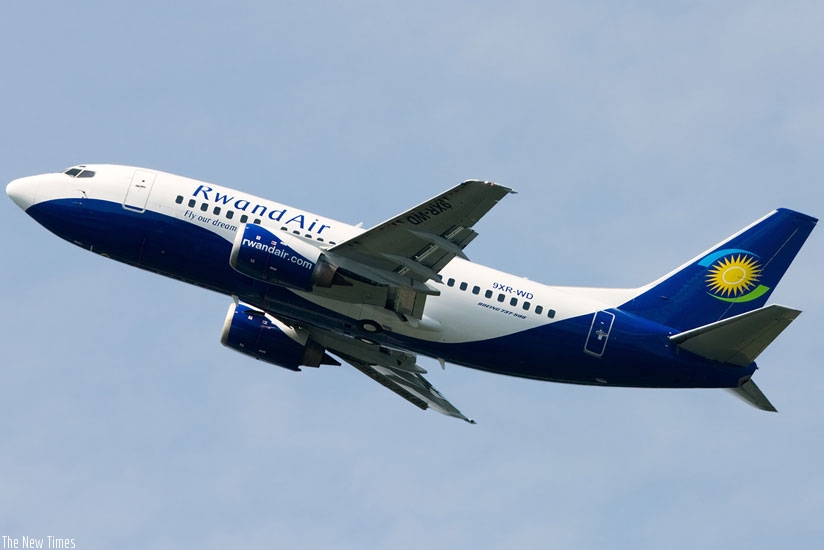
The airline made the statement on their tweeter account saying the decision was taken in order to curb the spread of the new coronavirus.
“Rwandair wishes to inform the general public that delivery of physical documents (letters, invoices, and other correspondence) is temporarily suspended effective 20 August until further notice in order to curb the spread of COVID-19.”
RwandAir explained that all sorts of correspondence will be done via email.
On August 1, 2020, RwandAir resumed flights after 134 days of suspension due to the Coronavirus Pandemic. RwandAir’s first flight destination was to Dubai.
Chief Inspector of Police (CIP) Hamdun Twizeyimana, the Police spokesperson of the Eastern region, said information about fraud was reported by a resident.
“Sacks of minerals were covered with cabbages in an attempt to distract security,” said CIP Twizeyimana.
He added: “Fortunate enough, residents who saw Twerekane loading the minerals had already called the Police to report the fraud as well as details on the suspect, the vehicle and the route he was using. Police trailed and intercepted him, and seized the minerals.”
It is alleged that Twerekane had been hired by another suspected illegal mineral dealer to smuggle the minerals from Matimba to Kicukiro District in City of Kigali.
CIP Twizeyimana acknowledged the role of the public in fighting fraud and lawlessness in general.
Article 54 of the law on mining and quarry operations states that; “any person, who undertakes mineral or quarry exploration, exploitation, processing or trading without a license commits an offence.”
Upon conviction, the offender is liable to imprisonment for a term of between two and six months and a fine of not less than Rwf1 million and not more than Rwf5 million or only one of these penalties.
The court also orders confiscation of any seized minerals or quarry in storage, trading or processing without a license.
A statement from the Ministry on August 20, 2020 did not reveal details on the identity of the deceased patient.
“Condolences to the family of 42-year old Rwandan who died,” reads the statement.
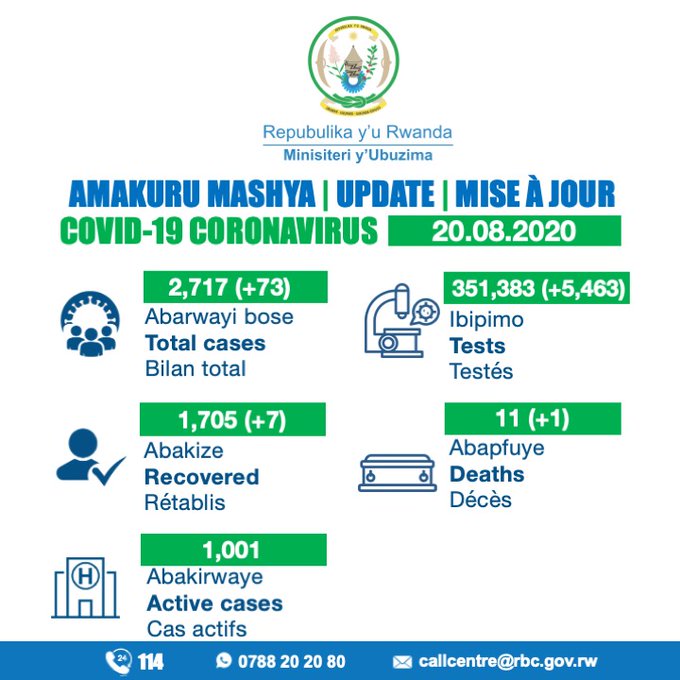
On the same day, the country recorded 73 new cases including 48 in Kigali and 14 in Rusizi specifically in high-risk groups and the recently closed markets. Rubavu closed the list with 11 new cases.
This brought the total confirmed cases to 2717 and 1,001 active cases. Recoveries have increased to 1,705 including 7 patients that were discharged in the last 24 hours.
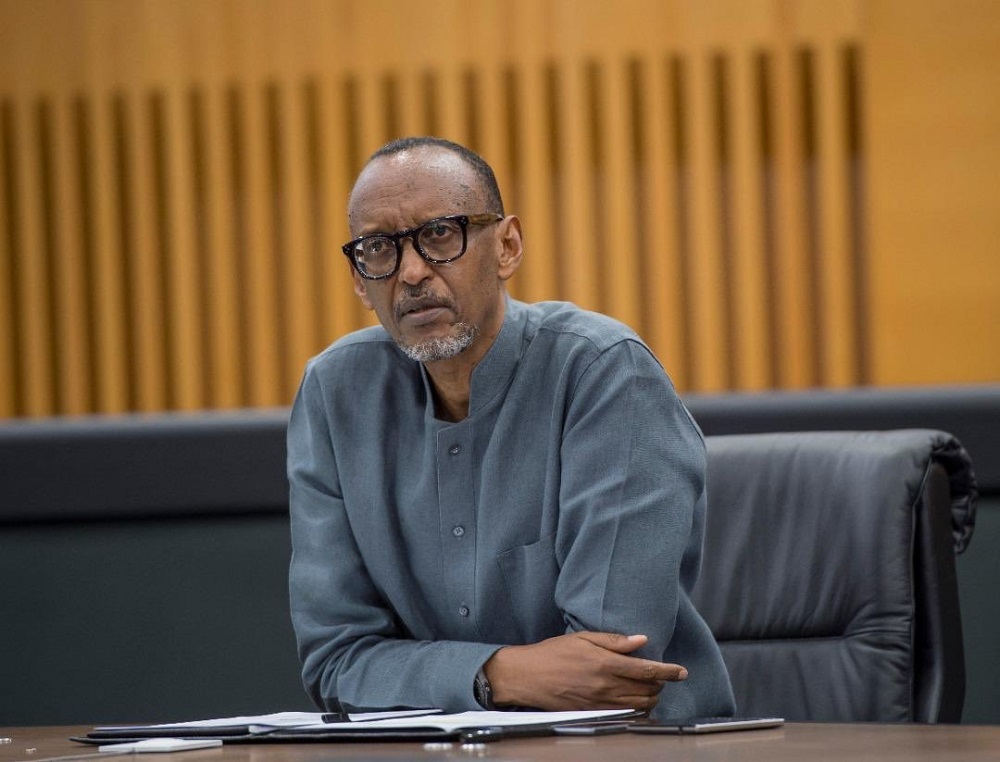
Speaking at a virtual meeting of the African Union Bureau and Chairs of Regional Economic Communities chaired by AU chairperson, President Cyril Ramaphosa of South Africa, President Kagame said that this will ensure that Africa does not miss out on the vaccine or get insufficient quantities.
“I would like to request the Chairperson to consider appointing one of the Heads of State to work closely with Strive (Masiyiwa) who is already on the task to focus on ensuring that Africa obtains the vaccine once it is available,” the President said.
Masiyiwa, the Zimbabwean Business Mogul is working closely with the AU to acquire medical supplies and preventive gear for the continent.
It came to be, at the outbreak of the pandemic, that countries making individual orders of medical supplies were having a hard time accessing the supplies due to the magnitude of orders globally as well as some restrictions by some economic regions globally. In response to the challenge, the African Union teamed up and appointed Masiyiwa to lead in the coordination of procurement efforts.
If the same model of consolidating resources and orders is implemented in vaccine procurement, experts believe that it could improve chances of vaccine access across the continent.
Kagame expressed the need to advance the domestic health financing agenda that was propelled by the AU.
“This is the moment to look closely at our health budgets and see where we can improve both the quantity and quality of spending,” he said.
“Ultimately, the best defense against the COVID pandemic, as well as future health emergencies, is a strong, resilient, and sustainable health system,” said the Head of the State.
On August 17th, the Coalition of Caribbean Leaders for Peace (CCLP) consisting of the former and current leaders in the Caribbean including the former president of the United Nations Human Rights Council (UNHRC) sent a joint letter to South Korean Foreign Minister Kang Kyung-wha and the United Nations High Commissioner for Human Rights Michelle Bachelet.
In the letter, they said the governments, even in response to the urgency of the pandemic, must take responsibility for the protection of human rights regardless of religion, race, ethnicity, or socioeconomic status and expressed concern about ongoing oppression against Shincheonji Church, a South Korea-based Christian denomination that suffered from the unexpected mass infection at the beginning of this year.
Ahead of this joint letter, 11 NGOs including the European Coordination of Associations and Individuals for Freedom of Conscience (CAP-LC) submitted the “annual report for the UN High Commissioner for Human Rights” regarding the inappropriately targeted discrimination against Shincheonji Church to the UN Secretary-General.
The annual report was titled “Scapegoating Members of Shincheonji for COVID-19 in the Republic of Korea”.
The letter briefly pointed out the facts surrounding Shincheonji and Covid-19 as follows;
〮 Covid-19 was introduced to South Korea from China.
〮 According to the Korea Centers for Disease Control and Prevention, the virus was already prevalent in the city of Daegu before the confirmation of (Shincheonji) the Patient 31 (in Daegu).
〮 The government’s refusal to close the border to China contributed heavily to the outbreak.
〮 In the face of growing public discontent that the government did not impose a travel restriction on China, Justice Minister Choo Mi-ae ordered the prosecution to investigate Shincheonji.
〮 Vice Minister of Health confirmed that the list of private identification information gathered was not much different than that collected and checked by the government.
〮 Prosecutors have arrested the officials of Shincheonji on the grounds that the list of congregation members submitted by Shincheonji was not complete.
By referring to the report “Factsheet on the global response to the coronavirus (COVID-19) and the impact on religious practice and religious freedom” by the United States Commission on International Religious Freedom (USCIRF), the joint letter reiterated that South Korea provides a vivid example of how public health emergencies can increase the risk to marginalized religious groups.
They pointed out that the South Korean government’s silence about the current situation would set a dangerous global precedent for allowing similar persecution, violence, and harassment against other religious minorities, and strongly urged the Korean government to “step forward to an end to this discrimination.”
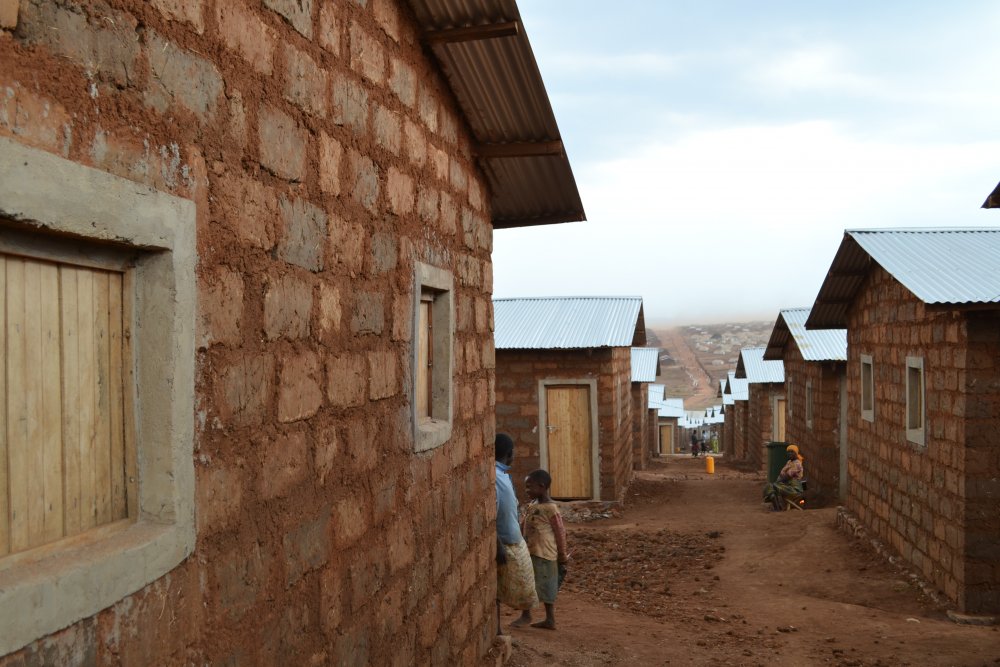
The return comes after Rwanda has made it clear that it was not against the repatriation of Burundian refugees who have been in Rwanda since 2015. It was agreed by the three parties that the UNHCR will facilitate the process.
According to Elise Villechalane, the UNHCR spokesperson for Rwanda, the first batch will depart in just over a week. A hotline was set up for refugees to voluntarily call and express the desire to return home and they are added on the list.
“We have put in place a hotline that Refugee can call and express their wish to return and they can also approach directly UNHCR staff who are everyday in the field,”
“Only those who voluntarily and individually express their wish to return will be considered for voluntary repatriation,” Villechalane said.
“Once we have the list of people who would like to return, then we will organize together with UNHCR, Burundi and the Rwandan government and their transport and once in Burundi, they will be welcomed,” Villechalane added.
When in Burundi, the refugees will go through the transit centre for registration and get also their integration package, which will include a lumpsum for their transportation to their area of return while UNHCR will continue monitoring other resettlement processes.
Following the meeting in Kigali, the Burundian officials said the government needed to prepare locations where the refugees will be received.
Rwanda is currently the third country with the largest number of Burundian refugees, with about 72,000; it comes right after Tanzania and DR Congo. Many of these fled the 2015 political turmoil that gripped the country after the late President Nkurunziza decided to extend his mandate.
UNHCR counts more than 430,000 Burundian refugees in: Tanzania (164,873), DR Congo (103,690), Rwanda (72,007), Uganda (48,275), Kenya (13,800), Mozambique (7,800), Malawi (8,300), South Africa (9,200) and Zambia (6,000) by the end of June 2020.