The bank got the recognition during the 5th Service Excellence Awards 2020 that took place on December 4, at Park Inn by Radisson Kigali.
The excellence awards were organized by East African Youth Development Agency and Kalisimbi Events.
During the ceremony, Access Bank Rwanda emerged among other institutions awarded in various categories.
Olivier Gakuba, the Bank’s Head of Strategic Business Units said the award reflects the bank’s trust among customers.
“Being awarded best bank of the year reflects customers’ trust to the bank and gives us courage to constantly improve service delivery,” he said.
Gakuba attributed to the award to skilled and dedicated employees taking care of all customers.
The award comes few days after the bank introduced “Ikaze Agency Banking” to decentralize its services.
As the agency banking was launched, Gakuba explained that it will help the bank to meet customers’ demands with improved services without necessity for physical presence at the bank’s branches or ATM machines.
It will not only improve services but also provides job opportunities to many Rwandans.
Access Bank is also committed to leverage technology to facilitate customers’ transactions as they withdraw, deposit and transfer money.
Founded by deeply experienced dispute resolution pioneers in the U.S. and abroad, the Weinstein International Foundation is a non-profit organization dedicated to making mediation available and accessible worldwide in the face of increasing global challenges and conflict.
Headquartered in San Francisco, the Weinstein International Foundation works through a global network of Alternative dispute resolution (ADR) trained dispute resolution professionals from around the world with the cultural understanding and local knowledge necessary to promote the resolution of conflict through mediation and other dispute resolution practices in their own countries and beyond.
In a statement released yesterday, the foundation expressed optimism that Prof Rugege’s experience will be leveraged to reach its goals in Africa.
“We are thrilled that Sam Rugege has joined our board. The honorable former chief Justice Sam Rugege is respected worldwide in the field of mediation, conflict resolution and reconciliation and will help lead our Foundation’s efforts to bring mediation to many regions in Africa with the same dedication and persistence he has demonstrated in Rwanda,” said Judge Danny Weinstein, the Founder of Weinstein International Foundation.
Professor Sam Rugege expressed delight for the honor and assured to play his role especially in Africa where conflict continues to hamper development.
“I am greatly honored and humbled to be a member of the Weinstein International Foundation, joining a highly distinguished group of ADR pioneers. The Foundation is a champion of peaceful resolution of conflicts and other disputes, leading the effort of promoting greater access to justice through mediation and supporting education and training in mediation around the world. Rwanda has benefitted from its programs and I look forward to playing my part in this noble mission, especially in Africa where conflict continues to cause avoidable suffering and hamper development,” he said.
The statement further reads that Rugege is recognized for the achievements of Justice e in expanding the use of mediation in Rwanda.
“The Foundation looks forward to continuing to make mediation more accessible and available in Rwanda through the ongoing contributions of Justice Rugege and Senior Fellows, Harrison Mutabazi, Anastase Nabahire and Bernadette Uwicyeza,” reads part of the statement.
This expansion has been a critical component of the country’s drive to consolidate peace, stability and amicable resolution of disputes, as well as establish itself as a key economic hub in Africa in the aftermath of the 1994 Genocide against the Tutsi.
As Chief Justice in Rwanda, Rugege was responsible for developing judicial policy and oversaw judicial reforms encompassing the use of court technologies, continuing legal education and specialization training for judges. During his tenure, access to justice was enhanced through constitutional challenges, public interest litigation and the promotion of court-annexed mediation. Now a certified and registered mediator, Rugege was recently appointed to serve as chairperson of the newly created Court Mediation Advisory Committee.
Justice Rugege’s leadership in the Rwandan judiciary helped expand use of mediation in the country through the implementation of a court-annexed mediation project. Today, the Rwandan Judiciary remains committed to enhancing ADR and mediation and regularly refers cases to court-accredited mediators for mediation, as well as promoting mediation as a dispute resolution tool through public awareness campaigns.
In Rwanda, the Ministry of Justice has initiated a national ADR policy project, with the goal of developing an informed ADR comprehensive plan and a coordinated approach to its implementation at both the local and national levels. As part of this plan, a national mediation policy is now pending approval by the government. If passed, this policy will make mediation mandatory at the pre-filing stage of civil disputes and substantially raise the awareness and use of mediation.
Rugege was educated at Makerere University, Yale Law School and the University of Oxford, where he obtained an LLB, LLM and D. Phil, respectively. He began his career as a lecturer in law at Makerere University, before being forced to flee the terror of the Idi Amin regime in 1976. Rugege then taught at the Universities of Lesotho and Swaziland. Before being elevated to the bench, he was a professor of law at the University of the Western Cape (UWC) in South Africa, where he taught constitutional law and post-Apartheid land reform.
Rugege was elected an Honorary Fellow of St. Peter’s College, Oxford “in recognition of outstanding achievements in the field of law.” He has also been honored by the East African Law Society “in recognition of distinguished service to the legal profession,” by the Rwanda Bar Association for “outstanding contribution to the development of the legal profession and the justice sector in Rwanda” and by the Kigali Arbitration Centre for “extraordinary contribution and dedication to the promotion of ADR in Rwanda.”
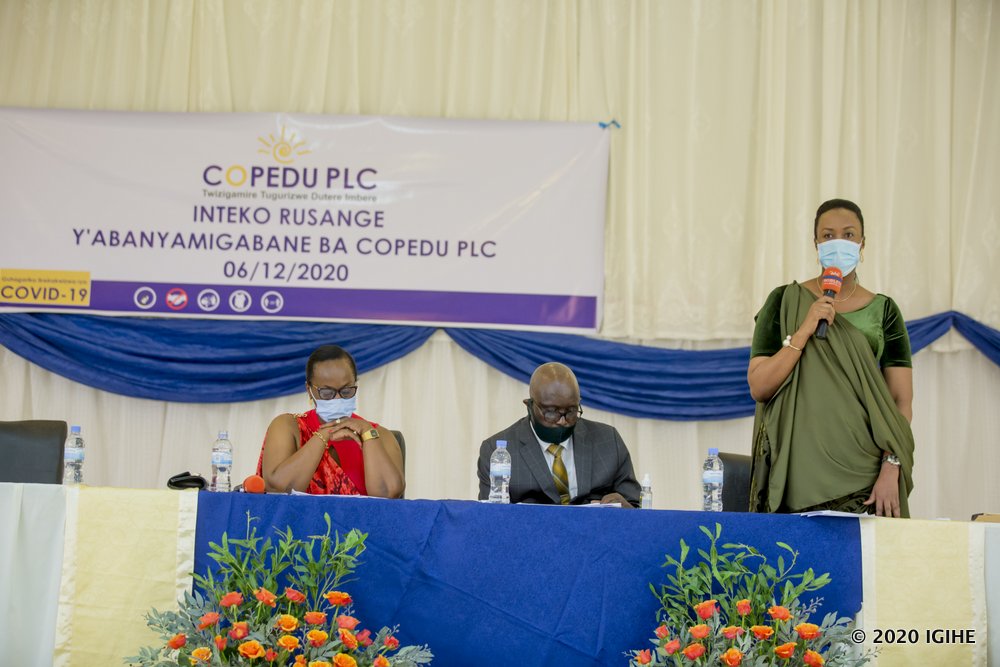
The figures were revealed yesterday in shareholder’s general meeting which indicated net capital growth by 22% bringing it to Rwf4.4 billion.
The increase in profits was largely attributed to different loans especially injected into women’s projects.
Loans offered last year increased by 18% reaching Rwf 15 billion.
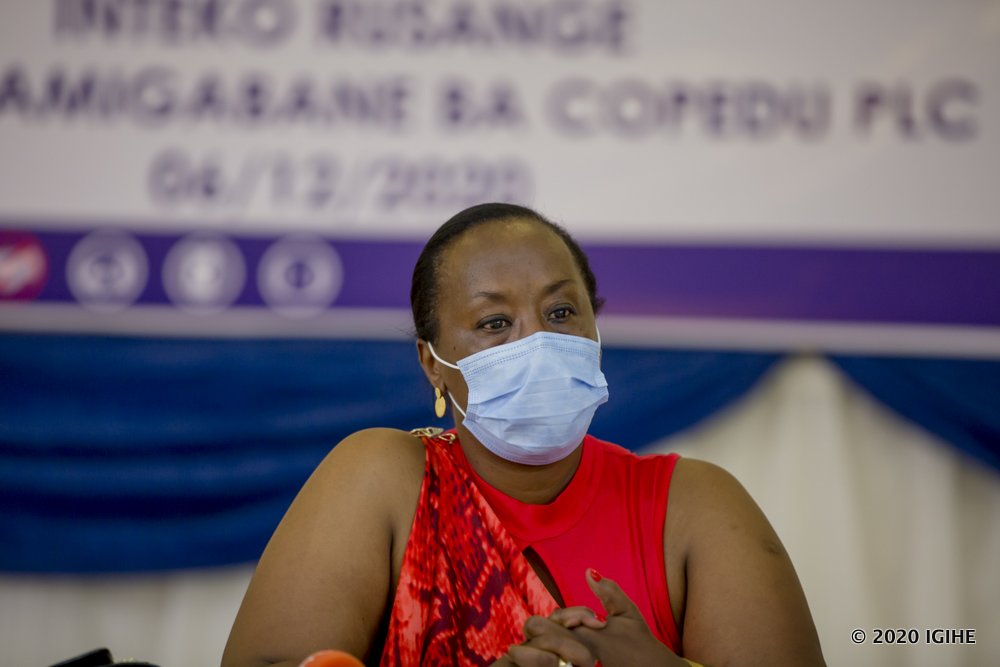
The chairperson of COPEDU Plc Board Committee, Gashumba Liliane expressed delight over the growth evidencing the company’s unrelenting commitment to support women-led businesses.
She stressed that the bank eyes to take the lead in promoting women in Africa.
“We have strong ambitions to make COPEDU Plc, a leading and strong bank promoting women in Africa to the extent that others will learn from our experience,” said Gashumba.
Mukarugambwa Ntwali Anne Marie hailed the contribution of COPEDU Plc to the development of women in Rwanda.
“COPEDU Plc has enabled women’s progress. They have been able to realize their ambitions, contributed to the growth of their families and the country. This is what makes the progress of COPEDU Plc possible,” she noted.
Created in 1997, COPEDU PLC has gradually grown and introduced new payments or withdraws methods using Debit Card and depositing or withdrawing using ‘Push and Pull’ System. The institutions works with Business Development Fund (BDF) to provide loans to targeted customers.
{President Paul Kagame has emphasized the need to embrace the use of technology in daily lives which is increasingly becoming a prerequisite upon which the good jobs of the future will rely on.}
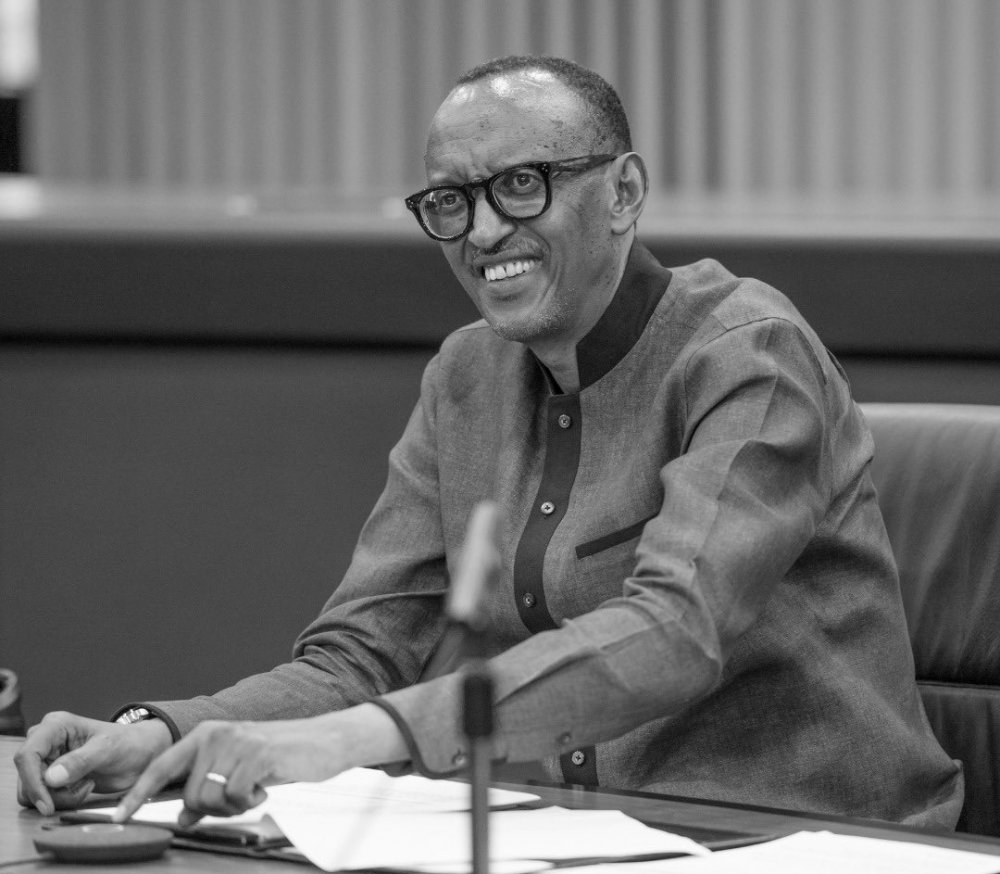
Kagame was yesterday speaking at the 9th Smart Africa Board Meeting during which he joined other Heads of State and Government, their representatives and other delegates.
President Kagame said that seven more countries have joined Smart Africa since the last Board Meeting, in May 2019. This brought membership to 31 countries. The new members are; Algeria, Cap Verde, the Democratic Republic of Congo, Mauritania, Morocco, Sierra Leone and Zimbabwe. The organization also got new membership from the private sector, including Tahaluf Al Emarat, BICS, and Softbank.
To this end, President Kagame emphasized the importance of the partnership with the private sector for smart Africa and stressed the need for increased investments in technology which is at the helm of future progress.
“We place a high value on what you as business leaders bring to these efforts. We will continue working together with you very closely, to make the necessary investments and also ensure a common standing of how to proceed. This is especially evident in the process of recovering from Covid. The pandemic has shown that connectivity is not a luxury, it is a necessity,” he said.
“Increasingly, the provision of education and health services depends on digital infrastructure. The good jobs of the future will also rely on technology skills, and a digital identity. The mission of Smart Africa really seats the center of everything we are trying to do, as a continent and with our partners around the world,” added Kagame.
The meeting also assessed ways of reducing internet cost by 2025, the master plan for developed rural areas, seeking how to start Smart Africa embassies and establishment of Smart Africa Academy among others.
Smart Africa is a bold and innovative commitment from African Heads of State and Government to accelerate sustainable socio- economic development on the continent, ushering Africa into a knowledge economy through affordable access to Broadband and usage of Information and Communications Technologies.
Other Partners of the Smart Africa Alliance include the African Union, the ITU, World Bank, the African Development Bank, the United Nations Economic Commission for Africa, the Global System for Mobile Communication (GSMA) and the Internet Corporation for Assigned Names and Numbers (ICANN).
Figures from the World Health organization (WHO) show that Prostate Cancer takes lives of 921 out of 1304 women developing the disease every year in Rwanda.
According to Dr Osvaldo Rodriguez, a Gynecologist at Baho International Hospital who has been at the facility for six years, women rarely go for cancer checkups yet some live with it unknowingly at early stage.
He says, Baho International Hospital applies modern cancer diagnosing using scanning cameras ideally spotting the affected part of the body.
Dr Rodriguez explains that available equipment are particularly used to screen cervical cancer and breast cancer and uses other reliable methods to diagnose other sorts of cancer.
He also highlights major causes of breast and prostate cancer and advises on preventive measures.
“Engaging in sexual relations before the age of 22, doing sex with more than one man or having a husband engaging in sexual relations with other women, poor hygiene and weak immune system are among other causes of cervical cancer,” says Rodriguez.
Contrary to the cervical cancer, Rodriguez reveals that breast cancer is hereditary.
“You have cancer risks if there is a relative who caught or succumbed to cancer. This happens especially in the ages of 40,” he says.
Breast cancer is an uncontrolled growth of breast cells. Cancer occurs as a result of mutations, or abnormal changes, in the genes responsible for regulating the growth of cells and keeping them healthy. It attacks both sexes even though men have lower risks of developing breast cancer.
Dr Rodriguez advises women to pay special attention to all body changes that could be a way towards early detection and prevention.
As for prostate cancer, he says, people should rush for checkups to find out if no cancer is developing in their reproductive organs.
“A woman having engaged in sexual relations for the first time should go for prostate cancer screening not later than six months. Moreover, everyone is required to do cancer checkup at least every year to be treated early,” he advises.
“It is unfortunate that few people come for cancer screening yet we have all it takes to help them. The cancer is treated when detected early. They should develop the habit for regular checkups because prevention is better than cure,” added Rodriguez.
The gathering was contrary to the national directives meant to prevent further spread of the COVID-19.
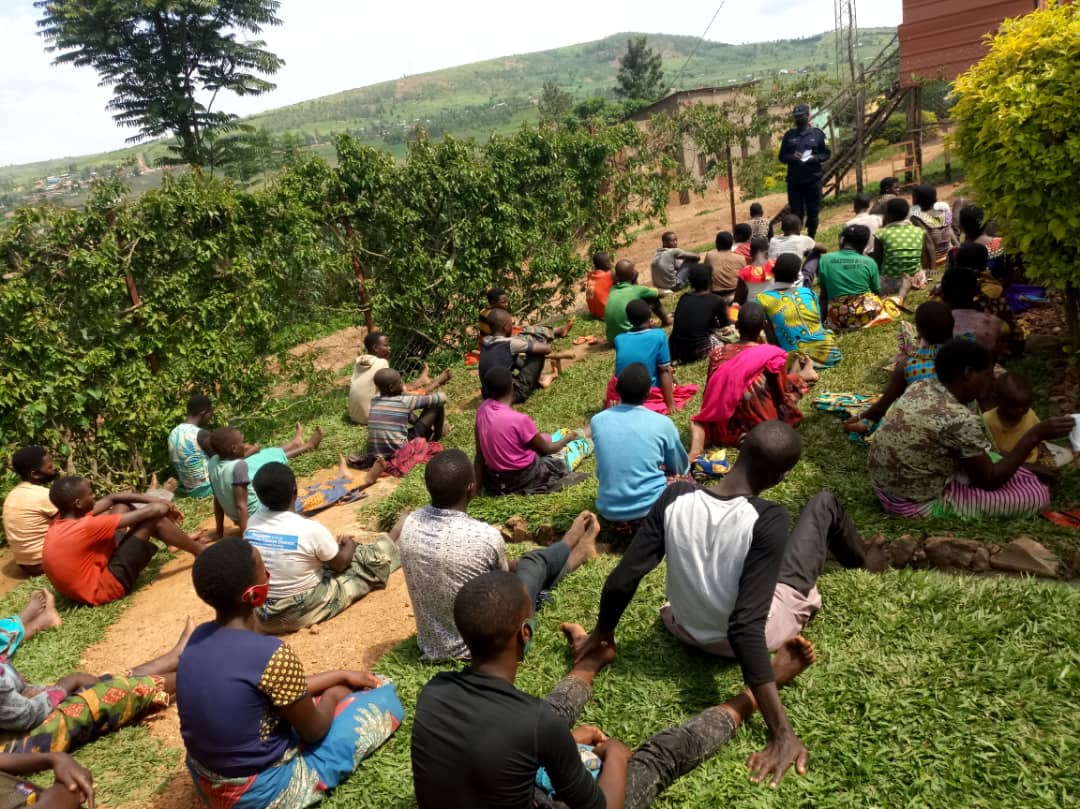
The violators were found gathered in the house of one Jean Pierre Musilikali located in Rwentanga Cell, praying.
Chief Inspector of Police (CIP) Hamdun Twizeyimana, the Police spokesperson for the Eastern Region, said the gathering, which contravened the government safety guidelines against the pandemic, was reported by area residents.
“This was a small residential house with 46 people congested in it. They came from different places with none of them wearing a face mask and it was about midnight,” said CIP Twizeyimana.
Residents called their community night patrol-Irondo-who in turned called the Police, he added.
“These are believers from different religious denominations; 43 of them came from the cells of Kanyonza and Rwentanga in Matimba Sector while three others were from Musheri Sector. Worse still, majority of them were aged below 21; only 13 people were above 21 years. Overall, 33 were women,” said the spokesperson.
In daily updates on COVID-19 by the Ministry of Health, on December 6, two people from Nyagatare were among the 45 identified positive cases.
The previous day on December 5, one person was also found infected in Nyagatare while another positive case in the district was reported on December 2.
Meanwhile, the host of the prohibited gathering, Musilikali, escaped arrest when the other violators were handed administrative fines after being enlightened on the threat of COVID-19 as well as adherence to safety and health guidelines.
CIP Twizeyimana warned against violating the directives, which can derail the national efforts against the pandemic.
The statement released last night shows that new cases have been found in Kigali : 50, Musanze:7, Rubavu : 3 , Ngororero:1 and Rusizi:1.
Rwanda confirmed the first COVID-19 patient on 14th March 2020. So far, 6191 cases have been found out of 646,813 sample tests of whom 5696 have recovered, 444 are active cases while 51 have succumbed to the virus.
Coronavirus symptoms include coughing, flu, and difficulty in breathing. The virus is said to be transmitted through the mucous membranes of the respiratory tract.
Rwandans are urged to adhere to COVID-19 health guidelines, washing hands frequently using soaps and safe water, wearing face masks and respecting social distancing.
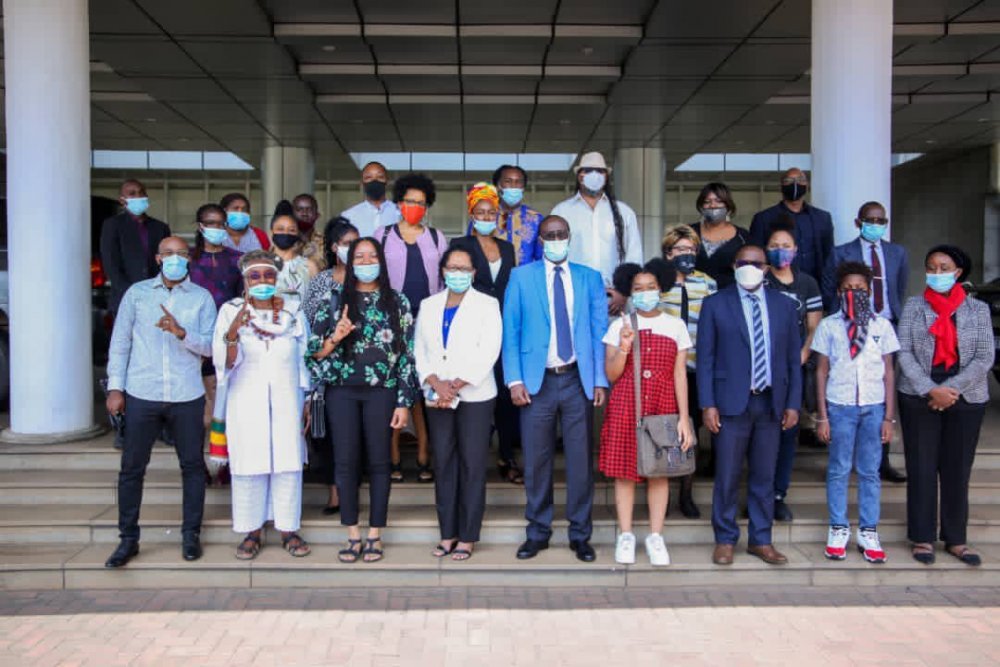
Rwanda is among other African countries where people are expressing willingness to stay. As of today, Rwanda’s Ministry of Foreign Affairs reports over 100 returnees who have visited the country and expressed willingness to stay.
In is under this background that the Minister of State in charge of the East African Community in the Ministry of Foreign Affairs and International Cooperation, Prof. Nshuti Manasseh has today received 16 returnees of African descent from the USA and other parts of the world who are working to settle and make Rwanda their home.
He assured Rwanda’s readiness to host them and took them through opportunities awaiting them as they settle in Rwanda.
The delegation comprises of experts in education, technology, arts, entrepreneurs from the United States of America, Canada, England and the Caribbean.
Majority of these brothers attribute the decision of abandoning former countries to racial discrimination against them.
Marsha Favis born in California of the United States left the country and is currently living in Rwanda along with her children.
“We didn’t get chance to properly identify ourselves, our origin and live with our homeland communities. There is abusive education to our children abroad. We are not taught that black people are capable. But rather taught that only white people are so. Contrary, we have rights to reach our aspirations here with the presence of role models like President Paul Kagame our children can learn from. The President here is a black person, and so the Minister. Everyone resembles my son,” she said.
“He is very tall yet this arouses problem is the USA. By settling here, he will not be a black man but just a man. I am here a woman not a black woman. Children grow with positive ambitions when they see people resembling them achieving great things,” added Marsha.
Marsha explained that Rwanda is the safe place to heal them of segregation wounds.
She was inspired by the country’s security, visionary leadership under the auspice of President Paul Kagame. She has appreciated and is currently under processes of obtaining nationality.
Marsha share similar ambitions with Imahkus Okofu, another returnee from US who has already started operations in Rwanda.
Nicknamed ‘Mama One Africa’, Okofu was born in New York, USA. She visited African countries including Tanzania, Ghana and Rwanda at different times.
“I never felt at ease during my stay in USA. I fled USA in 1990 over racial discrimination and failing to enjoy equal rights like other nationals,” she said.
“I was not willing to come to Africa before due to ill things spoken about Africa. I regretted by the time I visited Ghana to find different reality. I would have come before,” added Imahkus Okofu.
She explained that Africans would limit their desires to stay in USA if they knew the reality.
Imahkus Okofu has made a decision to spend most of her time in Rwanda, Ghana and Tanzania where she has activities.
As they met with Prof Nshuti, some of the returnees were with children.
Ella Jackson is the daughter of Ellen Jackson and Michel Jackson. The family has made final decision to settle in Rwanda.
“We have spent four months here in Rwanda. It is a better, neat place, well organized and has kind people. In fact, everything here is extremely amazing. I have got new friends and I am getting familiar with the environment gradually. I mostly like to visit Nyamirambo when we are shopping,” said Ella.
Prof Nshuti promised all the necessary support for returnees to get identification documents and meet their goals in Rwanda.
The suspects are segmented into two groups mainly the group comprising of 25 led by Rtd Major Mudathiru Habib (a former RDF soldier) facing charges including formation and being part of an irregular armed group or joining it, conspiracy against the established Government or the President of the Republic, maintaining relations with a foreign government with the intent to wage a war and formation of or joining a criminal group.
They were captured last year in terrorism activities in the Democratic Republic of Congo (DR Congo), as part of an intensified campaign by the Congolese military against militia groups operating in the country. The 25 suspects were extradited to on 18th June 2019. Another suspect connected to the case is Pte a Jean Bosco Ruhinda who escaped to DRC forests. He is tried in absentia because he has not yet been captured.
Another group connected to the case includes Corporal Viateurv, Corporal Jean Bosco Dusabimana and Private Champagnat Igitego led by Pte Dieudonné Muhire.
They are accused along with two civilians Pacifique Muhire and Richard Nzafashwanimana.
The group is accused of escaping the military, conspiracy against the Government or intending to overthrowing it by means of war or other powers, formation of a criminal group and subsequently seducing new recruits, and taking part of terror group’s activities.
The 31 co-accused were present in court except Private Ruhinda tried in absentia.
Prosecutor Capt Jacques Rugamba has requested the Military High Court to accept the request of the prosecution based on provided evidences.
He also requested the court to consider 10-year sentence separately for the crime of joining irregular armed group.
“We seek ten-year sentence for 30 of 32 suspects excluding Major Rtd Habib Mudathiru and Pte Muhire Dieudonne. They particularly conspired with founders of the armed group because Mudathiru was involved in recruitment for P5 and training recruits how they would plot a war against the Government of Rwanda. We request 15-year sentence for him and Pte Muhire Dieudonne,” he said.
On the accusation of maintaining relations with a foreign government with the intent to wage a war and formation of or joining a criminal group, the prosecution sought 25-year sentence for suspects in the group led by Mudathiru.
On the accusation of forming a criminal group, the prosecution requested 10-year sentence for all the 32 suspects.
The prosecution also sought 20-year sentence for all the 32 suspects over terror activities.
On the charge of conspiracy against the established Government, the prosecution requested life sentence for each of the 32 suspects.
Pte Champagnat Igitego also faces genocide ideology charge for which the prosecution demanded 7-year sentence and Rwf 1 million fines.
On the accusation of escaping the military, the prosecution requested 2-year sentence for Pte Muhire Dieudonne and Pte Ruhinda.
“Finally, we request the Military High court to consider the article 61 and 62 of the penal code determining crimes and punishments, and approve the presence of a coordinated terror activities. Thus, the court should hand the heaviest punishment to all the 32 suspects, life sentence to everyone,” stated the prosecutor.
The prosecutor, however, told the court to consider that Muhire Pacifique facilitated processes by admitting and apologizing for all crimes which should be taken into account while making the judgment.
The prosecutor explained that heavier punishments determined by laws would leave a lesson to those seeking to join terror groups intending to destabilize Rwanda’s security.
Following the request for life sentence, suspects requested the court to alleviate their punishments and apologized to the Government and Rwandans.
The hearing is expected to be concluded on tomorrow when the court will announce dates for reading the ruling.
The apology by genocide perpetrators is part of the program aimed at promoting forgiveness to restore cordial social interactions among Rwandans.
Paul Muragwabugabo, hailing from Ruramira sector participated in the killing of seven victims including the husband of Liberatha Nakazana who forgave the perpetrator.
Muragwabugabo said they killed the victims with big sticks and later collaborated with others to steal roofing sheets from Nakazana’s house. He personally took away three roofing sheets.
“I plead guilty and apologize for being part of the gang that killed her husband. Secondly, I conspired in robbery. I could not participate in killings if I refused to grab weapons. All the evils I did would not happen. I apologize for that,” he said.
Muragwabugabo appealed on the youth to shun seductions into evil acts. He apologized to the church, the Government of Rwanda and surviving families.
Liberatha Nakazana revealed that she forgave the man from the deepest of her heart.
She is among other survivors who learnt about the perpetrator who killed relatives through the unity and reconciliation program seeking to reunite survivors and perpetrators.
An old woman, Agnes Uwimana explained that preaching from the organization pushed her to seek the perpetrator who killed relatives and a woman who took part in demolishing her house to forgive them.
“I used to feel isolated avoiding public interactions lest I meet with perpetrators who killed relatives. I would not leave home after this man was released for fear he would kill me. The preaching transformed me that I later invited and forgave him. It relieved my heart, though the man at first doubted my forgiveness because I used to avoid him. Today, the situation has changed for good. He passes by my home and normally interacts with me,” she said.
The President of IBUKA, umbrella organization of genocide survivors in Rwamagana district, Dative Musabyeyezu explained that seeking apology and forgiveness is a good step gradually made by Rwandans to promote unity and reconciliation.
She revealed that genocide survivors are glad for such programmes encouraging perpetartors to make apologies and requested people to disclose information regarding locations of remains of genocide victimsso as to accord them decent burial.
The director of peace building and conflict resolution at the National Unity and Reconciliation Commission, Laurence Mukayiranga said that forgiveness is a good step towards unity and reconciliation.
“Those who sought forgiveness after apologizing opened doors for improved social interactions. The next move is to engage in emotional healing, counseling, sharing information and truth on the 1994 Genocide against the Tutsi,” she highlighted.
Mukayiranga appealed to perpetrators to educate others in the same ilk to emulate the same.
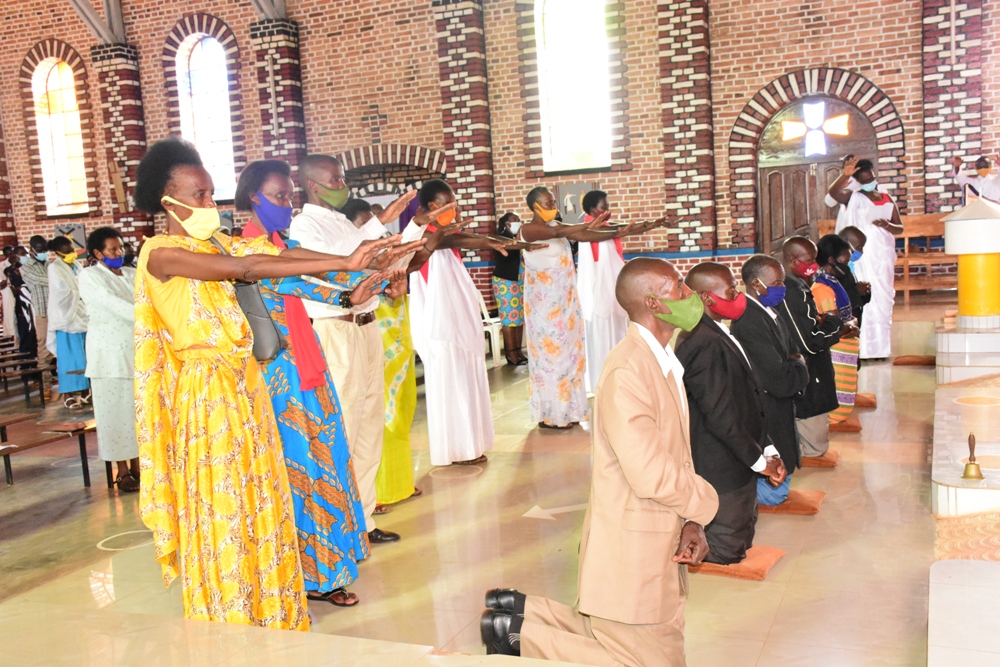
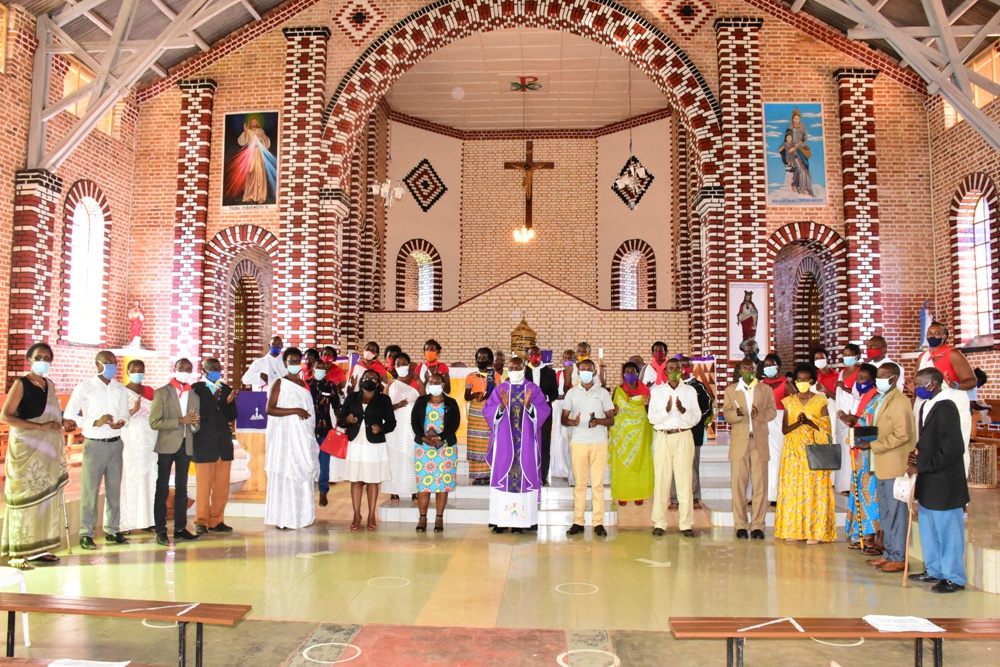
Perpetrators who sought forgiveness admitted their crimes while in prison and were released. They received six-month pacification on unity and reconciliation and helped to link up with offended families on the support of ‘Abagabuzi b’Amahoro ya Kirisitu’.