The aim of the five-day meeting is to draft a Concept on Countering Asymmetric Threats, a global phenomenon that poses a regional and international security threat.
The Chiefs of Defence and Security meeting was officially opened by Rwanda Defence Force Army Chief of Staff, Lt Gen Jean Jacques Mupenzi.
In his opening remarks, he noted that the region continues to face challenges of conflict that impact peace and stability in some of member states and proposed possible solutions.
“Acts of violence, terrorism and violent extremism, particularly in the Horn of Africa and Eastern DRC, continue impacting the region and call for concerted effort,” he said.
“For EASF to realise its goals, we need to match our stated commitment of promoting African solutions to African problems, with an equal commitment to mobilize more resources from within the continent than we do today, in order to give a concrete meaning to the leadership and ownership of the organization,” added Lt Gen Mupenzi.
The EASF Director, Brig Gen Getachew Shiferaw Fayisa emphasized the EASF Organisation after achieving full operational capability (FOC) since 2014.
“One of our key activities for the next five years strategic plan will be to maintain the force readiness and focus on preventing conflicts in the region” he said.
The EASF CDS meeting will be followed by the Council of Ministers of Defence and Security meeting which is the last of the 28th Ordinary Session of Policy Organs Meetings.
The third quarter looks promising for economic recovery compared to the second quarter which recorded 12.4% decrease compared to the same period last year.
The decrease is mostly attributed to difficult times of COVID-19 pandemic which affected the world in all aspects of life.
NISR revealed that the pandemic did not only bring health risks but also destabilized the economy due to instituted preventive measures.
Transport, trade, education, construction, export, hotels, restaurants and agriculture are among other sectors heavily affected by the pandemic.
The statement signed by NISR Director General released yesterday shows that COVID-19 effects on the economy are lessening compared to the second quarter.
In the third quarter of 2020, GDP decreased by 3.6% which isan improvement considering the sharp decline of 12.4% in second quarter.
“Services continue to lead in terms of shares to GDP with 48% compared to 26% and 19% shares for agriculture and industry respectively. The remainder 8% is attributed to net taxes on products. In this quarter, estimates calculated in 2017 prices show that GDP decreased 3.6 percent compared to the same quarter of 2019. This reflects the ongoing public health catastrophe of covid19,” reads in part the statement released by NISR.
Agriculture increased by 2% and contributed 0.5 percentage points to overall GDP. Within agriculture, food crops production increased by 3%. Export crops decreased by 8% mainly due to 21% drop in tea production and 6% drop in coffee production.
Among others, Industry dropped by 1% and contributed -0.3 percentage points to the GDP drop. The main contributor to the drop in the industry sector was Construction activities which dropped by 6% and Mining and quarrying which dropped by 24%. However, Manufacturing activities increased by 6%. Within Manufacturing, Food processing increased by 8%, Metal products increased by 31%, Furniture increased by 14% while Non-metallic products increased by 6%.
Overall services sector decreased by 7%. Within services, Transport activities decreased by 33%, Hotel and restaurants decreased by 55%, financial services decreased by 3%, Administrative and support activities decreased by 9%. Education decreased by 57% as schools remained closed between July and September 2020.
“However, Health services increased by 6%, Public Administration increased by 1% while information and communication activities increased by 43% mainly boosted by telecommunication activities,” reads NISR statement.
In Q3 of 2020, total final consumption expenditure decreased by 1 percent, Household final consumption decreased by 3%. However, Government final expenditures increased by 6%. Exports increased by 6% while Gross capital formation decreased by 14%.
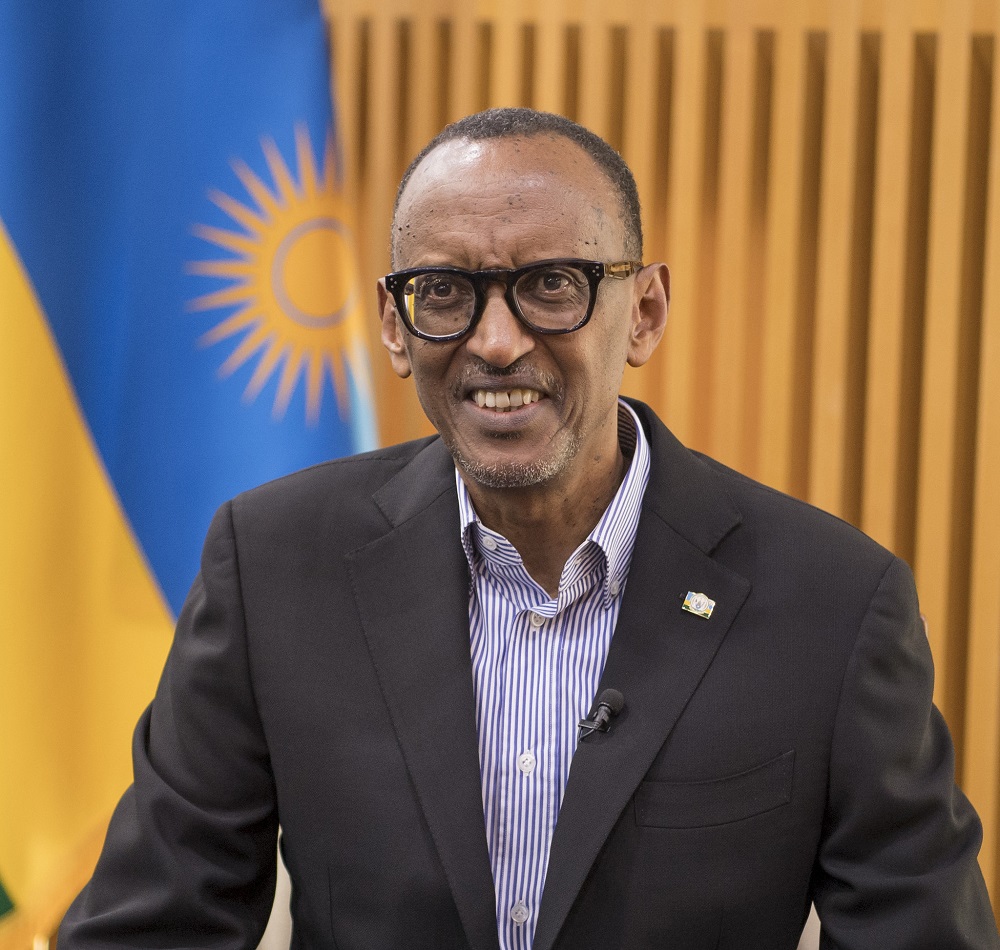
Kagame revealed it yesterday as he virtually participated in the celebration of 60 years since OECD was established.
Rwanda approved to join OECD Development Centre country members in May 2019.
The OECD is an intergovernmental economic organisation with 37 member countries, founded in 1961 to stimulate economic progress and world trade.
President Kagame commended the organization for spearheading evidence based policies in development programs.
“OECD’s signature is its use of evidence-based policy to improve economic and social well-being worldwide. Its focus on inclusive, private sector development is much needed particularly for Africa’s industrialization agenda,” he said.
As countries make plans to recover from the Covid pandemic, Kagame said, it is important that everyone is brought along, no matter the level of development.
“As a new member of OECD Development Center, Rwanda appreciate the opportunity to learn from best practices, and also share the lessons of our development journey. In Africa and Rwanda, we look forward to continued dialogue and collaboration with the OECD, in pursuit of prosperity and opportunity for our people,” he said.
Generally, OECD members are high-income economies with a very high Human Development Index (HDI) and are regarded as developed countries. As of 2017, the OECD member countries collectively comprised 62.2% of global nominal GDP (US$49.6 trillion) and 42.8% of global GDP (Int$54.2 trillion) at purchasing power parity. The OECD is an official United Nations observer.
RNP spokesperson, CP John Bosco Kabera, while appearing of Rwanda Television on Tuesday, December 15, said that some people comply when forced or only for fear of being arrested.
The Cabinet meeting held on Monday, December 14, set new measures in response to the fight against further spread of the COVID-19, most of which took effect on December 15.
The new measures include prohibited movements between 9pm and 4am (with exception of Musanze District where movements are prohibited between 7pm and 4pm) effective December 15 to 21st.
With effect from December 22 up to January 4, movements will be prohibited from 8pm to 4am. All social gatherings including wedding ceremonies and celebrations of all kinds are now prohibited in both public and private settings; meetings and conferences should not exceed 30 percent of the venue capacity while event organizers must comply with COVID-19 prevention measures. A certificate for negative negative test for COVID-19 will, however, be required for all participants.
Meetings and conferences in Musanze are suspended for the next three weeks.
Offices of public and private institutions will operate at 30 percent capacity; other employees will continue working from home on a rotational basis.
Public transport will now operate at 50 percent capacity in compliance with COVID-19 prevention measures; services at places of worship shall operate once a week with no more than 50 percent of maximum occupancy, except in Musanze when attendance is at 30 percent maximum occupancy.
Funerals should not exceed 50 persons but the maximum number is 30 persons in Musanze; the maximum number at the vigil is 15 persons at a time; gyms and swimming pools have been closed with related services only allowed for tested hotel residents; football competitions and training suspended except for national teams and clubs involved in international competitions.
The Minister of Health, Dr Daniel Ngamije warned that the new directives can be revised and tightened further any time, if people don’t adhere to health guidelines.
The Cabinet directives emphasized the critical importance of complying with the health measures including physical distancing, wearing facemask and hand washing, warning of penalties for non-compliance.
All other existing measures and guidelines remain in force.
On the specific measures for Musanze, Dr. Ngamije said that this was informed by the increase in infections in the district.
“In our random testing, we found that at least 13 percent of those tested were positive; any positive cases beyond 10 percent in random testing raises concern that requires immediate and relatively tougher measures,” Minister Ngamije said.
Meanwhile, CP Kabera reminded all Rwandans to comply for own safety from catching COVID-19 or spreading it.
“Complying because you are being watched or for fear of being arrested will not save you from getting infected. Fear the COVID-19 not the Police,” CP Kabera said.
He explained that Police officers across the country continue to work with other relevant entities such as local leaders and youth volunteers to enforce the directives, including awareness, arresting and penalising violators.
“It’s a combination of education and enforcement. We urge people to continue sharing information on violators; bars, restaurants and hotels that hide under their permitted services to sell alcohol; people turning their homes into bars or holding events and other prohibited gatherings.
If a hotel allows people, who are not their residents, to access their gym and swimming pool services, the owner or management will be held accountable including likely closure of the facility.”
The suspects arrested on Monday, December 14, are Hamuri Biracitse and his son Pascal Nizeyimana.
The engine, Yamaha 9.9hp, and fishing nets were stolen in the night of December 11, from Congolese fishermen in Lake Kivu, DR Congo side.
Chief Inspector of Police (CIP) Bonaventure Twizere Karekezi, the Police spokesperson for the Western region, said that following the alleged theft, Police Marine and Kivumu Police station in Rutsiro received credible information on some of the suspected thieves.
“Police, at about 3am on Monday, went to the house of Biracitse located in Bukiro, Kirambi cell in Kivumu Sector, Rutsiro District where the stolen items were suspected to be hidden. They recovered four rolls of illicit fishing nets and arrested Biracitse alongside his son,” CIP Karekezi said.
He added: “During interrogation, Nizeyimana admitted to have been stealing nets and boat engines, in collaboration with other people. He, however, argued that he did not take part in this specific night raid and theft, but disclosed that he knew other members of the group behind the theft.
He led Police officers to a spot in the lake, where they normally hide items they steal. It is the same spot where the boat engine was found submerged held by a rope.”
The suspects have since been handed over to Rwanda Investigation Bureau (RIB) at Kavumu station alongside the exhibits.
“Law enforcement organs are working together to locate and arrest other two members of the group still at large. We call upon the general public with information of their whereabouts, to come forward as usual, so that the remaining suspects can be arrested to face justice,” the spokesperson said.
In article 166, any person convicted for theft is liable to imprisonment for a term of not less than one year and not more than two years and a fine of not less than Rwf1 million and not more than Rwf2 million, community service in a period of six (6) months or only one of these penalties.
However, in article 167, the penalty doubles if the theft was carried out by more than one person.
The statement released last night shows that the new patients were found in Kigali: 30 Musanze: 39, Rubavu: 8, Karongi: 3, Rusizi: 3, Ruhango: 1 and Huye: 1.’
Rwanda confirmed the first COVID-19 case on 14th March 2020. Since then, 6832 people have been tested positive out of 673,517 sample tests of whom 6036 have recovered, 739 are active cases while 57 have succumbed to the pandemic.
Coronavirus symptoms include coughing, flu, and difficulty in breathing. The virus is said to be transmitted through the mucous membranes of the respiratory tract.
Rwandans are urged to adhere to COVID-19 health guidelines, washing hands frequently using soaps and safe water, wearing face masks and respecting social distancing.
They were taken to Kenya in the 1940s in different regions including Kisii and Kericho where they worked on tea plantations. They were settled in Kenya at different times respectively in 1930, 1945 and 1957.
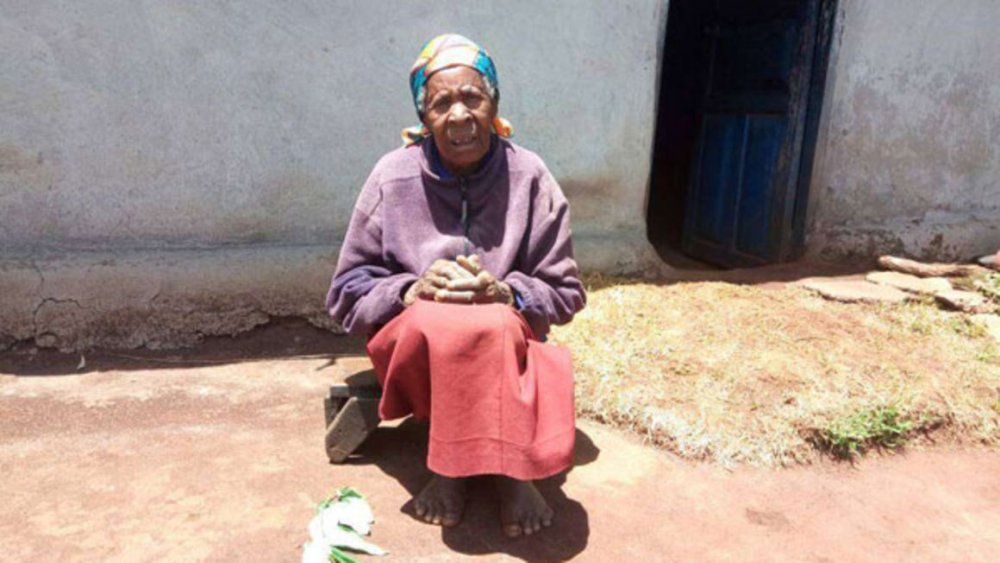
Elizabeth Nyirabatware is one of Rwandans taken to Kenya during colonial times.
She was 93 years in 2017. Nyirabatware was taken to Kenya in 1945 along with her husband Joseph Rwasa Nyabenda who later passed on. At the time, she was 21-year old in early days of marriage. They were childless at the time.
They had been recruited to travel to Kenya by Belgium colonialists to work in the expansive tea plantations in Kericho and Bomet owned by white settlers.
As she spoke to the East African in 2017, Nyirabatware explained that she and her husband got a rewarding job experience working for the colonialists who paid attractive salaries and other benefits.
She explained that she received other incentives including promotions, free rations of grain and blankets from the colonialists for their services. She described the work as having been difficult but rewarding. She used to pick over 30 kilogrammes of tea leaf a day in the tea estates in Kericho and Bomet.
Talking about life in Kiropket Village in Nandi County, she had reservations about the “manner” in which subsequent post-Independence Kenyan governments treated the families of over 1,000 Rwandan nationals who took the trip with her in the 1930s and 40s.
Nyirabatware said she is the oldest surviving Rwandan national taken to Kenya to work at the tea plantations in colonial times, but lamented Kenya’s reluctance “to recognize us as citizens” despite “spending our entire lives in service to the government.”
Nyirabatware appealed to Kenya’s President Uhuru Kenyatta and his government to recognise her and the rest of the Rwandan community. “Before I die, I appeal to President Kenyatta and his government to provide me and other Rwandan nationals with ID cards,” she said.
{{Rwanda’s support}}
Rwanda’s ambassador in Kenya, Amb Dr. Richard Masozera has told IGIHE that the Government of Rwanda advocated until the first batch received citizenship during a ceremony held on 12th December 2020 to celebrate Kenya’s Independence.
“You know that there are Rwandans who were brought to Kenya in the 1930s by Belgian colonialists to work on tea plantations in Kericho counties. Since then, colonialists used to give them identifications helping them on cross border movements which host countries withheld gradually after independence,” he said.
Amb Masozera explained that Rwandans fall within such category that failure to get citizenship deprives them of some rights.
“These Rwandans in Kericho fall within this category. They are deprived of rights; fail to take children to public schools and access loans to implement projects,” he noted.
The plight pushed Rwandans living in Kenya to appeal for nationality so they could enjoy equal rights. In the 1980s, they sought to return to Rwanda but the then leadership claimed they were not known.
In the past four years, those Rwandans increasingly appealed for nationality after 100,000 people from Makonde tribe were granted Kenyan citizenship.
At the time, former Rwanda’s ambassador in Kenya, James Kimonyo visited these Rwandans, interacted with them and promised advocacy.
“They have spent over 80 years in Kenya. It means they don’t know relatives in Rwanda. At the time, Amb Kimonyo promised them advocacy to both Governments to fix the problem. I replaced him and took on the advocacy for the issue which they promised to solve,” said Amb Masozera.
During the celebration of Kenya’s Independence known as “Jamhuri Day”, President Uhuru Kenyatta granted citizenship to 1300 Rwandans. Ten of them got identities instantly while others will get them gradually from January 2020.
Amb Masozera explained that the government of Rwanda made all efforts to put an end to this problem.
“The Government knew the case and provided necessary support. I used to interact with elders in Rwandan communities living in Kenya. They were happy with Rwanda’s support in addressing the issue,” he noted.
Majority of these Rwandans hail from Southern Province in former Gitarama and Butare prefectures as well as Rubavu district in Western Province.
The campaign officially launched on 14th December 2020 runs until 31st January 2021.
Mutimura Benjamin, Chief Commercial Officer at BK explained that the campaign is aimed at increasing customers’ penetration into cashless payments.
“We recently run a campaign dubbed ‘Si Ngombwa Cash’ to drive customers into cashless payments. The prizes align with similar initiative to encourage them to go cashless and embrace our reliable and safe cards used everywhere,” he said.
Embracing cashless payment is one of key strategies to control the spread of Covid-19 pandemic which has affected the world in many aspects.
Mutimura explained that using MasterCard would contribute a lot to controlling the spread of the virus.
“We strongly encourage customers to take advantage of MasterCard to abandon cash payments for cashless. They are reliable and enable fast transactions,” he noted.
Throughout the campaign, customers who perform single transactions worth Rwf25,000 and above using their BK Mastercard debit or credit cards online or via Point of Sale (POS) will stand chance to win different prizes.
Prizes including laptops, shopping vouchers and motorbikes will be awarded on weekly basis while a Mahindra KUV 100 NXT car, which is the grand prize of the campaign, will be given out at the end of the campaign.
The new offer from MTN is the first in the market as traditionally voice minutes were only limited to call On-Net (within the MTN network).
Speaking about the offer, MTN’s Chief Financial Officer, Mark Nkurunziza, said, “As part of making our customers’ lives brighter this festive season, MTN customers can call both MTN to MTN numbers as well as numbers on other networks at no extra cost. They will not need to switch SIM cards when they want to call friends & family that are on other networks.”
MTN’s “Duchillinge” promotion will run until 8th January 2021 and will apply to Daily, Weekly and Monthly voice bundles. This move is aimed at giving customers even more value for their calling needs.
“Coupled with our vast network coverage and our distribution footprint of over 30,000 agents across the country, we are continuously looking for even more ways of giving more value to our customers by making communication more affordable. It is about offering our customers the control, convenience and flexibility they need,” concluded Nkurunziza.
To access MTN Voice Bundles, MTN customers can dial *140# for Irekure and *154# for Yolo.
MTN Rwandacell Limited is the market leader in mobile telecommunications in Rwanda. Since 1998, we have continuously invested in expanding and modernising our network and are now the country’s No 1 internet network.
MTN Rwanda offers various superior services to subscribers, including innovative propositions such as personalised voice and data offers with MTN Irekure. The company is also the front runner in mobile financial services in Rwanda with Mobile Money, MoMoPay and MoKash Loans and Savings.
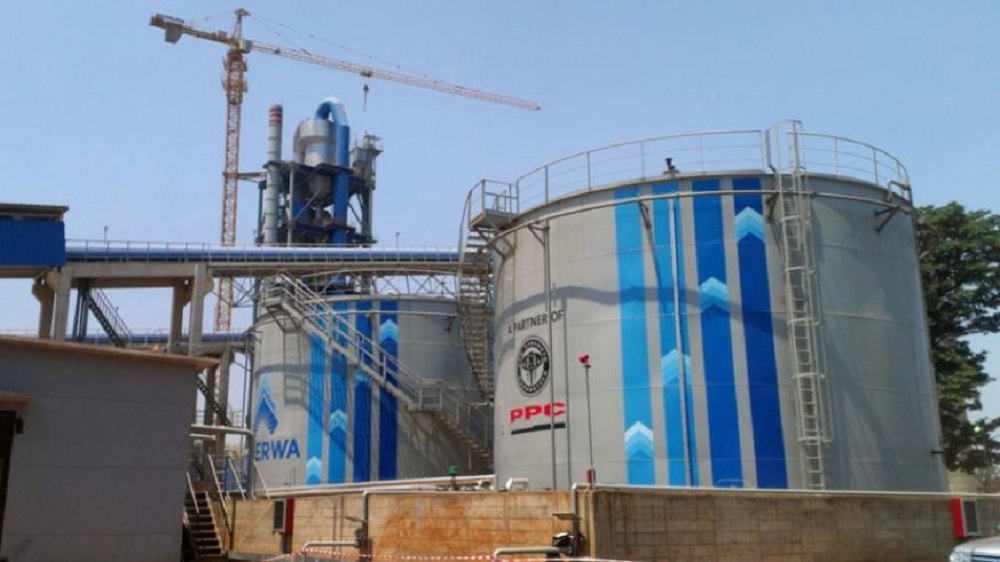
The figures were released yesterday as Cimerwa presented financial report for the past nine months of the previous financial year that ended September 2020.
Overall the company registered Rwf 63.5 total revenues.
The profit is promising for new investors wishing to buy the firm’s shares currently listed on Rwanda Stock Exchange (RSE).
Albert Sigei, Cimerwa Chief Executive Officer said that the performance required much effort due to COVID-19 disruptions which affected different businesses.
The firm was also closed during the 40-day lockdown.The plant later struggled to get new equipment for cement processing. Sigei explained that the firm managed to overcome those challenges with the support of the Government of Rwanda which established strong COVID-19 resilience strategy that they leveraged to expand activities.
Generally, Cimerwa produced 421,000 tons of cement. The firm registered a remarkable improvement producing 55,000 tons in July this year breaking record as the hugest bulk production since the establishment of Cimerwa.
Apart from the first quarter characterized by upgrading activities, Cimerwa gradually increased production in every quarter of this year. The firm is currently operating at 80% capacity.
“We need to keep up the momentum and avoid complacency so that we satisfy the market and increase profits,” said Sigei.
Cimerwa’s profit is mainly attributed to mega construction projects including construction of roads, health centers and over 22,000 classrooms built in different parts of the country in which the firm supplied over 8,000 tons.