The deceased include three men aged 70, 65, 63 respectively, 43-year old woman from Kigali 68-year old man from Huye district.
The statement released last night shows that 964 people have caught the virus out of 8741 sample tests while 22 recovered.
The majority of new cases was found in Kigali: 326, Kamonyi: 85, Musanze: 78, Rubavu: 73, Burera: 47, Nyanza: 38, Gakenke: 32, Rulindo: 30, Rwamagana: 27, Nyamasheke: 23 and Rutsiro: 22.
New Coronavirus cases have been on steady increase that the country has registered 1825 in two days.
Rwanda confirmed the first case on 14th March 2020. Since then, 33 260 people have been tested positive of whom 26 734 recovered, 6 129 are active cases, 12 are critically ill while 397 have succumbed to the virus.
A total of 391,058 people have been vaccinated since Rwanda began countrywide inoculation programme on 5th March 2021.
Coronavirus symptoms include coughing, flu, and difficulty in breathing. The virus is said to be transmitted through the mucous membranes of the respiratory tract.
Rwandans are urged to adhere to COVID-19 health guidelines, washing hands frequently using soaps and safe water, wearing face masks and respecting social distancing.
The quartet was at the time arrested with over 20kgs of cannabis. They are Joseph Ntakirutimana, Obed Byiringiro, Thomas Nsengiyumva and Joseph Tuyizere.
Kayonza District Police Commander (DPC), Senior Superintendent of Police (SSP) Alex Fata said that Police, acting on credible information from the public, first arrested Thomas Nsengiyumva and Joseph Tuyizere in Gasabo Village, Kiyovu Cell of Ndego Sector also in Kayonza District with two sacks containing 20kgs of cannabis.
“Police received information at about 11am about two drug dealers, who were waiting for a public vehicle heading to Kabarondo. We swiftly conducted the operation and arrested Nsengiyumva and Tuyizere before boarding, with two sacks of cannabis weighing 20kgs. Tuyizere had 15kgs while Nsengiyumva had 5kgs,” said SSP Fata.
He added: “Following their arrest, Nsengiyumva and Tuyizere disclosed that they had got the narcotics from Byiringiro and Ntakirutimana, their suppliers, who were also located and arrested later. Byiringiro and Ntakirutimana also disclosed that they sneaked the narcotics into Rwanda from Tanzania, through a porous border point.”
SSP Fata lauded the impact of community policing and information sharing in particular, which facilitates to identify and arrest drug dealers and breaking rings of dealers.
The Ministerial order nº 001/MoH/2019 of 04/03/2019 establishing the list of narcotic drugs and their categorisation classifies cannabis in the category of “very severe narcotics.’’
Article 263 of law No. 68/2018 of 30/08/2018 determining offenses and penalties in general states that any person, who unlawfully produces, transforms, transports, stores, gives to another or who sells narcotic drugs and psychotropic substances, commits an offence.
Upon conviction for very severe narcotics, the offender faces between 20 years and life imprisonment, and a fine of up to Rwf30 million.
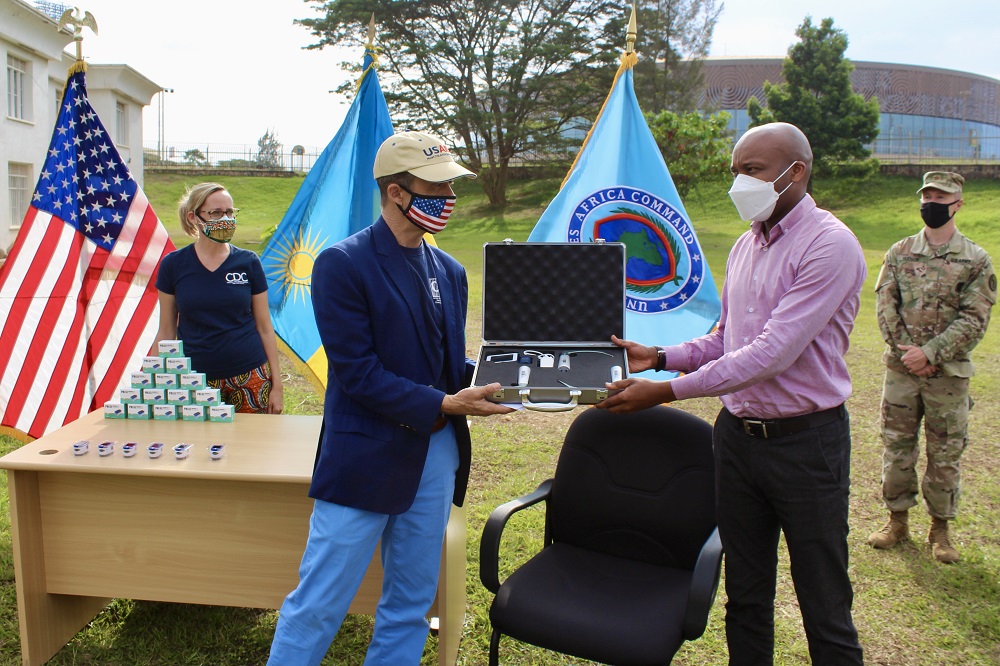
US Ambassador to Rwanda Peter H. Vrooman led the handover of almost 100 video laryngoscopes and more than 8,000 pulse oximeters, tools which will provide urgent support to medical practitioners and community health workers around the country as Rwanda fights a new wave of COVID-19 cases.
“The partnership in public health between the United States and Rwanda is helping to save lives every day as we work together to fight COVID-19 and other critical public health challenges,” he said.
The 96 new video laryngoscopes, valued at approximately Rwf500,000 each, will help Rwandan medical professionals stay safe while ensuring COVID-19 patients get the oxygen they need to survive. Each video laryngoscope kit includes both adult and youth models to ensure maximum versatility.
The 8,300 new pulse oximeters, valued at almost Rwf13,000 each, will be distributed widely to help community health workers use oxygen levels to identify people that need advanced medical care.
The new medical equipment is funded by the US Department of Defense and comes through the United States Africa Command (AFRICOM) and the United States Overseas Humanitarian, Disaster Assistance, and Civic Aid (US OHDACA) program, a unique humanitarian assistance package that builds Rwanda’s effectiveness to prepare and respond to COVID-19. The donation was coordinated by the U.S. Centers for Disease Control (U.S. CDC), which has played a leading role in supporting Rwanda’s ability to prevent, detect, and respond to COVID-19.
The donation is part of the more than Rwf 17 billion that the United States has invested in Rwanda’s COVID-19 response since March 2020. This support includes the construction of hand-washing stations across Rwanda; support for public communications; staff and vehicles to support contact tracing; laboratory diagnostic equipment and supplies; support for training of frontline workers; medical equipment including ventilators, patient monitors, hospital beds, intensive care units, mobile X-ray machines, video laryngoscopes, and pulse oximeters; and infection prevention and control supplies such as biohazard bags, alcohol, soap, and personal protective equipment.
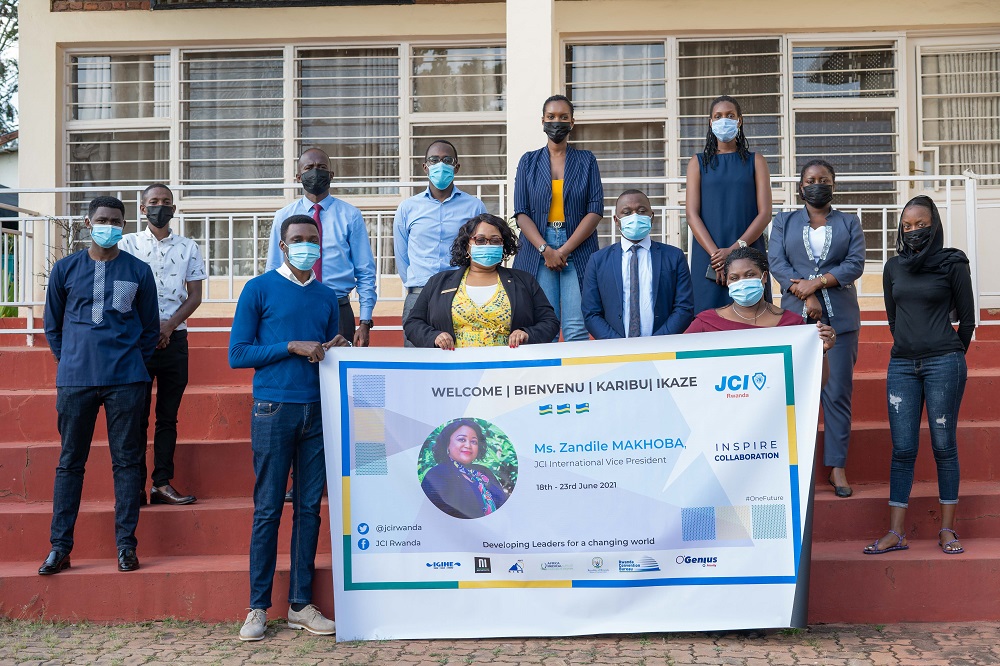
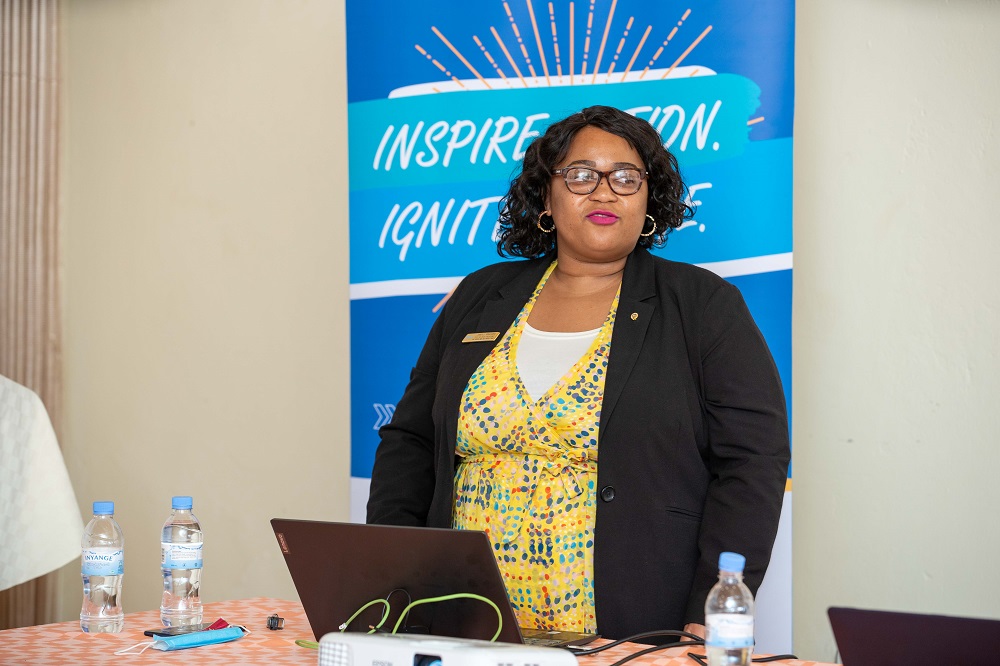
The call was made on Tuesday 22nd June by Zandile Makhoba, JCI Vice President for Africa and Middle East as she interacted with members of JCI Rwanda.
Discussions were organized in adherence to COVID-19 preventive measures.
Makhoba who is in Rwanda for five-day working visit reminded the youth to stay focused always, set goals and pull lessons from all circumstances.
Taking example of COVID-19 pandemic which has shaken global economy, Makhoba explained how some far-sighted people invested in technology to facilitate virtual meetings and yielded big.
“Before COVID-19, no one thought that ‘zoom’ platform would be used to generate income. Those who rushed to invest in technology created more jobs. The youth has a lot to offer in such unusual times. They need to foster innovations and seek solutions to address challenges facing the society, create jobs and contribute to other areas of national development,” she noted.
Makhoba called upon the youth to strive for excellence, mirror good values and outstanding deeds bringing positive transformations to their communities.
Cisse Harira, JCI Executive Vice President for Africa and the Middle East also requested the youth to work hard and remain committed to their goals to change the society.
The President of JCI Rwanda, Origene Igiraneza has reminded participants not to be bystanders but share tips with colleagues.
One of participating youth, Diane Uwimana revealed that they learnt a lot from the discussions helpful in daily lives.
“These discussions have reminded me how to perform my duties with great perfection to meet aspirations while gaining new knowledge. It is also an opportune moment to reflect on benefits of being part of this organization and my contribution to the society as well,” she said.
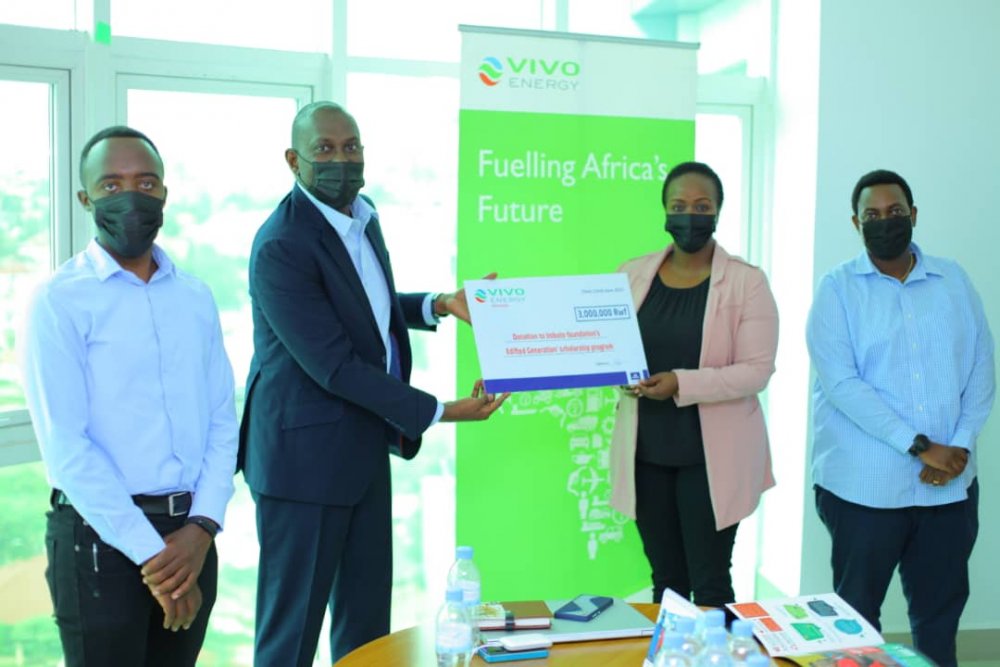
Initiated in 2002 by Imbuto Foundation, the ‘Edified Generation Scholarship’ programme financially supports bright students from economically vulnerable backgrounds in their pursuit of education.
A total of 9601 students have been sponsored through the programme.
The Managing Director of Vivo Energy Rwanda, Saibou Coulibaly has said that the company is proud of existing partnership to change lives of children from vulnerable families.
“We are honored to join hands with Imbuto to support 10 young, vulnerable girls through the ‘Edified Generation Scholarship Program’. Five years ago, we started a long and impactful partnership with Imbuto Foundation in an Education Sponsorship program. Education is one of our fundamental pillars at Vivo Energy. We are delighted to be able to impact the lives of these young girls,” he said.
“When the opportunity arises, we will go the extra mile and enroll some of them in our ‘young talent program’ aimed at equipping young graduates with first-hand skills through an internship at Vivo Energy Rwanda,” added Coulibaly.
He revealed that each of girls will get a package of US$300 to cater for school fees, health insurance, uniform and other scholastic material.
In a bid to seek solution to the crisis, ‘The 3rd Youth Empowerment Peace Workshop (YEPW)’ was held virtually on 12th June 2021 bringing together 35 youngsters from youth organizations from seven countries, including Cameroon, South Sudan and East Timor.
Focusing on the ‘what kind of non-formal education is needed at each community level’, part 1 was composed of the discussion on Non-formal education of the NGO and part 2 was composed of introduction to HWPL Peace Education and a presentation on the need for peace education. HWPL’s peace education has a specific curriculum that can teach harmony and peace between individuals, communities, nature, people and generations, and aims to foster peace citizens and make peace sustainable.
The first and second YEPW saw participants sharing ideas in how peace education should be preceded by equal quality education where non-regular education is needed to solve the global shortage of educational infrastructure.
Daniel Santos do Carmo, Executive Director of FONGTIL, who was in charge of presenting the education system for youth in community, explained the current education system in Timor-Leste and highlighted NGOs role to make revitalize youth education. He said “
He said “The Ministry of education has renovated and repaired many schools which were destroyed in 1999. Further-more MOE has continued to provide and improve training programs for teachers, and establishing a standardized curriculum relevant to East Timorese students. Despite such efforts, in number of challenges still remain including training of teachers and lack of proper facilities, etc.
For development of the country, the government should invest the better education system and education infrastructures, and NGOs should be interested in and move on the advocacy for quality education which can be done through policy changes.”
YEPW is a global peace discussion platform where youth from 111 countries around the world who work with IPYG participates. For solving the problems that community and youths facing, IPYG is conducting workshops to find, discuss in each continent with youth in each country. This could be one of the ways to achieve the fourth goal of the UN-SDGs (Sustainable Development Goals), quality education and implement the spread of peace culture in Article 10 of the DPCW.
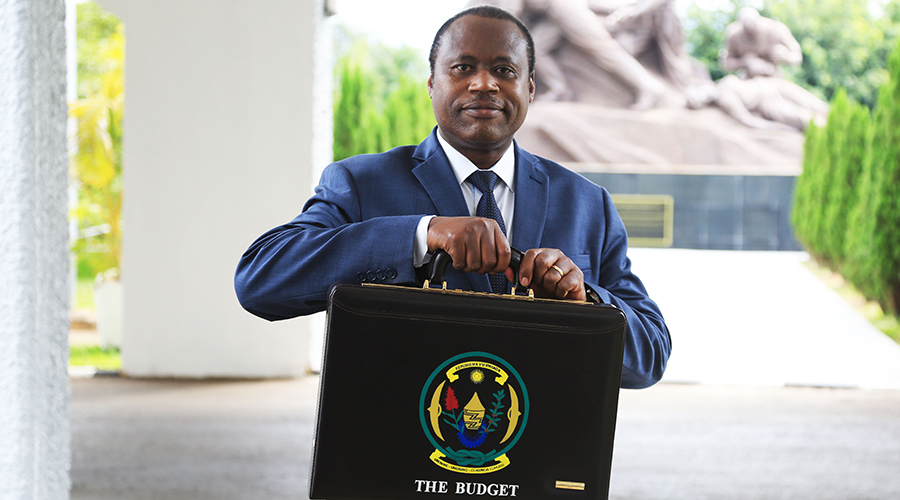
Addressing both chambers, Minister Ndagijimana pointed out that the fiscal policy of 2021/22 will prioritize spending to deliver on investments aimed at achieving National Strategy for Transformation (NST1) goals.
“Significant budget spending will focus on the needs under the Economic Recovery Plan and the National Strategy for Transformation with much attention to the key economic sectors, as well as the rollout of the Covid-19 vaccination program,” he said.
{{Resources }}
The total resources estimated for the fiscal year 2021/22 will amount to Rwf3,807 billion. This amount is made up of domestic revenues amounting to Rwf1,993.0 billion comprising of Rwf 1,717.2 billion from tax revenue and Rwf275.8 billion from other revenue collection. External grants are estimated at Rwf 612.2 billion whilst external loans of Rwf 651.5 billion is envisaged for accrual to the Treasury.
{{Expenditure }}
Equally to the projected resources, total expenditure in the fiscal year 2021/22 is projected at Rwf3,807 billion. This figure is made up of recurrent spending of Rwf 2,431.7 and capital spending worth Rwf1,393.3 billion. Furthermore, projected spending include an amount of Rwf 5.7 billion on inventory, Rwf 43.8 billion under various equity investment and fund shares for government and loans spending amount of Rwf 134.9 billion.
{{NST-1 and Resources Allocation}}
Government’s expenditure policies in fiscal year 2021/22 are guided by National Strategy for Transformation priorities and objectives. To this end, the Economic Transformation pillar takes the lion’s share of the resources at Rwf 2,234 billion amounting to 58.7 % of the total budget. Social transformation will take up Rwf 1,034 billion (27.2 %) while Transformational Governance is allocated Rwf538 billion representing 14.01% of the total budget.
In line with NST-1 strategic objectives, some of the priority areas agreed during planning and budgeting consultations formed the basis for resource allocation in 2021/22 fiscal year as shown below;
Agriculture productivity will be increased through scaling up use of inputs.
The budget will cater for increased access to electricity and clean water through construction of water supply systems.
Promoting urbanization will include execution of urban development project in secondary cities. Affordable housing projects will be supported with basic infrastructure.
Other areas of focus include; accelerating transport projects and construction of national roads, promoting innovation and increasing digital literacy, strengthening the health system by increasing access to quality health, improving the quality of education, strengthening social protection programs by Scaling up the coverage of Social Protection programs and support businesses affected by Covid-19 through Economic recovery fund.
The 2021/22 draft finance bill is in line with the 2021/22–2023/24 Budget Framework Paper presented to Parliament on May 5th 2021 and was amended to reflect the recommendations from the Parliament as submitted on June 3rd, 2021.
The new directives will take effect from Wednesday, June 23, and Rwanda National Police (RNP) has reminded all residents of Rwanda adhere to the revised guidelines maximumly.
The force has called upon the public to support the national prevention efforts through maximum compliance and to support the enforcement process.
It warned of severe actions to anyone, who acts contrary to the government directives.
“In any way you view the new directives, they are meant to save people’s lives from the pandemic and we urge the public to be responsive, respect them and support the national efforts by doing the right thing,” said RNP spokesperson, CP John Bosco Kabera.
On Monday, Rwanda registered new 622 Covid-19 positive cases, the highest daily cases since the pandemic was reported in Rwanda in March 2020.
On the same day, six related deaths were recorded.
For the next two weeks, movements are prohibited between 7pm and 4am, all businesses must close by 6pm and passenger service vehicles should not exceed 50% capacity.
Movements between Kigali and other provinces, and movements between districts across the country are also prohibited except for medical reasons and other essential services.
However, vehicles transporting goods will continue to operate with no more than two people on board.
All social gatherings including celebrations of all kinds are prohibited both in public and private settings and places of worship will operate at 30% capacity.
Wedding, civil and traditional marriage ceremonies are among the events that have been suspended for the next two weeks under the new Covid-19 prevention directives.
Attendance at vigil should not exceed 10 people at any one time while funeral gatherings should not exceed 30 persons.
Places of worship that were okayed to resume after meeting all the health standards, will host only 30 percent of their normal congregation capacity but prevention measures must be adhered to before and during the service.
“Adhering to the government measures is a must and it is the only solution to address the current rise in Covid-19 cases and related deaths,” CP Kabera said.
He added: “Be on the prevention side not the spreading corner by being home before 7pm, avoid unnecessary movements; stay in Kigali or in your respective district, avoid any prohibited social events and gatherings and wear face mask, exercise social distancing, sanitize or wash hands regularly with soap and water.”
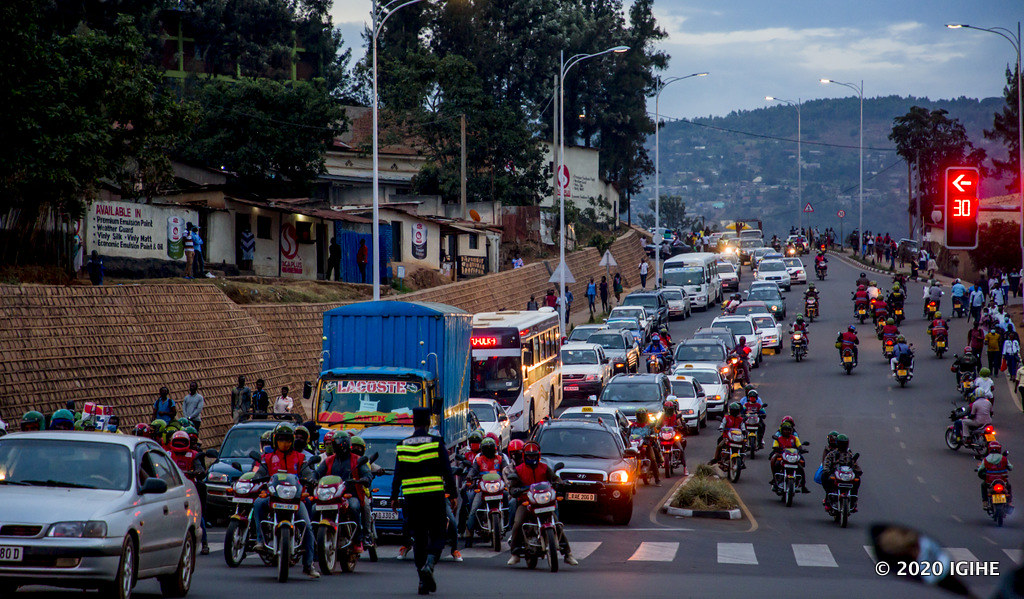
He reminded the public to plan their daily errands well to be home early instead of starting the journey back home late resulting into thick traffic jam and likely accidents while racing against 7pm.
“The thinking that you will start the journey few minutes to the top of the hours and that you will be home in time, remember that you are not the only one using the road.”
{{Movement permit}}
CP Kabera said that movement clearance will only be given to those with valid and sound reasons where necessary with supporting documents.
He, however, warned against misusing or using the movement clearance contrary to its original purpose.
The movement clearance permit can be applied online through www.mc.gov.rw, e-mail (movementclearance@police.gov.rw) or dial *127# and follow the prompts.
{{For further information regarding movement clearance, the public is required to call the following contacts:}}
The statement released last night shows that the majority of new cases were found in Kigali: 388, Rubavu; 83, Musanze: 61, Burera: 50, Kamonyi: 47, Rutsiro: 35, Rwamagana: 27, Nyanza: 24, Gicumbi: 23 and Gakenke: 23.
Among others, four people from Kigali have succumbed to the virus while eight recovered.
The deceased include two women aged 42 and 56 as well as two men aged 52 and 67.
Rwanda confirmed the first Coronavirus case on 14th March 2020. Since then, 32 296 people have been tested positive of whom 26 712 recovered, 5192 are active cases, 10 are critically ill while 392 have succumbed to the virus.
A total of 391, 001 people have been vaccinated since Rwanda began countrywide inoculation programme on 5th March 2021.