The incident took place on Sunday 18th July 2021early morning around 4a.m in Kabushongo village, Busoro cell, Nyamyumba sector of Rubavu district.
It is said that the boat was carrying paving stones from Nyamyumba to Boneza sector in Rutsiro district.
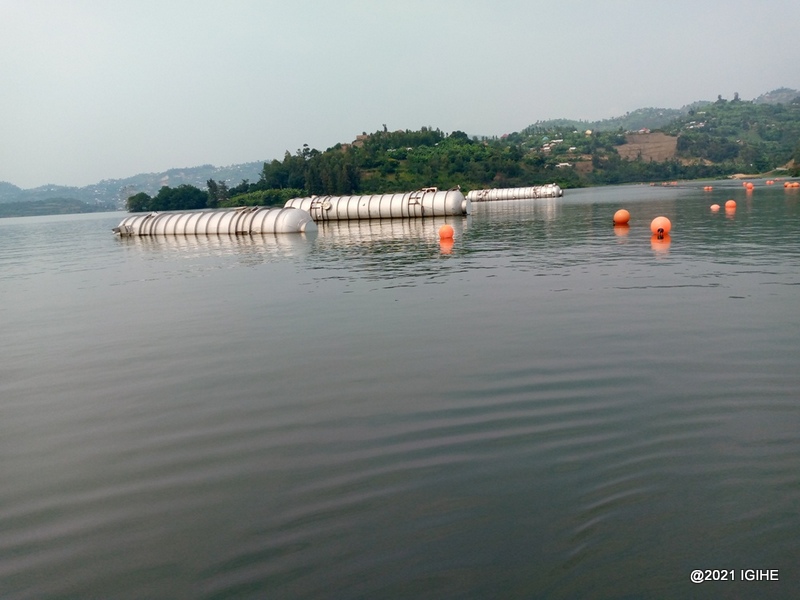
The boat operated by Bernard Ndayisaba along with his son Etienne Hakizimana, 20 was striken by strong wave and capsized after crossing the area designated for extraction of methane gas in Lake Kivu.
Following the incident, Hakizimana swam and survived while his father Ndayisaba sank with the boat.
The Executive Secretary of Nyamyumba sector, Heritier Kazendebe has said that Ndayisaba’s body has not yet been retrieved.
“It is still difficult to retrieve his body because he sank with loaded boat,” he explained.
Kazendebe expressed condolences to the bereaved family and assured support to retrieve the man’s body for burial.
The previous accident in Lake Kivu took place in October 2019 when a truck belonging to Chinese company constructing the road along Marine headquarters to Bralirwa plant in Rubavu district skidded off the road into Lake Kivu leaving two of 10 passengers on board dead.
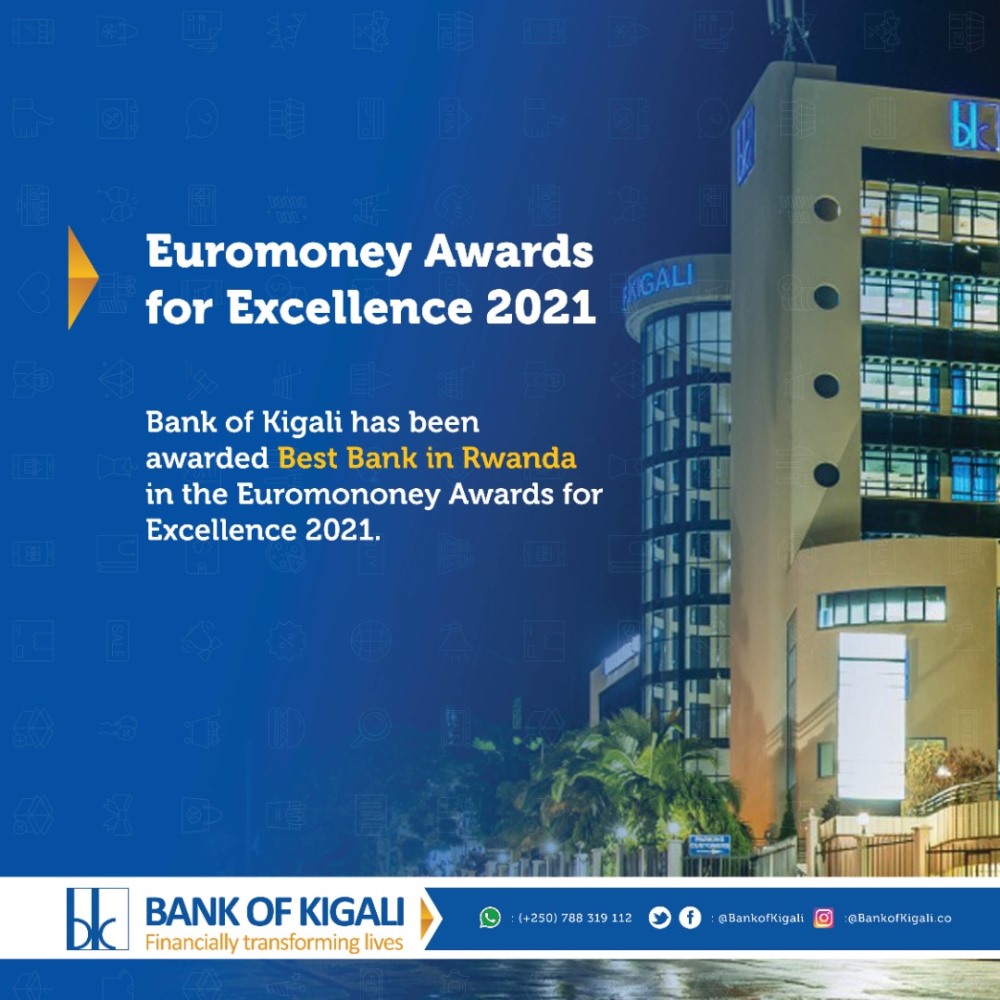
Launched in 1992, Euromoney Awards for Excellence are one of the most prestigious and respected awards in global banking, rewarding financial institutions for their achievements, innovations and performance over the last 12 months.
A team of experts analyses profitability, the ability to demonstrate growth, relative outperformance compared with peers and the ability to adapt to changing market conditions.
Despite challenging conditions brought about by COVID-19 pandemic, Bank of Kigali Plc, Rwanda’s largest commercial bank retains about a third of the Rwandan banking market. The bank’s deposits and loan book grew above the market average in 2020, serving 356,299 retail customers and 26,054 corporate clients.
Among others, Bank of Kigali reported a net profit of Rwf38.4 billion (US $39.3 million) in 2020, despite a high cost of risk.
The bank’s digital offering is also ascendant. Its IKOFI mobile wallet, initially focused on agriculture, has registered over 1,800 agro-dealers/agents and over 258,000 farmers by the end of 2020.
To support the economic recovery after the unprecedented conditions brought by the pandemic, Bank of Kigali assisted its customers through different initiatives. A loan relief product was rolled out to support the bank’s retail customers to deal with effects arising from the pandemic’s outbreak. At the same time, a grace period was provided to the bank’s borrowing customers including SME and corporate customers.
In 2020, Bank of Kigali launched Zamuka Mugore, a product designed for women in business that provides affordable loans and competitive interest rates. In its effort to increase protection of the bank’s information assets against threats, BK was also awarded the ISO/IEC 27001:2013 standard for Information Security Management System (ISMS) as a sign of compliance to international standards.
To give back to the community, Bank of Kigali held in 2020 its 4th cohort of the BK Urumuri Initiative, an annual entrepreneurship competition which aims at supporting small and medium enterprises to access interest-free loans and intensive business training. So far, more than 100 businesses have completed the program, and have received more than 100 million Frw with 0% interest loans from Bank of Kigali.
Commenting on the award nomination; the CEO of Bank of Kigali, Dr. Diane Karusisi observed that the award reflects he bank’s commitment to enrich customers’ experience and contribution to the financial ecosystem.
“At Bank of Kigali, we work tirelessly to meet our customers’ expectations. We are delighted to have received the Best Bank in Rwanda award by Euromoney which evidences our commitment to maintain top notch services,” said Dr. Diane Karusisi.
This year, Euromoney received a record number of submissions from banks in the regional and country awards programme that covers more than 50 regional awards and best bank awards in 100 countries.
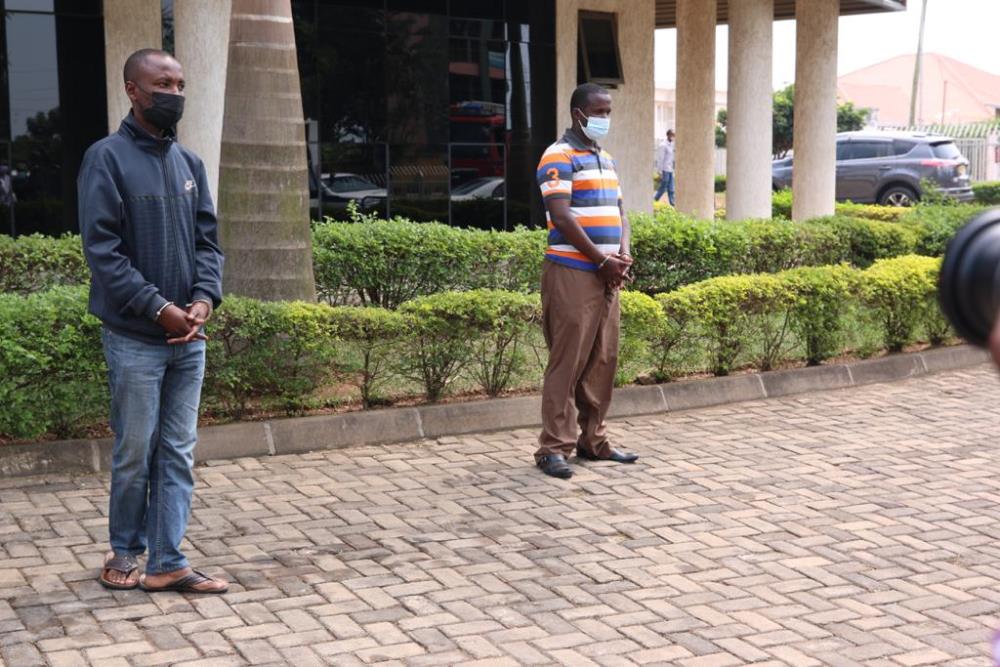
Two members of the ring identified as Marcel Niyonsaba, 40, and Emmanuel Mbarushimana, 41, have been arrested. They were showed to the media on Sunday, July 18, at Kigali metropolitan headquarters in Remera, Gasabo District.
According to the would-be victim, Kimenyi, a resident of Kanombe Sector in Kicukiro District, on July 13, he received a call from unidentified person, who claimed that he knows a piece of land with a house, which was on sale.
“Coincidentally, I was also looking for land, preferably with a simple house, to buy. The caller told me that he would link me with another person identified as Ndori, a resident of Ruhango Cell in Gisozi Sector, Gasabo District, where the said piece of land on sale is.
I later met the said Ndori, who took me to the plot of land and told me that the rightful owner wanted Rwf15 million. Ndori told me that he was just a broker and that the land is registered in the names of Antoine Ngarambe,” Kimenyi narrated.
At this point, Kimenyi had no idea that this was a well laid scheme to defraud him. First, the racket forged to land title of Antoine Ngarambe, who is the rightful owner of the plot. Secondly, they found a way to swap Antoine Ngarambe’s Sim-card and at this point, it is Marcel Niyonzaba, one of the arrested members of the ring, who was masquerading as Antoine Ngarambe.
“Ndori gave me contacts of the alleged owner of the plot–Antoine Ngarambe—we met and settled for Rwf15 million. I was to pay Rwf13 million and pay the remaining Rwf2 million after land mutation. I am the lucky one because the Police got to know of the hatched scam, Marcel Niyonsaba and Emmanuel Mbarushimana were arrested as we were processing the mutation in the notary’s office,” said Kimenyi.
Niyonzaba disclosed that it was Mbarushimana, who helped them swap Antoine Ngarambe’s Sim-card and land title.
“On July 15, I received a phone call from Mbarushimana, who was with a woman only identified as Claudette. They introduced me to the plan about a plot of land they wanted to sell and wanted me to guise as Antoine Ngarambe and for Claudette to pose as my wife. From the onset, I knew this was not their land, but they promised me a big share once we successfully execute the plan. I had the Sim-card in the names of Antoine Ngarambe while Claudette had the forged land title. However, I was arrested on July 16, at Kiyovu, Muhima Sector (Nyarugenge District) where we were processing the land mutation,” Niyonsaba said.
Mbarushimana also admitted to swapping the Sim-card adding that he was to be paid Frw300, 000 for his service after selling the land.
RNP spokesperson, CP John Bosco Kabera said the foiled scan and arrest of some members of the ring followed a tip-off from the public. He went on to urge the public to always be vigilant and exhaust all avenues to prevent falling prey.
“Scammers are there and are always to defraud people taking advantage of their weakness. Imagine people, who hatch a plan to sell land, which does not belong to them, forge the land title, national ID, disconnect and swap a Sim-card of the rightful owner of the plot of land; this is one clear example that such criminal-minded people are there which requires maximum vigilance and double checking before making any transactions,” CP Kabera said.
Article 174 of the law determining offences and penalties in general states that any person who, by deception, obtains another person’s property, whole or part of his/her finance by use of false names or qualifications, or who offers positive promises or who threatens of future misfortunes, commits an offence.
Upon conviction, he/she is liable to imprisonment for a term of not less than two (2) years and not more than three (3) years, and a fine of not less than Rwf3 million and not more than Rwf5 million.
Article 177 of the same law states that; any person who sells or pledges as a security an immovable or a movable property knowing that he/she is not the owner, commits an offence.
Upon conviction, he/she is liable to imprisonment for a term of not less than one (1) year and not more than two (2) years and a fine of not less than Rwf500, 000 and not more than Rwf1 million.
In article 276, any person who, in any manner, forges or alters documents by forged signature or fingerprint, falsifying documents or signatures or impersonation, forging agreements, its provisions, obligations, or discharged obligations commits an offence.
Upon conviction, he/she is liable to imprisonment for a term of not less than five (5) years but not more than seven (7) years and a fine of not less than Rwf3 million and not more than Rwf5 million or only one of these penalties.
The statement released last night also shows that 2773 have caught COVID-19 out of 73608 sample tests while 1855 recovered.
The majority of new cases were found in Kigali: 2225, Musanze: 47, Burera: 44 and Kamonyi: 42.
Rwanda confirmed the first Coronavirus case on 14th March 2020. Since then, 57 322 have been tested positive of whom 40041 recovered, 16632 are active cases, 72 are critically ill while 649 have succumbed to the virus.
A total of 406,004 people have been vaccinated since Rwanda began countrywide inoculation programme on 5th March 2021.
Coronavirus symptoms include coughing, flu, and difficulty in breathing. The virus is said to be transmitted through the mucous membranes of the respiratory tract.
Rwandans are urged to adhere to COVID-19 health guidelines, washing hands frequently using soaps and safe water, wearing face masks and respecting social distancing.
The violators belonging to different religious denominations, were found congregating at Kanyarira hill in the morning of Saturday, July 17.
Superintendent of Police (SP) Theobald Kanamugire, the Police spokesperson for the Southern region, said that the violators include 70, who came from Muhanga District and 169 from Ruhango District.
“In the morning of Saturday, July 17, residents of Kanyarira Village walk up in the morning only to find a big gathering at the hill called Kanyarira. Some of them had spent there a night while others joined them that morning,” said SP Kanamugire.
He added: “Residents called the Police and officers found 239 people on the hill, most of them had no face masks, there was no social distancing as they were holding hands praying.”
SP Kanamugire warned against such deviant behaviours at a time when the country is faced with the surge in Covid-19 infections and related deaths.
“Right now, eleven districts are under lockdown where movements beyond other districts of the country is prohibited so are gatherings in all public and private settings. Such deviant behaviours practices can lead the whole country into total lockdown not forgetting how many lives that could be lost,” said SP Kanamugire.
He advised all believers to go to churches that were permitted to hold services instead of exposing their lives to the deadly virus.
The statement released last night shows that 1997 people have caught the virus out of 50 880 sample tests while 976 recovered.
Kigali city remains the major hotspot where 1391 of new cases were found yesterday.
Rwanda confirmed the first Coronavirus case on 14th March 2020. Since then, 54 549 people have been tested positive of whom 38 186 recovered, 15 725 are active cases, 76 are critically ill while 638 have succumbed to the virus.
Coronavirus symptoms include coughing, flu, and difficulty in breathing. The virus is said to be transmitted through the mucous membranes of the respiratory tract.
Rwandans are urged to adhere to COVID-19 health guidelines, washing hands frequently using soaps and safe water, wearing face masks and respecting social distancing.
City of Kigali alongside the districts of Rubavu, Rutsiro, Musanze, Burera, Gicumbi, Kamonyi, Rwamagana, and Nyagatare were put under lockdown until July 26, as the government strives to stop the surge of the deadly Covid Delta variant.
Innocent Iraguha, a resident of Nyabugogo Cell, Muhima Sector of Nyarugenge District believes that the “current situation is fragile and staying home or avoiding unnecessary movements is choosing life over death.”
“There are some people, who leave their homes with foodstuff to deceive the Police that they are coming from the market as a trick to engage in prohibited practices or unnecessary movements forgetting that you are putting yourself and the entire family in danger. We are in a situation where life is not about making right or wrong choices, but it is about choosing life over death,” said Iraguha.
Like Iraguha, Stephanie Mukahirwa, another Kigali resident said that the surge in infections and related fatalities in the last two weeks calls for families to stay in one place if they want to be safe and ultimately give ample room for the government to trace and treat those infected.
“The government’s decisive decision to ask us to stay at home is for our safety; with the daily infections and deaths, the lockdown was the only option left. The more we understand and abide by the directives the more we comprehend our individual responsibility in the enforcement and reporting violators,” said Mukahirwa.
Rwanda National Police spokesperson, Commissioner of Police (CP) John Bosco Kabera, appealed to the public not to disregard the new guidelines and to support the enforcement efforts by sharing information on anyone flouting the directives.
“It is not the first time that we have faced the lockdown in the fight against the Covid-19 pandemic in our country; we have managed to pull through before and this will be no different. We call upon all residents of Rwanda to exercise patience and be parties in the fight against the pandemic by staying home.
Whereas it is the duty of the Police to enforce the directives, positive behaviours and actions will go a long way to slow down the infection rate and easing the lockdown,” CP Kabera said.
He, however, warned that the Police understands various tricks that are employed by some members of the public to engage in prohibited practices.
“There are those, who move with foodstuff in cars all day long, those who exchange movement clearance messages or attempt to deceive so as to get the movement permit. Anyone, who will be caught in such inappropriate behaviours will be dealt with accordingly,” the spokesperson warned.
The Infrastructure Investment Economist at AIIB, Suzanne Shaw recently told CNBC Africa that the loan is meant to boost economic recovery by financing private sector investment in the areas including textile manufacturing, agro-processing and construction.
Shaw explained that the loan was approved in consideration of the impact of COVID-19 pandemic which has had a big impact on the world, particularly the African continent.
“It is important for the bank to be relevant to its members. This loan from AIIB will help to boost economic recovery and build resilience in Rwanda post Covid-19 to put the country back on the path to sustainable growth. This is very important to meet to the needs of our members in a time of crisis like this,” she said.
The loan is AIIB’s first engagement in Rwanda since it became member in 2019.
It is also the bank’s first investment in Sub-Saharan Africa.
Shaw stated that the loan is expected to restore Rwanda’s economy which experienced first recession in 20 years.
“Rwanda has for the last couple of decades implemented a number of structural reforms to improve the economy and put it on goof growth path. What we have seen with Covid is that the country experienced its first recession in 20 years. This is huge when you think about a country like Rwanda that has been on great path in terms of economic growth,” she noted.
“We are convinced that by providing this loan, we can have an impact on the country by bringing it back to recovery but also ensuring long term economic resilience and growth. The loan will go to finance investment by private sector in the areas of textile, agro-processing, construction and line manufacturing which is also part of the country’s plan to put itself on the path of pre-Covid growth by investing in these sectors,” added Shaw.
The loan will be repaid within 34 years and six months with a grace period of 5 years and half.
The loan was approved by the bank’s fourth annual board meeting held in Luxemburg.
AIIB is a multilateral development bank that aims to improve economic and social outcomes in Asia. The bank currently has 103 members as well as 21 prospective members from around the world.
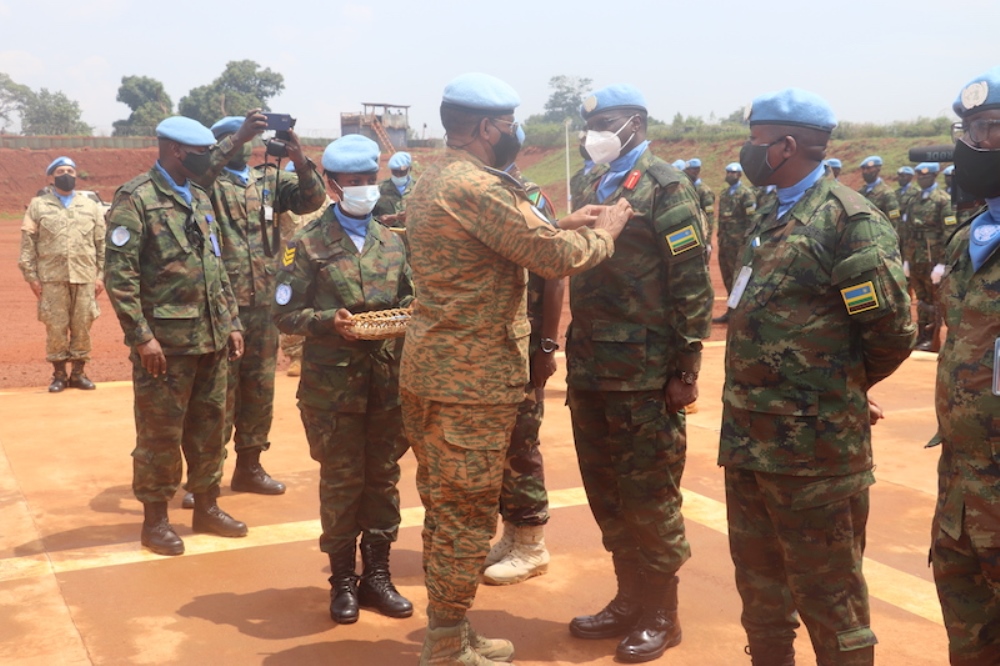
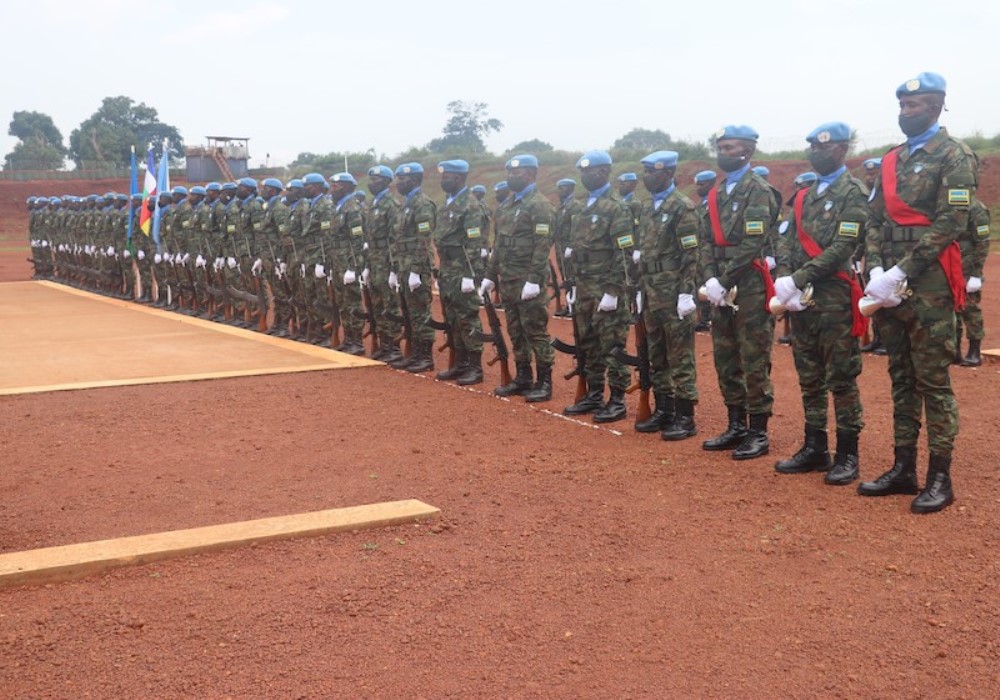
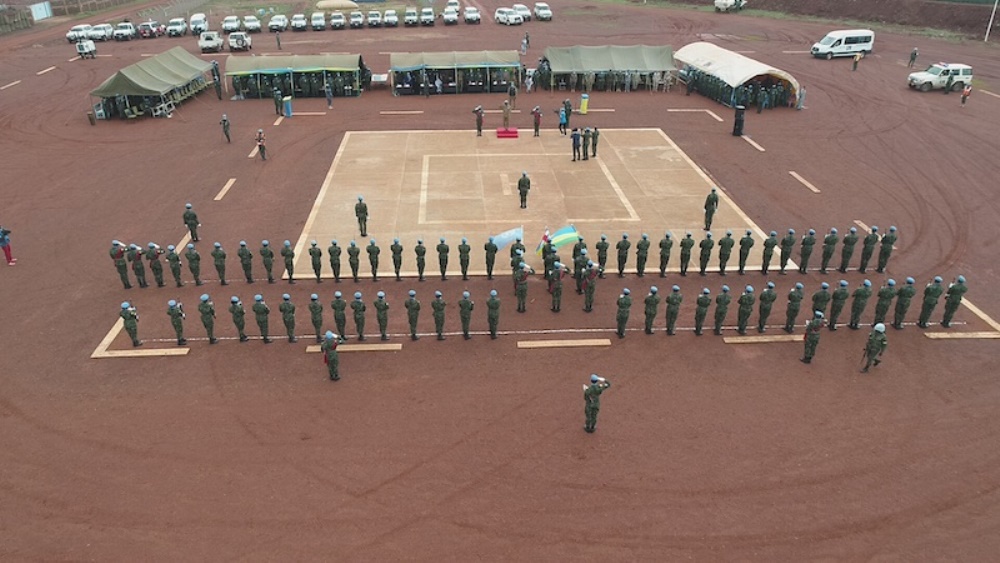
As he presided over the ceremony held at Bria on 16th July 2021, MINUSCA Force Commander, Lt Gen Daniel Sidiki Traoré thanked Rwandan peacekeepers for their effort to bring back peace in CAR as well as providing medical support to MINUSCA.
“You are awarded medals on merit. Rwanda Battle group has done an outstanding job in peace keeping as well as providing medical services to peace keepers and the public during their tour of duty” he said.
RWA MED VI Commander, Col Prof. Alex Butera said both contingents (RWA BG III & RWA MED VI) operated in a very tense environment since their arrival in mission area with the escalation of activities by armed groups.
“However, we managed to carry out our role of ensuring sustainable Health protection of forces as well as protecting civilians in conflict zones,” he noted.
Rwanda maintains 2 Infantry Battalions, a Mechanized Battle Group and a Level II Hospital in support of peacekeeping operations in CAR.
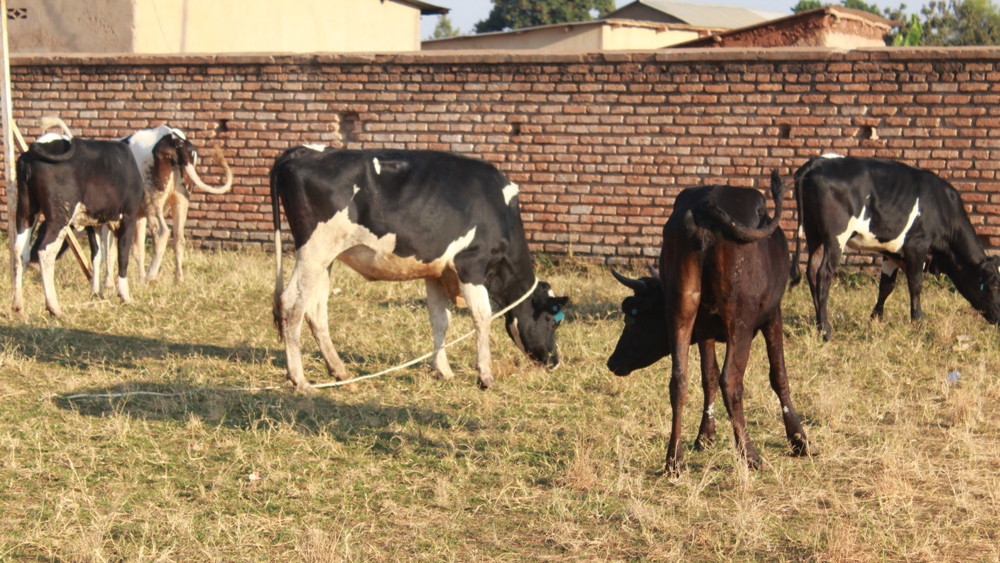
The donation took place on Friday 16th July 2021 in Tumba sector where the hospital donated eight cows to Genocide survivors.
The hospital also donated Rwf1 million to two families whose relatives are former employees of CHUB killed during the Genocide.
The Director General of CHUB, Dr. Augustin Sendegeya has said that similar gesture is organized annually as an act of solidarity with Genocide survivors to help them improve livelihoods.
“We organize similar activities every year in context of commemoration of the 1994 Genocide against Tutsi where we remember, fight Genocide ideology and support Genocide survivors,” he explained.
Letitia Uwamurera, one of beneficiaries whose family never owned a cow after the 1994 Genocide against Tutsi thanked Rwanda’s visionary leadership for efforts to uplift wellbeing of the needy and expressed delight with received cow expected to be milked for children and provide compost.
During the event, CHUB also donated Rwf200, 000 to a merchant identified as Vianney Kabera who encountered losses due to effects of COVID-19 pandemic to recover his business.
Kabera who was selling Irish potatoes in the wake of Coronavirus pandemic said received funds will be efficiently utilized to resume business and generate profit.
The mayor of Huye district, Ange Sebutege commended CHUB for giving back to the community.
“We are delighted with the gesture to contribute to improved wellbeing of surrounding communities. Besides, it is a good example for other institutions operating in Huye district,” he observed.
The hospital has donated 147 cows to beneficiaries in 10 sectors of Huye district passed to other members of the community through off-spring sharing program since 2014.