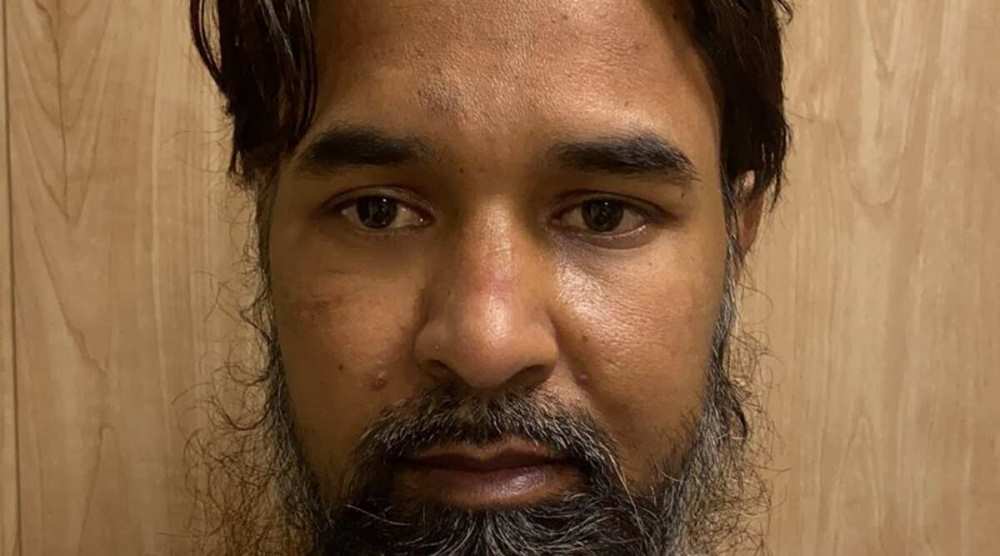
The accused, identified as Mohd Ashraf Ali, has been booked under sections of the UAPA Act, Explosives Act and Arms Act by the Delhi Police’s Special Cell.
According to police officials, Ali hails from the Punjab province of Pakistan and has been living in India for the last 10-15 years.
“We received a tip that a terrorist was hiding in Laxmi Nagar and could be planning something big in the coming days. Based on the inputs, raids were conducted and Ali was apprehended from his house around 10 pm on Monday. We found an AK-47 along with several arms and ammunition from his house. We suspect he was planning a major attack in the city,” said a senior police officer.
Police said he was living in India under the name Ali Ahmed Noori. He obtained identity cards through forged documents, they added.
Special Commissioner of Police (Special Cell) Neeraj Thakur said Ali was questioned and at his disclosure, the AK-47 and other weapons were recovered from his hideouts in Delhi. Sources said the weapons and forged IDs, such as an Indian passport, were recovered from Kalindi Kunj, Turkman Gate.
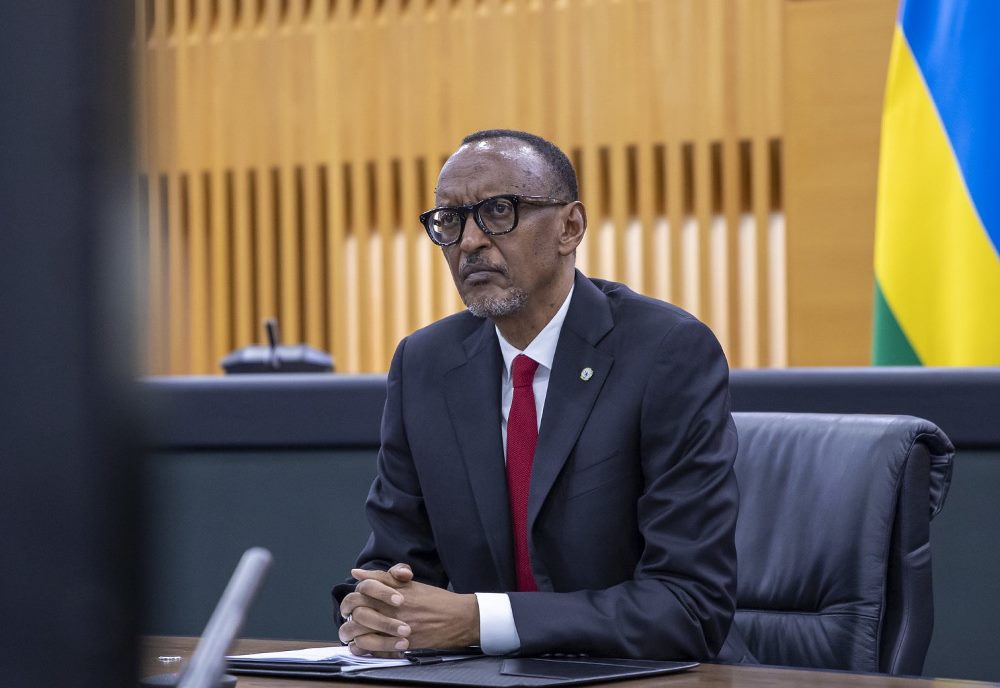
“Peace is much more than the absence of violence. The precondition for sustainable peace is a shared understanding of the root causes of a conflict, by a broad range of stakeholders in society,” he said.
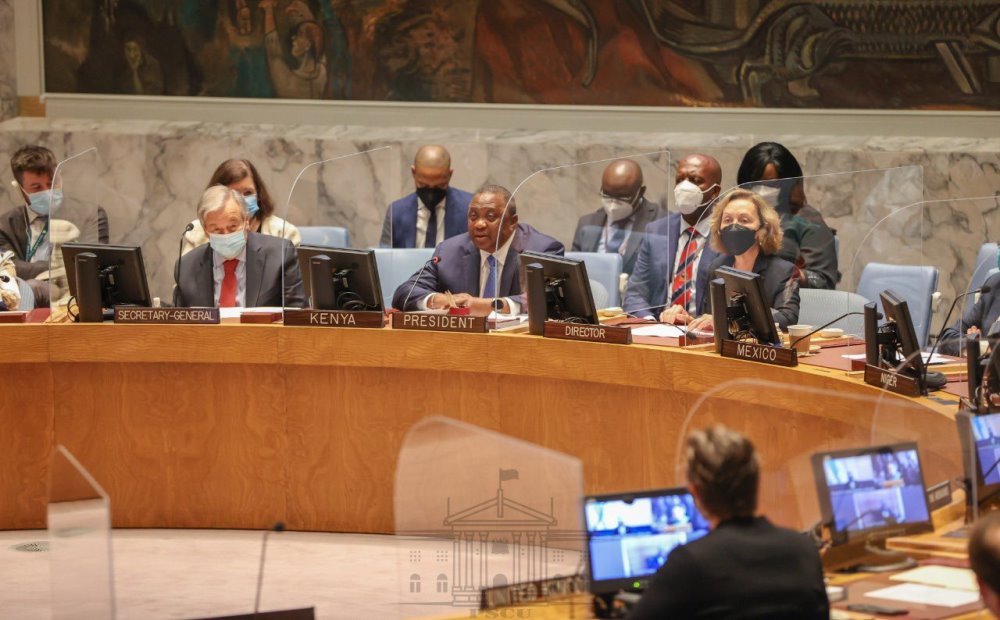
The President made the call on Tuesday 12th October 2021 at the United Nations Security Council (UNSC)’s Debate on Peacebuilding and Sustainable Peace.
Chaired by Kenyan President Uhuru Kenyatta, the meeting was attended by UN Secretary-General António Guterres, Rwandan President Paul Kagame, former South African President Thabo Mbeki and a civil society representatives among others.
As he delivered remarks, Kagame also shared thoughts on what sustainable peace may entail, picking an example from Rwanda’s recent experience.
“First, peacebuilding should be understood as an ongoing process, a constant search for solutions through dialogue and consensus, as we say in Rwanda. It may not be possible to entirely prevent all conflicts. In fact, disagreements and grievances will always be there, in one form or another. But the intensity and impact of conflicts can be minimized by remaining attentive to local needs and expectations,” said Kagame.
This means, according to the President, investing in the capacity of institutions and individuals, so they can deliver the results that citizens expect and deserve.
Secondly, Kagame highlighted that there is no universal template that can be transferred automatically from one context to another.
He said that external advice and examples can be helpful in encouraging reflection and finding new approaches noting that Rwanda has benefitted from various partnerships.
“Third, we must reckon with the growing power of social media to exploit vectors of division in society, that can quickly weaken the social fabric. Finally, peacebuilding is not a purely technical enterprise. It is deeply political and human and must take account of the emotions and memories that various parties bring to the table,” underscored Kagame.
Despite the opportunity to learn lessons from previous failures and successes of peacebuilding processes, Kagame said that the international community’s toolbox has hardly changed.
To this end, the President shared thoughts on Rwanda’s experience along resilience journey after the 1994 Genocide against Tutsi where success is always an option in whatever circumstances.
“Rwanda’s post-genocide trajectory is marked by a consistent focus on national unity, inclusion, and service delivery. There are other positive examples from Africa, and beyond. Practical and tangible partnership is critical,” he said.
“Rwanda’s experience is that, no matter how bad the situation appears, success is always an option. Let’s build on today’s debate, and challenge ourselves to work together to demand better results in international peacebuilding,” added Kagame.
Speaking at the meeting, UN Secretary‑General António Guterres also urged countries to include and involve all segments of the population in the process of rebuilding communities and sustaining peace.
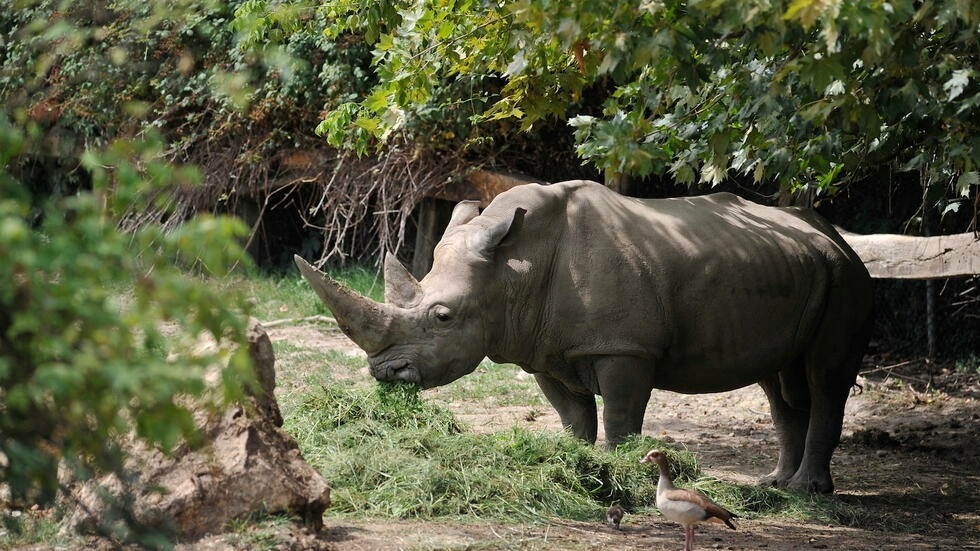
“Nonno Toby” (Grandpa Toby) passed away on October 6, Elisa Livia Pennacchioni of the Parco Natura Viva, a zoo near the northern city of Verona, told AFP.
“He collapsed on the floor on the way back to his nighttime shelter, and after about half an hour, his heart stopped,” she said.
Toby will be embalmed and put on display at the MuSe science museum in Trento, where he will join Blanco, a white lion from the zoo who died five years ago, Pennacchioni said.
White rhinos normally live up to 40 years when held in captivity, and up to 30 years in the wild, she said.
Toby’s death, which follows the passing of his female partner Sugar in 2012, leaves the Parco Natura Viva with one remaining white rhino: Benno, aged 39.
However, there are only two examples left of the northern white rhino subspecies who live in Kenya, which are watched round-the-clock by armed guards, the environmental group says.
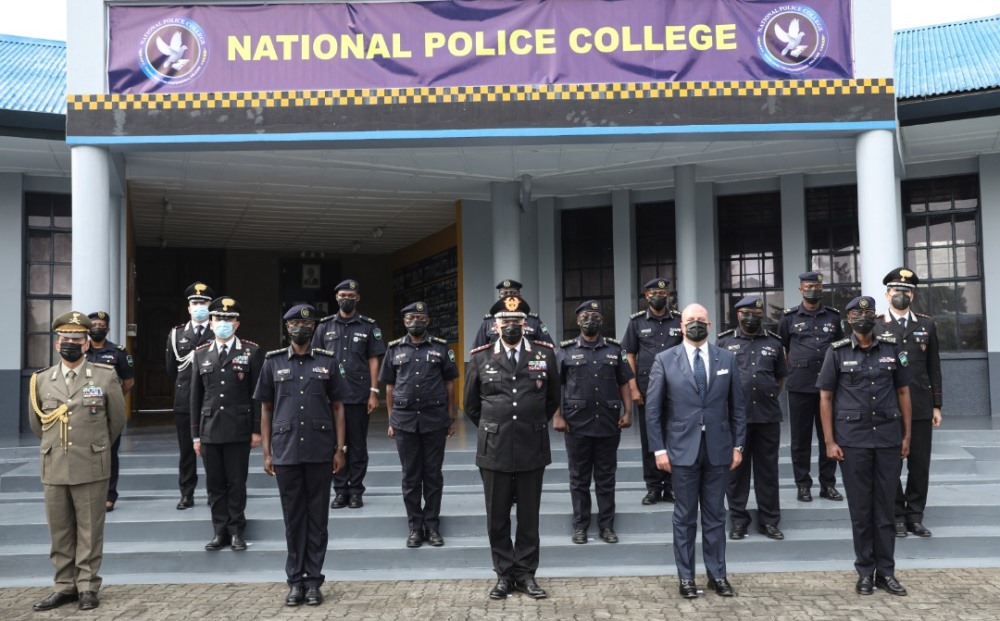
Lt. Gen. Luzi accompanied by the Italian Ambassador to Rwanda, Massimiliano Mazzanti were received by NPC commandant, Commissioner of Police (CP) Rafiki Mujiji, who gave them an overview of the College.
“The National Police College equip officers with academic programmes at undergraduate and post-graduate levels as well as professional and specialized courses. Undergraduate programmes specialize in the faculties of Computer Science and Information Security, Forensic Science, Professional Police Studies (PPS) and Law,” CP Mujiji explained.
The post-graduate programmes offers a Master’s degree in Peace Studies and Conflicts Transformation.
CP Mujiji also elaborated on the College’s partnership with other academic institutions and open to law enforcement officers from local and regional agencies.
Lt. Gen. Luzi, while meeting the Police Senior Command and Staff Course (PSCSC) students, reminded them that they are the cornerstone to sustainable security in the region.
“I am happy to visit this College and to meet you here. This training should pave way to strengthen efforts to collectively achieve sustainable security and peace in your respective countries and region as a whole,” said Lt. Gen Luzi.
He pledged Carabinieri support through the existing framework with Rwanda National Police (RNP).
The statement released last night shows that 95 people have caught the virus out of 7671 sample tests, one recovered while four are critically ill.
A total of 1,702,654 people have been fully vaccinated while 2,621,889 received the first dose of COVID-19 vaccine since Rwanda began countrywide inoculation program on 5th March 2021.
Coronavirus symptoms include coughing, flu, and difficulty in breathing. The virus is said to be transmitted through the mucous membranes of the respiratory tract.
Rwandans are urged to adhere to COVID-19 health guidelines, washing hands frequently using soaps and safe water, wearing face masks and respecting social distancing.
They were at the time found driving while intoxicated, on various roads of the City of Kigali between October 7th and 11th.
They were paraded to the media on Tuesday, October 12, at Rwezamenyo Police station in Nyarugenge district.
One of those arrested Bahati Musaka regretted the violations which resulted to his children to miss school fees.
“I was arrested on Sunday, October 10 in Rwezamenyo sector after Police tested me and detected 1.14 millilitres of alcohol contained in blood. My children have not been able to return to school due to my mistakes. I ask for forgiveness,” said Musaka.
Vincent Sebakungu said that he had taken one bottle before driving his car home.
“I was arrested in Kimihurura at the time I was taking my wife home from the hospital. I had only taken one bottle before driving and when Police stopped me detected later that I had taken alcohol,” said Sebakungu.
Sebakungu asked for leniency and advised his colleagues to stop drinking and drive.
RNP Deputy Spokesperson, Chief Superintendent of Police (CSP) Africa Apollo Sendahangarwa said that those are part of continuous operations targeting impaired driving.
“Police conducted various campaigns and messages were delivered to rise awareness on safer road usage including prohibition of driving under the influence of alcohol. Know that Police will not give up in rising awareness however those who remain keeping deaf ears will not be tolerated,” said CSP Sendahangarwa.
CSP Sendahangarwa urged the public in particularly drivers to put their lives first through owning and respect the road safety measures to avoid fatal risks associated to those violations including accidents and loss of lives.
Kagame made the revelation today as he virtually attended the Global Security Forum 2021 held in Doha, the capital Qatar.
The Global Security Forum is an annual international gathering hosted by The Soufan Center. For several years it has brought together an international network of senior officials and experts, and consistently included ministers, heads of security agencies, and prominent experts, academics, and journalists, and thousands of attendees. This invitation-only event provides a unique dynamic platform for international stakeholders to convene and address the international community’s leading security challenges.
During a conversation with Steve Clemons, a journalist working with The Hill, United States based media house, Kagame responded to different questions concerning areas to be given priority.
Kagame pointed out health and security as priorities noting that no country can address related challenges on its own whether in Africa, Europe, Middle East or anywhere.
Kagame explained that insecurity is caused by shortfalls in governance which sometimes take dangerous forms such as terrorism, or even Genocide as it was the case in Rwanda. The President said that the issue crosses borders, affects neighbors and the entire regions.
Despite many lessons to learn from past failures, Kagame said, the global toolbox for dealing with these threats has hardly evolved.
He pointed out an example of the Democratic Republic of Congo (DRC) where a peacekeeping mission has operated for twenty years with meager results. He also hinted on what happened in Afghanistan with 20-year commitment from the international community.
“The efforts in the Sahel region to contain armed groups have also not yet managed to transform the security landscape. The point is not to cast blame. But at a minimum, we can say that something is very wrong in terms of how cross-border security threats are dealt with,” he said.
Kagame emphasized that failure to find a long-lasting solution is not from lack of engagement or lack of money observing that no amount of external funding or troop commitment can create sustainable peace, without putting governance at the center of it all.
Because of our country’s history, the President said, Rwanda is committed to contributing to peace building operations and making a difference where we can.
“We have done so multilaterally, through the United Nations or the African Union, such as in the Central African Republic or in Sudan and South Sudan. In fact, Rwanda has been among the top five UN troop-contributing countries for several years now,” he said.
Kagame also talk about Rwanda’s response to a bilateral appeal from the Government of Mozambique to combat the radical insurgency in Cabo Delgado.
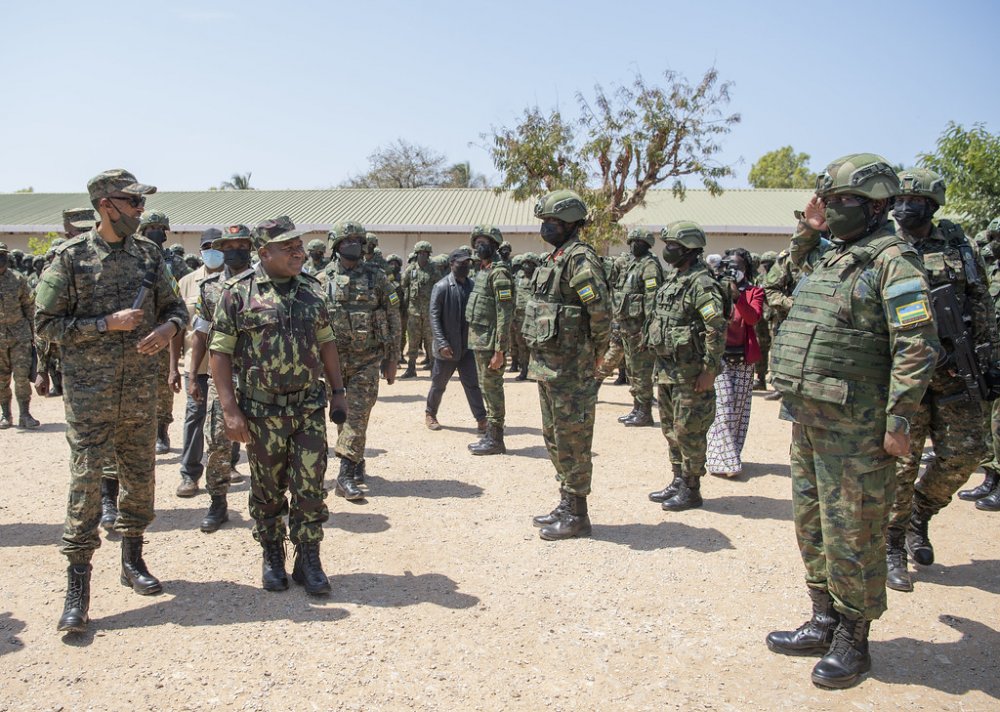
The President said that Rwanda initially sent 1000 joint forces of the RNP and RDF, a number that has increased to approximately 2000.
“The Government of Mozambique invited us and many others like they invited the SADC countries. That is the southern region and neighbors of Mozambique to come and help. Rwanda went there on the ground that this was bilateral and an invitation from a friendly country that wanted such a help urgently. So, we did respond. In fact, we deployed more than 1000 troops. We have close to 2000, military troops and police as well,” he revealed.
Kagame said that the intervention was done quickly to deploy troops where the problem has been addressed to a great extent.
“And it is Rwanda, the Government of Rwanda working with Mozambique, the two of us found resources to deploy to support these operations. We didn’t get any financing from outside,” he noted.
Considering achieved progress, Kagame stressed that bilateral relations between two countries committed to deal with problems in Africa should be done faster and more effectively.
“If we had for example to wait until plans are put in place, mobilization is done , then using the usual format that is used, we probably would still be waiting by now and not sure when we get started,” he said.
Kagame revealed that both countries are working together to identify the root cause of the problem and what needs to be fixed.
This will be done through capacitating the country in many ways to deal with own problems.
Kagame said that Rwandan troops should not be on the ground forever but rather should be working with the country to deal with the problem for as long as the support is necessary leading to making the country stand on its own.
Rwanda sent the first contingent of joint troops to Mozambique on 9th July 2021.
The 2021 Global Security Forum will take place from October 12-14, 2021, in Doha, Qatar and adopt a hybrid approach for virtual participants. As states vie for power and resources in a rapidly evolving geopolitical climate, the 2021 Global Security Forum is held under the theme ‘Cooperation or Competition? Changing Dynamics of Global Security.’ Conversations will focus on the imperative of balancing cooperation and competition in ensuring security and addressing critical challenges in governance and development.
[{{Kagame commends Rwandan, Mozambican troops for liberating Cabo Delgado}}->http://en.igihe.com/news/article/kagame-commends-rwandan-mozambican-troops-for-liberating-cabo-delgado]
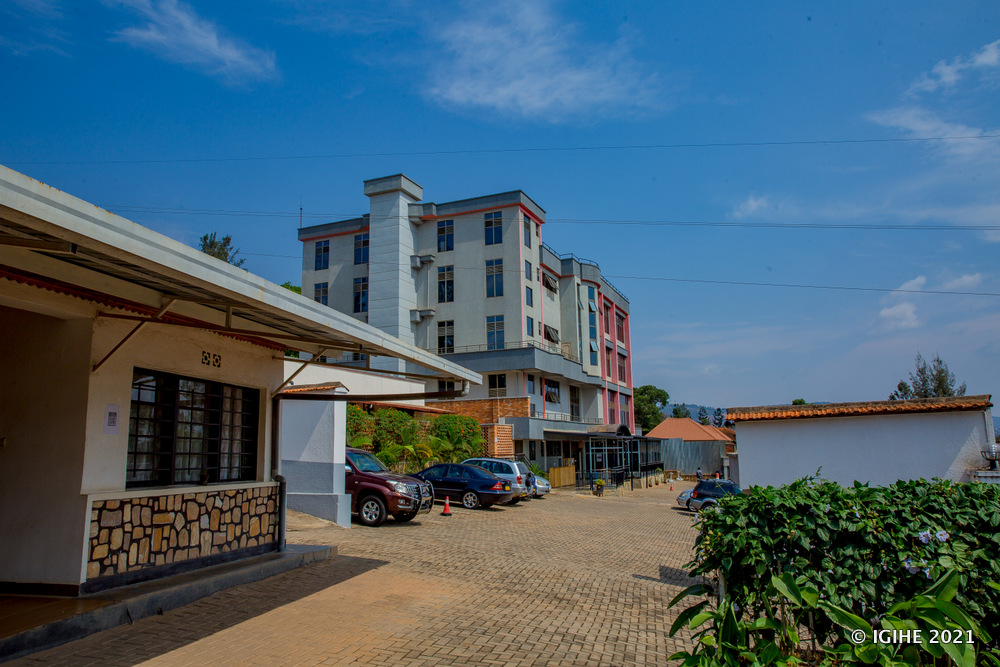
Davis College and Akilah is among the higher learning institutions that tapped into the advantage of technology, despite facing challenges that included the lack of internet among students.
As one of the largest, private foundations with interventions in different sectors, including the education sector, the Mastercard Foundation helped Davis College students to attend classes online through the provision of monthly internet bundles until schools were allowed to resume in person.
The foundation also provided full and partial scholarships to students whose families were largely affected by the pandemic.
The Dean of Students at Davis College, Kevin Mbogo, has said that the support from the Mastercard Foundation was very helpful for the college to continue operations.
“Some students get discouraged and tend to drop out of school due to life hardships. We have an inclusive program designed to help them psychologically and provide tangible support to move on with life. However, it would not have been possible during COVID-19 had it not been the intervention of the Mastercard Foundation,” he said.
Mbogo explained that the funds provided by Mastercard Foundation were utilized to buy internet bundles for students, improve their wellbeing and help them to comply with COVID-19 containment measures.
The Director of Faculty Development and Quality Assurance at Davis College, Christine Osae, has said that COVID-19 prompted Davis to restructure its teaching methodology and use e-learning platforms.
“We would not have been able to revise our curriculum to shift from physical to online classes without the Mastercard Foundation. Their support was of great significance,” she noted.
Lorna Ong’esa, who works at Davis College in the Hospitality and Tourism Management department also revealed that the grant helped students to continue their learning undisrupted. They also benefited from academic advisory and mentorship services that covered both academic and psychosocial support. This contributed to improved academic performance.
“Studies were not affected by the pandemic and the shift to online learning because the grant enabled full and partial scholarships for students in need. Students continued to assist each other to get a deeper understanding of the courses they were taking. They did assignments and interacted with their colleagues through different e-learning platforms, which helped to improve their performance,” she said.
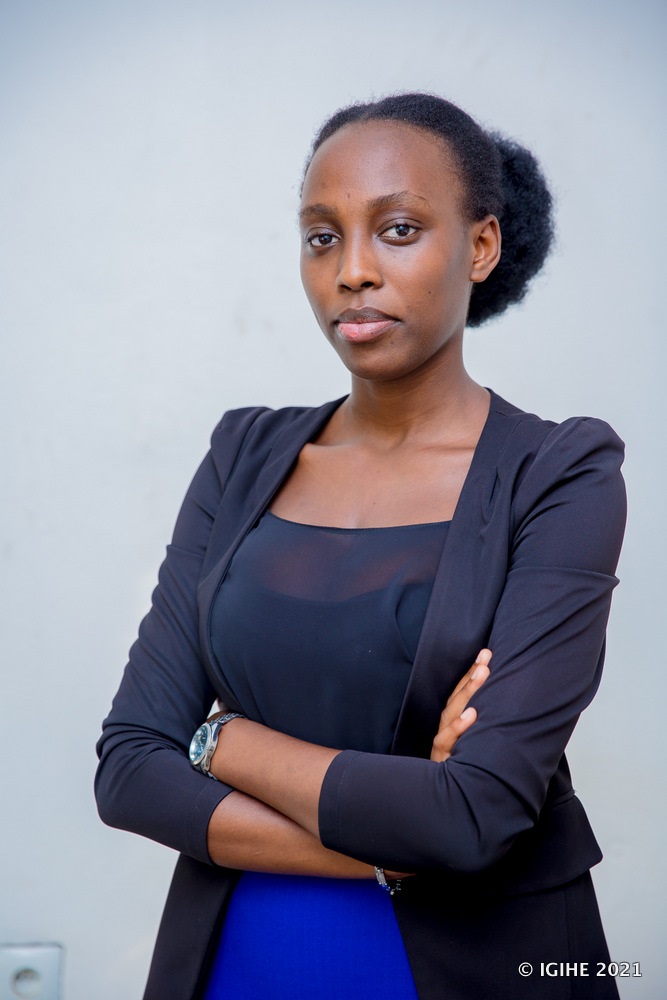
Jacqueline Uwamahoro is among students at Davis College and Akilah who received a Mastercard Foundation scholarship. With it, she has been able to concentrate on hotel and tourism-related courses for a year.
Speaking to IGIHE, Uwamahoro revealed that she was selected among the beneficiaries after losing her job, which had helped her to cater for school fees.
“I was working as a teacher and was laid off as COVID-19 emerged. I was sunk into despair, wondering about my future. Lucky enough, Mastercard Foundation intervened and selected me among the beneficiaries who received school fees and free internet to attend virtual classes,” she said.
Divine Uwera is in her final diploma year as a Business Management and Entrepreneurship student.
Uwera’s family was affected by the pandemic and was no longer able to provide for her school fees. She considered halting her studies.
“I was overwhelmed with joy when I was selected among the beneficiaries. I would like to extend feelings of gratitude to Mastercard for the great support which helped me to continue studies without interruptions,” she said.
Rica Rwigamba, the Country Head of the Mastercard Foundation highlighted that the support is part of the foundation’s commitment to overhaul the education sector.
“It was critical that students continued to pursue their education despite the Covid-19 pandemic. Being able to support the transition to e-learning while ensuring inclusion and equity was very important to us as the Mastercard Foundation. Through this partnership geared by the foresight of Davis College and Akilah, we have been able to embark on this new model of learning, and unlock barriers through financial support for students. This is a testament of the collective commitment towards continuous learning and innovation in education.”
A total of 463 students received scholarship support from the Mastercard Foundation as part of their COVID-19 Recovery and Resilience Program.
Davis College and Akilah has been operating in Rwanda for the past 11 years.
The school has graduated eight intakes since 2010, educating more than 2,700 students.
Davis College graduates students with diplomas in Hospitality and Tourism Management, Information Systems, and Business Management & Entrepreneurship.
The Ministry of Health has reported that no one succumbed to COVID-19 yesterday. Similar report announcing zero deaths was last released on 13th June 2021.
The statement released last night also shows that 46 people caught the virus out of 7498 sample tests while the positivity rate stands at 0.6%.
The death toll remains at 1308 since the pandemic emerged in March last year .
A total of 1,698,091 have been fully vaccinated while 2,485,979 received the first dose of COVID-19 since Rwanda began countrywide inoculation program on 5th March 2021.
Coronavirus symptoms include coughing, flu, and difficulty in breathing. The virus is said to be transmitted through the mucous membranes of the respiratory tract.
Rwandans are urged to adhere to COVID-19 health guidelines, washing hands frequently using soaps and safe water, wearing face masks and respecting social distancing.
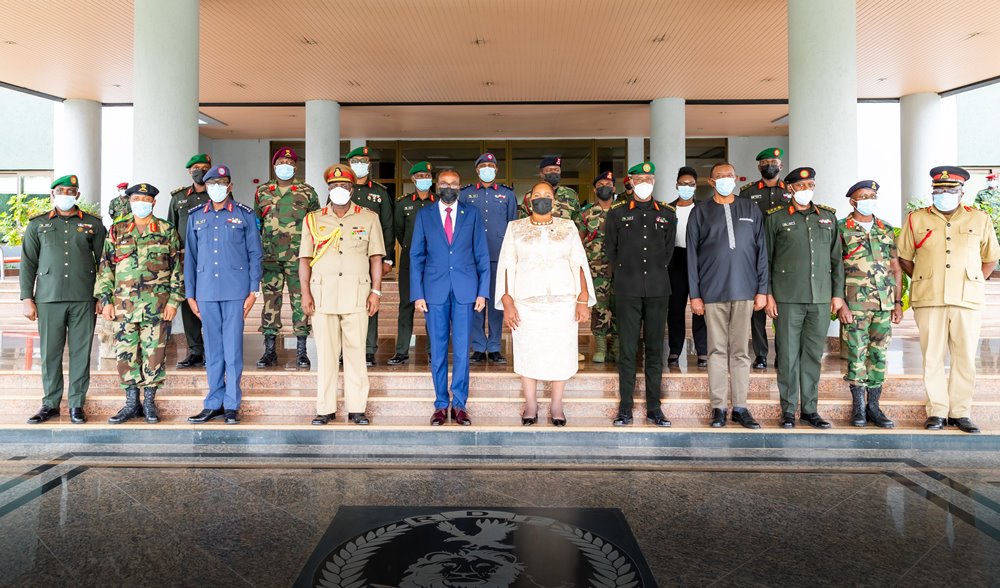
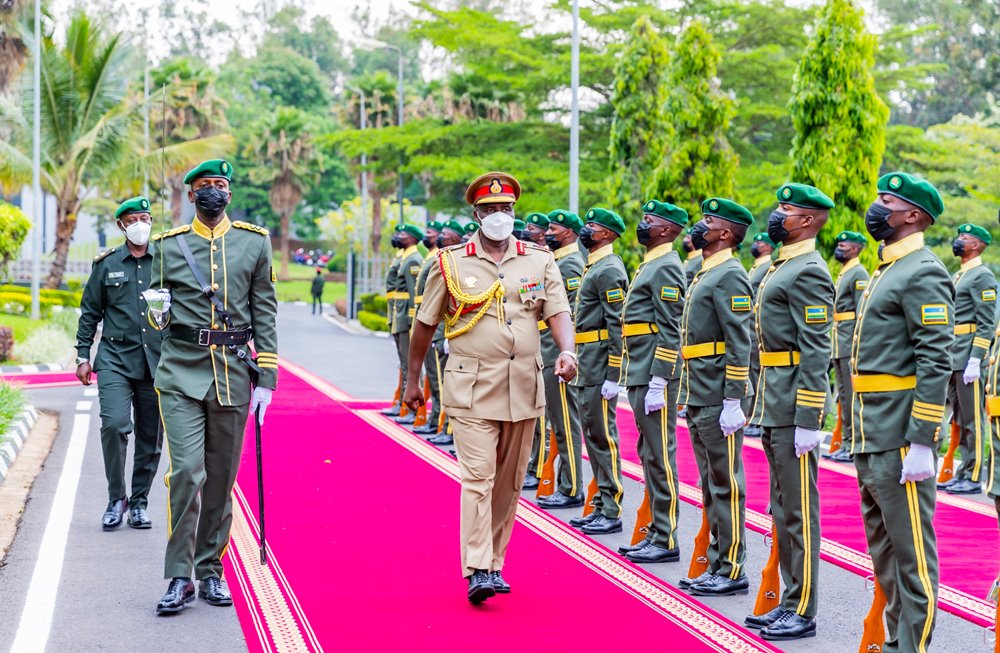
The delegation arrived in Rwanda on Sunday 10th October 2021.
Following his arrival, the visiting delegation held a bilateral defence meeting with Rwanda’s Minister of Defence, Major General Albert Murasira and Chief of Defence Staff, General Jean Bosco Kazura at the Rwanda Defence Force Headquarters in Kimihurura, Kigali on 11th October 2021.
“We are here basically to cement our bilateral relations especially in defence cooperation which dates back in 2018 and before. We have been exchanging military personnel in regards to training; some of our military personnel are here in Rwanda even today. I am here with the delegation to cement this strong cooperation,” said Sendeza in an interview after the discussions.
She further noted that such engagements strengthen the already good bilateral cooperation between the defence forces.
“We also discussed about Rwanda’s mission in Cabo Delgado province in Mozambique to fight insurgents. The Government of Malawi commends what Rwanda is doing to bring peace in the region and fully support the initiatives taken.”
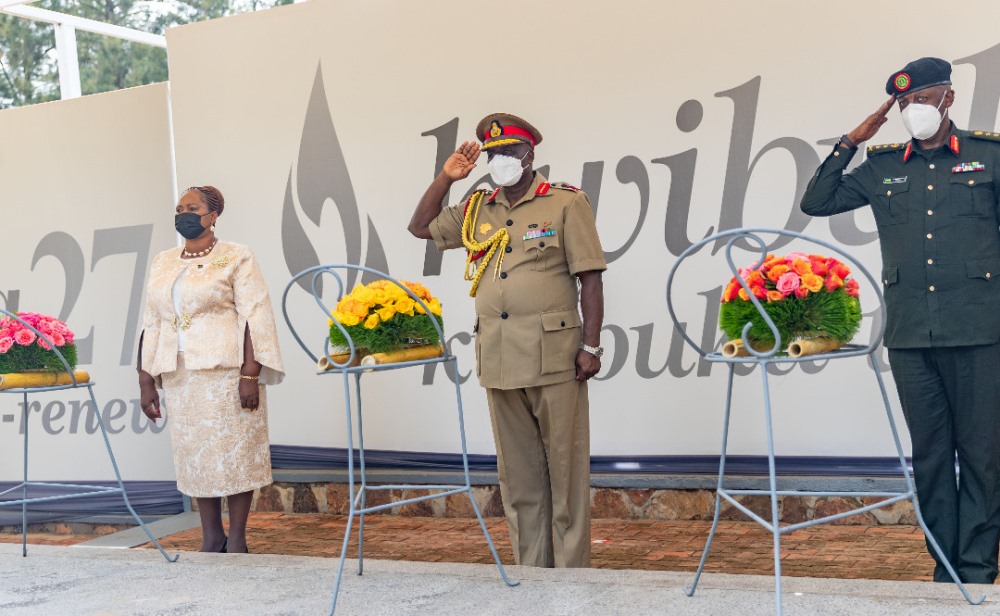
The Malawian delegation also paid respect to the victims of the Genocide Against the Tutsi at the Kigali Genocide Memorial and toured the Campaign Against Genocide Museum.
Before concluding the visit on Thursday 14, the delegation will visit Rwanda Military Academy and Rwanda Defence Force Command and Staff College in Bugesera and Musanze districts respectively. They also plan to visit a recently constructed IDP project in Musanze district before concluding their visit.