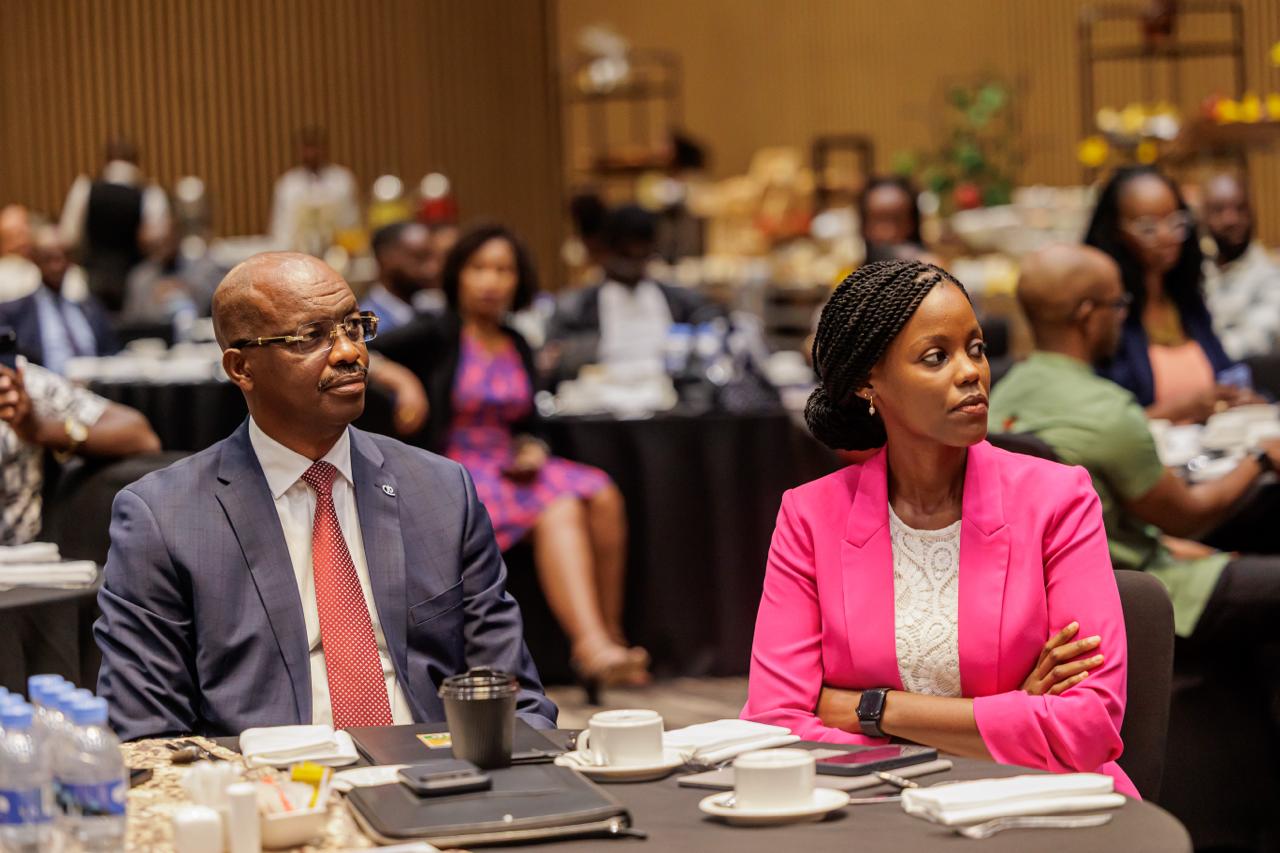
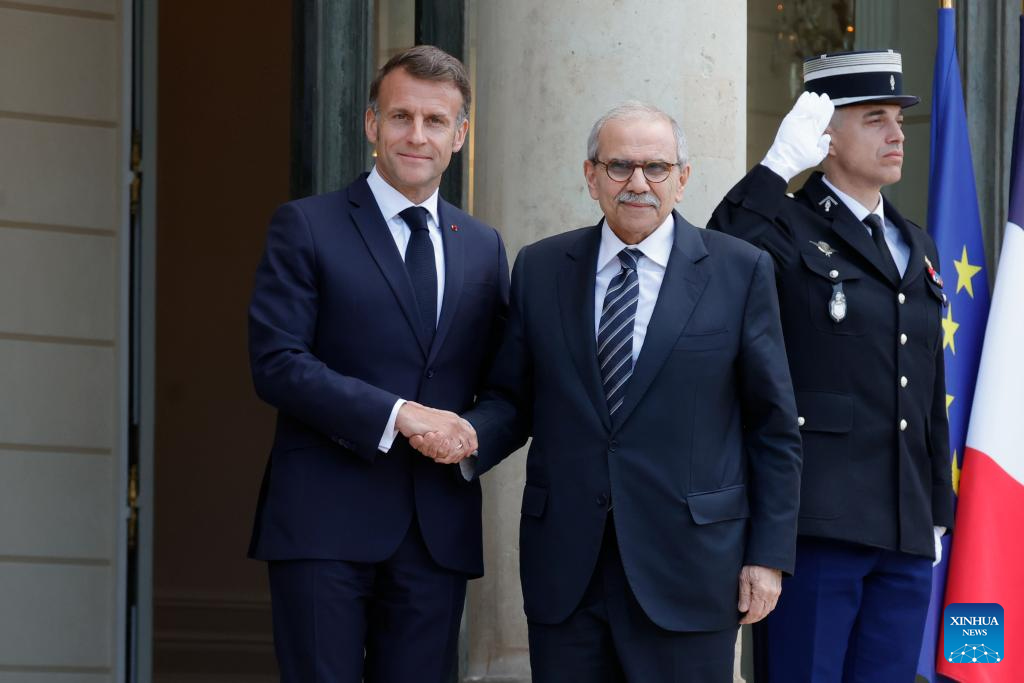
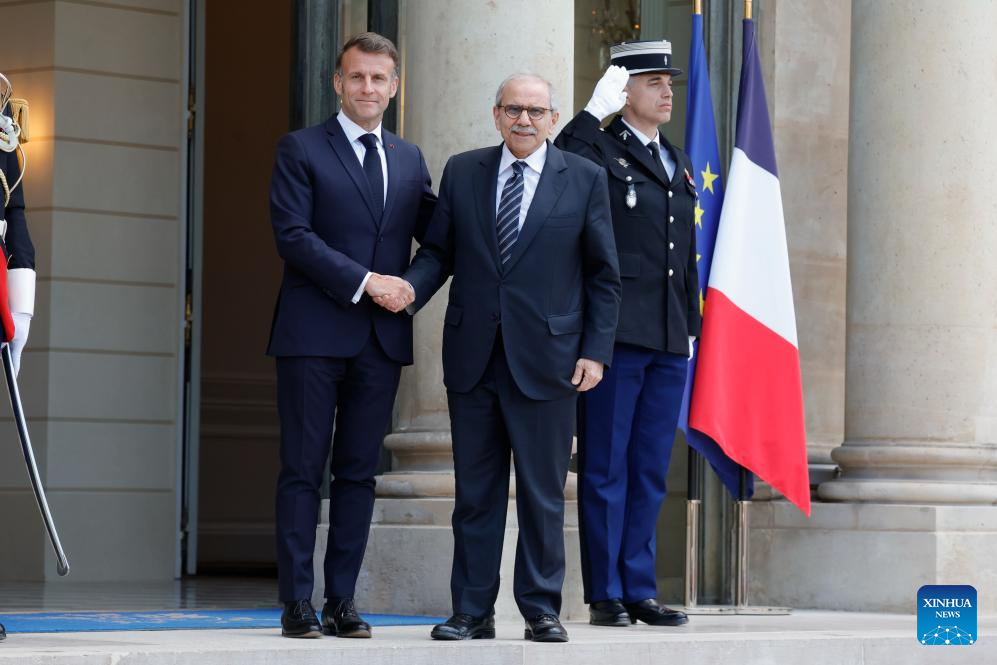
The agreement was signed in Lomé, Togo, on January 16, 2026, by Rwanda’s Minister of Foreign Affairs and International Cooperation, Ambassador Olivier Nduhungirehe and his Togolese counterpart, Professor Robert Dussey.
The development was confirmed through a statement released by Rwanda’s Ministry of Foreign Affairs.
The signing advances commitments made during the official visit of Togolese President Faure Essozimna Gnassingbé to Rwanda from January 18 to 19, 2025.
The visit focused on accelerating the implementation of previously agreed commitments and identifying new areas of cooperation.
President Faure was accompanied by a high-level delegation of senior Togolese officials, who held discussions with their Rwandan counterparts on ways to fast-track development across various sectors.
At the time, President Paul Kagame and President Faure commended the strong and friendly relations between Rwanda and Togo and pledged to further expand cooperation in areas including political consultations and economic cooperation.
The two leaders also urged relevant institutions to speed up the implementation of agreed commitments, including the establishment of a joint commission, the removal of visa requirements and the elimination of double taxation between the two countries.
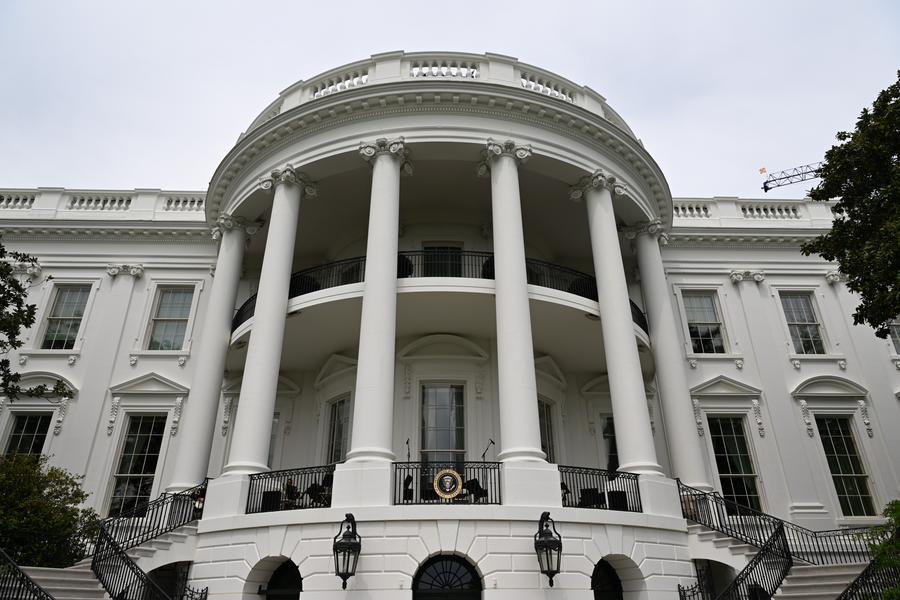
“I may put a tariff on countries if they don’t go along with Greenland, because we need Greenland for national security,” Trump said at a White House event, without giving more details.
Greenland has a self-governing government within the Kingdom of Denmark, with Copenhagen retaining authority over its defense and foreign policies. The United States maintains a military base on the island. Since returning to the White House in 2025, Trump has repeatedly expressed a strong desire to “obtain” Greenland by any means.
A “fundamental disagreement” persists over the future of Greenland following a meeting of high-ranking officials from the United States, Denmark and Greenland on Wednesday.
U.S. Vice President JD Vance and Secretary of State Marco Rubio met Danish Foreign Minister Lars Lokke Rasmussen and Greenlandic Foreign Minister Vivian Motzfeldt at the White House.
Besides wide-ranging tariff measures announced in 2025, the Trump administration has expanded the use or threatened to use tariff tools to curb the entry of fentanyl, in sanctions on Iran, a dispute over water rights with Mexico, and other non-traditional areas.
Miguel Perez Pirela was appointed minister of communication and information, replacing Freddy Nanez, who will head the Ministry of Ecosocialism, Rodriguez said on Telegram.
In his new role, Nanez will be responsible for “continuing to promote public policies for the protection of our Pachamama (Mother Earth) and all matters related to environmental protection,” Rodriguez said.
Rodriguez also appointed Anibal Coronado as minister of transport.
Local authorities said Saturday that about 20,000 pigs raised at the farm will be culled in accordance with quarantine regulations.
The report said local animal health authorities began testing after the farm owner reported pig deaths on Friday. The results, confirmed at around 1 a.m. local time Saturday, showed the pigs had tested positive for ASF. This marks the first ASF case reported in Gangwon province in about 14 months, following the previous outbreak detected in November 2024.
To prevent the spread of the disease, quarantine authorities have dispatched an initial response team and an epidemiological investigation team to the farm. Access to the premises has been restricted, while disinfection and epidemiological investigations are underway.
African swine fever is an acute, highly contagious viral disease affecting pigs, characterized by high fever, severe internal bleeding and a high mortality rate. The disease is not transmissible to humans, but contaminated food, footwear, tools and vehicles can facilitate the spread of the virus.
President Kagame was received on arrival by Guinea’s Prime Minister, Amadou Oury Bah, the Office of the President said.
The visit follows his recent message congratulating Doumbouya on his election victory. On Monday, January 5, 2026, Kagame welcomed the outcome of the election, expressing optimism about the future of relations between Rwanda and Guinea.
“Congratulations to my brother, President Mamadi Doumbouya, on his election as President of the Republic of Guinea. We look forward to deepening our strong bilateral relations and working closely together to advance our shared priorities and the prosperity of our nations,” Kagame said in a post on X.
Doumbouya’s victory was formally confirmed by Guinea’s Supreme Court on Sunday, January 4, marking his transition from interim junta leader to democratically elected president.
The court validated provisional results that credited the 41-year-old leader with 86.72 percent of the vote. His closest challenger, Abdoulaye Yero Baldé, received 6.59 percent, with the court noting that Baldé later withdrew his legal challenge to the results.
The election was Guinea’s first presidential vote since the September 2021 coup that removed former president Alpha Condé. It was conducted under a new constitution that lifted restrictions on military leaders contesting elections and extended the presidential term from five to seven years.
Rwanda and Guinea maintain cordial and steadily strengthening relations, supported by high-level visits and expanding cooperation across multiple sectors.
“Our task is coordinated and effective work to stabilize the situation in the energy system as soon as possible, in particular, in the city of Kiev,” Shmyhal said on Telegram.
Under the emergency measure, residents will be allowed to access emergency heating shelters at night despite the curfew, Shmyhal said.
The government has also instructed relevant agencies to streamline procedures for connecting backup power equipment to the electricity grid and to redistribute such equipment across regions based on critical need.
State-run companies, including Ukrainian Railways and gas operator Naftogaz, have been ordered to increase electricity imports to at least 50 percent of their total consumption.
Earlier this week, Ukrainian President Volodymyr Zelensky said that the energy situation is most difficult in Kiev, Odesa and the central Dnipropetrovsk region.
The report shows that total formal external trade in goods amounted to $1.93 billion in Q3 2025, representing a 25.7 percent decline compared to the same quarter in 2024, reflecting a general slowdown in trade activity during the period.
Within this overall contraction, imports stood at $1.37 billion in Q3 2025, down from $1.75 billion in Q3 2024, marking a 21.85 percent year-on-year decrease. The sharp fall in imports played a key role in easing Rwanda’s trade deficit, even as external trade volumes declined.
Despite the annual drop, imports rose on a quarterly basis, increasing by 9.74 percent compared to the second quarter of 2025, when imports were valued at $1.25 billion, pointing to a modest rebound in import demand.
{{Key import sources
}}
China remained Rwanda’s largest source of imports in Q3 2025, supplying goods worth $311.41 million. Other major import partners included Tanzania ($156.85 million), India ($118.47 million), Kenya ($102.24 million) and the United Arab Emirates ($98.87 million). Together, these five countries accounted for 57.55 percent of Rwanda’s total imports during the quarter.
At the regional level, imports from East African Community (EAC) partner states totaled $325.88 million, marking a 40 percent decline compared to the same quarter in 2024. Tanzania and Kenya continued to dominate Rwanda’s imports from the bloc, jointly accounting for nearly three-quarters of EAC-sourced imports.
{{Food, machinery and fuel dominate import bill
}}
In terms of commodities, food and live animals remained Rwanda’s largest import category, valued at $248 million in Q3 2025. This was followed by machinery and transport equipment ($244.48 million), manufactured goods classified chiefly by material ($227.72 million), mineral fuels and lubricants ($179.71 million), and chemicals and related products ($173.89 million).
{{Export performance shows mixed trends
}}
While imports fell sharply, Rwanda’s export performance showed mixed results during the quarter. Domestic exports were valued at $389.99 million in Q3 2025, reflecting a 12.7 percent increase compared to the previous quarter, but a 41.53 percent decline compared to Q3 2024.
Exports remained concentrated in key markets, led by the United Arab Emirates and the Democratic Republic of Congo, followed by China and regional EAC partners. Exports to the EAC recorded strong year-on-year growth, driven mainly by increased shipments to Uganda.
Rwanda’s export sector was largely driven by mineral and agricultural commodities. The report shows that gold, coltan, cassiterite and wolfram remained Rwanda’s leading export products in Q3 2025, alongside traditional agricultural exports such as coffee and tea.
Overall, imports accounted for 70.83 percent of Rwanda’s total trade in goods during the quarter, while domestic exports and re-exports contributed 20.18 percent and 8.99 percent, respectively.
The criminal division of the Seoul Central District Court in charge of Yoon’s obstruction of justice case handed down the prison sentence to Yoon for abusing the presidential security service to hinder the anti-corruption agency from executing its arrest warrant in January 2025.
The Corruption Investigation Office for High-ranking Officials (CIO) was once thwarted in its attempt to arrest Yoon as the presidential security service formed human shields and bus blockades to prevent investigators from entering the presidential residence.
The team of Cho Eun-suk, an independent counsel who led investigations into Yoon’s insurrection and other charges, demanded a 10-year prison term for Yoon.
The court said Yoon privatized the presidential security service for personal safety and private interests by blocking the law enforcement agencies’ lawful execution of an arrest warrant and attempting to destroy evidence, pointing out that despite the very bad nature of his crime, he consistently offered unconvincing excuses and showed no remorse.
The court stressed that severe punishment was necessary, considering the need to restore the rule of law damaged by Yoon’s crime, but it noted that the fact that he was a first-time offender with no criminal record was considered a favorable factor.
The sentencing, which was broadcast live, was Yoon’s first verdict coming from his botched martial law bid.
The first-instance sentencing for Yoon’s insurrection charges was scheduled for Feb. 19. The special counsel sought a death penalty for Yoon on the charges.
The emergency martial law was declared by Yoon on the night of Dec. 3 in 2024, but it was revoked hours later by the National Assembly.
The constitutional court upheld a motion to impeach Yoon last April, officially removing him from office.
The ousted leader was indicted under detention last January as a suspected ringleader of the insurrection, becoming the first sitting president to be arrested and indicted.
Ingabire argues that Article 106 violates constitutional guarantees, including Articles 29 (b) and 61, and should be annulled.
The article allows a court, during criminal proceedings, to summon individuals suspected of being accomplices or witnesses to provide explanations. If no incriminating evidence emerges, the trial continues without further summons.
However, if the court deems their explanations inadequate and detects signs of criminal responsibility, it may direct the Prosecution to open an investigation based on matters raised in court.
Ingabire’s petition stems from her own experience in a case before the High Court involving Sibomana Sylvain and others.
She was summoned by the trial judge to give explanations, after which the court ordered the Prosecution to investigate her, leading to her arrest.
The Supreme Court first confirmed that Ingabire has standing to bring the challenge, as the application of Article 106 directly affected her and could impact others similarly.
Representatives from the State Attorney General’s office opposed admitting the case. They cited a prior Supreme Court ruling in the case of Mutebwa Alphred, which addressed a similar provision (then Article 121) and prompted subsequent amendments.
They argued that evidence against concealed suspects may only surface during trial and that judicial orders for investigation do not predetermine outcomes.
They also invoked the principle of res judicata, asserting that an issue already conclusively decided by a competent court cannot be relitigated.
Ingabire countered that a judicial order to investigate carries immediate legal consequences. She further noted that, despite the earlier ruling, the revised wording of Article 106 retains unconstitutional elements.
Drawing on scholarly opinions from French legal experts, the Supreme Court held that res judicata must be evaluated in light of the substance of the contested provision.
The principle does not bar courts from revisiting or correcting prior approaches, particularly when legislation has been redrafted. The court cited precedents from India’s Supreme Court allowing review to verify legislative compliance with earlier judgments.
The court observed that, although the Criminal Procedure Law was amended in response to the prior decision, Article 106 preserves the core mechanism of judicial summons and retains elements now challenged by Ingabire.
Accordingly, the Supreme Court declared the petition admissible and scheduled the merits hearing for March 4, 2026.
As a result, the ongoing trial of former DALFA–Umurinzi party members, led by Sibomana Sylvain before the High Court, will remain paused until the Supreme Court rules on Ingabire’s case.
In a statement issued on January 15, 2026, the group’s spokesperson, Col Kamasa Ndakize Welcome, alleged that FARDC troops, supported by Burundian forces, FDLR rebels, and Wazalendo militias, launched coordinated ground and aerial attacks in the Point-Zéro area, approximately 10 km from Minembwe Commune.
Col Ndakize claimed the assaults deliberately targeted civilian areas, including Rwitsankuku and surrounding villages, destroying infrastructure, forcing residents to flee, and endangering innocent lives.
In response, he said Twirwaneho fighters repelled the ground offensive, shot down one enemy drone that was striking populated areas, dismantled opposing positions, and seized strategic heights, including Mount Baruta, a position long used, according to the group, to shell civilian zones.
MRDP-Twirwaneho emphasized that it will not tolerate alleged abuses by government-aligned forces and reiterated its commitment to protecting Banyamulenge civilians and their property.