Nyirishema was trying to offer a bribe of Frw40,000 to influence Police officers to issue a roadworthy certificate for his vehicle, regardless of its mechanical errors.
The Rwanda National Police (RNP) spokesperson, Commissioner of Police (CP) John Bosco Kabera, said that Nyirishema, a vehicle broker, had brought a truck for mechanical inspection.
“Instead, he tried to bribe the AIC technicians so as to ignore all the identified mechanical faults and to issue the mechanical inspection certificate.
Like many others, who have tried these criminal actions before, Nyirishema was arrested red-handed and handed over to RIB,” CP Kabera said.
The truck he was driving, he added, had multiple mechanical faults including loose brakes, broken chassis, gas emission and diesel fuel leak.
“Imagine the dangers of driving a vehicle with no brakes and with a broken chassis. The inspection rather gives you a detailed status of your vehicle and as a responsible person, you should instead fix such faults to be safe on road but also to save other road users, instead of trying to bribe Police officers, which only lead to your arrest and imprisonment,” said CP Kabera.
Article 4 of the law N° 54/2018 of 13/08/2018 on fighting against corruption states that any person who offers, solicits, accepts or receives, by any means, an illegal benefit for himself/ herself or another person or accepts a promise in order to render or omit a service under his or her mandate or uses his or her position to render or omit a service, commits an offence.
Upon conviction, he/she is liable to imprisonment for a term of more than five (5) years but not more than even (7) years with a fine of three (3) to five (5) times the value of the illegal benefit offered, solicited or received.
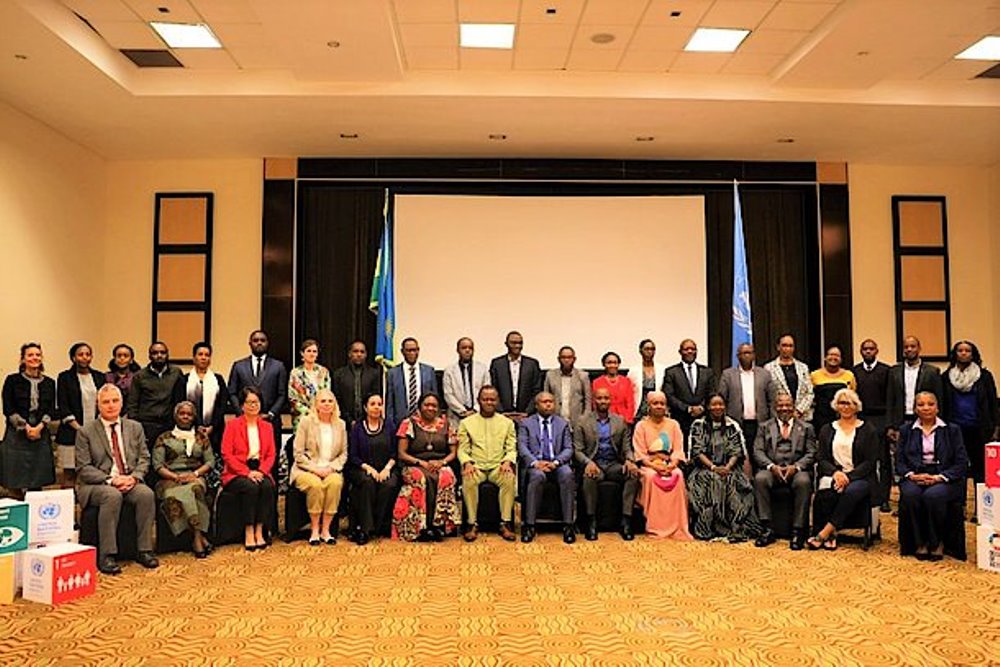
The meeting was hosted by the chair, Dr. Uzziel Ndagijimana, the Minister of Finance and Economic Planning and co-chair, Mr. Ozonnia Ojielo, the UN Resident Coordinator to Rwanda. They were joined by colleagues in Government, the UN, diplomatic corps, civil society organizations and private sector representatives.
The Joint Steering Committee aims to provide strategic direction and oversight of the UNSDCF for its alignment, with national, regional and international development processes, mechanisms and goals such as Vision 2050, National Strategy for Transformation; and links with other processes, such as the Voluntary National Reviews and the Universal Periodic Review. The platform also serves as an accountability mechanism of the Cooperation Framework in the delivery of a collective system support to the 2030 Agenda.
The UNSDCF is a five-year plan that outlines how the UN supports Rwanda’s development agenda from 2018 to 2024. It is delivered by the United Nations system, with all agencies working together under the umbrella of ‘One UN’. It is mapped on to the three Strategic Priority Areas that constitute the Government’s National Strategy for Transformation (NST1).
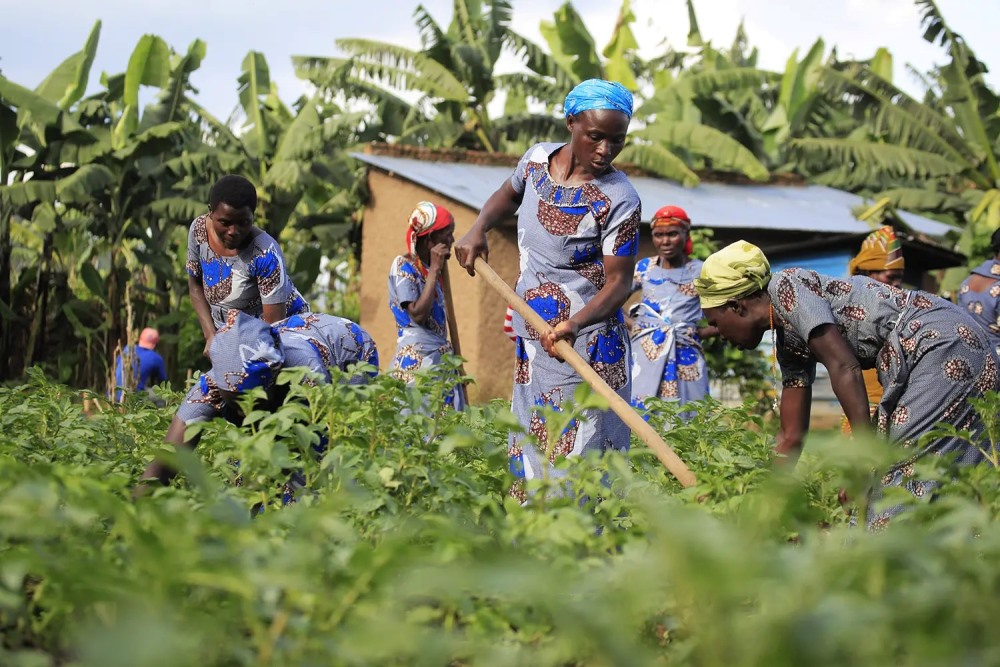
Through 14 joint programmes on cross border trade and social cohesion, social protection, health care, youth, HIV, gender equality and empowerment of rural women, nutrition, COVID-19 response and recovery, climate resilience, data, Integrated National Financing Framework, food security, disability, diversity and inclusion and sustainable cities, thousands of communities are reached, systems are strengthened, capacities are built and people’s lives are transformed.
Minister Ndagijimana acknowledged the many years of joint work between Rwanda and the UN, and emphasized the importance of strong collaboration and partnership, which is crucial to ensuring that the country builds back better from COVID-19 pandemic, and stays on track to the ambitious goals set out by Vision 2050 and the National Strategy for Transformation.
“Today we have an opportunity to review, assess and re-commit ourselves to act together to support Rwanda’s Development. As we continue to deal with spill-over effects of COVID-19, and other global challenges such as inflation and food security, we are committed more than ever to achieve NST1 targets and we will count on UN’s collaboration in this Journey, “ Minister Ndagijimana said.
Mr. Ozonnia commended the Government of Rwanda for its strong leadership throughout the response and recovery from the COVID-19 pandemic and reiterated the UN’s commitment to working closely on Rwanda’s continued development.
“I congratulate the Government of Rwanda for its strong leadership and commitment to supporting Rwanda’s socio-economic recovery and development efforts and for our strong partnership in our development work. The UN in Rwanda takes pride in being a partner of choice for the Government and the people of Rwanda as the country continues to build on its remarkable success story and ensuring the well-being of its people embedded in the spirit of “Leaving no one behind”. Mr. Ozonnia said.
Minister Ndagijimana announced that the proposed budget revision will increase the Government spending by Frw 106.4 billion, a 2.3% increase to Frw 4,764.8 billion from Frw 4,658.4 billion announced in the original budget in June, 2022.
This revised budget will support continued economic recovery, supplement job creation efforts and continue to facilitate businesses to recover from covid-19 impact. Additional Investments in education, healthcare, ICT, and agriculture will be at the forefront of the ongoing government effort to invest in Rwanda’s future, through the National Strategy for Transformation (NST1).
“Despite persistent challenges stemming from COVID-19 effects, global supply chain issues, inflationary environment and impact of climate shocks, our economy continues to show strong signs of recovery. Over the first three quarters of 2022, the economy registered an 8.5% growth, with signs of beating projections. This budget revision reflects these successes, and the effectiveness of the economic recovery plan in keeping businesses afloat, encouraging new investments, creating jobs, and maintaining strong social protection for vulnerable citizens”, Minister Ndagijimana said.
{{Key changes in the 2022-2023 Revised Budget}}
{{Resources}}
The proposed revised budget contains several important adjustments, such as an increase of domestic revenues by Frw 115.2 billion from Frw 2,372.4 billion in the original budget to Frw 2,487.6 billion – a 5 % rise, while domestic financing increased by Frw 39.4 billion from Frw 282.6 billion in the original budget to Frw 322 billion.
A stronger recovery has increased government revenues, including Frw113.2 billion increase in tax revenue from Frw 2,067.7 billion in the original budget to Frw 2,180.9 billion representing 5.1% increase. Furthermore, non-tax revenue is expected to increase by Frw 2 billion from Frw 304.6 billion to Frw 306.7 billion, thanks to the continued recovery through increased internally generated revenue streams.
{{Expenditure }}
In the revised budget Government expects to increase spending by Frw 106.4 billion from Frw 4,658.4 billion to Frw 4,764.8 billion. The expenditure envelope has been revised to reflect the changes for some items under recurrent spending, capital expenditure and net lending outlays.
{{Recurrent Expenditure}}
On the original budget estimate of Frw 2,543.2 billion is being raised to Frw 2,705.5 billion showing a net increase of Frw 162.3 billion, while on capital expenditure, there will be a decrease in capital spending of Frw 66.5 billion from Frw 1,847.2 projected in the original budget to Frw 1,780.8 billion to support key recurrent expenditures, such as increase of the number of teachers and their salaries, supporting universal school feeding program, and additional fertilizers to boost coffee production.
According to someone’s beliefs, February 14th is just another Hallmark holiday that was made for profit or another pagan holiday.
For others, it may be the only day of the year they get to express their love for one another. Sad, I know.
However, not everyone celebrates Valentine’s Day. In fact, some people would rather avoid the day entirely.
Here are some tips for keeping your relationship with your significant other going, regardless of whether they celebrate the holiday or not.
{{Understand their reasons for not celebrating}}
Consider that you are in a relationship with someone who has a past, a family background, personal or religious beliefs that might discourage them from celebrating this holiday.
Their religion may disapprove of such celebrations, and they may opt not to participate in such events based on their religious commitment.
Depending on their upbringing, they may not only avoid Valentine’s Day, but also all things romantic.
People who were raised in a culture where emotions were not shown or where their parents argued every other day, but got gifts on Valentine’s Day, feel that this day is pretentious, so they avoid it.
It could also be possible relationship fails that carries bad memories to this day so they don’t celebrate it.
Whatever it is, allowing your partner to voice their reason for not wanting to celebrate this day is beneficial to your relationship and your sanity.
This is going to save you time by overthinking their grounds for not celebrating while also giving you a chance to learn about your partner.
Ask yourself if you are willing to not celebrate this holiday for the sake of your relationship
Are you willing to compromise and give up on celebrating valentine’s day for your relationship because your partner does not celebrate it?
Some people celebrate this holiday with their loved ones just so they don’t feel left out.
You don’t want to be the only one who gets nothing from your significant other when all your friends, including the ones who are single, are happily receiving and giving romantic gifts.
You could also be a true romantic and this day happens to be your favorite holiday, but for a relationship with your perfect romantic partner, whose one flaw is not celebrating this day, are you willing to give up on valentine’s or your relationship?
After giving your partner’s reason for not celebrating this holiday, you should carefully evaluate if their reason is valid enough for you to give up on valentine’s day celebration.
You don’t want to slowly despise your partner over such an issue or find yourself cheating on them over such an issue.
If your significant other is really adamant about avoiding Valentine’s Day and you are okay with that then you can simply give it up, but don’t allow anyone to bully you into not celebrating a day you enjoy if it is important to you.
{{Remove the phrase ‘valentine’s’ all-together}}
Valentine’s day doesn’t have to be valentine’s day, it can be ‘lovers’ day’ or whatever you wish to call it.
This will allow you to not feel as though you are celebrating this holiday like everyone but in your own way as a couple.
This could be a compromise for a couple with one who enjoys this holiday and another who wishes the 13th of February would be followed by the 15th.
{{Celebrate the holiday on a different day…or not at all!}}
Instead of celebrating on that day, switch things up a bit and plan another activity for the following day or even the next week instead.
Seven whole days leading up to this valentine’s day have been given meaning. And you can use those days to show how much you mean to each other and allow valentine’s day to be a normal day.
It’s not worth the stress of forcing someone to celebrate a holiday if they don’t want to participate in any way.
{{Make it “Valentine’s Day” regularly!}}
You don’t have to wait until this holiday to express your love for your partner, which is one of the reasons some people don’t celebrate it and also because it puts too much pressure on a couple.
You should be able to say “I love you” whenever you want and not just wait for a special occasion.
Remember just because they’re not into celebrating the holiday doesn’t mean that they don’t appreciate receiving your love all year round.
Your partner might not be the commercialized valentine’s day type but we all love to be loved and pampered, so make it a day to pamper each other.
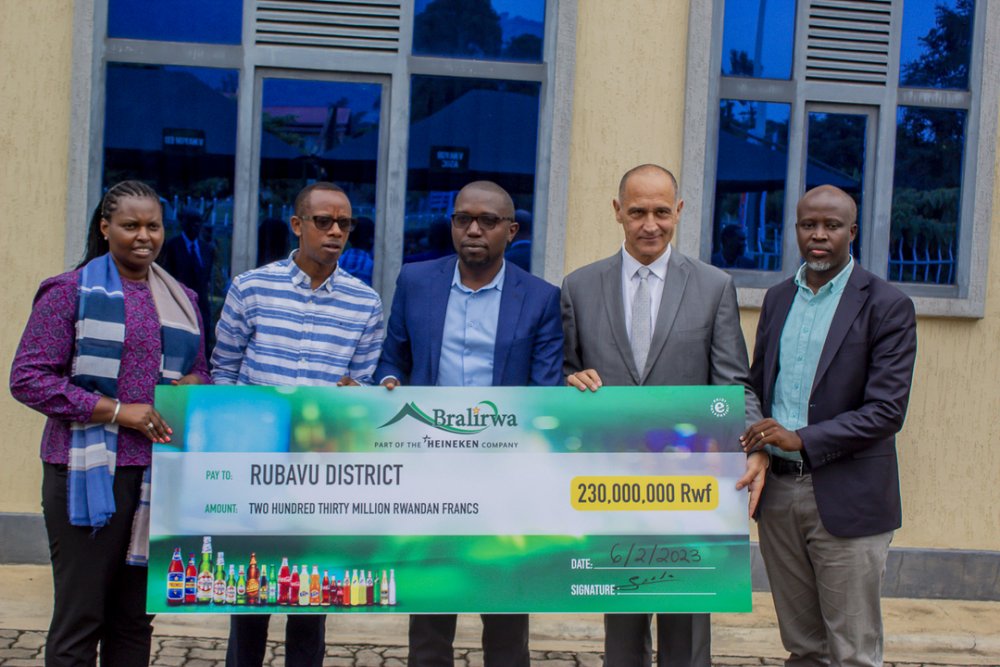
The school located in Nyamyumba Sector school is expected to have have 22 rooms.
The funding provided on 6th February 2022 is in line with the agreement signed between Bralirwa Plc and Rubavu District, aiming to partner in different areas.
These include payment of Community Based Health Insurance for vulnerable residents, employing people near the factory, and other programs related to self-development and self-sufficiency.
Speaking at the event, Etienne Saada, the Managing Director of Bralirwa Plc, said that participating in activities that improve the welfare of the residents fall under the company’s responsibilities.
In addition to building the school, he said, they are also involved in other activities such as subscribing residents for Community Based Health Insurance, environmental protection, and more.
Saada talked about the goal of developing careers and skills that Rwanda has set, which is necessary to contribute to children getting enough knowledge to help start their businesses.
He further stressed that it is the company’s responsibility to contribute to the well-being of the people in every corner.
Saada said that they have a good relationship with Rubavu District, and expressed optimism that they will continue to cooperate in other development projects.
The Mayor of Rubavu District, Kambogo Ildephonse said that construction works of this school are to be resumed, in collaboration with Rwanda TVET Board (RTB), and the Ministry of Education. He disclosed that the school is expected to be operational next year.
Kambogo continued to say that they are proud that Bralirwa Plc is one of the first tax-paying companies in Rwanda in their region. That is one of the reasons they started engaging in talks so that their interactions could be more productive on both sides. They also thank the company for their understanding and cooperation.
He assured the parents who always wanted the work of that school to push through that what they have been requesting from different institutions is now going to be implemented.
Rwanda has set a goal that at least 60% of schools will be vocational and technical, which will give a boost to the country’s ambitions of developing knowledge-based economy.
Of 12 sectors that make up Rubavu District; nine have at least one vocational school.
The donation by Bralirwa Plc was necessary because Nyamyumba is a Sector that did not have such a school, as the Director of Education in Rubavu District, Simpeze Emmanuel emphasized.
The implementation will be done by Nkafu Policy Institute, a think tank of the Denis and Lenora Foretia Foundation which is based in Yaoundé, Cameroon.
This grant will be used in dealing with numerous challenges that faces the bloc such as rising authoritarianism, non-respect of basic rights especially women’s rights, growing insecurity, contested governance, women’s rights, accountability, security among others.
Dr. Denis Foretia, Co-Chair of the Denis and Lenora Foretia Foundation and the Executive Chairman of the Nkafu Policy Institute said that the two-year grant from Open Society Foundations will promote human rights in the region.
“We are extremely honoured to partner with Open Society Foundations on this new initiative which we hope will have a lasting impact in promoting women’s rights and agency in the sub-region,” he said.
Dr. Foretia added that the project will strengthen the research capacity of ECCAS think tanks, identify and promote the development of civil society leaders, especially women leaders.
Professor Robert Nantchouang, Director of Nkafu said: “The new project is an opportunity for the Nkafu Policy Institute to share its experience with fellow think tanks across the continent and within ECCAS in particular and to contribute to realizing not only the Africa We Want but the Africa We Must Have.”
The project will also engage policymakers in accelerating regional integration, especially regarding the African Continental Free Trade Area (AfCFTA). AfCFTA could deliver far greater benefits in terms of jobs, growth, and poverty reduction than previously estimated – making it a potential game changer for Africa’s economic development if its ambitious goals are fully realized.
The Economic Community of Central African States (ECCAS) includes eleven central African think tanks, or independent policy research institutions, which are critical in promoting open governance, accountability, the rule of law, and respect for basic human rights.
ECCAS includes Angola, Burundi, Cameroon, Central African Republic, Chad, Congo Republic, DR Congo, Gabon, Equatorial Guinea, Rwanda, and São Tomé and Príncipe.
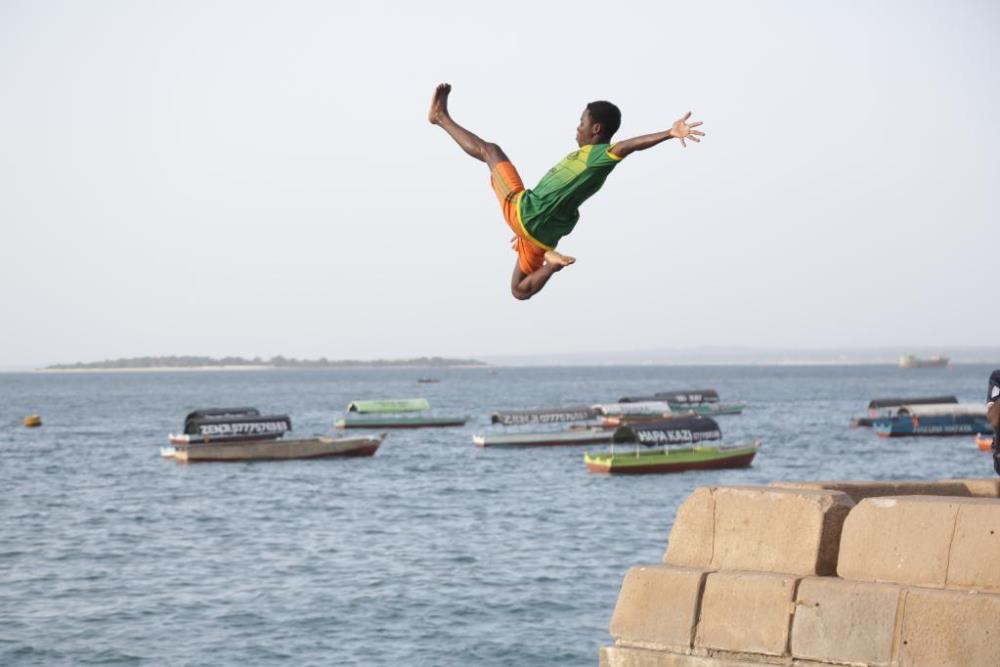
The theme of the Feb. 9-11 Zanzibar Tourism Investment and Travel Exhibition (ZTITE) 2023 is “Greener Zanzibar,” said Rahim Bhaloo, chairperson of the Zanzibar Commission for Tourism, which organizes the event.
“Preparations for the exhibition are in full swing,” Bhaloo told Xinhua in a telephone interview on Saturday, adding that the show will be opened by Tanzania’s Zanzibar President Hussein Ali Mwinyi at the Mnazimmoja grounds on Unguja Island.
The three-day event will also include a travel buyers lounge, a tourism investment forum, workshops, and panel discussions, he said.
“The goal for ZTITE 2023 is to promote eco-tourism by effectively managing and conserving Zanzibar’s cultural, environmental and historical resources,” Bhaloo said.
He said the theme, “Greener Zanzibar,” calls for tourism that involves strategic investments, sustainable business practices and responsible travel choices.
“Zanzibar is one of the world’s trending destinations with immense potential for development across the tourism value chain,” Bhaloo said.
“We believe the future of Zanzibar’s tourism sector lies in the investment in its people and its natural environment,” he said. “With a rich heritage and an abundance of flora and fauna, Zanzibar is an ideal destination for eco-tourism, heritage tourism, wellness tourism, sports and adventure tourism, and gastronomic tourism.”
In a statement, Lieutenant Colonel Rodolphe Sorgho, who is the governor of the Sahel Region, said that armed terrorist groups perpetrated a violent attack Saturday afternoon in the commune of Bani of the province of Seno, killing 25 people, including 22 civilians and three police officers.
Since 2015, insecurity in the West African country has claimed many lives and displaced thousands more.
Last week, at least 28 people, including soldiers and civilians, were killed in two separate gunmen attacks in Burkina Faso, a regional governor and the army revealed.
The UNFPA and UNICEF made the joint call in line with the International Day of Zero Tolerance for Female Genital Mutilation (FGM) which is annually commemorated on Feb. 6. This year’s event is being commemorated under the theme “Partnering with Men and Boys to Transform Social and Gender Norms to End FGM.”
The two UN agencies called for a sustainable partnership and engagement with men and boys of Ethiopia to enforce the actions against FGM and transform the deeply rooted social and gender norm, and allow girls and women to fully realize their rights and potential.
According to figures from the UN, Ethiopia has made remarkable progress in the last decade in the reduction of FGM prevalence among girls and women aged 15-49 from 74 percent in 2005 to 65 percent in 2016. However, Ethiopia is still home to 25 million circumcised women and girls.
“I would like to congratulate the Ethiopian government for the progress made so far and for their commitment to ending FGM,” the statement quoted UNICEF Representative in Ethiopia Aboubacar Kampo as saying. “Girls are subjected to FGM without a choice, and it is a clear violation of their protection rights.”
“We must collectively redouble our efforts to end this harmful practice including scaling up our engagement with men and boys to change attitudes so that the next generation of girls can live healthier lives,” Kampo said.
In Ethiopia, the most common rationale for the practice of FGM on girls and women is meeting societal expectations including traditions, culture, and norms exerting control over women’s sexuality, and preserving women’s virginity until marriage and family honor.
This reasoning is claims founded on false beliefs and culture and is passed on from one generation to another over time until they are believed to be true, the statement said, adding that partnering and engaging men and boys are critical steps in communicating the facts about FGM and its inherent risks.
According to the two UN agencies, Ethiopia has been making progress in attitude change towards FGM with 86.7 percent of boys and men, and 79.3 percent of girls and women aged 15-49 believing that FGM should not continue as a practice.
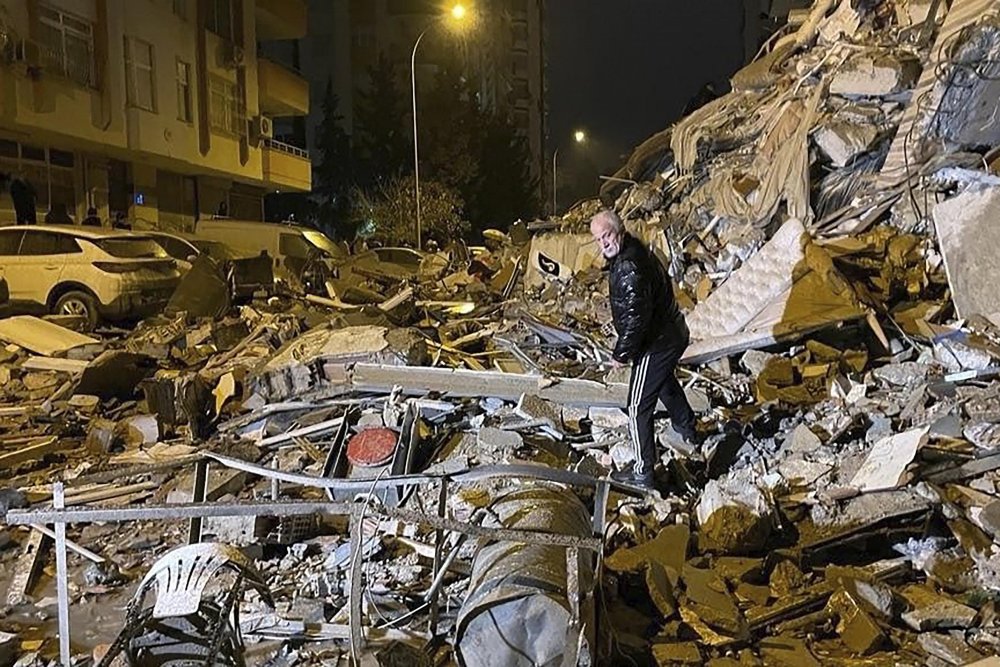
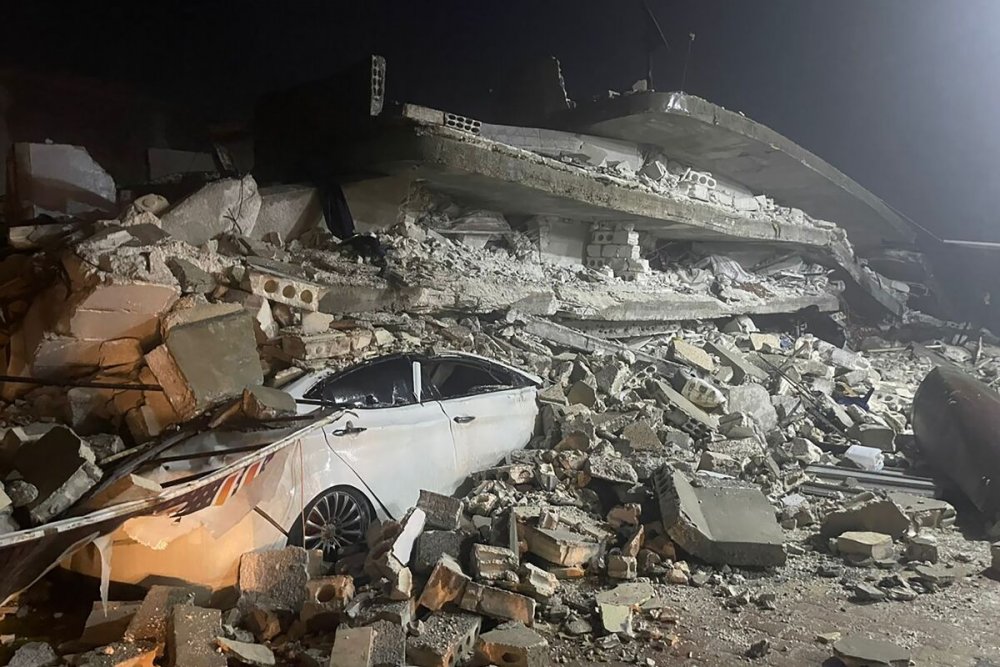
The earthquake jolted the Southeast of Türkiye and neighboring Syria early Monday on 6th February 2023.
As of today, media reports indicate that over 4000 victims have died in the strong earthquake.
In Türkiye, at least 2,921 people were killed and 15,834 others were injured in the earthquakes, the country’s Anadolu agency reported on Tuesday, citing the Disaster and Emergency Management Authority.
In neighboring Syria, at least 711 were killed and 1,431 injured in the provinces of Aleppo, Latakia, Hama, Tartus, said the Syrian Health Ministry. Media reports also cited rescue workers as saying that 733 were killed and over 2,100 injured in the rebel-held region in Syria.
Leaders of different countries have provided support for the countries to strengthen emergency response and sent messages of comfort.
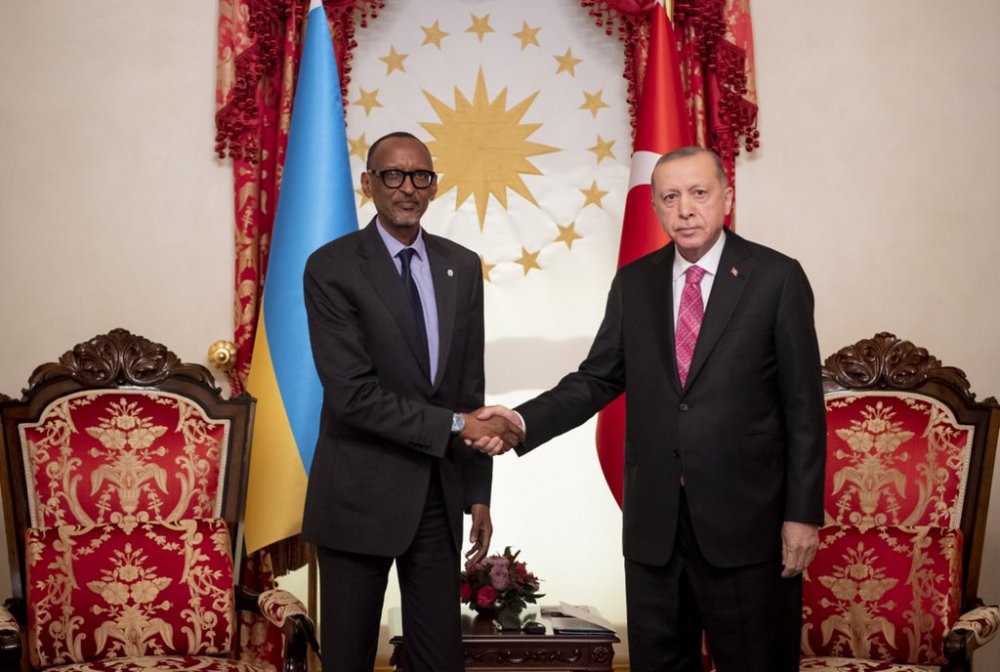
President Kagame has also condoled with the bereaved families through a message posted on Twitter.
“My deepest condolences to President Erdogan, the people of Türkiye and of Syria for the immense loss of life and destruction following the earthquake. The people of Rwanda stand in solidarity with you during this time of sorrow,” he tweeted.
Turskish President, Erdogan has declared seven-day mourning to honour victims of the earthquake.
A magnitude 7.7 earthquake struck Türkiye’s southern province of Kahramanmaras at 4:17 a.m. local time (0117 GMT) on Monday, followed by at least 78 aftershocks. The quakes were also felt in Lebanon, Israel and Cyprus.
Turkey is among countries that are often jolted by earthquakes. In 1999, strong earthquake killed over 17,000 people in Northwest of the country.
The deadliest earthquake struck the country in 1939 and took lives of 33,000 people in Erzincan Province located in eastern Turkey.