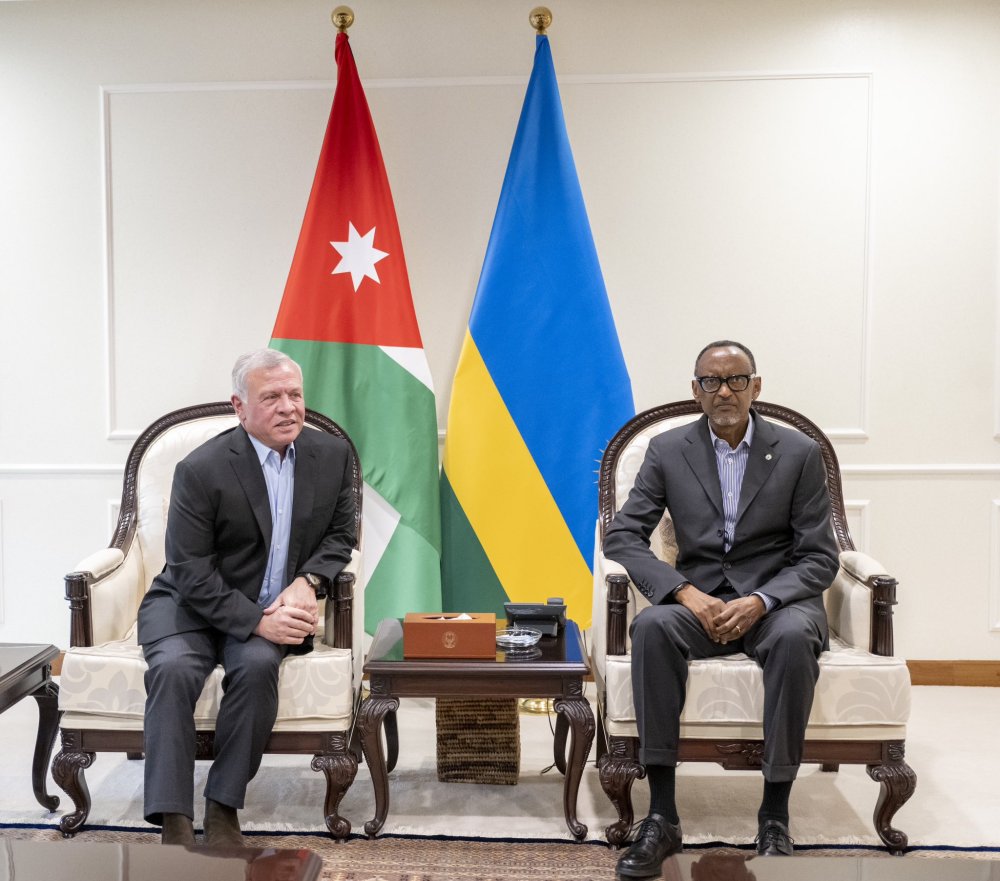
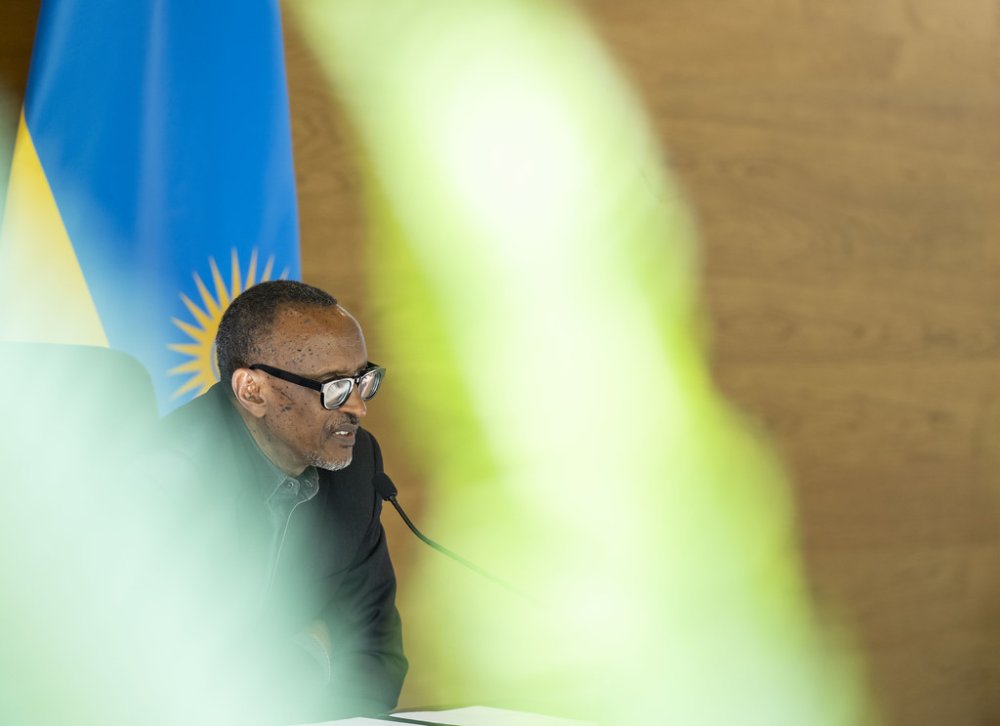
As he concluded the the visit on Tuesday 9th January 2024, King Abdullah II expressed gratitude for the warm hospitality and commended the resilience and unity of the Rwandan people in transforming the country into a symbol of progress and prosperity.
President Kagame also took to X account to highlight the common values of peace, justice, and security that bind Rwanda and Jordan, and expressed eagerness to strengthen bilateral ties.
The visit included a tête-à-tête and bilateral talks between the leaders and their delegations, resulting in the signing of agreements and memoranda of understanding.
These encompassed areas such as the elimination of double taxation, cooperation in health and medical science, economic and trade collaboration, and agricultural cooperation.
King Abdullah II also paid respects to victims of the 1994 Genocide against the Tutsi at the Kigali Genocide Memorial, emphasizing its significance as a testament to national reconciliation and a source of lessons for the world on overcoming tragedies to achieve unity, peace, and resilience.
Rwanda and Jordan’s collaboration extends to combating terrorism through direct communication, as well as cooperation in political consultations, higher education, health and medical sciences, defence and security, and air services.
The company said that deliveries of battery electric vehicles (BEVs) jumped by 74.4 percent year-on-year, to more than 376,000 units, meeting the full-year target for all-electric vehicles in total sales of 15 percent.
“With our new, highly attractive and technologically outstanding vehicles, we were able to ramp up electromobility even more dynamically in 2023,” said Jochen Goller, member of the board of management of BMW AG.
This year, one in five of the company’s newly-built cars is set to be a BEV, and by 2025 the target is one in four. “We see continued high demand for our fully-electric products,” Goller added.
In China, the carmaker saw sales of the BMW brand and MINI rise by 4.2 percent, to almost 825,000 vehicles.
The global temperature averaged 14.98 degrees Celsius last year, up by 0.17 degree Celsius from 2016, which was the previous warmest year on record, according to findings outlined in the 2023 Global Climate Highlights report.
From June onward, each month in 2023 experienced higher temperatures than any corresponding period in recorded history, with July and August standing out as the warmest months on record.
For the first time, each day through the past year was at least one degree Celsius above the 1850-1900 pre-industrial level for that time of year, the report said.
C3S Deputy Director Samantha Burgess described 2023 as an exceptional year “with climate records tumbling like dominoes.”
“Temperatures during 2023 likely exceed those of any period in at least the last 100,000 years,” she added.
A critical driver of the unusual air temperatures throughout 2023 was the unprecedentedly high sea surface temperatures (SSTs).
“Global-average SSTs rose sharply in March, with a slight dip in April and May, but continued to rise throughout the boreal summer months to reach the highest value of 21.02 degrees Celsius on Aug. 23 and 24,” the report said.
The primary long-term factor contributing to elevated ocean temperatures is the continuing increase in concentrations of greenhouse gases but an additional contributing factor in 2023 was the El Nino Southern Oscillation, the report said.
Atmospheric concentrations of carbon dioxide and methane continued to rise, reaching record levels in 2023 at 419 ppm and 1902 ppb, respectively, it said.
The rise in temperatures has resulted in extreme events worldwide, including heatwaves, floods, droughts and wildfires. Notably, it has also impacted sea ice in both the Arctic and the Antarctic, according to the report.
The Commission has concerns over the agreements between key players in the digital market and generative artificial intelligence (AI) developers, as well as providers. It is “looking into some of the agreements” and “investigating the impact of these partnerships on market dynamics,” it said.
Therefore, the Commission has called for input from stakeholders to assess competition levels in virtual worlds and generative AI sectors, and seek expert insight on how competition law can safeguard the competitive nature of these emerging markets.
The Commission’s executive vice-president in charge of competition policy urged businesses and experts to identify any perceived competition issues within the virtual worlds and generative AI industries. The European Union (EU) is also “closely monitoring AI partnerships to ensure they do not unduly distort market dynamics.”
Data released by the Commission revealed that venture capital investment in AI within the EU is expected to exceed 7.2 billion euros (around 7.88 billion U.S. dollars) in 2023, while the virtual worlds market in Europe is projected to surpass 11 billion euros. (1 euro = 1.09 dollar)
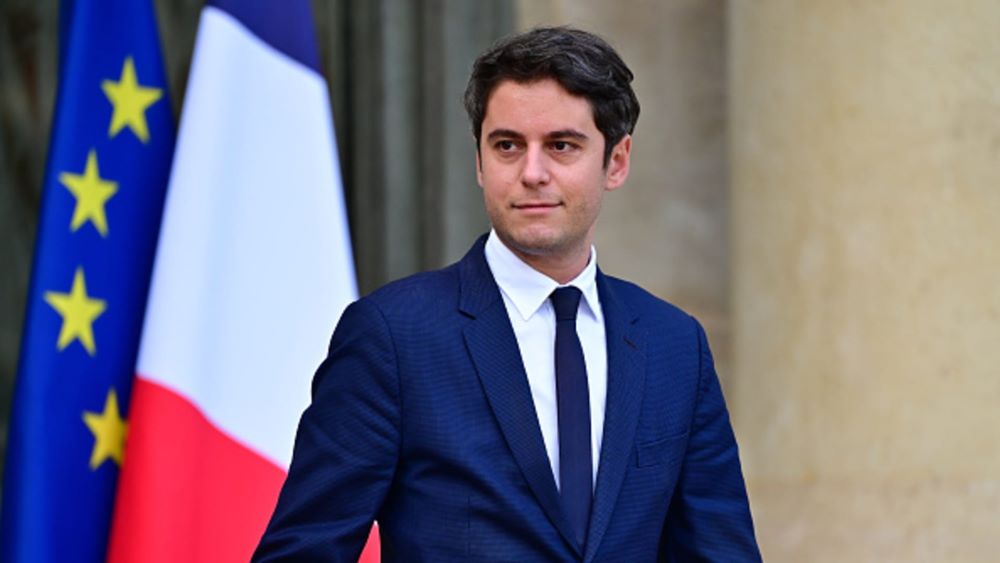
According to euronews, Attal’s appointment aligns with Macron’s strategy for a renewed focus during the remainder of his term, grappling with increasing pressure from the far-right.
Gabriel Attal, previously government spokesman and education minister, ascends to the position of prime minister with a notable background. Macron’s decision to replace Borne was prompted by the recent political turmoil, particularly criticism over the immigration law, which some believed reflected a concession to far-right ideologies.
In Macron’s tweet confirming Attal’s nomination, he expressed confidence in Attal’s energy and commitment to implementing the rearmament and regeneration project outlined for the nation.
Macron emphasized the spirit of surpassing and audacity, rooted in the ideals of 2017, in service to the French nation.
Attal, born on March 16, 1989, in Clamart, near Paris, brings a diverse set of experiences to his new role. Having studied at Sciences Po in Paris from 2007 to 2013, Attal has held various positions, transitioning from the Socialist Party to Macron’s Renaissance party in 2016. His journey includes roles as government spokesman, public accounts minister, budget minister, and most recently, education minister.
Facing the challenge of school-related issues, Attal implemented a ban on long robes in classrooms, citing concerns about secularism. Additionally, he initiated a plan to experiment with uniforms in public schools, aiming to shift the focus away from clothing and reduce school bullying.
As Macron prepares to name the complete government in the coming days, political observers suggest that this move is strategic, anticipating the European Union elections in June. Macron, a strong advocate for European integration, aims to position his new government to address the increasing influence of far-right, anti-EU populists.
With Attal at the helm, the youngest prime minister in the history of the Fifth Republic, France enters a new chapter under Macron’s leadership.
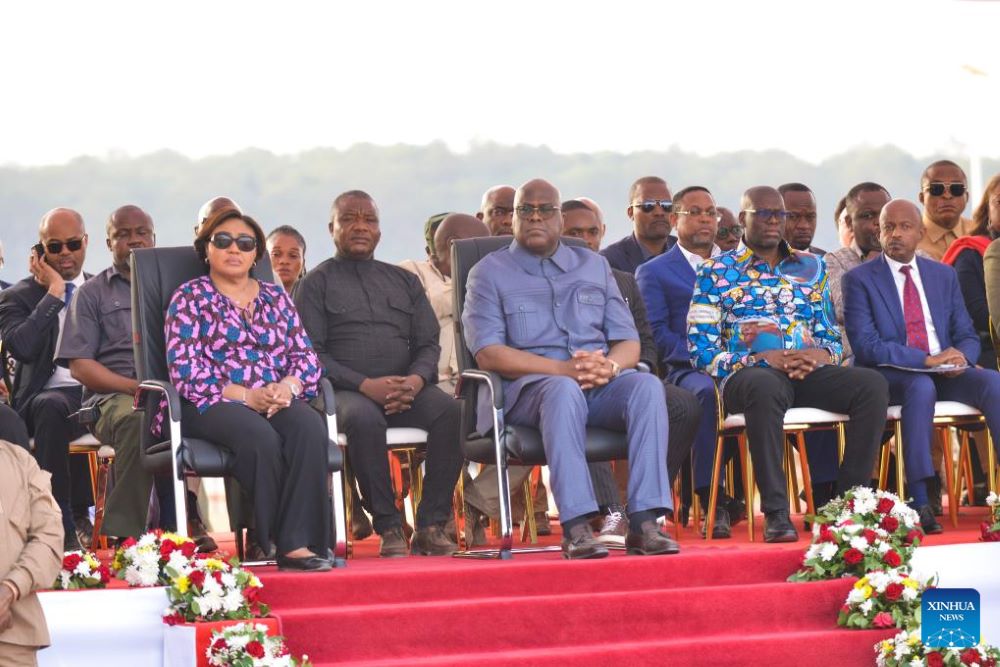
Tshisekedi secured a dominant 73.47 percent of the vote, while main opposition candidate Moise Katumbi trailed behind with 18.08 percent, according to the court’s declaration.
The president-elect is scheduled to be sworn in on Jan. 20 after the Constitutional Court approves the election results.
According to the Independent National Electoral Commission that oversaw the general elections, over 18 million Congolese, from a total of 44 million registered voters, cast their ballots in the elections for the president, the National Assembly and the 26 provincial assemblies.
However, the process was not without controversy as opposition candidates raised allegations of irregularities, which the electoral commission said would not impact the election outcome.
This election was significant as it marked the second peaceful transfer of power in the country’s history since independence in 1960. In 2018, Tshisekedi ascended to power after winning the election, marking the country’s first peaceful transfer of power since its independence from Belgium.
The pass-out ceremony was held at the Canine Brigade headquarters in Masoro, Gasabo District and presided over by Commissioner for Training in Rwanda National Police (RNP), Assistant Commissioner of Police (ACP) Barthelemy Rugwizangoga.
At least 11 new sniffer dogs were also trained in detecting explosives and narcotic drugs.
ACP Rugwizangoga said that the training is part of the RNP capacity building programmes particularly to equip dog handlers with the required standard skills and knowledge.
“This course is in line with capacity building for K9 brigade to be able to safe guard our country. Training is one of priorities of the RNP to ensure that the force is always ahead of criminals,” ACP Rugwizangoga said.
He thanked the trainers and challenged the trainees to live to the expectations to drive the RNP ambition towards sustainable security.
The two-week training covered key areas such as; vehicle search, luggage search, scent wall and open area search, among others.
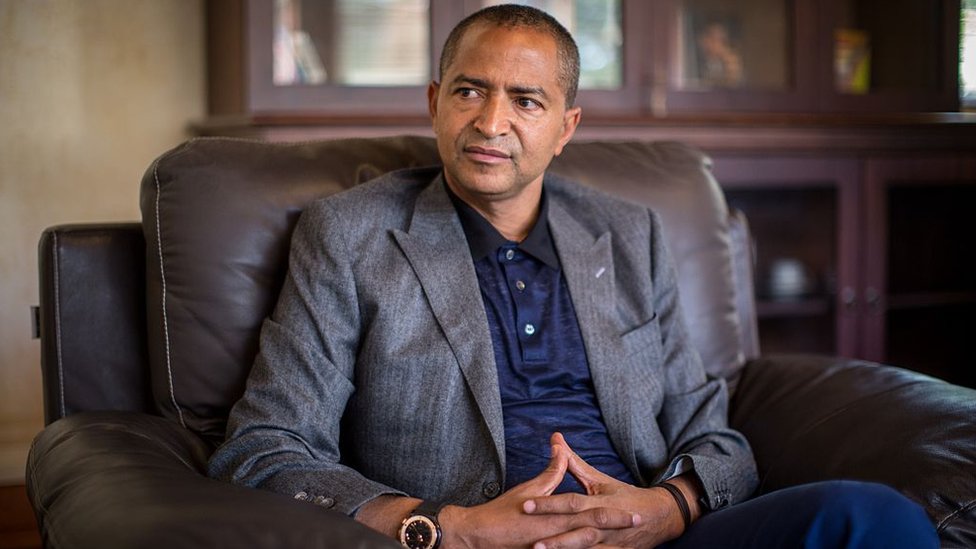
His political party, Ensemble pour la République, asserts that preventing him from leaving his home in Haut-Katanga province amounts to a “de facto house arrest.” The 59-year-old businessman and former governor of Katanga province received 18 percent of the votes, while the incumbent President Felix Tshisekedi secured 73 percent, as reported by the electoral commission (CENI).
Various opposition candidates and observers raised concerns about irregularities and logistical issues during the elections, where Tshisekedi sought a second term. In a statement on January 6, Katumbi claimed that the election was tainted by “massive fraud and treachery” and called for the resignation of CENI’s head, Dennis Kadima.
On January 8, Katumbi’s party revealed that he was prevented from leaving his residence and surrounded by heavily armed soldiers. Videos circulated on Congolese social media allegedly showing Katumbi in his car conversing with policemen who obstructed his passage.
According to Olivier Kamitatu, Katumbi’s spokesperson, the situation amounts to de facto house arrest and reflects a dictatorial escalation of power, aiming to suppress democratic opposition peacefully. Kamitatu emphasized that Katumbi, as a free citizen, has the right to express himself and move freely within his country, asserting that the encirclement of his residence lacks legal justification.
The government’s actions are perceived as an attempt to intimidate a political leader who merely demands the annulment of what he considers the most fraudulent elections ever held in the country.
Despite the electoral commission annulling votes for 82 candidates, including three ministers and four governors, on January 5 due to fraud and violence, the announcement did not address the irregularities raised concerning the presidential polls. Katumbi accused the electoral commission of aiming to uphold the current regime in power.
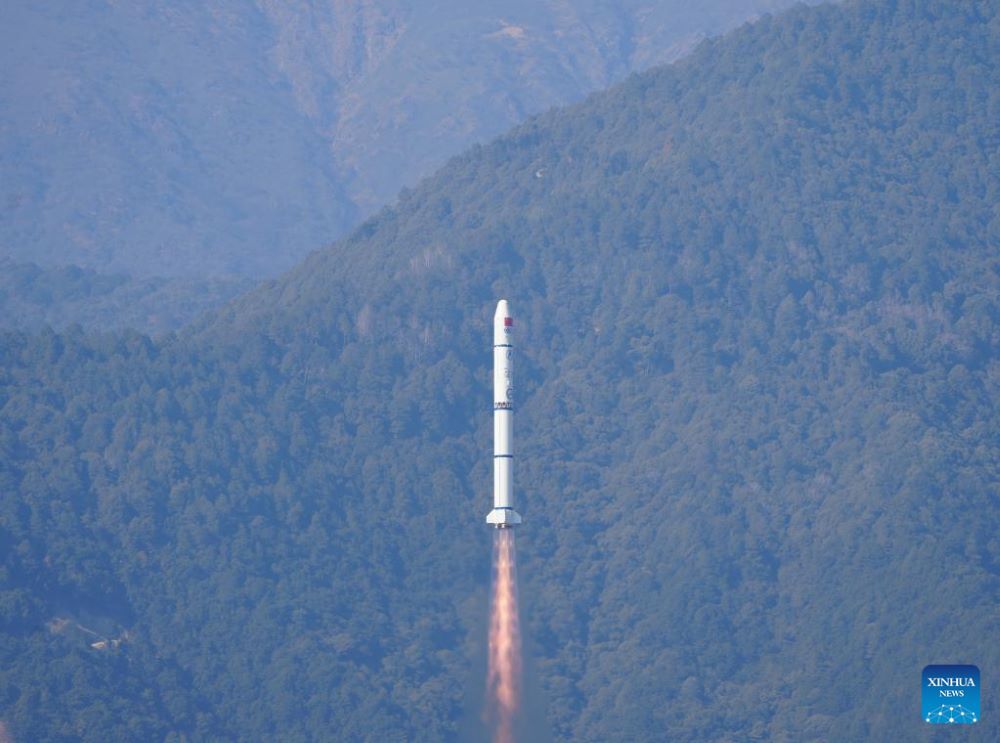
The satellite named Einstein Probe (EP), which uses new X-ray detection technology inspired by the functioning of a lobster eye, was launched by a Long March-2C carrier rocket at 3:03 p.m. (Beijing Time) from the Xichang Satellite Launch Center in southwest China’s Sichuan Province.
Weighing about 1.45 tonnes and as large as a full-size SUV, the satellite is shaped like a lotus in full bloom and features 12 petals and two stamens.
“This is the most beautiful satellite I’ve ever seen,” said Yuan Weimin, principal investigator of the EP mission and a researcher at the National Astronomical Observatories of the Chinese Academy of Sciences (CAS).
The 12 “petals” are actually 12 modules consisting of wide-field X-ray telescopes (WXT), while the two “stamens” consist of two modules of follow-up X-ray telescopes (FXT).
These telescopes form a space observatory which is aimed at helping scientists capture the first light stemming from supernova explosions, search for and pinpoint X-ray signals accompanying gravitational wave events, and discover dormant black holes and other faint transient and variable celestial objects at the far reaches of the universe.
“Since black holes and gravitational waves are predictions made by Einstein’s theory of general relativity, the satellite is named after the great scientist,” Yuan said.
{{Violent universe}}
The starry sky visible to human eyes is quiet and peaceful, but in reality, there are many fierce celestial activities in the universe, such as explosions triggered by the death of supermassive stars, black holes tearing apart and devouring stars, and collisions between bizarre neutron stars and black holes, Yuan said.
Ancient Chinese astronomers recorded a bright supernova explosion in 1054 A.D., and the remnants of this event, the Crab Nebula and a neutron star, were found nearly 1,000 years later by modern astronomers.
“These explosive celestial bodies are also part of our universe, and usually at the critical stage of celestial evolution. We are still unclear about many of their physical properties and processes. Studying them can help us better answer the most fundamental scientific questions, such as what the universe is made up of, what physical laws govern the extreme universe, and how stars evolve and die,” Yuan said.
These extraordinary explosions often emit X-rays, which cannot penetrate the Earth’s atmosphere. It wasn’t until humans had the ability to send probes into space that the hot and energetic side of the universe was unveiled in the X-ray band.
{{Lobster eyes in space}}
Only a limited number of such sudden and unpredictable explosive celestial bodies and events, so-called transient sources, have been found in the deep universe beyond our own galaxy. “It’s like fishing in a river. We need a very large net, since we don’t know where the fish will come from,” said Ling Zhixing, a WXT instrument scientist.
WXT on the satellite are the “large nets” used by scientists to capture their “prey” in the universe. The 12 modules can keep an eye on one-twelfth of the entire sky at one glance, according to Ling.
Scientists mimicked the special structure of the lobster eye in developing WXT, which can simultaneously achieve wide-field observation and X-ray focused imaging.
FXT, developed by an international team led by Chinese scientists, feature high sensitivity and are not only suitable for rapid follow-up observation, but also able to independently discover explosive and transient sources, said Chen Yong, a researcher at the Institute of High Energy Physics of the CAS, who is responsible for the development of FXT.
When lobster-eye telescopes receive X-ray signals from a transient source, the onboard computer will process the data in real time and pivot the spacecraft to target the celestial body with FXT. FXT will then conduct high-precision follow-up observation. The two telescopes will complement and cooperate with each other, said Zhang Chen, assistant to the EP mission’s principal investigator.
The team also developed CMOS sensors for X-ray observation in space, which is an innovative X-ray astronomical detector, Zhang said.
The mission aims to conduct a high-cadence survey and monitoring of high-energy transient sources, search for cloaked black holes and study their formation and evolution. The probe will also be used to search for X-ray signals accompanying gravitational wave events and to pinpoint them. Neutron stars, white dwarfs, supernovae and gamma-ray bursts are also observation targets of this mission.
“I’m looking forward to discovering new phenomena and celestial bodies that have never been seen before,” Yuan said.
The European Space Agency and the Max Planck Institute for Extraterrestrial Physics in Germany are also participating in this mission.
This announcement marks Kagame’s fourth candidacy for the RPF Inkotanyi and comes in response to a strong demand from its members and the Rwandan population in general.
The president hinted at his intention to seek re-election during an interview with Jeune Afrique in September 2023, expressing pride in the trust bestowed upon him by the Rwandans and pledging continued dedication to serving them.
In The Choice Live show aired on Isibo TV, Tito Rutaremara, an influential member of the RPF Inkotanyi and a veteran in Rwandan politics, was asked about other potential candidates who could succeed Kagame.
Rutaremara’s reply disclosed his perspective: “While there may be other potential candidates, we strongly requested Kagame to seek reelection. In the journey of life, you come across leaders of varying levels, including mediocre, good, and very good ones. However, exceptional leaders are a rare breed. When you come across such a remarkable individual, it is crucial to retain them for as long as feasible.”
“These extraordinary leaders are scarce, possibly encountered only once in a century. Our current leader belongs to this exceptional category. When you have someone of his caliber, it is wise to have them continue their service for as long as possible, as finding another leader of comparable excellence is unlikely in the near future,” he added.
President Kagame led Rwanda since 2000, initially as an interim president following the resignation of Pasteur Bizimungu, and then elected in 2003 during the first presidential elections after the 1994 Genocide against the Tutsi. Under his leadership, Rwanda has experienced a period of stabilization and growth.
The presidential elections this year will coincide with parliamentary elections on July 15. Kagame’s candidacy is a strong indication of the confidence and approval he enjoys within the RPF Inkotanyi and the Rwandan population.