The mine belonging to AFRICOM is located in Rubimba village, Sholi cell.
The deceased are identified as Vianney Turatimana, 19, Medard Rwendeye, 19, Ignance Dusabamahoro, 21 and Eugène Nsabimana, 24.
It is said that they were five on mining activities but one of them identified as Eric Habinshuti survived with injuries.
The executive secretary of Muhanga sector, John Rwakana has said that they rushed to rescue the locals soon as the mine collapsed yesterday morning. The last one was retrieved around 12:00 noon.
The bodies were taken to Kabgayi Hospital for postmortem. Habinshuti was also taken to the hospital for medical attention.
Uwizeyimana was arrested on Friday, September 11, in Njambwe village, Gatare cell, Nkungu sector in Rusizi District where he has been hiding.
He was showed to the media on Monday, September 13, at Nyarugenge District Police Unit (DPU) offices in Rwezamenyo Sector.
His arrest followed a theft complaint reported by the victim identified as Abby Nizeyimana, a resident of Kimihurura in Gasabo District.
Uwizeyimana said that he had been in this criminal business for a while after he was recruited by other two people.
“I was recruited by my friends; Jean Ndayisabye and Frank Mwiseneza… they are my seniors in this field. I was arrested on September 11, at about 11am, after I defrauded a man of Rwf307,778 from his mobile money,” Uwizeyimana said.
He explained that he first sent a fake message to Nizeyimana indicating that he had received Rwf45,000 on his mobile money account.
“I guised as an employee of MTN and called him to wire back the money he had allegedly received in his mobile account mistakenly.
I threatened him that if he fails to follow the instructions to return the money, he later obliged and followed all the instructions we were giving him on phone, which enabled us to access his account and to transfer all his money amounting to Rwf307,778, to our mobile account,” Uwizeyimana narrated.
He revealed that he belongs to a racket that calls itself ‘Aba-men’ which he joined last year.
Uwizeyimana recalls eight people, who he has defrauded in the same scheme to a tune of over Rwf1.3 million since last year.
The victim Nizeyimana also said that he fell prey to Uwizeyimana’s criminal game after he threatened him that he would block his mobile money account.
“I received a message on July 23, that I have received Rwf45,000 on my mobile money account. Shortly after, received another message that my telephone has been locked. Within that time, I got a call from someone, who claimed to be an MTN staff, he instructed me to follow his instructions and steps to refund the money and to unlock my account. That is how they ended up defrauding me,” Nizeyimana narrated.
RNP Deputy RNP spokesperson, CSP Africa Sendahangarwa Apollo said that the suspect was arrested following separate complaints from victims.
“This is one of the suspect who are wanted over series of fraud and based on complaints from some of the victims,” CSP Africa said.
He called upon the public to always exercise vigilance before engaging in any transaction.
Article 174 of the law determing offenses and penalties in general, states that; any person who, by deception, obtains another person’s property, whole or part of his/her finance by use of false names or qualifications, or who offers positive promises or who threatens of future misfortunes, commits an offence.
Upon conviction, he/she is liable to imprisonment for a term of not less than two years and not more than three years, and a fine of not less that Rwf3 million and not more than Rwf5 million.
He further urged them to improve their security operations in consideration of the evolving threats.
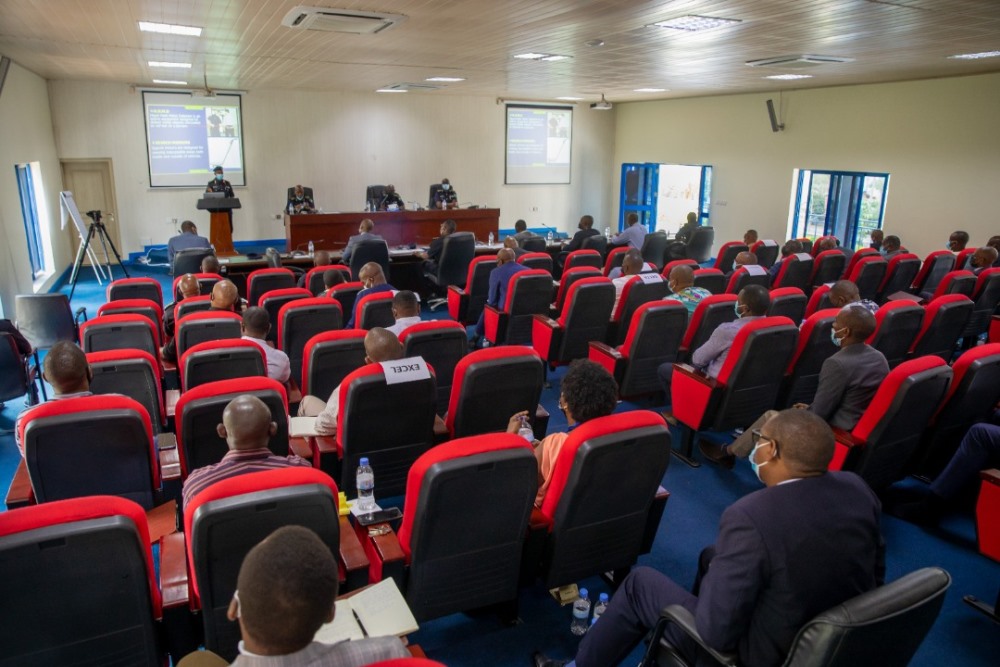
DIGP Namuhoranye made the call on Monday, September 13, during the meeting that brought together Rwanda National Police (RNP), owners and managers of private security companies as well as institutions under the protections private security firms.
The meeting was held at the RNP General Headquarters in Kacyiru in consideration of the national Covid-19 prevention guidelines.
“The conduct of your personnel and discipline should be key factors during recruitment, give them worthy training and familiarize them with with the security equipment,” DIGP Namuhoranye said.
He reminded them to reassess their security operations and ensure that security of infrastructures is intact, taking into consideration of the regional security threats.
“Owners or the management of the protected infrastructure should also know the character and performance of the personnel deployed at their facilities; if they come on duty while drunk, sleep while on duty or other inappropriate behaviours,” DIGP Namuhoranye said.
The Deputy Police Chief further urged owners and managers of the protected facilities to also acquire or improve their security devices including installation of CCTV cameras in hot spots to strengthen their security system.
“Criminals are always planning on how to execute their evil ideas and security institutions should also always think of new ways to further improve their security and close any gaps that can be utilized by wrongdoers,” he said.
Fidele Niyonshuti, the chairperson of the association of Rwanda Private Security companies, thanked RNP the continuous support.
“This meeting reminds us of who we are and what we stand for in the Rwandan security structure, to reflect on the security services we offer, close gaps in fighting and preventing crimes,” said Niyonshuti
“We are going to enhance the supervision for our personnel on duty for better execution of security contracts with customers,” Niyonshuti added.
The association, he explained, enhanced training programmes of their personnel to ensure disciplice and professionalism.
There are currently 16 private security companies in Rwanda.
They were all arrested on various roads in City of Kigali.
Jean De Dieu Tuyisenge, a taxi-moto operator said he was arrested on September 12, at about 8:45 pm at Sonatubes in Kicukiro District.
“I took beers at home where I was celebrating the birth of our new born baby. I was later involved in an accidents after I hit the pavement and fell down. When Police officers tested my blood alcohol content with a breathalyzer it showed 3.34 millilitres,” said Tuyisenge.
Like Tuyisenge, all the other 48 motorists were drunk beyond the maximum 0.8 millilitres.
RNP Deputy spokesperson, CSP Africa Sendahangarwa Apollo said that the drunk motorists were were arrested in a four-day operations–September 9th to September 12th.
“As usual, we have been parading people arrested driving or riding under the influence of alcohol. Many accidents are caused by such impaired driving and this is a deliberate effort to save lives,” said CSP Sendahangarwa.
He sternly warned of strengthened operations against motorists violating traffic rules and regulations particularly drunk-driving.
Their arrest came a week after 40 other people were also arrested in Kigali for driving while drunk.
Among others, a total of 1,822,054 people have received the first dose of COVID-19 including 26.299 vaccinated yesterday.
The statement released last night shows that 459 people have caught COVID-19 out of 10 027 sample tests, 19 are critically ill while three succumbed to the virus.
Rwanda plans to vaccinate 30% of the population by the end of this year and 60% by June 2022.
Coronavirus symptoms include coughing, flu, and difficulty in breathing. The virus is said to be transmitted through the mucous membranes of the respiratory tract.
Rwandans are urged to adhere to COVID-19 health guidelines, washing hands frequently using soaps and safe water, wearing face masks and respecting social distancing.
RNP spokesperson, Commissioner of Police (CP) John Bosco Kabera said that there are some groups of people that have continued to hold prohibited parties.
On Sunday, September 12, 16 people were arrested in the house of one Jean Baptiste Muganza located in Kimihurura, Gasabo District where they were holding a birthday party.
Smith Rutayisire, 22, one of those arrested in the house party, said that Police found them in the party at about 8pm.
“It was a surprise birthday party we had organized for our friend. I think the music sound was high and it attracted the attention of people, who called the Police,” Rutayisire said.
CP Kabera warned against such errant behaviours.
“Even if you are vaccinated or not, tested positive for Covid-19 or not; everyone must maintain social distancing, wash hands as many times as possible, wear a face mask, avoid shaking hands or hugging each other but also refrain from any prohibited activities including house parties,” CP Kabera said.
He further called upon owners and managers of hospitality establishments to also folllow the prevention guidelines.
“Although marriage ceremonies are permitted, it does not mean that the pandemic has been defeated; it is still here and you must comply with the 30 percent of the venue capacity.”
CP Kabera further warned against those who turn their homes or restaurants into bars and host people for parties.
The project was initiated in 2006 with main objectives of the to substitute the use of firewood for cooking energy by biogas, hence protecting the environment and people’s life, improving sanitation in the kitchen, and reducing burden on women and children who are used to collect firewood for cooking in families.
It is also in line with the Government’s objective of reducing dependence on biomass as fuel through use of alternative energies.
The program saw the Government building biogas plants at more than 10,000 households countrywide.
In 2014/2015, the Government injected over Rwf1 billion to build more than 3000 biogas plants amidst persistent issues that impeded successful implementation of the project to reach its objectives.
The Auditor General’s report released in 2017/2018 pointed out a number of concerns over the biogas programme that may threaten its sustainability.
They included a high rate of non-operating plants whereby in the eleven districts it was implemented, 32 per cent were not operating, leaving beneficiaries with no option but to use firewood or charcoal as fuel.
At the time, PAC summoned the Ministry of Infrastructure (MININFRA) and Ministry of Local Government (MINALOC) for enquiry on issues impeding progress of the project where it was resolved that the biogas programme had to be revised because the study was poorly conducted and monitored.
MININFRA and MINALOC would work together to revise the programme in all districts where it was being implemented even though few plants were operational due to recklessness of the team assigned to follow up the project as stated by the former Permanent Secretary in MINALOC, Assumpta Ingabire.
She explained that MININFRA handed over the management of the project to districts where MINFRA continued to assist in technical matters but poor monitoring persisted and impeded its objective.
Ingabire said that beneficiaries were not trained on proper use and maintenance of bio-gas plants to ensure sustainability.
The concern was raised again recently on Thursday 9th September 2021 as PAC analyzed recommendations from the 2019/2020 AG’s report on the issues of biogas project.
It was observed that biogas issues are persistent in all beneficiary districts incurring loss of injected funds yet MININFRA and MINALOC had pledged to fix the problems durably.
“The project took huge amounts. Last year, you agreed to make revised study to repair non-operating biogas plants and delegate technicians to provide assistance. We have been assuming that all reported issues were fixed,” said MP Jeanne d’Arc Uwimanimpaye.
“The Government expected huge benefits from Biogas project but you did nothing to fulfill the promises you made last time. We are extremely disappointed,” she added.
MP Mutesi also questioned the project wondering whether it is still relevant for the country.
“The project has been characterized by irregularities right from the beginning. These issues have been persistent for so long without improvement. Can we get assured that the project will end up yielding positive results?”
The Permanent Secretary at the Ministry of Infrastructure, Patricie Uwase told parliamentarians that the study was conducted and established that 8600 are not operational.
She explained that MININFRA is engaging with MINNINFRA to fix technical defects among other issues to turn biogas plants operational.
“We are optimistic that our biogas plants can function again because the completed study shows that most of them need to be repaired,” said Uwase.
The Statistical Year Book 2020 shows that only 4,2% of Rwandan households use biogas. The figures rose from 0,1% of the year 2010/2011.
Among others, 77,7% of Rwandan households use firewood, 17,5% use charcoal while 0,5% use crop residues as cooking fuel.
Biogas is also used by schools and almost all prisons in Rwanda.
In a statement released today, RwandAir has revealed that it is set to launch bi-weekly services to Lubumbashi, the DRC’s mining capital on 29th September and Goma, the capital of North Kivu province, on the shore of Lake Kivu on 15th October 2021.
Customers will be able to book directly through rwandair.com and fly on the airline’s regional Bombardier CRJ Series aircraft, which offers seating in both Economy and Business Class, with a De Havilland Dash 8 also operating to Goma.
Commenting on the development, Yvonne Manzi Makolo, RwandAir CEO said that RwandAir’s new twice-weekly services to Lubumbashi and Goma will add more choice and flexibility for customers flying to the Democratic Republic of the Congo.
“We believe these new routes will be extremely popular with RwandAir customers and increase both diplomatic and commercial links between the DRC and Rwanda. RwandAir is always looking for new markets to propel the airline’s network and enhance the choice of destinations and routes, not only across sub-Saharan Africa, but also to longer-haul destinations,” she said.
“We hope to announce further new routes in due course to ensure we meet the demands of our customers and continue to provide top-flight destinations,” she added.
RwandAir’s first destination in DRC was Kinshasa in April 2019, with these two new services tripling available capacity to the country.
Services to Lubumbashi will depart Kigali every Monday and Wednesday, as WB264 at 10:10am arrives at 12:10pm. The returning WB265, departs Lubumbashi at 5:00pm, arriving back into Kigali at 7:00pm.
Flights to Goma will also depart Kigali every Monday and Wednesday, as WB266 at 12:40pm arrives at 1:20pm. The returning WB267, departs Goma at 1:50pm, arriving back into Kigali at 2:30pm.
Lubumbashi is the second largest city in the Democratic Republic of the Congo and represents the main industrial centre for the mining district of southeastern Congo.
It acts as a hub for high volumes of the country’s largest mining companies, making it a hot spot for business travellers and is also home of the famous Simba Brewery, where the world renowned Tembo beer is produced.
Goma lies a few miles south of the active Nyiragongo Volcano, close to the border with Rwanda, on the shore of Lake Kivu, the largest lava in the world. The city is a great gateway to nearby wildlife, including Virunga National Park.
{{About RwandAir}}
Operating from Kigali, RwandAir is one of the world’s fastest growing airlines and operates one of the youngest state-of-the-art fleets on the African continent. With a reputation for delivering a premium service to all its customers, RwandAir operates 12 aircraft with an average age of just under six years. The airline currently offers services to 25 destinations across 21 countries throughout Africa, Europe, the Middle East and Asia.
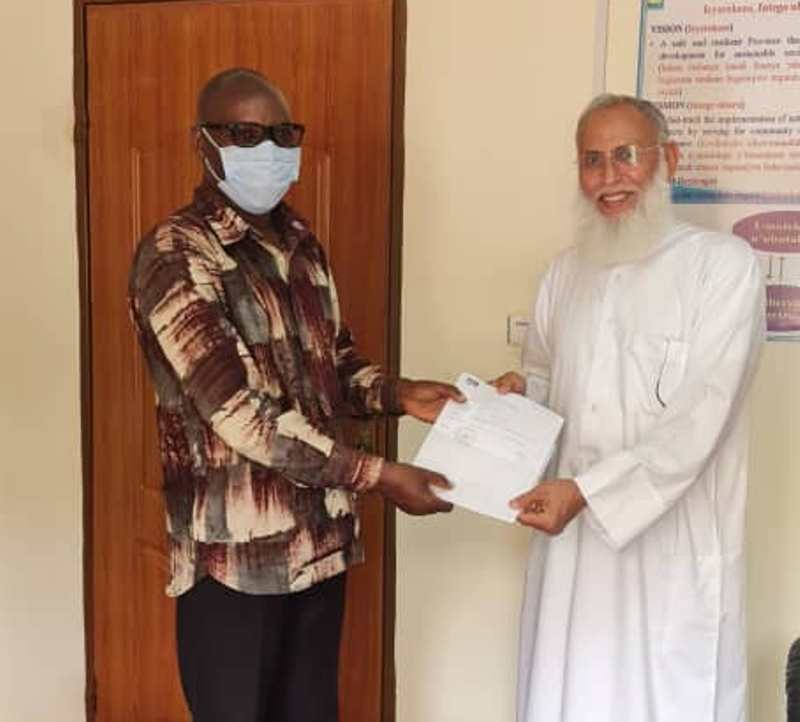
The donation was handed over to Gatsibo district officials on Sunday 12th September 2021.
Gatsibo district vice mayor for economic development, Théogene Manzi has told IGIHE that the donation is part of funds raised by the delegation of Qatar nationals who came to visit different parts of Rwanda.
“It is a delegation of Qatar nationals who came to visit different parts of Gatsibo district. They requested us to provide the list of residents without Mutuelle de Santé which we made in collaboration with sector officials. They later provided Rwf9, 092, 224 to subscribe residents,” he said.
Manzi thanked donors for the great support noting that the district wants to extend the partnership to other areas of development.
So far, 84.5% of Gatsibo residents are subscribed for Mutuelle de Santé while the district continues to engage with partners to mobilize funds for subscription of remaining vulnerable residents.
The report released by the World Travel and Tourism Council (WTTC) in 2020 indicates that tourism contributed 10.9 percent to Rwanda’s GDP growth in 2019 making it the second Sub-Sahara African country with fastest growing tourism sector.
The growth reflects Rwanda’s efforts to market the country as a destination for tourists through Visit Rwanda campaign, gorilla conservation efforts, building infrastructures to host international conferences, reintroducing new animal species and protecting national parks among others.
Since 2000, Rwanda designed ambitious tourism development blueprint targeting to earn US$800 million by 2024 which might be affected by effects of COVID-19.
{{Doubled tourism revenues }}
The research carried out by the African Leadership University (ALU) on the impact of wildlife to Africa’s economy, indicates that Rwanda’s tourism revenues increased from US$200 in 2010 to over US$400 million in 2019.
The research shows that some of visitors come to Rwanda for different reasons including excursion, visiting families, study trips, working visits and exploring business opportunities.
{{Rwanda, Arsenal partnership}}
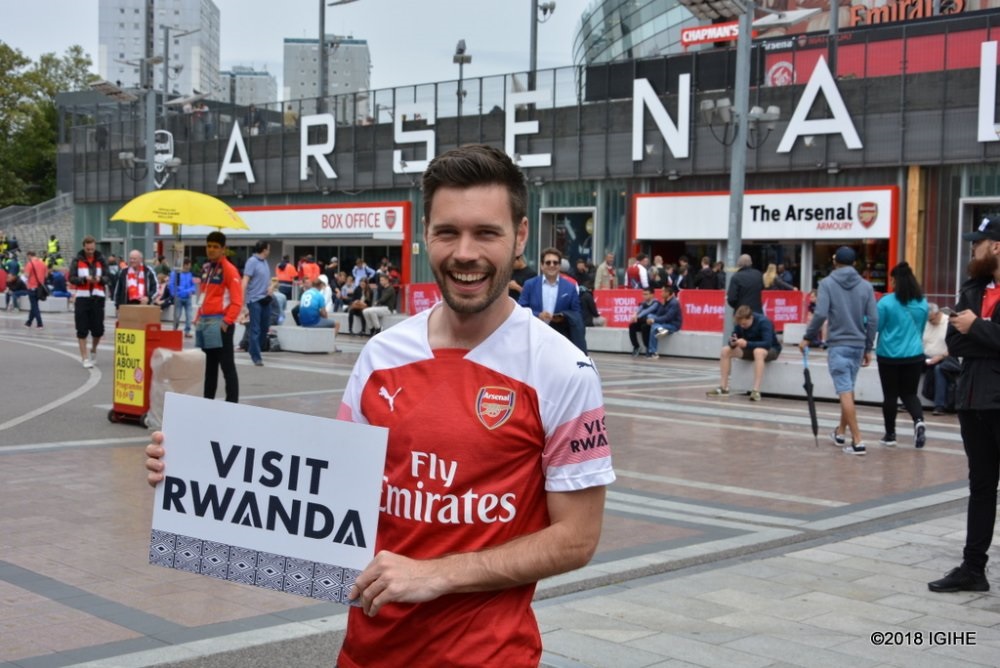
In 2018, Rwanda entered partnership with Arsenal Football Club that saw the ‘Visit Rwanda’ logo featuring on the Premier League club’s left sleeve.
Through the Rwanda Development Board (RDB), Rwanda initially signed three-year deal worth Euro 30 million.
By the end of the first year of the partnership, Rwanda’s tourism revenue increased by 17% to US$498 million in 2019 from US$425 million in 2018.
Leisure tourists from Europe increased by 22% and by 17% from the UK.
Following the positive feedback, Rwanda announced recently in August 2021 that the partnership with Arsenal Football Club has been extended.
“After a successful start to the 3-year partnership with Arsenal Football Club, the Rwanda Development Board decided in 2019 to renew the partnership, which was then announced on 14 May 2021, during the launch of the club’s 2021/22 away kit,” reads part of the message released via Twitter handle.
According to RDB, the renewed partnership will build on the gains made over the last 3 years and ‘contribute towards Rwanda’s economic recovery strategy following the COVID-19 pandemic, particularly in the tourism sector’.
“The partnership will also continue to leverage Arsenal’s expertise to develop football locally in Rwanda, with a focus on improving the quality of coaching at the grassroots level for girls and boys,” adds the tweet.
Apart from the partnership, the research carried out by ALU also shows that gorilla conservation efforts have also yielded big attracting a large number of tourists from across the world.
Figures show that Virunga National Park contributed 91.7% of tourism revenues from four national parks in 2019 where 50 percent of tourists visiting the park were attracted by gorillas.
The gorilla naming ceremony held every year since 2005 has also contributed immensely to attracting tourists particularly celebrities joining Rwanda for the flagship conservation event marketing Rwanda’s tourism.
In 2018, the ceremony which is among most high profile events brought together 65,000 participants from different corners.
{{Conservation efforts}}
Following the 1994 Genocide against Tutsi, Rwanda embarked on a resilience journey and improved its visibility on the global scene through different activities to lure tourists and investors, tightening security, building infrastructures including hotels, preserving national parks and maintaining high standards of cleanliness among others.
In 2008, Rwanda banned the use of plastic bags and intensified measures to maintain hygiene where Kigali City is among cleanest cities worldwide.
Through ongoing conservation efforts, Rwanda has so far separated human population from parks fencing off demarcations for some parks, introduced a scheme to share tourism revenues with residents in the surroundings of parks, and reintroduced extinct species like lions, rhinos to Akagera National Park which is currently home to big five animals.
The report of the National Institute of Statistics of Rwanda (NISR) released in 2020 indicates that the park registered 321,745 visitors; Virunga National Park which is home to gorillas was visited by approximately 308,333 tourists while Nyungwe National Park recorded 93.528 visitors between 2005 and 2017.
Statistics show that Akagera and Nyungwe contributed 5.9% and 2.4% of tourism revenues from National Parks in 2019.
In June 2020, RDB announced reduced prices for gorilla permits which are available for as little as US$200 for Rwandans and nationals of East African Community (EAC) residing in Rwanda, and $500 for foreigners who are resident in Rwanda. International tourists are required to pay US$1,500.