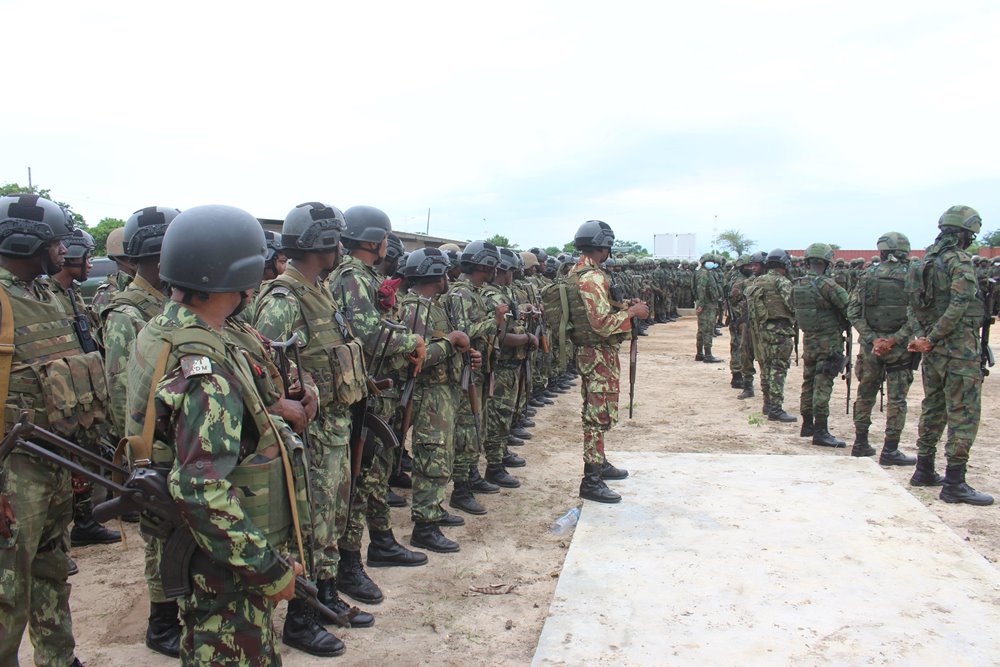
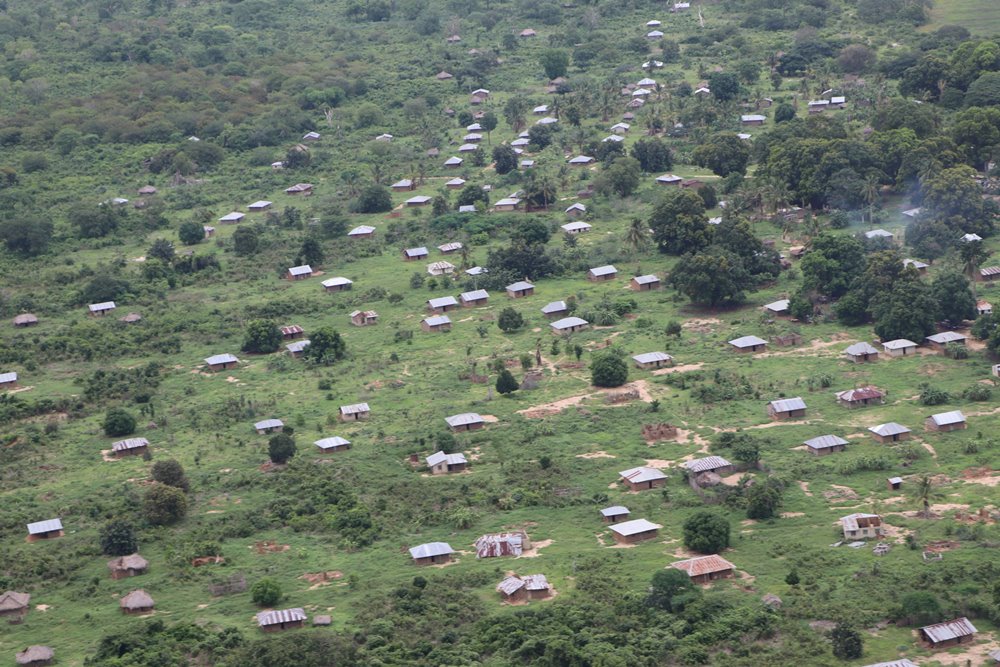
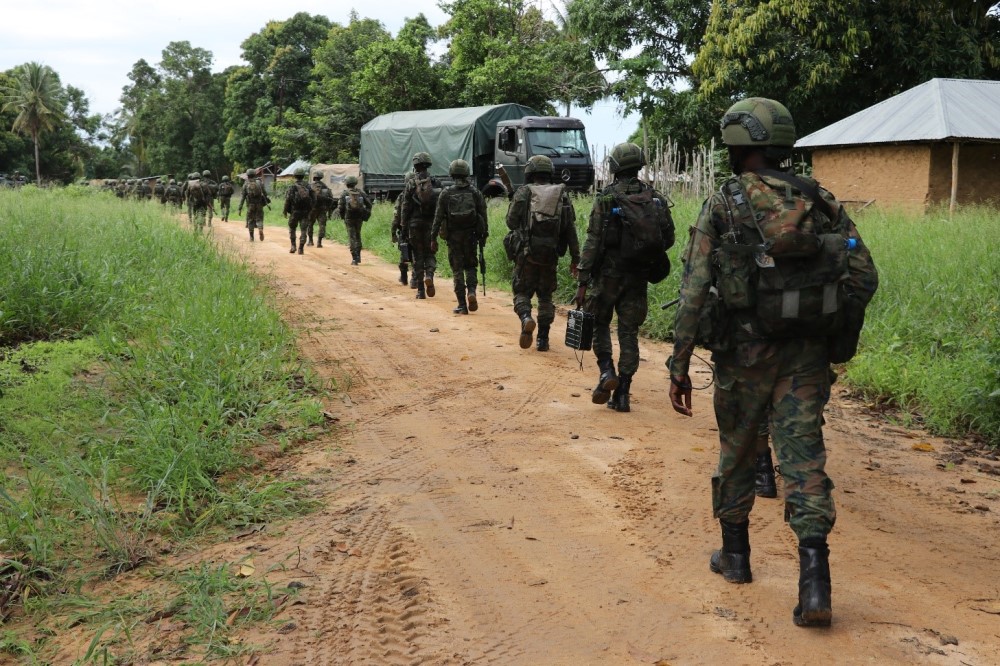
For the last two days, Mozambican Armed Forces (FADM) and Rwanda Security Forces (RSF) secured the general area of Nhica do Ruvuma and Pundanhar, west of Palma District, 55 Kms away from Palma Town; which are known for large cassava farms.
The villages were recently occupied by terrorists as temporary hideouts as they sought to undertake operations to retake the territories lost during the initial Joint Moz and Rwanda Security Forces (RSF) offensive operations conducted last year.
SADC Forces were also alerted to support in blocking the enemy fleeing towards their area of responsibility.
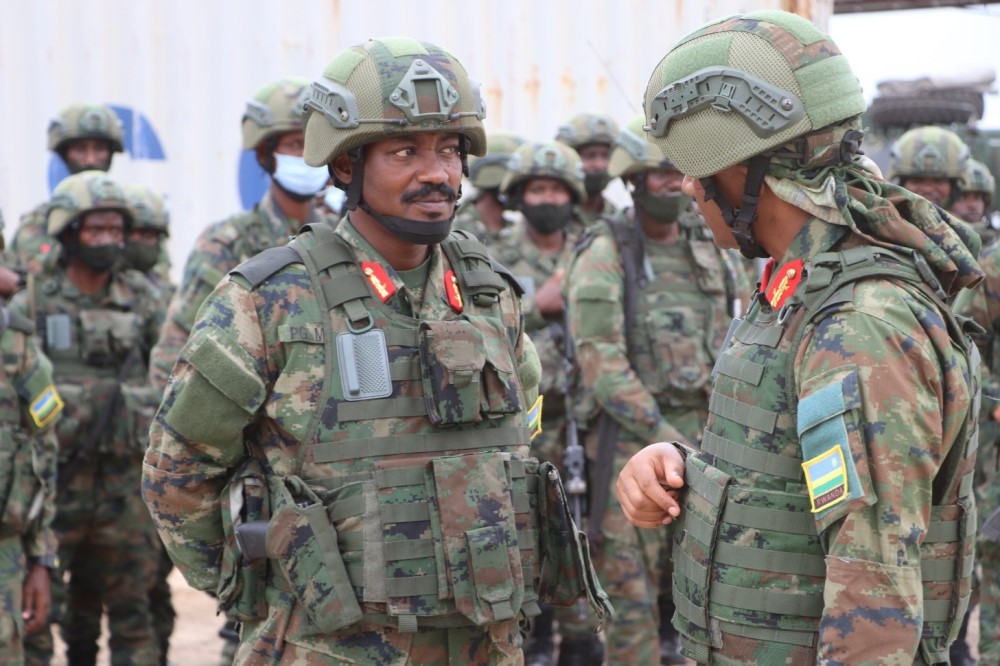
The Joint Task Force Commander, Maj Gen I Kabandana visited the troops in Pundanhar shortly after Joint Forces secured the area.
In his remarks, he congratulated the Joint Forces and emphasized the need to maintain vigilance, discipline and high level of force protection in order to successfully accomplish their mission with minimal casualties.
The campaign that start this Tuesday, February 8, in City of Kigali before being rolled out to other parts of the country, target groups of road users, who are either the majority victims or who cause accidents.
Statistics from the department of Traffic and Road Safety indicate that pedestrians were the majority victims of road accidents last year with 225 fatalities.
And now the campaign, which was conducted on various roads of Kigali, has started with pedestrians to teach them on road safety rules and how to use the road safely.
Motorists are also targeted to respect the pedestrian rights and to drive or ride responsibly.
Mary Wihogora and Jean Bosco Karangwa are some of the pedestrians, who benefited from the campaign.
“This campaign is important because some of the pedestrians use the road recklessly, especially when crossing without first taking precautionary steps to ensure that there are no vehicles coming from either direction. But there is also a concern of motorists, who do not respect pedestrians or drive carelessly leading to loss of lives,” said Wihogora.
To Karangwa, who attended the campaign in Nyabugogo, road safety knowledge is important and those who have it should spread the message and make it a collective responsibility to save lives on the road.
“I now know that before crossing at the road on traffic light junction, a pedestrian must waits for the green light and when it turns red, I have to wait until it turns green. I have learnt that while crossing, I should not run but walk quickly, I should not use a phone while crossing since it distracts and I should be careful to ensure that no automobile coming from either direction. My safety is my responsibility,” Karangwa said.
RNP spokesperson, Commissioner of Police (CP) John Bosco Kabera said that the campaign is meant to curb the increasing road accidents and related fatalities.
“Last year, road accidents claimed 655 lives and the majority 225 were pedestrians. Out of 684 victims of serious crashes, 175 were pedestrians, and out of 5,244 minor accidents, 1262 involved pedestrians.
In January this year, it was the same trend with 12 pedestrian fatalities. When observed closely, in most cases these accidents are caused by careless pedestrians,” CP Kabera said.
He pointed out that there are still obstacles posed by pedestrians, who do not know how to use the road safely, use the road inattentively, have less knowledge on traffic rules and some drivers, who do not respect pedestrian rights on the road.
CP Kabera added that although there are still challenges associated with the COVID-19 pandemic, the enforcement of prevention measures will be combined with the campaign to influence behaviours on safer road usage and at the same time reminding the public to continue adhering to health guidelines against the spread of Covid-19.
The Senate approved his appointment on Monday 7th February 2022 during a plenary session after receiving a report from the senatorial Standing Committee on Foreign Affairs, Cooperation and Security which also presented his competencies relevant to assigned duties.
Amb. Gatete who previously served as the Minister of Infrastructure was appointed to the position by President Paul Kagame on 31st February 2022.
He was replaced by Dr. Ernest Nsabimana, the former Director General of Rwanda Utilities Regulatory Authority (RURA).
Amb. Gatete held different positions where he served as the Minister of Finance and Economic Planning from 2013 to 2018.
He had previously served as the Governor of the National Bank of Rwanda (2011 to 2013), having previously served as its Deputy Governor. Amb. Gatete also served as Rwanda’s Ambassador to the United Kingdom, Ireland, and Iceland from November 2005 to December 2009. He is also currently a member of the Presidential Advisory Council.
Prior to that, Amb. Gatete had served successively as the Secretary General and Secretary to the Treasury in the Ministry of Finance and Economic Planning, Personal Representative of the President on NEPAD Steering Committee in the Office of the President, Coordinator of the National African Peer Review Mechanism (APRM), member of the APR National Commission; and Member of the NEPAD’s African Partnership Forum (APF) and the Director General for Social and Economic Affairs. He also worked with United Nations Development Programme (UNDP) – Kigali-Rwanda, as a National Economist.
Amb. Gatete has held various positions on Key Boards of Directors including: Chairman of Rwanda Revenue Authority and School of Finance and Banking as Chairman; member of the Board of the National Bank of Rwanda; Chairman of National Privatization Technical Committee; and Vice-Chairman of Community Development Fund.
He also held positions in other key taskforce committees serving as Chairman of the National Treasury Management Committee and Co-Chair of Development Partners Coordination Group.
Amb. Gatete holds a Master’s in Agricultural Economics from the University of British Columbia, Vancouver, B.C., Canada (1993) and an undergraduate degree from the same University (1991). Upon completion of his undergraduate and postgraduate studies, Amb. Gatete worked in Canada as an Economist; Agriculture and Agri-food Canada, Statistics Canada, University of British Columbia and Algonquin College.
In separate operations conducted on Sunday, February 6, in Rubavu and Rutsiro districts, the marine unit seized assorted illegal fishing gears in homes of poachers.
At least eight illicit fishing nets commonly known as kaningini, five mosquito nets which were also used as nets, and two wooden boats were impounded from homes and on the shores of Lake Kivu.
Assistant Commissioner of Police(ACP) Elias Mwesigye, the commanding officer for the Police Marine Unit, said that they worked with the residents to identify the poachers and their homes where illicit and substandard fishing gears and boats, are hidden.
“Poachers fled during the operations. We are working with other relevant institutions and the people against illegal and dangerous fishing practices that affect fish growth and lead to fish depletion, especially when using such fishing gears that catch and kill even the juvenile fish,” ACP Mwesigye said.
“These are operations aimed at executing of Marine Police responsibilities, which include; maintaining safety and security of water bodies and increasing public awareness,” the Commanding Officer added.
“The illicit fishing gears are smuggled into Rwanda from DRC and used by poachers especially at night. Such people also engage in other criminal activities such as smuggling and drug trafficking, which these operations are also meant to address.”
The ministerial order Nº 001/11.30 of 11/12/2020 regulating aquaculture and fisheries in Rwanda, in its articles 18, 19, 20 and 21; it elaborates the legal fishing gears and other equipment, aquaculture zones, areas and hours of fishing.
Article 22 prohibits acts in fishing such as use of poisonous substances aimed at stunning,weakening or killing aquatic organisms; applying explosives; using electromagnetic procedures or electrocution; beating water with an aim of capturing aquatic organisms; fishing in the reproduction area; fishing in aquaculture concession area, except for the research fishing licence holder.
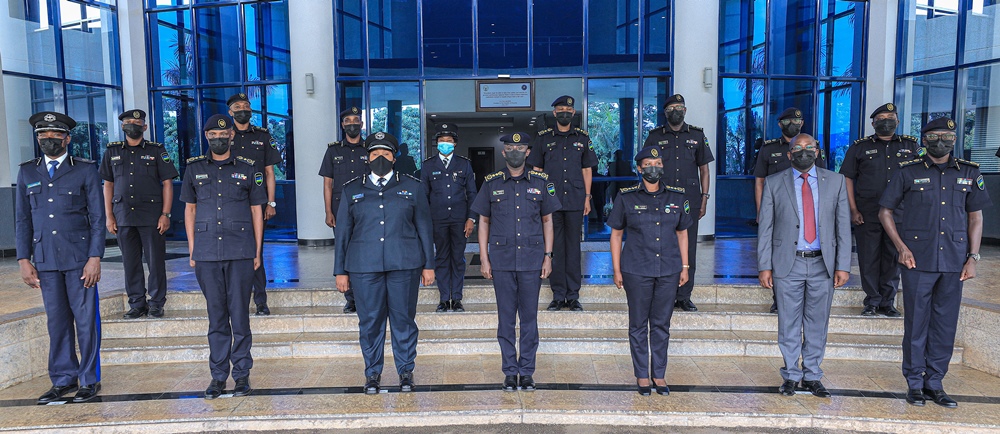
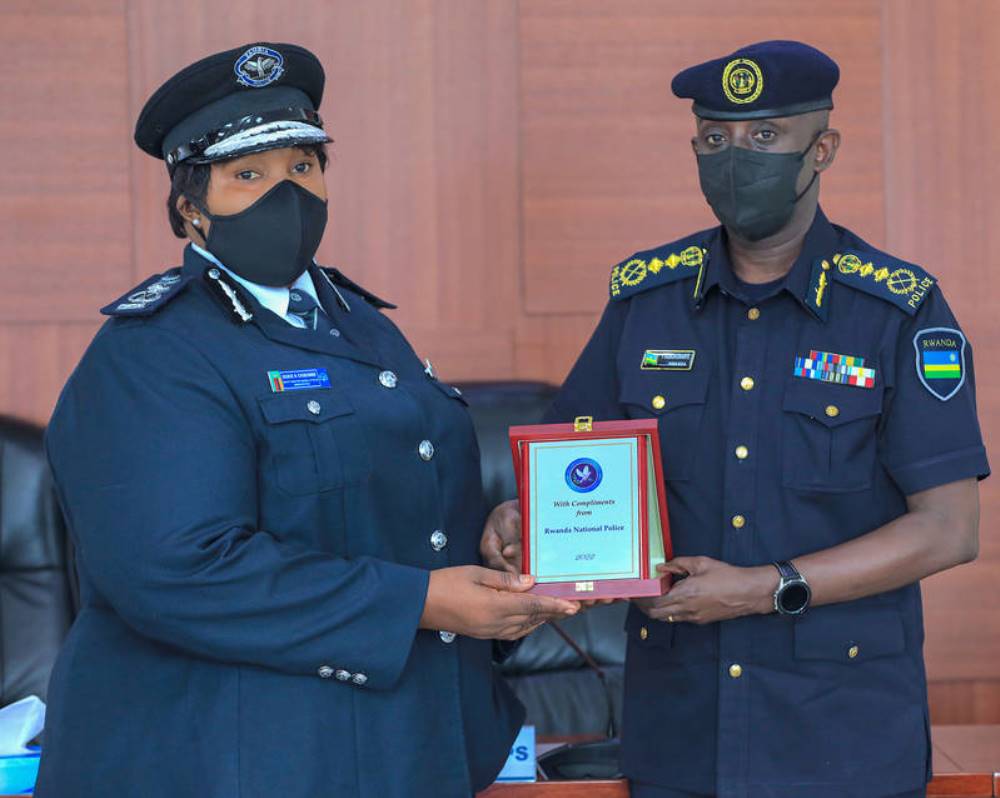
The delegation visited Rwanda National Police (RNP) on Monday, February 7, at the General Headquarters in Kacyiru, where they were received by the Deputy Inspector General of Police in charge of operations (DIGP) Felix Namuhoranye for a bilateral meeting.
The bilateral meeting was also attended by the Deputy IGP in charge of Administration and Personnel, Jeanne Chantal Ujeneza.
DIGP Namuhoranye said that Rwanda National Police and Zambia Police Service have had tangible achievements since the signing of the cooperation pact.
Rwanda and Zambia Police institutions renewed their cross-border cooperation in December 2020 when they reinforced their channels of Police cooperation and communication in combating transnational organized crime as well as exchange of information on wanted persons, property and exhibits, crime intelligence and training, among others.
“Rwanda and Zambia Police have enjoyed cordial relations since 2015 and continue to share experience and expertise in ensuring safety and security of our people. Together, we have so far achieved various tangible marks that include reciprocal visits, establishment of channels of police cooperation on exchange of crime related information, fighting terrorism, drug and human trafficking, transnational organized crimes as well as skills development and training among others,” DIGP Namuhoranye said.
Their visit to Rwanda is also aimed at understanding the feasibility and management of private security companies in Rwanda.
RNP is the regulator of private security service providers in Rwanda with a department charged with supervising the firms.
Currently, there are 16 private security companies registered in Rwanda with over 23,000 personnel.
On her part, DIG Nayame appreciated the way RNP manages and regulates private security companies, a strategy she said, they will adopt back home.
“At the moment, in Zambia we do not have registration or regulations for private security companies but of course we have heard good experience here in Rwanda, you have progressed well in this sector,” DIG Nayame said.
“We want to learn from you because we realized that non-regulation of private security companies is a threat especially that this sector also uses firearms. Therefore, we are moving to a point where we need to regulate them; the kind of their uniform, the arms they are using and also move to the point of how they deploy,” she added.
It is provided that during their stay in Rwanda, the delegation will also visit separate infrastructures and security companies to get a better understanding of their day-to-day operations.
After learning about such a barrier and considering the opportunities she had to access education at desired university, Winniefred Mulungi felt the strong need to help, within her capacity, anyone willing to pursue studies in foreign countries, particularly in Europe and the United States of America.
She holds Master’s degree and more than 20 short course certificates.
The 29-year old woman has said that she is willing to help anyone willing to attend short professional courses for free and others seeking to study in the United Kingdom.
“After attending short courses at different universities from foreign countries in the United States of America, Canada, the United Kingdom, I got connections with the University of the West of Scotland London campus through the Education Group London. I was delegated to recruit students from East Africa interested to study at the university,” she said.
She went on to explain that candidates are only required to present different documents including International English Language Testing System (IELTS) certificate offered by the British Council for those who attended studies in Rwanda or Tanzania, UACE for people who studied in Uganda, KCSE for those who studied in Kenya while candidates who pursued studies in Nigeria and other Western Africa countries are required to present NECO or WAEC certificates.
Those willing to pursue Bachelor courses must have secondary school certificate while Master’s students must possess Bachelor degree.
Mulungi has so far helped more than 50 students from different countries including Rwanda, Kenya, Uganda, Tanzania and Burundi since she started offering such services one year ago.
Online short course and Distance Education for Africa programs are free of charge while students willing to study at UWS London must cater for tuition fees.
Mulungi says that she is committed to helping everyone, particularly from East Africa to access authentic information on processes to study in the United Kingdom and attend short courses for free.
Interested individuals seeking assistance can reach out to Mulungi via phone: +250782487309 or email: mulungiwinnie@gmail.com
The deceased is a child hailing from Kigeyo sector whose body has been found in River Nkora.
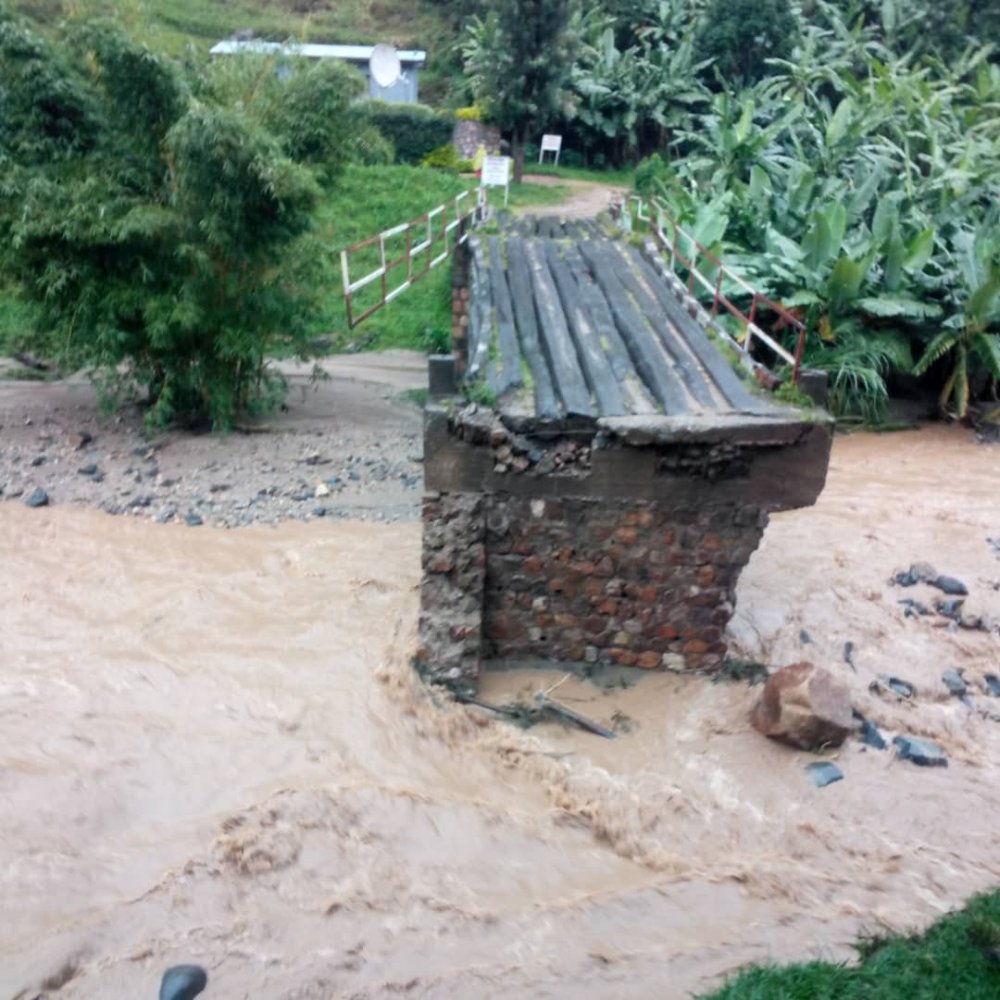
The executive secretary of Mushonyi sector, Jean Pierre Mwenedata has said that the rain also destroyed bridges.
“One of ravaged bridges is totally destroyed that it requires to start construction activities from scratch. Others are not severely destroyed that they will be renovated through community work,” he said.
Mwenedata explained that the rain also caused landslides, destroyed residents’ houses where an assessment to estimate the value of ravaged properties is ongoing.
The new partnership will allow Bank of Kigali customers to access efficient eCommerce and payments services through DPO Group’s robust platform. This move is expected to see Bank of Kigali onboard hundreds of new online merchants as well as offering digital payment services to its existing business customers.
DPO has developed its own integrated payments technology to support businesses of all sizes across Africa to make and accept payments securely and swiftly with all currencies and payment methods including via mobile money.
Commenting on the development, Eran Feinstein, the CEO of DPO Group said: “Our partnership with Bank of Kigali will unlock the rapidly expanding eCommerce market for local businesses and entrepreneurs in Rwanda, driving business growth across the country. Our secure payment platform already allows vendors to make and receive payments risk-free across the continent.”
Joan Karenzi, DPO Country Manager for Rwanda said that such partnerships offer ‘a brilliant opportunity to accelerate growth for entrepreneurs and banks across Africa, allowing them to use our payment technology to accept payment in the currency of their choice’.
Caleb Gakunju, Head of Payments at Bank of Kigali commented expressed delight for the partnership with DPO Group noting that using the platform and technology is the perfect choice to take the bank’s our e-Commerce offering to the next level.
“The partnership comes as part of an effort to digitise all of the bank’s services to help our customers access digital products seamlessly and conveniently. DPO’s knowledge and understanding of so many African markets means we are confident that we have chosen the right partner to take our digital presence and customer offering to the next level,” he
According to an article on AllAfrica, it is estimated that across sub-Saharan Africa, the potential size of the e-commerce market will grow to US$180 billion by 2025 and over US$700 billion by 2050 with a considerable increase from 2020 following the pandemic. In Rwanda, the estimated e-commerce growth is from US$0.52 billion in 2020 to US$0.97 billion in 2025.
{{About DPO Group}}
DPO Group is a leading African digital payments company operating in over 20 countries across the continent. DPO has developed the technology to enable businesses and individuals across the continent to make payments online and offline with all currencies and payment methods, DPO Group currently works with over 60,000 active merchants, including businesses in the e-commerce and the travel and leisure sectors.
The company was founded in 2006 and since then it has grown to be a Pan-African PSP with more than 400 employees. In 2021, DPO was acquired by Network International, a leading enabler of digital commerce across the Middle East and Africa, in a landmark deal for the African payments landscape. By providing its merchants with the capacity to make and accept payments effortlessly, DPO Group aims to support financial inclusion and economic development on the continent. www.dpogroup.com
{{About Network International }}
Network International comprises of a group of companies and is a leading enabler of digital commerce across the Middle East and Africa (MEA) region, providing a full suite of technology-enabled payments solutions to merchants and financial institutions of all types and sizes, including acquiring and processing services and a comprehensive ever-evolving range of value-added services.
Network International Holdings Plc is the holding company for Network International and the group companies.
{{About Bank of Kigali Plc.}}
Bank of Kigali Plc. is the largest commercial bank in Rwanda, by total assets. In 2017, Global Credit Ratings affirmed Bank of Kigali’s long-term and short-term national scale ratings of AA-(RW) and A1+(RW) respectively with a stable outlook.
The Bank has won several back-to-back international and regional banking awards from Euromoney, The Banker, Global Finance Magazine, and EMEA Finance. Bank of Kigali has been recently awarded “Best Bank in Rwanda” in the Euromoney Awards for Excellence 2021.
The decision is among resolutions taken during a meeting between the Minister of Local Government (MINALOC), Jean Marie Vianney Gatabazi; the management of the Kigali City and Provincial Governors on 6th February 2022.
The leaders also reviewed other measures to fast track national development and change citizens’ livelihoods.
It was agreed that the community work will resume in all districts across the country towards the end of February 2022 in adherence to COVID-19 preventive measures.
The last monthly community work was held before the emergence of COVID-19 pandemic in March 2020. It was halted as part of measures to prevent public gatherings that could provide loopholes for the spread of the virus.
The meeting was also attended by other officials including, the Minister of State in charge of Social Affairs at MINALOC, Assumpta Ingabire among other heads of departments in the same ministry. She commended local leaders for fruitful efforts in fighting the pandemic for more than two years.
As Minister Gatabazi said, the meeting also took measures to supervise recently elected local leaders to ensure they are delivering on expectation to address citizens’ needs.
It was agreed to reinforce the capacity of grass root leaders through different trainings and other programs.
The meeting also resolved on resumption of citizens’ forum to hear their concerns and have them addressed in the right time.
School dropouts, street children, poor hygiene and stunting among children are among other issues that are set to be given special attention in collaboration with parents.
During the retreat, leaders discussed ways to streamline efficiency to fast track performance contracts and envisaged progress.
Jeanne Mutoni, Rwamagana vice mayor in charge of social affairs told participants that the district recently registered more than 700 children who dropped out of school of whom the majority is from primary school.
Of these, 171 are secondary school dropouts while 544 are from primary school.
Karenge was pointed out as the sector with a large number of drop outs.
Mutoni has said that the district collaborated with head teachers to identify the exact number and locate dropouts to be returned to school. She revealed that the district has initially pledged to bring back to school 319 children who dropped out of school due to indecorous behavior.
Among others, Mutoni explained that some children drop out of school due to school feeding cost.
“Rwamagana district stands at 99% in implementing the school feeding program but some parents are not actively involved in supporting the Government’s efforts. They do not provide Rwf4000 contribution per school term as required but it should not be among reasons causing children to miss classes,” he observed.
Other reasons pointed out include sickness, domestic conflicts and children abandoning schools to seek jobs among others.
Mutoni urged parents and educators to follow up children to prevent dropouts.
She reminded parents with no cash in hand that they can provide part of their agricultural yields to support school feeding program.
Prof. Manasseh Nshuti, the State Minister in the Ministry of Foreign Affairs urged participants to collaborate with parents, neighbours and relevant authorities to return them to school as soon as they can to prevent related negative impact to the society.
The retreat was concluded with recommendations to roll out a campaign at sector level to return children to school.