They were arrested in a coordinated operation conducted by Rwanda National Police (RNP), local leaders and members of other security organs, said Superintendent of Police (SP) Theobald Kanamugire, the Police spokesperson for the Southern region.
He identified those arrested as Emmanuel Ndayahoze, 32, who was found in possession of 13kgs of cassiterite; Claude Ngizwenayo, 28 (4kgs), as well as the trio of Simon Mugwiza, 29, Jonathan Kwizera, 20 and Emmery Dushimimana who were found with 3kgs, each.
“They were being suspected of selling minerals illegally. On Monday early morning, a search was conducted in their respective houses, where they 26kgs were recovered and suspects taken into custody,” SP Kanamugire said.
Such illegal mineral trade, he added, also influence malpractices in mining activities.
“Illegal mineral traders create also market for illegal miners and mineral thieves. These strengthened operations, are therefore, meant to fight all those illegal activities in mineral business,” said SP Kanamugire.
He warned against such unlawful acts and urged residents to report other people engaged in mineral business illegal.
The suspects and exhibits were handed over to RIB at Rukoma station for further investigations.
Article 54 of the law N° 58/2018 of 13/08/2018 on mining and quarry operations, states that; any person, who undertakes mineral or quarry exploration, exploitation, processing or trading without a licence, commits an offence.
Upon conviction, the offender is liable to imprisonment for a term of between two and six months and a fine of not less than Rwf1 million and not more than Rwf5 million or only one of these penalties.
The court also orders confiscation of any seized minerals or quarry in storage, trading or processing without a license.
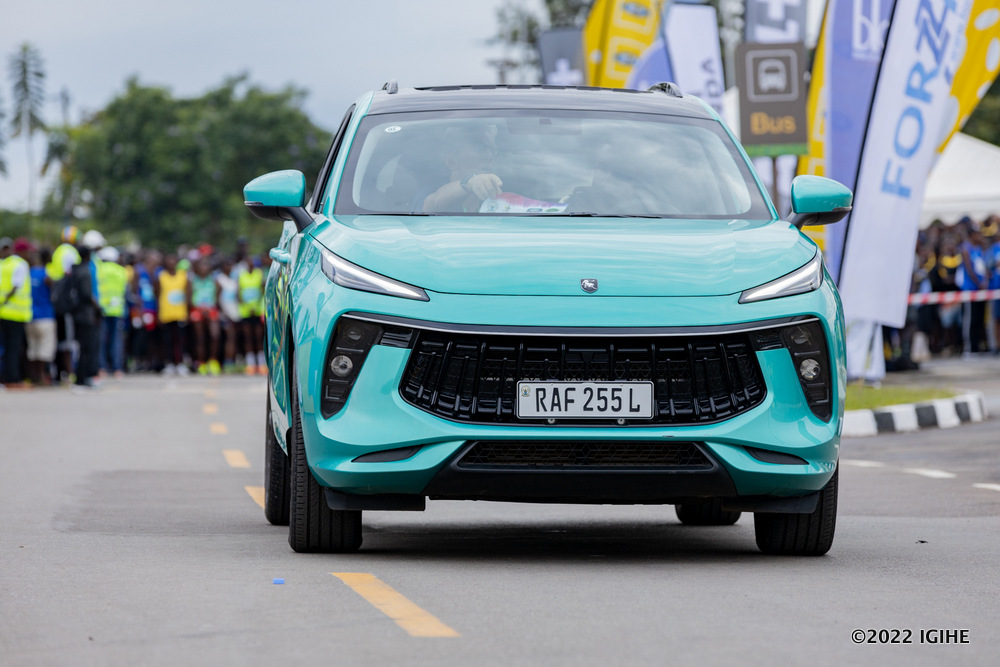
This is an important event for Rwanda’s economy. It is reported that the Rwanda Athletics Federation (RAF) also intends to cooperate with different institutions by doing more meaningful activities to help recovering the Rwanda economy in the post-epidemic era. At the same time, the event was a rehearsal for the forthcoming Commonwealth Conference to be held in June. It is indeed a complete success under the leadership of RAF.
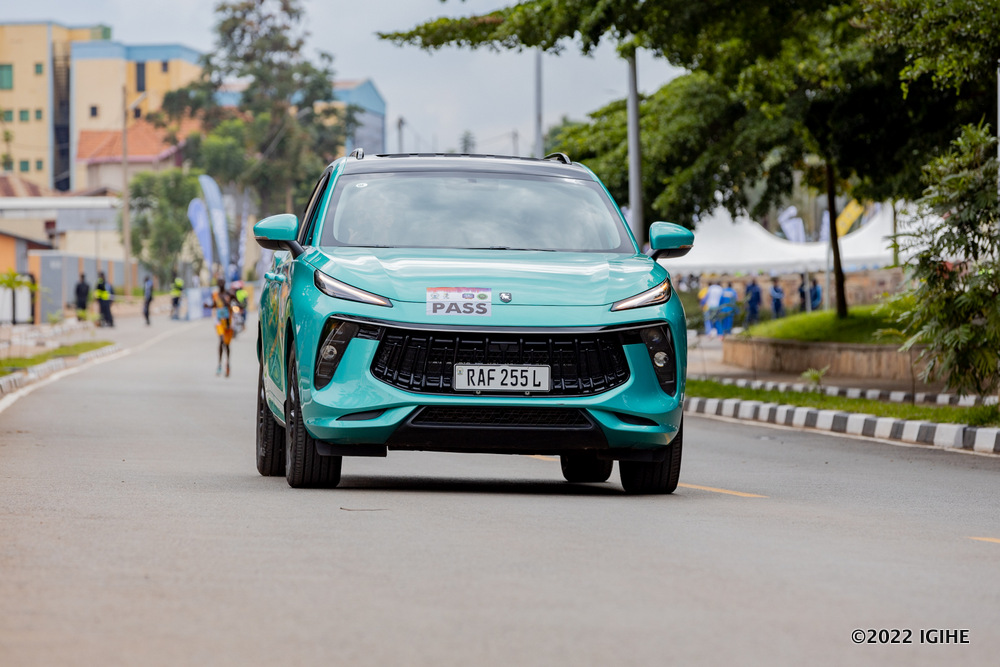
The reporter noticed that it is the first time for KIPM to use a Chinese brand car as the race leading car. It is Dongfeng Forthing T5 EVO. With its eye catching appearance, it amazed all the audience at the venue.
It is a historical moment to see the first impression of Chinese brand car assuming such important role which is usually done by the European, American, Japanese and Korean car in the past. Perhaps it’s even unprecedented in Africa.
After the game, our reporter came to KN7 Kanogo Road Plot No.40 and visited the Carcarbaba Company, the agent who introduced the car to Rwanda, to find out more about the brand and cars.
The leading car T5 EVO is from China Dongfeng Motor Corporation (hereinafter referred to as Dongfeng). It has more than 60 years of experience in vehicle manufacturing. Having two production bases for commercial vehicles and passenger vehicles respectively, Dongfeng achieved an annual production of 1,000,000 units. The products are exported to America, Africa, the Middle East, Southeast Asia, etc.with satisfactory recognition and popularity among local consumers.
The T5 EVO embodies short front and rear overhangs, low body shape, combining mascular outlines on both sides of the body. What a sportive car carrying the image of an athletic leotard. This is how Mr. Henning describes its design, who is the styling director of T5 EVO and has worked in GM, Mercedes-Benz, Volvo and other companies.
In addition, the T5 EVO is also equipped with a Mitsubishi 4A95TD engine with a maximum horsepower of 197PS. And it adopts the same Getrag 7-gear double-clutch wet transmission as BMW M3. It is the world’s top three well-known transmission brands, making the power and maneuver ability of the T5 EVO comparable to the flagship models of other well-known brands.
{{So what is the drive behind the Made-in-China Automobile Industry in recent years which is gradually recognized by global consumers?}}
The manager of CCBB took mobile phones as an example. Ten years ago, well-known mobile phone brands in the world such as Apple, Nokia and Samsung chose to set up factories in China which made China the manufacturing supply chain system is becoming more and more mature. The China brand TECNO have become a household name in Africa with more than 50% of market share.
Be it Apple, Nokia and Samsung, majority of spare parts come from China. The story of China brand automotive industry development share many aspects of the successful China mobile phone industry. Both of them spring off with wide spared relocation of spare parts manufacturing and OEM assembly by established well known brand to China.In 2021, China’s export of vehicles has reached 2,000,000 units with lower price and high quality. A strong supply chain will bring extremely high product cost performance, and better performance and styles can be obtained at the same price. It can be seen that it is not unreasonable that Chinese cars are welcomed by consumers around the world.
It can be said that Chinese auto brands are slowly forming their own influence and competitiveness in the international market. High standard, high quality and high cost performance, this is the reason why Dongfeng, which is “Made in China”, dares to use the brand as the leading car of the competition.
In the future, Dongfeng promise to bring to the market more innovation and high quality products. The reporter also learned that while bringing high-quality cars to Rwanda, Dongfeng also established the first 4S store in Kigali – the above-mentioned Carcarbaba Company, which is an offline business integrating display, sales, after-sales, and maintenance. The store also marks the establishment of Dongfeng’s after-sales service system and maintenance system in Rwanda to improve Rwandan consumers’ confidence and sales experience in Dongfeng Motors. This courage and confidence of Dongfeng to challenge and accept the test of new markets coincides with the sports spirit conveyed by the marathon.
The person in charge of CCBB told reporters that China, which has formed a world-class automobile manufacturing system in the world, is actively responding to the call of China’s “One Belt, One Road” policy and Rwanda’s “Vision 2050”. More high-quality, more cost-effective Chinese cars and the best services will be shared with the Rwandan people, injecting a new force into the Rwandan auto industry and market. With the excellent quality of “Made in China”, we will win the trust of Rwandan people and develop together with Rwanda. “Grow with Rwandans, For Rwanda” is exactly our greatest wish when we come here.
Minister Biruta made the revelation as he delivered remarks to participants of an extraordinary summit in the Equatorial Guinea capital, Malabo, discussing challenges ranging from terrorism to democratic governance and climate change.
The summit took place few days after Congolese Army (FARDC) shelled on Rwandan territory on Monday 23rd May 2022.
At the time, FARDC in collaboration with the Democratic Forces for the Liberation of Rwanda (FDLR) shelled rockets on Rwanda’s territory which injured residents and destroyed houses in Musanze and Burera districts in Northern Province.
The shelling occurred when FARDC was accusing Rwanda of supporting M23 rebel group in eastern DRC. However, Rwanda maintained that the allegations are baseless and called the clash with M23, ‘an internal issue’.
Following the incident on Monday, Rwanda Defence Force (RDF) requested the regional Extended Joint Verification Mechanism (EJVM) to launch probe into the incident.
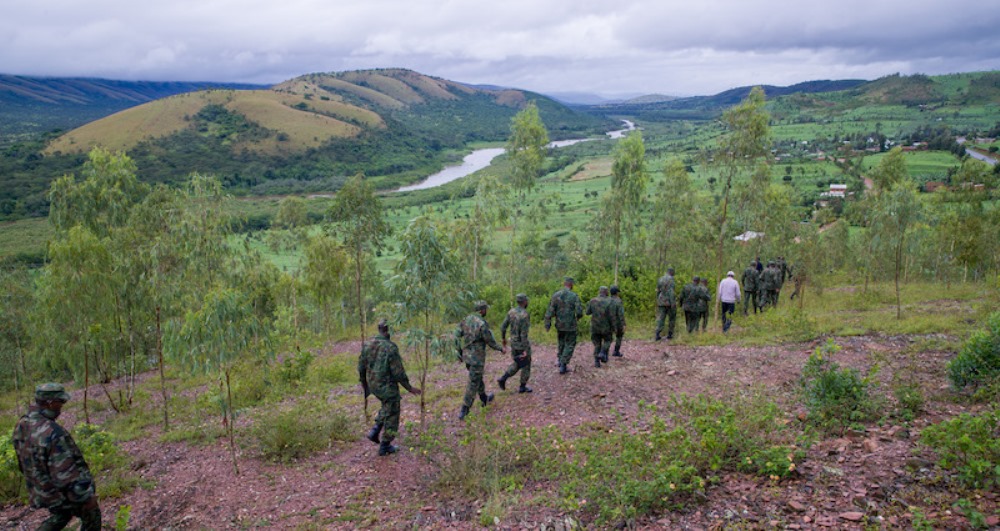
In the same week on Saturday 28th May 2022, RDF announced that Congolese Army with FDLR kidnapped two Rwandan soldiers on patrol.
Minister Biruta told participants of the summit that ‘it is deeply disturbing that DRC has been quick to blame Rwanda in order to ignore its obligations’.
“In addition, the DRC has tried on several occasions to drag Rwanda into its domestic security issues. Specifically, there has been series of FARDC provocations against Rwanda, including shelling on Rwandan territory, which cannot be tolerated as a normal business,” he said.
He stressed that one of provocations happened last week when shelled rockets injured several civilians and damaged property.
The Minister explained that the provocation followed another incident of cross-border shelling which happened on 19th March 2022 where the Government of DRC was notified both times about ‘these serious incidents’.
{{Right to respond}}
Minister Biruta told participants of the summit that Rwandan soldiers had legitimacy to respond the shelling but the country requested investigation into the matter.
“While it would have been legitimate for Rwanda to respond, we have instead consistently requested for investigations of these provocations, by the Expanded Joint Verification Mechanism of the ICGLR,” he said.
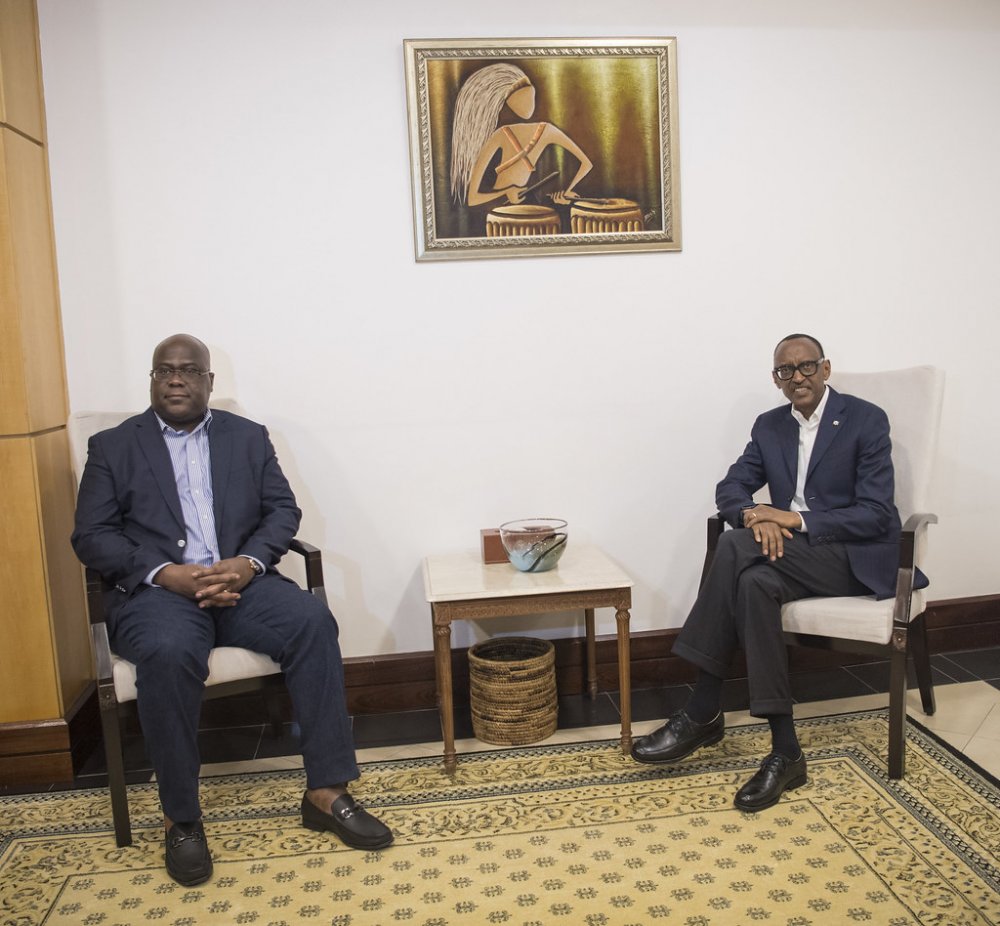
“Let me reiterate this to my Congolese brother: It is true that I indicated to him, that Rwanda has the right to respond. Our President, His Excellency Paul Kagame, pointed this out very clearly to his Congolese counterpart,” added Minister Biruta.
The revelation comes at a time when DRC continues to accuse Rwanda of supporting March 23 rebel group in clashes with Congolese Army (FARDC) which has teamed up with the Democratic Forces for the Liberation of Rwanda (FDLR).
FDLR is rebel outfit comprised of remnant masterminds of the 1994 Genocide against Tutsi who at different times plotted hit-and-run attacks to Rwanda and repelled back.
Last week, FARDC in collaboration with FDLR shelled rockets on Rwanda’s territory which injured residents and destroyed houses in Musanze and Burera districts in Northern Province.
Following the incident on Monday, Rwanda Defence Force (RDF) requested the regional Extended Joint Verification Mechanism (EJVM) to launch probe into the incident.
In the same week on Saturday 28th May 2022, RDF announced that Congolese Army with FDLR kidnapped two Rwandan soldiers on patrol.
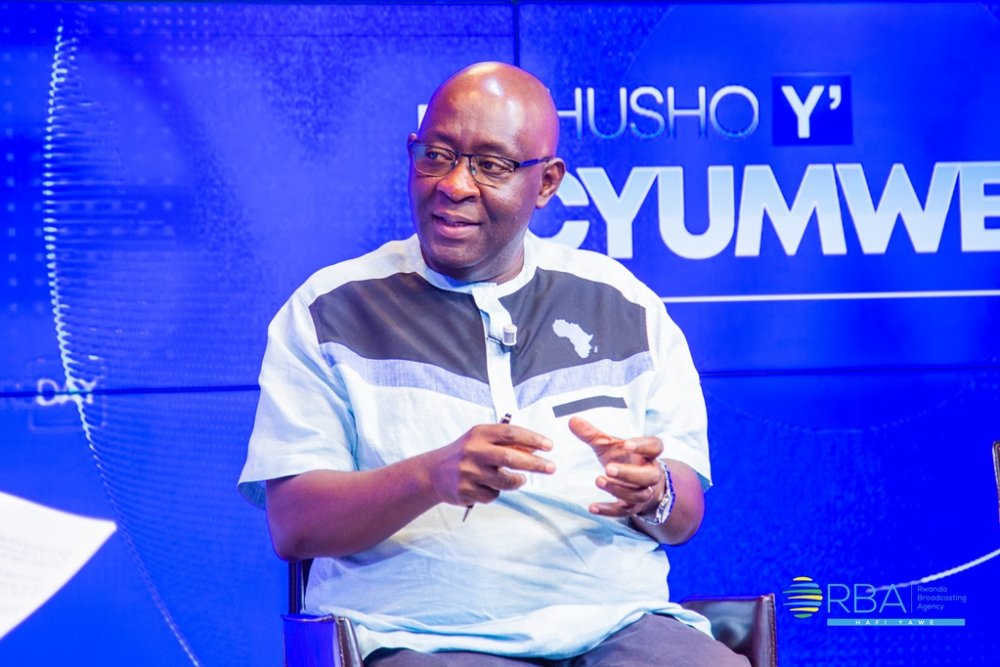
The Deputy Spokesperson of the Government of Rwanda, Alain Mukuralinda has said that clashes with M23 rebel group is DRC’s internal matter that might continue to affect the country if no solution is reached.
He was appearing in a talk show aired on Rwanda Television to express views about the current tension with DRC.
Mukuralinda said that DRC recently kidnapped two Rwandan soldiers on patrol along Rwanda’s border falsely claiming that they had crossed the borderline.
“They need to analyze the situation. How come that two soldiers can cross and walk 20 kilometers with their identifications, military uniforms and whatever identifying them as Rwandan soldiers. Would they be mentally stable? That is one evidence people should consider,” he stated.
Mukuralinda also commented on rockets from DRC shelled on Rwanda’s land.
“We are not spreading rumours when we say that the projectiles were shelled from DRC. We know places where they were shelled and injured people. Fortunately, no one died but the rockets destroyed houses and injured people. Following the incident, Rwanda did neither exaggerate the situation nor raise alarm through the media,” he said.
“There is a joint mechanism with DRC or broader process involving regional countries. Secondly, Rwanda spoke to the Government of Congo, the Minister of Foreign Affairs spoke to his counterpart, the President of the Republic talked to his counterpart,” Mukuralinda added.
{{Attacks}}
Mukuralinda said that it was possible for Rwanda to respond following the shelling on its land but highlighted that it was not an optimal choice.
“It is a provocation. One might wonder if it is not a way of dragging us in DRC’s problems,” he noted.
Mukuralinda has however reassured Rwandans considering the fact that there is willingness to engage with DRC on the matter.
“Fighting is not our option. If it was the case, we would be patient as they shelled on Rwanda’s land in March and respond when they shelled again in May. Not shelling on their land, doesn’t mean that Rwanda is unable to do so,” he said.
“This means that fighting is not an optimal choice on the side of Rwanda. The possibility is to solve problems through peaceful processes whether involving a large or small number of people to find a durable solution,” Mukuralinda added.
He went on to explain that Rwanda will make possible efforts to avoid being drawn into a war.
“Rwanda is committed to make possible efforts to collaborate with Congo, work with regional countries to get the matter solved through dialogue and peace accords,” Mukuralinda noted.
Niyonzima was red-handedly apprehended after falling 53 eucalyptus trees in the government forest located in Gatare Village, Bugera Cell of Remera Sector.
Superintendent of Police SP) Hamdun Twizeyimana, the Eastern region Police spokesperson, said the suspect was reported by local residents.
“When residents saw Niyonzima cutting trees in a protected forest, they called local leaders and the Police. He was found in the forest after cutting 53 trees. He was selling the trees as firewood,” said SP Twizeyimana.
He commended residents for the community policing spirit to fight such acts of environmental degradation.
Niyonzima was handed over to RIB at Remera station for further investigation.
Article 44 of Law N°48/2018 of 13/08/2018 on environment prohibits cutting trees in forests or protected areas or in national parks.
In article 59; any person who causes death, destroys protected plants, harvests or damages them, commits an offence.
Upon conviction, he/she is liable to imprisonment for a term of not less than three years and not more than five years and a fine of not less than Rwf1 million and not more than Rwf3 million.
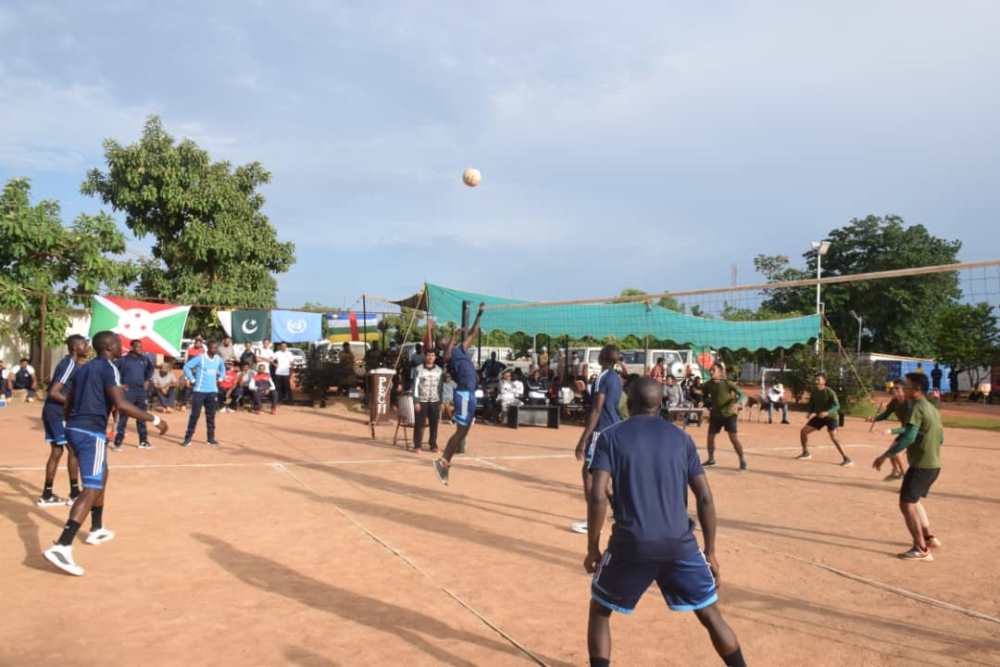
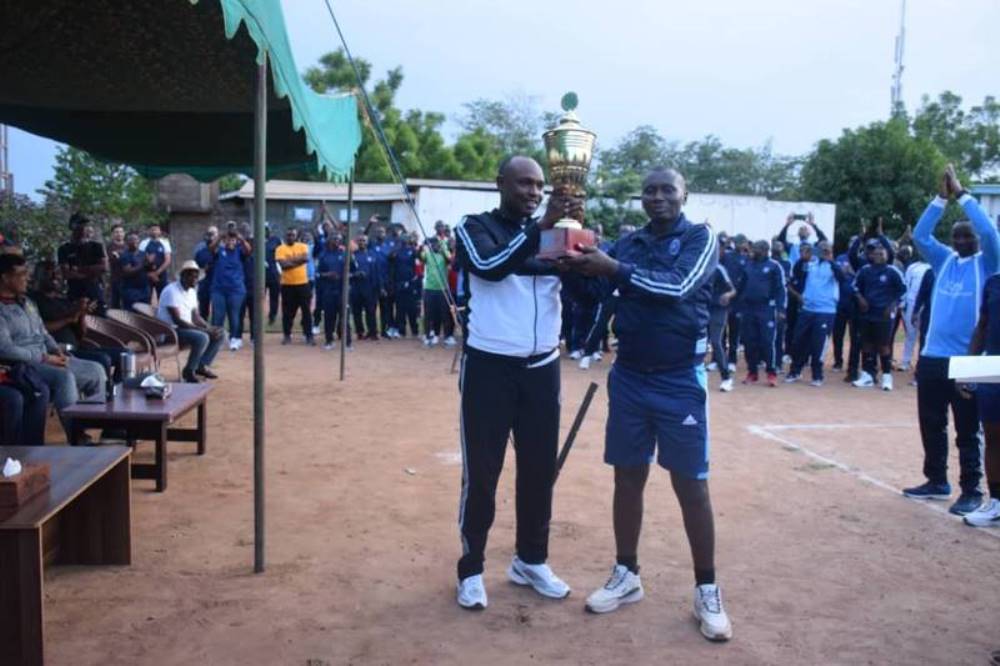
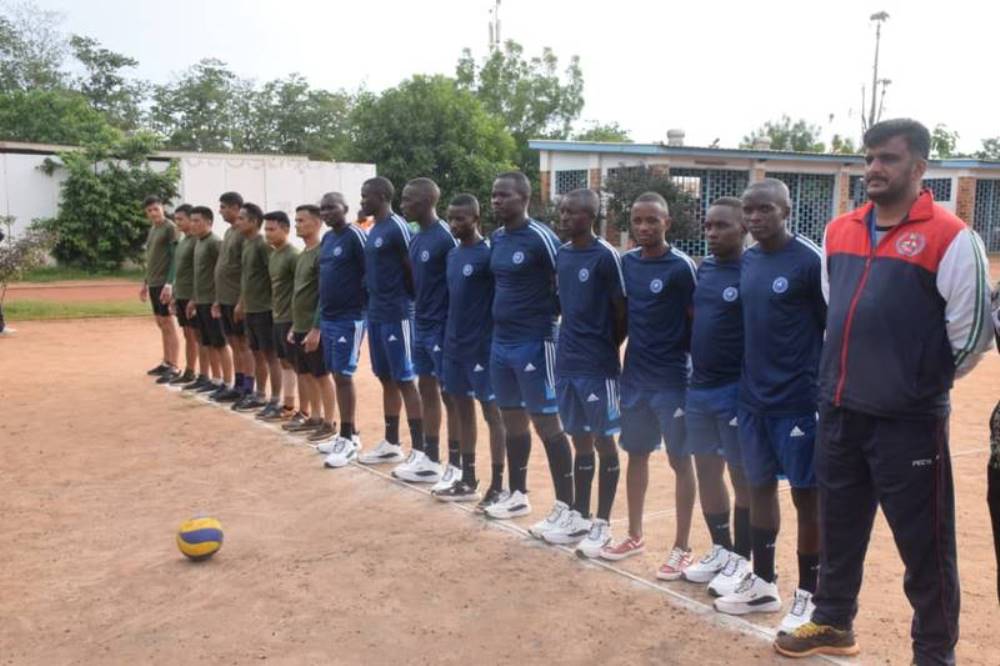
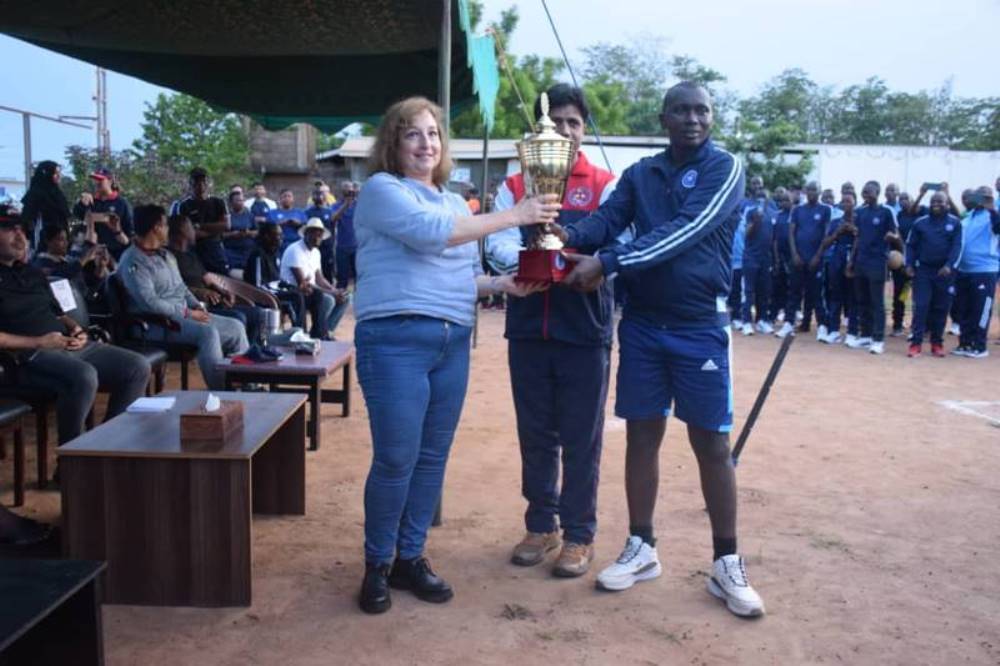
RWAFPU-2 operating in Nana Cribizi, Kaga Bandoro beat Nepal Military Police 2 sets to 1 in the finals played on Saturday, May 28.
The International Day of UN Peacekeepers marked every May 29, is an opportunity to recognize the service and sacrifice of the more than one million personnel who have served under the blue flag since 1948.
It is also a chance to honour the memory of the more than 4,200 peacekeepers who lost their lives in the cause of peace, including 135 last year.
This year, the UN marks the occasion under the theme “People Peace Progress: The Power of Partnerships.”
Eight contributing countries operating in Kaga Bandoro, including MINUSCA administration team, took part in the tournament. Others include Bangladesh medical battalion, Bangladesh Special Force, Burundi, Pakistan Engineering battalion and Pakistan battalion.
Rwanda FPU-2 eliminated MINUSCA team 3-0 in the semi-finals to set the final encounter with Nepal Military Police.
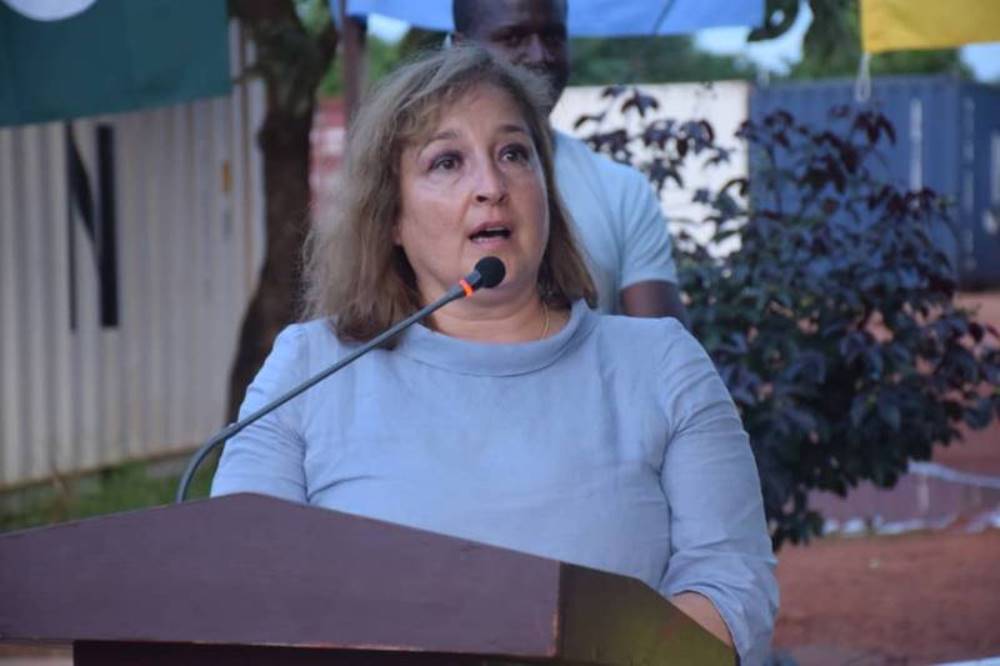
MINUSCA Head of Field Office (HoFo) for Kaga Bandora, Madam Alessandra Trabattoni and Sector Central commander, Brig. Gen. Jean Bosco Ngiruwonsanga, graced the volleyball tournament finals.
While speaking shortly after the tournament, Madam Trabattoni congratulated Rwanda FPU-2 for their triumph and thanked all contributing countries that participated in the tournament.
“You serve selflessly to bring about peace and security but also spare time to pay tribute to fallen peacekeepers without affecting your peacekeeping duties. Thank you,” Madam Trabattoni said.
She particularly lauded the impact of the Rwandan peacekeepers in Kaga Bandoro, MINUSCA and in other peacekeeping missions in Africa.
Rwanda FPU-2 is charged with the protection of civilians in internally displaced camps of Mbela and Mbakoute Lazaret as well as providing security of Kaga Bandoro town and Kaga Bandoro airport, among others.
The Head of Field Office commended the discipline and professionalism of the Rwandan Police peacekeepers in their tour-of-duty.
“This tournament defines the spirit of teamwork, commitment to peace building and professionalism. We pay tribute to those who lost their lives in the line of duty to bring about peace and strive for what they died for,” Madam Trabattoni said.
Rwanda FPU-2 contingent commander, Chief Superintendent of Police (CSP) Hodali Rwanyindo also thanked his team for the teamwork and winning spirit to stand tall in the tournament.
Rwanda FPU-2 contingent of 180 officers was deployed in Kaga Bandora last month.
It is one of the three Rwandan Police contingents deployed in Central African Republic (CAR). Two others, Rwanda FPU-1 and Rwanda Protection Support Unit (PSU) operate in the capital Bangui.
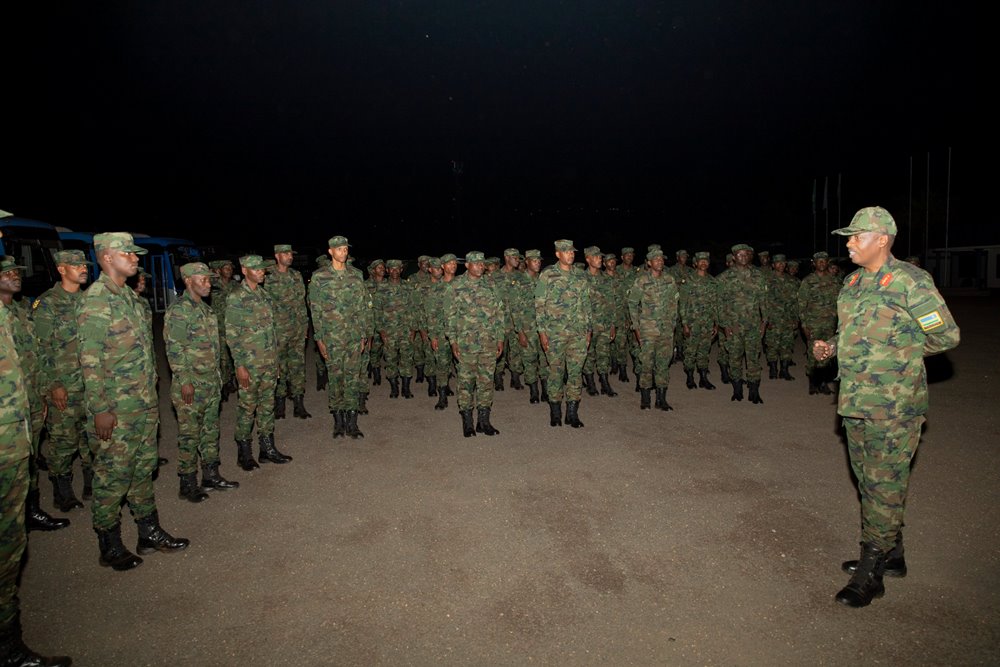
The objective of the exercise is to promote the EAC integration agenda by enhancing joint state of readiness and interoperability of EAC partner States’ Armed Forces, Police, Civilian Components and other stakeholders in responding to complex security challenges.
The Division Commander, Mechanized Division, Maj Gen Wilson Gumisiriza, briefed the departing contingent on behalf of the RDF leadership reminding them to uphold RDF values of patriotism, honour, valour and integrity and also maintain discipline throughout the exercise.
The two-week long exercise is attended by 6 EAC member states’ armed forces, police personnel and civilians from Burundi, Kenya, Rwanda, South Sudan, Tanzania and Uganda.
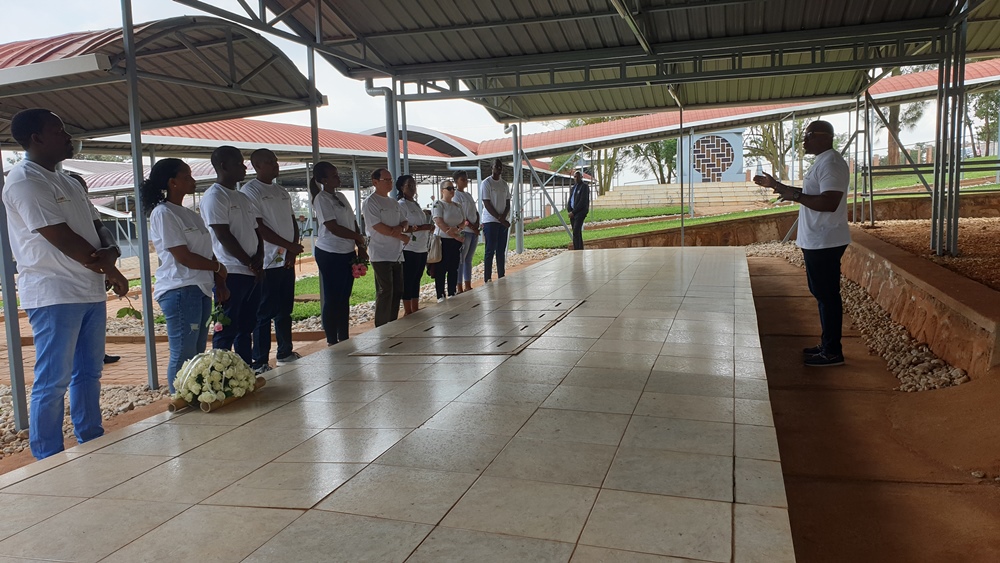
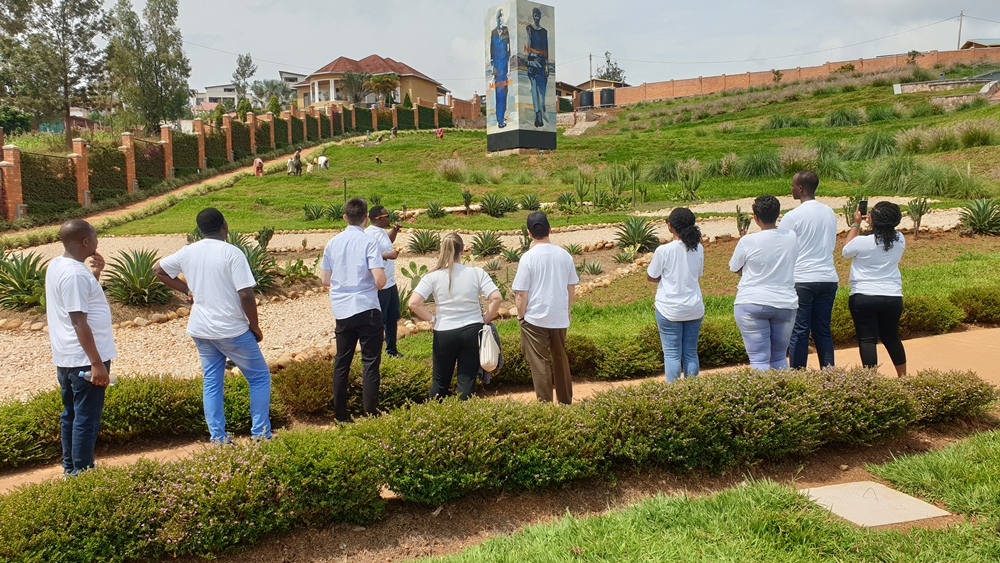
The ceremony was also attended by the Programs Director at Ibuka Rwanda, Olivier Brave Ngabo, who explained the history of the place during the Genocide.
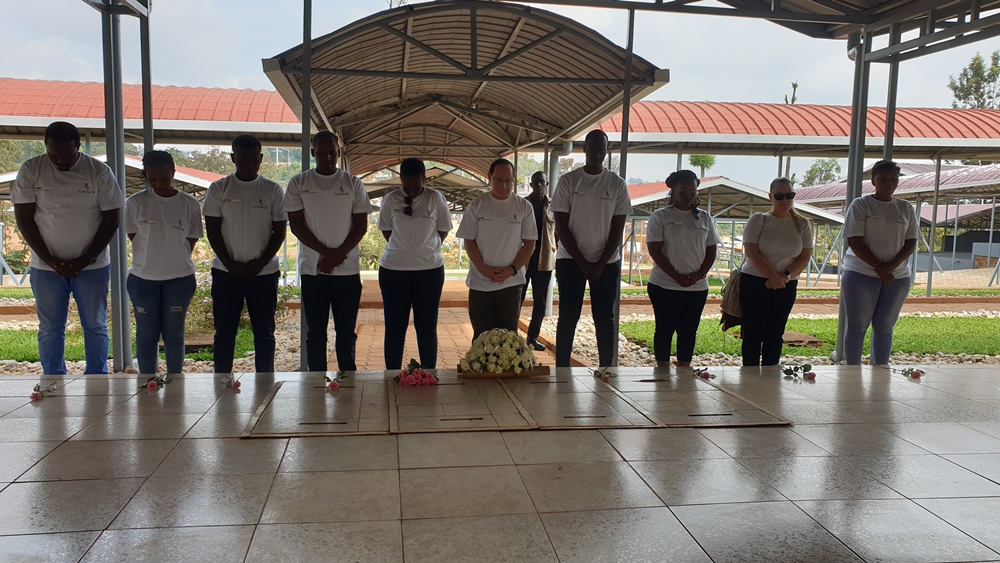
Nyanza-Kicukiro Genocide Memorial is home to more than 105,000 victims, many of whom were killed from different parts of Kigali City.
While explaining the uniqueness of the killings at the place, Ngabo said that in 1994, at ETO-Kicukiro (currently IPRC-Kigali) there were troops serving under UNAMIR, a reason to why many Tutsis in the surrounding sought refuge, hoping to be protected by these well-armed UN soldiers.
However, he said, the Belgian contingent left the country, leaving Tutsis in the hands of Interahamwe militia who took them to Kicukiro-Nyanza to kill them.
“The perpetrators brought Tutsis here because they feared they could be seen by foreigners who were passing near Sonatube heading to the Kigali International Airport. Some Tutsis were killed along the way to Nyanza, and those who were brought at this place were also brutally murdered. Of more than 3,000 Tutsis who were escorted from Eto Kicukiro to Nyanza, only 90 people survived,” he explained.
In his remarks, Ambassador of Israel to Rwanda, Dr. Ron Adam said that the Genocide against the Tutsi and the Holocaust have many things in common.
“As a second generation Holocaust survivor, I can tell what it feels like to expect death at any time, to find no safe place to hide and to be gathered in a single place with a single intention; killing you because of how you were born. My thoughts and prayers go to the victims of the Genocide against the Tutsi, and we stand in solidarity and comfort those who survived,” he said.
The Ambassador also stressed that genocide survivors should share their personal testimonies as much as they can and put them in writing where possible, noting that it is a long-lasting weapon to fight genocide denial.
“This will also help the post-genocide generation to know the truth of what happened during the genocide and be able to confront genocide deniers,” he added.
After laying wreaths at the memorial site, the staff of the Israel Embassy in Rwanda visited ‘Jardin de la Mémoire’ (Garden of Memory).
FDLR is rebel outfit comprised of remnant masterminds of the 1994 Genocide against Tutsi who at different times plotted hit-and-run attacks to Rwanda and repelled back.
RDF has through a statement disclosed that kidnapped soldiers include Cpl Nkundabagenzi Elysee and Pte Ntwari Gad being held by FDLR in Eastern DRC.
“Following the provocative aggression by FARDC on 23 May 22, where multiple rockets were fired on Rwandan territory, FARDC with FDLR attacked RDF along our border, and two Rwanda Defence Force soldiers were kidnapped while on patrol,” reads part of the statement released on Sunday 28th May 2022.
RDF has also called upon ‘authorities of the Democratic Republic of Congo that work closely with these genocidal armed groups to secure the release of the RDF soldiers’.
It has been quite some time since FARDC was reported to be working with different rebel groups based in eastern part of the country including FDLR to fight M23 rebel outfit.
The fighting erupted in March this year and later halted for a while. It however resumed towards the end of last week.
During the fight on Monday 23rd May 2022, FARDC shelled projectiles on Rwandan territory which injured residents in three sectors including Kinigi and Nyange (in Musanze District) and Gahunga in Burera District. The shelling also left houses destroyed.
On Thursday this week, the Spokesperson of the Government of Rwanda, Yolande Makolo requested the Minister of Foreign Affairs of the Democratic Republic of Congo (DRC) to explain why Congolese Army has collaborated with FDLR.
She stated that ‘the fighting between FARDC and M23 is an intra-Congolese conflict’ noting that Rwanda has no interest of being dragged into the matter.
Makolo also inquired into the motive behind cooperation with FDLR comprised of remnants of genocidaires forces that still have intentions to destabilize Rwanda.
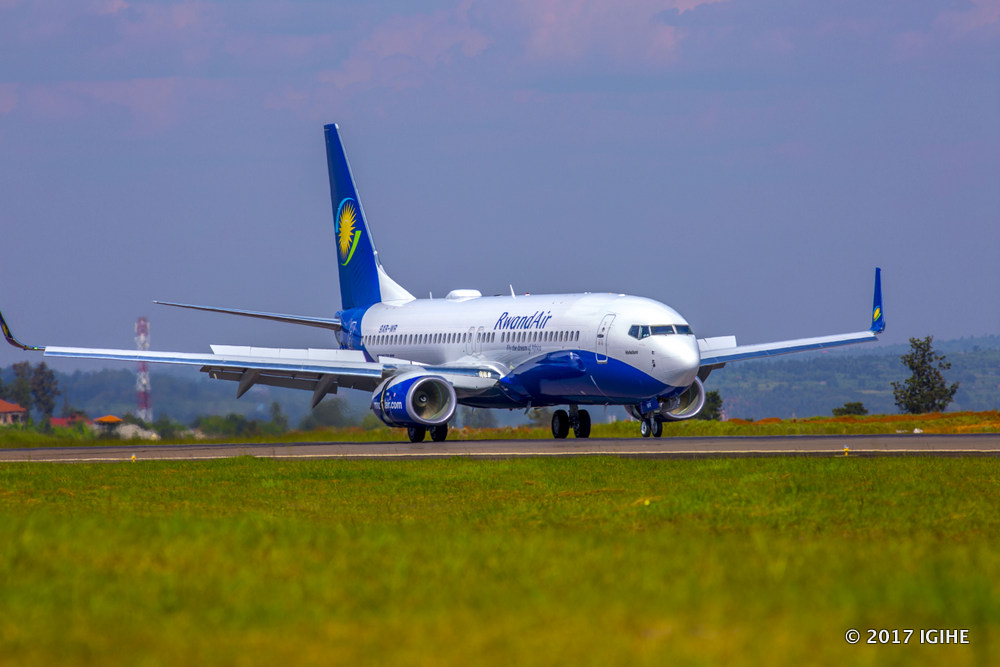
Meanwhile, DRC has announced ‘conservative measures’ against Rwanda where the country blocked flights from RwandAir accusing Rwanda of supporting M23.
The decision comes at a time when the fighting between FARDC and M23 is escalating where Congolese Military continues to loose its strongholds.
Among others; RDF recently requested urgent investigation by the regional Extended Joint Verification Mechanism (EJVM) to investigate this week’s cross-border shelling in Musanze and Burera Districts.
Headquartered in Goma, the EJVM was launched in September 2012 in Goma and comprises of military experts from the International Conference on the Great Lakes Region (ICGLR) Member States. It monitors and carries out investigations on security incidents.
Different analysts have told IGIHE that the repetitive attacks of FARDC are meant to drag Rwanda into a fight.
The decision to ban RwandAir flights has been taken during an extraordinary meeting of the Superior Defence Council chaired by Congolese President Felix Tshisekedi.
“It was decided to immediately suspend flights from the RwandAir aviation company to the Democratic Republic of Congo,” said Communications Minister Patrick Muyaya.
The council also summoned Rwanda’s ambassador to DRC to provide explanations on the allegations.
In a statement released on Saturday 28th May 2022, RwandAir responded by cancelling “with immediate effect” all flights to Kinshasa, Lubumbashi and Goma.
“Following the decision of the Government of the Democratic Republic of Congo to suspend RwandAir flights, RwandAir has decided to cancel all flights to Kinshasa, Lubumbashi and Goma with immediate effect,” reads part of the statement.
“We are sorry for the inconvenience and disruption this may cause to our customers and we will waive change of reservation fees and offer re-issues or refunds for those affected,” adds the statement.
RwandAir has also revealed that it will update customers and be in touch with them where it can.
On Monday this week, Rwanda Defence Force (RDF) announced that Congolese Army (FARDC) in collaboration with the Democratic Forces for the Liberation of Rwanda (FDLR) shelled rockets on Rwanda’s land in Musanze and Burera Districts.
The projectiles injured residents and left houses destroyed.
Following the incident, RDF requested the regional Extended Joint Verification Mechanism (EJVM) to launch probe into the incident.
On Thursday 26th May 2022, the Spokesperson of the Government of Rwanda, Yolande Makolo also requested Congolese Foreign Affairs Minister to explain why his country shelled Rwanda’s land.
She revealed that Rwanda would be legitimate to respond to those attacks but highlighted that the country has no intentions to do so calling the situation in DRC ‘an internal matter’.
Rwanda Defence Force has this Saturday announced that FARDC in collaboration with FDLR have kidnapped two Rwandan soldiers on patrol.
Political analysts who spoke to IGIHE have said that the repetitive attacks of DRC are meant to draw Rwanda into a war.
The fighting erupted in March this year and later halted for a while. It however resumed towards the end of last week.
Since the fighting erupted between FARDC and M23, sources reveal, the government’s army continues to loose military bases.
M23 is one of more than 120 armed groups that roam eastern DR Congo.
The rebel group had captured Goma town in 2012, before the army quelled the rebellion.
However, M23 resumed fighting this year, accusing DRC of failing to respect a 2009 agreement under which its fighters were to be incorporated into the army.
On Friday, the United Nations reported that the recent clashes between Congolese military and M23 rebels in eastern part of the country have left more than 72,000 people displaced.