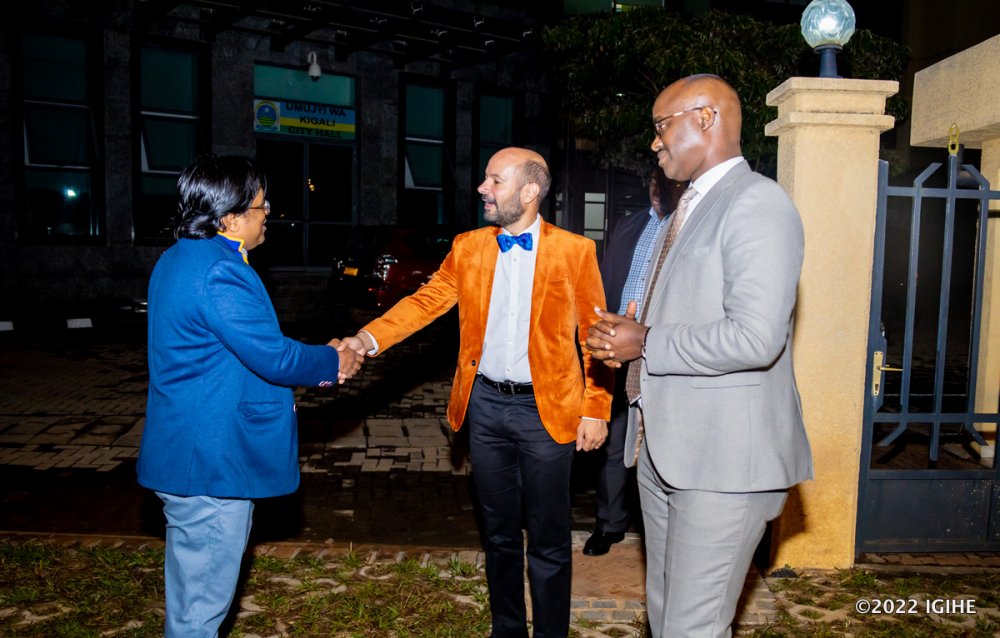
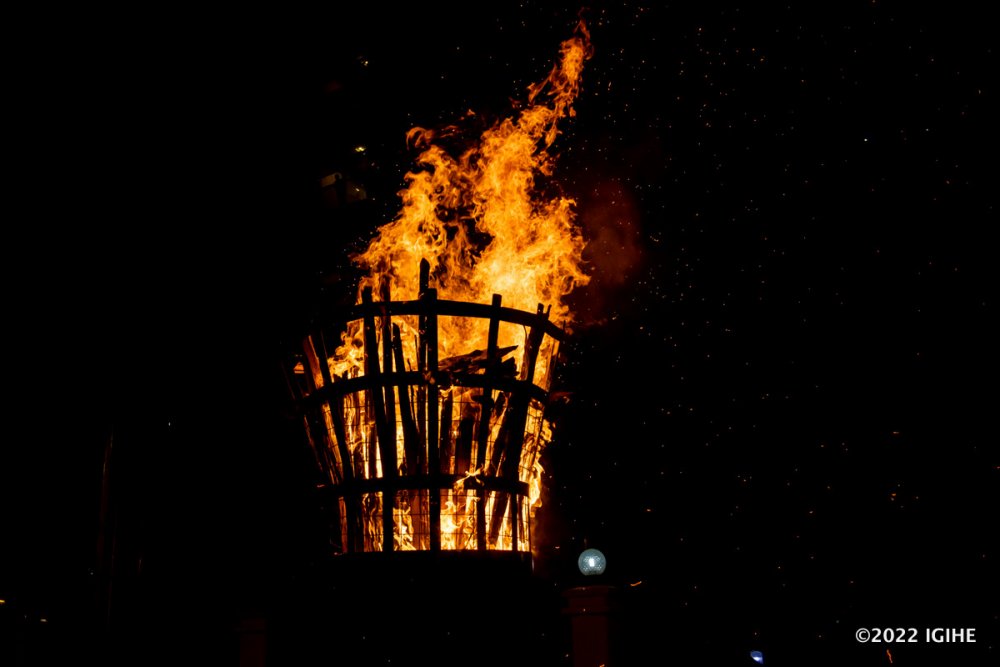
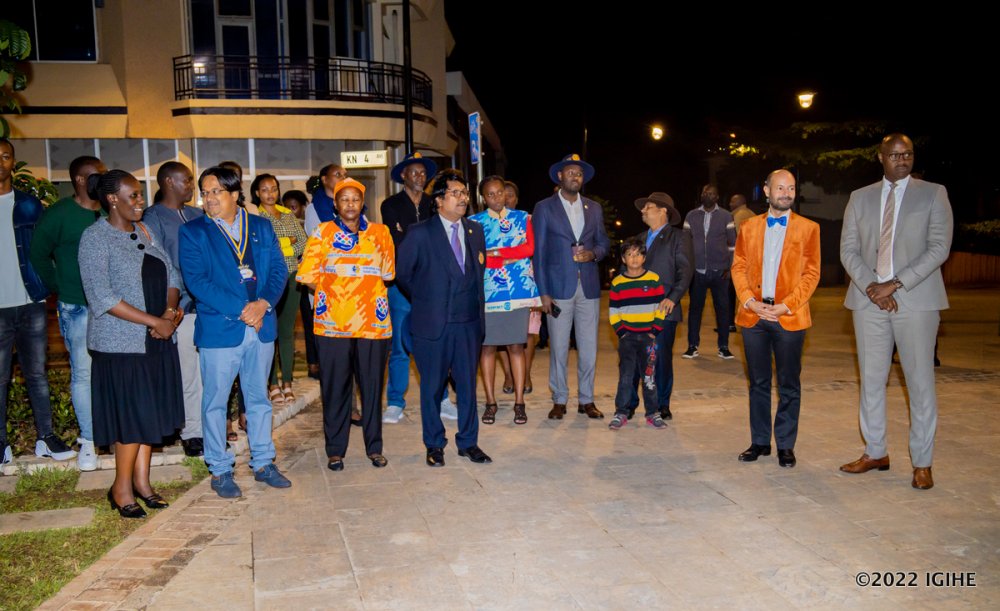
The celebrations took place on Thursday 2nd June 2022. Globally, the event was marked by the lighting of beacons in all capital cities of the Commonwealth.
Officials from Kigali City organized the event in collaboration with Rotary Club which was taking place for the first time in all 54 cities of the Commonwealth.
The beacon was lit at 21:15 p.m. at Imbuga City Walk commonly known as Car Free Zone.
The Mayor of Kigali City, Pudence Rubingisa said that joining other cities in celebrating the Platinum Jubilee and lighting the beacon is recognition of the contribution and efforts of Queen Elizabeth II in different sectors while improving the welfare of the citizens in Commonwealth countries.
“We are delighted to be part of this Platinum Jubilee celebrations but more importantly to have done it here in Kigali which gives our people an opportunity to know about it and be part of the celebration,” he noted.
“We are so pleased to be celebrating this Platinum Jubilee, while we are closer to host the Commonwealth Head of Government Meeting (CHOGM) in a few days to come,” added Rubingisa.
The ceremony was also attended by UK High Commissioner to Rwanda, Omar Daair who said that it is a memorable day for UK nationals and Commonwealth members.
Queen Elizabeth II (Elizabeth Alexandra Mary Windsor) was born on 21st April 1926.
She ascended throne on 6th February 1952 following the death of her father King George VI. She is the sixth women to lead UK and its longest reigning monarch.
Queen Elizabeth II who is also the Head of Commonwealth has designated Charles, the Prince Charles as her successor.
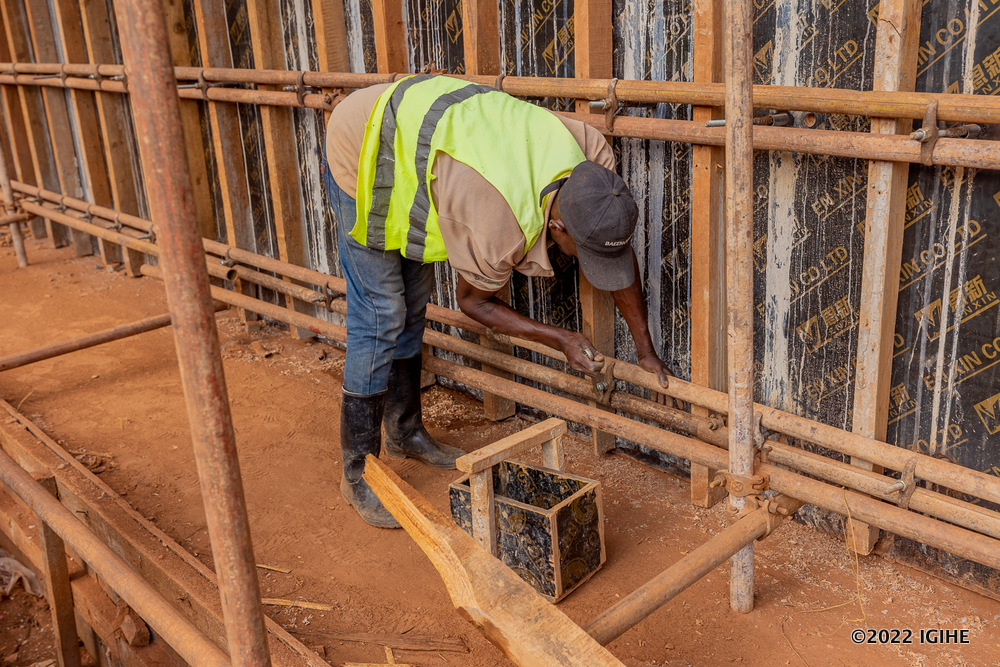
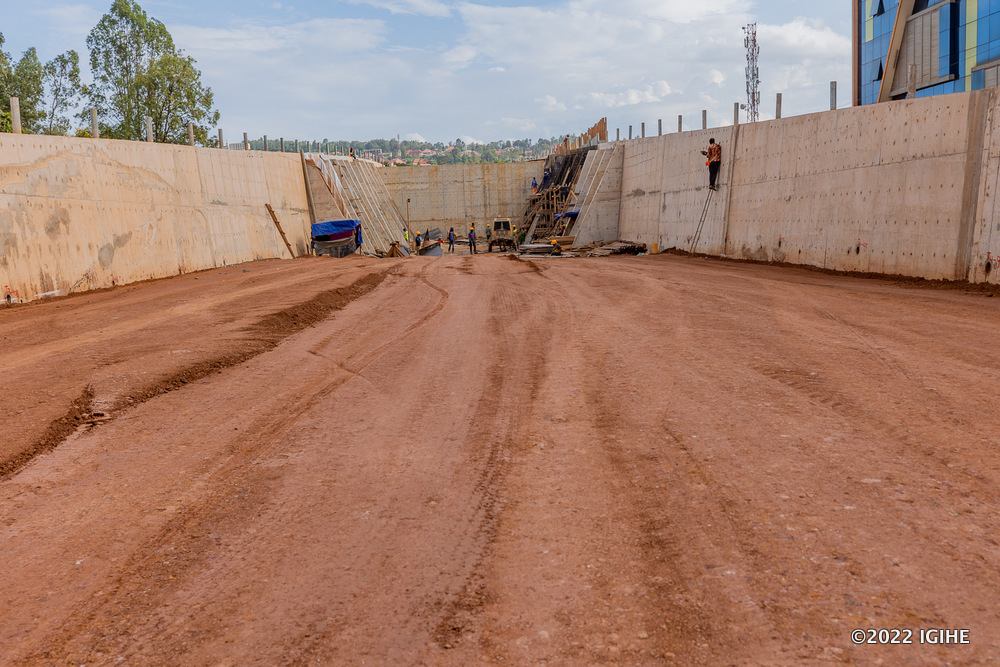
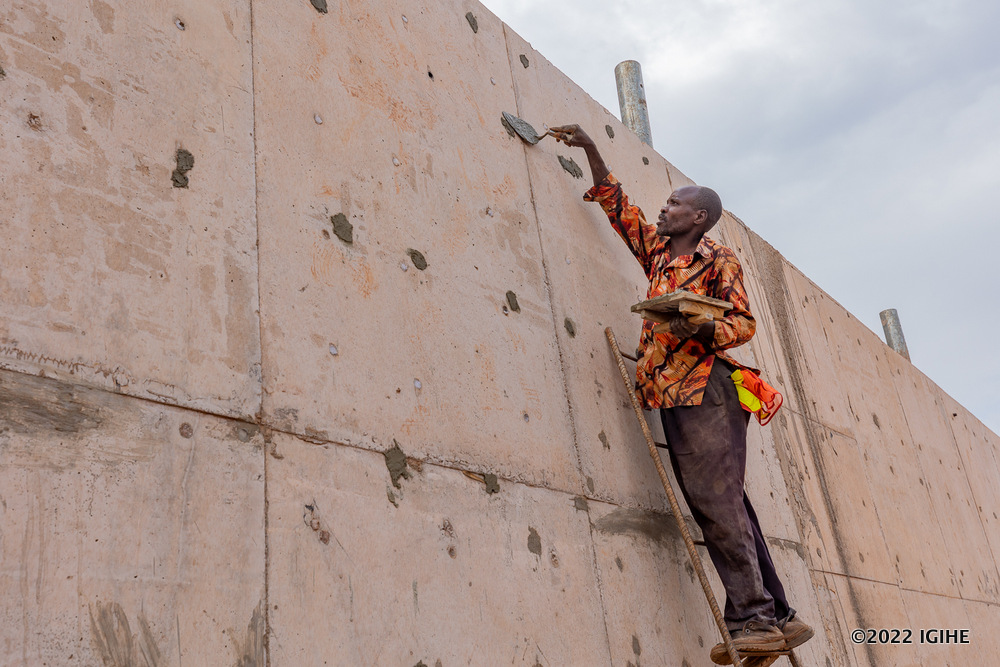
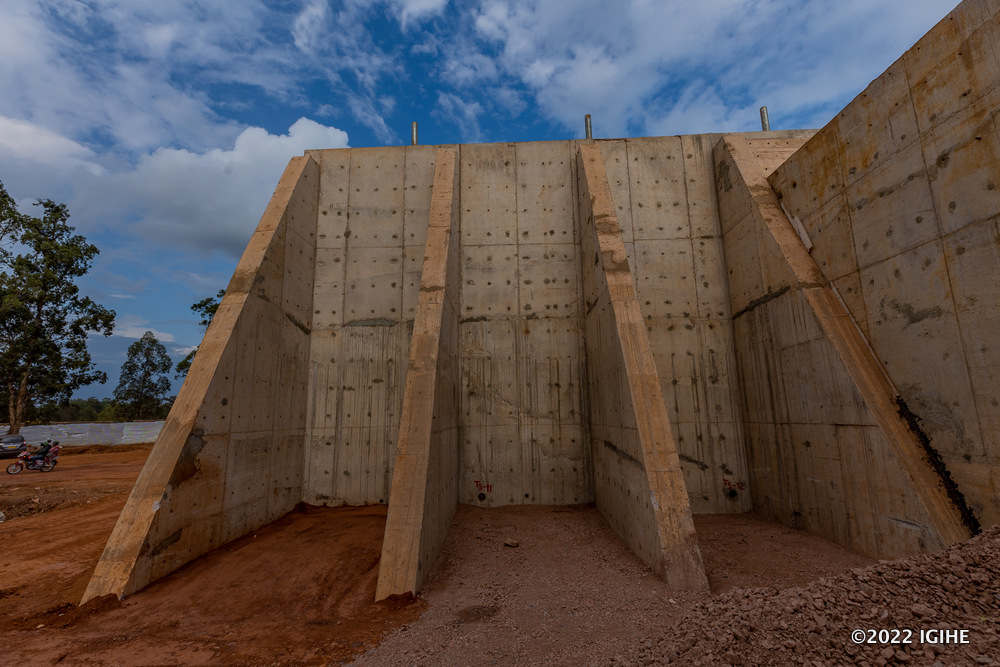
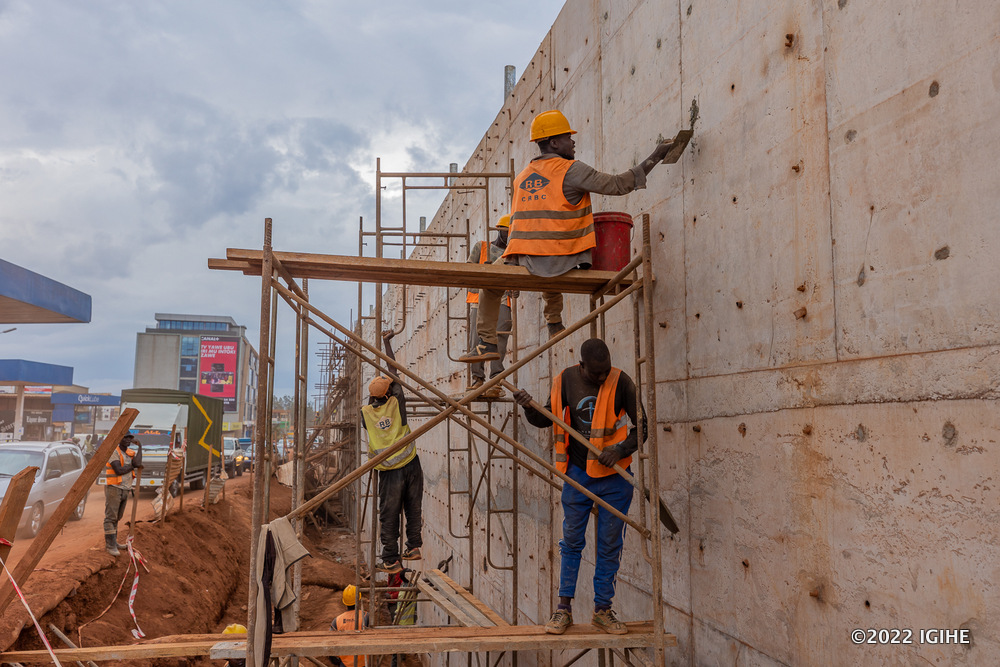
RTDA has said that construction activities of the flyover and side roads will be completed at a cost of Rwf6 billion.
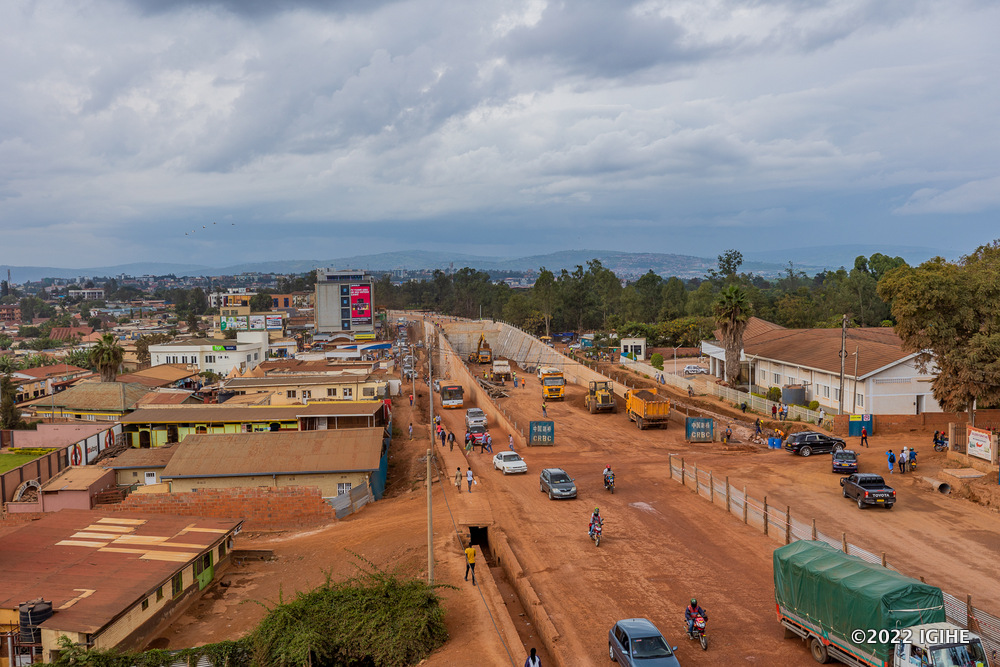
The flyover which also has a roundabout is being constructed before Kicukiro market in Kicukiro Centre.
It is part of the Kicukiro Sonatubes-Gahanga-Akagera highway. The upper road of the flyover will have four lanes.
The project was designed to ease traffic between Kigali and the Eastern Province.
Solange Mizero, Single Project Implementation Unit (SPIU) Coordinator at Rwanda Transport Development Agency (RTDA) has told IGIHE that construction works are being fast tracked with optimism to have completed them before CHOGM2022.
“We have optimism that the road will be operational during CHOGM. We are expending much effort in terms of equipment and increasing working hours to complete the remaining work within the first dates of June,” she said.
The host organization, Heavenly Culture, World Peace, Restoration of Light (HWPL), proclaimed the Declaration of World Peace back in 2013. The declaration addresses the endorsement of national leaders, engagement of women and youth, cooperation among civil societies, and expansion of media coverage on peace. Afterward, it was developed into the Declaration of Peace and Cessation of War (DPCW) as a process to establish international legal instruments for global peace.
Young Min Chung, the General Director of the International Peace Youth Group (IPYG), an affiliate group of HWPL, said in his progress report, “730,000 citizens from 176 countries have signed in support of the DPCW for the past nine years which allows them to express their opinions in the most direct way. Recently, the IPYG is running the Youth Empowerment Peace Workshop (YEPW), where they discuss the agendas such as education, human rights, and conflicts and conduct joint action as well as policy proposals.“
The 10 articles and 38 clauses of the DPCW include prevention and resolution of conflicts, gradual reduction of war potential and turning weapons into daily tools, respecting and resolving conflicts based on religion and ethnic identity, and spreading a culture of peace. The declaration is geared towards engaging nations, international organizations, NGOs, and individual citizens in taking actions for a peaceful world.
As for the collaboration for peacebuilding, Chairman Man Hee Lee of HWPL appealed to the participants to be united as “messengers of peace” “to bring freedom and peace to future generations.” “This time (Russia) invaded Ukraine and started the war. This is why HWPL and families of peace have long called for the establishment of international law to prevent war potentials. So, we gathered experts in international law globally … and made the declaration with 10 articles and 38 clauses.”
As a case of peace activities to resolve conflicts in India, MOUs among religious leaders were signed since for further cooperation with understanding religions based on comparative studies on religious scripture. In particular, the partnership between HWPL and the International Organization for Religion and Knowledge at Lampur led to erecting a peace monument to convey values of peace to local citizens.
Educators’ participation in peace-related activities was also introduced in the event. Teaching methodology with the use of Metaverse was demonstrated as a virtual world platform where students are able to experience peace by reading materials and observing diverse peace activities that are carried out in many parts of the world.
One of the participant students said, “I learned the need for an international law to achieve peace. We need a law that can achieve peace. It is important that people abide by the law and if all people become citizens of peace, we would not even need the law.”
Mr. Supalak Ganjanakhundee, Thammasat University’s Pridi Banomyong International College Visiting Fellow and former Chief Editor of The Nation in Thailand said at the journalist report in the event that the foundation of peace is closely related to democracy that serves as an opened room for “allowing participation of civil society” to peace process. Elaborating the current deadlock of the peace process in Southern Thailand, he said, “(A)ny peace process that would lead to lasting peace must address the problem at its root cause and must be conducted along the democratization with intensively participation of not only stakeholders but also civil society.”
HWPL has been developing global cooperation for peace both at the international level and at the national level by garnering the support of international organizations for the DPCW and working hand in hand to reinforce international norms to realize peace. With civil organizations, HWPL has been carrying out activities for the public good to ensure that peace takes root
IGIHE has learnt that DRC mulls sending the soldiers to Angola instead of directly handing them over to Rwanda.
These soldiers of the Rwanda Defence Force (RDF) include Cpl Nkundabagenzi Elysée and Pte Ntwari Gad. They were arrested on patrol along the border between Rwanda and DRC.
DRC said that they were arrested in 20 kilometers from the border as they went to support M23 in its clashes with Congolese Army.
However, Rwanda rejected the statement insisting that they were kidnapped along the border on patrol.
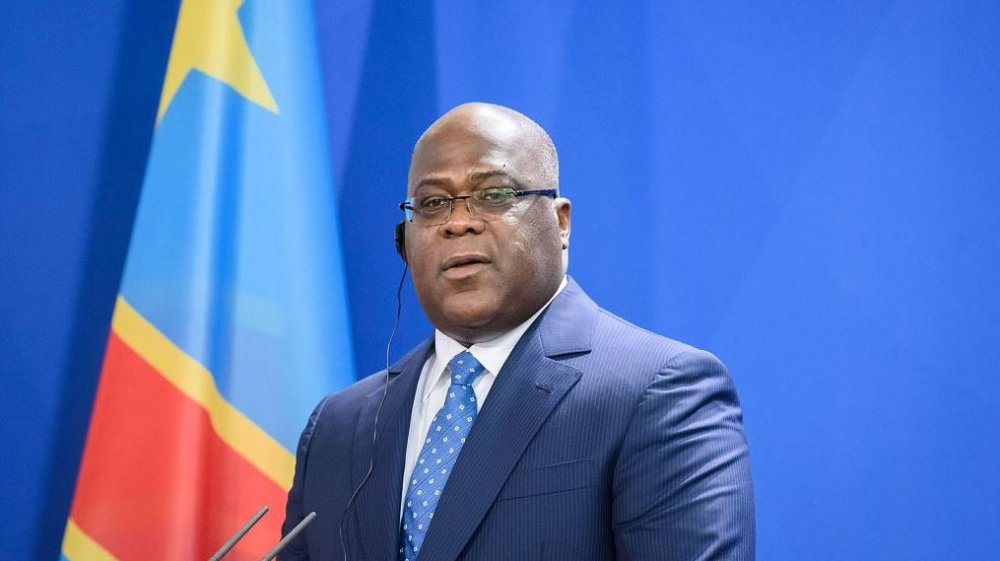
On Tuesday this week, DRC President Félix Tshisekedi accepted to release them on the request of Angolan counterpart João Lourenço, who is the mediator between both countries on the issue. Despite the pledge, the country has not yet released the soldiers.
IGIHE has learnt from credible sources that the soldiers were initially detained by FDLR and later handed over to Congolese Army which incarcerated them in Goma.
The time for their release as agreed by Tshisekedi remain unknown but sources indicate that DRC doesn’t want to send them directly to Rwanda. It is said that the country mulls sending them to Angola as the mediator which will hand them over to Rwanda.
Sources also reveal that the aircraft to carry them to Luanda, the capital of Angola from where they will be flown to Rwanda is not yet available.
Meanwhile, protests are escalating in DRC where all political parties including some harbouring destructive ideologies against Rwanda are requesting to stage demonstrations.
Each political party has to write to DRC leadership requesting for a go ahead to mount protests at Rwanda’s embassy in the country.
Rwanda’s embassy is headquartered in Avenue de Justice in Kinshasa. It is located in a multi-storey building which also houses different businesses.
It is said that the embassy’s officials are safe as they have opted to work from home lest they are assaulted by protestors.
On Thursday, protestors turned up in large numbers at the embassy but, according to sources, Police dispersed them because they tampered with businesses operating in the same premises.
More anti-Rwanda demonstrations are expected this Friday.
It has been reported that Vincent Karega, Rwanda’s ambassador to DRC was rescued by Police as protests escalated at the embassy. IGIHE has however learnt that circulated information is not true because Amb. Karega was at his home when the demonstrations were staged.
Speaking to the media recently; the Minister of Foreign Affairs, Dr. Vincent Biruta said that Rwanda wants its soldiers released and requested DRC to stop its provocations on Rwandan territory.
“We want such provocations to stop. We want these soldiers released. However, in case these attacks continue to threaten our country’s security, we would be legitimate to defend ourselves and you know that we have capacity,” he disclosed.
Rwanda has been accusing FARDC of working with FDLR. During their clashes with M23 recently, the forces shelled rockets on Rwandan territory which injured people and destroyed houses.
It was the second shelling on Rwanda’s land this year.
Mokaddem was speaking during an exclusive interview with IGIHE following the ceremony to commemorate Genocide against Tutsi for the 28th time organized by Rwandan community in Niamey, the capital of Niger.
The event took place at Radisson Blu Niamey on 28th May 2022.
Mokaddem who is also a lecturer of Philosophy at the University of Montpellier said that Genocide against Tutsi in Rwanda was characterized by extreme cruelty and stressed the need for concerted efforts to prevent reoccurrence.
“Victims of Genocide against Tutsi in Rwanda are an example of abandoned people. This conveys a message reminding the urgency of restoring their dignity by remembering them to keep their memory alive,” he said.
Mokaddem also reminisced on Genocide ideology and hate speeches before and during the 1994 Genocide against the Tutsi propagated by media houses including RTLM highlighting that the world needs to learn from it.
“This must remind us to reconsider the value of life, needed ethics and political virtues,” he said.
“What happened in Rwanda should encourage us to think about the power of ideology, propagated words and the role of media in the life of people, in shaping politics and history,” added Mokaddem.
He also expressed serious concerns over people who continue to spread genocide ideology, denying Genocide against Tutsi or tending to misinterpret history to trivialize the Genocide.
Among others, Mokaddem said that denying history of Genocide against Tutsi is ‘coward’ of not accepting the truth and stressed that the world needs to keep a close eye on such people.
“It is a way of misinterpreting history. This means, we have to be vigilant in terms of history related programs, research and anything else helping us to pass down the history to generations to avoid misinterpretation in the context of politics and mindsets,” Mokaddem noted.
He observed that resisting these propagandists should go hand in hand with eradication of impunity through international collaboration.
“Genocide deniers include intellectuals with a view to misinterpret history and truth to win people’s hearts and gain power. It is our responsibility to prevent their distractions which might provide loopholes for other crimes,” he said.
Mokaddem thanked Rwanda’s visionary leadership for having reunited Rwandans following the 1994 Genocide against the Tutsi.
Sacked soldiers include Lt Col Kibibi Mutware, Major Sido Bizimungu alias America, Major Aruna Bovic and Major Mundande Kitambala.
Radio Okapi has reported that the decision taken on 26th May 2022 was announced via DRC’s national broadcaster, RTNC on 2nd June 2022.
Tension between Rwanda and DRC has been escalating following the latter’s accusations that Rwanda supports M23 rebel group in clashes with Congolese Army (FARDC).
Rwanda has categorically rejected these allegations noting that they are ‘baseless’.
Meanwhile, Rwanda accuses DRC of working with the Democratic Forces for the Liberation of Rwanda (FDLR), a rebel outfit comprised of remnant masterminds of the 1994 Genocide against Tutsi.
The rebel group is based in eastern part of DRC where it continues terrorist activities and plans to destabilize Rwanda.
The collaboration saw FARDC and FDLR recently shelling projectiles on Rwandan territory which injured citizens and destroyed houses.
Towards the end of last week, Congolese Army and FDLR were also reported to have kidnapped two Rwandan soldiers who were on patrol.
The Western region Police spokesperson, Superintendent of Police (SP) Bonaventure Twizere Karekezi, said the arrest of Havugimana was a result of strong collaboration between the Police and the public through information sharing.
“Havugimana picked a suspicious luggage near Muhoko market prompting people, who were there to call the Police. He was intercepted along the way, searched a sack of potatoes he was transporting and found another small sack inside containing 870 rolls of cannabis.
He was arrested and handed over to RIB at Kanama station for further investigations,” SP Karekezi said.
It is alleged that Havugimana was hired by a woman suspected to be one of the major suppliers in Rubavu to transport the narcotics to Mahoko taxi-park from where they were supposed to be picked and transported to Kigali.
The arrest of Havugimana come on the heels of heightened operations against one of the high impact crimes.
On Monday, Police in Rubavu arrested a woman trafficking 1000 pellets of cannabis underneath her clothes.
Last week, over 1000kgs of cannabis seized from various operations in the districts of Rubavu, Rutsiro and Ngororero in the last eight months, were also disposed of in Rubavu.
Cannabis is classified as a very severe narcotic drug with a sentence ranging from 20 years and life imprisonment, and a fine of between Rwf20 million and Rwf30 million.
The group was arrested in Rurondo, Rusebeya Sector in coordinated operations conducted on Wednesday, June 1. At least 325kgs of unprocessed cassiterite minerals were seized.
The successful operations were in response to the recent concerns raised by owners of mining concessions about groups of people that were stealing their minerals causing them losses.
Rutsiro, one of the districts of the Western Province, is rich in minerals like coltan, Wolfram and cassiterite.
Last month, licensed mining companies in Rutsiro District reported that they were facing challenges as a result of illegal miners and mineral theft.
They alleged that these unlawful and criminal acts were largely fuelled by illegal mineral traders, who buy minerals from thieves and illegal miners.
There are about 25 mining companies operating in Rutsiro District.
“These operations were in response to the raised concerns. Some of those arrested are illegal mineral traders while others are either thieves or were illegal miners, who were arrested in concessions,” Chief Inspector of Police (CIP) Francois Ndayambaje, the Acting District Police Commander for Rutsiro, said.
The operations, he added, were conducted joined with local leaders and members of other security organs.
“These illegal acts also lead to tax evasion, environmental degradation and loss of lives especially since illegal mining and theft is conducted at night,” CIP Ndayambaje said.
He added that Police is still searching for other identified members of illegal mineral dealers.
“These are continuous operations to enforce the law on mining, protect the environment and save lives,” the DPC said.
Article 54 of the law N° 58/2018 of 13/08/2018 on mining and quarry operations, states that; any person, who undertakes mineral or quarry exploration, exploitation, processing or trading without a licence, commits an offence.
Upon conviction, the offender is liable to imprisonment for a term of between two and six months and a fine of not less than Rwf1 million and not more than Rwf5 million or only one of these penalties.
The court also orders confiscation of any seized minerals or quarry in storage, trading or processing without a license.
FDLR is a rebel outfit comprised of remnant masterminds of the 1994 Genocide against Tutsi.
The Spokesperson of FARDC, Maj Gen Léon-Richard Kasonga has said that the army to which he belongs made possible efforts to decimate FDLR that it no longer a threat.
“And do not forget; how many people died on the battle to fight FDLR? How many men, parents, children, young men and girls killed in North and South Kivu fighting FDLR?”
Rwanda raised the concerns recently after learning that FARDC is collaborating with FDLR in its armed clashes with M23.
Rwanda also accuses FARDC of having shelled on its land and kidnapped two RDF soldiers in collaboration with FDLR.
Rwanda denounced these provocations and asked DRC to stop working with the FDLR.
In his statement, Kasonga has alluded to Rwanda’s concerns and sanitized FDLR as a force which poses no security threat.
“We fought these rebels with courage and defeated them on our territory that they are not currently a threat to their countries of origin,” he said.
“We can use ten, nine or eight from a particular place seeking food or medications to survive but they can’t destabilize anyone even the security of their homeland,” added Maj Gen Kasonga.
He explained that he has piled files about FDLR which don’t contain even a single record of the force’s attacks to Rwanda.
“I have files in my office. You can see a large folder about FDLR but you cannot see any attack it waged on Rwanda. We have defeated this group,” noted Kasonga.
Speaking to the media recently; Rwanda’s Minister of Foreign Affairs, Dr. Vincent Biruta confirmed that FARDC is working with FDLR through a plan to help the genocidaire force to stay closer to Rwanda and threaten its security.
“FARDC is Congolese Military. Today, we are informed that they have teamed up with FDLR to fight. They provided them with military uniforms and put them on frontline. However, you can understand that FARDC has own plans as does FDLR. It is about coming closer to Rwanda’s border to conduct terrorist activities in Rwanda,” he said.
“They are fighting together that it seems to be one army. They organize meetings and synchronize plans of intended courses of action. It is a known reality. At the end, they come with MONUSCO under what is termed as support to FARDC,” added Minister Biruta.
“When you work with FARDC knowing that it merged soldiers with FDLR, you have chosen to work with FDLR in that case.”
FDLR is a rebel outfit comprised of remnant masterminds of the 1994 Genocide against Tutsi living in DRC forests. They plotted different attacks to Rwanda mainly between 1995 -1999. They plotted more hit and run attacks later to threaten Rwanda’s security but were repelled back.
While in DRC forests, FDLR birthed many rebel groups including RUD Urunana and FLN which attacked Rwanda between 2018 and 2019 through Nyungwe National Park.
Analysts say that decimating FDLR in DRC might be a loss to some Congolese soldiers who uses the rebel outfit to exploit the country’s natural resources. They further explain that it is the reason why the military can hardly accept its presence and the security threat it poses to Rwanda.
The declaration by FARDC sanitizing FDLR seems to be self-contradictory following last year’s announcement by the Government of Congo claiming that FDLR killed Italian Ambassador to the country.
At the time, the Governor of North Kivu said that FDLR fighters ambushed a motorcade of World Food Programme (WFP) and took passengers including Italian Ambassador into the Virunga National Park and killed them.
“DRC is self-contradicting. If the aforementioned ten, nine or eight people said to be seeking means for survival are the ones who killed the ambassador, how can you declare that they pose no threat,” a political analyst has told IGIHE.
Last year, FDLR plotted attacks to Rwanda and shot five cows belonging to a resident of Bugeshi in Rubavu District. One of them died while others were injured.
Before the incident, members of the rebel force had raided a savings and credit cooperative (SACCO) in the same sector, destroyed commercial buildings and looted residents’ belongings.