Rulindo is one of the districts in Rwanda that are rich in minerals and where related illegal practices are conducted.
Through partnership with the local communities in Rulindo, Police has continued to make headways against these unlawful activities and illegal have been dealers arrested.
In an operation conducted on Tuesday, September 27, four people were arrested in Masoro Sector, Kivugiza Cell in Musega Village where they were destroying people’s gardens searching for minerals.
Those arrested are Asuman Musitafa, 19, Jules Nsengimana, 32, Jean Claude Tuyisenge, 44, and Innocent Hategekimana, 19. They were handed over to RIB for Murambi station.
Police also seized from the suspects, tools including hoes, spades and pick mattock which they were using.
Superintendent of Police (SP) Alex Ndayisenga, the Northern Region Political and Civic Education Officer (RPCEO) reiterated the role of the public in fighting illegal mining activities.
“These illegal mining practices were reported by the affected residents, whose farms were being destroyed. Mining is done in authorized areas by licensed people or companies, and so is mineral trade.
Those conducting mineral exploration illegal will be arrested, and we urge the public to continue reporting such people,” SP Ndayisenga warned.
He further warned residents against entering in closed concessions, which is dangerous and life-threatening.
Article 54 of the law N° 58/2018 of 13/08/2018 on mining and quarry operations, states that; any person, who undertakes mineral or quarry exploration, exploitation, processing or trading without a licence, commits an offence.
Upon conviction, the offender is liable to imprisonment for a term of between two and six months and a fine of not less than Rwf1 million and not more than Rwf5 million or only one of these penalties.
The court also orders confiscation of any seized minerals or quarry in storage, trading or processing without a license.
In Rumangabo, a town of the North Kivu province, currently the epicenter of violent armed conflicts between the government army and rebels of the March 23 Mouvement (M23), around 4,000 displaced people are scattered across different schools, making classrooms and resources more scarce than before.
Marie Simire and her six children, who fled the city of Bunagana which was taken control by the rebels, now live in a small makeshift house in a school. Her husband was killed by a stray bullet on his way home while he was working the fields when the government army and the M23 crossed fires.
Like most of her fellows in the village, she and her children fled for days on foot and finally settled down in the school during the summer vacation. As the new school year started on Sept. 5, life has become more harsh and difficult.
“I arrived here with my children for a few months without taking anything from our abandoned house in Bunagana. Now the studies have resumed but I do not have the capacity to send my children to class due to the lack of means and difficult conditions in which we currently live at this site,” she explained.
Jean-Baptiste Habyarimana, the head of the Rumangabo center primary school, pointed out the cruel fact that the school is at capacity and the massive displacement have become a huge conundrum for both the displaced refugees and the school kids.
“The schools are almost totally occupied by displaced people from villages far from this city. A situation that makes it difficult for us to function as a school,” said Habyarimana.
Schools are jam-packed with people seeking refuge, some displaced children spend their day chopping wood and selling it at the makeshift market as the only way to survive.
“The majority of the children at this site do not go to school. This is how they prefer to resort to these jobs of cutting just to survive. We deplore this situation, which risks affecting the future of these children in the long term,” insisted Katitima Justin, head of a make-shift refugee site in Rumangabo.
Asked by Xinhua about the current school situation in areas troubled by clashes between the army and the M23 rebels, the military governor of North Kivu Constant Ndima acknowledged that about 70 percent of the schools are being affected.
“This situation which has affected the school sector since the start of the school year is more than dramatic and it goes beyond our jurisdiction at the provincial level,” said Constant Ndima, promising “quick solutions” for the affected children.
For the military authorities of North Kivu, the effective solution remains that of restoring peace in this part of the country as soon as possible in order to allow the displaced population to return to their homes.
For Simire, however, going home seems like a sheer delusion as her hometown is still in the hands of the rebels who are deemed as “terrorists” by the Congolese government.
Since the end of March 2022, the M23 has been on the offensive in DRC’s northeastern province of North Kivu, where several townships fell into the hands of the rebels for months.
Ruto, who retained one serving cabinet secretary, appointed former deputy prime minister Musalia Mudavadi as the prime cabinet secretary, a newly created position.
He also appointed the former Central Bank of Kenya (CBK) Governor Njuguna Ndung’u to be the cabinet secretary for the National Treasury.
Ruto, who nominated current and former lawmakers to the Cabinet, said the prime cabinet secretary’s office is the most senior after that of the President and deputy president’s office.
Ruto told a televised news conference in Nairobi, the Kenyan capital, that the prime cabinet secretary will assist the deputy president and the president in liaison with the interior ministry.
“He will oversee the government projects. He will coordinate the national legislative agenda,” Ruto said.
The president also appointed former Machakos County Governor Alfred Mutua to be the cabinet secretary for Foreign Affairs and Kithure Kindiki, former Senate deputy speaker, as the cabinet secretary for Interior.
According to the Constitution, Kenya’s Cabinet should contain no fewer than 14 but no more than 22 cabinet secretaries.
Ruto also appointed former National Assembly Speaker Justin Muturi as the Attorney General, Mercy Wanjau as secretary to the Cabinet, and Monica Juma, who was the serving cabinet secretary for Energy in the previous government, as National Security adviser.
The nominees will be subjected to vetting by the National Assembly.
The president also announced the resignation of Inspector-General of Police Hilary Mutyambai who he said has proceeded on terminal leave and the resignation of the head of the Directorate of Criminal Investigations George Kinoti.
“After discussing with Mutyambai, I have accepted his terminal leave,” Ruto said.
Ruto said Kinoti has formally resigned, having served as the country’s top detective under former President Uhuru Kenyatta.
The president said he will pick someone to act in the place of Kinoti as his replacement awaits.
“To date, 138.7 million tons of grain have already been threshed. This is approximately a third more than (that) during the same period last year,” the Kremlin reported on Tuesday, citing the Russian leader at a meeting on the progress of seasonal field work.
“According to experts, the total grain harvest may reach 150 million tons,” Putin said, noting that the harvest would fully cover domestic demand and increase exports.
Putin warned that Western sanctions imposed on Russia’s grain and fertilizers pose a growing threat to global food security, adding that the West should be held accountable for the deteriorating situation.
Some 250 representatives from government, industry and academia attended this year’s event, which is themed “Innovate for a Diverse Europe.”
“At Huawei, we believe that we can lead innovation for the future through continuous investment in research and development. Innovation will be crucial to realize our sustainable future,” said Jeff Wang, president of public affairs and communications department at Huawei, in a video speech.
He added that “we look forward to working with our partners to create a smarter, greener and sustainable Europe.”
At the opening ceremony, Hungarian foreign minister Peter Szijjarto hailed Huawei’s investments in Hungary, including the company’s R&D center in Budapest and its largest European logistics center near the capital, as “a source of pride” for his country.
“Both parties benefited greatly from the strategic cooperation signed ten years ago, and the Hungarian government is ready to continue this cooperation,” he added.
During the event, the University of Public Service of Hungary signed a partnership agreement with Huawei as part of the company’s “Seeds for the Future Scholarship” program to promote information and communication technology education.
Huawei said some 1,000 students from 12 European countries have received a total of 5 million euros (4.8 million U.S. dollars) in the past two years from its scholarship program.
Huawei has also partnered with Hungary’s Ministry of Technology and Industry, the Hungarian Battery Association and Planergy Solutions on a white paper to boost the green transition in Hungary’s energy sector, the Chinese company said in a statement after the event. (1 euro = 0.96 U.S. dollar)
“This year, the output value of the village has reached 400 million yuan (about 56 million U.S. dollars), and the per capita disposable income is close to 20,000 yuan,” said Cao, of Yanglang Village, Guyuan City, northwest China’s Ningxia Hui Autonomous Region.
With some 2,600 farmers, the mountain village in Xihaigu, a region once deemed “uninhabitable,” has ushered in a bumper year, again.
The once impoverished village has transformed into a land of wealth, boasting industries such as wine-making, foundry and rural tourism.
The impressive report card is a result of decades of unremitting efforts of villagers, led by members of the Communist Party of China.
{{Strong leadership}}
Yanglang’s Party members take charge of leading the development of the pillar industries in the village. Through brand building and technological upgrading, the village Party organization has led local residents to shake off poverty and pave a road toward prosperity.
The story of Yanglang is not a unique one as such transformations, with Party cadres leading the anti-poverty campaign and promoting rural revitalization, can be seen across the country.
China has always put agriculture and rural areas high on the agenda of its economic work. As the country has eliminated absolute poverty, rural revitalization has breathed new life into China’s agriculture sector and villages.
Over the past years, millions of cadres have been dispatched to villages to help reduce poverty in a targeted approach, consolidate achievements in poverty alleviation, and advance rural revitalization in an all-around way.
Selected from Party and state organs, state-owned enterprises and public institutions, the cadres are required to contribute to the development of rural industries to help villagers increase their income and promote high-quality agricultural and rural development. They are also tasked with strengthening rural Party organizations, improving rural governance and providing better services to villagers.
{{Pairing-up assistance }}
Over the past five years, more than 3,000 on-the-job cadres and other personnel from Shanghai have been sent to southwest China’s Yunnan Province, bringing funds, advanced concepts and technologies to the less-developed areas. In the meantime, over 3,000 cadres and others in Yunnan have also traveled to the east China metropolis for self-improvement.
This is part of China’s “pairing-up” approach, which pairs less-developed western regions with wealthier eastern areas that provide dedicated support in terms of capital, technology, personnel and other resources to fight poverty and boost development.
In Lanping Bai and Pumi Autonomous County, Yunnan, advanced computer-controlled cultivation systems have spurred local fruit farming development.
At present, there are 3,200 mu (about 213 hectares) of strawberries and 3,450 mu of cherries in an industrial park in Lanping.
“The selling price of our blueberries even exceeds that of imported ones,” said a park staffer, adding that the industrial park earned an operating income of more than 20 million yuan last year, and the output of blueberries reached 300 tonnes this year, and is expected to more than double next year.
Thanks to the assistance from east China’s coastal Fujian Province, once poverty-stricken villages deep in the barren mountains of Ningxia have seen a sea change over the past decades.
By the end of 2020, Fujian had invested about 3.37 billion yuan in over 4,000 projects in Ningxia.
{{Thriving industries}}
Thriving industries are the foundation for rural revitalization and sustainable development in rural areas.
Over the past years, China has strived to empower rural revitalization with the development of specialized industries.
Niejiazhuang Village in Jiangzhuang Township of Gaomi City, east China’s Shandong Province, is a cradle of clay sculpture, a form of national intangible cultural heritage.
Yet for a certain period, like many cultural heritages, the traditional handicraft was staring at a gloomy future with sluggish sales and few new practitioners.
To revive the industry and help locals cash in on their handicrafts, local authorities made concerted efforts to improve logistics, technology, management, promotion and sales.
Today, over 5,000 people in Jiangzhuang Township are engaged in the research, design and production of intangible cultural heritage-related products. Over 400,000 mud tigers, a signature clay product there, are made every year, with the total annual sales revenue exceeding 10 million yuan.
Rural industries have seen steady development and expanded the channels for farmers to increase their employment and income. The per capita disposable income of rural residents rose 4.2 percent in real terms to 9,787 yuan in the first half of this year, according to the Ministry of Agriculture and Rural Affairs.
The rural industrial system will be improved to create more job opportunities and generate a greater share of profits for farmers, according to government plans.
Affected residents are from Cyuve, Musanze and Muhoza sectors.
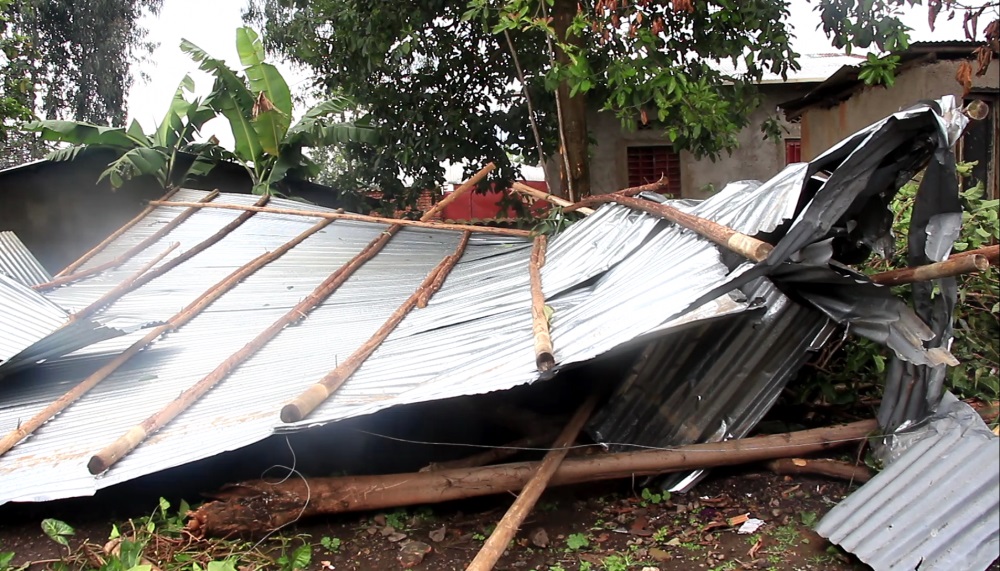
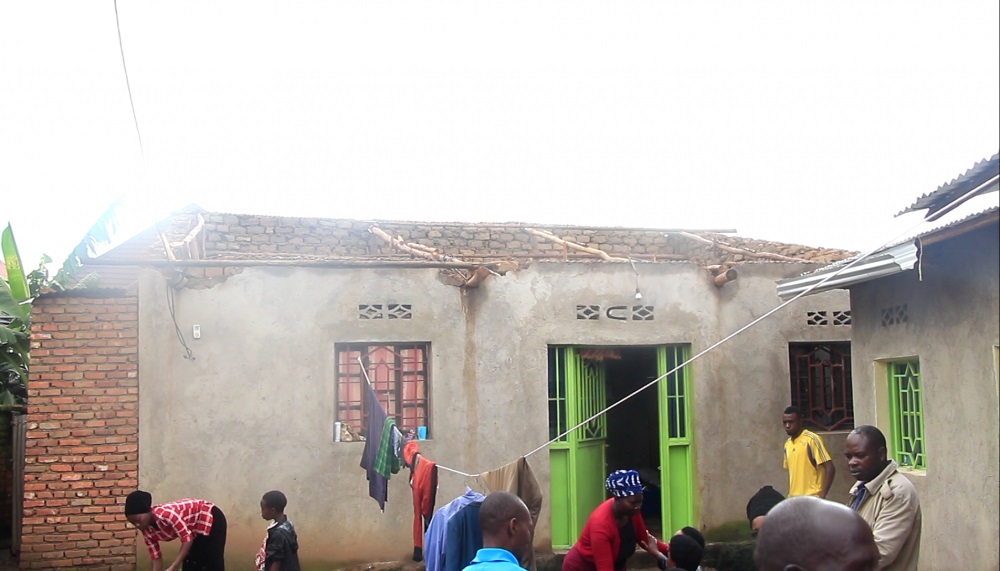
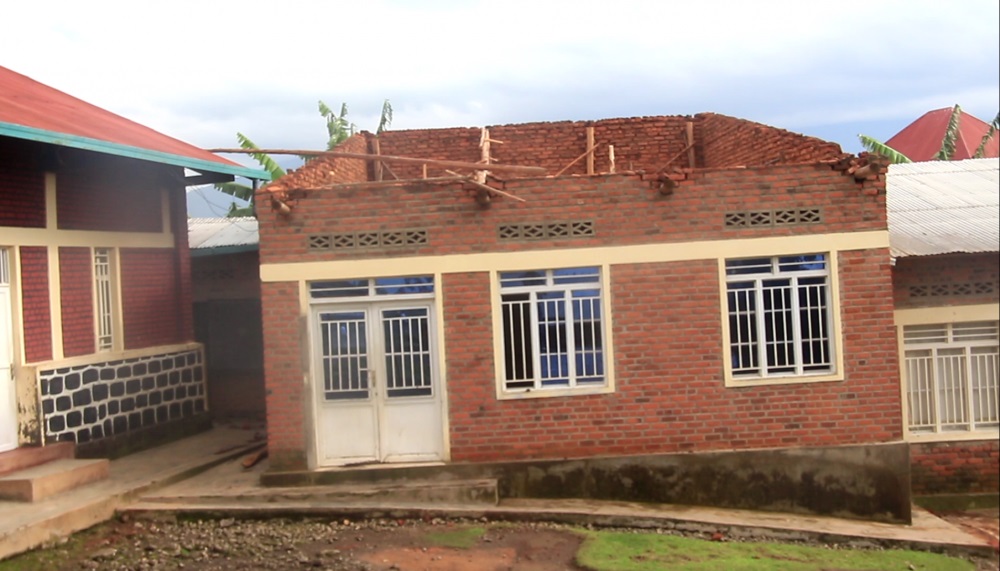
The disasters which occurred on 26th September 2022 left some houses’ roofing blown away while others collapsed.
Tharcise Uwimana is among affected residents whose houses collapsed. He has appealed for support to find a shelter and food throughout the challenging times he is going through.
His wife also revealed that they used to force meal upon sales of banana beer locally known as ‘urwagwa’ but the incident left containers destroyed.
Other affected families have disclosed that they currently desperate wondering how they will get along and requested Good Samaritans to intervene.
Musanze District Vice Mayor for Social Affairs, Axelle Kamanzi has said that they are still assessing damages to mobilize support.
“Affected residents with no alternative shelters are accommodated by neighbours. We are assessing damages to make a report and provide assistance within our means,” she said by press time.
The incident is said to have destroyed 56 houses and injured two children.
His body was found inside the bar in Bugina Village, Migina Cell in Muyira Sector of Nyanza District in the morning of Tuesday 27th September 2022.
As witnesses who alerted local leaders revealed, Nsengimana’s death might have resulted from wrangles that erupted at the bar because his body was found with wounds on the head and throat.
IGIHE has learnt that the three people found inside the bar with the body include two men and a woman who were immediately arrested for investigation.
They are identified as Maurice Ruzindana (the bar’s owner), Augustin Nsengiyumva and Gloriose Uwimana.
Nyanza District Vice Mayor for Social Affairs, Nadine Kayitesi has told IGIHE that Rwanda Investigation Bureau (RIB) has launched investigation into the case.
“Suspects have been apprehended as investigation is underway,” she said.
The suspects are detained at Kibilizi RIB Station while the body was taken to Nyanza Hospital for postmortem.
Nsengimana,38, is survived by a woman and three children.
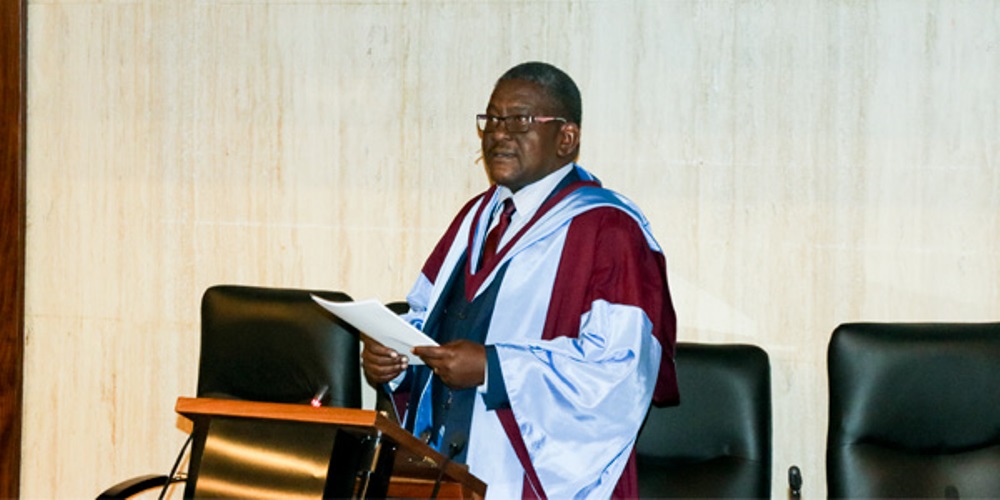
Professor Maringe is a Professor in Higher Education and Leadership. He brings a wealth of Knowledge and experience having been Head of the School of Education – Faculty of Humanities & Social Sciences and Assistant Dean for Internationalisation and Partnerships in the Faculty of Humanities at the highly rated University of the Witwatersrand (WITS), Johannesburg, South Africa.
With over 30 years’ experience as an educator in secondary schools, teachers’ colleges and universities, Prof. Maringe brings to his new role an in-depth and valuable international experience working in South Africa, the UK and Zimbabwe.
He has an excellent research profile with specialisation in Internationalisation in Higher Education, Leadership and Management, with research concentrations around issues such as the changing global environment and its impact on organisational decision-making, choice in education, marketing in higher education, the internationalisation of higher education and leading schools in disadvantaged communities.
In South Africa, he has made valuable research contributions in the areas of educational transitions, structural transformation in the post-school sector and in the skills debate, leadership in schools and issues in Higher Education.
Prof. Maringe is a member of globally-acclaimed professional bodies such as the British Educational Research Association (BERA), British Educational Leadership, Management and Administration Society (BELMAS) among others and possesses an enviable record of successful research bids, research and editorial publications as well as graduate and doctoral research supervisory roles.
The University of Kigali’s Board of Promoters, Executive Organ, Staff and students have through a released statement welcomed Prof. Maringe to his new role.
“We all undoubtedly commit to supporting Professor Maringe in the execution of his new UoK duties,” reads the statement.
The University of Kigali is still welcoming new students for the ongoing September 2022 Intake. Interested students are encouraged to apply now and get the UoK advantage.
The narcotics packed in 10 sacks, were recovered on Monday, September 26, in a house located in Kanjongo Sector, Kigoya Cell in Kabaga Village, where two members of the racket were arrested.
Those arrested are Laurent Fatisuka, 39, and Jean Claude Hakuzimana 34. They were handed over to RIB at Kanjongo station along with their exhibits.
Three other members of the same ring fled during the operation, according to Chief Inspector of Police (CIP) Mucyo Rukundo, the Western Region Political and Civic Education Officer (RPCEO).
At the time of the operation, the traffickers were loading the sacks of narcotics into the vehicle transporting charcoal, in an attempt to beat security,
The narcotics would be transported to another destination in Kabgayi, Muhanga District, he added.
“This was a successful operation facilitated by information provided by responsive residents. It is said that the narcotics were trafficked into Rwanda three days ago.
There are other three suspected members of the same racket, who escaped during the operation. Available information indicates that the three men still at large are the ones that trafficked the sacks of cannabis from Rusizi to the same house in Nyamasheke, which they rented three days ago,” CIP Rukundo explained.
“Drug dealers should not interpret the absence of Police in an area as a window to engage in such high impact crimes. The residents are the eyes and ears against lawlessness. Law enforcement organs are working together to bring to book all those connected to this criminal ring,” he reiterated.
Cannabis is classified as a very severe narcotic drug under the Ministerial Order nº 001/MoH/2019 of 04/03/2019 establishing the list of narcotic drugs and their categorisation.
Article 263 of law No. 68/2018 of 30/08/2018 determining offenses and penalties in general states that any person, who unlawfully produces, transforms, transports, stores, gives to another or who sells narcotic drugs and psychotropic substances, commits an offence.
Upon conviction for very severe narcotics, the offender faces between 20 years and life imprisonment, and a fine of between Rwf20 million and Rwf30 million.