According to the UNHCR, 51 percent of the refugees interviewed said they returned to South Sudan because the security situation improved in the country; 41 percent of the returnees said they wanted to reunite with their family members in South Sudan; 26 percent cited the improved availability of services in the country as a reason for returning.
“During the third quarter of 2023, a total of 2,646 households with approximately 12,244 individuals were interviewed in all the 10 states of Upper Nile, Northern Bahr el Ghazal, Western Bahr el Ghazal, Lakes, Jonglei, Central Equatoria, Eastern Equatoria, Western Equatoria, Unity, and Warrap states,” the UN agency said in its latest survey released in the South Sudanese capital of Juba.
On a quarterly basis, the UNHCR and partners collect information on refugee returns through key informant interviews, focus group discussions, and partner monitoring reports.
In collaboration with the South Sudanese government’s Relief and Rehabilitation Commission, the UNHCR verifies the reports by conducting random interviews with selected returnee households in the areas of return.
The ATMIS said the training, which is taking place in the Somali capital of Mogadishu, will bring the military officers up to speed on ATMIS’ mandate and operations in the country.
“They will be taken through various topics including military operations, code of conduct, international humanitarian law, and child protection,” the AU mission said in a statement issued in Mogadishu.
The ATMIS has intensified training after the Somali government recently requested a three-month technical pause in the final phase of the drawdown of the ATMIS troops while it engages in a major military effort against the al-Shabab terrorist group.
According to Somalia’s security plans, the ATMIS will be drawing down its troops over the next 14 months before completely departing by the end of 2024, with the Somali security forces assuming prime responsibility in this area.
The ATMIS was expected to scale down its troop numbers in September by a further 3,000 personnel after successfully withdrawing 2,000 troops and handing over six military bases in June.
According to the UN, a high-level conference on Somalia’s post-2024 security architecture and its needs is scheduled to be held in New York, the United States, in December.
This law replaces the previous VAT Law No 37/2012, which had been in place since December 2012. The new VAT Law introduces comprehensive changes to the country’s taxation framework to promote fiscal alignment with the recent Income Tax Law (ITL 2022) and the Tax Procedure Law (TPL 2023.
The reforms are in line with the developments within the Kigali International Financial Center (KIFC) initiative and aim to improve tax compliance and expand the tax base in Rwanda.
This article aims at providing an in-depth overview of the key provisions and changes brought about by the VAT Law 2023
{{Defining New Terms}}
The VAT Law 2023 introduces new terms and amends existing ones to provide clarity and alignment with current practices. Notable definitions include “Exported service,” “Hybrid automotive vehicle,” “Final consumer,” “Goods,” “Person,” and “Liberal Professional.”
{{Taxation of Online Supplies}}
A new paragraph has been added to the VAT Law 2023, bringing “online supplies” under taxation.
This change aligns with the ITL 2022, which included digital services as taxable sources of income.
The specific rules and procedures for taxing digital services under VAT will be detailed in an Order of the Minister.
{{Responsibility for Paying VAT}}
The new law expands the list of entities responsible for paying VAT. While previously, VAT obligations primarily rested with VAT-registered individuals, the updated law now specifies that every VAT-registered taxpayer must charge and account for the tax.
Additionally, public procuring entities are now obligated to withhold VAT on payments to successful VAT-registered bidders.
{{Taxable Goods and Services}}
The VAT Law 2023 clearly outlines what constitutes taxable goods and services. It covers goods supplied in Rwanda, services provided within Rwanda or to residents of Rwanda, assets of a person used in business that are sold, and more. Importation of goods or services is also subject to VAT unless explicitly exempted.
{{Zero-Rated Goods and Services}}
The new law expands the list of goods and services subject to a zero-rated (0%) VAT rate. Notable additions include exported goods and their auxiliary services, commission fees for all-inclusive tour-package booking services, minerals sold domestically, and locally assembled electric and hybrid vehicles.
{{Exempted Goods and Services}}
The list of goods and services exempted from VAT has been expanded to include items such as sanitary pads, leases of movable property by licensed financial institutions, and agricultural insurance services.
{{VAT Point Determination}}
The VAT Law 2023 incorporates the date on which a taxpayer requests deregistration from VAT as a determining factor for the VAT point.
{{Acquisition of Foreign Services}}
Additional procedures have been introduced for the importation of foreign services, requiring taxpayers seeking such services to request authorization from the Minister. Guidelines for this process will be provided in an Order of the Minister.
{{Time for Importation of Goods and Services}}
The new law clarifies that goods are considered imported when they enter Rwandan territory according to customs law, while services are considered imported when the importer receives them.
{{Entitlement of Input Tax}}
To claim input VAT on taxable goods and services, taxpayers must have paid output tax to the Tax Administration. The law reduces the time limit for input tax entitlement to 12 months from the previous two-year limit.
{{Restrictions on Input Tax}}
The VAT Law 2023 expands the items eligible for restricted input tax to 40% of the value added tax paid on taxable goods and services in a “business activity.”
{{Post-Sale Adjustment for Unrecoverable Debt}}
To claim a refund for unrecoverable debt, an individual whose debt is less than FRW 3m must prove they made reasonable efforts to recover the debt over a three-year period.
{{Amendment of Original VAT Return}}
The law outlines procedures for amending an original VAT return after the deadline, requiring taxpayers to apply in writing to the Commissioner General.
{{Value Added Tax Refund}}
Input VAT refundable as per the law must be claimed in its taxable period.
{{Rewards for Final Consumers}}
The VAT Law 2023 introduces incentives for final consumers who present the Tax Administration with electronic invoices. The details and value of the reward will be determined through a Ministerial order.
{{Enterprise and Branch Registration}}
The law mandates that multiple branches be registered under a single Taxpayer Identification Number (TIN) for VAT purposes, aligning them with the main company.
{{Currency Conversion}}
When expressing or paying amounts in foreign currencies, the law specifies methods for conversion into Rwandan francs to ensure uniformity and fairness.
{{Tax Refund for International Organizations}}
International organizations holding meetings and conferences in Rwanda may be eligible for a refund on goods incurred or imported during these events, subject to authorization.
{{Next Steps}}
The VAT Law 2023 came into effect on September 14, 2023. All concerned taxpayers are advised to ensure compliance with the new provisions and align their tax practices accordingly to avoid any disruptions or penalties in light of these significant changes to Rwanda’s tax system.
This year’s conference which took place at La Palisse Hotel promised to be a memorable one.
The FALAS Annual Conference 2023 was off to a fantastic start. With a diverse array of topics, Ms. Emily M. Kennedy and Mr. Theophilus Justice as the Moderators. A united youth force, and an unwavering commitment to positive change, this event promised to be a transformative experience for all involved.
As the days unfolded, the conference served as a platform for more inspiring discussions, networking, and the exchange of knowledge among Africa’s brightest legal minds. FALAS proved to be a dynamic platform that not only empowers the youth but also showcases their potential to lead Africa into a brighter future.
The conference officially commenced on a sunny Tuesday, 24th of October, 2023, with great enthusiasm and energy. As the clock struck 9, attendees were treated to a series of compelling opening remarks from distinguished speakers.
The President of FALAS, Mr. Siaffa Bahn Kemokai, graced the stage and set the tone for the event with a powerful message of unity and purpose. He underscored the importance of FALAS in the lives of African youth and the critical role they play in shaping the continent’s future.
He also expressed his gratitude for the collective efforts of the FALAS team The delegates from different parts of Africa.
The event continued to shine as Amb. Emmanuel E. Nwobodo, Pioneer President & Chairman Board of Trustees, FALAS shared inspiring insights, and Miss Umuringa Rolande, the Country Director, reminded attendees of the power of youth in driving positive change.
The Deputy Country Director Esther Muhozi Uwizeyimana led the congregation in a heartfelt rendition of the Rwandan national anthem, creating a sense of unity and belonging.
A delightful surprise came next, as Uwizeyimana recited a poem, touching hearts with her words of hope and inspiration in alignment with the Theme Unifying the voice of Africa.
The conference was a treat for all attendees, who were privileged to hear from several esteemed speakers. Delegates from different countries, including Maangar from South Sudan, graced the stage with powerful -provoking poetry that he called Riched Africa as A flag Of Sudan Hung from his Altar.
These speeches and poems were not just for show; they showcased the depth of knowledge and passion that FALAS members possess. It was clear that these young legal minds were well-prepared and had the skills to make a real difference in their communities and the world at large.
Mr. Kemokai, the President of FALAS also shared insights about the 2023 Conference.

The theme for this year, “Unifying the Voice of Africa,” was chosen with a profound purpose. He expressed his happiness and pride in the growth of FALAS from five country members to a staggering fourteen represented at this year’s conference.
Mr. Kemokai emphasized the impact the group has made on society and expressed his gratitude for the dedication of every member. He highlighted that the speakers would delve into crucial topics, such as the role of law and innovation in accelerating the AfCFTA, digital economy and data nationalization, and the intricacies of cybersecurity in this digital age.
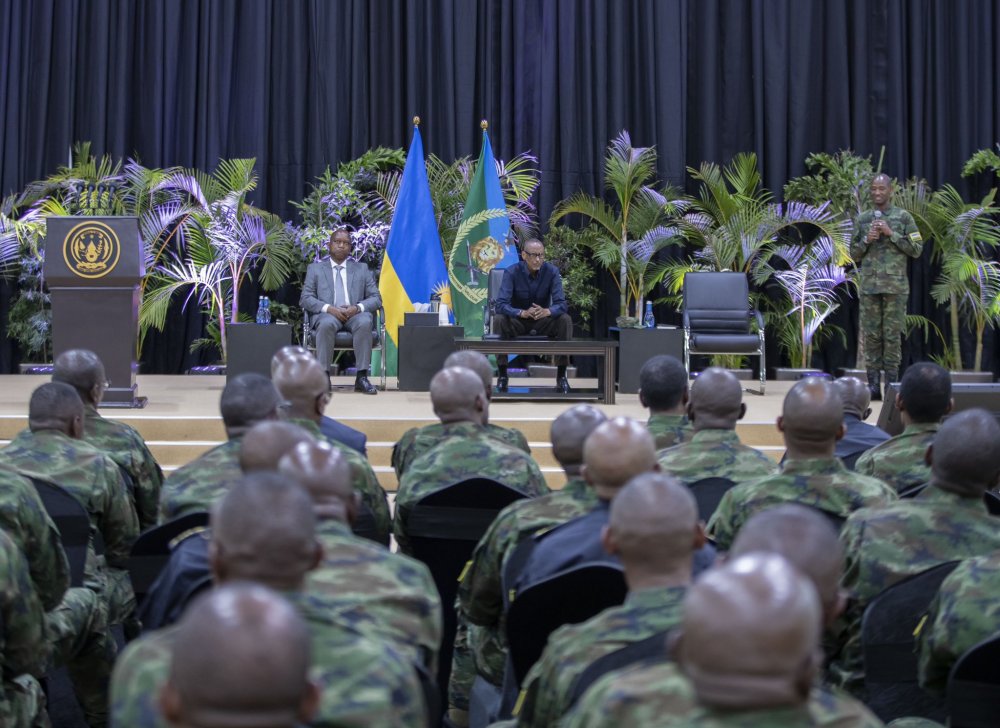
Amb. Nwobodo took the floor, delivering a deeply insightful speech about the journey that had led them to this significant moment. During his address, he sincerely extended his gratitude to the FALAS International Ambassador for Europe, acknowledging their unwavering attendance at FALAS conferences ever since their initial meeting. He emphasized the invaluable inspiration drawn from such steadfast support and underscored the significance of gleaning wisdom from those who surround us.
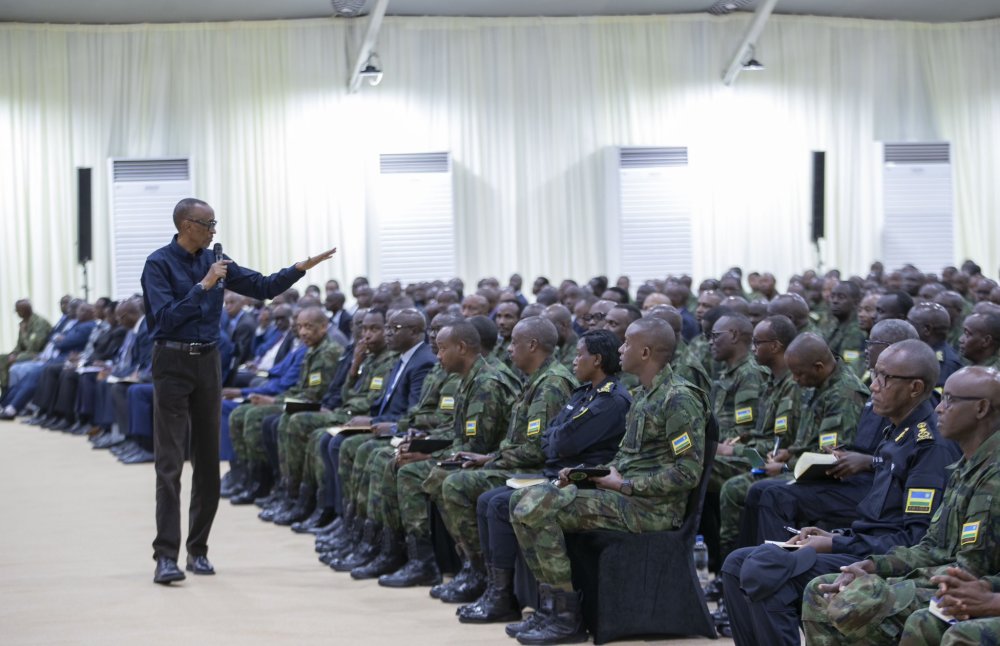
On the first day of the Conference day, a panel discussion led by Alfred Eli Dei, the former president, tackled various compelling topics.
The distinguished panelists shared their insights, and attendees had the opportunity to engage with them. The conference-goers were indeed fortunate to have luminaries like Prof. John L. Woods, Isobel Acquah, Sybil-Marie, who talked about different things such as the intricacies of cybersecurity in this age, Digital Economy and Data Nationalization and The role of Law and Innovation in accelerating the AfCFTA.
The International Secretary of FALAS, Ampumuza Dawn Abigail brought the day’s proceedings to a close with a warm and heartfelt appreciation for the entire team. She thanked everyone for their commitment and hard work in making the conference a reality.
The team didn’t just attend the conference; they also explored various places in Kigali. They made visits to the Kigali Genocide Memorial, The Parliament, held a Gala Dinner, and a cultural night where they had the opportunity to experience African cultures from represented countries. Their aim was to fully immerse themselves in the beauty of Rwanda, the gracious host country.
Both the Kigali City Tour and the Musanze Tour were resounding successes. The visit to The Kwita Izina Premises and The Twin Lakes left a lasting impression on these law students from across Africa, who were captivated by the breathtaking beauty of Rwanda. Their visit concluded with a strong desire to return to the Land of a Thousand Hills.
Since French President Emmanuel Macron’s historic visit to Rwanda in May 2021, during which he offered a formal apology for France’s responsibility in Rwanda’s dark history, more French companies have begun exploring opportunities in the country. Companies like Vivendi, Groupe Duval, and Total Energies have joined this trend, investing in Rwanda’s various sectors.
For example, Groupe Duval is currently developing Inzovu Mall, a climate-smart mixed-use property set to redefine Kigali’s urban landscape while adhering to stringent green building practices. Located opposite the Kigali Convention Center, Inzovu Mall aims to become a beacon for international visitors, further enhancing Rwanda’s economic landscape.
French Ambassador to Rwanda, Antoine Anfré, has confirmed the active involvement of French investors in Rwanda’s tourism and hospitality sector. This newfound interest has not only reinvigorated existing establishments like Umubano Hotel but has also introduced innovative concepts such as the Mantis Kivu Queen Uburanga, a floating luxury hotel experience on Lake Kivu.
Umubano Hotel, originally a collaborative effort between Rwanda and Libya in the 1980s, has undergone several changes in ownership and names over the years. Now, it is undergoing extensive renovations and is expected to be rebranded as Mövenpick Hotel, a part of the Groupe Accor, a prominent French company. The revamped hotel is poised to resume operations as one of Kigali’s iconic hospitality establishments, offering world-class services.
Moreover, French investors are venturing into the realm of lake tourism with the Mantis Kivu Queen Uburanga. This floating hotel will be managed by Acor Group and will cruise along Lake Kivu, providing tourists with exceptional dining experiences and the chance to unwind in the comfort of a floating hotel on the serene lake.
Amb. Anfré has revealed that the boat hotel will serve as a transportation service, connecting Kibuye, Cyangugu, and Rubavu, thereby contributing to Rwanda’s tourism industry. It not only enhances the tourism landscape but also underscores the safety of Lake Kivu.
The boat hotel is expected to commence its services in early 2024, promising to be a significant addition to Rwanda’s thriving tourism sector.
Co-organized by the Rwanda Development Board (RDB), this annual summit is the most influential gathering in the travel and tourism calendar, aiming to align efforts to support sector growth and move towards a safer, more resilient, inclusive, and sustainable future. Over the three days, the summit will cover various sessions on resilience, sustainable growth, the impact of AI, emerging markets, and key challenges and opportunities in the sector.
Julia Simpson, President and CEO of WTTC, expressed pride in celebrating the prestigious Summit in Rwanda, a country known for its conservation efforts and innovation. This is the first time the summit is being held in Africa. For Rwanda, the event provides an opportunity to showcase the role of sustainable tourism in its transformation and demonstrate how sustainable tourism can protect biodiversity and promote thriving communities.
Rwanda’s forecasts for the travel and tourism sector are promising, with the WTTC predicting that by 2033, the sector will contribute over $430 billion to the African economy and create more than 110 million jobs across the continent. In Rwanda specifically, the sector is projected to contribute over $2.1 billion to the national economy and generate nearly 568,000 jobs, thanks to the country’s commitment to sustainable tourism and diversifying its offerings.
This summit coincides with Rwanda’s goal to double its tourism revenue from $445 million in 2022 to over $800 million under its seven-year National Transformation Strategy. The WTTC Global Summit 2023 aims to be a catalyst for this transformation, providing a platform for innovative ideas and opportunities to redefine the future of travel and tourism.
The WTTC’s 2022 Summit focused on the sector’s value to the global economy, the environment, and communities, featuring notable speakers such as former UK Prime Minister Theresa May, former United Nations Secretary-General Ban Ki-Moon, and actor and filmmaker Edward Norton.
The global tourism industry is expected to create nearly 110 million jobs worldwide within the next decade, as reported by the WTTC in 2023. The travel and tourism sector is anticipated to be a driving force for global economic recovery from the pandemic, with its GDP projected to grow at a rate exceeding the global economy’s growth rate, reaching $15.5 trillion, equivalent to 11.6 percent of the total global economy, by 2033.
The RGS’s 10th edition, launched on October 31, 2023, unveiled these findings, drawing the participation of various stakeholders, including diplomatic corps, international organizations, government representatives, the private sector, civil society, and academia.
Following the Safety and Security pillar, the Anti-corruption, Transparency, and Accountability pillar secured the second spot with a score of 88.97%. Rule of Law closely followed with an 88.89% rating, although the report identified room for improvement, particularly in clearing backlog cases within the judiciary.
Political Rights and Civil Liberties claimed the fourth position with 88.01%, while Participation and Inclusiveness ranked fifth with 84.04%. Economic and Corporate Governance rounded off the top six with a score of 79.98%.
The 10th edition of the RGS underscored the importance of focusing on tailored service delivery for people living with disabilities (PwDs). The report reveals that only 39.4% of PwDs are categorized, and 48.88% benefit from social protection. Usta Kaitesi, CEO of RGB, emphasized the need for significant progress in service delivery across sectors, especially for PwDs. She urged efforts to expedite the categorization of persons with disabilities to enhance their access to essential services such as healthcare and education.
Minister of Local Government, Jean Claude Musabyimana, acknowledged delays in establishing a comprehensive database of people with disabilities due to societal stereotypes and challenges in identifying and registering individuals with special needs. He however reiterated the government’s committment to addressing these issues.
Judith Uwizeye, Cabinet Minister in the Office of the President, stressed the significance of the RGS as a tool for promoting governance and accountability in line with the National Transformation Strategy (NST1). She called upon public and private sector stakeholders, civil society organizations, and religious bodies to consider the report’s recommendations as part of their responsibilities in enhancing their areas of intervention.
RGS is an independent annual publication of the RGB that seeks to gauge the state of governance in Rwanda, comprehensively assess governance in using both primary and secondary data sources.
It is mainly designed to generate credible and reliable data on governance issues, serves as a practical tool that drives policy reform in the domain of governance through the identification of areas for improvement and generates actionable recommendations and to contribute to current and authentic knowledge formation about Rwanda.
According to ACP Rutikanga, two individuals were apprehended in the act of removing items from the cargo van. When confronted by the police officers, an altercation ensued, during which one of the thieves managed to flee the scene, while his accomplice attempted to attack the officers. In response to this aggression, the police officers opened fire, ultimately resulting in the death of the suspected burglar.
The cargo van in question was en route from Kigali to Karongi when the incident occurred. Prior to this incident, the police had been alerted to a string of thefts along this route, particularly between Muhanga-Karongi and Muhanga-Ngororero. Local residents had reported incidents where criminals took advantage of slow-moving vehicles to commit robberies.
This operation sheds light on the existence of an organized network comprising lookouts and thieves working in coordination. Although one of the suspects managed to evade capture, authorities are actively pursuing their investigations, suspecting possible collaboration with additional accomplices who may be apprehended in due course.
Emphasizing the police’s unwavering commitment to curbing criminal aggression, ACP Rutikanga stated, “Anyone caught in the act of stealing and resisting may also lose their life.”
He urged both the public and drivers to collaborate with the authorities by promptly reporting any suspicious activities to prevent further incidents.
The Houthi rebels’ spokesperson, Brig. Gen. Yahya Saree, revealed that they had launched high-speed missiles and drone attacks targeting Israeli positions.
He described this as the third attack aimed at supporting the Palestinian cause. Saree also stated that more attacks are planned unless Israel ceases its provocations.
The Houthi rebels are a Shia political and military group engaged in Yemen’s long-running civil war, fighting against a coalition of militias backed by Saudi Arabia. They have been vocal in expressing their support for the Palestinians and have undertaken actions such as strikes and rebellions in Yemen to protest against Israel’s actions in Gaza.
On the same day, Israel’s military confirmed that it used its air defense systems to intercept a missile fired from the Red Sea region. According to CNN, Israeli warplanes conducted airstrikes in the area. Fortunately, all the attacks were halted before reaching Israeli territory.
This incident highlights the complex dynamics in the Middle East, with various regional actors and conflicts intertwining, and the potential for further escalations that could impact the wider region.
Regarded as one of the greatest African football players in history, and all-time top scorer and former captain of the Ivory Coast national team, Drogba will share his experience of growing up in the West African country, and his continued fight for social progress. After retiring from professional football, this titan of industry continues to inspire and change lives.
WTTC is delighted to announce three Heads of State will also take to the stage at the 23rd Global Summit, and a Vice-President.
Other keynote speakers include Justin Urquhart-Stewart, global economist and renowned business commentator; David P. Pekoske, Administrator of the United States Transport Security Administration; Juliet Slot, Chief Commercial Officer at Arsenal Football Club.
Other notable speakers include Francis Gatare, CEO of the Rwanda Development Board, and Yvonne Makolo, CEO of Rwandair and Chair of the Board of Governors of the International Air Transport Association (IATA), the first woman to take on this role.
The Summit’s theme underscores the sector’s significance beyond revenue: its impact on the planet and global communities. Business leaders from across the globe will collaborate on future-proofing the sector, ensuring resilience, inclusivity, and sustainability.
Speakers from WTTC include Arnold Donald, WTTC Chair; Greg O’Hara, Founder and Managing Partner Certares; Gloria Fluxa, Vice Chairman and Chief Sustainability Officer, Iberostar; Manfredi Lefebvre d’Ovidio, Chairman of Heritage Group and co-chair of Abercrombie and Kent, Julie Shainock (Confirmed), Global Managing Director for Travel, Transport Logistics and Hospitality, Microsoft and Matthew Upchurch, President & CEO of Virtuoso.
Julia Simpson, WTTC President & CEO, expressed: “We are delighted to announce that such heavyweight and influential figures will be joining us in Kigali next week.
“This is our first Summit on the African continent. Rwanda’s dedication to the Travel & Tourism sector’s resurgence after challenging times is commendable. The nation’s rapid growth trajectory positions it as an upcoming tourism hotspot.”
Under the theme “Building Bridges to a Sustainable Future” the event will focus on the value of the sector, not only to the global economy, but to the planet and communities around the world.
During the Global Summit, industry leaders and international government officials from around the world will gather in Rwanda’s capital to continue aligning efforts to support the sector’s recovery and address the challenges the future poses to ensure a safer, more resilient, inclusive, and sustainable Travel & Tourism sector.
Government dignitaries, including South Africa’s Tourism Minister, Patricia de Lille; Tanzania’s Minister of Natural Resources & Tourism, Angellah Jasmine Mbelwa Kairuki; and Ukraine’s Tourism Development Chairperson, Hon. Mariana Oleskiv, will also grace the occasion.