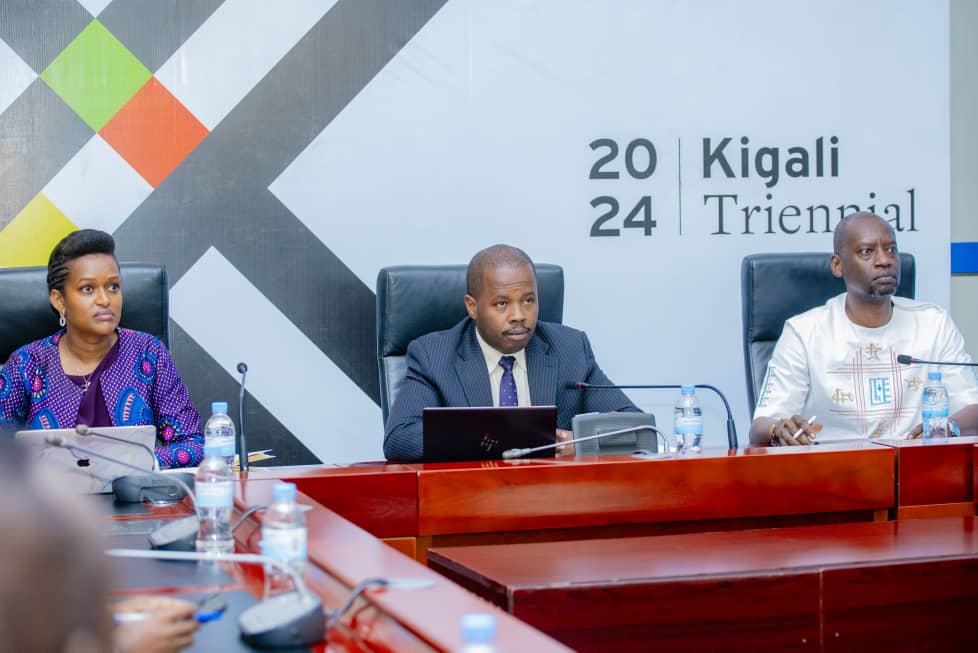
According to Village Urugwiro, President Kagame and Sheikh Mohammed discussed various areas of bilateral cooperation between Rwanda and the State of Qatar.
Following this meeting, President Kagame met with Senator Mike Rounds, representing the state of South Dakota, and Senator Chris Coons, representing the state of Delaware in the U.S. Parliament. Discussions with the senators covered different collaboration areas as well as regional and global issues.
Accompanied by the First Lady, Jeannette Kagame, President Kagame has been on a visit to the United States since January 31, 2024. They are participating in various activities, including Rwanda Day. On Thursday, they attended a ceremony organized by the U.S. government known as the ‘US National Prayer Breakfast.’
During this visit, the head of state met with other personalities, including David Beasley, former Executive Director of the United Nations World Food Programme (WFP) and former Governor of South Carolina.
President Kagame also held talks with Congressman John James, representing Michigan’s 10th congressional district, and other members of the Congressional Black Caucus.
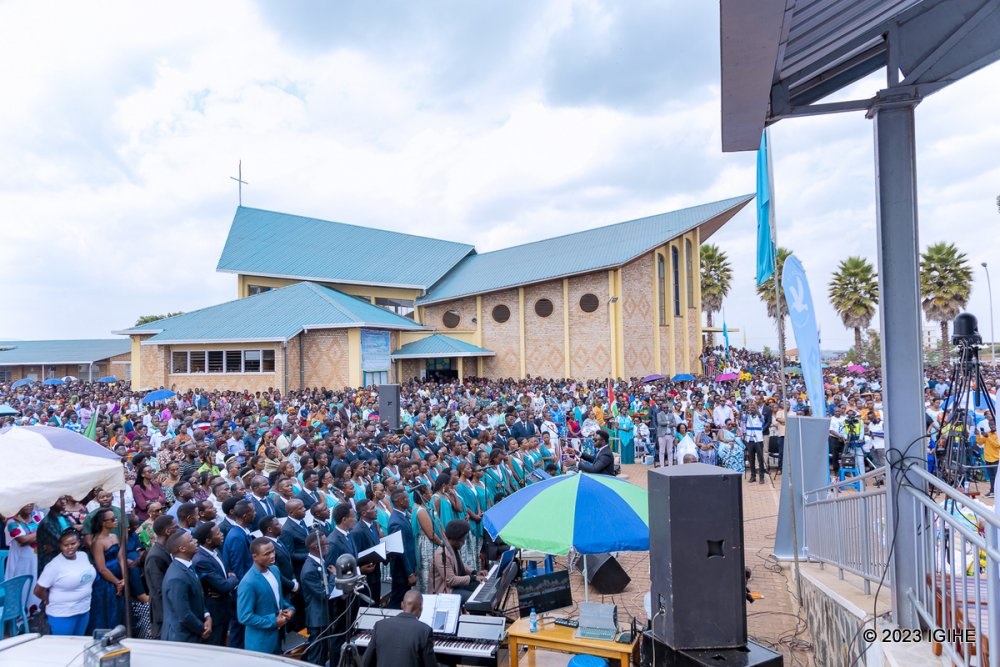
On February 3, President Kagame is scheduled to meet with Rwandans and friends of Rwanda attending ‘Rwanda Day’ in Washington D.C.
Reflecting on the 1994 Genocide against the Tutsi, Kagame shared how Rwanda lost ten percent of its population in three months due to a government’s directive to exterminate the Tutsi. Despite the immense tragedy, Rwanda has emerged as a peaceful, flourishing, and united nation, serving as a poignant reminder and a warning to the world.
Kagame explained the challenges faced in rebuilding a country after such a devastating event, emphasizing the importance of preventing the transmission of hatred to future generations. He recounted his own experiences, driven into exile at age four and growing up in refugee camps until 1990, when he returned to liberate Rwanda from ethnic dictatorship.
Stopping the genocide posed immense challenges, with survivors facing the impossible task of swallowing their anger and bitterness. Kagame acknowledged the need to break the cycle of violence, turning the urge for vengeance into a national program of unity and reconciliation.
Notably, the death penalty was abolished, and survivors were asked to forgive, a difficult yet crucial step in rebuilding the nation.
Despite progress, Kagame cautioned that the genocide ideology persists in the region, urging the international community to remain vigilant. Reconciliation, he emphasized, is an act of faith, envisioning a nation free of hatred and injustice and working towards that vision daily. Kagame also stressed the role of leaders in building trust and promoting unity, asserting that healthy nations prioritize reconciliation in both large and small matters.
In response to a call from Europe’s farming union, the European Coordination Via Campesina (ECVC), the farmers gathered at 11 a.m. local time (1000 GMT) on Place du Luxembourg in Brussels, where the European Parliament is located. The site is a kilometer away from the Schuman roundabout, where a special EU summit is taking place.
The protesters were understood to show their complaints about taxes, administrative overload, rising costs and cheap imports, and asked EU leaders for more help.
“Europe’s neo-liberal policies are overwhelmingly responsible for farmers’ distress: free trade agreements (FTAs), market deregulation, Common Agricultural Policy (CAP) subsidies which are distributed totally unfairly, administrative overload, fake solutions such as senseless support for digitization, GMOs and carbon markets, and a lack of overall vision for a transition to more sustainable models of agriculture, to name only some,” ECVC said in a press release.
ECVC demands an end to FTAs linked to agriculture as well as giving up negotiations between the EU and the South American trade bloc Mercosur, fair prices for farm produce amid rising production costs, a redistribution of the Common Agricultural Policy (CAP) money per active worker instead of by hectare to better support small and medium-sized farms during their transition towards agroecology and sustainability, and a simplification of red tape.
Red tape imposed by the EU takes up to two full days to complete, which keeps farmers away from working on the fields, according to Belgian farmer unions FWA (Wallonian Federation for Agriculture) and UFW (Union of female farmers in Wallonia).
The CAP also imposes a strict calendar, regardless of the weather and other circumstances. This leads to soil degradation and poorer harvest and proves unsustainable, the Belgian farmers’ unions argue. They also ask for an indexation of the CAP budget, as it has been regularly cut off despite rising costs of living.
Representatives of the ECVC are expected to meet in the afternoon with European Commissioner in charge of European Agriculture Janusz Wojciechowski and with the cabinet of Charles Michel, president of the European Council, to discuss their demands.
The farmers were joined by more than 30 civil society organizations, and have received the support of Green member of the European Parliament Saskia Bricmont.
“A fair income, a nourishing local agriculture, the end of unfair competition. For the return to working the land in a way that protects people and the planet. Environmentalists and farmers together to tackle social and climate challenges,” Bricmont published on social media platform X, with photos of tractors in the streets of Brussels.
Farmers in several other EU countries have taken to the streets as well. In France, protesting farmers blocked major roads around Paris earlier this week.
The Police Chief pointed out that Rwandans expect service excellence, professional character and discipline from their Police force, and that draws a line towards sustainable security and development.
He said that the force will continue to improve the well-being of officers through various welfare schemes, but warned against engaging in all sorts of malpractices, especially corruption, injustice and drunkenness.
CG Namuhoranye also called for teamwork, work with the people and to be part of community development activities.
Michel said that the additional 50-billion-euro support package for Ukraine was from within the EU budget.
“This locks in steadfast, long-term, predictable funding for Ukraine,” Michel said, adding that “EU is taking leadership and responsibility in support for Ukraine.”
For weeks, EU officials have been trying to reach a compromise with Hungary to get an agreement on the four-year package for Ukraine which EU leaders failed to agree at a summit in mid-December.
The special EU summit on Thursday was scheduled to discuss the midterm revision of the EU’s Multiannual Financial Framework, assistance to Ukraine and the situation in the Middle East, Michel said in an invitation letter to members of the European Council ahead of the summit.
AfDB Secretary-General Vincent Nmehielle told journalists in Nairobi, the capital of Kenya, that the Asian nation has financed infrastructure projects through bilateral agreements with African countries as well as via multilateral development financial institutions.
“Overall, I expect the infrastructure projects to be able to open up economies in a way that enables the country to perform, if it is a road or bridge it makes movement of goods easier and this is a driver for growth,” he said during a media briefing on progress achieved in preparations for the 59th Annual Meeting of the AfDB that is scheduled to take place in Nairobi on May 27-31.
The meeting is expected to host about 4,000 delegates representing finance ministers from African countries, senior AfDB officials, development partners as well as the private sector.
Nmehielle added that finance from China has complemented funding from other foreign donors as well as domestic resources in reducing Africa’s infrastructure development gap that is estimated at 170 billion U.S. dollars annually.
China and AfDB jointly developed the Africa Growing Together Fund to finance development projects in Africa.
This solemn ceremony marks the celebration of the National Heroes Day in Rwanda. The Prime Minister highlighted that this annual event is an opportunity to honor the country’s heroes who made the ultimate sacrifice for the nation.
“Today at the National Heroes Mausoleum, Prime Minister Dr. Ngirente laid a wreath, during the 30th National Heroes Day Ceremony, paying tribute to Rwandan Heroes who have displayed exceptional patriotism and sacrifice for the Country,” the Prime Minister’s Office has posted on X.
This day serves as an opportunity for Rwanda to reflect on its heroes. The theme for this year, “Our Heroism, Our Dignity,” reminds Rwandans of the dignity they derive from distinguishing themselves through acts of bravery and dedication.
The theme aims to perpetuate the memory of these heroes and inspire current and future generations to follow their example of courage and sacrifice for the common good.
President Kagame also welcomed a delegation from the United States Black Caucus, a group of African-American legislators, led by Steven Horsford, representing Nevada’s 4th congressional district. The development was announced by the Rwandan presidency through X.
The Urugwiro Village reported that they held productive discussions focusing on the potential partnership between the Congressional Black Caucus and Rwanda.
President Kagame is scheduled to participate in ‘Rwanda Day’ in Washington D.C. from February 2 to 3, 2024.
Themed “Rwanda: A Legacy of Inclusiveness within and beyond Our Borders,” Rwanda Day 2024 discusses the country’s socioeconomic transformation in the last 30 years, with a special focus on the contribution of the Rwandan community living abroad to the nation’s development gains.
Through Rwanda Day, participants will have the opportunity to engage with President Kagame, discuss topics of national significance and exchange on how to further drive Rwanda’s development.
Since its inception in 2010, Rwanda Day has brought together close to 40,000 Rwandans and Friends of Rwanda living in various parts of the World.
Rwanda Day has been held in Chicago, Paris, Boston, London, Toronto, Atlanta, Dallas, Amsterdam, San Francisco, Ghent, Bonn, and now in Washington, D.C.
President Kagame last visited the US in September 2023 when he attended the United Nations General Assembly.
The day serves as a poignant reminder of the resilience and strength embedded in the country’s history, particularly during the Liberation Struggle that ended in 1994.
{{Categories of heroes}}
Rwandan National Heroes are classified into three distinct categories, each representing a unique level of sacrifice and significance. These categories, Imanzi, Imena, and Ingenzi, pay tribute to individuals who played pivotal roles in shaping the destiny of Rwanda.
{{Imanzi }}
At the pinnacle of heroism lies the Imanzi category, reserved for those who demonstrated outstanding achievements characterized by supreme sacrifice. Maj. Gen. Fred Gisa Rwigema stands tall in this category, symbolizing the epitome of bravery and dedication.
The Unknown Soldier, an enigmatic figure, represents all the fallen soldiers who gave their lives during the Liberation Struggle. The tomb of the Unknown Soldier, located at the National Heroes’ Mausoleum in Remera, serves as a solemn tribute to those whose remains could not be identified.
{{Imena }}
In the second category, Imena, we find heroes who stand shoulder to shoulder with those in Imanzi, recognized for their extraordinary acts that echo with supreme sacrifice, high importance, and exemplary service. King Mutara Rudahigwa III, Michel Rwagasana, Agatha Uwiringiyimana, Felicite Niyitegeka, and the courageous students of Nyange Secondary School are all celebrated for their remarkable contributions to Rwanda.
{{Ingenzi }}
The third category, Ingenzi, pays homage to individuals whose exceptional ideas and achievements, characterized by supreme sacrifice and great importance, have left an indelible mark on the nation. These heroes stand as beacons of inspiration for their outstanding contributions to the well-being of the country.
As Rwanda commemorates National Heroes Day on February 1, it is a time not only to reflect on the sacrifices made by these extraordinary individuals but also to draw inspiration from their unwavering commitment to the nation.
The categories of Imanzi, Imena, and Ingenzi provide a framework for understanding and appreciating the diverse acts of heroism that have shaped Rwanda’s rich history. Through this commemoration, the nation continues to honor the legacy of its heroes, ensuring that their stories inspire generations to come.
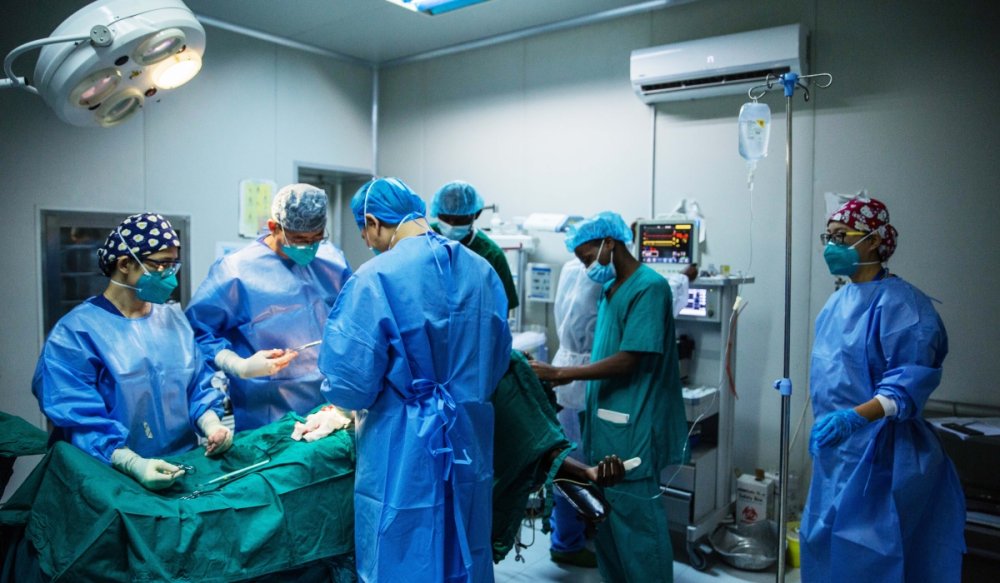
The supplies included hand sanitizers, surgical lights, operating stools, a high-frequency electric knife, disposable oral appliance packs, and disposable sterile surgical scrubs.
Upon receiving the donation at Masaka Hospital, Director General Jean Damascene Hanyurwimfura expressed gratitude to the government of China and the Chinese Embassy in Rwanda for supporting the hospital.
“Now, we have 15 medical workers from China who will be here for the whole year,” he said, adding that the supplies “will facilitate their daily tasks and contribute to improving community outcomes.”
The supplies, especially surgical lights and others, will play a crucial role in the hospital’s surgical operations, Hanyurwimfura said.
“Last year, the medical team provided us with operating room beds, which addressed a previous lack of medical supplies and improved our surgical operations,” he said. “The Hernia Week campaign, during which doctors operated on patients, was made possible because we had the necessary medical supplies for surgical operations.”
China started to dispatch medical teams to Rwanda in 1982, and there have been hundreds of medical staff working in Rwanda since then.