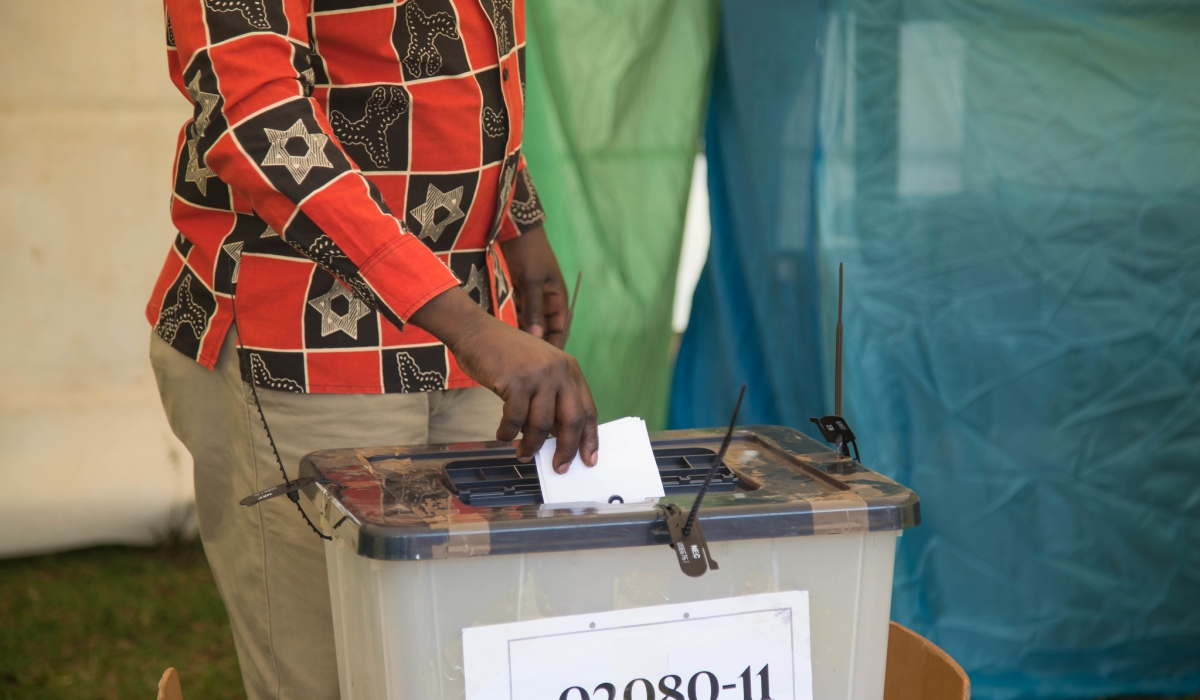
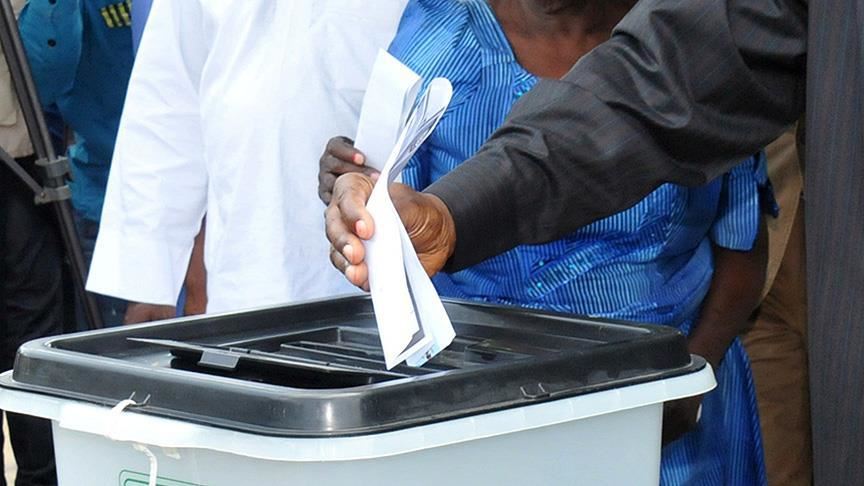
Normally, every voter is supposed to vote from the village where he or she is registered but NEC has changed the directive in order to facilitate an easier voting process.
In a statement released on election day, Monday, July 15, 2024, the Electoral body said that some people may not have been able to transfer their names to another polling station and this should not infringe on their civic right.
“NEC announces that people who have not been able to relocate their names in the national voters’ register are allowed to vote at the nearest polling sites after verifying that they are registered on the voters’ list, and they will be added to the annex,” reads the statement.
This authorization is based on act No. 001/24 of February 19, 2024 guiding the National Electoral Commission (NEC) on regulations and provisions regarding presidential and parliamentary elections.
In the past, certain groups of people have been allowed to vote from a polling station that is near to them, not necessarily where they were registered due to the nature of their jobs.
They include essential workers such as medics, emergency service providers, and security personnel continue to operate as usual to ensure public safety and welfare. Others are journalists, students sitting for national examinations and the sick.
Election observers of Rwandan nationality, representatives of political organizations and independent candidates are also allowed to cast their ballot at the polling station they are working from.
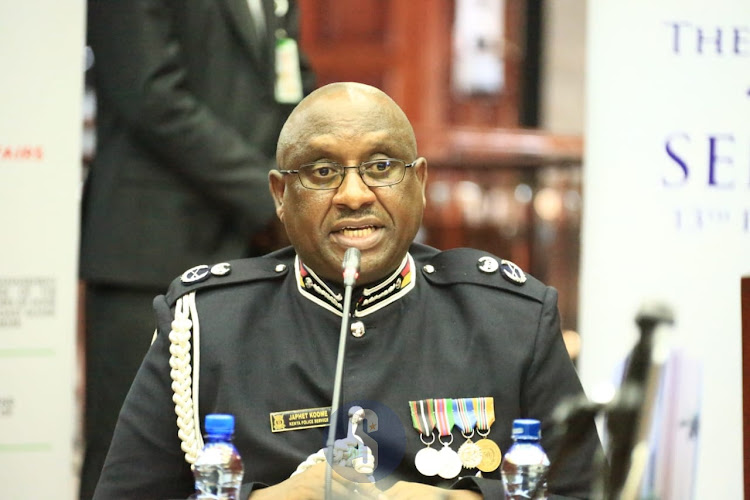
State House Spokesperson Hussein Mohamed confirmed Koome’s resignation on Friday, July 12, 2024.
Mohamed said President Ruto had accepted Koome’s decision to step aside and named the Deputy Inspector General of the Kenya Police Service as the Acting IG, pending the appointment of a new police boss.
“HIS EXCELLENCY William Samoei Ruto, Ph.D., CGH, President and Commander in Chief of the Defence Forces, has on this 12th day of July, 2024, accepted the resignation of Eng. Japheth N. Koome, MGH, as the Inspector General of the National Police Service,”
Mohamed announced.
The Kenyan Head of State also effected various changes within the senior police ranks. In the changes, Deputy Inspector General of the Administration Police Service, Noor Gabow, was redeployed the Public Service.
Koome has been under fire over excessive force used by the police during the anti-tax protests that rocked Kenya in recent weeks. At least 39 people were killed and dozens others injured during the protests witnessed in various parts of the country.
He was accused of remaining silent as police used live ammunition on protesters in the capital Nairobi. Police were also linked to abductions of young people believed to be the ringleaders of the “Gen Z” led protests.
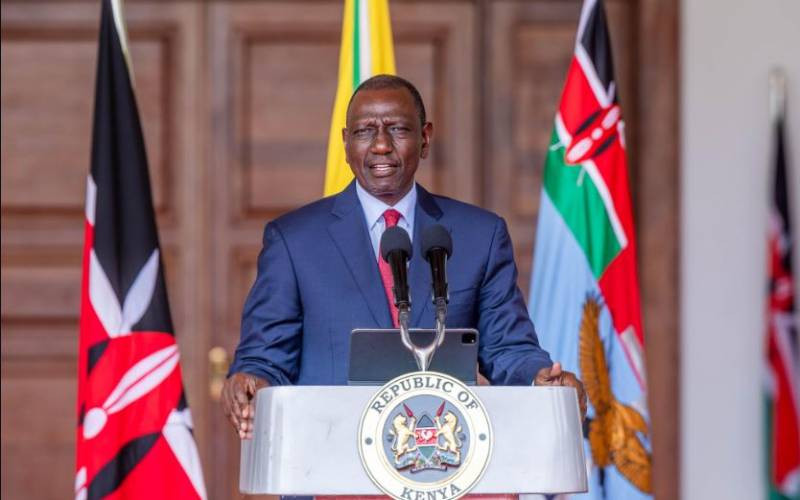
The changes in the police service come a day after President Ruto dismissed his entire Cabinet, sparing only the Prime Cabinet Secretary Musalia Mudavadi who doubles as Cabinet Secretary for Foreign Affairs.
The decision was taken “upon reflection, and a holistic appraisal” of the Cabinet, the Kenyan Head of State said in a televised address.
He pledged to engage in “extensive consultations” to form a “broad-based” new government.
Some of the fired Cabinet Secretaries had lost public confidence due to poor performance and wastage of public resources, prompting demands for their removal from office.
Prior to this, Ruto had made several concessions including withdrawing the controversial Finance Bill 2024, which sought to raise $2.7 billion in additional taxes for the government.
The dissolution of the Cabinet is the latest in a series of actions the Kenyan Head of State has been forced to take following weeks of protests, both on social media and on the streets, led by Gen Z.
At the onset, Ruto withdrew the Controversial Finance Bill 2024 and introduced new austerity measures aimed at reducing government expenditure. He removed operational budgets for the Offices of the Spouses of the President, Deputy President and Prime Cabinet Secretary.
Days later, Ruto’s actions have come under heavy scrutiny across the political landscape with young people setting the internet ablaze and continuing their barrage against the ruling Kenya Kwanza regime.
Taking to X Spaces and other forums, some netizens termed the dissolution of the Cabinet as an act of self-preservation by the President, whom they insist bears the huge responsibility for the ‘failures’ of his government.
They also faulted the President for sparing Prime Cabinet Secretary Musalia Mudavadi, arguing that the office is unconstitutional. Mudavadi doubles as the Cabinet Secretary for Foreign Affairs.
“He might have fired his entire Cabinet but he still maintains the unconstitutional position of the office of the Prime CS and this is a blatant attempt at self-preservation. I do not think of this as a move of goodwill because I wouldn’t sit here and applaud a fish for swimming,” activist Kasmuel McOure said.
An X user identified as Veeana said, “It is important that even as we slash off the weeds, we uproot deep from the roots!”
Human rights activist and Senator Okiya Omtatah, also noted that “Dissolving Cabinet is not the solution”, insisting that a “fish begins rotting from the head”.
“Everything around him (Ruto) has collapsed. So you cannot say that his juniors should bear the burden. The ball stops with him and the call that President Ruto must go is a call that must be applied and as they say a fish begins rotting from the head.”
However, a section of Kenyans opined that the dissolution of the Cabinet was a good starting point to address issues raised during the recent protests. They commended the President for humbling himself and listening to the cries of Kenyans demanding accountability from the government amid the rising cost of living.
“A good start by Ruto as he has sacked all the Cabinet secretaries. What a time to be alive in Kenya. We must be heard,” opined Amos Mwango.
Some of the fired Cabinet Secretaries had lost public confidence due to poor performance and wastage of public resources, prompting demands for their removal from office.
The protesters had earlier warned President Ruto against a Cabinet reshuffle, which has in the recent past been seen as less effective in addressing incompetence among state officers.
Yesterday, he said he had resolved to dissolve his Cabinet “upon reflection, listening keenly to what the people of Kenya have said and after a holistic appraisal of the performance of the cabinet and its achievements and challenges.”
{{Principal Secretaries tasked
}}
President Ruto directed Principal Secretaries to supervise ministries as he worked on forming a broad-based government to help him achieve “urgent and irreversible” government programs.
“I will immediately engage in extensive consultations across different sectors, political formations, and other Kenyans, both in public and private, with the aim of setting up a broad-based government that will assist me in accelerating and expediting the necessary, urgent, and irreversible implementation of the program we have,” he added.
According to Ruto, his administration aims to put in place radical measures and programs to deal with the burden of debt, explore raising domestic resources and revenues, expand job opportunities, and eliminate waste and unnecessary duplication across multiple government agencies.
“This will make the government of Kenya lean, inexpensive, effective, and efficient,” he stated.
This decision has been made to provide every citizen with the opportunity to exercise their right to vote without any work-related constraints or hindrances in accordance with existing democratic principles.
According to a statement released by the Ministry of Public Service and Labour, all government offices, institutions and private businesses are expected to observe the directive.
“The Ministry of Public Service and Labour informs employers and employees that Monday, July 15, and Tuesday, July 16, 2024, will be public holidays to allow Rwandans to participate in the Presidential and Parliamentary elections and fulfil their civic duties,” reads the statement.
The general elections begin on Sunday, July 14, 2024 (for Rwandans in the diaspora). Locally, they will take place on Monday, July 15 while the next day is dedicated to the Parliamentary elections for special groups.
Every voter is supposed to vote from the village where he or she is registered and that’s why such public holidays are declared prior to Election Day.
In the past, however, essential services such as hospitals, emergency services, and security agencies would continue to operate as usual to ensure public safety and welfare. It is not any different this time.
It means that by virtue of one’s job, certain groups of people can be allowed to vote from a polling station that is near to them, not necessarily where they were registered.
These special groups of people include members of the police service, soldiers, journalists, students sitting for national examinations and the sick.
According to the National Electoral Commission, members of the security forces who are on mission and journalists covering elections can cast their ballot at the nearest polling station. This also applies to polling staff and emergency workers.
Election observers of Rwandan nationality, representatives of political organizations and independent candidates may also cast their ballot at the polling station they are working from.
Citizens are encouraged to use this day to participate in the voting process and contribute to the democratic governance of their nation.
The spokesperson for Germany’s center-right CDU/CSU faction says the government should utilize the preparatory efforts undertaken by the U.K. to enhance their own preparations for the deal.
According to him, since Rwanda was ready to work with European countries on migration cooperation, the termination of the U.K. deal means more “capacity” for Germany.
“We should stick to the plan, and make use of the preparations our British partners made for it,” the member of the German Parliament for Heilbronn told a local publication.
The lawmaker is among members of former Chancellor Angela Merkel’s CDU/CSU faction who have been promoting a proposal for offshore processing of asylum seekers, similar to the scheme adopted by the former UK PM Rishi Sunak’s Conservative Party in the UK. Italy also has a similar plan in the pipeline with Albania.
Throm’s proposal comes two months after another CDU lawmaker, Jens Spahn, spoke highly of the relations between Germany and Rwanda following his meeting with President Paul Kagame in Kigali, hinting at hopes for future cooperation.
“We had the great honor of exchanging views with Rwanda’s President Paul Kagame for two hours – discussing current global challenges, the migration agreement with the UK, and the good cooperation between Rwanda and Germany. We aim to further expand this. Thanks for that privilege, Mr President,” Spahn said in a post on X in May.
Immigration, especially irregular immigration and asylum, is viewed as a major issue in Germany.
To address the problem, Chancellor Olaf Scholz agreed in principle in late 2023 to explore the idea of offshore processing of asylum claims. Already, the proposal is said to have received support from many senior figures in state government, including the Bavarian Home Affairs Minister Joachim Herrmann.
However, more effort is needed to secure endorsement of the scheme from two of the three parties in the country’s governing coalition. Both the Greens and Scholz’s Social Democrats oppose the idea, while the center-right FDP is in favour.
In the UK, the migration scheme aimed to deter illegal migrants from arriving using small boats across the English Channel by moving the migrants to Rwanda. However, the Labour Party differed with the Conservatives over the effectiveness and cost of the plan.
A day after the new UK prime minister confirmed plans to terminate the agreement, the Rwandan government reaffirmed its commitment to addressing the global migration crisis.
In a statement released Monday, July 8, 2024, the Office of the Government Spokesperson said that nothing will stand in their way while trying to find solutions to the global migration crisis.
“We remain committed to finding solutions to the global migration crisis, including providing safety, dignity, and opportunity to refugees and migrants who come to our country,” the Government stated.
The National Electoral Commission (NEC) has confirmed that Rwandans who live in the diaspora will vote at 160 polling stations in 70 countries, including 44 embassies.
NEC’s Executive Secretary Charles Munyaneza disclosed this to IGIHE ahead of the July 15 polls in which 3 candidates are vying for the country’s top seat.
They are independent Candidate Philippe Mpayimana, Frank Habineza, the leader of the Democratic Green Party of Rwanda and Paul Kagame, the incumbent president and flag bearer of the Rwanda Patriotic Front (RPF-Inkotanyi.
Munyaneza said that all election materials have already arrived at the polling stations, and preparations by voters and officials to help in the voting process are already in high gear.
“Our voters in the diaspora have everything already in place. They are set to conduct their voting. There is nothing that will stop the exercise from running smoothly,” he said.
Similarly in Rwanda, all polling materials are ready and they will be dispatched to respective polling stations between July 12 and July 14.
“Printing of the final batch of ballot papers has been completed today. We are waiting for the right time to start dispatching them to the respective polling stations.
Munyaneza disclosed that civic education has successfully been conducted throughout the country including for students most of whom are first-time voters.
According to him, final works in the setup of polling centers are underway. They include including the preparation of roads (for easy accessibility) and the installation of electricity (for those who do not have).
The official register at the National Electoral Commission indicates that 9,071,157 people are eligible to vote including more than 4.2 million males, and 4,845,417 females.
In the diaspora, 77,138 eligible voters are registered comprising 41,243 males and 35,895 females.
Rwanda’s presidential and parliamentary elections are a significant event on the country’s political calendar, with candidates presenting their visions for the future and engaging with the electorate to secure support.
In a statement released Monday, July 8, 2024, the Office of the Government Spokesperson said that nothing will stand in their way while trying to find solutions to the global migration crisis.
“We remain committed to finding solutions to the global migration crisis, including providing safety, dignity and opportunity to refugees and migrants who come to our country,” the government stated.
Rwanda remains unbothered because they have done everything in their means to support the UK in dealing with the crisis of irregular migration despite little appreciation.
“This partnership was initiated by the Government of the UK in order to address the crisis of irregular migration affecting the UK. It’s a problem of the UK, not Rwanda,” the statement reads in part.
Despite the setback and frustration towards Rwanda’s unwavering desire to offer support in solving some of the world’s most challenging problems, the government will not be deterred from showing genuine kindness, empathy, and positive intentions towards others.
“Rwanda has fully upheld its side of the agreement, including with regard to finances, and remains committed to finding solutions to the global migration crisis,” the government said.
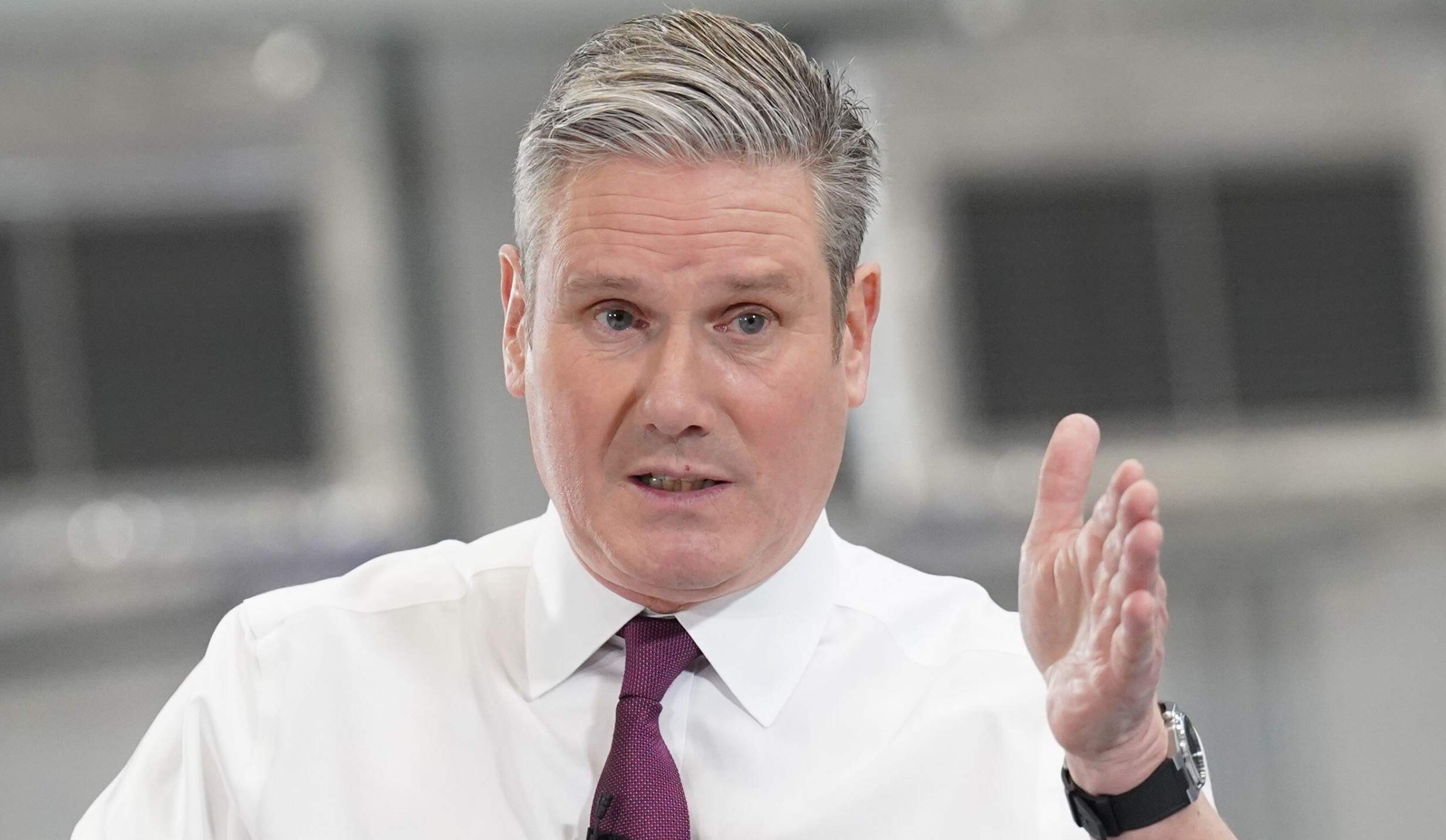
Recently, the new UK Prime Minister, Keir Starmer, announced a decision to terminate the Migration and Economic Development Partnership with Rwanda.
The migration scheme aimed to deter illegal migrants from arriving in the UK via small boats across the English Channel.
The scheme was first announced in April 2022 by former Prime Minister Boris Johnson following successful negotiations with the Rwandan government. However, the implementation of the policy was derailed by court battles and opposition from the House of Lords, which pushed for several amendments.
Starmer’s predecessor, Rishi Sunak of the Conservative Party, had earlier announced that the first flights would depart to Rwanda after the recently concluded polls in which he lost.
This commitment to solving challenges involving immigrants is a testament to the lessons learnt from Rwanda’s history and experiences in which most of its citizens lived many years as immigrants and refugees in other countries due to the insecurity that rocked the country for decades prior to the 1994 Genocide against the Tutsi.
Starmer announced the cancellation of the scheme introduced by the Conservative Party in his first news conference on Saturday, July 6, 2024.
The prime minister argued that the former administration’s strategy to deter illegal migrants from arriving in the UK via small boats across the English Channel was “dead and buried before it started”.
“It’s never acted as a deterrent. Almost the opposite,” Starmer stated after holding his first Cabinet meeting at 10 Downing St.
The Labour Party leader had pledged to scrap the Rwanda plan if they won the July 4 general election, and on Friday, the party secured a landslide victory, winning over 400 seats. The poll victory ended 14 years of Conservative rule.
Starmer’s predecessor, Rishi Sunak of the Conservative Party, had earlier announced that the first flights would depart to Rwanda after the polls.
Sunak’s plans to send asylum seekers to Rwanda received a green light in April after Parliament voted to pass the contentious bill declaring the country safe.
The Lords had earlier refused to pass the bill without further amendments, including the inclusion of a provision exempting agents, allies, and employees of the UK overseas, including Afghans who fought alongside the British Armed Forces, from being removed to Rwanda.
The Lords also demanded tighter checks on the safety of Rwanda for asylum seekers to ensure the scheme had “due regard” for domestic and international law.
Despite the passing of the legislation, nobody was sent to Rwanda. Two failed asylum seekers were, however, reported to have been moved to Rwanda voluntarily under a separate agreement that saw them offered a £3,000 incentive.
The Rwanda scheme was first announced in April 2022 by former Prime Minister Boris Johnson’s government following a deal with Rwandan authorities.
The bill was introduced to Parliament after the UK Supreme Court ruled that the government’s scheme was unlawful. The judges argued that genuine refugees being removed to Rwanda faced the risk of being returned to their home countries, where they could face harm. The Rwandan authorities denied the claims.
Sunak’s administration planned to offer failed asylum seekers up to £3,000 (RWF 4,866,727) to move to Rwanda under the voluntary scheme.
He says that his choice to establish a home at Bugesera was due to an unwavering desire to disprove negative superstitions that have for long surrounded people living in this area.
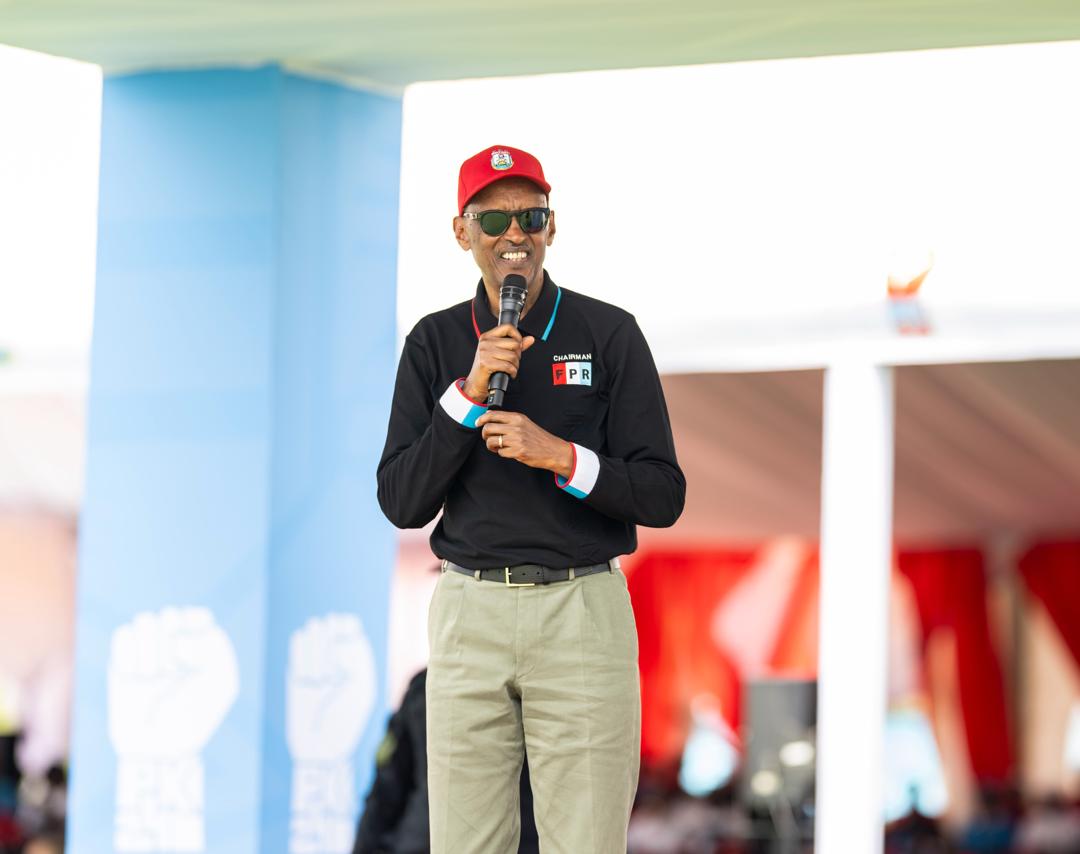
“It has always been perceived that the people here are naturally cursed and condemned to die due to distorted historical narratives about this area. By coming here I wanted to prove them wrong,” Kagame said on Saturday, July 6, 2024, during his party’s campaign rally in Ruhuha Sector, Bugesera District.
Historically, Bugesera was an uninhabited region of Rwanda, covered with dense forests and rife with Tse Tse flies.
After the 1959 revolution (during the regime of President Glegoire Kayibanda, and his successor Juvenal Habyarimana), many Tutsis were forcibly relocated to the Bugesera region.
The intention was to massacre them, to the extent that, whoever would survive, could be stung by the deadly Tse Tse flies.
In 1992, massacres that amounted to a rehearsal of the 1994 Genocide against the Tutsi occurred in Bugesera District. Interahamwe militia of the MRND and Impuzamugambi from CDR political party travelled from Kigali and launched attacks in Bugesera, killing many Tutsis.
From this perspective, Kagame says that he decided to build a home there, to defy that narrative, as a symbol that every Rwandan has a right to life and there is no place where people are cursed.
The Head of State had earlier responded in the affirmative to a request from renowned songbird Ingabire Jeanne Butera better known as “Knowless”, who had pleaded with him to invite his neighbours for a get-together at his country home.
Prior to that, Butera shared her story of a humble beginning recalling how the 1994 Genocide against Tutsi left her with three family members who would die later on, leaving her with only one person in her life.
“My only surviving relative would go early in the morning, leaving me alone in the small house where we lived. Because I was afraid, I adopted a tactic of singing and shouting to scare them away,” she said.
Nine days to voting day, excitement and anticipation are mounting amongst the public, especially first-time voters.
“I can’t wait for the voting day so that I can exercise my responsibility and engage in their country’s democratic process,” said 19-year-old Fulgence Muhawenimana, a resident of Muhima Sector in Nyarugenge District.
“By nature, Rwanda’s security posture has always been defensive, not offensive. We prioritize cooperation and working together and we only act when trouble is brought on us,” he said.
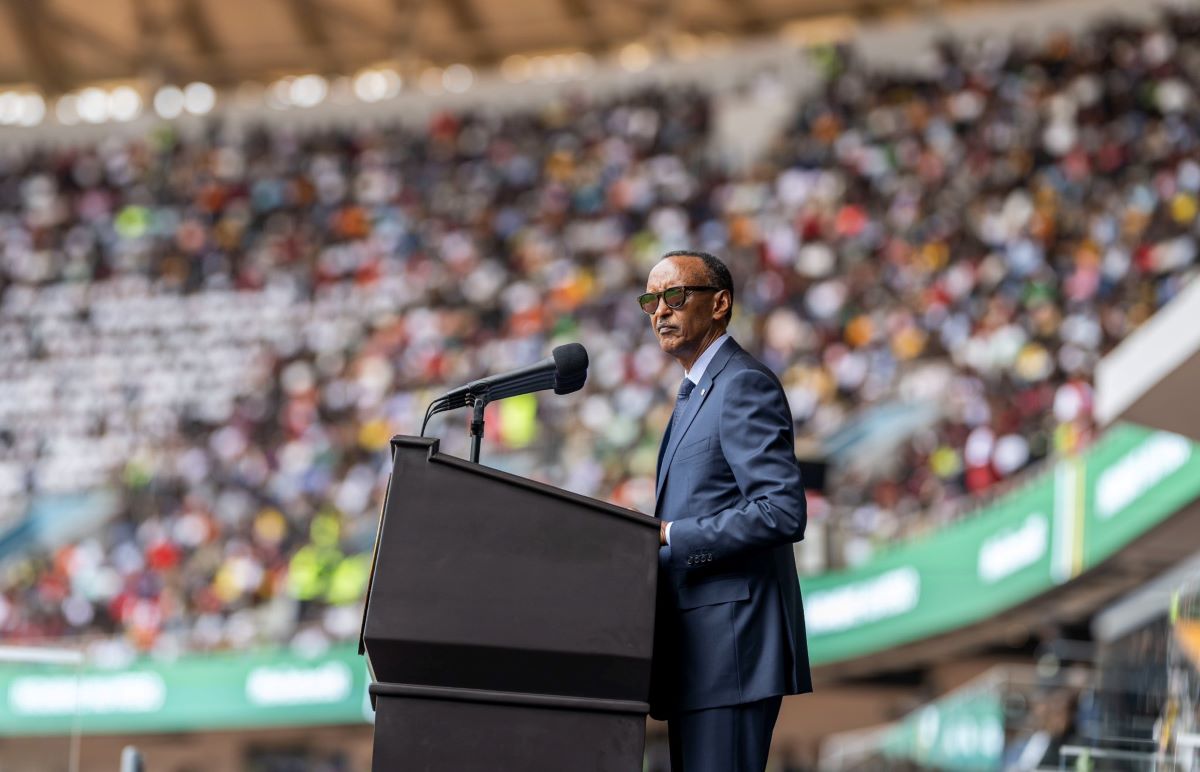
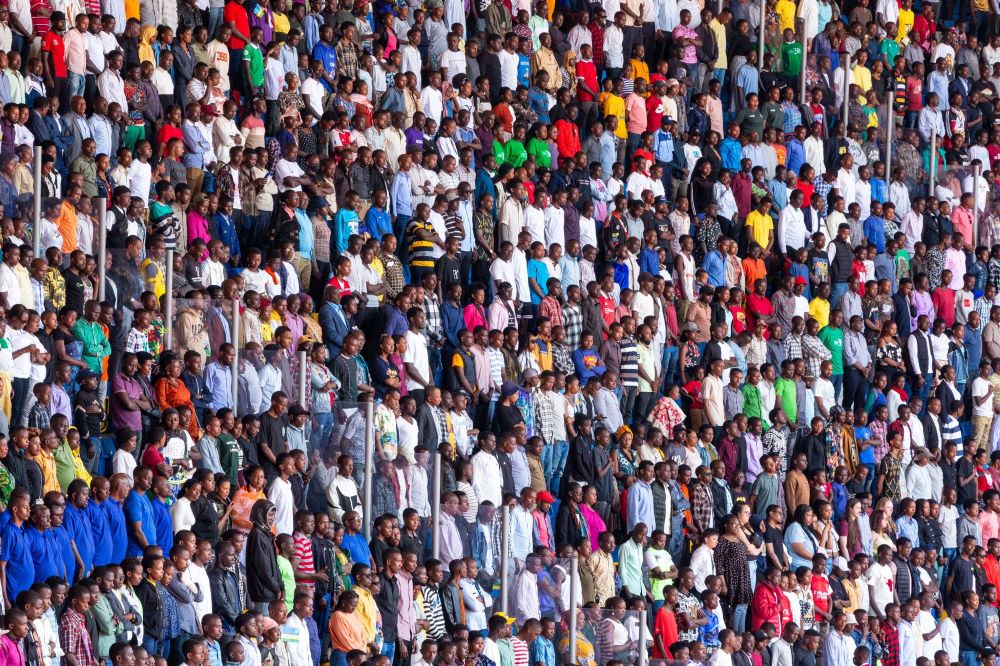
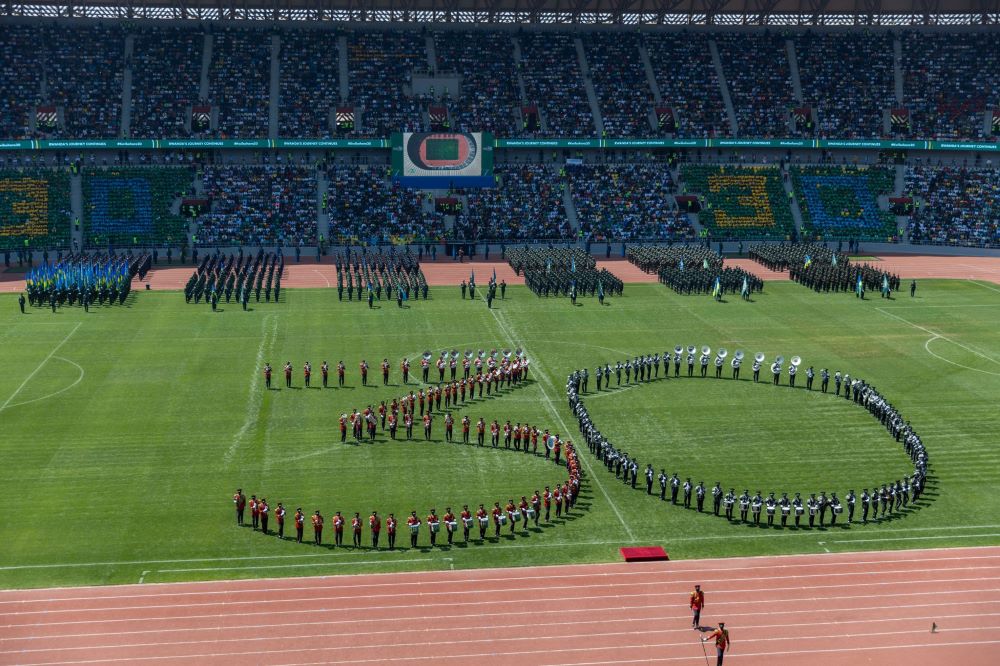
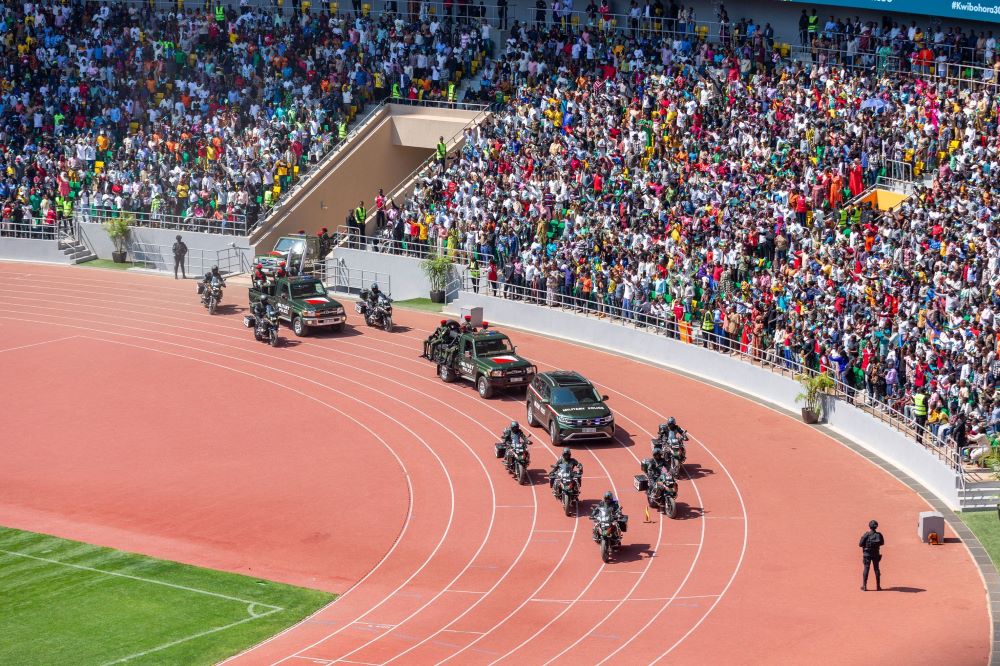
The Head of State was speaking before thousands of Rwandans and friends of Rwanda gathered at the newly renovated 45,000 seater Amahoro stadium to mark 30 years of Liberation.
The national celebrations were marked with a military parade by the Rwanda Defence Force (RDF) and Rwanda National Police, cultural dance by the national cultural troupe Urukurereza, and performances by different artistes.
It is this army that first encountered most Rwandans after the Genocide when the situation in the country was still extremely tense and dangerous. Yet, the forces did everything in their power to treat all Rwandans with professionalism and humanity, setting the tone of everything that followed.
Even today, they remain close to the community, and invest in projects that matter to the country’s development, such as infrastructure and medical services.
Subsequently, Rwandans have attained values and courage, an endpoint of the liberation struggle that has put citizens at the center of government action.
In that spirit, President Kagame expressed gratitude to those who liberated the country and honored those who sacrificed their lives in the process.
“On July the 4th, we express our thanks to those who liberated Rwanda, and remember those who gave their lives. Our army and security forces are a powerful symbol of unity and safety,” he said.
Three decades ago, the venue for these celebrations was the site of refuge and rescue. From the surrounding neighborhoods, Rwandans flowed to Amahoro stadium for safety.
Today, strides have been made, offering the freedom and the opportunity for Rwandans to live the lives they want. It is therefore not surprising that wherever life takes them; they will never forget their duty to uphold the good politics that have been built.
In his address, Kagame emphasized that Rwandans today are better and stronger than ever before, a reason to keep marching forward to continue growing Rwanda’s uniqueness.
“Even though Rwandans have made huge strides towards this mindset, we must remain vigilant. I am addressing this message in particular to Rwanda’s young people, especially those born over the last thirty years,” he said.
“This country is yours to protect, defend, and make prosperous. It is worth repeating that real liberation only begins when the guns fall silent. We began that stage thirty years ago, and we are counting on you, the liberation generation, to take us further,” he called out to the youths.
The President reminded the world that where there is a need for humanitarian action, Rwanda will not be absent emphasizing that the only real answer to any humanitarian crisis is to fix the root cause of the political problem.
He lashed out at critics who even try to spoil what has been established saying that those negative efforts produce no results.
According to him, the solid foundation upon which Rwanda was rebuilt is the driving force to remain principled and consistent, a product of hard work and civic values that will define the next generation of Rwandans.