The Government has set aside at least Rwf200 billion for the reconstruction of the road linking Kagitumba border post to Kayonza District, and the stretch from Kayonza to Rusumo on the Tanzania border.
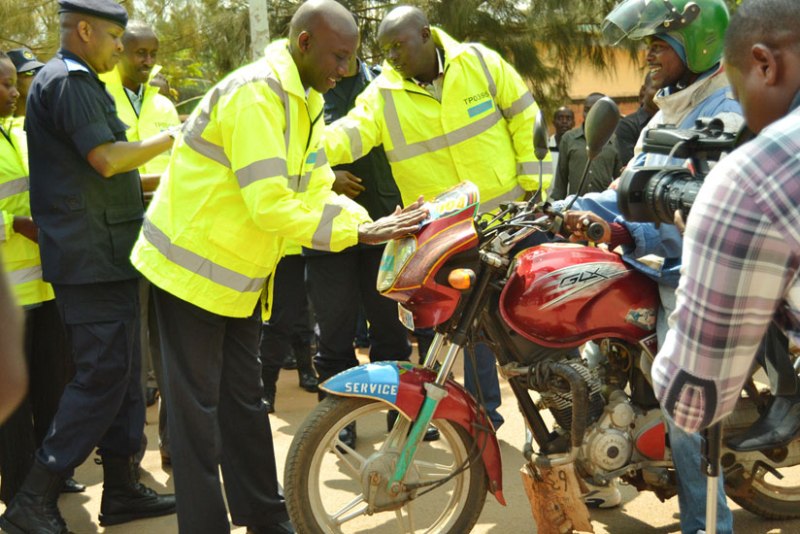
This was disclosed by the State Minister for Transport, Dr Alexis Nzahabwanimana while presiding over the launch of the Police Month in Eastern Province yesterday.
Nzahabwanimana said the construction of the 136km and 120km roads respectively, would start in November.
“We completed the feasibility study that included, among others, expropriation costs and other expenses…it will be a modern, wide road. We earmarked between Rwf180 billion and Rwf200 billion…but because the topography is good, we may remain with some money that would be used for other things like installing traffic signs,” he said.
The Kagitumba-Kayonza highway was constructed in 1986, while Kayonza-Rusumo road was built in place in 1976.
Addressing hundreds of residents who had turned up for the launch of the Police Month, Nzahabwanimana affirmed government’s commitment to tame bad road users and to check accidents.
He warned motorists and owners of transport and cargo vehicles that heavy punishments await them if they fail to comply with the new traffic rules.
“The construction of the road is one way to check accidents…the poor state of the current road is sometimes responsible for the accidents,” he said.
Nzahabwanimana called on the Police to enforce a directive requiring public transport vehicles to install speed governors, noting that failure to adhere to the directives would lead to prosecution.
“February 2016 is the deadline; all passenger and cargo vehicle owners must install ‘Speed Governors’. This is a law that all will have to observe…it is a simple machine you install to limit speed. The speed limit will be 60 km per hour. We have started to upgrade Police’s capacity to manage road accidents,” he said.
At least 200 people died and over 300 were seriously injured in road accidents between January and June this year, according to Police statistics.
The minister said pedestrians were the most affected by the accidents.
“We need sidewalks, including on roads in up-country towns, so that pedestrians are safe. It is disheartening that most victims were not in any way related to the cause of the accidents,” he said.
The Governor of Eastern Province, Odette Uwamariya, reiterated the need to upgrade old roads, noting that they were the cause of many accidents on the highways.
“The roads to Kagitumba and Rusumo are in bad shape…its good news that they will be repaired. Between June and August, we had 94 accidents, 46 people died and 64 were seriously injured. The renovation works, coupled with the speed limits will make a difference,” she said.
Globally, at least 1.3 million people die in road accidents every year.
Local Government minister Francis Kaboneka has called on all road users and motorists, in particular, to have a collective responsibility to ensure sustainable road safety by respecting traffic rules.
Kaboneka delivered the message, yesterday, in Kicukiro District, where he officiated at the launch of the countrywide ‘Road Safety Month-2015,’ which is running under the theme, “Respect Traffic Rule: Save Lives.”
“Intense awareness activities calling for responsibility of road users, coupled with strong enforcement of traffic rules are required to change the way roads are used. There is need to disseminate more information about road safety programmes to overcome any form of ignorance that may be dangerous for road users,” Kaboneka told hundreds of residents, who turned up for the exercise.
He said the country’s development agenda is hinged on safety and security, thus, there is need to prioritise road safety education with a focus on challenges like drunk driving, speeding, negligence and driving cars with mechanical faults, which are among the major causes of road accidents in the country.
The event was also graced by the Mayor of Kigali City, Fidel Ndayisaba, the Inspector General of Police (IGP) Emmanuel K. Gasana, senior Police officers and associations of drivers, among others.
IGP Gasana noted that ensuring road safety is not a one-day event but should be a daily routine for road users.
“We cannot let accidents be part of our daily lives. That is why we consider awareness on road safety as a continuous process and not a once-a-year event. Police implemented a comprehensive plan of action to reduce road accidents by involving residents through community policing and ensuring professionalism of traffic officers,” Gasana said.
“As we aspire for a sustainable and peaceful country, let every road user promote self-discipline as their duty to the nation.”
Police statistics show that at least 200 people died and more than 300 were injured in road accidents between January and June.
In general, 34 per cent of the victims were drivers and passengers, 30 per cent pedestrians, while motor and peddle cyclists contributed 23 per cent and 13 per cent, respectively.
The majority of the accidents were due to speeding, reckless driving, and using phones while driving.
{{‘Protect the youth’}}
Elsewhere, in the Western Province, the Minister in the President’s Office, Venancie Tugireyezu, also echoed the same message, but challenged leaders and elders to protect the youth as the future leaders of the country.
“You must respect Traffic Police at all times as they represent the law; violating their instructions is literally violating the laws. This is a moment for us to reflect on traffic rules; every citizen’s life is a treasure and very precious to the country, we cannot afford to lose a single life, we should always ensure safety of each other,” Minister Tugireyezu told residents of Nyabihu District.
Similar events were conducted in Eastern region (Kayonza District) presided over by the State Minister in charge of Transport, Alexis Nzahabwanimana, Northern region graced by the provincial executive secretary, Deo Kabagambe and Deputy Commissioner General of Police Stanley Nsabimana, while in the Southern Province, the event, held in Kamonyi District, was presided over by Governor Alphonse Munyentwari and the Deputy IGP in charge of Administration and Personnel, Juvenal Marizamunda.
The officials and Police officers engaged road users on road safety tips.
The event in all regions was marked with establishing and painting Zebra crossings, putting stickers with road safety message on vehicles and motorcycles and a road safety awareness walk.
The road safety month is an occasion to sensitise the public to become responsible road users, educate pedestrians on traffic rules and regulations and it will be enhanced by media programmes and community policing activities.
Special attention will be given to school children who will be educated and given road safety tips.
Unexpected technical hitches are standing between the nation and 25 megawatts of energy production expected to be generated from the first phase of the KivuWatt Methane Project in the Western Province district of Karongi, The New Times has learned.
The wait has been long. The first deadline was sometime in 2012. The most recent was July, but it was missed. Now a new one has been set for October.
ContourGlobal, an American energy investment firm, has a 25-year concession to produce 100 megawatts from the methane-rich waters of Lake Kivu.
Works on the first phase started in late 2008 but seven years later, the plant is yet to produce any electricity.
This newspaper’s request for access to the project was granted last Friday as it sought to substantiate reports that a critical part of the project’s machinery had been severely damaged during installation, hence the missed July deadline.
Inside KivuWatt
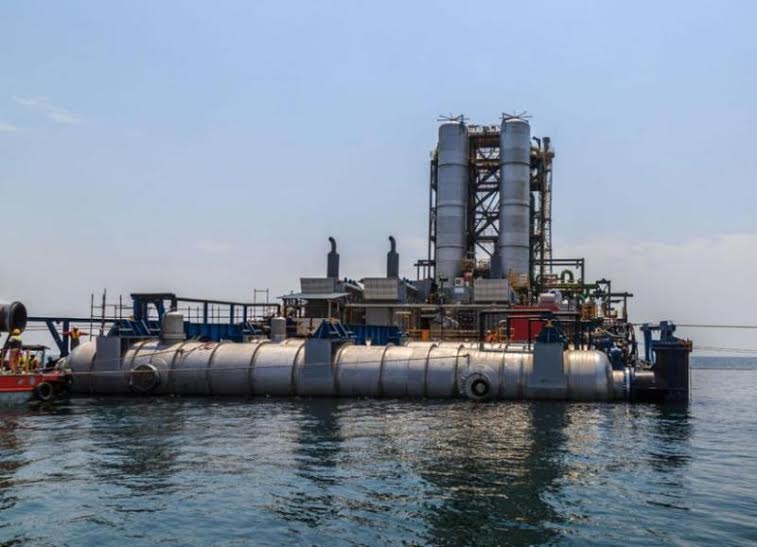
From a distance, the KivuWatt project is like a floating island in the middle of Lake Kivu; its machinery, which is a complicated assemblage of hundreds of thousands of tonnes of heavy pipes and metal, are installed on a wide barge.
The barge is anchored in one place by long strong ropes that are fastened in concrete slabs built at the bottom of the lake; according to the engineers, this is a permanent fixture.
Assessing the project progress from the outside, one could understand the frustrations of the government, which has played the role of patient customer waiting for a long placed order; a government that’s also under pressure from investors to address the daunting energy problem.
But once inside the project site, one gets to appreciate the reasons for the several missed deadlines in the past.
Jarmo Gummerus, ContourGlobal’s country director, says KivuWatt is a ‘lake breaking’ project,’ one that was always going to be a learning process.
Lake Kivu is the world’s only water body with methane gas and KivuWatt is the first project of its kind where methane gas will be extracted for electricity purposes. It’s one of ContourGlobal’s special Greenfield investments around the world.
“It’s lake-breaking because there are no templates for whatever we are doing here, there’s no luxury to copy and paste; everything here is being done for the first time, it’s an experiment where we have been learning and unlearning,” said Gummerus.
Gummerus, an engineer with several decades of experience, is as old in Rwanda as the project he’s managing.
At least two sub-contractors have been hired and fired, including the Kenya-based Civicon, about 3.5 million man-hours have been sunk into the project running on a multi-million dollar budget bankrolled by ContourGlobal investors.
Three million man-hours over a seven year period and the project hasn’t registered any fatal accidents, only five minor incidents were recorded under the watch of the two sub-contractors.
“Safety is a top priority here,” said the project’s head of safety.
Nicolas Suazo Farina is the project engineer for KivuWatt. He has been with the project for four years now and he told me that at the peak of the project sometime last year, there were over 500 personnel on site from 27 different countries.
In that mix were dozens of Rwandans including 27-year-old Cyprian Bigirimana, a graduate of Integrated Polytechnic Regional Centre (IPRC-Kigali), who, more than the money he has earned, acknowledges the project for giving him priceless experience and expertise.
Only about 150 workers remain on site given its near completion.
{{Last-minute glitches
}}
Both Gummerus and Farina said as far as they know, the project is 99.8 per cent complete and the only thing holding them back are a few unanticipated technical malfunctions that saw them lose an entire month and missing the deadline.
At this point of the concession, ContourGlobal is incurring all related costs to the project; the government is only waiting to start buying power from the investor at a cost thought to be around fifteen cents of the dollar.
“Everything is ready, from the production facility to the power plant, all we are waiting for is to sink the separators and extract the gas,” Gummerus said.
{{How it will be done
}}
In practice, KivuWatt will deliver 25 megawatts of electricity from methane gas but to do that, there are two pairs of separators, long and wide metallic pipe drums weighing 4000 tonnes. These are supposed to be installed some 18 meters underneath the lake.
The separators are important because they separate the methane gas from water before sending it (water) back into the lake, this happens in a continuous cycle.
Simply put, water enters these separators; a mechanical process then ensues in which the gas is extracted and sent up to the production system through pipes.
The water is then pushed back to the lake through an exit-valve on one of the separators. Early July, the first pair of these separators was sunk into the lake to begin the gas extraction process.
However, something wasn’t right with their positioning under the lake making them to malfunction; it was decided that they needed to be retrieved to the lake surface, checked, fixed and re-installed.
The process required professional divers. It also required the presence of the engineers who designed the separators, plus it required the purchase of certain machinery that had to be looked for, imported and flown into the country.
“Everything considered, we have lost about a month,” Gummerus said.
The project has hired six divers from South Africa. They also flew in one of the separators’ designers from Germany. Both expert-teams have been at work, the divers retrieved the separators and the engineer reworked the designs.
As of Friday, last week, they had finished their work and the pair of separators was ready to be reinstalled into the lake when another complication emerged.
The exit-valve on one of the separators had somehow jammed, it wasn’t opening; it means after separating the gas, the water couldn’t be released back into the lake…since the valve was closed.
Engineers spent all Friday trouble-shooting to figure out what was wrong with the valve. Once they fix that, the first pair of the separators will be re-installed into the lake followed by the other pair.
Germany’s coalition government has agreed to spend 6bn euros (£4.4m) to support record numbers of migrants and other measures to deal with the influx.
Critics at home have accused Chancellor Angela Merkel of creating a dangerous precedent by opening Germany’s borders.
About 18,000 migrants arrived over the weekend after an agreement with Austria and Hungary to relax asylum rules.
But Austria’s Chancellor Werner Faymann has said the emergency measures must come to an end.
He said they would move step by step “towards normality”, after speaking to Chancellor Merkel and the Hungarian Prime Minister Viktor Orban on Sunday.
Hungary had previously blocked migrants travelling to Western Europe, but dropped restrictions on Friday and shuttled people to the Austrian border.
At Hungary’s border with Serbia construction work continues on the border fence, as people continue to stream across the border, unchallenged by police, the BBC’s James Shaw reports.
Meanwhile migrants are continuing to arrive at Munich station.
Germany’s announcement of extra funds came after talks on Sunday night between the two parties which make up Chancellor Merkel’s coalition.
The government has agreed to give €3bn ($3.3bn; £2.2bn) to the federal states and local councils, with a further €3bn to fund federal programmes such as benefit payments.
Specific measures announced include:
A building programme to increase the number of places in reception centres for asylum seekers, suitable for winter months, to 150,000
An extra 3,000 federal police officers
Replacing cash allowances paid to asylum seekers in reception centres with benefits in kind
More money for integration and language courses
Kosovo, Albania and Montenegro will be added to the list of “safe” countries, meaning asylum seekers from those nations can deported more rapidly
The agreement stressed the need for “solidarity” and “a fair distribution” of refugees between EU states.
Germany expects to receive 800,000 refugees and migrants this year, and wants to see the rest of Europe do more to help.
But while Mrs Merkel has become a hero to many migrants and their supporters, conservative allies said she sent a “totally wrong signal” by allowing in the intake from Hungary.
The interior ministry said the decision was an exception to help avert a humanitarian crisis.
New arrivals in Germany were welcomed by smiling and cheering members of the public at train stations across the country.
On Sunday, a group of cars driven by German and Austrian activists travelled to the Hungarian border to pick up migrants and distribute food.
The migrants had travelled north through the Balkans – Greece, Macedonia and Serbia – before arriving at Hungary’s southern border, and on to Austria and Germany.
Syrians are the largest group travelling, followed by Afghans and Eritreans.
A rift has developed within the EU over how to deal with the crisis.
Hungary has accused Germany of encouraging the influx, and is pressing ahead with plans to tighten border controls and could send troops to its southern frontier if parliament agrees.
It has opened a new reception camp for migrants in southern border village of Roszke, and is due to finish its border fence this month.
The UN’s Refugee Chief Antonio Guterres said the crisis was “manageable” if member states could agree a joint plan.
A note on terminology: The BBC uses the term migrant to refer to all people on the move who have yet to complete the legal process of claiming asylum. This group includes people fleeing war-torn countries such as Syria, who are likely to be granted refugee status, as well as people who are seeking jobs and better lives, who governments are likely to rule are economic migrants.
Sudan and China signed yesterday in Beijing a contract according to which Sudan in favour of Sudan Airways besides two trains to transport passengers between Khartoum and Wad-Medani along with the construction of new railway lines and a contract to repair the locomotives in Sudan.
Al Bashir, who is in on official visit to the People’s Republic of China to participate in the celebration of the victory over Japan in World War II, welcomed the Chinese investments in Sudan lauding the considerable contributions of the Chinese National Petroleum Company (CNPC) in supporting the Sudanese economy.
President Al Bashir attended the signing of the contracts during a meeting that included Sudanese and Chinese businessmen.
The two countries also signed a framework agreement between Sudanese Shipping Lines and a Chinese company to establish a free zone area in Port Sudan and another agreement in favour of GIAD Company for vehicles’ and trucks’ assembling.
It is to be noted that the CNPC expressed desire to expand its investments in Sudan and its readiness to work in increasing oil production.
For his part, Minister of Petroleum and Gas, Dr. Mohammed Zayed Awad said after his meeting with CNPC officials that the company offered to work in natural gas explorations in Block (8) which is located in Dindir area in Sennar State.
He revealed the signature of an agreement between the two sides to utilize the explored natural gas in that Block.
Zayed said that Al Bashir has called the CNPC to increase its investments in Sudan in concentration in increasing the production in the existing oilfields, and that the company welcomed the President’s offer.
He disclosed that what is produced since 1999 is only 12% of the explored reserve of oil.
The Minister pledged to continue working to increase the production in the oilfields besides the expansion in exploration activity in the new Blocks.
He concluded that CNPC is thinking of establishing a fertilizer factory in Block (8) to utilize the natural gas considering that the area is one of the best agricultural areas in Sudan.
Turkey has signed 20 economic cooperation agreements with Sudan, a Sudanese official told the Anadolu Agency on Monday.
Speaking after the visit of the deputy undersecretary of the Turkish ministry of foreign affairs Ali Kemal Aydin to Sudan, the director of the European Department at the Sudanese Ministry of Foreign Affairs Youssef Alkordofani told Anadolu Agency that the agreements covered the various fields of security, agriculture, infrastructure, telecommunication, transportation, education, health, cultural exchange, electricity and humanitarian support.
He pointed out that the agreements on security and agriculture have been ratified by the parliaments of the two countries, and that the remaining agreements are expected to receive approval in the near future.
‘’Turkey has already agreed to sell Sudan planes and ships to rehabilitate the transportation sector which has been damaged due to American sanctions,’’ Alkordofani said.
‘’Turkey has also started to build a big Turkish university in Khartoum, and it is granting more than 100 scholarships for the Sudanese students’’ he added.
Measures will be taken to boost trade volume between the two countries, Aydin said.
‘’We are launching a wide call among Turkish businessmen to invest in various sectors in Sudan,’’ he added.
The ministries of foreign affairs in the two countries have on Monday signed a Memorandum of Understanding regarding the technical support to be offered by the Turkish ministry to its Sudanese counterpart.
The Turkish official said that the first phase of technical support will cost around $1 million and the second phase will cost $2 million.
He said that they also agreed to push forward the implementation of the agreements between the two countries on security assistance Turkey has agreed to provide to Sudan.
An economic conference will be held in Khartoum in November to discuss investment opportunities for the Turkish private sector in Sudan, according to the director of bilateral relations at the Sudanese Ministry of Foreign Affairs, Daffaa Alah Alhaj.
The Sudanese diplomat said that Sudan will offer preferential advantages for the Turkish investment.
STOCKHOLM: Rwanda’s new envoy to the Nordic Countries, Ambassador Christine Nkulikiyinka on Thursday presented her credentials to King Carl XVI Gustaf of Sweden.
King Gustav commended Rwanda’s post-genocide recovery and the reconciliation process.
Nkulikiyinka briefed the king on developments in Rwanda and underlined the Country’s commitment and efforts towards poverty eradication. She said Rwanda was keen on strengthening its relations with Sweden, especially through trade and investment.
The Swedish king complimented the ‘Kwita izina’ initiative as a tool for conservation. He noted that his son—Prince Carl Philip—had travelled to Rwanda in 2010 to visit and photograph mountain gorillas. Prince Philip accompanied renowned nature photographer and filmmaker Matias Klum.
The king also highlighted his interest in peace processes in the great lakes region—a matter on which he was updated by Ambassador Nkulikiyinka.
Since the end of the 1994 genocide against the Tutsis, Sweden has been one of Rwanda’s main bilateral partners. In June, the Nordic Country approved a new five-year development cooperation agreement with Rwanda worth SEK900 million (approximately USD130 Million).
Among the areas Sweden is currently focusing in its bilateral agreement with Rwanda is higher education and research. An extensive cooperation agreement between several Swedish universities and the University of Rwanda has resulted in the commencement of new programs at the University of Rwanda, exchanges between faculty and at present about 50 Rwandan PhD scholars pursuing studies in Sweden.
Later on Thursday, Nkulikiyinka was due to meet the Rwandan community from the Stockholm area. Prior to her posting in Stockholm, Nkulikiyinka was Rwanda’s Ambassador to Germany.
The Rwandan Embassy to the Nordic Countries is accredited to Sweden, Norway, Denmark, Finland and Iceland.
Prime Minister Anatase Murekezi has called for collective conservation efforts in the country and beyond the borders to sustain gains from nature and wildlife.
Murekezi made the remarks, yesterday, while officiating at a forum dubbed, “Conversation on Conservation,” in Kigali.
The forum is part of the activities leading to the gorilla naming ceremony, locally known as Kwita-Izina, due on Saturday. Twenty-four baby gorillas are set to be named.
“This conversation comes at the right time, when we are preparing for Kwita-Izina and at a time when we are seeing benefits of conserving the environment. However, to continue this great [conservation] process requires collective efforts with neighbouring countries as well as public-private partnerships,” he said.
Murekezi reaffirmed government commitment to conservation, saying it has dedicated efforts to the protection of wildlife.
“We have established policies such as Fund for Environmental Conservation and Green Economy, a centre for excellence in biodiversity and natural Resources and improved management of Protected Areas with the involvement of local communities,” Murekezi added.
He said with the progress in conservation efforts, the government has managed to create opportunities in cultural, social and economic sectors.
Murekezi called on the public to put more efforts into conservation, saying it is “our responsibility toward the sustainability of prosperity.”
“Future generations have a right to live in green environments and it’s our responsibility to start now. We also have to keep in mind that tourism is now our highest income earner and that means that it impacts on people’s lives,” he said.
The Prime Minister also informed participants that Parliament has passed a legal framework establishing Gishwati-Mukura National Park and plans to rehabilitate it are firmly underway.
According to Rwanda Development Board’s chief tourism officer Yamina Karitanyi, there are investors who want to construct lodges in the area.
“We hope that by December, lodges for tourists will be in place. We will also commence rehabilitation of the area although this might take a while but we are looking forward to the rehabilitation,” she said.
The Minister for Natural Resources, Dr Vincent Biruta, said demarcation of the reserve would start soon and expropriation of people living within the gazetted zone effected after which management of the area would be handed over to Rwanda Development Board.
During a panel discussion headlined by PM Murekezi and renowned researcher Dr Amy Vedder, it was noted that development can go on without destroying conservation.
“We can exploit natural resources without destroying nature. We have to find what is sustainable and go with it.
There’s no need to rush to destroy conservation,” Murekezi said.
It was a moment of joy on Thursday morning as the Forum for Democratic Change Electoral Commission declared founding leader Dr Kizza Besigye the party’s Presidential flag-bearer during the party delegates’ conference at Mandela National Stadium.
Despite a few hitches, voting went on well and by 9:42pm over 1,000 delegates from different parts of the country had finished casting their votes.
15 minutes into the tallying exercise, it was clear that Besigye would emerge victorious.
At exactly 12:16 am, the Electoral Commission chairperson Dan Mugarura, declared Besigye the winner and rightful FDC flag bearer.
“Dr. Kizza Besigye has polled 718 votes against Maj. Gen. Mugisha Muntu’s 289 votes and there has been only one invalid vote. I therefore declare Besigye the Forum for Democratic Change flag bearer for 2016,”Mugarura announced amidst jubilations by the FDC strongman’s supporters.
For Dr. Kizza Besigye, the win marks another big hurdle ahead of the opposition as they prepare to confront President Museveni in the 2016 general elections in a bid to take power.
“This marks the beginning of real work. There is now hard work ahead of us but I have hope in the energy that I have realized in our people and leaders during the campaigns. Together we can achieve what is ahead of us,” the opposition strongman said on Thursday morning.
Besigye however said there was no time to wait for organization before confronting the enemy but rather start from nowhere to somewhere if they are to achieve their goals.
The FDC stalwart noted that they ought to start tackling the problem where it lies than waiting to be organized as had been suggested by the party president Gen. Muntu, adding that this might never be achieved.
“I am going to work and see that whatever we have achieved both in the party and outside is used to tackle the problem ahead of us,” said Besigye.
“I will use the flag you have given me to the best of my abilities. I may make mistakes but in good faith doing what I think is the best for us all.”
{{Muntu Concedes Defeat}}
In his acceptance speech shortly after the announcements, Muntu who looked strong said he believes in the God of Jacob, Isaac and Abraham whom he said is a God of power and will keep him focused despite losing the election.
The former army commander noted that the win was not for Besigye as an individual but that the party at large would benefit from his election as their flag-bearer in the forthcoming elections.
Muntu noted that it’s high time they began processes he said would be crucial in seeing the party take over the highest office in the country in 2016.
“This is not a loss because I am a long distance runner who knows that every dark cloud there is a silver lining. I went to the bush while I was 23 years but at 29 I was made the army commander. I remained stable and focused. We have achieved a lot during this election but it’s time we now starting organizing for 2016 elections.”
Muntu warned that the period before elections will be crucial for the party and its leadership as far as taking power in the forthcoming elections is concerned.
“If he (Besigye) wasn’t the right man, the remaining time will judge. I hope we are not going to have two parallel forces within the party and if this happens, we will not be able to take power. I am not a prophet but intelligent enough to tell what might happen,” Muntu warned.
{{2016 fears}}
However, Soroti District woman MP Angeline Osege who also doubled as the leader of Muntu’s campaign team said she accepted defeat to Besigye but noted that she is not sure of the times ahead of the party.
“The delegates have voted but what I don’t understand is where we are headed with one month to nomination. We can’t change what has happened because the delegates have voted but I will wait to see what will turn out. I hope his leadership will have an impact,” Osege told this website in an interview.
Besigye will now represent Uganda’s strongest opposition party at the Democratic Alliance where the platform is expected to front a single candidate to challenge President Museveni in the 2016 presidential elections.
At least twelve UPDF soldiers died in the Al Shabaab attack on Tuesday at the AMISOM base at Janaale, Lower Shabelle Region in Somalia, the Uganda army has announced.
“The bodies of ten fallen soldiers are landing this morning while two more will be brought later,” army spokesperson, Lt Col Paddy Ankunda told ChimpReports by telephone on Thursday morning.
He clarified that the army could not have risked releasing the particulars of the departed soldiers before notifying their next of kin.
Describing the deceased as “heroes”, Ankunda pointed out that the soldiers’ bodies are already airborne and that aircraft would touch down at Entebbe Airbase 10:00 am.
AMISOM said in a statement that the terrorists used a car loaded with explosives to trigger the attack and to facilitate their forced entry into the camp after which they engaged AMISOM soldiers in a gun-battle.
Highly placed defence sources said most of the soldiers succumbed to the fragments of explosives from the Al Shabaab vehicle.
“When the vehicle exploded, our soldiers near the entrance of our military base were hit,” a source observed.
“However, when the militants decided to engage us in the battle inside the compound, 45 of them fell while about 63 were wounded in the massive attack.”
Ankunda said Uganda “will not relent in our efforts to help in the pacification of Somalia despite the attack.”
He further warned the militants of grave consequences: “This attack is a game changer, Al Shabaab can only expect an appropriate response from UPDF.”
Reprehensible
The Special Representative of the African Union Commission (SRCC) for Somalia and Head of AMISOM, Ambassador Maman Sidikou condemned the attack as “reprehensible” and praised the heroism of the peacekeepers who were killed during this attack noting that they have paid a worthy price while serving the people of Somalia.
“Ambassador Sidikou commiserates with the government and people of Uganda on the losses suffered during this heinous attack.”
“Although our troops undertook a tactical withdrawal following the initial vehicle borne explosive attack, they have since consolidated and regained full control of the base,” AMISOM clarified.
“Given the complex nature of the attack, AMISOM is currently verifying the number of casualties and extent of the damage.”
Uganda maintains over 6,000 troops in Somalia who have played a pivotal role in the liberation of strategic towns from Al Shabaab militants.
Al Shabaab said the attack was in response to AMISOM soldiers’ killing of seven civilians at a wedding in Marka on July 31, 2015.
Following this incident, AMISOM told a press conference that three soldiers were indicted and awaiting to be arraigned before a military judicial process over the crime.
On Thursday, Ankunda said AMISOM has accounted for all its soldiers, adding, “No missing in action from Janaale attack.”