{Inmates at the Naivasha Maximum Security Prison are lobbying to have death and life sentences replaced with “definitive” jail terms.}
They have termed death sentences and life imprisonment as “punitive” and urged Parliament to intervene and make changes to the necessary laws.
According to the inmates, those sentenced to life imprisonment and those waiting for the hangman’s noose, are “undergoing psychological torture,” owing to the nature of their jail terms.
“We are greatly disadvantaged as the law currently is. Despite having reformed while still in prison, we stand a little chance of being set free,” they told members of the National Assembly committee on Administration and National Security who toured the prison.
Among the laws that would need reviewing is the Kenya Prisons Cap 90, which is being reviewed to align it to the Constitution in regard to prisons.
“We want to enjoy privileges like our colleagues serving shorter sentences if one exhibits behavioural change while still serving their jail term,” said an inmate, Ben Loyatum.
MAJORITY IN SCHOOL
He said the majority of the inmates were now in school, terming their jail terms a hindrance to getting good grades in examinations.
The inmates were also pushing for parole — the temporary release of an inmate who consents to certain conditions prior to the completion of the maximum sentence period.
Speaking during the tour by the parliamentary committee, Baringo County Woman Representative Grace Kiptui, said the team was on a fact-finding mission to listen to grievances of inmates.
“We came here (Naivasha Prison) following a petition written to us by some of the inmates wanting the power of mercy to be looked into, among other issues,” she said.
She termed the visit an eye-opener, especially on the issue regarding the Sexual Offences Act, which the inmates claimed had been “abused” and a reason majority of them were still languishing in jail.
“They claimed it has become a tool of oppression and we shall definitely be looking at it,” said Ms Kiptui.
The Naivasha prison has more than 3,000 inmates, majority of them on death row and life sentences.
Source:Daily Nation:[Naivasha inmates push for replacement of life and death sentences->http://www.nation.co.ke/counties/nakuru/Scrap-life-sentences–inmates-tell-MPs/-/1183314/3078474/-/15tawulz/-/index.html]
{TANZANIA has received 129,210 refugees from Burundi between April last year and February 10, this year, bringing the number of immigrants to 191,436 in all camps in the country.}
This was revealed by the Ministry of Home Affairs, Spokesperson Mr Isaac Nantanga during a press conference held in Dar es Salaam.
He said that since April 2015, a total of 129,210 refugees have fled from political instability in Burundi to Tanzania and currently are accommodated in various camps in Kigoma region.
He further explained that the number of refugees at Nyarugusu camp in Kasulu District has surged to 79,290, other 45,487 refugees are settled at Nduta camp in Kibondo District while 4,543 more are at Mtendeli camp in Kakondo District.
The spokesperson told the press that the government was working hand in hand with the United Nations High Commission for Refugees (UNHCR) in handling the influx of refugees through provision of basic needs such as food, security, shelter and water.
Apart from refugees from Burundi, there were other refugees from other countries who settled at Nyarugasu camp prior to April 2015.
Amongst them 61,887 Congoleses, 150 Somalians, and 189 from other countries, hinted Mr Nantanga Expounding further, the official told the press that Tanzania through National Eligibility Committee (NEC) is finalising evaluation of 815 asylum seekers.
Amongst the asylum seekers, Democratic Republic of Congo is leading with 735 applications, followed by 25 from Burundi, 18 from Syria, 15 from Yemen, 14 from Rwanda, Iran and Eritrea with 3 applications each and 2 from Kenya, he explained.
Also other 147 new asylum applications have been received by NEC in which 24 applications are from Yemen and 13 from Syria. Other applications in the waiting include 80 from Burundi, 18 from DRC, 6 from Somalia, 2 from Uganda and 1 from South Sudan, he explained.
In order to avoid over-crowding of refugees in camps, the government has established a new refugee’s camp at Nduta in Kibondo District and re-opened Mtendeli camp in Kakondo District as Nyarugusu camp in Kasulu District was over populated with 160,000 refugees.
The re-allocated refugees are 50,000 from Burundi.
Source:Daily News:[Refugee camps over crowded as more Burundians arrive->http://www.dailynews.co.tz/index.php/home-news/47005-refugee-camps-over-crowded-as-more-burundians-arrive]
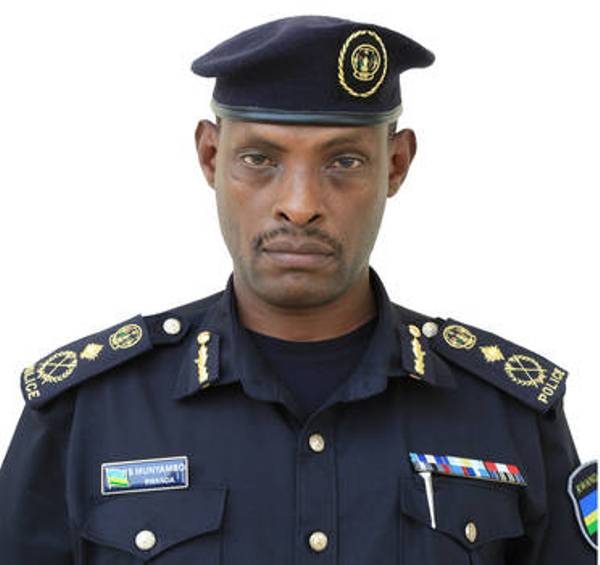
{The United Nations Secretary General has appointed Rwanda’s Commissioner of Police (CP) Bruce Munyambo as Police Commissioner (D2) of the United Nations Mission in South Sudan (UNMISS).}
CP Munyambo’s appointment follows the secondment from the Government of Rwanda.
He will succeed Uganda’s AIGP Fredrick Yiga, who has completed his three-year tenure.
CP Munyambo becomes the second Police Commissioner after CP Vianney Nshimiyimana, who is currently heading UN Police under the United Nations Operations in Ivory Coast (UNOCI).
He will assume the top Police office in UNMISS late this month. He takes over the UN office with rich peacekeeping and policing experience.
Prior to his appointment, CP Munyambo was the Commissioner for Operations and Public Order in Rwanda National Police.
Before that, he was the Commandant of Police Training School (PTS) Gishari and headed the department of logistics among others.
CP Munyambo holds a Master’s degree in International Strategic Leadership and Management. He is also a graduate of Leicester University in United Kingdom (UK) in Criminal Justice and Police Management and attended the International Commanders and Strategic Command courses from Bramshill Police Staff College in UK.
His UN peacekeeping experience includes serving as Individual Police Officer (IPO) in Liberia as well as the contingent commander of Rwanda Formed Police Unit (RWFPU) under the United Nations Stabilisation Mission in Haiti (MINUSTAH).
Rwanda is committed to international peace. Currently, deploys in seven UN missions with five Formed Police Unit (FPU) contingents three of them deployed in Central African Republic, one in South Sudan while another one is deployed in Haiti. It also has Individual Police Officers (IPOs) and has seconded senior officers in various Professional posts.
The seven missions include Darfur, Ivory Coast, Haiti, CAR, South Sudan, Abyei and New York.
The Government of Rwanda pledged to deploy a sixth FPU contingent of an all-female unit, currently being generated.
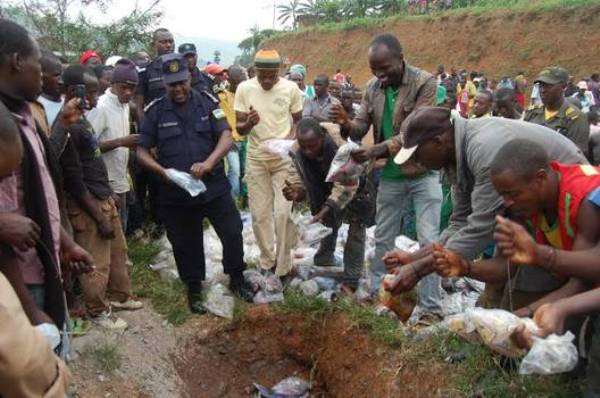
{Police in Rulindo District destroyed 468 dozens of illicit gin following intensified and successful operations against drug abuse conducted last month.}
They were destroyed on February 12 in presence of hundreds of area residents including about 350 commercial motorcyclists and cyclists.
The destroyed illicit gin branded as narcotic drugs in Rwanda under article 24 of the law governing narcotic drugs, psychotropic substances and precursors, included African Gin, Chief Waragi and crude waragi commonly referred to as Kanyanga.
Article 24 states that “any drink that exceeds forty five percent of alcohol and any other drink which doesn’t have the required quality for consumption shall be considered as narcotic drug.”
The District Police Commander (DPC) Senior Superintendent of Police (SSP) Felix Bizimana noted that some of the traffickers are facilitated by drivers, motorcyclists and cyclists.
He instead urged them to be strong partners in this intensified awareness, fight, prevention and arrest of drug dealers, adding that facilitating such criminals also makes them accomplices, which is also punishable by the law.
“We have information about some motorcyclists who scout the roads on behalf of drug traffickers so that they are not arrested; giving them information on what they think is a safe passage. Don’t get fooled because there’s no safe passage for criminals in Rwanda because even some of those that have been aiding them were arrested,” SSP Bizimana said.
“Such kind of actions will lead you into troubles that are avoidable, we encourage you to refrain from cooperating with drug traffickers and be partners in safety and security by reporting those that attempt to use you,” he added.
One of the cyclists, Benoit Karenzi said: “Some of our colleagues consume these substances out of ignorance, although being ignorant doesn’t exonerate them. We can only promise to join the fight against these substances.”
The Executive Secretary of Kajevuba Sector, Emilien Mutuyeyezu also urged commercial motorcyclists and cyclists to work closely with security organs against anyone who consumes or traffics drugs.
{People dealing in metal scraps have been cautioned against using under-aged children in their business to collect the objects, which is both against and punishable by the law, and exposes the children to serious risks.}
This follows a recent incident in Karongi District where a 15-year old boy picked a rusty old landmine as he was collecting scraps.
According to Police in Karongi, the boy, in an attempt to sell the object at a higher price, he tried to open it to load it with sand to increase its weight, a prerequisite to high value metals.
Fortunately, the boy was saved by residents, who noticed and identified the dangerous explosive and immediately informed security organs, who arrived shortly and took over the situation as the boy left unharmed.
While addressing owners of scraps businesses in Karongi, the District Community Liaison Officer (DCLO) Inspector of Police (IP) Jean Baptiste Rutebuka appealed to the traders to refrain from engaging children in scrap metal collection, an act he said amounts to child labour, which is punishable by law.
He noted that by buying such scraps from children they will be encouraging them to continue indulging in this child labour activity.
Although there are rare cases of people including children, being harmed by some of the “few explosives” that could still be abandoned in bushes, IP Rutebuka emphasized that “safety means being vigilant and not touching any suspicious object” but rather be quick to inform security organs for proper management.
He, however, commended the residents, who acted responsibly and were quick to call security organs and rescuing the boy.
“When anyone finds a suspicious object, walk away from them and immediately inform police or other security organs which have the skills to determine if it’s a dangerous object and to handle it,” he said.
There is no criminal liability to any person who reports an abandoned firearm or explosive, or surrenders a weapon voluntarily.
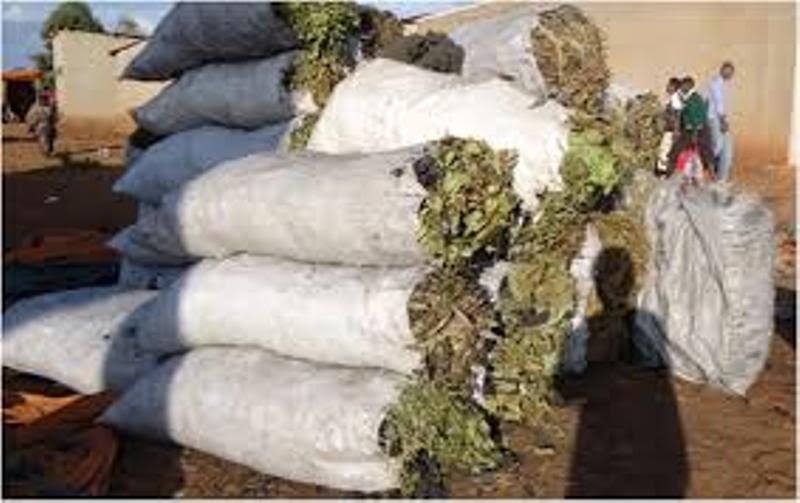
{The 4th Integrated Household Living Conditions Survey (EICV4) 2014 indicated that 80% of Rwandans use fuel-wood for cooking which, according to some individuals who talked to IGIHE, is becoming more expensive.}
Individuals who talked to IGIHE want the government to address the matter of costly bio-gradable fuels which forces some households to have one meal a day while others prefer to dine in restaurants.
“I use three sacks of charcoal per month at a price of Rwf 9,500 each. Thisis too costly. The government should intervene to address fuel complexities, “said Mukakalisa Devotha, resident of Nyarugenge district.
Rutatina Alexis, a resident of Bugesera says; “Charcoal is expensive here in Nyamata We have decided to cook in bulk at noon and just boil the food for supper. Sometimes we eat from restaurants.”
Liban Mugabo, the Managing Director of Safe Gas Rwanda importing and selling gas, said that charcoal is not a matter, but that people should change their perceptions and use gas which he says is cheap. He said that 12kgs of gas cost Rwf 17,000 which can last three months compared to Rwf 20,000 spent on charcoal per month.
He further says that Safe Gas can offer gas on credit to those that approach them as a cooperative.
Adrie Mukashema, the Deputy Director General of Forests and Nature Conservation at the Rwanda Natural Resources Authority told IGIHE that charcoal price increase results from forestation mismatching with population growth.
In 2015, statistics from Rwanda Environment Management Authority (REMA) indicated that over 83% of Rwandans in rural areas use firewood and charcoal to cook while more than 90% of urban dwellers use charcoal. Rwanda targets to reduce these numbers to 50% in EDPRS II.
{The Minister of Trade and Industry, François Kanimba has said that public procurement officers must respect 10% of chances reserved for industries and service providers in the country as per article 41 article of Public Procurement Act, meant to promote local products and services.}
Some of private investors have complained that they do not get such opportunities of supplying to public institutions but, instead, offered to foreigners.
The matter was last week discussed in a senatorial meeting where concerns were raised over giving many of the public tenders to foreign suppliers, which was looked at a deterrence to the development local capacities and industries that would have produced for export as well to reduce balance of trade deficit.
Kanimba asked government institutions to implement the public procurement law.
“We have a public procurement law which offers chances to those operating within the country. The government institutions need to identify Rwandan industries involved in the bidding and accord them chances,” he said.
“We have a great task of reforming public procurement law implementation to promote products made in Rwanda. I hope the parliament will help to achieve this,” he said.
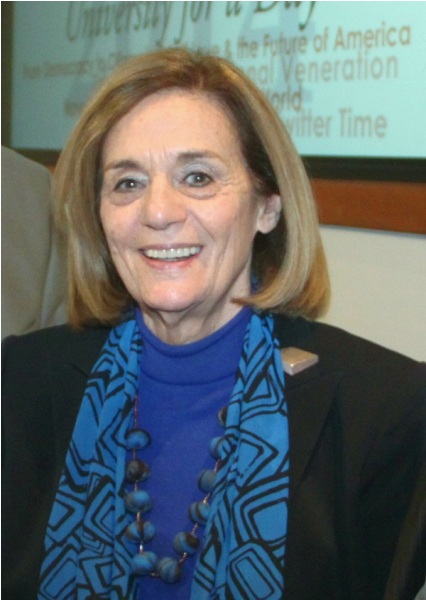
In an online interview IGIHE had with Sondra Myers, a rousing author and frequent lecturer on the arts, humanities and civil society, she introduced us to her journey as a writer and how Rwanda’s success story after the genocide sharpened even more of her will to learn about Rwanda. Sondra tackled various subjects and brought her personal outlook to the role of the Rwandan education system in shaping interdependence, civic responsibility and prosperity.
As a connoisseur and author of different books with democracy as main theme, Sondra also shared with us evocative insights as to how she perceives President Paul Kagame’s decision to stand for a third term as well as her key takeaways after her expeditions and her learning about Rwanda.
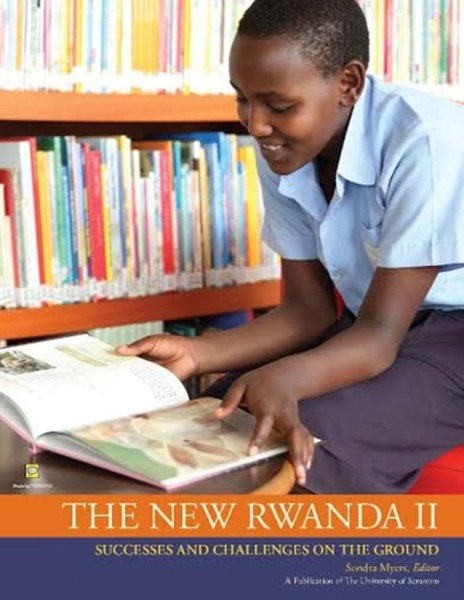
{{IGIHE: What inspired you to write your latest book on Rwanda: “The New Rwanda: Success and challenges on the ground”?}}
{{Sondra Myers:}} I wrote the second book to bring to people’s attention–Rwandans, Americans and anyone else interested, that there were many examples of success in Rwanda; in education, healthcare and numerous other areas, even as there were challenges to be addressed. Rwanda was and is a work in progress–that is in the nature of democracy–it is never a completed task. Rwandans are encouraging home-grown solutions–and they have the traditions that help them to move forward–whereas in many societies, some traditions hold people back. Still they need the encouragement, information and consultation with outsiders to keep in sync with the modern world.
{{IGIHE: Did you learn anything from writing your book? If so what was it? }}
{{Sondra Myers: }} My learning about Rwanda inspired me to write the first book and then the second; I was especially impressed with the energy, creativity and self-confidence of the young people I met; I was dazzled by the success of the Gacaca courts, which I consider to be the most proactive and effective example of truth and reconciliation in the world. The fact that Rwanda does not tolerate corruption is a very big plus, along with its modern use of its enlightened traditions. I call corruption a “weapon of mass destruction.” It is the enemy of progress.
I see the books as useful and encouraging for Rwandans and important for the outside world. The Rwandan Ministry of Foreign Affairs has made the books available in Rwandan embassies world-wide.
{{IGIHE: What is the role of education in democratization process?}}
{{Sondra Myers:}} I believe that the most important–the essential element in democracy is citizens who consider themselves responsible for the public good. You can have democracy without a constitution but you cannot have it without informed and engaged citizens. It takes a while for the culture of citizenship to develop–and education can be a great help in forging a free and open society.
{{IGIHE: Do you recall how your interest in writing about Rwanda originated? }}
{{Sondra Myers:}} I met with my old friend Mike Fairbanks when he was receiving an honorary degree at the University of Scranton. Not having seen each other in a long time, we each told the other what we were doing. He, in brief, was doing economic development, with a focus on entrepreneurship in a number of African countries.
I was doing civic development–helping to develop a culture of citizenship in places where people had not had the opportunity for it, having been subjects at best and even victims of their leaders. My focus had been on what higher education can do to prepare people for democratic citizenship. Accordingly, I would organize and moderate round table discussions with educators on the subject. By the time Mike and I were both ready to do this, he said “It’s got to be Rwanda. Rwanda will be the flagship country of Africa in time!”
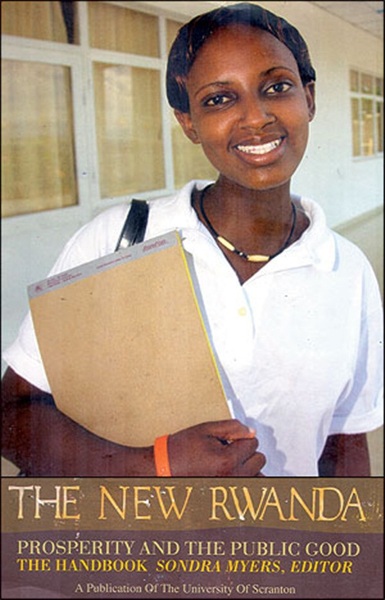
One of the recommendations that came out of that meeting, held in April, 2007, was that there needed to be more public conversation about the subject. That prompted me to do the first Rwanda handbook, The New Rwanda: Prosperity and the Public Good.” My first two handbooks–Democracy is a Discussion (One and Two), had been successful in fostering public discussion and so I modelled the first book after them, but made it country-specific.
{{IGIHE: what are your views about Rwanda`s democracy and the latest referendum whereby the people of Rwanda allowed President Paul Kagame to run for a third term?}}
{{Sondra Myers:}} Democracy is a perpetual work in progress–and Rwanda has gone far in a short time in setting itself in the direction of democracy. It takes people who have been subjects for a long time to believe that they have the right to be responsible for the public good–so educating them to understand that is important. Young people, of course, are very important to the project of building a democracy.
I have met a number of young people in Kigali who have the will and the skills to be good citizens. While there is a great stress on building entrepreneurship, I see citizenship as a partner to entrepreneurship. We need in citizens the same kind of excitement and determination that entrepreneurs have in building their own fortunes and the economic strength of the society to use in building a strong civil society. Abraham Lincoln, one of America’s greatest and most famous presidents, spoke of “government of the people, by the people and for the people.” That is the goal of all people–that is where true freedom lies–and so we are all on that path.
{{IGIHE: What is your current or future project when it comes to Rwanda?}}
{{Sondra Myers:}} I am considering putting my two books in one volume, with a new introduction and a third “book,” looking at the development of the country and its institutions and what it sees as its greatest needs, This third part would be more like an executive summary of highlights over the past couple of years and even new or newly discovered challenges. I might call it The New Rwanda Reader. I am still in the “testing the waters” stage on this new volume–nothing is set in stone.
{Thousands line Mexico City’s streets to cheer leader of Catholic Church as he starts historic week-long visit.}
Pope Francis has kicked off his visit to Mexico by calling on the country’s political leaders to provide “true justice” and security to its citizens hit by drug violence.
Francis told President Enrique Pena Nieto and other politicians on Saturday that they have a duty to help citizens “have real access to the material and spiritual goods” including “housing, dignified employment, food, true justice, effective security, a healthy and peaceful environment”.
The Argentine pope is the first Catholic pontiff to visit the presidential palace since Mexico and the Vatican restored diplomatic relations in 1992, after years of animosity because of the church’s role in the country’s politics.
In a subsequent hard-hitting speech to his own bishops, Francis challenged church leaders to courageously denounce the “insidious threat” posed by the drug trade and not hide behind their own privilege and careers.
He told them to be true pastors, close to their people, and to develop a coherent pastoral plan to help Mexicans “finally escape the raging waters that drown so many, either victims of the drug trade or those who stand before God with their hands drenched in blood, though with pockets filled with sordid money and their consciences deadened”.
The speech was met with tepid applause, with only a handful of bishops standing in ovation.
During his week-long trip, he is expected to address the issue of drug violence, migration and corruption in Mexico, the largest Spanish-speaking Catholic country in the world.
Francis arrived in Mexico’s capital on Friday night, welcomed by adoring crowds waving yellow handkerchiefs.
Men in broad sombreros and women in flowing red skirts danced on the tarmac, as Francis was greeted by Pena Nieto and his wife.
On Saturday morning, cheers erupted as Francis’ popemobile pulled out of his Mexico City residence. Bundled against the morning chill, tens of thousands of people line his motorcade route to the city’s colonial heart.
As he flew toward Mexico City, Francis said his “most intimate desire” is to pray before the shrine of Mary, the mother of Jesus, also known in the Americas as the Lady of Guadalupe.
‘Extremely popular’
Al Jazeera’s Adam Raney, reporting from Mexico City, said the visit is a welcome distraction for Pena Nieto, who is suffering the lowest approval ratings of a Mexican leader in some 25 years.
“He is an extremely popular pope. It does no harm for Pena Nieto to embrace him,” he said.
But Mexico was reminded of its troubles on the eve of the pope’s arrival, when 49 inmates were killed in a prison brawl between rival groups.
Francis wraps up his day on Saturday with a mass at the Basilica of the Virgin of Guadalupe.
The Mexico trip follows a brief but historic meeting in Havana on Friday, when Francis embraced Russian Orthodox Patriarch Kirill in the first-ever papal meeting with the head of the Russian Orthodox Church in nearly 1,000 years.
Source: Al Jazeera:[Pope kicks off Mexico visit with social justice message->http://www.aljazeera.com/news/2016/02/pope-kicks-mexico-visit-social-justice-message-160213153820490.html]
{Delivering the best its privacy and productivity to the largest App Eco-system, the Canadian phone maker, BlackBerry Limited has introduced into the Nigerian market BlackBerry PRIV secure , the first-ever BlackBerry smartphone powered by Android.}
While PRIV will provide a choice in operating system to new and existing customers, the phone maker said that it remains committed to the BlackBerry 10 operating system, and will continue to release platform updates focused on security and privacy enhancements.
Combining the best of BlackBerry’s productivity, security and privacy features with the wide world of Google Play store apps, PRIV is the epitome of form and function.
The smart device , according to the phone maker has been engineered with the world’s finest technology and packaged in an ultra-thin device including a dual-curved screen, touch and physical keyboards, state-of-the-art 18MP camera, and long-lasting battery – with unique tools that allow users to manage and control their privacy.
New standard for the slider form factor As part of BlackBerry’s cross-platform strategy to provide a greater choice of secure solutions to its customers, with the product, users will see a seamless merging of key BlackBerry 10 productivity features like the BlackBerry Hub and BlackBerry Calendar into PRIV. Additional key features include: Full Android App and Ecosystem experience The device brings incredible new features to the Android platform and gives users full access to over one million applications: whether it’s Instagram, Spotify, Uber or BBM , you’ll find it on Google PlayTM. Keyboards The smart device offers the freedom to choose between a virtual keyboard or a physical keyboard for speed and accuracy. Tough and beautiful screen A stunning 5.4-inch immersive dual-curve OLED display offers plenty of room to work or play with rich colors, deep black levels and less power consumption.
At a resolution of 2560×1440, it sports an incredible pixel density of 540 PPI – 4x the amount of pixels of a standard HDTV. Along the screen’s curved edge is the Productivity Tab that provides an “at a glance” view of the most pertinent info from BlackBerry Hub, Calendar, Task, and Contacts. Battery life PRIV has a 3410 mAh battery with enough power to work up to 22.5 straight hours of mixed usage*. Camera Engineered to deliver professional looking photos with minimal effort, an 18MP camera, certified by Schneider-Kreuznach , integrates technologies commonly found in DSLR cameras. Performance and expandable storage PRIV is powered by the Qualcomm Snapdragon 808 processor, a premium-tier chipset designed to offer consumers a superior and compelling user experience along with peace of mind with Qualcomm SecureMSM technology and Qualcomm Snapdragon StudioAccess content protection.
Plus, with 32 GB of onboard storage and support for micro SD cards up to 2TB, the new PRIV gives users the flexibility to add affordable and hot-swappable storage to download, install, capture and share as their needs evolve. Natural sound PRIV comes with powerful speakers and a three-microphone system that delivers a high-quality listening experience. BlackBerry natural sound technology is built in to adapt Wi-Fi and cellular call sound depending upon phone position and background noise, automatically adjusting volume so users don’t have to. Android for work PRIV comes ready for work.
Android for Work support allows for fast, simple and secure integration with the enterprise environment. Seamless integration with Google Play for Work enables easy access to IT-managed apps. Security and privacy PRIV was designed with security at its core, building on BlackBerry’s legacy of security and keeping private its customers’ data.
Security highlights include: Advanced privacy controls The exclusive DTEK by BlackBerry app for Android monitors and reports on application access to the microphone, camera, location and personal information, enabling users to be confident that their personal data is being kept private.
Users can know at a glance when their privacy could be at risk so they can take action to improve it. Secure hardware BlackBerry’s hardware root of trust, a unique manufacturing process, injects cryptographic keys into the device hardware, providing a secure foundation for the entire platform.
Verified boot and secure bootchain Keys have been embedded to verify every layer of the device from hardware to OS to applications in order to make sure they haven’t been tampered with. Additionally, thousands of modifications were made to harden the Linux kernel with numerous patches and configuration changes to improve security.
Fully supported on BlackBerry’s EMM solution PRIV can be integrated with our leading EMM solution, BES 12, which offers cross-platform management of PRIV and other devices; providing a full end to end security solution and secure collaboration applications for business users like Secusuite for secure voice and WatchDox for secure file sharing.
Source:Vanguard News:[At last, BlackBerry launches android phones in Nigeria->http://www.vanguardngr.com/2016/02/blackberry-goes-android-with-priv-secure-smartphone/]