{Residents in Kabiria, Riruta in Nairobi have this Friday morning attacked and killed six crime suspects, most of them believed to be boda boda operators.}
Bodies are the scene, police say.
More to follow
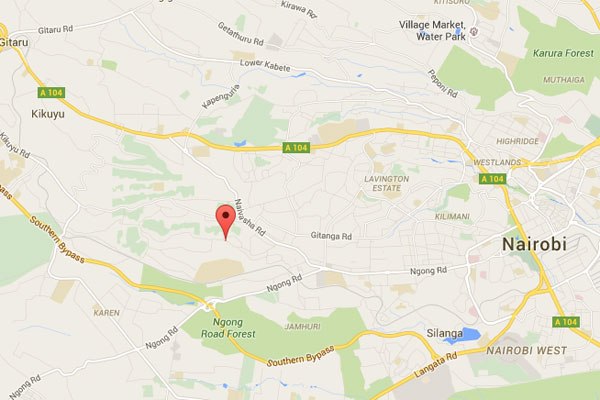
{Residents in Kabiria, Riruta in Nairobi have this Friday morning attacked and killed six crime suspects, most of them believed to be boda boda operators.}
Bodies are the scene, police say.
More to follow
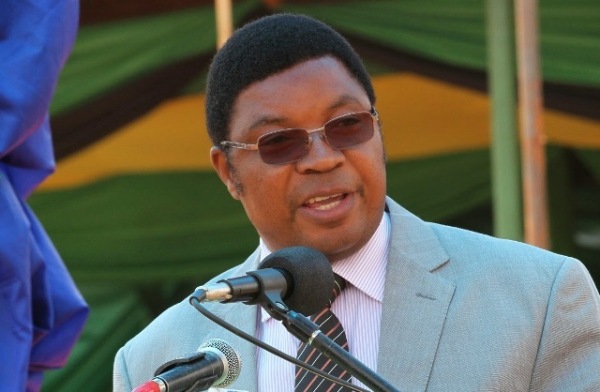
{He sounded the warning in Dar es Salaam during a seminar on ethics for ministers and deputy ministers, which was facilitated by the Ethics Secretariat in the President’s Office. “Public leaders and servants ought to adhere to ethics and laid down regulations, failure of which they will face the long arm of the law.}
They have to avoid conflicts of interests, selfishness and favouritism when serving the people,” Mr Majaliwa stressed. During the occasion, the Ethics Commissioner, Judge (retired) Salome Kaganda, noted with concern that several ministers and deputies had as well not signed the pledge of integrity certificates.
“The Public Leadership Code of Ethics Act of 1995 requires public leaders to declare their assets and liabilities to the Ethics Secretariat but a number of them have not fulfilled the condition as we speak.
I will present the names before you,” Judge Kaganda told the PM. The commissioner on the other hand hailed President John Magufuli for his purge on underperforming and unethical leaders; noting that moral decay in public service was becoming rampant.
“There are incidences where ministers went as far as ordering permanent secretaries in their ministries to allocate for them funds for personal use, which is a blatant breach of public leadership code of conduct,” she stated.
The retired judge disclosed further that some leaders were fond of providing false information on the declaration forms, forcing the secretariat to cross-check with various state organs to verify the information.
Even with such misconducts, Judge Kaganda said her secretariat “had its hands tied up” due to limited funds and shortage of manpower to enforce ethics in public leadership.
“During the past three years, we have not assessed declaration forms on assets and liabilities filled by pubic leaders due to lack of money. It is useless to have the declaration forms which are not evaluated to ascertain their genuineness.
“What is more; there are over 15,000 leaders who are supposed to be assessed and yet the secretariat has less than 200 workers.
However, if required cash was availed to us we could at least work on 400 leaders,” she explained. On his part, Mr Majaliwa explained that the seminar was not a retreat for ministers but rather a platform to train them on the do’s and don’ts for public leaders.
“The aim of training the ministers is to have in place solid base for public leadership to avoid unethical practices such as conflict of interests which has been cited as among leading vices in the public service,” Mr Majaliwa remarked.
The PM pointed to the fact that ethics in public leadership was a crucial pillar in the development of any nation as it ensured equal treatment of all the people.
Earlier, the Minister of State in the President’s Office (Public Service and Good Governance), Ms Angellah Kairuki, said such trainings will be extended to permanent secretaries and their deputies as well as other civil servants.
Ms Kairuki said her office will put in place proper systems to enforce ethics and curb corruption to achieve good governance.
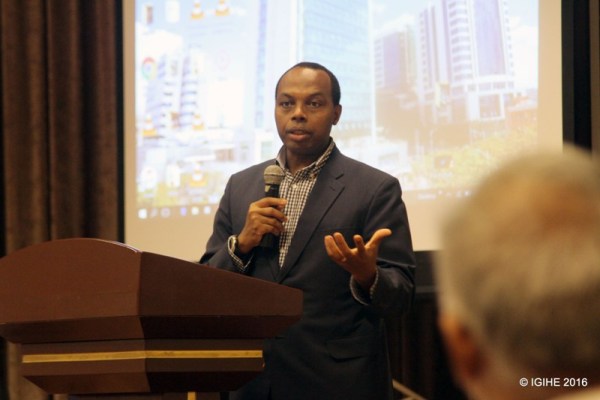
{Rwanda targets to maximize benefits of international events held in Rwanda which is pushing private investors to increase efforts in preparations of upcoming meetings including African Union Summit, Transform Africa, World Economic Forum among others expected to be held in Kigali this year.}
These efforts are embedded in the program of making a good use of opportunities as a land locked country, targeting to earn USD150 million USD per year from MICE (Meetings, Incentives, Conferences and Exhibitions).
In 2016 ,Rwanda expects to host World Economic Forum scheduled from 11th to 13th May, Forum for Agriculture Research in Africa (FARA) scheduled 13th to 19th June and the meeting of African Society of Blood Transfusion scheduled from 31st May to 4th June 2016 among others.
Such meetings and various activities will attract hard currencies from international participants.
Efforts have been put in the development of infrastructures like construction of hotels where it was confirmed that the building of Kigali Convention Center will have been completed in May, 2016 and expected to host the African Union Summit as the first big event.
In the past, international meetings have attracted much foreign exchange for the country. In 2013, Rwanda earned USD 49 million from hosting international meetings.
Rwanda targets to increase rooms of hotels from the current 8000 rooms to 13,800 rooms by 2017.
Rwanda Development Board says a tourist visiting Rwanda, on average, spends USD300 per day on accommodation, food and transport. By 2017 Rwanda could earn USD 4 million from 13, 800 hotel rooms if they were all to be fully occupied.
Francis Gatare, the CEO of RDB has requested private investors to keep improving hospitality infrastructures and quality of services.
“Participants of World Economic Forum must get good services. This will be achieved through everyone’s commitment to kindly receive visitors, availing quality products at markets, good maintenance of hotels and well organized transport system to the extent that they will come back and encourage others to come to Rwanda,” he said.
The president of Private Sector Federation, Benjamin Gasamagera said that all money brought in by visitors goes into the hands of private investors, so their commitment to quality services means a lot to the entire hospitality industry.
“We are going to make a good use of the remaining time collaborating with private investors for better performance,” he said.
{Burundi refugees accommodated in Mahama Refugee Camp have revealed tricks applied by Burundi government to tarnish images of host countries accommodating Burundi refugees including Rwanda.}
Various reports authored by international communities and the government of Burundi have been alleging Rwandan government to recruit Burundi refugees in rebel groups to overthrow President Nkurunziza Pierre.
Those who made accusation reports claim to have talked to Burundi refugees who confirmed that Rwanda trains them with military skills to overthrow Burundi administration.
However Rwandan government has declared accusations to be false saying such information is provided by refugees who came to Rwanda with expectations of getting relocated to America and elsewhere.
Burundi refugees say that their country lies behind allegations intending to tarnish Rwanda’s image to demonstrate how refugees pose military threats.
The representative of refugees in Mahama camp, Jean Bosco Kwibishatse, has told KFM that Burundi government kept disturbing refugees and host countries sending Imbonerakure (Burundi youth engaged in mass violence) in camps to create insecurity by providing false news.
“They continue to send people to disturb refuges as they do for people staying inside Burundi. It is apparent that Imbonerakure penetrate camps to falsify information intending to demonstrate to host countries that we are a threat,” he said.
Kwibishatse said that such individuals provide false news on Rwanda even though it is uneasy to identify them.
“The wrong doer has no stamp .Wrong doers cannot miss in a crowd of over 50,000 people. We know that false news is disseminated by such people hiding in camps,” he said.
On Monday, the Minister of Disaster Management and Refugees Affairs, Seraphine Mukantabana requested Burundi refugees to avoid those who want to tarnish Rwanda’s image.
The spokesperson of MIDIMAR, Frederic Ntawukuriryayo told IGIHE that what Burundi refugee say about Imbonerakure have no evidences since no one presents identifications of Imbonerakore coming in Rwanda as a refugees pass through the same process.
“We consider it as a rumor since they have no evidences. We recommend them to declare to security organs a suspect of security threat,”he said.
MIDIMAR confirms that some Burundians including those who were living in Kigali have returned to their country adding that they all left identifications to immigration and emigration offices and lost refugee status.

{Prof. Dr. Manfred Weibelt, a German Economist, says that based on Africa’s economic development, Rwanda is among African countries treading the right direction and a 21st century development model.}
In a research undertaken by Prof. Weibelt in Deutschland Institute Of Research (IfW), focusing on African economic development and poverty reduction especially for Rwanda, he demonstrated that fast economic development and poverty reduction is becoming a norm for Rwandans.
While presenting the outcomes of his research, Weibelt said that Rwanda’s economic growth is far higher compared to its structure.
“Rwanda is an exemplary country in economic growth. It is a landlocked country, with inadequate natural resources and a majority of the population practicing traditional. The rate of growth is surprising,” he said.
Between 2002-2012,the rate of Rwanda’ economic growth averaged 8%.
He also noted that poverty reduction in Rwanda has gained giant strides, which, between 2005/2006 to 2010/2011 there was a poverty reduction at a rate of 12%.
Statistics from the Ministry of Finance and economic planning indicate that Rwandan economy is mainly boosted by the construction sector, hotels and restaurants, transport, education and services sector, contributing about 27% in 2012 to the GDP.
Manfred said that Africa is progressing in general but expressed worries on investments founded on foreign aids, loans and grants.
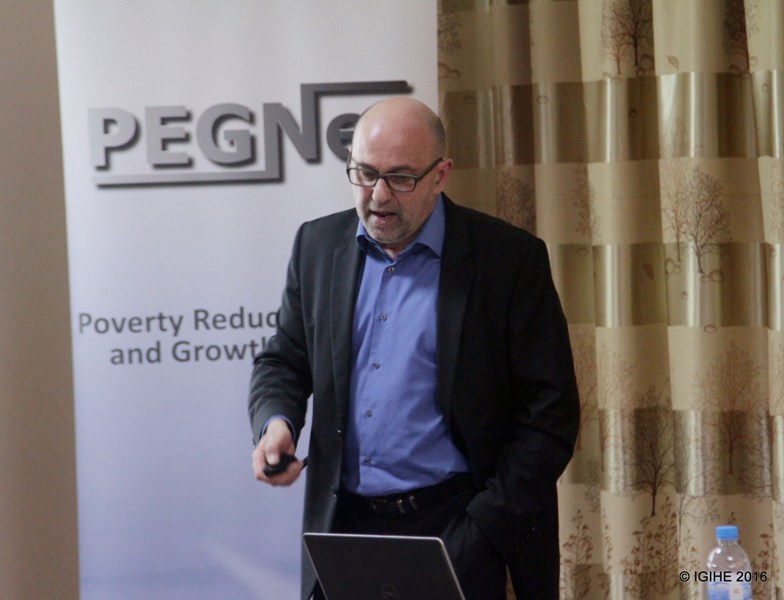
{The National Electoral Commission (NEC) has announced reforms of elections schedule after realizing how it can hamper community work and Saturday prayers.}
The executive secretary of NEC, Charles Munyaneza has announced that elections formerly scheduled for 27th February and 2nd March have been moved to 26th and 29th February, 2016.
In an interview with IGIHE, Charles Munyaneza said that elections have been rescheduled to avoid interfering with community work that takes place every last Saturday of the month.
“We have realized that organizing elections on Saturday would d hamper the monthly community work and present difficulties for people coming from prayers,” he said.
Munyaneza said that elections of in Kigali city were shifted back from 2nd March to 29th February, 2016.
Elections of the administrative committees for women representatives at national level, administrative committee of disabled people representatives and national administrative committee of youth from secondary and high schools and the national administrative committee of youth will be held on 4th March,2016.
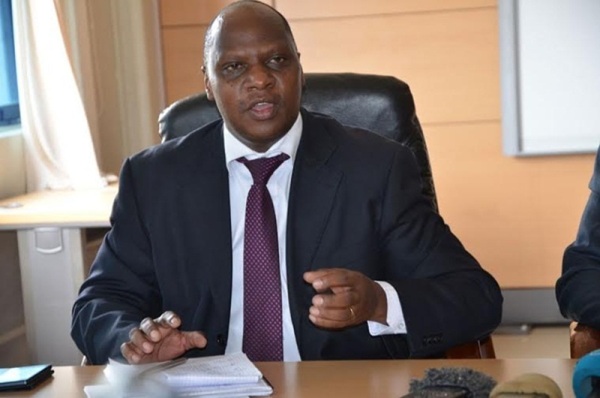
{Twenty-seven Rwanda National Police officers have returned home after successfully completing a one year peacekeeping mission in Ivory Coast and Central African Republic (CAR), where they were serving as Individual Police Officers (IPOs).}
The officers, who arrived home separately recently include 23 who were serving under the United Nations Operation in Ivory Coast (ONUCI) and four others from the United Nations Multidimensional Integrated Stabilisation Mission in the Central African Republic (MINUSCA).
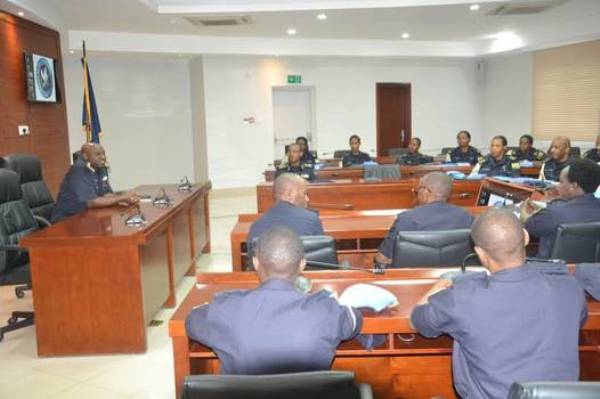
While debriefing the officers on February 24, the Inspector General of Police (IGP) Emmanuel K. Gasana, thanked them for their professional conduct and discipline exhibited during their mission span.
He challenged them to explore the acquired skills to advance the RNP vision, “people in Rwanda are safe, involved and reassured.”
“You acquired experience in different policing areas while you were on the international tour of duty; you should share the skills you acquired to enhance the RNP contemporary policing agenda. You should collectively explore international cooperation, share knowledge and experiences to ensure that you always make informed policing decision ,” said the IGP.
He also emphasized that discipline, professionalism and being result-oriented should define them in the new tasks they will take up soon.
Briefing them on the RNP policing programmes, he noted. “We have continuously achieved a lot in security and development by working with other countries, other security institutions and this has placed our country in better position of safety.
It is through His Excellency, President Paul Kagame’s vision,guidance and support that Rwanda continues to emerge as one of the major contributors in international peace keeping missions ,” he said.
He also took note of the fact that plans are underway to increase FPUs from five currently to seven to meet the UN demand that calls for our contribution to peace in the conflict zones world over.
Currently, Rwanda National Police deploys over 1000 peacekeepers operating in seven missions.
RNP started its peacekeeping operations in 2005; since then, Rwandan police officers have been credited for the outstanding performance and going beyond to introducing home-grown initiatives to support community development in areas of their operations including monthly community work, Umuganda, supporting the needy and renovating public infrastructures, among others.
{As criminal networks continue to devise means to implement their evil plans, the International Police Organization’s – Interpol – I-24/7 communication system has fundamentally changed the way the global law enforcement community works jointly to combat such sophisticated transnational crimes.}
The tool connects all law enforcement agencies from 190 Interpol member countries and allows investigators access Interpol’s critical criminal data to search and cross check data on suspected criminals or wanted persons, stolen and lost travel documents, stolen motor vehicles, fingerprints, DNA profiles, stolen administrative documents and stolen works of art.
According to ACP Tony Kuramba, the Commissioner for Interpol and Cooperation in Rwanda National Police (RNP), the system has highly paid off in Rwanda mainly due to the fact that it is supported by Rwanda’s advanced technologies rolled at all its border posts.
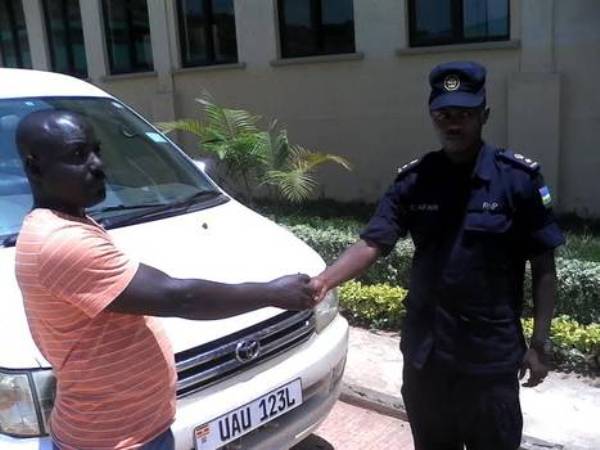
He was speaking on February 24 after RNP handed over a stolen Toyota Noha UAL 123L vehicle to Uganda Police, which was intercepted as Kagitumba border post recently as it crossed into Rwanda.
The handover was held at Kagitumba border.
The minivan was intercepted on February 2 after it was found on the Interpol database as stolen. However, after notifying Uganda Police, it was instead found out that the Ugandan authorities, who entered the vehicle in the system, had recovered it but were yet to update their database to remove it from the list of stolen vehicles.
“Rwanda National Police understands well the usefulness and effectiveness of the I-24/7 tool and that’s why we were so fast to install it at all border posts and even share the database with other institutions like Customs and Immigration,” ACP Kuramba said.
Customs have access to ‘Rwanda Single Window’ that helps them to identify if for example an imported vehicle was stolen while Immigration has access to ‘Travel March’ which allows them to identify if individuals entering or leaving the country are wanted in any country, if they are traveling on forged or revoked documents.
“This has helped to foil theft especially of vehicles that are stolen from other countries and try to use Rwanda as either a destination or transit to other countries,” ACP Kuramba said.
“This is an indication that we have strengthened border security through use of modern technologies; this has as well been realized through cooperation against transnational crimes which has gone beyond just stolen vehicles to also counter other cross-border crimes like drug traffickers,” he said.
Through the use of the international police communication tool, RNP has intercepted about 12 vehicles stolen in the last two years, majority stolen from Kenya and Uganda all which were returned to authorities or rightful owners in countries of origin.
Others had been stolen from the Netherlands , Japan, UK and Belgium.
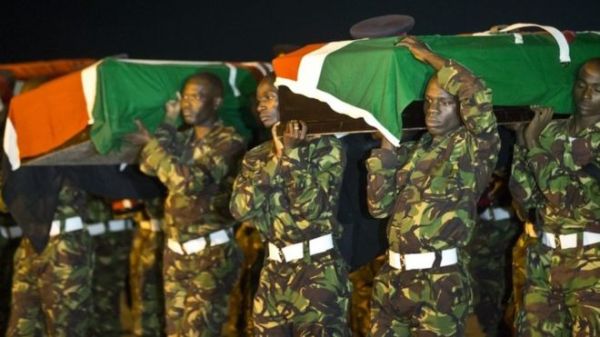
{At least 180 Kenyan troops were killed when al-Shabab attacked their base last month, Somalia’s President Hassan Sheikh Mohamud has said.}
Kenya has still not given casualty figures for the assault in the southern Somali base of el-Ade.
The Islamist militant group said it had killed about 100 Kenyan troops.
If it is confirmed that 180 troops were killed, it would be al-Shabab’s deadliest assault since it was formed nearly a decade ago.
President Mohamud gave the death toll of 180 in an interview with a Somali television station, while defending his attendance at a memorial for the soldiers in Kenya.
Some Somalis accused him on social media of showing greater concern for the killing of Kenyans than his own nationals.
Mr Mohamud said it was important to pay tribute to the troops killed in el-Ade, which is in Somalia’s south-western region of Gedo.
“When 180 or close to 200 soldiers who were sent to us are killed in one day in Somalia, it’s not easy,” he told Somali Cable TV.
“The soldiers have been sent to Somalia to help us get peace in our country, and their families are convinced that they died while on duty,” he added.
Kenya has only said that the bombs used in the attack were three times more powerful than those used by al-Qaeda in the 1998 US embassy attack in the capital, Nairobi, which left 224 people dead.
Kenya has about 4,000 troops in the 22,000-strong African Union force battling al-Shabab, which is part of al-Qaeda, in Somalia.