{New legislation mandates life imprisonment of “honour” killers – even if victim’s relatives forgive the murderers.}
Pakistan’s parliament has unanimously passed legislation against “honour killings” – mandating life imprisonment, 25 years in prison, for convicted murderers even if the victim’s relatives forgive them.
The legislation was approved on Thursday in a joint session of the lower and upper houses of parliament, three months after an outspoken social media celebrity, Qandeel Baloch, was strangled by her brother.
“This is a step in the right direction,” women’s activist and columnist Aisha Sarwari told AFP news agency. “We should take our little wins where we get them and proceed forward and not retreat.”
But rights activist Farzana Bari was more cautious, saying the bill still allowed a judge to decide whether a murder qualified as an “honour killing” or not.
Only about one-third of the 446 legislators attended the session, but debate was raucous.
Conservative Senator Hafiz Hamdullah said parliament should instead address elopements by women, claiming 17,000 had done so since 2014.
“Why don’t we see what are the reasons behind such killings? Why are girls eloping from their homes?” he said.
He told AP news agency later that the law was bringing Western-style independence for women.
“They are trying to impose Western culture over here. We will not allow [it],” he said. “We will impose the law that our holy Quran and Sunnah [tradition] say.”
Damage to ‘honour’
About 500 women are killed each year in Pakistan at the hands of family members over perceived damage to “honour”, which can involve eloping, fraternising with men, or any other infraction against conservative values relating to women.
In most cases, the victim is a woman and the killer is a relative who escapes punishment by seeking forgiveness for the crime from family members.
Prime Minister Nawaz Sharif issued a statement hailing the passage of the bill and vowed police and courts would implement it.
“We will make … sure to fully enforce this legislation across the country,” he said.
“Women are the most essential part of our society and I believe in their empowerment, protection and emancipation.”
Al Jazeera’s Kamal Hyder, reporting from Islamabad, said it’s important to wait and see how the law will be implemented at the investigation level.
“There has been strong legislation in the past, but people have found loopholes,” he said.
“It will be interesting to see how quickly this one is enforced – how serious the government really is in trying to curb this menace.”
The assembly also passed a bill boosting the punishment for some rape offences, mandating DNA testing, and making the rape of a minor or the disabled punishable by life imprisonment or death.
Rape conviction rates are close to zero percent, largely because of the law’s reliance on circumstantial evidence and a lack of forensic testing.
Rights groups and politicians have for years called for tougher laws to tackle perpetrators of violence against women in Pakistan.
“We hope that these new laws will help to generate a cultural shift in Pakistani society and that women will be able to live their lives in safety,” Yasmeen Hassan from Equality Now told Reuters news agency.
{Klaas Haytema sentenced to three months in jail after unplugging Buddhist centre loudspeaker because he wanted to sleep.}
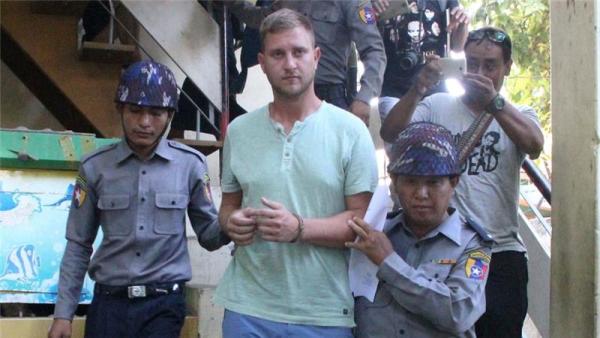
A Myanmar court has sentenced a Dutch tourist to three months in prison for interfering with a religious observance by unplugging an amplifier blasting a late-night Buddhist sermon near his hotel in Mandalay, the country’s cultural capital.
Klaas Haytema, 30, was also sentenced on Thursday to an additional six-month prison term for violating immigration rules requiring respect for the local culture, but has opted to pay the equivalent fine of $80, according to the Myanmar Times.
Haytema and his girlfriend embraced and wept as he left the courtroom after his sentence was announced, according to the Associated Press news agency.
Haytema was arrested in late September after a crowd gathered around his hotel in protest when the loudspeakers at a nearby religious hall were turned off.
The man who was reciting the sermon pressed charges against Haytema.
Insulting religion in the predominantly Buddhist country could have landed Haytema up to two years in prison.
At the hearing of his case Haytema was quoted as telling the judge, “I did not do it with intention. I didn’t know it was a religious building. So, I am not guilty.”
According to the Myanmar Times report, three witnesses also told the judge that it was Haytema’s first trip to Asia, and that he was unaware of the rules and Buddhist practices.
{{‘Ignorance of law not an excuse’}}
Earlier, Haytema had said that he was “too tired” and “wanted to sleep desperately” on the night of the incident.
When he went outside the hotel to check the source of the noise, Haytema said that he saw children and had assumed that they were playing with the loudspeaker.
“I did not notice that it was a religious building. I am really sorry and I really apologise.”
The report also said that Haytema entered the Buddhist centre without first removing his shoes.
In response, Prosecutor U Sithu Swe Tun said that “ignorance of the law is no excuse” for Haytema.
However, another lawyer interviewed by The New York Times said that it was the Buddhist centre that violated the law, which prohibits the playing of loudspeaker between 9pm and 6am.
Dutch Broadcast Foundation, also known as NOS in Dutch, reported that Haytema was “disappointed at the sentence and hoped to get off with a fine.
“He has gone back to his cell and the conditions are fairly reasonable if you think about their reputation,” NOS correspondent Michel Maas was quoted as saying.
“He shares a cell with other prisoners, has a mattress and mosquito net and gets good food and enough to drink.”
In late 2014, a New Zealand man and two locals were charged and later sentenced to two years in prison after posting on social media an image of the Buddha wearing headphones to promote a Western bar. Phillip Blackwood was released this year after he was granted amnesty.
{Tough-talking leader says the country won’t beg for foreign assistance after criticism over his deadly drug campaign.}
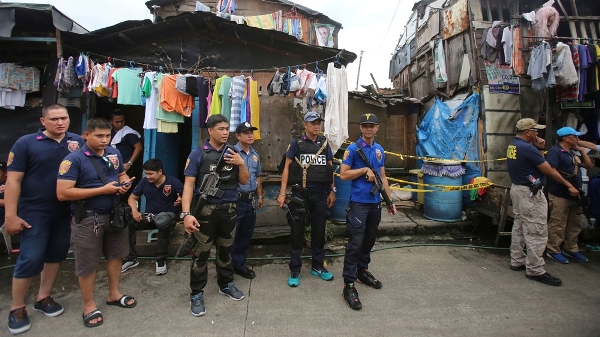
President Rodrigo Duterte has told the United States and the European Union to “go ahead” and withdraw financial aid to the Philippines if they’re unhappy with his bloody anti-drug war.
“Go away, bring your money to somewhere else. We will survive as a nation,” Duterte said in a speech to police officers on Thursday in the southern city of Butuan.
“How do you look at us, mendicants? We will survive. Even if we’ll go through hardships, we will survive. But we will never, never compromise our dignity.
“If you think it is high time for you guys to withdraw your assistance, go ahead, we will not beg for it,” Duterte said, adding he doesn’t expect the US, EU, and human rights group to understand his policy.
More than 3,680 people have been killed by police and unidentified attackers in the Philippines since June 30, when Duterte took office.
Last week, two US senators raised alarms about the mounting death toll linked to the anti-drug war, and called for a review of American foreign aid to the Philippines.
Senator Ben Cardin said what Duterte is advocating and endorsing “amounts to mass murder”.
Senator Patrick Leahy said: “No amount of killing will result in reforms that improve the judiciary, end corruption and impunity in law enforcement, or rehabilitate those caught in the vicious cycle of addiction.”
According to US data, the Philippines is expected to receive a total of $188m in 2017. In 2015, the country received $236m in US aid.
Meanwhile, the annual EU assistance to the Philippines is estimated at $65m.
In an interview with Al Jazeera, Phelim Kine of Human Rights Watch warned that foreign aid to the Philippines could go into funding “mass unlawful violence” by authorities.
But in defending his police on Thursday, Duterte said foreign governments “will never understand the pain that we are suffering.
“We have a problem here trying to preserve our society,” the president, nicknamed “The Punisher”, said.
{{‘America has failed us’}}
Duterte’s statements follow a Facebook post by his foreign minister, Perfecto Yasay, who wrote that the president wants to liberate the Philippines from a “shackling dependency” on the US.
In the post titled AMERICA HAS FAILED US, Yasay said Duterte was “compelled to realign” Philippine foreign policy and not submit to US demands and interests.
“Breaking away from the shackling dependency of the Philippines to effectively address both internal and external security threats has become imperative in putting an end to our nation’s subservience to United States interests,” Yasay wrote.
{Prime Minister says death toll expected to rise after unknown assailants attack camp for refugees who fled Mali unrest.}
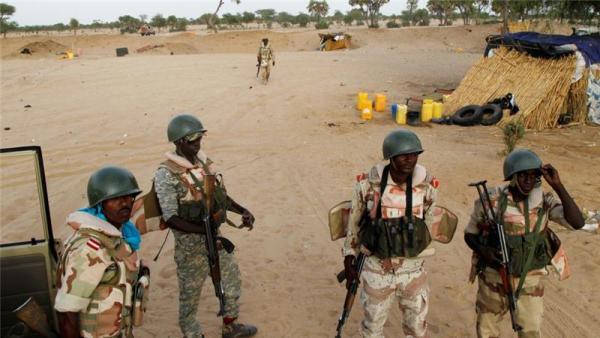
At least 22 soldiers have been killed in Niger after unknown assailants attacked security forces guarding a camp for Malian refugees, according to Prime Minister Brigi Rafini.
The attack on Thursday targeted a camp in the village of Tassalit in Niger’s Tahoua region, around 525km northeast of the capital, Niamey.
“We received information of an attack on the camp in Tassalit. For the moment we are told there are 22 dead, but that is not a total death toll,” Rafini said in comments broadcast on state-run television TeleSahel.
“The death toll could increase.”
The prime minister gave no further information concerning the identities of the attackers, or whether any civilians had been killed or wounded.
The camp’s residents are Malians who fled to neighbouring Niger after armed groups, some with links to al-Qaeda, seized Mali’s desert north in 2012.
A French-led military intervention has largely driven back the fighters, but violent attacks have continued across the region’s Sahel band.
Niger’s army is currently battling Boko Haram fighters who launch raids across its southern border from Nigeria while seeking to prevent an overflow of attacks from Mali.
{When Ethan Suglo was born with his organs outside his abdomen in Ghana, his parents worried he may never live a full, happy life. But thanks to the kindness of strangers he has had life-saving surgery in Oxford and has returned to Africa to be reunited with his family.}
As the sun set over Kotoka International Airport in the Ghanaian capital of Accra, a minivan pulled up filled with laughter.
Ethan’s welcoming committee had arrived – grandmothers, brothers and friends who drove two-and-a-half hours from their village to bring him home.
It had been three months since they last saw him, with his mother Bless telling me how “very, very happy” she was, because it was the longest the family had ever been apart.
“They left us and we prayed for them but now they are coming back,” she said, relieved.
Tearful hugs followed father Charles and Ethan’s appearance at the arrivals gate, among cries of “He looks good!” and “His English is really good!”
Mr Suglo tells me: “Travelling for so long and coming back is good, most especially seeing my wife and the other children.
“We’ve been through a lot. It’s going to be a new beginning in a positive direction.”
Ethan has exomphalos, which can be fatal but is routinely treated in the UK.
{{‘Been privileged’}}
Last year, Mr Suglo met doctors David and Jacquie Williams in Ghana and asked them to examine his son.
In March, the couple, from Stretton-on-Fosse, Warwickshire, started raising the money needed for air fares, surgery and nursing care, through the likes of bake sales and marathons, so he could have an operation at the John Radcliffe Hospital in Oxford.
The Willing and Abel charity, which helps children in developing countries receive treatment, also pledged £10,000 to help.
“For the past three months we’ve been privileged,” Mr Suglo says.
“We can thank God and the people of the UK, the surgical team at John Radcliffe Hospital, just everybody who contributed to saving Ethan’s life. It’s going to give us peace.”
We drove back to their home village of Akatsi that night in the dark, so it was hard to get a sense of the place.
But, as the sun rose I was struck by how green the surroundings were, with so much farming in the Volta region and so many lakes for fishing.
Along the roadside stalls of people sold phone credit, food, handkerchiefs, and even coffins.
At a party for Ethan, his compound was full of friends and family who came to celebrate his homecoming and successful operation.
It has given me an insight into what it means to be different and to have a disability in Ghana.
I met one teenage girl who was being driven out of her home because of her severe facial tumours, with her family being shunned.
{{‘Achieve dreams’}}
Willing and Abel says it’s about educating the elders, but the generosity of a Cotswold community has meant Ethan – a young boy thousands of miles away – has been given a chance of a new life.
Mr Suglo says the operation was “to save his life but to also give him a better life”, one “starting from scratch”.
“It’s to achieve his dreams,” he said. “He tells us he wants to be Doc. And that’s what we call David Williams – he’s Doc.
“I hope to see Ethan one day with his stethoscope diagnosing his father. We bought a toy stethoscope for him so he remembers.”
With £70,000 raised and counting, the charity intends to help other children in countries like Ghana who desperately need operations.
Exomphalos occurs when a child’s abdomen does not develop fully in the womb.
During pregnancy, the intestine develops inside the umbilical cord and then usually moves inside the abdomen after about 10 weeks.
In Exomphalos the intestines and sometimes other organs, such as the liver, remain inside the umbilical cord but outside the abdomen.
There is no known cause and about half of all babies with the condition will have problems affecting other organs, particularly the heart, lungs and kidneys.
Surgery is essential and takes place in either one go or over several weeks, depending on its severity.
Shortly after Congo President Joseph Kabila came to power in 2001, the U.S. embassy in Kinshasa sent cables to Washington exuding quiet confidence in the 29-year-old who had replaced his recently assassinated father, Laurent.
In one, released later by Wikileaks, the ambassador described an articulate but shy man, seemingly weighed down by the burdens of leading Democratic Republic of Congo. Days later, Kabila spoke on television for the first time.
“Kabila’s address is encouraging, reflecting a shift toward the reform and moderate elements in the Congolese power structure,” the ambassador wrote.
Fifteen years later, with an election due but Kabila showing little sign of being ready to relinquish power, an incident at Kinshasa’s airport highlighted how much has changed.
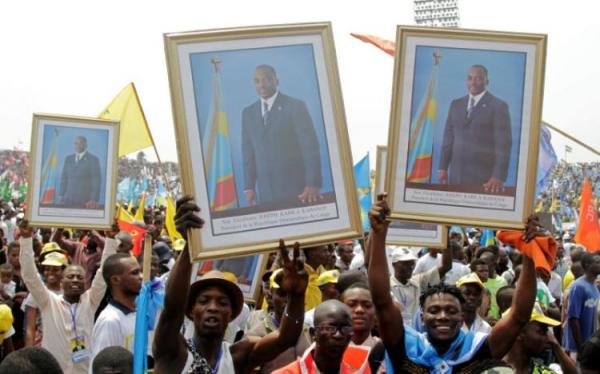
Tom Perriello, the U.S. envoy to Africa’s Great Lakes region, was accosted on the tarmac by several angry, finger-wagging Kabila supporters, including a member of parliament. One of the men shouted, “Be careful of the Congolese. We no longer need you!”
For years one of Kabila’s firmest backers, Washington is now driving international efforts to prevent any bid to extend his time in power when his second term runs out in December.
Last month, the U.S. government imposed further sanctions on Congolese security officials after dozens of people protesting against election delays were killed in Kinshasa.
“At this point it, is clear the government has not been willing to move towards an open or participatory democratic election,” Roger Meece, a former U.S. ambassador to Congo who also ran the U.N. peacekeeping mission there, told Reuters.
“Private discussions are not working so you get to the point where public comment is the only way forward. The tools are pretty limited but we should be doing more with sanctions and specific actions.”
U.S. determination to see Kabila stand aside is rooted in a constitutional ban on him seeking another term. But the unprecedented intensity of the pressure stems from changes in both the United States and Congo.
For years, many in Washington saw Kabila as Congo’s best bet.
His 2006 election win against ex-rebel Jean-Pierre Bemba was credible, despite the street battles that followed. A 2011 election was widely criticized but Washington held its nose and recognized Kabila as winner over Etienne Tshisekedi, a veteran opposition leader whose fervent popularity at home is often matched by deep distrust among Kinshasa-based diplomats.
“American policymakers appear to have concluded that accepting Kabila, although ignoring democracy promotion, was the wiser course,” Anthony Gambino, a former head of USAID in Congo, wrote in 2012 for African Futures, a digital forum.
“It is not at all clear that accepting the fraudulent outcome leads to longer term stability.”
“OIL ON THE FIRE”
Coming from the Swahili-speaking east, Kabila has always been seen as an outsider in mainly Lingala-speaking Kinshasa, surrounded by political and family groups competing for access and influence.
Augustin Katumba Mwanke, one of his closest advisors, juggled these networks for years. But after he died in a plane crash in 2012, advisors multiplied and diplomats say it has become harder to decipher Kabila’s plans.
Many of those in Kabila’s close circle now appear mainly preoccupied with holding on to power, rather than ruling in a coherent way, some diplomats say.
As a result, issues have often been handled clumsily. For example, in 2015, security forces broke up a press conference organized by a small band of pro-democracy activists and partly sponsored by the U.S. government. A U.S. diplomat was caught in the swoop, angering Washington.
Accusations of U.S. interference have become increasingly common from the Kabila camp.
“We don’t need people throwing oil on the fire to try to blow up Congo,” Jean Thierry Monsenepwo, head of a pro-Kabila youth organization and one of Perriello’s airport critics, said to the cameras. “That is why we told this man that he is not welcome in this country.”
Kabila’s drift toward authoritarianism has also splintered his ruling alliance, the most significant loss being Moise Katumbi, the millionaire former governor of the mining province Katanga. In him, the opposition has someone with deep pockets and a favorable reputation in Washington.
{{REGIONAL SILENCE}}
The tough U.S. line is also an attempt to arrest a broader trend of regional leaders clinging power, after heads of state in Republic of Congo, and Burundi tweaked or sidestepped laws to extend their mandates.
Crucially, Congo has caught the attention of a number of senior U.S. officials, many of whom are becoming increasingly open about their frustrations over Kabila.
Senators of both major U.S. political parties have worked together on sanctions legislation. The creation of a special envoy post has seen administration officials with high level support jet in and take a more robust approach than when they relied solely on resident diplomats.
The U.S. Department of Justice also announced results of a long investigation that exposed how a U.S. hedge fund funneled $100 million in bribes to top Congolese officials in return for access to mining concessions.
In the case, the first U.S. foreign bribery case against a hedge fund, a subsidiary of Och-Ziff Capital Management Group pleaded guilty in federal court in Brooklyn last week to participating in a scheme to bribe Congolese officials. Och-Ziff will pay $412 million to resolve U.S. probes into its actions there and in other African countries.
With commodities prices low, U.S. businesses are less interested in Congo than they have been in the past. Phoenix-based Freeport-McMoRan Inc agreed earlier this year to sell its stake in Congo’s Tenke Fungurume copper and cobalt mine, part of efforts to cut its debt load. That means there are no longer any major U.S. economic interests in the country.
But Washington provides more than $400 million in aid every year to Congo on top of $300 million for the U.N. peacekeeping mission, bringing it clout. U.S. diplomacy has been active in the region, especially cracking down on Rwanda for backing rebels in eastern Congo.
For now, the U.S. position toward Kabila is far more hard-line than Western and African counterparts. Europe has ratcheted up rhetoric against Kabila but not yet found a common position on sanctions.
Jason Stearns, a Congo expert, said there was a reluctance in Europe to follow such an aggressive approach but the mechanics of pushing sanctions through the bloc were also a factor in EU foot-dragging.
In previous crises, Kabila has also been able to rely on the support of regional African powers such as Angola and South Africa for diplomatic and military support. So far, leaders have stressed the need for calm without stating a clear position.
Stearns questioned how much regional countries will appreciate Washington throwing its weight about on their patch. Meanwhile, emboldened by U.S. policy, Congo’s opposition is threatening further protests unless Kabila stands aside.
“People are growing more worried and lowering their expectations for what might be possible in terms of an orderly change of government there,” a U.S. Congressional staffer told Reuters, asking not to be identified. “In Congo, we are trying to avert a worst-case scenario.”
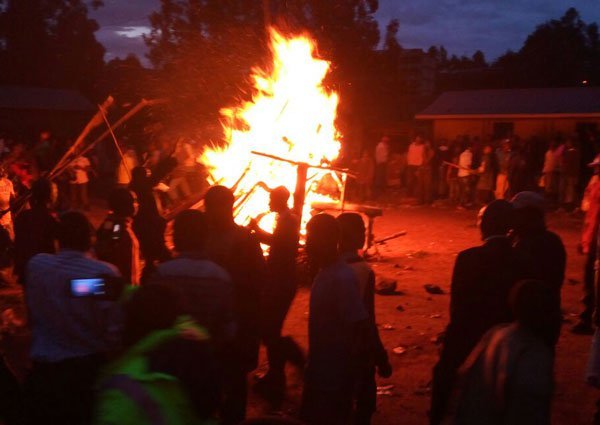
{Two women were shot dead by police in Daraja Mbili market, Kisii County, in evening chaos after boda bodas blocked Kisii-Kisumu highway.}
According to Dennis Ogero, an eyewitness, police officers driving along the highway stopped to disperse boda boda operators parked alongside the road.
A fight between the police and the operators broke out leading to the women getting shot.
Edna Osoro, 27, was selling tomatoes when she was struck and killed.
The officers had a hard time trying to retrieve the body.
Her death, along with another woman yet to be identified, sparked off chaotic scenes as stone throwing protesters engaged police in running battles.
Kisii Teaching and Referral Hospital (KTRH) chief executive Enoch Ondari said the woman died on arrival at the facility.
Edna’s father, Mr John Osoro, was inconsolable as he wept over the death of his daughter.
“I have just seen the worst day of my life. How could my daughter die in such an unnecessary manner?” He said.
Police finally managed to retrieve Edna’s body at 9:30 p.m. They also partially removed the fiery barricades along the highway before taking the body to the KTRH morgue.
{The Ministry of Industies, Trade and Investment has established a special desk where investors and businesspeople have direct communication in the quest to explore investment opportunities.}
Industry, Trade and Investment Minister Charles Mwijage revealed this yesterday at Mwandege area during an official inauguration of the new Bakhresa Food Products Limited, a new company.
“I am a receptionist for all investors and businesspeople, therefore investors should not hesitate to come to my office,’’ he told the gathering led by President John Magufuli. According to the minister, as per June 2016, 64 business licences were issued by his ministry.
Mwijage was optimistic that in implementation of an industrial economy agenda, more farmers will produce more and bring to the country an industrial revolution. He added that already there is an investor who is set to establish the tiles producing industry that is expected to produce high quality tiles in the East and Central Africa, adding that the completion of that industry will ease the burden of importing tiles from outside the country.
On his part, Coast Regional Commissioner Eng Evarist Ndikilo said he intends to make his region an industrial zone as it had a large portion of land compared to other regions. He said his region had a greater advantage as it was just few kilometres from the commercial centre of Dar es Salaam that has a population of more than four million.
In his strategies he said every District Council shall allocate special plots for industries insisting that all districts had already started implementation of the directive. According to him, Kibaya District had allocated 3,366, Mafia 4,440, Mkuranga more than 7,000, Rufiji 25,000 and Kisarawe 4,500 hectares respectively.
Eng Ndikilo added that his region had 88 small and large industries including the biggest industry that shall be producing the best tiles in East and Central Africa.
According to Mkuranga Member of Parliament Abdallah Ulega, 53 industries are expected to be operational in his constituency. “Citizens are well prepared to explore opportunities in the industries because of the gas pipeline from Mtwara to Dar es Salaam,’’ he said. On his part, Dr Magufuli reiterated his quest for transforming Tanzania into an industrial economy, calling for more investors in the country.
Dr Magufuli said in Mkuranga District, Coast Region that his government wants the industrial sector to contribute 15 percent of the country’s Gross Domestic Products (GDP) as well as employing more than 40 percent of the country’s population. “As more people secure jobs the standard of lives of our people continue improving,’’ he said.
The president visited the two industries and witnessed the production process at the US Dollars 120 million (240bn/-) project where he was briefed how the industries run their operations.
The Head of State thanked the country’s tycoon Said Salim Bakhresa for putting up the two industries in the new company saying he was among the businesspeople he wants in transforming the country into an industrial economy.
“I need businesspeople like you who pay tax, create employment opportunities and I hate those who evade tax,’’ he said adding: “Since I was elected president of this country, this is the first industry I am launching… I need more industries and I will be ready to officiate official launching even if invited at night,’’ he added.
According to him, Tanzania was among the African countries with fast growing economy saying it was the second in Africa after Côte d’Ivoire.
{Street children are accusing their parents of making their life hard to stay at home citing corporal punishments and endless harassment and torture as some of the reasons they have decided to abandon their parents to hustle on streets.}
On October 6, Rwanda National Police (RNP) received at least 12 street children including girls, who were mobilized and convinced to abandon the street life.
This was after one of the girls aged nine years, a day before, was approached by the director of Political and Civic Education in RNP, Chief Supt. Rose Muhisoni, in the city centre, sensitized and counseled her to get off the street.
The girl then volunteered and mobilized eleven others, who were picked and taken to Gitagara rehabilitation centre in Bugesera District.
The children, who spoke to the media at the RNP General Headquarters in Kacyiru, before being transported to Gitagara, expressed their disappointment to their parents, whom they say mistreated them while others were fade up with domestic conflicts between their parents.
“My mother would leave me at home alone and she would come back drunk late in the night, beats me for nothing using any object she came across,” Uwamariya (not real names), one of the children aged 9, who hails from Gikondo in Kicukiro district, said.
She recalls one night when her mother came home and hit her with a mingling stick which affected one of her arms. She can hardly use the affected arm to lift anything.
“I was in primary two and performing well in school. I have been on the street for almost a year but life there is not easy; you have to bear days and nights without anything to eat; sometimes you are beaten or sexually abused at night by people you even don’t know. I want to go back to school and I hope this is my turning point,” Uwamariya says.
Uwamariya’s ordeal is shared with Thiery, 14, who has been on the street for more than two years.
To Thiery, together with her young brother, they decided to leave their parents in Gicumbi District after their father subjected them, together with their mother, to beating every night accusing them of either cooking little food or eating and leaving him little.
“He wasn’t contributing anything to the family and yet the food our mother could afford to work hard to get was little for his way of eating, and we could all be answerable when he returned home late at night and drunk,” Thiery, the eldest in the family of seven, said.
The mother also separated from their father.
He also accuses their mother of not being stable to look after them noting that since she left their father, she has been remarried three times.
Almost all the children share the same story.
According to Chief Supt. Muhisoni, getting children off the streets is in line with the implementation of the national policy, which was also discussed early this week during the RNP senior commanders’ meeting, which was also attended and addressed by the Minister of Gender and Family Promotion on the protection of child rights.
“This is an exercise we conduct as police in partnership with other line ministries including the Ministry of Gender and Family Promotion,” she said.
She emphasized that most of the children that have been taken off streets blame their parents for their fate.
“Some parents have forgotten or care less about their responsibilities; these children are innocent, they don’t deserve to be on streets but life at home where they face various forms of torture that arise out of their parents’ domestic conflicts, drives them out of their homes,” she noted.
“Abandoning children or subjecting them to any form of torture is a crime. When you decide to give birth, you have accepted all the responsibilities as a mother or father. You have to provide basic necessities like shelter, food, education.”
Child abandonment or neglect, under article 231 of the penal code, is punishable with an imprisonment of up to five years.
CSP Muhisoni appealed to the general public and grassroots leaders in particular to work together to protect and promote the rights of children and identify families that could be facing domestic conflicts to address them before they escalate or turn violent.
Rwanda National Police is currently engaged in awareness campaigns against domestic and gender based violence, and child abuse, through which it also identifies, reconciles and reunites disputed couples.
The establishment of Isange One Stop Centre, which has since been scaled up to 28 other district hospitals across the country, has also been vital in offering free medical, psycho-socio and legal services to victims of GBV and child abuse.
Chief Supt. Muhisoni also appealed to the public to utilize the available police communication channels to report abuses in their localities.
The toll-free lines include 116 for child abuse, 3512 for GBV, 3029 for Isange One Stop Centre and 112 for emergency.
{The Eastern Region Police Commander (RPC), Assistant Commissioner of Police (ACP) Emmanuel Karasi has appealed to owners and heads of public transport companies, motorcycle and bicycle cooperatives to review the behaviors and conduct of their drivers while on roads, respect traffic rules and regulations to prevent fatal accidents that arise out of their reckless acts.}
The call was made during a meeting held in Rwamagana District on October 5 and attracted about 400 transporters, commercial motorcyclists and cyclists.
It followed a number of accidents in the Eastern Province, most of which were attributed to recklessness and breaching of road safety standards.
“Lives of passengers and other people using or living near the road should be valued by avoiding speeding, risky maneuvers and overtaking in corners,” the RPC said.
“This requires mindset change , close follow up of the conduct of drivers and motorcyclists, and taking internal appropriate action against defiant members,” ACP Karasi added.
“You all know the distance from Kigali to Rwamagana, Kayonza, Nyagatare or Rusumo; some of the drivers race against time and you find that a distance that was supposed to be covered in one hour took the driver only 30 minutes… it’s by luck that this person didn’t make an accidents, we cannot accept this and as managers, you shouldn’t keep up with such behaviors either,” he noted.
Transporters were specifically reminded to install speed governors in their vehicles to avoid likely penalties.
He also hinted on the hygiene of motorcyclists and cyclists and warned against refusal to stop, when required or instructed by traffic officers.
He further reminded that it’s compulsory for a driver or motorcyclist to move with all the required traffic related documents and should be presented at anytime is required by concerned people.