{As part of the Rwanda National Police (RNP) outreach programmes to prevent accidents and further improve road security, Police in Musanze District conducted a road safety awareness campaign on April 19, urging commercial motorcyclists and cyclists to abide by traffic rules.}
In a meeting held in Busogo Sector, the sector Executive Secretary Edward Twagirimana reminded close to 300 motorcyclists and cyclists to always put their lives forward and that of others, by respecting roadside signs.
“We cannot let accidents be part of our daily lives. That is why we consider awareness on road safety as significant and a continuous process,” he said.
He urged them to forge a close partnership and report any criminal act to the police.
The meeting was also attended by the District Community Liaison Officer (DCLO) Inspector of Police (IP) Viateur Ntiyamira and the in-charge traffic, Assistant Inspector of Police (AIP) Richard M Rafiki.
The DCLO tutored motorcyclists and cyclists on road safety signs and urged to respect zebra crossing, pedestrian pathways, avoid speeding and dangerous maneuvers.
Speaking about Zebra Crossings, IP Ntiyamira reminded them that a zebra crossing typically gives priority rights of way to pedestrians.
He added that road safety means each and everyone having knowledge on safe usage of the road and the meaning of signposts.
IP Ntiyamira reminded them that pavements were constructed entirely for pedestrians and that riding on them contravenes road safety standards.
“As we aspire for a sustainable and peaceful country, let every road user promote self-discipline as their duty to the nation,” he added.
“When you are using the road, remember there are other people also using it. Bad maneuvers and speeding leave your lives and that of other road users in danger,” he said.
The majority of the accidents involving motorcyclists and cyclist are due to speeding, and recklessness.
{A High Court in Rwanda on Thursday sentenced a man to life in prison for leading and coordinating attacks on Tutsis during the 1994 genocide against Tutsi.}
In the genocide, over one million innocent Tutsis were killed in just 100 days.
Bernard Munyagishari, who headed a government-allied militia known as the Interahamwe in Rwanda’s west, was convicted of crimes of genocide and crimes against humanity.
Lawyers for Munyagishari said they would appeal.
Timothée Kanyegeri, one of the three judges who convicted him, said Munyagishari had trained the militia in how to distinguish the Hutu from Tutsis.
He also “told them that to kill as (for a) snake, you have to hit hard the head, otherwise it will sneak away”, the judge said.
Kanyegeri said Munyagishari had transported members of the militia in buses as they went to kill the Tutsis in Rwanda’s former prefecture of Gisenyi and had personally helped to distribute guns, machetes, axes and clubs used in the killings.
Munyagishari was arrested in neighboring Democratic Republic of Congo in 2011. His case was transferred to Rwanda in 2013 from Arusha, Tanzania, where the now-closed International Criminal Tribunal for Rwanda was based.
Munyagishari is being held in Kigali’s central prison and was absent during Thursday’s sentencing. (Reuters/NAN)
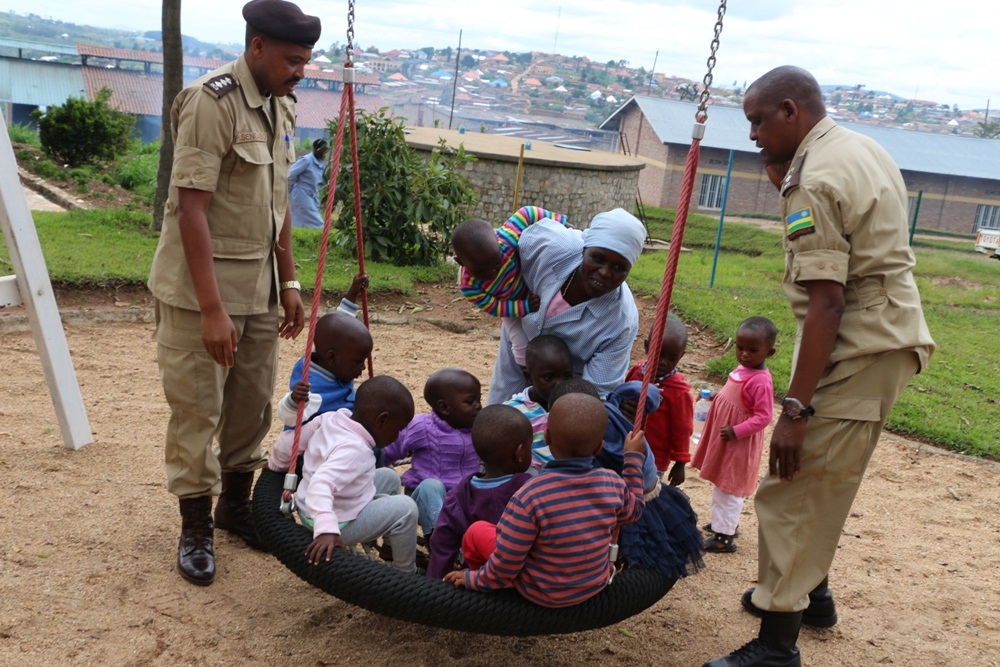
The fact that the children are living with their parents in prison does not turn them into prisoners but they stay there just because a child aged below three years has rights to live with their mother as long the conditions allow.
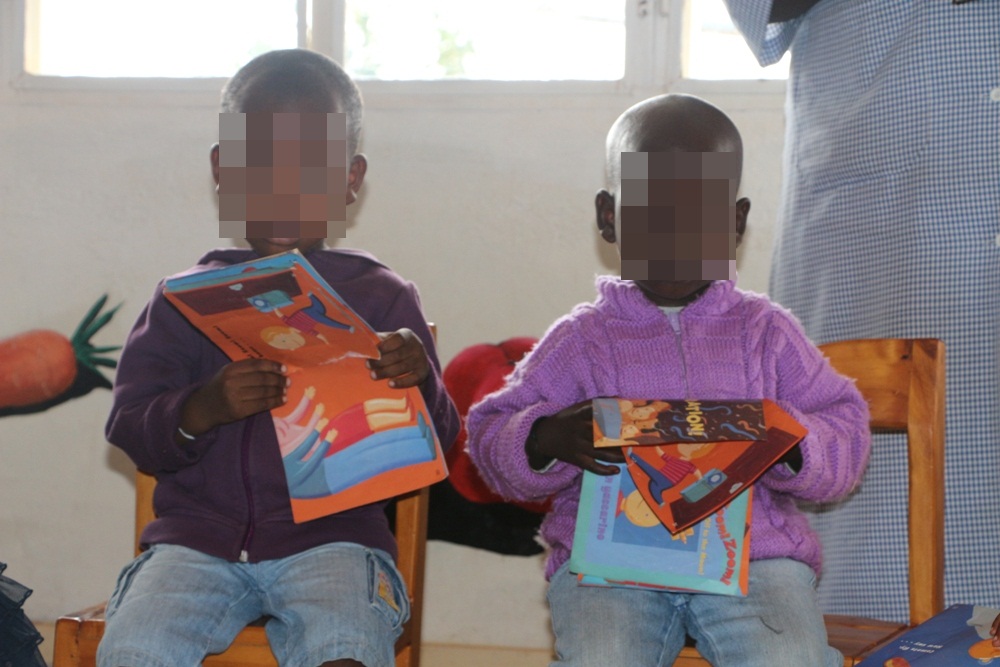
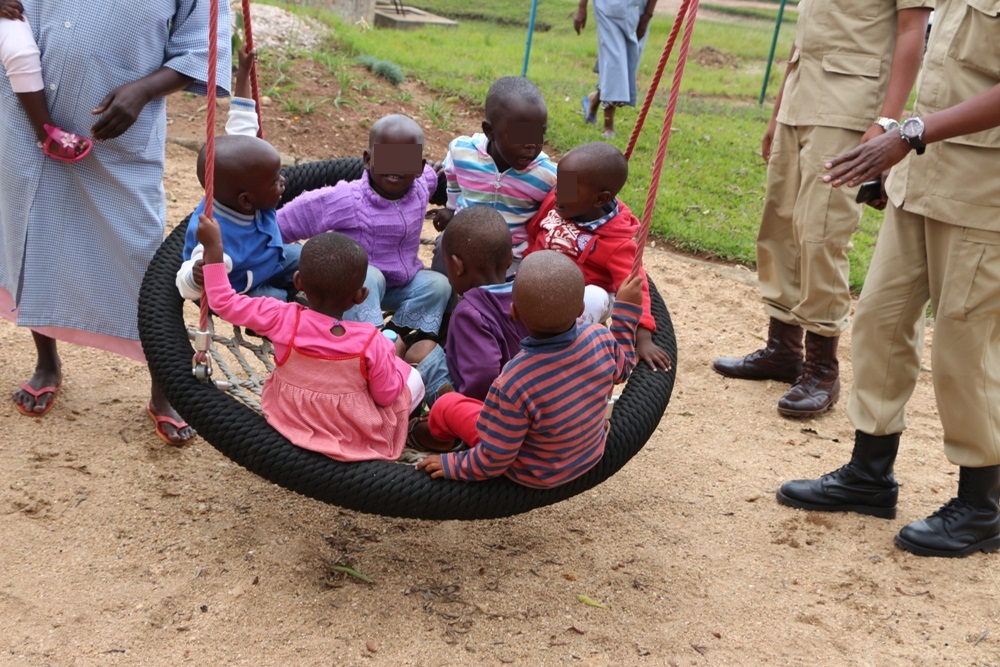
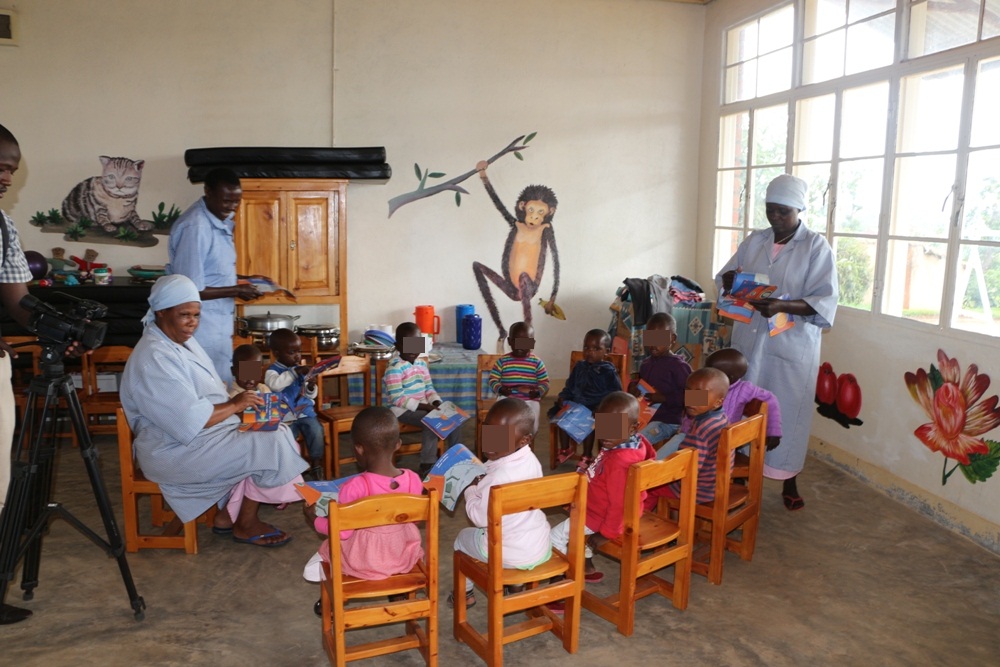
Since 2011, children who accompanied their parents and those born in Muhanga Prison have acquired childcare centre from which they are raised in normal conditions and prepared to be reintegrated into families having good health and manners at the same level as children out there in the community.
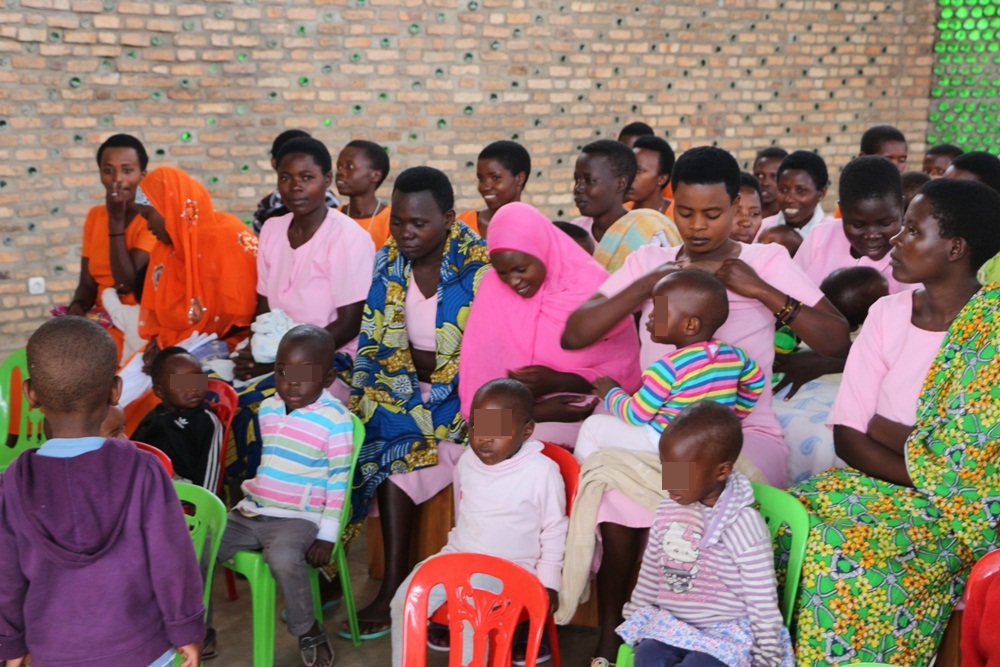
With the help of Rwanda Correctional Services (RCS), IGIHE’s Emmanuel Kanamugire was able to enter the Muhanga Prison where he found 52 children belonging to female inmates. The children are enjoying their legal rights of staying with their mothers
Children at three years and below are taken to the childcare centre every morning, handed to their caregivers who do their cleanliness, give them food and drinks and teach them some basic life skills that are also offered at nursery schools in the country.
Ms. Eugenie Musayidire who, in partnership with different sponsors, opened the childcare centre in Muhanga Prison, and currently monitoring the children’s life on a daily basis, says that she decided to help the inmates’ children acquire the same care as what other children are acquiring in their families.
“Children living in their families are cared for on a daily basis as usual but these ones living with their mothers in prison would not have caregivers without this initiative. We are caring for their lives. We pick them in the morning and spend daytime with them, teaching them good manners. We provide them with meals, teachers, playthings and more. After taking their lunch, they take a nap, serve them with milk or porridge when they wake up and we take them back to their mothers in the evening,” she says.
Despite the care rendered to these children, they still face challenges that include lack of life skills outside prisons like the language used in the society because they have no interactions with people outside the prison. For instance, it is hard to get these children into a car because cars are strange to them and they also confuse cows’ colours with clothes’ whereby some say that a cow is putting on a dress.
As a response to this problem of lacking exposure to society’s life, RCS has committed to taking these children for regular tours around the country for them to understand the life outside prisons.
RCS’s Spokesperson Mr. Hillary Sengabo, says “We have set up adequate conditions for those children’s proper development. They spend daytime outside the prison and go back to sleep in their mothers’ chest at night. We take them outside of prisons to learn about the conditions there and we are doing our best to provide them with the necessary needs.”
He says that when a child grows up to three years, is separated from an inmate mother and joins the family at home.
RCS first examines the ability of the child’s receiving family to provide adequate life conditions and the transfer must be approved by the child’s mother who stays in prison.
The government cares for children who cannot find families to receive them at three years of age.
Mothers of these children appreciate the education and care that their children are receiving and they have hope that their children will be marked by good manners when they are reintegrated into families.
”Our children are well catered for during daytime. They receive food, drinks and education and they come back to us in the evening telling us what they have acquired at the centre. We believe that they will be having good manners as they go back home,” says one of the inmate mothers in Muhanga Prison.
{{Child’s rights in prison}}
Mr. Francois Bisengimana, the Director of Adoption, Protection and Promotion of Child Rights at the National Commission for Children (NCC), says that a child living with her mother in prison has rights as any other child living at home.
NCC reveals that every prison accommodating children is supported with at least Rwf1 million annually according to the number of children therein and the funds help prisons in childcare.
Minister for Gender and Family Promotion, Ms. Esperance Nyirasafari urges families and individuals to foster children who are regularly sent from prisons.
“As we usually reintegrate children from orphanages into families, we keep asking families to receive these innocent children regardless of biological connection but anyone with a loving heart and ability can adopt a child,” she says.
There are five women prisons in Rwanda namely prison of Kigali, Ngoma in the Eastern Province, Nyamagabe in the Southern Province, , Musanze in the Northern Province and Muhanga which alone has a childcare centre.
Muhanga prison’s administration says that figures of inmates’ children who have been reintegrated into families are unavailable because of the fire which gutted the prison’s files in 2014.
{A man identified as Mahoro Jean Bosco has been shot dead as he tried to escape from detention. }
Mahoro was arrested yesterday at Kamembe police station in Kamembe sector of Rusizi district after stabbing a staff of District Administration Security Support Organ (DASSO) in the head with machete as the official on duty accompanied law enforcers to raze down his house constructed without following standards.
The police spokesperson in Western Province, CIP Theobald Kanamugire has confirmed the information saying Mahoro’s escape may have been triggered by fear of gravity of the crime he committed.
“He may have feared the gravity of committed crime which prompted his escape. The policeman shot him dead as he tried to scape. The incident happened around 5:00 hours,” he said.
{IBUKA, an umbrella of organization of survivors of the 1994 genocide against the Tutsi has requested concerned parties to revise the law relating to genocide ideology and recommend heavier punishments to the offenders. According to existing laws, a genocide ideology convict is subjected to a sentence ranging from five to nine years.}
The president of IBUKA, Prof. Dusingizemungu Jean Pierre made the request yesterday during the commemoration of genocide against Tutsi in Nyange.
“We feel that the current punishment of genocide ideology is inadequate. It seems that convicts don’t draw a lesson because the punished emerge again among people violating genocide survivors. This calls for heavier punishments,” he said.
The senate preside Bernad Makuza requested government , private investors and religious institutions to work together for positive social interests other than unity meant to destroy as it happened in the country’s history especially in Nyange.
Newly retrieved remains of 242 victims following the 1994 genocide against Tutsi were accorded decent burial during the commemoration yesterday.
Nyange memorial is home to 2,478 genocide victims of whom the majority were killed as they fled to the church of Nyange parish where father Athanase Seromba ordered their killing and demolishing the church.
Father Seromba was handed a life sentence by TPIR .He is detained in Benin.
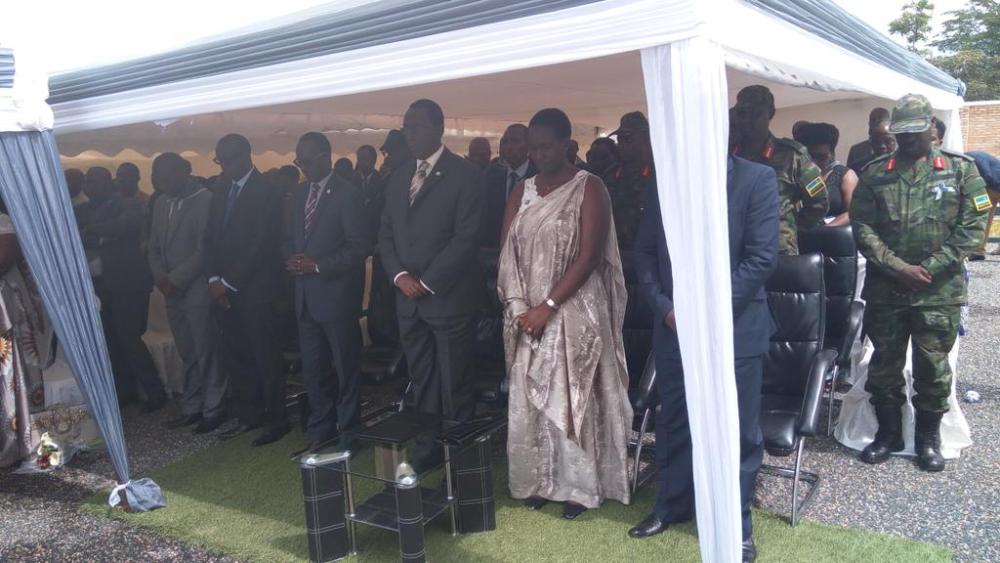
{The late Sayinzoga Jean, former chairman Rwanda Demobilization and Reintegration Commission has been commended for his deeds and bravery when he was alive and serving. His deeds were appreciated last evening in a tribute to his achievements held at his home in Intashyo village, Bibare cell of Kimironko sector in Gasabo district,Kigali. }
The celebration was attended by relatives, friends and top government officials including Prime Minister, Anastase Murekezi, the Minister of Local Government, Francis Kaboneka and the Minister of Justice Johnston Busingye among others.
The representative of the bereaved family, Mathias Abimana described Sayinzoga as a parent and brave who could dare anything for the family and the country.
“ He was brave, parent, adviser, leader in family and the country,” he said.
Mathias said he won’t forget words of Sayinzoga who always encouraged them to strive for greatness and success.
Jeanne Mukantwari, sister to Sayinzoga, said his brother would strive to fend for the family and recalled how he stopped studies in junior seminary to help her grow younger orphaned sisters.
{The United Nations’ top human rights official is condemning a chant by a pro-government youth militia in the small East African country of Burundi.}
The chant is shown in a video recorded and distributed by the human rights groups iBurundi and RCP Burundi. The U.N. says the members of the militia, called Imbonerakure, are encouraging the rape of women from the opposition so “that they give birth to Imbonerakure.”
In a statement, U.N. High Commissioner for Human Rights Zeid Ra’ad Al Hussein said the video confirmed that this “organized militia” has been waging a “campaign of fear and terror.”
“Such blatant and brazen hate speech and incitement to violence must not be tolerated nor encouraged,” Zeid said. “In a region which has suffered so many massive outbreaks of violence and atrocities, this type of organized incitement rings very loud alarm bells.”
The current conflict in Burundi started about two years ago when President Pierre Nkurunziza sought a third term. An attempted coup by rebel military forces followed and since then the government has targeted those suspected of taking part in the coup. Their actions have taken an ethnic dimension and the Imbonerakure — which means “those who can see far” in the principal local language of Kirundi — have taken a central role.
Last summer, for example, Human Rights Watch issued a report that found the Imbonerakure routinely used rape in attacks against members of opposition parties and their family members. One researcher said at the time that youth militia members “tied up, brutally beat and gang-raped women, often with their children nearby.”
The government of Burundi denies that there is widespread conflict in the country. They’ve asked the government of Uganda to repatriate about 50,000 refugees because they say Burundi is now safe. What’s more, when this video first surfaced earlier this month, the ruling party condemned the chants and said that a preliminary investigation had found the chants were driven by “influences outside the party.”
In his statement today, the U.N.’s Zeid appeared unconvinced. He pointed out that chants have been reported across the country and that days after this video surfaced, Imbonerakure youth chanted the same song during the inauguration of a party office.
“The grotesque rape chants by the young men of the Imbonerakure across several provinces in various parts of Burundi are deeply alarming — particularly because they confirm what we have been hearing from those who have fled Burundi about a campaign of fear and terror by this organized militia,” Zeid added.
The conflict in Burundi has displaced more than 400,000 people to neighboring countries. According to the International Federation for Human Rights, more than 1,000 Burundians have been killed since the beginning of this conflict and some 8,000 are being held for political reasons.
{Thailand’s southernmost provinces have seen a long-running separatist insurgency in the Muslim-dominated region.}
Two insurgents were killed in Thailand’s violence-plagued south after a bomb they were transporting prematurely exploded, the military said on Thursday.
Their deaths came during a night of violence across 11 districts in three of Thailand’s southernmost provinces near the border with Malaysia. More than a dozen grenade and bomb attacks also wounded eight civilians and officials.
No group claimed responsibility for the attacks, which targeted police stations and checkpoints.
“This is the work of people who want to cause chaos. It looks like their intention wasn’t to kill but rather to cause disorder,” Colonel Yutthanam Petchmuang told Reuters news agency.
Military spokesman Pramote Prom-in identified the dead as “insurgent operation leaders”.
Thailand is mostly Buddhist but parts of the south are majority Muslim. The region has been plagued by a long-running separatist insurgency as ethnic Malay rebels battle Thai troops for more autonomy from the Buddhist-majority state.
Bombings and drive-by shootings are common in Thailand’s south, where more than 6,800 people, mostly civilians, have been killed since 2004.
The country’s southernmost border provinces, former Muslim sultanates, were annexed by Bangkok more than a century ago.
The military, which seized power in a 2014 coup, has held several rounds of negotiations with one group that claims to represent the insurgents, the Mara Patani.
But the talks have failed to make headway and many doubt the rebel negotiators have clout over fighters on the ground.
The biggest faction spearheading the insurgency, the Barisan Revolusi Nasional (BRN), issued a rare statement earlier this month restating its opposition to the current Thai army-led peace talks.
The military refuses to talk to the BRN even though most analysts say Mara Patani has little sway over those doing the actual fighting.
BRN has said it will only come to the table if a third-party mediates the talks and international observers are allowed, demands Thailand’s military has repeatedly refused to accept.
{Foreigners will now have to undergo an ‘Australian values’ test and take a stricter exam for English competency.}
The Australian government has announced plans to make it tougher for foreigners to obtain citizenship with applicants now having to undergo an “Australian values” test and take a higher level English-language exam.
Prime Minister Malcolm Turnball made the announcement on Thursday, a week after he cancelled a work visa popular with foreigners and said he would replace it with an immigration policy that put “Australia First”.
“Australian citizenship should be honoured, cherished,” Turnbull told reporters in the capital, Canberra.
“I reckon if we went out today and said to Australians, ‘Do you think you could become an Australian citizen without being able to speak English?’ They’d say, ‘You’re kidding. Surely you’d have to be able to speak English.’”
Turnbull’s center-right government has seen its approval rating take a nosedive in recent months with nationalist and anti-Islam parties seeing a surge in support.
The right-wing One Nation party, which has pledged to ban Muslim immigration and install surveillance cameras in mosques and religious schools, has made significant gains at the expense of the coalition government.
Turnbull said the applicants would need a minimum level 6.0 equivalent of the International English Language Testing System, and a person will only become eligible for citizenship after four years as a permanent resident, up from one year.
The current citizenship multiple-choice questionnaire tests a person’s knowledge of Australian laws, national symbols, and colours of the Aboriginal flag. But Turnbull said it was not adequate to judge whether a person would accept “Australian values”.
“If we believe that respect for women and children and saying no to violence … is an Australian value, and it is, then why should that not be made a key part, a fundamental part, a very prominent part, of our process to be an Australian citizen? Why should the test simply be a checklist of civic questions?”
The new citizenship test will include questions about whether applicants have sent their kids to school, whether they go to work – if they are of working age – and whether becoming part of unruly gangs in cities reflected Australian values.
“The announcement has alarmed many multicultural advocates and migrant and ethnic groups will feel targeted,” said Al Jazeera’s Yaara Bou Melhem, reporting from Sydney.
“The opposition party has also spoken about the proposed changes and said that it’s designed to appease [the government’s] conservative base and perhaps nationalist groups.”
The new citizenship requirements are expected to be passed by parliament with the backing of right-wing senators.
{Canada is on track to see the highest number of asylum claims in six years following the election of US President Trump.}
Canadian authorities caught 887 asylum seekers crossing unlawfully into Canada from the United States in March, nearly triple the number in January.
This brings the total number of asylum seekers caught walking across the border to 1,860 so far this year. The new statistics suggest those numbers could rise further as the weather warms.
Canada is on track to see the highest number of asylum claims in six years, given the pace of claims filed so far, as increasing numbers of people cross into Canada to make refugee claims in the wake of US President Donald Trump’s election and his crackdown on refugees and migrants.
“The majority of irregular migrants are holders of visas for the United States,” according to a statement released Wednesday from the office of Canada’s Public Safety Minister Ralph Goodale.
“Canadian authorities are managing the increase in asylum seekers in a sound and measured way… To be clear – trying to slip across the border in an irregular manner is not a ‘free’ ticket to Canada.”
Almost three-quarters of the asylum seekers caught crossing so far this year were taken into custody in Quebec, government data showed. Roxham Road, which straddles Champlain, New York and Hemmingford, Quebec, has become such a common spot that photographers cluster there and would-be refugees refer to it by name.
Most of the others were taken into custody in Manitoba and British Columbia – 331 and 201, respectively.
Police said on Wednesday they have charged 43-year-old Michelle Omoruyi with human smuggling and conspiracy to commit human smuggling.
Police allege they found Omoruyi driving nine West African asylum seekers across the US border into the prairie province of Saskatchewan on Friday night. The nine asylum seekers have filed refugee claims and are not in custody.