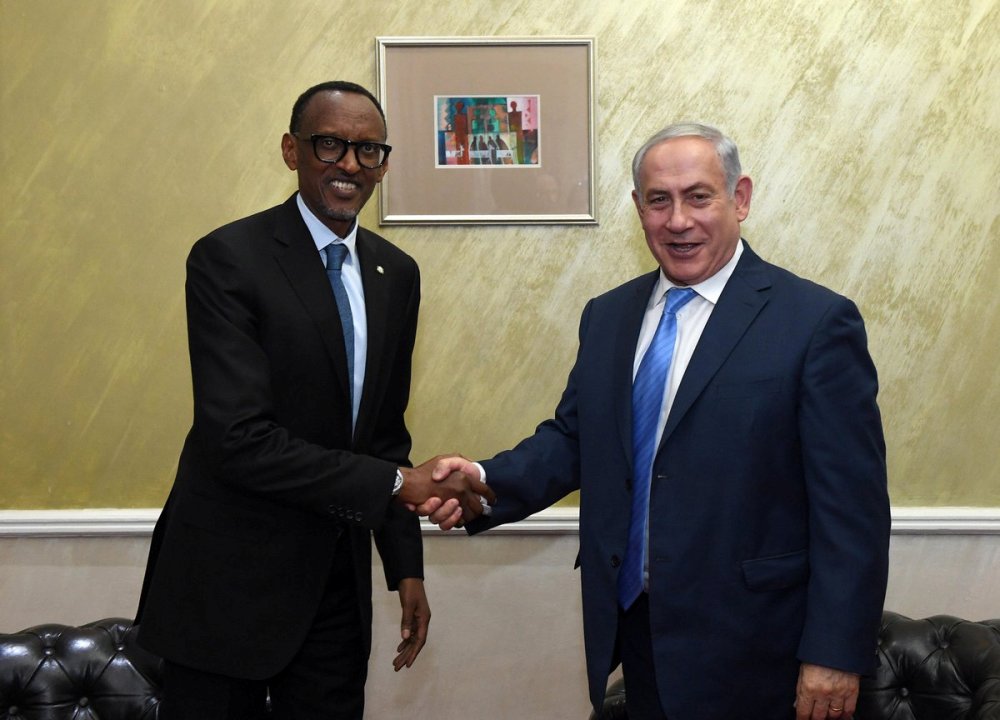
After the discussion between both heads of states, Netanyahu wrote on his twitter handle that they agreed to open Israel’s embassy in Rwanda.
” With Rwandan President Paul Kagame today. I informed him that Israel will open, for the 1st time, an embassy in Kigali, the capital of Rwanda. This historic step comes as Israel is expanding its presence in Africa and deepening its cooperation with countries across the continent,” tweet reads.
The embassy is set to further deepen diplomatic relations and cooperation between the two nations.
The two nations have enjoyed warm bilateral ties over the years with their cooperation touching various developmental and diplomatic aspects. These include agriculture, technology and innovation, business among others.
Rwanda’s embassy in Tel Aviv, Israel was established in 2015. The Israeli embassy in Addis Ababa, Ethiopia is the one covering Rwanda so far.
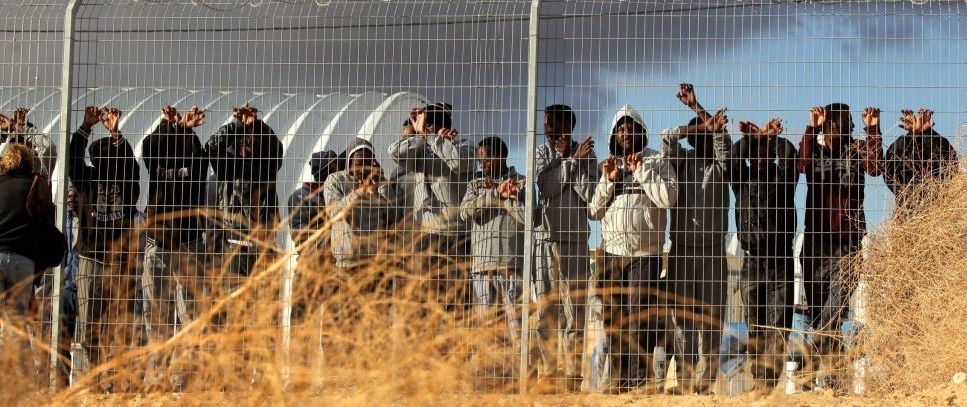
Last week, Israel’s government confirmed in four months they will have closed Holot immigrants’ camp and a total of 40,000 from African countries like Eritrea and Sudan will be sent to Rwanda whereas others who wish can be repatriated to their respective countries.
According to BBC, seven rights non-government organisations working in Israel confirmed that Israel and Rwanda will meet in the near future to finalise the agreements.
At the beginning of last year, Foreign Affairs Minister, Louise Mushikiwabo announced that there were no agreements signed between Rwanda and Israel related with hosting refugees.
She however confirmed that discussions were underway.
“We are among countries that two years back negotiated with Israel to receive immigrants. We did not finalise the talks but it is true that they approached us,” she explained.
She said that migration and emigration officials from both countries were still discussing about requirements to transfer these immigrants, their behaviors and their long term status they would be given.
Last week, Israel based Haaretz media house wrote that Israel will pay the Rwandan government $5,000 for every African immigrant it accepts from Israel. The Israeli government will additionally continue to pay immigrants who voluntarily leave the country a grant of $3,500, as well as the cost of their airlines tickets out of the country.
Rights organisations and United Nations High Commissioner for Refugees (UNHCR) opposed the Israeli government’s decision saying that it is even difficult to find out information about lives of immigrants who were transferred in African countries since 2013 to 2017.
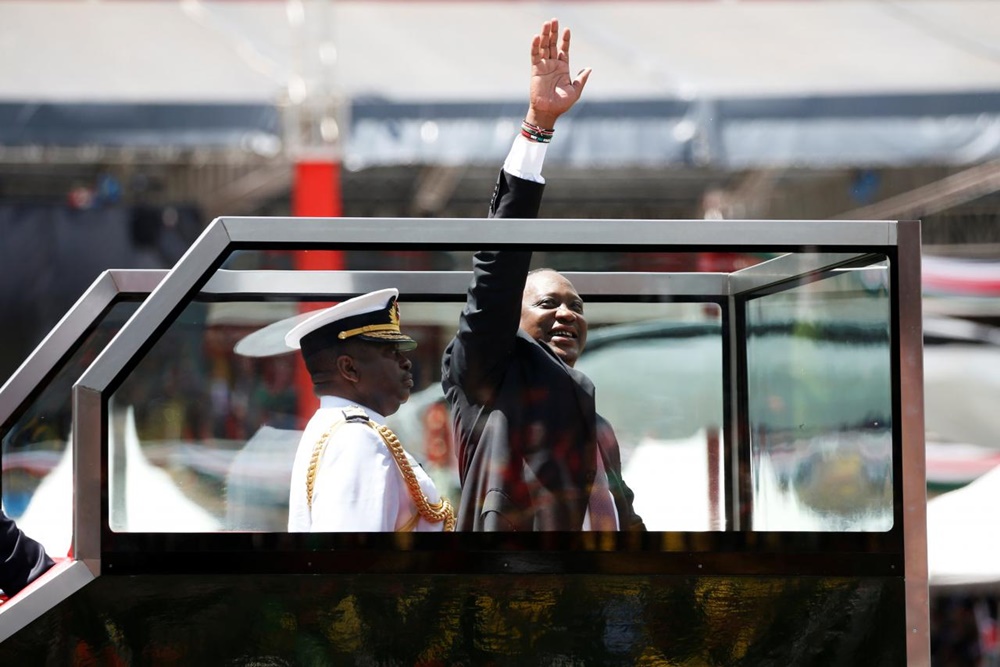
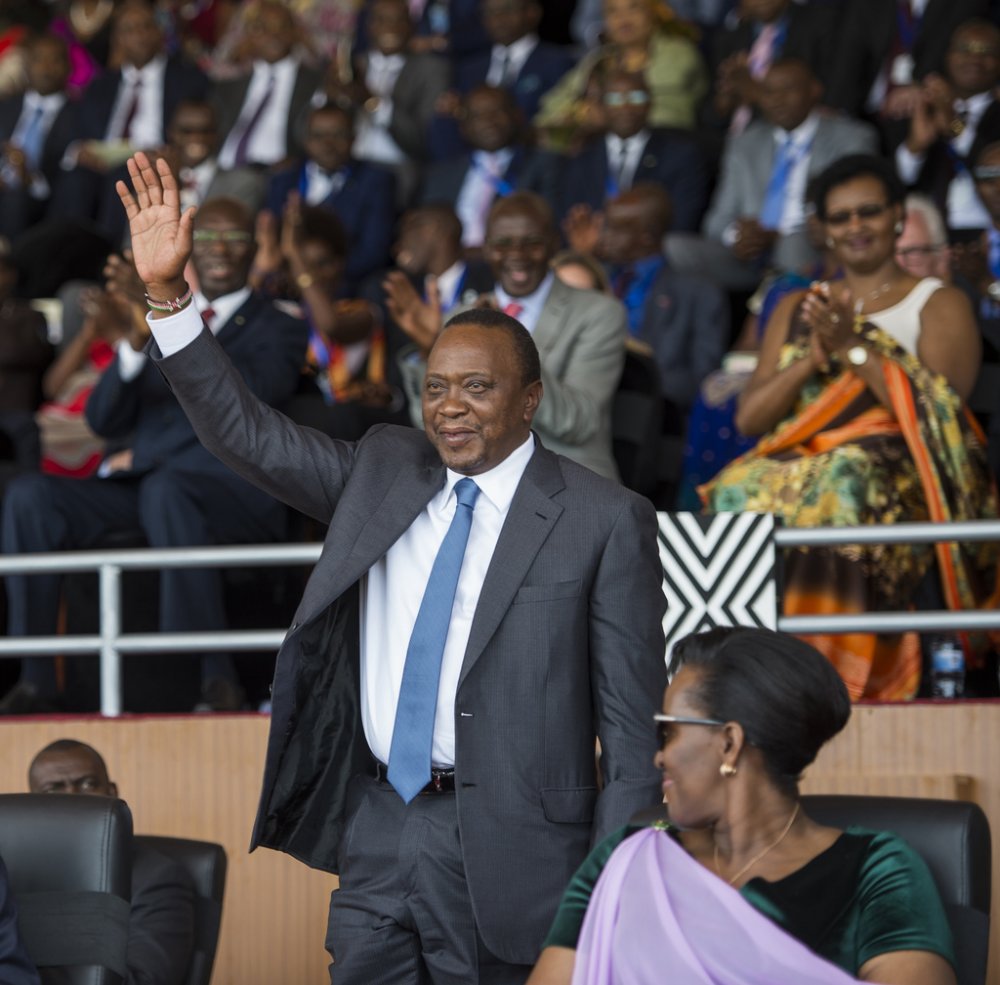
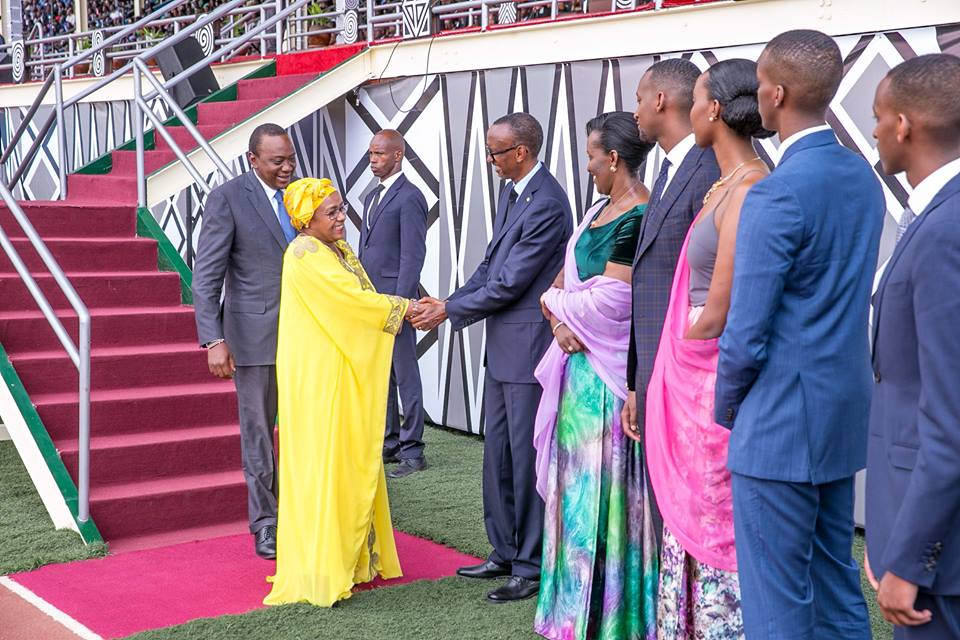
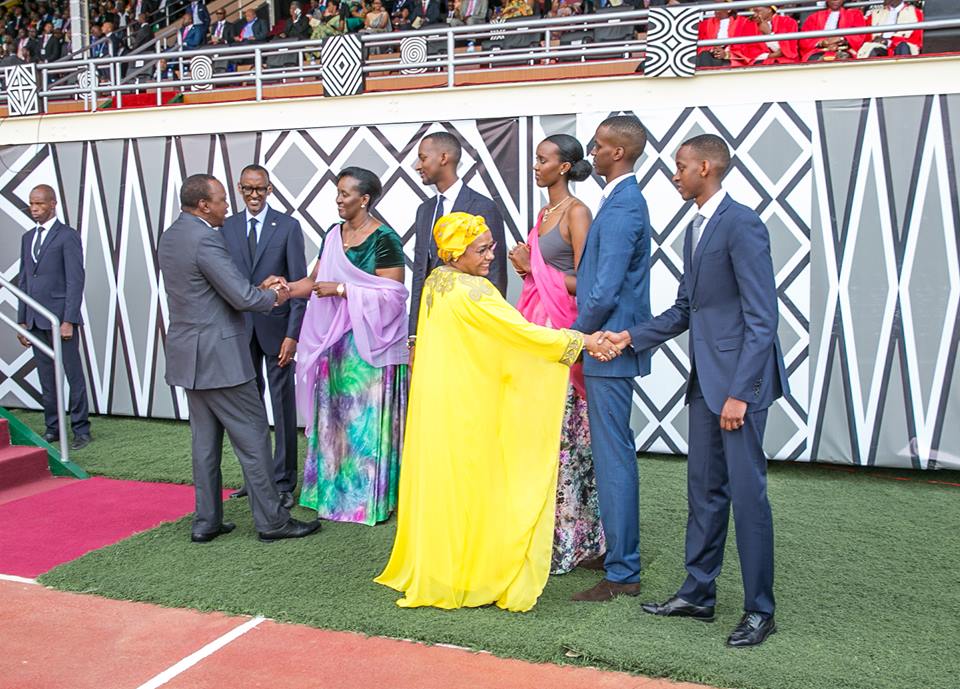
As Kenyatta took oath of office for his second term in office, Kagame said Kenyans deserved Kenyatta’s victory.
“People of Kenya, I have come to congratulate you, congratulations! The people of Rwanda send you their greetings and congratulations for your well-deserved election victory. Congratulations!,” reads the office of the President’s tweet.
Kenyatta is going to serve his second and last term that will end in 2012.
Kagame is among ten heads of states that attended the ceremony including Yoweri Museveni of Uganda, Ian Khama of Botswana, John Pombe Magufuli of Tanzania, Edgar Lungu of Zambia, Ismaïl Omar Guelleh of Djibouti, Hage Geingob of Namibia, Faure Gnassingbé of Togo, Mohamed Farmajo wa Somalia, and Ethiopia Prime Minister, Hailemariam Desalegn.
According to the Director General in charge of Trade at MINICOM Robert Opirah, women have been grouped in cooperatives and reduced informal trade which raised taxes that the country earns from their businesses.
Opirah was speaking Monday in a conference that brought together countries that share borders with Rwanda. The conference intended to assess challenges cross-border women traders face and measures to solve them.
“Cross-border business is being done by a big number of women, Rwanda earns over $170 million from them every year,” he explained.
He said that in a need to promote such businesses, the government of Rwanda has constructed three cross-border markets in Cyanika, Burera District; Kanyaru, Huye District and in Karongi District.
According to Opirah, they target to construct more markets on the borders of Rusumo, Kagitumba, Gatuna, Rusizi I&II and Nemba Border in Bugesera.
Speaking in the conference, the advisor to the minister in theDemocratic Republic of Congo’s Trade Ministry, Solange Umulisa said that unawareness in women engaged in the business is still a big challenge to their country.
“They are unaware of border posts services. Most of the time both countries sign agreements that seeks to promote their businesses but you find that they are unaware of them,” she said
She said that they will continue to explain more about Border Posts services so that they will continue to develop their businesses.
Though cross-border businesses among women on Rwanda’s side are commendable, the Executive Secretary of Pro-Femmes Twese Hamwe, an umbrella of Rwandan civil society organizations aiming at advancement of women status, peace building and sustainable development, Emma MarieBugingo said that women in the business still face some challenges.
“They claim disproportions of hours these border posts operate. Take an example, Rwanda can operate 24 hours but other countries may not be on the dot,” Bugingo said.
Farmers working in KABOKU cooperative were speaking to the Prime Minister, Dr. Eduard Ngirente yesterday while visiting agro-activities in the district.
The cooperative representative, EdouardMusemakweli said that lack of market for their produce in Rwanda forces them to sell to neighboring Uganda.
“We still have in store soya produce t from last agricultural season. That is why some farmers take their produce in Uganda or sell at very low prices,” he said
Among other challenges farmers raised include, lack of drying grounds which result into post-harvest losses.
Premier Ngirente assured farmers that they will send a group of experts to partner with cooperative members and assess all problems they have as well as finding solutions together.
“We are here to discuss the challenges you face and seek possible ways of addressing them. Solutions cannot be generated instantly but we will partner with institutions concerned to address them” he told farmers.
Speaking about market access problem, Trade and Industry Minister, Vincent Munyeshyaka said that they will connect them to harvesting and maize processing companies.
KABOKU cooperative grows maize and vegetables on the surface of 900 hectares. It is made up with 1083 members. Currently, they produce between six and eight tonnes per season.
Innovation and creativity knows no boundaries, and that has never been more evident than in this year’s Smart Service Awards winners.
The Best News Publishing Website award recognize publishing websites that have created ground-breaking digital products that engage readers while increasing online business.
IGIHE came at the top of all the other publishing websites with 37.7% of votes from the Public. IGIHE is considered by most, as perhaps one of the best digital display for news in Rwanda.
The awards were handed during a function held at Park Inn Hotel venue on 25th November. Among the different winners recognized were Bank of Kigali as the best Twitter Brand, SORAS as the Best Insurance Company, TV 1 as the Best TV Station, among others.
Smart Service Awards, which are now in their second year, focus on showcasing the hard work and commitment of the many businesses, departments and individuals across the country, who not only keep clients’ wishes at the top of their game, but also are innovation-driven and potentially, changes the environment all for the better.
The 2017 Awards covered about 30 sub-categories aligned to the tech/digital expertise areas: Social Media, hospitality, Customer care, Digital Technology, Media, Marketing and academics among others.
{{List of the 2017 edition of the prestigious “Smart Service Awards” winners.}}
{{Best Employment Web:}} Job In Rwanda
{{Best Online Shopping Website:}} Groce Wheels
{{Best Hub/Lab:}} Fab Lab
{{Best Radio Station: }} City Radio
{{Best Tech Company:}} BK Tech House
{{Best Mobile Application:}} U Plus
{{Best Technology Institution:}} UTB
{{Twitter Brand:}} Bank of Kigali
{{Facebook Brand:}} Itel
{{Best Bar and Restaurant:}} Just Chill
{{Best Airline:}} Ethiopian Airlines
{{Best Magazine/Journal Online}}: Hope Magazine
{{Best TV Station:}} TV 1
{{Media Personality}}: George Ndirangu
{{Best Financial Institution:}} BK Tech House
{{Best Insurance Company:}} SORAS
{{Best Internet Service Provider:}} Axiom
{{Best Fashion House: }} Kabash Fashion House
{{Best News Publishing Website:}} IGIHE
{{Best Travel Agency:}} Satguru Travels
{{Best Innovation}}: Yego Motos
{{Best Public Institution}}: Immigration
{{Best Telecommunication Company}}: Korean Telecom
{{Miss Social Media:}} Miss Uwase Honorine (Igisabo)
“President Kagame arrives in Kenya to attend President-elect Uhuru Kenyatta’s Inauguration ceremony,” reads Office of the President’s tweet.
Recently, the government of Kenya announced that 11 heads of states will attend the ceremony.
Foreign Affairs Minister of Kenya said that 13 presidents will delegate their vice-presidents, special envoy or ministers.
Other heads of states who will attend include, Israel Prime Minister, Benjamin Netanyahu, Yoweri Museveni of Uganda, Ian Khama of Botswana, John Pombe Magufuli of Tanzania, Edgar Lungu of Zambia, Ismaïl Omar Guelleh of Djibouti, Hage Geingob of Namibia, Faure Gnassingbé of Togo, Mohamed Farmajo wa Somalia, and Ethiopia Prime Minister, Hailemariam Desalegn.
Senegal, China and Japan will delegate special envoys whereas South Africa, United Kingdom, Ukraine and India will delegate ministers.
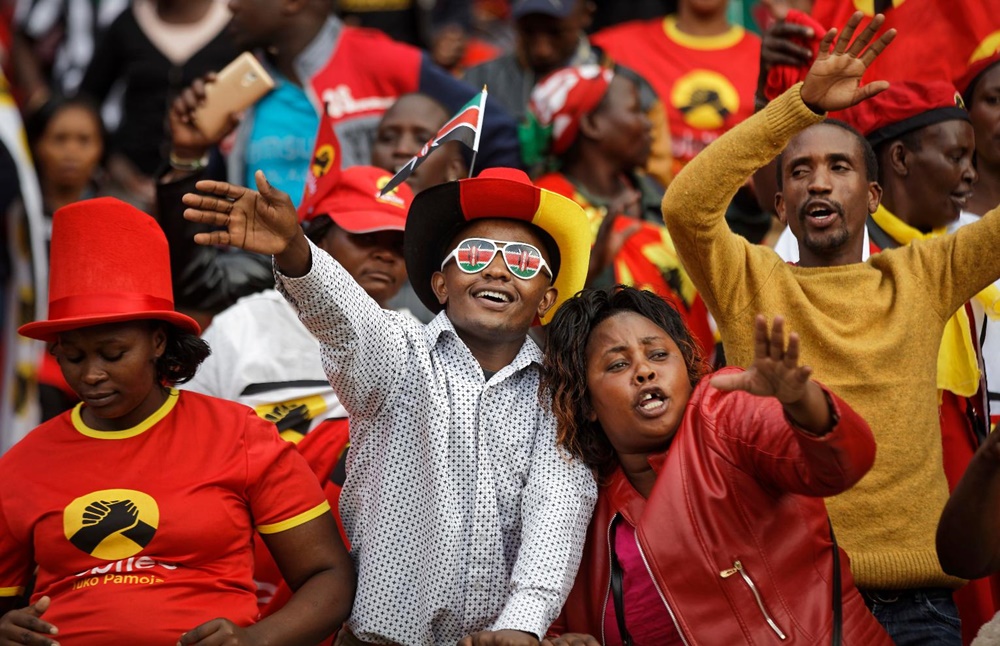
President Kenyatta and his Vice-president William Ruto will be swearing in for their second term following the re-run elections win of 26th October 2017.
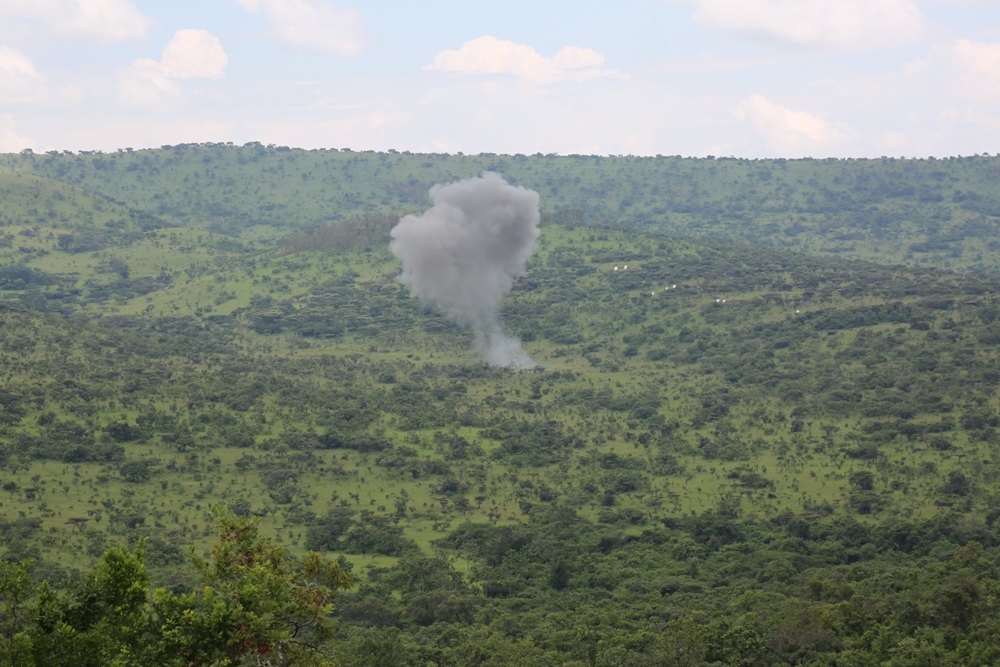
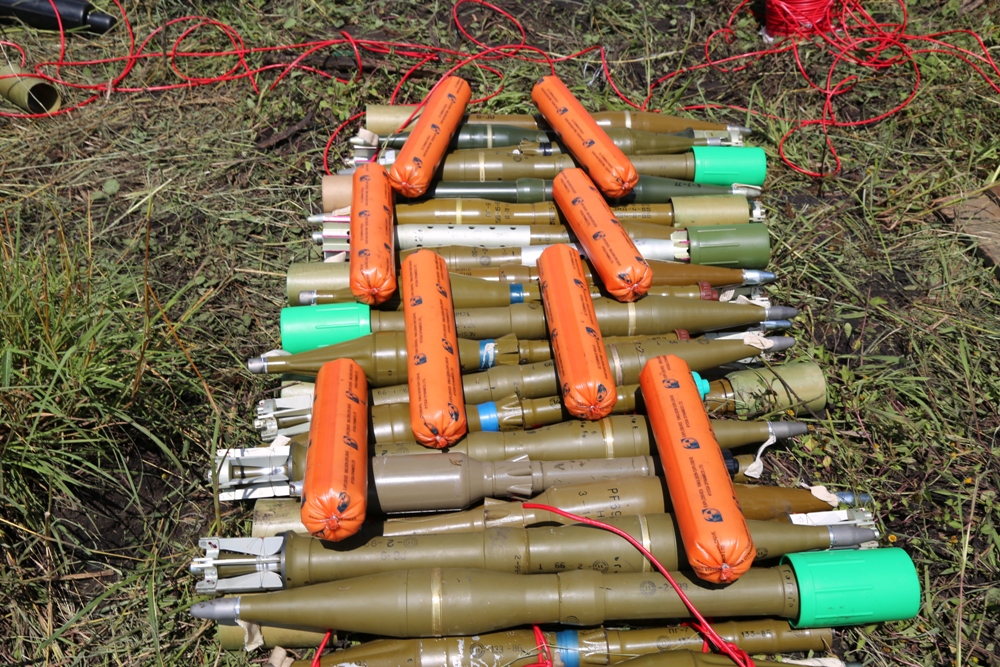
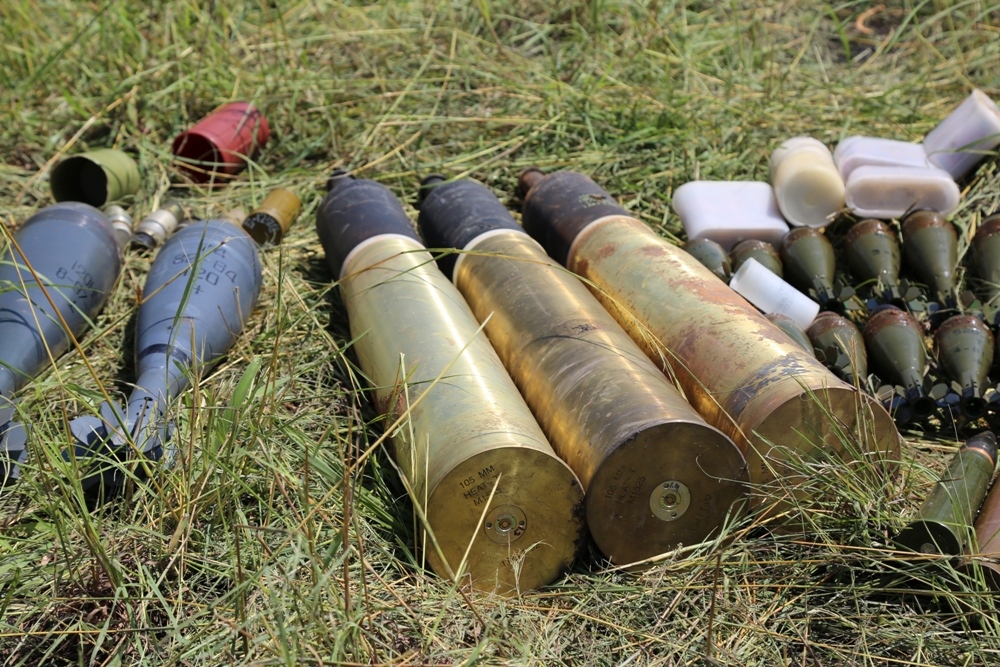
The eight day exercise started Monday in RDF’s Gabiro Combat Training Centre in Eastern Province.
Speaking at the event RDF’s army chief of staff, Maj. Gen. Jacques Musemakweli said that in the aftermath of the liberation struggle and the 1994 genocide against the Tutsi there were arms proliferation around the country which was a threat to the national security.
He said the exercise is part of the implementation of the 2004 Nairobi Protocol on prevention, control and reduction of small and light weapons in the region, a protocol which was signed by 14 countries.
“Destroying these 130 tonnes of expired weapons publicly shows the will of Rwanda in implementing the protocol,” he said
He called on regional countries’ contribution in fighting against illegal use of weapons for the sake of the common security.
The Executive Secretary of Regional Centre on Small Arms (RECSA), Theoneste Mutsindashyaka said the exercise underlines the Rwanda’s will in controlling weapons through destructing expired ones.
He said that only ¼ of weapons from across the World are under governments’ control. He said the prevalence of weapons scattered across the World are seen in different insecurity cases that appear from different parts of the globe.
He said that it is the 6th time the exercise took place as last year 55 tonnes were also destroyed.
Mutsindashyaka emphasized that Rwanda has advanced in weapons destruction and they target to introduce a school teaching the act at Gishari in Rwamagana District.
An estimated 52,807 tonnes of ammunition were demolished between 1994 and 2011.
In a press conference by organizers of the exhibition which brought together Private Sector Federation (PSF), Ministry of Trade and Industry (MINICOM) and partners, they said that every year local entrepreneurs attending the exhibition increase.
The PSF Chief Operations Officer, Yvette Mukarwema said they expect to see new products in the exhibition.
“New products are not brought by PSF or the ministry, they are from exhibitors. The more we get new exhibitors, the more new products are unveiled,” she said.
She said that all districts will be present opportunities for clients to find where different products and services are offered.
The private sector specialist in MINICOM, Jonas Munyurangabo said that in past 10 months, imports have been reduced since made in Rwanda campaign was initiated.
“In 2017 ten first months, the importation of construction materials reduced to17,2% in general. For cement imports were reduced to 36% and textile by 21% among others,” he said.
According to PSF, in 2015 exhibitors were 250 whereas in 2016 they were 305.
Echoing the call to “Leave No One Behind” for the elimination of gender-based violence, in Rwanda, the campaign was launched in Kigali, with a walk from Parliamentary Buildings in Kimihurura to Amahoro Mini Stadium.
The walk brought together senior government officials, development partners, civil society organisations, members of the private sector, army and police top brass, secondary and university students, and groups of women rights activists.
Themed “End Violence against Women and Girls: Speak Out!” the campaign runs from 25 November to 10 December this year.