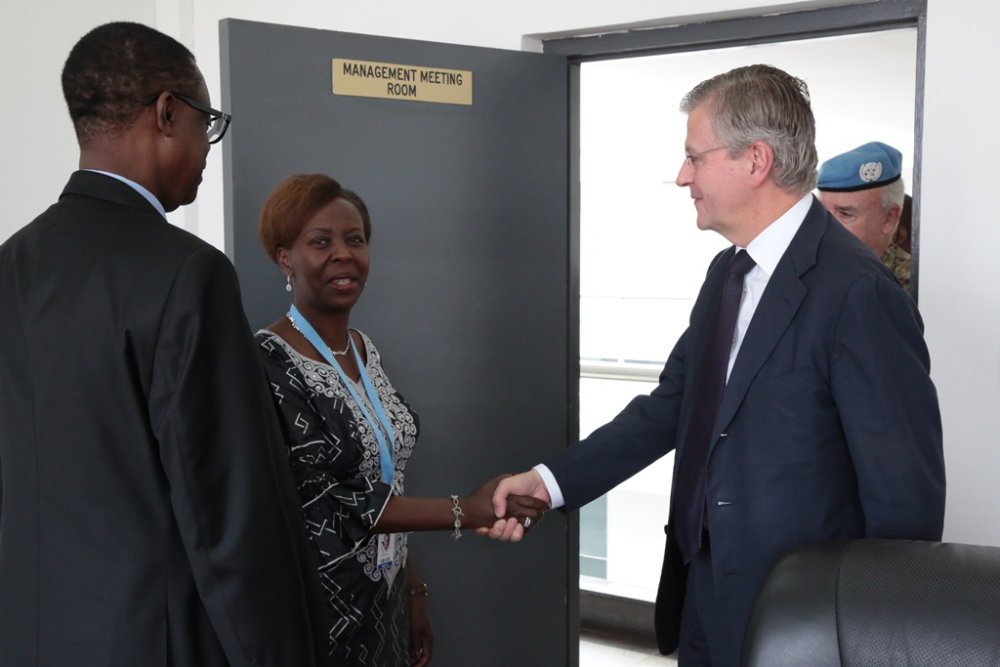
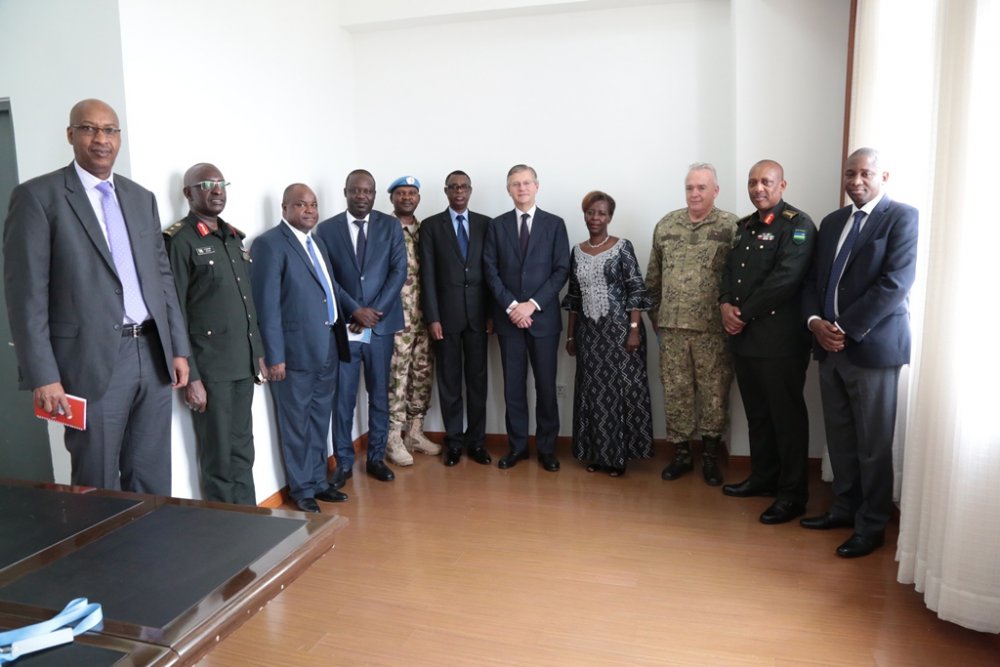
During the meeting, the officalss exchanged ideas on the prevailing political and security situation in Central African Republic, in South Sudan and in the region.
Lacroix expressed his appreciation and gratitude to the Government of Rwanda for its contribution to peacekeeping and commended the excellent performance of the Rwandan peacekeepers troops whenever they are on UN missions.
The discussions also reviewed the progress of the ongoing negotiations over UN request for the Government of Rwanda to contribute more troops to MINUSCA. The additional force which is expected to be deployed to the Central African Republic by February 2018 will reinforce UN operations and address recurrent attacks against the population.
Rwanda currently maintains troops and other personnel that include a Level-Two hospital and other UN staff in the United Nations Multidimensional Integrated Stabilization Mission in the Central African Republic (MINUSCA).
Rwandan troops are specifically charged with providing security for high-ranking government officials, including the President and securing key state institutions.
Mushikiwabo thanked Lacroix for the visit and reassured him of Rwanda’s commitment to support peace in Africa and elsewhere in the world.
Mr. Lacroix took up the post of UN Under Secretary General for Peacekeeping Operations on April 1st this year, replacing Hervé Ladsous.
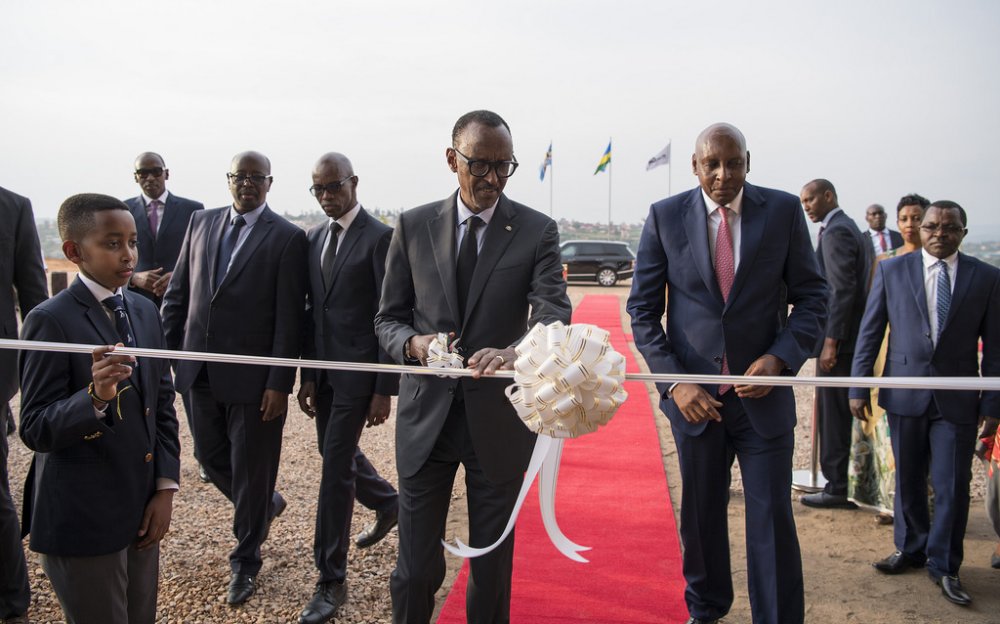
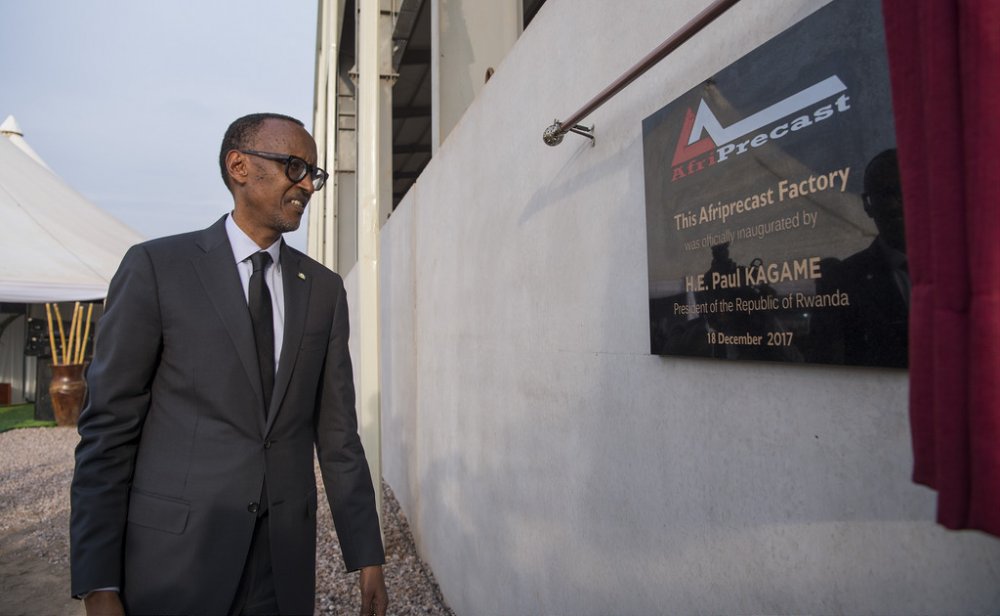
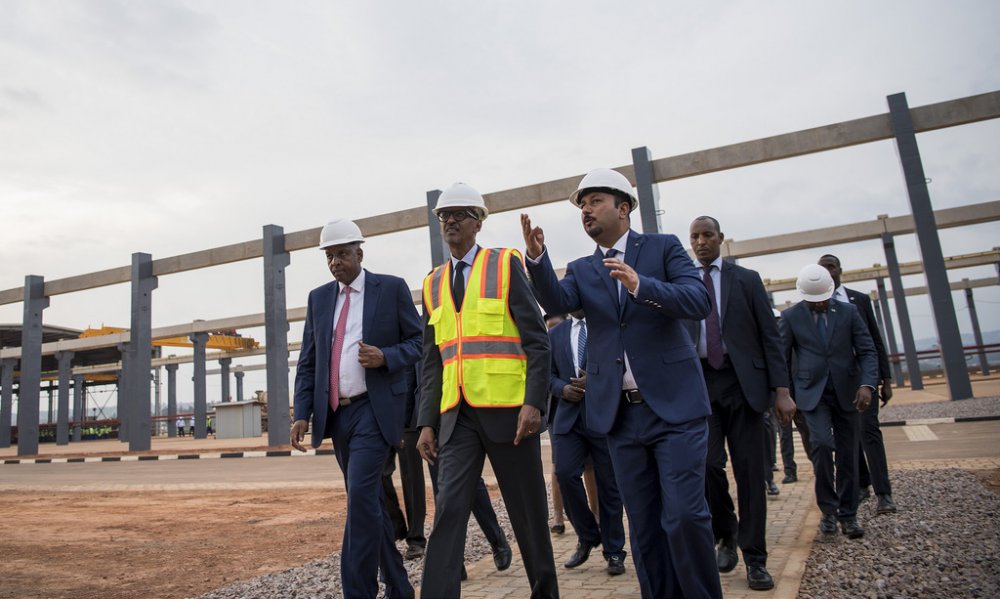
Located in Masaka Sector of Kicukiro District, ‘Afriprecast’, the first of its kind in the country is owned by Rwandan investor, Alexis Bayigamba.
Worth $25,000,000 the factory will provide jobs to 1,000 people.
Kagame commended Bayigamba for investing in Rwanda saying that it is a valuable boost to Rwanda’s industrial sector.
Bayigamba has similar investment in Angola.
“Bayigamba had been investing in Angola, I would also wish to request people from Angola to also invest in Rwanda, it is not mandatory to invest in construction, you can also invest in other sectors, we shall be glad to help you, you will also find partners in Rwanda along the execution,” Kagame said.
The President said that the factory will employ a significant number of people and impart new skills to the workers.
“AfiPrecast will reduce our country’s import bill and we expect that these products will be exported to the region as well. It means a lot that this is a Rwandan investment. We continue to welcome investors from all over the world, starting from home,” he said.
He said the government will continue to do its best to support the private sector in getting the most from creative investments.
Bayigamba commended Kagame’s leadership that provides conducive investment environment in the country.
“We appreciate your leadership that makes such investment possible. You have supported us and we got all the necessary during the construction,” he said.
The factory occupies 15 hectares of land. The firm’s construction works started in May 2015 and started production in March 2016.
The eleven-week compulsory course for NCOs is designed to further improve the skills of the officers in various fields of Policing.
The course covers topics like public order management, leadership and management, road safety rules and regulations, field-craft and civic education, among others.
The Commandant of PTS, Commissioner of Police (CP) Vianney Nshimiyimana, while officially closing the course, said that training forms a big part of Rwanda National Police towards service excellence and professionalism.
“Training and skills development is a continuous process, this is neither the first nor the last training; as the policing landscape evolves it necessitates officers also to informed and skilled to tackle such challenges,” CP Nshimiyimana said.
“The mission of Rwanda National Police is for people in Rwanda to be safe, involved and reassured, and this is the duty that officers are trained to sustainably achieve.
The institutions and Rwandans in general expect you to be catalysts to ensure security of the people and their property,” he added.
Training is one of the major priorities on RNP, with PTS, the National Police College (NPC) and the Counter-Terrorism Training Centre (CTTC) in Mayange, Bugesera District taking charge.
The ANC announced on Monday that Ramaphosa had defeated Dlamini-Zuma, the former chairperson of the African Union Commission and President Jacob Zuma’s preferred candidate, to become the leader of Africa’s oldest liberation movement.
More than 4,700 delegates cast their ballot in a marathon voting session that began late on Sunday and continued until mid-morning on Monday.
Ramaphosa won 2,440 votes to Dlamini-Zuma’s 2,261.
He will replace Zuma as ANC president and almost certainly run for the country’s presidency when South Africa takes to the polls in 2019.
Zuma will remain as South Africa’s president until then, but it is possible that Ramaphosa and the new national executive may recall him over a series of allegations of corruption that has dogged his tenure as president.
{{Marathon session}}
The announcement of the results marked the end of a bitter leadership race that threatened to split the party, with the two leading candidates presenting completely different visions for the future of the country.
Voting had been initially delayed after ANC officials battled to vet delegates, forcing the conference itself to start late. Hundreds of delegates were also disqualified from voting.
The markets reacted immediately to the news, with the South African currency, the rand, strengthening to the dollar.
Ramaphosa, a successful businessman and one of South Africa’s wealthiest people, ran on a campaign to fight corruption and increase economic growth.
Analysts said he was seen as the more “credible” candidate and a possible antidote to the recent failures of the ANC under Zuma.
{{‘Divided party’}}
Ayesha Omar, a lecturer in political science at Wits University, said that many will consider Ramaphosa’s victory as “a kind of renewal and painful end to the kleptocracy of the Zuma order”.
“Ramaphosa illustrates a political will to defeat corruption, strengthen governance and help restore collapsing state institutions,” Omar told Al Jazeera.
Omar added, however, that the same could not be said of Ramaphosa’s fellow ANC apointees, Deputy President David Mabuza and Secretary General Elias Sekgobelo “Ace” Magashoula, describing their election as “deeply concerning”.
“I am not convinced that South Africa is on the birth of democratic regeneration as this result points to an internally factionalised ANC,” said Omar.
“While Ramaphosa might have won the leadership battle, it’s not clear whether he will have enough traction over a divided National Executive Council (NEC) to steer South Africa into a brighter political future.”
{{Zuma ‘bowing out happy’}}
Snuki Zikalala, president of the ANC veteran’s league, told Al Jazeera that the results were “largely successful”.
“The margin was very tight and ultimately we can only choose the leaders we deserve,” he said.
But Zikalala bemoaned the lack of gender diversity in the party’s top six positions – just one woman, Deputy Secretary-General Jesse Duarte, made it into the ANC’s most influential posts.
These top NEC positions are now split almost 50-50 between the two competing factions, in what is being seen as an attempt at unity following the hard-fought leadership contest.
Earlier on Monday, Zuma told reporters that he was leaving his post as ANC president satisfied.
“I’m bowing out very happy because I think … I made my contribution. So I am very happy.”
In his final address as ANC president on Saturday, Zuma appeared to endorse Dlamini-Zuma when he said that it was a milestone that there were three female candidates in the initial seven-way race for the party’s leadership.
He also blamed ill-discipline among party cadres and factionalism for the failures of the ANC. He made, however, no mention of the ways in which he had brought the party into disrepute over several allegations of corruption.
{{SOURCE: AL JAZEERA NEWS}}
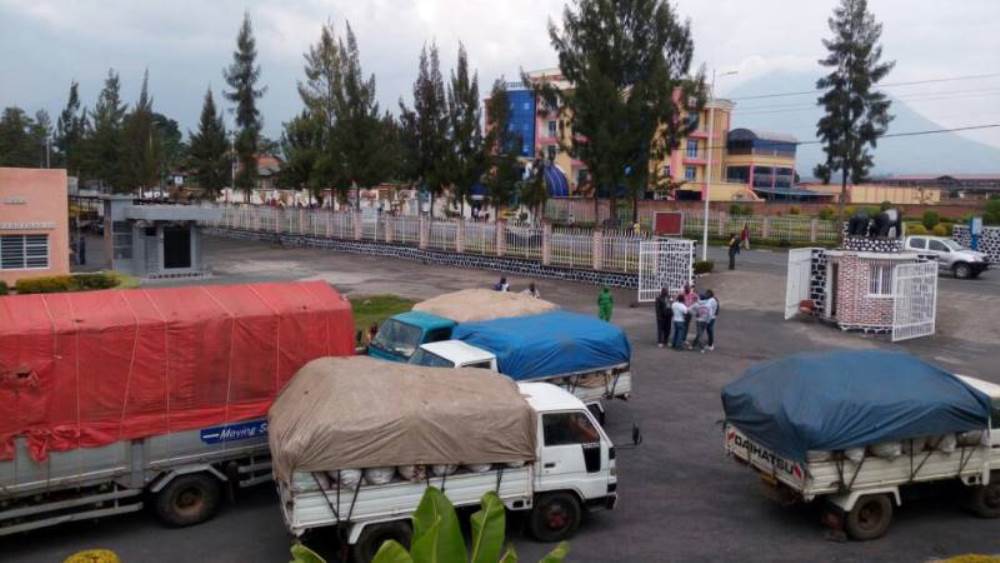
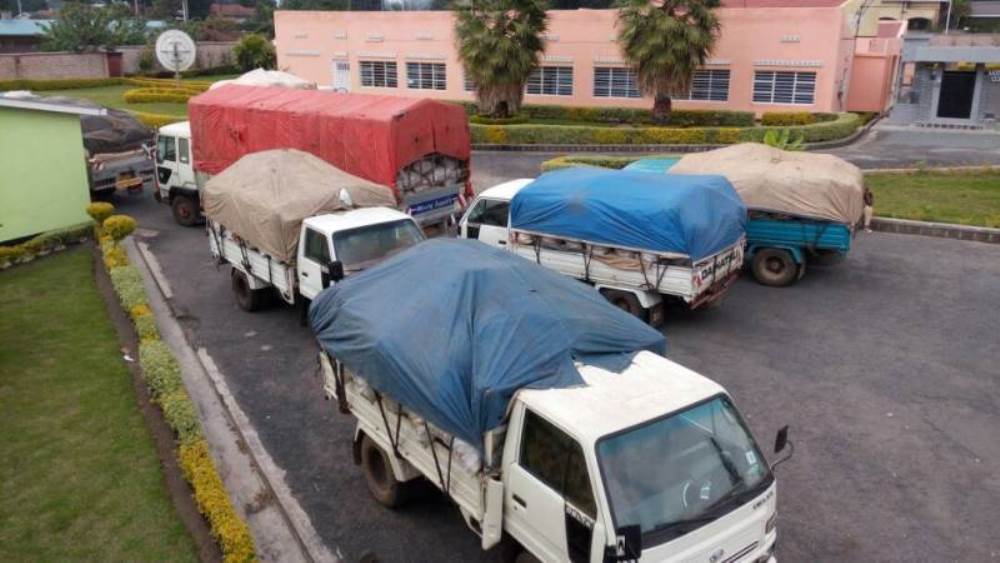
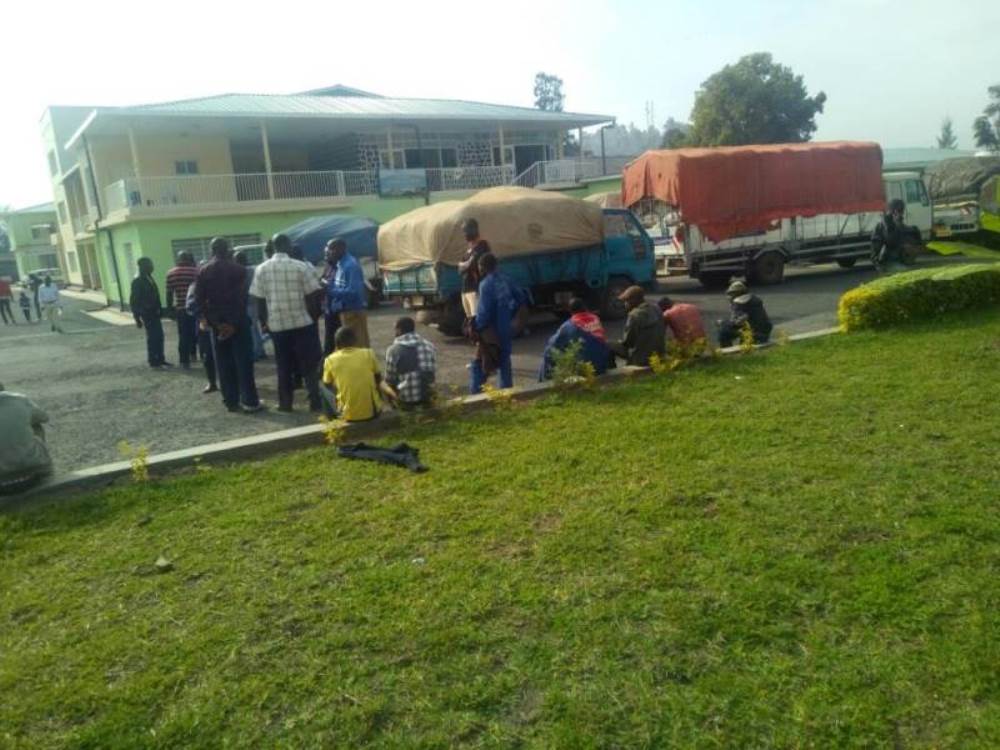
The two-day operation which started on Friday saw these cars impounded and held at the district offices.
The operation follows the last month directive that allows only farmers’ cooperatives to do irish potato dealership.
However, drivers claim that they have authorization from Irish potato collection centers detailing the volume and their origin. According to drivers, they are not aware of whether their authorizations are genuine or not.
According to Alexandre Muhire, though his car was impounded, he has authorization from the representative of the cooperative from which he bought the Irish potatoes.
“It is now the second day since my car was detained. We were told that we should not deal in Irish potatoes unless we have authorization from collection centers. I have authorization from the representatives but I do not know about its guarantee. This is the problem that should be solved by the collection centers,” he said.
Musanze Vice-Mayor in charge of Finance and Economic Development, Augustin Ndabereye, said that documents of new directives are yet to reach all collection centers, adding that they will share them very soon so that the affected dealers can seek authorization before they are given back their cars.
When visiting the Northern and Western Provinces last month, Prime Minister Dr Eduard Ngirente found that collection centers were fleecing farmers with giveaway prices and put all Irish potatoes dealership into the hands of farmers’ cooperatives.
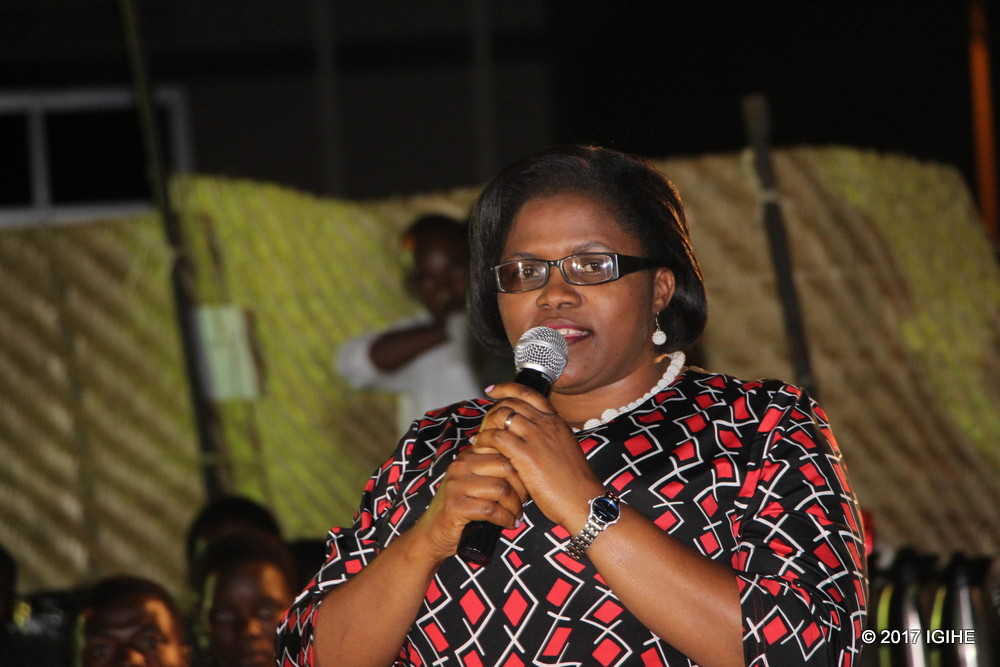
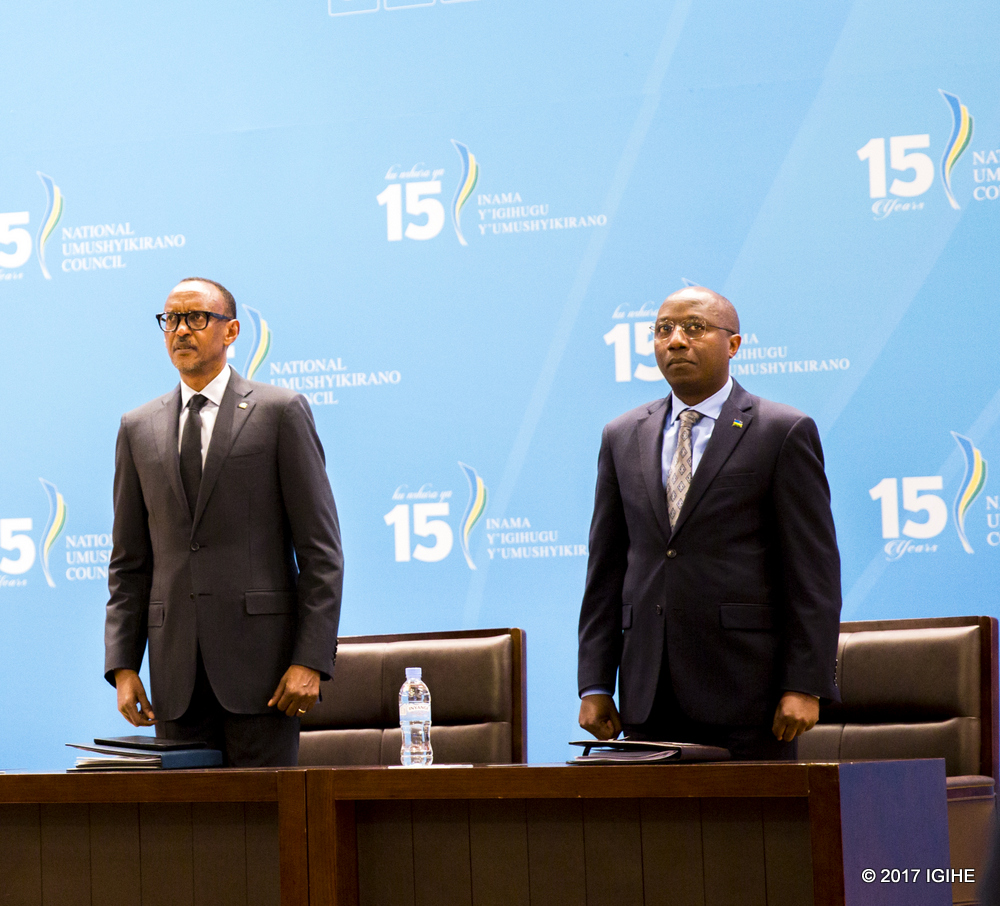
Mushikiwabo was speaking at the National Dialogue, commonly known as Umushyikirano, on Monday.
During a discussion about the National Strategy for Transformation, Mushikiwabo said that Rwanda is a transformational-led country which values human being.
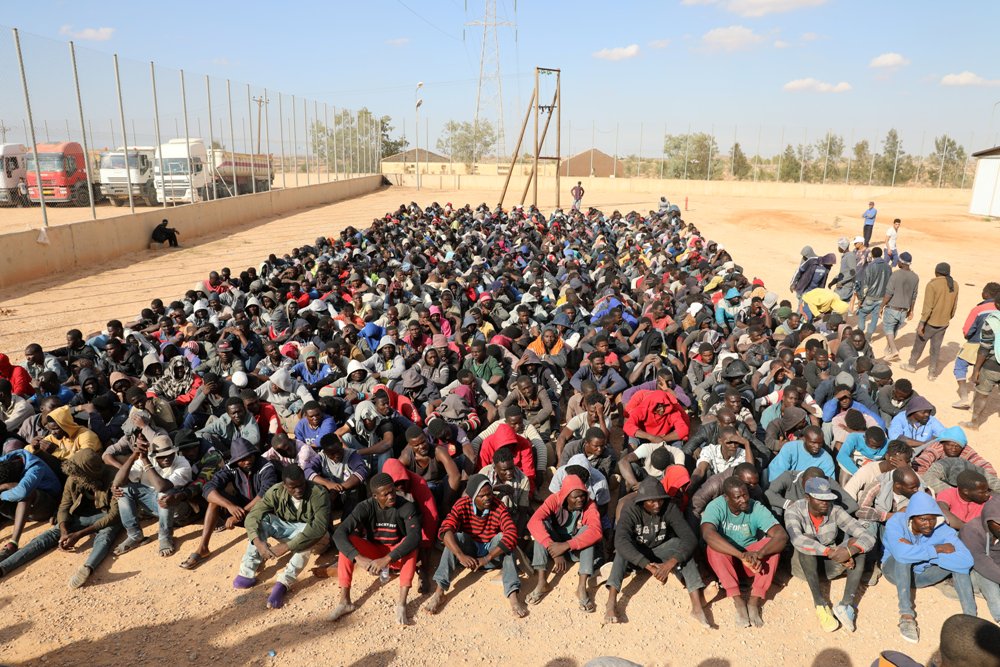
“Recently, Rwandan government announced that the country is ready to receive Africans who were turned into slaves in Libya. This is an act of valuing human being,” she said.
“In partnership with other African States, African Union (AU) Commission and Europe, we are organizing to receive some of these migrants in the beginning of 2018. Such act of humanity and respecting human being is part of main strategies for transformation,” she explained.
Based on Rwandan history, Mushikiwabo said that Rwandans could acquire positive values from foreigners, but leave away bad ones as they continue to value human being.
The Government of Rwanda admitted to receive a total of 30,000 migrants from Libya.
Debonheur made the remarks last week while addressing the youth who were attending Itorero Urunana rw’Urungano, a training that attracted youth from different walks to learn about different programmes of the country’s life.
Minister Debonheur reminded that Rwandan refugees will lose the refugee status from 1st January, 2018, a decision that will affect those who fled the country between 1959 and 1998.
She encouraged the refugees to return home and to not worry of poverty because the country supports all returnees with all means for their reintegration.
“Some fear to face challenges like poverty, hunger and insecurity among others, but contrary, all these challenges are not there. Those who return are provided with three-month meals plus $250 to old people and 150 to children per head respectively. Actually this is a good foundation for life,” she said.
She said that returnees are also provided with life skills and supported with toolkits to start leading their life.
Debonheur urged refugees with development activities in host countries to get registered with the Rwandan embassies so that they continue to operate as Rwandans living there for business purposes but not as refugees.
She tasked youth from the Diaspora to be good ambassadors who encourage Rwandans living abroad to come home.
“Try to convince fellow youth to go back to their country. I hope you are capable to do this. As you have witnessed the development in the country and other available opportunities, tell them to ignore false information they have out there,” she urged.
At least 6,000 returnees have been recorded by MIDIMAR from July to December, this year.
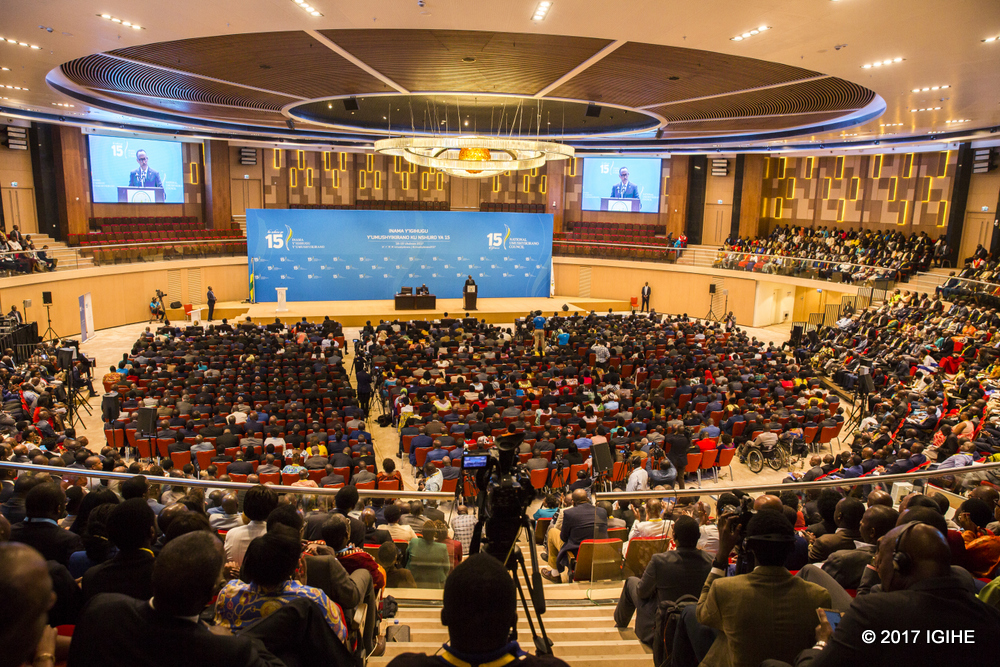
The two-day conference brought together about 2,000 Rwandans, including central government and local government officials, businesses, civil society, other members of the Rwandan community and diplomats.
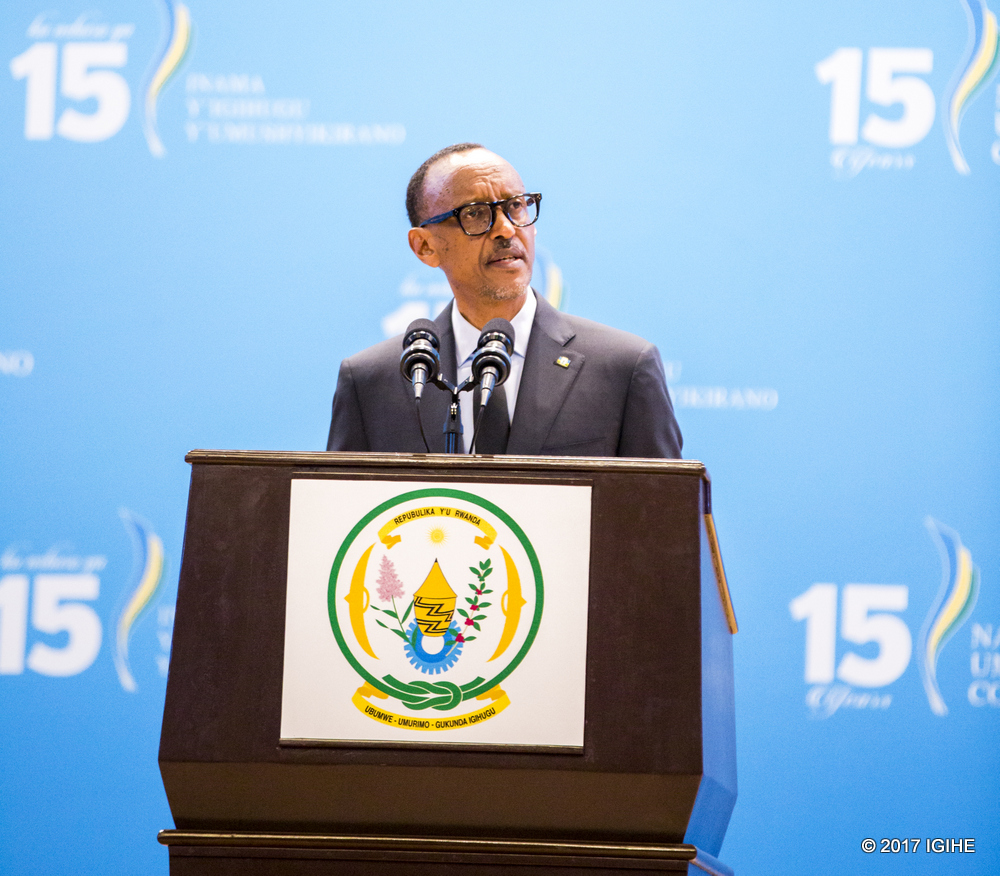
Kagame said that there is no doubt that the country has grown stronger and more united, urging to continue to do better.
In agriculture he said, after a period of slow growth last year, agricultural production grew by 8 per cent this year. He said the production came despite challenges, such as army worm and drought in some parts of the country
“The hard work of citizens has really paid off and I wish to thank you for this and ask you to keep it up,” he said on the growth of Agriculture.
He said the cooperation among government institutions has made delivery of inputs to farmers more timely and reduced corruption in the system. He said that increased access to irrigation has also helped raise productivity.
“We have decided to invest in domestic seed production, to improve quality and also reduce our dependence on unreliable supplies from abroad,” he said.
“It is encouraging to note that graduates are also finding entrepreneurial success in agribusiness. I call on more young people, to consider the opportunities in this sector,” he said.
On the economic front, he said, $1.5 billion in new investment and infrastructure deals were registered in 2017, which includes the new international airport, which is under construction in Bugesera.
The head of state said the conference tourism strategy is bearing fruit as Rwanda hosted 169 international meetings this year, which brought tens of thousands of customers to hotels, restaurants and national airline, RwandAir.
On Made in Rwanda, he said, strategy has already boosted production compared to the same period last year.
“Our exports have increased by 50%, while our imports have declined by 3%. As a result, our trade deficit fell by more than 20%,” he explained.
He said more than 8,000 new manufacturing jobs were registered this year, adding that they will continue to build on such achievement.
Kagame said that mineral exports now exceed the value of all other exports, combined, which is attributable, in part, to more effort in value addition and new exploration.
He went on to say that Rwanda’s electricity supply continues to grow. He said to stimulate demand for that power; government will work with industrial investors to ensure a competitive tariff.
“The State of our Nation is something we should evaluate constantly. Is the pace of development as fast as we would like? Are we looking after the well-being of all Rwandans without leaving anyone behind? The responsibility to ask and provide answers is ours,” Kagame noted.
Kagame said he believes that a revolution in the quality of education, at all levels, must be among the country’s highest priorities.
“Human capital is the most important feature of a high-income economy,” he said.
“We have had to deal with so many challenges, even impossible ones. But we rebuilt, stronger and more resilient than ever before,” he added.
Kagame assured that they will continue to document and preserve the history of the country, and to pursue own accountability, and others, where necessary.
“We cannot take our gains, or our future prosperity, for granted. Peace, security, and national cohesion are not irreversible,” Kagame noted.
Kagame said the expectations of Rwandans are growing fast, adding that it is not a problem as it pulls the ambitions higher and fuels a culture of always striving to do more, and better.
“We have opportunities and we have each other. Hard work and the commitment to serve all Rwandans is what will lead to our country’s transformation,” he assured.
He thanked citizens for playing an active role in the country’s development, for preserving the gains that have been made and the security; he said adding that they are the foundation of progress.
He urged Rwandans to continue to work together, within the country as well as with the neighbours and with the continent as a whole.
During this year’s Umushyikirano, participants are discussing about the National Strategy for Transformation, Values for Prosperity and the Youth at the Centre of Transformation.
The cohort was trained in painting, tiling and masonry, the skills which will help them compete on the labour market. Graduates received their certificates at the headquarters of IPRC- East in Ngoma District, last week.
The training was offered under ‘TVET partnership project’ programme supported by German Chamber of Skilled Crafts (CSC), the Association of Contractors (AEBTP), Workforce Development Authority (WDA) and IPRC East.
TVET stands for Technical and Vocational Education and Training.
The programme aims at skills and capacity development where students learn and they do internships in different companies through the programme known as ‘dual training’.
The Vice-Principal in charge of Academics and Training at IPRC-East, Eng. Rita Clemence Mutabazi said there is need for more in the programme to tackle the shortage of qualified employees on the labour market.
“We have witnessed the difference between existing teaching system and dual training. I am optimistic that if more efforts were invested in this programme, it would result in sustainable solution for qualified employees,” she said.
The ’TVET partnership project’ coordinator, Matti Tomingas affirmed that trainees are well skilled and urged them to choose either being employed, creating their own businesses or to continue learning.
The six-year project was launched in Rwanda in 2014 and will end in 2020.
Speaking to IGIHE last week, Amb Rugira said the efforts intend to give the King a decent burial in Rwanda.
“Discussions are yet to start but we are preparing to open them in the near future as they don’t have more right than us on the body. He was the king of Rwanda and his body should be in Rwanda. I think they will not resist,” Rugira said.
However, Rugira did not reveal when discussions are set to start, saying he will first consult with Rwandan institutions for a common understanding about what to take into discussions.
Musinga was the son of Kigeli IV Rwabugiri and the father of two Rwanda’s kings, Mutara III Rudahigwa and Kigeli V Ndahindurwa.
Musinga died from Moba in the Democratic Republic of Congo and his body was taken to Belgium by colonialists. Musinga reigned in Rwanda from 1896 to 1931.
Recently, the senate urged the government to finds ways of returning to Rwanda archives and other historical artifacts.
Senator Jeanne d’Arc Gakuba said that Musinga’s body has a great role in Rwandan history among other historical objects that should be preserved. She added that it should be repatriated.
“We have many archives and history artifacts abroad. Why don’t we bring them back to Rwanda? As you know, the body of King Musinga is still in Belgium, why so? He was the King of Rwandans, we have the right to ask for his body,” she said.
It is said that there are over 1000 skulls of Rwandans that were also taken to Belgium during the colonial period. The two-year research was launched to identify their real origin.