While launching the 2017 Citizen Report Card (CRC 2017) yesterday, RGB Chief Executive Officer, Prof. Anastase Shyaka said citizens have demonstrated high satisfaction with justice services than other services provided by government institutions.
Access to Justice Bureaus (MAJ) is among most commendable services where 88% are aware of their services, among them 81.3% commend their credibility.
Also 88.5% of populations commend services by local mediators (Abunzi).
Shyaka said, though Justice Services are commendable, practitioners should work hard to enable Rwandans live safely.
“Justice Sector is like the foundation of trust and transparency of the country, officials in this sector are holders of nations’ trustworthiness, they should work hard to solve remaining problems,” he said
Speaking at the event, the Minister of Justice and the Attorney General, Johnston Busingye attributed the rise to efforts that have been invested in serving citizens properly.
“Justice Sector has different institutions with different responsibilities, like prisons, investigation bodies, Police and prosecution among others, that’s where those barometers come from, it is not only regarded in local concepts, but also to the international level.
The report shows that Security services are commendable at 91.3% whereas fighting against gender violence at 85.9%.
Local government officials’ services are commendable at 85.6%, Private sector at 74.9%, health at 70.5%, education 68.3% and land services at 66%.
The project will initially target an estimated 3,000 smallholder farmers, organized into farmer groups and cooperatives. It will seek to support Rwanda’s farmers in adopting small-scale solar irrigation, as well as working with local banks to implement financing schemes for farmers. The eventual objective is to support 13,000 farmers over five years.
Ben Good, CEO of Energy 4 Impact said: “The lack of penetration of small-scale solar irrigation is both a challenge and an opportunity. The development of the market is held back by farmers’ lack of awareness, non-affordability of the high upfront cost, minimal sales/distribution presence of suppliers and poor availability of agricultural finance.”
The project will be implemented in Rwanda in over eight districts in the Eastern and Southern parts of the country. The districts include: Bugesera, Kirehe, Nyagatare, Ngoma, and Gatsibo in the East; and Gisagara, Kamonyi and Muhanga in the Southern Province.
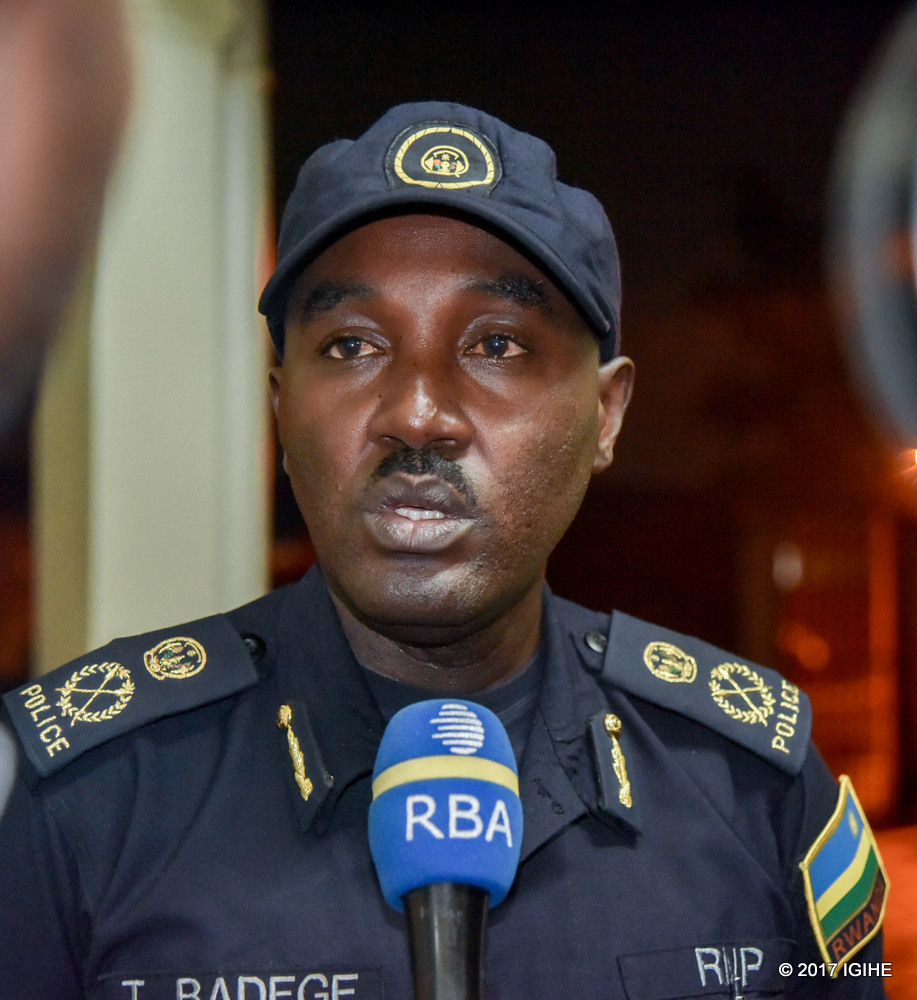
Those promoted include ten officers from Assistant Commissioner of Police (ACP) to Commissioner of Police (CP), those include; ACP Faustin Ntirushwa, ACP Theos Badege, ACP Jean Marie Twagirayezu, ACP Rogers Rutikanga, ACP William Kayitare, ACP Denis Basabose, ACP Vincent Sano, ACP Robert Niyonshuti, ACP Egide Ruzigamanzi and ACP Rafiki Mujiji.
Kagame also promoted 31 officers from Chief Superintendent of Police (CSP) to Assistant Commissioner of Police (ACP); 18 from Senior Superintendent of Police (SSP) to Chief Superintendent of Police (CSP); 43 Superintendent of Police (SP) to Senior Superintendent of Police (SSP), 110 Chief Inspector of Police (CIP) to Superintendent of Police (SP).
Kagame also promoted 403 from Inspector of Police (IP) to Chief Inspector of Police (CIP); one officer from Chief Sergeant to Chief Inspector of Police (CIP), two Sergeants to Chief Inspector of Police (CIP); 391 from Assistant Inspector of Police (AIP) to Inspector of Police (IP).
Also promoted are two officers from Chief Sergeant to Assistant Inspector of Police (AIP); one from Senior Sergeant to Assistant Inspector of Police (AIP) and three officers from Sergeant to Assistant Inspector of Police (AIP).
“The RNP leadership congratulates all those who have been promoted,” the statement reads.
{{Retirement }}
President Kagame has also retired 111 Rwanda National Police Officers varies from different ranks as follows.
Retired are two Assistant Commissioner of Police (ACP), four Chief Superintendent of Police (CSP), six Senior Superintendent of Police (SSP), 17 Superintendent of Police (SP), 19 Chief Inspector of Police (CIP), 62 Inspector of Police (IP) and one Assistant Inspector of Police (AIP).
“The RNP leadership thanks those who have been retired for their dedication and sacrifice in ensuring safety and security of our country,” the statement issued yesterday reads.
US citizens should, however, “reconsider travel to the Rwanda-Democratic Republic of Congo (DRC) border due to armed conflict,” the advisory states.
The Department scraps travel warning to Kenya, by giving to the country the second-highest rating
Kenya is placed in the second tier under the new system. When visiting countries in that grouping, US citizens are urged to “exercise increased caution.”
Officials in Kenya and the country’s tourism stakeholders are likely to welcome the changes initiated by the Trump administration, which also comes as Kenya Airways announced direct flights to the US beginning October.
The new advisory flatly warns against travel to the “Kenya-Somalia border and some coastal areas due to terrorism.”
The counties of Mandera, Wajir, Garissa, Tana River and Lamu are included in the suggested no-go area, along with parts of Kilifi County north of Malindi.
It is also suggested that US citizens “reconsider travel to Nairobi neighbourhood of Eastleigh at all times and Old Town in Mombasa at night due to crime.”
Now, as then, US citizens are told that violent crime can occur at any time in Kenya and that police often lack the capacity to respond to criminal incidents.
Tanzania and Uganda are both placed in the level-two group along with Kenya.
Travelers are told to “exercise increased caution in Tanzania due to crime, terrorism, and targeting of LGBTI persons.”
The Uganda section makes no mention of threats to lesbian, gay, bisexual, trans-gender or intersex persons, despite passage of a law in 2013, later annulled by the country’s Constitutional Court, that mandated life imprisonment for “aggravated homosexuality.”
US citizens are simply advised to exercise increased caution in Uganda due to crime.
Burundi is designated a level-three destination. The US tells prospective visitors to “reconsider travel” to Burundi due to crime and armed conflict.
This cutting edge technology was launched by babyl in 2016, and since then, it delivers accessible healthcare to 750,000 Rwandans. The digital service can be accessed from anywhere, meaning people don’t have to make long trips to the nearest clinic or wait in long queues for doctors. Prescriptions can also be sent to the patient’s phone and dispensed at a pharmacy partnering with babyl.
The Memorandum Of Understanding signed by the Ministry of Health with the Rwanda Social Security Board (RSSB) means babyl’s digital service will be available across Rwanda.
With this service, Rwanda becomes a beacon in East Africa using the most advanced health technology and artificial intelligence and making it available to the population. It gives Rwandan’s access to high quality healthcare through their mobile phones, including cutting edge artificial intelligence symptom checking and live telephone consultations with trained nurses and doctors.
Accordinng to Rwandan Health minister, Dr Diane Gashumba, the possibilities to improve healthcare at every level of the healthcare system become endless.
“Rwanda was the first country in the world to see drones delivering blood units to health facilities. Now the Government of Rwanda is embracing cutting edge technology by partnering with babyl to ensure that every Rwandan who needs healthcare can access it. “, said Dr Diane Gashumba
Harmonizing with the health minister, Tracey McNeil, CEO of babyl said that with the help of technology; the health sector would be effectively made accessible for all.
“We live in a world where over 50% of the population has little or no access to healthcare yet increasingly, most of us carry a mobile phone in our pocket. babyl’s mission is to harness technology to put accessible and affordable healthcare in the hands of every Rwandan. I am proud that this partnership means Rwanda is one of the first countries to offer its entire population accessible healthcare wherever and whenever they need it.”, said Tracey McNeil, CEO babyl
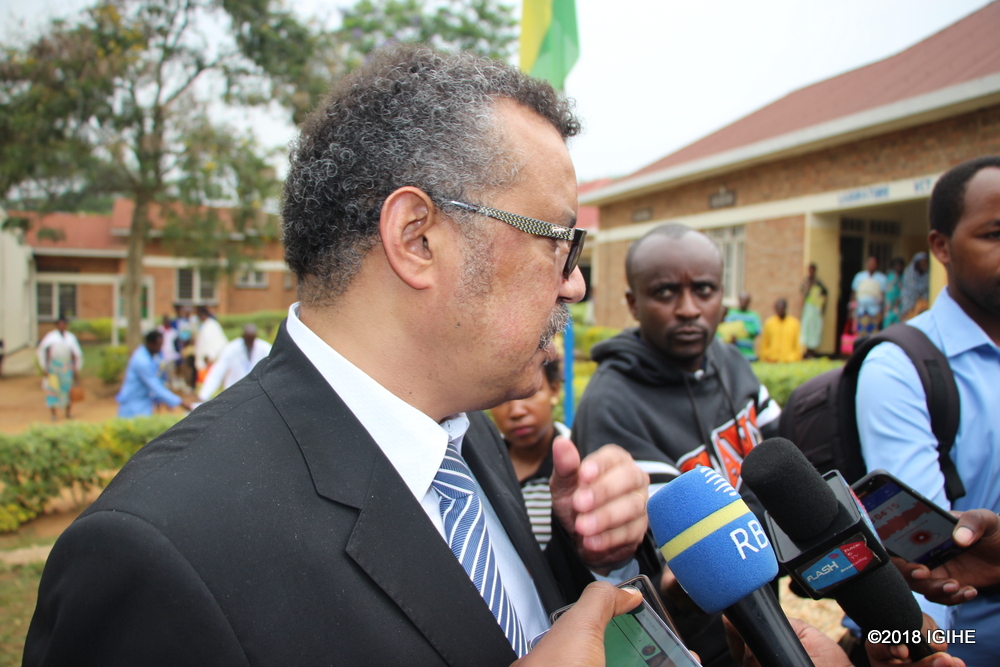
Tedros who is in the country was Thursday visiting Mayange Health Center in Bugesera District.
His visit aimed at observing Rwanda’s health programmes to population. He said that he was impressed with community health workers’ role in promoting health services to Rwandan population.
“As you know Rwanda is among countries that have committed to provide healthcare to all populations. I visited this health center, not only to observe its operations, but also to observe health workers’ services, actually they do good job,” he said.
Tedros said that he was impressed by the Community Health Workers who are providing lifesaving services to their villages by treating malaria, pneumonia and diarrhea as well as helping communities in health promotion and disease prevention.
“Very impressed to learn that all children are immunized in this sector and also all women deliver in the health facilities. This is a result of your hard work and dedication,” he told community health workers.
“Primary health care is very important and I am glad to see the best results you are getting from it, WHO will always be on your side,” he said.
Health Minister, Dr. Diane Gashumba said that they chose to visit Mayange as among model health centers in the country.
“Mayange Sector covers 100% of medical insurance (Mutuelle de Sante), it is a great achievement attained with the support of Community health workers and local leaders. Reports also show us that all women deliver at health facilities,” she said.
She said that in general, 91% of women deliver at hospitals countrywide and 93% of children are dewormed. She said in partnership with Community Health Workers, they strive hard to reach 100% cover in all services.
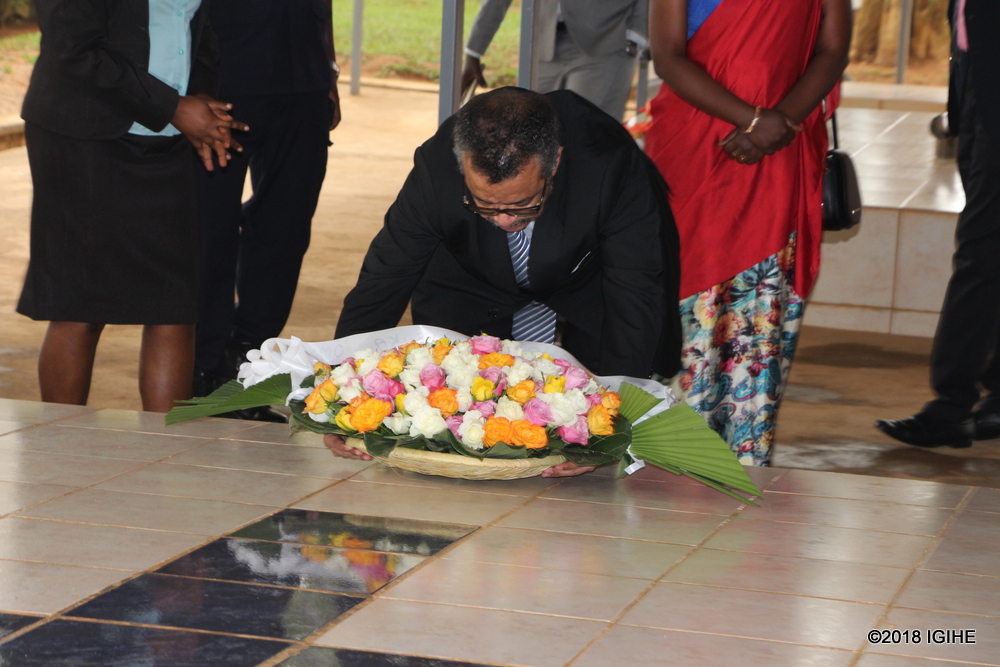
During his visit in Bugesera, Tedros paid tribute to the victims of the 1994 genocide against the Tutsi laid to rest in Nyamata genocide memorial.
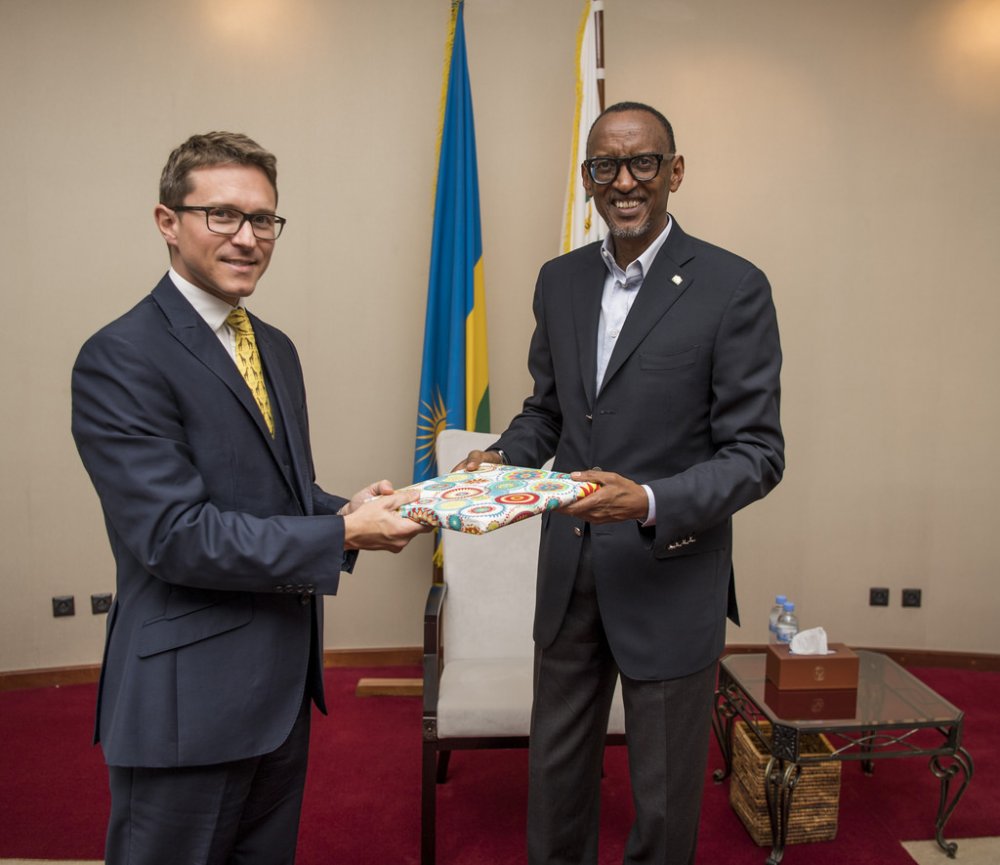
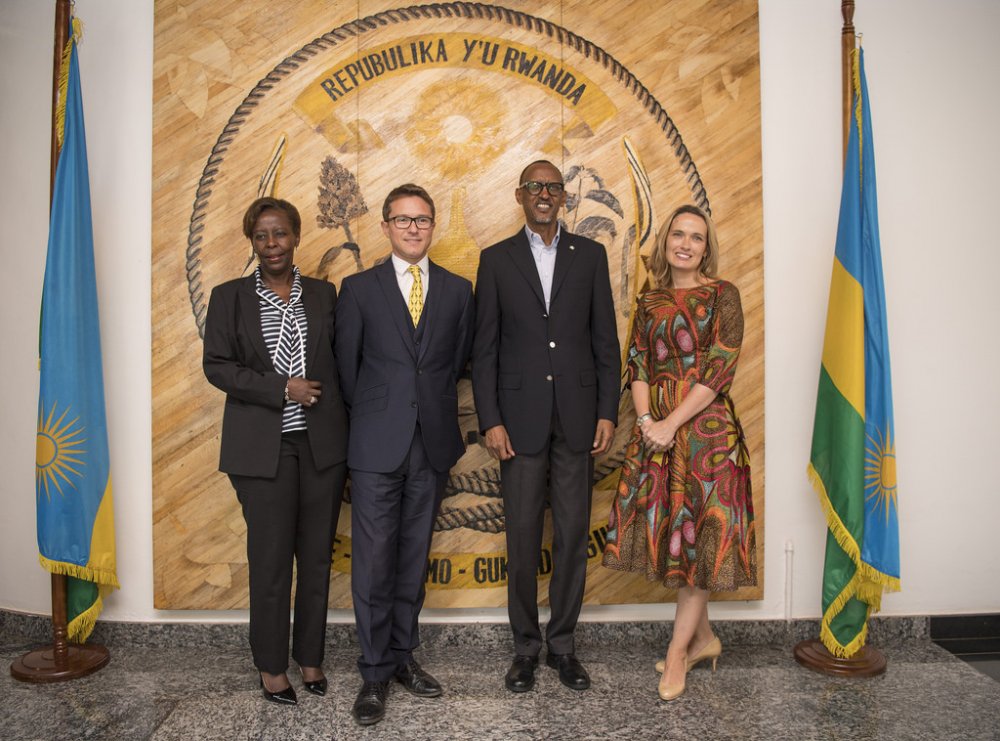
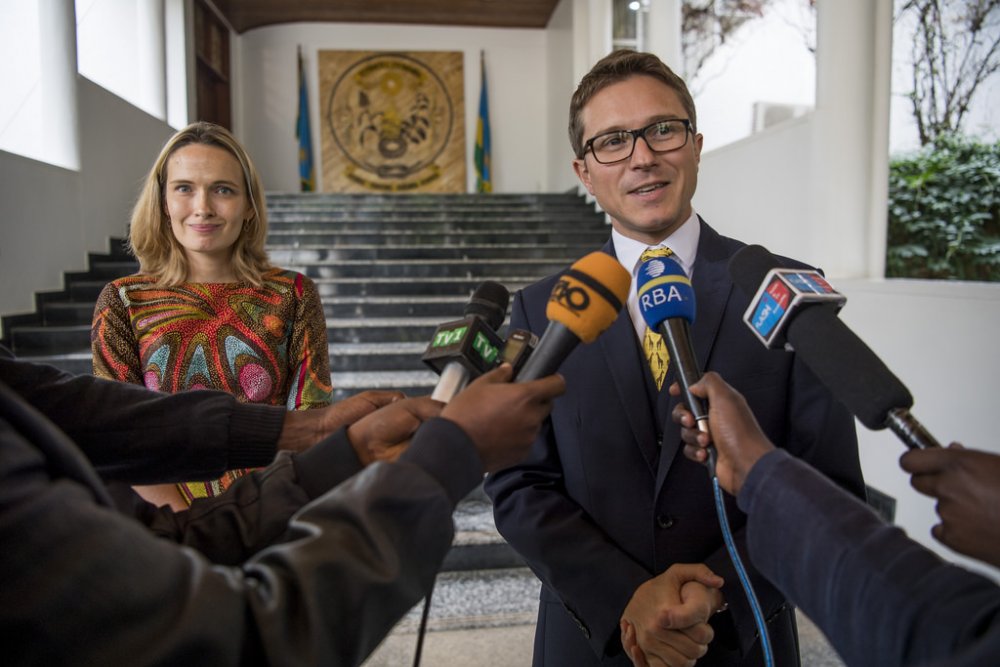
Speaking to the media after the meeting with Kagame, Gelling said that the partnership and cooperation between both countries has been good and is optimistic it will continue.
“It’s a pleasure to have served here for four years. I think there are things that have been done like growth of trade and investment between two countries and bilateral relations in different aspects like supporting trainings for peace-keeping under United Nations. We wish Rwanda and the Rwandan government all the best in the future,” he said.
Gelling said that both countries have strengthened cooperation in trade between two countries but particularly the establishment of direct flights between UK and Rwanda.
“Also we had big military exercises last year and we hope that they will continue,” he said.
The Cabinet meeting of November 8th 2017 that was chaired by President Kagame approved Joanne Lomas to represent UK in Rwanda replacing Gelling.
Joanne had been the ambassador of UK in Windhoek, Namibia since 2015.
Rwanda and UK have great cooperation through the Department for International Development (DFID). UK supports Rwanda in different sectors including education, agriculture, social welfare, peace and security, trade and investment among others.
“We are honored to welcome the Director General, Dr Tedros and we are so grateful to the good partnership with WHO through which we are making good progress towards Universal Health Coverage and are prepared to establish a resilient epidemic preparedness and response strategy.” Said Dr Diane Gashumba, Minister of Health.
From the past decade, Rwanda has introduced and implemented the Community Based Health Insurance (CBHI) commonly known as ‘Mutuelle De Santé’and this has improved from 7% to 84% in terms of coverage rate. CBHI focuses mostly on people in the informal sector and aims at providing them with equitable access to quality health care services. The growth of CBHI led to remarkable improvements in key health indicators for example; skilled birth attendants rate rose from 39% in 2000 to 91% in 2015, maternal and child mortality has reduced significantly making Rwanda achieving MDG’s 4 & 5.
In September 2017 during the UN General Assembly side event on Universal Health Coverage, Dr.Tedros highlighted the importance of scaling up Universal Health Coverage.
“Universal Health Coverage improves health, reduces poverty, creates jobs, drives economic growth, promotes gender equality, and protects populations against epidemics,” said The WHO Director. “But the reality is that around the world, at least half of the World’s population lack access to essential health services, and at least 100 million people are pushed into poverty by paying for health care out of their own pockets,” He added.
Dr.Tedros said UHC is achievable owing to the evidence showing that 85% of the costs of meeting the SDG health targets can be met with domestic resources.
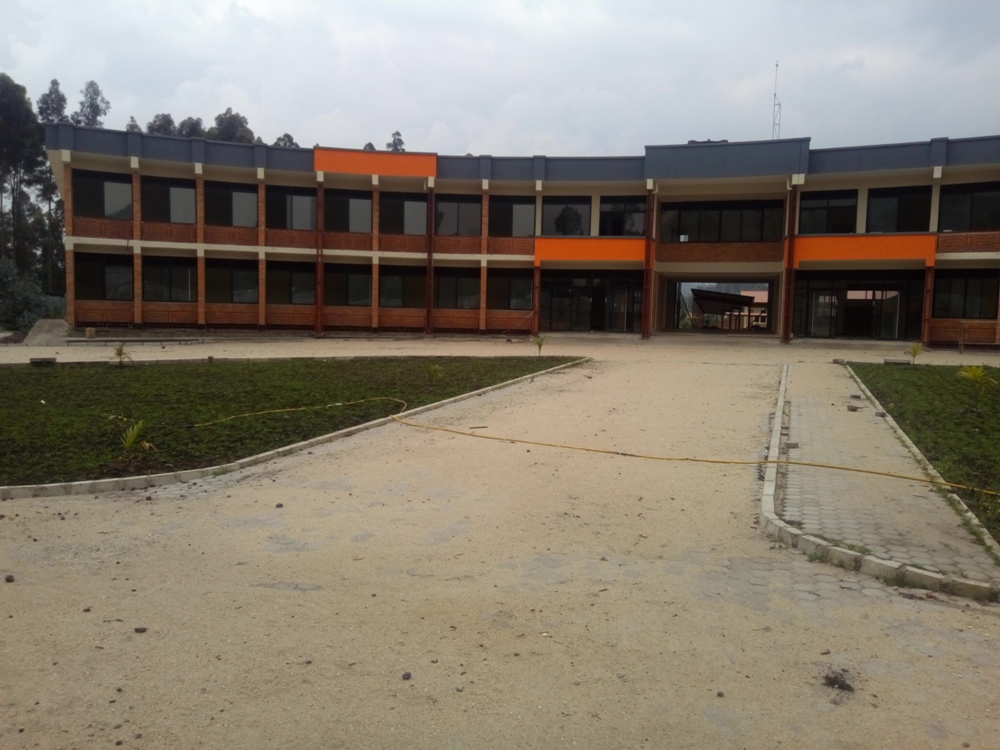
The school will provide students with skills to transform agricultural and dairy production especially in transforming Irish Potato and Maize production, train students in leather tanning and shoe making among other products.
A total of over 300 students will benefit from the school every year.
Optimism in Nyabihu residents
Nyabihu residents say they are ready to enroll their children for vocational skills.
“I thank the government of Rwanda for constructing this school which will help our children acquire vocational skills. During the construction activities, many people got jobs,” said Zachée Kalimba from Mukamira sector.
The school will have advanced level, but will also train secondary school leavers and university graduates who will wish to acquire vocational skills.
Nyabihu District Vice-mayor in Charge of Social Affairs, Clarisse Mukansanga urged parents to sensitise children about benefits of vocational skills so that they will grow up with working spirit that will help them in development.
“We urge parents to grab the opportunity and let their children enroll for the acquisition of vocational skills so that they can contribute to own and national development,” she said.
The outreach programme held in Rubavu District brought together local leaders, elders, teachers, religious leaders and residents, majority the youth.
The exercise was also characterized by testimonies of drug dealers arrested recently, and reformed drug dealers and addicts, who shared their ordeals.
One of the suspects is Francine Nikuze, who was arrested recently with a bundle of cannabis strapped at her back as a baby.
“I have been trafficking drugs into the country for years until I was arrested recently. I would swim through Lake Kivu or use various tricks through porous borders. Life is not good in prison and I don’t wish to see anyone in this situation,” Nikuze told thousands of youth.
To Omar Umuhoza, a former drug dealer and addict, life has changed since he quit drugs.
Umuhoza is a pioneer at Iwawa Rehabilitation and Skills Development Centre, where he spent two years. He has since brought together reformed and rehabilitated addicts to form a carpentry cooperative in Rubavu.
“Drugs stole my chance to acquire education and my time to have a resourceful life. I became a renowned thief in Kigali; a life of arrests and misery. Even when I started a positive life in Kigali, few people trusted me and I had to relocate to Rubavu. I must say that Iwawa was my turning point,” Umuhoza said.
The Minister of Local Government Francis Kaboneka, while addressing youth at Umuganda stadium, said that “the first enemy of the youth today are illicit drugs.”
“Winning or success is driven by a healthy and positive mind; the wealth of this country is it’s people especially the young generation but whose lives are threatened by illicit drugs,” Minister Kaboneka said.
At least 40 per cent of over 2040 drug dealers arrested last year are the youth aged between 18 and 35 years,according to Police statistics.
He noted that drug abuse is one of the major obstacles to development in different aspects including education and health, citing school drop-outs, spending resources in rehabilitating addicts.
“We want a healthy and focused generation, and that’s what this campaign is all about,” he said.
The Minister of Youth, Rosemary Mbabazi to also appealed to the youth to be driven by positive decisions and work with the police to identify and arrest drug dealers.
The State Minister in the Ministry of Health, Dr. Patrick Ndimubanzi embarked on side effects of abusing drugs, citing mental illness, liver and heart complications including cancer.
The Governor of the Western Province, Alphonse Munyenwari said that measures against drugs have been adopted including conducting similar campaigns down to the village level.
Meanwhile, IGP Gasana said that the force has increased deployments and operations against drug dealers, but “counting in your strengthened community policing spirit through community patrols and timely information sharing with the people on dealers.”
The separate discussions centered on parental care and guidance, preaching against the vice in churches, campaign in schools and sharing information at all levels with security organs on identified drug dealers.
The open discussions also included testimonies on how illicit drugs are trafficked into the country, major affected areas and hideouts for either dealers or users, which the police said its a step further towards reversing the trend.
The campaign against drugs in Rubavu also include public destruction of about 420kgs of cannabis and over 1900 liters of illicit gin, all valued over Rwf47 million.
The countrywide awareness campaign is aimed at having similar understanding in response to the problem and to break chains of supply, which is seen as an effective way to prevent consumption.