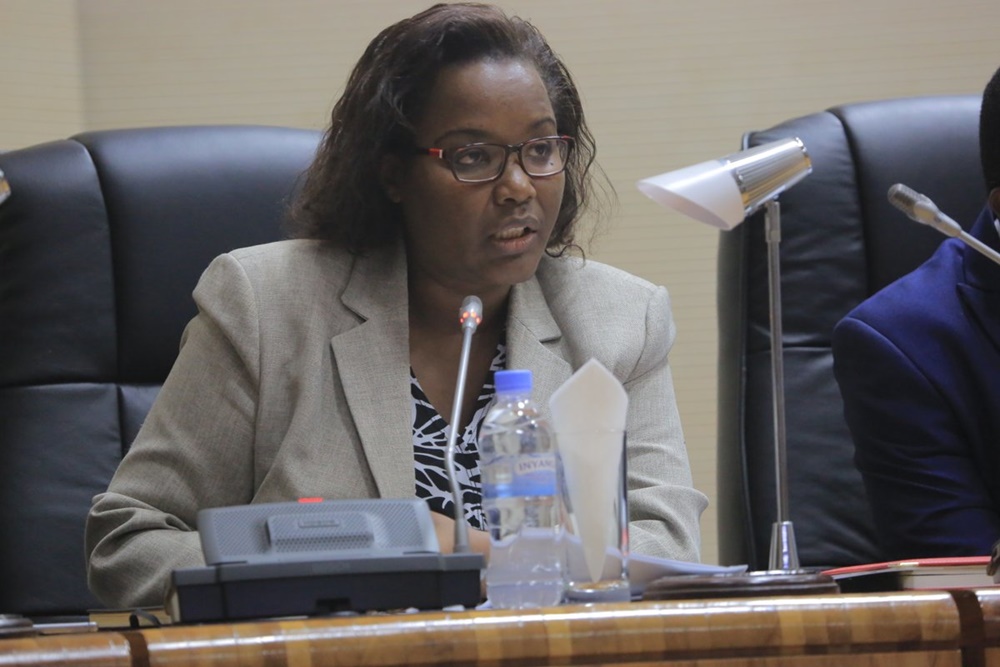
The protests followed a decision of the World Food Programme (WFP), a partner UN agency, to reduce food assistance to the refugees by 25% due to funding shortage. All refugees hosted in Rwanda are affected by this WFP decision.
Jean Claude Rwahama, Director of Refugees Affairs in the Ministry of Disaster Management and Refugees said:
“Refugee representatives have been meeting camp management, local authorities, as well as UN partner agencies to discuss the cause of Tuesday’s incident. It is unfortunate that some refugees resorted to violence even as local authorities and security personnel were working to find a solution to their grievances.
Several people were injured, but we are thankful that there were no fatalities.
We are mindful of the rights of refugees but also caution that they must respect the laws of the host county. Police will therefore carry out thorough investigations into this incident, to establish responsibility and ensure it doesn’t re-occur.”
Mr. Rwahama also dismissed claims that there are plans to categorise refugees in Ubudehe, as this is a development-planning tool for Rwandan nationals. However, GoR has learnt that UN agencies were inspired by this model to provide assistance to refugees based on their specific needs and capacity, as part of the UN’s Comprehensive Refugee Response Framework.
The Kiziba camp is one of five refugee camps in Rwanda. It was established in 1996 when thousands of Congolese refugees were fleeing the conflict in Eastern Democratic Republic of Congo. The camp currently hosts more than 17,000 refugees.
The Government of Rwanda is committed to ensuring the safety of refugees hosted in Rwanda. The Government will continue to work with various partners, including UN agencies, to improve the wellbeing of all refugees living in Rwanda.
The EAC Sectoral Council on Cooperation in Defence directed the EAC Secretariat to convene a DEWG to benchmark the Rwanda Military Hospital (RMH) medical simulation Centre and develop a standard protocol for management of health conditions in the EAC Armed Forces.
The five-day meeting started on Monday with a tour to the Rwanda Military Hospital and its International Trauma Life Support Training Simulation Centre (ITLS). The centre serves as a Pre and post deployment training Centre for the United Nations Peacekeeping Missions.
According to Col. Dr. Jean Paul Bitega, the Commandant of RMH, the meeting of EAC Armed Forces medical experts will help in the harmonisation of EAC health services in the military.
“The aim of this meeting is to harmonise the EAC way of delivering health services to the level that any patient treated in Nairobi is eligible to receive the same treatment in Kigali or elsewhere in EAC without any difference”.
The Representative of the EAC Secretariat, Brig. Gen. Kansigazi Tumusiime reiterated in the same line that the meeting was convened in Rwanda to specifically address medical challenges affecting EAC defence forces.
“What we have seen in Rwanda is a very positive achievement by the Rwandan military; they have shown us how post traumatic matters can be handled. When EAC Member States unite they would be able to handle many health issues together.
Rwanda has given us a way forward, we are very glad for the people of Rwanda, they have been able to break through, they are able now to address traumatic matters in their military,” he said.
The meeting due to conclude on Friday 23 February 2018, is conducted in accordance with Article 2 of the EAC Protocol on cooperation in Defence Affairs.
In a suspension order signed by the RURA Director General, Lt. Col. Patrick Nyirishema the radio was requested to air a statement of correction and apologise to the public in not more than two hours after receiving the letter.
The radio also was instructed to close down for a month.
RURA said that the radio failed to uphold national interests and national Security. The letter also says that the radio also failed to comply with Rwandan culture, norms and values.
According to RURA, the radio didn’t comply with relevant laws and regulations as well as licence obligations.
“Due to non-compliance of the elaborated above, Amazing Grace Christian Radio is hereby ordered to suspend all broadcasting services for thirty calendar days after apologizing to the public,” the statement reads.
The Radio was asked to pay administrative fine of Rwf2 million on RURA account in fifteen days.
In his sermon, preacher Nicholas Niyibikora referred to women as prostitutes and evil among other shameful words.
Different people criticized the sermon calling institutions in charge to act on the preacher and the radio.
The Rwanda Media Commission recently deliberated on the matter and requested RURA to shut the frequencies of the radio.
The district’s Mayor George Mupenzi says the educationists resigned by their will during the meeting held on February 2nd in which he and his subordinates informed the summoned teachers about their disciplinary faults.
However, the victims say they were forced to sign the resignation under a tense pressure of district officials flanked by army and police officers in a showdown that ran from 11am to 2am of the next day as some of them received beatings and detained in a transit centre.
Mupenzi rejects claims of beating or detaining any of the teachers and says there were no security forces involved in the exercise that intended to safeguard the quality of education.
He says the teachers’ faults include reporting at work when they were drunk, skipping some working days and delays to attend their work, poor hygiene and bad schools management.
But the handling of the faults, whether true or false, has ignited public outcry with many wondering if the district had exhausted all disciplinary sanctions or if there is an untold story behind the allegedly forced resignation.
Again if the all the sanctioning procedures were exhausted, the district had legal powers to dismiss the teachers instead of waiting for their resignation.
“We are wondering how people decide to resign today and come back to claim their jobs tomorrow. Unless it is proved that all 46 have acquired mental illness,” says Faustin Harerimana, the General Secretary of Rwanda Teachers’ Syndicate.
{{But what’s really behind the saga? Victims speak out.
}}
Some teachers have told IGIHE that they are victims of claiming their dues and denouncing faults of their schools’ leaders who are cherished by district officials.
Dorothée Mukapeti, former Deputy Head-teacher in charge of Studies (DOS) at GS Bufunda, says she started denouncing her school leader’s actions in 2015 but the tension tightened in April 2017 when the DOS pointed out her school teachers who had no full work timetable and others receiving higher remunerations than their qualification deserved but they were under cover of the head-teacher
“I reported that mismanagement and embezzlement of public funds to the district’s vice mayor, the checking was done and the two teachers were transferred from our school but my headmaster got so angry with me and slapped me in front of students and teachers when I asked him the teachers’ attendance book as usual but he feared I would see other unnecessary teachers in the book,” said Mukapeti, the mother of six and a teacher since 1996.
The checkout by the Ministry of Education found at least 128 ghost teachers in Nyagatare in 2017.
Mukapeti says she reported her assault case to police and her deprivation of duties by headmaster to district’s officials who later visited her school to reconcile the two and headmaster apologised for his deeds. Her assault case is now in Nyagatare Primary Court.
She was relieved of her DOS duties last month and transferred to another school where she had started working as a mere teacher a week before her forced resignation
A male victim, who signed the resignation after days of detention and beatings, says he was charged with drunkenness but he had issues with his head-teacher over funds that parents contribute for teachers’ welfare commonly known as PTA. He says he and his fellows were falsely accused to the district’s officials by their own head-teachers with whom they had some disagreements.
Another male victim says he was, together with his seven colleagues from Bushara Primary School, accused of drunkenness but he puts his firing on his head-teacher with who he once had a misunderstanding.
Another victim lady also says she had issues with her head-teacher over the school’s mismanagement while the leader is a close friend to Nyagatare Vice-mayor in charge of Social Affairs, Domithille Musabyemariya.
Musabyemariya told IGIHE last week that these teachers’ issue was strange to her while the teachers say she was in the team that forced them to sign resignation letters.
As teachers’ syndicate awaits holding talks with the district, Harerimana says that they consider going into court of law in case the talks fail.
A teacher from Tabagwe Sector told IGIHE yesterday that some of the victims were getting back into their jobs since Monday but we were unable to verify the news by press time.
{{Legal disciplinary sanctions
}}
According the Presidential Order of 2014 determining modalities of imposing disciplinary sanctions to public servants, sanctions of the first category correspond with petty disciplinary faults according to their gravity. From the least to the heaviest, sanctions of the first category are warning and reprimand.
Sanctions of the second category correspond with serious disciplinary faults according to their gravity. They include delay in promotion, suspension for a period of three months maximum without pay and dismissal.
Article 14 stipulates “A public servant to be sanctioned by dismissal shall be the one who refuses to take oath as a public servant in accordance with the relevant laws; deserts his/her work without known reason or without authorization for a period of at least fifteen (15) consecutive days; is definitively sentenced by a court to a term of imprisonment equal to or exceeding six (6) months; fraudulently alters the content of his/her or another person’s professional file; has submitted among his/her credentials falsified documents in order to get recruited; steals at work; assaults another person at work; insults the head of his/her institution or his/her deputy or any other high official on the same or superior job level; commits a fraudulent act or omission aimed at favouring a candidate or putting his/her at disadvantage in course of recruitment process; requires, receives or offers donation or illegal benefit for provision of a service; harasses another person for the purposes of sexual intercourse and there are proof thereto; commits a gender-based violence at workplace,” it reads.
The Office of the President in Zambia has announced that Lungu will arrive in the country today with a team made up with Home Affairs Minister Stephen Kampyongo; Foreign Affairs Minister Joe Malanji; Transport and Communications Minister Brian Mushimba and Commerce Minister Christopher Yaluma.
During the visit, Lungu will learn how Rwanda’s economy continues to grow in and how the country continues to develop in terms of citizens’ welfare under the leadership of President Paul Kagame.
It is expected that Lungu will visit Kigali Genocide Memorial Center to honor victims of the 1994 genocide against the Tutsi and will also visit Kigali Special Economic Zone. Lungu will be hosted by President Kagame in a state banquet in Kigali Convention Center.
Lungu had been in Rwanda in August, 18th last year during the swearing in ceremony of President Kagame.
Kagame also visited Zambia on June 19th last year. As a result of discussions between both Heads of States, both countries signed agreements in Aviation, army and security cooperation and extradition of criminals.
Transforming from her past fame as Sandy Soul to Sandra Nankoma, this album is perhaps inevitable to miss-the vocal soul star covers the musical baselines of Jazz and soul-ballad with a distinctive identity and tune that will break barriers of an African soul singer and take the world by storm.
As a singer, song writer, Sandra Nankoma has collaborated with Multiple geniuses on this project: Kaz Kasozi her Mentor, producer and Music director of Littleroom Studio, Uganda; David Felgeirolles, of Future Paradise Studio, France; Michael Avron, Christophe Pittet and Felix Sabal-Lecco.
YE’NZE drops this week on Thursday 22nd February 2018. You can find it on all digital platforms including iTunes, Spotify, Deezer, Amazon, Believe, and CD Baby. To make an order for a CD or vinyl, you can contact maijakrivenburg@gmail.com
If you’re a devoted lover of soul, this album is a different soul that you never heard before, it is Ugandan and you can not miss its generational expression.
Demonstrations started last week taking place inside the camp, but today refugees started to show their fury outside.
Speaking to IGIHE, the Director of Refugee Affairs Unit at the Ministry of Disaster Management and Refugee Affairs, Jean Claude Rwahama said that it started as news rounds on social media that refugees have decided to go back to their country.
“It has been circulating on social media for some days. Some refugees are claiming that their food ration was cut, and that they are being categorized in social protection programme (Ubudehe), a programme which they say aims at turning them into Rwandan citizens,” he said.
However, Rwahama rejected the claims saying that the process was different from the claims.
“Though it is in the rights of refugees to go back to their mother country, but as you know their country (DRC) is not safe. We tried to discuss with them explaining how the decision is not right. They planned it before and started to implement it today morning. The majority are youth and children,” he said.
Rwahama said that all refugees out of the camp have camped at United Nations High Commission (UNHCR) Offices in Kibuye town Karongi District.
He said that those who decided to quit the camp are estimated between 500 and 1000, according to MIDIMAR officials on the field.
Rwahama said that Karongi District Mayor, yesterday visited the camp and discussed with refugees about all issues but they didn’t get contented.
“We consider the act as demonstration because it is against normal process; whoever wants to go back in their mother nation should inform UNHCR and follow legal process. So, going in such crowd is not allowed, and the reason why we consider the act as demonstration,” he said.
{{Way forward.}}
Rwahama said that they are going to continue discussions with refugees, but added that when it is a case of demonstration, security institutions will intervene.
In December and November last year, food rations for refugees were reduced by 10% due to underfunding.
World Food Programme (WFP) and UNHCR appealed to donors to contribute funds to prevent a 25% reduction from January onwards in food and cash assistance.
In order to manage limited funding, in December last year, UNHCR, WFP and UNICEF held a taskforce meeting to discuss targeting assistance to the most vulnerable refugees through Rwanda’s social protection system known as Ubudehe.
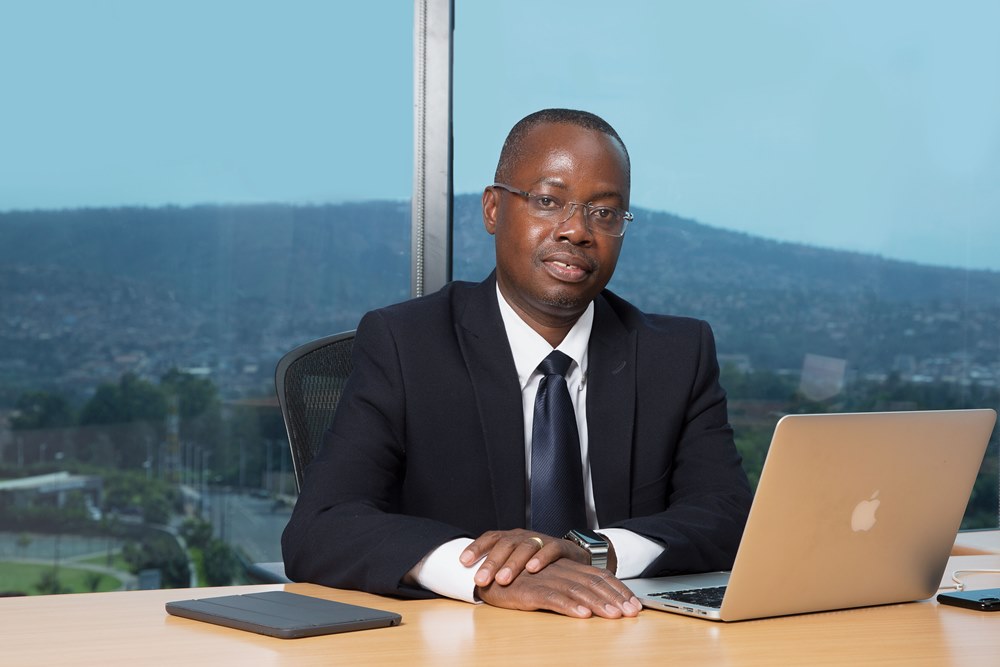
Mr. Amoateng is a member of the Association of Chartered Accountants and a graduate of the University of Leicester with an MBA. He has held various operational, financial and strategy positions whilst he worked at Millicom for more than 16 years.
In 2016, he was appointed CEO Tigo Rwanda, a position he held until the organization was acquired by Airtel.
According to Airtel, the move to combine the two entities will see improvements in coverage and a wider network of customer touch points.
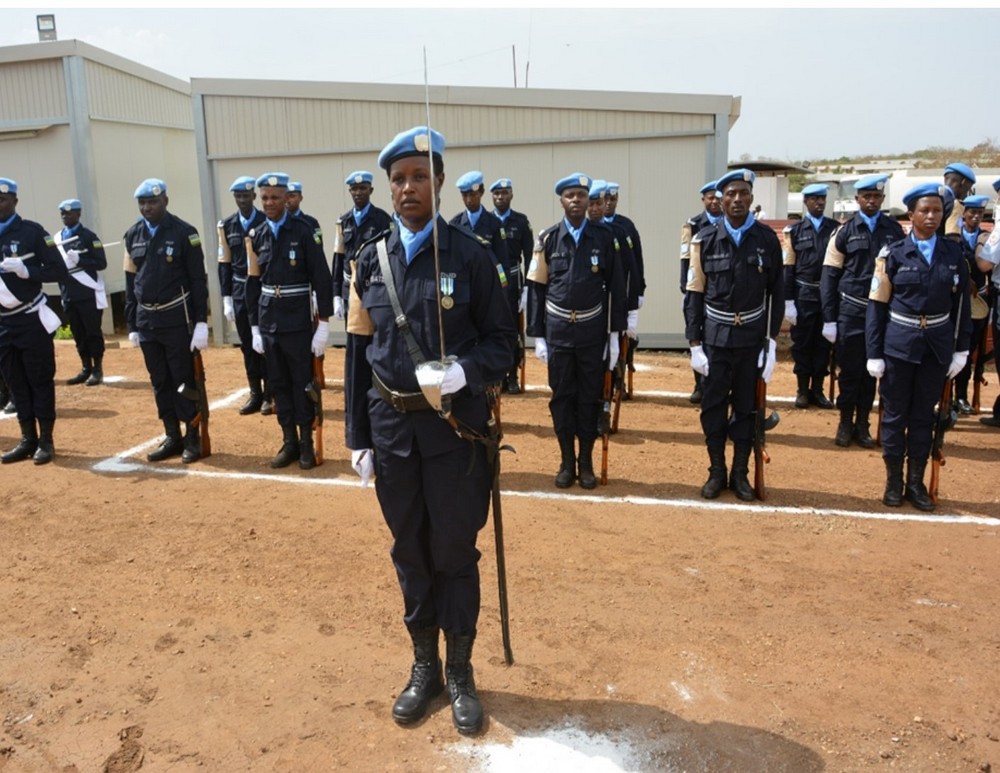
The decorated officers include 160, who constitute the Rwanda Formed Police Two (RWAFPU2) under the command of Assistant Commissioner of Police (ACP) Bosco Rangura deployed in the capital Juba; and 23 Individual Police Officers (IPOs) who work as advisers and mentors.
About 30 of all those decorated are female.
The medal parade was held at RWAFPU 2 Base Camp, and attended by UNMISS force commander, Lt. Gen. Frank M. Kamanzi, Police Commissioner, CP Bruce Munyambo and fellow police and military peacekeepers from other countries as well as UN staff.
It was also attended by the Rwandan Community in South Sudan and friends of Rwanda.
The UN service medal is in recognition of the dedication and sacrifice made by peacekeepers during their deployment in a foreign land for peacekeeping duties.
The UNMISS Deputy Special Representative of the Secretary General (Political), Moustapha Soumare, who presided over the medal parade, thanked the Government of Rwanda for its commitment to global UN work.
“Your contingent of 160 police officers has so far served in South Sudan for ten months. We salute you today for your hard work in support of the UN Mission in South Sudan, and thank you for your service,” Soumare said.
He commended them for their dedication and commitment in UNMISS, which he observed that it’s the “most challenging peacekeeping missions in the world.”
“Your efforts have been critical to the success of UNMISS, and you can be sure your work has had a positive effect on the lives of tens of thousands of South Sudanese. You have provided specific capability that has enabled a secure environment within the Juba and Protection of Civilians site,” he said.
He particularly lauded their professionalism in crowd control and management of protestors, rescuing and protecting humanitarian staff, high profile officials, and their community work within the Protection of Civilians sites.
“You have set an example for others to emulate and for that, you should be very proud,” Soumare said.
“It is with great pride and admiration that I would mention the efforts and contribution of the proud female members of the Rwanda contingent here today. I must emphasize the need for more Rwandan females to be deployed to UNMISS. No need to say that the role and contribution of female personnel is especially crucial in our context here in South Sudan, by making uniformed personnel more accessible to the most vulnerable civilians – girls, boys, women and the elderly.”
He further reminded them to continue to guard the UN stands especially the policy of zero tolerance against Sexual Exploitation and Abuse.
“It is our individual and collective responsibility, uniformed and civilians alike, to safeguard the intrinsic dignity of the people who we are here to support. As guests in this nation, we must respect our host in each and every one of our interactions, activities and tasks. We must always uphold the highest standards of integrity and professionalism in our work,” he said.
ACP Rangira also thanked the UN for recognising their service.
“It has been 10 demanding months; it would not have been easier without support, encouragement and guidance of various stakeholders and we also dedicate these medals to all those who facilitated us,” ACP Rangira said.
He also took the opportunity to applaud the officers under his command for their hard work, diligence, discipline and commitment, and urged them to maintain the spirit even in the reminder of their mandate.
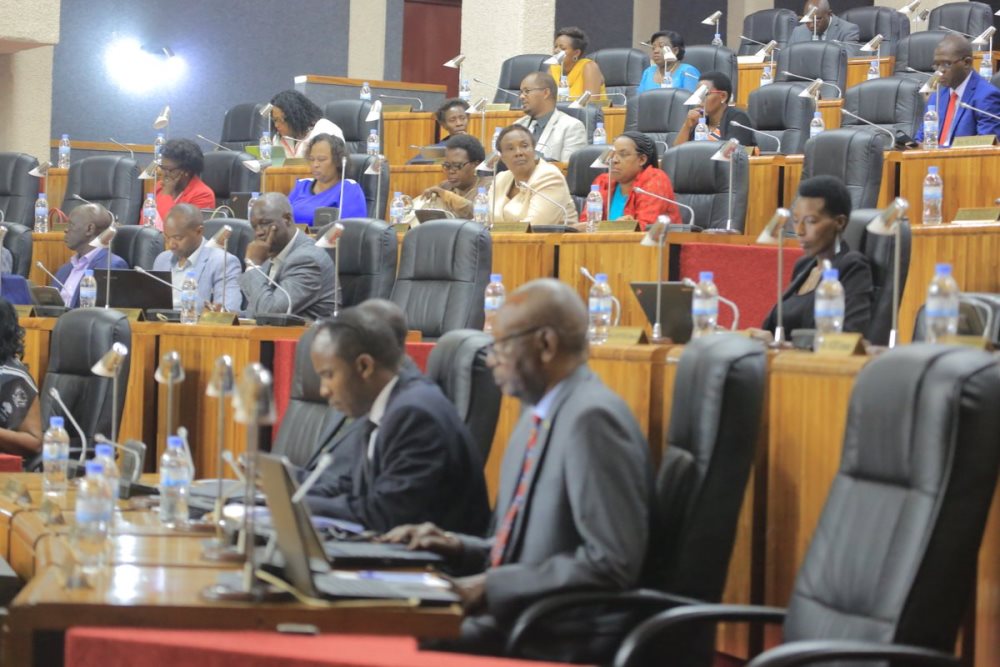
The question was raised yesterday when Minagri Minister, Geraldine Mukeshimana and Trade and Industry Minister, Vincent Munyeshyaka was appearing before the MPs’ plenary session responding to several questions regarding their ministries which were raised in different parliamentary committees’ reports.
Among the problems raised are irrigation machines which provide law production compared to the budget that was spent on them, agro-collection centers and post-harvest handling practices.
MP Marie Josée Kankera questioned whether continuing rotation and dismissal of officials in RAB would not be the reason behind poor performance of agriculture sector.
“Changing an official who does not implement responsibilities is normal, we thank for government efforts to hold into account leaders and dismiss those who fail to implement their responsibilities. But I want to stress RAB officials rotation. Particularly, I think that it affects our production and attracts these problem in agriculture,” she said.
She said that every official entering the institution takes time to analyze problems and initiate measures to solve them.
“A number of PhD holders who were appointed in that board did not last there, doesn’t this attract agricultural and animal resources’ problems that the board should have been responding to? I would like to know whether there are measures to make management of that board stable, because I think that when the management is working properly, all things go well,” she said.
Minister Mukeshimana tried to explain some measures that were taken to respond to problems in agriculture but the plenary was closed before she spoke about the problem with RAB management.
{{RAB officials dismissal }}
The extra-ordinary cabinet meeting of January 19th removed Dr. Marc Cyubahiro Bagabe from RAB Director General Position and replaced him by Dr. Patrick Karangwa.
In November last year, Prime Minister, Dr. Eduard Ngirente dismissed four RAB officials including former Deputy Director General, Dr. Daphrose Gahakwa, the Head of Land Husbandry, Irrigation and Mechanization, Innocent Nzeyimana, the Head of Corporate Services Division Violet Nyirasangwa, and the Head of Finance Theogene Bimenya.