The move is part of 13 resolutions that were taken in the just concluded 15th National Leaders Retreat.
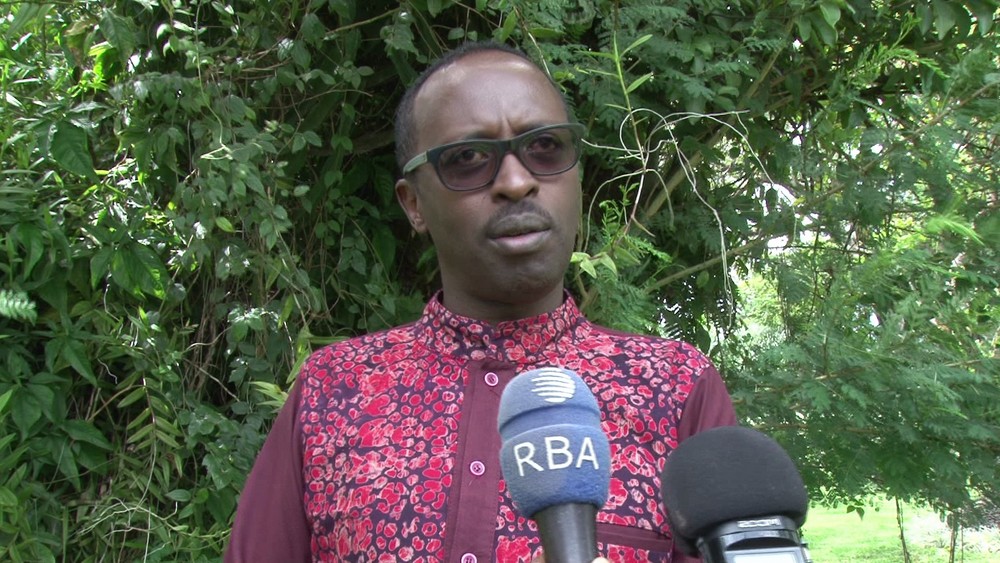
Speaking to the media yesterday, Education Minister, Dr. Eugene Mutimura said that for quality education to flourish, both students and lecturers should have a good mastery of the language.
“We have a challenge where high school leavers are not fluent in the English language. It becomes a collision course when they enter university or go to work in private companies,” he said.
He said that the Ministry is targeting to build proficiency in writing and speaking skills of the English language right from lower levels.
“This requires us to harness languages teaching schemes, especially Kinyarwanda in primary, but most specifically how children are taught English in secondary and University for them to be able to graduate with fluent skills,” he explained.
“University students used to sit for English exam in first year only, but we want them to sit for it in second, third and fourth years. They should also pass it well before they graduate,” he added.
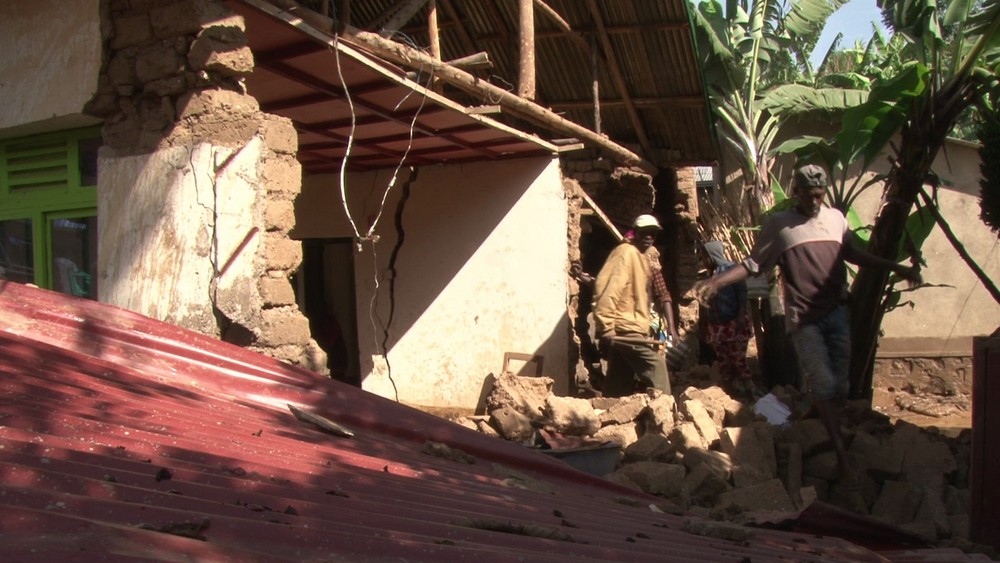
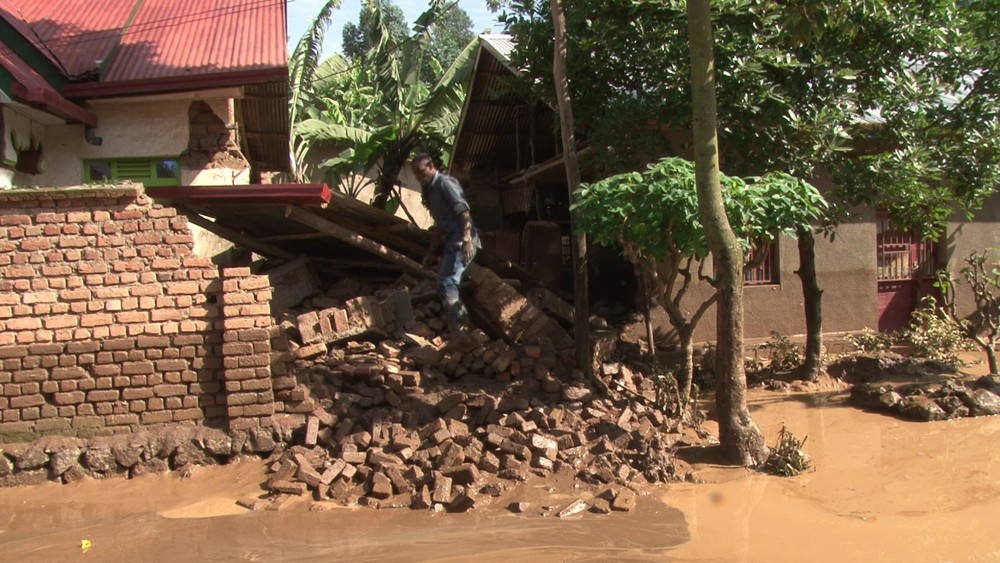
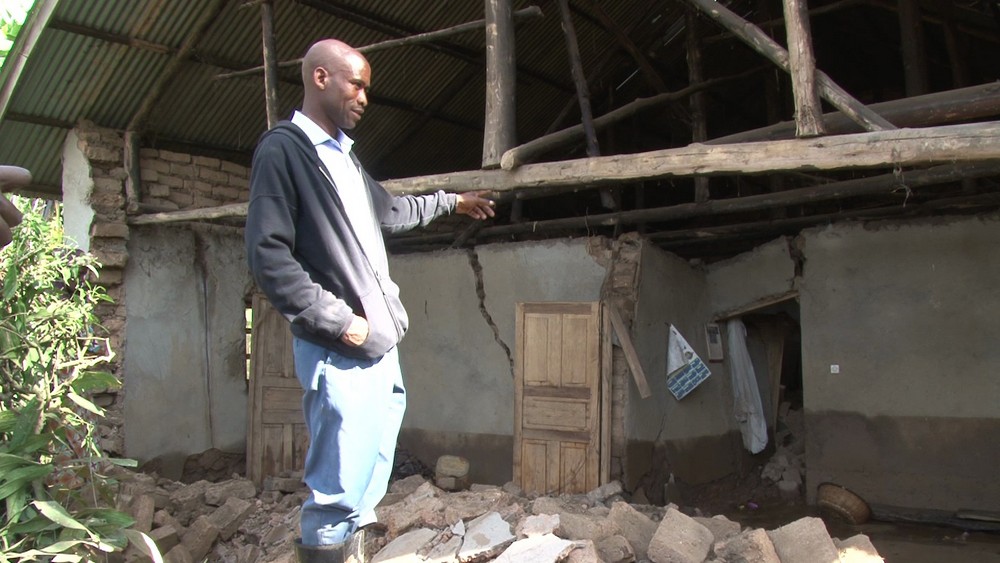
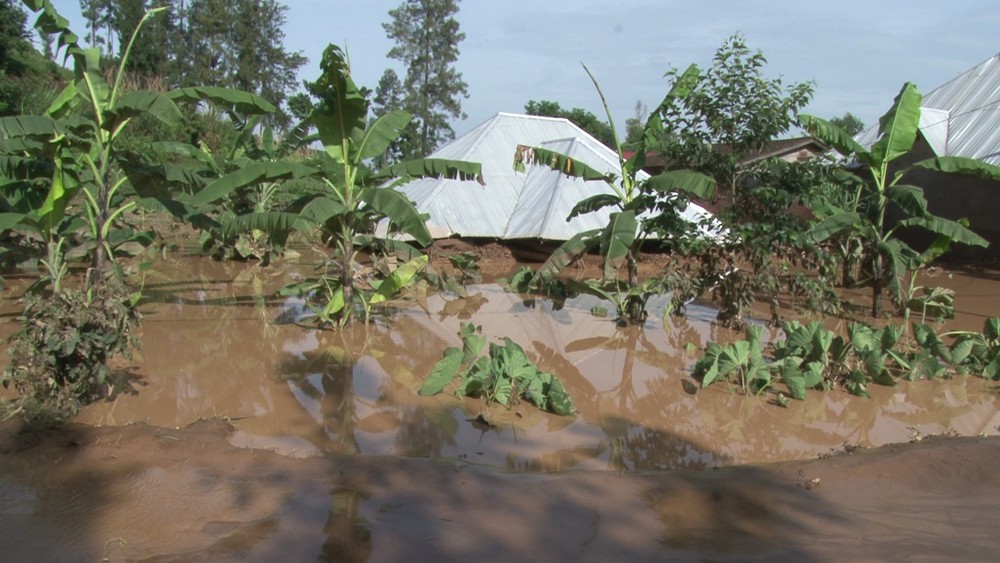
According to MIDIMAR, the downpour which caused Sebeya River to overflow left five people injured, 26 houses completely destroyed, 924 partially destroyed and 138.5 hectares of crops damaged and one school affected.
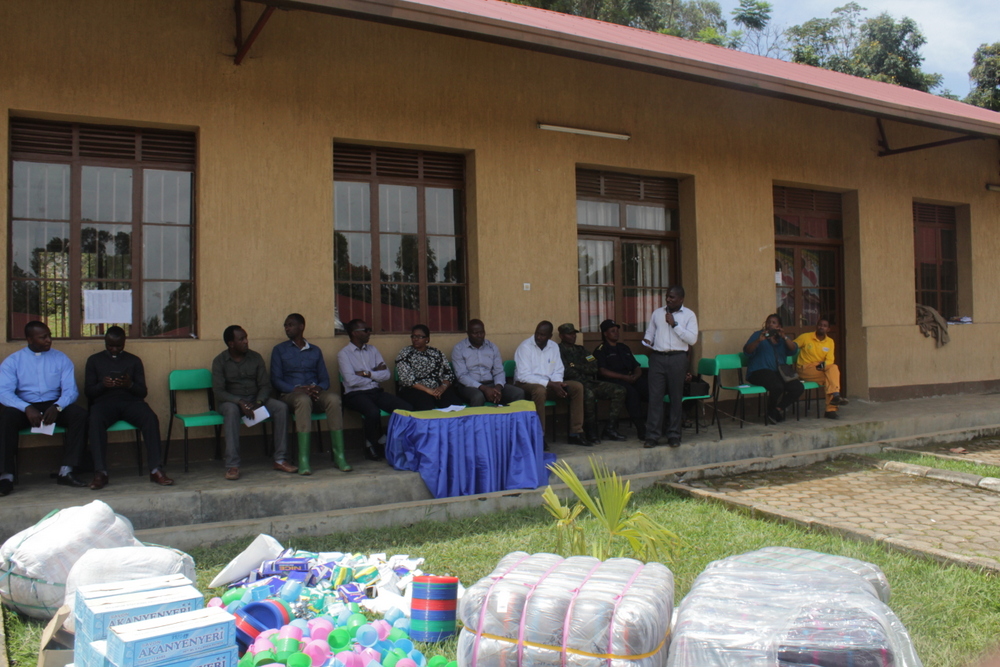
While handing over the materials to affected families yesterday, the Disaster Management Coordinator at Rwanda Red Cross, Angelique Murungi said that as part of their mission to support the government in responding to disaster cases, they intervened in the case of Rubavu.
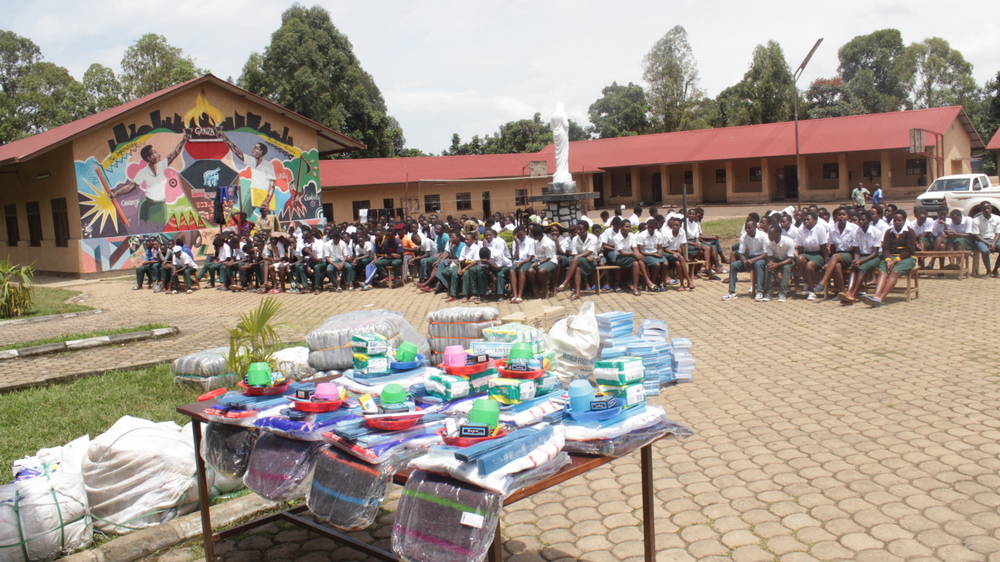
“We brought them kitchen kits like cooking pots, cups, spoons, mats, soaps and clothes among other materials worth Rwf15 million,” she said
Affected families hailed the support saying that they had no more means to manage to live.
“My domestic animals all died, among 58 chickens, they only remain two. I thank Red Cross for the support as we will base on it and manage to live, the remaining problem is a house as we are still accommodated in neighbors’ houses,” he said.
MIDIMAR Minister, Jeanne D’Arc De Bonheur said that they will extend the support to the remaining families as well as they continue to provide more support to all affected families.
“More are yet to come, because, we know that today’s support is not enough. On destroyed houses, we will consider the most disadvantaged families and we provide with the iron sheets,” she said.
Yesterday support benefitted 300 families, but the minister pledged that others will receive their support today.
Ecole d’Art de Nyundo students whose school materials were washed away also received school kits.
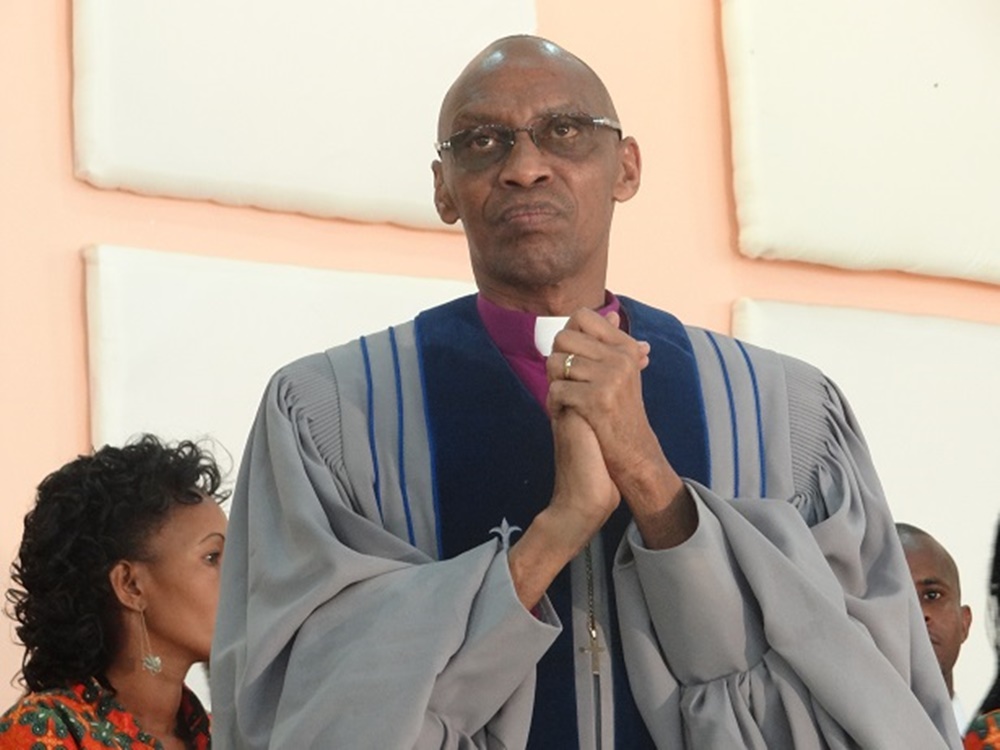
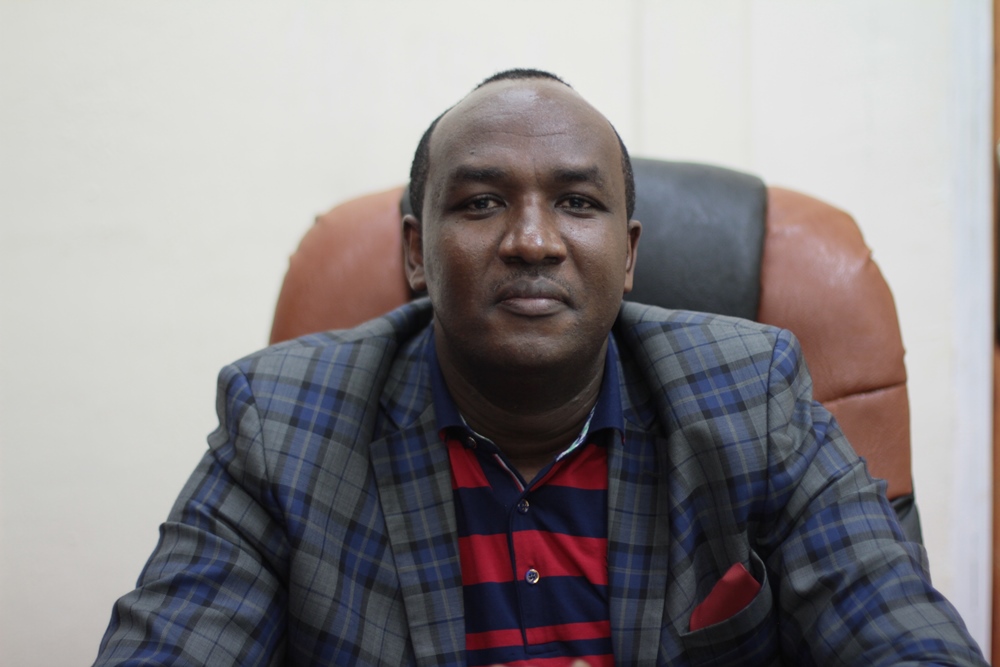
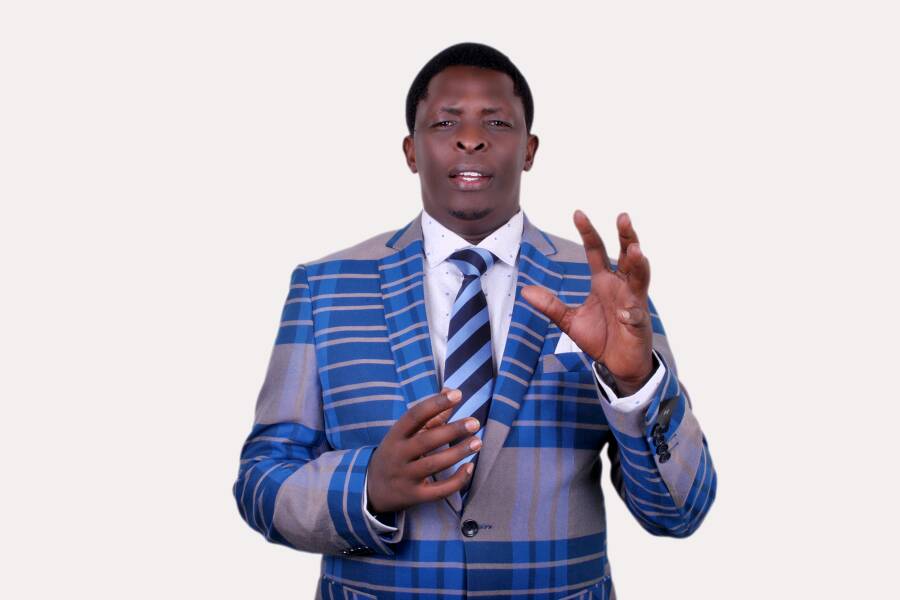
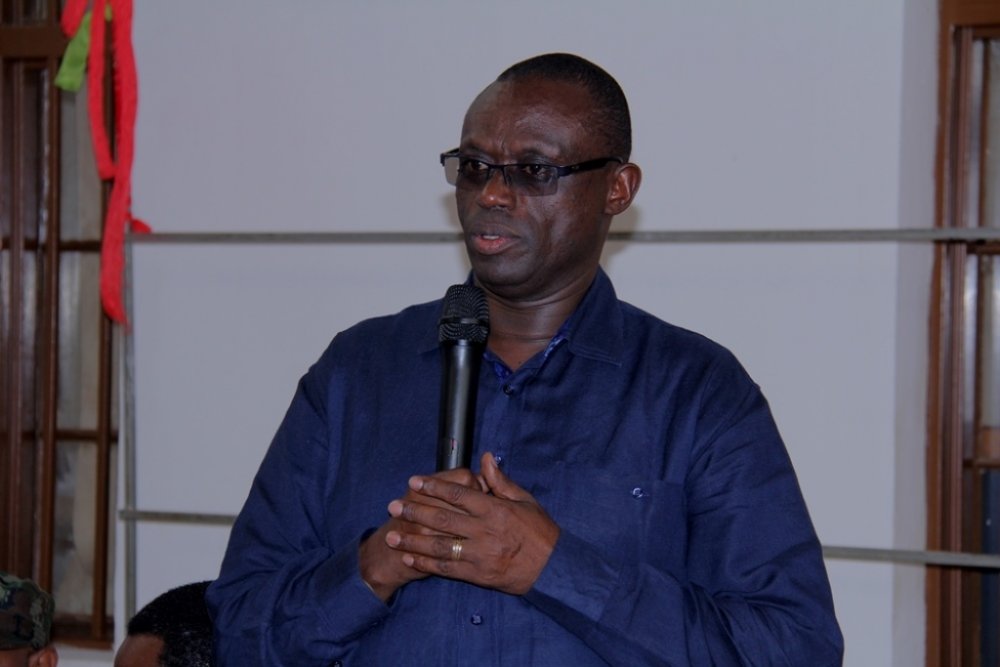
Arrested are; Apostle Charles Rwandamura, Reverend Pastor Fred Nyamurangwa, Bishop Innocent Rugagi, Rev Emmanuel Ntambara, Pastor James Dura and Pastor Emmanuel Kalisa Shyaka.
Police statement says that following the closure of substandard churches, some church heads have formed a group with the aim of impeding the exercise.
“Following the closure of substandard churches and noticing that some heads of churches have formed a group and started unlawful meetings targeting to hinder the process, Police have launched investigations and identified those who spearhead the inciting of others which is a crime,” the statement reads.
The suspects will be charged with organizing unlawful meetings and involvement in acts of subversion.
While closing the National Leaders Retreat last week, President Paul Kagame described the increase in number of churches in the country as ‘disorder’
He said that having a number of churches bigger than that of water boreholes and industries which would have had good impact to population is disorder.
“What is the other productive thing that we have amounting 700 in Kigali? Is it industries? But, churches which you also decided to close down, this implies that it is disorder,” he said.
“Anyway, what do these 700 churches do? Do they offer water to population, are they shops, are they industries? what’s their role?” Kagame questioned.
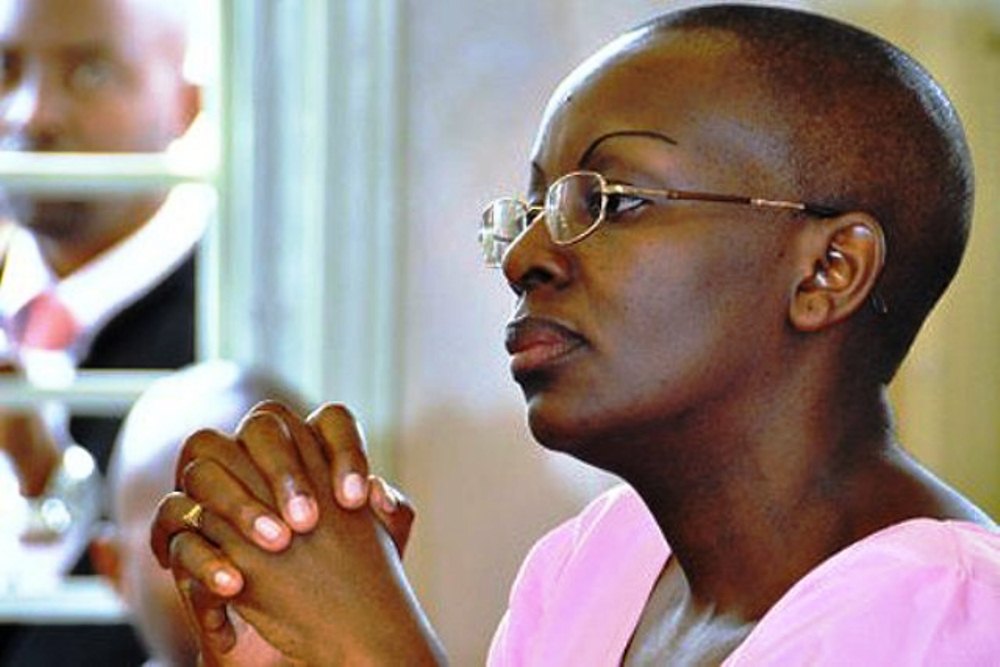
In December 2013, Ingabire was sentenced to 15 years in prison in the trial that attracted different arguments that she was arrested due to political reasons.
Dubbed ‘Qui manipule qui?’, the book about the proceedings of the trial hearing will be launched on March 8th, 2018 in Kigali.
The head of political party which is yet to be approved in the country came from the Netherlands to compete for presidency in 2010 presidential elections, but she ended up in jail after being convicted different crimes.
She was convicted to inciting the masses to revolt against the government, forming armed groups to destabilize the country and minimizing the 1994 Genocide against the Tutsi.
However, different countries and international organisations condemned the arrest saying that she was imprisoned due to political reasons and was denied some rights among others.
The European Parliament published a report critising the independence of Rwanda’s justice system and called upon to retry Ingabire’s trial.
{{About the book}}
While speaking in an interview with IGIHE last week, Mukuralinda said that in last two years many people asked him the reason he didn’t speak publicly about the trial and this made him to write a book.
“Some say that we treated her unfairly, persecuted and falsified accusations and that there was no justice,… but it is time for everyone who wish to know how things went, as Ms. Ingabire spoke about how she saw things. After reading and understanding from both sides, everyone will pick their decision,” he said.
“It is time for Rwandans and others to understand things deeply without basing on emotions and sayings and know how all things went in that trial,” he added.
Mukuralinda lhas ived in Netherlands since 2015 after being granted a leave of absence for non-specific period.
According to the Western Province Governor, Alphonse Munyentwali, no lives have been claimed but the floods injured three people and one was referred to Ruhengeri Hospital.
“No death has been reported but two people sustained minor injuries and one sustained leg fracture,” said Governor Alphonse.
“Properties damaged include 26 houses and Ecole d’Art de Nyundo with over 356 toilets destroyed and five bridges were damaged,” he added.
He said that affected families will receive support including home materials this Monday as agreed between the province leadership, Rwanda Red Cross and the Ministry of Disaster Management and Refugee Affairs (MIDIMAR).
Munyentwali said that they will conduct a study to identify whether no families living close to Sebeya River could be affected by floods.
Currently, affected families are sheltered by their neighbors.
The programme which aims at improving English language literacy and numeracy among students of primary one, two and three grades (P1, 2 and 3) is jointly being implemented by Education Development Trust, British Council and VSO, the three organisations which designed the programme in collaboration with the Ministry of Education and Rwanda Education Board (REB).
Funded by the UK’s Department for International Development (DFID), the programme is built on three foundations that are teacher development, school leadership for learning and system strengthening in all state-funded primary schools.
Jo Owen, International Chair of Education Development Trust (EDT) said the programme running until 2021 is focused on learning outcomes, not about just doing training or the number of people who have been trained but it is about student’s achievement.
Mr. Owen was addressing media after a field tour of two schools in Muhanga District and holding talks with district and sectors’ education officers on Friday.
“I have seen a lot education programmes around the world but I am very impressed by the Rwandese Government’s vision, energy and ambition for education. We are absolutely privileged to be helping to enable that vision to come through,” he said.
He added that education officials and headteachers are challenged by a huge amount of responsibilities but EDT is going to find what can help them deliver BLF programme in addition to other responsibilities.
“The purpose of this trip was to understand more about the programme, the situations on the ground and find how this programme can succeed. What I have seen on the ground is, a lot of teachers, headteachers and officials are both talented and very motivated, and those are the two main ingredients for success,” he observed.
{{How the programme works
}}
Timothy Bainbridge, EDT Regional Director for Sub-Saharan Africa, said the programme is different from previous programmes which used to take teachers for training and send them back to work.
“This is not about taking teachers out of the classroom to train them and go back to classroom. We have seen in many countries that it is not working well. With this BLF, we want to train teachers and work with them in the school environment. We are bringing innovative approaches to make sure the literacy and numeracy improve,” said Mr. Bainbridge who was also on tour alongside Mr. Owen in Muhanga District.
The two flanked by district and sectors’ education officers visited Kivomo Primary School where they followed a P3 teacher delivering a Mathematics lesson and GS Gitarama where a P2 teacher was delivering an English language lesson.
”Teachers have a challenge of English language. In collaboration with REB, we have developed toolkits of English and Mathematics for teachers. We are distributing them to the districts, they will train teachers and give them the materials. The teachers will improve their English. They will have teaching aids that meet well the Competence-Based Curriculum. BLF is a technical support component. One of the components of this programme is that some lessons have been recorded on audio and video tapes,” he added.
The lessons will be put on SD cards and teachers will be given smartphones to use for hearing and watching the lessons and then teach following the model in pre-recorded lessons.
Fausta Mukanyandwi, Headteacher of GS Gitarama, appealed for teachers’ intensive training in English language, saying that most of the teachers have limited skills in English because they did their education in French system but they are looking up to BLF programme to help them improve their skills.
Emilien Ntagwabira, Muhanga District Education Officer in charge of primary education, urged teachers and schools’ leaders to embrace modern teaching ways that are in BLF programme to improve the quality of education.
“We expect from BLF the improvement of teachers’ skills in modern teaching ways by engaging students in lessons. REB has been training some teachers who train others but now with BLF, all teachers for P1, 2 and 3 will receive training. We are all committed, including local governments, to making this project a success to improve quality of education. We ask parents to care for their children’s education, give them school materials, send them to school on time and facilitate them in the entire education process,” he said.
On the course of three years, BLF programme will reach out to 2.6 million children; 12,500 English and Mathematics teachers of P1, 2 and 3; 2,500 headteachers; 2,500 chairpersons of School General Assembly Committees; 832 mentor trainers; 416 Sector Education Officers; 30 school inspectors; 30 District Education Officers and 30 District Directors of Education.
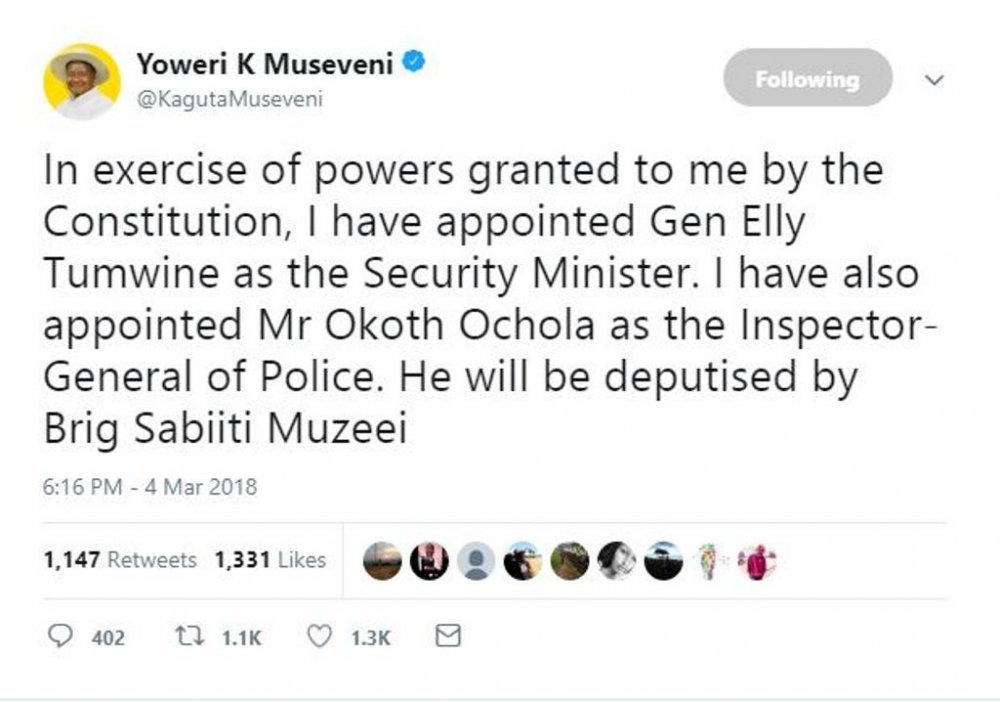
The president tweeted the news, saying he was appointing General Elly Tumwine as Security Minister and Okoth Ochola as Inspector General of Police (IGP).
‘‘In exercise of powers granted to me by the Constitution, I have appointed Gen Elly Tumwine as the Security Minister. I have also appointed Mr Okoth Ochola as the Inspector-General of Police. He will be deputised by Brig Sabiiti Muzeei,’‘ read the president’s tweet.
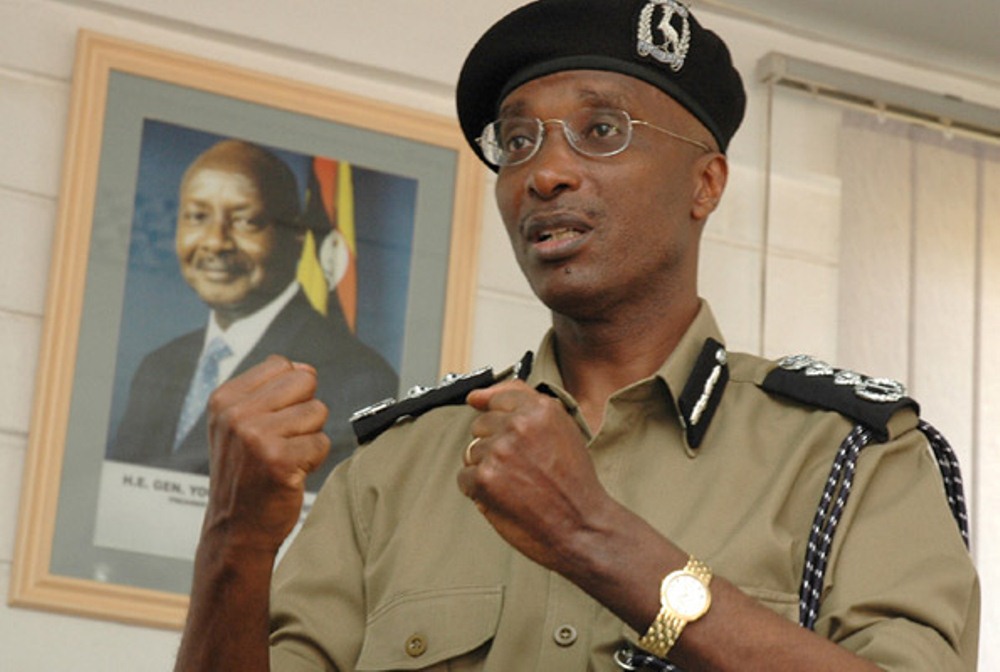
General Elly Tumwine replaces General Henry Tumukunde while Okoth Ochola who has been the deputy IGP replaces General Kale Kayihura.
Ochola will now be deputised by Brigadier Sabiiti Muzeei who has been the commander of the military police in the country.
The tweet was the climax of the president’s impassioned reassurance to Ugandans that the latest wave of crime would be solved by the government, just like armed rebellion and other problems have been solved in the past.
The president, who has repeatedly called for the installation of CCTV cameras in urban areas as a means of fighting crime, recently added that it is time for Ugandans’ palm prints and DNA details to be captured to aid the fight against crime.
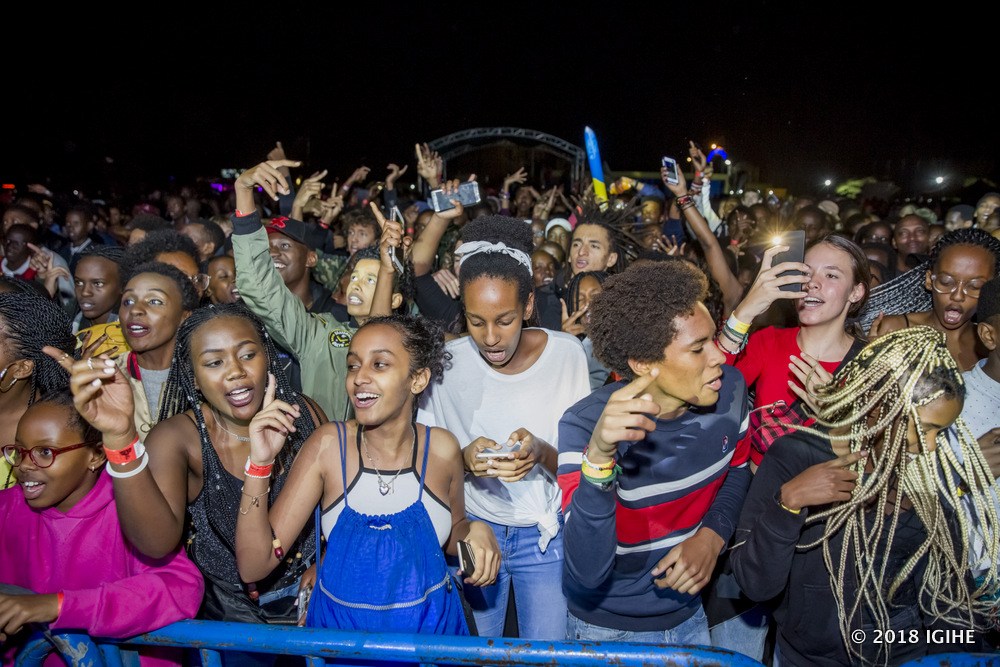
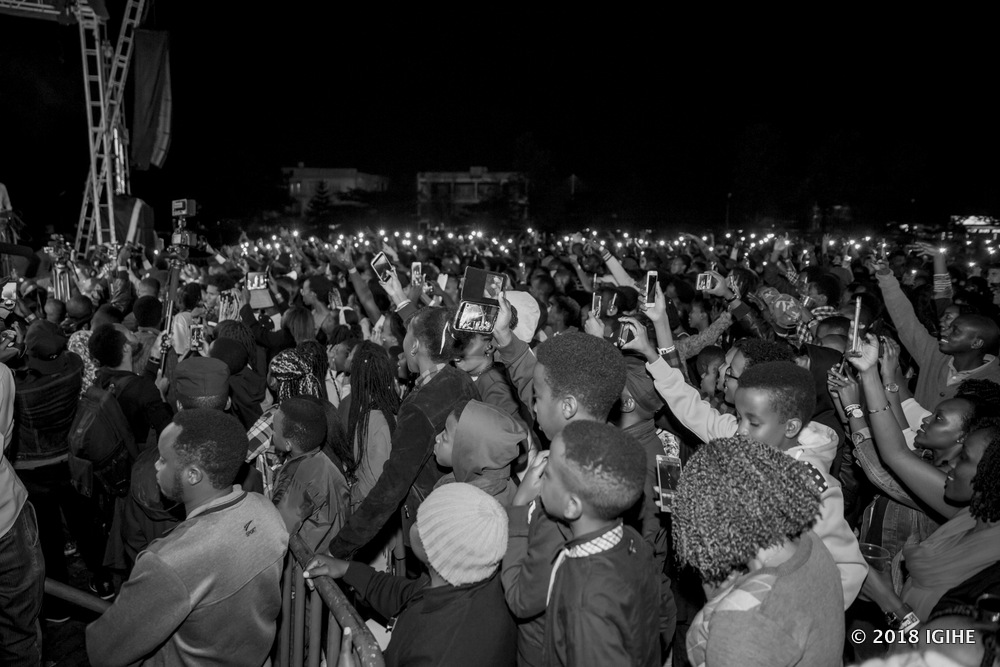
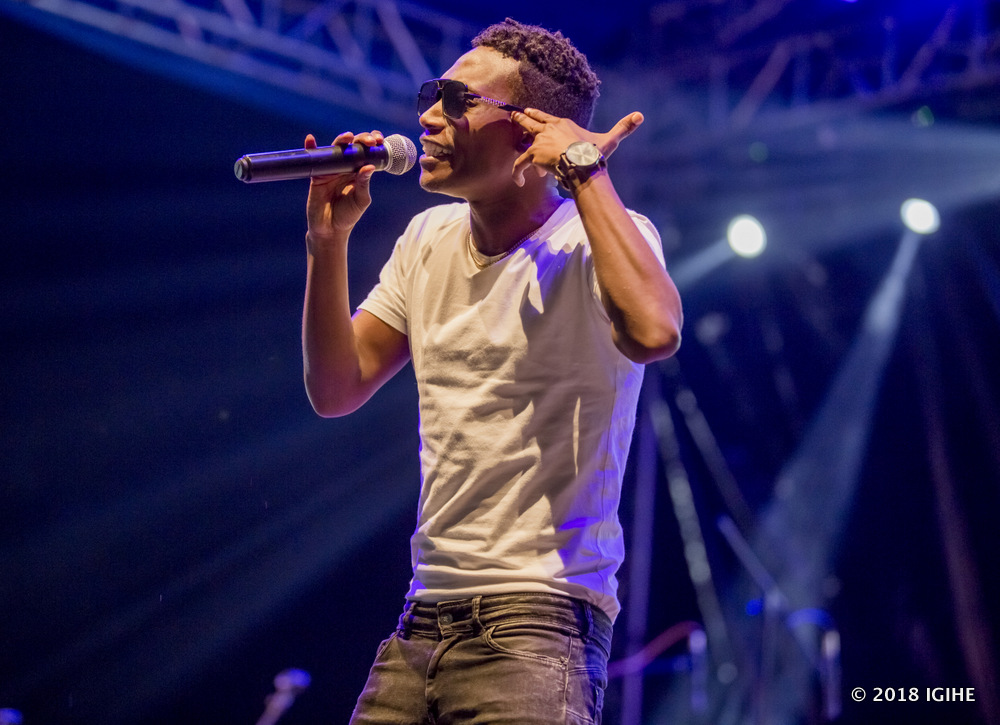
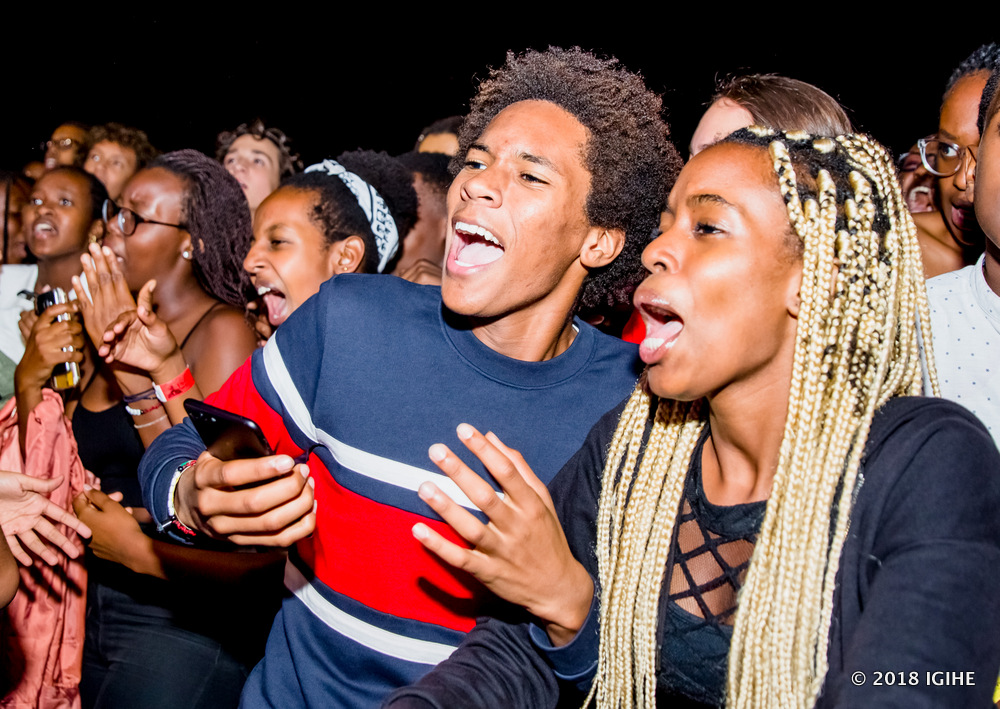
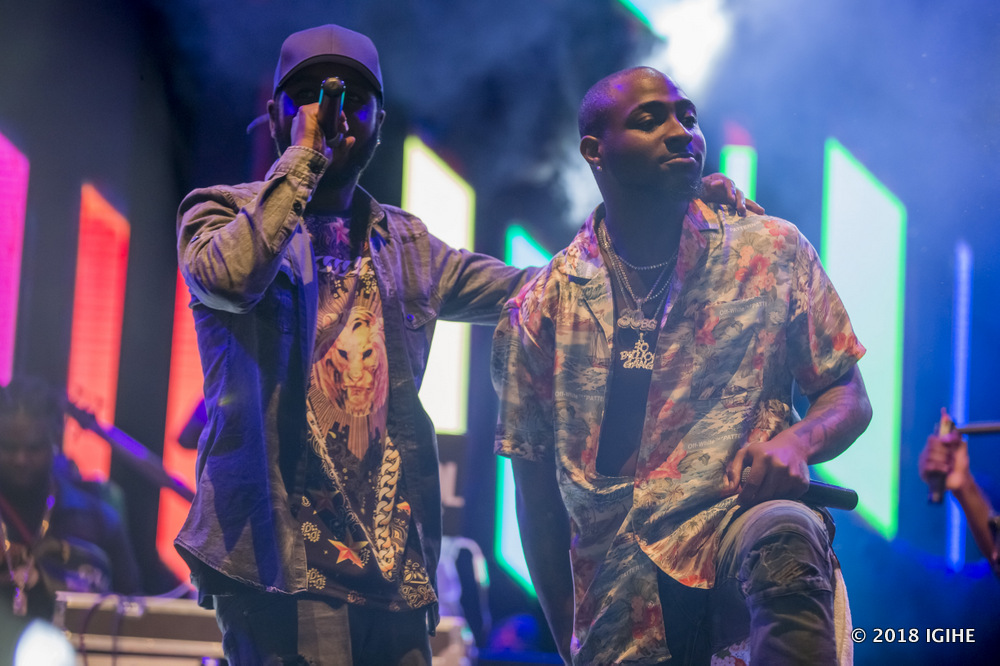
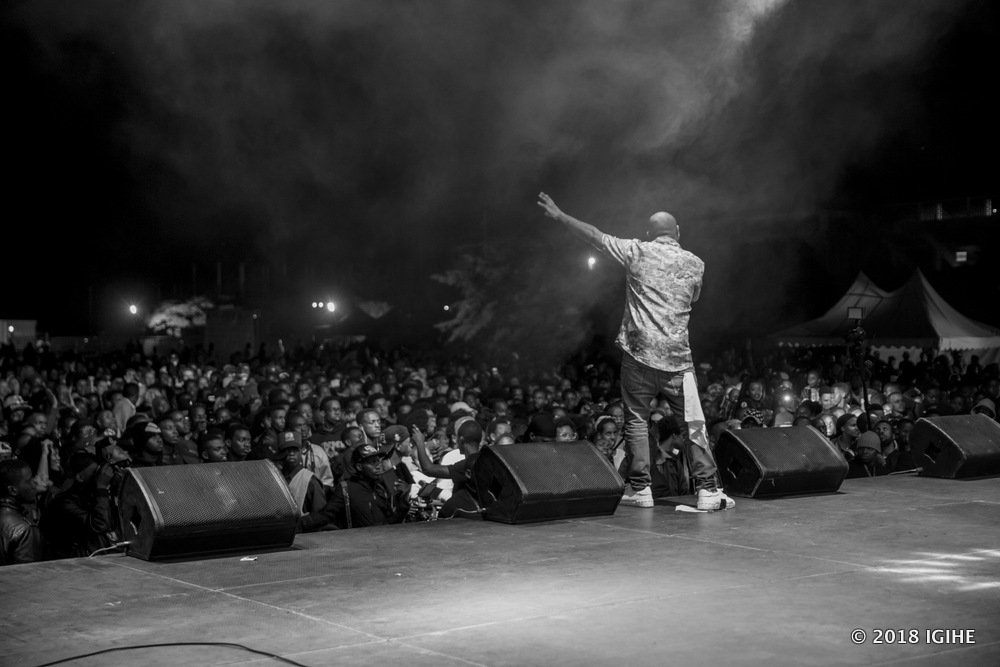
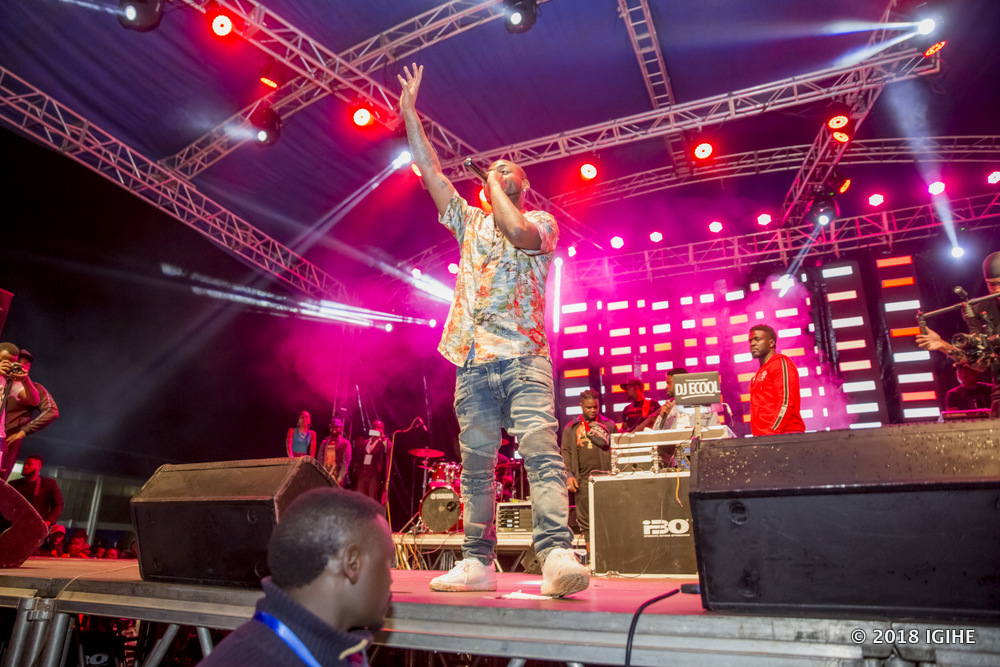
Then, with a vigourous show of energy and spectacle, the Nigerian music Icon, David Adedeji Adeleke better known by his stage name Davido, arrives on the stage at the Amahoro Stadium Parking, in Kigali, in a historic performance that thrills all the music enthusiasts.
Davido performed in Kigali under the ‘30 Billion Africa Tour 2018’ series of which more will be featuring throughout the African continent.
The music tour is co-sponsored by Sony Music label; Rwandan based music house Positive Production and international media houses like RFI and France24 among others.
At Amahoro Stadium Parking, Davido thrilled revelers where he was joined by musicians including Phiona Mbabazi, Sintex, Buravan, Charly&Nina and Riderman.
Davido entered the stage at 12:35am and left the stage at 1:45am.
The Nigerian Music star was pleased with ways Rwandans showed him love in his songs and the way fans support Rwanda’s and African music industry.
He paid tribute to Rwandan rapper, Joshua Tuyishime better known by his stage name Jay Polly. On stage, they both sang Jay Polly’s ‘Ku musenyi’ hit. Davido described Jay Polly as super star in Rwanda due to the 2014 show memories he still has.
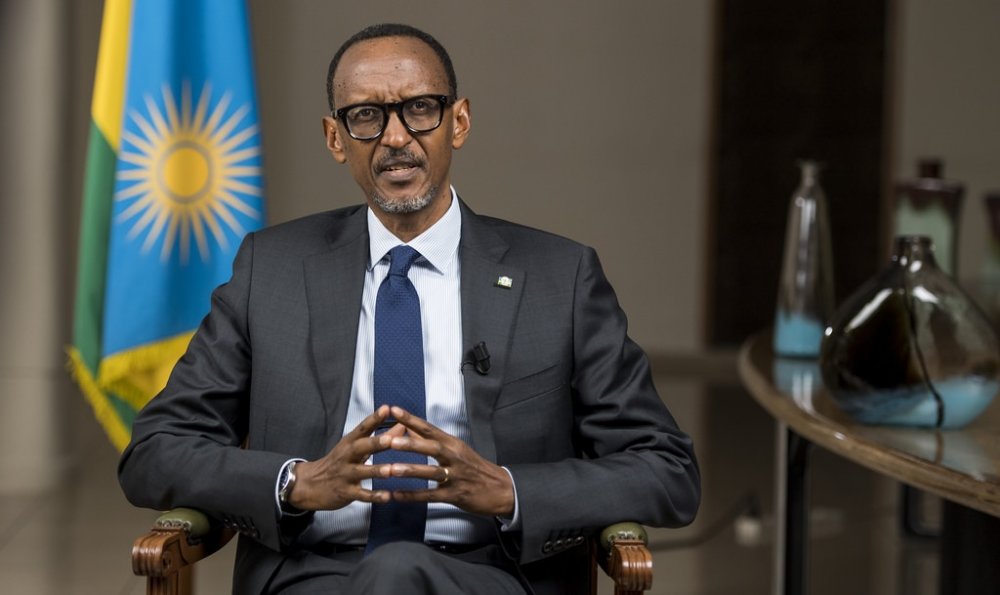
Kagame was speaking in an interview with American Author, Ian Bremmer in Germany on the sidelines of last month’s Munich Security Conference.
The interview took place after Kagame had met US President Donald Trump in the sidelines of World Economic Forum that took place in Davos, Switzerland in January.
Asked whether he asked Trump about his comment about Shithole remarks he made referring to African countries and some Asian countries, Kagame replied saying that he did it in a ‘civil way’.
“In a way that is more civil than people would have expected. We naturally had to talk about that, but also the background that it is as if no one is sure what was even said, because people including himself said no; it was either misrepresented or actually they didn’t hear it, others heard it. I didn’t find it correct that I would dwell on such. And as you said, Trump being President of the United States I’m more interested in how Africa and the United States can work together,” he said.
Asked whether he came away with anything specific, he said that after the discussions, Trump wrote a letter to the African Union expressing how he wants to work with Africa and African leaders.
“And even he mentioned my meeting with him in Davos, which message for me was important enough that he was reacting out and saying, I mean to work well with Africa and serious about it. I thought for me that is the most important thing,” he added.
{{Recent transitions in Zimbabwe, Ethiopia and South Africa
}}
Last year, Zimbabwe President Robert Mugabe resigned from his office and the World was surprised with peaceful transition.
Last month a consecutive transition took place in South Africa, where former President Jacob Zuma resigned from office and the same scenario in Ethiopia where Prime Minister Hailemariam Desalegn resigned.
Kagame said that Africa is more and more integrated in the rest of the World.
Stressing on the case of Ethiopia that is economically stable since Desalegn took office six years ago, Kagame said that what matters is aspirations of people.
“This connectedness really informs people and drives people to do things we want to do and raises the level of aspiration and there is a thing that happens in one way or another that correction is made so that the demands and aspirations of these people are met,” he said.
He said that Ethiopia remains a good performer in terms of development that have taken place and in the growth of the economy.
He said that it’s okay if Desalegn resignation was for opening up more integration for different actors acting in different interests for the people of Ethiopia.
The call was made on Friday during a consultative meeting that brought together RURA and different public and private institutions.
The 4th industrial revolution is described as a range of new technologies that are fusing the physical, digital and biological Worlds and impacting all disciplines, economies and industries.
RURA Director-General, Lt Col Patrick Nyirishema said that there are different variations brought by ICT be in transportation, communication and medication among others. He said that the meeting aimed at deliberating on way forward so that Rwanda will not draw back or lag behind in the revolution.
“These are things that are happening today, we wish to adopt these variations so that in one, five or ten years ahead, we shall not find ourselves lagging behind, but, be on same track as these changes are taking place,” he said.
He said that it will be possible when government and private institutions in ICT sector partner and play their respective roles.
Karasira Willy Claude, the head of Centrika Ltd, a software development company, said that the basic foundation which is infrastructure has been put in place by the government and the way forward is for them to work.
He said that companies in the sector are going to sit together and deliberate on ways they will work with international companies so that Rwandans will not be left behind.