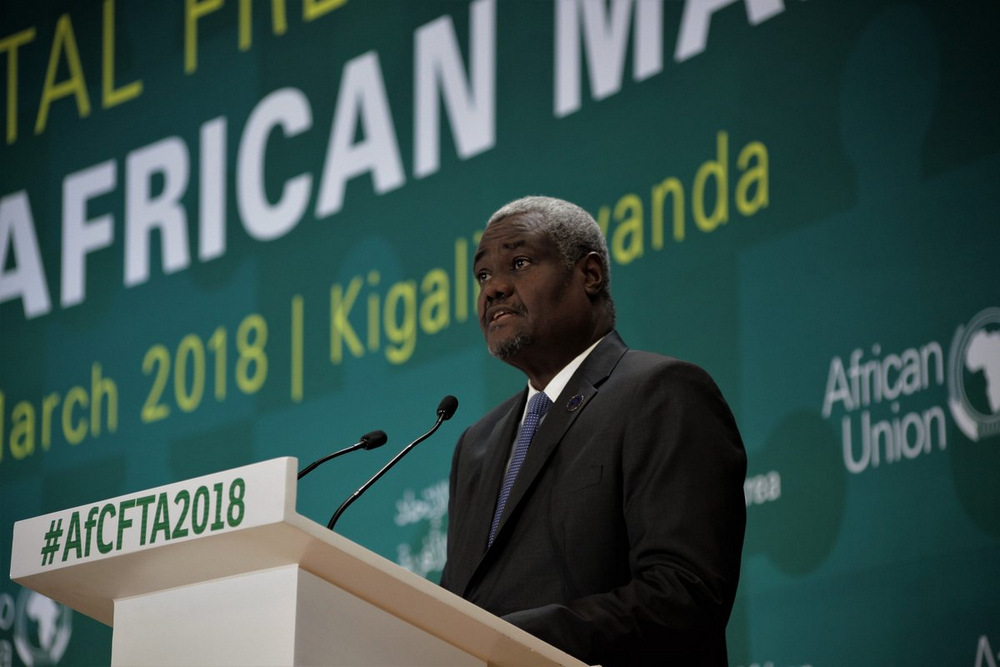
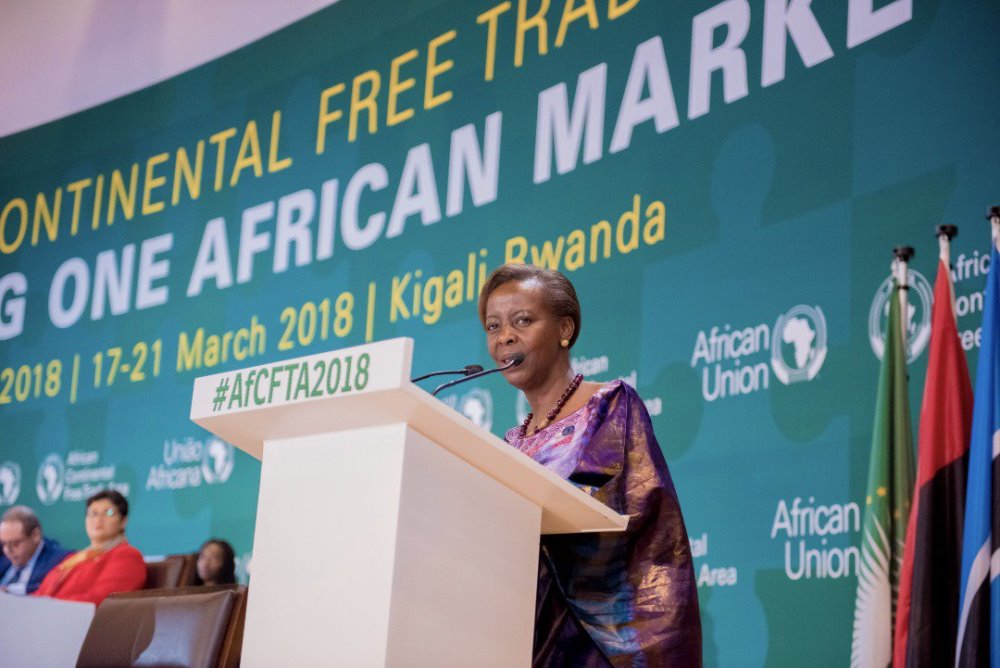
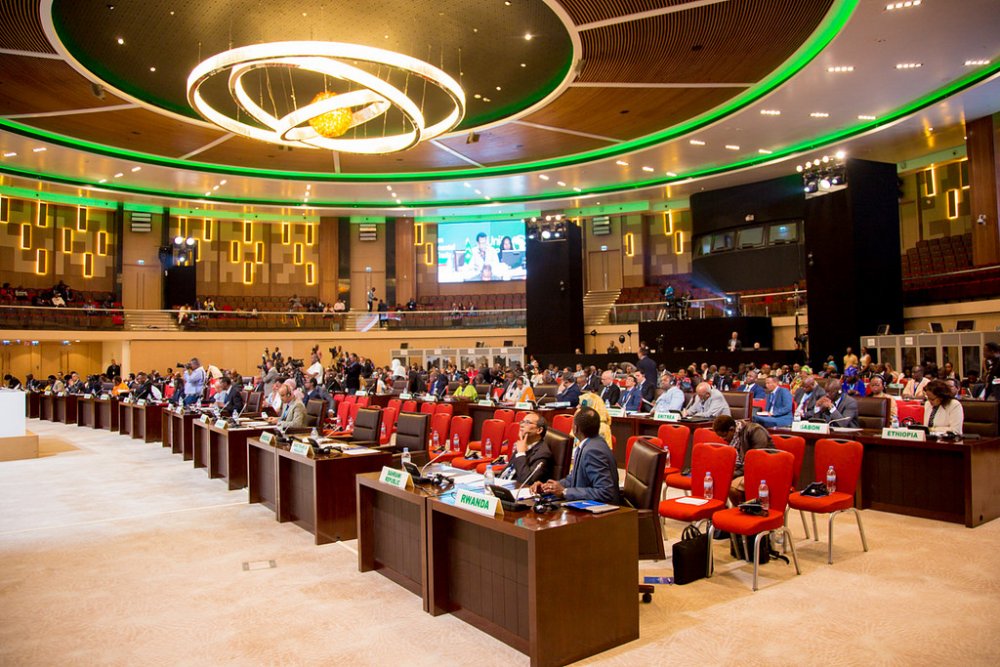
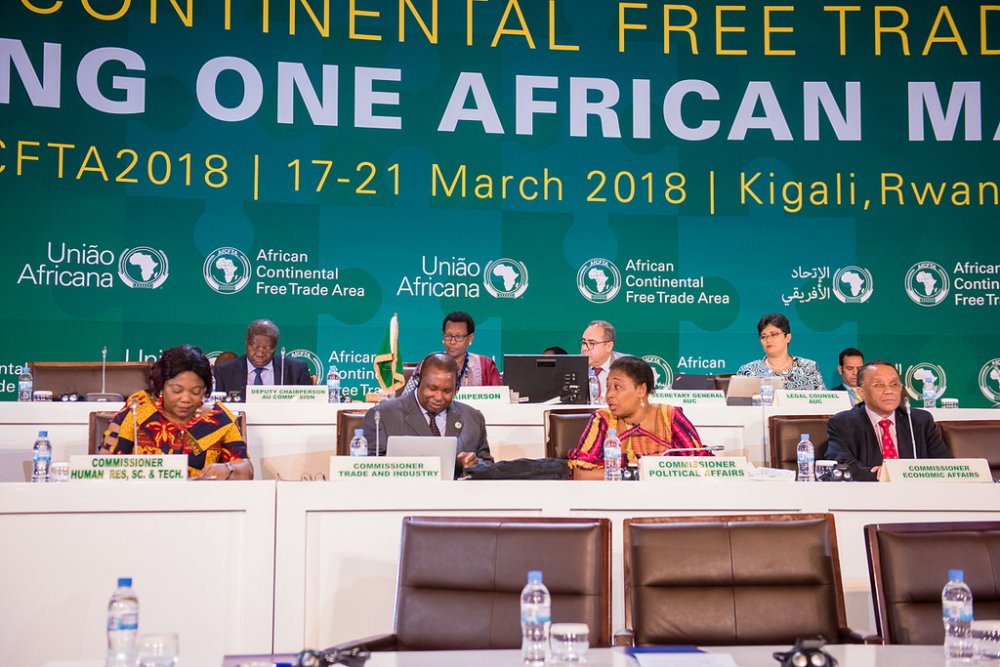
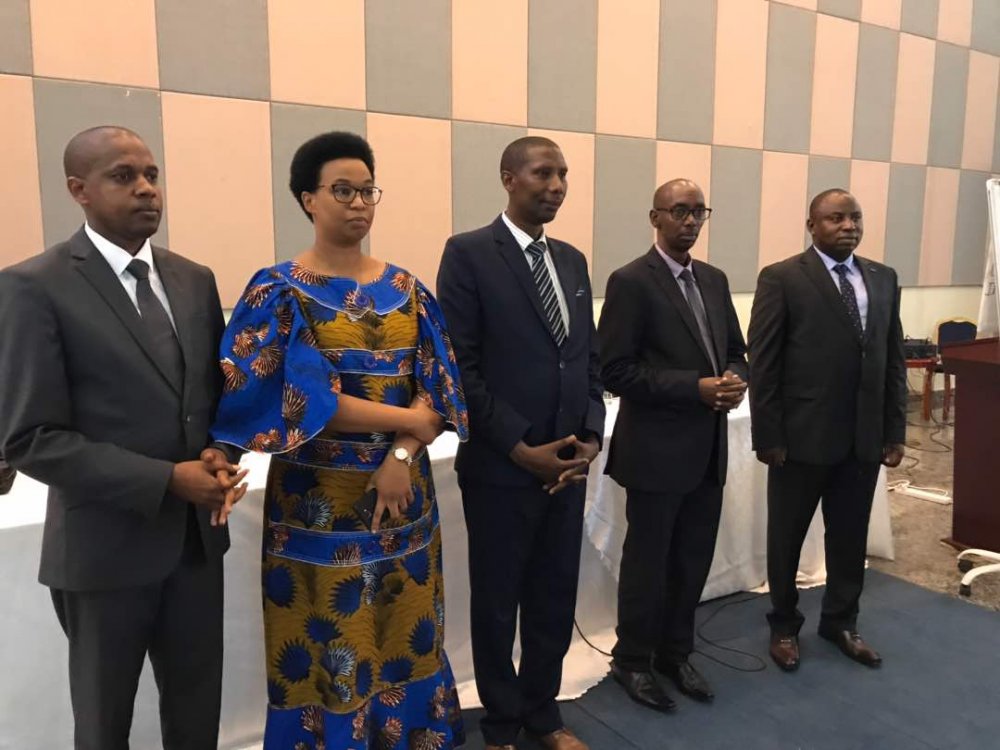
Mahamat who is attending the ongoing African Union Extraordinary Summit on the African Continental Free Trade Area in Kigali noted that working together as on Africa is paramount.
“We aspire to speak with one voice to our partners. We should prove our capacity to work together as one continent. I’m calling upon all AU member states to have one voice. Let’s hold hands and establish this continental free trade area.”
“The Continental African Free Trade Area, the Single Market on Air Transport in Africa, the Protocol on Free Movement of Persons and the African Passport, as well as major regional infrastructure projects are the pillars of this endeavor”, he added.
AfCFTA is a flagship project of Agenda 2063 of the African Union – Africa’s own development vision. It was approved by the African Union Summit as an urgent initiative whose immediate implementation would provide quick wins, impact on socio-economic development and enhance confidence and the commitment of Africans as the owners and drivers of Agenda 2063.
Mahamat further urged the delegates to act responsibly and take measures to be part of the free movements and trade of the AFTCA.
“One question that looks at us is that can we accept to take the risks together or individually? At the time when the rest of the world is getting together but to forge ahead, we have to overcome our fears and project to the world the united Africa”, he said
The African Continental Free Trade Area agreement with its critical economic implications, will bring together fifty-four African countries and open up a market of 1.2 billion people with the possibility of generating enormous wealth on the continent.
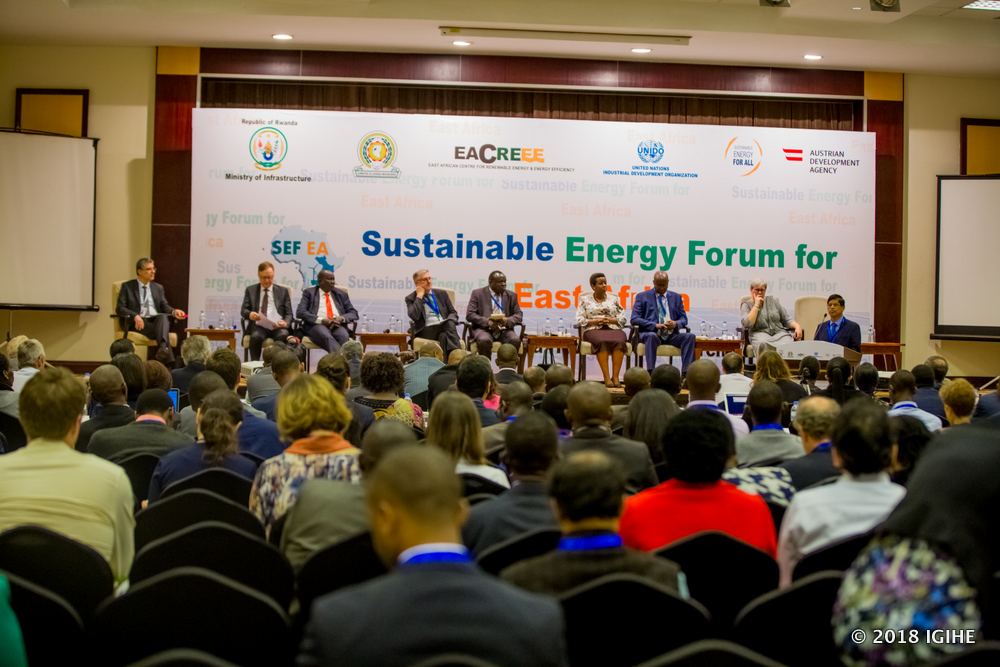
Under the Sustainable Development Goal 7, countries aim at having universal access to affordable, reliable and modern energy services by 2030.
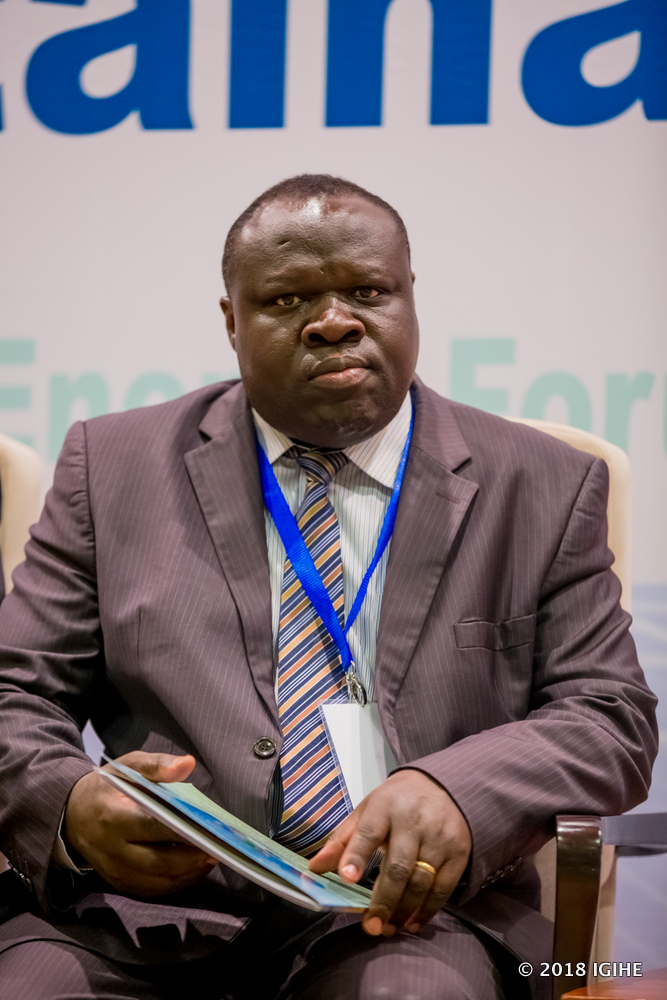
Speaking at the meeting, the Deputy Secretary General in Charge of Administration and Finance of the East African Community (EAC) Christophe Bazivamo said that the region still has problems related with using energy due to the small number of industries and limited access by households.
Energy generation in the EAC countries amounts to 4000MW in total. As a result, one person from the region uses only 136 Kilowatts per year, while in developed countries, each person uses between 3000 kilowatts and 7000 kilowatts.
Bazivamo said that the available energies in EAC are not properly used.
“We are not able to use enough electricity because we don’t have enough industries which would consume it,” he said.
He said that as a way to solve energy problem in the region, EAC Heads of States have agreed on a comprehensive plan of action about energy and cooperation in solving accessibility problem.
“That is where they construct connections linking countries so that where there is high quantity of electricity generation, it can be shared with others,” he said.
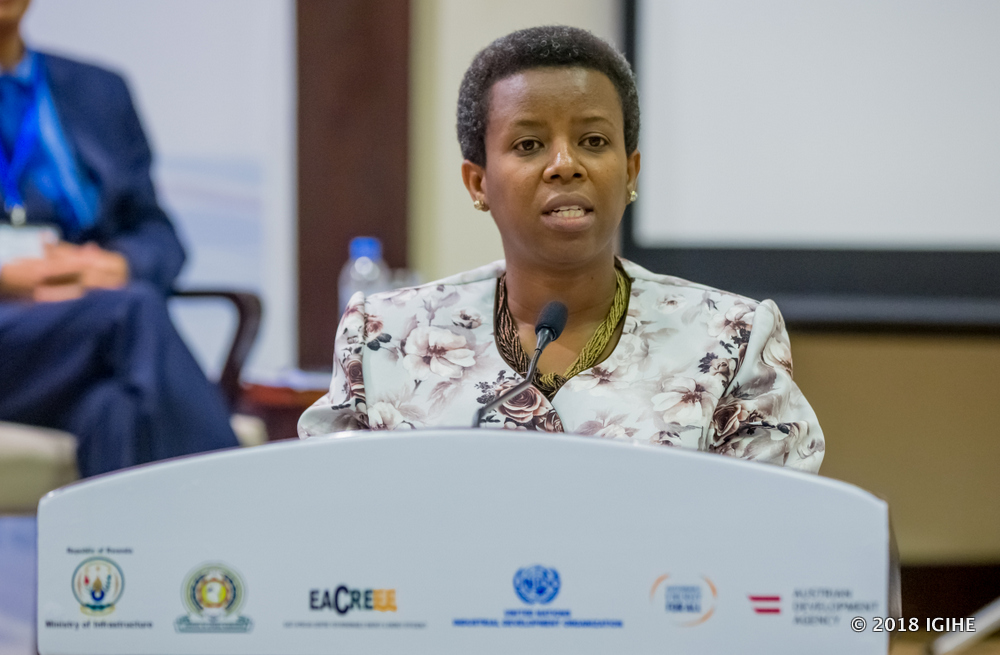
Speaking in the meeting, the State Minister in Charge of Energy, Water and Sanitation in the Ministry of Infrastructure (MININFRA), Germaine Kamayirese said that the 2018 has come at a time when the East African Community Partner States are working together to strengthen infrastructure development in the region including energy to stimulate economic growth.
She highlighted the commitment of Rwandan Government to achieving universal access to sustainable energy by 2024 with focus on renewable energy resources, which requires doubling the generation and demand capacities by working closely with development partners.
For a nation that aspires to become a service-based economy, it is imperative that its citizens and institutions are customer-centric. It is vital that businesses and organisations adopt a customer service mentality, said Vanessa Leyka, Chief Executive Officer of Seraph Network. In today’s highly competitive business environment, there’s a constant and never-ending struggle that every business must face. Those who can adapt will survive and thrive, resulting in near-boundless financial success and market saturation. Those who cannot see the proverbial forest through the trees, suffer a slow and inevitable death.
The struggle that exists today pits profits against the necessity for total customer satisfaction. The truth? Not everyone lives by the credo that the customer is always right. Not everyone is as concerned with customer satisfaction as others are. But it’s those who don’t relent and cave into the pursuit of profits above all else who ultimately win in this ruthless business climate, said RL. Adams, Founder of Wanderlust.
As Rwanda is being put on the map as a country that is open for business, it is important to understand that Customer service isn’t just about being courteous to your customers – it’s a vital element of business operations that can impact your bottom line and affect how your company is viewed in the public eye. The good news is, it’s relatively simple to implement a customer service improvement plan that keeps your business on top and Customer Experience Chapter Rwanda 2018 will be bringing concrete tools and strategies to do just that.
Running on 27 – 28 March 2018 at Serena hotel in Kigali, Rwanda, this premier event will be bringing together thinkers and doers, and customer experience professionals to discuss trends and strategies to improve service quality, engage employees, integrate channels, and innovate processes. Experts from institutions such as Bank of Kigali, DHL, Kenya Airways, Rwandair, Rwanda Directorate of Immigration and Emigration and many more will be attending.
Email Kelly.[mbayo@seraphnetwork.com->mbayo@seraphnetwork.com] to book your seat. For more information, visit [https://seraphnetwork.com/customer-experience-chapter-rwanda-2018-27-28-march-2018-kigali/->https://seraphnetwork.com/customer-experience-chapter-rwanda-2018-27-28-march-2018-kigali/]
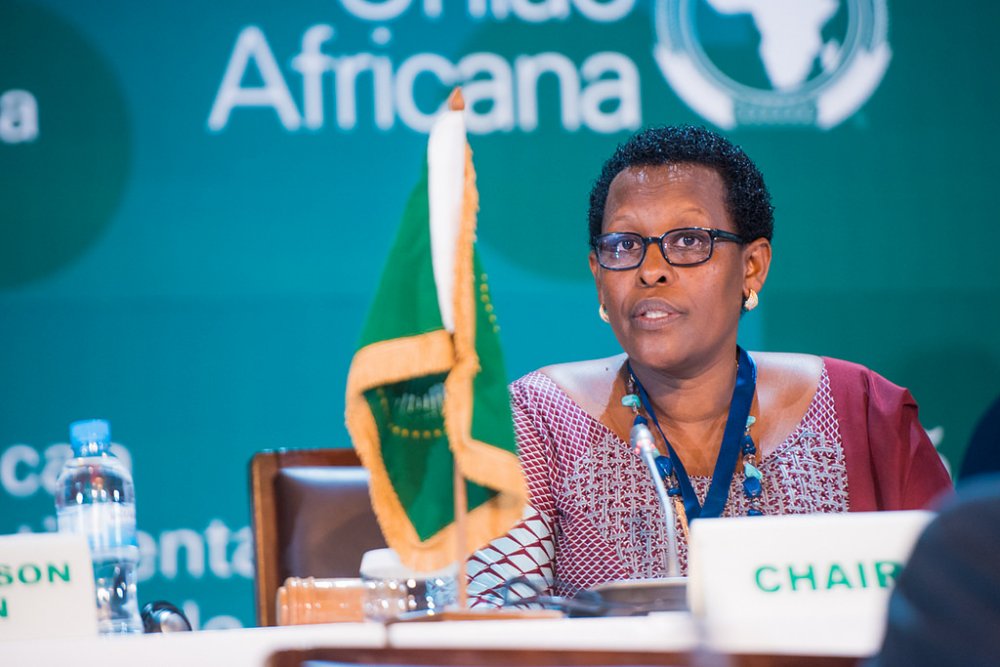
Mushikiwabo was speaking Monday in Kigali while opening the special session of African Union’s Executive Council, a session preparing the signing of the agreement establishing the Continental Free Trade Area.
The AfCFTA will be signed in an extraordinary African Union (AU) summit scheduled on Wednesday 21st in Kigali.
On Saturday another session of Permanent Representatives Committee also took place in Kigali.
Mushikiwabo said that the Africa’s flagship project of Agenda 2063 will lead to the social and economic changes of the continent.
“The AfCFTA is one of our key milestones, a critical initiative that has the ability to bring about the social and economic changes that Africa has been envisioning for decades,” she said.
Mushikiwabo said that with the adaptation of the AfCFTA agreement, it will be important for all countries to sign it so that they can proceed with speedy ratification and implementation.
“AfCFTA agreement is not just a simple document; it has critical economic implications for African populations. It will open up a market of 1.2 billion people, with the possibility of generating enormous wealth on the continent. However, we should realize that what we make of the AfCFTA is up to us. We have the choice to translate vast potential into concrete reality and each of us has to do our part,” she urged.
She urged that the countries have to work on establishing the administrative, legal and logistical structures that will make use of such opportunity.
Mushikiwabo urged that if they want to increase intra-Africa trade, they must address challenges like access to finance by private sector, infrastructure networks and simplification of customs processes.
“With the AfCFTA -related agreements before us, we are now well armed to improve our social structures, improve the livelihoods of even our poorest communities, and develop regional and continental value chains to ensure prosperity and well-being for our people,” she added.
Mushikiwabo reminded that Africa is well equipped to ensure a better future for future generations, and reminded that the Agreement plans to make Africa an attractive destination for inward and foreign investment.
{{Addressing trade issues}}
She said that the Phase two of the AfCFTA negotiations starting later this year, aims for the goal to addressing key trade issues as competition, investment and intellectual property rights.
“This Agreement must enter into force as soon as possible. By signing and ratifying it, we would signal that we are determined to play our part as a global player while promoting the continent’s economic interests as one, through a single African market,” she said.
She said that the move should not only win Africans the confidence of the investment community, but also provide with them increased bargaining power in future partnership agreements and to help secure the best deals for African businesses.
“We need those investments to generate jobs and improve livelihoods,” she noted.
Ndayisaba was speaking Saturday to teachers from Kamonyi and Muhanga Districts of Southern Province as they visited Kigali Genocide Memorial.
The action was organized by a local organization ‘Christian Action for Reconciliation and Social Action (CARSA)’.
He said that the new generation should be explained thoroughly about the history of the genocide as a way to help them avoid divisionism.
“This generation is made up of children who did not get involved in the genocide, however, the history affected them, they see their effects, so they want to get well explained about the history,” he said.
“They should have critical thinking and stand firm so that no one could lead them back in the same tragic history we passed through; no one else could help us to achieve that than teachers. For you to help them, you should also have learnt about that history,” he explained.
Ndayisaba said that all Rwandans have the scars caused by the genocide. He however, urged teachers to prevent Rwandan children from falling back in such history.
Innocent Nzeyimana, a teacher at Groupe Scholaire Mbati said that he learnt a lot from the lecture adding that he got responses to different questions that he used to be asked by students.
“This lecture is very crucial and we are going to implement what they requested us, we have learnt a lot from here and we will not get confused in telling the history,” he said.
CARSA Coordinator, Christophe Mbonyingabo said that the action to take teachers and students to the memorial aimed at helping youth to grow with unity and reconciliation values.
“They aimed at training youth to build on unity and reconciliation along with values of sustainable peace. It is very crucial to bring them here to learn from the memorial about the history of the country. We can’t affirm that what they learn from their parents or to school are completely enough, it is necessary for them to be here to enable them fight against the genocide consequences, ideology and denial among others,” he said.
The teachers toured different parts of the memorial and laid wreaths to the graves where over 250,000 victims are laid to rest .
In 1997, former forces for Rwanda (EX-FAR) attacked Nyange School and asked the students to separate themselves ethnically (Hutu and Tutsi). However, the students resisted the attack and the attackers elevated spots on them, killing many but 40 survived.
Until today, there are no preserved documents or video telling the history of heroism that characterized the students.
While remembering the heroism of the Nyange Students yesterday, the CHENO Chancellor, Dr. Pierre Damien Habumuremyi said that they are going to prepare a center which will tell the history of the school.
“This place should be used, the cabinet meeting has approved that we will put there a sign of heroism, in the near future it will have been done; in our negotiations with the Ministry of Education, we shall take one room and use it to preserve that history,” he said.
He said that it will help to teach youth and called officials to use the center in instructing the children about the history.
Theodette Abayisenga, a survivor of the attack said that she could not forget the horror they faced.
All 40 students who survived the attack have been categorized in IMENA category of Rwandan heroes.
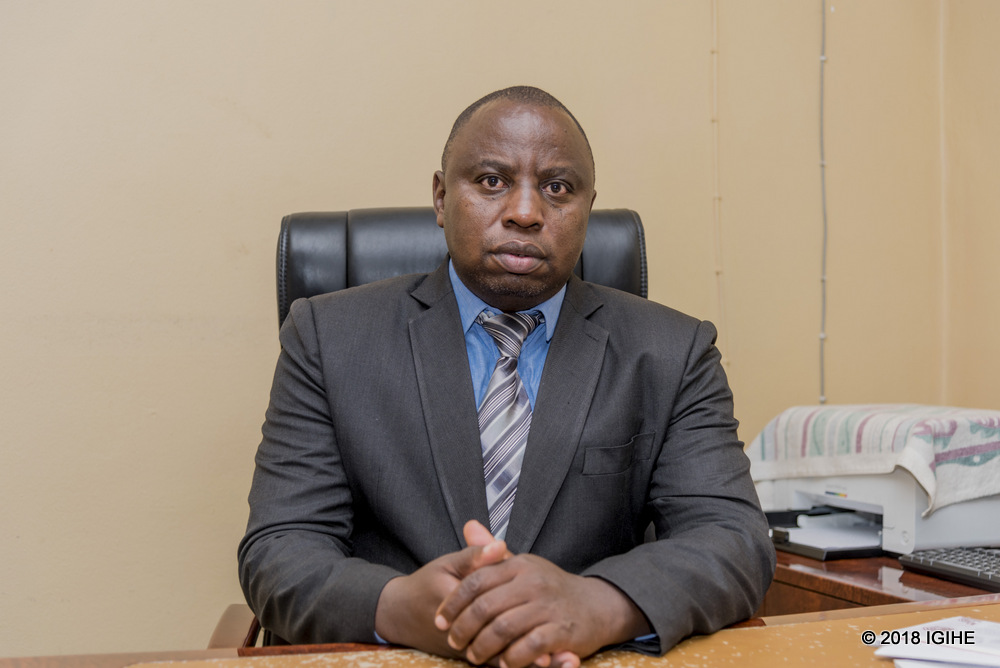
He is accusing Rwanda’s Minister for Infrastructure, Mr. James Musoni, of allegedly wrecking his family, leaving his livelihood physically and emotionally shredded to threadbare. He says Musoni invaded his family, and home, impregnated his wife and produced with her a daughter while the husband was pursuing his studies in Uganda.
Rtd. Captain Safari Patrick accuses Minister Musoni of causing him financial losses and trauma, calling for investigations into the minister’s deeds and bringing him to book. As he talks of his marriage’s ordeal, Safari’ face grows creases with solemn pain.
Safari, now 47, joined Rwanda Patriotic Army (RPA) in 1991 and retired in 2005 from Rwanda Defence Force (RDF), which replaced the former rebel wing which stopped the Genocide against the Tutsi.
After his military career, Capt. Safari served in different government institutions including Ministry of Local Government, Ministry of Natural Resources and Rwanda Governance Board.
Safari says he suspended his job to pursue his PhD studies in 2012 after consulting with his wife Immaculate Kayitesi, now ex-wife because the couple divorced in September 2017 as a result of Minister Musoni’s interference into their marriage.
While carrying on his studies in Uganda, Rtd. Capt. Safari says he was at the same time striving to provide for his family which was in Rwanda and managed to afford it as well as his regular bills on visiting the family.
{{Second marriage engagement
}}
Rtd. Capt. Safari, whose first wife had died leaving him with three children, legally married his second wife, Immaculate Kayitesi.
They lived happily in the first days and produced one child, adding to the three that Safari had with his deceased wife.
Things turned around in 2014 when Safari’s neighbours informed him that they were seeing an escorted man visiting Safari’s home at night and weekends very often.
In his testimony, Safari told IGIHE “My neighbours told me that there was a man who had invaded my home. They told me that they were seeing a special car, that is usually known for belonging to high ranking officials, entering my home so often but they couldn’t know who the man was. I kept quiet but coming back home towards end of the following month, I asked my wife about the issue but she fooled me, telling me they were our family’s friends who were visiting her.”
Capt. Safari says he didn’t attach much importance to what neighbours told him but he secretly followed up to know the car that was visiting his home and taking away his wife and bringing her back many times at night.
He decided to get to the root of what was taking place at his home in his absence. He engaged his house servants who started telling him everything that was taking place at home.
The servants could not identify the visiting man in the first days as they were seeing the car and the visitor’s body guard. Safari asked his wife about the visitor several times but she always denied the allegations of having affairs with another man.
Rtd. Capt. Safari pushed further his investigations because his servants were not getting to know the visiting man. He started surprising his wife with phone calls asking about the situation at home and the wife told him on different occasions that she was not at home, that she was not in Rwanda and she was once in Singapore without notifying her husband.
“I once took a night flight from Uganda and I didn’t find her at home. She later came in the dawn and told me she had gone to attend her friend’s anniversary,” Safari recounts.
{{How Safari’s wife got in touch with Musoni
}}
Capt. Safari recalls the time his wife asked him for Musoni’s phone number and the man never hesitated because the wife was working at the Ministry of Agriculture and Animal Resources (MINAGRI), thinking that his wife wanted to talk to Musoni for work purposes.
Three days after giving her Musoni’s phone number, Safari’s wife told him that her sister had got a job at Water and Sanitation Corporation (WASAC) with the hand of Minister Musoni whom the wife praised as a “good man.”
Safari was happy for the employment of his wife’s sister for whom he had paid school fees.
It was in 2015 when his wife’s sister got a job at WASAC and his wife Kayitesi resigned from his job at MINAGRI on the reasons she did not tell her husband and went to work as the supervisor at the construction of Kigali Convention Centre, the job she was allegedly given by Minister Musoni.
{{Banned from his home
}}
In 2016, Capt. Safari says he got enough of his wife’s behaviour and invoked her family but his wife’s father distanced himself from the issue.
Safari went back to Uganda but when he came back home later, he didn’t see their marriage portrait photo where it was hanged in the sitting room and he realised that the wife was dismantling souvenirs of their marriage.
“I insisted much on asking her to tell me which man was visiting her in my absence but she held me in contempt,” says Safari.
He later learnt towards end of 2016 that his wife was impregnanted by Minister Musoni but Safari never inquired anything because he was banned from entering his home. The wife delivered in March 2017.
Safari later tried again to enter his home but he was blocked at the gates by ISCO security guards and called his wife to help him through but she declined.
“The security guards told me that they didn’t know me, they were given job by their boss woman. I left my home and went to sleep in a hotel. That time was at the beginning of 2017,” he says.
His wife told him the next morning that she had employed security guards to protect their home from thieves who had ravaged their area of Kimihurura.
Capt. Safari says he got information several times that his wife was getting out with Minister Musoni, citing an example of the tour they had at Akagera Game Lodge with the two travelling in two different cars.
Safari’s house servants did not know Musoni at first but one of them saw him on television and told Safari that he was the man they had seen many times at his home.
He also learnt of his wife and Musoni’s affairs from the chief of ISCO security guards who were deployed at his gates.
{{Heavy loss of money, property
}}
Before the mess emerged, Capt. Safari says he agreed with his wife on constructing their residential house and they received a Rwf40 million bank loan and started constructing a house in Rusororo, a Kigali suburb.
He kept sending money to his wife for repaying the loan but he was later phoned by the bank telling him his debt arrears were increasing.
“I asked my wife why she had not deposited money to repay the loan but she told me ‘how do you think our child could survive?’” says Safari.
The debt kept increasing and Safari asked his wife to allow him sell their house to service their loan instead of waiting for the bank to sell the house, causing them a loss but the wife declined.
The house they constructed at a tune of Rwf106 million was sold by bank at Rwf51 million, leaving behind the debt of Rwf500,000.
Safari says he discovered that his wife used the money he was sending her in renovating another house located in Kimihurura which he thinks it belongs to Minister Musoni.
He says Musoni caused him all of the problems he is currently suffering.
“He (Musoni) oppressed me yet he was supposed to protect me as a leader. He caused me a lot of problems, he interfered in my life and my family, something abusing the powers of a leader,” says Safari.
{{Wife filed for divorce
}}
Rtd. Capt. Safari divorced from his wife in 2017 after the Gasabo Primary Court’s verdict on the case filed by the wife. The wife never appeared during the trial as she cited pregnancy complications.
After the divorce, the wife accused Safari of forgery of the documents when he applied for the bank loan. Safari was later sentenced to seven years in prison and a fine of Rwf3 million. He appealed for the verdict, directed the court to Rwanda’s embassy in Uganda where the couple signed the documents applying for the loan. The sentence was annulled on February 27, 2018 when the court examined the proofs and rendered void the first verdict which Safari says was influenced by Minister Musoni.
Rtd. Capt. Safari is currently renting a house in Kigali and raising his three children by his first wife and he says he is disgusted with marrying any other wife.
He advised men and women to pay attention to their family responsibilities to avoid conflicts which often lead to murderous incidents. Safari appeals to concerned organs to conduct investigations into Minister Musoni’s conduct which he says does not honour the trust conferred to him as a high ranking leader.
IGIHE tried to get comments from Minister James Musoni and Immaculate Kayitesi from Tuesday but they had not picked our phone calls by press time.
We shall bring out their side whenever they give us any information.
Tumukunde was speaking Saturday in the meeting of Permanent Representatives’ Committee in preparation for the launch of AfCFTA.
Tumukunde appreciated the work of Issoufou Mahamadu, the President of the Republic of Niger and the head of African Continental Free Trade Area for relentless efforts and invaluable contributions towards the realization of AfCFTA.
“As you are all aware, the establishment of the AfCFTA is a critical political priority of our African Union leadership. It is also a flagship project of the African Union Agenda 2063,” she reminded.
She said that the AfCFTA is not about trade liberalization for its own sake, but rather it is also a political reflection of leaders’ commitment to finding joint solutions for African problems.
Tumukunde said that AfCFTA is a political statement and declaration of the idea of African Unity in economic and commercial terms. She added that without it and Africa’s economic integration, rhetoric about African unity will remain empty.
“With AfCFTA jobs would be created. Entrepreneurs will expand their businesses. African value chains will be developed and maintained, and those value chains will be linked to global value chains,” she said.
“Our young people will have genuine employment opportunities on the continent and no longer hanger for greener pastures in Europe or elsewhere because the greener pastures would be here,” she added.
Speaking at the meeting, the Deputy Chairperson of the African Union Commission, Amb. Kwesi Quartey thanked President President Paul Kagame and the Chairperson for the African Union for his commitment, determination and ability to place Africa on the international scene.
He also thanked President Mahamadou Issoufou of Niger for spearheading efforts geared at creating One African Market.
“I urge PRC to lay down fundamentals that enable us to execute the decision taken by AU Heads of State of creating one African market by putting in place the African Continental Free Trade Area,” he said.
He said that African Continental Free Trade Area refers all to political symbolism.
“Africa taking charge of itself. Her voice should resonate with other projects that contribute to its development, especially consolidation of its integration and unity,” he said.
The African Union Commission Chairperson, Moussa Faki Mahamat arrived in Kigali, on Friday to take part in the African Union Extraordinary Summit on the African Continental Free Trade Area slated on Wednesday 21st March 2018, as well as in preparatory meetings at the level of the Permanent Representatives Committee and the Executive Council.
He will also take part in the Business Forum that will be held on the margins of the Summit, and take the opportunity to interact with private sector representatives.
The Kigali Extraordinary Summit was agreed to during the ordinary session of the Assembly of the Union held in Addis Ababa in late January 2018.
The Free Trade Area is one of the flagship projects of the First Ten-Year Implementation Plan of Agenda 2063 and aims to deepen the integration process. It is being driven forward along with other key related initiatives such as the Single African Air Transport Market and the Protocol on Free Movement of Persons and the African Passport.
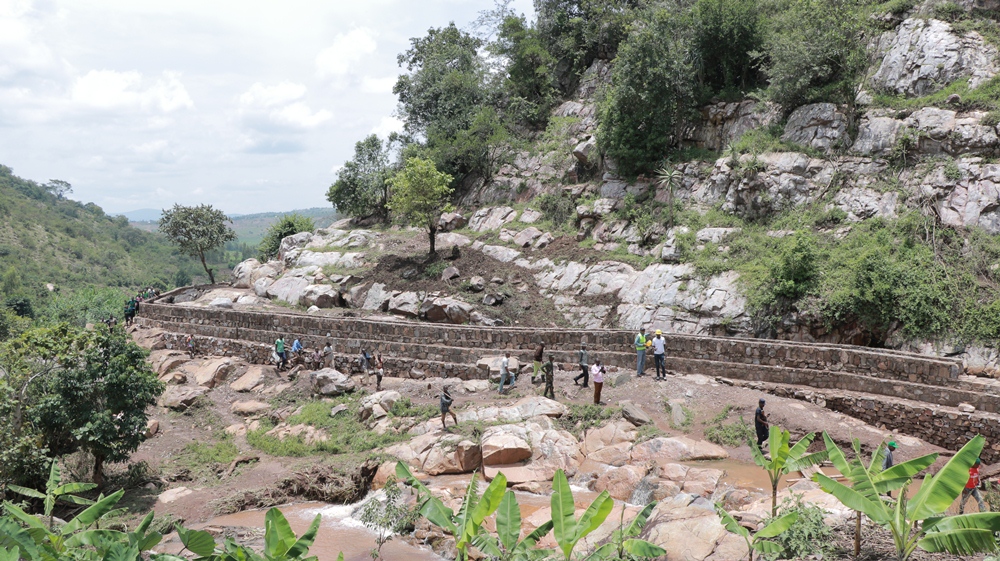
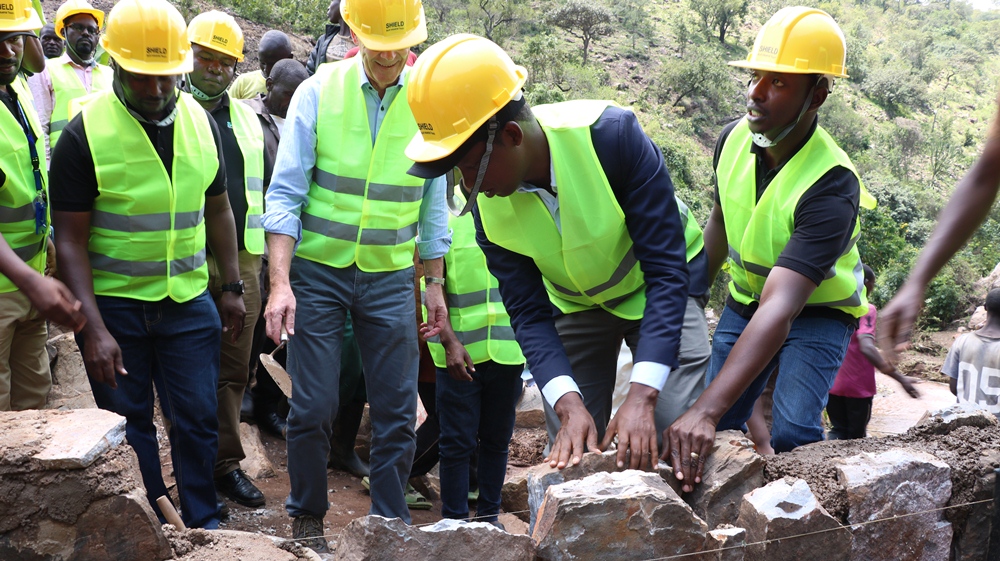
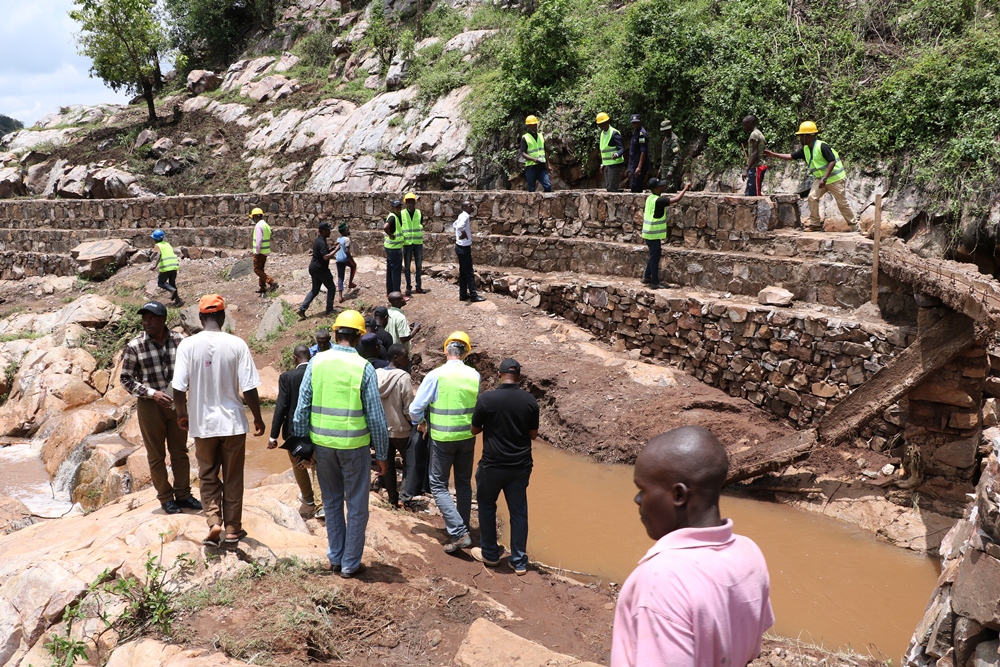
The project will be implemented under the Scaling Off-Grid Energy in Rwanda (SOGER) project.
Expected to be completed in June, the plant is being constructed at Nyankorogoma River in Mpanga Sector.
The Project Coordinator, Victor Hakuzwumuremyi said that the plant will provide 13 kilowatts and will provide access to electricity to 145 households and attract different income generating activities like haircutting saloons, grinding machines and welding workshops among others.
He said the plant will cost $85,000 (over Rwf72 million). The project was funded by Swedish International Development Agency (SIDA) which will provide 70% of the total cost, Mpanga residents will provide 7%, Investor Israël Habimana 10% and the remaining 13% will come from Commercial Bank.
“Electricity services cost much in this region, they need to travel long for charging their mobile phones, so, they got an idea of making electricity from that river and we committed to partner and provide with them what they desire,” he said.
“This is a people’s project, though they will provide some monthly contribution for the plant to continue exist, but, it will cost them less than they used to,” he added.
Jonatilde Shirumuteto, a resident of Mpanga Sector said that they expect much from the electricity.
“We will engage in different income generating activities like tailoring among others. Currently, these who have solar power charge us Rwf50 for recharging our mobile phones batteries,” she said.
Kirehe District Mayor, Gérald Muzungu commended the project partners and Mpanga residents for combining efforts to make the project possible.
“This is a good example of how we can find solutions from ourselves, this model should be replicated in other sectors,” he said.
Karuranga had been the spokesperson of the interim regime in the last nine months.
In the elections which took place at the church’s Dove Hotel, this Saturday, the committee of five people has been elected.
Elected are Rev. Euphrem Karuranga the spokesperson; Vice-spokesperson, Rev. Pastor John Karangwa; Secretary General, Pastor Paul Gatemberezi Muzungu; Head of Governance and Finance, Aurélie Umuhoza and Pastor Jean Paul Ntaganda, the advisor for Finance.
Speaking in an interview with IGIHE this week, Karuranga said that during the interim regime, the committee had a big job of restoring the order in the church after different problems they passed through.
“We achieved many things including restoring order in the church. We also dealt with debts,” he said.