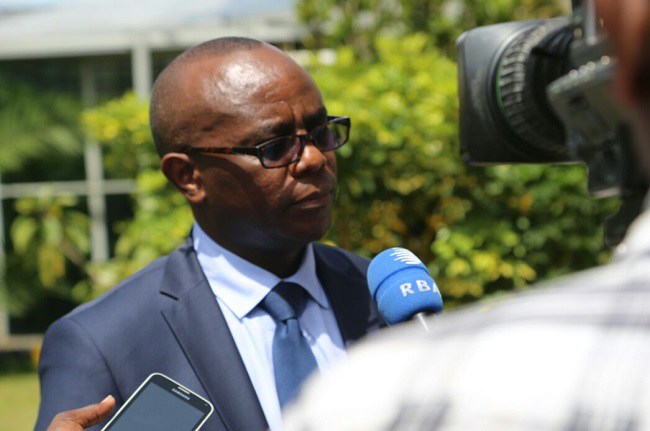
Badege said that the commemoration week was marked with mass participation in commemorative events and security organs ensured that security was well maintained at all sites.
Normally, cases of genocide ideology are widely reported during the commemoration period but according to the spokesperson, these cases keep dropping each year, “an indication that there is hope that at one point there won’t be a single case.”
“Most of the cases we recorded were verbal in nature against genocide survivors and a few physical cases…Some of the cases have been transferred to the prosecution while others are still being investigation. Notably in all these cases is that ,90% were utterances which is different from last year’s situation where we received a big number of cases coming from text messages or social media,” said Badege.
The spokesperson however said that there was no case of murder related to genocide ideology reported during the commemoration week.
“There were also some physical incidents like hacking a cow belonging to a genocide survivor in Bugesera, uprooting plantations of a genocide survivor in Kayonza and throwing stones on houses of genocide survivors but these were isolated incidents and those involved were arrested,” he said.
Meanwhile, the Police spokesperson attributed the continued decrease in cases of genocide ideology to early preparations for commemoration event, effective coordination among all stakeholders and the general public attitude where people are strongly standing up against genocide ideology.
Badege also hailed public partnership in reporting such cases and continued vigilance in fighting genocide ideology and those crimes such as threats, violence and insults against Genocide survivors, will be overcome if residents continue to consistently condemn these acts.
According to the Southern Region police spokesperson Chief inspector of police (CIP) Emmanuel Kayigi, the two suspects, Erneste Niyomugabo and Jean Pierre Ribanje, were arrested on April 12, for their alleged involvement in the recruitment scam.
“We sought the duo after investigations revealed that Ribanje received Rwf400,000 in two installments from Niyomugabo an official in charge of primary and nursery education in Ruhango District,” said CIP Kayigi.
“Niyomugabo claims that he gave a total of Rwf 400,000 as a bribe to Ribanje so as he can add him on the list of the employed secondary school teachers,” he said.
The revelation came to light following reports of fraud in the recruitment exercise that pointed some malpractices within the examination systems.
“After results were released some people who paid money to be recruited noticed they were missing on the final list, this is how people like Niyomugabo came out with the claims of having bribed some officials” CIP Kayigi said.
He added that investigations have since been initiated to scrutinize all documents to ascertain the involvement of other people in the illegal act.
The acting Mayor of Ruhango District Jean Marie Nkurunziza said all results have since been annulled as investigations continue.
“We have no tolerance for any public official who violates the law. We will hold them all fully responsible for their actions, if they are proven guilty,” said Nkurunziza.
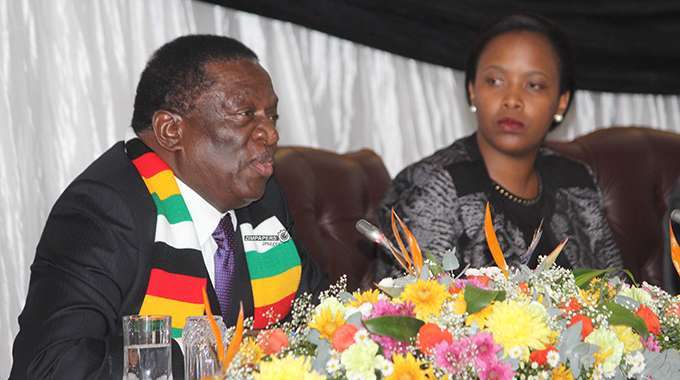
Vice President Constantino Chiwenga and Chief Secretary to the Office of the President and Cabinet Dr. Misheck Sibanda and his deputies were also in attendance.
In Zimbabwe, Akamanzi was accompanied by RDB chief operations officer, Emmanuel Hategeka.
The two shared their experiences on how Rwanda managed to improve the ease of doing business and economic performance after emerging from the genocide against the Tutsi in 1994.
President Mnangagwa said he was smitten by Rwanda’s way of doing business when he went for an African Union (AU) summit last month.
“During my visit to Rwanda, I was impressed. I met the CEOs of Rwanda and hardly anybody was above 50; very young. I did not know why, and President Paul Kagame explained to me. We then agreed that a team be sent here to share with us their experiences,” President Mnangagwa told his audience yesterday.
“Rwanda is not as gifted as Zimbabwe in terms of resources and is 15 times smaller than Zimbabwe in size, but the manner in which they are organised is a marvel. I felt it was necessary for you my colleagues to be exposed to Kigali and I asked President Kagame to send us his team,” he said.
“I have no doubt a majority of us will appreciate what Rwanda has achieved, especially in the manner they process investment. It’s like a machine. Here we do not even know when an investor comes or where he will stay and he may spend three weeks moving from one ministry to another. If the minister is out, the investor may wait for him to come back; it’s absolutely unnecessary. Systems must continue to function and this is what we want to achieve,” he said.
Akamanzi said their invitation by the Zimbabwean Government showed the country was keen to follow through on its commitment to open up and develop its economy.
“Zimbabwe is not only open for business, but clearly you mean business, Mr President,” she said.
For Rwanda to make significant progress, she said, it stressed unity, accountability and aiming high.
“We united our people because we came from a history of division. The first priority was to ensure that the Rwanda that was being built was united; that everyone could see themselves in. The youths, women, educated, rural and urban and all those that came from outside the country to be part of the rebuilding. So unity was very important,” she said.
“The second thing President (Kagame) said was thinking big. Even though we were coming from the lowest place you could imagine, even though we had a divided past, even though we had challenges such as being a landlocked country with few skilled people, the point was how could we think about that and aim high. How can we think Rwanda can achieve what other developed countries can achieve. Thinking big changed our mindest and trained us,” she explained.
She said Rwanda also established strong institutions to enhance accountability.
“Accountability ensured leaders remained accountable to the citizens and the citizens remained accountable to the leaders,” she added.
Hategeka told the same meeting that central to Rwanda’s transformation was the private sector, including running the public service as efficient as the private sector.
“Our President (Kagame) ran the country like a company and so there were performance contracts. It’s not exclusive to enterprises and corporations, it also works in the public service. And every ministry and government employee at the beginning had to sign performance contracts that contained the priorities that impact positively on the lives of the people, and was signed by the President,” he said.
Hategeka said there was also deliberate effort for Government, civil society, the private sector and citizens to work around an agreed agenda and national vision.
“The national dialogue brought accountability. It was a moment of truth,” he said.
Rwanda has made significant progress towards gender inclusivity, with 64 percent of its leadership being women.
The Rwanda Development Board is a one-stop centre responsible for making instant decisions on investment inquiries across all sectors of the economy and as a result, it only takes six hours for one to start a business in Rwanda.
A statement from the presidency read: “The President of the Republic, Nana Addo Dankkwa Akufo-Addo, on Thursday, 12th April 2018, suspended from office, Pius Enam Hadzide; and the acting Director General of the National Sports Council, Hon. Robert Sarfo Mensah.
“This decision has been taken following preliminary investigations conducted into the circumstance that led to the arrest of some sixty (60) Ghanaians, who had allegedly attempted to enter Australia by false pretences, in the on-going 21st Commonwealth Games.”
The sixty were found to be fake journalists after the Australian authorities reportedly asked them basic sports questions but they failed. They are believed to have obtained visas through illegal connections with the help of people in high authority.
The president has also directed that other top officials be recalled from the Games to assist the police Criminal Investigations Department (CID) into the matter.
Ghana’s situation was detected before the Games but other African countries are making the headlines for all the wrong reasons in the area of disappearing athletes. Cameroon have recorded eight such cases whiles five others from Rwanda, Sierra Leone and Uganda have joined the list.
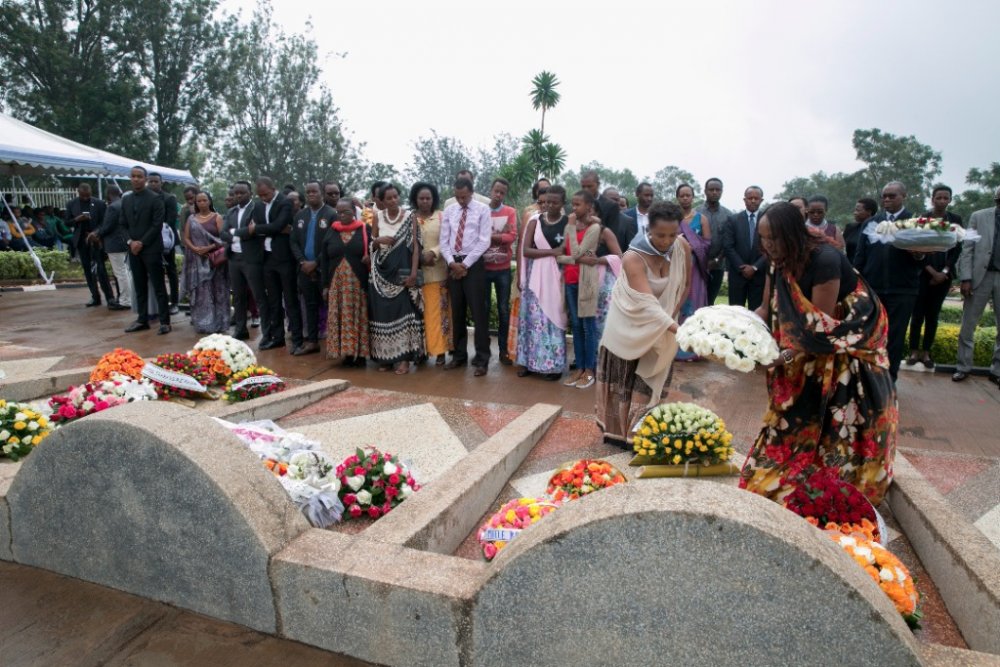
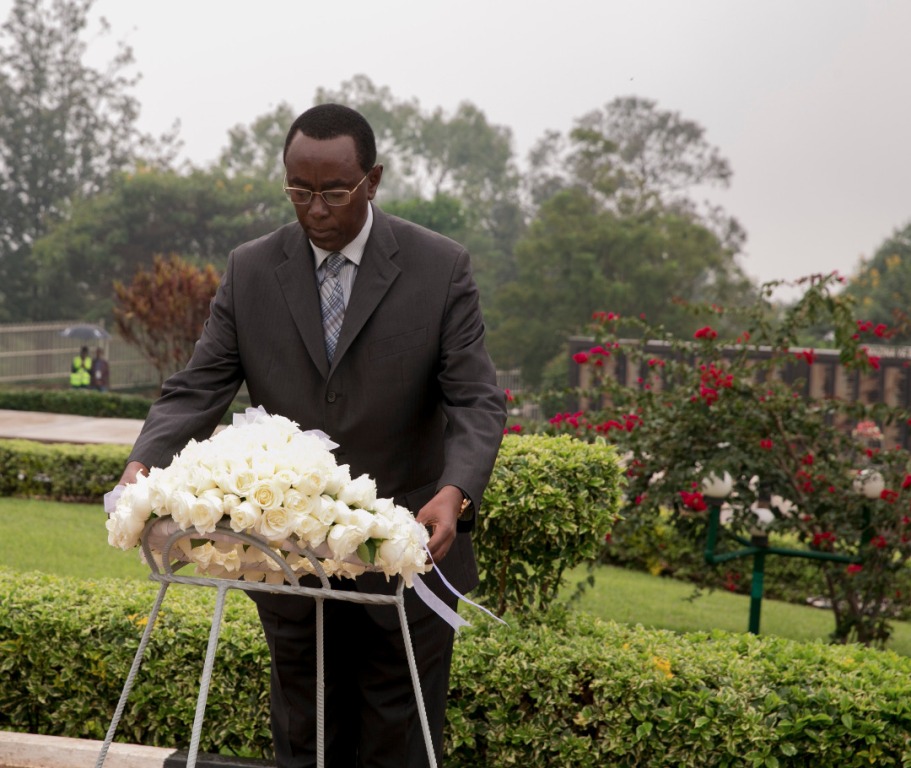
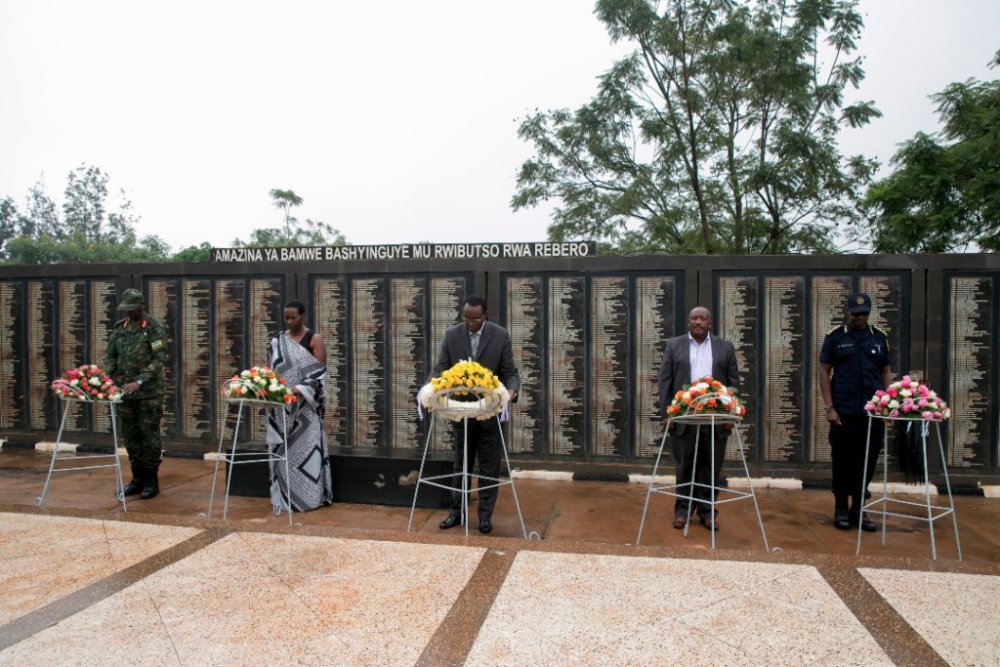
Makuza was speaking Friday while closing the commemoration week at Rebero Genocide Memorial in Kigali where slain politicians are laid to rest.
He said that Rwandans have committed commemoration period as time to re-dignify victims of the 1994 genocide against the Tutsi who had been ridiculed and brutality killed.
“Every day, we should use this time to challenge ourselves, remind one another and reflect on the reason that caused this to happen,” he said.
He reminded that commemoration activities continue in 100 days from different parts of the country. He said that commemorating is a Rwandan culture that has been there from the past.
“Our ancestors believed that when a person is dead does not that they are completely gone. Rwandans used to commemorate their family members and at the events they used to practice rituals which aimed at showing the deceased that families still love, honor and value them,” he said.
Makuza said that commemoration shows the value and right a human being has had in Rwandan society.
For the genocide against the Tutsi, Makuza said is a special programme coming from the recent bad history of the country, a history which he said was caused by bad politics.
“The politics of divisionism and hatred led us to the genocide against the Tutsi and ruined Rwandan community starting from survivors and other consequences caused,” he added.
In a way to generate solutions to problems, Makuza said that the country chose to ‘remember-unite and renew’.
Makuza said that the genocide against the Tutsi did not happen by accident; he said it was prepared and happened due to bad politics and leadership.
Speaking about slain politicians, Makuza said that if the country had had many politicians which similar spirit, the genocide would never have happened nor had such severity.
“The honor we owe these politicians we commemorate today is to embrace their heritage and assume the responsibilities to avoid any divisionism but uphold unity of Rwandans,” he said.
“Commemorating politicians laid to rest in this memorial site reminds us to borrow a leaf from them as all Rwandans, politicians and leaders from different categories,” he added.
Twelve politicians and over 14,000 more victims of the 1994 genocide against the Tutsi are laid to rest there at Rebero Genocide Memorial Center.
The call was made yesterday in Kigali when media fraternity convened at Rwanda Broadcasting Agency (RBA) to commemorate the victims of the 1994 genocide against the Tutsi and slain journalists in particular.
He called upon journalists to read through the lines before they publish their stories.
“When you write or read news you control some people’s minds. We should think about how our publications will impact the society, we should think about that before we publish or air anything,” he said.
Kaboneka said that crosschecking before publication will help journalists not to fall into the trap of being used as journalists did before 1994.
RBA Director General, Arthur Asiimwe said that current journalists should learn from mistakes committed by fellow journalists.
“This is the time to reflect, reassess and find among ourselves more efforts to provide our contribution in building the nation,” he said.
Sixty journalists were killed during the genocide, but research continues to establish more victims.
Lomas was speaking to the media on Thursday shortly after paying courtesy call to the Minister of Justice and Attorney General, Johnston Busingye.
Lomas said that they had wide range discussions about various international judicial issues including the case of genocide suspects living in the UK.
“I have really showed the minister that this is an issue we take very seriously, it is however a judiciary issue, not political issue we can’t get involved. I assured the minister that the metropolitan police have launched a preliminary investigation to see whether there would be a case that would be brought to court and punished by law, the Crown Prosecution Service (CPS) will decide on that. There is always that investigation and we have showed the government of Rwanda that we are taking this case seriously,” she told journalists.
Busingye said that the issue of genocide fugitives is close to the hearts of Rwanda’s justice system, Rwandan population and the government.
“I raised all the issues that need to be raised; one of them is the time it is taking, it is now twelve years since we started trying to get these people extradited to Rwanda for trial. It’s now one year since we said, well, if you cannot extradite these people try them,” he said.
Busingye said that the high commissioner assured him that the metropolitan police have seriously taken on the issue.
“What I expressed seriously is that to us time is of essence whether these people will be put to trial and their innocence or guilt get proved is so important in their lifetime, it is useless after they are dead,” he explained.
On whether suspects could get fair trial in Rwanda, Busingye said that justice system should interrogate itself more because many countries across the globe have extradited suspects at different phases of cases and that kind of fear has not been there.
“We have not had the fears expressed by British Justice system justified in any of the cases that have come from the Netherlands, Denmark, Sweden, Canada and USA among other countries that have extradited people here,” he added.
{{About genocide suspects in the UK}}
Vincent Bajinya also known as Brown is suspected of being in a group that had been working closing with former President Juvénal Habyarimana in the preparation of genocide. He’s suspected on participation in acts that killed many people in Kigali.
He was arrested by Police in the UK on December 28th 2006 following the call by government of Rwanda.
Célestin Mutabaruka had been a pastor in Pentecostal Church before the 1994 genocide against the Tutsi. He’s suspected on collaboration with Interahamwe in preparation, coordination and execution of mass killing that took lives of over 20,000.
Charles Munyaneza had been the mayor of former Kinyamakara commune in Gikongoro Prefecture. He’s suspected on role in preparation and execution of genocide, and heading and organizing the attacks at Mwogo River in former Gikongoro, the attacks killed many Tutsi.
Célestin Ugirashebuja was born in 1953. He had been the mayor of former Kigoma Commune in Gitarama Prefecture. He is suspected on planning and execution of genocide in the commune. It is said that he ordered the killing of Tutsi who were carried at his office and ordered Hutu to hunt all Tutsi who had hidden.
In the second week of April 1994, Ugirashebuja led an attack which had been hunting and raping women.
Emmanuel Nteziryayo had been the mayor of former Mudasomwa commune in Gikongoro Prefecture. He is suspected on planning and execution of genocide. He also led the attack that killed many Tutsi in the region.
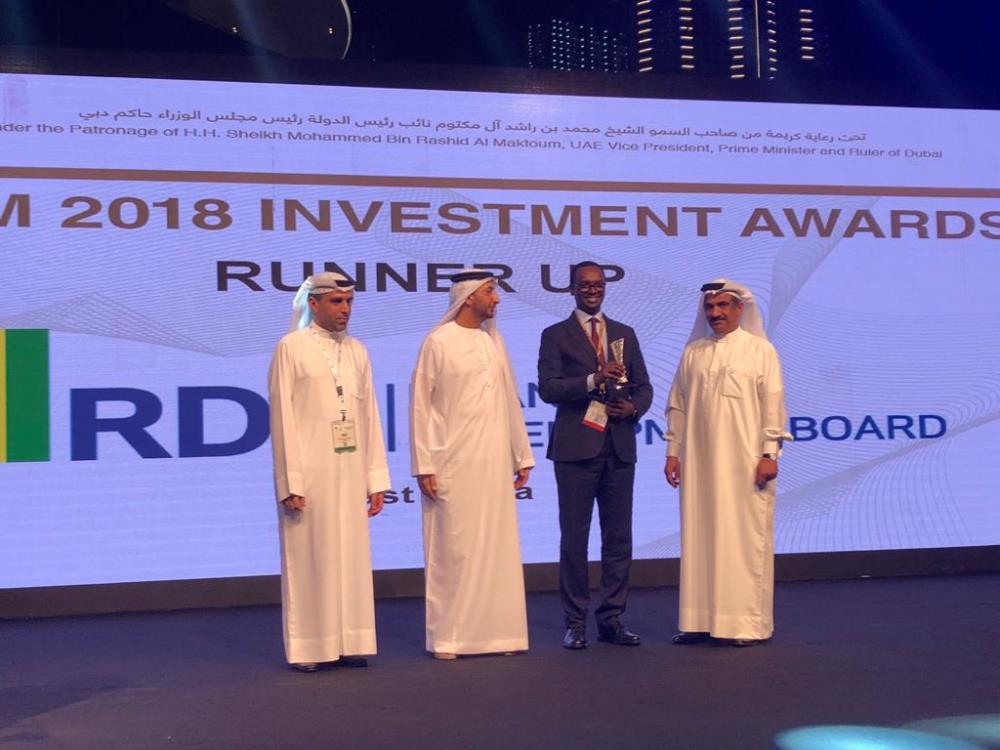
At the Annual Investment Meeting (AIM) conference in Dubai, United Arab Emirates, investment promotion agencies from nine regions across the world were awarded on Monday basing on feedback from a major investor already operating in the country and RDB emerged the second best in East African region after Ethiopia.
“In the case of Rwanda, the major investor that nominated Rwanda was AIF. This award is further evidence of Rwanda’s pro-business focus,” said RDB’s Chief Operations Officer, Emmanuel Hategeka, upon receiving the award.
Expressing the company’s pride in the award on Thursday, Amar Ali, the Chief Executive Officer of Africa Improved Foods, appreciated Rwanda’s support to AIF for delivering its mission and encouraged other investors to take their businesses to Rwanda.
“We, at Africa Improved Foods, are very proud to have helped Rwanda win this award. To build and operate a world class facility like we have in such a short period of time would not have been possible without the strong support of the Rwanda Government and in particular the Rwanda Development Board. They have helped us deliver our mission of helping people maximize their potential through improved nutrition with affordable, high quality locally sourced foods,” reads Ali’s statement to IGIHE.
AIF recently emerged Winner of the Best Investor of the Year 2017 Award at the RDB’s 5th edition Business Excellence awards.
“Rwanda is becoming a key player in the African investment landscape, and we encourage other investors to come to Rwanda and see what can be achieved here,” added Ali.
From a market point of view, Rwanda’s strategic location offers the opportunity of a commercial centre to the neighboring countries. Its economy is growing fast in terms of industrialization, foreign investor participation and commercial engagement thus currently ranked second in Africa in the latest World Bank Doing Business report and 41st globally.
Over the last 15 years, Rwanda has implemented 52 pro-business reforms, the highest number of business reforms in sub- Saharan Africa.
AIM is the world’s leading gathering of the international investment community, leading academics and experts showcasing up-to-date information, strategies and knowledge on attracting Foreign Direct Investment (FDI).
Widely known for its “Nootri” and “Shisha Kibondo” flour brand, Africa Improved Foods is a joint venture between the Government of Rwanda and a consortium of Royal DSM, FMO, CDC and IFC. The objective of AIF is to improve the nutritional status of the population in Rwanda and Africa as a whole by manufacturing fortified nutritious foods for vulnerable groups and consumers across East Africa.
{{Also read: [Rwanda awarded for attracting transformational Foreign Direct Investments ->http://en.igihe.com/news/rwanda-awarded-for-attracting-transformational.html]
[Best Investor of the Year AIF shares award worthy deeds, plans for 2018
->http://en.igihe.com/news/best-investor-of-the-year-aif-shares-award-worthy.html]}}
MTN’s large subscriber base, comprehensive distribution, innovative digital products and drive for mobile financial services are being linked with Ecobank’s trail blazing digital banking products to provide instant bank accounts and remittances through Africa’s largest bank by network.
The two entities, with an extensive footprint on the continent, have signed a Memorandum of Understanding to develop this partnership agreement, which will allow them to innovate and enhance access to affordable financial services via MTN Mobile Money and Ecobank Banking services.
This includes; enabling Ecobank and MTN Mobile Money customers to transfer money between mobile money wallets and bank accounts, and leveraging of Ecobank and MTN’s assets to digitise international remittance, foster product innovation in the field of mobile saving and lending, and offer digital payment solutions to consumers, merchants and corporates.
Ade Ayeyemi, Group CEO of Ecobank said: “The changing landscape of digital banking and mobile telephony is creating unique opportunities in the way and manner customers are served. Africa will need to digitise financial services to rapidly scale up client acquisition and patronage. MTN and Ecobank are taking the big step today at this grand event to support this agenda”
Further he reiterated that “Ecobank’s digital strategy has long been committed to ensuring transaction convenience for the market. We have made giant strides in our mission to ensure financial inclusion and today’s agreement with MTN will greatly accelerate the easy availability of banking services to the previously unbanked.”
Commenting on the collaboration, MTN Group President and CEO, Rob Shuter said:
“Partnerships between banks and mobile money operators are fundamental in the mobile money ecosystem, hence our long-standing partnership with Ecobank in many of our markets aimed at driving financial inclusion. We are excited to be taking this partnership to the next level as this latest development will spearhead innovative initiatives which will deepen financial access on the continent.”
The statement from the Office of the Prime Minister says that sacked are former Director General, Dr. Mark Cyubahiro Bagabe, Dr. Daphrose Gahakwa, who had been the Deputy Director General, Innocent Nzeyimana former Head of Animal Husbandry and Land Husbandry, Irrigation and Mechanisation Department and Violette Nyirasangwa, who had been the Head of Corporate Services.
On January 19th this year, the Cabinet suspended Dr. Mark Cyubahiro Bagabe from serving as Rwanda Agricultural Board (RAB) Director General and immediately replaced him with Dr. Patrick Karangwa who, heretofore, had been the head of research department at RAB.
Speaking to IGIHE, the Agriculture Communication and Information Programme Manager at the Ministry of Agriculture and Animal Resources (MINAGRI), Ange Soubirous Tambineza said that the ministry was not given details of Bagabe’s suspension saying that it was in the capacity of the body that took the decision.
“It is the decision by the Cabinet Meeting as it is in their capacity,” she said.
“What matters is to have the institution well managed and impact the lives of farmers and the economy,” she said.
On the other hand, Dr. Gahakwa, Nzeyimana and Nyiransangwa had been suspended by Prime Minister Dr. Eduard Ngirente on November 22nd last year.
Recently, a reliable source told IGIHE that MINAGRI admits to the problems in RAB.
“RAB is a very big institution which implements all programmes in agriculture sector. The Ministry coordinates, establishes policies and seeks funding and capacity building for agricultural sector among others,” a source said.
As an institution which implements different responsibilities, it is easy to have many challenges, the source said.
According to source, Bagabe and Dr. Gahakwa among others had been under investigation.
For the case with Bagabe alone, the source said that he did not want to collaborate with his bosses in MINAGRI.
“Bagabe did not want to collaborate and respect his bosses in the Ministry. He just wanted to work as an independent institution without reporting to the Ministry,” a source said.
On February 19th when MINAGRI Minister, Dr. Geraldine Mukeshimana was appearing before the MPs’ plenary session responding to several questions regarding the ministry which were raised in different parliamentary committees’ reports, MPs requested questioned problems in RAB management.
Among the problems raised are irrigation machines which provide law production compared to the budget that spent on them, agro-collection centers and post-harvest handling practices.
MP Marie Josée Kankera questioned whether continuing rotation and dismissal of officials in RAB would not be the reason behind poor performance of agriculture sector.
“Replacing an official who does not implement responsibilities is normal, we thank for government efforts to hold into account leaders and dismiss those who fail to implement their responsibilities. But I want to stress RAB officials rotation. Particularly, I think that it affects our production and attracts these problem in agriculture,” she said.
She said that every official entering the institution takes time to analyse problems and initiate measures to solve them.
“A number of PhD holders who were appointed in that board did not last there, doesn’t this attract agricultural and animal resources’ problems that the board should have been responding to? I would like to know whether there are measures to make management of that board stable, because I think that when the management is working properly, all things go well,” she said.
Also read: http://en.igihe.com/news/what-is-rab-s-problem.html?var_mode=calcul