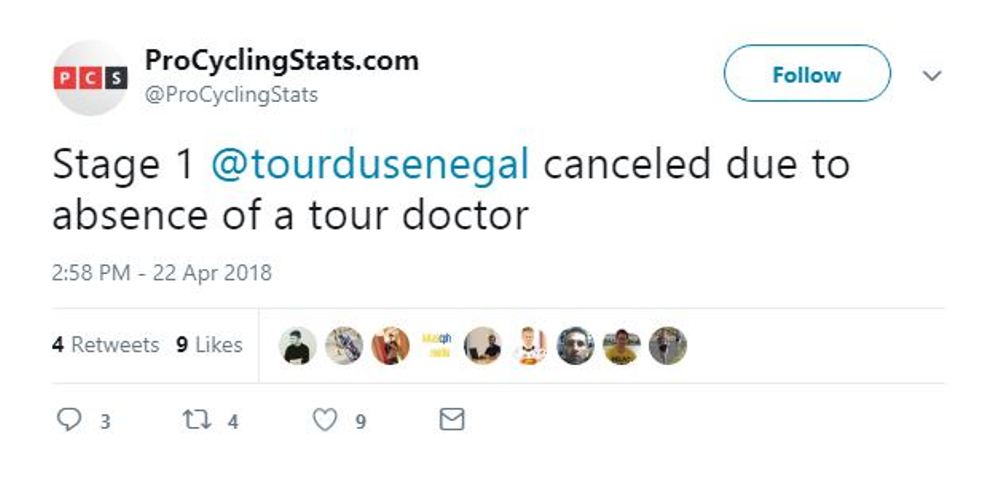
The absence of the official doctor and a second ambulance at the race level pushed the commissioners to make this decision in application of the UCI regulations, explains the statement of referees.
Before the cancellation of the stage, the organization had already fallen behind. While the fictitious start was scheduled at 9am, the teams arrived at the starting point at 9.30am and their vehicles at 10.30am.
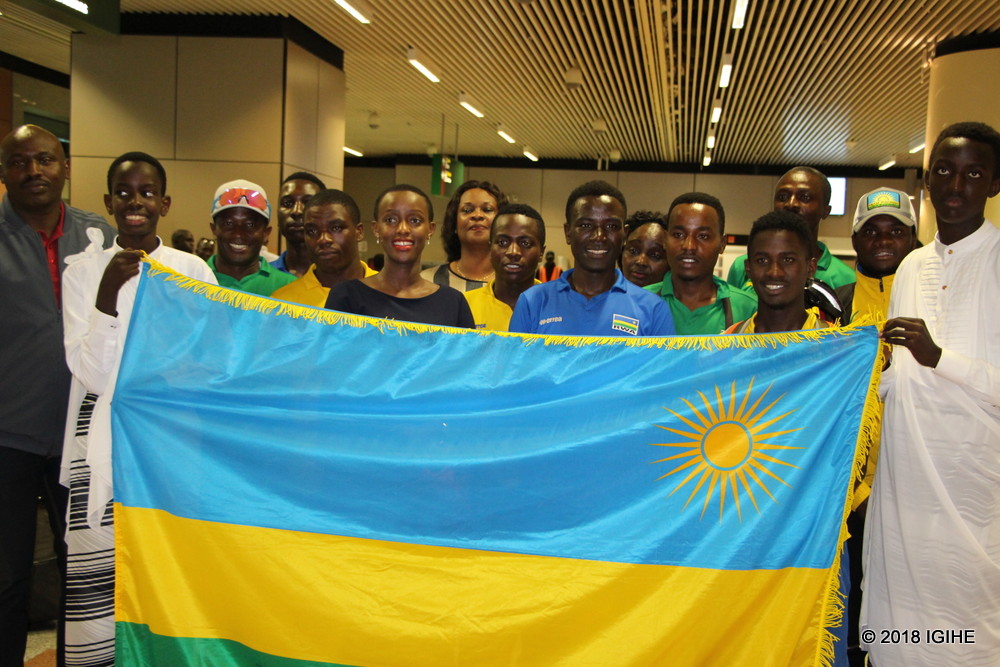
The 17th Edition of this race is made up of eight stages across different parts of Senegal. It has attracted a record 19 teams, twelve national teams and seven Continental Tour teams, including Team Rwanda, the National Cycling Team, which is making her first appearance in the competition since 2008.
The Rwandan team is comprised of Bonaventure Uwizeyimana, Jean Paul Rene Ukiniwabo, Didier Munyaneza, Janvier Hadi, Uwiduhaye and Rwanda Cycling Cup champion Patrick Byukusenge.
Jean De Dieu Ndacyayisenga, 23, was at the time found with over 40 kilograms of cassiterite allegedly stolen from Rutongo concession in Rulindo District.
The suspect was transporting the stolen minerals on a motorcycle registration number RB 794J, which was also impounded, Police said.
“Security personnel at Rutongo mines reported a motorcycle which left the concession with stolen cassiterite. The motorcycle was trailed to Kigali where it was intercepted by motorcycle security personnel and handed its rider over to Police,” Senior Supt. Emmanuel Hitayezu, the Police spokesperson for the City of Kigali, said.
“The suspect, the motorcycle and the recovered minerals were yesterday handed over to Rwanda Investigations Bureau in Rulindo where he committed the offense,” Senior Supt. Hitayezu added.
Article 438 of the penal code, stipulates that; “Any person who undertakes illegal research or illegally carries out commercial activities in valuable minerals, shall be liable to imprisonment of six months to one year and a fine of up to Rwf10 million.”
Last month, Police in Rulindo District also arrested two men, who were intercepted transporting about 800 kilograms of cassiterite, also stolen from Rutongo Mines.
They were transporting the minerals in a vehicle, which was also impounded.
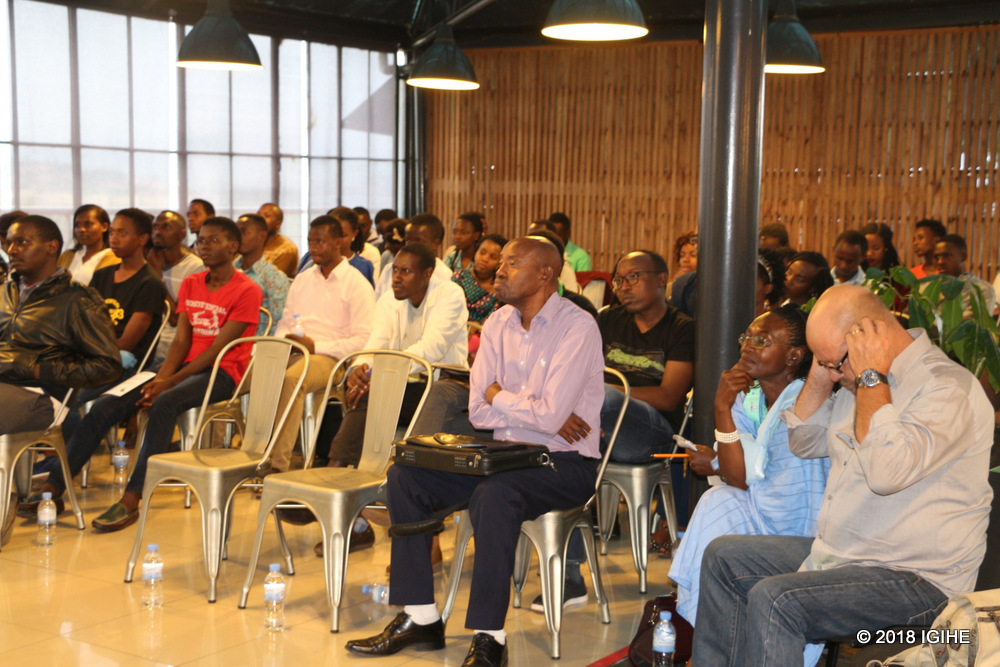
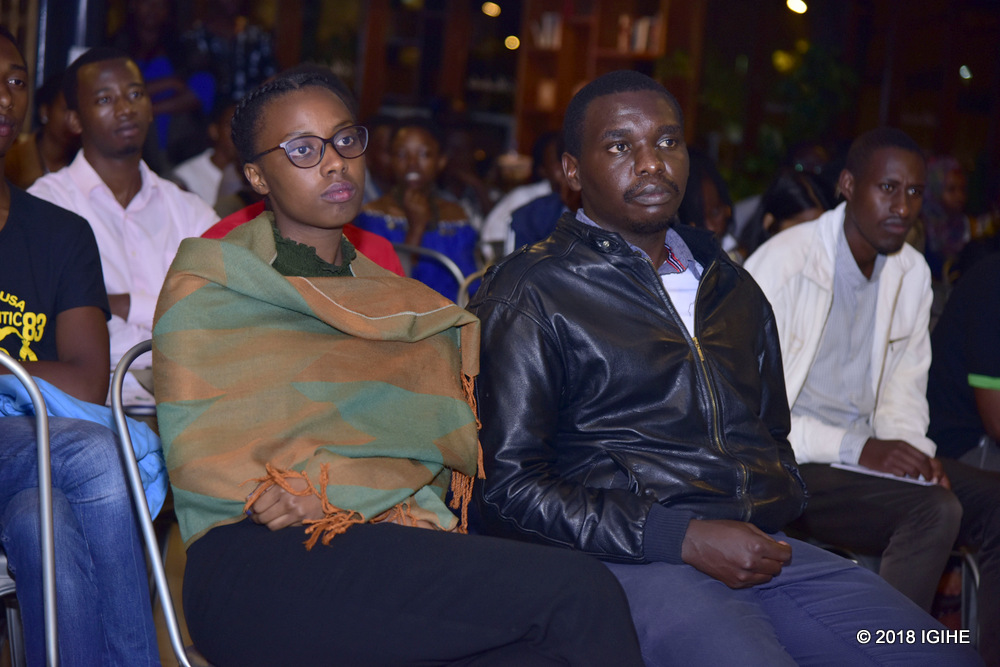
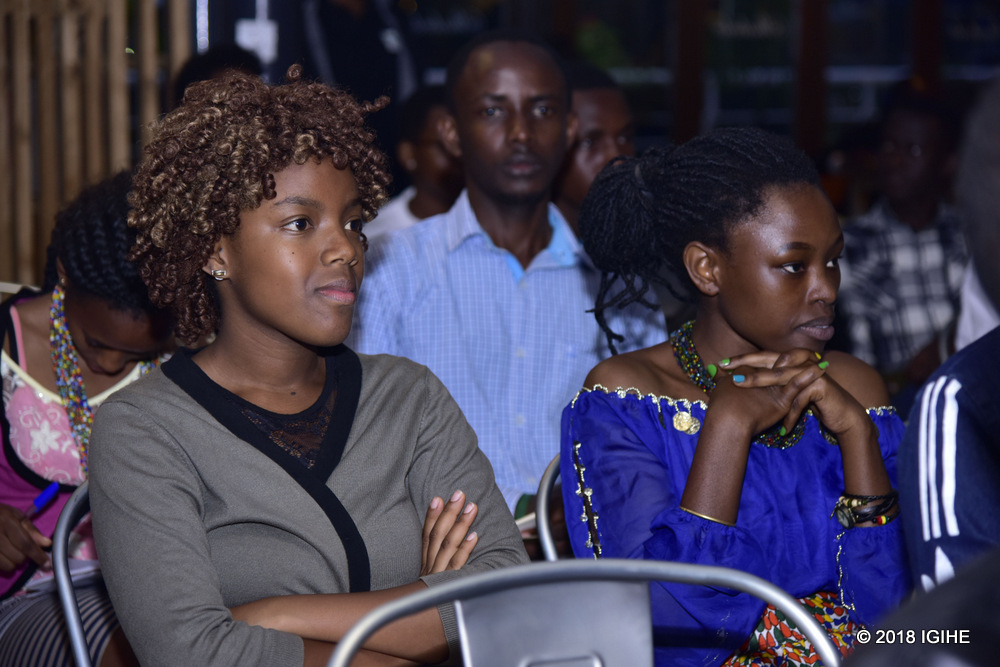
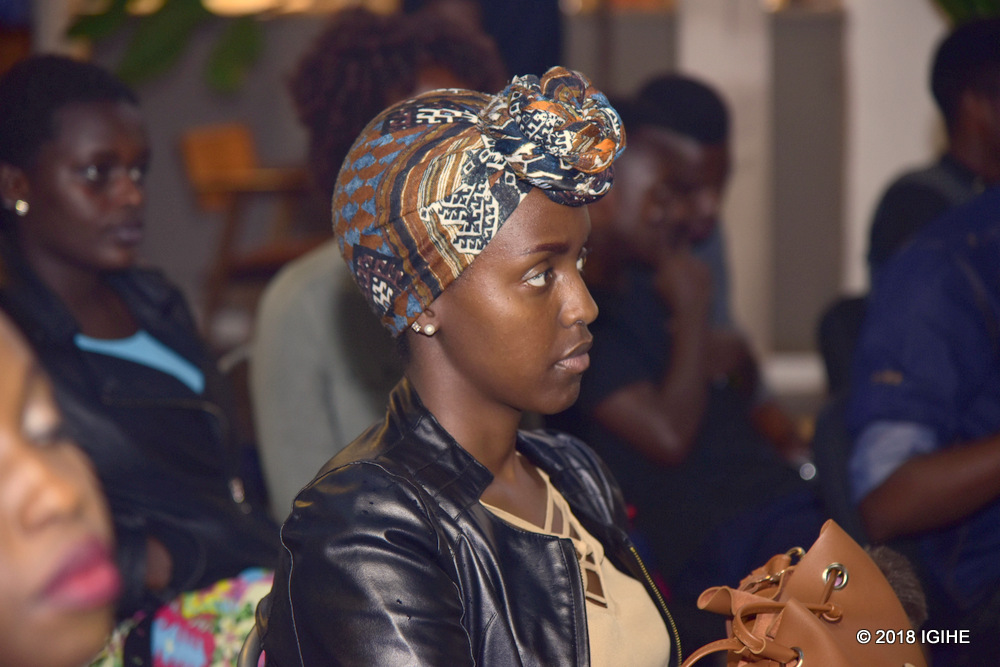
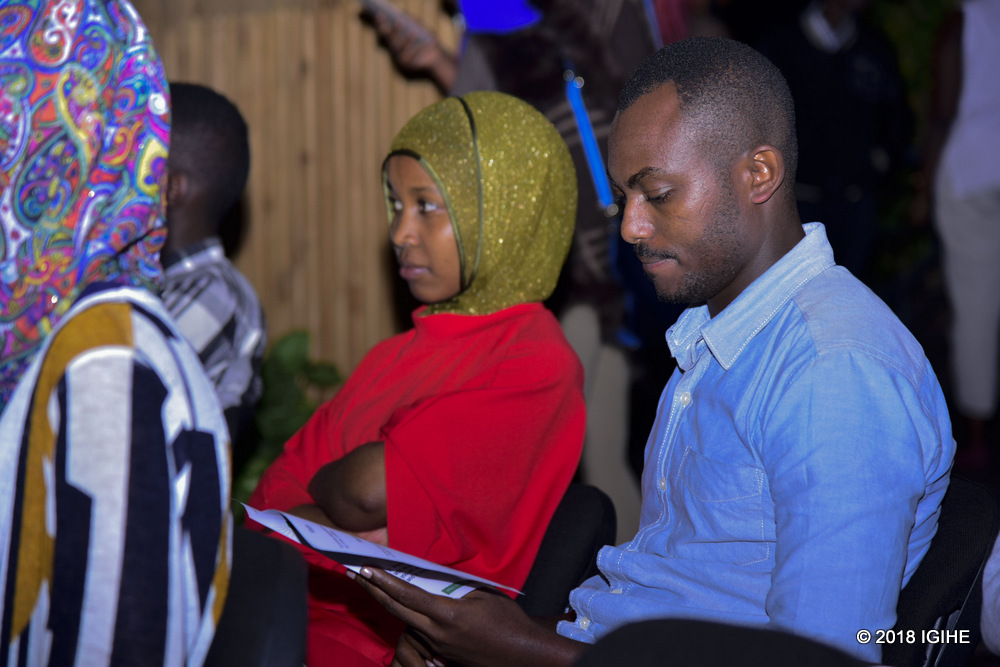
The “Reading for Change” project was launched this Friday, 20th April by Afflatus Africa, at Kigali Public Library. The Project will be focusing on how reading for purpose influences achievement of one’s dreams.
“We all know that it takes a lot to unveil one’s potentials. Contrary, as Afflatus Africa, we believe that with this project, Rwandan youngsters will become more aware of the culture of reading and be able to transform lives and to allocate people to their dreams”, said Ganza Kanamugire Bertin, Founder and CEO of Aflatus Africa.
“Through this project, we’d like to create a platform where writers work together to polish their skills. Readers also will have the opportunity to link and thus transform “the usual reading” into “impactful reading” that could engender grand changes”, he added.
He also noted that the youth could do great things, given enough time and proper attention and coaching.
Rising Author Karen Bugingo, popular for ‘My name is Life’, a story that tells about her struggles, defeats and victories as a cancer patient until her recovery process; was also present at the event. During a panel reading discussion, she urged young writers to test the waters as she did, promising them a twist of chances and opportunities waiting for them out there.
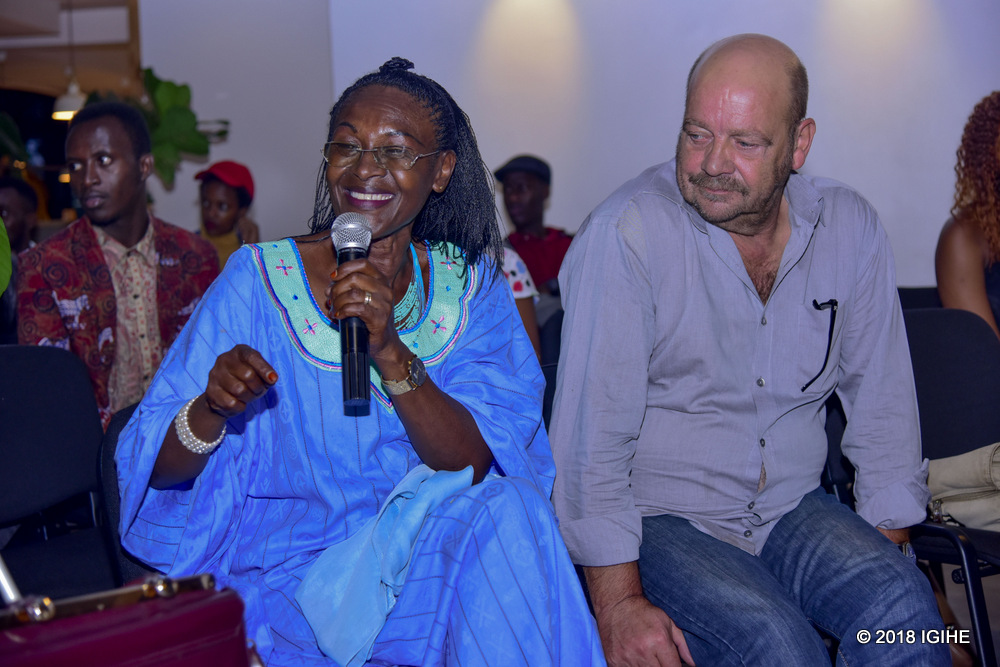
“In Rwanda, sadly, we don’t harbor a culture of reading,” says renowned Author Yolanda Mukagasana, who was also at the event. She believes that an emphasis should be put on promoting a reading and writing culture in Rwanda. She said it was unfortunate that some Rwandans read their own history written by foreign writers.
Mukagasana commended the project, saying that it’ll help bridge the gaps that the younger generations face in literacy.
The project also offers free subscriptions to 20 youngsters at Kigali Public Library for a whole year, starting from May 2018.
Speaking to National Broadcaster, RBA, Mutimura said that some university lecturers use English as a medium of instruction in which they are not fluent.
“We want to show lecturers that they are the basis of students’ education. Students say that they don’t know English because of their lecturers; they don’t have speaking skills and use it inadequately. That is why we are discussing with university officials so that in the future, for a lecturer to start teaching in University they should first pass English test,” he said.
He said that the test will be done at National level to enable lecturers acquire English writing and speaking skills.
According to Mutimura, the move will help address the challenge of students who graduate without English usage skills needed on the job market.
The new move follows a resolution from February 2018 National Leaders Retreat which recommended promotion of quality education including the teaching of English language in all university courses.
Commenting on the resolution, Mutimura said for the quality of education to be enhanced; students and teachers should well understand the basics of English language.
In Nyamagabe, former Gikongoro Commune, over 50,000 Tutsi from different regions were brutally killed.
Speaking at the event, the Executive Secretary of National Commission for the Fight Against the Genocide (CNLG), Dr. Jean Damascene Bizimana explained that the killing of Tusti in Gikongoro had been planned before, the attacks of 1963 which were referred as Inyenzi attacks.
By explaining the plan, Bizimana referred to the letter by former Prefect Andre Nkeramugaba. The letter dated December 17th 1963 was urging the bourgoumestre in Gikongoro to kill the Tutsi.
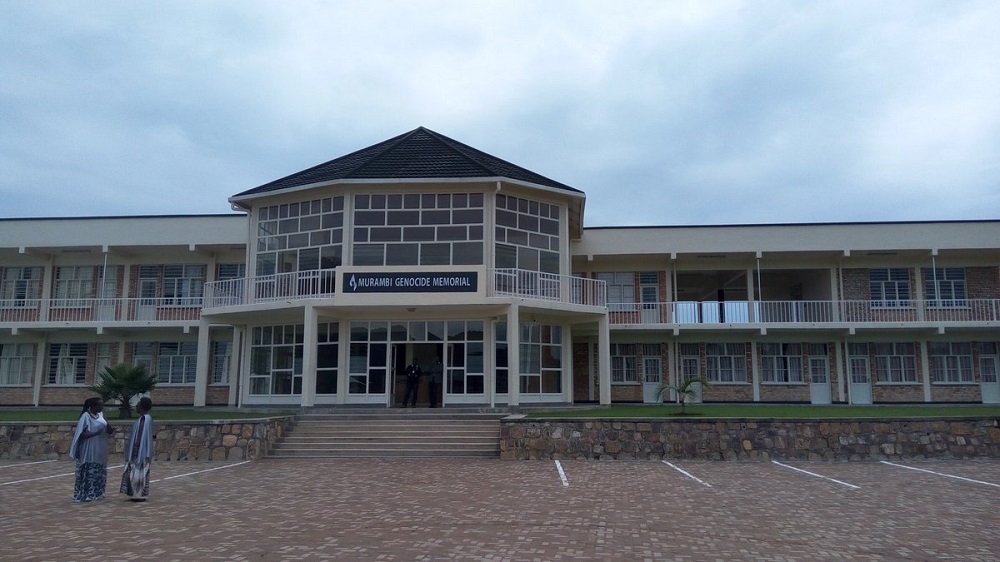
He said that they will preserve Murambi Genocide memorial forever.
The mass killing in Gikongoro took place on April 21st in 1994.
“To pay respect to the Tutsi killed here at Murambi, we will preserve this memorial site forever. Let us remember them and others who were massacred on this day in neighboring areas like Karama where over 30,000 Tutsi were slain,” he said.
In her testimony, Claudette Uwimana, a Genocide Survivor who was in S4 when the Genocide against the Tutsi begun, recalled the persecutions she endured before the 1994.
“We were always asked to stand up in classes on ethnic lines; and tortured by our Hutu colleagues,” she said.
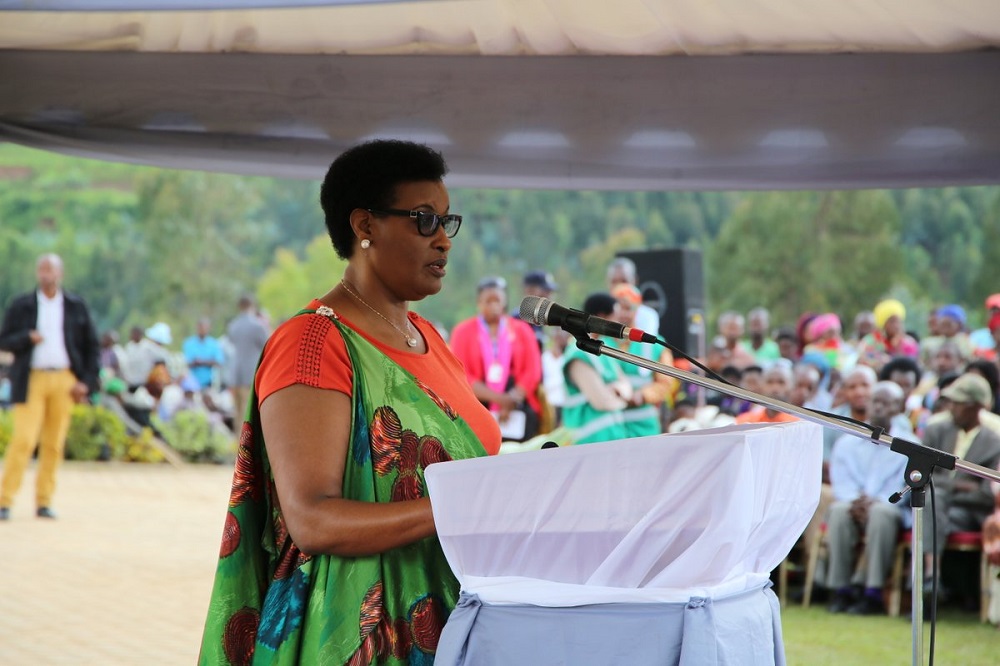
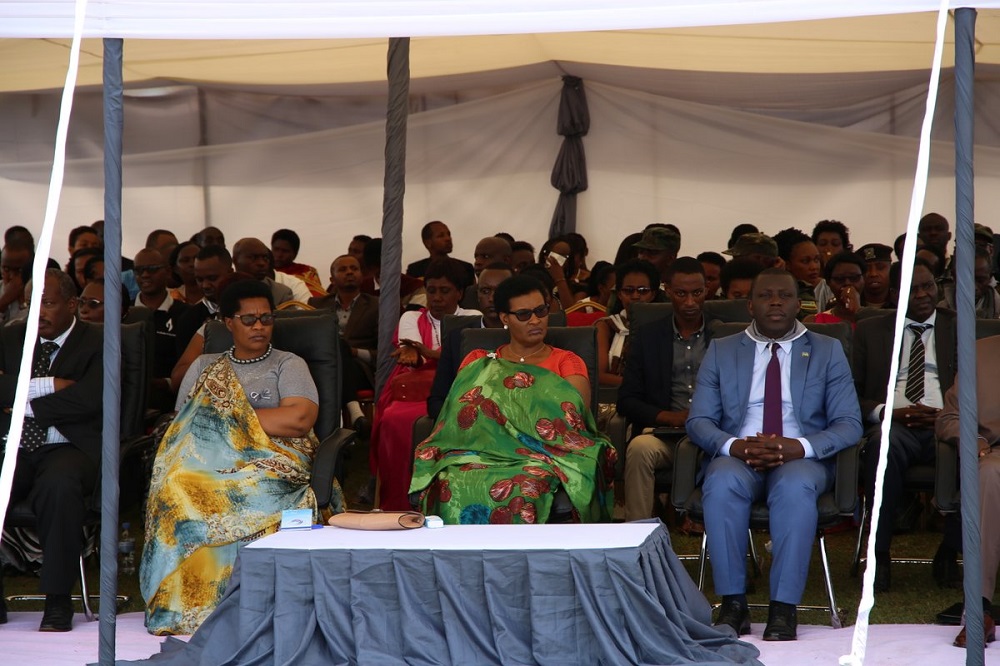
Speaking at the event, the Speaker of Parliament, Donatilla Mukabalisa said that they should not always remember bad history only but also remember the history of people who contributed in saving Tutsi who were being killed during the genocide.
“This country was led by bad leaders who had no humanity at heart but characterized by cultivating hatred among people and calling them to kill their Tutsi neighbors,” she said.
Murambi Genocide memorial was formerly a Technical School where French Soldiers disguising under Operation Turquoise were based and contributed in the execution of the genocide.
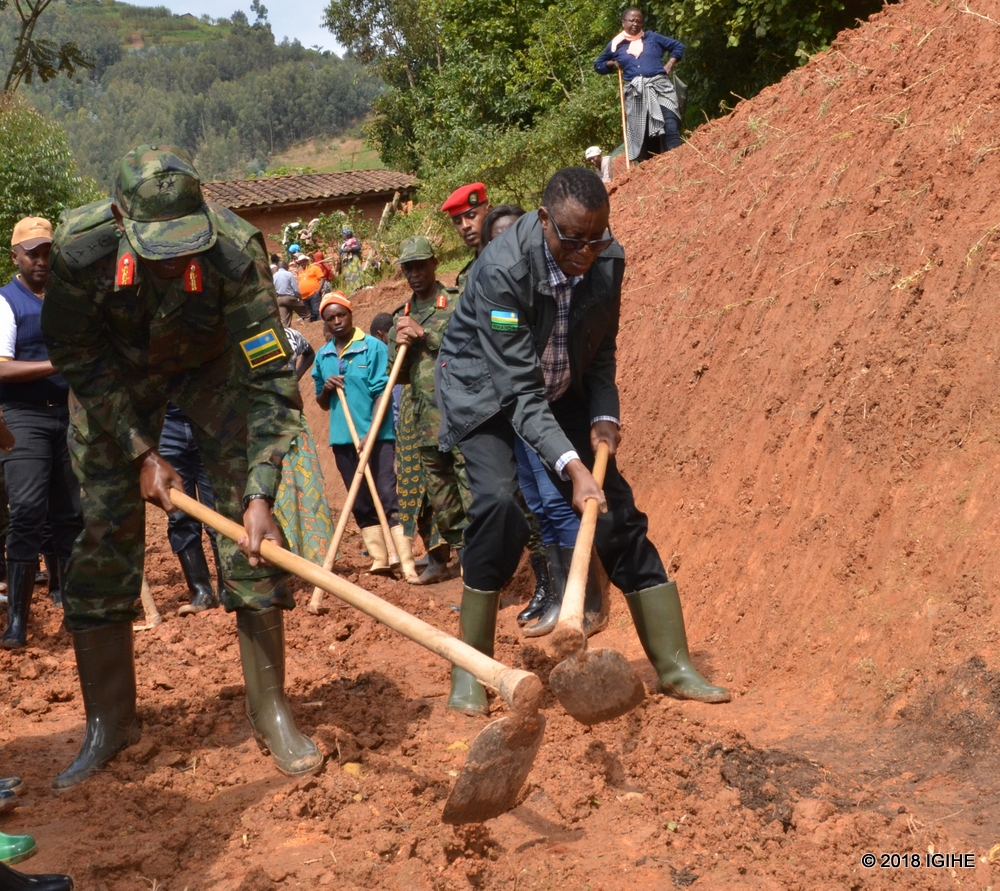
Kabarebe was speaking Friday while launching the RDF Citizen Outreach Programme in Nyabihu.
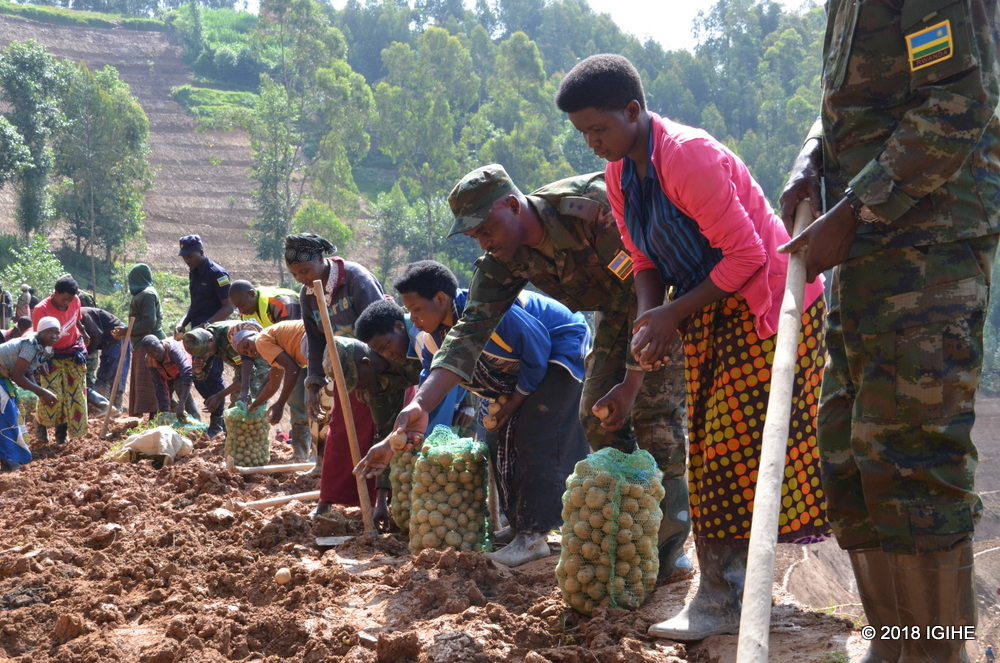
In the district, Kabarebe joined residents in planting Irish potatoes on the surface of eight hectares of consolidated land and 20 hectares for seeds multiplication in Muringa Sector of Nyabihu Ditrict.
The president of COIBAMU Cooperative hailed the programme saying that they expect Rwf150 million of profit from the partnership with army-led activities.
“We are happy to welcome these activities in Muringa Sector. This is a big opportunity from which we expect to harvest 500 metric tonnes valued at Rwf150 million,” he said.
Defence Minister Kabarebe said that the army and the government in general strive for welfare of people through food security.
“Rwandan army has the responsibilities of people’s development and ensuring national security. When people are starving and are unable to pay for health insurance (Mutuelle de sante), it means they do not have security; when people are wallowing in poverty, it means they don’t have security. Security goes beyond fighting the enemy,” he explained.
“That is why in partnership with the Ministry of Agriculture, we came to partner with this cooperative to increase production so that they will serve the market. They will be able to pay children’s school fees and health insurance as well as doing other income generating activities. That is the real security and peace of the country which Rwandan army wants people to enjoy,” he said.
This year’s RDF Citizen Outreach Programme which will last until July will provide free medical services to 113,000 patients, construct 1,961 houses, 121 classrooms and 108 school pit latrines for the vulnerable in selected areas, improve health and sanitation and conducting agricultural activities on 4,511 hectares of land.
The delegation made up of six people was welcomed by the Director General of Defence Policy and Strategy at the Ministry of Defence, Maj Gen Ferdinand Safari yesterday.
During the meeting, both sides exchanged on the prevailing regional security situation and the status of the Defence Cooperation between the two countries.
The relations between the Ministry of Defence of Rwanda and the Ministry of National Defence of the People’s Republic of China have been cemented by exchange of visits by Senior Officials, where bilateral, regional and international issues have been exchanged and discussed.
The suspensions went into immediate effect on Saturday, according to state-run KCNA news agency.
The US president greeted the news in a tweet. “This is very good news for North Korea and the World – big progress!” Trump wrote.
The news comes less than a week before Kim meets the South Korean president, Moon Jae-in, for a summit in the demilitarized zone that divides the peninsula.
It goes a long way towards meeting US demands for denuclearisation, as Pyongyang and Washington work to agree on when and where Kim will meet Trump for historic talks that barely seemed possible just a few months ago.
The decision to suspend nuclear tests and missile launches came at a plenary meeting of the ruling party’s central committee, which had convened on Friday to discuss a “new stage” of policies – prompting speculation that the regime would move towards denuclearisation.
“As the weaponisation of nuclear weapons has been verified, it is not necessary for us to conduct any more nuclear tests or test launches of mid- and long-range missiles or ICBMs,” Kim told the meeting.
“The northern nuclear test site has completed its mission,” he added at the meeting, according to KCNA.
North Korea has conducted all six of its nuclear tests at the same Punggye-ri test site in the country’s north-east. It tested its first nuclear weapon in 2006, while its last – and most powerful – test came last September.
Those tests, plus a string of missile launches ordered by Kim over the past year, at one point appeared to be taking the peninsula to the brink of conflict.
The North’s quest to develop a deterrent against what it has long described as US hostility resulted in an extraordinary exchange of insults between Kim and Trump, and frequent warnings from Washington that it would not rule out military action to end Kim’s nuclear ambitions.
Saturday’s announcement came the day after a hotline between Kim and the South Korean president went live.
The hotline connects Moon’s desk at the presidential Blue House with North Korea’s state affairs commission, which is headed by Kim, Yonhap news agency said.
Earlier this week Moon, a liberal whose election in May raised hopes of a detente on the Korean peninsula, said that Pyongyang had expressed a desire for the “complete denuclearisation” of the Korean peninsula without attaching preconditions such as the withdrawal of US troops.
The two countries are due to hold a summit next Friday on the southern side of the demilitarised zone.
The meeting is to be followed in May or June by a meeting between Kim and Trump. The US president on Wednesday pledged to meet Kim “in the coming weeks” but said he was prepared to walk away if the talks were not fruitful.
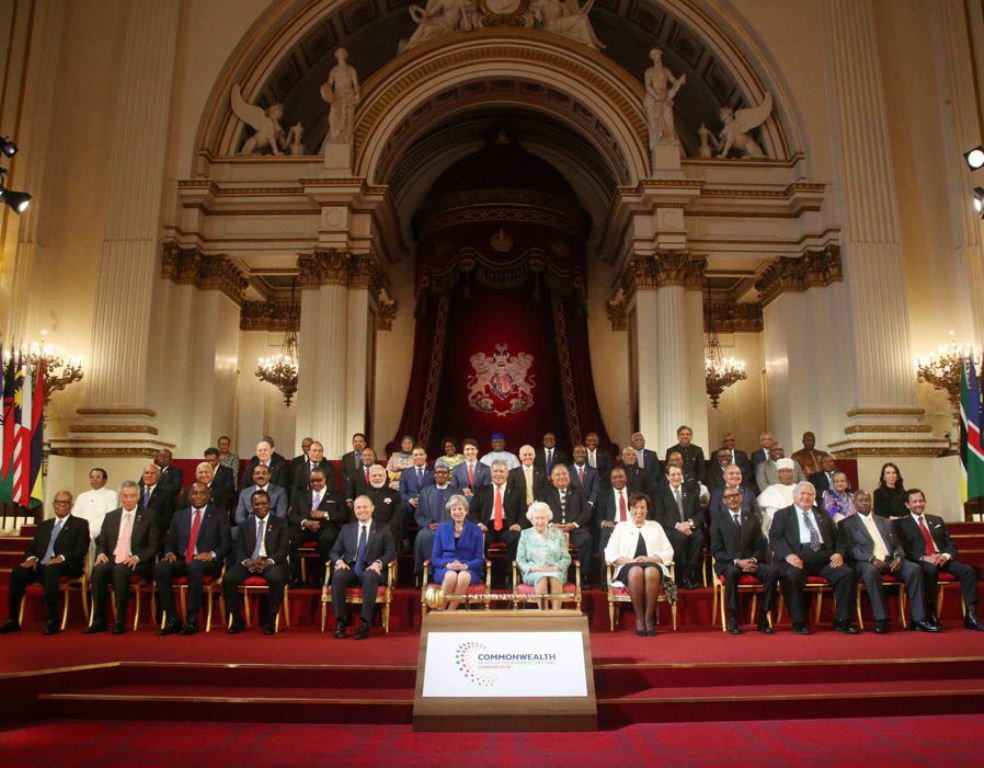
President Paul Kagame and First Lady Jeannette Kagame attended the 2018 Commonwealth Heads of Government Meeting in London.
A Commonwealth Heads of Government Meeting Communiqué says that Heads of States welcomed and accepted Rwanda’s offer to host the next meeting.
“The Heads of state and Government welcomed and accepted the offer of the President of Rwanda to host the next meeting in 2020. They also welcomed the offer of Samoa to host the 2022 CHOGM,” reads the communiqué.
The Rwanda gathering will be the 26th CHOGM.
In a tweet, the UK news agency, BBC, has said that Rwanda beat Fiji.
{{Rwanda welcomes the meeting}}
Commenting on the decision, the State Minister in in the Ministry of Foreign Affairs, Cooperation and East African Community, Amb. Olivier Nduhungirehe said that Rwanda is humbled to host the meeting.
“Rwanda is humbled by the confidence and trust that Commonwealth Heads of State and Government have placed in us to host the 2020 CHOGM, nine years after our admission in this Commonwealth,” he told IGIHE.
Rwanda was admitted as a member of Commonwealth in 2009 in the meeting that was held in Trinidad and Tobago.
“It’s a honour for Rwanda, especially as we are the youngest member of this community. This shows the trust in our ability to host this summit. But it is also a testimony of our quick integration in the Commonwealth. Moreover, this can be an opportunity for Rwandans to better know this organisation, its shared values and activities,” he added.
Based on different summits like the recent AU extraordinary summit Rwanda hosted, Nduhungirehe is optimistic that the CHOGM will be successfully hosted.
“Are you doubting it? Didn’t we just successfully host an extraordinary AU Summit of 55 member states? What would be different in hosting a CHOGM of 53 member states?” he mused.
CHOGM is a biennial meeting of heads of government from all Commonwealth nations.
Every two years, the meeting is held in a different member state chaired by nation’s respective Prime Minister or President who becomes the Commonwealth Chair-in-Office until the next meeting.
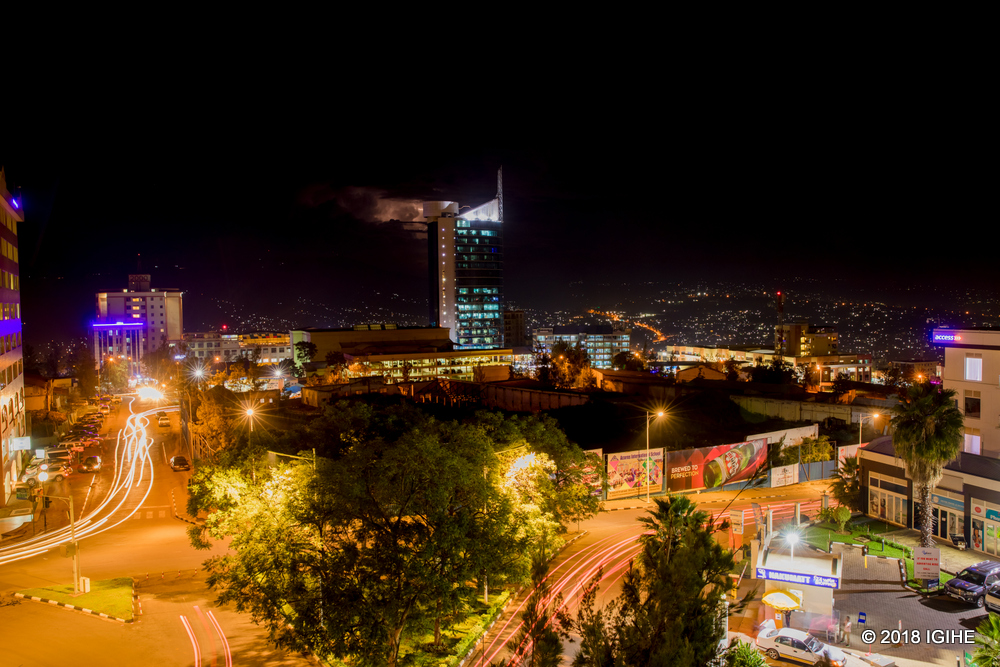
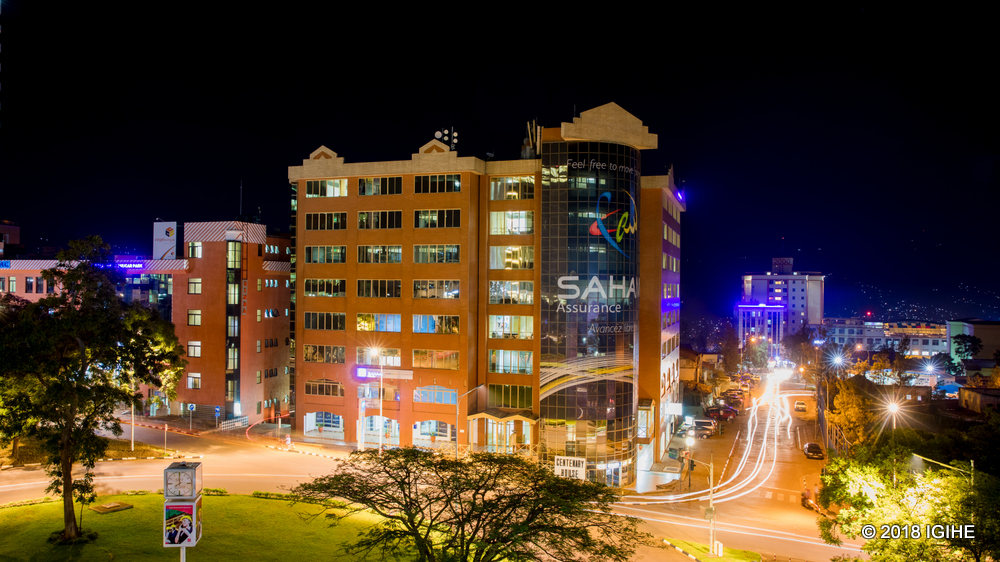
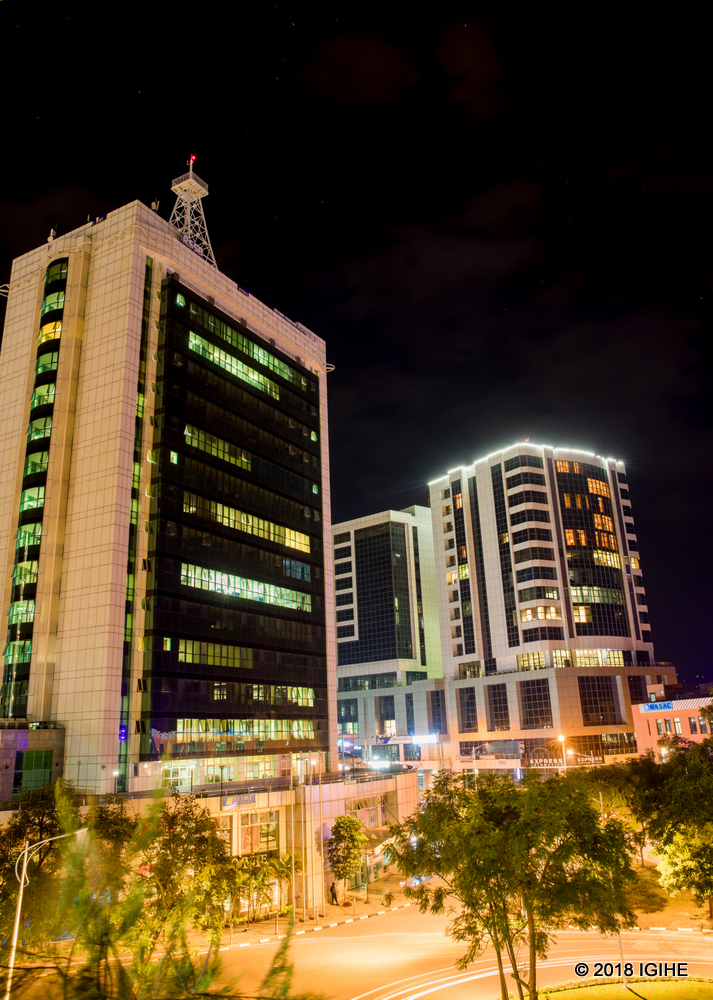
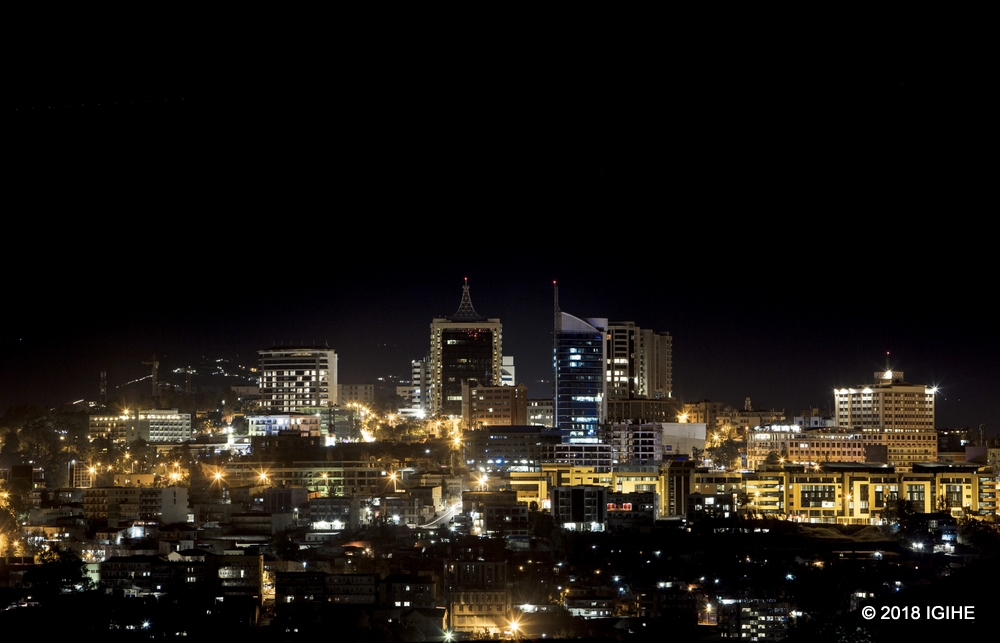
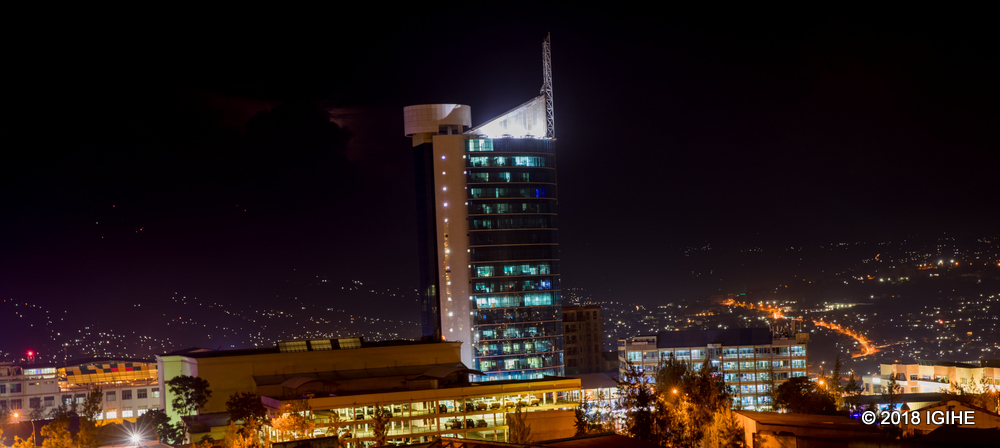
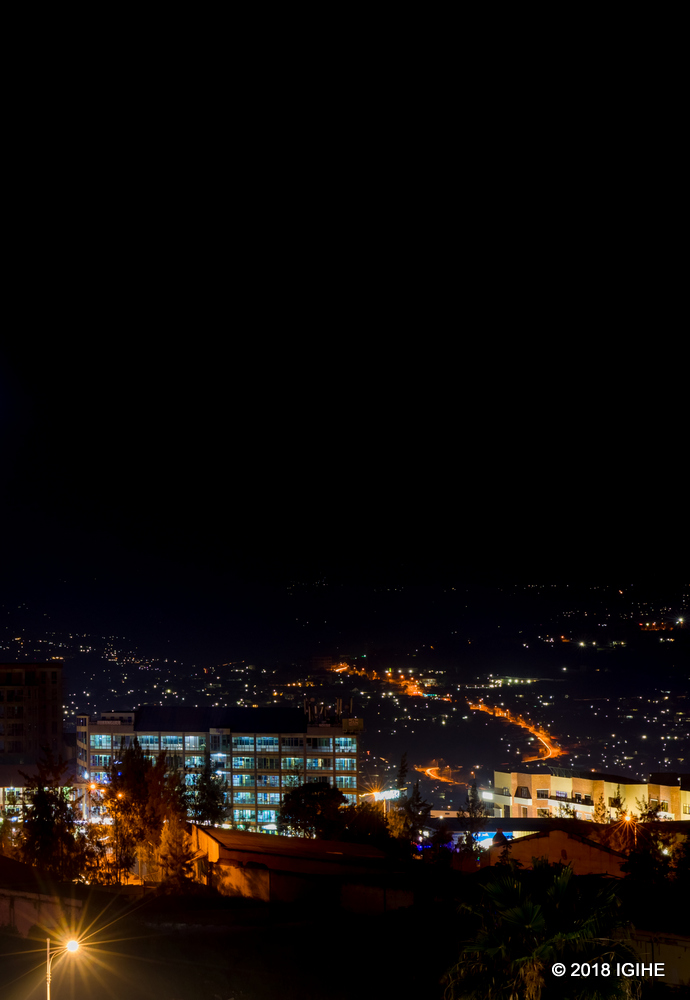
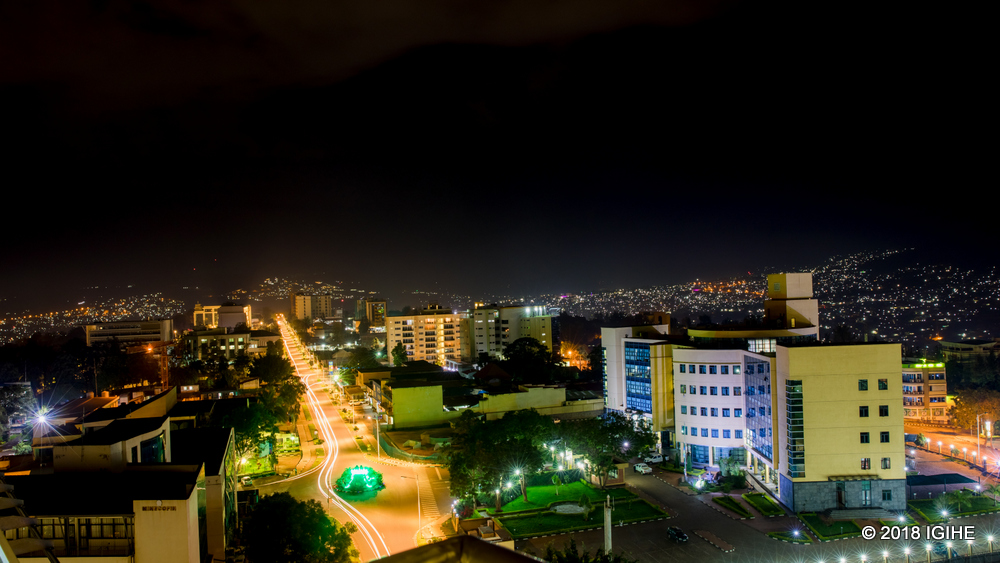
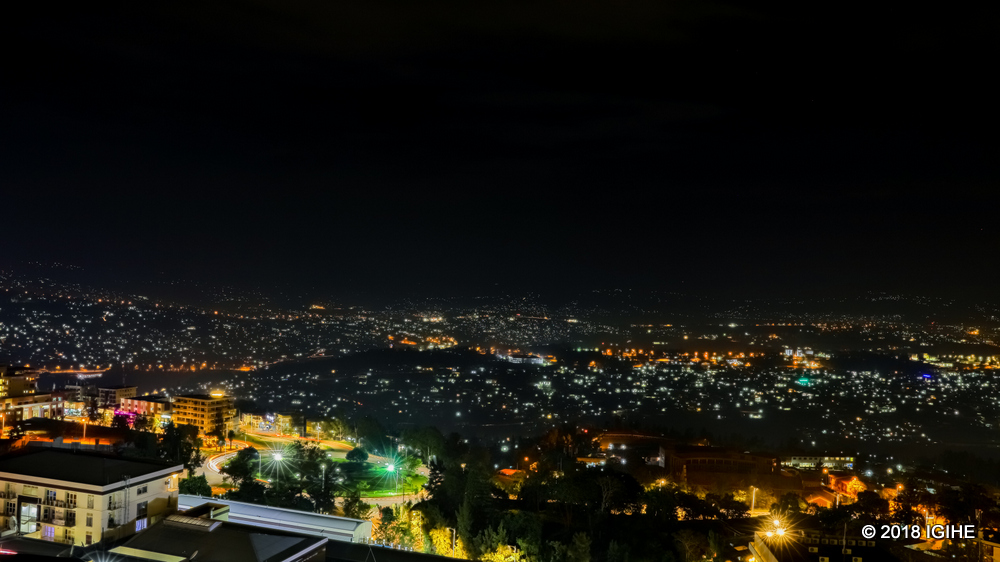
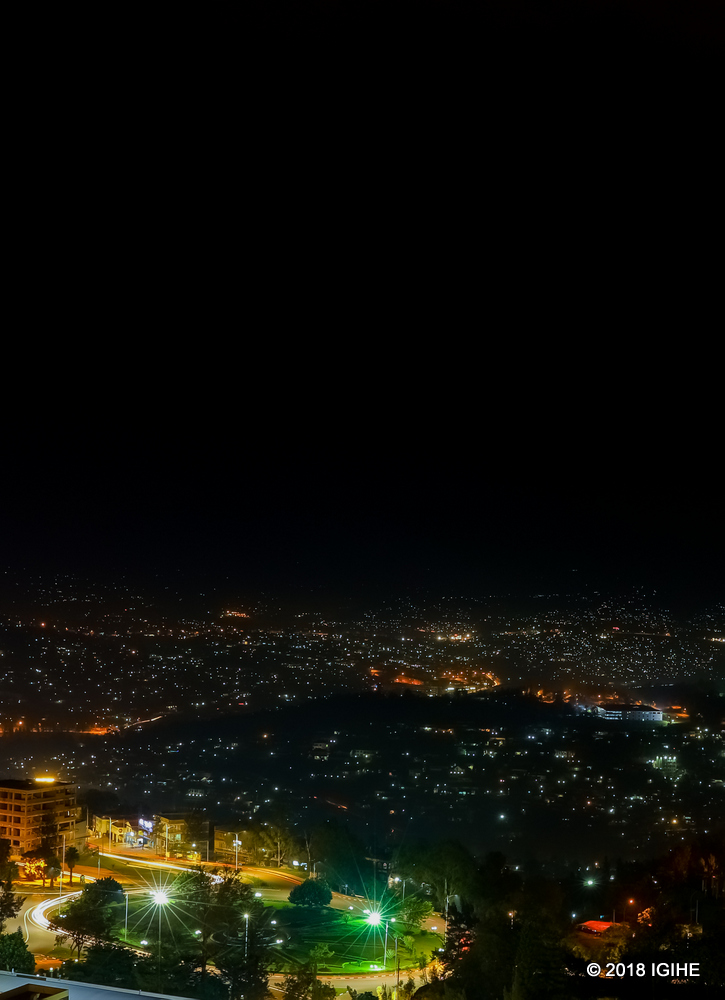
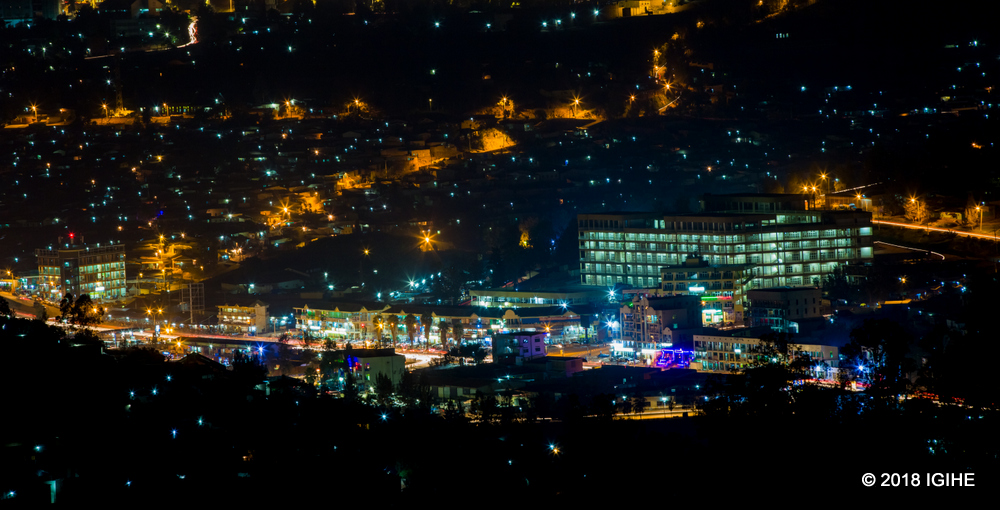
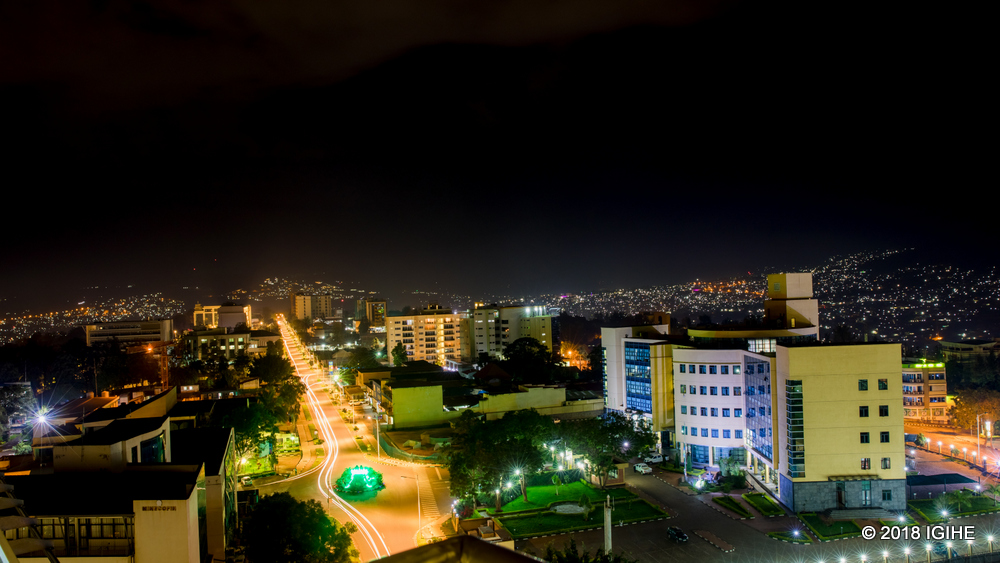
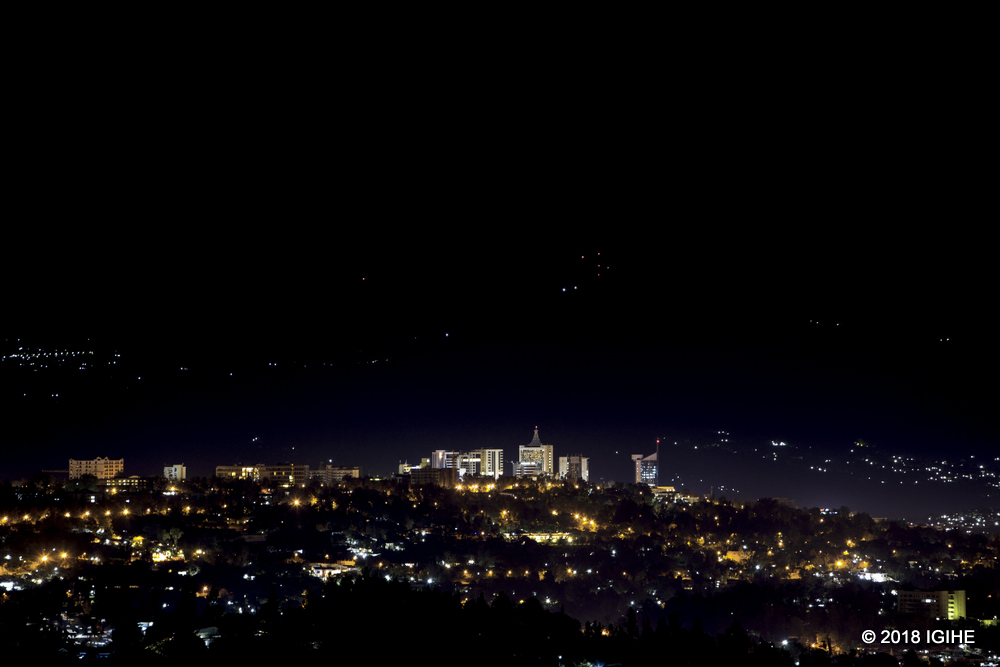
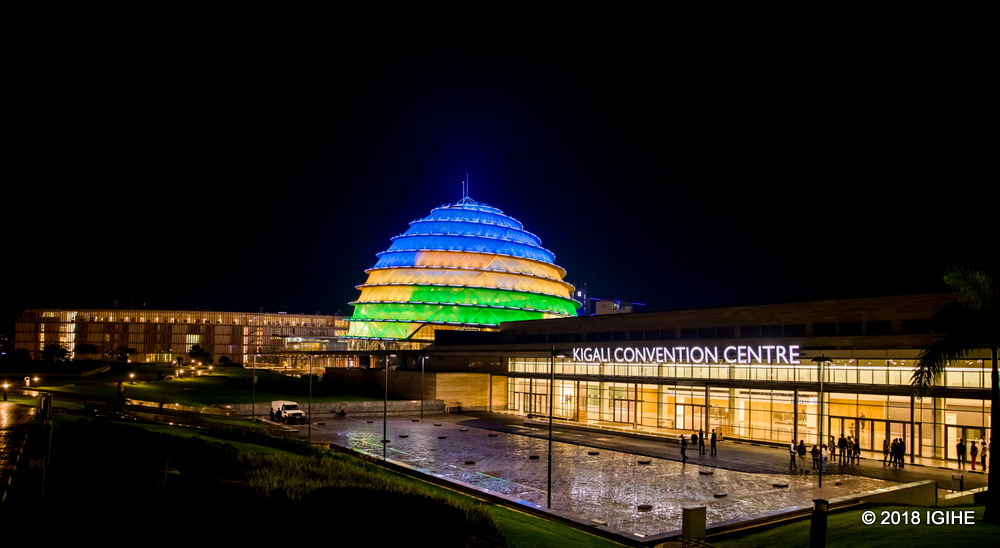
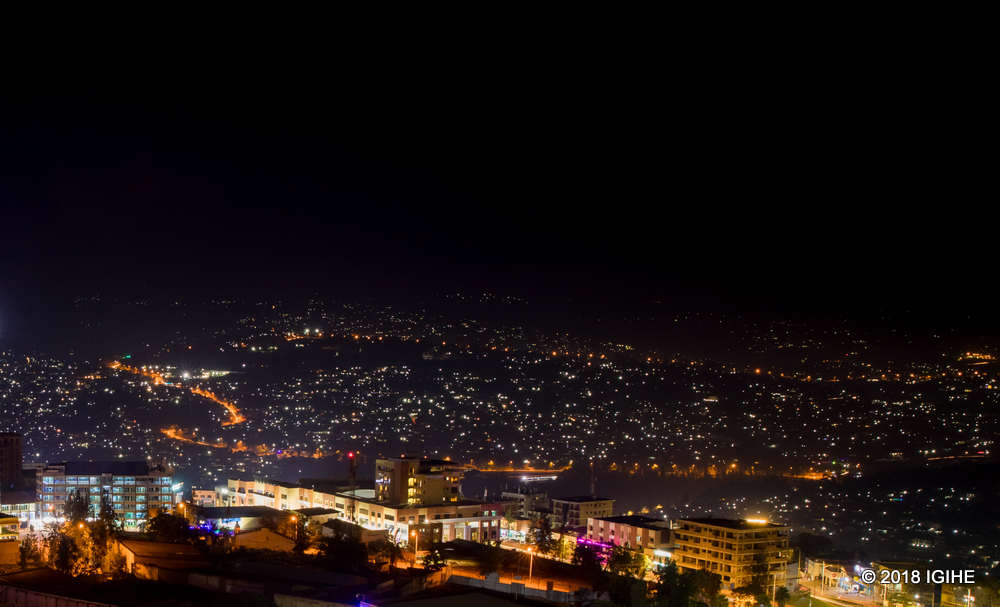
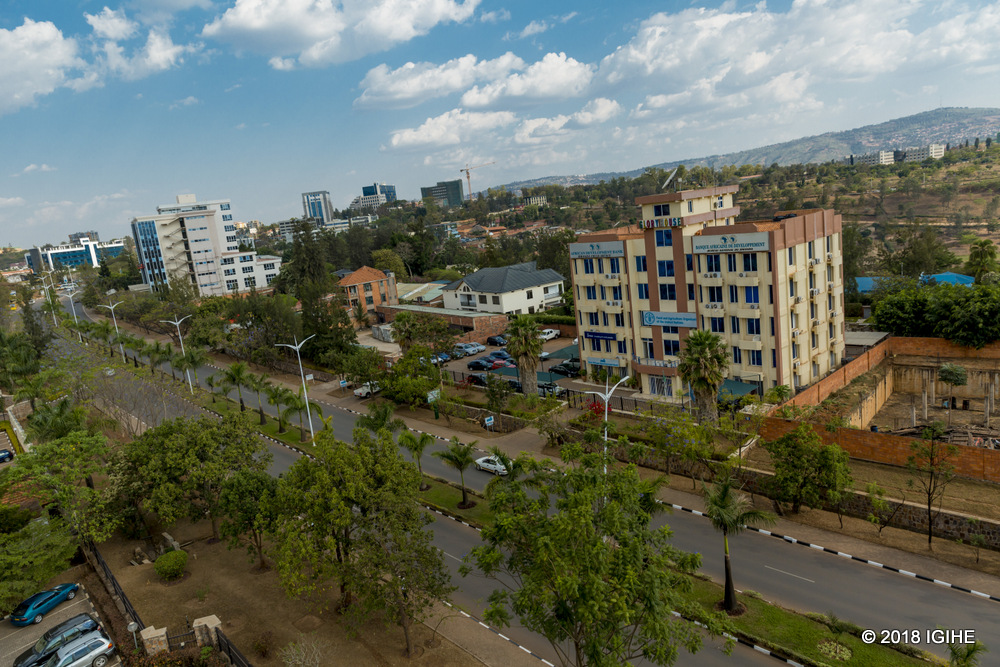
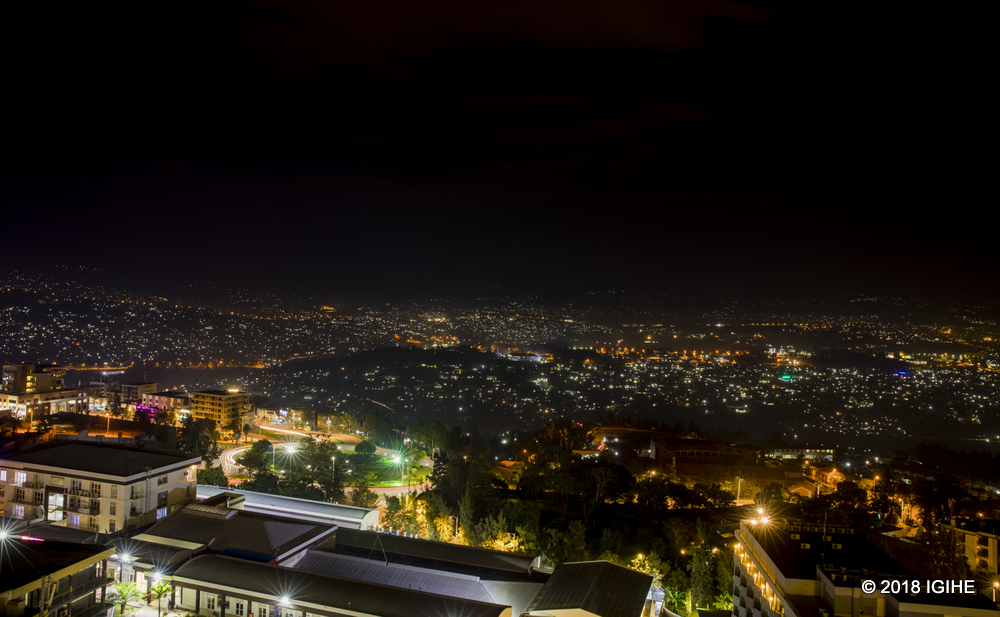
Twenty four years after the genocide, Kigali city is recognized by many as a monument to modernity. Where there was destruction and poignant hurt, you now discover peaceful areas with a vibrant undercurrent.
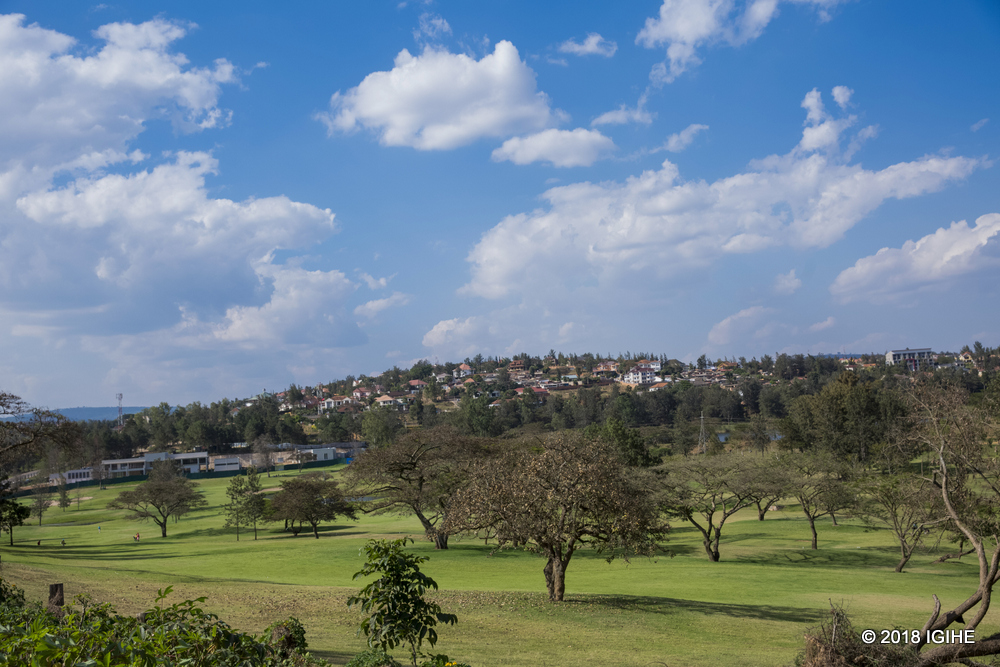
Even in the previous years, no one could deny the pristine and reserved beauty of Kigali City. Several parts like Kacyiru, or Kabuga charmed many with its uniform architecture, where they would leave Kigali, telling the story of a “luminous, musical city, as optimistic and welcoming as any in Africa”.
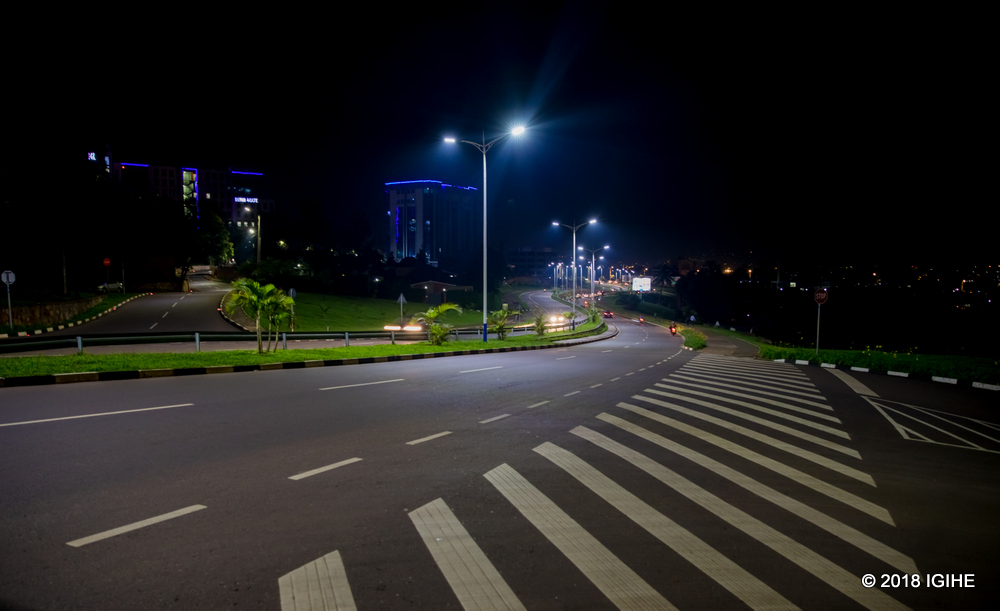
At present, new skyscrapers and office blocks have been built, many roads have been widened and adorned with tarmac, and public spaces are meticulously maintained by professional gardeners.
A lot of emphasis has been on boosting business. From 20 business people in 1909 to more than 6000 in 1962, Kigali went overboard in the business sector in a very short span of time.
The City of Kigali has huge potential in terms of its growth trend, tourist arrivals, infrastructure development, growing financial sector and other aspects that strengthen investor confidence.
Besides, Rwanda is safe, secure, and one of the most investor-friendly economies in the region, which facilitated Kigali in marketing itself as a top meetings, incentives, conferences and exhibitions (MICE) destination. This in turn, landed some of the biggest conferences in the region, including the World Economic Forum, African Union Summits, Global Africa Investment Summit, and others.
By hosting these big events, Kigali brought together entrepreneurs, business leaders, global leaders and other high calibre people who are key-persons in the future growth of the nation.
The government’s efforts succeeded in making Kigali the go-to city for regional conferences and a high tech hub in the Continent.
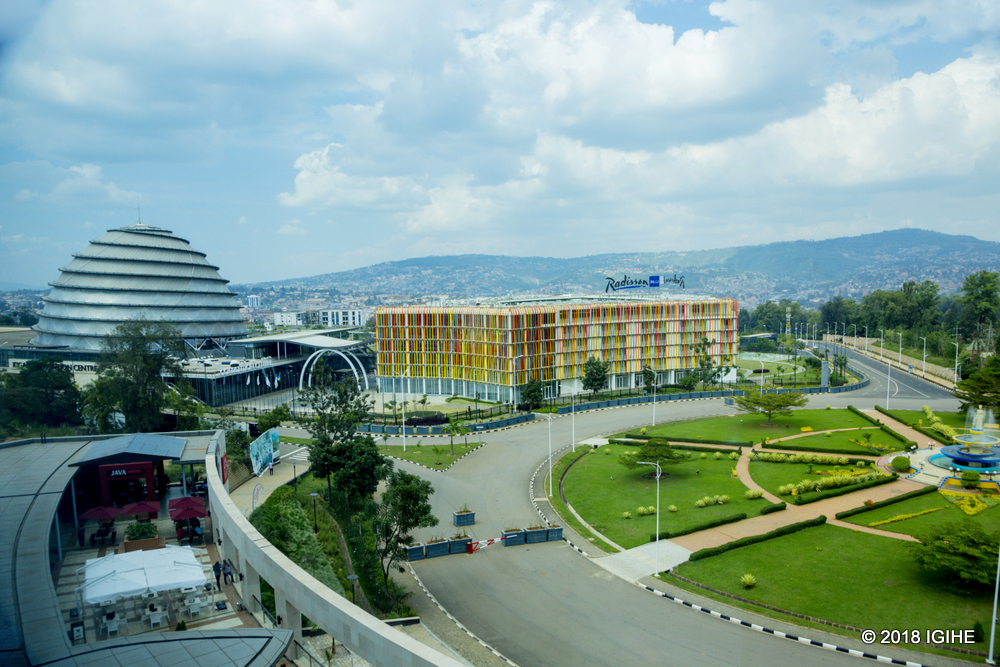
Also, grand Hotels like Sky Hotel, Mabara Umubano, in Kacyiru, Hôtel des Milles Collines, Hôtel des Diplomates and Rebero Horizon, adorn the city like gems. Moreover, recent ones like Marriott Hotel, Radisson Blu Hotel & Convention Centre gave the city its authentic essence of an optimistic and welcoming nation.
Although Rwandans still remember the 1994 genocide against Tutsis, with tears in their eyes and tell of terrible suffering and loss. No one wants to forget, and no one will. The desire to construct a more positive and united future forged the city to the fabulous home of modernity it now is.