The ministry revealed the amounts yesterday in a consultative meeting with partners which aimed at assessing the sector’s achievements in 2017/2018 fiscal year.
According to MINIJUST, they expect to recover Rwf1,187,235,012 in the 2017/2018 fiscal year.
The ministry says that they have issued a list of 760 people who were involved in embezzlement cases and have to reimburse the funds.
The Justice Sector Coordinator in the Ministry of Justice, Anastase Nabahire said that Rwanda has put in place different measures to fight against corruption and embezzlement of public funds.
In 2014/2015, the Government of Rwanda introduced measures to follow-up and recover embezzled public funds followed up through the National Public Prosecution Authority or the Office of the Auditor General.
The Northern Province Governor, Jean Marie Vianney Gatabazi told IGIHE that he received the copy of resignation letter, through which he (Sewase) said that he has a case file in court of law that he wants enough time to follow-up.
Gatabazi said that Sewase submitted his resignation letter yesterday.
“I received the copy of his resignation letter saying that he has a case file in court which he should continue to follow up. He decided to resign as he wasn’t capable of handling district responsibilities as well as following that case. The council will convene to elect for interim replacement,” he explained.
Gicumbi Executive Committee resigned on May 25th 2018.
Meanwhile, yesterday, Nyaruguru District Council in Southern Province dissolved the District Vice-mayor in charge of Economic Development, Antoine Bisizi.
Also in Kayonza District of Eastern Province, Consolee Uwibambe the vice-mayor in charge of Economic Development and Anastase Balinda the Council Chairperson resigned from their jobs.
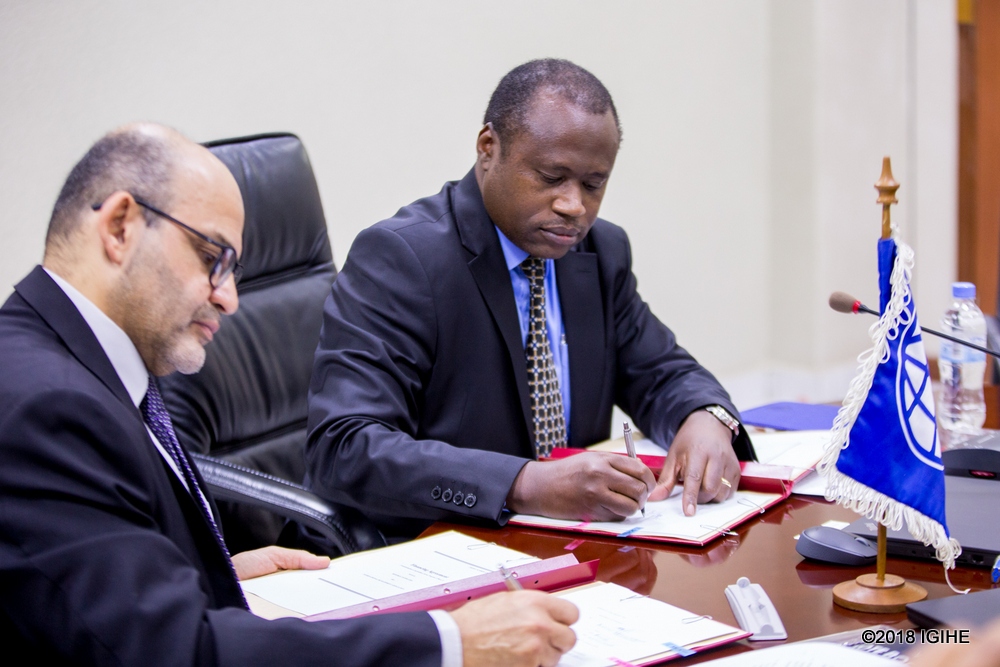
The agreement was signed between the Minister for Finance and Economic Planning (MINECOFIN), Dr Uzziel Ndagijimana and World Group Country Manager, Yasser El-Gammal.
Speaking at the signing ceremony yesterday, Ndagijimana said that agricultur,e among other sectors, has big impact to the economy of the country, contributing 31% to the country’s Gross Domestic Product.
He said that the grant will be invested in the promotion of using fertilizers, current technologies and market access as well as infrastructure development.
“We will encourage investors to embrace modern farming, abandon traditional farming which has little production and adopt modern farming which to meet domestic and market demands,” he explained.
World Bank’s El-Gammal said that they have been cooperating with Rwanda in Agriculture in the past 15 years.
El-Gammal observed that it is time to change ways agriculture is practiced in Rwanda.
“We agree with the Government of Rwanda that shifting from traditional agriculture to commercial farming is necessary,” he said.
Both officials told the media that they also discussed about preparations of the Commonwealth Heads of States Meeting that will take place in Kigali in 2020.
Mukabalisa said that Rwanda will benefit from the meeting in terms of attracting new investors.
“We are pleased to host the Commonwealth meeting, we discussed how both parliaments can cooperate along its preparations,” she said.
“People who will attend the meeting and those who will be around facilitating the preparations will explore Rwanda’s Investment Opportunities, so, this will help to market Rwanda,” she added.
Ambassador Lomas said that they discussed about Rwanda’s Members of Parliaments elections slated in September.
She said that they discussed ways to explain the Commonwealth to people so that they understand its role.
Both officials hailed the relations between both countries which are founded on cooperation in different sectors like agriculture, education, trade and investment among others.
Mupenzi and Vice-Mayor in Charge of Economic Development, Didace Kayitare and that of Social Affairs Domithille Musabyemariya tendered in their resignation letters yesterday citing personal reasons.
In a meeting on Thursday, the council led by the Chairperson, Chantal Atukunda elected Niyonzima with 22 votes of 25 total voters.
Niyonzima requested contribution from District staff to support his ambition of continuing to develop the district as well as solving people’s problems.
The trio are the Mayor, Eugene Muzuka, Cyprien Mutwarasibo and Christine Niwemugeni vice-mayor for economic development and vice-mayor for social affairs respectively.
The Chairperson of Huye District Council, Dr. Jean Chrisostome Ngabitsinze told IGIHE that on Thursday morning, they convened a council meeting aimed at evaluating problems in the district where members of the Executive Committee failed to explain the non-performing projects which led to their dismissal.
“We asked them to defend themselves about the implementation of council decisions, the Office of the Auditor General’s report and other projects implemented in Huye District. Sometime you think that they are forced to resign, but, we dismissed them,” he explained.
He said that the trio did not perform well on council decisions but instead, worked individually.
“They also prepared and sent a report to Parliament’s Public Account Committee (PAC) which was not communicated to the council. That is a mistake, they should have communicated to us,” he added.
He said that the district had separately appeared in Auditor General’s reports with same queries.
“We requested them to end non-performing projects issues, they failed and weren’t capable of explaining,” he added.
He said that the District reports falsified numbers and has no good plan to help people graduate from poverty.
Huye District Executive Dismissal follows separate resignations and dismissals in districts of Ruhango, Nyabihu, Rusizi, Gicumbi, Bugesera and Nyagatare.
The new law amends that of 2003 about punishing corrupt behaviours and related crimes which had loopholes and hampered punishment.
The Chairperson of Public Account Committee (PAC), Juvenal Nkusi explained that some of the unique attributes in the new law is that the convicts , especially leaders and judges will face stringent punishments.
“When they are leaders, they will be given stringent punishment, and when they are judges they will be handed more years,” he noted.
He said that the person who will be found guilty of corruption, will face over five-year sentence and no Primary Courts will try such cases, only triable in Intermediate Courts.
Article one of the draft law on fighting against corruption stipulates that this Law aims at preventing and punishing corruption in public organs, private institutions, civil society and international organizations operating or wishing to operate in Rwanda.
{{About punishments}}
The article four of the Punishment of corruption says that any person who solicits or receives, by any means, an illegal benefit for himself/ herself or another person or accepts a promise in order to render or omit a service under his/her mandate or uses his/her position to render or omit a service, commits an offence.
Upon conviction, he/she is liable to imprisonment for a term of more than five (5) years and not more seven (7) years with a fine of three (3) to five (5) times the value in Rwandan francs of the illegal benefit received.
Penalties provided under Paragraph 2 of this Article apply to a person who offers or promises to offer a benefit, by any means, an illegal benefit for him/ herself or another person to have a service rendered or omitted.
If acts referred to in Paragraph One and 3 of this Article are committed in order to perform an act contrary to law, the penalty is imprisonment for a term of more than seven (7) years and not more than ten (10) years with a fine of three (3) to five (5) times the value in Rwandan francs of the illegal benefit received or offered.
The article five of the law says that Any judge or arbitrator who receives or solicits an illegal benefit, commits an offence.
When convicted, he/she is liable to a term of imprisonment of not less than ten (10) years but not exceeding twelve (12) years and a fine of three (3) to five (5) times the value in Rwandan francs of the illegal benefit solicited.
Any court registrar, prosecutor, assistant to prosecutor, advocate, State attorney in court, professional bailiff, a court judgement review officer, judicial police officer or person summoned as expert in court , an officer from Access to Justice Bureau who solicits or receives or accepts to receive a bribe or promise thereof as a condition for accomplishing his/her responsibilities or in order to refrain from carrying out any usual duty or exert an influence resulting in a decision contrary to the law, commits an offence.
Upon conviction, he/she is liable to imprisonment for a term of more than seven (7) years and not more than ten (10) years with a fine of three (3) to five (5) times the value in Rwandan francs of the illegal benefit received, accepted or was promised.
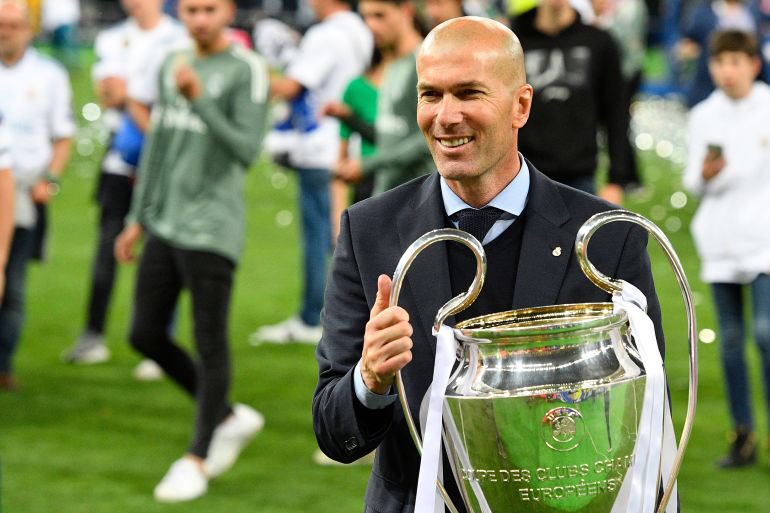
Zidane revealed his decision in a hastily-arranged press conference in the Spanish capital on Thursday. President Florentino Perez appeared alongside him and revealed it was an “unexpected decision”.
“I have taken the decision not to continue next year,” Zidane told the media.
” This is the right moment for everyone, it might seem a bit strange, but it had to be done for the good of everyone, the players, the club, and myself. This team must keep winning, and it needs a change after three years, another voice, another method of working.”
“I love this club and the president who gave me the chance to play for this club and manage the club of my dreams. But everything changes and that’s why I’ve taken the decision to leave.”
Zidane took over at Real Madrid following the sacking of Rafa Benitez in January 2016 and won three successive Champions League titles, as well as the Liga title in 2016-17.
The Frenchman also lead Madrid to back-to-back European Super Cups and Club World Cups in 2016 and 2017.
In written answers to MPs’ questions, Sigrid said “The choice for Arsenal is up to Rwanda itself. The Premier League obviously has a global reach and is followed by hundreds of millions of people every week. Arsenal itself has official supporters’ associations all over the world, 23 of which are in Africa and one in Rwanda.”
Dutch MPs had written to Sigrid last week asking her to look into the recent sponsorship deal signed between Rwanda and English football club Arsenal, tasking her on explaining why a country which receives so much aid from the Netherlands is able to invest in sponsoring the Arsenal’s shirts.
On this question, Minister Sigrid has answered, “The Netherlands understands that Rwanda, as part of a broader development strategy, wants to further develop its tourism industry and that promotion and marketing are part of this.”
She added that The Netherlands continues to enter into a dialogue with Rwanda about the development of the country in order to support Rwanda in its own objective of becoming independent of aid.
{Below are full excerpts of Sigrid’s answers to MPs’ questions:}
{{Are you familiar with the message “Rwanda becomes new shirt sponsor of Arsenal”? }}
On 24 May last week, I heard about the Rwandan decision via media reports and tweets from a few questioners.
The Rwanda Development Board (RDB), the government agency responsible for attracting investments and promoting tourism, has signed a three-year partnership with the British football club Arsenal. In a press statement on 29 May, the RDB explained that the partnership is part of a broader strategy to double income from tourism in 2024 to USD 800 million. In addition to shirt sponsorship, players from various Arsenal teams will visit Rwanda within this partnership. Arsenal coaches will also develop various football activities for Rwandan youths.
{{Is it true that the Rwandan government is going to pay about $ 40 million to Arsenal football club in exchange for marketing for the country?}}
The Rwanda Development Board has not made any statements about the costs associated with this partnership.
{{Are you still of the opinion that, as you describe it on your website, countries like Rwanda “cannot effectively combat poverty without help”? }}
On 19 September 2016, your House was informed about the decision to add Rwanda to the so-called category of transitional countries (Parliamentary Papers 33635, no. 226).
In countries with a transition relationship, the aim is to gradually phase out bilateral aid, from the perspective of a relationship based more on mutual interests in trade, investment and political cooperation. The aid will be phased out in the coming years.
Rwanda is still a Least Developed Country with a limited economic base and socio-economic development, but it has the desire to become more aid-independent. This commitment is in line with the greater role for trade and investments that the Netherlands is striving for in the relationship with Rwanda. The idea to broaden the relationship with the Netherlands was emphatically welcomed by Rwanda. Our commitment is in line with a broader international development. In the report of the World Bank “Doing Business 2018” Rwanda rose 15 places on the world ranking list of best countries to do business, putting the country in the second place of the African continent.
{{Is it also correct that, according to your new memorandum “Investing in Perspective – Good for the World, Good for the Netherlands”, you intend to continue the development relationship with Rwanda, which includes central humanitarian aid and poverty reduction? Can you indicate how much the Ministry intends to invest in Rwanda in 2018? How big was this amount in 2017?}}
The government wants to continue the above-described transition relationship with Rwanda. In Rwanda, the Netherlands focuses on the food security, water and safety and legal order sectors. In addition, the Netherlands invests in private sector development. In 2017, the Netherlands invested € 42.5 million in Rwanda through the Dutch embassy. In 2018, the Netherlands intends to continue this commitment for the time being.
At the same time, the Netherlands intends to optimize the trade links with the country. For example, the government sees opportunities for Dutch entrepreneurs in the horticulture sector, a rapidly growing sector in Rwanda.
{{How do you rhyme this news with your analysis of the aid dependency of Rwanda? Do you see a reason to approach Rwanda at this step, or do you think that an aid relationship should simply be able to go hand in hand with country marketing at this level?}}
The Netherlands understands that Rwanda, as part of a broader development strategy, wants to further develop its tourism industry and that promotion and marketing are part of this. The choice for Arsenal is up to Rwanda itself. The Premier League obviously has a global reach and is followed by hundreds of millions of people every week. Arsenal itself has official supporters’ associations all over the world, 23 of which are in Africa (and one in Rwanda).
Rwanda sees the partnership with Arsenal as an investment that will contribute to the awareness of Rwanda as a tourist destination and thus to the further development of the country. Among other things, Rwanda thinks that the income from the tourism sector, an important source of foreign currency, will double in 2024. The Rwandan strategy is not without success. According to the IMF, the number of international visitors reaching Rwanda doubled to 1.3 million between 2010 and 2015. Income from tourism increased annually from USD 202 million in 2010 to more than USD 400 million in 2016. This does not detract from the fact that inequality remains high in the country. (IMF Country Report no. 17/214, June 2017). Other countries with which the Netherlands has a relationship also try to generate more income through tourism. For example, Kenya recently developed and launched a new strategy for tourism.
The Netherlands continues to enter into a dialogue with Rwanda about the development of the country in order to support Rwanda in its own objective of becoming independent of aid. This also includes a broad dialogue with actors such as the Rwanda Development Board about the effectiveness of such investments and how these relate to Dutch efforts in other sectors
Shyaka was speaking Tuesday in Kigali in a meeting that brought together, the Ministry of Justice and partners to chart ways to efficiently harmonize justice services delivery along the reforms that are being carried out by the Ministry.
He said that the ministry is among those advanced in attaining the Economic Development and Poverty Reduction Strategy (EDPRS) targets. However, he noted that there is a gap in services in terms of justice delivery and communicating laws.
“People claim that they are unaware of the laws, laws are being established, but we do not know them, they are not communicated. Notary services are needed but their accessibility still has problems,” he said.
Among other services, Shyaka said that people still face challenges in judicial decisions implementation; they don’t trust justice system in Rwanda and Access to Justice Bureau.
Shyaka urged the Ministry to invest in communicating the laws so as to raise people’s awareness among other services.
The Minister of Justice, Johnston Busingye admitted the gap in justice system and promised efforts to tackle the problem.
“The gap is there, but we hope to work hard to close it,” he promised.