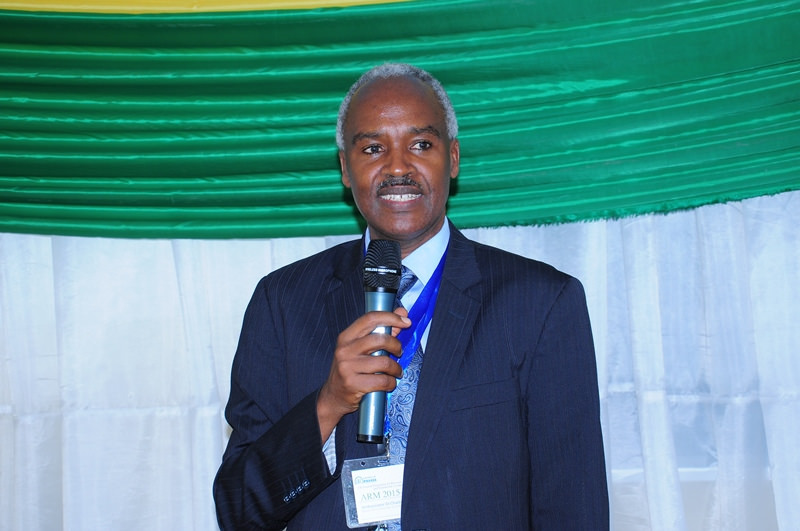
Chief Inspector of Police (CIP) Emmanuel Kayigi, the Police spokesperson for the City of Kigali, said that the “suspects also include people running black-market for electronics and dealing in assorted stolen items.”
Electronics including desktop and laptop computers, and television sets were also recovered from the suspects during the operation, CIP Kayigi said.
“Among the recovered electronics are 38 laptops stolen from different people in various parts of Kigali, and were being sold in black electronic shops in Nyarugenge Sector,” he said.
“The operation was in response to series of thefts in different parts of the City of Kigali. The aim is to dismantle these black market shops that deal in stolen electronics,” the spokesperson explained.
He said that some electronics like computers and phone-handsets are stolen through house break-in, vandalizing car windows and snatching them from pedestrians.
In other cases, the syndicate after stealing a mobile phone start calling contacts in the phonebook tricking their targets that they were recommended for a job by the rightful owner of the stolen phone.
If the target falls in the trap they demand that to get the job he or she must have a laptop as a prerequisite so as to install the software required to do the work.
When you give them the laptop to install the said software, that will be the last time you see them.
Kayigi urged those who have lost their electronic items to crosscheck with the nearest police stations where unclaimed exhibits are stored.
He, however, advised the general public to buy goods from recognized shops to avoid purchasing stolen items.
He further advised to always keep receipts or mark their items to prove ownership once such properties are recovered.
In some cases, Kayigi said, some claimants fail to present proof.
“We always find it had to hand over property recovered from suspected thieves because people who come to claim they do not have documents to ascertain ownership. You have to prove beyond doubt,” CIP Kayigi explained.
The UR academic year 2018/19 kicked off last Monday, November 12 with registration going on for the fresh and continuing undergraduates.
However, some students could not register, lacking the Rwf35,000 registration fees. Registration for the academic year 2018/19 which started on September 29.
“The University of Rwanda does not wish any student to miss classes and is allowing all students to provisionally register even before paying the required registration fees and start their studies,” the announcement reads in part.
“However, all students are required to have paid or to have agreed on a payment plan for registration fees not later than 15th December 2018,” the announcement signed by the Vice Chancellor of University of Rwanda, Prof. Philipp Cotton, states warning that “Failure to pay or to agree to a payment plan of the required registration fees by the above-mentioned date will result in cancellation of provisional registration for the Academic Year 2018-2019.”
All Principals, Campus Registrars and Campus Directors, as by the announcement, are required to take measures to ensure that no student is prevented from access to University services on account of not having paid registration fees.
Students who exclusively talked to IGIHE on being allowed to register without paying required registration fees to commend the University for the intervention and say they won’t miss classes which could affect their studies.
“I am very happy. I could not register online because I had not paid the registration fees due to family problems. Now that I can register, I will keep looking for that money and I hope to have got it by the deadline set,” says Alex Nshimiyimana, a level 4 student in Geology and Mining Department at UR College of Science and Technology.
By Samson Iradukunda
The Minister who was visiting farmers cooperatives in Bugeshi and Mudende sectors yesterday was briefed by farmers on the issue of delayed payments for their food commodities which sometimes take an entire week.
Murasira who is entrusted with overseeing the district on behalf of the central government assured farmers that their concern is going to be squarely addressed.
“I have noted your problem. It is about being paid money at the agreed price and get it without delays. I promise you that we have taken measures to pare it down. You will be getting it on bringing the produce,” he promised.
He urged the residents to save money for buying manure.
Before residents used to sell a kilo of Irish potatoes for Rwf60 but when the yields began to be taken to collection centers, the price rose to Rwf120.
Vice Mayor in charge of Development affairs in Rubavu District Janvier Murenzi, said that residents have a problem of people who used to gain more profits from potato business which undermined farmers’ progress.
“The problem farmers have are people (brokers) who come down to potato fields and give them less money. The farmer is now able to take the potatoes in a designed place and sell at a fixed price.”
An exception, WHO recommends, should only be due to medically proven reasons or when the baby loses her mother.
As working mothers are kept away from their babies, some mothers do not get enough time to breastfeed their babies appropriately and wean them off earlier though some others do it due to ‘civilization’ claims that breastfeeding makes breasts loose.
Many women chose to replace breast milk with cow or processed milk which, according to scientists, is unhealthy and less nutritious compared to human milk.
In an exclusive interview with IGIHE, Dr. Diane Patricie Kayitesi, a pediatrician at Muhima Hospital, Kigali, urged parents to respect the child’s right to be breastfed.
“Actually, there are mothers who feed their babies with cow milk when they are below one year. This is not good because it has been scientifically proven that it causes ‘iron deficiency anemia’, a condition in which blood lacks adequate healthy red blood cells,” says Dr. Kayitesi.
“Normally, a baby should be breastfed at least eight to 12 times a day. That a mother leaves her home for work to get livelihood is not a reason to start feeding her baby with processed or cow milk. She instead should press milk from her breasts and leave it for the baby at home as it can be kept and serve its purpose with no problem,” she advised.
“Mothers who decide to keep breast milk should keep it in hygienic conditions as it can last for six hours with no problem and the kid drinks it in her mother’s absence,” Dr. Kayitesi revealed.
The pediatrician also said stress, inappropriate rest and poor diet are among reasons that make mothers lack enough breast milk. On this, she said, “To get nutritious and enough breast milk, a mother should rest properly, eat clean and enough and drink enough to never get dehydrated.”
Dr. Kayitesi suggests big and medium institutions reserve places for breastfeeding mothers. Expert advice to mothers on best breastfeeding practices.
The World Health Organization (WHO) advises mothers to properly and exclusively breastfeed babies at least for the first six months to keep them healthy and build the baby’s immunity during his entire life.
An exception, WHO recommends, should only be due to medically proven reasons or when the baby loses her mother.
As working mothers are kept away from their babies, some mothers do not get enough time to breastfeed their babies appropriately and wean them off earlier though some others do it due to ‘civilization’ claims that breastfeeding makes breasts loose.
Many women chose to replace breast milk with cow or processed milk which, according to scientists, is unhealthy and less nutritious compared to human milk.
In an exclusive interview with IGIHE, Dr. Diane Patricie Kayitesi, a pediatrician at Muhima Hospital, Kigali, urged parents to respect the child’s right to be breastfed.
“Actually, there are mothers who feed their babies with cow milk when they are below one year. This is not good because it has been scientifically proven that it causes ‘iron deficiency anemia’, a condition in which blood lacks adequate healthy red blood cells,” says Dr. Kayitesi.
“Normally, a baby should be breastfed at least eight to 12 times a day. That a mother leaves her home for work to get livelihood is not a reason to start feeding her baby with processed or cow milk. She instead should press milk from her breasts and leave it for the baby at home as it can be kept and serve its purpose with no problem,” she advised.
“Mothers who decide to keep breast milk should keep it in hygienic conditions as it can last for six hours with no problem and the kid drinks it in her mother’s absence,” Dr. Kayitesi revealed.
The pediatrician also said stress, inappropriate rest and poor diet are among reasons that make mothers lack enough breast milk. On this, she said, “To get nutritious and enough breast milk, a mother should rest properly, eat clean and enough and drink enough to never get dehydrated.”
Dr. Kayitesi suggests big and medium institutions reserve places for breastfeeding mothers.
“It is vital for a mother to let her baby suck the breast completely before she changes for another. When a baby gets satisfied when he/she has not finished all the milk from the breast, the mother should press the milk out to be kept to allow the body to make milk in both breasts,” Kayitesi notes.
“It is vital for a mother to let her baby suck the breast completely before she changes for another. When a baby gets satisfied when he/she has not finished all the milk from the breast, the mother should press the milk out to be kept to allow the body to make milk in both breasts,” Kayitesi notes.
This was revealed Wednesday in a validation meeting that brought together medical professionals, health insurance companies and ministries aimed at reviewing Bareme Officiel Rwandais des Invalidités (BORI) a document that was written in the 1980s detailing occupational diseases with a relatively short list of diseases, mainly in mining”
Oswald Munyandekwe, RSSB’s Director of Pensions said in an exclusive interview with IGIHE said there are new diseases to add on the list citing HIV/AIDS infection that can be passed on to a medical practitioner in the process of treating patients and back pains resulting from long hours of immobility.
“It was a challenge for workers to get compensations for work-related diseases or accidents, but for now, most of them will be included in the list in order to protect workers,” he said.
He also talked about the 1975 BOBI (Bareme Officiel Belge des Invalidités) a guideline to the government of Rwanda’s insurance laws, changed to Bareme Officiel Rwandais des Invalidités (BORI), written in French only, leaving out doctors that can only comprehend English.
Another challenge Munyandekwe mentioned, is that it was difficult to obtain information from the guideline and the level of disability was not specified.
Munyandekwe said that both books were reviewed by medical practitioners and other health insurance professionals. So far, some reviews have been completed, left with Presidential and ministerial decrees likely to be done before December.
Munyandekwe said the two Guideline documents will be available in both French and English languages, but will later to be translated to Kinyarwanda.
Theobard Ndayisaba, who works with one of the insurance companies operating in Rwanda, says that like insurance company workers, they are grateful for the project and the work is done because they have been introduced to end disagreements between physicians and health insurance companies about the degree of disability that someone lived with.
He said, “You would have a physician describing the level of a disability, and find that it was groundless. It would only lead to disagreements. It would happen that the doctor who treated a patient would not be the one who described the level of a disability. As a result, what the doctor said would be in disagreement with an insurance company.”
The call was made by the Minister of Local Governance, Prof. Anastase Shyaka as he addressed residents of Bukure Sector in Gicumbi District as he launched at the national level the ‘Citizen Participatory Planning 2019-2020’, a program through which citizens discuss and suggest priorities to be addressed in the 2019/20 fiscal year.
“As Rwandans, we all need to create solutions of our problems through our own abilities. Citizens collaboration with leaders is an urgent need to implement the planning that seeks to resolve problems and get durable solutions,” Minister Shyaka said.
According to Prof. Shyaka, if there is a development activity citizens want to get like schools, roads among other activities that need citizens’ participation, they should do it by themselves and not wait for aid without playing their part.
He urged them to always participate in Umuganda monthly community activities and contribute to them using their own materials as the Government will intervene with funding. “This will help the country achieve targets set as fast as possible,” he said.
For instance, Minister Shyaka said, Rwandan citizens contributed 62% to the budget used in the construction of the Nine and 12 years basic education classrooms nationwide.
The Minister of State in charge of Economic Planning in the Ministry of Finance and Economic Planning (MINECOFIN), Dr. Claudine Uwera said that when citizens take part in planning and implementing development activities, they also play a role in protecting and preserving the achieved activities which make the development sustainable.
During discussions, residents of Bukure Sector requested for a nursery, primary and secondary school with a university, electricity, tarmac roads, and industries among other wishes.
“This program that involves citizens’ participation in planning is very good. In the first days, we were not properly approached. When they come back to show us what can be implemented among the priorities we raise, we will take our part to the highest level as we know we will be working for ourselves,” said Frodouard Hategekimana, a resident of Rwesero Cell in Bukure Sector.
When the Ministry of Local Governance ends the Participatory Planning 2019-2020 program, priorities suggested will be studied on a national level and share with citizens what will be done accordance with the country’s financial means and they contribute in their implementation.
The report revealed that universities are able to provide hostel facilities to students at a 12% rate which impacts the quality of education as students live far away from where they undergo their studies from.
The Commission’s report noted that due to long distances between the university and their residences, students leave the university back home early fearing for their lives during nights.
In an exclusive interview with IGIHE, the Deputy Vice-Chancellor in charge of Institutional Advancement at University of Rwanda (UR), Ambassador Dr. Charles Muligande said that the University is doing all that is possible to help students get proper residences though some chose to live outside them and rent houses for themselves.
“It is not necessary for UR to have hostels for all the students because they don’t even use all the available lodgings. They make their own choices where to live. When they rent houses outside the university, eight students can share yet at the University such overcrowding is not allowed,” Dr. Muligande said.
Muligande said that students do not use all the lodging resources available. Here, he gave as an example a students’ hall of residence at UR Huye Campus with the capacity to accommodate 400 students only has 200 students.
“Some chose to rent houses outside where they can get houses at lower prices. The University hostels charge only Rwf4000 and Rwf5000 in Kigali. They do not pay electricity and water bills,” he explained.
Dr. Muligande says that before a number of UR students were relocated to its campuses across the country, Huye Campus was home to over 11000 students but today hosts about 9000 students this academic year which he thinks will not upset students’ accommodation.
There are now more than 1,000 of the animals in the wild, up from an estimated population of 680 a decade ago.
IUCN confirmed that mountain gorillas have been increasing at an unprecedented rate, such that they should no longer be designated as critically endangered wild animals in the world.
IUCN monitors the level at which the world’s leading animal and plant species are preserved based on the evidence and analysis of experts.
IUCN on Wednesday announced that gorillas in the Central African Republic, Uganda and the Democratic Republic of Congo were removed from the group of the ‘critically endangered’ to “endangered” based on the hazards that still threaten them to reproduce.
Mountain gorillas live in lush and misty forests along a range of dormant volcanoes in East Africa. Their habitat falls inside national parks spanning parts of Rwanda, Uganda and the Democratic Republic of the Congo.
40 years ago, Dr. Diane Fossey who became popular in Rwanda for the care of wildlife and environmentalists were pained by the fact that a mountain gorilla community known as ‘Group 4′ became extinct as a result of poaching.
Group 4 was the first gorilla community to be researched on in Rwanda by the Research Institute and the Karisoke Research Center under the supervision of Dr. Fossey.
Fossey, who died in 1985, had projected that the primates may be extinct by 2000. Instead, their populations have been slowly increasing thanks to sustained and well-funded international conservation efforts.
Anna Behm Masozera, the director of the International Gorilla Conservation Program based in Kigali said that they have made progress in terms of their protection, and allowing an environment where mountain gorillas can continue to thrive and grow.
“But it’s important to note that mountain gorillas’ numbers could still slip back very quickly. We still have just two fragile and small populations split between two national park areas,” he noted.
Several factors have enabled mountain gorillas’ modest rebound, said Masozera.
The three governments have stepped up enforcement of national park boundaries – areas where hunting, logging, and paved roads are illegal.
The Government of Rwanda recently announced the expansion of the Volcanoes National Park from 160 km, by an increase of ¼ in less than five years.
In May 2017, Rwanda Development Board (RDB) doubled the cost of visiting gorillas from $750 to $1500 for all people, aiming at finding investments in gorilla protection projects.
Last year, Rwanda’s touristic revenues hit $438 million, with an increase of $34 million compared to 2016.
Located in Eastern Province, bordering Kigali City, Bugesera District was as a whole fed with power from Mount Kigali Power station located in Nyarugenge District of Kigali City which caused frequent power outages in Nemba, Shyara among other District Sectors
It was not easy for Rwanda Energy Group to identify causes of power outages which made REG staff and population spend days looking for a place where technical problems started which could stall business.
To address the problem, Rwanda Energy Group (REG) implemented two projects between July and September this year; Rwf 175 million back-up station to the Mount Kigali Power station and Rwf 72 Autoreclosers purchase.
The first project that cost Rwf175 million was to set up a back-up station to the Mount Kigali Power station connecting Ntongwe power station located in Ruhango District to sectors remote from Kigali which Mount Kigali station could not serve adequately.
According to REG Manager in Bugesera District, Rosine Kalisa, the project added 1.8 Megawatts to the then existing 7.7 megawatts, which reduced the power outages that were experienced by residents.
“Whenever all our electricity subscribers would start using electricity, mostly in night hours, Mount Kigali station would shut down as it became overloaded due to the large number of users,” Rosine Kalisa said.
Bugesera District electricity line has 267 power transformers, which made it difficult for REG’s technicians to know the cause of a power outage for instance in case a flying bird would have fallen on the cables or cables broke down.
This prompted REG start another project to buy three modern machines that identify faults along power lines known as “Autoreclosers” at Rwf72 million.
“Now, we can identify all faults on any given power line as fast as possible. Before, when the power was cut, we used to cross-cross all over the District looking for the cause of the technical error and where it started from. This would sometimes take us a whole day but now we can directly identify where the problems started while the autoreclosers also prevent the power cut in other areas besides where the problem started from,” Rosine Kalisa recounts.
Besides preventing all the District from getting the blackouts and directly identifying where the technical problem starts from, the autorecloser shows the way to resolve the technical issue.
Residents of Bugesera District who always complained of the insufficient power supply and frequent outages now say that these two projects have saved their jobs as they revealed it to IGIHE.
A resident of Nemba Sector, Mr. Ibrahim Bimenyimana who owns an electric cereals mill says that his clients would sometimes spend a day waiting for the power that had been cut to get their food pounded. “Now, after REG changed it, no lines of people come and spend several hours here because the power is sufficient,” he says.
According to REG, 44.40% of households in Bugesera are connected to electricity.
The sixth edition of the RDB Business Excellence Awards will award investors in the categories; Investor of the Year, Exporter of the Year, Innovator of the Year, Woman Entrepreneur of the Year, Young Entrepreneur of the Year, Made in Rwanda Enterprise of the Year and the SME of the Year.
Launching the awards, RDB Chief Executive Officer, Clare Akamanzi, said; “Exports in Rwanda increased by 30% last year and GDP grew by over seven percent. This is clear evidence that the Rwandan private sector has been thriving. The ‘Made in Rwanda’ initiative, which aims not only to increase local employment but also reduce the country’s trade deficit, is possible because local businesses are playing their role and with the RDB Business Excellence Awards we are recognizing this fact”.
Speaking in the 2017 gala event CEO Akamanzi, noted that the winners were the captains of the industry.
“When you win, Rwanda wins and when Rwanda wins, we all win. This is, therefore, an evening of celebrating excellence demonstrated by the business community in the country. But it’s also been a special way of celebrating the growing ecosystem that ensures private sector remains at the forefront of everything we do here in Rwanda,” she noted.
Africa Improved Foods (AIF) was awarded as the Investor of the Year in the 2017 RDB Business Excellence Awards.
Both local and foreign investors in Rwanda are encouraged to participate in this year’s awards by applying online [on this link->http://rdb.rw/business-excellence-awards/] before the 15, December deadline.