AERG is a body that brings together genocide survivors studying in university and secondary schools.
The project was revealed on Saturday as AERG marked 22 years in Huye district.
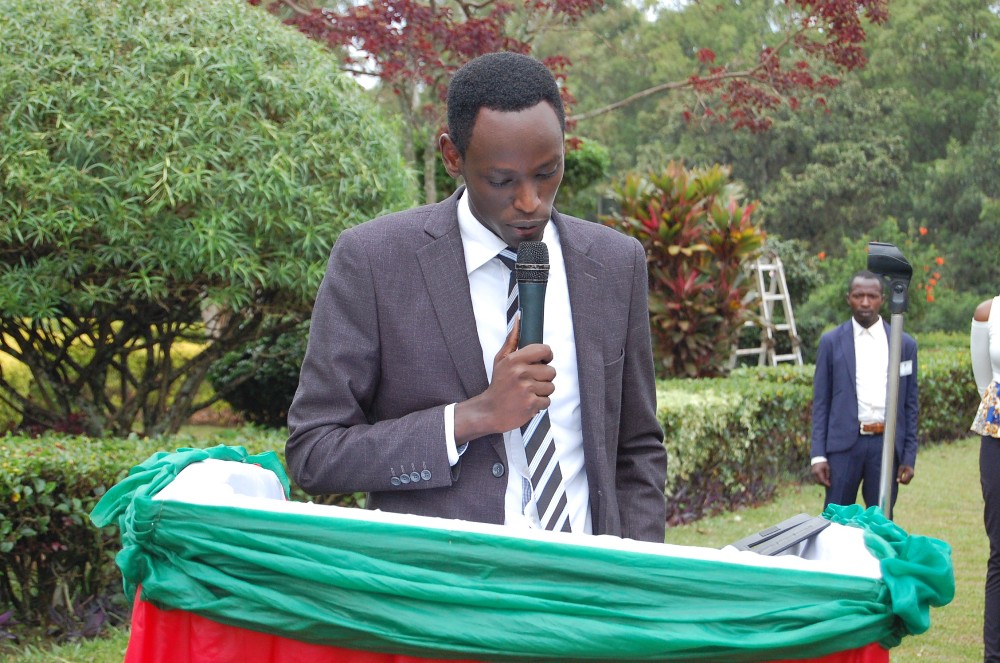
The coordinator of AERG-Huye Campus, Josué Niyomutabazi explained that the project will have been polished after the 100 days of 25th commemoration of the 1994 Genocide Against Tutsi.
“We want to make the project smart that execution can start with immediate effect. We will focus on AERG history and its resilience process,” he said.
“As the youth that survived genocide, we have a role to play providing explanations via social and mainstream media platforms,” added Niyomutabazi.
The museum will be based at the University of Rwanda Huye Campus where AERG was born on 20th October 1996.
It will feature three rooms where the first will be dedicated for advisory services, helping those experiencing trauma, the second will be reserved for written pieces, books, pictures and documentary films on history and activities of AERG. The third section of the museum will be equipped with computers connected to internet where AERG members will get training on technology and providing the truth about Rwanda’s history with the aim of addressing denial and trivialization of the 1994 Genocide Against the Tutsi.
Clarisse Mbuguje, one of the members, said that playing an active role in sharing information about the genocide through the media will be a milestone towards building the desired Rwanda.
Senator Gertrude Kazarwa who attended the event commended the project and reminded the youth on patriotism.
“The country was liberated by the youth and we are now in a secure country. Concentrate on your studies, remain patriotic and maintain the country’s security,” she said.
The suspect was arrested in Kinihira Sector of Rulindo District on his way from Miyove Sector in Gicumbi according to CIP Alex Rugigana, the Police Spokesperson for the Northern Region, who said he was arrested following information shared with Police by his neighbors.
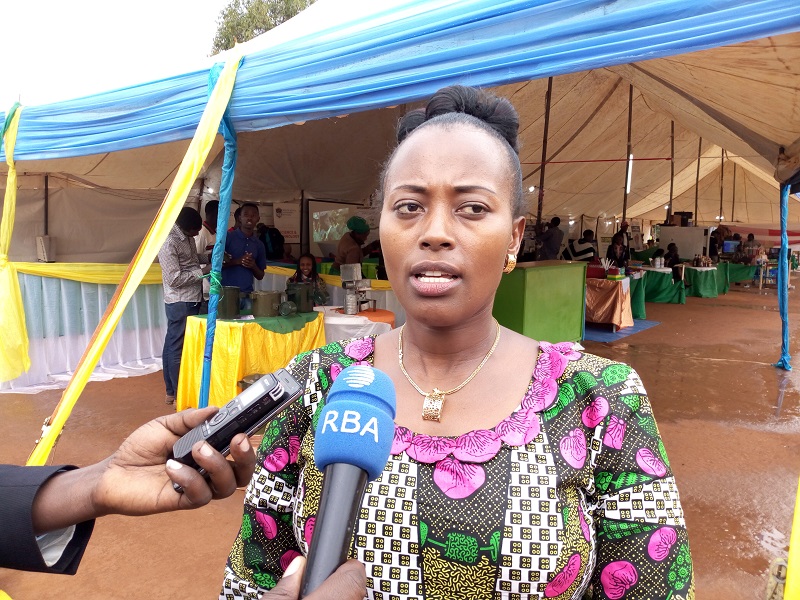
“He owns a boutique where he sells different commodities. His neighbors reported to Police that he sells cannabis which his clients buy asking tobacco which others think it is the legal one,” CIP Rugigana said.
CIP Rugigaga added that in tracking him, Police were given information that he was on a motorcycle towards Kinihira in Rulindo where he was stopped by Police who searched and found him with 157 pellets which he had put inside his underwear.
The suspect was handed to Rwanda Investigation Bureau (RIB).
CIP Rugigana commended the residents for their cooperation in seizing drugs and urged the public to always report to officials whenever they know where drugs are sold.
As, for drug dealers, CIP Rugigana said, all the tricks they use are known and urged them to stop engaging in the illicit trade.
Article 263 of the penal code says that any person who, unlawfully produces, transforms, transports, stores, gives to another or sells narcotic drugs and psychotropic substances commits an offense.
Upon conviction, he or she is liable to a penalty from seven year to life imprisonment and a fine of more than Rwf20 million and not more than Rwf30 million in regard to severe narcotic drugs.
The Spokesperson of Rwanda Investigation Bureau (RIB), Modeste Mbabazi told IGIHE that China Road and Bridge Cooperation has been complaining over thefts of its tools by unknown people.
This prompted RIB agents to start an investigation that saw the said 10 people arrested.
“Now, 10 people have already been arrested including workers, traders and others who bought those materials. Investigations are underway,” Modeste Mbabazi explained.
Prior information got by RIB says that some employees of the company used to steal the items and sell them claiming them to be left over materials.
Items stolen include spare parts of machines used in construction, vessels among others. RIB has recovered some of the stolen items which were returned to the company.
RIB Spokesperson Mbabazi urged the public to avoid buying items of which origin they don’t know.
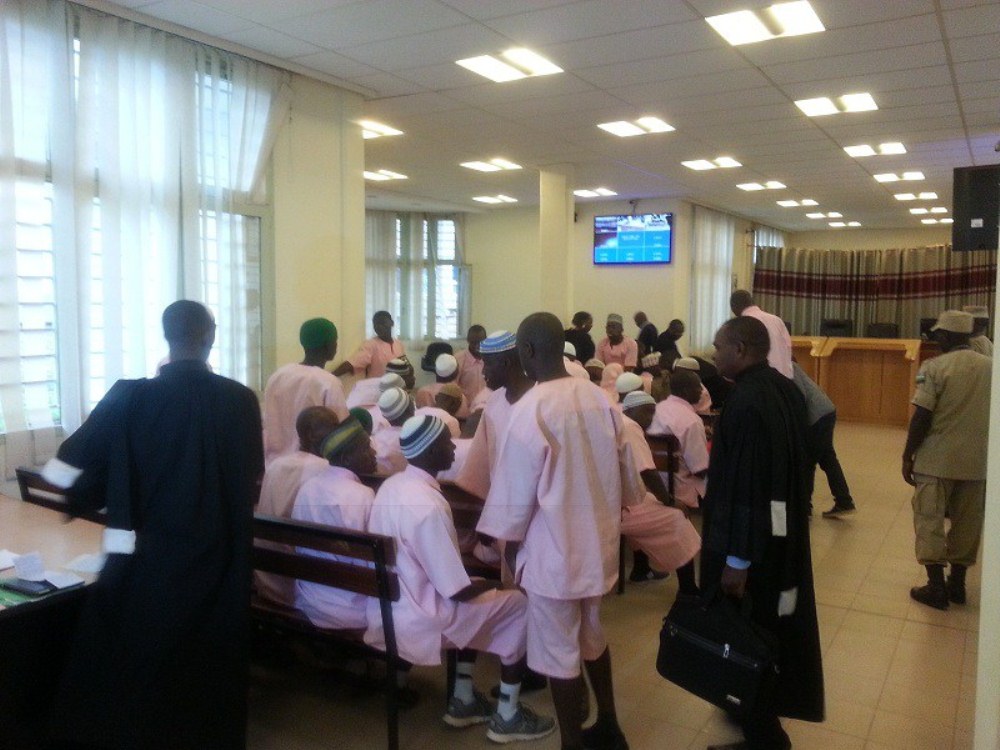
A majority of suspects were youth arrested in 2016 accused of terrorism, crimes, radicalism, treason and inciting the public to engage in terrorism acts and forming radical groups.
The 22 Muslims were acquitted yesterday, 2 sentenced for 10 years , 13 handed a sentence of five years while three others were handed three month’s sentence.
The ruling was scheduled on 28th February 2019 but was adjourned due to a bunch of files that had to be analyzed before the ruling which attracted a large number of suspects.
The remains will be accorded decent burial in different memorial sites of Bugesera district.
Construction activities of Nyamata hospital were on course during the 1994 Genocide Against Tutsi. It is said that there were three holes dug during that time as activities were underway.
The Director of Nyamata hospital, Dr William Rutagengwa has told IGIHE that Interahamwe had set a road block on the main road passing in front of the hospital to kill Tutsi in April 1994 and threw their bodies in those holes.
“We were aware of remains dumped in the premises but could not track the exact location. Construction for Nyamata hospital began in 1992. It was an incomplete building during the genocide. There were bushes in which neighboring residents hid themselves. In front of the hospital was a barricade where Interahamwe killed Tutsi. We had information that people hiding in that place and others killed around were thrown in those holes,” he said.
“The holes were not used since the hospital buildings were completed. The area was enclosed with a fence. There were three holes that we were not sure in which one the remains were. The remains of between 80 and 90 victims have been found and will be buried decently in standard memorial sites in the area,” added Rutagengwa.
The decision to exhume remains of victims from these holes for decent burial was taken during the 24th commemoration of the 1994 Genocide Against the Tutsi.
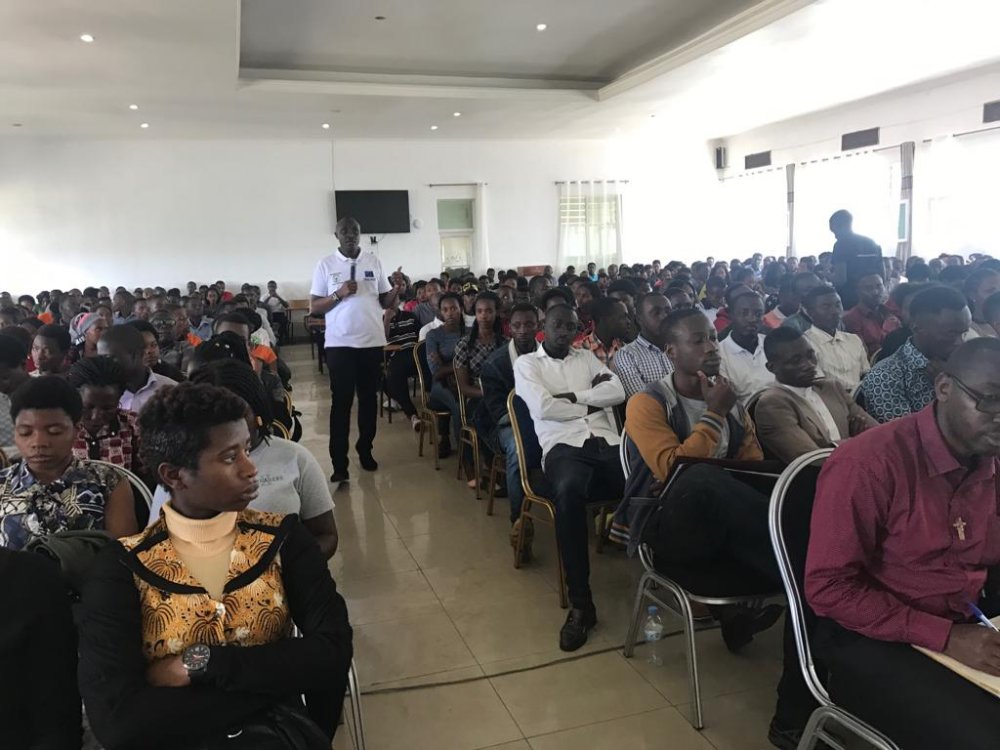
The message was delivered on Wednesday in Musanze district during discussions with students held at INES Ruhengeri as part of ongoing judicial week that run from 18th to end on 22nd March 2019.
The chairperson of the Rwanda Law Reform Commission (RLRC), Aimable Havugiyaremye reminded them that prevention of crimes requires concerted efforts from different actors.
“Fighting and preventing crime is our daily duty. Those directly involved are not enough with the absence of beneficiaries. When they properly understand inconveniences of crime, prevention methods and how to provide early information; our work becomes easy. That is why we organize such discussions countrywide for better understanding of judicial process undertakings,” he said.
Participants pledged to give their contribution increasing awareness among citizens on
crime prevention measures.
“We have been reminded of our role in preventing crime early. Our contribution will be
providing explanations to citizens how to avoid crime and update them on related
punishments. This will undoubtedly reduce criminals,” said Gedeon Rutayisire a student in the department of law.
Discussions during the judicial week are held on different topics including citizens’ involvement in crime prevention, prevention of drugs, defilement, corruption and
cyber crimes among others.
In his visit to Ethiopia on March 14 this year, President Macron said France will be represented in the 25th commemoration of the 1994 genocide against Tutsi.
“It is true that Rwanda invited us in commemoration activities. We received the invitation and I am sure that France will be represented,” President Macron said.
Berville is a 29 year-old French Member of Parliament who was elected to the French National Assembly on 18 June 2017, representing En Marche!, the centrist party founded by the current French President Emmanuel Macron. He is also spokesperson of this party.
A survivor of the genocide against Tutsi in 1994, Hervé Berville was born in Rwanda in 1990 and he was adopted by the French couple who took him to France in 1994 after some of his family members were killed during the genocide.
He graduated from the London School of Economics and worked for Stanford University’s Kenya Campus before joining politics in 2016.
This follows the signing of agreements to open airspace enabling RwandAir flights to Kinshasa and vice versa for Congo Airways.
Rwanda’s delegation was in DRC at the beginning of this week in talks with their Congolese counterparts and DRC president, Félix Tshisekedi.
Part of Rwanda’s delegation were Yvonne Manzi Makolo, the CEO of RwandAir and Silas Udahemuka, Director General, Rwanda Civil Aviation Authority.
Makolo has told IGIHE that ‘Kigali-Kinshasa flights will start mid-March 2019 while flights to Guangzhou are expected to begin on 18th June this year.’
Following recent talks, the senior advisor to president Thsisekedi, Nicole Ntumba Bwatshia who was part of the delegation explained that the talks aimed at seeking together with the head of state how Rwanda and DRC may reach consensus in opening airspace for air transport.
Bwatshia explained that RwandaAir aircraft will soon use DRC airspace and vice versa that both countries will be able to maximize benefits from bilateral relations.
With 12 airplanes, RwandAir conducts flights to 26 destinations in East, Central, West and Southern Africa; Europe and Asia.
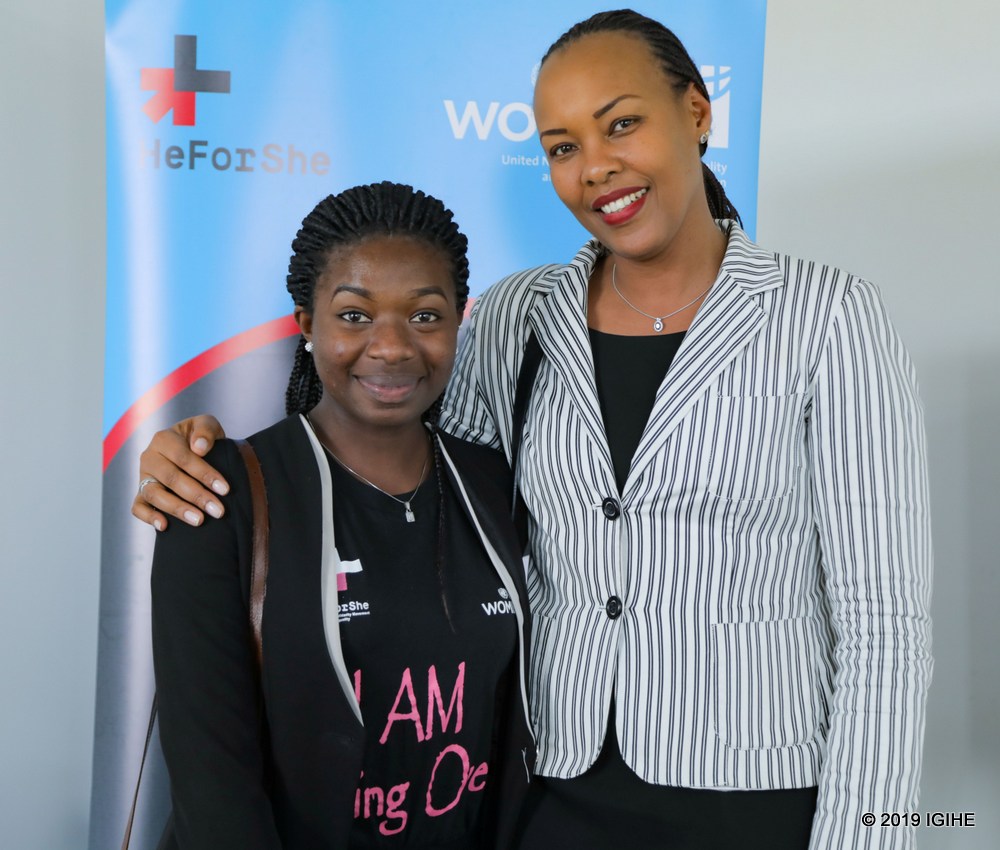
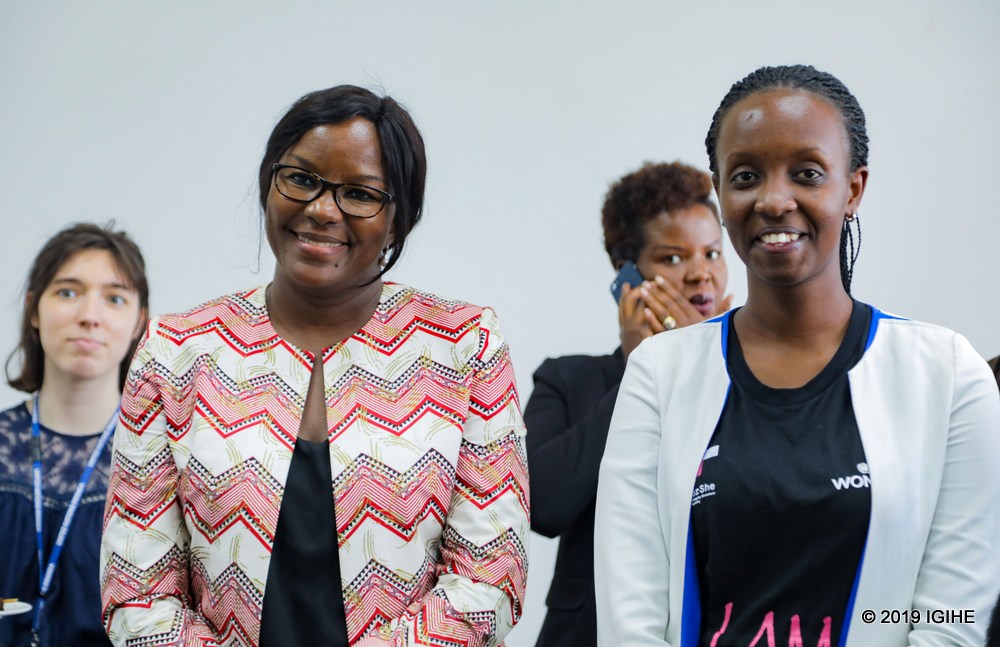
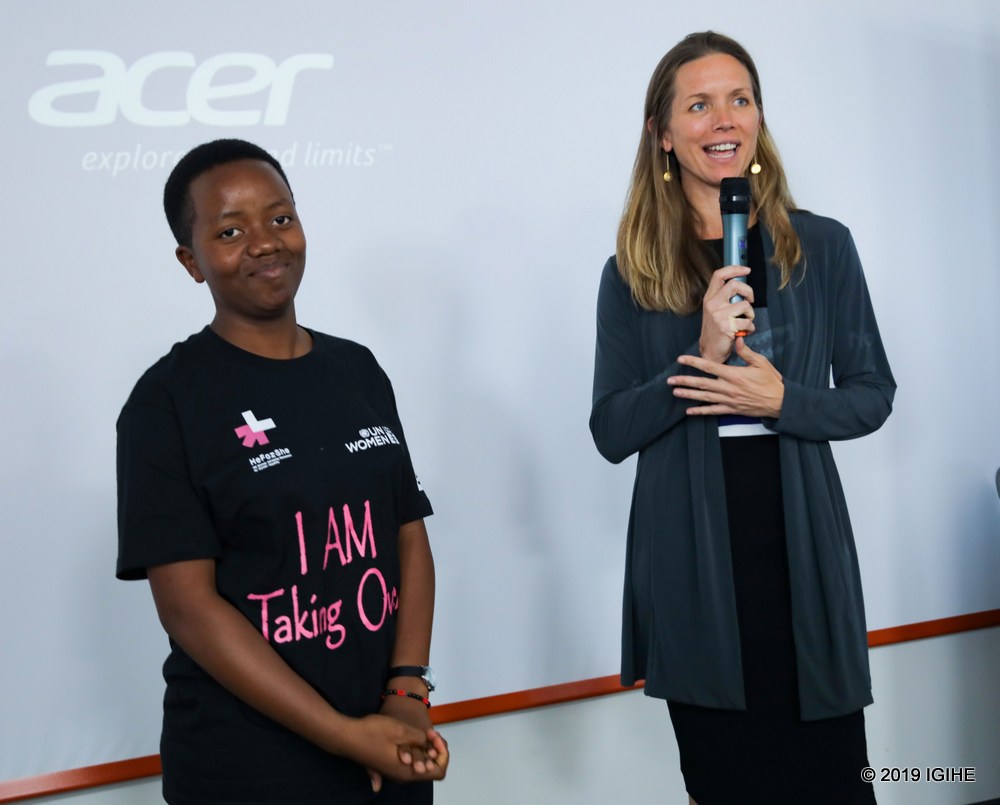
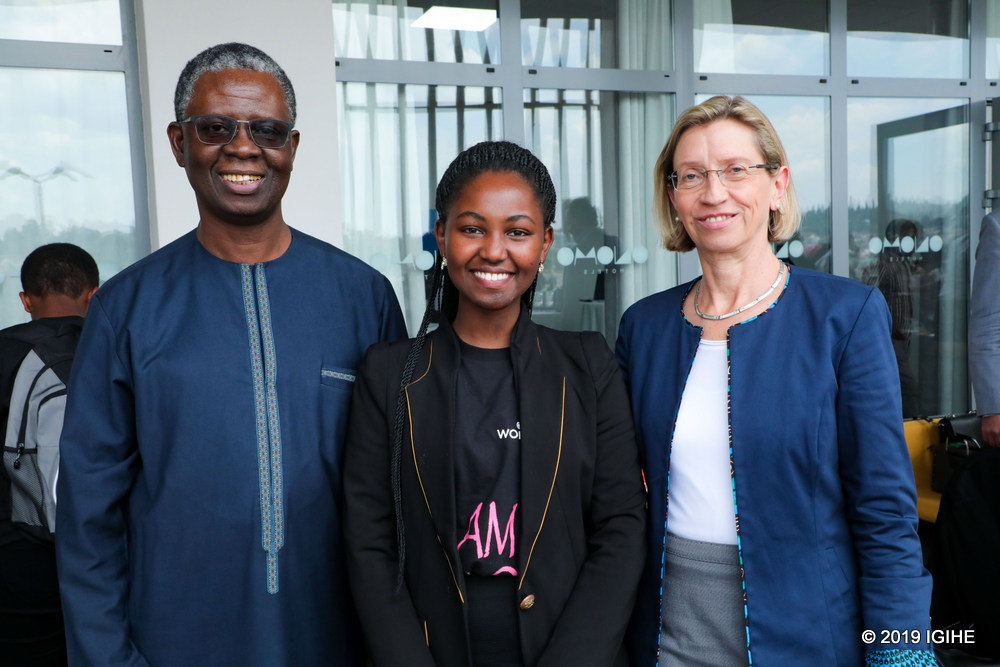
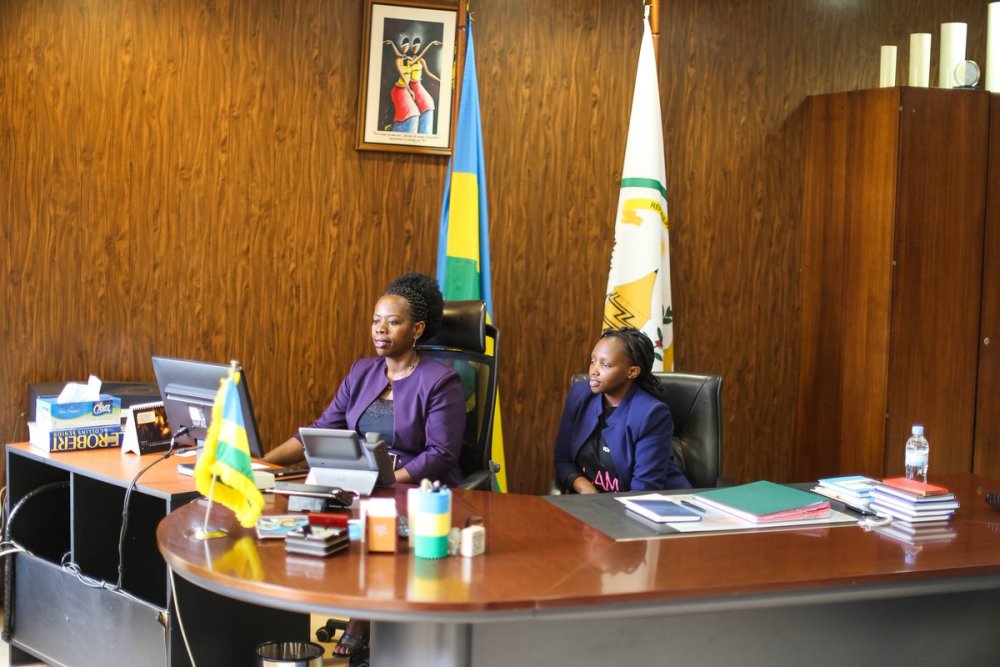
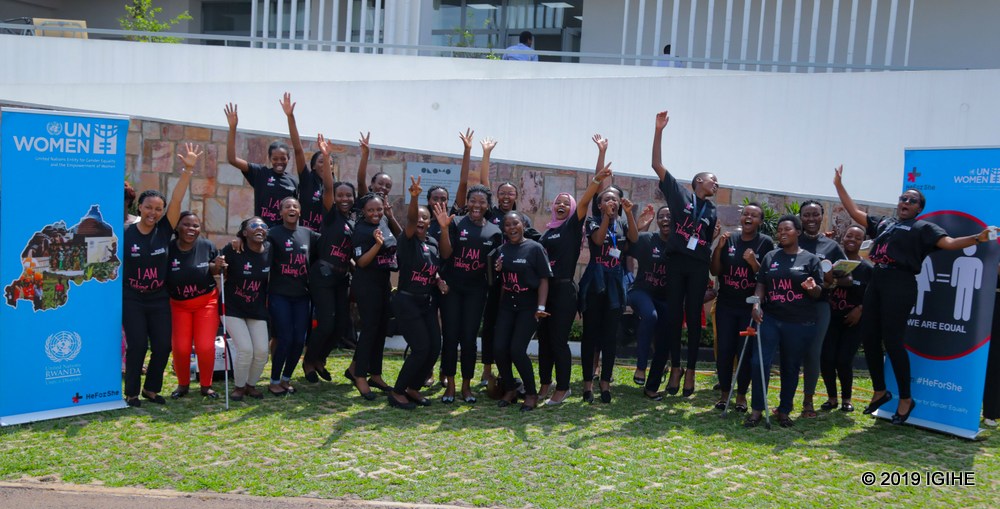
The “Girls Take Over” Initiative aimed at providing a shadowing experience to young women in Rwanda by offering them role models in the field of their career choice, helping them realize their potential, build their capacities and strive to make their dreams true.
Girls who benefited from the initiative were selected among students from Gashora Girls Academy, Akilah Institute for Women, FAWE Girls School and the Rwandan Organization of Women with Disabilities (UNABU). The young women acquired insightful career advice and first-hand experience from leaders in different Rwandan and international organizations.
The young women were received in by the Heads of the following Institutions; UN Women, the Embassies of Kenya, Congo, Netherlands and Germany to Rwanda, The Swiss Development Cooperation, the United States Agency for International Development (USAID), the Friedrich Ebert Stiftung Foundation, the UN Resident Coordinator and United Nations Population Fund (UNFPA), the African Development Bank (AfDB), the National Bank of Rwanda (BNR), Bank of Kigali and BK Capital, Ecobank, the Commercial Bank of Africa, SONARWA Life, Volkswagen Rwanda, AC GROUP, Rwandair, Engen Ltd, the Kanombe Military Hospital and the Rwanda National Olympic and Sports Committee (CNOSR).
They were taken through the operations of the institutions, daily work challenges and how they are addressed and discussed with their mentors their journeys to success and lessons they learnt from them.
Brigitte Musabwasoni is a young woman, living with disabilities and a player at Rubavu Sitting Volleyball Club. She was received by the Vice President of Rwanda National Olympic and Sports Committee (CNOSR), Ms. Felicite Rwemarika.
“I talked with her (Rwemarika) a lot about women sport development and Paralympic sports in particular. I told her about my projects and dreams to play for the national team. She advised me to never give up because she also faced obstacles as she was pursuing her dream career but she kept up with her journey until she reached her goals,” Brigitte Musabwasoni said, “I am going back home a new person and with a new friend, Felicite”.
The various leaders who received these young women said this was a golden opportunity to share their experiences, a chance they hoped they would have gotten when they were starting their career. They were also impressed by the challenging questions they were asked by the young women and indicated it had been an eye-opener for them as well.
Dr. Claire Karekezi, the first Rwandan female neurosurgeon, received Blandine Ineza at Kanombe Military Hospital. Ineza finished her secondary studies at Groupe Scolaire de Butare in Physics, Chemistry, and Biology (PCB) Option last year and wants to become a cardio-thoracic surgeon.
“The young woman I received dreams of becoming a surgeon. It is a great dream and as a female neurosurgeon, I made that she knows that it is possible. The way ahead of her is not quite easy but it is possible if we work together,” Dr. Claire Karekezi said.
The UN Women Representative in Rwanda, Fatou A. Lo said that the ‘Girls Take Over’ Initiative created a platform of intergenerational dialogue for young women to be mentored but also to share key insights on how they view the field and what could be improved because as she stated “these young women are not only the future, they are actually the present.”
“Hearing messages from these girls has been tremendously inspiring. The girls were not only very well prepared and they asked very relevant and tough questions but they also inspired us. They brought energy, great insights and they reminded us that we have all been there in their shoes.”
Going forward, through the initiative, UN Women Rwanda intends to reach those who are left farthest behind including the school dropouts, young women who do not have access to existing opportunities and those who may not be in leading educational institutions.
The “Girls Take Over” Initiative is a continuation of the various mentorship and career guidance activities such as the “Speed Mentoring” organized as part of the 2018 edition of Youth Connekt Africa Summit, where UN Women held mentoring sessions with 150 youth and leaders from various sectors, as well as the Mentoring Moments launched by the Career Women’s Network in Kigali.