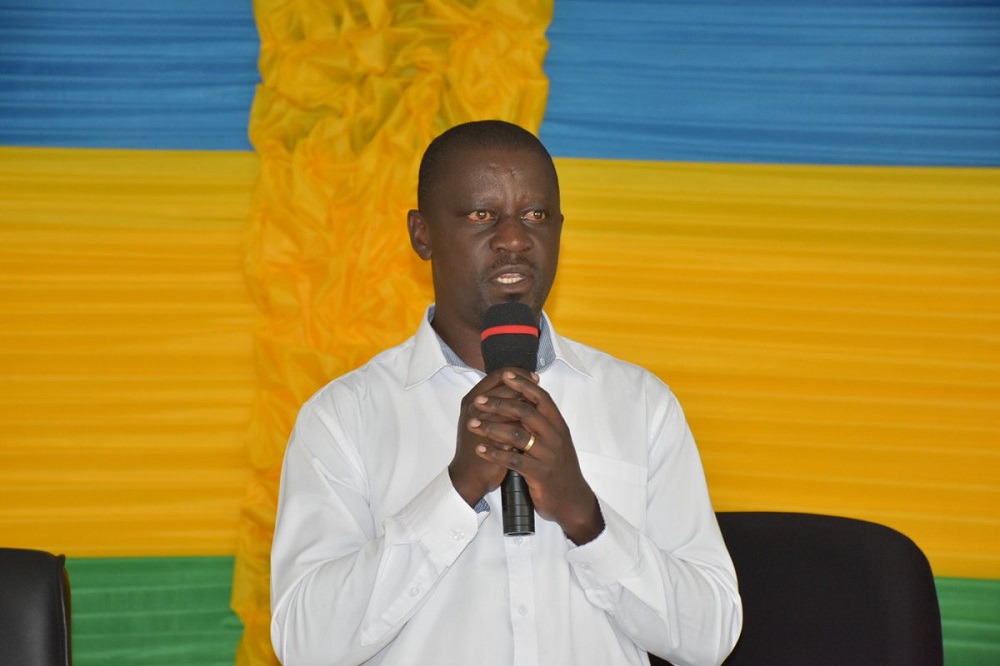
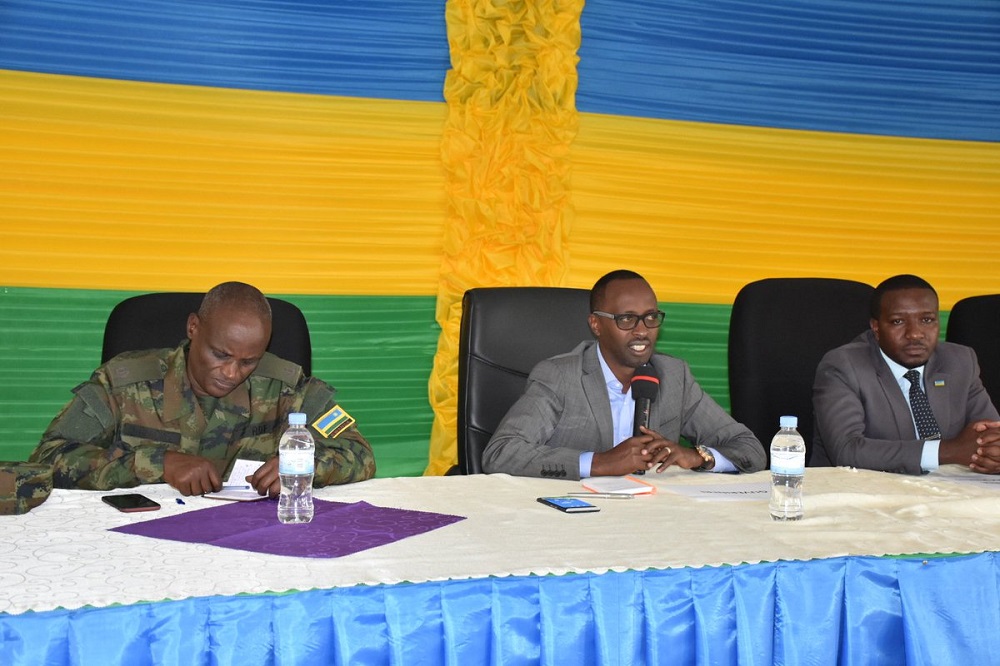
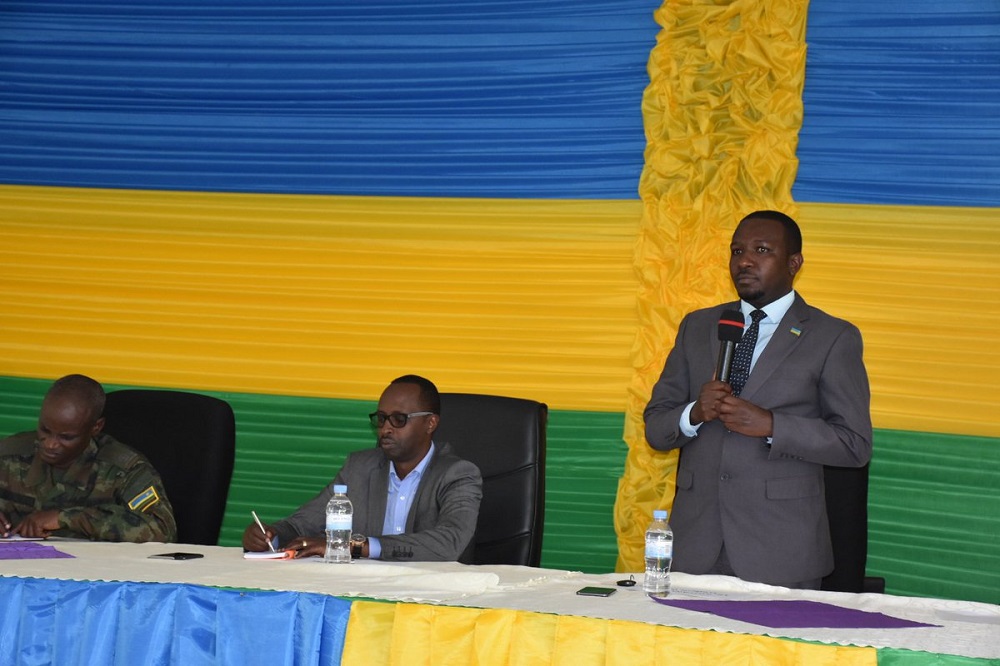
Twagirayezu was a member of Karongi district advisory council representing Mubuga sector.
On 2nd September 2019, the mayor of Karongi district, Francois Ndayisaba and his two deputies including Esperance Bagwire, the vice mayor for economic development and Drocella Mukashema, the vice mayor for social affairs submitted resignations letters citing personal reasons.
Karongi district advisory council will convene in no more than 90 days to elect the new executive committee as granted by laws.
The appointment of the new leader follows the wave of resignations among district’s high profile officials countrywide that started on Tuesday.
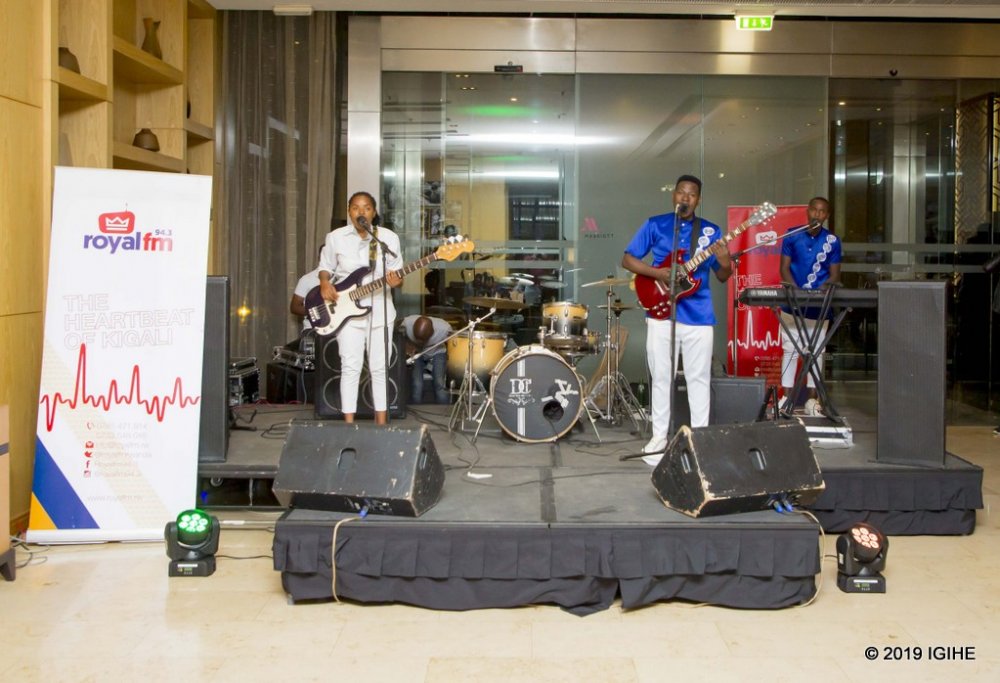
The band was competing with His Voice Band Tuesday 3rd September 2019 which it outperformed, qualifying to the next phase of the competition.
The competition which attracted 10 bands will be held on a weekly basis until October 2019 when the winner will be announced.
Six have already contested within three stages.
The winning band is voted through social media platforms like Twitter and Facebook page of the Marriott Hotel.
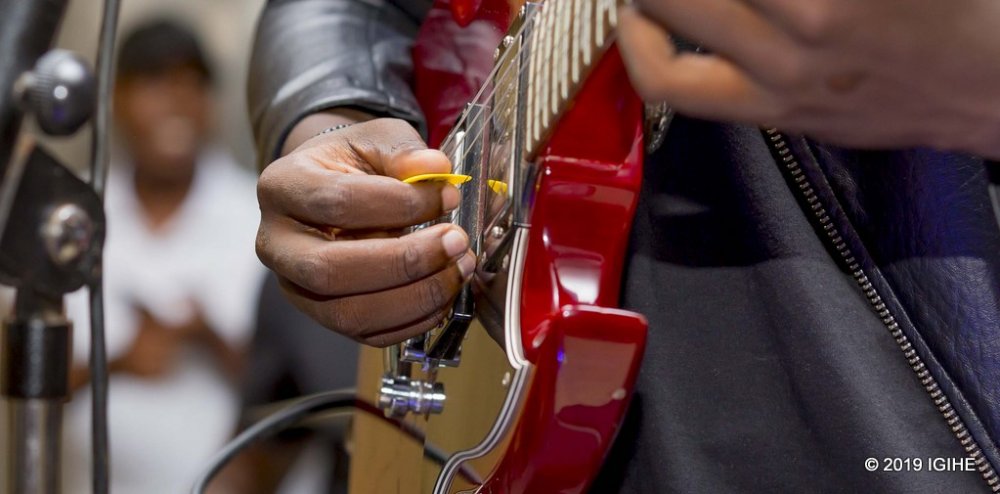
Symphony, a six-member band, was the first on stage with enthralling performances of songs like “Avec Elle”, “African Queen” by Innocent Ujah Idibia [2Baba] and Vanessa Mdee, “A Natural Woman” by Aretha Franklin, “If I Ain’t Got You” by Alicia Keys, and Sway by Michael Bublé.
They also performed local popular songs like “Kungola’’ by Sunny and Bruce Melodie, rap songs like “Ku Gasima” and “Nituebue” igniting great excitement among revelers.
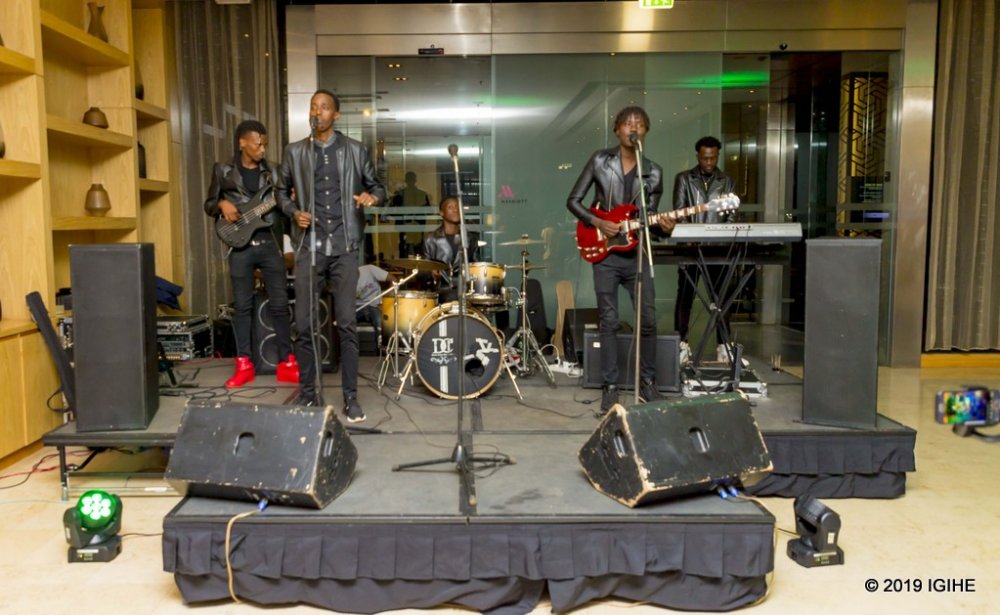
His Voice Band was comprised of three crew members.
They also entertained fans with songs like “Wanyeretse urukundo” by Makanyaga Abdul, “Laurette” by Kamaliza, “Umwari wanze umwarimu” by Mwitenawe Augustin, and “Dore Ishyano” by Orchestre Abamararungu.
Joachim Mugengakamere, a member of Symphony Band, told IGIHE that they entered the competition with a goal of winning the grand prize.
“When we stir our audience, it echoes back into boosting our next performance. We want to start working on our own compositions this year,” he said.
Wenceslas Iyakare [Rickson], the head of His Voice Band said that they are going to assess themselves to hone their competences.
“We want to see areas of improvements to lift our standard to the international market,” he said
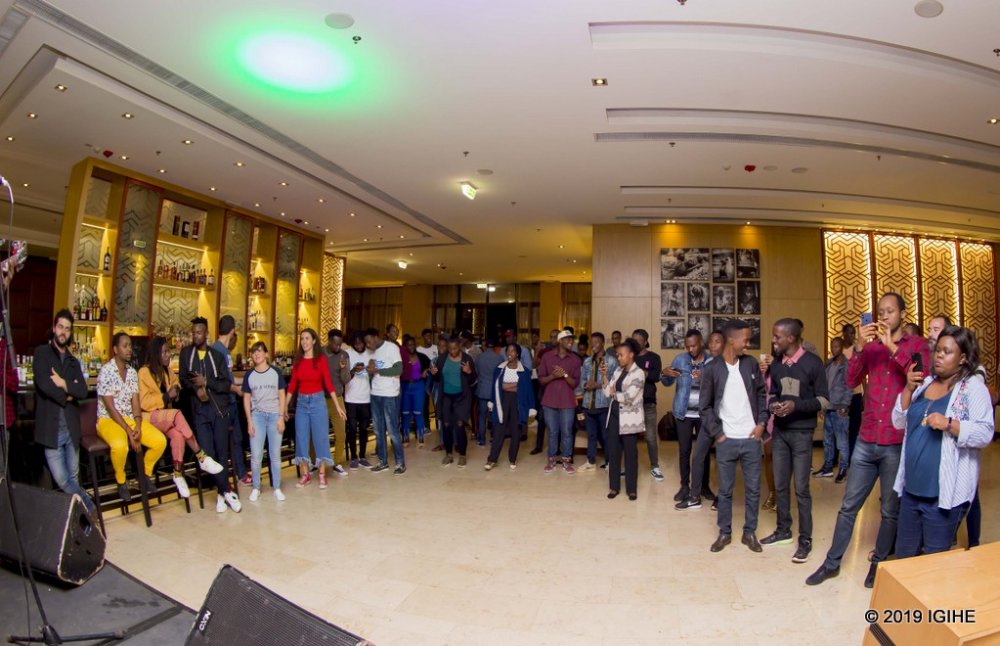
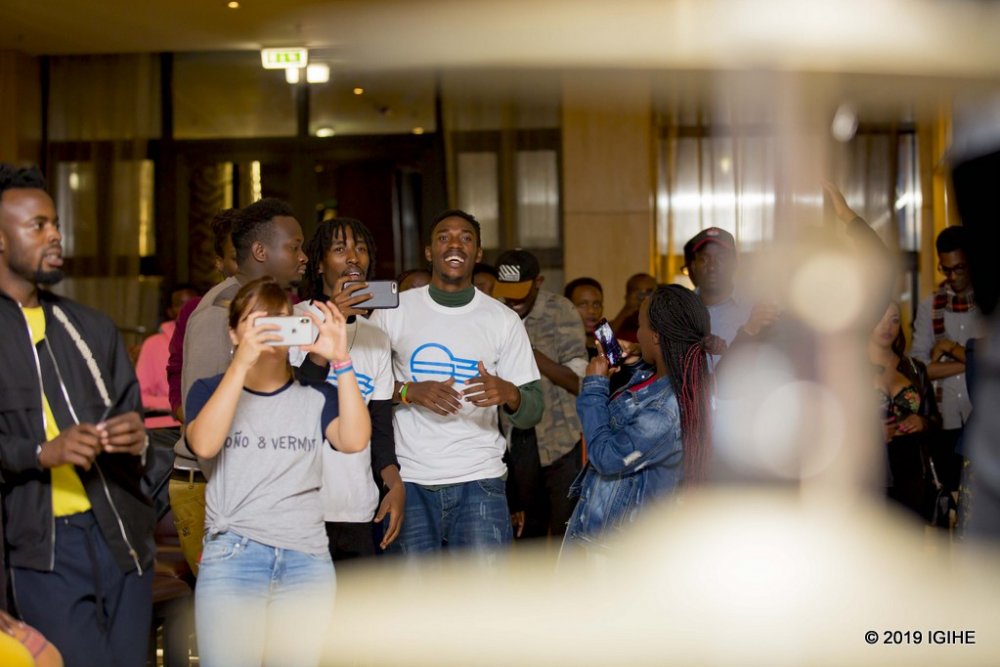
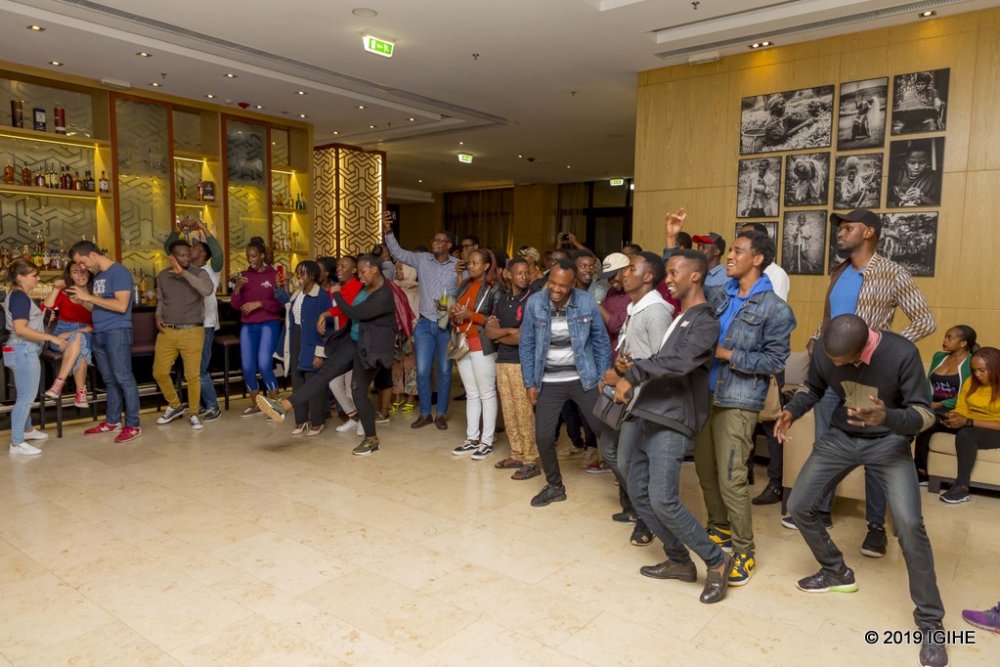
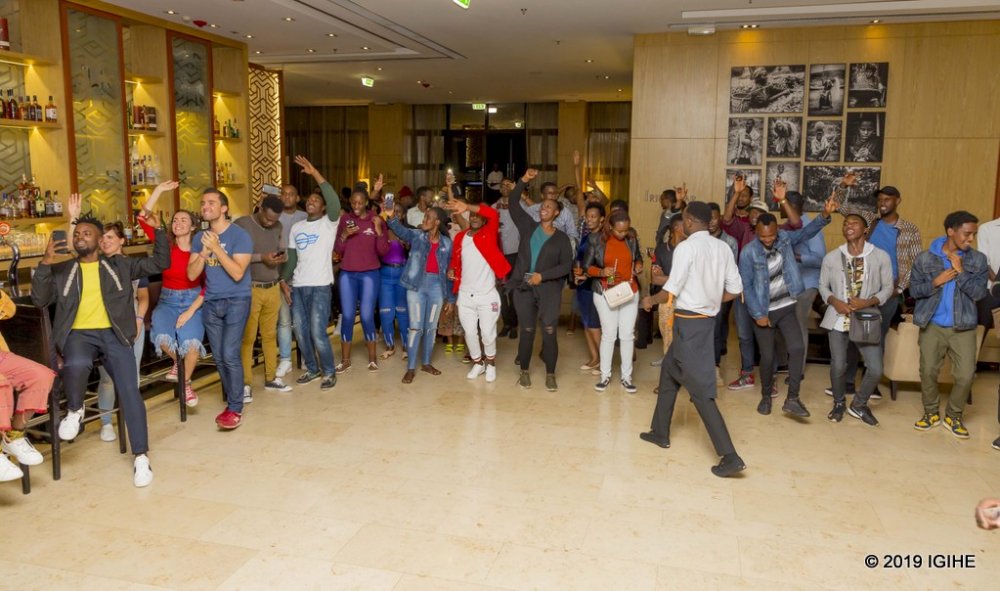
Revelers also enjoyed the pomp and spectacle that came with the competition.
Michaella, from Germany, has told IGIHE that she was greatly excited by the show, the first one she attended in Rwanda.
“They both did great. One is playing a lot of international songs. It was easier for me to understand. I also loved the traditional music. I am here for the first time in Rwanda and both bands have made my night. It was great,’’ she enthused.
The winner of the competition will get a one year paid contract with Marriott Hotel, to be its resident band and to open the performance of the New Year’s Eve celebrations.
The winning band will also be offered a recording contract with Made Beats, a Kigali-based music recording label.
Ian Ferrao has more than 12 years of experience in senior management telecommunications roles in Africa. Prior to joining Airtel Africa, he was the CEO of Vodacom Tanzania PLC, the CEO of Vodacom Lesotho and Chief Commercial Officer at Vodacom Business Africa. He holds a First Class Honours Degree in BSc Management Sciences from the Warwick Business School.
Commenting on this appointment, Raghunath Mandava, Airtel Africa’s Chief Executive Officer, said: “We are excited to welcome Ian as Regional Director for East Africa, which includes Kenya, Uganda, Tanzania, Malawi, Zambia, and Rwanda. He brings a wealth of relevant telecommunications and mobile money experience within the region and will be an asset to the business. He will be part of the Africa Executive Committee based in Nairobi and will focus on driving growth across voice, data and mobile money in East Africa.”
{{About Airtel Africa}}
Airtel Africa is a leading provider of telecommunications and mobile money services, with a presence in 14 countries in Africa, primarily in East Africa and Central and West Africa.
Airtel Africa offers an integrated suite of telecommunications solutions to its subscribers, including mobile voice and data services as well as mobile money services both nationally and internationally. The Group aims to continue providing a simple and intuitive customer experience through streamlined customer journeys.
The resignation letter of Rwiririza of which IGIHE has a copy reads: “I am pleased to request your confirmation to stop my duties as Ngoma district’s vice mayor for economic development and member of Rukira sector advisory council.”
Rwiririza was also the Chairman of RPF Inkotanyi at the district level.
Ngoma district advisory committee is expected to confirm the resignation of Rwiririza Jean Marie Vianney on Friday.
Hakizimana Elie, the executive secretary of Bugesera district also submitted a resignation letter to exit the position held for three years.
“After realizing that I no longer have enough to fast track the development of Bugesera district, I am submitting a letter requesting confirmation to stop duties,” reads part of his resignation letter.
The China–Rwanda Business Forum will provide an opportunity to showcase business opportunities in both Rwanda and Zhejiang, existing partnerships, as well as act as a platform for networking and business engagement between the respective private sectors.
Commenting on the visit, Clare Akamanzi, the RDB Chief Executive Officer said that Zhejiang Province is strongly established in several economic sectors that are aligned with Rwanda’s economic transformation aspirations.
“This visit presents a valuable opportunity to forge strategic partnerships while helping to encourage investment between Rwanda and China,” she noted.
Rwanda-Zhejiang Province Cooperation
The Zhejiang Province has supported several initiatives in the TVET and digital economy sectors in Rwanda.
The Jinhua Polytechnic in Zhejiang Province supported the expansion of Musanze Polytechnic (IPRC) and provided equipment to enhance practical teaching at the school.
The Jinhua Polytechnic has also been providing scholarships to Rwandan students since 2014 to train in vehicle inspection and maintenance technology, communication network and equipment, hospitality Management, etc. So far, 42 Rwandans have graduated from Jinhua Polytechnic and 53 are currently enrolled.
Since 2009, the Department of Science and Technology of Zhejiang Province through the China National Bamboo Research Center of the State Forestry and Grassland Administration, supported the implementation of a Bamboo Project, which aims at providing capacity building on bamboo cultivation, processing and utilization of technology, and was organized by and sponsored by Zhejiang Province.
The project has trained over 1400 students in the past 10 years who have gone on to establish bamboo processing companies, some of which are export firms.
The Rwanda – Alibaba eWTP Partnership
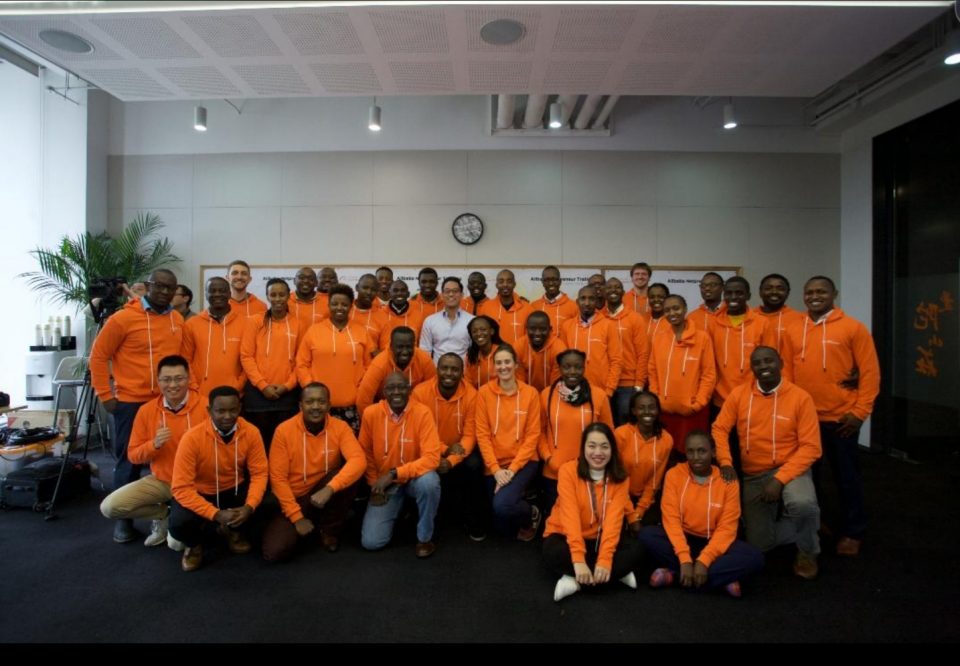
Under the framework of the e-WTP (electronic World Trade Platform) jointly launched by Alibaba and the Government of Rwanda last year, over 40 Rwandan entrepreneurs have received training from Alibaba Business School.
Among them, 10 digital platform builders have graduated from the eFounders Fellowship, a joint program with United Nations Conference on Trade and Development (UNCTAD), and 30 ecosystem enablers, including traditional business owners as well as start-up entrepreneurs, have attended the Alibaba Netpreneur Training. Besides that, Alibaba Business School’s New Economy Workshop hosted 12 Rwandan government delegates from different ministries and departments.
At business level, Alibaba also helps local Rwandan small businesses to leverage its ecosystem and get connected to the 700+ million Chinese consumers on the platform while bypassing costly intermediaries. So far, sales volume of Rwandan coffee increased by 700% on Tmall Global, Alibaba’s cross-border B2C platform.
More cooperation will be announced between Rwanda and Alibaba under the eWTP.
Since 2010 this organization has been operating in Rwanda and has helped about 69.973 citizens of Rwanda, whereby, putting them in small groups where they start a development project initiative that is sponsored by this organization with a foundation of over 6 million frw.
Spark MicroGrants’ vision is to see a world where everybody lives with dignity and determines their own positive future
{{How does Spark MicroGrants help people?
}}
This project initiative works in partnership with the Social Economic Development Officer (SEDO), these are the ones that follow up on the called ‘Inyenyeri’ meaning ‘stars’ elected by the village members to support them to run village meetings.
When the village has set up and become organized, those Inyenyeri help the village members through various brainstorming sessions project ideas that can help them to reach their goal; they spend six-month meeting and perfecting their project. After that Spark MicroGrants provides grants to the village to implement their projects and keeps working with that village for a period of three years.
These people that came to learn from this project will be going in Kamubuga sector, Mbatabata cell in Gakenke district, one of the places where this project initiative collaborates with the citizens in the country.
When they arrived in the area they met citizens living in that village in their small groups discussing on a farming project as their development project.
Frank Adule, a Ugandan citizen when talking to IGIHE said “I observed that Rwandan people are united and know what they want, they seat together sharing ideas, I believe this is a lesson I can take back to Uganda.”
Nyirasafari Presence, a citizen in Bugogo village, in Kamubuga sector is also Inyenyeri in her village.
She told IGIHE that all village ideas come from village members, they work together and decide which project will be more profitable and sustainable.
“Spark MicroGrants gives us funding on three levels, and all citizen in the village are allowed to benefit from it. Their particularity is that they first give us training on how we should manage our project and the follow up on us for three years.” She said
{{The government praises Spark MicroGrants’ initiative
}}
Uwihanganye Patrick representing the vice mayor in charge of economic development in Rulindo District, told IGIHE “Spark MicroGrants has been helpful here in Rulindo, they started in Cyungo and Buyoga Sector, they went on to Rukozo sector in the year 2019-2020 they will reach Murambi sector.”
“We love their methods because they help us in following up on the activities we introduce to citizens, they work hand in hand with the citizen and are complementary to government programs.”
The country director of Spark MicroGrants in Rwanda, Gilbert Nsabimana, said that every year different partners from various countries they work with to use this approach, meet to work on how to perfect it.
“They all come here every year to evaluate which methods they use and how they can improve it so the citizens can be helped effectively, we come up with a method that can work with a specific country whether in Rwanda or Uganda.” He said
He explained that they work in partnership with the Local Administrative Entities Development Agency (LODA), in monitoring how citizens plan their programs in accordance with their village
“The goal here is not to provide money only but to see citizens working in harmony, men and women both contributing in development activities, reducing conflicts and to see government programs fulfill through the collaborating of the citizens,” He said
{{Why did Spark MicroGrants choose to go in all villages comprising a sector?
}}
Nsabimana said, “we started taking one village per sector, but later on we thought on creating a large scale impact and we decided to take a whole sector and go into every village of that sector, then we will evaluate the change.”
He said that for some sector they were able to take all villages included, like in Rulindo, Gakenke and in Gisagara.
“Now we want to start taking a whole district and see the result, then we will take the whole province.”
{{Since 2010, how can the result be visible?
}}
Nsabimana explained that they have worked with 133 villages and among them, there has been a significant change.
“When we give then fund for a project, they use the benefits to create other projects aside. For example, some have started plans to replace their rooftops, bringing water, electricity power; they pay for health insurance for each other, and much more.” He said
What are the criteria for choosing a village?
Nsabimana explained the base on the numbers made by the National Institute of statistics in Rwanda.
“There are numbers given by the National Institute of Statistics of Rwanda that are shared with all Districts; when we get in a given district we don’t know which sector to take or not. So we refer to those numbers, and we also look at places with no infrastructures because most other organizations limit themselves on places with roads,” he said
“We also focus where most people are very poor, where the help is needed we go there.”
He said that in everything they do, the citizen has first priority in thinking for themselves what can be useful in their development, Spark only comes to boost their ideas with funding.
He is the latest among district officials who have been resigning or forced to leave office since Tuesday.
The district’s advisory council forced him to resign today around 2pm and appointed the vice mayor for economic development, Ntaganira Josué Michel as the acting mayor.
The chairman of Nyamasheke district advising council, Dr Ndabamenye Telesphore has attributed the forced resignation to failure to deliver.
“The district’s advisory council convened today to discuss development programs with a focus on leader’s engagement. It was observed that the mayor had short falls in performance hence losing the trust of the council,” he said.
Ndabamenye explained that failure to coordinate development projects are among is among reasons for the resignation.
Kamali was elected Nyamasheke mayor in February 2015 replacing Habyarimana Jean Baptiste who resigned in the same year. Kamali had previously served as the executive secretary of Kanjongo sector in the same district.
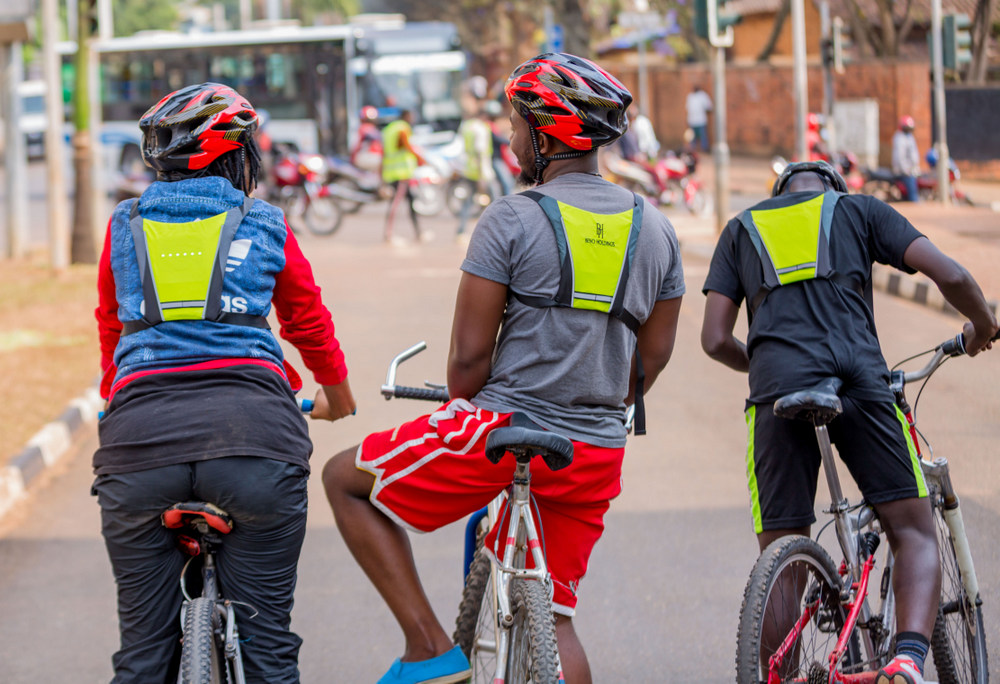
One of the best ways to increase your conspicuity or presence on the road is to wear specially designed high-visibility clothing.
According to research, cyclists are 37% less likely to be involved in a cycling crash when they are wearing high-visibility or fluorescent clothing.
You have probably seen bicycle riders on the road wearing neon vests, shirts, or helmets.
While it may sound like a goofy fashion statement to young riders, a little dash of color can go a long way in preventing a deadly crash with a car.
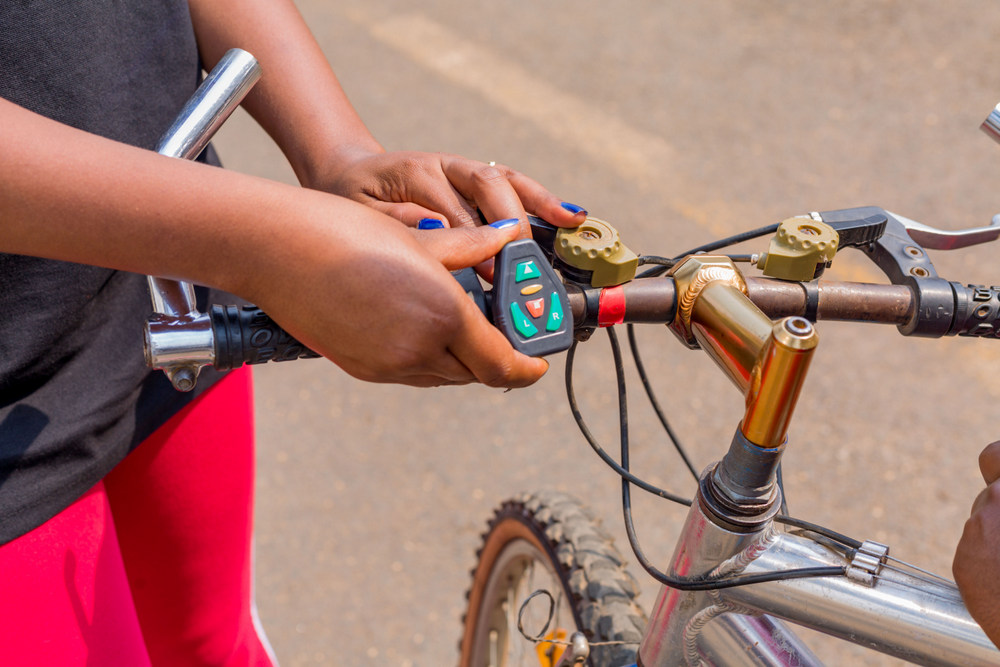
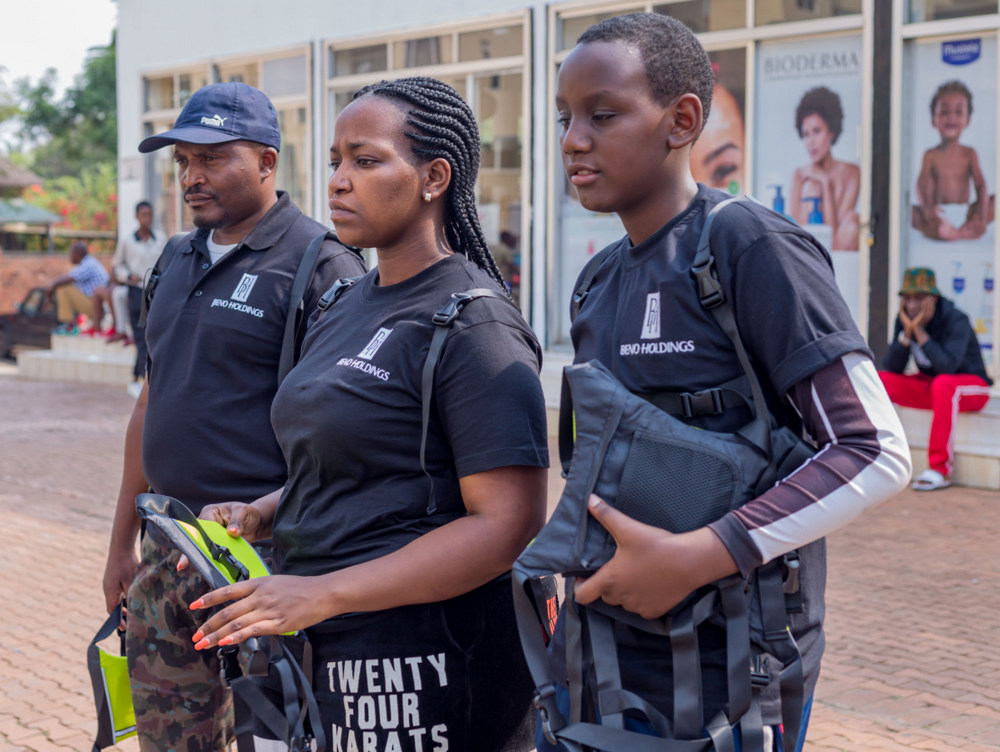
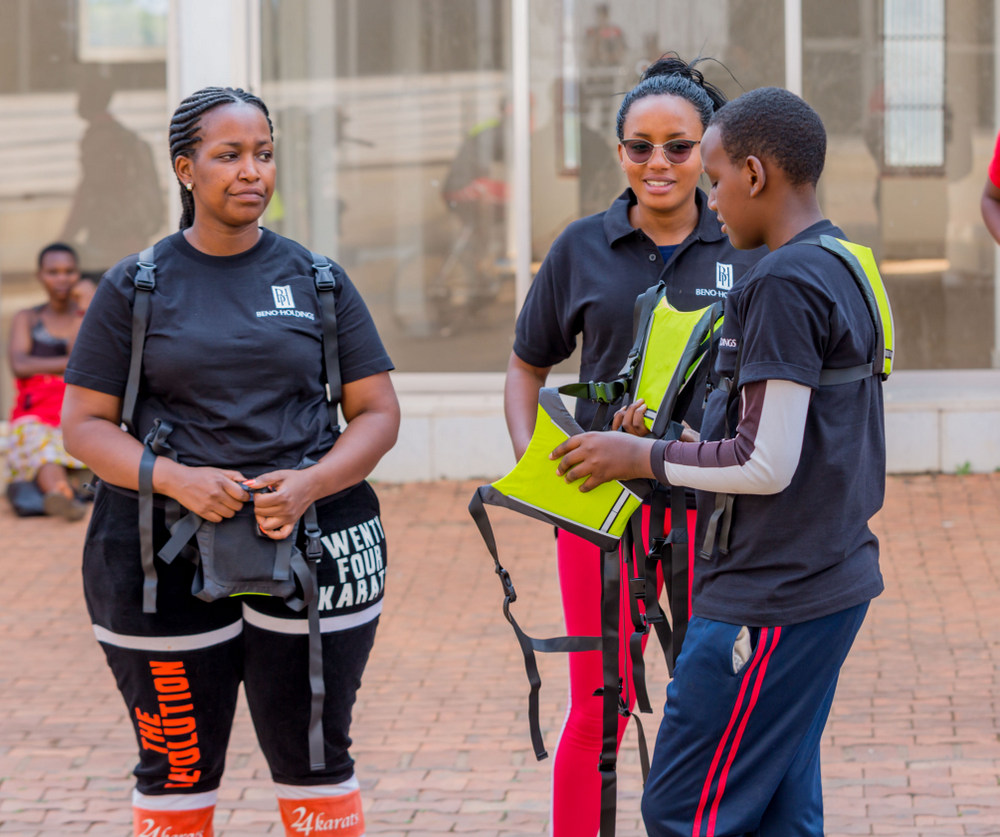
BENO Holding is one of the companies that offer solutions contributing to reducing related incidents. They invented a product solution called “TUZA LED Vest” which is a light-weight vest paired with a portable remote control device that allows the cyclist to signal that he/she is about to make a road change of direction.
The remote is then installed in front of the bicycle for easy access and once the remote is clicked, the LED lights at the back of the vest switch on and indicate each and every turn and stop the cyclist is about to make.
TUZA LED vests to have pure wireless remotes that have two power energy options;
• Rechargeable with a power-saving capacity of 8-14 hours.
• Powered by Solar energy.
The invention is high-visibility safety apparel that improves other’s ability to see the cyclists in any situation. From cars on the road to equipment operators on a job site, the more visible a cyclist is, the less risk there is of a serious accident taking place.
the TUZA LED vest is an important component of road and works safety for many jobs: transportation or construction workers, road maintenance crews, railway workers, accident site inspectors, first responders, warehouse or factory workers – virtually any cyclist who rides or works in proximity to vehicles or machinery that move under their own power.
According to Irene Iradukunda, the Project Manager at BENO Holding, the company has environment-friendly technology solutions limiting drivers’ over speeding among others.
The main idea was to create solutions contributing to the development of the transport sector with no threat to the environment.
For instance, the company has solutions enabling vehicles to consume less fuel and thus reducing the emission of toxic gases in the air.
This technology is dubbed ‘Up Power technology’ and started going into implementation since 2019.
It has also developed other solutions including the introduction of speed governors GPS technology in cars among others.
Iradukunda explained that it is the company’s belief that sustainable urban mobility can only be attained if we embrace green transport technologies, for instance, using bicycles in some instances.
“Cyclists seem to be restricted in some areas lest they are exposed to collisions emanating from less attention of drivers. Some drivers may not notice the cyclist’s presence during night hours may not be noticed in some cases. if it is night, you will not even know that a bicycle is ahead leaving a negative impression and always relating bicycle ride to accidents,” she said.
According to Iradukunda, BENO Holding assessed the situation and committed to driving penetration into a green city with the introduction of environment-friendly smart mobility solutions. The visibility is therefore seen as an alarm to other road users to pay attention to cyclists, enabling people to increasingly use bicycles hence classifying TUZA LED Vest” under green technology.
“Our transport technology solutions align with green city concept. This vest made in Rwanda was developed by our technicians and took two years of preparations to bring it on board after discussions with partners,” revealed Iradukunda.
“We talked to Rwanda National Police and taken through figures of cyclists accidents. Commercial cyclists don’t work overnight but TUZA LED Vest removes these barriers because they will be noticed by all road users any time,” she added.
There are two kinds of such vests: The first one is powered by solar energy and the second one is powered by electricity.
The latter is rechargeable and power lasts between 8 hours and 10 hours. The vest using solar energy saves power and lights your vest the whole day.
The rechargeable vest costs Rwf 18.000 while the one using solar energy costs Rwf 22.000.
Commercial cyclists are allowed to pay within installments.
The move follows the consultations of Gatsibo district management which agreed on 24th February 2018 that cows encroaching the precincts of Gabiro military barracks should be impounded and auctioned to keep the money in public coffers.
Lawyer Ndayobotse Silas, the court bailiff following up the auctioning has said that the auction is scheduled on Wednesday 11th September 2019.
“The auction will take place in Gabiro military barracks, Gatsibo district where the cows are impounded. The auction will be preceded by visiting the cows at 10 am,” he said.
Before ruling the auction, a pastoralist identified as Steven Safari owning 104 cows impounded in the premises filed a court case requesting to stop the auctioning of his herd.
He explained that his cattle went missing and later heard that they were impounded in Gabiro military barracks.
Safari filed the complaint to the Nyagatare court of high instance on 22nd July 2019 after failing to convince the district on the release of his cows.
The court also ruled the auctioning of these cows. Previously the number of cattle to be auctioned was 158 but one died later and reduced to 157.
In the past two weeks, the management of Gatsibo district auctioned 493 cows from 18 pastoralists at a cost of Rwf 83.2 million while Nygatare district earned Rwf 25 million from the auction of 180 cows of 13 pastoralists.
The Ministry of Agriculture and Animal Resources and local leadership explained that Gabiro haunts diseases over the presence of wild animals.
According to Eastern Province officials, the decision was taken for the security of cattle and containing the spread of Rift Valley Fever (RVF) among cows.
A fine ranging between Rwf 15 000 and 38 000 was instituted for pastoralists with cattle found grazing in the barracks’ premises but efforts were futile until tougher punishments to auction cows went into force.
The duo identified as Alice Nzayisenga, 22, and Casian Twagirayezu, 23, were arrested on Monday with fake notes amounting to Rwf15, 000 in the denominations of Rwf5, 000.
Chief Inspector of Police (CIP) Hamdun Twizeyimana, the Eastern region Police spokesperson said that suspects were arrested due to information given by the would-be victims.
“Nzayisenga and Twagirayezu were in the bar; at the time of paying the bill for their drinks they paid a fake note of Rwf5, 000, fortunate enough the manager was able to detect it and alerted the Police,” he said.
CIP Twizeyimana explained that the suspects also tempted to deposit Rwf5, 000 on a mobile account of one of them but the agent also noticed that the note was fake.
When Police officers arrived they searched them and recovered another fake note of Rwf5, 000.
CIP Twizeyimana commended the vigilance of the would-be victims and timely sharing of information that facilitated the arrest of the duo.
He further advised people to avoid “criminal shortcuts” and work hard.
“This is a criminal act that has ill effects on people’s business; it is another form of conning people.”
“Money counterfeit has negative effects on the economy; people should understand that and play their role in fighting this financial crime through reporting and sharing information whenever they see or suspect anyone involved,” the spokesperson emphasized.
Article 269 of the penal code states that: “Any person who, fraudulently counterfeits, falsifies or alters coins or bank notes, which are legal tender in Rwanda or abroad, notes issued by the Treasury with its stamp or brand, either banknotes or alike that have legal tender in Rwanda or abroad, or one who introduces or issues in Rwanda such effects or notes with knowledge that they are forged or falsified, commits an offence.
Upon conviction, he/she is liable to imprisonment for a term of not less than five (5) years and not more than seven (7) years.”