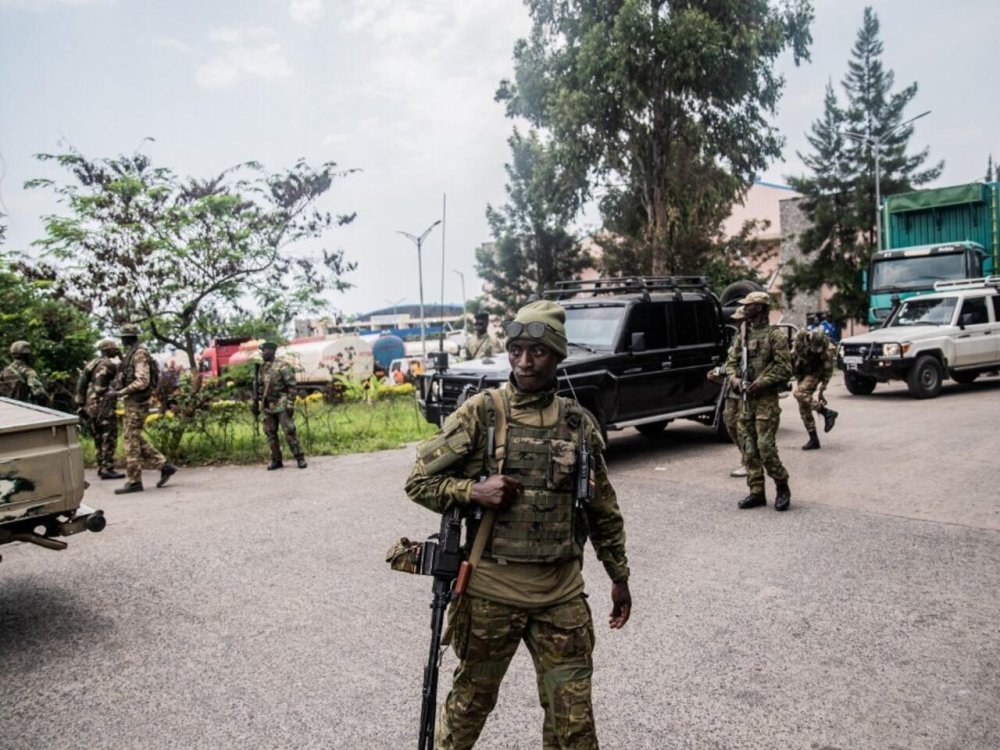
The fighting escalated on Sunday, September 21, 2025, but ended with M23 defeating government forces and the Wazalendo militia.
According to Radio Okapi, heavy battles took place in Cisaza, Cibanda, Muyange, Karhuliza, and Kalongo.
Reports indicate that the clashes were so intense that M23 deployed armoured vehicles and other heavy weaponry.
Nzibira is one of the key towns in South Kivu, known for its mining activities, particularly coltan and gold. It had been an important area under FARDC control, meaning its loss would carry significant consequences.
On the same day, heavy fighting was also reported in North Kivu, particularly in the Masisi and Walikale areas.
The capture of Nzibira adds to other territories now controlled by AFC/M23 in South Kivu, including Bukavu. The group is also reported to be present in Mwenga, Kabare, Fizi, and Uvira.
But tensions that erupted early 2022 between the two neighbors derailed much of that progress. Some projects were suspended, while others slowed to a near standstill.
Among the most affected were the joint construction of a major hydroelectric plant, conservation of the Virunga parks, gold refining agreements, petroleum exploration in Lake Kivu, and the planned model village in Goma.
{{The Ruzizi III power plant}}
One of the flagship projects delayed by the diplomatic fallout is the Ruzizi III hydropower station, a joint initiative of Rwanda, the DRC, and Burundi.
In 2016, the three countries agreed to harness the Ruzizi River to produce 147 megawatts of electricity. Backed by the World Bank, the European Union, and the African Development Bank, the project was valued at $450 million and was expected to be completed by 2024.
However, regional disputes disrupted cooperation, causing repeated delays. Costs have since ballooned to an estimated $800 million. Earlier this month, Rwanda’s Minister of Infrastructure, Dr. Jimmy Gasore, inspected the site and announced that construction will formally begin in January 2026 and conclude by 2030.
Each partner country will contribute around $266 million and receive roughly 68 megawatts of power.
{{Park conservation efforts}}
In 2014, Rwanda, the DRC, and Uganda signed a pact to protect the Virunga mountain range and surrounding parks, an area spanning over 7,900 square kilometers.
Through the Greater Virunga Transboundary Collaboration (GVTC), the countries sought to coordinate anti-poaching operations and counter armed groups destabilizing the region, such as the FDLR.
Those efforts stalled after hostilities resumed. In October 2022, Kinshasa accused Rwanda of smuggling gorillas and monkeys, allegations Rwanda’s Deputy Permanent Representative to the UN, Robert Kayinamura, dismissed as “a colonial mindset.”
“For the past 28 years, Rwanda has been blamed for everything; lack of water, lack of electricity, lack of roads,” he said. “We need to move beyond this mentality and focus on real solutions.”
{{Gold refining agreement}}
The DRC, home to vast mineral wealth, has long struggled to add value to its resources due to limited refining capacity. In contrast, Rwanda operates the Gasabo Gold Refinery in Kigali.
In June 2021, the two countries signed an agreement allowing Congolese gold to be processed in Rwanda through a partnership between Sakima (Socièté Aurifère du Kivu et Maniema), a state-owned company in the DRC, and Rwanda’s Dither Ltd.
But just a year later, after M23 rebels seized Bunagana, Kinshasa suspended the deal, accusing Rwanda of backing the rebels; allegations Kigali has consistently denied.
{{Goma’s model village}}
The eruption of Mount Nyiragongo in May 2021 destroyed more than 1,000 homes on the outskirts of Goma. In a gesture of solidarity, President Paul Kagame visited the area and pledged to help rebuild, promising a modern settlement similar to Rwanda’s Kinigi model village in Musanze.
Congolese officials later toured Kinigi to study its design, and it was agreed that Rwanda would supply construction materials. The model village, estimated to cost over 26 billion Rwandan francs, was to be inaugurated on July 4, 2022.
By then, however, relations had soured, leading to setbacks in the implementation of the project.
{{Lake Kivu oil exploration}}
In 2017, Rwanda and the DRC signed an agreement to jointly explore petroleum deposits in Lake Kivu. The deal followed discussions between the two presidents in 2016 and aimed to identify reserves, estimate quantities, and plan for joint exploitation.
Following the Bunagana crisis, Kinshasa suspended cooperation and accused Kigali of supporting M23 rebels. Rwanda proceeded with exploration on its side of the lake. In January 2025, Kigali announced it had identified 13 potential petroleum blocks.
The discovery angered Kinshasa, prompting Prime Minister Judith Suminwa Tuluka to instruct her Minister of Hydrocarbons, Aimé Sakombi Molendo, to demand explanations from Rwanda Mining Board (RMB).
{{A path to reconciliation?}}
Since 2022, Angola and other mediators have attempted to restore relations. In September of that year, Presidents Kagame and Tshisekedi last met in New York, with President Emmanuel Macron of France facilitating talks.
In March 2025, the United States helped broker a peace framework, culminating in a June 27 agreement aimed at ending hostilities.
If relations improve, key joint projects including Ruzizi III, cross-border conservation and mineral processing could be revived, renewing hopes of regional integration.
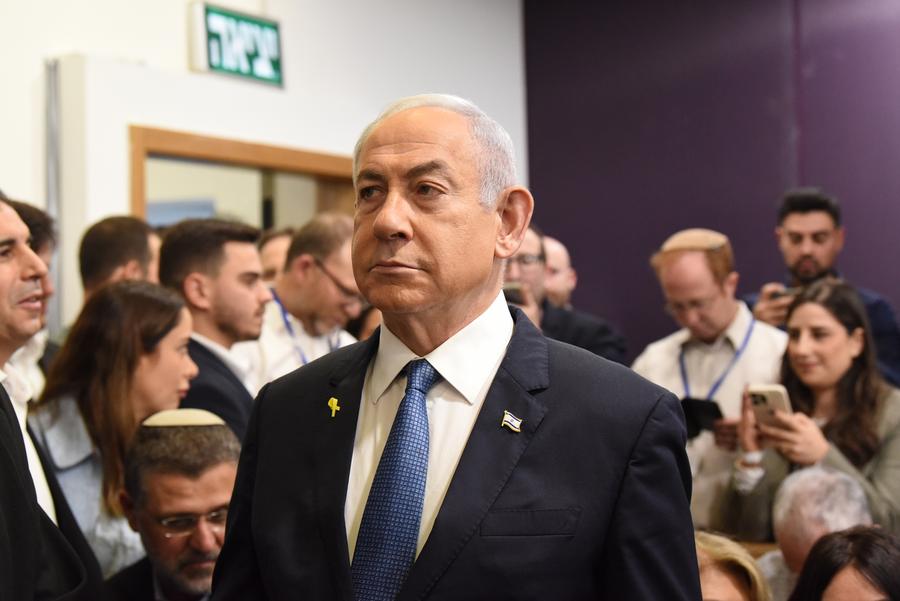
“I have a clear message to those leaders who recognize a Palestinian state after the terrible massacre of October 7,” Netanyahu said, referring to Hamas’ attack on southern Israel in October 2023. “You are giving a huge reward to terrorism.”
He added, “It will not happen, there will not be a Palestinian state west of the Jordan River.”
He added that he will give a response to the latest recognition after his return from the United States. “Wait for it,” he said.
Welcoming the move by the three countries, Palestinian President Mahmoud Abbas said, “It constitutes an important and necessary step toward achieving a just and lasting peace in accordance with international legitimacy,” according to a statement by his office.
Earlier in the day, British Prime Minister Keir Starmer said in a video statement that Britain “formally recognizes the State of Palestine,” calling for a shift back to a two-state solution.
Meanwhile, a joint media release by Australian Prime Minister Anthony Albanese and Foreign Minister Penny Wong said “Australia recognizes the legitimate and long-held aspirations of the people of Palestine to a state of their own.”
Canadian Prime Minister Mark Carney on Sunday also issued a statement on Canada’s recognition of the State of Palestine.
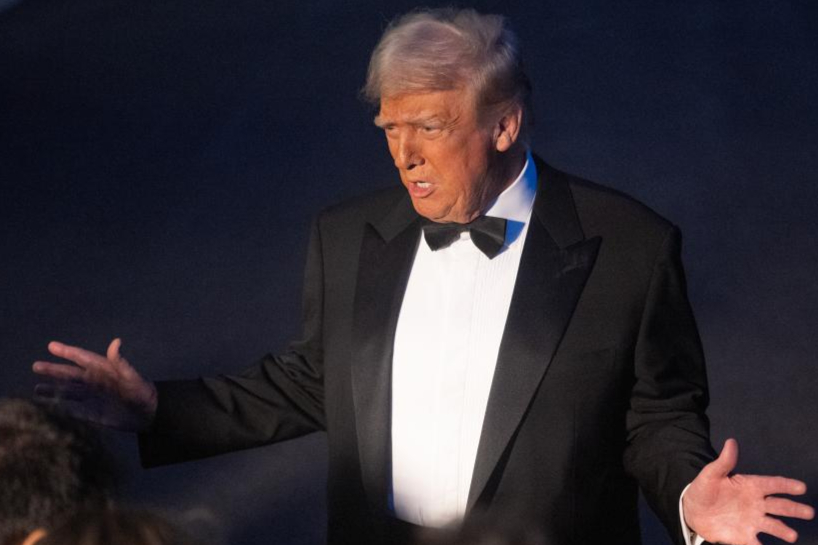
“If Afghanistan doesn’t give Bagram Airbase back to those that built it, the United States of America, BAD THINGS ARE GOING TO HAPPEN!!!” the president wrote on his Truth Social account.
Located about 50 km north of Kabul, the Bagram Airbase was the hub of U.S. and NATO operations during the two-decade-long War in Afghanistan. The withdrawal of American forces in 2021 resulted in the Taliban taking control of the base.
During his recent visit to Britain, Trump said that the United States is “trying to take back” the Bagram Airbase. The remarks have attracted widespread attention and sparked speculation about whether the United States intends to redeploy troops to Afghanistan.
On Saturday, Trump told reporters at the White House that the United States is in talks with Afghanistan regarding regaining control of the airbase, saying, “We want it back, and we want it back soon, right away.”
“If they don’t do it, you’re going to find out what I’m gonna do,” said Trump.
Accompanied by Azerbaijan’s Minister of Youth and Sports, Farid Gaibov, Kagame toured the eight-year-old track, which has hosted F1 races for nearly a decade and is one of 24 circuits on this year’s championship calendar.
The visit coincided with Max Verstappen of Red Bull Racing claiming victory in the Azerbaijan Grand Prix, a win that brought him closer to reclaiming the season’s top spot from Oscar Piastri of McLaren.
Last year, President Kagame confirmed Rwanda’s bid to host a Formula 1 race, which would make the East African nation the first African host in three decades. Since then, discussions and preparations have been underway, with Minister of Sports Nelly Mukazayire confirming that the project is progressing steadily.
President Kagame’s tour of Baku follows visits to other notable circuits, including the Marina Bay Street Circuit in Singapore and the Lusail International Circuit in Qatar, highlighting Rwanda’s growing engagement with global motorsport.
President Kagame also emphasized that Rwanda and Azerbaijan share many similarities, underlining his wish to further strengthen cooperation in development.
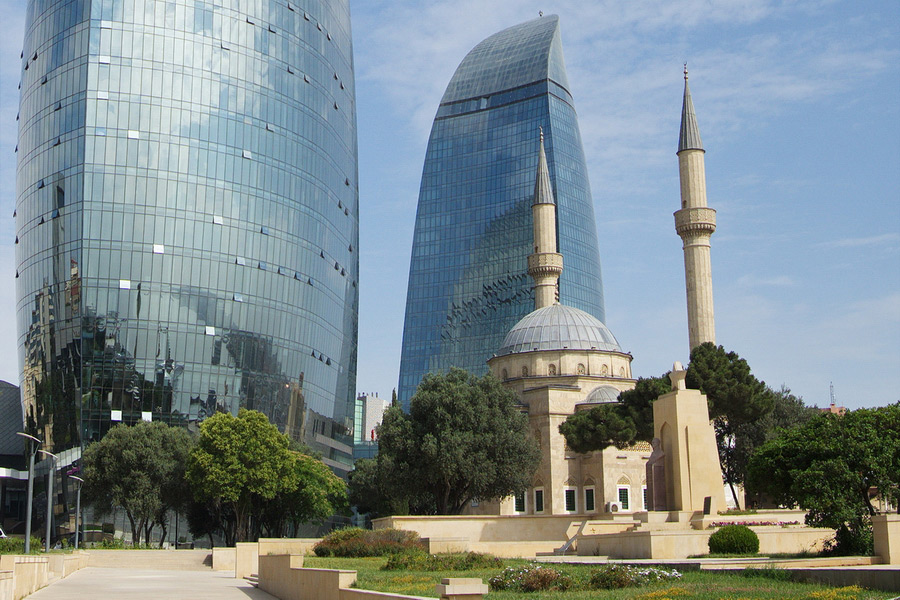
While diplomacy and bilateral cooperation were at the center of the visit, Azerbaijan itself is a country with a rich history, unique culture, diverse geography, and remarkable features.
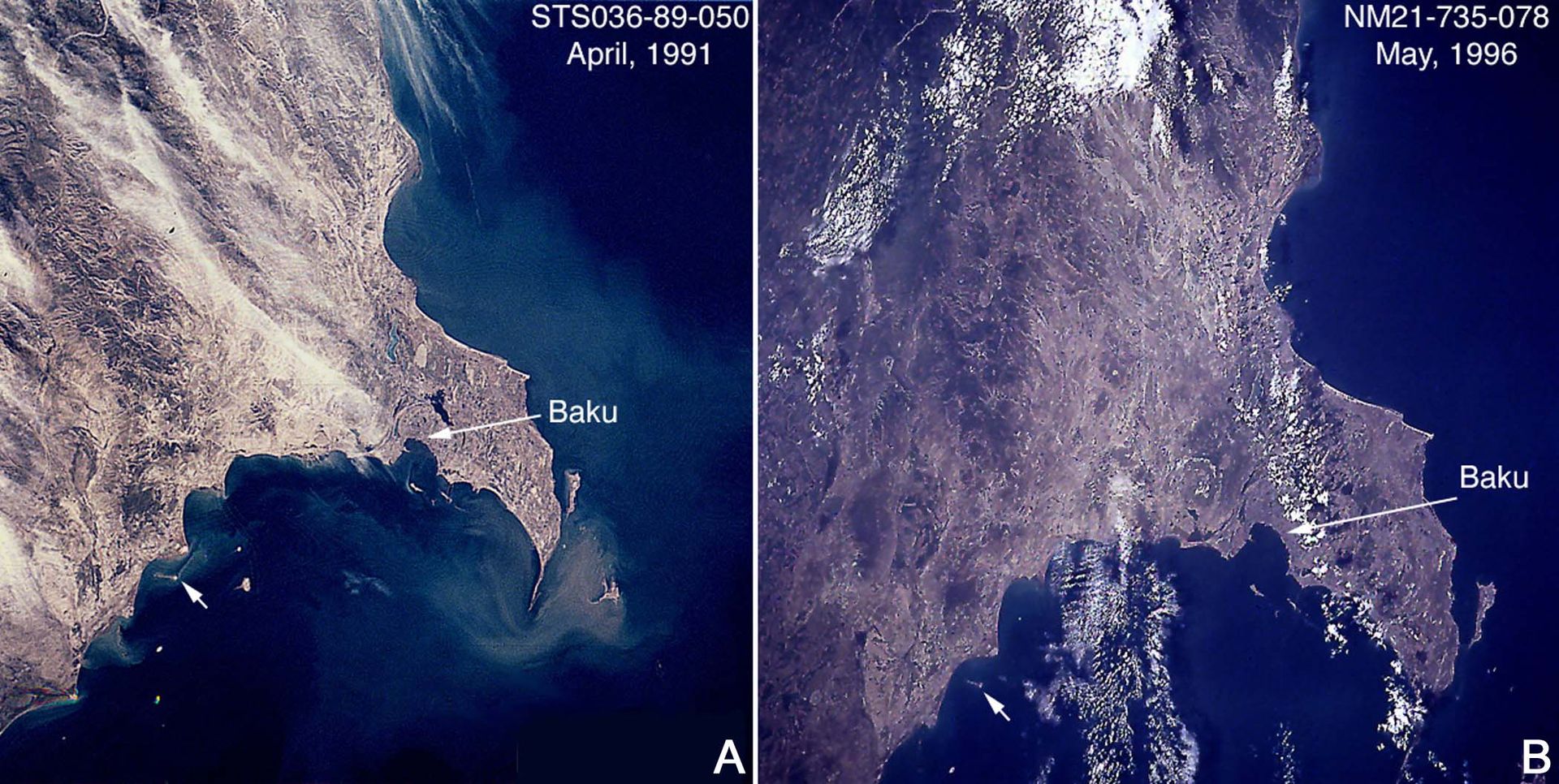
Azerbaijan is located in the South Caucasus region (in Western Asia), at the crossroads between Europe and Asia. It borders Russia to the north, Armenia to the west, Iran to the south, Turkey through the small Nakhchivan exclave, and the Caspian Sea to the east.
The country covers an area of about 86,600 square kilometers (roughly three-quarters the size of Rwanda multiplied by four) and has a population of about 10.5 million.
Azerbaijan holds a special place on the global stage due to its oil, energy resources, cultural heritage, and strategic location.
Here are 10 remarkable things you should know about this country.
1. The land of eternal flames AND natural fire phenomena
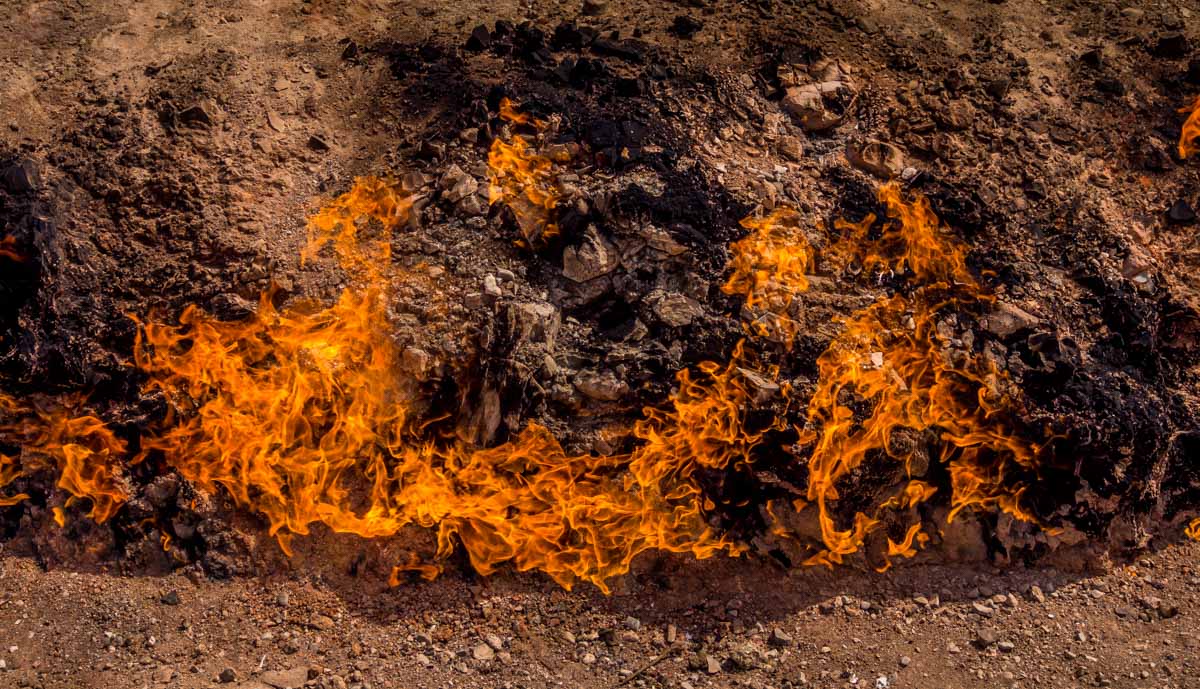
On the Absheron Peninsula near Baku, there are places where natural gas escapes through cracks and burns continuously. For example, Yanar Dagh is a hillside that has flames burning naturally, fed by gas seeps underground.
In addition, the Ateshgah Fire Temple near Baku used to be a site where fire worship (Zoroastrian, Indian Hindu, Sikh) took place, because of natural eternal flames. It is now a museum.
2. First Muslim-majority country to give women the right to vote
Azerbaijan granted women suffrage in 1918, when the Azerbaijan Democratic Republic was formed. It was among the earliest Muslim-majority countries to do so.
3. More mud volcanoes than almost anywhere
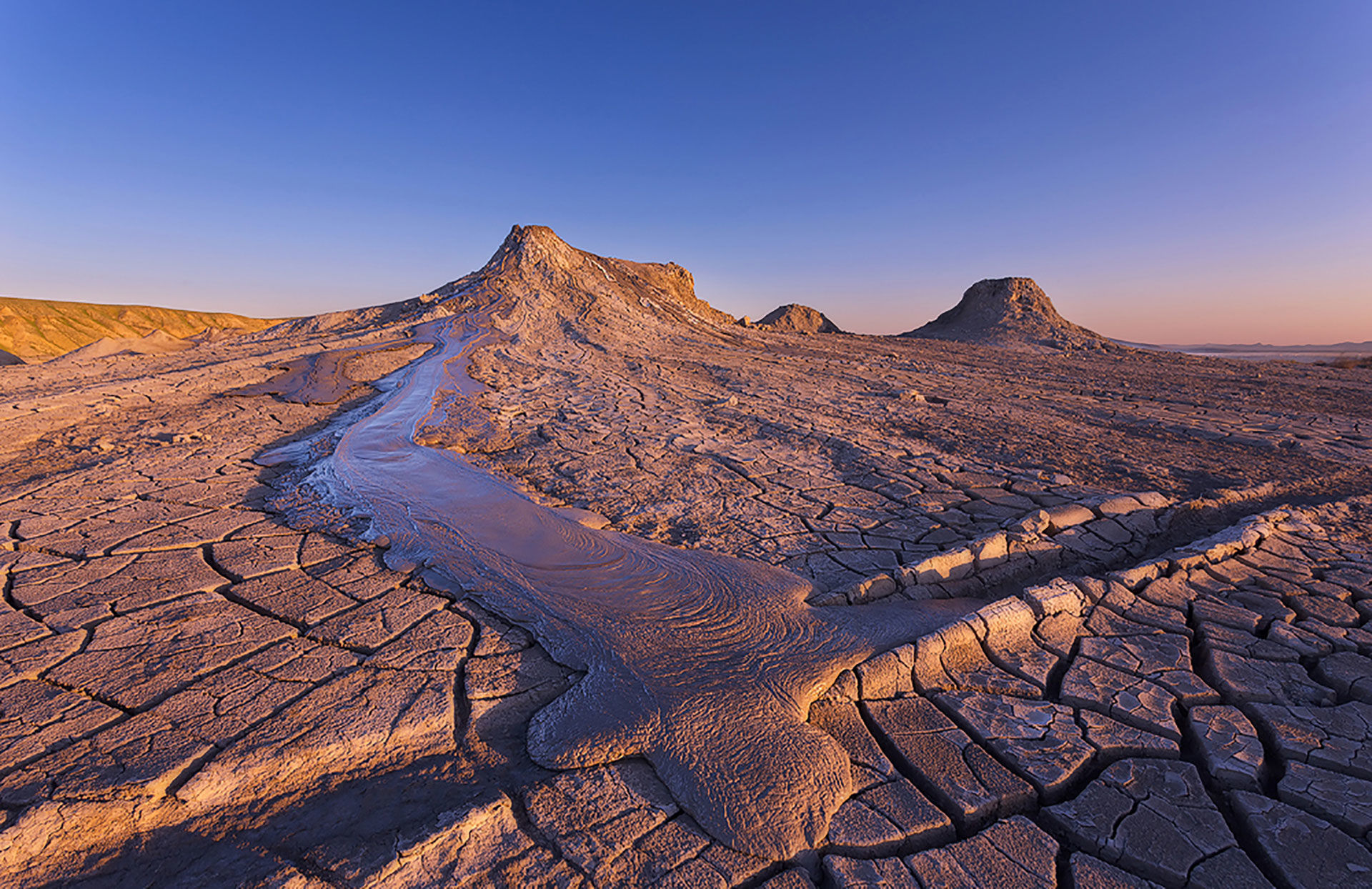
Azerbaijan has hundreds (over 350, some sources say more than 400) of mud volcanoes, more than most countries. Some are active; they bubble up methane and mud, sometimes dramatically.
4. The world’s smallest books and miniature book museum
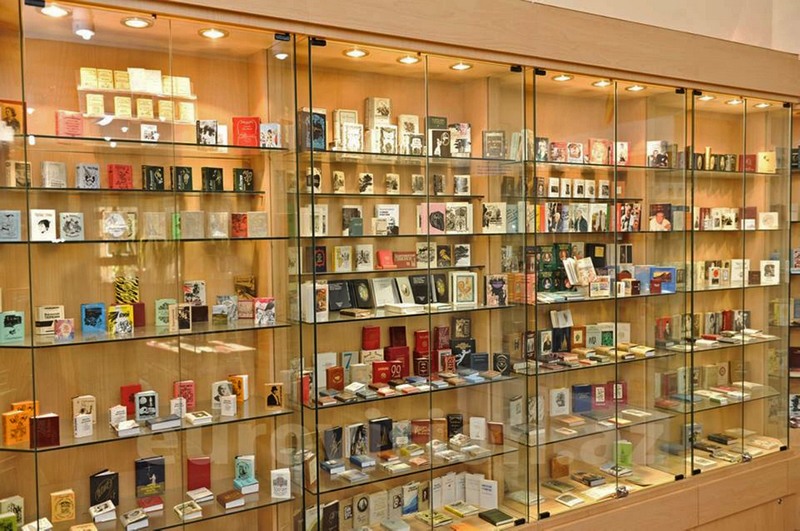
In Baku, there is a collection of extremely tiny books, some as small as 2 mm, displayed in a miniature book museum. It’s one of the largest collections of its kind.
5. Baku’s parts below sea level
Some parts of Baku lie significantly below sea level, and as the city area extends into the Caspian Sea shore, there are zones that are underwater or reclaimed. Some sources say that parts of the capital district are 28 meters under the sea.
6. The Nakhchivan exclave, Azerbaijan apart from Azerbaijan
Nakhchivan is an autonomous republic of Azerbaijan that is separated from the main part of the country by Armenia. It borders Iran and Turkey. It has its own government, and its geographic separation gives it a different feel, both historically and culturally.
7. Extreme tea consumption despite not growing much of it locally
Even though Azerbaijan has regions suited for tea cultivation, much of its black tea is imported, about 12,000 tons annually for a population of about 10 million. Tea is deeply embedded in social culture.
8. A “world’s first” in oil history and strategic importance
In the early 1900s, Azerbaijan was one of the world leaders in oil production. For example, in 1901, it produced a massive part of global crude oil output. During WWII, it was a crucial supplier of oil for the Soviet Union.
9. Religion, secularism, and state structure
Even though the vast majority of people in Azerbaijan are Muslim (> 90 %), the country is officially secular. The constitution does not declare an official religion. Religious practice exists, but the state maintains secular governance.
10. Monumental flag and civic display
Baku has a large State Flag Square, huge in size, with a massive flagpole and a giant national flag. In recent years, the flagpole has been upgraded, and the square has become a major symbol of national identity.
At its inauguration in 2010, the flagpole was certified as the world’s tallest by Guinness World Records before being surpassed by a flagpole in Dushanbe, Tajikistan, in 2011.
Azerbaijan is therefore a country with a unique character, from its eternal flames and mud volcanoes to its history of gender equality, its tea culture, and its major oil industry.
President Kagame’s visit highlights how Rwanda and this country can work together in development, culture, and trade.
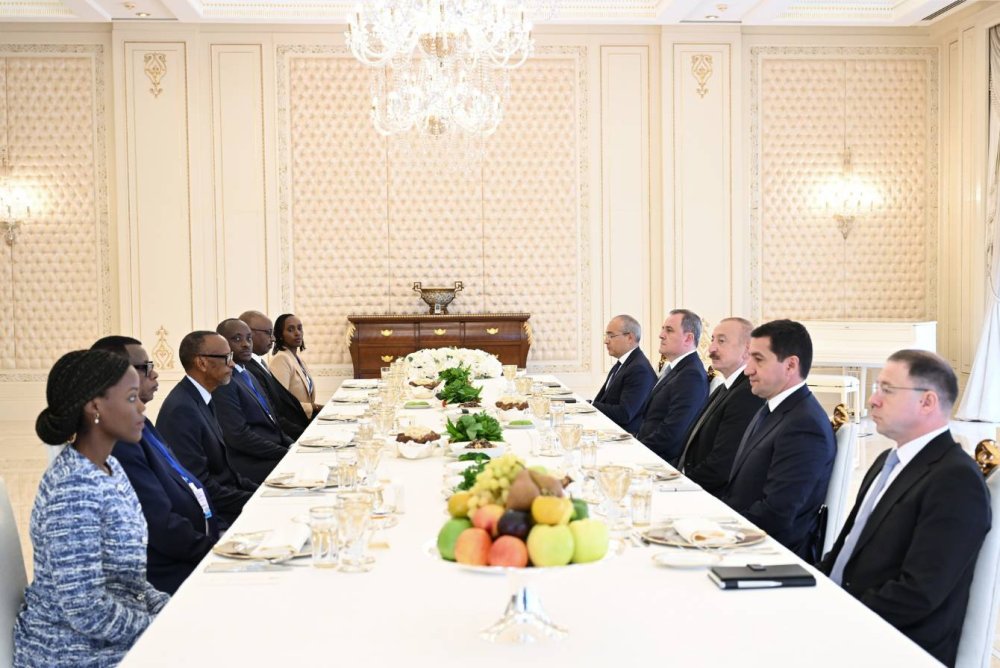
The luncheon was attended by Rwanda’s Deputy CEO of the Rwanda Development Board, Juliana Kangeli Muganza; Minister of State in the Ministry of Foreign Affairs and International Cooperation, Gen (Rtd) James Kabarebe; and Rwanda’s Ambassador to Azerbaijan, Lt Gen (Rtd) Charles Kayonga.
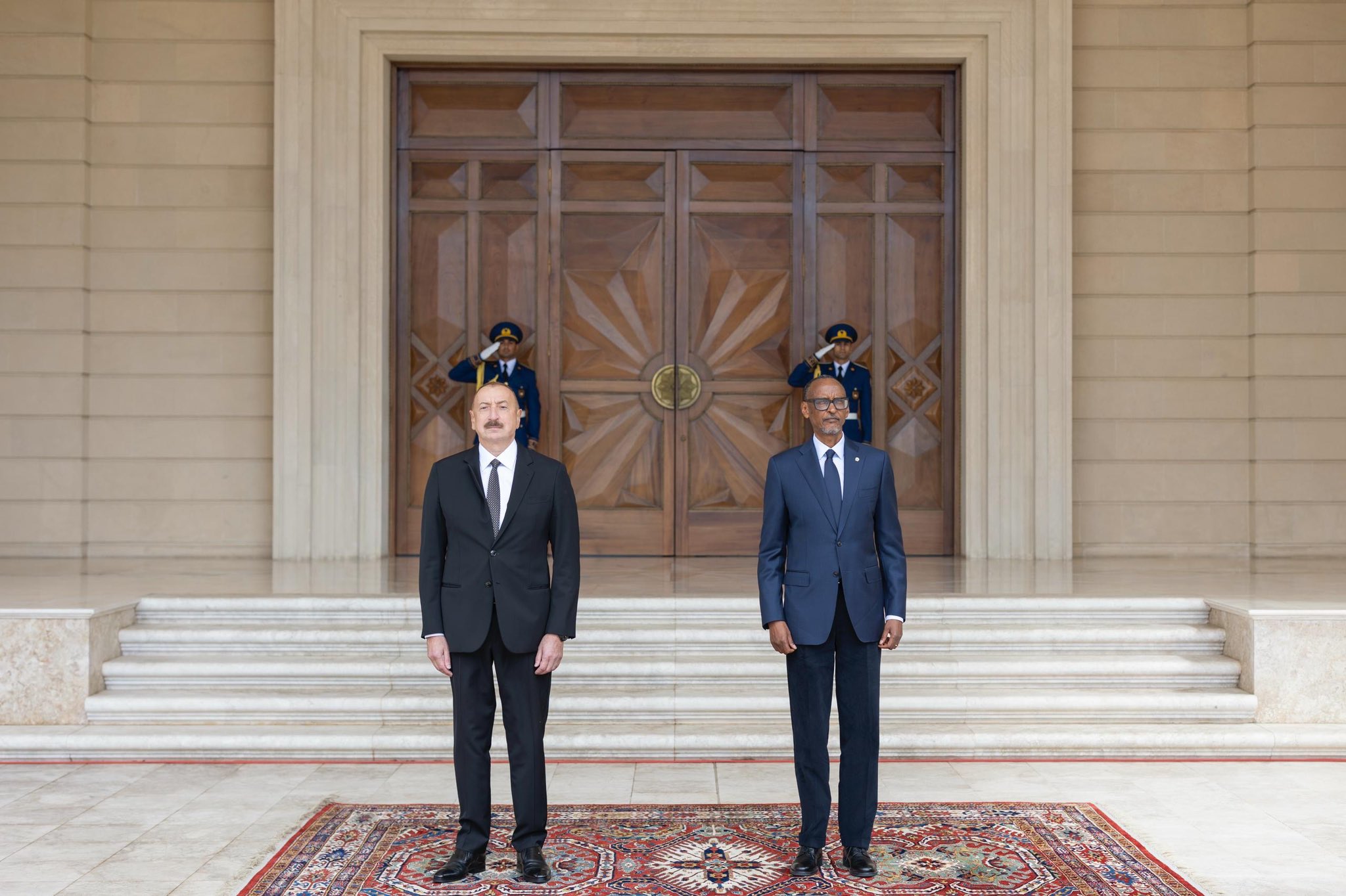
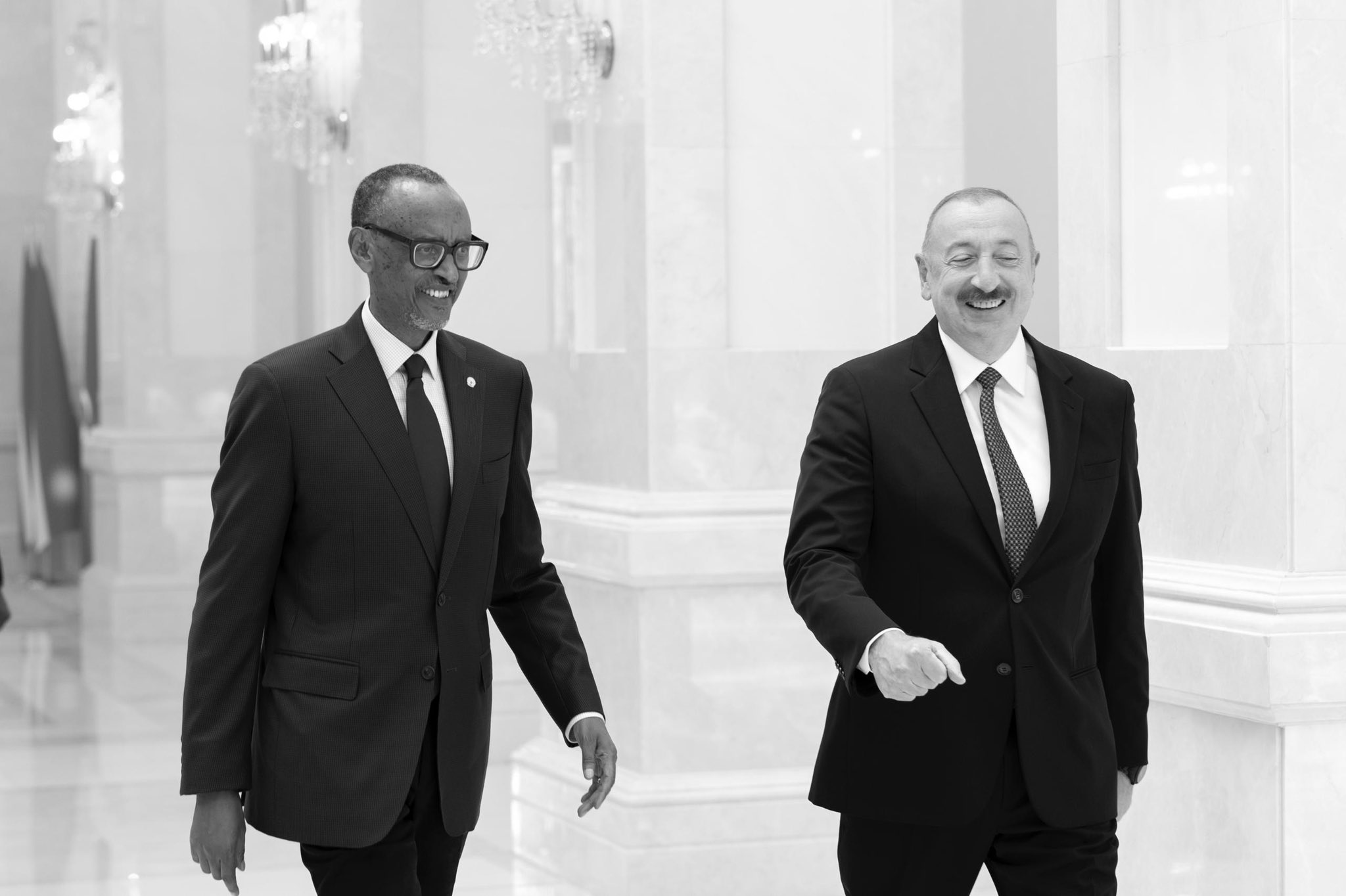
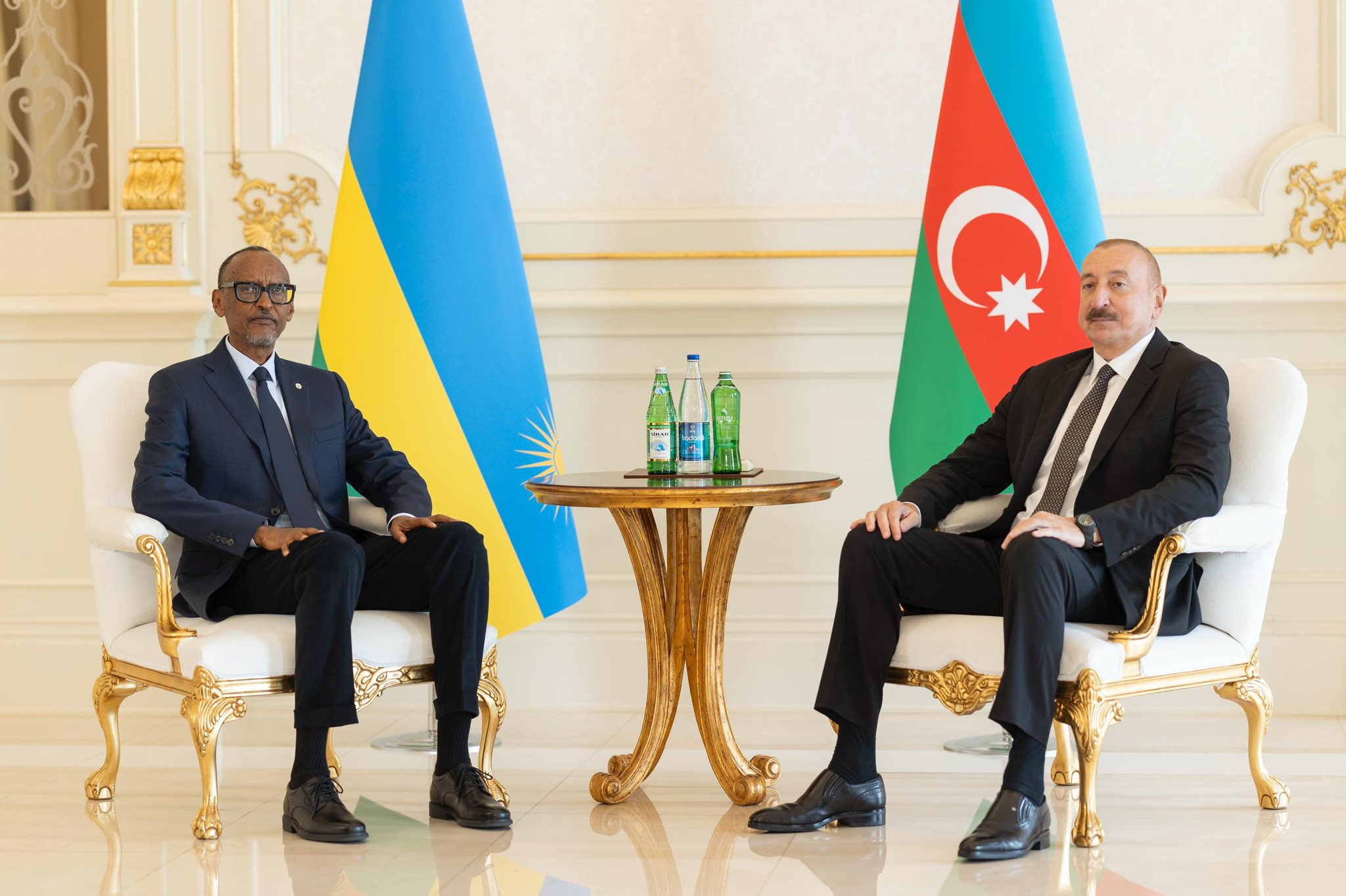
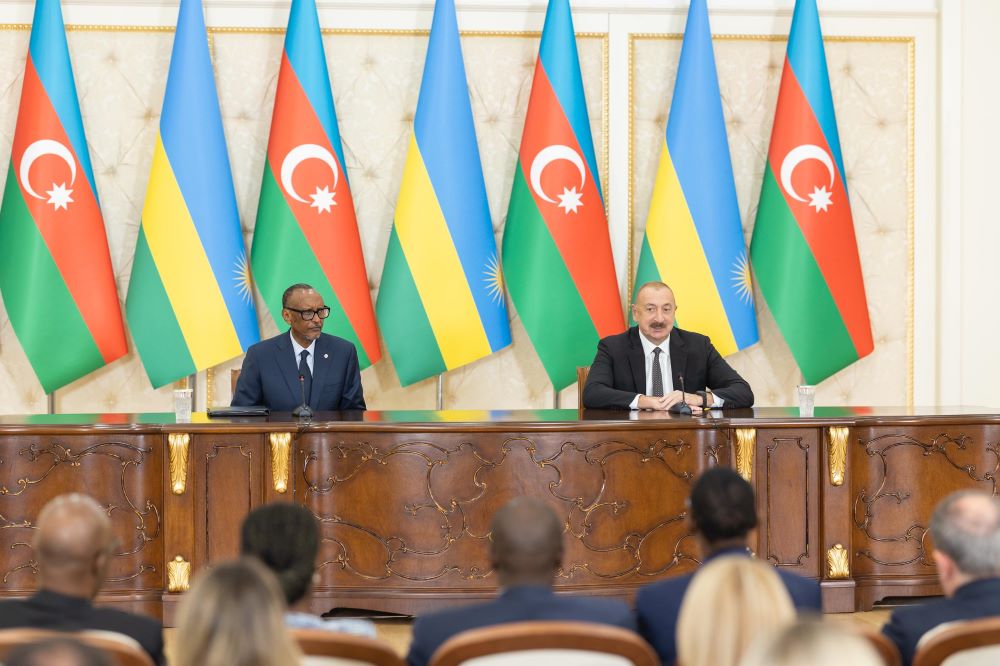
During the meeting, the two leaders commended the bilateral ties between Rwanda and Azerbaijan and discussed ways to strengthen cooperation in key areas including the economy, trade, culture, agriculture, and tourism.
President Kagame’s visit, which began on September 19, 2025, followed the signing of five bilateral agreements covering agriculture, education, satellite communication services, trade, and public service delivery. Kagame emphasised Rwanda’s commitment to ensuring that the agreements achieve the expected outcomes.
President Aliyev described Rwanda and Azerbaijan as strong partners and welcomed the progress in bilateral relations since they were formally established in 2017.
President Kagame last visited Baku in November 2024 to attend the 29th United Nations Climate Change Conference (COP29).
Vercruysse, a political journalist with VRT, was prevented from boarding a Brussels Airlines flight to Kigali on Thursday. Speaking to Belgian media, he suggested the move was linked to his past critical reporting on Rwanda.
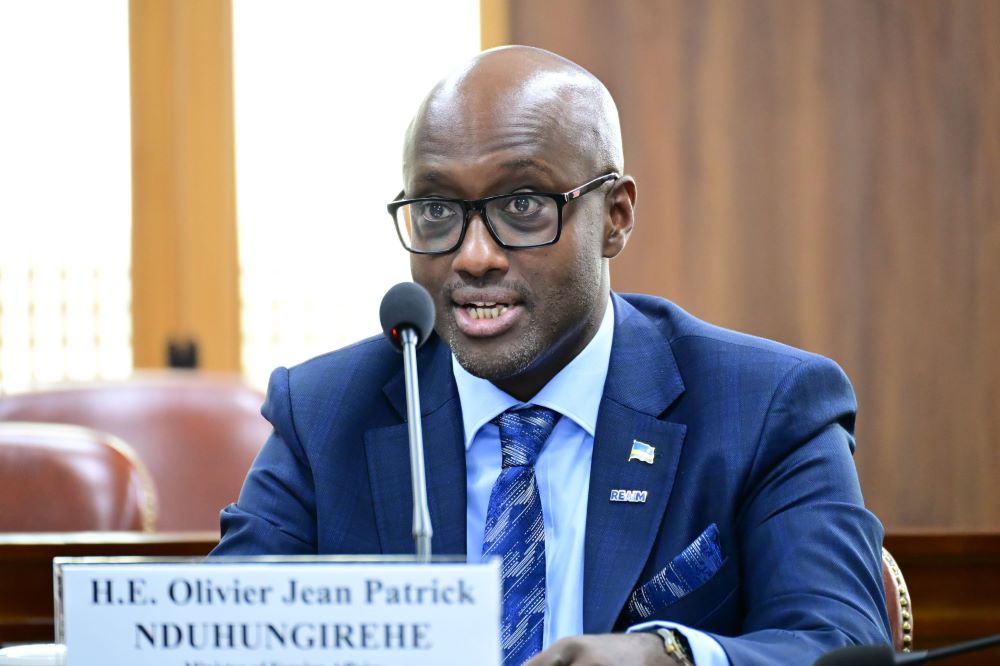
In a post on X on Saturday, Nduhungirehe rejected that narrative, instead accusing VRT of deliberately misrepresenting Vercruysse’s role in order to gain access.
“It is not up to Rwanda to provide the slightest explanation to Flemish Belgian television or to the Belgian government. It is rather up to @vrtnws and @vercrus to explain this crude attempt at international deception,” he wrote.
The minister argued that international sporting events follow strict accreditation protocols, typically requiring journalists to hold a valid sports press card, including one from the International Sports Press Association (AIPS). He noted that VRT sought accreditation for a political journalist, rather than a registered sports reporter, which he said amounted to a violation of established rules.
“Sports journalists from all over the world registered with the UCI to cover this major event, the first of its kind on African soil. However, VRT tried to cheat the rules by registering a political journalist known for his systematically hostile positions towards Rwanda,” Nduhungirehe said.
He pointed to Vercruysse’s own public comments as evidence of political intent: “After being prevented from boarding, he declared to the Belgian press: ‘We had also planned to produce a critical report on the host country.’ What on earth do such openly declared intentions have to do with this great sporting celebration?”
The UCI Road World Championships, hosted in Kigali from September 21 to 28, mark the first time the event is being held on the African continent. The Belgian national team is among those from more than 190 countries participating.
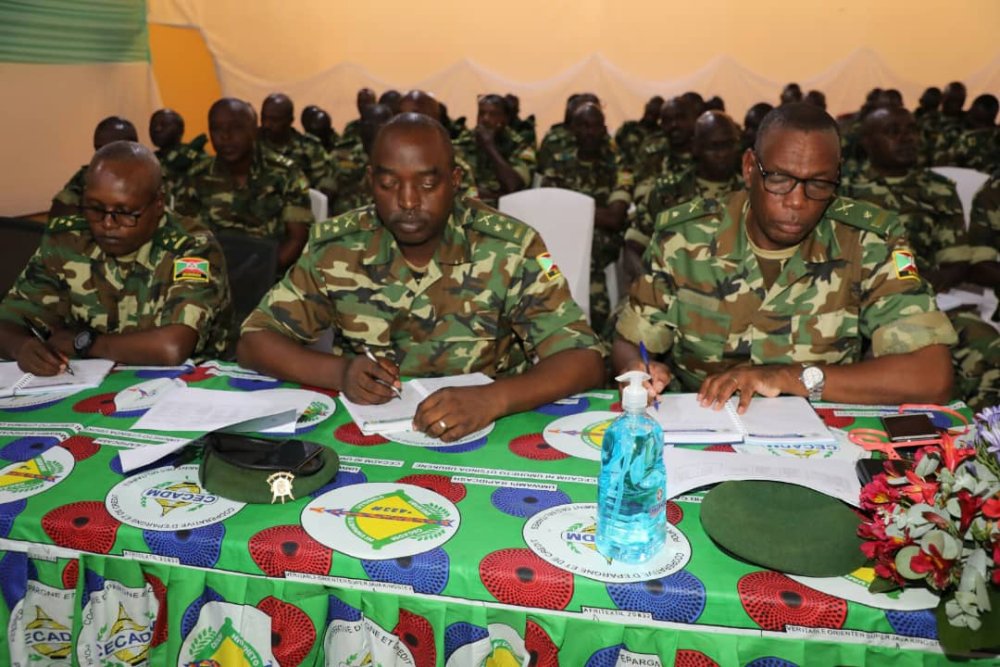
Although the country’s leaders have avoided openly addressing the issue, signs of discontent have been visible since 2023, when President Évariste Ndayishimiye deployed troops to fight against the M23 armed group in the Democratic Republic of Congo. From the lowest ranks to the top command, fear and unease have spread across the army.
After suffering heavy defeats in battles fought in Masisi territory, North Kivu province, many Burundian soldiers refused to continue fighting. Some deserted, while hundreds of others were arrested in Bujumbura and other locations, accused of disobeying orders from their superiors.
Official decrees issued by President Ndayishimiye between 2 January 2023 and 29 August 2025 confirm that more than 30 officers have been struck off the army roster. On this basis, the Head of State declared that these individuals are no longer members of the national armed forces.
Among those who deserted were nine Colonels or Lieutenant Colonels. They include Col Nizigiyimana Pierre Claver, Lt Col Barikore Alexis, Lt Col Nindereye Angelus, Lt Col Nkurunziza Willy, Lt Col Habarugira Diomède, Lt Col Ndikumagenge Apollinaire, Lt Col Nahimana Daphrose, Lt Col Ndayishimiye Jean Baptiste and Lt Col Hatungimana Philbert.
Presidential records indicate that the most recent Colonel to be removed from the army rolls was Lt Col Nindereye Angelus, service number SSO813, whose name was struck off on 11 June 2025. The most senior among them, Col Nizigiyimana Pierre Claver, service number SS0274, was officially dismissed on 8 April 2025.
Other senior officers holding the rank of Major who were dismissed for desertion include Maj Nkengurutse Melance, who was removed on 21 February 2025, Maj Nkeshimana Eddy Germain, who was removed on 19 November 2024, Maj Ndizeye Ildephonse, Maj Ntakabanyura Eric and Maj Ntungwanayo Alphonse, who was removed on 13 December 2023.
In addition, 13 Captains and four Lieutenants are reported to have deserted the Burundian army during the same period.
{{Will the pressure intensify?}}
Burundian troops have been heavily deployed in South Kivu province, particularly in areas near Bujumbura such as the city of Uvira. Alongside Congolese forces, the Wazalendo militias, and FDLR elements, they are preparing for clashes with the M23 rebels.
The M23 movement has not been idle. It continues to expand by recruiting and training new fighters. For example, on 14 September 2025 the group enrolled more than 7,400 combatants who had undergone six months of training at the Rumangabo military camp in Rutshuru territory. The movement also possesses significant weaponry seized from the Congolese army coalition.
The Commander of M23, Major General Sultani Makenga, announced on 2 September that he intends to capture more key cities in the DRC, including Kalemie in Tanganyika province. To achieve that objective, however, he stressed that taking control of Uvira is essential.
With M23 fighters continuing to expand their arsenal and territory, the likelihood of a large-scale conflict is high, and the pressure on Burundian troops stationed near Bujumbura would become immense.
Should Burundi’s forces be overpowered once again by M23, they could be forced to retreat toward Bujumbura. Yet, if they remain under strict orders to continue fighting in the DRC, new waves of desertions among senior officers may emerge, echoing the pattern of the past two years.
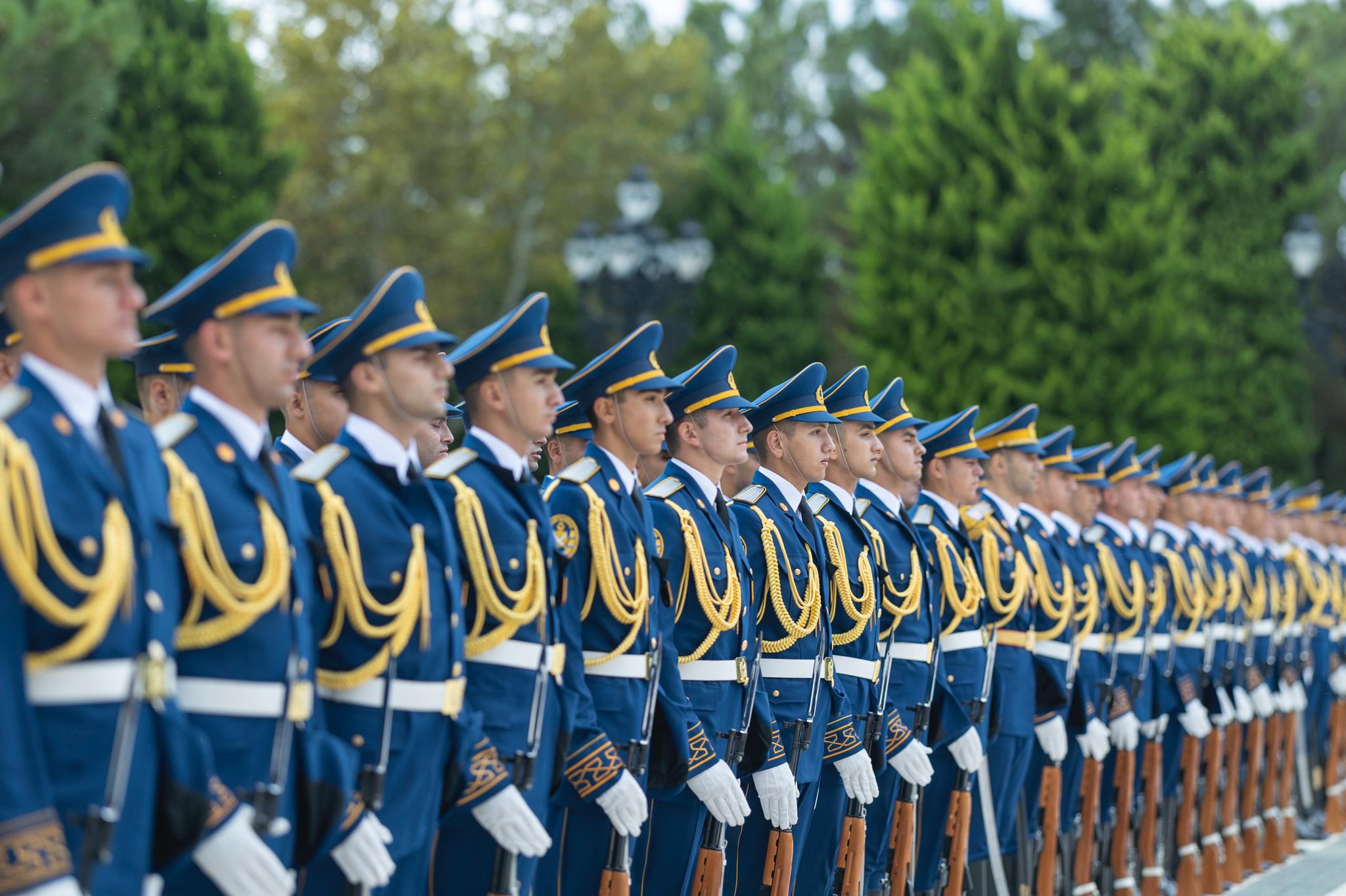
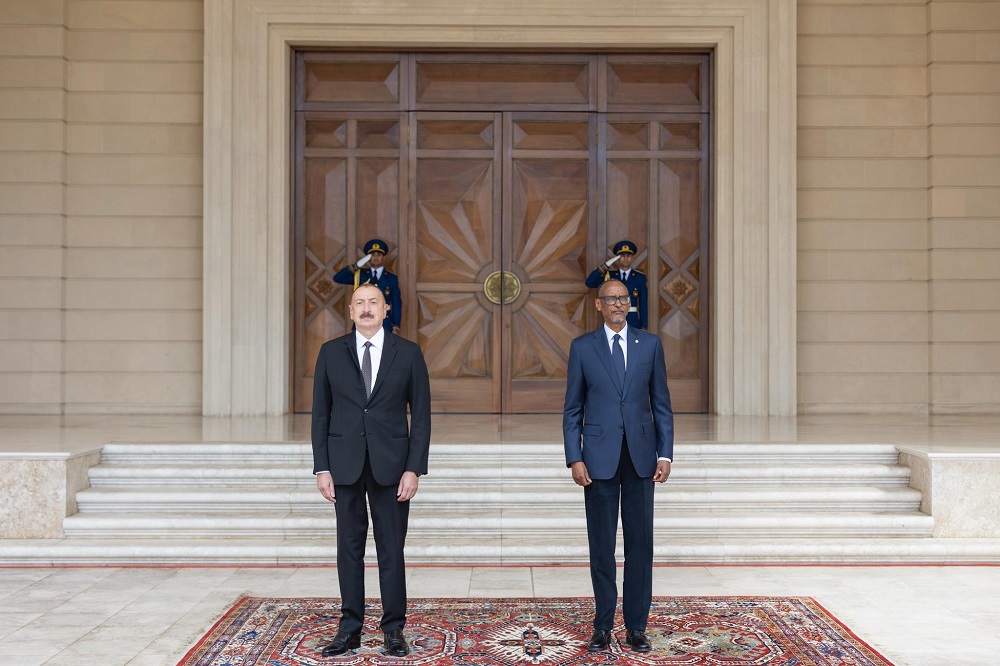
The discussions took place during President Kagame’s three-day official visit to Azerbaijan, which began on Friday.
Following their meeting, the two leaders addressed the press after witnessing the exchange of five cooperation agreements between Rwanda and Azerbaijan. The agreements cover the sectors of agriculture, education, air services, trade, and public service delivery.
Speaking at the event, President Kagame emphasized Rwanda’s commitment to ensuring that these new partnerships deliver tangible results.
“Mr. President, just know that you have friends in Africa, in Rwanda. We want to use this opportunity of our cooperation and friendship between you and myself, and the two countries, to move fast forward in achievements of prosperity,” President Kagame said.
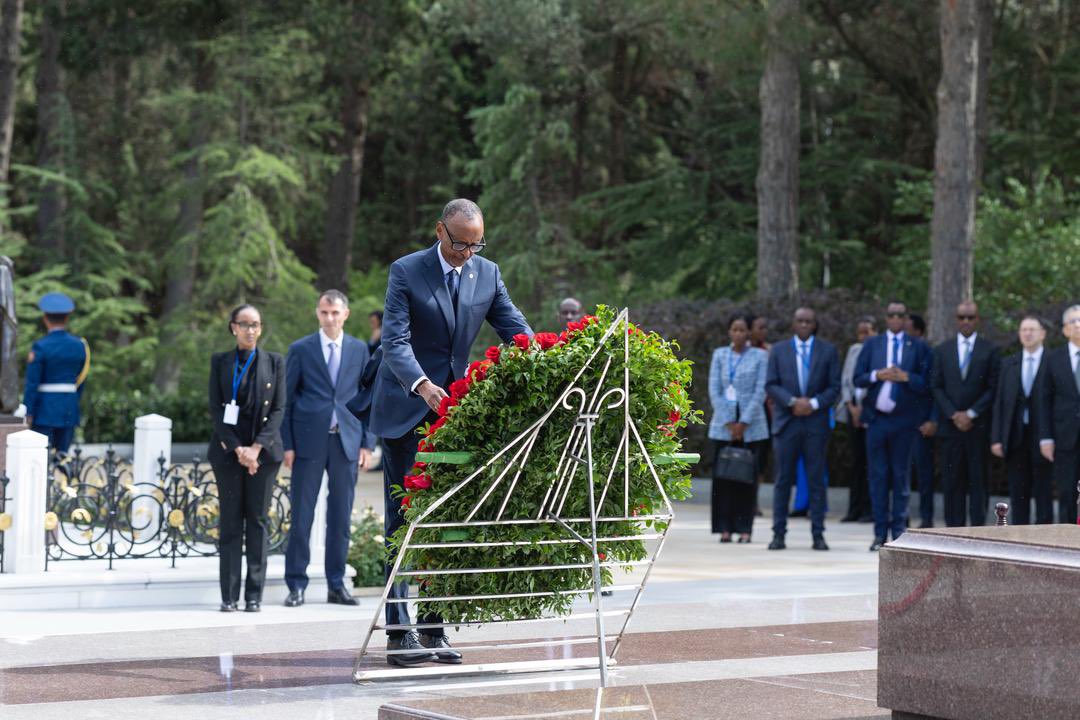
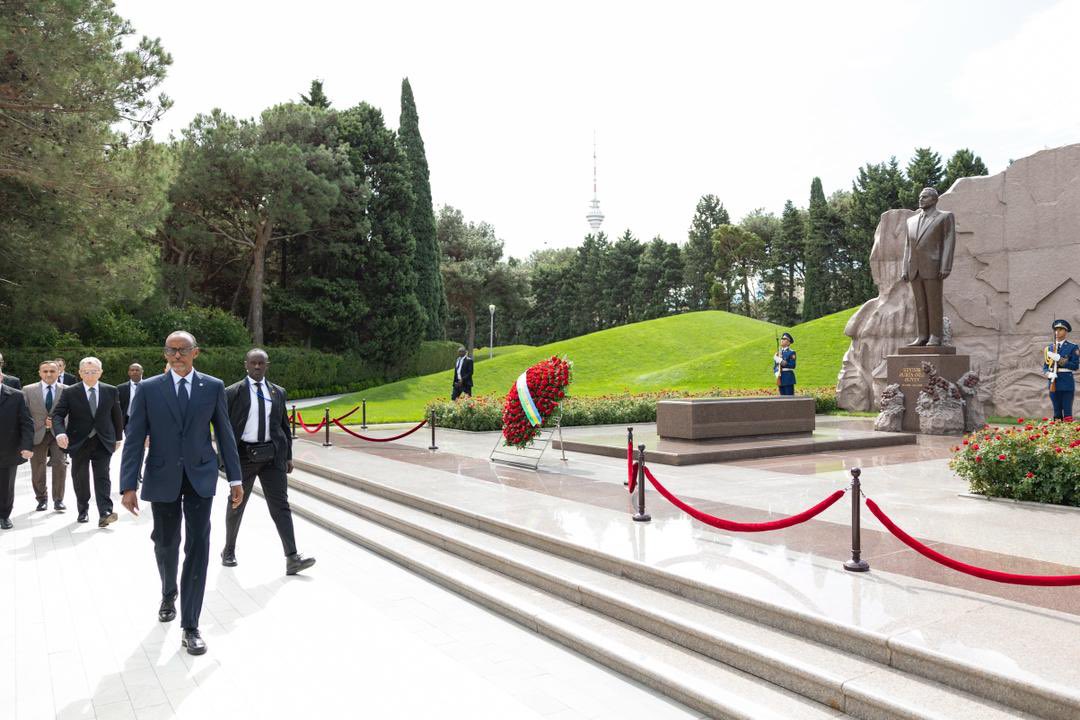
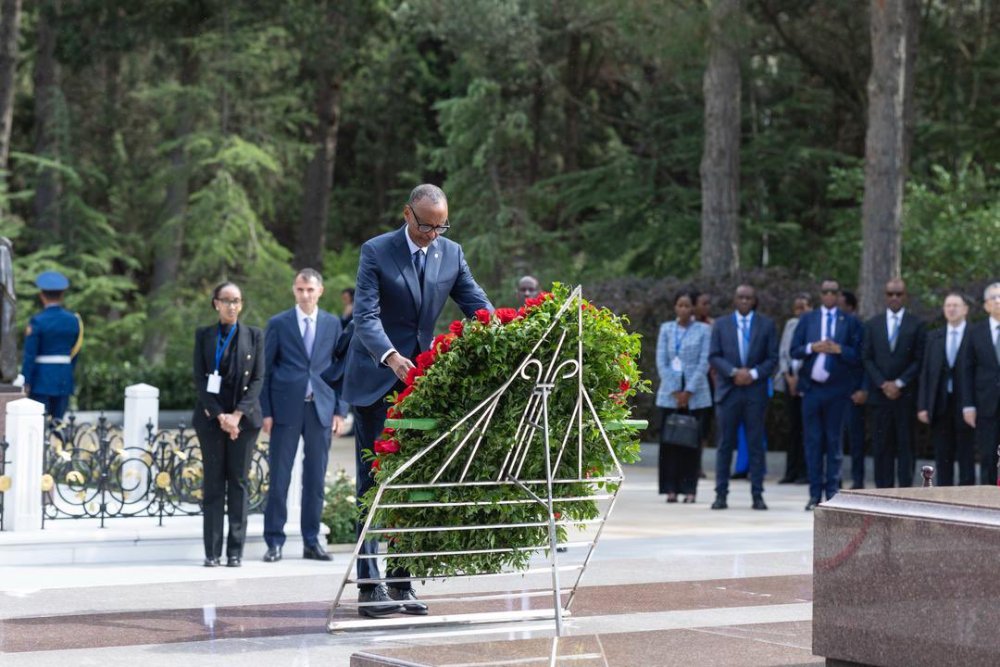
Earlier in the morning, President Kagame visited the Alley of Honor, where he laid a wreath on the tomb of the National Leader of Azerbaijan, Heydar Aliyev and Zarifa Aliyeva.
He also laid a wreath at the Alley of Martyrs, a memorial dedicated to those who lost their lives in Azerbaijan’s struggle for freedom, independence and territorial integrity.
Diplomatic relations between Rwanda and Azerbaijan were formally established in 2017, with both countries expressing interest in expanding cooperation across different sectors.