“Combatting corruption may have a political cost, but the price of not uprooting it is much higher, in particular for the most vulnerable members of our societies,” he said.
Kagame delivered the message today as he virtually attended the 5th Sheikh Tamim bin Hamad Al-Thani International Anti-Corruption Excellence Awards.
This year’s awards have been given out in Tunisia while previous ceremony took place in Rwanda last year at Kigali Convention Center.
The International Anti-Corruption Excellence Awards are given to people who have been exemplary in leading the fight against corruption. The International Anti-Corruption Excellence Award is organized by Qatar in partnership with the United Nations Office on Drugs and Crime (UNODC).
President Kagame commended the Emir of Qatar and the valuable partnership with the United Nations that makes the awards possible and congratulated awardees for unique and determined efforts to expose and eliminate corruption.
“The fight against corruption is a global objective that requires all of us to work together, to improve our societies. Transparency and accountability allow us to use our national resources effectively for the wellbeing of our citizens,” he said.
The award giving ceremony coincided with the International Anti-Corruption Day.
The statement released last night shows that the deceased are parents respectively aged 60 and 56.
Among others, 41 people have been infected out of 3654 sample tests while no recovery case recorded.
Rwanda confirmed the first Coronavirus patient on 14th March 2020.
So far , 6278 cases have been found out of 654,322 sample tests of whom 5715 have recovered , 510 are active cases while the death toll stands is 53.
Coronavirus symptoms include coughing, flu, and difficulty in breathing. The virus is said to be transmitted through the mucous membranes of the respiratory tract.
Rwandans are urged to adhere to COVID-19 health guidelines, washing hands frequently using soaps and safe water, wearing face masks and respecting social distancing.
IGIHE’s StoryKast in partnership with Kigali Marriott Hotel, RwandAir, and other partners, this festive season have prepared a contest none like any other, to bound the adventurous spirits in Rwandans through creative write-ups that require giving an insight into past local travels to earn more traveling opportunities.
Uli Franzmann, General Manager at Kigali Marriott hotel says that the contest represents inspiration, creativity, and what travel means from different perspectives – a message the hotel is proud to be part of.
“This year’s focus in tourism has been to encourage domestic tourism through exploring Rwanda’s touristic destinations. We thought to keep that momentum, even during the festive season, we should inspire a continuous travel culture through encouraging everyone to share their favorite travel destinations or moments experienced right here in Rwanda in ways that spike other people’s sense of wonder this festive season. At Kigali Marriott alone we have so much to offer this festive season including a spectacular beginning of year with fireworks, which we hope everyone can experience with us this New Year’s Eve ,” says Franzmann.
“A Traveler’s Story” contest brings together vloggers, bloggers, artists, students, and travel enthusiasts to share their travel experiences in form of videos, digital art pieces, and articles. The contest embarks on a journey of discovering and stimulating creative juices in all local artists, while also luring others to explore Rwanda.
StoryKast’s Creative Director, Olga Ines Ishimwe stresses the importance of creative artistry in empowering each other – which spurred the initiative of a contest that could offer a platformand encourage a travel culture in Rwanda.
“Over the years we’ve encountered so many incredibly talented creative people, all of whom echo the idea that we are stronger together. By providing a platform, we are forming a network, where we can showcase our skills, learn from each other, hiring each other, and broadening each other’s network. It’s about supporting our ‘world’ made by people, places, and individual stories,” she says.
Among the prizes, comes a stay at the Kigali Marriott Hotel, brunch, and spa experiences. Rides around Kigali city in the 60-seat double decker bus, return ticket to Kamembe by RwandAir with a stay at Emeraude Kivu resort, and more.
Members of the public are nvited to participate and showcase best creative self to the world not later than the 22nd December.
Apply today on www.storykast.rw/atravelersstory or if you need more information contact us on contact@storykast.rw
And remember, it’s your perspective of travel that matters. So share it well.
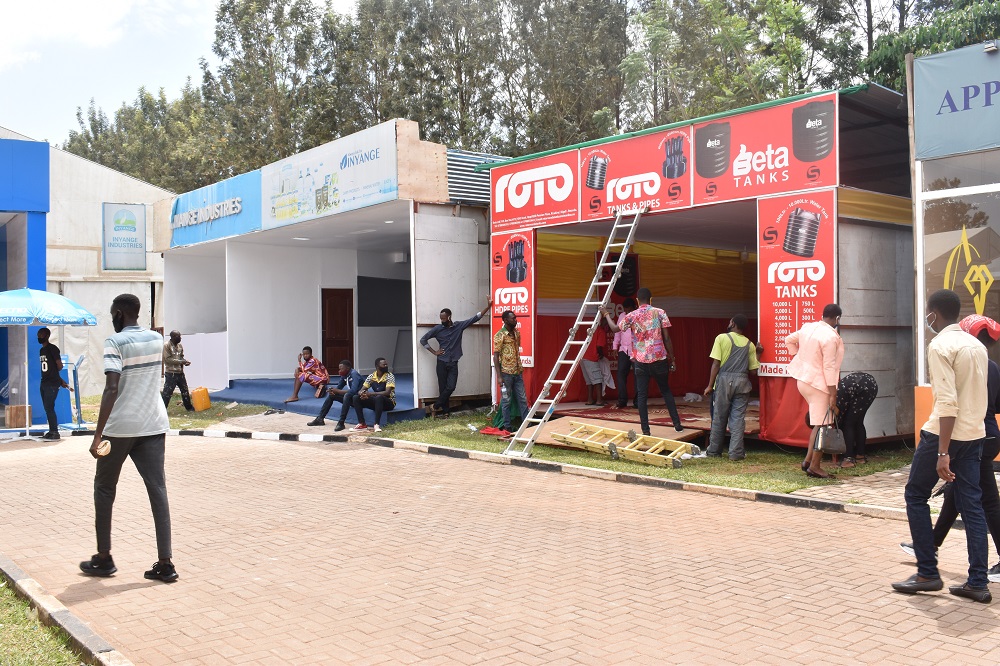
The trade fair that delayed due to Covid-19 pandemic has been set to new dates from 11th until 31st December 2020.
During a press briefing held today announcing preparations of the upcoming expo bringing together relevant institutions including the Ministry of Trade and Industry as well as Rwanda National Police, it was revealed that the expo will be characterized by reforms aimed at strengthening measures to control the pandemic.
To this end, the Chairperson of PSF, Stephen Ruzibiza said that Bralirwa and Skol are among companies that won’t participate.
“Skol and Bralirwa will not participate in this year’s expo but restaurants that will be operating at the show ground can serve drinks from the respective companies to clients. Bralirwa and Skol won’t come to the Expo,” he emphasized.
PSF explained that concerned beverage companies took part in consultative discussions in which they were informed on directives only allowing them to supply drinks to restaurants in the expo.
Police spokesperson, CP John Bosco Kabera said that the Expo should not be an opportunity for increased beer consumption noting that even bars are closed due to Covid-19.
All expo goers will be required to pay by digital means as part of ongoing measures to curb the spread of Covid-19 pandemic.
Among others, children below 12 are not allowed to attend while physical entertainment activities are prohibited.
The expo will start from 9am to be closed 8pm every day for people to respect curfew hours.
As of today, PSF has confirmed the participation of 372 companies including 72 foreign companies from 12 countries.
This was during the ongoing inspection by local authorities in City of Kigali and Police to assess how various services are delivered in compliance with the directives.
The closed restaurants and bars are among the eight hospitality establishments operating in Amashyirahamwe building, which were penalized for undermining the health and safety directives against the pandemic.
Those closed and fined hospitality establishments are Resto Bar Chez Jeanine, where many people were found drinking and watching football; Bar-Resto Chez Justin; Bar-Restaurant Chez Nyirahabimana Felecitha; and Bar chez Thamari Nyirabaruta.
“What is unfortunate is that the owners of the affected restaurants and bars were first warned, but when the inspection team came back later, they found nothing had changed; bars were open and many people gathered inside drinking,” said Chief Inspector of Police (CIP) Sylvestre Twajamahoro, the Police spokesperson for City of Kigali.
This was the second time that Bar-Restaurant Chez Nyirahabimana Felecitha has been closed and owner penalized for disregarding the guidelines.
Each of the closed bars and restaurants was also fined Rwf150, 000 as stipulated in the City of Kigali directives.
CIP Twajamahoro warned that the inspection is continuous and anyone caught disregarding the COVID-19 prevention directives will be penalized accordingly.
The parliamentarian made the appeal on Monday 7th December 2020 as the parliament reviewed the amendment UK Trading Law.
He was insisting on the request of his colleague, Andrew Mitchell.
Polak affirmed that his country kept a deaf ear to Rwanda’s request to bring to book suspects of the 1994 Genocide against the Tutsi roaming in the UK.
He explained that his country relented on willingness to do so, which is contrary to other countries that have deported fugitives to Rwanda or tried them.
“Five suspects for role in the 1994 Genocide against the Tutsi live freely in the UK and receive full benefits. Yet the United States of America, Canada, France, Belgium, Sweden and other countries have extradited suspects to face justice in the Rwanda justice system where the death penalty was abolished over 10 years ago,” said Polak.
He said that it is shocking that UK failed to do the same, thus calling the UK for urgent action before the next CHOGM to take place in Rwanda.
“I call upon the Government to weigh in this matter before the next CHOGM that will be held in Kigali, the capital city of Rwanda next year,” said Polak.
The five genocide fugitives living in the UK are; Célestin Mutabaruka, Vincent Bajinya nicknamed Vincent Brown, Célestin Ugirashebuja, Charles Munyaneza and Emmanuel Nteziryayo.
As he commented to the arrest of Paul Rusesabagina, Andrew Mitchell criticized The Guardian (a British daily newspaper) which reported that Rwanda seeks to intimidate Rusesabagina but rather asked to draw emphasis on how genocide fugitives can be brought to book.
“Before leaving this topic, your newspaper should support the arrest of five Rwandans accused of role in Genocide against the Tutsi in Rwanda still roaming freely in UK living on benefits of British nationals for over ten years,” he said.
Mitchell explained that British legal system didn’t draw attention on the case despite Rwanda’s efforts to bring to book these fugitives which remained futile.
In 2018, Rwanda’s ambassador in the UK, Jo Lomas said that the investigation department in his country had started preliminary investigations to the suspects.
He made the revelation after holding talks with Rwanda’s Justice Minister, Busingye Johnston. At the time, Lomas revealed that his Government is closely following the case waiting for the Prosecution’s decision.
At the time, Minister Busingye said that no progress had been made despite Rwanda’s request to deport these suspects.
He revealed that the most important thing is to bring the fugitives to face justice where they can be convicted or acquitted.
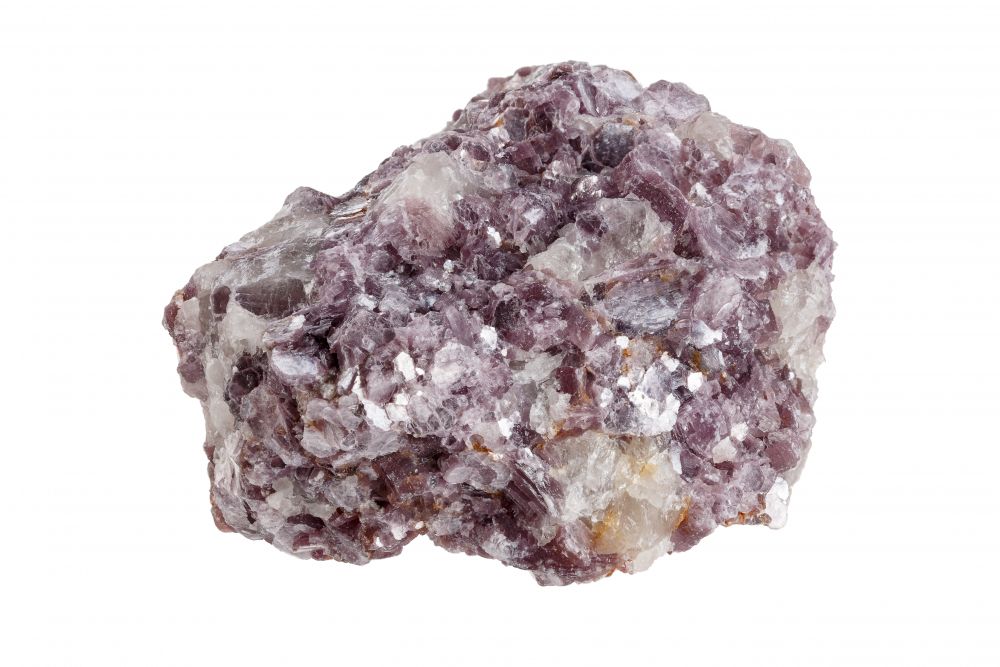
Speaking to IGIHE, the CEO of Rwanda Mines, Petroleum and Gas Board (RMB) Francis Gatare confirmed the presence and revealed that further processes will be determined by ongoing research.
“Lithium has been found in different parts. We continue to carry out research to identify areas with enough minerals to start extraction in a productive way,” he said.
“It has been traced in several places that extraction can start. The presence is confirmed in Muhanga district, Ngororero in the areas of Gatumba as well as Rwamagana and Bugesera districts in Eastern Province. The remaining step is to determine the types, quantity and quality,” added Gatare.
He explained that Lithium minerals have a great value considering international market demand.
“Lithium minerals have a high value at the international market nowadays, considering countries’ visions and growing need for the use of batteries in cars or electricity generation,” noted Gatare.
“The extraction and processing should be assessed rigorously to avoid loss of value yet the world strongly needs it,” added Gatare.
As he said, the country is looking for partner investors to start productive and beneficial extraction as expected.
“It needs investment but there are concerned institutions. Research comes first, and then follows extraction knowing better where it will be processed. We are looking for partner investors with such knowledge and capacity so that a processing plant will be available by the time we get extraction licensing,” revealed Gatare.
He advised the public that not to engage in extraction of such minerals until licensing, and measures guiding Lithium extraction processes are implemented.
Apart from Lithium, research is underway to establish the presence of ‘Uranium’ especially used in the production of nuclear energy.
Rwanda recently entered agreements with Russia on cooperation in the construction of the Centre of Nuclear Science and Technology on the territory of Rwanda as well as the establishment of nuclear power plant in Rwanda.
The agreements indicate that nuclear energy will be mainly used for peaceful in different areas including nuclear medicine, research reactor laboratory complex, and multipurpose radiation especially in agriculture, education, radiobiology, and material science.
Gatare said that there is still a long way to go Rwanda for Rwanda to extract ‘Uranium’ which might be found in existing minerals licensed for extraction.
“Minerals found in Rwanda like Cassiterite, Colta and Wolframite mostly propagate Uranium and thorium radiations. It is a reality that Uranium and thorium minerals are present. However, there has been no research to identify sites with enough volumes,” he said.
Rwanda expects to earn Rwf 500 billion from trading of minerals.
Lithium is an element valuable for the production of glass, aluminum products, and batteries.
In total, about 65 percent of lithium produced goes toward battery production, but other industries also consume the metal. For example, 18 percent of lithium is used in ceramics and glass, while 5 percent goes to lubricating greases.
According to the US Geological Survey, lithium consumption for batteries has increased significantly in recent years due to the use of rechargeable lithium batteries in the growing market for portable electronic devices, as well as in electric tools, electric vehicles and grid storage applications.
Lithium batteries are proving to be an effective and affordable alternative to traditional batteries, and also in new battery applications. More than 50% of lithium mined is used in batteries.
This use has recently increased rapidly spurring an increase in lithium mining to provide the lithium for batteries.
The mineral is mixed with other light metals such as aluminum and magnesium to form strong, light-weight alloys (an alloy is a mixture of metals).
Some lithium, in the form of lithium carbonate or lithium citrate, is used as medicine to treat gout (an inflammation of joints) and to treat serious mental illness.
Australia, Chile, China, Argentine, Zimbabwe and Portugal are ranked top Lithium producers.
The meeting held at Village Urugwiro was attended by AU Reforms Advisory team including the Chairperson of African Union Commission, Moussa Faki Mahamat.
Others members of the team include Dr. Donald Kaberuka , the board chair of Global Fund; Acha Leke, economic expert from Cameroon; Strive Masiyiwa, entrepreneur from Zimbabwe; Dr. Carlos Lopes from Guinea Bisau; Cristina Duarte, former Minister of Finance, Cabo Verde; Mariam Mahamat Nour former Tchad Minister of Economy and international Cooperation ; Dr Vera Songwe from Cameroon; Amina J. Mohammed from Nigeria and Tito Mboweni, South Africa’s Finance Minister.
Achieving self-financing is one of reforms being implemented. Self-financing the African Union (AU) is one of the urgent and necessary institutional reforms, critical for the realisation of the AU vision for inclusive and sustainable development as laid out in its Agenda 2063.
In July 2016, African Heads of State and Government took a historic decision and adopted a 0.2% levy to ensure that all member states pay their yearly contributions to the AU, fully and in time. The decision directs all AU member states to implement a 0.2% levy on eligible imports into the continent to finance the AU and bring about sustainable, predictable, equitable and accountable financing.
In the same year, the AU Assembly of Heads of State and Government also decided to endow the Peace Fund with $400m in Member State contributions to be drawn from the 0.2% levy instituted to finance the overall African Union budget. The full endowment level was expected to be reached in 2021. So far $200 contributions have been raised.
Other reforms to be implemented include gender balance effective from the next elections of African Union Commission leadership scheduled in January 2021. If Faki Mahamat is re-elected, he will be deputized by a woman.
Despite restrictions linked to COVID-19, the African Union (AU) has started the process to elect a new AU Commission (AUC) in January 2021. In line with the AU reform process that began in 2016 under the supervision of President Paul Kagame, the new AUC will have fewer commissioners and will be elected through a new merit-based system.
The recent research published by the University of Rwanda (UR) and Business Professionals Network (BPN Rwanda) indicated that only 18% of Small and Medium Enterprises embraced technology in their operations.
As she participated in discussions on ‘Harnessing digital transformation for SMEs Challenges and Opportunities’ organized by MTN Rwanda, Minister Soraya emphasized the need to mobilize SMEs to tap into opportunities technology is posed to offer.
“There are still worrying figures. The recent research the University of Rwanda and BPN Rwanda reported that only 18% of SMEs have embraced digital transformation. The COVID-19 pandemic which awakened people to embrace technology didn’t largely impact Small and Medium Enterprises. There is a need to establish why they don’t embrace technology,” she said.
“These figures evidence how Small and Medium Enterprises are reluctant to embrace technology. It is a market for our tech-firms and a task for the Government to conduct mobilizations bringing knowledge and other necessities in the use of technology among these enterprises,” added Soraya.
These virtual discussions were also attended by MTN Rwanda CEO, Mitwa Kaemba Ng’ambi, the Chairman of the Private Sector Federation (PSF), Stephen Ruzibiza among other representatives of business institutions.
Technology is among key pillars that could lead to business growth especially during COVID-19 pandemic where it enables direct engagement with customers.
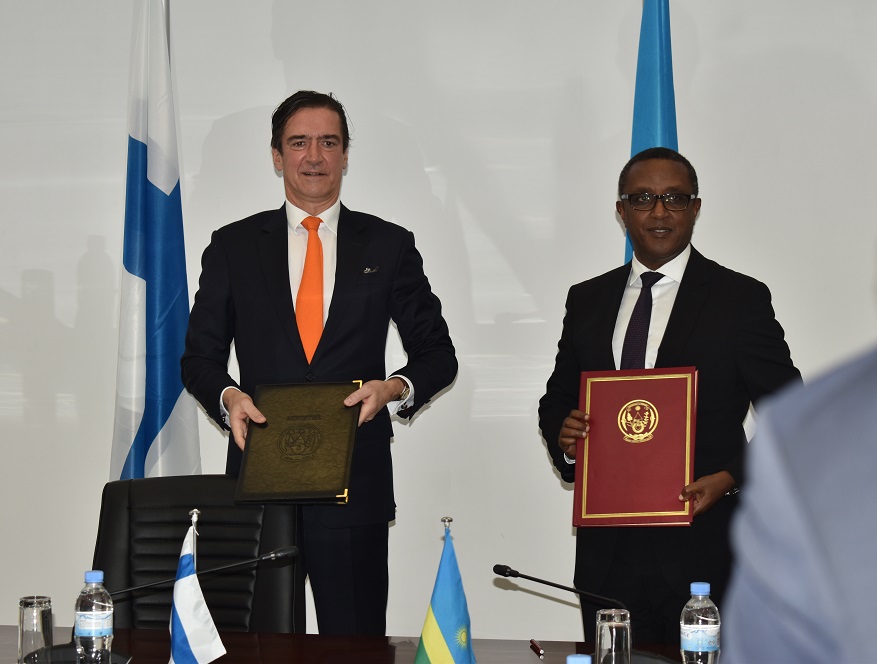
They discussed areas of common interests and ways to increase multilateral cooperation between the two countries.
Dr Biruta said that the MoU is expected to boost cooperation and pave the way for further agreements between institutions from both countries.
“We have signed basic Memorandum of Understanding enabling cooperation between both countries. It is a broad MoU introducing more agreements in different areas,” he said.
He explained that discussions revolved around seeking how to engage different institutions into cooperation in the areas of climate change resilience, mining and education.
In the area of environment preservation, Dr Biruta revealed that both countries plan to cooperate on helping factories to find alternatives for plastic bags, mining and vocational education.
Kai Sauer is expected to meet with other officials from different institutions including Rwanda Development Board (RDB), mining sector and environment management authority.
Since 2017 until 2019, trade between Rwanda and Finland increased by 21% from US$12.8 million to US$12.8 million.