RDF statement released today shows that the incident took place last night in Rwamisave village, Nyamuzi cell, Bweyeye sector in Rusizi district.
“Last night on Sunday 23 May 2021 between 21:15hrs and 21:35hrs, about one section of FLN enemy assailants from Giturashyamba in Mabayi commune in Burundi, crossed river Ruhwa along our borderline and entered approximately 100 metres inside Rwanda territory in Bweyeye, Nyamuzi cell, Rwamisave village,” reads the statement in part.
“The enemy assailants were intercepted by a Rwanda Defence Force (RDF) ambush; two (2) assailants were immediately killed, and equipment captured including one (1) submachine gun, seven (7) magazines, one (1) tortoise grenade, one (1) antennae of a Motorola radio and two (2) Burundi National Defence Force army uniforms,” adds the statement.
RDF explained that assailants have been repelled back to Burundi across River Ruhwa separating Ruhororo zone in Mabayi commune in Burundi and Bweyeye sector in Rwanda and returned to Kibira Forest where they have bases.
IGIHE has learnt that gunfire assailants returned to pick killed colleagues around 1pm and repelled back again.
Bweyeye is among 18 sectors of Rusizi district bordering with Burundi.
In June 2020, more assailants from Burundi attacked RDF defensive base in Ruheru sector, Nyaruguru district.
At the time, RDF foiled the attack which targeted a displaced persons camp about one kilometre into Rwandan territory. Four of the attackers were killed.
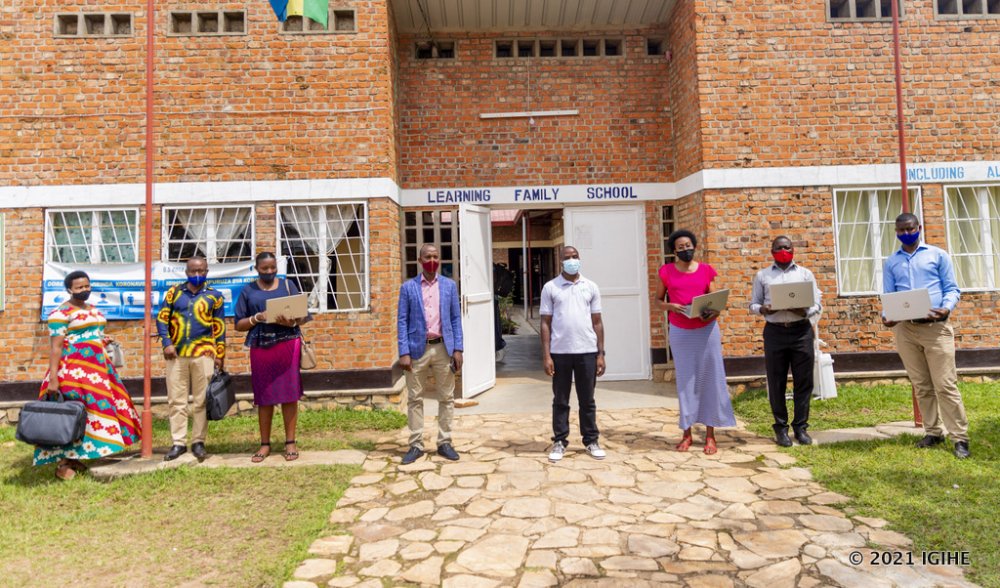
These laptops were donated on Wednesday 19th May 2021 through partnership between Mastercard Foundation, Belgium, VVOB, Enabel and Rwanda Basic Education Board (REB).
VVOB – education for development is an international non-profit organisation with over 35 years of experience in quality education.
Under this partnership, over 3000 laptops will have been donated to approximately 1900 schools across all districts countrywide by the end of May 2021.
Representatives from schools that received laptops expressed delight for the donations expected to improve performance.
“We are set to improve efficiency particularly in course preparations and streamline reporting system,” said Ntirigurirwa Protogène, the head teacher of Groupe Scolaire St. Emmanuel Bugoba located in Rukoma sector in kamonyi district.
Mukagatete Françoise, the vice Dean of Studies at Groupe Scolaire Kabere from Kayumbu sector also explained that received laptops will help her to carry out her work smoothly.
“I used to borrow laptop to perform particular activities. However, this would delay my work in case the owner was using it. With these laptops, the situation will improve for good and I am optimistic to deliver on expectations,” he said.
Others revealed that received laptops will advance quality education as teachers will no longer have barriers to attend virtual training and access online didactic materials.
The education officer in Kamonyi district, Kayijuka Diogène thanked the Government of Rwanda for expended efforts and support facilitating schools to embrace technology.
“These laptops will facilitate online learning and communication between teachers and heads of schools, which is a crucial aspect towards achieving quality education. When a teacher has been trained, he/she also needs to conduct research to immerse knowledge and teach students appropriately,” he noted.
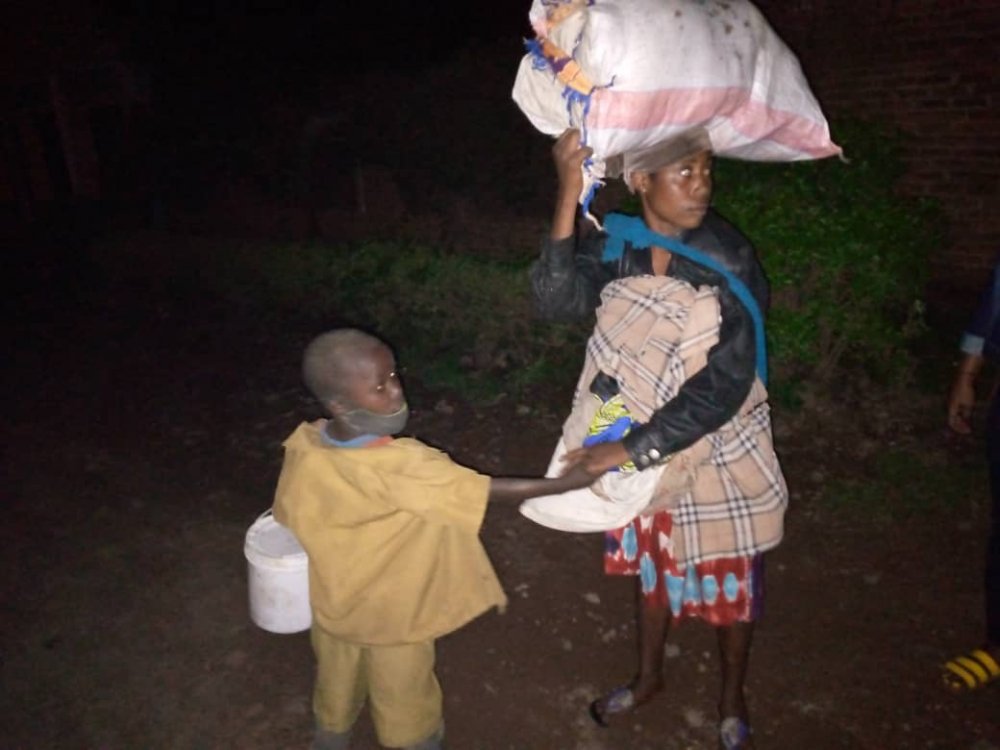
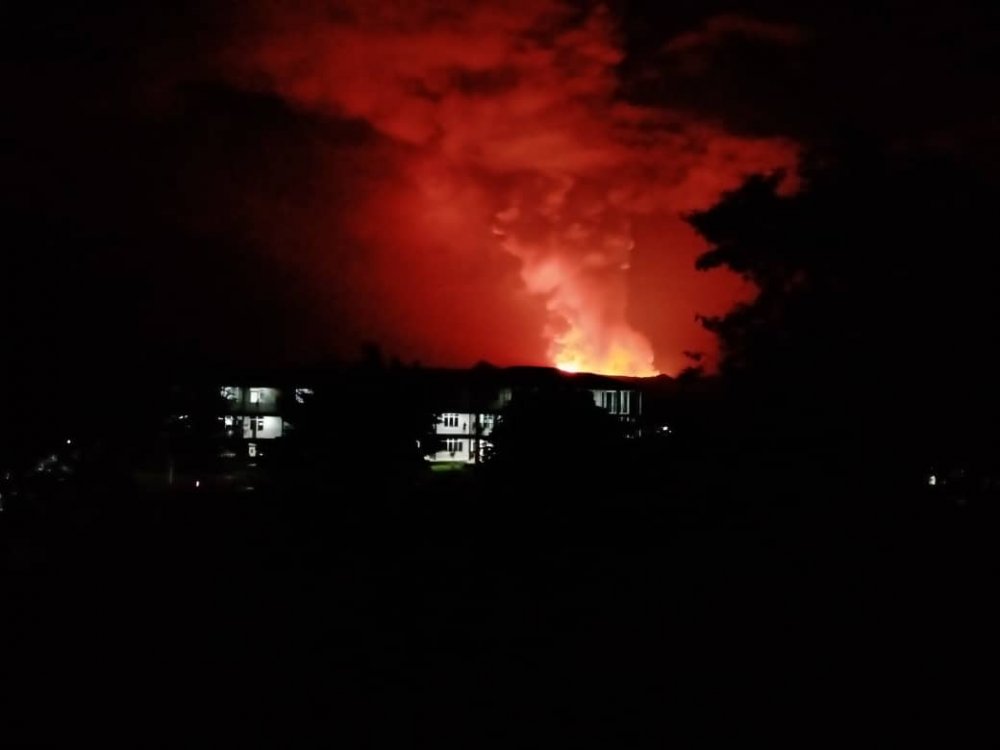
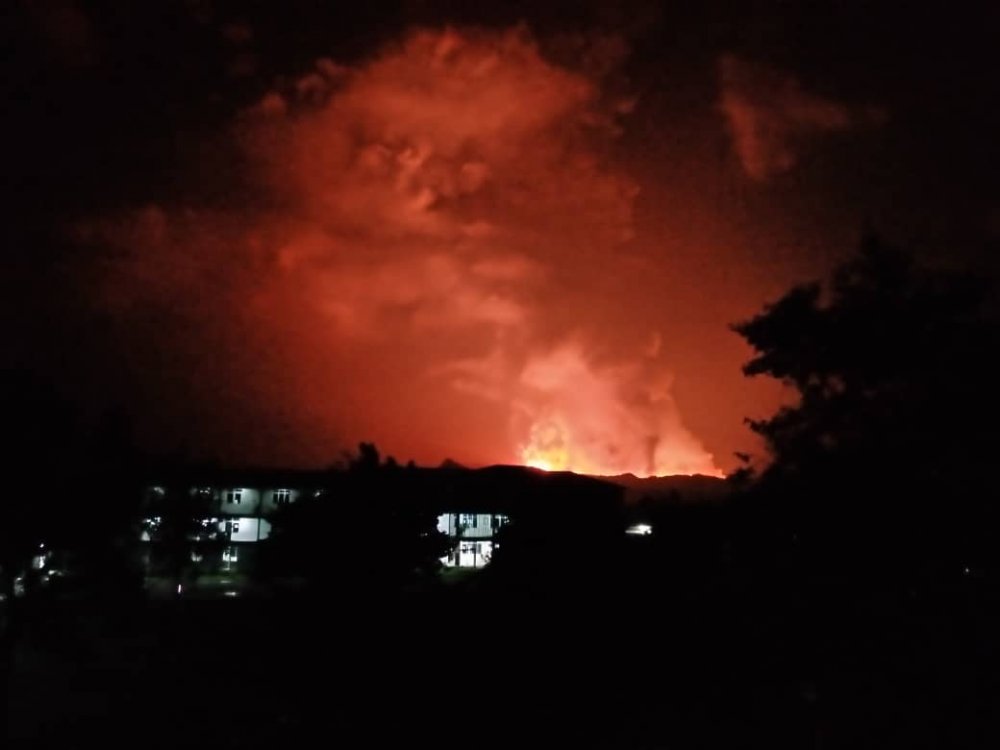
The eruption of Mount Nyiragongo on Saturday night sent about 5,000 people fleeing from the city of Goma across the nearby border into Rwanda, while another 25,000 others sought refuge to the northwest in Sake, the U.N. children’s agency said Sunday.
More than 170 children were still feared missing Sunday and UNICEF officials said they were organizing transit centers to help unaccompanied children in the wake of the disaster.
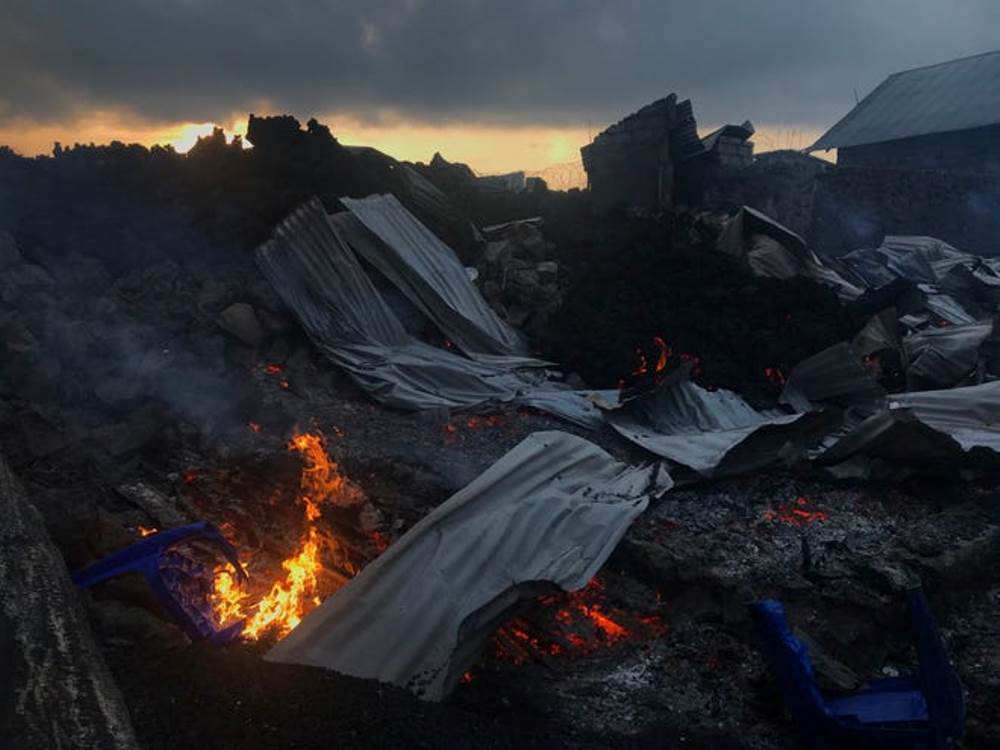
Goma ultimately was largely spared the mass destruction it suffered the last time the volcano erupted back in 2002. Hundreds died then and more than 100,000 people were left homeless. But in outlying villages closer to the volcano, Sunday was marked by grief and uncertainty.
Aline Bichikwebo and her baby managed to escape when the lava flow reached her village, but said both her mother and father were among those who perished. Community members gave a provisional toll of 10 dead in Bugamba alone, though provincial authorities said it was too soon to know how many lives were lost.
Bichikwebo says she tried to rescue her father but wasn’t strong enough to move him to safety before the family’s home was ignited by lava.
“I am asking for help because everything we had is gone,” she said, clutching her baby. “We don’t even have a pot. We are now orphans and we have nothing.”
The air remained thick with smoke because of how many homes had caught fire when the lava came.
“People are still panicking and are hungry,” resident Alumba Sutoye said. “They don’t even know where they are going to spend the night.”
Elsewhere, authorities said at least five other people had died in a truck crash while they were trying to evacuate Goma, but the scale of the loss had yet to be determined in some of the hardest-hit communities.
Residents said there was little warning before the dark sky turned a fiery red, sending people running for their lives in all directions. One woman went into labor and gave birth while fleeing the eruption to Rwanda, the national broadcaster there said.
Smoke rose from smoldering heaps of lava in the Buhene area near the city Sunday.
“We have seen the loss of almost an entire neighborhood,” Innocent Bahala Shamavu said. “All the houses in Buhene neighborhood were burned and that’s why we are asking all the provincial authorities and authorities at the national level as well as all the partners, all the people of good faith in the world, to come to the aid of this population.”
Elsewhere, witnesses said lava had engulfed one highway connecting Goma with the city of Beni. However, the airport appeared to be spared the same fate as 2002 when lava flowed onto the runways.
Goma is a regional hub for many humanitarian agencies in the region, as well as the U.N. peacekeeping mission. While Goma is home to many U.N. peacekeepers and aid workers, much of surrounding eastern Congo is under threat from myriad armed groups vying for control of the region’s mineral resources.
Rwanda National Police (RNP) spokesperson, Commissioner of Police (CP) John Bosco Kabera said that several people have fallen victims through such scams orchestrated by specific groups of people, who lure especially small income earners into believing that they are joining a registered association or cooperative backed by local authorities as a community development project.
In the latest case, more than 200 women joined a savings scheme dubbed “Turemerane” in Rusizi District. It later came to light that the illegal scheme was formed by a group with “individual interests.”
The pyramid scheme required each member to pay between Frw100, 000 and Frw1 million. This was under the promise that the contribution would be multiplied depending on the number of other women a member has recruited and subscribed to the same scheme.
Those who paid Rwf100, 000, for example, were promised to get Rwf800, 000 after recruiting other eight women while those who paid Rwf500, 000 expected to be given Rwf4 million in return.
More than Rwf64 million had been contributed by members, according to sources.
CP Kabera said that some of those connected to this scheme have been identified and arrested.
“Following the intervention of the Police and local leaders, some people behind this illegal savings scheme have since returned the money extorted from residents, but we are still searching for one Nadine Rugwiro, who was the accountant. Rugwiro’s husband identified as Elie Bigirimana, who is suspected to be part of the ring, was however arrested,” said the spokesperson.
He observed that deception and fraud appear in varied forms and that some groups of people use different means to scam unsuspecting members of the public.
“We have received many cases of fraud orchestrated in various forms, where many people have become victims of money or property fraud, and those involved in these criminal practices arrested. We urge the public to be vigilant of such criminal minded groups and share information on those suspected to be engaged in such deceptive practices.
{{What the law says}}
Clause One of article 174 of the law determining offences and penalties in general in Rwanda, defines fraud as deception, obtaining another person’s property, whole or part of his/her finance by use of false names or qualifications, or offering positive promises or threats of future misfortunes.
Clause Two of the same article provides a term of imprisonment of between two and three years, and a fine of not less than Rwf3 million but not more than Rwf5 million, upon conviction.
In clause Three, if the offence is committed by a person, who intends to issue shares, shareholders’ bills, securities, bonds, vouchers, or any other cash value, either for a business, trading company or industry, the applicable penalty is an imprisonment for a term of not less than three years and not more than five years with a fine of Rwf5 million to Rwf7 million.
Rwanda confirmed the first Coronavirus case on 14th March 2020. Since then, 26 688 people have been tested positive of whom 25 097 have recovered, 1242 are active cases while 349 have succumbed to the virus.
A total of 350, 400 people have been vaccinated since Rwanda began countrywide inoculation programme on 5th March 2021.
The group was showed to the media on Saturday, May 22, at the Police Metropolitan headquarters in Remera, Gasabo District.
The racket includes the ringleaders; Joseph Nsengiyumva, 40, Laurien Niyoyita, 33, Jean Paul Rukinda, 35 and Alexis Fayizari.
Fayizari was taken into custody on Saturday morning in Muhanga District where he was at the time trying to defraud a local businessman of two tons of rice.
The ring was using a Toyota Corolla vehicle registration number RAA 780B, which was also impounded.
One of the suspects, Joseph Nsengiyumva, who was also the driver, was found with a service card indicating that he is a captain in Rwanda Defence Force (RDF).
The forged RDF service card bears a passport photo of Nsengiyumva don in military attire with a rank of captain.
Investigations indicate that in the car, Nsengiyumva was in most cases traveling with Niyoyita and Rukinda, who had handcuffs and a toy pistol, which they were using to threaten and rob their target.
RNP spokesperson, Commissioner of Police (CP) John Bosco Kabera said that the racket is behind series of fraud, theft through threats and intimidation, and impersonation.
He added that the ring and its criminal activities came to light about two months ago, when investigations and operations targeting its members were commenced.
How they were defrauding traders
“Information about this group and its criminal activities was provided by some of the victims. This ring had formed two groups with each group performing specific roles,” said CP Kabera.
After purchasing goods in big quantity, especially rice and maize flour, one group would sell them to targeted traders at a low price without giving them receipts.
The other group of Nsengiyumva, Niyoyita and Rukinda would then show up later and ask the same traders to provide receipts for the goods that they have purchased.
“Nsengiyumva was using the forged military ID during their criminal operations, which he would show to traders before handcuffing him or her and putting them in their vehicle where they would intimidate them with the toy pistol,” CP Kabera explained.
At this point, the trader would either give them money out of fear of being harmed or imprisoned, or the group would load and take the same goods.
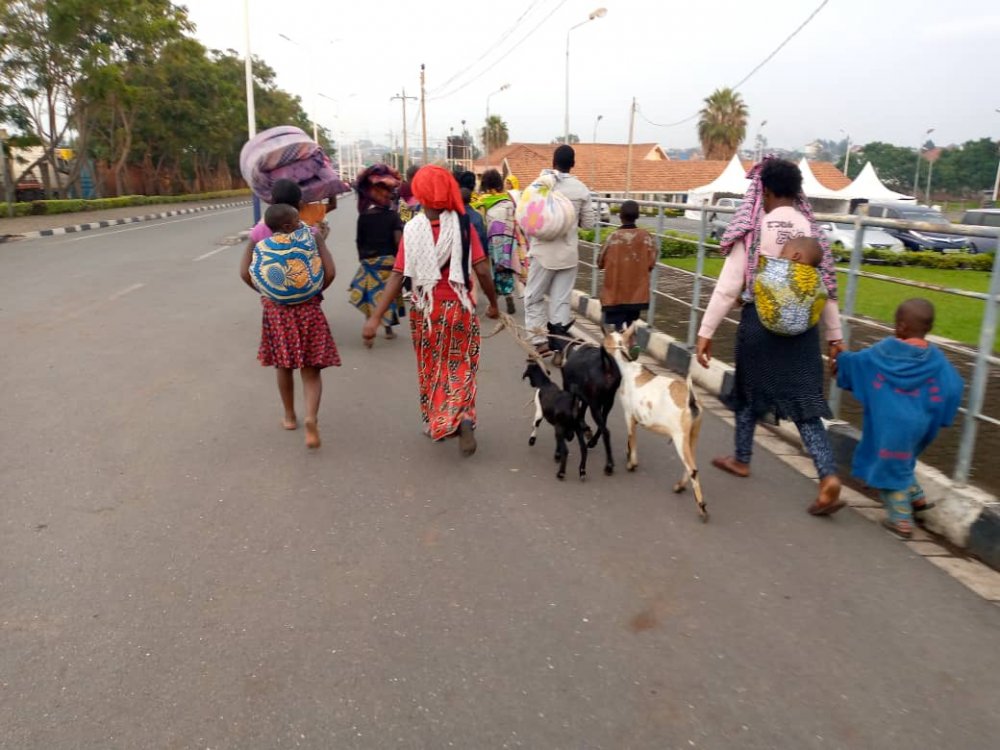
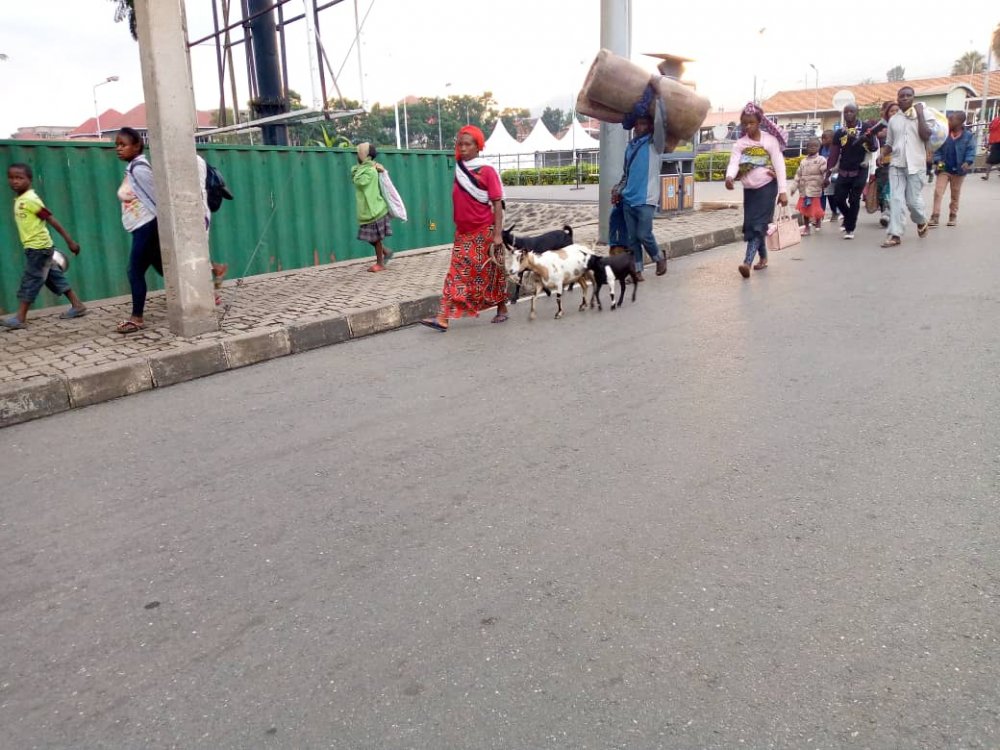
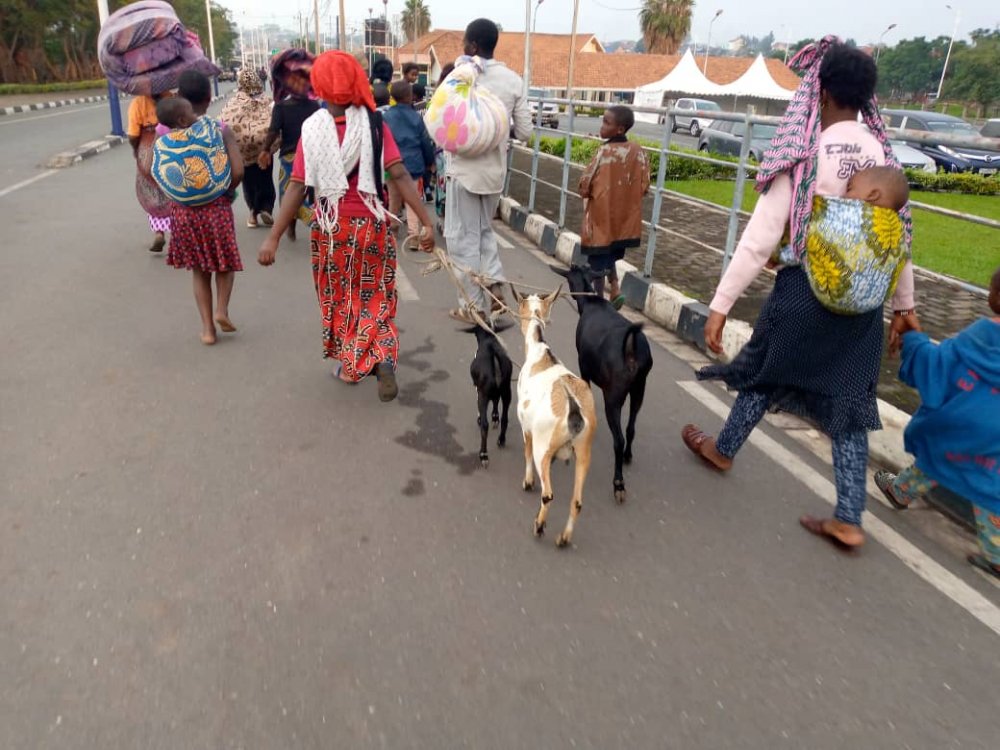
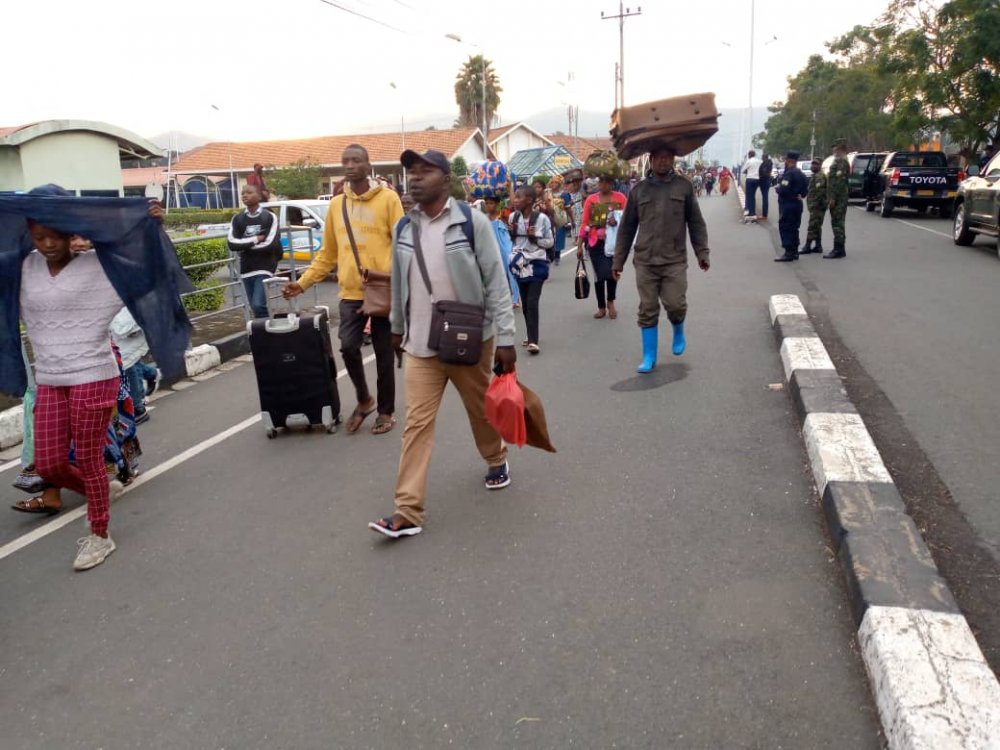
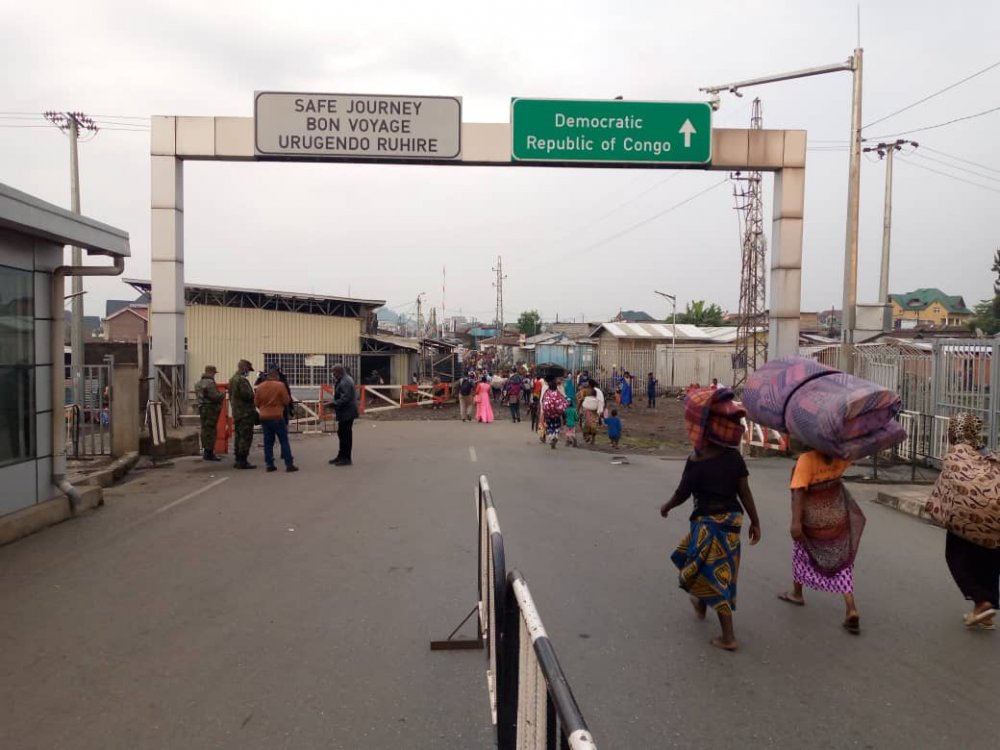
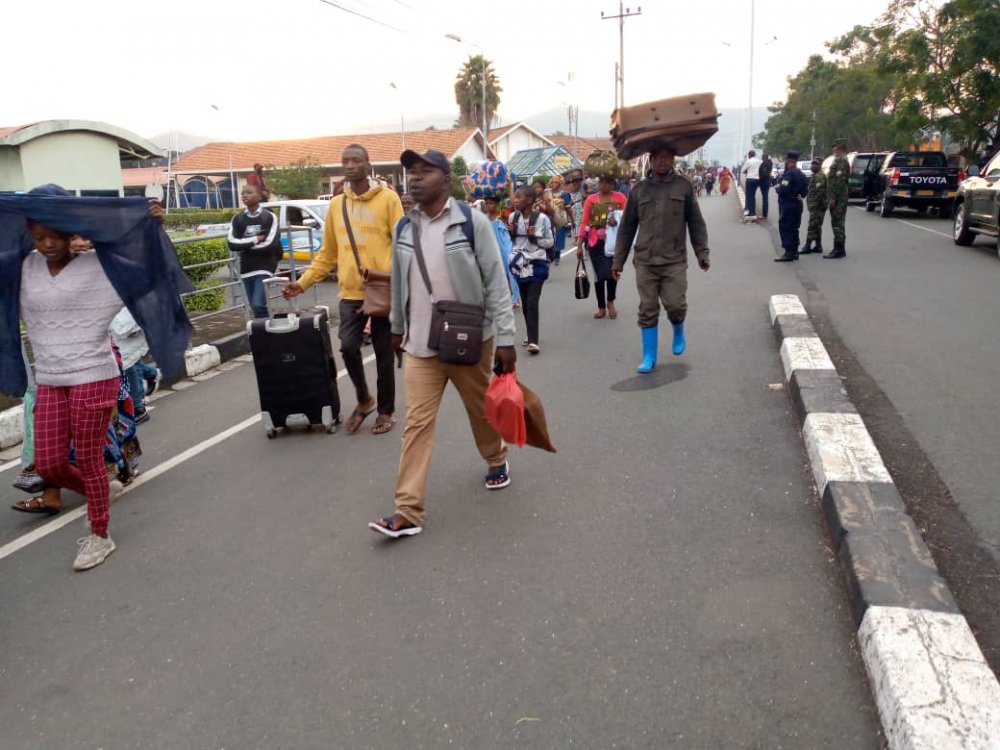
Congolese nationals are returning home after mixed assessments on the threat by officials and experts revealing that the lava flowing speed has reduced.
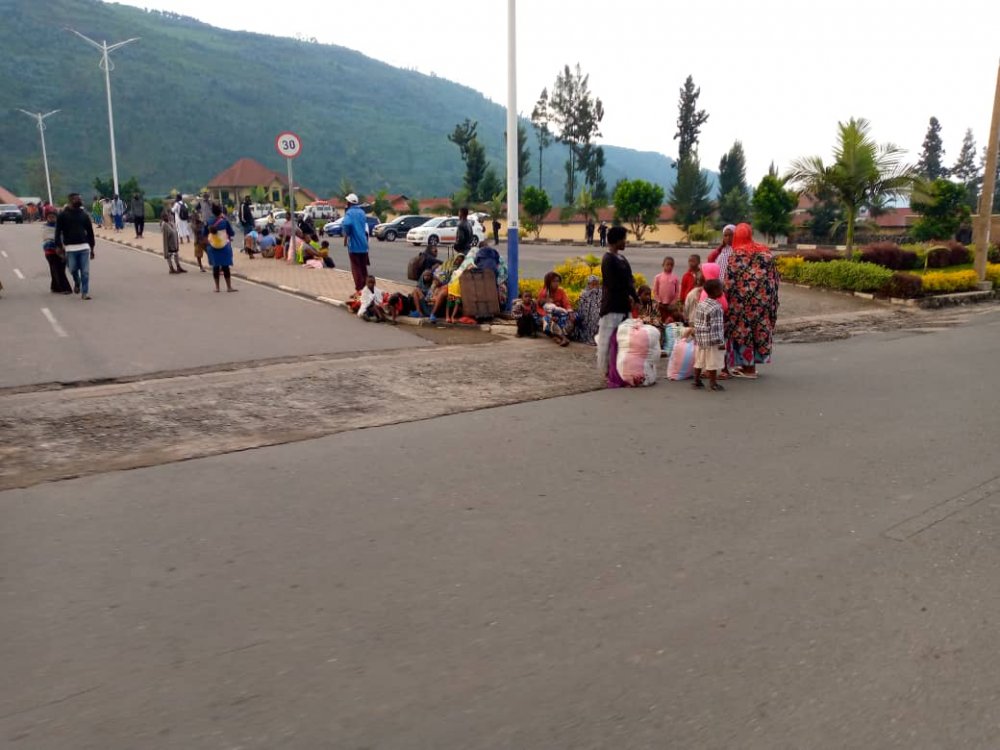
Returnees estimated between 8,000 to 10,000 fled to Rwanda last night through La Corniche and Petite Barrière borders among other entry points in respective sectors of Rubavu district, Cyanzarwe and Bugeshi.
Congolese nationals that crossed through Rubavu town were accommodated at Umuganda Stadium where they received beddings, water and food donated by Red Cross Rwanda while those who fled to other sectors were accommodated and fed by residents.
As he returned home, Sibomana Cyprien who spent night at Umuganda Stadium thanked Rwanda for treating them humanely.
“Nyiragongo eruption improvised us that we rushed to flee to Rwanda. We are grateful for received kind support,” he said.
The volcano in central Africa last swamped the city of Goma with lava in January 2002, leaving more than 100,000 people homeless and hundreds dead by some counts. Well over one million people live near the active crater, with Goma just a dozen miles south.
A DRC government spokesman, Patrick Muyaya, said Saturday that Goma’s evacuation plan had been activated, as the Associated Press reported that thousands were already fleeing, often on foot. A din of people and honking horns could be heard in videos of the red-glowing eruption shared on social media, and Rwandan officials said that more than 3,500 Congolese people had sought refuge across the border in nearby Rwanda.
As of today morning, it has been reported that over 7000 Congolese are returning home following last night’s incident.
Lava coursed onto a highway linking Goma with the city of Beni, according to the AP. Reuters said it was approaching an airport as the city grappled with power outages. Officials and experts gave mixed assessments on the threat the lava posted to Goma.
A United Nations peacekeeping mission in the area said that Goma seemed safe, though officials remained on “alert.”
“Current assessments indicate eruption doesn’t threaten the city itself,” the British embassy in the Congo echoed in a statement. Celestin Kasereka, who leads scientific research at the Goma Volcano Observatory, told reporters he also doubted lava could make it Goma.
But Dario Tedesco, a volcanologist in Goma, told Reuters that lava was flowing toward the city center after initially heading for Rwanda.
“Now Goma is the target,” Tedesco said. “It’s similar to 2002. … It might stop before or go on. It’s difficult to forecast.”
The U.N. mission MONUSCO tweeted that it was running reconnaissance flights and posted footage of a fiery landscape.
Congo President Félix Tshisekedi said he would cut his trip to Europe short to return home Sunday to coordinate aid.
Government spokesperson Muyaya said that the prime minister had called an emergency meeting and that authorities would set more plans in motion Sunday.
Muyaya urged people to avoid engaging with “everything that is being said in social media” in the face of an “extremely serious situation.” He vowed that officials would do their best to keep people updated and manage a crisis that “touches us all.”
The AP said there were no immediate reports of casualties, as some residents complained of what they said was a delay in information. Dorcas Mbulayi told the Associated Press that she left home for Mount Goma as the volcanic activity began and faulted officials “for not informing us in time about the possible volcanic eruption.”
In one especially deadly eruption of Mount Nyiragongo in 1977, around 2,000 people were reported killed.
“This is the most dangerous volcano in the world!” volcanologist Dario Tedesco told Science magazine last year, suggesting another disaster could strike.
Video of Saturday’s new threat circulated widely. Charles Balagizi, a geochemist and geohazards researcher at Goma Volcano Observatory, posted footage of a towering cloud of smoke lit bright red against a dark sky, with the lights of buildings all around.
Posting another video later, Balagizi said a new “vent” — an opening from which the volcano erupts — had formed near Mujoga.
The three upgraded to five stars are among 31 hospitality establishments awarded between 1 (one) to 5 (five) stars by Rwanda Development Board (RDB) during the Hospitality Grading ceremony held on Friday 21st May at Kigali Serena Hotel.
The 1-5 star grading system helps to differentiate the quality of services that establishments render to their clientele.
The criteria used to grade the establishments range from their location, site, and environment, architectural design and features, capacity, reception area, information services, hours of service, decor, amenities and accessories and regulation of temperature among others as per the ‘East African Criteria for Standardization of Hotels, Restaurants and other Tourist Accommodation Facilities’.
The criteria stipulates the standards that should be met for any accommodation establishment to be one, two, three, four or five stars and are mandatory for any prospective property developer in the accommodation sector in all EAC member states.
It is the first time the ceremony is held during COVID-19 pandemic following the previous one held in November 2019.
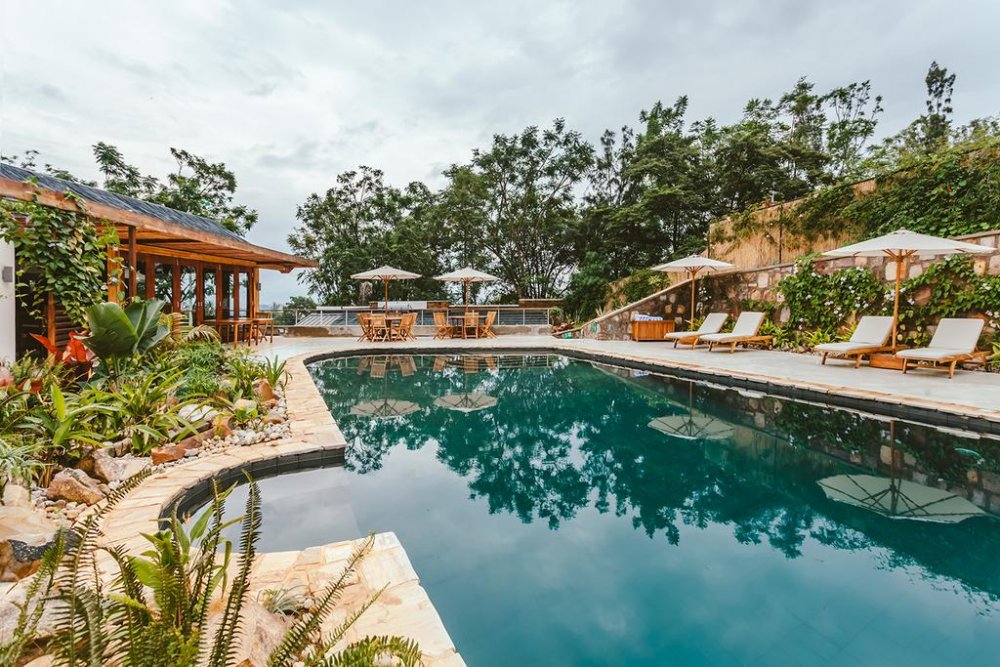
The facilities awarded a five-star rating this year include One & Only Gorilla’s Nest, Singita Kwitonda Lodge and Kataza House and The Retreat & Heaven Boutique Hotel while Phoenix Plaza and Kivu Marina Bay in Rusizi were upgraded to four-star.
Seven hotels including Mythos Boutique Hotel (Kiyovu) and Ste Famille Hotel also received three star grading while 18 were awarded two-star rating. These are Vive Hotel and Apartments (Rusizi), Okapi Hotel (Kigali) and 5 Swiss Hotel (Kiyovu) among others. Munini Hill Motel located in Rusizi received one-star rating.
Four-star facilities are The Retreat Boutique Hotel and Residence Prima 2000, all located in the City of Kigali.
One & Only Gorilla’s Nest, Singita Kwitonda Lodge and Kataza House were inaugurated in 2019.
RDB Chief Tourism Officer, Belise Kariza said that the grading of one to five stars should be well interpreted and no level of star should be undermined.
He highlighted that the ranking typically helps both the client and the investor to understand what is expected for a service.
As she delivered her remarks, the CEO of RDB Clare Akamanzi stressed that the classification of hotels is a tool that defines quality standards of facilities and services to the consumer and the industry in general.
“Consequently, the classification of accommodation establishments continues to be a tool we use to raise the quality of services and facilities offered to tourists. It is in part how we will continue being an attractive destination,” she said.
“In order to recover and rebuild our industry’s capabilities, I want to call upon our private sector to continue improving on standards as that is one of the ways of building confidence among consumers of your services. The number of opportunities in this sector is immense, the Government is committed to provide support that is needed to ensure quality standards are achieved and maintained,” added Akamanzi.
Beata Habyarimana, the Minister of Trade and Industry who was the guest of honor congratulated graded establishments and urged them to maintain good services.
“As the country strives to become a knowledge-based economy, the hospitality industry should be at the forefront of providing quality services. The receiving establishments should embrace the grading as a service delivery contract. It’s not just an award but an obligation, which you should be accountable for,” she stated.
Kagame made the revelation on Friday 21st May 2021 at the virtual Global Health Summit bringing together G20 leaders, and executives from vaccine manufacturers among others.
Participants discussed ways to distribute vaccines to poor countries that have so far received 0.2 % of delivered vaccines against 80% of developed countries.
Kagame explained that the global distribution of vaccines is the way to defeat COVID-19 pandemic and return to normalcy.
“First, we have to urgently improve the frameworks and tools needed to defeat this pandemic and others that are sure to follow. Ending Covid-19 will require expanded pathways to vaccine access for populations throughout the world,” he said.
Kagame revealed that Rwanda is in advanced talks with manufacturers to produce vaccines locally.
“In the context of developing hubs for manufacturing the vaccines in our continent, Rwanda is in advanced talks with private firms and multilateral agencies to build manufacturing capacity in our region for the raw materials to produce mRNA vaccines,” he affirmed.
Kagame commended the European Union institutions for commitment to support the cause.
He expressed optimism that the world will find the appropriate solution on the issue of intellectual property to manufacture vaccines in developing countries.
During the summit, vaccine manufacturers including Pfizer agreed to provide vaccines at low cost to poor countries.